The main tag of Forex News Today Articles.
You can use the search box below to find what you need.
[wd_asp id=1]

15 10, 2024

Euro remains fragile ahead of ECB meeting

By |2024-10-15T15:00:19+03:00October 15, 2024|Forex News, News|0 Comments

  • EUR/USD trades below 1.0900 for the first time since early August.
  • The US economic calendar will not feature high-tier data releases on Tuesday.
  • 1.0870 aligns as the next support level for the pair.

Following a quiet start to the week, EUR/USD came under modest bearish pressure in the American session on Monday and closed the day in negative territory. The pair struggles to stage a rebound early Tuesday and trades at its lowest level since early August, slightly below 1.0900. 

Euro PRICE Last 7 days

The table below shows the percentage change of Euro (EUR) against listed major currencies last 7 days. Euro was the weakest against the US Dollar.

  USD EUR GBP JPY CAD AUD NZD CHF
USD   0.63% 0.05% 0.58% 1.38% 0.69% 0.70% 0.85%
EUR -0.63%   -0.56% -0.03% 0.75% 0.07% 0.06% 0.21%
GBP -0.05% 0.56%   0.55% 1.30% 0.64% 0.62% 0.78%
JPY -0.58% 0.03% -0.55%   0.90% 0.11% 0.09% 0.26%
CAD -1.38% -0.75% -1.30% -0.90%   -0.67% -0.66% -0.53%
AUD -0.69% -0.07% -0.64% -0.11% 0.67%   -0.02% 0.15%
NZD -0.70% -0.06% -0.62% -0.09% 0.66% 0.02%   0.16%
CHF -0.85% -0.21% -0.78% -0.26% 0.53% -0.15% -0.16%  

The heat map shows percentage changes of major currencies against each other. The base currency is picked from the left column, while the quote currency is picked from the top row. For example, if you pick the Euro from the left column and move along the horizontal line to the US Dollar, the percentage change displayed in the box will represent EUR (base)/USD (quote).

In the absence of high-impact macroeconomic data releases, the cautious market mood helped the US Dollar (USD) stay resilient against its major rivals on Monday, causing EUR/USD to edge lower.

Early Tuesday, US stock index futures trade marginally lower on the day, suggesting that the market mood is yet to improve.

In the European session, Eurostat will publish Industrial Production data for August and Germany’s ZEW economic research institute will release October sentiment data for the Eurozone and Germany. The ZEW Survey – Economic Sentiment Index is forecast to rise both for the Eurozone and Germany. If these data surprise to the upside, the immediate reaction could help the Euro find support. Nevertheless, investors are unlikely to take large positions ahead of the European Central Bank’s (ECB) policy announcements due Thursday.

In the second half of the day, the Federal Reserve Bank of New York’s Empire State Manufacturing Index for October will be the only data release from the US, which is unlikely to trigger a noticeable market reaction.

EUR/USD Technical Analysis

The Relative Strength Index (RSI) indicator on the 4-hour chart edged slightly higher after dropping to 30, suggesting that EUR/USD’s near-term technical outlook remains bearish, with the possibility of a technical correction.

On the downside, 1.0870 (Fibonacci 78.6% retracement of the latest uptrend) aligns as first support before 1.0800 (round level) and 1.0780 (static level, beginning point of the uptrend). In case EUR/USD rises above 1.0900 (static level) and starts using this level as support, 1.0950 (Fibonacci 61.8% retracement) and 1.1000 (Fibonacci 50% retracement) could be seen as next resistance levels.

Euro FAQs

The Euro is the currency for the 19 European Union countries that belong to the Eurozone. It is the second most heavily traded currency in the world behind the US Dollar. In 2022, it accounted for 31% of all foreign exchange transactions, with an average daily turnover of over $2.2 trillion a day. EUR/USD is the most heavily traded currency pair in the world, accounting for an estimated 30% off all transactions, followed by EUR/JPY (4%), EUR/GBP (3%) and EUR/AUD (2%).

The European Central Bank (ECB) in Frankfurt, Germany, is the reserve bank for the Eurozone. The ECB sets interest rates and manages monetary policy. The ECB’s primary mandate is to maintain price stability, which means either controlling inflation or stimulating growth. Its primary tool is the raising or lowering of interest rates. Relatively high interest rates – or the expectation of higher rates – will usually benefit the Euro and vice versa. The ECB Governing Council makes monetary policy decisions at meetings held eight times a year. Decisions are made by heads of the Eurozone national banks and six permanent members, including the President of the ECB, Christine Lagarde.

Eurozone inflation data, measured by the Harmonized Index of Consumer Prices (HICP), is an important econometric for the Euro. If inflation rises more than expected, especially if above the ECB’s 2% target, it obliges the ECB to raise interest rates to bring it back under control. Relatively high interest rates compared to its counterparts will usually benefit the Euro, as it makes the region more attractive as a place for global investors to park their money.

Data releases gauge the health of the economy and can impact on the Euro. Indicators such as GDP, Manufacturing and Services PMIs, employment, and consumer sentiment surveys can all influence the direction of the single currency. A strong economy is good for the Euro. Not only does it attract more foreign investment but it may encourage the ECB to put up interest rates, which will directly strengthen the Euro. Otherwise, if economic data is weak, the Euro is likely to fall. Economic data for the four largest economies in the euro area (Germany, France, Italy and Spain) are especially significant, as they account for 75% of the Eurozone’s economy.

Another significant data release for the Euro is the Trade Balance. This indicator measures the difference between what a country earns from its exports and what it spends on imports over a given period. If a country produces highly sought after exports then its currency will gain in value purely from the extra demand created from foreign buyers seeking to purchase these goods. Therefore, a positive net Trade Balance strengthens a currency and vice versa for a negative balance.


Source link

15 10, 2024

UK employment data help Pound Sterling hold its ground

By |2024-10-15T12:59:41+03:00October 15, 2024|Forex News, News|0 Comments

  • GBP/USD holds steady above 1.3050 in the European session on Tuesday.
  • Upbeat labor market data from the UK help Pound Sterling stay resilient against its peers.
  • The near-term technical picture points to a loss of bearish momentum.

GBP/USD fluctuated in a narrow range on Monday and closed the day virtually unchanged. The pair edges slightly higher in the European morning on Tuesday and trades above 1.3050.

British Pound PRICE Today

The table below shows the percentage change of British Pound (GBP) against listed major currencies today. British Pound was the strongest against the Australian Dollar.

  USD EUR GBP JPY CAD AUD NZD CHF
USD   0.00% -0.10% -0.48% 0.11% 0.22% 0.13% -0.21%
EUR -0.01%   -0.10% -0.49% 0.08% 0.22% 0.10% -0.19%
GBP 0.10% 0.10%   -0.37% 0.21% 0.32% 0.21% -0.05%
JPY 0.48% 0.49% 0.37%   0.59% 0.68% 0.58% 0.30%
CAD -0.11% -0.08% -0.21% -0.59%   0.11% 0.02% -0.26%
AUD -0.22% -0.22% -0.32% -0.68% -0.11%   -0.10% -0.36%
NZD -0.13% -0.10% -0.21% -0.58% -0.02% 0.10%   -0.28%
CHF 0.21% 0.19% 0.05% -0.30% 0.26% 0.36% 0.28%  

The heat map shows percentage changes of major currencies against each other. The base currency is picked from the left column, while the quote currency is picked from the top row. For example, if you pick the British Pound from the left column and move along the horizontal line to the US Dollar, the percentage change displayed in the box will represent GBP (base)/USD (quote).

The data published by the UK’s Office for National Statistics (ONS) showed early Tuesday that the ILO Unemployment Rate eased to 4.0% in the three months to August, following July’s 4.1% reading. Additional details of the report showed the Employment Change data for August arrived at 373K, compared to 265k reported in July. Finally, wage inflation, as measured by the changed in the Average Earnings excluding Bonus, softened to 4.9% from 5.1%. These readings seem to be helping Pound Sterling find a foothold.

The economic calendar will not offer any high-impact data releases from the US on Tuesday. Early Wednesday, the ONS will release September inflation data for the UK. Hence, investors could opt to wait until they see Consumer Price Index (CPI) figures before taking large positions.

Meanwhile, US stock index futures trade mixed in the European session. In case Wall Street’s main indexes turn south after the opening bell, the USD could benefit from safe-haven flows and make it difficult for GBP/USD to extend its recovery.

GBP/USD Technical Analysis

The Relative Strength Index (RSI) indicator on the 4-hour chart stays slightly above 50, reflecting a loss of bearish momentum in the near term. Looking north, first resistance could be spotted at 1.3100 (Fibonacci 78.6% retracement level of the latest uptrend) before 1.3170-1.3185 (Fibonacci 61.8% retracement, 200-period Simple Moving Average).

On the downside, 1.3050 (static level) aligns as interim support ahead of 1.3000 (round level, static level) and 1.2940 (static level).

Pound Sterling FAQs

The Pound Sterling (GBP) is the oldest currency in the world (886 AD) and the official currency of the United Kingdom. It is the fourth most traded unit for foreign exchange (FX) in the world, accounting for 12% of all transactions, averaging $630 billion a day, according to 2022 data. Its key trading pairs are GBP/USD, also known as ‘Cable’, which accounts for 11% of FX, GBP/JPY, or the ‘Dragon’ as it is known by traders (3%), and EUR/GBP (2%). The Pound Sterling is issued by the Bank of England (BoE).

The single most important factor influencing the value of the Pound Sterling is monetary policy decided by the Bank of England. The BoE bases its decisions on whether it has achieved its primary goal of “price stability” – a steady inflation rate of around 2%. Its primary tool for achieving this is the adjustment of interest rates. When inflation is too high, the BoE will try to rein it in by raising interest rates, making it more expensive for people and businesses to access credit. This is generally positive for GBP, as higher interest rates make the UK a more attractive place for global investors to park their money. When inflation falls too low it is a sign economic growth is slowing. In this scenario, the BoE will consider lowering interest rates to cheapen credit so businesses will borrow more to invest in growth-generating projects.

Data releases gauge the health of the economy and can impact the value of the Pound Sterling. Indicators such as GDP, Manufacturing and Services PMIs, and employment can all influence the direction of the GBP. A strong economy is good for Sterling. Not only does it attract more foreign investment but it may encourage the BoE to put up interest rates, which will directly strengthen GBP. Otherwise, if economic data is weak, the Pound Sterling is likely to fall.

Another significant data release for the Pound Sterling is the Trade Balance. This indicator measures the difference between what a country earns from its exports and what it spends on imports over a given period. If a country produces highly sought-after exports, its currency will benefit purely from the extra demand created from foreign buyers seeking to purchase these goods. Therefore, a positive net Trade Balance strengthens a currency and vice versa for a negative balance.


Source link

15 10, 2024

Japanese Yen Forecast: USD/JPY Faces Volatility Amid BoJ Rate Hike Bets and US Data

By |2024-10-15T04:55:13+03:00October 15, 2024|Forex News, News|0 Comments

Short-term Forecast for USD/JPY

USD/JPY trends will likely depend on this week’s trade and inflation data from Japan. Weaker trends could reduce expectations of a Q4 2024 BoJ rate hike. Delays to a BoJ rate hike could further impact Japanese Yen demand. However, US retail sales and jobless claims will influence sentiment toward the Fed rate path and US dollar demand.

Traders should stay alert as monetary policy chatter, Japan’s economic data, and the US economic indicators, which will affect trading USD/JPY strategies. Monitor real-time data, central bank views, and expert commentary to adjust your trading strategies accordingly. Stay ahead of the market with our expert insights.

USD/JPY Technical Analysis

Daily Chart

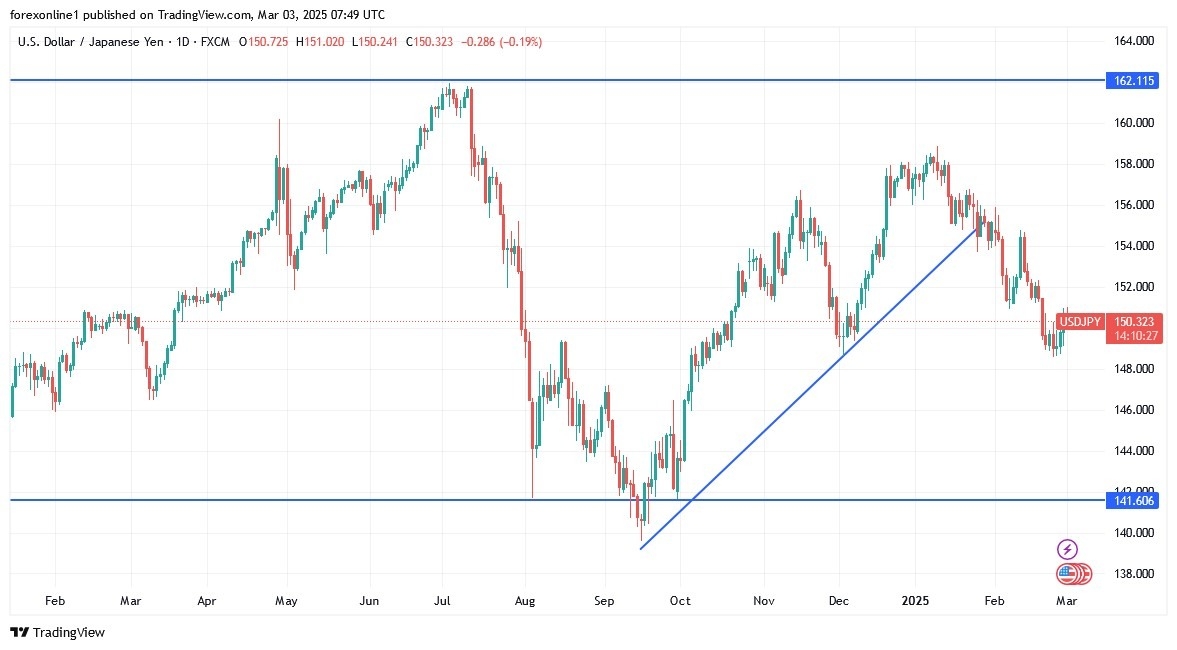
The USD/JPY holds above the 50-day and 200-day EMAs, sending bullish price signals.

A USD/JPY return to 150 could signal a move toward the 151.685 resistance level and the trend line. Furthermore, a break above the 200-day EMA could support a move toward the trend line and the 151.685 resistance level. Selling pressure may increase at the resistance level. The trend line is confluent with the 151.685 resistance level.

Japan’s industrial production, US consumer inflation expectations, and central bank commentary require close monitoring.

Conversely, a drop below the 200-day EMA could bring the 148.529 support level into play. A fall through the 148.529 support level may signal a fall toward 147.5.

The 14-day RSI at 65.37 indicates a USD/JPY move to 151.685 resistance level before reaching overbought territory.

Source link

15 10, 2024

Hits two-month peak near 150.00

By |2024-10-15T02:54:00+03:00October 15, 2024|Forex News, News|0 Comments

  • USD/JPY reaches a two-month high of 149.98 but faces resistance at the psychological 150.00 figure.
  • Technical outlook remains upward biased, with bullish RSI signaling room for further gains before overbought conditions.
  • A break above 150.00 could target resistance at the 100 and 200-day DMAs around 151.14-151.22, while a drop below 149.50 could prompt a retest of 149.00 and the October 8 low at 147.35.

The USD/JPY extended its gains throughout the North American session, up 0.42%, and trading at 149.75 at the time of writing. The pair hit a two-month high of 149.98, though buyers lacked the force to crack the 150.00 figure.

USD/JPY Price Forecast: Technical outlook

The USD/JPY daily chart is neutral to upward biased after clearing key support levels.

Momentum, as measured by the Relative Strength Index (RSI), is bullish, with enough room to spare before turning overbought.

If USD/JPY clears the 150.00 figure, this could pave the way for challenging the 100 and 200-day moving averages (DMAs) each at 151.14 and 151.22. On further strength, the next stop would be the top of the Ichimoku Cloud (Kumo) at 152.00.

Conversely, if USD/JPY falls beneath the 149.50 mark, this could sponsor a test of the 149.00 mark. A breach of the latter will expose the October 8 low of 147.35, ahead of the Tenkan-Sen at 146.70.

USD/JPY Price Action – Daily Chart

Japanese Yen PRICE Today

The table below shows the percentage change of Japanese Yen (JPY) against listed major currencies today. Japanese Yen was the strongest against the Swiss Franc.

  USD EUR GBP JPY CAD AUD NZD CHF
USD   0.31% 0.10% 0.45% 0.17% 0.42% 0.27% 0.68%
EUR -0.31%   -0.29% 0.02% -0.05% 0.13% -0.13% 0.27%
GBP -0.10% 0.29%   0.31% 0.09% 0.45% 0.19% 0.53%
JPY -0.45% -0.02% -0.31%   -0.27% 0.00% -0.10% 0.23%
CAD -0.17% 0.05% -0.09% 0.27%   0.19% 0.13% 0.33%
AUD -0.42% -0.13% -0.45% -0.00% -0.19%   -0.14% 0.22%
NZD -0.27% 0.13% -0.19% 0.10% -0.13% 0.14%   0.34%
CHF -0.68% -0.27% -0.53% -0.23% -0.33% -0.22% -0.34%  

The heat map shows percentage changes of major currencies against each other. The base currency is picked from the left column, while the quote currency is picked from the top row. For example, if you pick the Japanese Yen from the left column and move along the horizontal line to the US Dollar, the percentage change displayed in the box will represent JPY (base)/USD (quote).


Source link

15 10, 2024

EUR/USD Analysis Today 14/10: Selling Pressure (Chart)

By |2024-10-15T00:52:42+03:00October 15, 2024|Forex News, News|0 Comments

  • At the end of last week, the Euro traded around $1.09, its weakest level in about two months, driven by the overall strength of the US dollar amid expectations that the US Federal Reserve will cut borrowing costs at a slower pace than expected.
  • In Europe, the European Central Bank is expected to cut its deposit rate by 25 basis points when it meets this week, following similar moves in both September and June.

In general, traders are now betting that the ECB will continue to cut costs by a quarter point at each meeting until March. Annual inflation in the Eurozone fell to 1.8% in September 2024, its lowest level since April 2021.

According to stock trading platforms, Eurozone stocks closed the week in the green. European stocks closed higher on Friday, benefiting from a positive start to the session for their North American counterparts, supported by a positive start to the US earnings season, while investors evaluated a range of economic data. The French budget for 2025, which includes spending cuts and tax increases on corporations, the wealthy, and energy, has also been under close scrutiny. The Stoxx 50 Eurozone index rose 0.7% to close at 5003, and the Stoxx 600 European index added 0.5% to close at 522. Shares of large industrial companies led the gains, with Siemens, Schneider, Airbus, and Safran adding between 4% and 1%. Bank and insurance stocks in the region also closed strongly in the green, with Munich Re and Intesa Sanpaolo adding more than 1% each. On the other hand, Stellantis shares fell by about 4% after announcing a series of changes in its leadership.

According to the economic calendar, with the ECB’s decisions awaited. In the United States, all eyes will be on retail sales, which are expected to show a 0.3% increase in September, up from a 0.1% increase in August. On the other hand, US industrial production is likely to contract by 0.1%, following a strong 0.8% increase in August.

On the other hand, US industrial production is likely to contract by 0.1%, after a strong increase of 0.8% in August. Other key economic data to follow include the Empire State Manufacturing Index in New York, the Philadelphia Fed Manufacturing Index, consumer inflation expectations, export and import prices, the National Association of Home Builders Housing Market Index, building permits and housing starts. Several US Federal Reserve officials are also scheduled to appear. In addition, the earnings season will be in full swing with several companies announcing quarterly results including UnitedHealth, J&J, Bank of America, Goldman Sachs, Citigroup, Charles Schwab, Abbott, Morgan Stanley, Netflix, Blackstone, P&G, and American Express.

EUR/USD Technical analysis and forecast:

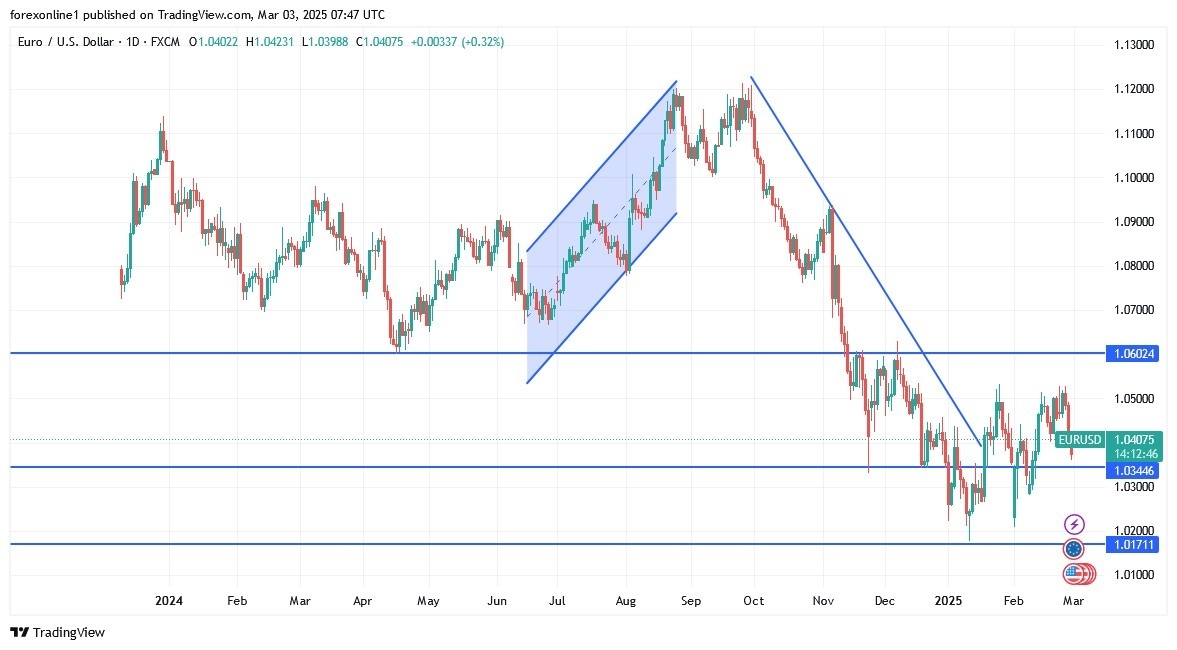
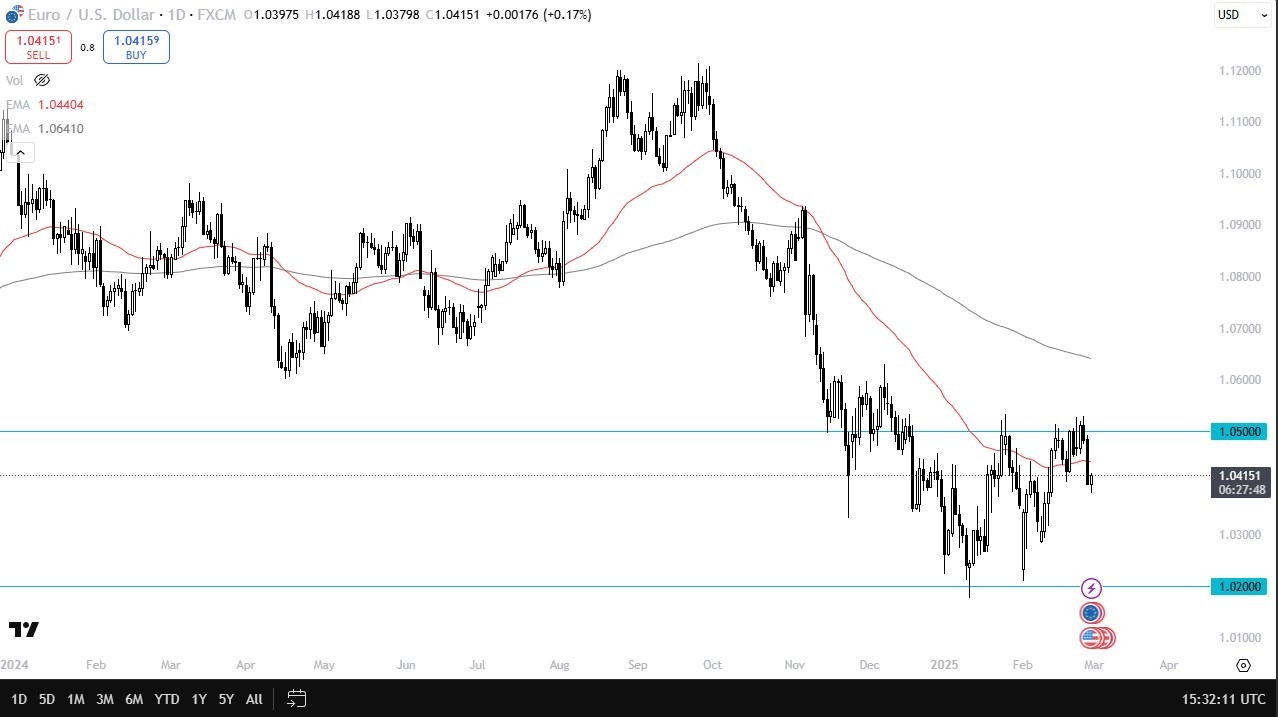
This week, the European Central Bank will take centre stage as it is set to deliver another 25-basis-point cut in the main deposit rate, in line with previous cuts in September and June. Ahead of the important event, the EUR/USD pair is stabilizing downwards, and according to the daily chart, the downward channel formation is gaining strength towards the current prominent support level of 1.0880, which in turn will push technical indicators towards oversold levels. Today is a US holiday, so liquidity will be lower, and therefore the EUR/USD pair may move in narrow ranges with a downward bias until any new developments.

Conversely, for the bulls to exit the downward channel, the EUR/USD pair must move towards the resistance levels of 1.1055 and 1.1130, respectively.

Ready to trade our EUR/USD Forex analysis? We’ve made a list of the best forex demo accounts worth trading with

Source link

14 10, 2024

USD/JPY Analysis Today 14/10: Overbought Conditions (Chart)

By |2024-10-14T22:51:37+03:00October 14, 2024|Forex News, News|0 Comments

  • Despite US inflation figures exceeding consensus and hawkish comments from Fed policymakers failing to give the US dollar a new upward momentum, suggesting that the October rally is fading, the yen’s recent weakening.
  • However, the Bank of Japan’s abandonment of its tightening stance have given bulls an opportunity to push the USD/JPY pair towards the resistance level of 149.28, closer to testing the psychological resistance of 150.00, which supports the strength of the uptrend.
  • At the same time, technical indicators are moving towards oversold levels.

According to reliable trading platforms, the US dollar exchange rate has fluctuated after US producer price inflation rose 1.8% year-on-year in September, exceeding expectations of a modest 1.6% increase, while the August figure was revised upwards to 1.9%. The producer price index measures inflation rates in US factories and is seen as a key indicator of core inflation, which recorded a number higher than the consensus of 2.4% year-on-year just 24 hours earlier.

Financial markets are also grappling with new communications from Fed members: Atlanta Fed President Raphael Bostic said, “I’m perfectly comfortable skipping a meeting if the data suggests that’s appropriate.” And on Wednesday, San Francisco Fed President Mary Daly also said there is room to keep US interest rates unchanged next month, saying, “It’s likely that rates will be cut once or twice this year.”

Commenting on this, Paul Ashworth, chief economist at Capital Economics, said: “Along with unexpectedly strong Labor market data, September’s price data suggests that more than one Fed official may regret starting the easing cycle with a 50-basis-point rate cut.” He added, “We expect a more modest 25-basis-point cut at the FOMC meeting in early next month. The data is not strong enough to justify leaving rates unchanged.”

Neither the economic data nor the comments by Daly and Bostic had a significant impact on the US dollar price, suggesting that the markets have already moved to price in less than two more cuts in 2024 before the comments. The market expects US interest rates to be cut by about 40 basis points for the rest of the year, meaning that less than two full 25-basis-point rate cuts are expected. This can certainly still be adjusted downwards, which would strengthen the US dollar, but it now seems that the lion’s share of the adjustment in Favor of the dollar has occurred.

According to analysts, the rise in US yields has almost ended, and what we will continue to see is a volatile, not a volatile, exchange rate market, and next month’s jobs report will be distorted by hurricanes, which may argue for a 25-basis point cut instead of a stop.

Meanwhile, the rise of the US dollar is likely to pause temporarily until US Treasury yields resume their rise. Jonas Goltermann, Deputy Chief Economist for Financial Markets at Capital Economics, says: “With financial markets now shifting towards discounting the potential halt to the Fed’s intended rate-cutting cycle – which seems unlikely in our view – we see limited further upside for the dollar from US interest rate expectations in the near term.”

USD/JPY Technical Analysis and Expectations Today:

USD/JPY has now retreated to trade at its 100-hour moving average. Previously, Last Thursday’s decline had pushed the pair close to oversold levels on the 14-hour Relative Strength Index (RSI). In the near term, based on the hourly chart, USD/JPY is trading within a descending channel formation. Also, the 14-hour RSI supports a bearish bias as it approaches oversold levels. Therefore, bears will target extended declines around 148.51 or lower at 147.80. On the other hand, bulls will look to pounce on rebounds around 149.65 or higher at 150.59 resistance.

In the long term, based on the performance on the daily chart, USD/JPY is trading within an ascending channel formation. Technically, the 14-day RSI seems to support the bullish bias as it approaches overbought conditions. Therefore, bulls will look to extend the current winning streak towards 153.14 or higher to the 157.93 resistance. On the other hand, bears will look to pounce on pullbacks around 144.14 or lower at the 139.49 support.

Ready to trade our USD/JPY Forex forecast? Here are the best forex brokers in Japan to choose from. 

Source link

14 10, 2024

GBP/USD Analysis Today – 14/10: Bears Near Break (Chart)

By |2024-10-14T20:50:56+03:00October 14, 2024|Forex News, News|0 Comments

  • Recent trading sessions have seen a general decline in the GBP/USD pair, with losses nearing the psychological support level of 1.3000.
  • This strengthens the bears’ control over the trend and signals a potentially stronger downward movement.
  • The next strongest support below 1.3000 would pull the GBP/USD pair towards the 1.2860 support level, which in turn would push technical indicators towards oversold levels. 

Technical forecasts for the GPB/USD pair today: 

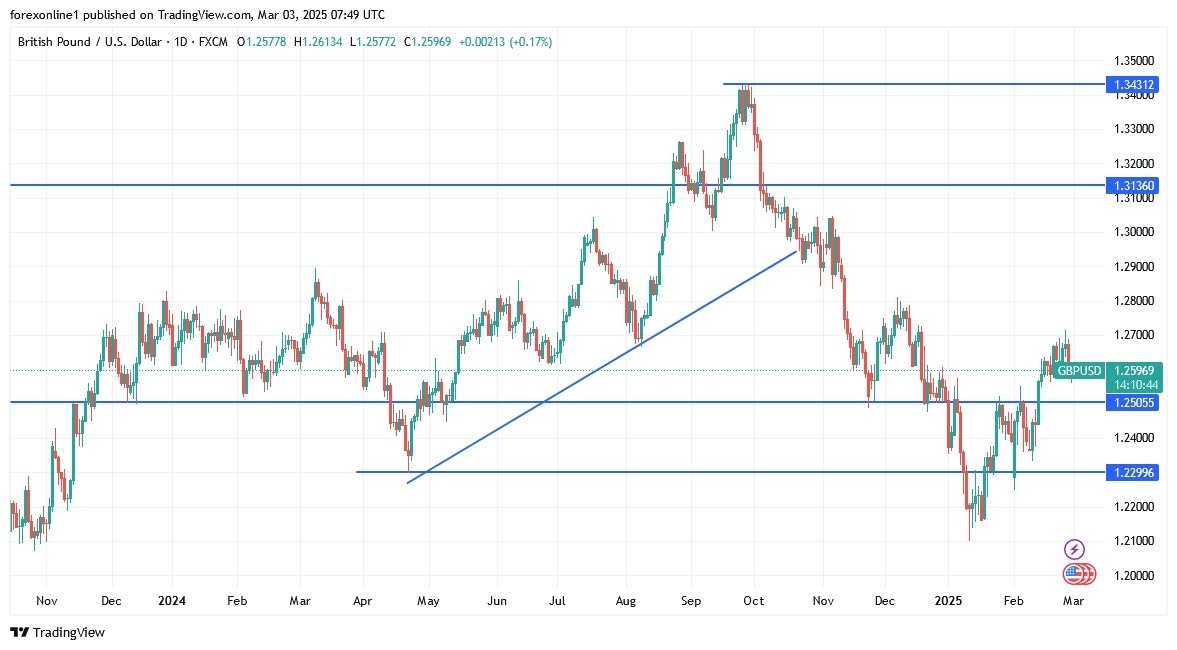
The recent strong gains of the US dollar against the rest of the major currencies in the Forex market. They were supported by the strength of the US jobs numbers and then the inflation numbers, in addition to the content of the minutes of the last meeting of the Federal Reserve Bank. Furthermore, this confirms that the bank will not be in a hurry to cut US interest rates more strongly in the remainder of 2024. Based on the daily chart, the overall trend for GBP/USD will remain bearish until the markets react to the UK economic data throughout the week. The 1.3230 resistance level will remain the most important for bulls to control the trend. 

According to the Economic Calendar this week, the government must use this week’s investment summit and the upcoming budget to reverse the course of the slowing economy. The Office for National Statistics said that UK monthly gross domestic product (GDP) rose by 0.2% month-on-month in August after two months of no growth.

This puts real GDP on track to expand by 0.3% on a quarterly basis in the third quarter of 2024, in line with the Bank of England’s forecast. However, revisions to second-quarter GDP data mean that the 0.2% reading for August was below the consensus forecast of 0.5%, and the previous month was revised downward on this measure. 

In August, services output – the dominant sector of the UK economy – rose by 0.1% month-on-month, while industrial production and construction output partially recovered from their declines in July. Commenting on the results, Hayley Lu, assistant economist at the National Institute of Economic and Social Research, said: “Today’s growth figures were slightly weaker than we expected.

While the economy continues to expand, there are increasing signs that momentum is fading compared to the strong performance seen in the first half of the year.” She added that the chancellor should seize the crucial opportunity in the upcoming budget to announce policies that boost higher investment levels and drive the UK towards a sustainable era of higher output growth. 

“Expansion still needs more time” 

Also, the Bank of England will monitor signs of slowdown and be prepared to cut interest rates. Analysts warn that a slowing economy means that growth looks set to fall short of the latest set of forecasts from the bank. Sam Hill, an analyst at Lloyds Bank, said: “There would need to be a strong performance recorded for the September monthly GDP figure to not fall below the MPC’s forecast for third-quarter GDP.” 

Meanwhile, Services growth was weak at just 0.1%, with seven of the 14 subsectors contracting in August. 

UK investment summit must reset agenda 

Pantheon Macroeconomics expects GDP growth to rise to 0.4% on a quarterly basis in the fourth quarter as consumers cut back on their savings slightly in response to lower interest rates, falling unemployment, and continued real wage growth. Barret Kupelian, chief economist at PricewaterhouseCoopers, says, “We expect the positive momentum to continue in the coming months given some of the tailwinds we see in the domestic economy.” 

The upcoming UK Investment Summit should give the government a chance to reset the tone of the UK’s potential and inspire increased investment, he added. The new government has long complained about the legacy it has left behind, warning that tax cuts and tough decisions are needed to fill a “black hole” in the budget.

But Anna Leitch, chief economist at the Institute of Directors, says the government must shift the narrative from plugging the deficit today to building the economy of tomorrow. Added, “This is key to sustainable public finances and higher living standards. The Investment and Budget Summit provides an opportunity for the government to build on its election manifesto commitments to drive investment by providing more detail on the role of the National Wealth Fund in stimulating private capital and the early priorities of the industrial strategy.” 

Furthermore, The UK Investment Summit is scheduled to take place on October 14 and aims to “bring together up to 300 industry leaders to stimulate investment in the UK”. However, concerns about the quality and organization of the UK Investment Summit have left some senior business figures hesitant about whether they will travel to the event on Monday.

According to the Financial Times, international and domestic executives have expressed frustration at the lack of information from the UK government about its flagship gathering in London, with some even questioning whether the event is worth the effort. 

Ready to trade our GBP/USD daily forecasts? We’ve shortlisted the best regulated forex brokers UK in the industry for you. 

Source link

14 10, 2024

USD/JPY Outlook: Dollar Extends Gains After Upbeat CPI

By |2024-10-14T18:49:44+03:00October 14, 2024|Forex News, News|0 Comments

  • The dollar rallied last week after consumer inflation figures increased more than expected.
  • Traders give the Fed a 91% chance to lower borrowing costs by 25-bps in November. 
  • Market participants await the US retail sales report.

The USD/JPY outlook leans bullish, with the dollar firm after better-than-expected consumer inflation data. Meanwhile, the yen was weak despite Ishiba’s comments that he would not intervene in the BoJ’s policy adjustments.

Are you interested to learn more about ECN brokers? Check our detailed guide-

The dollar rallied last week after consumer inflation figures increased more than expected. The CPI rose by 0.3% in September and completely dashed hopes for another massive Fed rate cut this year. Furthermore, the inflation numbers came after the NFP report, which revealed an unexpected jump in US job growth.

Initially, policymakers had taken a dovish tone due to fears that the US labor market was deteriorating. As a result, the focus shifted to preserving growth and demand. Therefore, the US central bank implemented a 50-bps rate cut, raising bets for more such cuts in 2024 and weighing on the greenback.

However, the dollar rebounded as incoming data changed this outlook. Currently, there is a 91% chance that the Fed will lower borrowing costs by 25-bps in November. Furthermore, market participants are now pricing a slight chance of a pause. The next major report will show retail sales, which might shift the outlook for rate cuts.

Elsewhere, the upcoming presidential election could cause some market turmoil. Therefore, market participants might prefer to stay on the sidelines ahead of the final result. 

Meanwhile, the yen fell despite Ishiba’s comments on Saturday that he would stay out of the BoJ’s mandate for price stability. His earlier comments showed that he did not support a near-term rate hike.

USD/JPY key events today

It will be a slow start to the week for USD/JPY as neither the US nor Japan will release high-impact data.

USD/JPY technical outlook: Weaker bullish trend

USD/JPY Outlook: Dollar Extends Gains After Upbeat CPI
USD/JPY 4-hour chart

On the technical side, the USD/JPY price is climbing after retesting the 30-SMA support. The bullish bias is strong, with the price above the SMA. At the same time, the RSI trades near the overbought region. However, it showed some weakness with a slight bearish divergence. 

Are you interested to learn more about making money in forex? Check our detailed guide-

Furthermore, price action shows smaller candles that show exhaustion. Therefore, bulls might fail to breach the 150.01 resistance level. Meanwhile, a break below the SMA will show a shift in sentiment to bearish.

Looking to trade forex now? Invest at eToro!

67% of retail investor accounts lose money when trading CFDs with this provider. You should consider whether you can afford to take the high risk of losing your money.

Source link

14 10, 2024

Euro sets trading range before next breakout

By |2024-10-14T16:48:16+03:00October 14, 2024|Forex News, News|0 Comments

  • EUR/USD trades in a tight range below 1.0950 to start the new week.
  • European Central Bank (ECB) will announce monetary policy decisions on Thursday.
  • The pair’s action is likely to remain subdued in the near term.

EUR/USD moves up and down in a narrow range below 1.0950 in the European session on Monday after posting marginal losses in the previous week. The near-term technical outlook suggests that the bearish bias remains intact but the pair could have a difficult time gathering directional momentum.

Euro PRICE Last 7 days

The table below shows the percentage change of Euro (EUR) against listed major currencies last 7 days. Euro was the weakest against the US Dollar.

  USD EUR GBP JPY CAD AUD NZD CHF
USD   0.41% 0.41% 0.46% 1.59% 0.99% 1.21% 0.12%
EUR -0.41%   0.07% 0.08% 1.22% 0.56% 0.79% -0.31%
GBP -0.41% -0.07%   -0.02% 1.16% 0.49% 0.76% -0.26%
JPY -0.46% -0.08% 0.02%   1.12% 0.51% 0.68% -0.31%
CAD -1.59% -1.22% -1.16% -1.12%   -0.57% -0.38% -1.45%
AUD -0.99% -0.56% -0.49% -0.51% 0.57%   0.27% -0.83%
NZD -1.21% -0.79% -0.76% -0.68% 0.38% -0.27%   -1.04%
CHF -0.12% 0.31% 0.26% 0.31% 1.45% 0.83% 1.04%  

The heat map shows percentage changes of major currencies against each other. The base currency is picked from the left column, while the quote currency is picked from the top row. For example, if you pick the Euro from the left column and move along the horizontal line to the US Dollar, the percentage change displayed in the box will represent EUR (base)/USD (quote).

Mixed macroeconomic data releases from the US made it difficult for the US Dollar (USD) to preserve its bullish momentum last week, allowing EUR/USD to hold its ground. Although the Consumer Price Index and Producer Price Index figures for September arrived slightly above analysts’ estimates, the disappointing Initial Jobless Claims data revived concerns over a further softening of labor market conditions.

The economic calendar will not feature any high-tier data releases on Monday. Additionally, bond markets in the US will remain closed in observance of the Columbus Day holiday. Hence, EUR/USD is likely to extend its sideways grind in the second half of the day.

On Thursday, the European Central Bank (ECB) will announce monetary policy decisions. Investors could refrain from taking large positions ahead of this key event.

EUR/USD Technical Analysis

The Relative Strength Index (RSI) indicator on the 4-hour chart stays flat below 50, suggesting that the pair struggles to attract buyers, while consolidating the recent losses.

EUR/USD faces a pivot point at 1.0950, where Fibonacci 61.8% retracement of the latest uptrend is located. Once this level is confirmed as support, 1.1000 (Fibonacci 50% retracement) and 1.1050 (Fibonacci 38.2% retracement) could be seen as next resistance levels.

In case EUR/USD fails to reclaim 1.0950 and continues to use this level as resistance, supports could be spotted at 1.0900 (round level), 1.0870 (Fibonacci 78.6% retracement) and 1.0800 (round level).

Euro FAQs

The Euro is the currency for the 19 European Union countries that belong to the Eurozone. It is the second most heavily traded currency in the world behind the US Dollar. In 2022, it accounted for 31% of all foreign exchange transactions, with an average daily turnover of over $2.2 trillion a day. EUR/USD is the most heavily traded currency pair in the world, accounting for an estimated 30% off all transactions, followed by EUR/JPY (4%), EUR/GBP (3%) and EUR/AUD (2%).

The European Central Bank (ECB) in Frankfurt, Germany, is the reserve bank for the Eurozone. The ECB sets interest rates and manages monetary policy. The ECB’s primary mandate is to maintain price stability, which means either controlling inflation or stimulating growth. Its primary tool is the raising or lowering of interest rates. Relatively high interest rates – or the expectation of higher rates – will usually benefit the Euro and vice versa. The ECB Governing Council makes monetary policy decisions at meetings held eight times a year. Decisions are made by heads of the Eurozone national banks and six permanent members, including the President of the ECB, Christine Lagarde.

Eurozone inflation data, measured by the Harmonized Index of Consumer Prices (HICP), is an important econometric for the Euro. If inflation rises more than expected, especially if above the ECB’s 2% target, it obliges the ECB to raise interest rates to bring it back under control. Relatively high interest rates compared to its counterparts will usually benefit the Euro, as it makes the region more attractive as a place for global investors to park their money.

Data releases gauge the health of the economy and can impact on the Euro. Indicators such as GDP, Manufacturing and Services PMIs, employment, and consumer sentiment surveys can all influence the direction of the single currency. A strong economy is good for the Euro. Not only does it attract more foreign investment but it may encourage the ECB to put up interest rates, which will directly strengthen the Euro. Otherwise, if economic data is weak, the Euro is likely to fall. Economic data for the four largest economies in the euro area (Germany, France, Italy and Spain) are especially significant, as they account for 75% of the Eurozone’s economy.

Another significant data release for the Euro is the Trade Balance. This indicator measures the difference between what a country earns from its exports and what it spends on imports over a given period. If a country produces highly sought after exports then its currency will gain in value purely from the extra demand created from foreign buyers seeking to purchase these goods. Therefore, a positive net Trade Balance strengthens a currency and vice versa for a negative balance.


Source link

14 10, 2024

GBP/JPY Forecast Today 14/10: Tests Key Level (Video)

By |2024-10-14T14:47:01+03:00October 14, 2024|Forex News, News|0 Comments

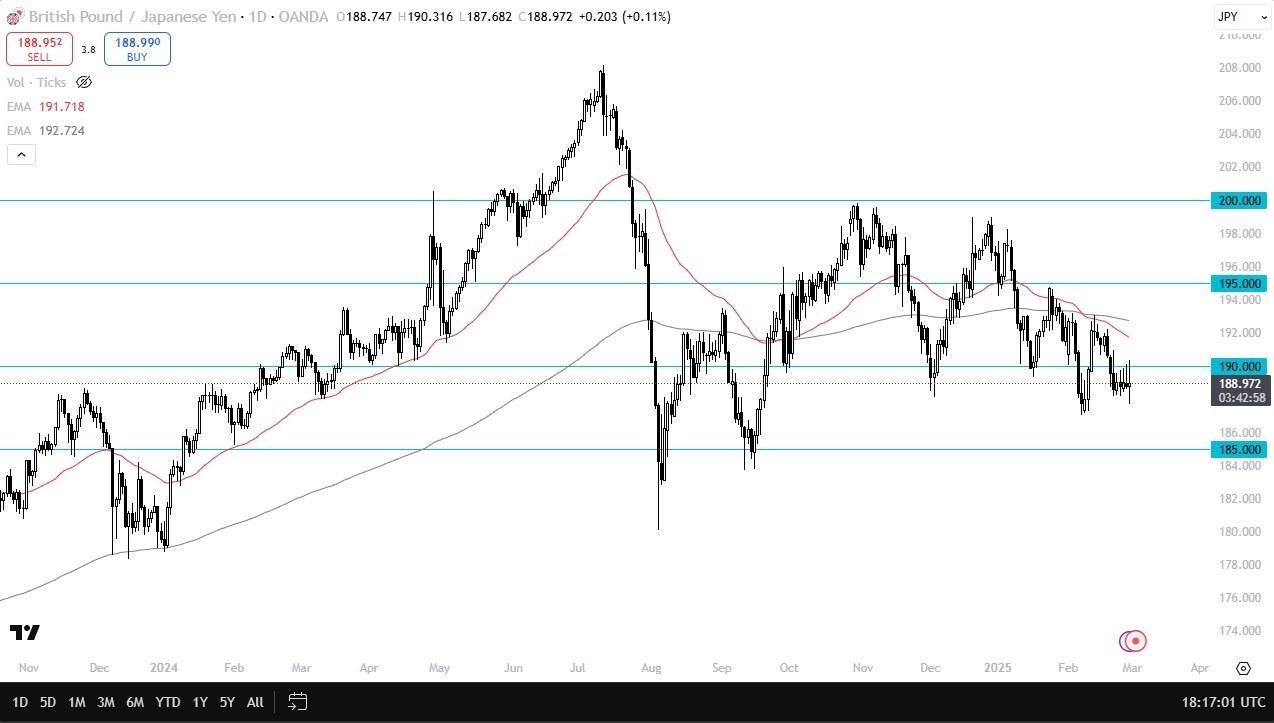
  • The British pound has rallied a bit against the Japanese yen during the trading session on Friday as we continue to threaten the 195 yen level, an area that’s been important a couple of times in the past.
  • So, I think ultimately, we need to see whether or not this pair can actually stick above the 195 yen level to get overly bullish in the short term.
  • It looks like every time we dip a bit, buyers are willing to step in and pick up a little bit of value as it appears.

But really at this point in time, I think it is a little bit difficult to get overly aggressive at least until we clear this hurdle. That being said, if we do break above that hurdle, I think a lot of people will be paying close attention to this pair. I also believe it would have more to do with the Japanese yen than anything else as you would more likely than not see other yen related pairs skyrocketing.

On that breakout

If and when we do, then the market could very well run up to the 198 yen level, an area that has been important previously. With all of that being said, I think we have a situation where traders continue to see the potential for the carry trade to come back. This is especially true now that the Bank of Japan has finally come out recently and just admitted that, hey, there’s nothing we can do here as far as tightening monetary policy is concerned. So, with that being said, I think you have a situation where you’re buying dips and if we can finally get that move above 195 with a clean break to the upside, you start to chase that as well. I have no interest whatsoever in shorting this pair. The interest rate differential will continue to keep me long of this market going forward as I get paid at the end of every day.

Ready to trade our Forex daily forecast? We’ve shortlisted the best forex broker list for you to check out

Source link

Go to Top