The main tag of Forex News Today Articles.
You can use the search box below to find what you need.
[wd_asp id=1]

19 07, 2024

GBP/JPY Forecast Today – 19/07: Pound Up (Video & Chart)

By |2024-07-19T11:55:24+03:00July 19, 2024|Forex News, News|0 Comments

  • In my daily analysis of the British pound against the Japanese yen, it’s easy to see that we have seen a massive turnaround.
  • At this point in time, it looks like the market is going to continue to see more of a buy on the dip behavior and buying on the dip, of course, has been the way to play this market for quite some time.

With that being the case, you should also keep in mind that the market has an interest rate differential that a lot of people will pay attention to. After all you get paid quite nicely for, um, holding on to the pound against the yen. The Bank of England does have an interest rate decision in the next week or so. So that could come into play, but quite frankly it’s a situation where the bank of Japan just can’t do anything, although they may have been instrumental in part of the falling, if you will, of yen related pairs due to the fact that there has been a lot of negativity out there and then the Bank of Japan tends to pounce on that when they get the opportunity.

In the end…

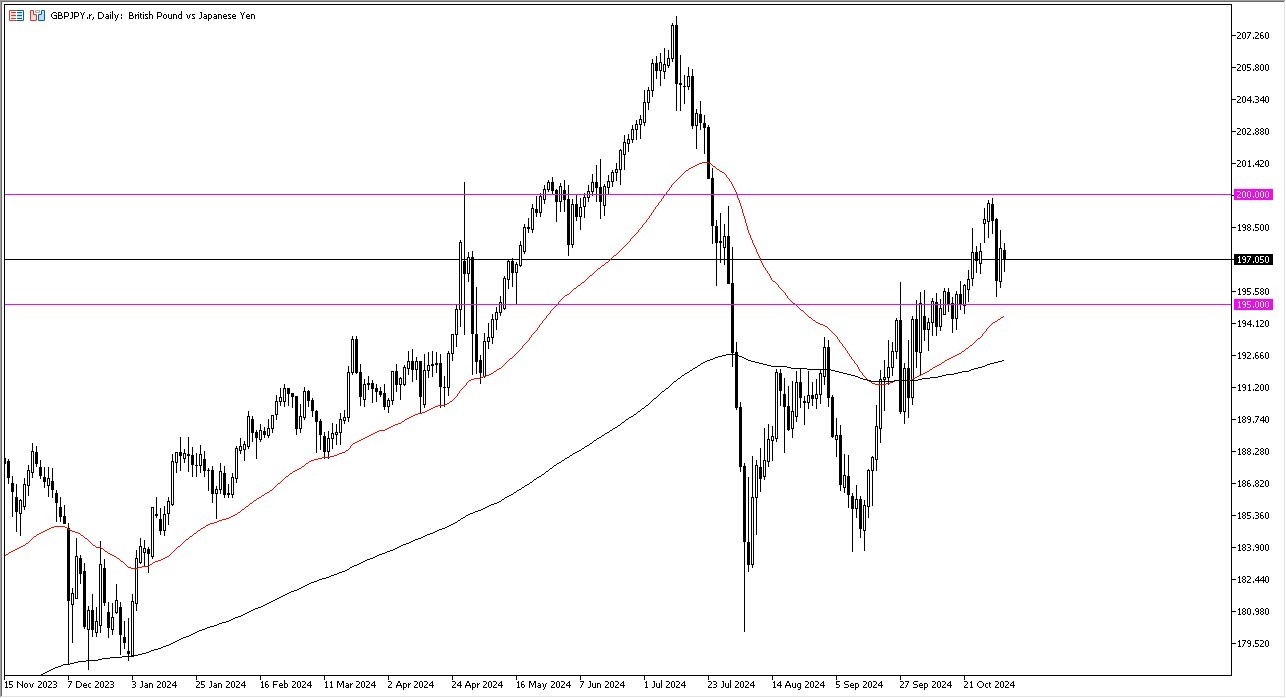
Either way, I think as long as we can stay above the 50-day EMA underneath and the 200 level, this remains a market that is still very much in an uptrend. And although it has been somewhat vicious on the way down, the reality is that it is still very much in an uptrend. So, with this, I am looking for momentum to the upside to jump on until then, I’m just going to be sitting on the sidelines and waiting for the value play to present itself yet again. Don’t feel rushed to get into the market, but I do think that if we can break above the 204 yen level, it’s likely that this pair will continue to climb higher.

Ready to trade our daily Forex analysis? We’ve made this forex brokers list for you to check out.

Source link

19 07, 2024

USD/JPY Forecast: Inflation Rate of 2.8% to Influence BoJ Policy Goals

By |2024-07-19T05:51:32+03:00July 19, 2024|Forex News, News|0 Comments

Higher core inflation would support a more aggressive rate hike. Inflation could also signal a larger cut to JGB purchases. Barring a Fed U-Turn on plans to cut interest rates, BoJ policy moves could send the USD/JPY below 150.

Conversely, a modest cut to JGB purchases and no rate hike could disappoint and fuel a pre-Fed USD/JPY return to 160.

For the BoJ, the issue extends beyond price stability. Household spending trends have reflected the effects of the weak Yen on import costs and consumer prices. After multiple interventions since April, the BoJ could face extra pressure to address price stability and the Yen’s weakness.

Broader Considerations for the Japanese Economy

Bank of Japan Deputy Governor Ryozo Himino recently commented on the effects of the Yen’s weakness on the economy, stating,

“Exchange-rate fluctuations affect economic activity in various ways. It also affects inflation in a broad-based and sustained way, beyond the direct impact on import prices.”

S&P Global Market Intelligence Associate Director Jinyi Pan also observed the effects of the weak Yen on the private sector, saying,

“More concerning, however, is the pressure on margins for Japanese firms. Average input costs rose at the fastest pace in over a year while output price inflation softened in June, particularly in the service sector. Anecdotal evidence suggested that the effects of a weak Yen and rising labor costs brought up cost inflation.”

Notably, narrowing profit margins may affect the labor market and wage growth. Softer wage growth could reduce household spending. In Q1 2024, private consumption fell by 0.7%, impacting the economy.

After considering the inflation numbers from Japan, FOMC Member speeches could also influence near-term USD/JPY trends.

Fed Forward Guidance

FOMC Members John Williams and Raphael Bostic are on the calendar to speak on Friday.

Investors should consider reactions to recent US inflation and labor market data. Support for a September Fed rate cut may fuel speculation about a December interest rate cut.

On Wednesday, NY Fed President John Williams poured cold water on a July rate cut but indicated a possible September cut. A more decisive stance toward September could reduce buyer demand for the US dollar.

However, comments from Raphael Bostic may have more impact on sentiment toward the Fed rate path. The Atlanta Fed President has not spoken since Fed Chair Powell sent September Fed rate cut signals during testimony on Capitol Hill.

Short-term Forecast: Bearish

USD/JPY trends could hinge on July services PMI numbers on July 24 and the US Personal Income and Outlays Report on July 26. A pickup in Japan’s services sector may raise investor expectations of a July 31 BoJ interest rate hike and cut to JGB purchases

Conversely, weaker US services sector activity and softer US inflation could greenlight September and December Fed rate cuts.

The USD/JPY could drop below 150 on a narrowing to interest rate differentials in favor of the Yen.

Investors should remain alert. Monitor real-time data, central bank commentary, and expert commentary to adjust your trading strategies accordingly. Stay updated with our latest news and analysis to manage USD/JPY volatility.

USD/JPY Price Action

Daily Chart

The USD/JPY remained below the 50-day EMA while sitting comfortably above the 200-day EMA. The EMAs affirmed the bearish near-term but bullish longer-term price signals.

A USD/JPY move above the 50-day EMA could signal a return to 160. A break above 160 could support a move to the July 3 high of 161.951.

Bank of Japan and Fed commentary require consideration on Friday.

Conversely, a drop below the 155 handle could give the bears a run at the 200-day EMA and the 151.685 support level.

The 14-day RSI at 41.89 suggests a USD/JPY break below 155 before entering oversold territory.

Source link

19 07, 2024

Interim support emerges around 1.0900

By |2024-07-19T03:50:33+03:00July 19, 2024|Forex News, News|0 Comments

You have reached your limit of 5 free articles for this month.

Get Premium without limits for only $479.76 for the first month

Access all our articles, insights, and analysts.

Your coupon code


UNLOCK OFFER

  • EUR/USD reversed part of the recent strong gains.
  • The ECB kept its policy rates unchanged, as expected.
  • ECB’s Lagarde sees inflation hitting the target in H2 2025.

The US Dollar (USD) regained momentum on Thursday, lifting the USD Index (DXY) back above the 104.00 barrier, helped by the decent bounce in US yields across various maturity periods.

Against that, EUR/USD set aside two consecutive sessions of gains and challenged the 1.0900 region, also following the dovish hold by the ECB at its meeting on Thursday and a marginal uptick in German 10-year bund yields.

Back to the ECB event, during her press conference, President Christine Lagarde argued that she expects the recovery to be supported by consumption, highlighting the resilience of the labour market. She also noted that domestic inflation remains high and that wages are rising at an elevated rate. Additionally, she projected that the Harmonized Index of Consumer Prices (HICP) would decline to the bank’s target in the second half of 2025. Furthermore, Lagarde also identified wages, profits, and geopolitical factors as potential upside risks to inflation.

Conversely, there is ongoing debate among investors about whether the Fed will implement one, two, or three rate cuts this year, despite the Fed’s current projection of a single cut, likely in December.

The CME Group’s FedWatch Tool indicates a nearly 98% probability of lower rates at the September 18 meeting, with another rate cut fully anticipated in December.

Supporting this outlook, Austan Goolsbee, President of the Chicago Federal Reserve Bank, expressed that the US economy seems to be reverting to a 2% inflation target following an earlier increase this year. His observations indicate growing confidence that the opportunity to reduce interest rates may be approaching.

Meanwhile, the economic recovery prospects in the Eurozone and signs of cooling in key US economic indicators may mitigate the ongoing disparity in monetary policy between the Fed and the ECB, occasionally supporting the EUR/USD pair in the near future. This perspective has gained traction pari passu rising expectations of Fed interest rate cuts.

Looking ahead, upcoming Fedspeak should dictate the pair’s price action as the trading week draws to a close.

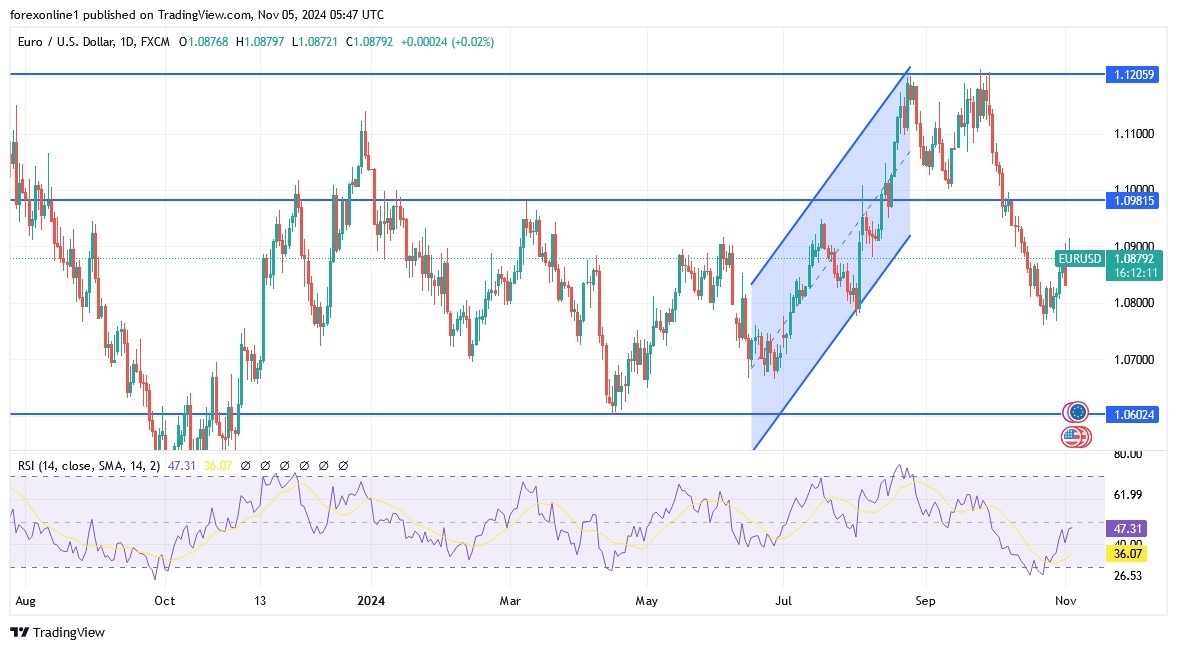
EUR/USD daily chart

EUR/USD short-term technical outlook

EUR/USD is expected to face the next upward resistance at 1.0948 (July 17), followed by the March high of 1.0981 (March 8) and the psychological 1.1000 level.

If bears retake control, the pair may target the 200-day SMA of 1.0810 before sliding to the June low of 1.0666 (June 26). The loss of the May low of 1.0649 (May 1) leads to the 2024 bottom of 1.0601 (April 16).

Looking at the larger picture, it looks that further gains are on the way if the important 200-day SMA is surpassed on a convincing fashion.

So far, the 4-hour chart shows some loss of upside momentum for the time being. However, the initial resistance is 1.0948, before 1.0981 and 1.1000. On the other hand, the 55-SMA at 1.0872 comes first, followed by the 200-SMA at 1.0793, and then 1.0709. The relative strength index (RSI) dropped to about 47.

  • EUR/USD reversed part of the recent strong gains.
  • The ECB kept its policy rates unchanged, as expected.
  • ECB’s Lagarde sees inflation hitting the target in H2 2025.

The US Dollar (USD) regained momentum on Thursday, lifting the USD Index (DXY) back above the 104.00 barrier, helped by the decent bounce in US yields across various maturity periods.

Against that, EUR/USD set aside two consecutive sessions of gains and challenged the 1.0900 region, also following the dovish hold by the ECB at its meeting on Thursday and a marginal uptick in German 10-year bund yields.

Back to the ECB event, during her press conference, President Christine Lagarde argued that she expects the recovery to be supported by consumption, highlighting the resilience of the labour market. She also noted that domestic inflation remains high and that wages are rising at an elevated rate. Additionally, she projected that the Harmonized Index of Consumer Prices (HICP) would decline to the bank’s target in the second half of 2025. Furthermore, Lagarde also identified wages, profits, and geopolitical factors as potential upside risks to inflation.

Conversely, there is ongoing debate among investors about whether the Fed will implement one, two, or three rate cuts this year, despite the Fed’s current projection of a single cut, likely in December.

The CME Group’s FedWatch Tool indicates a nearly 98% probability of lower rates at the September 18 meeting, with another rate cut fully anticipated in December.

Supporting this outlook, Austan Goolsbee, President of the Chicago Federal Reserve Bank, expressed that the US economy seems to be reverting to a 2% inflation target following an earlier increase this year. His observations indicate growing confidence that the opportunity to reduce interest rates may be approaching.

Meanwhile, the economic recovery prospects in the Eurozone and signs of cooling in key US economic indicators may mitigate the ongoing disparity in monetary policy between the Fed and the ECB, occasionally supporting the EUR/USD pair in the near future. This perspective has gained traction pari passu rising expectations of Fed interest rate cuts.

Looking ahead, upcoming Fedspeak should dictate the pair’s price action as the trading week draws to a close.

EUR/USD daily chart

EUR/USD short-term technical outlook

EUR/USD is expected to face the next upward resistance at 1.0948 (July 17), followed by the March high of 1.0981 (March 8) and the psychological 1.1000 level.

If bears retake control, the pair may target the 200-day SMA of 1.0810 before sliding to the June low of 1.0666 (June 26). The loss of the May low of 1.0649 (May 1) leads to the 2024 bottom of 1.0601 (April 16).

Looking at the larger picture, it looks that further gains are on the way if the important 200-day SMA is surpassed on a convincing fashion.

So far, the 4-hour chart shows some loss of upside momentum for the time being. However, the initial resistance is 1.0948, before 1.0981 and 1.1000. On the other hand, the 55-SMA at 1.0872 comes first, followed by the 200-SMA at 1.0793, and then 1.0709. The relative strength index (RSI) dropped to about 47.

Source link

19 07, 2024

GBP/USD Analysis Today – 18/07: GBP Hits Year High (Chart)

By |2024-07-19T01:49:40+03:00July 19, 2024|Forex News, News|0 Comments

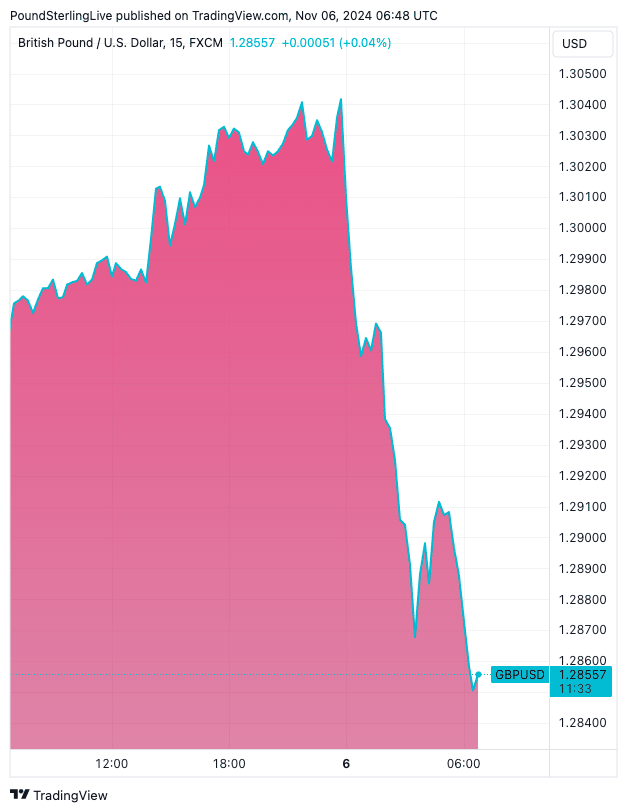
  • GBP/USD broke through the psychological resistance level of 1.3000, extending gains to 1.3044 and remaining close to its highest level in a year.
  • Obviously, this rise followed the UK’s June inflation rate holding at 2%, contrary to expectations of a slowdown to 1.9%.
  • Also, service inflation failed to decrease, remaining at 5.7%, above the Bank of England’s forecast of 5.1%. 

Overall, bets on a Bank of England rate cut in August fell to around 33% from around 49% before the CPI release. Last week, BoE Chief Economist Hugh Bell confirmed that service price inflation and wage growth remain strong. Now, traders are awaiting further data including wage growth and retail sales due this week to assess the timing of the first cut in borrowing costs. 

On another note, the yield on the British 10-year government bond rose after the CPI data. According to trading platforms, the yield on the British 10-year government bond rose to 4.08% from a three-week low on Tuesday, as traders reduced their bets on a Bank of England rate cut in August after higher-than-expected inflation data in Britain. Furthermore, the consumer price index remained at the Bank of England’s target of 2% for the second month in a row in June, but inflation in the services sector remained high at 5.7%. Likewise, economists had expected a decline to 1.9%, while the Bank of England expected services inflation to reach 5.1%. The results raised concerns that inflation, although currently at the target level, may not stay there, which could delay the Bank of England’s plans to cut interest rates. 

As a result, traders reduced the probability of a rate cut on August 1 to around 30%, down from more than 40% the previous day. 

In the United States, the Federal Reserve is expected to start cutting interest rates in September, with two more cuts expected before the end of the year. Recently, Fed Chairman Jerome Powell has indicated that recent data has increased confidence that inflation will return to target and suggested that the central bank should cut rates before inflation reaches 2%. 

On the stock trading platforms front, British stocks fall for a third session after inflation printing. According to online trading platforms, the FTSE 100 index fell slightly on Wednesday, recording a third consecutive session of losses as traders revised their expectations for an August interest rate cut by the Bank of England. Clearly, the revision came on the heels of UK inflation data that beat economists’ expectations. Also, the consumer price index (CPI) held steady at the Bank of England’s 2% target for a second month in June, but highlighted ongoing price pressures in the services sector, which held steady at 5.7%. Again, Economists had expected the headline rate to fall to 1.9%, while the Bank of England had forecast services inflation to reach 5.1%. Decisively, these figures suggest that although inflation is currently at target, it may not stay there, which could delay the Bank of England’s plans to cut interest rates. As a result, traders have reduced the probability of a rate cut on August 1 to around 30%, down from more than 40% the day before. 

In corporate news, copper miner Antofagasta fell more than 2.5% after forecasting annual production at the lower end of its guidance. 

Technical forecasts for the GPB/USD pair today: 

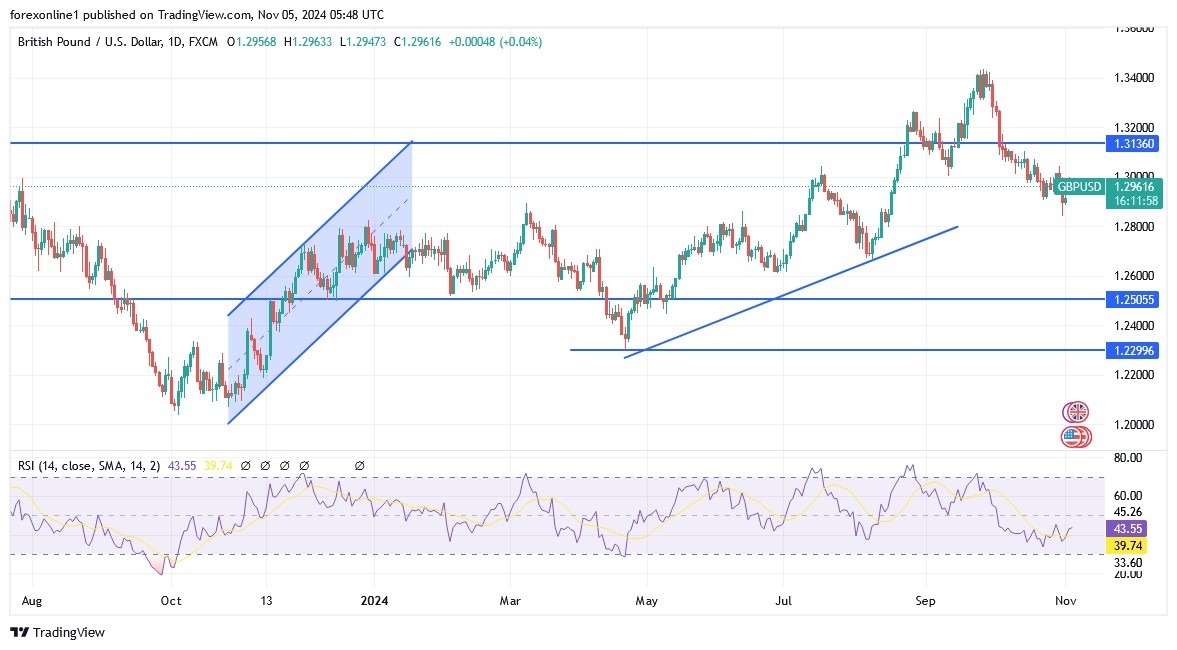
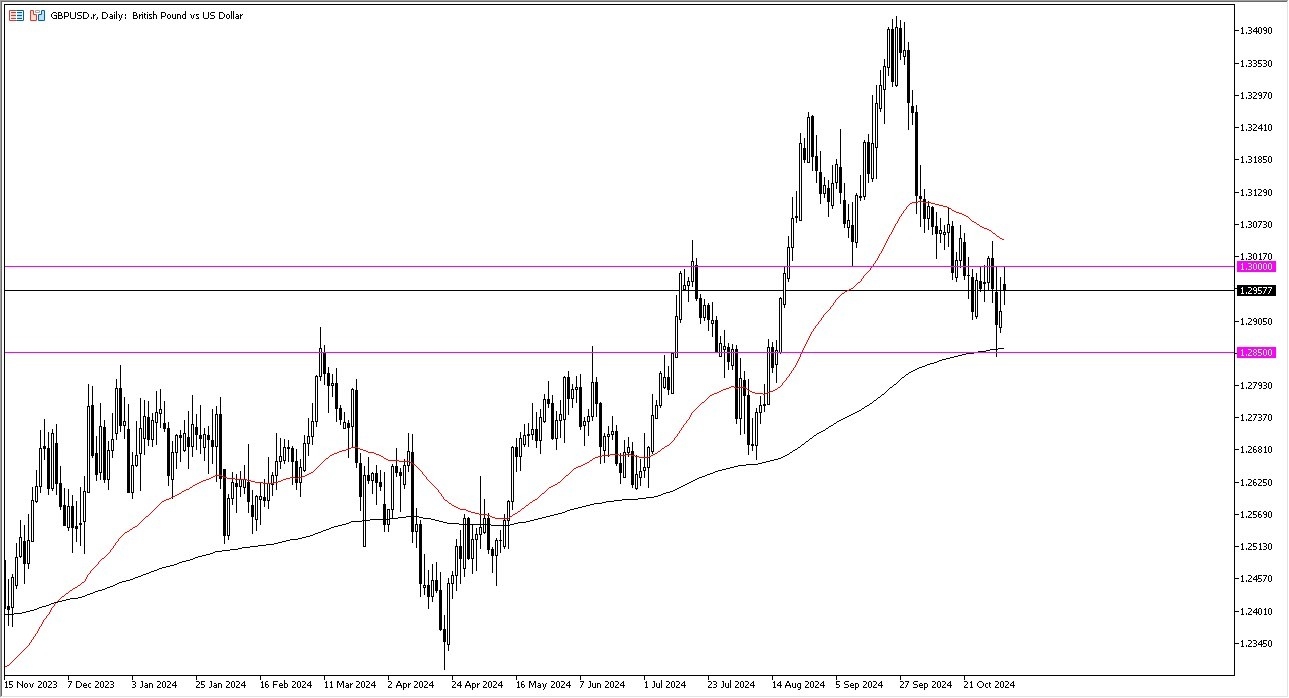
As we mentioned before, the GBP/USD exchange rate broke the 1.3000 psychological resistance level, confirming the bulls’ strong control over the trend. Based on the performance on the daily chart above, technical indicators will move towards strong overbought levels if bulls move towards the 1.3065 and 1.3120 resistance levels respectively. Today’s GBP/USD gains will be influenced by the announcement of UK jobs and wages figures, followed by the announcement of the US weekly jobless claims number. On the other hand, and in the same time frame, moving towards support 1.2880 threatens to rebound to the current high. 

Ready to trade our daily Forex analysis? Check out the best forex trading company in the UK worth using. 

Source link

18 07, 2024

EUR/USD, GBP/USD, USD/CAD, USD/JPY Forecasts – U.S. Dollar Rebounds From Multi-Week Lows

By |2024-07-18T23:48:44+03:00July 18, 2024|Forex News, News|0 Comments

Important DisclaimersThe content provided on the website includes general news and publications, our personal analysis and opinions, and contents provided by third parties, which are intended for educational and research purposes only. It does not constitute, and should not be read as, any recommendation or advice to take any action whatsoever, including to make any investment or buy any product. When making any financial decision, you should perform your own due diligence checks, apply your own discretion and consult your competent advisors. The content of the website is not personally directed to you, and we does not take into account your financial situation or needs.The information contained in this website is not necessarily provided in real-time nor is it necessarily accurate. Prices provided herein may be provided by market makers and not by exchanges.Any trading or other financial decision you make shall be at your full responsibility, and you must not rely on any information provided through the website. FX Empire does not provide any warranty regarding any of the information contained in the website, and shall bear no responsibility for any trading losses you might incur as a result of using any information contained in the website.The website may include advertisements and other promotional contents, and FX Empire may receive compensation from third parties in connection with the content. FX Empire does not endorse any third party or recommends using any third party’s services, and does not assume responsibility for your use of any such third party’s website or services.FX Empire and its employees, officers, subsidiaries and associates, are not liable nor shall they be held liable for any loss or damage resulting from your use of the website or reliance on the information provided on this website.Risk DisclaimersThis website includes information about cryptocurrencies, contracts for difference (CFDs) and other financial instruments, and about brokers, exchanges and other entities trading in such instruments. Both cryptocurrencies and CFDs are complex instruments and come with a high risk of losing money. You should carefully consider whether you understand how these instruments work and whether you can afford to take the high risk of losing your money.FX Empire encourages you to perform your own research before making any investment decision, and to avoid investing in any financial instrument which you do not fully understand how it works and what are the risks involved.

Source link

18 07, 2024

Steady near highs as ECB holds fire

By |2024-07-18T21:47:59+03:00July 18, 2024|Forex News, News|0 Comments

You have reached your limit of 5 free articles for this month.

Get Premium without limits for only $479.76 for the first month

Access all our articles, insights, and analysts.

Your coupon code


UNLOCK OFFER

EUR/USD Current price: 1.0928

  • The European Central Bank left interest rates unchanged, as widely anticipated.
  • United States unemployment figures resulted worse than expected.
  • EUR/USD holds on to higher ground but lacks directional strength.

The EUR/USD pair spent the first half of the day trading uneventfully at around 1.0930, retaining recent gains but static ahead of the European Central Bank (ECB) monetary policy decision. The central bank left rates unchanged, as widely anticipated, with the pair not reacting to the news.

The ECB’s accompanying statement showed policymakers are not pre-committed to any particular rate path and will remain data-dependant. Furthermore, they note some measures of underlying inflation ticked up in May, a mildly dovish comment that hints at no action in the next meeting, although market participants are still betting for a rate cut coming in September, alongside a Federal Reserve (Fed) one. Nevertheless, President Christine Lagarde is about to give a press conference, and her words can trigger some additional action across the board.

Meanwhile, the United States (US) released Initial Jobless Claims for the week ended July 12, which unexpectedly jumped to 243K, much worse than anticipated. On the other hand, the July Philadelphia Fed Manufacturing Survey improved much more than anticipated, hitting 13.9 after printing at 1.3 in June.

EUR/USD short-term technical outlook

The EUR/USD pair consolidates in a tight range near its recent multi-month high at 1.0947, and technical readings in the daily chart show buyers paused. Technical indicators are neutral to mildly bearish but around overbought readings, without signs of bearish strength. At the same time, the pair keeps developing above all its moving averages. The 20 Simple Moving Average (SMA) heads firmly south and is currently crossing converging 100 and 200 SMAs, usually reflecting bulls’ dominance.

According to the 4-hour chart, EUR/USD is neutral in the near term, albeit with the risk skew to the upside. The pair develops above all its moving averages, with the 20 SMA maintaining its upward slope far above the longer ones while providing dynamic support at around 1.0910. Technical indicators, however, have lost their directional strength but hold well above their midlines, suggesting absent selling interest.

Support levels: 1.0910 1.0865 1.0820

Resistance levels: 1.0945 1.0990 1.1020

EUR/USD Current price: 1.0928

  • The European Central Bank left interest rates unchanged, as widely anticipated.
  • United States unemployment figures resulted worse than expected.
  • EUR/USD holds on to higher ground but lacks directional strength.

The EUR/USD pair spent the first half of the day trading uneventfully at around 1.0930, retaining recent gains but static ahead of the European Central Bank (ECB) monetary policy decision. The central bank left rates unchanged, as widely anticipated, with the pair not reacting to the news.

The ECB’s accompanying statement showed policymakers are not pre-committed to any particular rate path and will remain data-dependant. Furthermore, they note some measures of underlying inflation ticked up in May, a mildly dovish comment that hints at no action in the next meeting, although market participants are still betting for a rate cut coming in September, alongside a Federal Reserve (Fed) one. Nevertheless, President Christine Lagarde is about to give a press conference, and her words can trigger some additional action across the board.

Meanwhile, the United States (US) released Initial Jobless Claims for the week ended July 12, which unexpectedly jumped to 243K, much worse than anticipated. On the other hand, the July Philadelphia Fed Manufacturing Survey improved much more than anticipated, hitting 13.9 after printing at 1.3 in June.

EUR/USD short-term technical outlook

The EUR/USD pair consolidates in a tight range near its recent multi-month high at 1.0947, and technical readings in the daily chart show buyers paused. Technical indicators are neutral to mildly bearish but around overbought readings, without signs of bearish strength. At the same time, the pair keeps developing above all its moving averages. The 20 Simple Moving Average (SMA) heads firmly south and is currently crossing converging 100 and 200 SMAs, usually reflecting bulls’ dominance.

According to the 4-hour chart, EUR/USD is neutral in the near term, albeit with the risk skew to the upside. The pair develops above all its moving averages, with the 20 SMA maintaining its upward slope far above the longer ones while providing dynamic support at around 1.0910. Technical indicators, however, have lost their directional strength but hold well above their midlines, suggesting absent selling interest.

Support levels: 1.0910 1.0865 1.0820

Resistance levels: 1.0945 1.0990 1.1020

Source link

18 07, 2024

GBP/JPY Forecast Today – 17/07: Pound Finds Buyers (Chart)

By |2024-07-18T19:46:33+03:00July 18, 2024|Forex News, News|0 Comments

Date


(MENAFN– Daily Forex)

  • The British pound has rallied a bit during the trading session on Tuesday.

  • I continue to monitor the ¥205 level as a potential support barrier, as it has held true for some time.

  • Furthermore, we have also seen the market try to push back against any selling, and it’s probably worth noting that the bank of Japan continues to see a lot of resistance against its interventions.

Central BankThe central bank will continue to drive this market in one direction or the other, and it’s obvious at this point in time that the Bank of Japan can do nothing to stem the flow. After all, the market is likely to continue to see the interest rate differential and was the reason to hang on to this pair, and the fact that we ended up forming a couple of hammers in a row does suggest that people are becoming more and more comfortable with buying this market. This asset will continue to pay off at the end of every day, and therefore I think you’ve got a situation where eventually we will try to get back to the highs.Top Forex Brokers

  • 1 Get Started 74% of retail CFD accounts lose money

Underneath, the 200 for yen level is a support barrier as well, and if we were to break down below there, then we could see this market go looking to the 50-Day EMA, which is sitting just above the ¥200 level. The ¥200 level is for me the bottom of the overall trend, and as long as we can stay above there, the market is likely to continue to go much higher. In fact, I would love to see a pullback to that area so I could buy“cheap British pound.”That being said, it certainly looks like this is a market that is not afraid anymore, and the Bank of Japan probably understands that there is only so much you can do. At this point, it is probably more or less all about the idea of trying to slow down the destruction of its own currency as it cannot raise interest rates.Ready to trade our daily analysis & predictions ? Here are the best brokers for beginners to choose from.MENAFN18072024000131011023ID1108453229


Daily Forex


Legal Disclaimer:
MENAFN provides the information “as is” without warranty of any kind. We do not accept any responsibility or liability for the accuracy, content, images, videos, licenses, completeness, legality, or reliability of the information contained in this article. If you have any complaints or copyright issues related to this article, kindly contact the provider above.

Source link

18 07, 2024

GBP/USD Outlook: Pound Slips Below 1.30 Amid Poor Jobs Report

By |2024-07-18T17:45:07+03:00July 18, 2024|Forex News, News|0 Comments

  • Data showed a higher-than-expected number of unemployment claims in the UK.
  • Average UK weekly earnings minus bonuses grew by 5.7%.
  • The pound has gained about 2.1% in 2024 against the dollar.

The GBP/USD outlook is slightly bearish as the pound retreats from recent highs after downbeat employment figures. However, the bullish trend might continue since the dollar is weak amid an increase in Fed rate cut expectations. 

Are you interested in learning more about Forex brokers? Check our detailed guide-

Data on Thursday showed a higher-than-expected number of unemployment claims in the UK in the previous month. The claimant count was 32,300, compared to estimates of 23,400. Still, this was a decline from the last reading of 51,900. If unemployment is higher than estimated, the economy performs poorer than expected. This could pressure the Bank of England to start lowering borrowing costs.

However, separate employment figures revealed that average weekly earnings minus bonuses grew by 5.7%, meeting forecasts. Furthermore, data from the previous session showed that service inflation remained high at 5.7%. Therefore, market participants have lowered the chances that the BoE will cut rates in August from 50% to 40%. 

Notably, unlike other major currencies, the pound has remained resilient against the dollar this year. So far, it has gained about 2.1% in 2024 against the dollar. The recent rally came due to increased expectations for a Fed rate cut. Inflation in the US has maintained its downtrend, giving policymakers more confidence it will reach the target. As a result, investors are placing a 100% likelihood of a rate cut in September. This has pressured the dollar, allowing the pound to rally. Retail sales data tomorrow could shed more light on the UK economy.

GBP/USD key events today

GBP/USD technical outlook: Price retreats to 30-SMA after bearish RSI divergence

GBP/USD Outlook: Pound Slips Below 1.30 Amid Poor Jobs Report
GBP/USD 4-hour chart

On the technical side, the GBP/USD price is in a bullish trend that recently made a new high. However, the price is currently pulling back and is nearing the 30-SMA support. Bulls made a solid attempt to push the price above the 1.3002 key level. 

Are you interested in learning more about crypto signals Telegram groups? Check our detailed guide-

However, as the price made a higher high, the RSI made a lower one, indicating weakness. Consequently, the price fell back below the key level. If bears are stronger, they might take over with a break below the 30-SMA. However, if the SMA holds firm, bulls might retest the 1.3002 level and break above to make a higher high.

Looking to trade forex now? Invest at eToro!

68% of retail investor accounts lose money when trading CFDs with this provider. You should consider whether you can afford to take the high risk of losing your money.

Source link

18 07, 2024

Euro stabilizes above 1.0900 as focus shifts to ECB

By |2024-07-18T15:44:18+03:00July 18, 2024|Forex News, News|0 Comments

You have reached your limit of 5 free articles for this month.

Get Premium without limits for only $479.76 for the first month

Access all our articles, insights, and analysts.

Your coupon code


UNLOCK OFFER

  • EUR/USD moves sideways above 1.0900 following Wednesday’s upsurge.
  • ECB is widely expected to leave policy settings unchanged.
  • ECB President Lagarde’s comments on rate outlook could influence the Euro’s valuation.

EUR/USD extended its weekly rally and touched its highest level since mid-March near 1.0950 on Wednesday. The pair stays in a consolidation phase below this level as investors wait for the European Central Bank (ECB) to announce monetary policy decisions.

Euro PRICE This week

The table below shows the percentage change of Euro (EUR) against listed major currencies this week. Euro was the strongest against the New Zealand Dollar.

  USD EUR GBP JPY CAD AUD NZD CHF
USD   -0.24% -0.01% -1.06% 0.22% 0.69% 0.57% -1.17%
EUR 0.24%   0.26% -0.63% 0.65% 0.96% 1.01% -0.73%
GBP 0.00% -0.26%   -0.79% 0.39% 0.70% 0.70% -1.00%
JPY 1.06% 0.63% 0.79%   1.29% 1.55% 1.61% -0.30%
CAD -0.22% -0.65% -0.39% -1.29%   0.40% 0.35% -1.40%
AUD -0.69% -0.96% -0.70% -1.55% -0.40%   0.03% -1.69%
NZD -0.57% -1.01% -0.70% -1.61% -0.35% -0.03%   -1.74%
CHF 1.17% 0.73% 1.00% 0.30% 1.40% 1.69% 1.74%  

The heat map shows percentage changes of major currencies against each other. The base currency is picked from the left column, while the quote currency is picked from the top row. For example, if you pick the Euro from the left column and move along the horizontal line to the US Dollar, the percentage change displayed in the box will represent EUR (base)/USD (quote).

The persistent selling pressure surrounding the US Dollar (USD) fuelled another leg higher in EUR/USD midweek. In the absence of high-tier data releases, dovish comments from Federal Reserve (Fed) officials didn’t allow the USD to stage a rebound.

The ECB is widely expected to leave monetary policy settings unchanged after having lowered key rates by 25 basis points in June.

Investors will scrutinize the statement language and comments from ECB President Christine Lagarde in the post-meeting press conference to figure out whether the ECB will lower key rates again in September.

In case Lagarde adopts an optimistic tone regarding the inflation outlook, the Euro could come under selling pressure even if she refrains from confirming a rate cut in September. On the other hand, the Euro could stay resilient against its rivals if Lagarde reiterates the data-dependent approach and voices concerns over upside risks to inflation.

The US economic docket will feature weekly Initial Jobless Claims data, which is forecast to come in at 230,000 following the 222,000 reported in the previous week. A reading above the market expectation could make it difficult for the USD to find demand, while a print below 220,000 could have the opposite impact on the USD valuation.

EUR/USD Technical Analysis

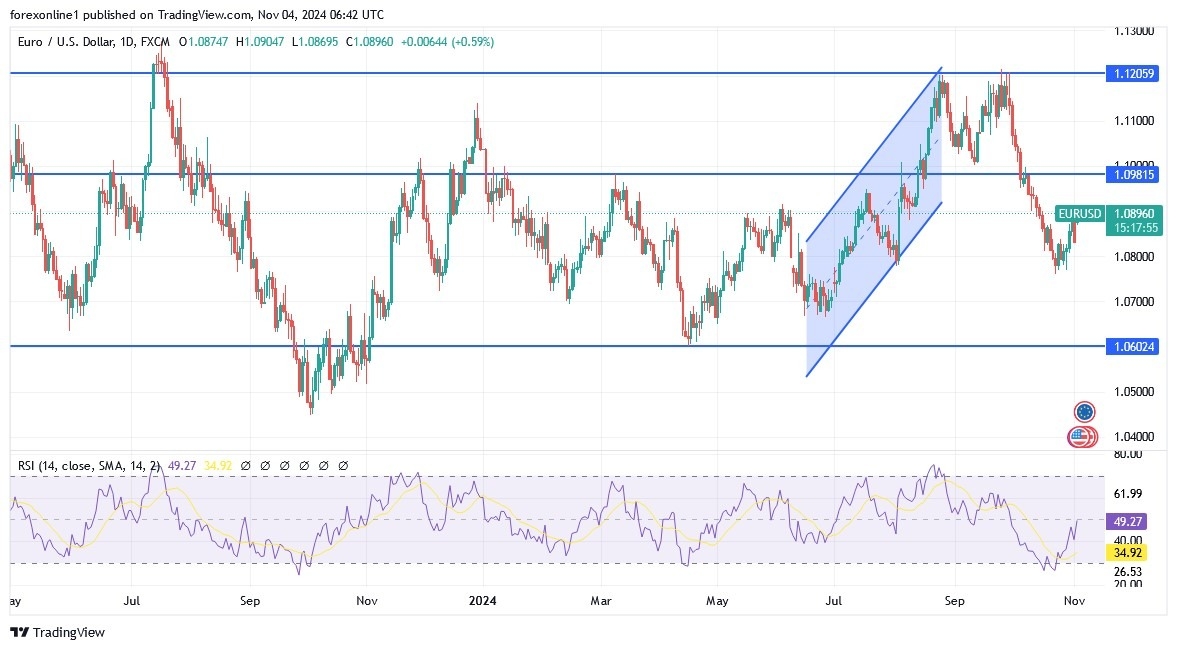
EUR/USD stays within the ascending regression channel coming from late June and the Relative Strength Index (RSI) indicator on the 4-hour chart holds above 60, suggesting that the pair remains technically bullish.

EUR/USD could face first resistance at 1.0950 (static level, mid-point of the ascending channel) before 1.0980 (upper limit of the ascending channel), 1.1000 (psychological level, static level) and 1.1030 (static level). On the downside, the lower limit of the ascending channel forms key support at 1.0900 ahead of 1.0870 (50-period Simple Moving Average) and 1.0840 (static level).

ECB FAQs

The European Central Bank (ECB) in Frankfurt, Germany, is the reserve bank for the Eurozone. The ECB sets interest rates and manages monetary policy for the region. The ECB primary mandate is to maintain price stability, which means keeping inflation at around 2%. Its primary tool for achieving this is by raising or lowering interest rates. Relatively high interest rates will usually result in a stronger Euro and vice versa. The ECB Governing Council makes monetary policy decisions at meetings held eight times a year. Decisions are made by heads of the Eurozone national banks and six permanent members, including the President of the ECB, Christine Lagarde.

In extreme situations, the European Central Bank can enact a policy tool called Quantitative Easing. QE is the process by which the ECB prints Euros and uses them to buy assets – usually government or corporate bonds – from banks and other financial institutions. QE usually results in a weaker Euro. QE is a last resort when simply lowering interest rates is unlikely to achieve the objective of price stability. The ECB used it during the Great Financial Crisis in 2009-11, in 2015 when inflation remained stubbornly low, as well as during the covid pandemic.

Quantitative tightening (QT) is the reverse of QE. It is undertaken after QE when an economic recovery is underway and inflation starts rising. Whilst in QE the European Central Bank (ECB) purchases government and corporate bonds from financial institutions to provide them with liquidity, in QT the ECB stops buying more bonds, and stops reinvesting the principal maturing on the bonds it already holds. It is usually positive (or bullish) for the Euro.


  • EUR/USD moves sideways above 1.0900 following Wednesday’s upsurge.
  • ECB is widely expected to leave policy settings unchanged.
  • ECB President Lagarde’s comments on rate outlook could influence the Euro’s valuation.

EUR/USD extended its weekly rally and touched its highest level since mid-March near 1.0950 on Wednesday. The pair stays in a consolidation phase below this level as investors wait for the European Central Bank (ECB) to announce monetary policy decisions.

Euro PRICE This week

The table below shows the percentage change of Euro (EUR) against listed major currencies this week. Euro was the strongest against the New Zealand Dollar.

  USD EUR GBP JPY CAD AUD NZD CHF
USD   -0.24% -0.01% -1.06% 0.22% 0.69% 0.57% -1.17%
EUR 0.24%   0.26% -0.63% 0.65% 0.96% 1.01% -0.73%
GBP 0.00% -0.26%   -0.79% 0.39% 0.70% 0.70% -1.00%
JPY 1.06% 0.63% 0.79%   1.29% 1.55% 1.61% -0.30%
CAD -0.22% -0.65% -0.39% -1.29%   0.40% 0.35% -1.40%
AUD -0.69% -0.96% -0.70% -1.55% -0.40%   0.03% -1.69%
NZD -0.57% -1.01% -0.70% -1.61% -0.35% -0.03%   -1.74%
CHF 1.17% 0.73% 1.00% 0.30% 1.40% 1.69% 1.74%  

The heat map shows percentage changes of major currencies against each other. The base currency is picked from the left column, while the quote currency is picked from the top row. For example, if you pick the Euro from the left column and move along the horizontal line to the US Dollar, the percentage change displayed in the box will represent EUR (base)/USD (quote).

The persistent selling pressure surrounding the US Dollar (USD) fuelled another leg higher in EUR/USD midweek. In the absence of high-tier data releases, dovish comments from Federal Reserve (Fed) officials didn’t allow the USD to stage a rebound.

The ECB is widely expected to leave monetary policy settings unchanged after having lowered key rates by 25 basis points in June.

Investors will scrutinize the statement language and comments from ECB President Christine Lagarde in the post-meeting press conference to figure out whether the ECB will lower key rates again in September.

In case Lagarde adopts an optimistic tone regarding the inflation outlook, the Euro could come under selling pressure even if she refrains from confirming a rate cut in September. On the other hand, the Euro could stay resilient against its rivals if Lagarde reiterates the data-dependent approach and voices concerns over upside risks to inflation.

The US economic docket will feature weekly Initial Jobless Claims data, which is forecast to come in at 230,000 following the 222,000 reported in the previous week. A reading above the market expectation could make it difficult for the USD to find demand, while a print below 220,000 could have the opposite impact on the USD valuation.

EUR/USD Technical Analysis

EUR/USD stays within the ascending regression channel coming from late June and the Relative Strength Index (RSI) indicator on the 4-hour chart holds above 60, suggesting that the pair remains technically bullish.

EUR/USD could face first resistance at 1.0950 (static level, mid-point of the ascending channel) before 1.0980 (upper limit of the ascending channel), 1.1000 (psychological level, static level) and 1.1030 (static level). On the downside, the lower limit of the ascending channel forms key support at 1.0900 ahead of 1.0870 (50-period Simple Moving Average) and 1.0840 (static level).

ECB FAQs

The European Central Bank (ECB) in Frankfurt, Germany, is the reserve bank for the Eurozone. The ECB sets interest rates and manages monetary policy for the region. The ECB primary mandate is to maintain price stability, which means keeping inflation at around 2%. Its primary tool for achieving this is by raising or lowering interest rates. Relatively high interest rates will usually result in a stronger Euro and vice versa. The ECB Governing Council makes monetary policy decisions at meetings held eight times a year. Decisions are made by heads of the Eurozone national banks and six permanent members, including the President of the ECB, Christine Lagarde.

In extreme situations, the European Central Bank can enact a policy tool called Quantitative Easing. QE is the process by which the ECB prints Euros and uses them to buy assets – usually government or corporate bonds – from banks and other financial institutions. QE usually results in a weaker Euro. QE is a last resort when simply lowering interest rates is unlikely to achieve the objective of price stability. The ECB used it during the Great Financial Crisis in 2009-11, in 2015 when inflation remained stubbornly low, as well as during the covid pandemic.

Quantitative tightening (QT) is the reverse of QE. It is undertaken after QE when an economic recovery is underway and inflation starts rising. Whilst in QE the European Central Bank (ECB) purchases government and corporate bonds from financial institutions to provide them with liquidity, in QT the ECB stops buying more bonds, and stops reinvesting the principal maturing on the bonds it already holds. It is usually positive (or bullish) for the Euro.


Source link

18 07, 2024

USD/JPY Analysis Today- 18/07: Bearish Channel Forms (Chart)

By |2024-07-18T13:43:08+03:00July 18, 2024|Forex News, News|0 Comments

  • The yen rose 1.5% to above 155.5 against the dollar today, its highest level in over a month, as markets reassessed monetary policy expectations for the Bank of Japan and the Federal Reserve, and Japan’s willingness to intervene to defend its currency.
  • This increase extends the rally that occurred at the end of last week, which lifted the yen from a 38-year low of 162, as Japan is likely to have sold more than $20 billion to support the currency. 

In general, the large scale of the suspected intervention in the currency markets by the Japanese Ministry of Finance, along with the weakness of the US dollar due to weak inflation data, has prompted markets to reconsider betting against the yen, and is suspected of sparking a bout of short pressure on the currency, while the momentum of the Japanese yen has slowed economic growth. Moreover, the recovery has prompted some investors not to ignore another round of intervention by Tokyo. 

On the monetary policy front, the Bank of Japan is expected to announce plans to scale back bond purchases and possibly raise interest rates again at its next policy meeting later this quarter. 

On the stock exchanges front, Japan’s Nikkei index falls on tech selloff. According to trading platforms, the Nikkei 225 index fell 0.43% to close at 41,098 on Wednesday, reversing gains made earlier in the session, weighed down by losses in Japanese technology stocks that followed a selloff in major U.S. technology names. Clearly, the moves came as investors continue to shift to other sectors that are expected to benefit from U.S. rate cuts, with the Dow Jones and Russell 2000 currently outperforming the S&P 500 and Nasdaq Composite. Meanwhile, the broader TOPIX index rose 0.37% to 2,915 for a second straight day. 

On the local market level, A Reuters Tankan survey showed that business sentiment among major manufacturers in Japan improved to its highest level in seven months in July, despite declining confidence among non-manufacturers amid volatile economic expectations. The losses in the technology sector led the decline, with Tokyo Electron (-7.5%), Disco Corp (-4.5%), Lazartec (-5%), Advantest (-2.6%), and Rorzy Corp (-6.1%) among the hardest hit. 

USD/JPY Technical analysis and Expectations Today 

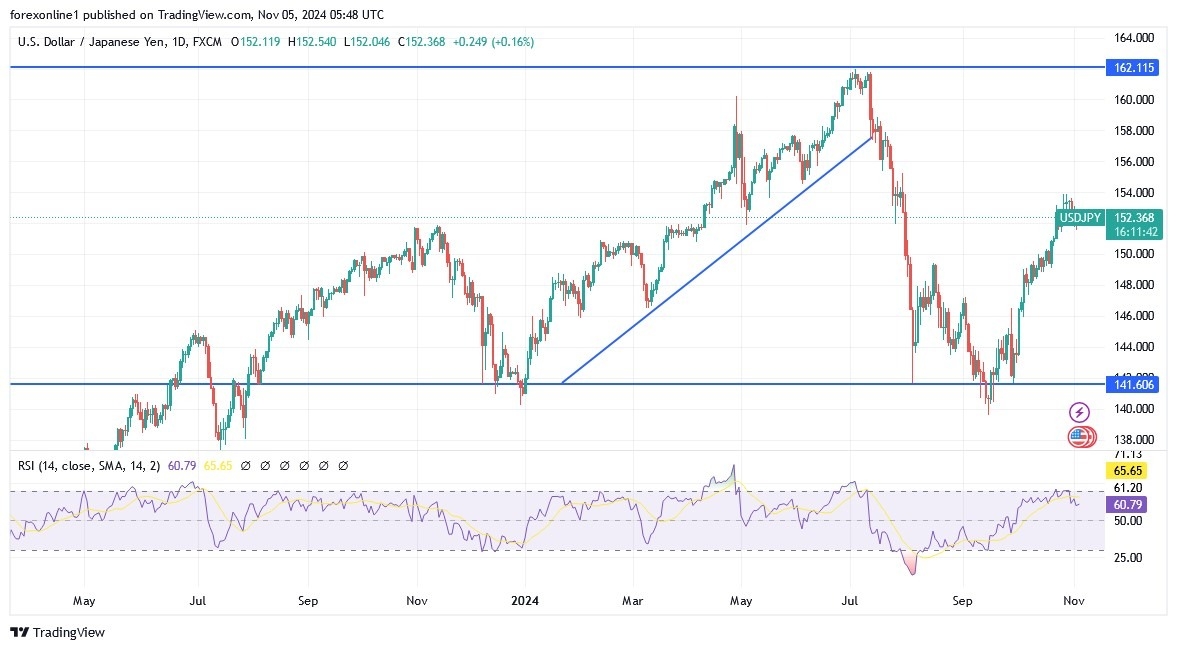
The USD/JPY pair has been in a selling position following recent intervention by the Bank of Japan, but the pair may find buyers at a key support area visible on the daily chart. Technically, the price has formed higher lows connected by an ascending trend line that has held since March 2023. Thus, the retreat to this support area shows that additional levels indicated by the Fibonacci retracement tool may attract buyers. 

Meanwhile The 38.2% Fib level appears to be holding as support around the key psychological level of 156.00, but a larger pullback to the 50% Fibonacci level at 154.00 might be appropriate. Also, the 61.8% Fibonacci retracement aligns with the 200-day simple moving average (SMA) and the trend line at 152.05. Regarding moving averages, the 100 SMA is above the 200 SMA, emphasizing that the stronger path is upward or that the uptrend is likely to gain momentum rather than reverse. In this scenario, USD/JPY could revisit the swing high around 162.00 or at least the area of interest at 160.00. 

Simultaneously, the stochastic indicator is heading south, indicating that the correction might continue, but the oscillator is also nearing the oversold region, suggesting exhaustion. Moreover, a turn to the upside would mean that buyers are ready to return. Also, the Relative Strength Index (RSI) is moving downwards and has some ground to cover before reaching the oversold area, so the correction might persist until that happens. 

Want to trade our daily forex analysis and predictions? Here’s a list of forex brokers in Japan to check out. 

Source link

Go to Top