The main tag of Forex News Today Articles.
You can use the search box below to find what you need.
[wd_asp id=1]

16 07, 2024

Pound to Dollar Week Ahead Forecast: Overbought

By |2024-07-16T01:04:48+03:00July 16, 2024|Forex News, News|0 Comments

U.S. retail sales are in focus this week. Image © Adobe Images


Pound Sterling has risen to its highest level in a year against the Dollar after last week’s 1.35% gain. But, the rally leaves it technically overbought in the near term and exposed to weakness if this week’s inflation and wage figures undershoot expectations.

The Pound to Dollar exchange rate hit a high of 1.2990 on Friday and holds onto these gains as Monday brings about a busy week for the British currency.

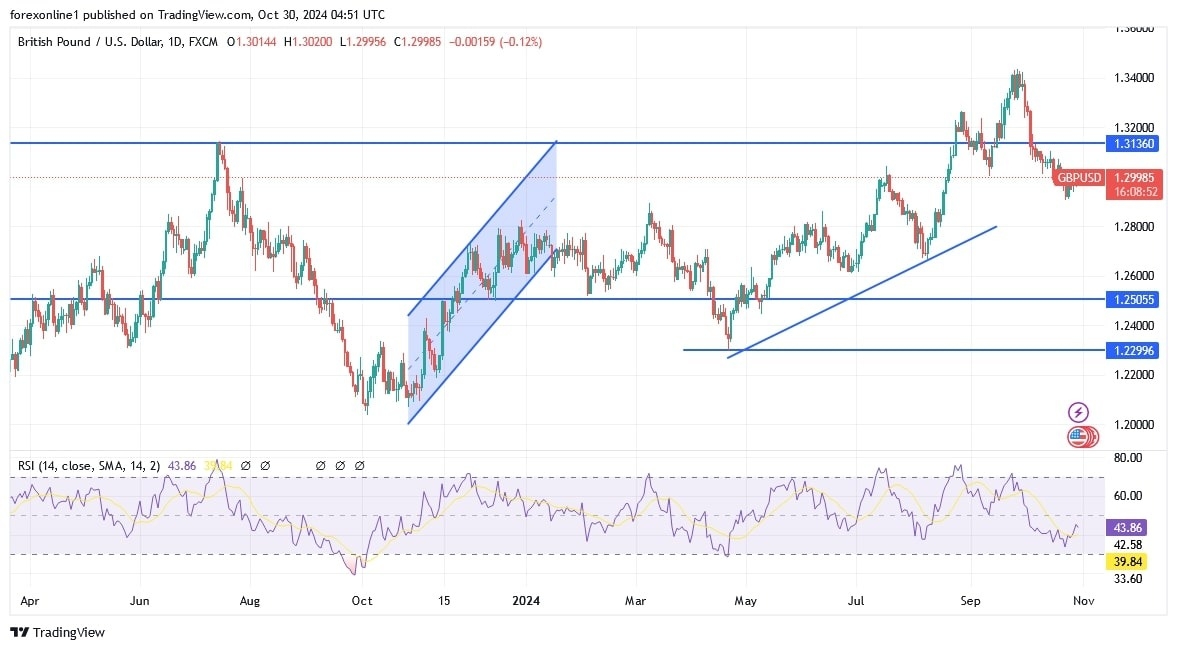
The pair quotes at 1.2976 at the time of writing, which means the most competitive payment rates on offer are now near 1.2914. The odds of a pullback are high, with the daily RSI now reading at 72.98.


Above: GBP/USD at daily intervals with the RSI in the lower panel. Track GBP/USD with your custom alerts; find out more here.


A reading above 70 is consistent with overbought signals. The RSI rarely stays above 70 or below 30 as it tends to revert towards 50. To achieve this, a period of consolidation or weakness must ensue.

Any weakness in the coming days could be restricted to the previous 2024 cycle highs at 1.2893 and 1.2860, respectively.

Weakness is seen as temporary at this juncture as Pound-Dollar trades well above its key moving averages, which confirms the exchange rate is in an uptrend that can continue to extend once a period of consolidation has taken place.

“The cable has surged above its bearish trend line that has persisted since June 2021, hinting at a possible significant upward movement,” says Fawad Razaqzada, an analyst at City Index.


Pound Sterling outperformance means it stands at the top of the G10 currency basket for 2024 thanks to a trifecta of developments: 1) improving domestic data, 2) a retreat in Bank of England rate cut expectations and, 3) improved political sentiment.

“The GBP currently has the strongest upward momentum amongst G10 currencies. The UK election result has created a more favourable backdrop for the GBP. The large majority for Labour should ensure a period of much-needed political stability in the UK,” says Lee Hardman, an analyst at MUFG Bank Ltd.

The key tests for the Pound come from this week’s inflation and wage figures. Services inflation is expected to read at 5.6% and headline CPI inflation is forecast to read at 2.0%. Any undershoot would raise the odds of an August 01 rate cut and send an overbought Pound-Dollar sharply lower.


Analysts at Oxford Economics reckon the headline CPI inflation print will be 1.8%, which would represent a decent undershoot and prompt a selloff in the Pound.

“Considering the GBP has been the best performing G-10 currency QTD, we think it remains prone to a larger correction if CPI print comes in lower than expectations,” says Daragh Maher, Head of FX Strategy at HSBC.

However, the sell-off in the Pound would be limited because the Bank of England will find it difficult to cut aggressively if the economy continues to perform robustly, something several economists said was likely following last week’s GDP release.

Regarding the wage numbers on Thursday, the expectation is for average weekly earnings to have increased by 5.8% over the year to June. Anything below here would result in GBP selling.

Pound-Dollar’s performance nevertheless reflects Dollar weakness more than anything. We note that the dollar has come under pressure over recent days as investors settle on a high likelihood that the Federal Reserve will cut interest rates for the first time in September.

Confidence was boosted by last week’s undershoot in U.S. CPI inflation data. Pound-Dollar smashed through the 1.29 barrier to quote at a new 2024 high of 1.2935 after U.S. CPI inflation printed -0.1% month-on-month in June, down from 0% in May and below expectations for a 0.1% rise.

“Turbo-charging the pound’s recent uplift was data showing US inflation cooled last month, boosting bets of more Fed rate cuts this year and next,” says George Vessey, Lead FX Strategist at Convera.

Money market pricing shows the odds of a September interest rate cut at the Fed are now priced as a near certainty after the headline inflation rate fell to 3.0% year-on-year from 3.3%, undershooting expectations for 3.1%.

Tuesday’s retail sales will be the U.S. data highlight of the coming days, shedding light on demand in the economy. The market’s expectation of an undershoot of the 0% m/m figure could result in further USD weakness as the Fed would become increasingly confident that the disinflation process was underway again.

Source link

15 07, 2024

USD/JPY Analysis Today – 15/07: Did Japan Intervene? (Chart)

By |2024-07-15T23:04:18+03:00July 15, 2024|Forex News, News|0 Comments

  • Since the announcement of U.S. inflation figures falling below all expectations, the USD/JPY exchange rate has been experiencing strong selling pressure, moving towards the support level of 157.37, its lowest in nearly a month, stabilizing around 158.18 at the start of this week’s trading.
  • The selling pressure originated from the resistance level of 161.80, marking the lowest level for the yen in 38 years. 

On the economic side, Japan’s nationwide price growth is expected to strengthen to 2.7% in June data released next Friday, a result that could fuel expectations that the Bank of Japan will consider combining a reduction in bond purchases with a rate hike at its meeting later this month. Japanese workers’ basic wages jumped by the most since 1993, an encouraging sign that the underlying wage trend may start to support consumption and enable the Bank of Japan to raise interest rates again. 

On the US side, the so-called core US consumer price index – which excludes food and energy costs – rose 0.1% from May, the smallest gain in three years. The overall index fell for the first time since the start of the pandemic, weighed down by lower gasoline prices. Meanwhile, the distressed investors see buying distressed US real estate as one of their best opportunities in a generation, as the collapse of commercial real estate continues to roil the market. Nearly $1 trillion in commercial real estate debt is set to mature this year in the US, according to the Mortgage Bankers Association, and rising default rates as borrowers fail to repay are creating more options for buyers of distressed assets. 

On the stock trading front, US stocks close near record highs. According to trading, US stocks pared some of their gains to close near record highs on Friday, supported by rising expectations for a September interest rate cut amid signs of easing inflation as earnings season begins with banks in focus. 

The S&P 500 rose 0.5%, after hitting an all-time high of 5,655 during the session. Also, the Nasdaq 100 rose 0.5%, rebounding from its worst day since April. Furthermore, the Dow Jones jumped 247 points, closing above the 40,000 marks for the second time, having last reached that level on May 17. Moreover, JPMorgan shares fell 1.2% despite higher-than-expected revenue driven by higher investment banking fees. Likewise, Citigroup fell 1.8% even after beating revenue and earnings expectations. Ultimately, Wells Fargo shares fell 6% after reporting lower-than-expected net interest income. 

During last week’s trading, the Dow led gains, jumping 1%, followed by the S&P 500 (+0.6%) while the Nasdaq 100 fell (-0.5%). 

USD/JPY Technical analysis and Expectations Today 

The USD/JPY pair continues to trade slightly below its 100-hour moving average. A late pullback on Friday pushed the pair closer to the oversold levels of the 14-hour RSI. In the near term, based on the hourly chart, the USD/JPY pair is trading within a sideways channel. However, the 14-hour RSI has recently declined to approach oversold conditions. Therefore, the bears will target extended pullbacks around 156.96 or lower at the 156.14 support. On the other hand, the bulls will look to pounce on the bounces around 158.55 or higher at the 159.33 resistance. 

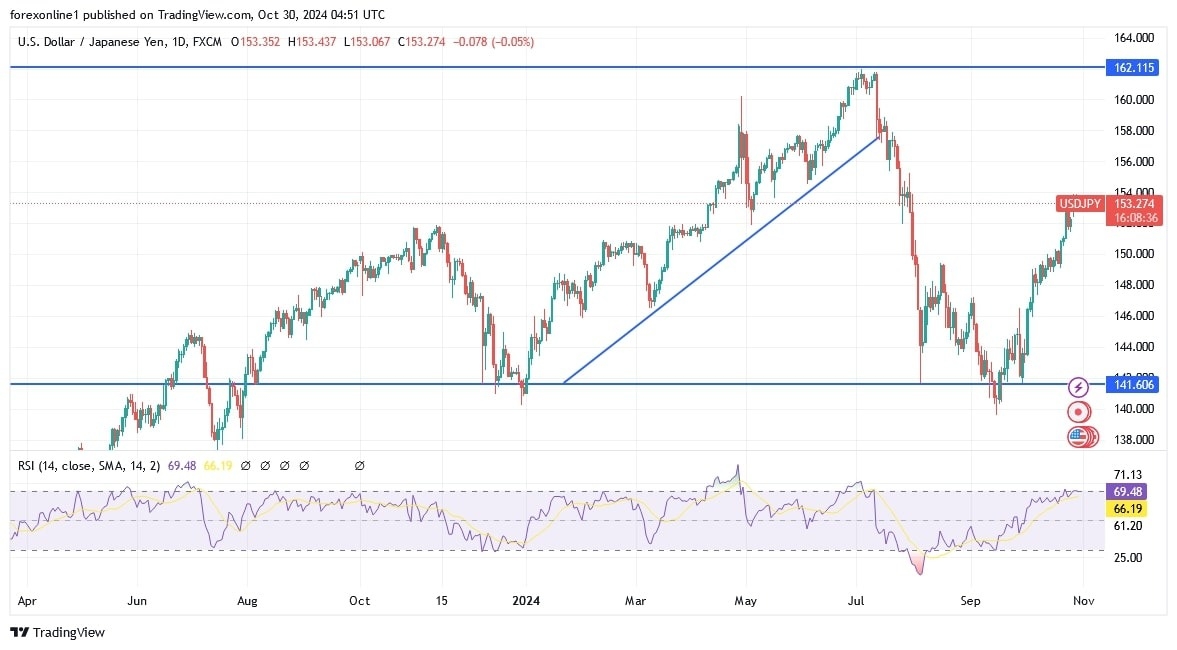
In the long term, based on the daily chart, the USD/JPY pair is trading within an ascending channel. However, the 14-day RSI has recently retreated to recover from overbought levels. Therefore, bears will target extended pullback profits around 154.50 or lower at 150.82 support. On the other hand, bulls will look to pounce on profits around 161.90 or higher at 165.35 resistance. 

Ready to trade our daily forex forecast? Here are the best forex brokers in Japan to choose from. 

Source link

15 07, 2024

Bulls hold the grip ahead of Powell’s words

By |2024-07-15T21:02:19+03:00July 15, 2024|Forex News, News|0 Comments

You have reached your limit of 5 free articles for this month.

Get Premium without limits for only $479.76 for the first month

Access all our articles, insights, and analysts.

Your coupon code


UNLOCK OFFER

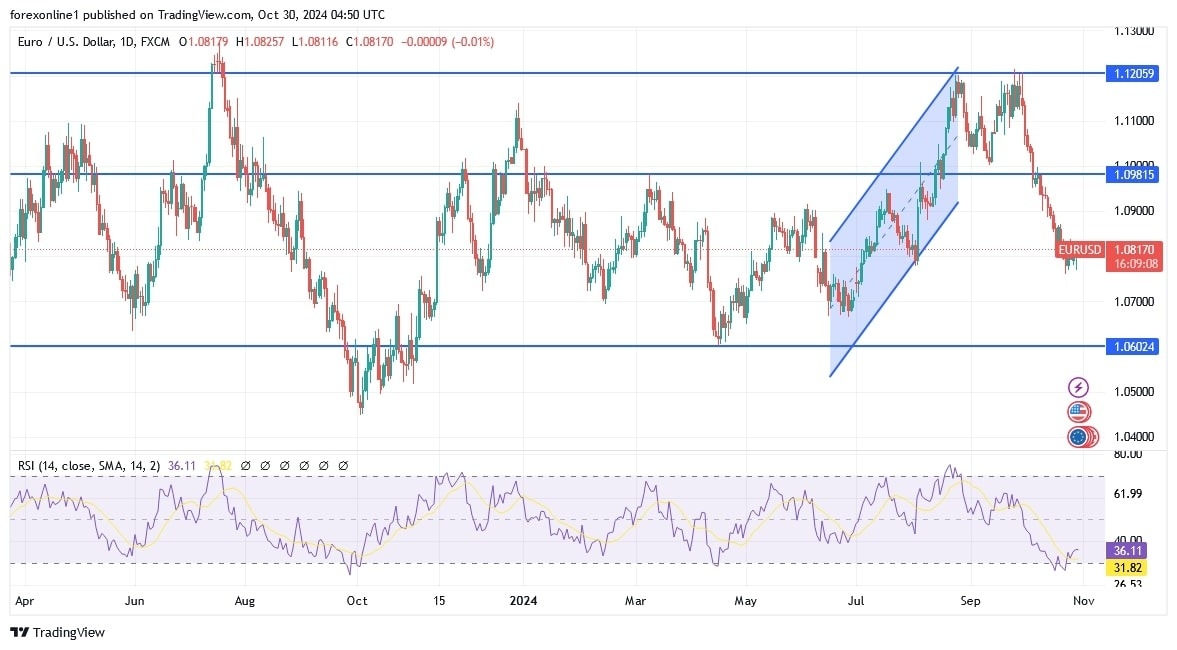
EUR/USD Current price: 1.0907

  • Federal Reserve Chairman Jerome Powell will speak at the Economic Club of Washington.
  • Financial markets lifted bets former President Donald Trump would win upcoming elections.
  • EUR/USD bullish momentum receded in the near term, but sellers remain side-lined.

The EUR/USD pair trades in the 1.0900 price zone, near the intraday peak at 1.0919, its highest since mid-March. The US Dollar started the day with a firmer tone, gaping higher vs most major rivals following the weekend events in the United States (US). Former President Donald Trump and the current candidate of the Republican Party suffered an assassination attempt while attending a campaign rally event.

Fears initially hit financial markets, but as the dust settled, optimism returned. Market players increased bets Trump would win the presidential election and implement a more liberal fiscal programme, fueling risk appetite.

Data-wise, Eurizone published May Industrial Production data, which resulted better than anticipated, falling 0.6% in the month against the -1% anticipated. Across the pond, the US published the NY Empire State Manufacturing Index, which fell more than anticipated to -6.6.

Federal Reserve (Fed) Chairman Jerome Powell is due to speak at the Economic Club of Washington DC after Wall Street’s opening, and audience questions are expected. Speculative interest will be looking for clues on upcoming monetary policy movements. The week will be flooded with comments from US policymakers ahead of the upcoming monetary policy meeting on July 31.

EUR/USD short-term technical outlook

The EUR/USD pair maintains the positive tone, although it trades below Friday’s close. Nevertheless, the daily chart shows it posted a fourth consecutive higher high and higher low, in line with a bullish continuation. Technical indicators in the mentioned time frame offer neutral-to-bullish slopes near overbought readings and without signs of upward exhaustion. Finally, EUR/USD extends its advance above all its moving averages, with the 20 Simple Moving Average (SMA) heading firmly north, although still below the 100 and 200 SMAs.

In the near term, and according to the 4-hour chart, however, buyers seem to be on pause. Technical indicators turned flat, reflecting receding interest, yet sellers are nowhere to be found. Additionally, EUR/USD keeps developing above all its moving averages, with the 20 SMA maintaining its bullish slope above the longer ones, and providing dynamic support at around 1.0870.

 Support levels: 1.0870 1.0835 1.0790

Resistance levels: 1.0940 1.0990 1.1020

EUR/USD Current price: 1.0907

  • Federal Reserve Chairman Jerome Powell will speak at the Economic Club of Washington.
  • Financial markets lifted bets former President Donald Trump would win upcoming elections.
  • EUR/USD bullish momentum receded in the near term, but sellers remain side-lined.

The EUR/USD pair trades in the 1.0900 price zone, near the intraday peak at 1.0919, its highest since mid-March. The US Dollar started the day with a firmer tone, gaping higher vs most major rivals following the weekend events in the United States (US). Former President Donald Trump and the current candidate of the Republican Party suffered an assassination attempt while attending a campaign rally event.

Fears initially hit financial markets, but as the dust settled, optimism returned. Market players increased bets Trump would win the presidential election and implement a more liberal fiscal programme, fueling risk appetite.

Data-wise, Eurizone published May Industrial Production data, which resulted better than anticipated, falling 0.6% in the month against the -1% anticipated. Across the pond, the US published the NY Empire State Manufacturing Index, which fell more than anticipated to -6.6.

Federal Reserve (Fed) Chairman Jerome Powell is due to speak at the Economic Club of Washington DC after Wall Street’s opening, and audience questions are expected. Speculative interest will be looking for clues on upcoming monetary policy movements. The week will be flooded with comments from US policymakers ahead of the upcoming monetary policy meeting on July 31.

EUR/USD short-term technical outlook

The EUR/USD pair maintains the positive tone, although it trades below Friday’s close. Nevertheless, the daily chart shows it posted a fourth consecutive higher high and higher low, in line with a bullish continuation. Technical indicators in the mentioned time frame offer neutral-to-bullish slopes near overbought readings and without signs of upward exhaustion. Finally, EUR/USD extends its advance above all its moving averages, with the 20 Simple Moving Average (SMA) heading firmly north, although still below the 100 and 200 SMAs.

In the near term, and according to the 4-hour chart, however, buyers seem to be on pause. Technical indicators turned flat, reflecting receding interest, yet sellers are nowhere to be found. Additionally, EUR/USD keeps developing above all its moving averages, with the 20 SMA maintaining its bullish slope above the longer ones, and providing dynamic support at around 1.0870.

 Support levels: 1.0870 1.0835 1.0790

Resistance levels: 1.0940 1.0990 1.1020

Source link

15 07, 2024

Pound Sterling could correct lower while 1.3000 resistance holds

By |2024-07-15T19:00:38+03:00July 15, 2024|Forex News, News|0 Comments

You have reached your limit of 5 free articles for this month.

Get Premium without limits for only $479.76 for the first month

Access all our articles, insights, and analysts.

Your coupon code


UNLOCK OFFER

  • GBP/USD trades below 1.3000 following previous week’s rally.
  • Fed Chairman Powell will speak at the Economic Club of Washington later in the day.
  • The technical outlook suggests that the pair remains technically overbought.

After gaining more than 1% for the second consecutive week, GBP/USD stays in a consolidation phase below 1.3000 on Monday. The pair’s technical picture continues to point to overbought conditions as markets wait for Federal Reserve (Fed) Chairman Jerome Powell to speak at the Economic Club of Washington later in the day.

British Pound PRICE Last 7 days

The table below shows the percentage change of British Pound (GBP) against listed major currencies last 7 days. British Pound was the strongest against the New Zealand Dollar.

  USD EUR GBP JPY CAD AUD NZD CHF
USD   -0.66% -1.26% -1.71% -0.01% -0.42% 0.71% -0.25%
EUR 0.66%   -0.40% -0.69% 0.97% 0.41% 1.72% 0.75%
GBP 1.26% 0.40%   -0.35% 1.40% 0.82% 2.13% 1.16%
JPY 1.71% 0.69% 0.35%   1.72% 1.32% 2.61% 1.53%
CAD 0.01% -0.97% -1.40% -1.72%   -0.45% 0.72% -0.22%
AUD 0.42% -0.41% -0.82% -1.32% 0.45%   1.31% 0.34%
NZD -0.71% -1.72% -2.13% -2.61% -0.72% -1.31%   -0.96%
CHF 0.25% -0.75% -1.16% -1.53% 0.22% -0.34% 0.96%  

The heat map shows percentage changes of major currencies against each other. The base currency is picked from the left column, while the quote currency is picked from the top row. For example, if you pick the British Pound from the left column and move along the horizontal line to the US Dollar, the percentage change displayed in the box will represent GBP (base)/USD (quote).

The broad-based selling pressure surrounding the US Dollar (USD) fuelled GBP/USD’s rally last week. Softer-than-expected inflation data from June fed into expectations for a Fed rate cut in September and caused the USD to weaken against its rivals. According to the CME FedWatch Tool, the probability of the Fed leaving the policy rate unchanged in September is now less than 6%.

The US economic calendar will not feature any high-impact macroeconomic data releases on Monday. US Retail Sales data on Tuesday and UK inflation data on Wednesday will be this week’s key data releases. Ahead of these data, Fed Chairman Powell’s remarks will be watched closely by market participants.

In case Powell acknowledges soft inflation data and adopts a dovish tone, the USD could stay under pressure with market participants anticipating multiple rate cuts later in the year, even though the market positioning suggests that a September rate reduction is nearly fully priced in. 

On the other hand, the USD could gather strength and cause GBP/USD to stretch lower if Powell reiterates the data-dependent approach and downplays the latest decline in inflation.

GBP/USD Technical Analysis

The Relative Strength Index (RSI) indicator on the 4-hour chart stays well above 70 despite the latest retreat, suggesting that GBP/USD remains technically overbought. The upper limit of the ascending regression channel coming from late April stays intact as key resistance at 1.3000. While this level holds, buyers could stay on the sidelines and allow an extended correction.

On the downside, 1.2950 (static level) aligns as interim support before 1.2900 (psychological level, static level) and 1.2830 (mid-point of the ascending channel).

If GBP/USD manages to rise above 1.3000 and stabilize there, 1.3040 (static level from July 2023) could be seen as next resistance before 1.3100 (psychological level, static level).

Pound Sterling FAQs

The Pound Sterling (GBP) is the oldest currency in the world (886 AD) and the official currency of the United Kingdom. It is the fourth most traded unit for foreign exchange (FX) in the world, accounting for 12% of all transactions, averaging $630 billion a day, according to 2022 data. Its key trading pairs are GBP/USD, aka ‘Cable’, which accounts for 11% of FX, GBP/JPY, or the ‘Dragon’ as it is known by traders (3%), and EUR/GBP (2%). The Pound Sterling is issued by the Bank of England (BoE).

The single most important factor influencing the value of the Pound Sterling is monetary policy decided by the Bank of England. The BoE bases its decisions on whether it has achieved its primary goal of “price stability” – a steady inflation rate of around 2%. Its primary tool for achieving this is the adjustment of interest rates. When inflation is too high, the BoE will try to rein it in by raising interest rates, making it more expensive for people and businesses to access credit. This is generally positive for GBP, as higher interest rates make the UK a more attractive place for global investors to park their money. When inflation falls too low it is a sign economic growth is slowing. In this scenario, the BoE will consider lowering interest rates to cheapen credit so businesses will borrow more to invest in growth-generating projects.

Data releases gauge the health of the economy and can impact the value of the Pound Sterling. Indicators such as GDP, Manufacturing and Services PMIs, and employment can all influence the direction of the GBP. A strong economy is good for Sterling. Not only does it attract more foreign investment but it may encourage the BoE to put up interest rates, which will directly strengthen GBP. Otherwise, if economic data is weak, the Pound Sterling is likely to fall.

Another significant data release for the Pound Sterling is the Trade Balance. This indicator measures the difference between what a country earns from its exports and what it spends on imports over a given period. If a country produces highly sought-after exports, its currency will benefit purely from the extra demand created from foreign buyers seeking to purchase these goods. Therefore, a positive net Trade Balance strengthens a currency and vice versa for a negative balance.
 

  • GBP/USD trades below 1.3000 following previous week’s rally.
  • Fed Chairman Powell will speak at the Economic Club of Washington later in the day.
  • The technical outlook suggests that the pair remains technically overbought.

After gaining more than 1% for the second consecutive week, GBP/USD stays in a consolidation phase below 1.3000 on Monday. The pair’s technical picture continues to point to overbought conditions as markets wait for Federal Reserve (Fed) Chairman Jerome Powell to speak at the Economic Club of Washington later in the day.

British Pound PRICE Last 7 days

The table below shows the percentage change of British Pound (GBP) against listed major currencies last 7 days. British Pound was the strongest against the New Zealand Dollar.

  USD EUR GBP JPY CAD AUD NZD CHF
USD   -0.66% -1.26% -1.71% -0.01% -0.42% 0.71% -0.25%
EUR 0.66%   -0.40% -0.69% 0.97% 0.41% 1.72% 0.75%
GBP 1.26% 0.40%   -0.35% 1.40% 0.82% 2.13% 1.16%
JPY 1.71% 0.69% 0.35%   1.72% 1.32% 2.61% 1.53%
CAD 0.01% -0.97% -1.40% -1.72%   -0.45% 0.72% -0.22%
AUD 0.42% -0.41% -0.82% -1.32% 0.45%   1.31% 0.34%
NZD -0.71% -1.72% -2.13% -2.61% -0.72% -1.31%   -0.96%
CHF 0.25% -0.75% -1.16% -1.53% 0.22% -0.34% 0.96%  

The heat map shows percentage changes of major currencies against each other. The base currency is picked from the left column, while the quote currency is picked from the top row. For example, if you pick the British Pound from the left column and move along the horizontal line to the US Dollar, the percentage change displayed in the box will represent GBP (base)/USD (quote).

The broad-based selling pressure surrounding the US Dollar (USD) fuelled GBP/USD’s rally last week. Softer-than-expected inflation data from June fed into expectations for a Fed rate cut in September and caused the USD to weaken against its rivals. According to the CME FedWatch Tool, the probability of the Fed leaving the policy rate unchanged in September is now less than 6%.

The US economic calendar will not feature any high-impact macroeconomic data releases on Monday. US Retail Sales data on Tuesday and UK inflation data on Wednesday will be this week’s key data releases. Ahead of these data, Fed Chairman Powell’s remarks will be watched closely by market participants.

In case Powell acknowledges soft inflation data and adopts a dovish tone, the USD could stay under pressure with market participants anticipating multiple rate cuts later in the year, even though the market positioning suggests that a September rate reduction is nearly fully priced in. 

On the other hand, the USD could gather strength and cause GBP/USD to stretch lower if Powell reiterates the data-dependent approach and downplays the latest decline in inflation.

GBP/USD Technical Analysis

The Relative Strength Index (RSI) indicator on the 4-hour chart stays well above 70 despite the latest retreat, suggesting that GBP/USD remains technically overbought. The upper limit of the ascending regression channel coming from late April stays intact as key resistance at 1.3000. While this level holds, buyers could stay on the sidelines and allow an extended correction.

On the downside, 1.2950 (static level) aligns as interim support before 1.2900 (psychological level, static level) and 1.2830 (mid-point of the ascending channel).

If GBP/USD manages to rise above 1.3000 and stabilize there, 1.3040 (static level from July 2023) could be seen as next resistance before 1.3100 (psychological level, static level).

Pound Sterling FAQs

The Pound Sterling (GBP) is the oldest currency in the world (886 AD) and the official currency of the United Kingdom. It is the fourth most traded unit for foreign exchange (FX) in the world, accounting for 12% of all transactions, averaging $630 billion a day, according to 2022 data. Its key trading pairs are GBP/USD, aka ‘Cable’, which accounts for 11% of FX, GBP/JPY, or the ‘Dragon’ as it is known by traders (3%), and EUR/GBP (2%). The Pound Sterling is issued by the Bank of England (BoE).

The single most important factor influencing the value of the Pound Sterling is monetary policy decided by the Bank of England. The BoE bases its decisions on whether it has achieved its primary goal of “price stability” – a steady inflation rate of around 2%. Its primary tool for achieving this is the adjustment of interest rates. When inflation is too high, the BoE will try to rein it in by raising interest rates, making it more expensive for people and businesses to access credit. This is generally positive for GBP, as higher interest rates make the UK a more attractive place for global investors to park their money. When inflation falls too low it is a sign economic growth is slowing. In this scenario, the BoE will consider lowering interest rates to cheapen credit so businesses will borrow more to invest in growth-generating projects.

Data releases gauge the health of the economy and can impact the value of the Pound Sterling. Indicators such as GDP, Manufacturing and Services PMIs, and employment can all influence the direction of the GBP. A strong economy is good for Sterling. Not only does it attract more foreign investment but it may encourage the BoE to put up interest rates, which will directly strengthen GBP. Otherwise, if economic data is weak, the Pound Sterling is likely to fall.

Another significant data release for the Pound Sterling is the Trade Balance. This indicator measures the difference between what a country earns from its exports and what it spends on imports over a given period. If a country produces highly sought-after exports, its currency will benefit purely from the extra demand created from foreign buyers seeking to purchase these goods. Therefore, a positive net Trade Balance strengthens a currency and vice versa for a negative balance.


Source link

15 07, 2024

USD/JPY Forecast: BoJ Intervention Leads to 4-Week Lows

By |2024-07-15T16:58:38+03:00July 15, 2024|Forex News, News|0 Comments

  • The dollar recovered briefly on Monday after Trump’s assassination attempt.
  • US inflation unexpectedly fell for the first time in June.
  • Data on Friday revealed that inflation expectations in Japan have risen.

The USD/JPY forecast is pessimistic as the yen remains close to a four-week peak following indications that the Bank of Japan intervened in the markets on Thursday. Meanwhile, the dollar recovered briefly on Monday as Trump’s assassination attempt raised the chances of his victory.

Are you interested in learning more about Forex brokers? Check our detailed guide-

The dollar edged higher as the likelihood of a Trump win increased after an attempt at his life. A Trump win would mean higher tariffs and looser fiscal policy. Moreover, the earnings outlook could improve. However, this was not enough to reverse last week’s moves after the US consumer inflation report.

Inflation unexpectedly fell for the first time in June, surprising economists who had expected a slight increase. The annual figure also moved closer to the US central bank’s target, increasing by a smaller-than-expected 3.0%. Consequently, there was an increase in Fed rate cut expectations. The likelihood of a cut in September rose to 94% from 73%.

Furthermore, the yen surged after the CPI report, with data on Friday showing that the Bank of Japan intervened in the markets. Notably, the BoJ used over 3.37 trillion yen to buy the currency on Thursday. However, top officials kept quiet about the intervention.

Elsewhere, data on Friday revealed that inflation expectations in Japan have risen. 90% of households expect an increase in prices a year from now. This could encourage the Bank of Japan to continue hiking interest rates. The prospect of cuts by the Fed and hikes by the BoJ benefit the yen. 

USD/JPY key events today

  • Empire State Manufacturing Index
  • Fed Chair Powell Speaks

USD/JPY technical forecast: Solid bearish momentum weakens 158.01 barrier

USD/JPY Forecast: BoJ Intervention Leads to 4-Week Lows
USD/JPY 4-hour chart

On the technical side, the USD/JPY price trades well below the 30-SMA, indicating a steep bearish move. Bears took control with a solid bear candle that broke below the 30-SMA and the 160.50 key level. The decline paused at the 158.01 support level. Here, bulls emerged but were not strong enough to retest the 30-SMA. 

Are you interested in learning more about crypto signals Telegram groups? Check our detailed guide-

As a result, bears are on the verge of breaking below 158.01. If they succeed, the next hurdle will be at the 156.01 level. On the other hand, if they fail, the price will likely climb to retest the 30-SMA before the downtrend continues.

Looking to trade forex now? Invest at eToro!

68% of retail investor accounts lose money when trading CFDs with this provider. You should consider whether you can afford to take the high risk of losing your money.

Source link

15 07, 2024

Euro recovers above key level following bearish opening

By |2024-07-15T14:57:50+03:00July 15, 2024|Forex News, News|0 Comments

You have reached your limit of 5 free articles for this month.

Get Premium without limits for only $479.76 for the first month

Access all our articles, insights, and analysts.

Your coupon code


UNLOCK OFFER

  • EUR/USD rose above 1.0900 after opening lower on Monday.
  • Rising US stock index futures point to a positive shift in risk sentiment.
  • Fed Chairman Powell will deliver a speech later in the day.

After posting strong gains in the previous week, EUR/USD opened lower to start the new week. The pair, however, managed to recover back above the key 1.0900 level during the European trading hours, erasing the bearish opening gap.

Euro PRICE Last 7 days

The table below shows the percentage change of Euro (EUR) against listed major currencies last 7 days. Euro was the strongest against the New Zealand Dollar.

  USD EUR GBP JPY CAD AUD NZD CHF
USD   -0.65% -1.31% -1.74% -0.03% -0.47% 0.72% -0.24%
EUR 0.65%   -0.47% -0.78% 0.93% 0.34% 1.71% 0.75%
GBP 1.31% 0.47%   -0.35% 1.43% 0.81% 2.19% 1.22%
JPY 1.74% 0.78% 0.35%   1.74% 1.32% 2.67% 1.58%
CAD 0.03% -0.93% -1.43% -1.74%   -0.47% 0.75% -0.19%
AUD 0.47% -0.34% -0.81% -1.32% 0.47%   1.37% 0.40%
NZD -0.72% -1.71% -2.19% -2.67% -0.75% -1.37%   -0.95%
CHF 0.24% -0.75% -1.22% -1.58% 0.19% -0.40% 0.95%  

The heat map shows percentage changes of major currencies against each other. The base currency is picked from the left column, while the quote currency is picked from the top row. For example, if you pick the Euro from the left column and move along the horizontal line to the US Dollar, the percentage change displayed in the box will represent EUR (base)/USD (quote).

News of an assassination attempt on former US President Donald Trump caused markets to adopt a cautious stance at the beginning of the week. At this point, it’s difficult to assess the potential impact of this development on markets in the near term. In any case, rising US stock index futures, which were last seen gaining between 0.45% and 0.55% on the day, point to an improving risk mood already.

In the second half of the day, Federal Reserve (Fed) Chairman Jerome Powell will speak at an event organized by the Economic Club of Washington.

Following the soft inflation data published last week, markets are nearly fully pricing in a 25 basis points Fed rate cut in September. Hence, the positioning suggests that the US Dollar does not have a lot of room left on the downside even if Powell sounds in favor of a rate reduction in September. Nevertheless, a dovish tilt in Powell’s tone could feed into expectations for a total of three 25 basis points rate cuts before the end of the year and still hurt the USD.

EUR/USD Technical Analysis

EUR/USD trades above 1.0900 after opening below this level. Once the pair confirms that level as support, it could target 1.0950 (static level) before 1.1000 (psychological level, static level). On the downside, 1.0850 (former resistance, static level) aligns as first support ahead of 1.0800 where the 100-day and the 200-day Simple Moving Averages (SMA) are located.

In the meantime, the Relative Strength Index (RSI) indicator on the 4-hour chart stays above 70, suggesting that EUR/USD could make a technical correction before the next leg higher. 

Euro FAQs

The Euro is the currency for the 20 European Union countries that belong to the Eurozone. It is the second most heavily traded currency in the world behind the US Dollar. In 2022, it accounted for 31% of all foreign exchange transactions, with an average daily turnover of over $2.2 trillion a day. EUR/USD is the most heavily traded currency pair in the world, accounting for an estimated 30% off all transactions, followed by EUR/JPY (4%), EUR/GBP (3%) and EUR/AUD (2%).

The European Central Bank (ECB) in Frankfurt, Germany, is the reserve bank for the Eurozone. The ECB sets interest rates and manages monetary policy. The ECB’s primary mandate is to maintain price stability, which means either controlling inflation or stimulating growth. Its primary tool is the raising or lowering of interest rates. Relatively high interest rates – or the expectation of higher rates – will usually benefit the Euro and vice versa. The ECB Governing Council makes monetary policy decisions at meetings held eight times a year. Decisions are made by heads of the Eurozone national banks and six permanent members, including the President of the ECB, Christine Lagarde.

Eurozone inflation data, measured by the Harmonized Index of Consumer Prices (HICP), is an important econometric for the Euro. If inflation rises more than expected, especially if above the ECB’s 2% target, it obliges the ECB to raise interest rates to bring it back under control. Relatively high interest rates compared to its counterparts will usually benefit the Euro, as it makes the region more attractive as a place for global investors to park their money.

Data releases gauge the health of the economy and can impact on the Euro. Indicators such as GDP, Manufacturing and Services PMIs, employment, and consumer sentiment surveys can all influence the direction of the single currency. A strong economy is good for the Euro. Not only does it attract more foreign investment but it may encourage the ECB to put up interest rates, which will directly strengthen the Euro. Otherwise, if economic data is weak, the Euro is likely to fall. Economic data for the four largest economies in the euro area (Germany, France, Italy and Spain) are especially significant, as they account for 75% of the Eurozone’s economy.

Another significant data release for the Euro is the Trade Balance. This indicator measures the difference between what a country earns from its exports and what it spends on imports over a given period. If a country produces highly sought after exports then its currency will gain in value purely from the extra demand created from foreign buyers seeking to purchase these goods. Therefore, a positive net Trade Balance strengthens a currency and vice versa for a negative balance.
 

  • EUR/USD rose above 1.0900 after opening lower on Monday.
  • Rising US stock index futures point to a positive shift in risk sentiment.
  • Fed Chairman Powell will deliver a speech later in the day.

After posting strong gains in the previous week, EUR/USD opened lower to start the new week. The pair, however, managed to recover back above the key 1.0900 level during the European trading hours, erasing the bearish opening gap.

Euro PRICE Last 7 days

The table below shows the percentage change of Euro (EUR) against listed major currencies last 7 days. Euro was the strongest against the New Zealand Dollar.

  USD EUR GBP JPY CAD AUD NZD CHF
USD   -0.65% -1.31% -1.74% -0.03% -0.47% 0.72% -0.24%
EUR 0.65%   -0.47% -0.78% 0.93% 0.34% 1.71% 0.75%
GBP 1.31% 0.47%   -0.35% 1.43% 0.81% 2.19% 1.22%
JPY 1.74% 0.78% 0.35%   1.74% 1.32% 2.67% 1.58%
CAD 0.03% -0.93% -1.43% -1.74%   -0.47% 0.75% -0.19%
AUD 0.47% -0.34% -0.81% -1.32% 0.47%   1.37% 0.40%
NZD -0.72% -1.71% -2.19% -2.67% -0.75% -1.37%   -0.95%
CHF 0.24% -0.75% -1.22% -1.58% 0.19% -0.40% 0.95%  

The heat map shows percentage changes of major currencies against each other. The base currency is picked from the left column, while the quote currency is picked from the top row. For example, if you pick the Euro from the left column and move along the horizontal line to the US Dollar, the percentage change displayed in the box will represent EUR (base)/USD (quote).

News of an assassination attempt on former US President Donald Trump caused markets to adopt a cautious stance at the beginning of the week. At this point, it’s difficult to assess the potential impact of this development on markets in the near term. In any case, rising US stock index futures, which were last seen gaining between 0.45% and 0.55% on the day, point to an improving risk mood already.

In the second half of the day, Federal Reserve (Fed) Chairman Jerome Powell will speak at an event organized by the Economic Club of Washington.

Following the soft inflation data published last week, markets are nearly fully pricing in a 25 basis points Fed rate cut in September. Hence, the positioning suggests that the US Dollar does not have a lot of room left on the downside even if Powell sounds in favor of a rate reduction in September. Nevertheless, a dovish tilt in Powell’s tone could feed into expectations for a total of three 25 basis points rate cuts before the end of the year and still hurt the USD.

EUR/USD Technical Analysis

EUR/USD trades above 1.0900 after opening below this level. Once the pair confirms that level as support, it could target 1.0950 (static level) before 1.1000 (psychological level, static level). On the downside, 1.0850 (former resistance, static level) aligns as first support ahead of 1.0800 where the 100-day and the 200-day Simple Moving Averages (SMA) are located.

In the meantime, the Relative Strength Index (RSI) indicator on the 4-hour chart stays above 70, suggesting that EUR/USD could make a technical correction before the next leg higher. 

Euro FAQs

The Euro is the currency for the 20 European Union countries that belong to the Eurozone. It is the second most heavily traded currency in the world behind the US Dollar. In 2022, it accounted for 31% of all foreign exchange transactions, with an average daily turnover of over $2.2 trillion a day. EUR/USD is the most heavily traded currency pair in the world, accounting for an estimated 30% off all transactions, followed by EUR/JPY (4%), EUR/GBP (3%) and EUR/AUD (2%).

The European Central Bank (ECB) in Frankfurt, Germany, is the reserve bank for the Eurozone. The ECB sets interest rates and manages monetary policy. The ECB’s primary mandate is to maintain price stability, which means either controlling inflation or stimulating growth. Its primary tool is the raising or lowering of interest rates. Relatively high interest rates – or the expectation of higher rates – will usually benefit the Euro and vice versa. The ECB Governing Council makes monetary policy decisions at meetings held eight times a year. Decisions are made by heads of the Eurozone national banks and six permanent members, including the President of the ECB, Christine Lagarde.

Eurozone inflation data, measured by the Harmonized Index of Consumer Prices (HICP), is an important econometric for the Euro. If inflation rises more than expected, especially if above the ECB’s 2% target, it obliges the ECB to raise interest rates to bring it back under control. Relatively high interest rates compared to its counterparts will usually benefit the Euro, as it makes the region more attractive as a place for global investors to park their money.

Data releases gauge the health of the economy and can impact on the Euro. Indicators such as GDP, Manufacturing and Services PMIs, employment, and consumer sentiment surveys can all influence the direction of the single currency. A strong economy is good for the Euro. Not only does it attract more foreign investment but it may encourage the ECB to put up interest rates, which will directly strengthen the Euro. Otherwise, if economic data is weak, the Euro is likely to fall. Economic data for the four largest economies in the euro area (Germany, France, Italy and Spain) are especially significant, as they account for 75% of the Eurozone’s economy.

Another significant data release for the Euro is the Trade Balance. This indicator measures the difference between what a country earns from its exports and what it spends on imports over a given period. If a country produces highly sought after exports then its currency will gain in value purely from the extra demand created from foreign buyers seeking to purchase these goods. Therefore, a positive net Trade Balance strengthens a currency and vice versa for a negative balance.
 

Source link

15 07, 2024

GBP/USD Analysis Today – 15/07: Overbought Levels (Chart)

By |2024-07-15T12:57:11+03:00July 15, 2024|Forex News, News|0 Comments

  • The significant decline in the US dollar following lower-than-expected inflation numbers has helped bulls push the GBP/USD rate towards the psychological resistance level of 1.3000, the highest for the pair in a year, confirming the strength and control of the bulls in the trend.
  • The GBP/USD rate began this week’s trading, stabilizing around the 1.2973 level, awaiting any new developments. 

Among the economic data released, the UK will attract the most attention in the region. The latest consumer price reading on Wednesday may show that UK services inflation slowed for the fifth month in June to 5.6% – still well above the 2% target set by policymakers. Also, the latest wage figures will be released on Thursday, with expectations that regular wage growth will fall below 6% for the first time in 20 months, in numbers covering the quarter ending in May. Wednesday will also see the so-called King’s Speech, which Prime Minister Keir Starmer will use to highlight his new government’s efforts to stimulate economic growth in the UK. 

Meanwhile, June retail sales, due on Friday, are likely to fall, while other data on the same day will mark the first reading of public finances that Chancellor of the Exchequer Rachel Reeves has seen since taking office. Generally, the week’s figures are the last major releases before the Bank of England’s decision on August 1, when officials will decide whether to cut interest rates for the first time since the start of the pandemic. 

According to reliable trading platforms, the gains point to tailwinds behind sterling as we move into the early stages of the second half of 2024. In fact, sterling is the best performing G10 currency for 2024 thanks to the recent decline in the US dollar amid growing expectations for a September Fed rate cut. 

Analysts commented on the pound’s performance, saying, “The pound sterling has outperformed all its major peers this year amid expectations that the Bank of England will have to keep interest rates at their highest levels in 16 years for longer due to the unexpectedly strong economic recovery, persistent concerns about stubborn services inflation, and wage pressures.” 

According to the results of the economic calendar, the British economy grew (0.4%) in June, which is double the rate economists had expected, meaning that the second quarter is on track to record a strong 0.7% advance. Furthermore, some economists believe that by the end of the year, Britain will have recorded an annual increase of 1.5% in the G10, which would put it near the top of the G7. Overall, the recent gains in the pound also reflect a decline in expectations that the Bank of England will cut interest rates on August 1. For his part, Hugh Bell, the Bank of England’s chief economist, said that the timing of the first interest rate cut remains in question due to stubborn levels of service sector inflation. 

Technical forecasts for the GPB/USD pair today: 

So far, the bullish bounce in GBP/USD trading pair is still the strongest. As we mentioned before, the psychological resistance of 1.3000 will remain the culmination of the bulls’ control over the trend.  Meanwhile, the technical indicators will move towards strong overbought levels. Unless the sterling gains new positive momentum, the currency pair may be exposed to profit-taking sales at any time. On the other hand, according to the performance on the daily chart below, the support level of 1.2775 will remain a threat to the current bullish bounce. 

Ready to trade our Forex daily analysis and predictions? Here are the top UK forex trading platforms to choose from. 

Source link

15 07, 2024

Pound to Dollar 2024-2025 Forecast: GBP/USD Exchange Rate to Gain to 1.35 Next Year

By |2024-07-15T00:49:11+03:00July 15, 2024|Forex News, News|0 Comments

July 14, 2024 – Written by David Woodsmith

BNP Paribas expects the Pound to Dollar (GBP/USD) exchange rate to struggle in the short term, but expects gains to 1.35 at the end of next year.

RBC Capital Markets, however, expects a steady retreat to 1.23 at the end of this year with further losses to 1.19 at the end of 2025.

Pound sentiment has remained firm during the week while the dollar has come under pressure.

UK GDP data for May was stronger than expected with 0.4% growth after no change for April.

Bank of England chief economist Pill also cast doubt on the potential for a near-term cut in interest rates.

According to Credit Agricole; “We have already noticed that foreign inflows into the UK stock market ETFs have been on the rise in recent weeks. More recently, less dovish BoE comments as well as better-than-expected UK economic data have further boosted the GBP’s relative rate appeal.”

BNP added; “The UK election outcome of a sizeable Labour majority seems positive for the GBP as it ushers in a period of political stability. We’ll also be watching the scope for UK-EU relations to improve under a Labour government as well as the possibility for growth-positive reforms and spending policies.”

Advertisement


RBC still considers that downside risks prevail; “GBP faces more asymmetric risk to the downside than to the upside. Namely, this is down to the constrained fiscal backdrop not leaving much space for flexibility, and any deterioration in fiscal policy credibility would leave GBP vulnerable.” The latest US inflation data was weaker than expected with the headline rate declining to 3.0% from 3.3% and below consensus forecasts of 3.1% while the core rate edged lower to 3.3% from 3.4% after a 0.1% monthly increase and this was the lowest annual increase since May 2021.

The data triggered renewed expectations of a near-term Federal Reserve rate cut

According to ING; “Inflation data supports the argument that the Federal Reserve can start loosening monetary policy this quarter. Markets will monitor Fed speakers closely after the encouraging June CPI report, but it is possible the Fed may want to wait until Jackson Hole in August for a more formal shift in communication.

Danske Bank added; “With the labour market also cooling, the Fed should now be very close to have sufficient confidence to start easing. The meeting on 31 July cannot be ruled out but we believe they will instead choose to provide strong guidance for a September cut.”

RBC commented; “The biggest downside risk remains a US recession which is still a tail risk rather than base case scenario.”

Political factors will have an increasingly important impact on markets.

President Biden remains under pressure to drop out of the Democrat race which is an important element of uncertainty.

Traders will also continue to debate the implications of a Trump victory in November.

According to BNPP; “The USD remains well supported, which we expect to continue as the US presidential election in November gets closer.

The bank expects the dollar will lose ground during 2025.

Like this piece? Please share with your friends and colleagues:


International Money Transfer? Ask our resident FX expert a money transfer question or try John’s new, free, no-obligation personal service! ,where he helps every step of the way,
ensuring you get the best exchange rates on your currency requirements.

TAGS: Pound Dollar Forecasts

Source link

14 07, 2024

Weekly Forex Forecast – 14/07 (Charts)

By |2024-07-14T22:48:09+03:00July 14, 2024|Forex News, News|0 Comments

(MENAFN– Daily Forex) Fundamental Analysis & market Sentiment

I wrote on 7th July that the best trade opportunities for the week were likely to be:

  • Long of the USD/JPY currency pair following a daily close above ¥162.00. This did not set up.

  • Long of the AUD/JPY currency cross . This produced a loss of 1.23%.

  • Long of the EUR/JPY currency cross . This produced a loss of 1.18%.

  • Long of the GBP/JPY currency cross . This produced a loss of 0.49%.

  • Long of the nasdaq 100 index . This produced a loss of 0.14%.

  • Long of the S&P 500 Index . This produced a win of 0.76%.The overall result was a net loss of 2.28%, giving an average return of -0.38% per trade.Top Forex Brokers

    • 1 Get Started 74% of retail CFD accounts lose money

    Last week’s key takeaways were:

  • On Saturday, there was a seeming assassination attempt against former President Trump at his campaign rally in the US state of Pennsylvania. It may be that markets move in a risk-off direction when they open this week for some time, although so far, there is no indication the shooter was part of a conspiracy nor that former President Trump suffered any serious physical damage. However, the incident will certainly raise the political temperature in the USA as the November voting for President, Congress, etc. approaches.

  • Fed Chair Jerome Powell’s testimony to both Houses of Congress on monetary policy early in the week was seen as neutral or perhaps a bit dovish. Powell said that inflation seems to be trending down, but the Fed will be looking for more evidence of declines in inflation before making a rate cut. This boosted stocks.

  • Highly important US CPI data was released, which showed inflation falling a bit further than expected. The month-on-month rate showed deflation of 0.1%, and the annualized rate fell to 3.0%, the lowest rate seen since June 2023 . This initially boosted stocks, but stocks and the US Dollar sank quite strongly. It may be that the deflation spooked markets, which now see a stronger chance of a US recession, or it may have just been profit-taking in stocks.

  • The week ended with higher-than-expected US PPI data, again raising inflation expectations despite the fall to 3.0% announced earlier. Month-on-month PPI increased by 0.2%, while only 0.1% was expected. Stocks recovered somewhat on Friday, but not by much.

  • The Japanese Yen rose strongly towards the end of the week, pushing the benchmark USD/JPY currency pair low enough to make most trend traders exit any long position. The Bank of Japan may have taken the opportunity of the market’s natural movement against the US Dollar to move the needle by buying Yen.There were a few other events last week which were of lower significance:

  • RBNZ Official Cash Rate & Rate Statement – the RBNZ left the Cash Rate at 5.50% as expected but gave a minor dovish surprise by stating that inflation is coming under control, which caused a weakening in the NZD that day.

  • UK GDP increased month-on-month by 0.4%, considerably more strongly than the expected 0.2% increase. This may have helped the British Pound rise firmly to new highs over the week.

  • US Preliminary UoM Consumer Sentiment was below expectations, suggesting US consumer confidence is decreasing.

  • US Unemployment Claims –very slightly better than expected Week Ahead: 15th – 19th JulyThe most important items over this coming week will be:

  • ECB Main Refinancing Rate & Rate Statement – the ECB is expected to leave its Main Refinancing Rate at 4.25%.

  • US Retail Sales.

  • UK CPI.

  • Canadian CPI.

  • New Zealand CPI.

  • UK Retail Sales.

  • Canada Retail Sales.

  • US Unemployment Claims.

  • UK Claimant Count Change.

  • Australian Unemployment Rate Forecast July 2024 This month, I forecasted that the USD/JPY currency pair would increase in value. The performance of this forecast to date is as follows: Weekly Forecast 14th July 2024Last week, I made no weekly forecast. Although there were some large directional movements in the AUD/JPY and GBP/JPY currency crosses, I had little faith that these would reverse over the coming week, so I did not want to take these trades. This was the wrong call, as both would have been profitable trades.Last week, there were unusually large directional price movements in the NZD/JPY and EUR/NOK currency pairs. However, I do not have faith that these prices will revert over the coming week, so I again make no forecast this week.Directional volatility in the Forex market rose last week, with 48% of the most important currency pairs fluctuating by more than 1%.Last week, the Japanese Yen was the strongest major currency, while the New Zealand Dollar was the weakest.You can trade these forecasts in a real or demo Forex brokerage account .Key Support/Resistance Levels for Popular Pairs Technical AnalysisUS Dollar IndexThe US Dollar Index again printed a large bearish candlestick last week, closing quite near the low of its range. These are signs suggesting short-term bearish momentum, as is the fact that the US Dollar was one of the worst-performing of all the major currencies last week. The price action breaking below a supportive zone reinforces this analysis.There is no longer a clear long-term trend as the price is below its level of 3 months ago but still above its price of 6 months ago. However, this trend looks to be in danger.The weaker Dollar has been driven by last week’s more dovish signals from the Federal Reserve and some good news on US inflation, which reached its lowest annualized rate since June 2023.I see the US Dollar as weak, with technical room to fall as low as 102.25 before reaching any key support. That support is near the ascending trend line, which could reinforce that support. Therefore, I will be prepared to take a trade against the US Dollar over the coming week. EUR/USDThe EUR/USD currency pair advanced quite strongly over the past couple of days at the end of last week to make its highest daily and weekly close in 3 months. These are bullish signs, but it should be noted by looking at the price chart below that the price is still not in blue sky and can barely be said to be breaking out.Some traders may be ready to enter a new long trade, but I think it would be wise to wait for a daily close above the next resistance level before making such an entry.I will enter a long trade if we get a daily close this week above $1.0920.A long trade here will be supported by the general weakness in the US Dollar, and we may see more movement in the Euro as the ECB’s policy meeting this week approaches. GBP/USDThe GBP/USD currency pair advanced very strongly last week, making its strongest weekly move in many months. The price closed very near the top of its range at a new 11-month high price, so it is trading in blue sky. These are all very bullish signs.The US Dollar is weak after it sold off and broke below support over the past week, invalidating its former long-term bullish trend. We now see short-term bearish momentum in the greenback.Conversely, we see strength in the British Pound, which may have been boosted by higher-than-expected UK GDP data released last week.The signs are bullish, so I see this currency pair as a buy now. AUD/USDThe AUD/USD currency pair advanced quite strongly last week. The price closed near the top of its range at a new 7-month high price, trading in blue sky. These are all bullish signs.The US Dollar is weak after it sold off and broke below support over the past week, invalidating its former long-term bullish trend. We now see short-term bearish momentum in the greenback.Conversely, we see strength in the Australian Dollar, which has been the most consistently bullishly trending of all the major currencies over the past year. The Australian Dollar typically does well in periods of risk-on sentiment in the market, as we have seen in recent weeks and months. This might continue, but yesterday’s assassination attempt on former President Trump may spook risk sentiment as markets open in Asia later today.The Australian Dollar typically does not trend very reliably. Still, the persistence and length of the current trend suggest that we will see higher prices this week and that the price has room to rise technically without reaching any key resistance until $0.6877. S&P 500 IndexThe S&P 500 Index reached a new all-time high last week after rising firmly during the first part of the week. However, once the US CPI data showing month-on-month deflation was released, markets were spooked enough to trigger a major selloff in stocks, but this was centred more on tech stocks than on anything else. The NASDAQ 100 Index ended the week lower, but the broader S&P 500 Index held some gain over the week. Notably, the record high was made on the last day of last week.It makes sense to be bullish on this major stock market index when it has recently made a new record high and retraced by only a small amount. Historical precedent shows this tends to produce further gains quickly, typically of about 12% over the next year.I, therefore, see the S&P 500 Index as a buy, but only after we get another record-high daily close, which would be above 5,634. USD/CADI expected the USD/CAD currency pair to have potential support at $1.3590.The H1 price chart below shows how an inside bar , marked by the up arrow, rejected this support level right at the start of last Thursday’s New York session, signaling the timing of this bullish rejection. This can often be a great time to enter new trades in currency pairs involving the US Dollar, such as this one.This trade could still be open, but so far, it has given only a maximum reward-to-risk ratio of less than 1 to 1. Bottom LineI see the best trading opportunities this week as follows:

  • Long of the EUR/USD currency pair following a daily close above $1.0920.

  • Long of the GBP/USD currency pair.

  • Long of the S&P 500 Index following a daily close above 5,634.Ready to trade our weekly Forex forecast ? We’ve shortlisted the best Forex brokers worth reviewing.MENAFN14072024000131011023ID1108437246

    Source link

    Go to Top