The main tag of Forex News Today Articles.
You can use the search box below to find what you need.
[wd_asp id=1]

14 07, 2024

USD/JPY Forecast Today – 11/07: USD Strong Vs JPY (Chart)

By |2024-07-14T08:41:01+03:00July 14, 2024|Forex News, News|0 Comments

Date


(MENAFN– Daily Forex)

  • It’s easy to see that the US dollar continues to rally quite significantly against the Japanese yen at the drop of a hat, and therefore I think we got a situation where traders will continue to look at this through the prism of being a“carry trade.”

  • After all, you get paid at the end of every day to hang on to this pair, and I think that is something that you need to be very cognizant of, and how much that can mean for institutions.

Furthermore, we have a lot of noise out there when it comes to economic announcements, as the CPI and PPI numbers come out over the next couple of days. That obviously will have a major influence on what people think will happen in the United States, perhaps more importantly what’s going to come out of the Federal Reserve, which at the end of the day is the only thing that most traders seem to care about. With that being the case, I think you’ve got a scenario where the carry trade will continue to be a major issue.Top Forex Brokers

  • 1 Get Started 74% of retail CFD accounts lose money

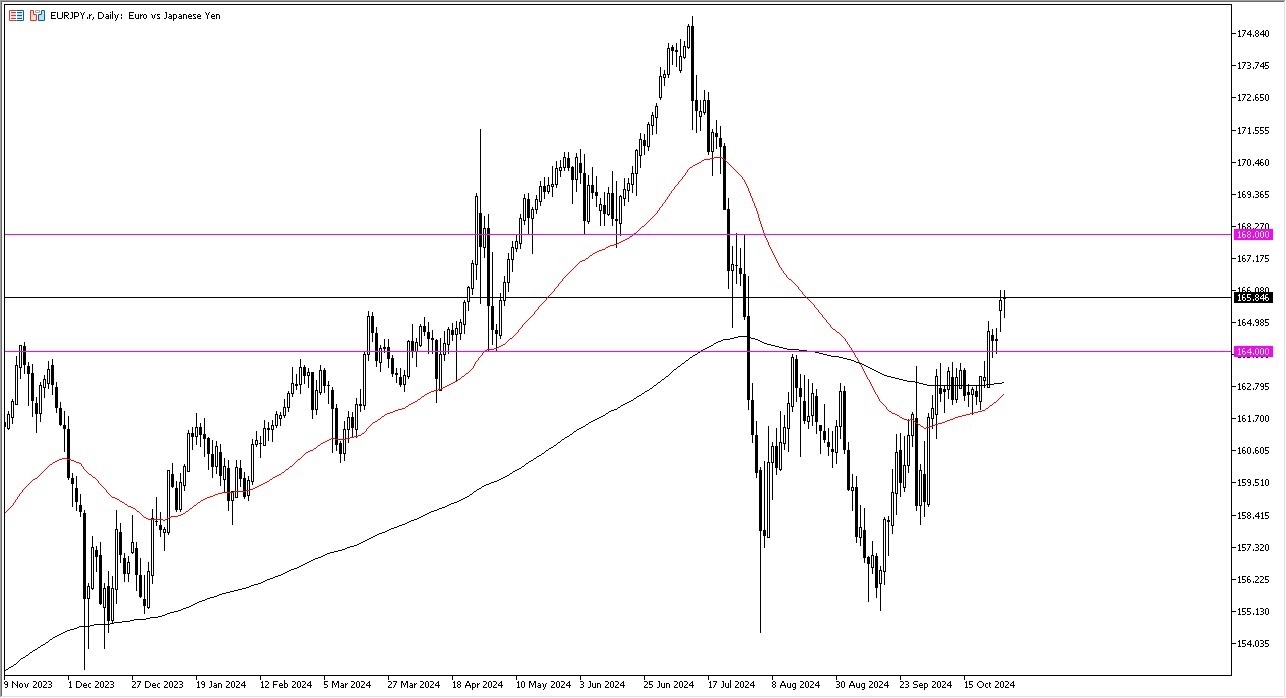
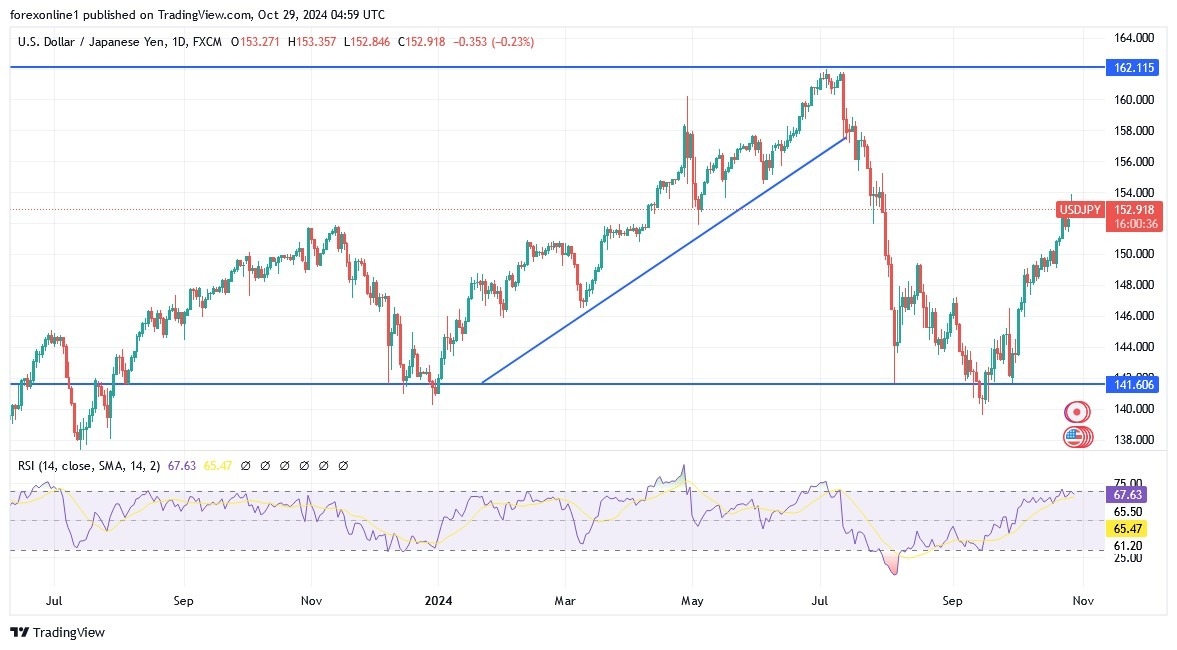
Technical AnalysisThe technical analysis on this pair is obviously very strong and it looks like the ¥160 level underneath is going to be a short-term floor in the market. We also have the 50-Day EMA near the ¥158 level, an area that previously has been important. However, the ¥160 level is an area where the Bank of Japan had recently intervened, so there is a lot of“market memory” there, so I think it would be difficult to break down through that level unless of course the inflation numbers in the United States are that horrific.Even if the Federal Reserve were to cut rates wants between now and the end of the year, the interest rate differential is still a huge factor on what happens next, and therefore I think you need to realize that even in a situation where there is a 25 basis point interest rate cut in the United States, something that’s definitely not a 100% possibility, you still get paid to hang on to this pair and at the end of the day that continues to be the main factor.Ready to trade our USD/JPY daily analysis ? Here are the best forex brokers in Japan to choose from.MENAFN13072024000131011023ID1108434598


Daily Forex


Legal Disclaimer:
MENAFN provides the information “as is” without warranty of any kind. We do not accept any responsibility or liability for the accuracy, content, images, videos, licenses, completeness, legality, or reliability of the information contained in this article. If you have any complaints or copyright issues related to this article, kindly contact the provider above.

Source link

12 07, 2024

Further upside looks likely above 1.0900

By |2024-07-12T20:17:52+03:00July 12, 2024|Forex News, News|0 Comments

You have reached your limit of 5 free articles for this month.

Get Premium without limits for only $479.76 for the first month

Access all our articles, insights, and analysts.

Your coupon code


UNLOCK OFFER

  • EUR/USD finally revisited the 1.0900 region, printing multi-week highs.
  • The Fed is now seen cutting rates twice in H2 2024.
  • The ECB is predicted to keep its rates unchanged on July 18.

Another auspicious week saw EUR/USD trade with decent gains and extend its positive streak for the third consecutive week, including a visit to the key 1.0900 region for the first time since early June.

It was all about the Fed and US data

The firm weekly performance of the European currency and most of the risk-linked galaxy came in response to the marked deterioration of the Dollar’s outlook. Indeed, when tracked by the US Dollar Index (DXY), the Greenback accelerated its monthly downward bias to the area of five-week lows near the 104.00 yardstick pari passu with reignited expectations that the US Federal Reserve (Fed) might trim its interest rates twice this year (vs. the view of just one rate reduction projected by the Committee at its latest gathering).

The above was markedly reinforced by another confirmation of disinflationary pressures in the US economy after the Consumer Price Index (CPI) rose less than estimated in June. That, plus the ongoing cooling of the US labour market, prompted investors to start pencilling in two (or even three) interest rate cuts in the latter half of the year.

On top of that, at his semi-annual testimonies before Congress, Fed Chair Jerome Powell reiterated that the Committee needs to see further progress on inflation heading towards the Fed’s 2% target before considering an interest rate reduction. Despite Powell’s message aligning with previous statements, he gave no indication of the potential timing for a rate cut.

And what about the ECB?

There was a radio silence from the European Central Bank (ECB) throughout the week, with the exception of Dutch central bank Chief Klaas Knot, who suggested that there was no case for the central bank to cut interest rates this month, but the September meeting would be “open” and market expectations for further easing were appropriate for now.

In addition, ECB Governing Council member Fabio Panetta also argued earlier in the week that the bank could continue to gradually reduce interest rates without jeopardizing the current fall in inflation.

EUR gains should remain temporary

The sharp correction in the Greenback has been lending much-needed oxygen to the single currency and the rest of its risky peers, therefore underpinning the robust bounce in EUR/USD seen as of late.

However, the perceived deceleration of key US fundamentals, namely inflation and employment, did not change the fact that the biggest economy in the world is indeed heading towards a soft landing, and its outlook remains far from dented.

Factoring in the above and adding the political component of a probable second presidency by Donald Trump, the ongoing weakness of the Dollar should be perceived as transitory, allowing for a rebound of the currency in the not-so-distant future.

EUR/USD technical outlook

By surpassing the key 200-day SMA, EUR/USD has opened the door to the potential continuation of the uptrend in the short-term horizon. Against that backdrop, there is an immediate barrier at the July high of 1.0900 (July 11), closely followed by the June top of 1.0916 (June 4) and the March peak of 1.0981 (March 8). Once the pair clears the latter, it could confront the psychological 1.1000 milestone, which precedes the December 2023 high of 1.1139 (December 28).

In case sellers regain the initiative, spot should meet decent contention at the 200-day SMA at 1.0803. The loss of this region should expose further weakness and, thus, a probable move to the June low of 1.0666 (June 26), ahead of the May low of 1.0649 (May 1) and the 2024 bottom of 1.0601 (April 16).

Euro FAQs

The Euro is the currency for the 20 European Union countries that belong to the Eurozone. It is the second most heavily traded currency in the world behind the US Dollar. In 2022, it accounted for 31% of all foreign exchange transactions, with an average daily turnover of over $2.2 trillion a day. EUR/USD is the most heavily traded currency pair in the world, accounting for an estimated 30% off all transactions, followed by EUR/JPY (4%), EUR/GBP (3%) and EUR/AUD (2%).

The European Central Bank (ECB) in Frankfurt, Germany, is the reserve bank for the Eurozone. The ECB sets interest rates and manages monetary policy. The ECB’s primary mandate is to maintain price stability, which means either controlling inflation or stimulating growth. Its primary tool is the raising or lowering of interest rates. Relatively high interest rates – or the expectation of higher rates – will usually benefit the Euro and vice versa. The ECB Governing Council makes monetary policy decisions at meetings held eight times a year. Decisions are made by heads of the Eurozone national banks and six permanent members, including the President of the ECB, Christine Lagarde.

Eurozone inflation data, measured by the Harmonized Index of Consumer Prices (HICP), is an important econometric for the Euro. If inflation rises more than expected, especially if above the ECB’s 2% target, it obliges the ECB to raise interest rates to bring it back under control. Relatively high interest rates compared to its counterparts will usually benefit the Euro, as it makes the region more attractive as a place for global investors to park their money.

Data releases gauge the health of the economy and can impact on the Euro. Indicators such as GDP, Manufacturing and Services PMIs, employment, and consumer sentiment surveys can all influence the direction of the single currency. A strong economy is good for the Euro. Not only does it attract more foreign investment but it may encourage the ECB to put up interest rates, which will directly strengthen the Euro. Otherwise, if economic data is weak, the Euro is likely to fall. Economic data for the four largest economies in the euro area (Germany, France, Italy and Spain) are especially significant, as they account for 75% of the Eurozone’s economy.

Another significant data release for the Euro is the Trade Balance. This indicator measures the difference between what a country earns from its exports and what it spends on imports over a given period. If a country produces highly sought after exports then its currency will gain in value purely from the extra demand created from foreign buyers seeking to purchase these goods. Therefore, a positive net Trade Balance strengthens a currency and vice versa for a negative balance.

ECB FAQs

The European Central Bank (ECB) in Frankfurt, Germany, is the reserve bank for the Eurozone. The ECB sets interest rates and manages monetary policy for the region. The ECB primary mandate is to maintain price stability, which means keeping inflation at around 2%. Its primary tool for achieving this is by raising or lowering interest rates. Relatively high interest rates will usually result in a stronger Euro and vice versa. The ECB Governing Council makes monetary policy decisions at meetings held eight times a year. Decisions are made by heads of the Eurozone national banks and six permanent members, including the President of the ECB, Christine Lagarde.

In extreme situations, the European Central Bank can enact a policy tool called Quantitative Easing. QE is the process by which the ECB prints Euros and uses them to buy assets – usually government or corporate bonds – from banks and other financial institutions. QE usually results in a weaker Euro. QE is a last resort when simply lowering interest rates is unlikely to achieve the objective of price stability. The ECB used it during the Great Financial Crisis in 2009-11, in 2015 when inflation remained stubbornly low, as well as during the covid pandemic.

Quantitative tightening (QT) is the reverse of QE. It is undertaken after QE when an economic recovery is underway and inflation starts rising. Whilst in QE the European Central Bank (ECB) purchases government and corporate bonds from financial institutions to provide them with liquidity, in QT the ECB stops buying more bonds, and stops reinvesting the principal maturing on the bonds it already holds. It is usually positive (or bullish) for the Euro.


  • EUR/USD finally revisited the 1.0900 region, printing multi-week highs.
  • The Fed is now seen cutting rates twice in H2 2024.
  • The ECB is predicted to keep its rates unchanged on July 18.

Another auspicious week saw EUR/USD trade with decent gains and extend its positive streak for the third consecutive week, including a visit to the key 1.0900 region for the first time since early June.

It was all about the Fed and US data

The firm weekly performance of the European currency and most of the risk-linked galaxy came in response to the marked deterioration of the Dollar’s outlook. Indeed, when tracked by the US Dollar Index (DXY), the Greenback accelerated its monthly downward bias to the area of five-week lows near the 104.00 yardstick pari passu with reignited expectations that the US Federal Reserve (Fed) might trim its interest rates twice this year (vs. the view of just one rate reduction projected by the Committee at its latest gathering).

The above was markedly reinforced by another confirmation of disinflationary pressures in the US economy after the Consumer Price Index (CPI) rose less than estimated in June. That, plus the ongoing cooling of the US labour market, prompted investors to start pencilling in two (or even three) interest rate cuts in the latter half of the year.

On top of that, at his semi-annual testimonies before Congress, Fed Chair Jerome Powell reiterated that the Committee needs to see further progress on inflation heading towards the Fed’s 2% target before considering an interest rate reduction. Despite Powell’s message aligning with previous statements, he gave no indication of the potential timing for a rate cut.

And what about the ECB?

There was a radio silence from the European Central Bank (ECB) throughout the week, with the exception of Dutch central bank Chief Klaas Knot, who suggested that there was no case for the central bank to cut interest rates this month, but the September meeting would be “open” and market expectations for further easing were appropriate for now.

In addition, ECB Governing Council member Fabio Panetta also argued earlier in the week that the bank could continue to gradually reduce interest rates without jeopardizing the current fall in inflation.

EUR gains should remain temporary

The sharp correction in the Greenback has been lending much-needed oxygen to the single currency and the rest of its risky peers, therefore underpinning the robust bounce in EUR/USD seen as of late.

However, the perceived deceleration of key US fundamentals, namely inflation and employment, did not change the fact that the biggest economy in the world is indeed heading towards a soft landing, and its outlook remains far from dented.

Factoring in the above and adding the political component of a probable second presidency by Donald Trump, the ongoing weakness of the Dollar should be perceived as transitory, allowing for a rebound of the currency in the not-so-distant future.

EUR/USD technical outlook

By surpassing the key 200-day SMA, EUR/USD has opened the door to the potential continuation of the uptrend in the short-term horizon. Against that backdrop, there is an immediate barrier at the July high of 1.0900 (July 11), closely followed by the June top of 1.0916 (June 4) and the March peak of 1.0981 (March 8). Once the pair clears the latter, it could confront the psychological 1.1000 milestone, which precedes the December 2023 high of 1.1139 (December 28).

In case sellers regain the initiative, spot should meet decent contention at the 200-day SMA at 1.0803. The loss of this region should expose further weakness and, thus, a probable move to the June low of 1.0666 (June 26), ahead of the May low of 1.0649 (May 1) and the 2024 bottom of 1.0601 (April 16).

Euro FAQs

The Euro is the currency for the 20 European Union countries that belong to the Eurozone. It is the second most heavily traded currency in the world behind the US Dollar. In 2022, it accounted for 31% of all foreign exchange transactions, with an average daily turnover of over $2.2 trillion a day. EUR/USD is the most heavily traded currency pair in the world, accounting for an estimated 30% off all transactions, followed by EUR/JPY (4%), EUR/GBP (3%) and EUR/AUD (2%).

The European Central Bank (ECB) in Frankfurt, Germany, is the reserve bank for the Eurozone. The ECB sets interest rates and manages monetary policy. The ECB’s primary mandate is to maintain price stability, which means either controlling inflation or stimulating growth. Its primary tool is the raising or lowering of interest rates. Relatively high interest rates – or the expectation of higher rates – will usually benefit the Euro and vice versa. The ECB Governing Council makes monetary policy decisions at meetings held eight times a year. Decisions are made by heads of the Eurozone national banks and six permanent members, including the President of the ECB, Christine Lagarde.

Eurozone inflation data, measured by the Harmonized Index of Consumer Prices (HICP), is an important econometric for the Euro. If inflation rises more than expected, especially if above the ECB’s 2% target, it obliges the ECB to raise interest rates to bring it back under control. Relatively high interest rates compared to its counterparts will usually benefit the Euro, as it makes the region more attractive as a place for global investors to park their money.

Data releases gauge the health of the economy and can impact on the Euro. Indicators such as GDP, Manufacturing and Services PMIs, employment, and consumer sentiment surveys can all influence the direction of the single currency. A strong economy is good for the Euro. Not only does it attract more foreign investment but it may encourage the ECB to put up interest rates, which will directly strengthen the Euro. Otherwise, if economic data is weak, the Euro is likely to fall. Economic data for the four largest economies in the euro area (Germany, France, Italy and Spain) are especially significant, as they account for 75% of the Eurozone’s economy.

Another significant data release for the Euro is the Trade Balance. This indicator measures the difference between what a country earns from its exports and what it spends on imports over a given period. If a country produces highly sought after exports then its currency will gain in value purely from the extra demand created from foreign buyers seeking to purchase these goods. Therefore, a positive net Trade Balance strengthens a currency and vice versa for a negative balance.

ECB FAQs

The European Central Bank (ECB) in Frankfurt, Germany, is the reserve bank for the Eurozone. The ECB sets interest rates and manages monetary policy for the region. The ECB primary mandate is to maintain price stability, which means keeping inflation at around 2%. Its primary tool for achieving this is by raising or lowering interest rates. Relatively high interest rates will usually result in a stronger Euro and vice versa. The ECB Governing Council makes monetary policy decisions at meetings held eight times a year. Decisions are made by heads of the Eurozone national banks and six permanent members, including the President of the ECB, Christine Lagarde.

In extreme situations, the European Central Bank can enact a policy tool called Quantitative Easing. QE is the process by which the ECB prints Euros and uses them to buy assets – usually government or corporate bonds – from banks and other financial institutions. QE usually results in a weaker Euro. QE is a last resort when simply lowering interest rates is unlikely to achieve the objective of price stability. The ECB used it during the Great Financial Crisis in 2009-11, in 2015 when inflation remained stubbornly low, as well as during the covid pandemic.

Quantitative tightening (QT) is the reverse of QE. It is undertaken after QE when an economic recovery is underway and inflation starts rising. Whilst in QE the European Central Bank (ECB) purchases government and corporate bonds from financial institutions to provide them with liquidity, in QT the ECB stops buying more bonds, and stops reinvesting the principal maturing on the bonds it already holds. It is usually positive (or bullish) for the Euro.


Source link

12 07, 2024

Euro could extend uptrend once it clears 1.0900

By |2024-07-12T16:14:40+03:00July 12, 2024|Forex News, News|0 Comments

You have reached your limit of 5 free articles for this month.

Get Premium without limits for only $479.76 for the first month

Access all our articles, insights, and analysts.

Your coupon code


UNLOCK OFFER

  • EUR/USD trades slightly below 1.0900 in the European session on Friday.
  • The US economic calendar will feature producer inflation data for June.
  • Near-term technical outlook points to overbought conditions for the pair.

EUR/USD gathered bullish momentum in the American session on Thursday and reached its highest level since early June at 1.0900. After staging a downward correction, the pair holds comfortably above 1.0850 in the European session on Friday.

Euro PRICE This week

The table below shows the percentage change of Euro (EUR) against listed major currencies this week. Euro was the strongest against the New Zealand Dollar.

  USD EUR GBP JPY CAD AUD NZD CHF
USD   -0.42% -1.03% -1.00% -0.21% -0.36% 0.47% 0.00%
EUR 0.42%   -0.42% -0.24% 0.52% 0.21% 1.23% 0.76%
GBP 1.03% 0.42%   0.12% 0.99% 0.63% 1.65% 1.18%
JPY 1.00% 0.24% -0.12%   0.80% 0.67% 1.65% 1.06%
CAD 0.21% -0.52% -0.99% -0.80%   -0.19% 0.69% 0.23%
AUD 0.36% -0.21% -0.63% -0.67% 0.19%   1.02% 0.54%
NZD -0.47% -1.23% -1.65% -1.65% -0.69% -1.02%   -0.47%
CHF -0.00% -0.76% -1.18% -1.06% -0.23% -0.54% 0.47%  

The heat map shows percentage changes of major currencies against each other. The base currency is picked from the left column, while the quote currency is picked from the top row. For example, if you pick the Euro from the left column and move along the horizontal line to the US Dollar, the percentage change displayed in the box will represent EUR (base)/USD (quote).

Soft inflation data from the US caused the US Dollar (USD) to come under heavy selling pressure. The Consumer Price Index (CPI) declined by 0.1% on a monthly basis, while the core CPI rose only 0.1% in the same period. Both of these readings came in below market expectations and allowed investors to continue to price in a Federal Reserve (Fed) rate cut in September.

According to the CME FedWatch Tool, the probability of the Fed leaving the policy rate unchanged in September declined below 10% from above-20% before the CPI data releases.

In the second half of the day, the Producer Price Index (PPI) data for June will be featured in the US economic docket. On a monthly basis, the PPI is forecast to rise 0.1%. A negative reading could put additional weight on the USD’s shoulders and help EUR/USD push higher. On the other hand, a stronger-than-forecast increase could help the USD stay resilient against its rivals but market reaction could remain limited.

EUR/USD Technical Analysis

The Relative Strength Index (RSI) indicator on the 4-hour chart stays above 70, suggesting that EUR/USD remains technically overbought despite the pullback seen in the late American session on Thursday.

On the downside, 1.0840-1.0850 (Fibonacci 23.6% retracement of the latest uptrend, static level) aligns as first support before 1.0800, where the 100-day and the 200-day Simple Moving Averages (SMA) are located. In case EUR/USD rises above 1.0900 (static level, psychological level) and confirms this level as support, 1.0950 (static level) could be seen as next resistance before 1.1000 (psychological level, static level).

Euro FAQs

The Euro is the currency for the 20 European Union countries that belong to the Eurozone. It is the second most heavily traded currency in the world behind the US Dollar. In 2022, it accounted for 31% of all foreign exchange transactions, with an average daily turnover of over $2.2 trillion a day. EUR/USD is the most heavily traded currency pair in the world, accounting for an estimated 30% off all transactions, followed by EUR/JPY (4%), EUR/GBP (3%) and EUR/AUD (2%).

The European Central Bank (ECB) in Frankfurt, Germany, is the reserve bank for the Eurozone. The ECB sets interest rates and manages monetary policy. The ECB’s primary mandate is to maintain price stability, which means either controlling inflation or stimulating growth. Its primary tool is the raising or lowering of interest rates. Relatively high interest rates – or the expectation of higher rates – will usually benefit the Euro and vice versa. The ECB Governing Council makes monetary policy decisions at meetings held eight times a year. Decisions are made by heads of the Eurozone national banks and six permanent members, including the President of the ECB, Christine Lagarde.

Eurozone inflation data, measured by the Harmonized Index of Consumer Prices (HICP), is an important econometric for the Euro. If inflation rises more than expected, especially if above the ECB’s 2% target, it obliges the ECB to raise interest rates to bring it back under control. Relatively high interest rates compared to its counterparts will usually benefit the Euro, as it makes the region more attractive as a place for global investors to park their money.

Data releases gauge the health of the economy and can impact on the Euro. Indicators such as GDP, Manufacturing and Services PMIs, employment, and consumer sentiment surveys can all influence the direction of the single currency. A strong economy is good for the Euro. Not only does it attract more foreign investment but it may encourage the ECB to put up interest rates, which will directly strengthen the Euro. Otherwise, if economic data is weak, the Euro is likely to fall. Economic data for the four largest economies in the euro area (Germany, France, Italy and Spain) are especially significant, as they account for 75% of the Eurozone’s economy.

Another significant data release for the Euro is the Trade Balance. This indicator measures the difference between what a country earns from its exports and what it spends on imports over a given period. If a country produces highly sought after exports then its currency will gain in value purely from the extra demand created from foreign buyers seeking to purchase these goods. Therefore, a positive net Trade Balance strengthens a currency and vice versa for a negative balance.


  • EUR/USD trades slightly below 1.0900 in the European session on Friday.
  • The US economic calendar will feature producer inflation data for June.
  • Near-term technical outlook points to overbought conditions for the pair.

EUR/USD gathered bullish momentum in the American session on Thursday and reached its highest level since early June at 1.0900. After staging a downward correction, the pair holds comfortably above 1.0850 in the European session on Friday.

Euro PRICE This week

The table below shows the percentage change of Euro (EUR) against listed major currencies this week. Euro was the strongest against the New Zealand Dollar.

  USD EUR GBP JPY CAD AUD NZD CHF
USD   -0.42% -1.03% -1.00% -0.21% -0.36% 0.47% 0.00%
EUR 0.42%   -0.42% -0.24% 0.52% 0.21% 1.23% 0.76%
GBP 1.03% 0.42%   0.12% 0.99% 0.63% 1.65% 1.18%
JPY 1.00% 0.24% -0.12%   0.80% 0.67% 1.65% 1.06%
CAD 0.21% -0.52% -0.99% -0.80%   -0.19% 0.69% 0.23%
AUD 0.36% -0.21% -0.63% -0.67% 0.19%   1.02% 0.54%
NZD -0.47% -1.23% -1.65% -1.65% -0.69% -1.02%   -0.47%
CHF -0.00% -0.76% -1.18% -1.06% -0.23% -0.54% 0.47%  

The heat map shows percentage changes of major currencies against each other. The base currency is picked from the left column, while the quote currency is picked from the top row. For example, if you pick the Euro from the left column and move along the horizontal line to the US Dollar, the percentage change displayed in the box will represent EUR (base)/USD (quote).

Soft inflation data from the US caused the US Dollar (USD) to come under heavy selling pressure. The Consumer Price Index (CPI) declined by 0.1% on a monthly basis, while the core CPI rose only 0.1% in the same period. Both of these readings came in below market expectations and allowed investors to continue to price in a Federal Reserve (Fed) rate cut in September.

According to the CME FedWatch Tool, the probability of the Fed leaving the policy rate unchanged in September declined below 10% from above-20% before the CPI data releases.

In the second half of the day, the Producer Price Index (PPI) data for June will be featured in the US economic docket. On a monthly basis, the PPI is forecast to rise 0.1%. A negative reading could put additional weight on the USD’s shoulders and help EUR/USD push higher. On the other hand, a stronger-than-forecast increase could help the USD stay resilient against its rivals but market reaction could remain limited.

EUR/USD Technical Analysis

The Relative Strength Index (RSI) indicator on the 4-hour chart stays above 70, suggesting that EUR/USD remains technically overbought despite the pullback seen in the late American session on Thursday.

On the downside, 1.0840-1.0850 (Fibonacci 23.6% retracement of the latest uptrend, static level) aligns as first support before 1.0800, where the 100-day and the 200-day Simple Moving Averages (SMA) are located. In case EUR/USD rises above 1.0900 (static level, psychological level) and confirms this level as support, 1.0950 (static level) could be seen as next resistance before 1.1000 (psychological level, static level).

Euro FAQs

The Euro is the currency for the 20 European Union countries that belong to the Eurozone. It is the second most heavily traded currency in the world behind the US Dollar. In 2022, it accounted for 31% of all foreign exchange transactions, with an average daily turnover of over $2.2 trillion a day. EUR/USD is the most heavily traded currency pair in the world, accounting for an estimated 30% off all transactions, followed by EUR/JPY (4%), EUR/GBP (3%) and EUR/AUD (2%).

The European Central Bank (ECB) in Frankfurt, Germany, is the reserve bank for the Eurozone. The ECB sets interest rates and manages monetary policy. The ECB’s primary mandate is to maintain price stability, which means either controlling inflation or stimulating growth. Its primary tool is the raising or lowering of interest rates. Relatively high interest rates – or the expectation of higher rates – will usually benefit the Euro and vice versa. The ECB Governing Council makes monetary policy decisions at meetings held eight times a year. Decisions are made by heads of the Eurozone national banks and six permanent members, including the President of the ECB, Christine Lagarde.

Eurozone inflation data, measured by the Harmonized Index of Consumer Prices (HICP), is an important econometric for the Euro. If inflation rises more than expected, especially if above the ECB’s 2% target, it obliges the ECB to raise interest rates to bring it back under control. Relatively high interest rates compared to its counterparts will usually benefit the Euro, as it makes the region more attractive as a place for global investors to park their money.

Data releases gauge the health of the economy and can impact on the Euro. Indicators such as GDP, Manufacturing and Services PMIs, employment, and consumer sentiment surveys can all influence the direction of the single currency. A strong economy is good for the Euro. Not only does it attract more foreign investment but it may encourage the ECB to put up interest rates, which will directly strengthen the Euro. Otherwise, if economic data is weak, the Euro is likely to fall. Economic data for the four largest economies in the euro area (Germany, France, Italy and Spain) are especially significant, as they account for 75% of the Eurozone’s economy.

Another significant data release for the Euro is the Trade Balance. This indicator measures the difference between what a country earns from its exports and what it spends on imports over a given period. If a country produces highly sought after exports then its currency will gain in value purely from the extra demand created from foreign buyers seeking to purchase these goods. Therefore, a positive net Trade Balance strengthens a currency and vice versa for a negative balance.


Source link

12 07, 2024

USD/JPY Forecast Today – 12/07: USD Weak (Video & Chart)

By |2024-07-12T14:12:46+03:00July 12, 2024|Forex News, News|0 Comments

  • Taking a look at how the US dollar against the Japanese yen and my daily US dollar Japanese analysis I noticed when frankly, that, this is a market that looks like it’s trying to fall apart, but quite frankly, I’m not impressed and the reason I say that is that the interest rate differential is still massive and I think a lot of people don’t really understand how big of a deal that could or should be.

While traders continue to focus on the CPI being lighter than anticipated, the reality is that the Federal Reserve, even if it were to cut interest rates twice like people are trying to price it and now still offers a massive amount of swap when it comes to the US dollar against the Japanese yen, the Bank of Japan has absolutely no possible, way of being able to try and raise rates.

I’d Be a Buyer

So quite frankly, this looks like a buying opportunity to me. That doesn’t mean that it’s going to be easy. I didn’t expect that at all. But the reality is that you will get paid to hang on to this pair and I think that is going to continue to be the thing that most people pay attention to. In fact, when I look at the four hour chart, we’re already starting to try to form a bit of a hammer.

So, it’ll be interesting to see how this plays out. But I think the traders are looking at this as an entry point, because, quite frankly, the ¥158 level had previously been so resistive so it does make a certain amount of sense that there would be market memory in this region. I’d be careful, but I am intrigued.

It is worth noting that the Bank of Japan has admitted to intervening during the session, so this makes buying this pair something that I will be paying attention to and looking to do anytime soon. The USD/JPY forecast has been very bullish for some time, and I think this will continue to be a “buy on the dips” scenario going forward.

Ready to trade our Forex daily forecast? We’ve shortlisted the best forex broker list for you to check out.

Source link

12 07, 2024

EUR/USD Forecast Today – 12/07: Big Figures (Video & Chart)

By |2024-07-12T12:12:17+03:00July 12, 2024|Forex News, News|0 Comments

  • In my daily euro analysis, it’s easy to see that the 1.09 level continues to be a massive barrier in this market as we slammed directly into it, only to give up the gains at this point in time.
  • I think you’ve got a situation where traders are going to continue to bounce around between the large, round psychological, significant figure of 1.09, 1.08 and 1.07, and really, at this point, I just don’t see how this market gets moving.

The consumer price index numbers were lower than anticipated during the trading session and at this point in time, that had the euro taking advantage of a weak US dollar as yields drop but at the end of the day, the question then becomes whether or not Europe’s really any better. Furthermore, you have to keep in mind that the market is going to be a market that is looking at the possibility of just more malaise.

From an EUR/USD forecast perspective, the Euro is a good place to watch money do nothing, and that doesn’t look like that’s change. Unless of course, you’re a short term trader. Then you can go from one big figure to the next but ultimately, at this point, I think you’ve got a scenario where traders are just simply trying to sort out what they’re going to do next.

PPI and Summer

The PPI numbers on Friday could very well turn around and tell a completely different story. That’s happened multiple times this year so Wall Street may have jumped the gun. If we can break above, the 1.09 level, could open up the euro for a move to the 1.10 level above there but I’m not holding my breath. If we were to break down below 1.08, then it does open up a move down to 1.07, which is where we were just a couple of weeks ago. Furthermore, keep in mind that we are in the midst of summer and that typically means sideways nonsensical trading.

Ready to trade our Forex daily analysis and predictions? We’ve shortlisted the best European brokers in the industry for you.

Source link

12 07, 2024

GBP/USD Analysis Today – 11/07: Eyes on Resistance (Chart)

By |2024-07-12T08:10:00+03:00July 12, 2024|Forex News, News|0 Comments

  • A recent rally in GBP/USD has once again stalled after hitting a well-known technical barrier and Jerome Powell’s sober assessment of the likelihood of rate cuts.
  • GBP/USD’s rebound attempts peaked at the 1.2870 resistance level and settled around that level at the time of writing, holding onto its recent gains of reaching its highest level in four months.

This week, Jerome Powell spoke to US lawmakers and gave no clear indication that the Federal Reserve is ready to cut US interest rates in September. According to analysts, “Powell’s opening statement for his congressional testimony provides little evidence about the potential timing of rate cuts, with the main line being that the Fed is still looking for “more good data” to bolster its confidence that inflation will return to target.” 

Overall, the sobering message from the Fed Chairman has helped the US dollar, and the GBP/USD pair has fallen back below 1.28 levels. Looking at the charts, the pullback also coincides with some good resistance from a technical perspective. 

While a wide range of signals are consistent with further upside for GBP/USD in the near term, we note that anything approaching 1.2820 seems to be in the air. The pair do not tend to stay above these levels, allowing many in the market to reduce their exposure to the GBP/USD upside here.

Of course, the pullback is shallow, and another crack at the ceiling cannot be ruled out. In fact, our assessment of Powell’s testimony was more positive for GBP/USD, with Powell appearing to be preparing for a rate cut in September. Powell has indicated that the Fed is now shifting its focus to the labor market, where it must consider how higher interest rates could lead to unnecessary job losses. 

Powell had indicated that the Fed is now shifting its focus to the labor market, where it must consider how higher interest rates could lead to unnecessary job losses. Powell added in an opening statement to a two-day Senate hearing, “In light of the progress made in bringing down inflation and calming the labor market over the past two years, high inflation is not the only risk we face.” Also said, “Tightening policy too late or too little could unnecessarily weaken economic activity and employment.” 

In general, the Fed has a dual mandate to maintain stable inflation and optimal employment. That means there could be a payoff when it comes to interest rates: If you’re just watching inflation, you might cut rates after doing significant damage to the nation’s workforce. In short, we think the Fed is saying that it believes it can cut before inflation reaches its 2.0% target. “He’s a little bit more concerned about the potential costs of waiting too long to ease,” says Ian Shepherdson, currency analyst at Capital Economics.

Others, and perhaps the broader market, aren’t seeing such generosity, which may explain the support for the US dollar. Moreover, Carl Schamuta, senior market analyst at Corpay, says: “Fed Chair Jerome Powell avoided explicitly announcing a September rate cut, instead maintaining the careful stance that has characterized his comments over the past month,”  

He adds, “The dollar is slowly rising, Treasury yields are slightly higher, and stocks are modestly lower as traders gradually reduce the odds of a September rate cut,”  

Powell turned “excessively cautious” in his Senate testimony, according to Kyle Chapman, FX strategist at Ballinger Group. “Powell has disappointed market expectations — and mine — with a more dovish tone, and he doesn’t look like a man who is ready to cut rates in a couple of months.” Also, the first quarter has been spent fixating on bullish inflationary surprises over seasonal or temporary surprises. The analyst added, “The factors and maintaining a strong focus on interest rate cuts, and only now that the data is moving decisively in the right direction, is it emphasizing caution about not making progress in advance.”

Technical forecasts for the GPB/USD pair today: 

Based on the performance on the daily chart attached, the GBP/USD forecast is closest to the psychological resistance of 1.3000. Stability around the resistance of 1.2870 supports this, but the GBP/USD will need some momentum to take off. The closest currently is weak US inflation figures, which may weaken expectations for a tightening of the Fed policy. In contrast, the GBP/USD may be negatively affected if the US inflation figures come out stronger than expected.

Ready to trade our Forex daily analysis and predictions? Here are the best forex trading platforms UK to choose from.

Source link

12 07, 2024

USD/JPY Forecast – US Dollar Gets Hammered After CPI

By |2024-07-12T06:09:25+03:00July 12, 2024|Forex News, News|0 Comments

US Dollar vs Japanese Yen Technical Analysis

The US dollar has plunged against the Japanese yen during the trading session on Thursday, as the CPI numbers came out much lower than anticipated. That being said, I think you’ve got a situation where the market still has a major interest rate differential between the two currencies, and I think a lot of people will be paying close attention to that. With that being the case, I think you have to be cautious about shorting this pair. And I do think that eventually we will get a little bit of a bounce.

After all, it’s still paying you to hang on to this pair at the end of the day, but we may get a little bit of a pullback. And that’s probably something that’s been needed for a while anyway. It’s an ugly candlestick now, but keep in mind I’m recording this video literally half an hour after the announcement came out.

So, we’re still in the panic phase. Longer term, we are still very much in an uptrend. And those who are patient will probably find a strong buying opportunity to take advantage of the Japanese yen being so weak. After all, the Japanese economy is buried in debt, and the Bank of Japan cannot cut rates significantly, at least not in the short term, due to the fact that they simply cannot finance all of that debt at higher rates. So, I think you do have a situation where traders will continue to look for value, but you may have to step out of the way for a little bit here.

For a look at all of today’s economic events, check out our economic calendar.

This article was originally posted on FX Empire

More From FXEMPIRE:

Source link

12 07, 2024

The hunt for 1.1000 has begun

By |2024-07-12T04:08:03+03:00July 12, 2024|Forex News, News|0 Comments

You have reached your limit of 5 free articles for this month.

Get Premium without limits for only $479.76 for the first month

Access all our articles, insights, and analysts.

Your coupon code


UNLOCK OFFER

  • EUR/USD consolidates its bullish appetite around 1.0900.
  • The US Dollar melted on poor US CPI prints.
  • US Producer Prices should keep the focus on the inflation issue.

The US Dollar (USD) accelerated its downward trend big time on Thursday, dragging the USD Index (DXY) to multi-week lows near the 104.00 neighbourhood in the wake of the publication of lower-than-estimated US inflation figures gauged by the CPI.

The steep decline in the Greenback motivated EUR/USD to revisit the 1.0900 hurdle for the first time since early June, always against the backdrop of further repricing of the start of the easing cycle by the Federal Reserve (Fed) in September.

Following the US CPI data, the CME Group’s FedWatch Tool suggests a nearly 93% chance of interest rate cuts in September, increasing to around 99% by December.

But then again, that’s the market speaking.

Against that backdrop, it is worth remembering that Chief Jerome Powell indicated he was not yet convinced that inflation was sustainably decreasing to 2%, though he showed “some confidence” it was trending in that direction. On Thursday, Federal Reserve Bank of St. Louis President Alberto Musalem argued that the consumer price data released earlier in the day is moving in the right direction. Musalem remarked that recent inflation data “has slowed and is consistent” with more price-sensitive consumers. He also expressed his belief that monetary policy is currently in the right place and mentioned that he is monitoring the data to see if inflation continues to moderate back to the 2% target.

Her colleague Mary Daly, President of the San Francisco Federal Reserve Bank, remarked that recent cooler inflation readings are a “relief,” and she anticipates further easing in both price pressures and the labour market, which would justify interest rate cuts. She noted that while inflation is likely to cool further, the progress may be “bumpy.” Daly indicated that the economy appears to be moving towards a scenario where one or two interest rate cuts this year, as projected in the June Fed policymaker forecasts, “would be the appropriate path.”

In the meantime, the macroeconomic landscape remained stable on both sides of the Atlantic. The European Central Bank (ECB) is considering further rate cuts beyond the summer, with markets anticipating two additional cuts by year-end, while debate continues among investors about whether the Fed will implement one or two (or three?) rate cuts this year, despite the Fed’s current projection of a single cut, likely in December.

The ECB’s rate cut in June, along with the Fed’s decision to maintain rates, has widened the policy divergence between the two central banks, potentially leading to further weakening of EUR/USD in the short term.

However, economic recovery prospects in the Eurozone, combined with signs of cooling in key US economic indicators, may mitigate this disparity and occasionally support the pair in the near future.

Looking ahead, market participants should closely monitor the release of further US inflation data gauged by Producer Prices on Friday as well as the advanced Michigan Consumer Sentiment print.

EUR/USD daily chart

EUR/USD short-term technical outlook

EUR/USD is expected to meet the next up-barrier at the July peak of 1.0900 (July 11), followed by the June peak of 1.0916 (June 4). If the pair rises over this level, it may bring the March peak of 1.0981 (March 8) back into focus, followed by the psychological 1.1000 barrier.

If bears get the upper hand, spot might touch the 200-day SMA at 1.0802 before sliding to a low of 1.0666 on June 26. From here, the May low of 1.0649 (May 1) leads to the 2024 bottom of 1.0601 (April 16).

Looking at the larger picture, it looks that further gains are on the way if the key 200-day SMA is routinely surpassed.

So far, the 4-hour chart indicates a modest improvement in the upside momentum. Initial resistance comes at 1.0900 ahead of 1.0916. On the flip side, the 55-SMA at 1.0798 comes first ahead of the 200-SMA at 1.0784 and ultimately 1.0709. The Relative Strength Index (RSI) has dropped below 65.

  • EUR/USD consolidates its bullish appetite around 1.0900.
  • The US Dollar melted on poor US CPI prints.
  • US Producer Prices should keep the focus on the inflation issue.

The US Dollar (USD) accelerated its downward trend big time on Thursday, dragging the USD Index (DXY) to multi-week lows near the 104.00 neighbourhood in the wake of the publication of lower-than-estimated US inflation figures gauged by the CPI.

The steep decline in the Greenback motivated EUR/USD to revisit the 1.0900 hurdle for the first time since early June, always against the backdrop of further repricing of the start of the easing cycle by the Federal Reserve (Fed) in September.

Following the US CPI data, the CME Group’s FedWatch Tool suggests a nearly 93% chance of interest rate cuts in September, increasing to around 99% by December.

But then again, that’s the market speaking.

Against that backdrop, it is worth remembering that Chief Jerome Powell indicated he was not yet convinced that inflation was sustainably decreasing to 2%, though he showed “some confidence” it was trending in that direction. On Thursday, Federal Reserve Bank of St. Louis President Alberto Musalem argued that the consumer price data released earlier in the day is moving in the right direction. Musalem remarked that recent inflation data “has slowed and is consistent” with more price-sensitive consumers. He also expressed his belief that monetary policy is currently in the right place and mentioned that he is monitoring the data to see if inflation continues to moderate back to the 2% target.

Her colleague Mary Daly, President of the San Francisco Federal Reserve Bank, remarked that recent cooler inflation readings are a “relief,” and she anticipates further easing in both price pressures and the labour market, which would justify interest rate cuts. She noted that while inflation is likely to cool further, the progress may be “bumpy.” Daly indicated that the economy appears to be moving towards a scenario where one or two interest rate cuts this year, as projected in the June Fed policymaker forecasts, “would be the appropriate path.”

In the meantime, the macroeconomic landscape remained stable on both sides of the Atlantic. The European Central Bank (ECB) is considering further rate cuts beyond the summer, with markets anticipating two additional cuts by year-end, while debate continues among investors about whether the Fed will implement one or two (or three?) rate cuts this year, despite the Fed’s current projection of a single cut, likely in December.

The ECB’s rate cut in June, along with the Fed’s decision to maintain rates, has widened the policy divergence between the two central banks, potentially leading to further weakening of EUR/USD in the short term.

However, economic recovery prospects in the Eurozone, combined with signs of cooling in key US economic indicators, may mitigate this disparity and occasionally support the pair in the near future.

Looking ahead, market participants should closely monitor the release of further US inflation data gauged by Producer Prices on Friday as well as the advanced Michigan Consumer Sentiment print.

EUR/USD daily chart

EUR/USD short-term technical outlook

EUR/USD is expected to meet the next up-barrier at the July peak of 1.0900 (July 11), followed by the June peak of 1.0916 (June 4). If the pair rises over this level, it may bring the March peak of 1.0981 (March 8) back into focus, followed by the psychological 1.1000 barrier.

If bears get the upper hand, spot might touch the 200-day SMA at 1.0802 before sliding to a low of 1.0666 on June 26. From here, the May low of 1.0649 (May 1) leads to the 2024 bottom of 1.0601 (April 16).

Looking at the larger picture, it looks that further gains are on the way if the key 200-day SMA is routinely surpassed.

So far, the 4-hour chart indicates a modest improvement in the upside momentum. Initial resistance comes at 1.0900 ahead of 1.0916. On the flip side, the 55-SMA at 1.0798 comes first ahead of the 200-SMA at 1.0784 and ultimately 1.0709. The Relative Strength Index (RSI) has dropped below 65.

Source link

12 07, 2024

AUD/USD Forecast – Australian Dollar Continues to Rally

By |2024-07-12T02:07:00+03:00July 12, 2024|Forex News, News|0 Comments

Australian Dollar vs US Dollar Technical Analysis

The Australian dollar has rallied significantly during the early hours on Thursday, as we have seen the consumer price index numbers come out in the United States. They came out much lighter than anticipated, so traders are starting to focus on the idea that perhaps the Federal Reserve might have to cut rates later this year. Short term pullbacks should continue to be buying opportunities, and we have broken out of a rather significant symmetrical triangle. And therefore, I think you’ve got a situation where any time we pull back, that previous downtrend line should be support, as the 0.67 level also should offer extra support.

To the upside to 0.6850 Level was the swing high that offered significant resistance in the past, so I would pay attention to that level. But at this point, it’s a bit early to say that we won’t be able to go through there. I think at this point in time, as traders try to price in the idea of the Federal Reserve cutting rates down the road, it will continue to put pressure on the US dollar.

The Australian dollar, of course, is helped by the idea of commodity markets rallying, which of course is the whole idea of central banks around the world flooding the markets with cash, trying to get investment spurred, if that is in fact going to be the case, that should help the Aussie quite significantly. You also have to pay attention to the Asian economy and how it’s going, but right now, it certainly looks like this is all about the US dollar and Federal Reserve expectations.

For a look at all of today’s economic events, check out our economic calendar.

This article was originally posted on FX Empire

More From FXEMPIRE:

Source link

12 07, 2024

The hunt for 1.1000 has begun

By |2024-07-12T00:05:53+03:00July 12, 2024|Forex News, News|0 Comments

  • EUR/USD consolidates its bullish appetite around 1.0900.
  • The US Dollar melted on poor US CPI prints.
  • US Producer Prices should keep the focus on the inflation issue.

The US Dollar (USD) accelerated its downward trend big time on Thursday, dragging the USD Index (DXY) to multi-week lows near the 104.00 neighbourhood in the wake of the publication of lower-than-estimated US inflation figures gauged by the CPI.

The steep decline in the Greenback motivated EUR/USD to revisit the 1.0900 hurdle for the first time since early June, always against the backdrop of further repricing of the start of the easing cycle by the Federal Reserve (Fed) in September.

Following the US CPI data, the CME Group’s FedWatch Tool suggests a nearly 93% chance of interest rate cuts in September, increasing to around 99% by December.

But then again, that’s the market speaking.

Against that backdrop, it is worth remembering that Chief Jerome Powell indicated he was not yet convinced that inflation was sustainably decreasing to 2%, though he showed “some confidence” it was trending in that direction. On Thursday, Federal Reserve Bank of St. Louis President Alberto Musalem argued that the consumer price data released earlier in the day is moving in the right direction. Musalem remarked that recent inflation data “has slowed and is consistent” with more price-sensitive consumers. He also expressed his belief that monetary policy is currently in the right place and mentioned that he is monitoring the data to see if inflation continues to moderate back to the 2% target.

Her colleague Mary Daly, President of the San Francisco Federal Reserve Bank, remarked that recent cooler inflation readings are a “relief,” and she anticipates further easing in both price pressures and the labour market, which would justify interest rate cuts. She noted that while inflation is likely to cool further, the progress may be “bumpy.” Daly indicated that the economy appears to be moving towards a scenario where one or two interest rate cuts this year, as projected in the June Fed policymaker forecasts, “would be the appropriate path.”

In the meantime, the macroeconomic landscape remained stable on both sides of the Atlantic. The European Central Bank (ECB) is considering further rate cuts beyond the summer, with markets anticipating two additional cuts by year-end, while debate continues among investors about whether the Fed will implement one or two (or three?) rate cuts this year, despite the Fed’s current projection of a single cut, likely in December.

The ECB’s rate cut in June, along with the Fed’s decision to maintain rates, has widened the policy divergence between the two central banks, potentially leading to further weakening of EUR/USD in the short term.

However, economic recovery prospects in the Eurozone, combined with signs of cooling in key US economic indicators, may mitigate this disparity and occasionally support the pair in the near future.

Looking ahead, market participants should closely monitor the release of further US inflation data gauged by Producer Prices on Friday as well as the advanced Michigan Consumer Sentiment print.

EUR/USD daily chart

EUR/USD short-term technical outlook

EUR/USD is expected to meet the next up-barrier at the July peak of 1.0900 (July 11), followed by the June peak of 1.0916 (June 4). If the pair rises over this level, it may bring the March peak of 1.0981 (March 8) back into focus, followed by the psychological 1.1000 barrier.

If bears get the upper hand, spot might touch the 200-day SMA at 1.0802 before sliding to a low of 1.0666 on June 26. From here, the May low of 1.0649 (May 1) leads to the 2024 bottom of 1.0601 (April 16).

Looking at the larger picture, it looks that further gains are on the way if the key 200-day SMA is routinely surpassed.

So far, the 4-hour chart indicates a modest improvement in the upside momentum. Initial resistance comes at 1.0900 ahead of 1.0916. On the flip side, the 55-SMA at 1.0798 comes first ahead of the 200-SMA at 1.0784 and ultimately 1.0709. The Relative Strength Index (RSI) has dropped below 65.

Source link

Go to Top