The main tag of Forex News Today Articles.
You can use the search box below to find what you need.
[wd_asp id=1]

9 07, 2024

GBP/USD Signal Today – 09/07: Bulls Eye $1.2823 (Chart)

By |2024-07-09T13:33:59+03:00July 9, 2024|Forex News, News|0 Comments

(MENAFN– Daily Forex) My previous GBP/USD signal on 2nd
July
was not triggered, as there was no bearish price action when the resistance level was first reached that day’s GBP/USD Signals

  • Risk 0.75%.

  • Trades must be taken prior 5pm London time Wednesday.

Long Trade Ideas

  • Long entry following a bullish price action reversal on the H1 timeframe immediately upon the next touch of $1.2777, $1.2769, or $1.2736.

  • Place the stop loss 1 pip below the local swing low.

  • Move the stop loss to break even once the trade is 25 pips in profit.

  • Remove 50% of the position as profit when the price reaches 25 pips in profit and leave the remainder of the position to ride.

Short Trade Ideas

  • Short entry following a bearish price action reversal on the H1 timeframe immediately upon the next touch of $1.2881 or $1.2905.

  • Place the stop loss 1 pip above the local swing high.

  • Move the stop loss to break even once the trade is 25 pips in profit.

  • Remove 50% of the position as profit when the price reaches 25 pips in profit and leave the remainder of the position to ride.

The best method to identify a classic“price action reversal” is for an hourly candle to close, such as a
pin bar , a doji, an outside or even just an engulfing candle with a higher close. You can exploit these levels or zones by watching the
price action
that occurs at the given levels.Top Forex Brokers

  • 1 Get Started 74% of retail CFD accounts lose money

GBP/USD AnalysisI wrote in my previous
GBP/USD forecast
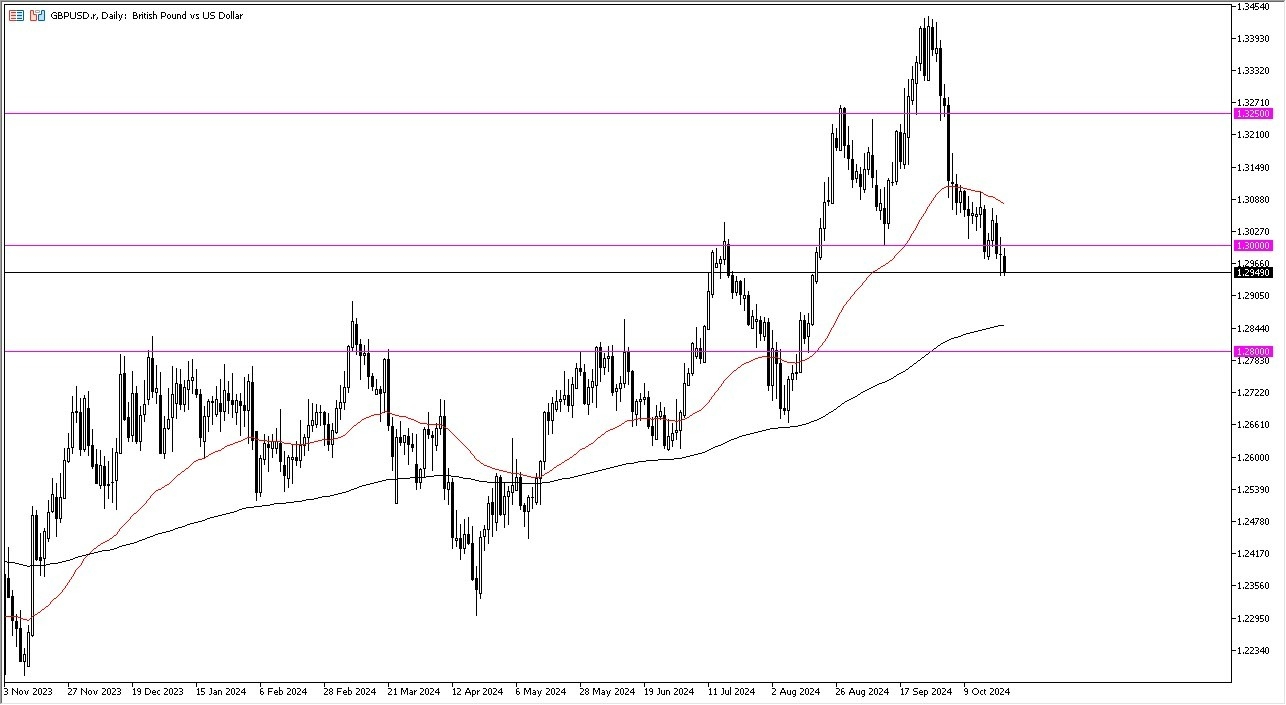
that the technical picture looked bearish below $1.2658. The key neckline which bears needed to break was the support level’s confluent round number at $1.2600.This was not a great call although it was not damaging, as the price rose over the day rather than breaking down. The levels I mentioned remained easily intact.The technical picture has become much more bullish, with the price now threatening to make a bullish breakout to a new 3-month high.The British Pound is one of the stronger major currencies and has enjoyed a bullish long-term trend for quite a while now. The US Dollar fell quite strongly last week, and still looks weak, but is near support and so bears may struggle to push it lower, although sentiment on inflation and rate cuts certainly supports a weaker US Dollar now.Bulls have pushed at the former resistance level at $1.2823 enough to invalidate it. The next resistance level is not until $1.2881, so the price has room to rise today.There are several reasons to expect higher prices today, so swing traders should look to buy any bullish bounce at the nearest support level of $1.2777, although the round number at $1.2800 could also work as a potentially supportive level.There is nothing of high importance scheduled today concerning the GBP. Regarding the USD, the Chair of the Federal Reserve will be testifying before the Senate at 3pm London time.Ready to trade our
daily Forex signals ? Here is our
Forex broker list
worth checking out.MENAFN09072024000131011023ID1108420863


Daily Forex


Legal Disclaimer:
MENAFN provides the information “as is” without warranty of any kind. We do not accept any responsibility or liability for the accuracy, content, images, videos, licenses, completeness, legality, or reliability of the information contained in this article. If you have any complaints or copyright issues related to this article, kindly contact the provider above.

Source link

9 07, 2024

Japanese Yen (USD/JPY) – Bond Buying, Rate Expectations, and Fed Chair

By |2024-07-09T11:32:42+03:00July 9, 2024|Forex News, News|0 Comments

Japanese Yen (USD/JPY) Analysis and Charts

The Bank of Japan may not hike interest rates this month but may begin to pare back its bond-buying program

  • The BoJ looks set to reduce its bond-buying efforts at the end of this month.
  • USD/JPY struggling to break higher ahead of Fed chair Powell’s Testimony.

Download our brand new Q3 Japanese Yen Technical and Fundamental forecasts for free:

Recommended by Nick Cawley

Get Your Free JPY Forecast


The Bank of Japan’s most recent summary of market opinions, released earlier today, has highlighted a growing consensus among bond market participants: the need to curtail the central bank’s bond-purchasing program. While the BoJ currently acquires bonds worth about 6 trillion yen each month, market experts are proposing a significant reduction, recommending monthly purchases be downsized to between 2 and 4 trillion yen instead. A reduced bond-buying program would allow Japan interest rates to move higher, aiding the central bank as it looks to start the process of tightening monetary policy.

According to the latest money market forecasts, there is around a 60% chance that the BoJ will raise interest rates by 10 basis points at the July 31st meeting. If the BoJ stands pat, then interest rates are fully expected to be hiked at the September 20th meeting with a second rate increase seen on December 19th.

USD/JPY is currently treading water just below multi-decade-high levels. While the Japanese Yen remains weak, recent USD/JPY price action has also been driven by the US dollar. The dollar index, DXY, continues to print a pattern of higher lows since the end of last year and press higher, although the recent failure to print a new higher high may temper further upside. Fed chair Jerome Powell is set to testify before Congress today and tomorrow, and lawmakers are likely to quiz Powell on the central bank’s current policy of keeping rates at elevated levels.

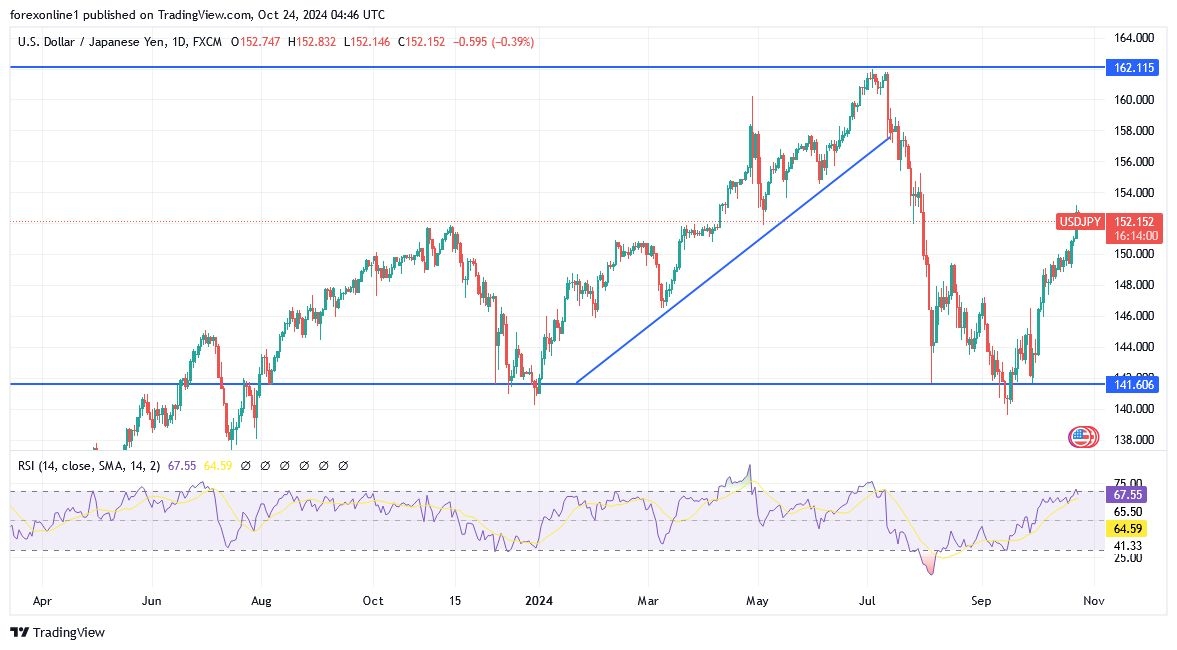
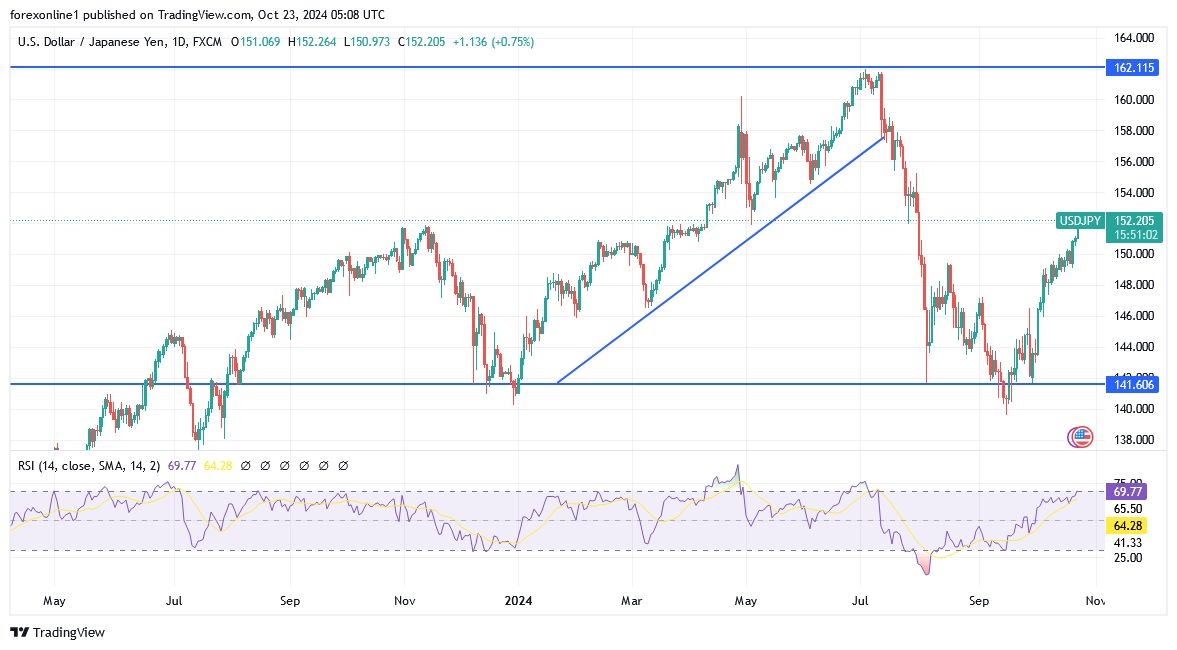
USD/JPY remains capped at just below 162.00 with short-term support seen at 160.20. USD/JPY volatility remains low but traders should remain alert to any official intervention by Japanese authorities if USD/JPY breaks higher.

USD/JPY Daily Price Chart

Recommended by Nick Cawley

How to Trade USD/JPY


All price charts using TradingView

Retail trader data show 21.98% of traders are net-long with the ratio of traders short to long at 3.55 to 1.The number of traders net-long is 10.10% higher than yesterday and 18.24% higher than last week, while the number of traders net-short is 0.08% lower than yesterday and 9.90% lower than last week.

We typically take a contrarian view to crowd sentiment, and the fact traders are net-short suggests USD/JPY prices may continue to rise. Yet traders are less net-short than yesterday and compared with last week. Recent changes in sentiment warn that the current USD/JPY price trend may soon reverse lower despite the fact traders remain net-short.

Change in Longs Shorts OI
Daily 10% 0% 2%
Weekly 18% -10% -5%

What does it mean for price action?

Get My Guide

What is your view on the Japanese Yen– bullish or bearish?? You can let us know via the form at the end of this piece or contact the author via Twitter @nickcawley1.


Source link

9 07, 2024

USD/JPY Forecast Today 09/7: Buyers Hold Strong (Video)

By |2024-07-09T09:32:04+03:00July 9, 2024|Forex News, News|0 Comments

  • In my daily analysis of the dollar against the Japanese yen, it’s become increasingly obvious that there are plenty of buyers underneath just waiting to happen and take this market on.
  • The 160 yen level is an area that’s been important multiple times and I just don’t see how it’s not again.
  • And in fact, we’ve already seen buyers come in and defend that level.

With that being the case, I think you’ve got a situation where you continue to buy the dips and that does make a lot of sense. After all the interest rate differential was wide enough to drive a truck through. As long as that’s the case, there’s no point in trying to short this pair. There have been some larger institutions that thought the Bank of Japan would turn things around and they have gotten broken. If we break down below the 160 yen level, then it’s possible that we could go to the 158 yen level underneath which is also not only backed up by the 50-day EMA but an area we’ve seen a lot of noise at previously.

We Should Go Higher

In general, this is a market that I think given enough time does go higher, perhaps an attempt to get to 165 yen is a very real possibility. You get paid to hang on to this USD/JPY pair and that’s the biggest takeaway here. I continue to do so myself and anytime we dip, I’m more than willing to add to that position, not take away from it. The Bank of Japan can’t do anything with interest rates.

The debt is just simply far too heavy in Japan to think of cutting rates with at least any significance. While the Federal Reserve, even if they do cut between now and the end of the year, it’s only going to be for 25 basis points, which of course is hardly enough to make a huge difference.

Want to start trading the US Dollar to Japanese Yen pair? Check out our top recommended Forex brokers for beginners here.

Source link

9 07, 2024

All the attention is now on Powell and US data

By |2024-07-09T03:29:00+03:00July 9, 2024|Forex News, News|0 Comments

You have reached your limit of 5 free articles for this month.

Get Premium without limits for only $479.76 for the first month

Access all our articles, insights, and analysts.

Your coupon code


UNLOCK OFFER

  • EUR/USD met some initial resistance near 1.0850
  • The slight recovery in the Dollar weighed on the pair.
  • Markets’ focus now shifts to Powell’s testimony and US CPI.

The US Dollar (USD) managed to regain some composure on Monday, sparking some reaction in the USD Index (DXY) back towards the 105.00 region amidst a broad-based retracement in US yields across different maturity periods.

The pick-up in the Greenback reignited some selling pressure on EUR/USD, dragging it back to the 1.0830 zone amidst some easing political concerns after the French second round of elections on Sunday.

The macroeconomic landscape remained relatively stable on both sides of the Atlantic. The ECB is considering further rate cuts beyond the summer, with market expectations leaning towards two additional cuts by the end of the year. Conversely, market participants are speculating whether the Fed will implement one or two rate cuts this year, despite the Fed’s current projection of a single cut, likely in December.

The latest Nonfarm Payrolls data (+206K jobs), however, lent extra belief to the idea that the Fed might start its easing cycle as soon as September.

According to the CME Group’s FedWatch Tool, there is approximately a 77% chance of interest rate cuts in September, increasing to nearly 97% by December.

The ECB’s rate cut in June, combined with the Fed’s decision to maintain rates, has widened the policy divergence between the two central banks. This divergence could potentially lead to further weakening of EUR/USD in the short term. However, the prospects of economic recovery in the Eurozone, along with perceived weaknesses in US economic fundamentals, may mitigate this disparity and provide occasional support to the currency pair in the near future.

Looking ahead, the upcoming testimonies by Chair Jerome Powell and the release of US inflation figures tracked by the CPI are expected to be the key drivers for the pair’s price action, at least in the very near term.

EUR/USD daily chart

EUR/USD short-term technical outlook

Further upside should put EUR/USD en route to test the July peak of 1.0845 (July 8), closely followed by the weekly high of 1.0852 (June 12) and the June top of 1.0916 (June 4). If the pair breaks above this level, it may bring the March peak of 1.0981 (March 8) back into focus, ahead of the weekly high of 1.0998 (January 11) and the psychological 1.1000 level.

If bears take control, spot may fall to its June low of 1.0666 (June 26), then the May low of 1.0649 (May 1), and finally the 2024 bottom of 1.0601 (April 16).

Looking at the big picture, more gains look to be on the way if the crucial 200-day SMA (1.0797) is consistently surpassed.

So far, the 4-hour chart suggests a continuation of the bullish impulse. The initial barrier level is 1.0845, then 1.0852. The nearest support is at 1.0784, then 1.0709, and lastly 1.0666. The Relative Strength Index (RSI) deflated below 63.

  • EUR/USD met some initial resistance near 1.0850
  • The slight recovery in the Dollar weighed on the pair.
  • Markets’ focus now shifts to Powell’s testimony and US CPI.

The US Dollar (USD) managed to regain some composure on Monday, sparking some reaction in the USD Index (DXY) back towards the 105.00 region amidst a broad-based retracement in US yields across different maturity periods.

The pick-up in the Greenback reignited some selling pressure on EUR/USD, dragging it back to the 1.0830 zone amidst some easing political concerns after the French second round of elections on Sunday.

The macroeconomic landscape remained relatively stable on both sides of the Atlantic. The ECB is considering further rate cuts beyond the summer, with market expectations leaning towards two additional cuts by the end of the year. Conversely, market participants are speculating whether the Fed will implement one or two rate cuts this year, despite the Fed’s current projection of a single cut, likely in December.

The latest Nonfarm Payrolls data (+206K jobs), however, lent extra belief to the idea that the Fed might start its easing cycle as soon as September.

According to the CME Group’s FedWatch Tool, there is approximately a 77% chance of interest rate cuts in September, increasing to nearly 97% by December.

The ECB’s rate cut in June, combined with the Fed’s decision to maintain rates, has widened the policy divergence between the two central banks. This divergence could potentially lead to further weakening of EUR/USD in the short term. However, the prospects of economic recovery in the Eurozone, along with perceived weaknesses in US economic fundamentals, may mitigate this disparity and provide occasional support to the currency pair in the near future.

Looking ahead, the upcoming testimonies by Chair Jerome Powell and the release of US inflation figures tracked by the CPI are expected to be the key drivers for the pair’s price action, at least in the very near term.

EUR/USD daily chart

EUR/USD short-term technical outlook

Further upside should put EUR/USD en route to test the July peak of 1.0845 (July 8), closely followed by the weekly high of 1.0852 (June 12) and the June top of 1.0916 (June 4). If the pair breaks above this level, it may bring the March peak of 1.0981 (March 8) back into focus, ahead of the weekly high of 1.0998 (January 11) and the psychological 1.1000 level.

If bears take control, spot may fall to its June low of 1.0666 (June 26), then the May low of 1.0649 (May 1), and finally the 2024 bottom of 1.0601 (April 16).

Looking at the big picture, more gains look to be on the way if the crucial 200-day SMA (1.0797) is consistently surpassed.

So far, the 4-hour chart suggests a continuation of the bullish impulse. The initial barrier level is 1.0845, then 1.0852. The nearest support is at 1.0784, then 1.0709, and lastly 1.0666. The Relative Strength Index (RSI) deflated below 63.

Source link

8 07, 2024

GBP/USD Analysis Today 08/7: Bullish Momentum (Chart)

By |2024-07-08T23:26:36+03:00July 8, 2024|Forex News, News|0 Comments

  • The GBP/USD exchange rate is trading near a 3-week high ahead of major economic and political developments on both sides of the Atlantic.
  • After the weekend, there will be a new government in the UK and the potential emergence of a new Democratic presidential candidate in the US, which will lead to a major shift in political dynamics.
  • The GBP/USD price gains reached the 1.2817 resistance level, its highest point in three weeks.

According to Forex market analysts, while the risk has shifted to the upside, it is worth noting that there is a strong resistance level at 1.2805, ahead of last month’s high of 1.2860. To maintain the momentum, the pound must not break below 1.2665.

Regarding the UK elections, there are very strong expectations of a Labor victory. Anything but a large majority would be the biggest shock in recent times. In this regard, MUFG Bank commented: “The Labor Party’s pledge to prioritize economic stability and respect fiscal rules is mitigating concerns about the risks of more flexible fiscal policy and a loss of confidence in GBP/USD. On the other hand, investors would welcome greater political stability in the UK and the possibility of an improved Brexit deal that could support GBP/USD.”

According to forex trading, the US dollar was generally affected by its strength in global markets after weaker-than-expected US data with ISM business confidence data after a contraction in the manufacturing sector. In this regard, ING Bank commented, “This is an important story because these have historically been the best leading indicators of changes in the economic cycle and suggest that downside risks to growth are increasing.” The bank added, “This certainly strengthens the case for a US interest rate cut in September by the Federal Reserve as it ticks all the boxes of weak growth, slowing inflation and a deteriorating job market.”

Rodrigo Catril, Head of FX Strategy at National Australia Bank, commented: “Slowly but surely, what we’re starting to see is a slight shift in the flow of US economic data.” According to MUFG Bank: “Overall, the developments give us more confidence that inflation and growth in the US will continue to slow, encouraging the US interest rate market to price in more rate cuts from the Fed next year. Obviously, this is a key assumption behind our forecast for US dollar weakness next year.”

US yields have fallen for economic reasons, but markets are also watching political developments. For its part, US President Biden has continued to insist that he will remain the Democratic nominee in November but talk of his withdrawal has continued to grow amid speculation that there will be an announcement over the weekend. Accordingly, Rabobank expects the uncertainty to help support the US dollar. He stated, “In light of the upcoming US elections and the uncertainty surrounding Fed policy, the summer is shaping up to be far from quiet for markets. Regardless of the short-term noise, we still see the US dollar as likely to retain its strong position next year, with the possibility of a Trump presidency supporting these expectations.”

Technical forecasts for the GBP/USD pair today:

A bullish channel has formed for the GBP/USD price on the daily chart attached, and bulls will control the trend if the currency pair moves towards the psychological resistance level of 1.3000, which in turn will move the technical indicators towards strong overbought levels. On the other hand, in the same time frame, the support level of 1.2700 will remain a threat to the current upward path. Thus, the currency pair will react this week to the announcement of US inflation figures and the testimony of the US Federal Reserve Governor Jerome Powell.

Ready to trade our daily Forex analysis? Here are the best regulated trading platforms UK to choose from. 

Source link

8 07, 2024

Uptrend Still in Play (Chart)

By |2024-07-08T21:25:07+03:00July 8, 2024|Forex News, News|0 Comments

  • Despite some selling pressure at the end of last week’s trading, the USD/JPY pair has given up some of its highest gains in 38 years around the 161.95 resistance level, retreating to 160.33 and closing the week steady around 160.75.
  • Performance may remain the same until there is Japanese intervention in the forex markets to prevent further collapse of the yen exchange rate, as well as the reaction to the release of US inflation figures and the testimony of US Federal Reserve Chairman Jerome Powell.

On the economic calendar data front this week, in the United States, attention will be paid to the release of the Consumer Price Index and the Producer Price Index data for June, followed by the semi-annual testimony of the Federal Reserve Chairman Powell on monetary policy at the Senate Banking Committee. In addition, investors will closely follow the US Consumer Confidence Report in Michigan.

Meanwhile, the US Consumer Price Index report for June is expected to show consumer prices rising 0.1% from May, after a flat reading, while the core CPI is likely to rise 0.2% on a monthly basis, as it did in May. Also, producer prices are expected to rise 0.1%, rebounding from a 0.2% decline in May, while core producer prices are likely to rise 0.2%, after a flat reading in May. In addition, US Federal Reserve Chairman Powell will deliver his semi-annual monetary policy testimony before Congress, and other Fed officials are also scheduled to speak during the week.

Also, in focus will be the preliminary numbers on US consumer confidence in Michigan and the NFIB business optimism index. Finally, earnings season will kick off with results from major banks including JPMorgan, Citigroup, Wells Fargo and Bank of New York Mellon.

USD/JPY Technical Analysis and Expectations Today

The USD/JPY pair has now declined to trade slightly below the 100-hour moving average. As a result, the pair appears to be moving towards the oversold levels of the 14-hour RSI. In the short term, based on the hourly chart, the USD/JPY pair appears to be trading within a descending channel. Recently, the 14-hour RSI has declined to avoid overbought levels. Therefore, bears will target extended pullbacks around 160.29 or lower at the 159.73 support. On the other hand, bulls will target profits around 161.35 or higher at the 161.90 resistance.

In the long term, based on the daily chart performance, the USD/JPY pair continues to trade within an ascending channel. However, the 14-day RSI recently retreated, recovering from overbought conditions. Thus, bearish traders (the bears) will target extended declines around 159.22 or lower at the 157.43 support level. On the other hand, bullish traders (the bulls) will look to continue the current uptrend towards 162.41 or higher to the 164.12 resistance level.

Want to start trading the daily USD/JPY market? Get our most recommended brokers for demo accounts here.

Source link

8 07, 2024

EUR/USD Analysis Today 08/7: Psychological Resistance -Chart

By |2024-07-08T17:22:36+03:00July 8, 2024|Forex News, News|0 Comments

  • The US dollar weakened against other major currencies after a US Labor market report showed continued slowing conditions, reinforcing expectations of a rate cut by the Federal Reserve at its September policy meeting.
  • EUR/USD rose to a three-week high of 1.0842 and closed the week steady near those gains.

According to reliable trading companies’ platforms, the euro dollar price will remain stable around the current situation until the reaction to the final results of the French elections, then the announcement of US inflation figures and the testimony of the US Federal Reserve Governor Jerome Powell.

According to economic calendar results, the Bureau of Labor Statistics lowered its previous estimates of US job growth in April and May by 111,000 and said the unemployment rate rose to 4.1% in June. Also announced, the June nonfarm payrolls report fell to 206,000 from 272,000, but this beat expectations of 190,000. However, the market reaction in currencies and bonds suggests that the focus is shifting away from the previous two months’ revision and the unemployment rate. Commenting on the event and the reaction, Carl Shamota, senior analyst at Corpay, said: “Traders are selling dollars and interest rates are falling due to the possibility of a rate cut in September.”

The result is that the US labor market is slowing down, which is consistent with slowing wage growth that will affect inflation in the future, allowing the Fed to cut rates, possibly as early as September. In fact, the BLS also reported that average hourly earnings rose 3.9% on an annual basis, the lowest in three years. As a result, Richard Carter, an analyst at Quilter Cheviot, says: “The US labor market appears to be slowing down.” And “Fed policymakers raised concerns at their last policy meeting that the unemployment rate could rise very quickly if interest rates remain high for too long.”

Last Tuesday, Federal Reserve Chairman Jerome Powell said at a conference in Portugal that the Fed would consider cutting rates if the Labor market deteriorates. Moreover, he added that there is still a risk that the unemployment rate could rise further from here. As is known, the US jobs report is the latest in a series of soft economic prints. On Wednesday, the dollar fell after the release of the ISM services PMI, which came in well below expectations.

On the stock trading front, The S&P 500 and Nasdaq 100 closed at record highs on Friday, up 0.5% and 1%, respectively, while the Dow Jones Industrial Average rose 67 points. Meanwhile, market sentiment was boosted by data showing US hiring slowed in June and the country’s unemployment rate rose to its highest level since late 2021, putting downward pressure on Treasury yields and increasing speculation about a possible interest rate cut in September.

Nonfarm payrolls rose by 206,000 in June, with job growth in the previous two months revised down to a total of 111,000. Communications services stocks led the session’s gains, with Meta up 5.9% and Alphabet up 2.5%. Consumer staples also performed well, with Walmart up 2.6% and Costco up 2.7%. Conversely, energy stocks were down, with Exxon down 1.3% and Chevron down 1.6%.

Over the week, the S&P 500 posted its fourth positive week in the past five, up 1.2%, the Nasdaq 100 rose 2.4%, and the Dow Jones rose 0.3%.

EUR/USD Technical analysis and forecast:

we expect the EUR/USD to remain on its current path until the markets react to the announcement of the French election results, then the announcement of the US inflation figures and the statements of the US Federal Reserve Governor Jerome Powell. According to the performance on the daily chart, the EUR/USD currency pair is on an upward rebound path and bulls’ control over the trend will strengthen if it moves towards the resistance levels of 1.0920 and the psychological resistance of 1.1000, respectively. On the other hand, and over the same period, the support level of 1.0720 will be a threat to the current upward rebound.

Ready to trade our Forex daily analysis and predictions? Here are the best European brokers to choose from. 

Source link

8 07, 2024

Pound Sterling could face next resistance at 1.2860

By |2024-07-08T15:21:41+03:00July 8, 2024|Forex News, News|0 Comments

  • GBP/USD holds steady above 1.2800 in the European session on Monday.
  • The near-term technical outlook highlights overbought conditions for the pair.
  • 1.2860 could be seen as next technical resistance.

GBP/USD preserved its bullish momentum on Friday and closed the previous week above 1.2800. The pair stays relatively quiet in the European morning on Monday and the near-term technical outlook points to overbought conditions.

British Pound PRICE Last 7 days

The table below shows the percentage change of British Pound (GBP) against listed major currencies last 7 days. British Pound was the strongest against the Japanese Yen.

  USD EUR GBP JPY CAD AUD NZD CHF
USD   -1.16% -1.37% 0.18% -0.29% -1.06% -0.66% -0.29%
EUR 1.16%   -0.44% 1.05% 0.57% -0.02% 0.20% 0.55%
GBP 1.37% 0.44%   1.47% 1.02% 0.42% 0.64% 0.99%
JPY -0.18% -1.05% -1.47%   -0.48% -1.18% -0.84% -0.46%
CAD 0.29% -0.57% -1.02% 0.48%   -0.74% -0.37% -0.02%
AUD 1.06% 0.02% -0.42% 1.18% 0.74%   0.22% 0.67%
NZD 0.66% -0.20% -0.64% 0.84% 0.37% -0.22%   0.38%
CHF 0.29% -0.55% -0.99% 0.46% 0.02% -0.67% -0.38%  

The heat map shows percentage changes of major currencies against each other. The base currency is picked from the left column, while the quote currency is picked from the top row. For example, if you pick the British Pound from the left column and move along the horizontal line to the US Dollar, the percentage change displayed in the box will represent GBP (base)/USD (quote).

The renewed selling pressure surrounding the US Dollar (USD) fuelled another leg higher in GBP/USD ahead of the weekend.

Although the data published by the US Bureau of Labor Statistics showed that Nonfarm Payrolls (NFP) rose 206,000 in June, surpassing the market expectation of 190,000, the negative revision to May’s NFP, from 272,000 to 218,000, caused the USD to weaken. Additionally, the BSL also reported that the Unemployment Rate ticked up to 4.1%, while the annual wage inflation softened to 3.9% from 4.1% in May, reflecting loosening conditions in the labor market. 

The US economic calendar will not offer any high-impact data releases on Monday and US stock index futures trade little changed on the day.

On Tuesday, Federal Reserve Chairman Jerome Powell will testify before the Senate Banking Committee ahead of his testimony before the House Financial Services Committe on Wednesday. In its Semi-Annual Monetary Policy Report published on Friday, the Fed noted that they have seen modest further progress on inflation this year but added that they still need greater confidence before moving to rate cuts.

GBP/USD Technical Analysis

The Relative Strength Index (RSI) indicator on the 4-hour chart stays near 80, highlighting overbought conditions for the pair. In case GBP/USD stages a correction, 1.2800 (psychological level, static level) aligns as immediate support before 1.2750 (static level) and 1.2700 (20-day Simple Moving Average).

On the upside, 1.2860 (June 12 high) could be seen as next resistance before 1.2900 (psychological level, static level).

Pound Sterling FAQs

The Pound Sterling (GBP) is the oldest currency in the world (886 AD) and the official currency of the United Kingdom. It is the fourth most traded unit for foreign exchange (FX) in the world, accounting for 12% of all transactions, averaging $630 billion a day, according to 2022 data. Its key trading pairs are GBP/USD, aka ‘Cable’, which accounts for 11% of FX, GBP/JPY, or the ‘Dragon’ as it is known by traders (3%), and EUR/GBP (2%). The Pound Sterling is issued by the Bank of England (BoE).

The single most important factor influencing the value of the Pound Sterling is monetary policy decided by the Bank of England. The BoE bases its decisions on whether it has achieved its primary goal of “price stability” – a steady inflation rate of around 2%. Its primary tool for achieving this is the adjustment of interest rates. When inflation is too high, the BoE will try to rein it in by raising interest rates, making it more expensive for people and businesses to access credit. This is generally positive for GBP, as higher interest rates make the UK a more attractive place for global investors to park their money. When inflation falls too low it is a sign economic growth is slowing. In this scenario, the BoE will consider lowering interest rates to cheapen credit so businesses will borrow more to invest in growth-generating projects.

Data releases gauge the health of the economy and can impact the value of the Pound Sterling. Indicators such as GDP, Manufacturing and Services PMIs, and employment can all influence the direction of the GBP. A strong economy is good for Sterling. Not only does it attract more foreign investment but it may encourage the BoE to put up interest rates, which will directly strengthen GBP. Otherwise, if economic data is weak, the Pound Sterling is likely to fall.

Another significant data release for the Pound Sterling is the Trade Balance. This indicator measures the difference between what a country earns from its exports and what it spends on imports over a given period. If a country produces highly sought-after exports, its currency will benefit purely from the extra demand created from foreign buyers seeking to purchase these goods. Therefore, a positive net Trade Balance strengthens a currency and vice versa for a negative balance.


Source link

8 07, 2024

Euro stays near key resistance level

By |2024-07-08T13:19:01+03:00July 8, 2024|Forex News, News|0 Comments

You have reached your limit of 5 free articles for this month.

Get Premium without limits for only $479.76 for the first month

Access all our articles, insights, and analysts.

Your coupon code


UNLOCK OFFER

  • EUR/USD fluctuates in a narrow range above 1.0800 on Monday.
  • The pair could stretch higher once it clears 1.0840.
  • The US economic calendar will not feature any high-tier data releases.

After gaining more than 1% in the previous week, EUR/USD started the new week with a bearish gap but managed to erase its losses. In the European trading hours, the pair holds steady above 1.0800.

The broad-based selling pressure surrounding the US Dollar allowed EUR/USD to extend its weekly rally on Friday. The Bureau of Labor Statistics (BLS) reported that Nonfarm Payrolls (NFP) rose 206,000 in June. Although this reading surpassed the market forecast of 190,000, the USD struggled to find demand as the report showed that the BLS revised the May’s NFP increase of 272,000 lower to 218,000. Furthermore, the Unemployment Rate ticked up to 4.1%, while the annual wage inflation softened to 3.9% from 4.1% in May, putting additional weight on the USD’s shoulders.

Euro PRICE Last 7 days

The table below shows the percentage change of Euro (EUR) against listed major currencies last 7 days. Euro was the strongest against the US Dollar.

  USD EUR GBP JPY CAD AUD NZD CHF
USD   -1.16% -1.34% 0.18% -0.29% -1.04% -0.67% -0.32%
EUR 1.16%   -0.42% 1.05% 0.57% -0.00% 0.19% 0.54%
GBP 1.34% 0.42%   1.44% 1.02% 0.42% 0.61% 0.96%
JPY -0.18% -1.05% -1.44%   -0.45% -1.15% -0.83% -0.46%
CAD 0.29% -0.57% -1.02% 0.45%   -0.72% -0.38% -0.03%
AUD 1.04% 0.00% -0.42% 1.15% 0.72%   0.19% 0.62%
NZD 0.67% -0.19% -0.61% 0.83% 0.38% -0.19%   0.37%
CHF 0.32% -0.54% -0.96% 0.46% 0.03% -0.62% -0.37%  

The heat map shows percentage changes of major currencies against each other. The base currency is picked from the left column, while the quote currency is picked from the top row. For example, if you pick the Euro from the left column and move along the horizontal line to the US Dollar, the percentage change displayed in the box will represent EUR (base)/USD (quote).

The immediate reaction to the second round of French parliamentary election caused the Euro to lose some interest at the beginning of the week. The left-wing alliance New Popular Front won the second round of French election by securing 182 seats in the National Assembly but fell short of the 289 seats required to win a majority.

Meanwhile, the data from the Euro area showed that the Sentix Investor Confidence declined to -7.3 in July from 0.3%.

The US economic calendar will not offer any high-tier data releases on Monday. Federal Reserve (Fed) Chairman Jerome Powell will deliver the Semi-Annual Monetary Policy Report and testify before the Senate Banking Committee and House Financial Services Committee on Tuesday and Wednesday, respectively. Hence, investors could refrain from taking large positions.

EUR/USD Technical Analysis

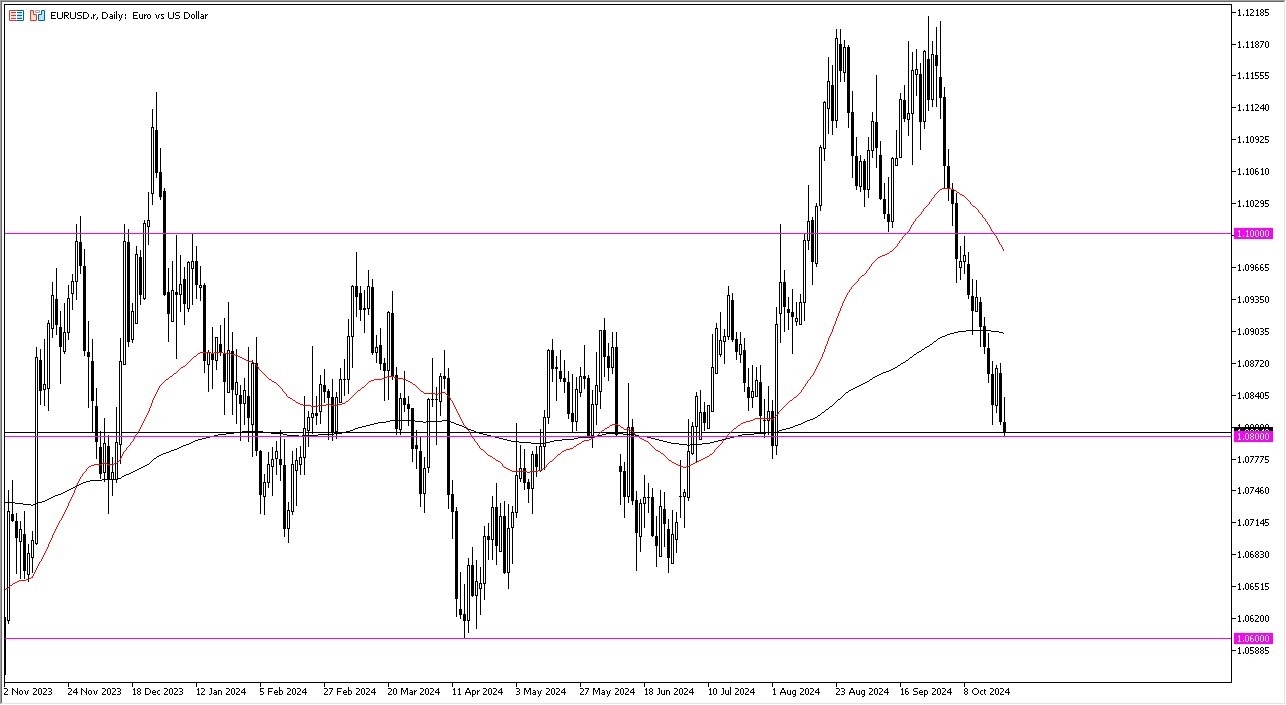
1.0840 (Fibonacci 23.6% retracement of the latest uptrend) aligns as immediate resistance for EUR/USD. If the pair manages to clear that level and starts using it as support, 1.0900 (psychological level, static level) could be seen as next bullish target.

On the downside, the 100-day and the 200-day Simple Moving Averages form strong support at 1.0800. A daily close below this level could attract technical sellers and open the door for an extended correction toward 1.0760 (Fibonacci 50% reracement).

Euro FAQs

The Euro is the currency for the 20 European Union countries that belong to the Eurozone. It is the second most heavily traded currency in the world behind the US Dollar. In 2022, it accounted for 31% of all foreign exchange transactions, with an average daily turnover of over $2.2 trillion a day. EUR/USD is the most heavily traded currency pair in the world, accounting for an estimated 30% off all transactions, followed by EUR/JPY (4%), EUR/GBP (3%) and EUR/AUD (2%).

The European Central Bank (ECB) in Frankfurt, Germany, is the reserve bank for the Eurozone. The ECB sets interest rates and manages monetary policy. The ECB’s primary mandate is to maintain price stability, which means either controlling inflation or stimulating growth. Its primary tool is the raising or lowering of interest rates. Relatively high interest rates – or the expectation of higher rates – will usually benefit the Euro and vice versa. The ECB Governing Council makes monetary policy decisions at meetings held eight times a year. Decisions are made by heads of the Eurozone national banks and six permanent members, including the President of the ECB, Christine Lagarde.

Eurozone inflation data, measured by the Harmonized Index of Consumer Prices (HICP), is an important econometric for the Euro. If inflation rises more than expected, especially if above the ECB’s 2% target, it obliges the ECB to raise interest rates to bring it back under control. Relatively high interest rates compared to its counterparts will usually benefit the Euro, as it makes the region more attractive as a place for global investors to park their money.

Data releases gauge the health of the economy and can impact on the Euro. Indicators such as GDP, Manufacturing and Services PMIs, employment, and consumer sentiment surveys can all influence the direction of the single currency. A strong economy is good for the Euro. Not only does it attract more foreign investment but it may encourage the ECB to put up interest rates, which will directly strengthen the Euro. Otherwise, if economic data is weak, the Euro is likely to fall. Economic data for the four largest economies in the euro area (Germany, France, Italy and Spain) are especially significant, as they account for 75% of the Eurozone’s economy.

Another significant data release for the Euro is the Trade Balance. This indicator measures the difference between what a country earns from its exports and what it spends on imports over a given period. If a country produces highly sought after exports then its currency will gain in value purely from the extra demand created from foreign buyers seeking to purchase these goods. Therefore, a positive net Trade Balance strengthens a currency and vice versa for a negative balance.


  • EUR/USD fluctuates in a narrow range above 1.0800 on Monday.
  • The pair could stretch higher once it clears 1.0840.
  • The US economic calendar will not feature any high-tier data releases.

After gaining more than 1% in the previous week, EUR/USD started the new week with a bearish gap but managed to erase its losses. In the European trading hours, the pair holds steady above 1.0800.

The broad-based selling pressure surrounding the US Dollar allowed EUR/USD to extend its weekly rally on Friday. The Bureau of Labor Statistics (BLS) reported that Nonfarm Payrolls (NFP) rose 206,000 in June. Although this reading surpassed the market forecast of 190,000, the USD struggled to find demand as the report showed that the BLS revised the May’s NFP increase of 272,000 lower to 218,000. Furthermore, the Unemployment Rate ticked up to 4.1%, while the annual wage inflation softened to 3.9% from 4.1% in May, putting additional weight on the USD’s shoulders.

Euro PRICE Last 7 days

The table below shows the percentage change of Euro (EUR) against listed major currencies last 7 days. Euro was the strongest against the US Dollar.

  USD EUR GBP JPY CAD AUD NZD CHF
USD   -1.16% -1.34% 0.18% -0.29% -1.04% -0.67% -0.32%
EUR 1.16%   -0.42% 1.05% 0.57% -0.00% 0.19% 0.54%
GBP 1.34% 0.42%   1.44% 1.02% 0.42% 0.61% 0.96%
JPY -0.18% -1.05% -1.44%   -0.45% -1.15% -0.83% -0.46%
CAD 0.29% -0.57% -1.02% 0.45%   -0.72% -0.38% -0.03%
AUD 1.04% 0.00% -0.42% 1.15% 0.72%   0.19% 0.62%
NZD 0.67% -0.19% -0.61% 0.83% 0.38% -0.19%   0.37%
CHF 0.32% -0.54% -0.96% 0.46% 0.03% -0.62% -0.37%  

The heat map shows percentage changes of major currencies against each other. The base currency is picked from the left column, while the quote currency is picked from the top row. For example, if you pick the Euro from the left column and move along the horizontal line to the US Dollar, the percentage change displayed in the box will represent EUR (base)/USD (quote).

The immediate reaction to the second round of French parliamentary election caused the Euro to lose some interest at the beginning of the week. The left-wing alliance New Popular Front won the second round of French election by securing 182 seats in the National Assembly but fell short of the 289 seats required to win a majority.

Meanwhile, the data from the Euro area showed that the Sentix Investor Confidence declined to -7.3 in July from 0.3%.

The US economic calendar will not offer any high-tier data releases on Monday. Federal Reserve (Fed) Chairman Jerome Powell will deliver the Semi-Annual Monetary Policy Report and testify before the Senate Banking Committee and House Financial Services Committee on Tuesday and Wednesday, respectively. Hence, investors could refrain from taking large positions.

EUR/USD Technical Analysis

1.0840 (Fibonacci 23.6% retracement of the latest uptrend) aligns as immediate resistance for EUR/USD. If the pair manages to clear that level and starts using it as support, 1.0900 (psychological level, static level) could be seen as next bullish target.

On the downside, the 100-day and the 200-day Simple Moving Averages form strong support at 1.0800. A daily close below this level could attract technical sellers and open the door for an extended correction toward 1.0760 (Fibonacci 50% reracement).

Euro FAQs

The Euro is the currency for the 20 European Union countries that belong to the Eurozone. It is the second most heavily traded currency in the world behind the US Dollar. In 2022, it accounted for 31% of all foreign exchange transactions, with an average daily turnover of over $2.2 trillion a day. EUR/USD is the most heavily traded currency pair in the world, accounting for an estimated 30% off all transactions, followed by EUR/JPY (4%), EUR/GBP (3%) and EUR/AUD (2%).

The European Central Bank (ECB) in Frankfurt, Germany, is the reserve bank for the Eurozone. The ECB sets interest rates and manages monetary policy. The ECB’s primary mandate is to maintain price stability, which means either controlling inflation or stimulating growth. Its primary tool is the raising or lowering of interest rates. Relatively high interest rates – or the expectation of higher rates – will usually benefit the Euro and vice versa. The ECB Governing Council makes monetary policy decisions at meetings held eight times a year. Decisions are made by heads of the Eurozone national banks and six permanent members, including the President of the ECB, Christine Lagarde.

Eurozone inflation data, measured by the Harmonized Index of Consumer Prices (HICP), is an important econometric for the Euro. If inflation rises more than expected, especially if above the ECB’s 2% target, it obliges the ECB to raise interest rates to bring it back under control. Relatively high interest rates compared to its counterparts will usually benefit the Euro, as it makes the region more attractive as a place for global investors to park their money.

Data releases gauge the health of the economy and can impact on the Euro. Indicators such as GDP, Manufacturing and Services PMIs, employment, and consumer sentiment surveys can all influence the direction of the single currency. A strong economy is good for the Euro. Not only does it attract more foreign investment but it may encourage the ECB to put up interest rates, which will directly strengthen the Euro. Otherwise, if economic data is weak, the Euro is likely to fall. Economic data for the four largest economies in the euro area (Germany, France, Italy and Spain) are especially significant, as they account for 75% of the Eurozone’s economy.

Another significant data release for the Euro is the Trade Balance. This indicator measures the difference between what a country earns from its exports and what it spends on imports over a given period. If a country produces highly sought after exports then its currency will gain in value purely from the extra demand created from foreign buyers seeking to purchase these goods. Therefore, a positive net Trade Balance strengthens a currency and vice versa for a negative balance.


Source link

Go to Top