The main tag of Forex News Today Articles.
You can use the search box below to find what you need.
[wd_asp id=1]

8 07, 2024

Euro stays near key resistance level

By |2024-07-08T13:19:01+03:00July 8, 2024|Forex News, News|0 Comments

You have reached your limit of 5 free articles for this month.

Get Premium without limits for only $479.76 for the first month

Access all our articles, insights, and analysts.

Your coupon code


UNLOCK OFFER

  • EUR/USD fluctuates in a narrow range above 1.0800 on Monday.
  • The pair could stretch higher once it clears 1.0840.
  • The US economic calendar will not feature any high-tier data releases.

After gaining more than 1% in the previous week, EUR/USD started the new week with a bearish gap but managed to erase its losses. In the European trading hours, the pair holds steady above 1.0800.

The broad-based selling pressure surrounding the US Dollar allowed EUR/USD to extend its weekly rally on Friday. The Bureau of Labor Statistics (BLS) reported that Nonfarm Payrolls (NFP) rose 206,000 in June. Although this reading surpassed the market forecast of 190,000, the USD struggled to find demand as the report showed that the BLS revised the May’s NFP increase of 272,000 lower to 218,000. Furthermore, the Unemployment Rate ticked up to 4.1%, while the annual wage inflation softened to 3.9% from 4.1% in May, putting additional weight on the USD’s shoulders.

Euro PRICE Last 7 days

The table below shows the percentage change of Euro (EUR) against listed major currencies last 7 days. Euro was the strongest against the US Dollar.

  USD EUR GBP JPY CAD AUD NZD CHF
USD   -1.16% -1.34% 0.18% -0.29% -1.04% -0.67% -0.32%
EUR 1.16%   -0.42% 1.05% 0.57% -0.00% 0.19% 0.54%
GBP 1.34% 0.42%   1.44% 1.02% 0.42% 0.61% 0.96%
JPY -0.18% -1.05% -1.44%   -0.45% -1.15% -0.83% -0.46%
CAD 0.29% -0.57% -1.02% 0.45%   -0.72% -0.38% -0.03%
AUD 1.04% 0.00% -0.42% 1.15% 0.72%   0.19% 0.62%
NZD 0.67% -0.19% -0.61% 0.83% 0.38% -0.19%   0.37%
CHF 0.32% -0.54% -0.96% 0.46% 0.03% -0.62% -0.37%  

The heat map shows percentage changes of major currencies against each other. The base currency is picked from the left column, while the quote currency is picked from the top row. For example, if you pick the Euro from the left column and move along the horizontal line to the US Dollar, the percentage change displayed in the box will represent EUR (base)/USD (quote).

The immediate reaction to the second round of French parliamentary election caused the Euro to lose some interest at the beginning of the week. The left-wing alliance New Popular Front won the second round of French election by securing 182 seats in the National Assembly but fell short of the 289 seats required to win a majority.

Meanwhile, the data from the Euro area showed that the Sentix Investor Confidence declined to -7.3 in July from 0.3%.

The US economic calendar will not offer any high-tier data releases on Monday. Federal Reserve (Fed) Chairman Jerome Powell will deliver the Semi-Annual Monetary Policy Report and testify before the Senate Banking Committee and House Financial Services Committee on Tuesday and Wednesday, respectively. Hence, investors could refrain from taking large positions.

EUR/USD Technical Analysis

1.0840 (Fibonacci 23.6% retracement of the latest uptrend) aligns as immediate resistance for EUR/USD. If the pair manages to clear that level and starts using it as support, 1.0900 (psychological level, static level) could be seen as next bullish target.

On the downside, the 100-day and the 200-day Simple Moving Averages form strong support at 1.0800. A daily close below this level could attract technical sellers and open the door for an extended correction toward 1.0760 (Fibonacci 50% reracement).

Euro FAQs

The Euro is the currency for the 20 European Union countries that belong to the Eurozone. It is the second most heavily traded currency in the world behind the US Dollar. In 2022, it accounted for 31% of all foreign exchange transactions, with an average daily turnover of over $2.2 trillion a day. EUR/USD is the most heavily traded currency pair in the world, accounting for an estimated 30% off all transactions, followed by EUR/JPY (4%), EUR/GBP (3%) and EUR/AUD (2%).

The European Central Bank (ECB) in Frankfurt, Germany, is the reserve bank for the Eurozone. The ECB sets interest rates and manages monetary policy. The ECB’s primary mandate is to maintain price stability, which means either controlling inflation or stimulating growth. Its primary tool is the raising or lowering of interest rates. Relatively high interest rates – or the expectation of higher rates – will usually benefit the Euro and vice versa. The ECB Governing Council makes monetary policy decisions at meetings held eight times a year. Decisions are made by heads of the Eurozone national banks and six permanent members, including the President of the ECB, Christine Lagarde.

Eurozone inflation data, measured by the Harmonized Index of Consumer Prices (HICP), is an important econometric for the Euro. If inflation rises more than expected, especially if above the ECB’s 2% target, it obliges the ECB to raise interest rates to bring it back under control. Relatively high interest rates compared to its counterparts will usually benefit the Euro, as it makes the region more attractive as a place for global investors to park their money.

Data releases gauge the health of the economy and can impact on the Euro. Indicators such as GDP, Manufacturing and Services PMIs, employment, and consumer sentiment surveys can all influence the direction of the single currency. A strong economy is good for the Euro. Not only does it attract more foreign investment but it may encourage the ECB to put up interest rates, which will directly strengthen the Euro. Otherwise, if economic data is weak, the Euro is likely to fall. Economic data for the four largest economies in the euro area (Germany, France, Italy and Spain) are especially significant, as they account for 75% of the Eurozone’s economy.

Another significant data release for the Euro is the Trade Balance. This indicator measures the difference between what a country earns from its exports and what it spends on imports over a given period. If a country produces highly sought after exports then its currency will gain in value purely from the extra demand created from foreign buyers seeking to purchase these goods. Therefore, a positive net Trade Balance strengthens a currency and vice versa for a negative balance.


  • EUR/USD fluctuates in a narrow range above 1.0800 on Monday.
  • The pair could stretch higher once it clears 1.0840.
  • The US economic calendar will not feature any high-tier data releases.

After gaining more than 1% in the previous week, EUR/USD started the new week with a bearish gap but managed to erase its losses. In the European trading hours, the pair holds steady above 1.0800.

The broad-based selling pressure surrounding the US Dollar allowed EUR/USD to extend its weekly rally on Friday. The Bureau of Labor Statistics (BLS) reported that Nonfarm Payrolls (NFP) rose 206,000 in June. Although this reading surpassed the market forecast of 190,000, the USD struggled to find demand as the report showed that the BLS revised the May’s NFP increase of 272,000 lower to 218,000. Furthermore, the Unemployment Rate ticked up to 4.1%, while the annual wage inflation softened to 3.9% from 4.1% in May, putting additional weight on the USD’s shoulders.

Euro PRICE Last 7 days

The table below shows the percentage change of Euro (EUR) against listed major currencies last 7 days. Euro was the strongest against the US Dollar.

  USD EUR GBP JPY CAD AUD NZD CHF
USD   -1.16% -1.34% 0.18% -0.29% -1.04% -0.67% -0.32%
EUR 1.16%   -0.42% 1.05% 0.57% -0.00% 0.19% 0.54%
GBP 1.34% 0.42%   1.44% 1.02% 0.42% 0.61% 0.96%
JPY -0.18% -1.05% -1.44%   -0.45% -1.15% -0.83% -0.46%
CAD 0.29% -0.57% -1.02% 0.45%   -0.72% -0.38% -0.03%
AUD 1.04% 0.00% -0.42% 1.15% 0.72%   0.19% 0.62%
NZD 0.67% -0.19% -0.61% 0.83% 0.38% -0.19%   0.37%
CHF 0.32% -0.54% -0.96% 0.46% 0.03% -0.62% -0.37%  

The heat map shows percentage changes of major currencies against each other. The base currency is picked from the left column, while the quote currency is picked from the top row. For example, if you pick the Euro from the left column and move along the horizontal line to the US Dollar, the percentage change displayed in the box will represent EUR (base)/USD (quote).

The immediate reaction to the second round of French parliamentary election caused the Euro to lose some interest at the beginning of the week. The left-wing alliance New Popular Front won the second round of French election by securing 182 seats in the National Assembly but fell short of the 289 seats required to win a majority.

Meanwhile, the data from the Euro area showed that the Sentix Investor Confidence declined to -7.3 in July from 0.3%.

The US economic calendar will not offer any high-tier data releases on Monday. Federal Reserve (Fed) Chairman Jerome Powell will deliver the Semi-Annual Monetary Policy Report and testify before the Senate Banking Committee and House Financial Services Committee on Tuesday and Wednesday, respectively. Hence, investors could refrain from taking large positions.

EUR/USD Technical Analysis

1.0840 (Fibonacci 23.6% retracement of the latest uptrend) aligns as immediate resistance for EUR/USD. If the pair manages to clear that level and starts using it as support, 1.0900 (psychological level, static level) could be seen as next bullish target.

On the downside, the 100-day and the 200-day Simple Moving Averages form strong support at 1.0800. A daily close below this level could attract technical sellers and open the door for an extended correction toward 1.0760 (Fibonacci 50% reracement).

Euro FAQs

The Euro is the currency for the 20 European Union countries that belong to the Eurozone. It is the second most heavily traded currency in the world behind the US Dollar. In 2022, it accounted for 31% of all foreign exchange transactions, with an average daily turnover of over $2.2 trillion a day. EUR/USD is the most heavily traded currency pair in the world, accounting for an estimated 30% off all transactions, followed by EUR/JPY (4%), EUR/GBP (3%) and EUR/AUD (2%).

The European Central Bank (ECB) in Frankfurt, Germany, is the reserve bank for the Eurozone. The ECB sets interest rates and manages monetary policy. The ECB’s primary mandate is to maintain price stability, which means either controlling inflation or stimulating growth. Its primary tool is the raising or lowering of interest rates. Relatively high interest rates – or the expectation of higher rates – will usually benefit the Euro and vice versa. The ECB Governing Council makes monetary policy decisions at meetings held eight times a year. Decisions are made by heads of the Eurozone national banks and six permanent members, including the President of the ECB, Christine Lagarde.

Eurozone inflation data, measured by the Harmonized Index of Consumer Prices (HICP), is an important econometric for the Euro. If inflation rises more than expected, especially if above the ECB’s 2% target, it obliges the ECB to raise interest rates to bring it back under control. Relatively high interest rates compared to its counterparts will usually benefit the Euro, as it makes the region more attractive as a place for global investors to park their money.

Data releases gauge the health of the economy and can impact on the Euro. Indicators such as GDP, Manufacturing and Services PMIs, employment, and consumer sentiment surveys can all influence the direction of the single currency. A strong economy is good for the Euro. Not only does it attract more foreign investment but it may encourage the ECB to put up interest rates, which will directly strengthen the Euro. Otherwise, if economic data is weak, the Euro is likely to fall. Economic data for the four largest economies in the euro area (Germany, France, Italy and Spain) are especially significant, as they account for 75% of the Eurozone’s economy.

Another significant data release for the Euro is the Trade Balance. This indicator measures the difference between what a country earns from its exports and what it spends on imports over a given period. If a country produces highly sought after exports then its currency will gain in value purely from the extra demand created from foreign buyers seeking to purchase these goods. Therefore, a positive net Trade Balance strengthens a currency and vice versa for a negative balance.


Source link

8 07, 2024

Weekly Forex Forecast – 07/07 (Charts)

By |2024-07-08T07:15:07+03:00July 8, 2024|Forex News, News|0 Comments

I wrote on 30th June that the best trade opportunities for the week were likely to be:

  1. Long of USD/JPY currency pair. This produced a gain of 0.63%.
  2. Long of the AUD/JPY currency cross. This produced a gain of 2.25%.
  3. Long of the CAD/JPY currency cross. This produced a gain of 1.03%.
  4. Long of the NASDAQ 100 Index following a daily close above 20,000. This set up on Tuesday’s close and produced a gain at the end of the week of 1.77%.

The overall result was a net gain of 5.68%, giving an average return of 1.14% per trade.

Last week’s key takeaways were:

  1. US Non-Farm Payrolls and Average Hourly Earnings data came in on Friday more or less as expected, showing the pace of increase of average hourly earnings is slowing, although the unemployment rate was slightly higher than expected at 4.1%. Stock markets reacted positively, sending the major US equity indices firmly higher to close at new all-time highs.
  2. On Tuesday Fed Chair Powell stated that the rate of inflation is trending downwards, which also created more dovish expectations from the Federal Reserve, which began an upwards move in stock markets that took on even more momentum on Friday.
  3. The Eurozone Flash CPI Estimate was mixed, showing the headline annualized rate is likely to fall from 2.9% to 2.8%, but at the same time it showed an uptick in the Core rate.

There were a few other events last week which were of much lower significance to the market, at least in the near term:

  1. French Parliamentary Election Second Round – polling suggests that the far-right National Rally, the winner of the first round, will fail to win a Parliamentary majority in today’s run-off election. The centrist and far-left parties are collaborating in tactical withdrawals of candidates to try to stop the National Rally.
  2. British General Election – the opposition Labour Party won a landslide victory, albeit with a relatively small share of the vote of only 34%. Anti-immigration and far left parties won almost as much, as did the Conservative and Reform Party votes taken together. There were some ugly examples of communal politics with Islamist candidates winning a few seats. Turnout was relatively low. The Labour victory was expected by the market and had little impact upon the British Pound or British stock market.
  3. FOMC Meeting Minutes were released from the last Fed meeting. They had little impact.
  4. US New Home Sales – came in just slightly below expectations.
  5. German Preliminary CPI – came in below expectations at a month-on-month increase of only 0.1%.
  6. Swiss CPI – came in below expectations at zero month-on-month change.
  7. Chinese Manufacturing PMI – met expectations.
  8. US ISM Manufacturing PMI – below expectations, suggesting a slowing US economy.
  9. US ISM Services PMI – below expectations, suggesting a slowing US economy.
  10. US Unemployment Claims – met expectations.
  11. Canadian Unemployment Rate – slightly higher than expected.

Overall, there is a theme of declining inflation and slowing economies, which is broadly supportive of rate cuts.

The most important items over this coming week will be:

  1. US CPI.
  2. Fed Chair Powell testifies before Congress about monetary policy.
  3. US PPI.
  4. Prelim UoM Consumer Sentiment Reserve Bank of New Zealand Official Cash Rate and Rate Statement.
  5. Swiss CPI.
  6. UK GDP.
  7. US Unemployment Claims.

This month, I forecasted that the USD/JPY currency pair will increase in value.

July 2024 Forecast Performance to Date

Last week, I made no weekly forecast, as there were no unusually large swings in any Forex currency crosses, which is the basis of my weekly trading strategy. This week, there were some large directional movements in the AUD/JPY and GBP/JPY currency crosses, but I have little faith that these will reverse over the coming week, so I again make no forecast.

Directional volatility in the Forex market rose last week, with 27% of the most important currency pairs fluctuating by more than 1%.

Last week, the Australian Dollar was the strongest major currency, while the US Dollar was the weakest.

You can trade these forecasts in a real or demo Forex brokerage account.

Key Support and Resistance Levels 07/07

The US Dollar Index printed large bearish candlestick last week, which closed very near the low of its range. These are signs suggesting short-term bearish momentum, as is the fact that the US Dollar was the worst-performing of all the major currencies last week. This analysis is reinforced by the fact that the price action was contained just below the descending trend line above, the horizontal resistance level at 105.80, and the round number at 106.00. This suggests that the price reversed after failing to make a bullish breakout beyond this area.

There is a bullish long-term trend as the price is above its levels from 3 months ago and its price of 6 months ago. However, this trend looks to be in danger. The price is now approaching a key support zone between 104.15 and 103.92, and if the price breaks below this zone this week, it will be a bearish sign.

The weaker Dollar has been driven by more dovish signals from the Federal Reserve last week, and some good news on global inflation. This week’s US CPI data will probably be crucial in determining what happens to the Dollar next.

I see the Dollar as a bit of a sideshow right now, at least until the CPI data release, with the Forex market currently driven by weakness in the Japanese Yen and strength in the Australian Dollar.

US Dollar Index Weekly Price Chart 07/07

The USD/JPY currency pair printed a bearish pin candlestick last week, after making a new 38-year high, rejecting the resistance levels at ¥161.37 and ¥161.83.

The Japanese Yen has been showing a real long-term weakness as the Bank of Japan continues to stall in really changing its ultra-loose monetary policy. However, the US Dollar lost considerable ground last week, so the price change here over the week was slightly negative.

Long trades may work out well here over the coming week. However, bulls need to beware of potential sudden intervention by the Bank of Japan or profit-taking when key psychological levels such as ¥162.00 or the high just below that are reached.

As a trend trader, I am only happy to enter a long trade in this currency pair after we see a daily close above ¥162.00 which would show renewed bullish momentum trading in blue sky. 

USD/JPY Weekly Price Chart 07/07

I expected that the AUD/JPY currency would rise last week, and it did, continuing its long-term bullish trend as it reaches new long-term high prices. It is worth noting that the Australian Dollar was the strongest major currency last week and has consistently gained over the past year against other currencies, so it is showing a bullish long-term trend and is in focus.

On the other side of this currency cross, the Japanese yen is weak, which is arguably the major defining feature of the Forex market right now.

These are good reasons to be long of this currency cross – both the short-term momentum, best of momentum, and the long-term trends in the market all support taking this position. I see this cross as a buy.

AUD/JPY Weekly Price Chart 07/07

The EUR/JPY currency cross rose quite strongly during the week, continuing its strong long-term bullish trend as it reached new long-term high prices. Interestingly, the Euro performed quite well last week possibly as polling suggests the National Rally party will fail to secure an overall majority in France in the election today, although deadlock will bring its own problems.

The Japanese yen is weak, which is the major defining feature of the Forex market right now. This is a good reason to be short of the Japanese Yen. As the Euro is showing some momentum, this cross may be a good one to use to try to exploit that, or at least to include within a short Yen basket.

EUR/JPY Weekly Price Chart 07/07

The GBP/JPY currency cross rose very strongly last week, continuing its long-term bullish trend as it reached new long-term high prices. The British Pound is one of the best-performing currencies over both the long and short term and may have received a boost from the very decisive UK election result at the end of last week, which may ensure the UK has a firmer and more effective government.

The Japanese yen is weak, which is the major defining feature of the Forex market right now. This is a good reason to be short of the Japanese Yen. As the British Pound is showing some bullish momentum, this cross may be a good one to exploit over the coming week.

GBP/JPY Weekly Price Chart 07/07

The GBP/USD currency pair advanced quite strongly last week, with the British Pound in a long-term bullish trend and also showing short-term bullish momentum, possibly helped by the UK election result last week which may bring a firmer and more settled government. Markets did not react negatively to the election result.

The price ended the week at a 3-month highest daily close, which is a bullish sign in itself. The weekly close was also near the high of the week’s range, which is a bullish sign.

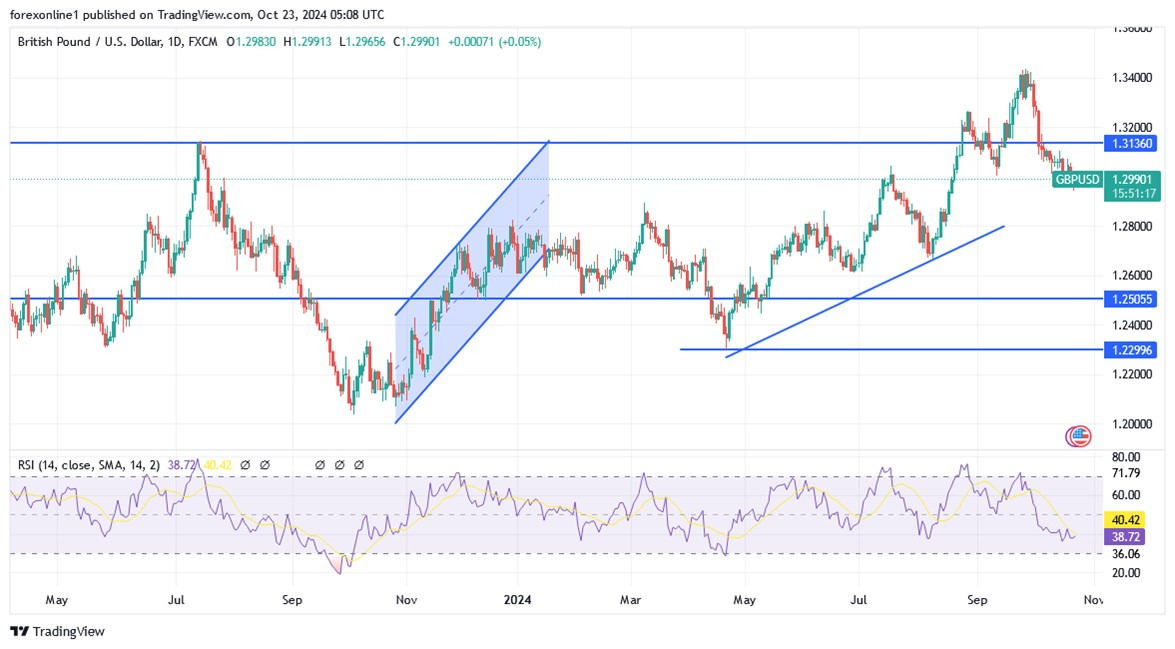
The signs are bullish, but I would like to see a strongly bullish daily close above $1.2905 before entering any new long trade here.

GBP/USD Daily Price Chart 07/07

The AUD/USD currency pair advanced strongly last week to reach a new 6-month high. This pair is in focus as the Australian Dollar was again the best performing major currency over the week, while the US Dollar was the worst.

The rise in price here got a tailwind from some dovish rhetoric which came from the US Federal Reserve last week, which boosted risk-on sentiment and therefore the Aussie, while it also sent the US Dollar lower, after it was unable to overcome technical resistance.

The signs are bullish, but a look at the weekly price chart below shows that there could be strong resistance in the $0.6850 area, where there was a strongly bearish inflection the last time it was reached.

AUD/USD Daily Price Chart 07/07

The NASDAQ 100 Index reached a new all-time high last week after rising very strongly on Friday well above the huge round number of 20,000. The price closed not far from the high of the week’s range. These are very bullish signs.

It makes sense to be bullish on this major stock market index when it has recently made a new record high. Historical precedent shows this tends to produce further gains quickly. Added to this, the NASDAQ 100 has returned an average gain of 15% since it was launched in 1985.

I, therefore, see the NASDAQ 100 Index as a buy right now.

NASDAQ 100 Index Weekly Price Chart 07/07

The S&P 500 Index reached a new all-time high last week after rising very strongly on Friday well above the round number of 5,500. The price closed very near the high of the week’s range. These are very bullish signs.

It makes sense to be bullish on this major stock market index when it has recently made a new record high. Historical precedent shows this tends to produce further gains quickly, typically of about 12% over the next year.

I, therefore, see the S&P 500 100 Index as a buy right now.

S&P 500 100 Index Weekly Price Chart 07/07

I see the best trading opportunities this week as follows:

  1. Long of the USD/JPY currency pair following a daily close above ¥162.00.
  2. Long of the AUD/JPY currency cross.
  3. Long of the EUR/JPY currency cross.
  4. Long of the GBP/JPY currency cross.
  5. Long of the NASDAQ 100 Index.
  6. Long of the S&P 500 Index.

Ready to trade our Forex weekly forecast? We’ve shortlisted the top Forex brokers for you to check out.

Source link

8 07, 2024

USD/JPY Forecast: Wage Growth Trends and BoJ Rate Hike Prospects

By |2024-07-08T05:13:55+03:00July 8, 2024|Forex News, News|0 Comments

FX Empire – Japan GDP Trends
Significantly, the economy contracted for the third consecutive quarter and could face a fourth quarterly contraction.

Is the weakness of the Japanese Yen affecting private consumption and the Japanese economy?

In June, Bank of Japan Deputy Governor Ryozo Himino discussed the impact of Yen weakness on the economy, saying,

“Exchange-rate fluctuations affect economic activity in various ways. It also affects inflation in a broad-based and sustained way, beyond the direct impact on import prices.”

Notably, the BoJ has remained silent on monetary policy goals after the USD/JPY spiked at a July 3 high of $161.951.

Meanwhile, US inflation remains a focal point as investors raise bets on a September Fed rate cut.

Will US consumer inflation expectations draw the interest of the Fed?

US Consumer Inflation Expectations and the Fed Rate Path

Later in the session on Monday, consumer inflation expectation numbers could increase investor expectations of a September Fed rate cut.

Economists forecast consumer inflation expectations to ease from 3.2% in May to 3.0% in June.

The Fed considers consumer inflation expectations a predictor of future inflation trends. Expectations of softer inflation could signal a pullback in consumer spending on easing fear of higher prices in the future. Downward consumer spending trends may dampen demand-driven inflation and allow the Fed to cut interest rates.

For context, consumer inflation expectations trended downward until an unexpected upswing in April. Consumer inflation expectations peaked at 6.8% in June 2022 before dropping below 4% in May 2023.

Source link

8 07, 2024

EUR/USD Forecast Today – 08/07: Euro Remains Noisy (Chart)

By |2024-07-08T03:13:08+03:00July 8, 2024|Forex News, News|0 Comments

  • I recognize that the EUR/USD currency pair is reaching a significant resistance barrier that we could have a lot of trouble to get above.
  • All things being equal, this is a market that I think has a lot of noise attached to it, which is typical behavior for this pair.
  • After all, if you look at the EUR/USD pair over the last 2 years, we have been chopping back and forth and essentially got this market to go nowhere.

Technical Analysis

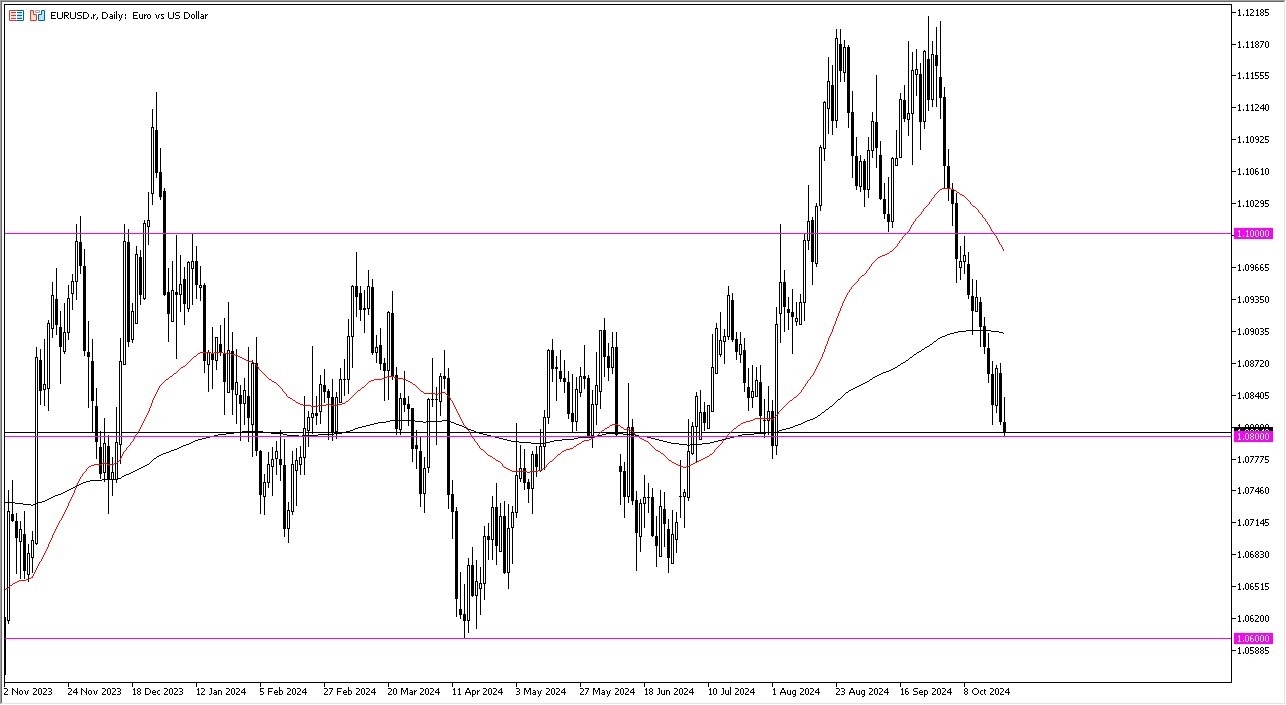
The technical analysis for the EUR/USD pair is about as flat as it gets, because quite frankly even though we have broken above the 200-Day EMA, as well as the 50-Day EMA indicator, it’s worth noting that both of those indicators are flat. We did break above the 1.08 level, and that of course is a large, round, psychologically significant figure that a lot of people will be looking at. However, I don’t necessarily think that it’s a major influence, and if we can continue to go higher, we may find something a little bit more significant in the form of the 1.09 level is concerned, as it had previously been resistance.

On the other hand, if we were to break down below the moving averages, then it opens up the possibility of a move down to the 1.07 level. The 1.07 level has offered significant support multiple times, and therefore I think you have got a situation where it probably carries quite a bit more weight than the 1.08 level also.

Keep in mind that the currency pair has to look at the pair through the prism of 2 central bank that simply have nowhere to be or nothing to do. The ECB has of course offered an interest rate cut recently, but now people are wondering whether or not the Federal Reserve will continue to do the same going forward. I think at this point in time, you have a lot of nonsensical noisy and choppy behavior ahead.

Ready to trade our Forex daily analysis and predictions? Here are the best European brokers to choose from. 

Source link

7 07, 2024

Weekly Forex Forecast – 07/07 (Charts)

By |2024-07-07T23:09:52+03:00July 7, 2024|Forex News, News|0 Comments

(MENAFN– Daily Forex) Fundamental Analysis & market Sentiment

I wrote on 30th June that the best trade opportunities for the week were likely to be:

  • Long of USD/JPY currency pair . This produced a gain of 0.63%.

  • Long of the AUD/JPY currency cross . This produced a gain of 2.25%.

  • Long of the CAD/JPY currency cross . This produced a gain of 1.03%.

  • Long of the nasdaq 100 index following a daily close above 20,000. This set up on Tuesday’s close and produced a gain at the end of the week of 1.77%.The overall result was a net gain of 5.68%, giving an average return of 1.14% per trade.Last week’s key takeaways were:

  • US Non-Farm Payrolls and Average Hourly Earnings data came in on Friday more or less as expected, showing the pace of increase of average hourly earnings is slowing, although the unemployment rate was slightly higher than expected at 4.1%. Stock markets reacted positively, sending the major US equity indices firmly higher to close at new all-time highs.

  • On Tuesday Fed Chair Powell stated that the rate of inflation is trending downwards, which also created more dovish expectations from the Federal Reserve, which began an upwards move in stock markets that took on even more momentum on Friday.

  • The Eurozone Flash CPI Estimate was mixed, showing the headline annualized rate is likely to fall from 2.9% to 2.8%, but at the same time it showed an uptick in the Core rate.There were a few other events last week which were of much lower significance to the market, at least in the near term:

  • French Parliamentary Election Second Round – polling suggests that the far-right National Rally, the winner of the first round, will fail to win a Parliamentary majority in today’s run-off election. The centrist and far-left parties are collaborating in tactical withdrawals of candidates to try to stop the National Rally.

  • British General Election – the opposition Labour Party won a landslide victory, albeit with a relatively small share of the vote of only 34%. Anti-immigration and far left parties won almost as much, as did the Conservative and Reform Party votes taken together. There were some ugly examples of communal politics with Islamist candidates winning a few seats. Turnout was relatively low. The Labour victory was expected by the market and had little impact upon the British Pound or British stock market.

  • FOMC Meeting Minutes were released from the last Fed meeting. They had little impact.

  • US New Home Sales – came in just slightly below expectations.

  • German Preliminary CPI – came in below expectations at a month-on-month increase of only 0.1%.

  • Swiss CPI – came in below expectations at zero month-on-month change.

  • Chinese Manufacturing PMI – met expectations.

  • US ISM Manufacturing PMI – below expectations, suggesting a slowing US economy.

  • US ISM Services PMI – below expectations, suggesting a slowing US economy.

  • US Unemployment Claims – met expectations.

  • Canadian Unemployment Rate – slightly higher than expected.Overall, there is a theme of declining inflation and slowing economies, which is broadly supportive of rate cuts.Top Forex Brokers

    • 1 Get Started 74% of retail CFD accounts lose money

    The Week Ahead: 8th – 12th JulyThe most important items over this coming week will be:

  • US CPI.

  • Fed Chair Powell testifies before Congress about monetary policy.

  • US PPI.

  • Prelim UoM Consumer Sentiment Reserve Bank of New Zealand Official Cash Rate and Rate Statement.

  • Swiss CPI.

  • UK GDP.

  • US Unemployment Claims Forecast July 2024 This month, I forecasted that the USD/JPY currency pair will increase in value. Weekly Forecast 7th July 2024Last week, I made no weekly forecast, as there were no unusually large swings in any Forex currency crosses, which is the basis of my weekly trading strategy. This week, there were some large directional movements in the AUD/JPY and GBP/JPY currency crosses, but I have little faith that these will reverse over the coming week, so I again make no forecast.Directional volatility in the Forex market rose last week, with 27% of the most important currency pairs fluctuating by more than 1%.Last week, the Australian Dollar was the strongest major currency, while the US Dollar was the weakest.You can trade these forecasts in a real or demo Forex brokerage account .Key Support/Resistance Levels for Popular Pairs Technical AnalysisUS Dollar IndexThe US Dollar Index printed large bearish candlestick last week, which closed very near the low of its range. These are signs suggesting short-term bearish momentum, as is the fact that the US Dollar was the worst-performing of all the major currencies last week. This analysis is reinforced by the fact that the price action was contained just below the descending trend line above, the horizontal resistance level at 105.80, and the round number at 106.00. This suggests that the price reversed after failing to make a bullish breakout beyond this area.There is a bullish long-term trend as the price is above its levels from 3 months ago and its price of 6 months ago. However, this trend looks to be in danger. The price is now approaching a key support zone between 104.15 and 103.92, and if the price breaks below this zone this week, it will be a bearish sign.The weaker Dollar has been driven by more dovish signals from the Federal Reserve last week, and some good news on global inflation. This week’s US CPI data will probably be crucial in determining what happens to the Dollar next.I see the Dollar as a bit of a sideshow right now, at least until the CPI data release, with the Forex market currently driven by weakness in the Japanese Yen and strength in the Australian Dollar. USD/JPYThe USD/JPY currency pair printed a bearish pin candlestick last week, after making a new 38-year high, rejecting the resistance levels at ¥161.37 and ¥161.83.The Japanese Yen has been showing a real long-term weakness as the Bank of Japan continues to stall in really changing its ultra-loose monetary policy. However, the US Dollar lost considerable ground last week, so the price change here over the week was slightly negative.Long trades may work out well here over the coming week. However, bulls need to beware of potential sudden intervention by the Bank of Japan or profit-taking when key psychological levels such as ¥162.00 or the high just below that are reached.As a trend trader, I am only happy to enter a long trade in this currency pair after we see a daily close above ¥162.00 which would show renewed bullish momentum trading in blue sky. AUD/JPYI expected that the AUD/JPY currency would rise last week, and it did, continuing its long-term bullish trend as it reaches new long-term high prices. It is worth noting that the Australian Dollar was the strongest major currency last week and has consistently gained over the past year against other currencies, so it is showing a bullish long-term trend and is in focus.On the other side of this currency cross, the Japanese yen is weak, which is arguably the major defining feature of the Forex market right now.These are good reasons to be long of this currency cross – both the short-term momentum, best of momentum, and the long-term trends in the market all support taking this position. I see this cross as a buy. EUR/JPYThe EUR/JPY currency cross rose quite strongly during the week, continuing its strong long-term bullish trend as it reached new long-term high prices. Interestingly, the Euro performed quite well last week possibly as polling suggests the National Rally party will fail to secure an overall majority in France in the election today, although deadlock will bring its own problems.The Japanese yen is weak, which is the major defining feature of the Forex market right now. This is a good reason to be short of the Japanese Yen. As the Euro is showing some momentum, this cross may be a good one to use to try to exploit that, or at least to include within a short Yen basket. GBP/JPYThe GBP/JPY currency cross rose very strongly last week, continuing its long-term bullish trend as it reached new long-term high prices. The British Pound is one of the best-performing currencies over both the long and short term and may have received a boost from the very decisive UK election result at the end of last week, which may ensure the UK has a firmer and more effective government.The Japanese yen is weak, which is the major defining feature of the Forex market right now. This is a good reason to be short of the Japanese Yen. As the British Pound is showing some bullish momentum, this cross may be a good one to exploit over the coming week. GBP/USDThe GBP/USD currency pair advanced quite strongly last week, with the British Pound in a long-term bullish trend and also showing short-term bullish momentum, possibly helped by the UK election result last week which may bring a firmer and more settled government. Markets did not react negatively to the election result.The price ended the week at a 3-month highest daily close, which is a bullish sign in itself. The weekly close was also near the high of the week’s range, which is a bullish sign.The signs are bullish, but I would like to see a strongly bullish daily close above $1.2905 before entering any new long trade here. AUD/USDThe AUD/USD currency pair advanced strongly last week to reach a new 6-month high. This pair is in focus as the Australian Dollar was again the best performing major currency over the week, while the US Dollar was the worst.The rise in price here got a tailwind from some dovish rhetoric which came from the US Federal Reserve last week, which boosted risk-on sentiment and therefore the Aussie, while it also sent the US Dollar lower, after it was unable to overcome technical resistance.The signs are bullish, but a look at the weekly price chart below shows that there could be strong resistance in the $0.6850 area, where there was a strongly bearish inflection the last time it was reached. NASDAQ 100 IndexThe NASDAQ 100 Index reached a new all-time high last week after rising very strongly on Friday well above the huge round number of 20,000. The price closed not far from the high of the week’s range. These are very bullish signs.It makes sense to be bullish on this major stock market index when it has recently made a new record high. Historical precedent shows this tends to produce further gains quickly. Added to this, the NASDAQ 100 has returned an average gain of 15% since it was launched in 1985.I, therefore, see the NASDAQ 100 Index as a buy right now. S&P 500 IndexThe S&P 500 Index reached a new all-time high last week after rising very strongly on Friday well above the round number of 5,500. The price closed very near the high of the week’s range. These are very bullish signs.It makes sense to be bullish on this major stock market index when it has recently made a new record high. Historical precedent shows this tends to produce further gains quickly, typically of about 12% over the next year.I, therefore, see the S&P 500 100 Index as a buy right now. Bottom LineI see the best trading opportunities this week as follows:

  • Long of the USD/JPY currency pair following a daily close above ¥162.00.

  • Long of the AUD/JPY currency cross.

  • Long of the EUR/JPY currency cross.

  • Long of the GBP/JPY currency cross.

  • Long of the NASDAQ 100 Index.

  • Long of the S&P 500 Index.Ready to trade our Forex weekly forecast ? We’ve shortlisted the top Forex brokers for you to check out.MENAFN07072024000131011023ID1108414779

    Source link

    5 07, 2024

    USD/JPY Price Analysis: Yen Rebounds Amid Intervention Fears

    By |2024-07-05T18:37:47+03:00July 5, 2024|Forex News, News|0 Comments

    • Investors eagerly await the US nonfarm payrolls report.
    • For the first time in over a month, the yen is gaining against the dollar.
    • The yen has lost 12% of its value since the beginning of the year.

    The USD/JPY price analysis leans south as the yen pulls away from its 38-year low, strengthening for the second session. On the other hand, the dollar was fragile as investors eagerly awaited the US nonfarm payrolls report.

    Are you interested in learning more about forex conventions? Check our detailed guide-

    For the first time in over a month, the yen is gaining against the dollar. However, the risk of intervention remains high. The currency has lost 12% of its value since the beginning of the year. Traders sold the yen and bought the dollar due to the wide gap in rates between the US and Japan. 

    Although the BoJ has started its rate-hiking cycle, the future remains bleak. Consumption in Japan remains weak, and a fragile economy complicates the outlook for a rate hike. Therefore, investors have continued selling the yen. This pushed the BoJ to intervene in the market twice. However, the impact was only temporary, as the decline later continued. 

    Japan’s Finance Minister repeated his usual warning on Friday, saying Japan will keep a close eye on financial markets.

    Meanwhile, after a week of downbeat economic data, the dollar was bruised on Friday. The US economy is slowing down, and employment and business activity data confirmed this. Consequently, markets have raised the likelihood of a September Fed rate cut to 73%. However, this might change with the upcoming monthly employment figures. If the US adds fewer jobs than expected, rate cut expectations will rise. The reverse is also true.

    USD/JPY key events today

    • US average hourly earnings m/m
    • US nonfarm payrolls
    • US unemployment rate

    USD/JPY technical price analysis: Bears take the lead after bearish RSI divergence

    USD/JPY Price Analysis: Yen Rebounds Amid Intervention Fears
    USD/JPY 4-hour chart

    On the technical side, the USD/JPY price has broken below the 30-SMA for the time in many weeks. The break indicates a shift in sentiment from bullish to bearish. At the same time, the RSI has dipped into bearish territory below 50, suggesting strong downside momentum. 

    Are you interested in learning more about Ethereum price prediction? Check our detailed guide-

    Bulls got exhausted as the price approached the 162.01 key level. Notably, the RSI made a bearish divergence, highlighting weaker bullish momentum. This allowed bears to take charge by pushing the price below the 30-SMA. The path is now clear for the price to revisit support levels like 160.00 and 158.00.

    Looking to trade forex now? Invest at eToro!

    68% of retail investor accounts lose money when trading CFDs with this provider. You should consider whether you can afford to take the high risk of losing your money.

    Source link

    5 07, 2024

    Euro looks to extend rally after rising above key technical level

    By |2024-07-05T16:36:39+03:00July 5, 2024|Forex News, News|0 Comments

    You have reached your limit of 5 free articles for this month.

    Get Premium without limits for only $479.76 for the first month

    Access all our articles, insights, and analysts.

    Your coupon code


    UNLOCK OFFER

    • EUR/USD holds above 1.0800 in the European session on Friday.
    • Nonfarm Payrolls data from the US could impact the US Dollar’s valuation.
    • The technical outlook points to overbought conditions in the near term.

    EUR/USD edged slightly higher and closed in positive territory above 1.0800 on Thursday. The pair holds its ground early Friday as market focus shifts to June labor market data from the US.

    Following the Independence Day holiday in the US, the US Dollar (USD) stays on the back foot and helps EUR/USD hold its ground. 

    Euro PRICE This week

    The table below shows the percentage change of Euro (EUR) against listed major currencies this week. Euro was the strongest against the US Dollar.

      USD EUR GBP JPY CAD AUD NZD CHF
    USD   -1.06% -1.05% -0.03% -0.50% -0.99% -0.41% -0.01%
    EUR 1.06%   -0.21% 0.75% 0.27% -0.03% 0.35% 0.75%
    GBP 1.05% 0.21%   0.94% 0.48% 0.18% 0.57% 0.98%
    JPY 0.03% -0.75% -0.94%   -0.47% -0.89% -0.38% 0.05%
    CAD 0.50% -0.27% -0.48% 0.47%   -0.45% 0.09% 0.49%
    AUD 0.99% 0.03% -0.18% 0.89% 0.45%   0.39% 0.87%
    NZD 0.41% -0.35% -0.57% 0.38% -0.09% -0.39%   0.43%
    CHF 0.01% -0.75% -0.98% -0.05% -0.49% -0.87% -0.43%  

    The heat map shows percentage changes of major currencies against each other. The base currency is picked from the left column, while the quote currency is picked from the top row. For example, if you pick the Euro from the left column and move along the horizontal line to the US Dollar, the percentage change displayed in the box will represent EUR (base)/USD (quote).

    Nonfarm Payrolls in the US are forecast to rise 190,000 in June following the impressive 272,000 increase recorded in May, while the Unemployment Rate is seen staying unchanged at 4%.

    The steady increase in the weekly Initial Jobless Claims data throughout June and disappointing ISM Manufacturing and Services PMI reports, which showed a contraction in these sectors’ payrolls in June, pointed to loosening conditions in the labor market. 

    In case the NFP arrives at around 150,000 or lower, the US Dollar could stay under selling pressure heading into the weekend and allow EUR/USD to extend its weekly rally. According to the CME FedWatch Tool, markets are currently pricing in a 25% probability of the Federal Reserve leaving the policy rate unchanged in September. Hence, the market positioning suggests that the USD has more room on the downside in case investors continue to price in a September rate cut on a weak jobs report.

    On the other hand, a strong increase in NFP, more than 220,000, could cause investors to reassess the timing of the Fed’s policy pivot and trigger a downward correction in EUR/USD in the American session.

    EUR/USD Technical Analysis

    The Relative Strength Index (RSI) indicator on the 4-hour chart rose above 70 on Friday. Although this development suggests that EUR/USD is technically overbought, buyers could look to dominate the action as long as 1.0800 (100-day Simple Moving Average (SMA), 200-day SMA) stays intact as support. On the upside, 1.0840 (Fibonacci 23.6% retracement of the latest uptrend) could be seen as interim resistance before 1.0900 (psychological level, static level).

    If EUR/USD drops below 1.0800 and fails to reclaim this level, supports could be seen at 1.0760 (Fibonacci 50% retracement) and 1.0730-1.0740 (Fibonacci 61.8% retracement, 20-day SMA).

    Nonfarm Payrolls FAQs

    Nonfarm Payrolls (NFP) are part of the US Bureau of Labor Statistics monthly jobs report. The Nonfarm Payrolls component specifically measures the change in the number of people employed in the US during the previous month, excluding the farming industry.

    The Nonfarm Payrolls figure can influence the decisions of the Federal Reserve by providing a measure of how successfully the Fed is meeting its mandate of fostering full employment and 2% inflation. A relatively high NFP figure means more people are in employment, earning more money and therefore probably spending more. A relatively low Nonfarm Payrolls’ result, on the either hand, could mean people are struggling to find work. The Fed will typically raise interest rates to combat high inflation triggered by low unemployment, and lower them to stimulate a stagnant labor market.

    Nonfarm Payrolls generally have a positive correlation with the US Dollar. This means when payrolls’ figures come out higher-than-expected the USD tends to rally and vice versa when they are lower. NFPs influence the US Dollar by virtue of their impact on inflation, monetary policy expectations and interest rates. A higher NFP usually means the Federal Reserve will be more tight in its monetary policy, supporting the USD.

    Nonfarm Payrolls are generally negatively-correlated with the price of Gold. This means a higher-than-expected payrolls’ figure will have a depressing effect on the Gold price and vice versa. Higher NFP generally has a positive effect on the value of the USD, and like most major commodities Gold is priced in US Dollars. If the USD gains in value, therefore, it requires less Dollars to buy an ounce of Gold. Also, higher interest rates (typically helped higher NFPs) also lessen the attractiveness of Gold as an investment compared to staying in cash, where the money will at least earn interest.

    Nonfarm Payrolls is only one component within a bigger jobs report and it can be overshadowed by the other components. At times, when NFP come out higher-than-forecast, but the Average Weekly Earnings is lower than expected, the market has ignored the potentially inflationary effect of the headline result and interpreted the fall in earnings as deflationary. The Participation Rate and the Average Weekly Hours components can also influence the market reaction, but only in seldom events like the “Great Resignation” or the Global Financial Crisis.


    • EUR/USD holds above 1.0800 in the European session on Friday.
    • Nonfarm Payrolls data from the US could impact the US Dollar’s valuation.
    • The technical outlook points to overbought conditions in the near term.

    EUR/USD edged slightly higher and closed in positive territory above 1.0800 on Thursday. The pair holds its ground early Friday as market focus shifts to June labor market data from the US.

    Following the Independence Day holiday in the US, the US Dollar (USD) stays on the back foot and helps EUR/USD hold its ground. 

    Euro PRICE This week

    The table below shows the percentage change of Euro (EUR) against listed major currencies this week. Euro was the strongest against the US Dollar.

      USD EUR GBP JPY CAD AUD NZD CHF
    USD   -1.06% -1.05% -0.03% -0.50% -0.99% -0.41% -0.01%
    EUR 1.06%   -0.21% 0.75% 0.27% -0.03% 0.35% 0.75%
    GBP 1.05% 0.21%   0.94% 0.48% 0.18% 0.57% 0.98%
    JPY 0.03% -0.75% -0.94%   -0.47% -0.89% -0.38% 0.05%
    CAD 0.50% -0.27% -0.48% 0.47%   -0.45% 0.09% 0.49%
    AUD 0.99% 0.03% -0.18% 0.89% 0.45%   0.39% 0.87%
    NZD 0.41% -0.35% -0.57% 0.38% -0.09% -0.39%   0.43%
    CHF 0.01% -0.75% -0.98% -0.05% -0.49% -0.87% -0.43%  

    The heat map shows percentage changes of major currencies against each other. The base currency is picked from the left column, while the quote currency is picked from the top row. For example, if you pick the Euro from the left column and move along the horizontal line to the US Dollar, the percentage change displayed in the box will represent EUR (base)/USD (quote).

    Nonfarm Payrolls in the US are forecast to rise 190,000 in June following the impressive 272,000 increase recorded in May, while the Unemployment Rate is seen staying unchanged at 4%.

    The steady increase in the weekly Initial Jobless Claims data throughout June and disappointing ISM Manufacturing and Services PMI reports, which showed a contraction in these sectors’ payrolls in June, pointed to loosening conditions in the labor market. 

    In case the NFP arrives at around 150,000 or lower, the US Dollar could stay under selling pressure heading into the weekend and allow EUR/USD to extend its weekly rally. According to the CME FedWatch Tool, markets are currently pricing in a 25% probability of the Federal Reserve leaving the policy rate unchanged in September. Hence, the market positioning suggests that the USD has more room on the downside in case investors continue to price in a September rate cut on a weak jobs report.

    On the other hand, a strong increase in NFP, more than 220,000, could cause investors to reassess the timing of the Fed’s policy pivot and trigger a downward correction in EUR/USD in the American session.

    EUR/USD Technical Analysis

    The Relative Strength Index (RSI) indicator on the 4-hour chart rose above 70 on Friday. Although this development suggests that EUR/USD is technically overbought, buyers could look to dominate the action as long as 1.0800 (100-day Simple Moving Average (SMA), 200-day SMA) stays intact as support. On the upside, 1.0840 (Fibonacci 23.6% retracement of the latest uptrend) could be seen as interim resistance before 1.0900 (psychological level, static level).

    If EUR/USD drops below 1.0800 and fails to reclaim this level, supports could be seen at 1.0760 (Fibonacci 50% retracement) and 1.0730-1.0740 (Fibonacci 61.8% retracement, 20-day SMA).

    Nonfarm Payrolls FAQs

    Nonfarm Payrolls (NFP) are part of the US Bureau of Labor Statistics monthly jobs report. The Nonfarm Payrolls component specifically measures the change in the number of people employed in the US during the previous month, excluding the farming industry.

    The Nonfarm Payrolls figure can influence the decisions of the Federal Reserve by providing a measure of how successfully the Fed is meeting its mandate of fostering full employment and 2% inflation. A relatively high NFP figure means more people are in employment, earning more money and therefore probably spending more. A relatively low Nonfarm Payrolls’ result, on the either hand, could mean people are struggling to find work. The Fed will typically raise interest rates to combat high inflation triggered by low unemployment, and lower them to stimulate a stagnant labor market.

    Nonfarm Payrolls generally have a positive correlation with the US Dollar. This means when payrolls’ figures come out higher-than-expected the USD tends to rally and vice versa when they are lower. NFPs influence the US Dollar by virtue of their impact on inflation, monetary policy expectations and interest rates. A higher NFP usually means the Federal Reserve will be more tight in its monetary policy, supporting the USD.

    Nonfarm Payrolls are generally negatively-correlated with the price of Gold. This means a higher-than-expected payrolls’ figure will have a depressing effect on the Gold price and vice versa. Higher NFP generally has a positive effect on the value of the USD, and like most major commodities Gold is priced in US Dollars. If the USD gains in value, therefore, it requires less Dollars to buy an ounce of Gold. Also, higher interest rates (typically helped higher NFPs) also lessen the attractiveness of Gold as an investment compared to staying in cash, where the money will at least earn interest.

    Nonfarm Payrolls is only one component within a bigger jobs report and it can be overshadowed by the other components. At times, when NFP come out higher-than-forecast, but the Average Weekly Earnings is lower than expected, the market has ignored the potentially inflationary effect of the headline result and interpreted the fall in earnings as deflationary. The Participation Rate and the Average Weekly Hours components can also influence the market reaction, but only in seldom events like the “Great Resignation” or the Global Financial Crisis.


    Source link

    5 07, 2024

    Pound Sterling could surpass 1.2800 on weak US jobs data

    By |2024-07-05T14:34:27+03:00July 5, 2024|Forex News, News|0 Comments

    You have reached your limit of 5 free articles for this month.

    Get Premium without limits for only $479.76 for the first month

    Access all our articles, insights, and analysts.

    Your coupon code


    UNLOCK OFFER

    • GBP/USD trades at three-week highs above 1.2750 on Friday.
    • Labour Party won parliamentary majority in general election as expected.
    • Nonfarm Payrolls in the US are forecast to rise 190,000 in June.

    Following Thursday’s subdued action, GBP/USD regained its traction and reached its highest level in three weeks near 1.2780 on Friday. 1.2800 aligns as next immediate resistance for the pair as investors gear up for the key data releases from the US.

    British Pound PRICE This week

    The table below shows the percentage change of British Pound (GBP) against listed major currencies this week. British Pound was the strongest against the US Dollar.

      USD EUR GBP JPY CAD AUD NZD CHF
    USD   -1.04% -1.12% -0.03% -0.48% -0.99% -0.45% -0.03%
    EUR 1.04%   -0.30% 0.73% 0.26% -0.06% 0.29% 0.72%
    GBP 1.12% 0.30%   1.01% 0.56% 0.24% 0.59% 1.02%
    JPY 0.03% -0.73% -1.01%   -0.44% -0.89% -0.42% 0.04%
    CAD 0.48% -0.26% -0.56% 0.44%   -0.47% 0.03% 0.46%
    AUD 0.99% 0.06% -0.24% 0.89% 0.47%   0.35% 0.87%
    NZD 0.45% -0.29% -0.59% 0.42% -0.03% -0.35%   0.45%
    CHF 0.03% -0.72% -1.02% -0.04% -0.46% -0.87% -0.45%  

    The heat map shows percentage changes of major currencies against each other. The base currency is picked from the left column, while the quote currency is picked from the top row. For example, if you pick the British Pound from the left column and move along the horizontal line to the US Dollar, the percentage change displayed in the box will represent GBP (base)/USD (quote).

    The Labour Party won a parliamentary majority in the UK general election, securing 411 seats in the 650-seat House of Commons and paving the way for Labour leader Keir Starmer to become the next prime minister. As this outcome was largely expected, it had little to no impact on Pound Sterling’s valuation.

    In the second half of the day, the US Bureau of Labor Statistics will release the June jobs report. Following the impressive 272,000 increase recorded in May, Nonfarm Payrolls are forecast to rise 190,000 in June. The Unemployment Rate is seen holding steady at 4% and the annual wage inflation, as measured by the change in the Average Hourly Earnings, is expected to decline to 3.9% from 4.1%.

    Earlier in the week, the Manufacturing and the Services PMI reports published by the ISM pointed to a decline in these sectors’ payrolls. Additionally, ADP Employment Change came in at 150,000 to miss the market expectation of 160,000, while the weekly Initial Jobless Claims edged higher to 238,000 in the week ending June 29, up from 234,000 in the previous week. 

    The selling pressure surrounding the US Dollar (USD) seen this week suggests that markets might have already priced in a disappointing NFP reading. The market positioning, however, shows that there is more room for further USD weakness in case the jobs report feed into expectations for a Federal Reserve (Fed) rate cut in September. According to the CME FedWatch Tool, there is still a 25% probability that the Fed leave the policy rate unchanged in September.

    Hence, the immediate reaction to an NFP reading of 150,000, or lower, could fuel another leg higher in GBP/USD. On the flip side, a positive surprise could support the USD and limit the pair’s upside heading into the weekend.

    GBP/USD Technical Analysis

    The Relative Strength Index (RSI) indicator on the 4-hour chart stays above 70 and points to overbought conditions. Nevertheless, investors are likely to ignore this technical development in case the US data triggers a USD selloff. 1.2800 (psychological level, static level) could be seen as next resistance before 1.2860 (Jun 12 high) and 1.2900 (psychological level, static level).

    On the downside, supports could be seen at 1.2700 (20-day Simple Moving Average (SMA)), 1.2670 (50-day SMA) and 1.2650 (100-day SMA).

    Economic Indicator

    Nonfarm Payrolls

    The Nonfarm Payrolls release presents the number of new jobs created in the US during the previous month in all non-agricultural businesses; it is released by the US Bureau of Labor Statistics (BLS). The monthly changes in payrolls can be extremely volatile. The number is also subject to strong reviews, which can also trigger volatility in the Forex board. Generally speaking, a high reading is seen as bullish for the US Dollar (USD), while a low reading is seen as bearish, although previous months’ reviews ​and the Unemployment Rate are as relevant as the headline figure. The market’s reaction, therefore, depends on how the market assesses all the data contained in the BLS report as a whole.
    Read more.


    • GBP/USD trades at three-week highs above 1.2750 on Friday.
    • Labour Party won parliamentary majority in general election as expected.
    • Nonfarm Payrolls in the US are forecast to rise 190,000 in June.

    Following Thursday’s subdued action, GBP/USD regained its traction and reached its highest level in three weeks near 1.2780 on Friday. 1.2800 aligns as next immediate resistance for the pair as investors gear up for the key data releases from the US.

    British Pound PRICE This week

    The table below shows the percentage change of British Pound (GBP) against listed major currencies this week. British Pound was the strongest against the US Dollar.

      USD EUR GBP JPY CAD AUD NZD CHF
    USD   -1.04% -1.12% -0.03% -0.48% -0.99% -0.45% -0.03%
    EUR 1.04%   -0.30% 0.73% 0.26% -0.06% 0.29% 0.72%
    GBP 1.12% 0.30%   1.01% 0.56% 0.24% 0.59% 1.02%
    JPY 0.03% -0.73% -1.01%   -0.44% -0.89% -0.42% 0.04%
    CAD 0.48% -0.26% -0.56% 0.44%   -0.47% 0.03% 0.46%
    AUD 0.99% 0.06% -0.24% 0.89% 0.47%   0.35% 0.87%
    NZD 0.45% -0.29% -0.59% 0.42% -0.03% -0.35%   0.45%
    CHF 0.03% -0.72% -1.02% -0.04% -0.46% -0.87% -0.45%  

    The heat map shows percentage changes of major currencies against each other. The base currency is picked from the left column, while the quote currency is picked from the top row. For example, if you pick the British Pound from the left column and move along the horizontal line to the US Dollar, the percentage change displayed in the box will represent GBP (base)/USD (quote).

    The Labour Party won a parliamentary majority in the UK general election, securing 411 seats in the 650-seat House of Commons and paving the way for Labour leader Keir Starmer to become the next prime minister. As this outcome was largely expected, it had little to no impact on Pound Sterling’s valuation.

    In the second half of the day, the US Bureau of Labor Statistics will release the June jobs report. Following the impressive 272,000 increase recorded in May, Nonfarm Payrolls are forecast to rise 190,000 in June. The Unemployment Rate is seen holding steady at 4% and the annual wage inflation, as measured by the change in the Average Hourly Earnings, is expected to decline to 3.9% from 4.1%.

    Earlier in the week, the Manufacturing and the Services PMI reports published by the ISM pointed to a decline in these sectors’ payrolls. Additionally, ADP Employment Change came in at 150,000 to miss the market expectation of 160,000, while the weekly Initial Jobless Claims edged higher to 238,000 in the week ending June 29, up from 234,000 in the previous week. 

    The selling pressure surrounding the US Dollar (USD) seen this week suggests that markets might have already priced in a disappointing NFP reading. The market positioning, however, shows that there is more room for further USD weakness in case the jobs report feed into expectations for a Federal Reserve (Fed) rate cut in September. According to the CME FedWatch Tool, there is still a 25% probability that the Fed leave the policy rate unchanged in September.

    Hence, the immediate reaction to an NFP reading of 150,000, or lower, could fuel another leg higher in GBP/USD. On the flip side, a positive surprise could support the USD and limit the pair’s upside heading into the weekend.

    GBP/USD Technical Analysis

    The Relative Strength Index (RSI) indicator on the 4-hour chart stays above 70 and points to overbought conditions. Nevertheless, investors are likely to ignore this technical development in case the US data triggers a USD selloff. 1.2800 (psychological level, static level) could be seen as next resistance before 1.2860 (Jun 12 high) and 1.2900 (psychological level, static level).

    On the downside, supports could be seen at 1.2700 (20-day Simple Moving Average (SMA)), 1.2670 (50-day SMA) and 1.2650 (100-day SMA).

    Economic Indicator

    Nonfarm Payrolls

    The Nonfarm Payrolls release presents the number of new jobs created in the US during the previous month in all non-agricultural businesses; it is released by the US Bureau of Labor Statistics (BLS). The monthly changes in payrolls can be extremely volatile. The number is also subject to strong reviews, which can also trigger volatility in the Forex board. Generally speaking, a high reading is seen as bullish for the US Dollar (USD), while a low reading is seen as bearish, although previous months’ reviews ​and the Unemployment Rate are as relevant as the headline figure. The market’s reaction, therefore, depends on how the market assesses all the data contained in the BLS report as a whole.
    Read more.


    Source link

    5 07, 2024

    USD/JPY Forecast: Yen Eyes Household Spending and US Jobs Report for BoJ Decision

    By |2024-07-05T02:27:41+03:00July 5, 2024|Forex News, News|0 Comments

    A Bank of Japan Rate Hike Could Bolster the Yen

    The Bank of Japan could tighten monetary policy to bolster the Japanese Yen.

    BoJ Deputy Governor Ryozo Himino recently addressed the effects of a weaker Yen on the economy, saying,

    “Exchange-rate fluctuations affect economic activity in various ways. It also affects inflation in a broad-based and sustained way, beyond the direct impact on import prices.”

    With the Japanese government holding back from intervening for the second time in as many months, the onus may be on the BoJ to target the weaker Yen.

    What Do the Experts Think?

    In June, Bruegel Senior Fellow Alicia Garcia Herrero saw quantitative tightening as more effective than interventions, saying:

    “Bank of Japan to start quantitative tightening, which could support the Yen more than intervention.”

    I asked her if the BoJ would risk cutting JGB purchases back more aggressively if US inflation numbers did not sink expectations of a September Fed rate cut, to which she replied,

    “No choice, Yen beyond 160.”

    US inflation numbers didn’t sink expectations of a September Fed rate cut, nor did they fuel expectations, leaving the USD/JPY at 161.

    Considering interest rate differentials and carry trade appetite, numbers from Japan must improve. If all else fails, an aggressive cut to JGB purchases may do the job, but at what cost?

    Meanwhile, the US Jobs Report will warrant investor attention later in the session on Friday.

    Can the Jobs Report give the BoJ some breathing room?

    Will US Wage Growth Satisfy Fed Chair Powell?

    Fed Chair Powell spoke favorably about inflation progress toward the 2% target on Tuesday, July 2. However, the Fed Chair left investors with a focal point going into the Friday session. Powell highlighted that wage growth remained elevated.

    Higher wages could increase disposable income and fuel consumer spending and demand-driven inflation.

    The US Jobs Report could alleviate concerns about wage growth if average hourly earnings soften by more than expected.

    Economists forecast average hourly earnings to increase 3.9% year-on-year in June after rising 4.1% in May.

    For perspective, average hourly earnings rose 4.4% in January and trended lower to 4.0% in April before an uptick to 4.1% in May. A drop below 4.0% may not be enough to cement a September Fed rate hike. Both a rise in unemployment and a decline in the participation rate may be necessary to suggest a sustainable downward trend in wage growth.

    Economists expect the US unemployment rate to remain steady at 4.0% in June.

    Source link

    5 07, 2024

    The upcoming NFP will surely dictate the mood

    By |2024-07-05T00:25:58+03:00July 5, 2024|Forex News, News|0 Comments

    You have reached your limit of 5 free articles for this month.

    Get Premium without limits for only $479.76 for the first month

    Access all our articles, insights, and analysts.

    Your coupon code


    UNLOCK OFFER

    • EUR/USD maintained its upside bias above 1.0800.
    • There was no activity in the US due to the Independence Day holiday.
    • Investors’ now look at Friday’s US Payrolls.

    The US Dollar (USD) experienced another bearish performance, motivating the USD Index (DXY) to revisit the vicinity of the 105.00 region amidst the dominating appetite for risk-related assets and marginal trading conditions due to the US Independence Day holiday.

    The downturn in the Greenback kept the upward pressure intact on EUR/USD, pushing it back above the key 1.0800 yardstick. The pressure on the Greenback intensified following discouraging results from the US economic calendar in the previous session, particularly concerning the labour market, which revived expectations of Federal Reserve (Fed) interest rate cuts as early as September.

    Closer to home, the ECB published its Accounts of its June 6 meeting, where it trimmed rates by 25 bps, as widely anticipated. In the Accounts, policymakers showed concern about inflation after cutting interest rates last month, fearing further delay could be costly and complicate future efforts to anchor inflation expectations. The bank’s officials also noted that the final phase of disinflation, known as “the last mile,” is the most challenging.

    Meanwhile, the macroeconomic landscape remained relatively stable on both sides of the Atlantic. The ECB is contemplating further rate reductions beyond the summer, with market expectations leaning towards two additional cuts by year-end. Conversely, speculation among market participants surrounds whether the Fed will implement one or two rate cuts this year, despite the Fed’s current projection of a single cut, likely in December.

    Based on the CME Group’s FedWatch Tool, there is approximately a 73% likelihood of interest rate cuts in September, contrasting with nearly a 95% probability by the December meeting.

    The recent ECB rate cut, coupled with the Fed’s decision to maintain rates, has widened the policy divergence between the two central banks. This discrepancy could potentially lead to further weakening of EUR/USD in the short term. Nonetheless, prospects of economic recovery in the Eurozone, alongside perceived weaknesses in US economic fundamentals, may mitigate this disparity, offering occasional support to the currency pair in the near future.

    Looking forward, the next pivotal event for the currency pair will be the release of the highly influential Nonfarm Payrolls report for June on Friday, preceding the second round of French snap elections scheduled for July 7. Regarding the elections, Le Pen’s NR party is anticipated to capture between 210 and 250 seats out of the 289 seats required for a majority in the National Assembly.

    EUR/USD daily chart

    EUR/USD short-term technical outlook

    Further higher may see EUR/USD revisit the July peak of 1.0816 (July 3), followed by the weekly high of 1.0852 (June 12) and the June top of 1.0916 (June 4). If the pair breaks above this region, it might put the March peak of 1.0981 (March 8) back on the radar, ahead of the weekly high of 1.0998 (January 11) and the psychological 1.1000 mark.

    If bears regain the upper hand, spot may fall to its June low of 1.0666 (June 26), then the May low of 1.0649 (May 1), and ultimately the 2024 bottom of 1.0601 (April 16).

    Looking at the broader picture, extra gains appear on the cards on a sustainable surpass of the key 200-day SMA (1.0794).

    So far, the 4-hour chart shows the continuation of the bullish impulse. The initial resistance level is 1.0816, followed by 1.0852. The nearest support is at 1.0666, ahead of 1.0649 and finally 1.0601. The Relative Strength Index (RSI) climbed to about 69

    • EUR/USD maintained its upside bias above 1.0800.
    • There was no activity in the US due to the Independence Day holiday.
    • Investors’ now look at Friday’s US Payrolls.

    The US Dollar (USD) experienced another bearish performance, motivating the USD Index (DXY) to revisit the vicinity of the 105.00 region amidst the dominating appetite for risk-related assets and marginal trading conditions due to the US Independence Day holiday.

    The downturn in the Greenback kept the upward pressure intact on EUR/USD, pushing it back above the key 1.0800 yardstick. The pressure on the Greenback intensified following discouraging results from the US economic calendar in the previous session, particularly concerning the labour market, which revived expectations of Federal Reserve (Fed) interest rate cuts as early as September.

    Closer to home, the ECB published its Accounts of its June 6 meeting, where it trimmed rates by 25 bps, as widely anticipated. In the Accounts, policymakers showed concern about inflation after cutting interest rates last month, fearing further delay could be costly and complicate future efforts to anchor inflation expectations. The bank’s officials also noted that the final phase of disinflation, known as “the last mile,” is the most challenging.

    Meanwhile, the macroeconomic landscape remained relatively stable on both sides of the Atlantic. The ECB is contemplating further rate reductions beyond the summer, with market expectations leaning towards two additional cuts by year-end. Conversely, speculation among market participants surrounds whether the Fed will implement one or two rate cuts this year, despite the Fed’s current projection of a single cut, likely in December.

    Based on the CME Group’s FedWatch Tool, there is approximately a 73% likelihood of interest rate cuts in September, contrasting with nearly a 95% probability by the December meeting.

    The recent ECB rate cut, coupled with the Fed’s decision to maintain rates, has widened the policy divergence between the two central banks. This discrepancy could potentially lead to further weakening of EUR/USD in the short term. Nonetheless, prospects of economic recovery in the Eurozone, alongside perceived weaknesses in US economic fundamentals, may mitigate this disparity, offering occasional support to the currency pair in the near future.

    Looking forward, the next pivotal event for the currency pair will be the release of the highly influential Nonfarm Payrolls report for June on Friday, preceding the second round of French snap elections scheduled for July 7. Regarding the elections, Le Pen’s NR party is anticipated to capture between 210 and 250 seats out of the 289 seats required for a majority in the National Assembly.

    EUR/USD daily chart

    EUR/USD short-term technical outlook

    Further higher may see EUR/USD revisit the July peak of 1.0816 (July 3), followed by the weekly high of 1.0852 (June 12) and the June top of 1.0916 (June 4). If the pair breaks above this region, it might put the March peak of 1.0981 (March 8) back on the radar, ahead of the weekly high of 1.0998 (January 11) and the psychological 1.1000 mark.

    If bears regain the upper hand, spot may fall to its June low of 1.0666 (June 26), then the May low of 1.0649 (May 1), and ultimately the 2024 bottom of 1.0601 (April 16).

    Looking at the broader picture, extra gains appear on the cards on a sustainable surpass of the key 200-day SMA (1.0794).

    So far, the 4-hour chart shows the continuation of the bullish impulse. The initial resistance level is 1.0816, followed by 1.0852. The nearest support is at 1.0666, ahead of 1.0649 and finally 1.0601. The Relative Strength Index (RSI) climbed to about 69

    Source link

    Go to Top