The main tag of Forex News Today Articles.
You can use the search box below to find what you need.
[wd_asp id=1]

26 06, 2024

Pound Sterling turns bearish as strong resistance holds

By |2024-06-26T20:41:48+03:00June 26, 2024|Forex News, News|0 Comments

You have reached your limit of 5 free articles for this month.

Take advantage of the Special Price just for today!

50% OFF and access to ALL our articles and insights.

Your coupon code


Subscribe to Premium

  • GBP/USD edges lower after facing stiff resistance at 1.2700.
  • The pair could face next support level at 1.2640.
  • Technical picture highlights a bearish shift in the near-term outlook.

Following Monday’s rebound, GBP/USD tested 1.2700 on Tuesday but failed to clear this level. The pair stays under modest bearish pressure on Wednesday and an extended slide could be seen if 1.2640 support is broken.

British Pound PRICE This week

The table below shows the percentage change of British Pound (GBP) against listed major currencies this week. British Pound was the weakest against the Australian Dollar.

  USD EUR GBP JPY CAD AUD NZD CHF
USD   0.05% -0.19% 0.16% -0.13% -0.45% 0.23% 0.42%
EUR -0.05%   -0.23% 0.17% -0.13% -0.47% 0.23% 0.46%
GBP 0.19% 0.23%   0.34% 0.09% -0.26% 0.44% 0.67%
JPY -0.16% -0.17% -0.34%   -0.28% -0.57% 0.17% 0.27%
CAD 0.13% 0.13% -0.09% 0.28%   -0.31% 0.36% 0.58%
AUD 0.45% 0.47% 0.26% 0.57% 0.31%   0.70% 0.93%
NZD -0.23% -0.23% -0.44% -0.17% -0.36% -0.70%   0.22%
CHF -0.42% -0.46% -0.67% -0.27% -0.58% -0.93% -0.22%  

The heat map shows percentage changes of major currencies against each other. The base currency is picked from the left column, while the quote currency is picked from the top row. For example, if you pick the British Pound from the left column and move along the horizontal line to the US Dollar, the percentage change displayed in the box will represent GBP (base)/USD (quote).

In the absence of high-tier data the cautious market stance helped the US Dollar (USD) stay resilient against rivals. Additionally, hawkish comments from Federal Reserve (Fed) officials further supported the USD. Fed Governor Michelle Bowman said on Tuesday that they are not yet at the point where it is appropriate to cut interest rates and added she is willing to raise the target rate at a future meeting if inflation progress stalls or reverses.

In the European session on Wednesday, US stock index futures trade marginally higher. Although a bullish opening in Wall Street could limit the USD’s gains and help GBP/USD find a foot hold, the pair could have a hard time gathering bullish momentum, with investors awaiting next week’s UK election before taking large positions.

The only data featured in the US economic docket will be New Home Sales for May. Following the 4.7% decline seen in April, another significant drop in this data could highlight the negative impact of the Fed’s tight policy on the housing market and hurt the USD.

GBP/USD Technical Analysis

The Relative Strength Index (RSI) indicator on the 4-hour chart stays slightly below 50, reflecting the lack of buyer interest.

On the downside, the 100-day and the 50-day Simple Moving Averages (SMA) form strong support at 1.2640. This level is also reinforced by the Fibonacci 38.2% retracement of the latest uptrend. In case GBP/USD falls below this level and starts using it as resistance, 1.2600 (psychological level, static level) and 1.2580 (Fibonacci 50% retracement) could be seen as next bearish targets.

1.2700 (200-period SMA on the 4-hour chart) aligns as immediate resistance before 1.2730 (100-period SMA, Fibonacci 23.6% retracement) and 1.2800 (psychological level, static level).

Pound Sterling FAQs

The Pound Sterling (GBP) is the oldest currency in the world (886 AD) and the official currency of the United Kingdom. It is the fourth most traded unit for foreign exchange (FX) in the world, accounting for 12% of all transactions, averaging $630 billion a day, according to 2022 data. Its key trading pairs are GBP/USD, aka ‘Cable’, which accounts for 11% of FX, GBP/JPY, or the ‘Dragon’ as it is known by traders (3%), and EUR/GBP (2%). The Pound Sterling is issued by the Bank of England (BoE).

The single most important factor influencing the value of the Pound Sterling is monetary policy decided by the Bank of England. The BoE bases its decisions on whether it has achieved its primary goal of “price stability” – a steady inflation rate of around 2%. Its primary tool for achieving this is the adjustment of interest rates. When inflation is too high, the BoE will try to rein it in by raising interest rates, making it more expensive for people and businesses to access credit. This is generally positive for GBP, as higher interest rates make the UK a more attractive place for global investors to park their money. When inflation falls too low it is a sign economic growth is slowing. In this scenario, the BoE will consider lowering interest rates to cheapen credit so businesses will borrow more to invest in growth-generating projects.

Data releases gauge the health of the economy and can impact the value of the Pound Sterling. Indicators such as GDP, Manufacturing and Services PMIs, and employment can all influence the direction of the GBP. A strong economy is good for Sterling. Not only does it attract more foreign investment but it may encourage the BoE to put up interest rates, which will directly strengthen GBP. Otherwise, if economic data is weak, the Pound Sterling is likely to fall.

Another significant data release for the Pound Sterling is the Trade Balance. This indicator measures the difference between what a country earns from its exports and what it spends on imports over a given period. If a country produces highly sought-after exports, its currency will benefit purely from the extra demand created from foreign buyers seeking to purchase these goods. Therefore, a positive net Trade Balance strengthens a currency and vice versa for a negative balance.


  • GBP/USD edges lower after facing stiff resistance at 1.2700.
  • The pair could face next support level at 1.2640.
  • Technical picture highlights a bearish shift in the near-term outlook.

Following Monday’s rebound, GBP/USD tested 1.2700 on Tuesday but failed to clear this level. The pair stays under modest bearish pressure on Wednesday and an extended slide could be seen if 1.2640 support is broken.

British Pound PRICE This week

The table below shows the percentage change of British Pound (GBP) against listed major currencies this week. British Pound was the weakest against the Australian Dollar.

  USD EUR GBP JPY CAD AUD NZD CHF
USD   0.05% -0.19% 0.16% -0.13% -0.45% 0.23% 0.42%
EUR -0.05%   -0.23% 0.17% -0.13% -0.47% 0.23% 0.46%
GBP 0.19% 0.23%   0.34% 0.09% -0.26% 0.44% 0.67%
JPY -0.16% -0.17% -0.34%   -0.28% -0.57% 0.17% 0.27%
CAD 0.13% 0.13% -0.09% 0.28%   -0.31% 0.36% 0.58%
AUD 0.45% 0.47% 0.26% 0.57% 0.31%   0.70% 0.93%
NZD -0.23% -0.23% -0.44% -0.17% -0.36% -0.70%   0.22%
CHF -0.42% -0.46% -0.67% -0.27% -0.58% -0.93% -0.22%  

The heat map shows percentage changes of major currencies against each other. The base currency is picked from the left column, while the quote currency is picked from the top row. For example, if you pick the British Pound from the left column and move along the horizontal line to the US Dollar, the percentage change displayed in the box will represent GBP (base)/USD (quote).

In the absence of high-tier data the cautious market stance helped the US Dollar (USD) stay resilient against rivals. Additionally, hawkish comments from Federal Reserve (Fed) officials further supported the USD. Fed Governor Michelle Bowman said on Tuesday that they are not yet at the point where it is appropriate to cut interest rates and added she is willing to raise the target rate at a future meeting if inflation progress stalls or reverses.

In the European session on Wednesday, US stock index futures trade marginally higher. Although a bullish opening in Wall Street could limit the USD’s gains and help GBP/USD find a foot hold, the pair could have a hard time gathering bullish momentum, with investors awaiting next week’s UK election before taking large positions.

The only data featured in the US economic docket will be New Home Sales for May. Following the 4.7% decline seen in April, another significant drop in this data could highlight the negative impact of the Fed’s tight policy on the housing market and hurt the USD.

GBP/USD Technical Analysis

The Relative Strength Index (RSI) indicator on the 4-hour chart stays slightly below 50, reflecting the lack of buyer interest.

On the downside, the 100-day and the 50-day Simple Moving Averages (SMA) form strong support at 1.2640. This level is also reinforced by the Fibonacci 38.2% retracement of the latest uptrend. In case GBP/USD falls below this level and starts using it as resistance, 1.2600 (psychological level, static level) and 1.2580 (Fibonacci 50% retracement) could be seen as next bearish targets.

1.2700 (200-period SMA on the 4-hour chart) aligns as immediate resistance before 1.2730 (100-period SMA, Fibonacci 23.6% retracement) and 1.2800 (psychological level, static level).

Pound Sterling FAQs

The Pound Sterling (GBP) is the oldest currency in the world (886 AD) and the official currency of the United Kingdom. It is the fourth most traded unit for foreign exchange (FX) in the world, accounting for 12% of all transactions, averaging $630 billion a day, according to 2022 data. Its key trading pairs are GBP/USD, aka ‘Cable’, which accounts for 11% of FX, GBP/JPY, or the ‘Dragon’ as it is known by traders (3%), and EUR/GBP (2%). The Pound Sterling is issued by the Bank of England (BoE).

The single most important factor influencing the value of the Pound Sterling is monetary policy decided by the Bank of England. The BoE bases its decisions on whether it has achieved its primary goal of “price stability” – a steady inflation rate of around 2%. Its primary tool for achieving this is the adjustment of interest rates. When inflation is too high, the BoE will try to rein it in by raising interest rates, making it more expensive for people and businesses to access credit. This is generally positive for GBP, as higher interest rates make the UK a more attractive place for global investors to park their money. When inflation falls too low it is a sign economic growth is slowing. In this scenario, the BoE will consider lowering interest rates to cheapen credit so businesses will borrow more to invest in growth-generating projects.

Data releases gauge the health of the economy and can impact the value of the Pound Sterling. Indicators such as GDP, Manufacturing and Services PMIs, and employment can all influence the direction of the GBP. A strong economy is good for Sterling. Not only does it attract more foreign investment but it may encourage the BoE to put up interest rates, which will directly strengthen GBP. Otherwise, if economic data is weak, the Pound Sterling is likely to fall.

Another significant data release for the Pound Sterling is the Trade Balance. This indicator measures the difference between what a country earns from its exports and what it spends on imports over a given period. If a country produces highly sought-after exports, its currency will benefit purely from the extra demand created from foreign buyers seeking to purchase these goods. Therefore, a positive net Trade Balance strengthens a currency and vice versa for a negative balance.


Source link

26 06, 2024

USD/JPY Forecast: Dollar Surges to Critical $160.00 Level

By |2024-06-26T18:41:00+03:00June 26, 2024|Forex News, News|0 Comments

  • The dollar rose on Tuesday after Fed policymakers maintained a cautious tone.
  • Fed’s Lisa Cook rate cuts would depend on incoming data.
  • The BoJ is under a lot of pressure to raise rates due to the yen’s weakness.

The USD/JPY forecast points North as a surge in the dollar puts the yen at the $160 level that triggered a BoJ intervention in April. Consequently, there is a lot of caution in the market as investors fear another intervention.

Are you interested in learning more about next crypto to explode? Check our detailed guide- 

The dollar rose Tuesday after Fed policymakers kept cautious and failed to provide clear guidance on the central bank’s rate-cut outlook. Fed’s Lisa Cook noted that the central bank was on track to cut rates, but it would all depend on incoming data. Therefore, she failed to provide a clear timing for the first rate cut.

Policymakers remain hesitant to assume a more dovish tone as they await more data. This is to avoid making the same mistake they made last year. Although inflation had started a downtrend, it reversed, and they had to change their outlook completely.

The next report that might give more evidence of the state of inflation is the PCE price index. Forecasts show further easing, which would support Fed rate cut expectations. Such an outcome would further weigh on the yen.

Meanwhile, Bank of Japan policymakers have given hawkish signals in the past week, raising the possibility of a rate hike in July. The central bank is under a lot of pressure to raise rates due to the yen’s weakness. A weak currency pushes up import costs which drives inflation higher. A hike in July would have a big impact as it would coincide with plans to reduce bond purchases.

USD/JPY key events today

USD/JPY technical forecast: Bulls show exhaustion at the 160.00 resistance

USD/JPY Forecast: Dollar Surges to Critical 0.00 Level
USD/JPY 4-hour chart

On the technical side, the USD/JPY price has continued its rally past the 1.618 Fib extension level. Moreover, the price has stayed above the 30-SMA, showing bulls are in the lead. However, the RSI has made a bearish divergence that could lead to a reversal.

Are you interested in learning more about forex tools? Check our detailed guide-

The divergence indicates fading bullish momentum as the price trades near the 160.00 key resistance level. Therefore, there might be a pullback to retest the 30-SMA support. A deeper pullback would retest the 157.75 support level. However, if bulls regain momentum, the price might breach the 160.00 level to make a new high.

Looking to trade forex now? Invest at eToro!

68% of retail investor accounts lose money when trading CFDs with this provider. You should consider whether you can afford to take the high risk of losing your money.

Source link

26 06, 2024

Bears aiming for June monthly low at 1.0667 and beyond

By |2024-06-26T16:39:52+03:00June 26, 2024|Forex News, News|0 Comments

You have reached your limit of 5 free articles for this month.

Take advantage of the Special Price just for today!

50% OFF and access to ALL our articles and insights.

Your coupon code


Subscribe to Premium

EUR/USD Current price: 1.0687

  • European Central Bank officials hit the wires, maintained the cautious stance.
  • Stock markets trade mixed, a bounce in the tech sector limits panic selling.
  • EUR/USD bearish case gains traction after the pair pierced the 1.0700 mark.

The US Dollar extends gains on Wednesday against most major rivals, pushing EUR/USD below the 1.0700 mark. Without relevant macroeconomic data in the way, market players keep an eye on stock markets and comments from central bank officials.

As for stocks, Asian shares advanced amid a bounce in the tech sector, led by NVIDIA, which halted a three-day slump. However, European indexes were unable to follow the lead and trade in the red. Wall Street futures trade mixed, with the DJIA still under pressure but the Nasdaq Composite and the S&P500 advancing amid gains in the aforementioned sector.

Regarding policymakers, Flavio Panetta, Governor of the Bank of Italy and member of the European Central Bank (ECB) Governing Council, said that officials are at a turning point in the monetary policy cycle. He added ECB officials should avoid “even casual” forward guidance on the timing of rate moves and cooled down concerns about stubbornly high service inflation, noting it is not abnormal. Finally, Panetta states that the economic environment is consistent with a normalisation of the monetary stance.

 ECB Chief Economist Philip Lane was also on the wires and said that the overall transmission of monetary policy has been robust and, if anything, stronger than in previous cycles. Overall, ECB officials maintained a cautiously hawkish stance and failed to trigger relevant moves around the Euro.

Data-wise, Germany published the GfK Survey, which showed Consumer Confidence contracted to -21.8 in July from -21 previously, also missing expectations of -18.9. The American session will bring United States (US) May New Home Sales and the result of the latest Federal Reserve (Fed) System Bank Stress Test.

EUR/USD short-term technical outlook

The EUR/USD pair slowly but steadily approaches the June monthly low at 1.0667, the immediate support level. Technical readings in the daily chart support a downward extension, as the pair sild further below all its moving averages, with the 20 Simple Moving Average (SMA) accelerating lower below directionless 100 and 200 SMAs. At the same time, technical indicators turned firmly lower within negative levels, reflecting sellers’ strength.

The 4-hour chart shows sellers are aligned around a mildly bearish 20 SMA, currently at 1.0709, while the 100 SMA gains downward strength far above the shorter one. Finally, the Momentum indicator aims marginally lower around its 100 level, not enough to confirm another leg south, while the Relative Strength Index (RSI) indicator also shows moderated bearish strength, although at around the 38 level, skewing the risk to the downside.

 Support levels: 1.0665 1.0620 1.0580

Resistance levels: 1.0710 1.0750 1.0800  

EUR/USD Current price: 1.0687

  • European Central Bank officials hit the wires, maintained the cautious stance.
  • Stock markets trade mixed, a bounce in the tech sector limits panic selling.
  • EUR/USD bearish case gains traction after the pair pierced the 1.0700 mark.

The US Dollar extends gains on Wednesday against most major rivals, pushing EUR/USD below the 1.0700 mark. Without relevant macroeconomic data in the way, market players keep an eye on stock markets and comments from central bank officials.

As for stocks, Asian shares advanced amid a bounce in the tech sector, led by NVIDIA, which halted a three-day slump. However, European indexes were unable to follow the lead and trade in the red. Wall Street futures trade mixed, with the DJIA still under pressure but the Nasdaq Composite and the S&P500 advancing amid gains in the aforementioned sector.

Regarding policymakers, Flavio Panetta, Governor of the Bank of Italy and member of the European Central Bank (ECB) Governing Council, said that officials are at a turning point in the monetary policy cycle. He added ECB officials should avoid “even casual” forward guidance on the timing of rate moves and cooled down concerns about stubbornly high service inflation, noting it is not abnormal. Finally, Panetta states that the economic environment is consistent with a normalisation of the monetary stance.

 ECB Chief Economist Philip Lane was also on the wires and said that the overall transmission of monetary policy has been robust and, if anything, stronger than in previous cycles. Overall, ECB officials maintained a cautiously hawkish stance and failed to trigger relevant moves around the Euro.

Data-wise, Germany published the GfK Survey, which showed Consumer Confidence contracted to -21.8 in July from -21 previously, also missing expectations of -18.9. The American session will bring United States (US) May New Home Sales and the result of the latest Federal Reserve (Fed) System Bank Stress Test.

EUR/USD short-term technical outlook

The EUR/USD pair slowly but steadily approaches the June monthly low at 1.0667, the immediate support level. Technical readings in the daily chart support a downward extension, as the pair sild further below all its moving averages, with the 20 Simple Moving Average (SMA) accelerating lower below directionless 100 and 200 SMAs. At the same time, technical indicators turned firmly lower within negative levels, reflecting sellers’ strength.

The 4-hour chart shows sellers are aligned around a mildly bearish 20 SMA, currently at 1.0709, while the 100 SMA gains downward strength far above the shorter one. Finally, the Momentum indicator aims marginally lower around its 100 level, not enough to confirm another leg south, while the Relative Strength Index (RSI) indicator also shows moderated bearish strength, although at around the 38 level, skewing the risk to the downside.

 Support levels: 1.0665 1.0620 1.0580

Resistance levels: 1.0710 1.0750 1.0800  

Source link

26 06, 2024

GBP/USD Analysis Today 26/6: Performance Rangebound (Chart)

By |2024-06-26T14:38:42+03:00June 26, 2024|Forex News, News|0 Comments

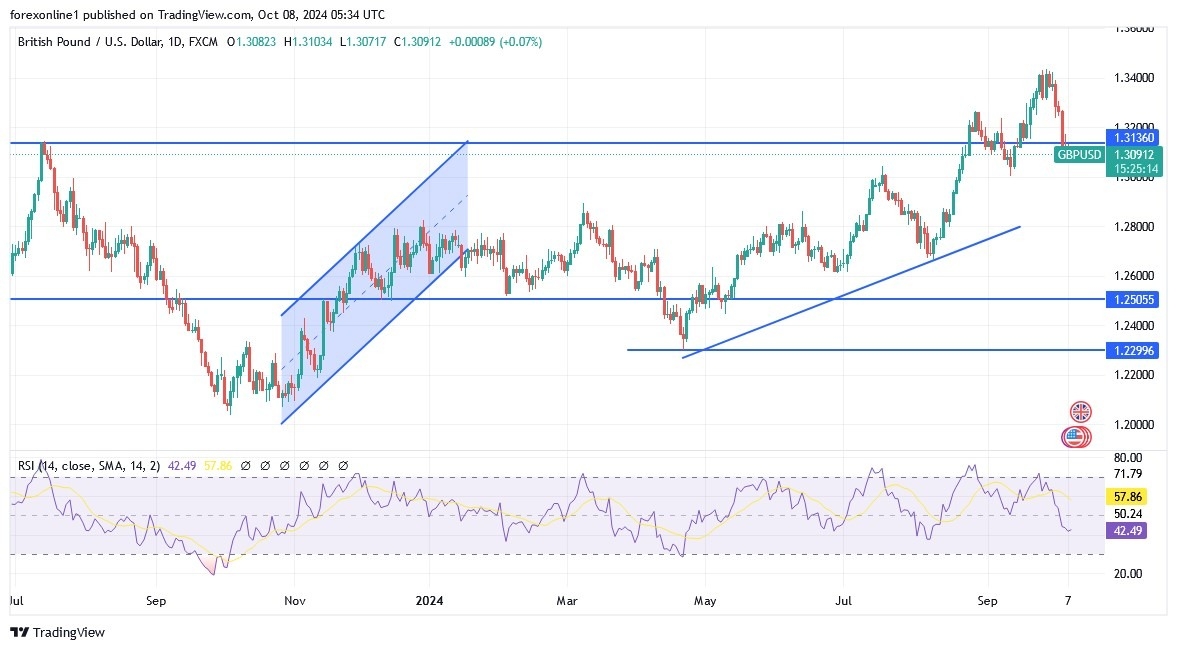
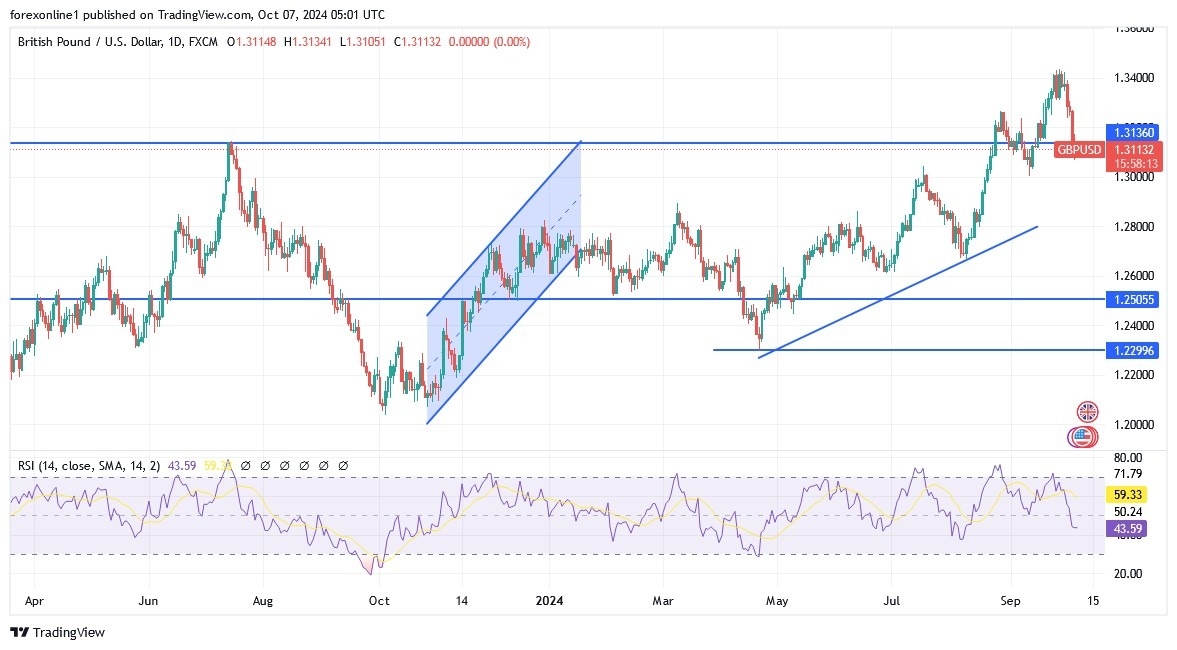
  • Weak sentiment has kept GBP/USD from gaining ground since the start of this week’s trading, with its gains not exceeding the 1.2702 resistance level.
  • This was before retreating back to settle around the 1.2668 support level at the time of writing.
  • Moreover, it may remain in its current trading range pending the reaction to the US inflation reading, the Fed’s favorite, at the end of the week.

On the other hand, expectations are stronger that the Bank of England (BoE) will cut interest rates in August. Recently, the pound could drift lower if the market increases confidence in a rate cut in August. The UK calendar will be relatively light this week, while the BoE will be muted ahead of the general election on July 4.

Clearly, the shift in interest rate expectations in the UK and the Eurozone will remain important for the pound.

In this regard, according to the forex market, MUFG commented; “The minutes of the latest MPC meeting suggest that policymakers may be ready to cut interest rates as soon as the next policy meeting is held in August. Inflation sentiment remained clearly negative as policymakers indicated caution about flat services inflation. Meanwhile, labor market sentiment deteriorated to levels not seen since May 2023, as policymakers highlighted risks to the slack labor market. According to Nordea Bank, all major central banks may struggle to cut interest rates; “The problem is that global central banks are very likely to be cautious about cutting interest rates when unemployment is historically low, wage growth remains at a multi-decade high, and inflation remains above the 2% target for most central banks.” In contrast, the US dollar faced headwinds on Monday amid a lack of macroeconomic releases in the United States. Elsewhere, a wave of risk-off trading coupled with a slight decline in US Treasury yields dampened investor interest in the US dollar as a safe haven, leaving the greenback as a less favourable investment option throughout most of Monday’s session.

In addition, growing expectations that the Federal Reserve could start cutting US interest rates as soon as September 2024 continued to weigh on the US dollar. While Fed policymakers have maintained a hawkish consensus in recent weeks, the CME FedWatch tool now shows a roughly 60% chance that the central bank will start easing monetary policy in the third quarter of 2024, with an increasing number of economists now leaning towards this narrative. “We expect the US Fed to start cutting rates by September 2024, in line with consensus expectations,” said Sujan Hajra, chief economist and managing director of Anand Rathi Equities and Securities Brokers.

According to reliable trading platforms, the pound traded in a wide range against major currencies at the start of the week, while it rose against the US dollar amid changing market sentiment. With few high-impact releases in the UK at the start of the week, the focus was on the latest industry trends from the Confederation of British Industry (CBI). Also, the survey showed that the total order book balance in June rose to -18, beating expectations of -25 and up from -33 in May. The survey reached a three-month high this month, giving the pound some modest support, but despite the production forecast reaching its highest level since October 2023, export orders fell to their lowest level since February 2021.

For his part, Ben Jones, chief economist at the CBI, said, “It is encouraging to see that manufacturers remain confident that the economy is heading in the right direction, and our June survey suggests that the recovery should broaden over the summer.” One cautionary note is that order books remain weak, the sharp deterioration in export order books is particularly striking and something to watch in the coming months.

Elsewhere, the Bank of England’s hold on interest rates last week has further hampered sterling against most of its peers, with expectations of a rate cut in August still strong. However, increased risk appetite appears to be mitigating the downside for sterling as the session progresses, given its increasingly risk-sensitive status. This has helped sterling strengthen against its safe-haven rivals.

Looking ahead, a number of Fed policymakers are scheduled to speak throughout the week, starting with Mary Daly on Monday evening. If any of the policymakers take a hawkish stance, the “dollar” could gain some investor support amid signs that the Fed’s hawkish consensus remains intact, despite growing market expectations.

Looking ahead to the UK, the lack of notable releases in the coming days could see sterling trading primarily in line with global risk dynamics. If the increased risk appetite continues, the pound could strengthen against its rivals. However, the gloomy trade could leave the pound rudderless against its safe-haven rivals.

Technical forecasts for the GBP/USD pair today:

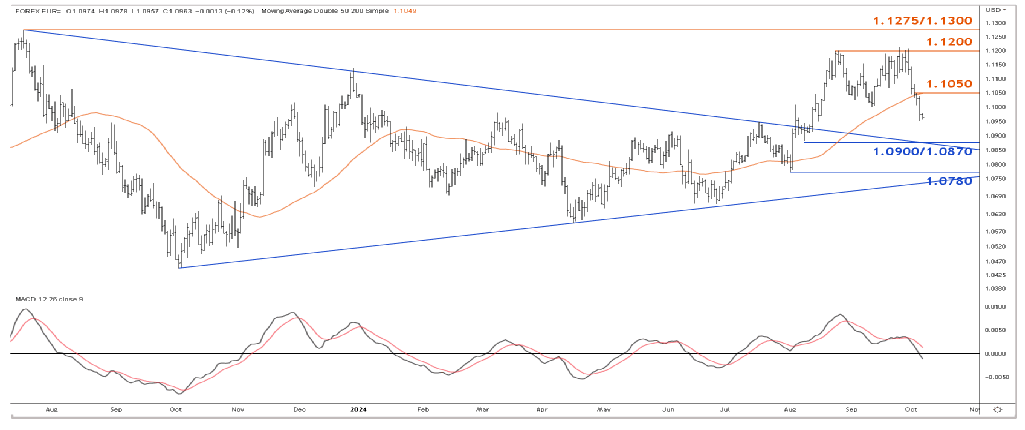
Based on the performance on the daily chart attached, the GBP/USD price is in a downward correction path and breaking the support at 1.2600 will strengthen the bears’ control. It will then prepare technically for stronger bearish breakouts. Especially, if the factors of the US dollar’s gains continue and the technical indicators will not move towards strong oversold levels without moving towards the support level of 1.2480. On the other hand, the GBP/USD pair will not return to their upward channel path without moving towards the resistance levels of 1.2775 and 1.2830 again.

Ready to trade our daily GBP/USD Forex analysis? We’ve made this top beginner’s forex brokers list for you to check out. 
Source link

26 06, 2024

Euro sellers could take action if 1.0670 support fails

By |2024-06-26T12:38:00+03:00June 26, 2024|Forex News, News|0 Comments

You have reached your limit of 5 free articles for this month.

Take advantage of the Special Price just for today!

50% OFF and access to ALL our articles and insights.

Your coupon code


Subscribe to Premium

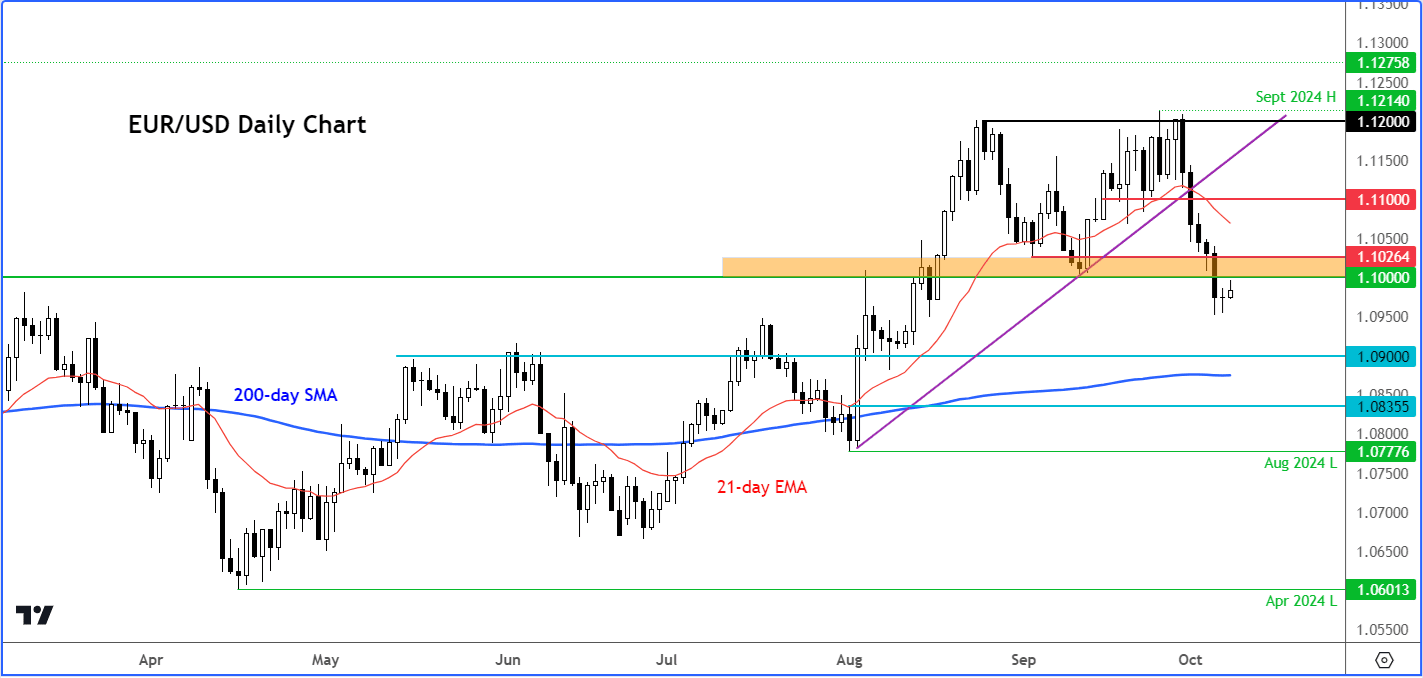
  • Euro stays on the back foot near 1.0700 after posting losses on Tuesday.
  • EUR/USD could extend its slide if 1.0670 support fails.
  • An improving risk mood could help the pair limit its losses in the near term.

EUR/USD failed to build on Monday’s gains and closed in negative territory on Tuesday. The pair struggles to regain its traction and trades at around 1.0700 in the European session on Wednesday.

Euro PRICE This week

The table below shows the percentage change of Euro (EUR) against listed major currencies this week. Euro was the weakest against the Australian Dollar.

  USD EUR GBP JPY CAD AUD NZD CHF
USD   0.00% -0.18% 0.10% -0.14% -0.57% 0.20% 0.37%
EUR -0.01%   -0.17% 0.15% -0.11% -0.56% 0.24% 0.43%
GBP 0.18% 0.17%   0.28% 0.05% -0.40% 0.40% 0.59%
JPY -0.10% -0.15% -0.28%   -0.24% -0.64% 0.18% 0.26%
CAD 0.14% 0.11% -0.05% 0.24%   -0.42% 0.34% 0.54%
AUD 0.57% 0.56% 0.40% 0.64% 0.42%   0.80% 1.00%
NZD -0.20% -0.24% -0.40% -0.18% -0.34% -0.80%   0.19%
CHF -0.37% -0.43% -0.59% -0.26% -0.54% -1.00% -0.19%  

The heat map shows percentage changes of major currencies against each other. The base currency is picked from the left column, while the quote currency is picked from the top row. For example, if you pick the Euro from the left column and move along the horizontal line to the US Dollar, the percentage change displayed in the box will represent EUR (base)/USD (quote).

In the absence of high-tier macroeconomic data releases, investors refrain from taking large positions. The US economic docket will feature New Home Sales data for May later in the day, which is unlikely to trigger a significant market reaction.

Meanwhile, US stock index futures trade marginally higher on the day. In case risk flows dominate the markets in the second half of the day, the US Dollar (USD) could lose strength and help EUR/USD limit its losses.

Nevertheless, market participants could remain hesitant to bet on a steady Euro recovery ahead of this weekend’s election in France.

Earlier in the day, European Central Bank (ECB) policymaker Olli Rehn said that market expectations that the ECB will reduce interest rates twice more this year and to as low as 2.25% in 2025 are ‘reasonable’. These comments also seem to be making it difficult for the Euro to find demand.

On Thursday, the European Commission will publish business and consumer sentiment data for June. Later in the day, the US Bureau of Economic Analysis will release the final revision to the first-quarter Gross Domestic Product growth and the US Department of Labor will announce weekly Initial Jobless Claims figures.

EUR/USD Technical Analysis

The Fibonacci 78.6% retracement of the latest uptrend aligns as immediate resistance at 1.0670. If EUR/USD falls below this level and starts using it as support, 1.0600 (psychological level, static level) could be set as the next bearish target.

On the upside, resistances could be seen as 1.0720-1.0730, where the 50-period Simple Moving Average (SMA) on the four-hour chart meets the Fibonacci 61.8% retracement level, and 1.0760 (Fibonacci 50% retracement).

Euro FAQs

The Euro is the currency for the 20 European Union countries that belong to the Eurozone. It is the second most heavily traded currency in the world behind the US Dollar. In 2022, it accounted for 31% of all foreign exchange transactions, with an average daily turnover of over $2.2 trillion a day. EUR/USD is the most heavily traded currency pair in the world, accounting for an estimated 30% off all transactions, followed by EUR/JPY (4%), EUR/GBP (3%) and EUR/AUD (2%).

The European Central Bank (ECB) in Frankfurt, Germany, is the reserve bank for the Eurozone. The ECB sets interest rates and manages monetary policy. The ECB’s primary mandate is to maintain price stability, which means either controlling inflation or stimulating growth. Its primary tool is the raising or lowering of interest rates. Relatively high interest rates – or the expectation of higher rates – will usually benefit the Euro and vice versa. The ECB Governing Council makes monetary policy decisions at meetings held eight times a year. Decisions are made by heads of the Eurozone national banks and six permanent members, including the President of the ECB, Christine Lagarde.

Eurozone inflation data, measured by the Harmonized Index of Consumer Prices (HICP), is an important econometric for the Euro. If inflation rises more than expected, especially if above the ECB’s 2% target, it obliges the ECB to raise interest rates to bring it back under control. Relatively high interest rates compared to its counterparts will usually benefit the Euro, as it makes the region more attractive as a place for global investors to park their money.

Data releases gauge the health of the economy and can impact on the Euro. Indicators such as GDP, Manufacturing and Services PMIs, employment, and consumer sentiment surveys can all influence the direction of the single currency. A strong economy is good for the Euro. Not only does it attract more foreign investment but it may encourage the ECB to put up interest rates, which will directly strengthen the Euro. Otherwise, if economic data is weak, the Euro is likely to fall. Economic data for the four largest economies in the euro area (Germany, France, Italy and Spain) are especially significant, as they account for 75% of the Eurozone’s economy.

Another significant data release for the Euro is the Trade Balance. This indicator measures the difference between what a country earns from its exports and what it spends on imports over a given period. If a country produces highly sought after exports then its currency will gain in value purely from the extra demand created from foreign buyers seeking to purchase these goods. Therefore, a positive net Trade Balance strengthens a currency and vice versa for a negative balance.


  • Euro stays on the back foot near 1.0700 after posting losses on Tuesday.
  • EUR/USD could extend its slide if 1.0670 support fails.
  • An improving risk mood could help the pair limit its losses in the near term.

EUR/USD failed to build on Monday’s gains and closed in negative territory on Tuesday. The pair struggles to regain its traction and trades at around 1.0700 in the European session on Wednesday.

Euro PRICE This week

The table below shows the percentage change of Euro (EUR) against listed major currencies this week. Euro was the weakest against the Australian Dollar.

  USD EUR GBP JPY CAD AUD NZD CHF
USD   0.00% -0.18% 0.10% -0.14% -0.57% 0.20% 0.37%
EUR -0.01%   -0.17% 0.15% -0.11% -0.56% 0.24% 0.43%
GBP 0.18% 0.17%   0.28% 0.05% -0.40% 0.40% 0.59%
JPY -0.10% -0.15% -0.28%   -0.24% -0.64% 0.18% 0.26%
CAD 0.14% 0.11% -0.05% 0.24%   -0.42% 0.34% 0.54%
AUD 0.57% 0.56% 0.40% 0.64% 0.42%   0.80% 1.00%
NZD -0.20% -0.24% -0.40% -0.18% -0.34% -0.80%   0.19%
CHF -0.37% -0.43% -0.59% -0.26% -0.54% -1.00% -0.19%  

The heat map shows percentage changes of major currencies against each other. The base currency is picked from the left column, while the quote currency is picked from the top row. For example, if you pick the Euro from the left column and move along the horizontal line to the US Dollar, the percentage change displayed in the box will represent EUR (base)/USD (quote).

In the absence of high-tier macroeconomic data releases, investors refrain from taking large positions. The US economic docket will feature New Home Sales data for May later in the day, which is unlikely to trigger a significant market reaction.

Meanwhile, US stock index futures trade marginally higher on the day. In case risk flows dominate the markets in the second half of the day, the US Dollar (USD) could lose strength and help EUR/USD limit its losses.

Nevertheless, market participants could remain hesitant to bet on a steady Euro recovery ahead of this weekend’s election in France.

Earlier in the day, European Central Bank (ECB) policymaker Olli Rehn said that market expectations that the ECB will reduce interest rates twice more this year and to as low as 2.25% in 2025 are ‘reasonable’. These comments also seem to be making it difficult for the Euro to find demand.

On Thursday, the European Commission will publish business and consumer sentiment data for June. Later in the day, the US Bureau of Economic Analysis will release the final revision to the first-quarter Gross Domestic Product growth and the US Department of Labor will announce weekly Initial Jobless Claims figures.

EUR/USD Technical Analysis

The Fibonacci 78.6% retracement of the latest uptrend aligns as immediate resistance at 1.0670. If EUR/USD falls below this level and starts using it as support, 1.0600 (psychological level, static level) could be set as the next bearish target.

On the upside, resistances could be seen as 1.0720-1.0730, where the 50-period Simple Moving Average (SMA) on the four-hour chart meets the Fibonacci 61.8% retracement level, and 1.0760 (Fibonacci 50% retracement).

Euro FAQs

The Euro is the currency for the 20 European Union countries that belong to the Eurozone. It is the second most heavily traded currency in the world behind the US Dollar. In 2022, it accounted for 31% of all foreign exchange transactions, with an average daily turnover of over $2.2 trillion a day. EUR/USD is the most heavily traded currency pair in the world, accounting for an estimated 30% off all transactions, followed by EUR/JPY (4%), EUR/GBP (3%) and EUR/AUD (2%).

The European Central Bank (ECB) in Frankfurt, Germany, is the reserve bank for the Eurozone. The ECB sets interest rates and manages monetary policy. The ECB’s primary mandate is to maintain price stability, which means either controlling inflation or stimulating growth. Its primary tool is the raising or lowering of interest rates. Relatively high interest rates – or the expectation of higher rates – will usually benefit the Euro and vice versa. The ECB Governing Council makes monetary policy decisions at meetings held eight times a year. Decisions are made by heads of the Eurozone national banks and six permanent members, including the President of the ECB, Christine Lagarde.

Eurozone inflation data, measured by the Harmonized Index of Consumer Prices (HICP), is an important econometric for the Euro. If inflation rises more than expected, especially if above the ECB’s 2% target, it obliges the ECB to raise interest rates to bring it back under control. Relatively high interest rates compared to its counterparts will usually benefit the Euro, as it makes the region more attractive as a place for global investors to park their money.

Data releases gauge the health of the economy and can impact on the Euro. Indicators such as GDP, Manufacturing and Services PMIs, employment, and consumer sentiment surveys can all influence the direction of the single currency. A strong economy is good for the Euro. Not only does it attract more foreign investment but it may encourage the ECB to put up interest rates, which will directly strengthen the Euro. Otherwise, if economic data is weak, the Euro is likely to fall. Economic data for the four largest economies in the euro area (Germany, France, Italy and Spain) are especially significant, as they account for 75% of the Eurozone’s economy.

Another significant data release for the Euro is the Trade Balance. This indicator measures the difference between what a country earns from its exports and what it spends on imports over a given period. If a country produces highly sought after exports then its currency will gain in value purely from the extra demand created from foreign buyers seeking to purchase these goods. Therefore, a positive net Trade Balance strengthens a currency and vice versa for a negative balance.


Source link

26 06, 2024

GBP/JPY Weekly Forecast – British Pound Drops Against Japanese Yen for the Week

By |2024-06-26T06:34:47+03:00June 26, 2024|Forex News, News|0 Comments

GBP/JPY Forecast Video for 25.09.23

British Pound vs Japanese Yen Weekly Technical Analysis

The British pound has fallen during the course of the week, which makes sense considering that the Bank of England decided to keep interest rates flat. By doing so, it shows that there is perhaps some concern out there when it comes to the UK economy, and therefore the British pound may struggle a bit. However, the Bank of Japan did the same thing, so I think once the dust settles, it means that we will continue to see a lot of the same behavior. Because of this, I fully anticipate that there will be a “buy on the dips” opportunity, but we may have to test the crucial ¥180 level before we do it.

If we break above the top of the candlestick for the week, then it opens up the possibility of a move toward the ¥185 level. The ¥185 level is an area that I think a lot of people have to pay close attention to, and if we were to break above there, then it’s likely that the market goes much higher, as we continue to see the interest rate differential drive this pair much higher. I have no interest in shorting this pair anytime soon, as the interest rate differential continues to pay you at the end of the session every day. That being said, it doesn’t mean that we will get the occasional pullback, but I think it opens up the possibility of looking at this as a value proposition more than anything else. Alternatively, I do think that we break out to the upside although it may take some time to get there.

For a look at all of today’s economic events, check out our economic calendar.

This article was originally posted on FX Empire

More From FXEMPIRE:

Source link

26 06, 2024

USD/JPY Forecast: Yen Intervention Risks and BoJ Rate Hike Signals

By |2024-06-26T04:34:12+03:00June 26, 2024|Forex News, News|0 Comments

BoJ Deputy Governor Ryozo Himino recently said,

“Exchange-rate fluctuations affect economic activity in various ways. It also affects inflation in a broad-based and sustained way, beyond the direct impact on import prices.”

While intervention threats may cap the upside, the Bank of Japan may need to take a more hawkish stance to begin restoring buyer demand for the Yen.

Can economic indicators from Japan raise investor bets on a July BoJ rate hike?

Retail Sales and Tokyo Inflation: Crucial Data Releases for the BoJ

On Thursday, June 27, retail sales figures from Japan could influence investor expectations of a July BoJ rate hike. Economists forecast retail sales to increase 2.0% year-on-year in May after a rise of 2.4% in April.

Investors could take better-than-expected numbers as a cue for the BoJ to consider raising rates in July. Upward trends in consumer spending could fuel demand-driven inflation.

However, labor market data and inflation numbers for Tokyo (Fri) could affect sentiment toward the BoJ rate path more.

Economists forecast the Tokyo core annual inflation rate to rise from 1.9% to 2.0% in June. Furthermore, economists expect the annual inflation rate to increase from 2.2% to 2.4%.

Hotter-than-expected numbers and a steady unemployment rate could greenlight a July BoJ rate hike.

The BoJ could justify a market-influencing move by highlighting the effects of the weaker Yen on the Japanese economy.

While economic indicators from Japan will influence the USD/JPY, US data could affect views that interest rate differentials have peaked.

US Housing Market Data and the Fed Rate Path

Investors will turn their attention to US housing sector data later in the Wednesday session.

Analysts predict a 2.9% rise in US new home sales for May, following a 4.7% decline in April. Market participants should be mindful of trends, as new home inventories can cause fluctuations. Rising inventory trends might alleviate price pressures and reduce costs for housing services, including rents. Housing services inflation contributes to headline inflation.

Furthermore, upward trends in new home demand could indicate strong consumer confidence. Increased consumer confidence might boost consumer spending and bolster expectations of a US soft landing.

Source link

26 06, 2024

GBP/JPY Forecast Today – 25/06: GBP Rallies vs JPY (Chart)

By |2024-06-26T02:32:12+03:00June 26, 2024|Forex News, News|0 Comments

  • The British pound initially fell off a bit during the early hours on Monday but turned around and show signs of strength to reach above the ¥202 level by the time New York got involved.
  • Quite frankly, this is a market that continues to see a lot of upward momentum, and it should considering that the Bank of Japan has absolutely no chance of raising interest rates anytime soon, and the interest rate differential continues to pay you at the end of every session.

Technical Analysis

This is a pair that is obviously very bullish, and therefore I think you need to pay close attention to the idea of any pullback being a potential buying opportunity. The ¥200 level underneath is a major support level based on both psychology and of course the fact that it previously had been massive resistance. Furthermore, the Bank of Japan had intervened in that general vicinity, and the fact that we are above it does suggest that we have much further to go over the longer term. The 50-Day EMA is currently sitting at the 197.60 level and is rising. In other words, there is absolutely nothing on this chart that looks even remotely close to being bearish.

The plan going forward

At this point, anytime this pair drops 100 pips, I’m a buyer. I don’t really need to think about it much further than that, due to the fact that I will get paid at the end of every session, and this is one of the better paying short-yen trades that I have on at the moment. Quite frankly, it’s a bit boring but trading doesn’t necessarily have to be overly exciting, as this is more or less an investment.

The one thing that I do pay close attention to is whether or not the Bank of England looks likely to start aggressively cutting rates. At this point, it doesn’t look like they’re going to do so very aggressively, so there’s really not a whole lot to do here other than to add to the position every time I get a chance to, and to simply hang on and get as much out of this trend as is humanly possible.

Not sure which broker to choose? We’ve made a list of the best forex brokers for you. 

Source link

26 06, 2024

GBP/USD Forecast – Pound Pulls Back Again

By |2024-06-26T00:31:42+03:00June 26, 2024|Forex News, News|0 Comments

GBP/USD Forecast Video for 25.08.23

British Pound vs US Dollar Technical Analysis

In the past 24 hours, we have seen a repeat of the action from the previous 24 hours in the GBP/USD. Both of the PMI indicators have surprisingly slipped into negative territory on Wednesday, leading to a clear shift in investor sentiment toward the US dollar as a safe haven. It’s important to note that the United States’ PMI data is still awaiting release, and if these numbers reflect a similarly grim outlook, the current situation might experience a complete reversal.

At present, the market finds itself in a position between two important technical markers: the 50-Day Exponential Moving Average (EMA) and the 200-Day EMA. This setup alone tends to introduce a fair amount of market volatility and turbulence. In essence, this market continues to be marked by distinct fluctuations, a pattern that is likely to continue given the upcoming Jackson Hole Symposium speech scheduled for Thursday.

This upcoming speech holds significant influence over the market’s direction, with close attention focused on the stance taken by Jerome Powell, the Chair of the Federal Reserve. While a hawkish approach from Powell could potentially strengthen the US dollar, there is a prevalent sense of doubt among market observers. Despite this uncertainty, the prevailing sentiment seems to be one of cautious reservation.

All things considered, the market appears to have settled into a holding pattern, even following a substantial sell-off witnessed early in Thursday’s session. This situation is supported by a major uptrend line, serving as a robust foundational base. As a result, the resilience of this support suggests that a significant push would be needed to breach this market’s defenses. If the market were to dip below the 200-Day EMA, it could potentially trigger a prolonged negative trajectory. Such an occurrence might lead to a significant shift toward the US dollar, impacting not only the British pound but also extending to various currency pairs.

In essence, our interpretation of this situation depends on whether it presents a value-based opportunity or veers toward a market breakdown. The days ahead hold the potential to offer valuable insights into this crucial question. Nonetheless, it’s safe to say that this market will likely face numerous uncertainties as we approach the end of the week – or so.

For a look at all of today’s economic events, check out our economic calendar.

This article was originally posted on FX Empire

More From FXEMPIRE:

Source link

25 06, 2024

AUD/USD Forecast – Aussie Continues to Look Lackluster

By |2024-06-25T22:31:09+03:00June 25, 2024|Forex News, News|0 Comments

Australian Dollar vs US Dollar Technical Analysis

The Australian dollar tried to rally initially during the trading session on Tuesday, but continues to struggle yet again, near the 0.67 level as we are just simply stuck. And with that being said, I think you have to look at this through the prism of a market that’s just going to continue to go back and forth. It will continue to show signs of hesitation to get above 0.67, but it will also show signs of support closer to the 200-day EMA.

The market continues to be very sideways, mainly due to the fact that I think people are still waiting around to see what the Federal Reserve is going to do, and of course, people are not overly sure what to do about commodities and global growth. With that being said, market participants have to deal with a scenario where traders are just going to be short-term focused and that’s fine.

If you are short-term focused, the market has offered a great little area to trade back and forth, but you have to be willing to babysit the charts. If we were to break down below the 200-day EMA, which is just below the 0.66 level, then we could drop down to the 0.6450 level. If we can clear the 0.67 level on a daily close, it could open up a move all the way to the 0.6875 handle. However, right now, it doesn’t seem like we have any momentum one way or the other.

For a look at all of today’s economic events, check out our economic calendar.

This article was originally posted on FX Empire

More From FXEMPIRE:

Source link

Go to Top