US Dollar vs Japanese Yen Weekly Technical Analysis
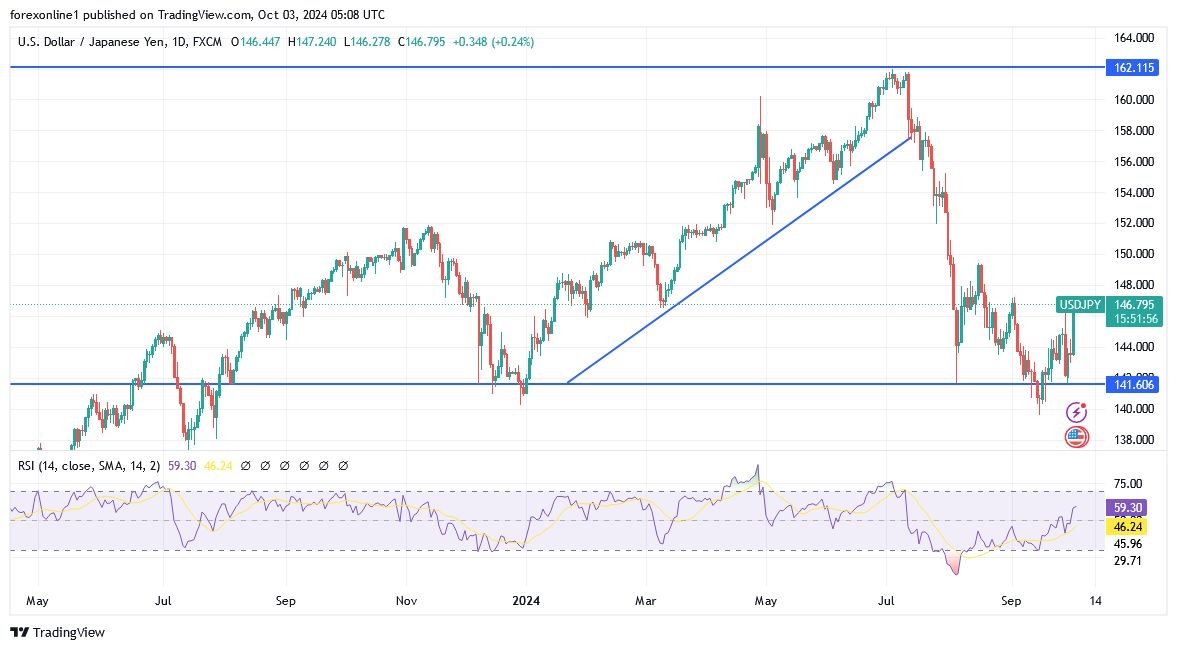
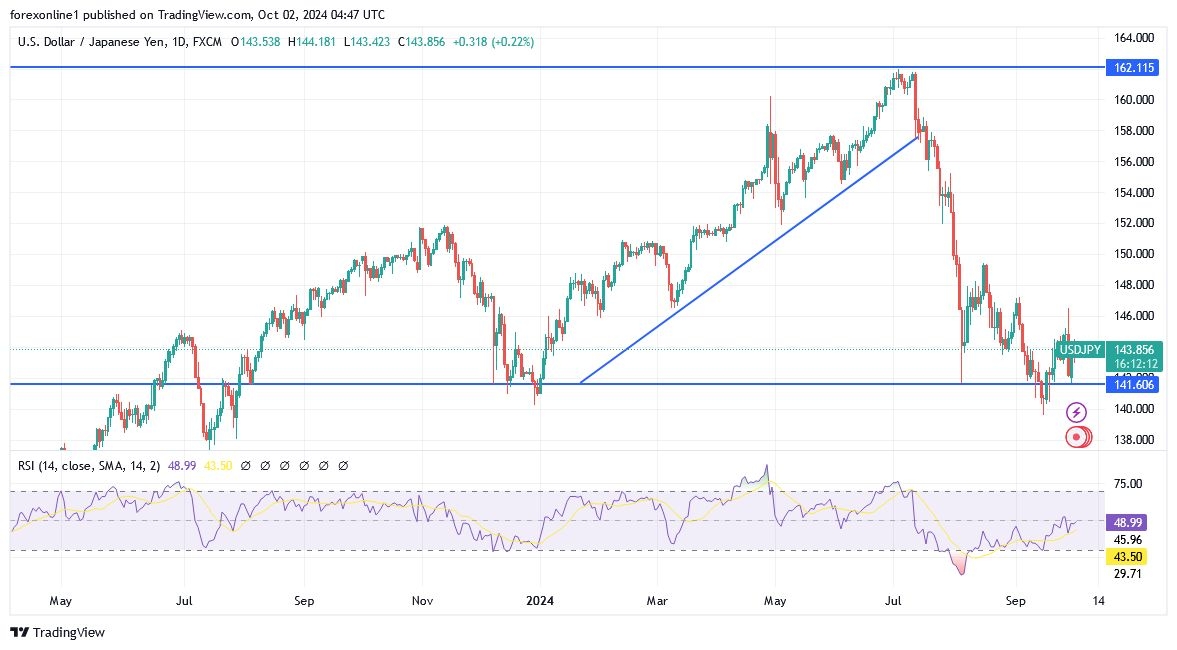
The US dollar has rallied rather significantly during the course of the week as we continue to see the Japanese yen implode. After all, the Bank of Japan is in a situation where it has to keep interest rates low and despite the occasional jaw boning or perhaps even the occasional intervention, the reality is that this is all about the Federal Reserve. The Federal Reserve, of course, is likely to keep things tight and maybe, and this is a huge maybe, cut rates once this year only.
If that’s going to be the case, then I think the interest rate differential will continue to attract a lot of traders into this market. I have been long of almost every yen denominated pair for what seems like a lifetime, but quite frankly the fundamentals are just not changing. Yes, we have had intervention, but really it ended up being a blip on the radar and we are in the realm of perhaps taking out the top of that candlestick.
If we break the 160 yen level, that will be a huge test. Even if they were to come in and do a little bit of intervention, I’ll just buy it at lower levels. I get paid at the end of every day to hold this market, and I think that’s what most people out there are focusing on. As long as inflation’s an issue in the United States, the US dollar’s going to swallow a lot of currencies. And if you look around to Asia, because I do some work with the exotics, other currencies like the Singapore dollar, the Thai baht, the Chinese yuan, Korean won, they all are suffering at the hands of the greenback so it’s hard to believe that the yen would be any different.
For a look at all of today’s economic events, check out our economic calendar.
US Dollar vs Japanese Yen Weekly Technical Analysis
The US dollar has rallied rather significantly during the course of the week as we continue to see the Japanese yen implode. After all, the Bank of Japan is in a situation where it has to keep interest rates low and despite the occasional jaw boning or perhaps even the occasional intervention, the reality is that this is all about the Federal Reserve. The Federal Reserve, of course, is likely to keep things tight and maybe, and this is a huge maybe, cut rates once this year only.
If that’s going to be the case, then I think the interest rate differential will continue to attract a lot of traders into this market. I have been long of almost every yen denominated pair for what seems like a lifetime, but quite frankly the fundamentals are just not changing. Yes, we have had intervention, but really it ended up being a blip on the radar and we are in the realm of perhaps taking out the top of that candlestick.
If we break the 160 yen level, that will be a huge test. Even if they were to come in and do a little bit of intervention, I’ll just buy it at lower levels. I get paid at the end of every day to hold this market, and I think that’s what most people out there are focusing on. As long as inflation’s an issue in the United States, the US dollar’s going to swallow a lot of currencies. And if you look around to Asia, because I do some work with the exotics, other currencies like the Singapore dollar, the Thai baht, the Chinese yuan, Korean won, they all are suffering at the hands of the greenback so it’s hard to believe that the yen would be any different.
For a look at all of today’s economic events, check out our economic calendar.
The US dollar has continued to plow higher against the Japanese yen during the trading session on Thursday.
All things being equal, this is a market that I think continues to see a lot of buying pressure to the upside.
With the situation where traders have continued to play the interest rate differential, I think this makes a lot of sense.
Furthermore, you have to keep in mind that the Swiss National Bank did cut rates earlier in the day, and although that’s not a direct influence on this market, it does suggest that other central banks around the world are in fact going to keep cutting.
What does this mean for Japan?
If Switzerland’s cutting, the Bank of Japan’s very unlikely to raise rates because quite frankly, it would throw the economy into a nasty recession, perhaps even worse. After all, the economy is very fragile. It has been very fragile for some time in Japan. And I think that continues to be the case going forward. Short-term dips continue to be buying opportunities as we have the ability to find value and of course get paid at the end of every day. The interest rate differential continues to be wide enough to drive a truck through. And I think that’s the story here.
It’s probably only a matter of time before we break out above the 160 yen level and continue to go much higher. That was the area where the Bank of Japan stepped in and intervened. If it gets broken, that could lead to more FOMO trading. And I do think we’re in the midst of trying to make that happen right now. Underneath the 50 day EMA and the 155 yen level, both offer support levels that people will be paying close attention to, assuming that we can even drop that far.
Ultimately, USD/JPY is a market that will continue to pay traders who are patient enough to hang onto their positions, which is exactly what I have been doing for several months. Remember, trends in the currency markets tend to last much longer than people believe, and therefore you get paid to think more in the longer-term in a situation like this.
The Australian dollar has chopped around back and forth during the trading session on Friday as we are just hanging around the 0.6650 level. This is an area that’s been a little bit of a magnet for price lately and quite frankly, I just don’t see anything on this chart that makes me believe that anything is going to change anytime soon.
We have a situation where gold’s doing very well and that helps the Australian dollar, but at the same time, the Federal Reserve continues to be very tight with its monetary policy. With that being the case, I think you’ve got a situation where we just bounce around and try to sort things out. But this is a market that I think given enough time, we’ll probably continue to see a lot of indecision, with the 0.6720 level above offering significant resistance.
Underneath we have the 0.6575 level offering support. In general, this is a scenario where we continue to see just the market go back and forth on the latest whim. I think if you’re a short-term range-bound trader, this is a market that you’ll love. You are essentially able to trade on something like the 30-minute chart and just go back and forth, at least until the market breaks out. If and when it does, then we might see a 100 point move in either direction. We aren’t too sure about the direction yet, but the pressure certainly must be building at this point in time.
For a look at all of today’s economic events, check out our economic calendar.
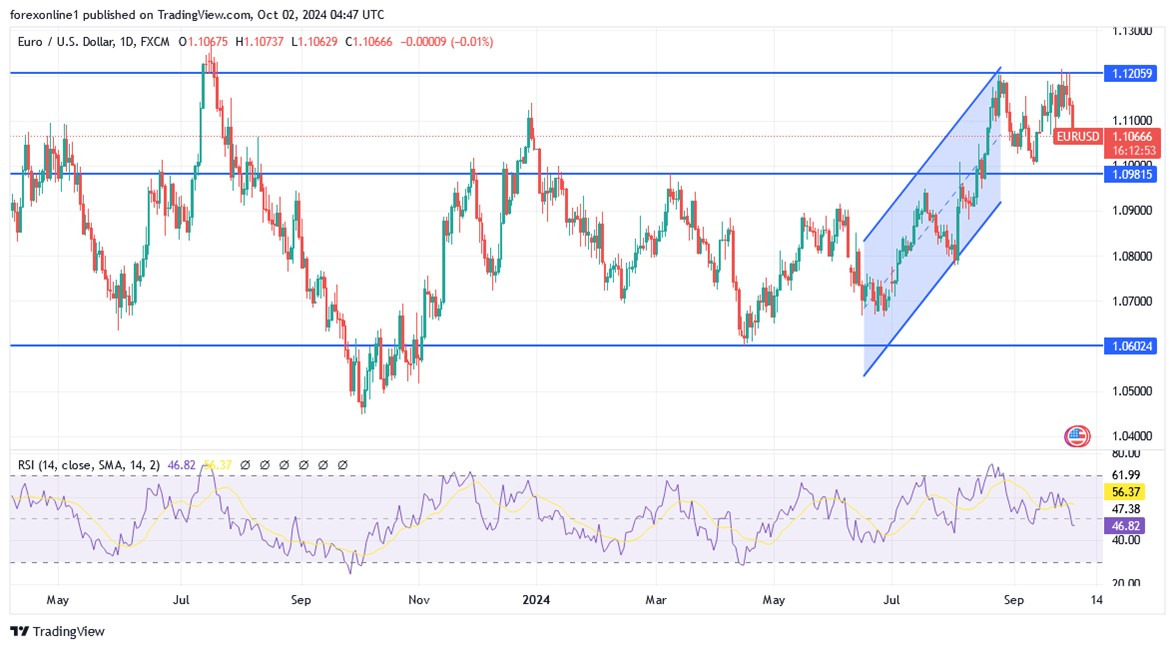
EUR/USD stays under bearish pressure and trades below 1.0700.
PMI data from the Euro area highlight a loss of growth momentum in early June.
The pair could extend its slide if 1.0670 support fails.
EUR/USD struggles to hold its ground early Friday and trades below 1.0700 after closing in negative territory on Thursday. The pair could continue to stretch lower in case 1.0670 support fails.
The risk-averse market atmosphere helped the US Dollar (USD) gather strength on Thursday, forcing EUR/USD to stay on the back foot.
Euro PRICE This week
The table below shows the percentage change of Euro (EUR) against listed major currencies this week. Euro was the weakest against the Australian Dollar.
USD
EUR
GBP
JPY
CAD
AUD
NZD
CHF
USD
0.22%
0.30%
0.84%
-0.38%
-0.58%
0.12%
0.08%
EUR
-0.22%
0.11%
0.64%
-0.59%
-0.89%
-0.05%
-0.14%
GBP
-0.30%
-0.11%
0.66%
-0.70%
-1.01%
-0.20%
-0.22%
JPY
-0.84%
-0.64%
-0.66%
-1.10%
-1.40%
-0.57%
-0.69%
CAD
0.38%
0.59%
0.70%
1.10%
-0.26%
0.50%
0.47%
AUD
0.58%
0.89%
1.01%
1.40%
0.26%
0.90%
0.79%
NZD
-0.12%
0.05%
0.20%
0.57%
-0.50%
-0.90%
-0.03%
CHF
-0.08%
0.14%
0.22%
0.69%
-0.47%
-0.79%
0.03%
The heat map shows percentage changes of major currencies against each other. The base currency is picked from the left column, while the quote currency is picked from the top row. For example, if you pick the Euro from the left column and move along the horizontal line to the US Dollar, the percentage change displayed in the box will represent EUR (base)/USD (quote).
Early Friday, disappointing PMI data from Germany and the Eurozone make it difficult for the Euro to find demand. HCOB Composite PMI in Germany declined to 50.6 in June’s flash estimate from 52.4 in May and HCOC Composite PMI for the Eurozone declined to 50.8 from 52.2. Both of these readings came in below analysts’ estimates and showed that the private sector’s business activity continued to expand at a softening pace.
Assessing PMI surveys’ findings, “the HCOB PMI do not provide ammunition for another rate cut in July by the ECB,” said Dr. Cyrus de la Rubia, Chief Economist at Hamburg Commercial Bank. “This is because, for the biggest Eurozone economy, Germany, service providers increased their selling prices at a sharper pace than in May.”
In the second half of the day, S&P Global will release preliminary Manufacturing and Services PMI data for the US. In case the US PMI data come in better than expected, the USD could preserve its strength heading into the weekend and cause EUR/USD to stretch lower. On the other hand, a noticeable decline in either the Manufacturing or the Services PMI reading could limit the USD’s gains.
EUR/USD Technical Analysis
The Fibonacci 78.6% retracement of the latest uptrend aligns as key support at 1.0670. If EUR/USD falls below that level and starts using it as resistance, technical sellers could remain interested. In this scenario, 1.0600 (static level) could be set as the next bearish target.
On the upside, 1.0700 (psychological level, static level) could be seen as interim resistance before 1.0730-1.0740 (Fibonacci 61.8% retracement, 50-period Simple Moving Average) and 1.0760 (Fibonacci 50% retracement).
Euro FAQs
The Euro is the currency for the 20 European Union countries that belong to the Eurozone. It is the second most heavily traded currency in the world behind the US Dollar. In 2022, it accounted for 31% of all foreign exchange transactions, with an average daily turnover of over $2.2 trillion a day. EUR/USD is the most heavily traded currency pair in the world, accounting for an estimated 30% off all transactions, followed by EUR/JPY (4%), EUR/GBP (3%) and EUR/AUD (2%).
The European Central Bank (ECB) in Frankfurt, Germany, is the reserve bank for the Eurozone. The ECB sets interest rates and manages monetary policy. The ECB’s primary mandate is to maintain price stability, which means either controlling inflation or stimulating growth. Its primary tool is the raising or lowering of interest rates. Relatively high interest rates – or the expectation of higher rates – will usually benefit the Euro and vice versa. The ECB Governing Council makes monetary policy decisions at meetings held eight times a year. Decisions are made by heads of the Eurozone national banks and six permanent members, including the President of the ECB, Christine Lagarde.
Eurozone inflation data, measured by the Harmonized Index of Consumer Prices (HICP), is an important econometric for the Euro. If inflation rises more than expected, especially if above the ECB’s 2% target, it obliges the ECB to raise interest rates to bring it back under control. Relatively high interest rates compared to its counterparts will usually benefit the Euro, as it makes the region more attractive as a place for global investors to park their money.
Data releases gauge the health of the economy and can impact on the Euro. Indicators such as GDP, Manufacturing and Services PMIs, employment, and consumer sentiment surveys can all influence the direction of the single currency. A strong economy is good for the Euro. Not only does it attract more foreign investment but it may encourage the ECB to put up interest rates, which will directly strengthen the Euro. Otherwise, if economic data is weak, the Euro is likely to fall. Economic data for the four largest economies in the euro area (Germany, France, Italy and Spain) are especially significant, as they account for 75% of the Eurozone’s economy.
Another significant data release for the Euro is the Trade Balance. This indicator measures the difference between what a country earns from its exports and what it spends on imports over a given period. If a country produces highly sought after exports then its currency will gain in value purely from the extra demand created from foreign buyers seeking to purchase these goods. Therefore, a positive net Trade Balance strengthens a currency and vice versa for a negative balance.
EUR/USD stays under bearish pressure and trades below 1.0700.
PMI data from the Euro area highlight a loss of growth momentum in early June.
The pair could extend its slide if 1.0670 support fails.
EUR/USD struggles to hold its ground early Friday and trades below 1.0700 after closing in negative territory on Thursday. The pair could continue to stretch lower in case 1.0670 support fails.
The risk-averse market atmosphere helped the US Dollar (USD) gather strength on Thursday, forcing EUR/USD to stay on the back foot.
Euro PRICE This week
The table below shows the percentage change of Euro (EUR) against listed major currencies this week. Euro was the weakest against the Australian Dollar.
USD
EUR
GBP
JPY
CAD
AUD
NZD
CHF
USD
0.22%
0.30%
0.84%
-0.38%
-0.58%
0.12%
0.08%
EUR
-0.22%
0.11%
0.64%
-0.59%
-0.89%
-0.05%
-0.14%
GBP
-0.30%
-0.11%
0.66%
-0.70%
-1.01%
-0.20%
-0.22%
JPY
-0.84%
-0.64%
-0.66%
-1.10%
-1.40%
-0.57%
-0.69%
CAD
0.38%
0.59%
0.70%
1.10%
-0.26%
0.50%
0.47%
AUD
0.58%
0.89%
1.01%
1.40%
0.26%
0.90%
0.79%
NZD
-0.12%
0.05%
0.20%
0.57%
-0.50%
-0.90%
-0.03%
CHF
-0.08%
0.14%
0.22%
0.69%
-0.47%
-0.79%
0.03%
The heat map shows percentage changes of major currencies against each other. The base currency is picked from the left column, while the quote currency is picked from the top row. For example, if you pick the Euro from the left column and move along the horizontal line to the US Dollar, the percentage change displayed in the box will represent EUR (base)/USD (quote).
Early Friday, disappointing PMI data from Germany and the Eurozone make it difficult for the Euro to find demand. HCOB Composite PMI in Germany declined to 50.6 in June’s flash estimate from 52.4 in May and HCOC Composite PMI for the Eurozone declined to 50.8 from 52.2. Both of these readings came in below analysts’ estimates and showed that the private sector’s business activity continued to expand at a softening pace.
Assessing PMI surveys’ findings, “the HCOB PMI do not provide ammunition for another rate cut in July by the ECB,” said Dr. Cyrus de la Rubia, Chief Economist at Hamburg Commercial Bank. “This is because, for the biggest Eurozone economy, Germany, service providers increased their selling prices at a sharper pace than in May.”
In the second half of the day, S&P Global will release preliminary Manufacturing and Services PMI data for the US. In case the US PMI data come in better than expected, the USD could preserve its strength heading into the weekend and cause EUR/USD to stretch lower. On the other hand, a noticeable decline in either the Manufacturing or the Services PMI reading could limit the USD’s gains.
EUR/USD Technical Analysis
The Fibonacci 78.6% retracement of the latest uptrend aligns as key support at 1.0670. If EUR/USD falls below that level and starts using it as resistance, technical sellers could remain interested. In this scenario, 1.0600 (static level) could be set as the next bearish target.
On the upside, 1.0700 (psychological level, static level) could be seen as interim resistance before 1.0730-1.0740 (Fibonacci 61.8% retracement, 50-period Simple Moving Average) and 1.0760 (Fibonacci 50% retracement).
Euro FAQs
The Euro is the currency for the 20 European Union countries that belong to the Eurozone. It is the second most heavily traded currency in the world behind the US Dollar. In 2022, it accounted for 31% of all foreign exchange transactions, with an average daily turnover of over $2.2 trillion a day. EUR/USD is the most heavily traded currency pair in the world, accounting for an estimated 30% off all transactions, followed by EUR/JPY (4%), EUR/GBP (3%) and EUR/AUD (2%).
The European Central Bank (ECB) in Frankfurt, Germany, is the reserve bank for the Eurozone. The ECB sets interest rates and manages monetary policy. The ECB’s primary mandate is to maintain price stability, which means either controlling inflation or stimulating growth. Its primary tool is the raising or lowering of interest rates. Relatively high interest rates – or the expectation of higher rates – will usually benefit the Euro and vice versa. The ECB Governing Council makes monetary policy decisions at meetings held eight times a year. Decisions are made by heads of the Eurozone national banks and six permanent members, including the President of the ECB, Christine Lagarde.
Eurozone inflation data, measured by the Harmonized Index of Consumer Prices (HICP), is an important econometric for the Euro. If inflation rises more than expected, especially if above the ECB’s 2% target, it obliges the ECB to raise interest rates to bring it back under control. Relatively high interest rates compared to its counterparts will usually benefit the Euro, as it makes the region more attractive as a place for global investors to park their money.
Data releases gauge the health of the economy and can impact on the Euro. Indicators such as GDP, Manufacturing and Services PMIs, employment, and consumer sentiment surveys can all influence the direction of the single currency. A strong economy is good for the Euro. Not only does it attract more foreign investment but it may encourage the ECB to put up interest rates, which will directly strengthen the Euro. Otherwise, if economic data is weak, the Euro is likely to fall. Economic data for the four largest economies in the euro area (Germany, France, Italy and Spain) are especially significant, as they account for 75% of the Eurozone’s economy.
Another significant data release for the Euro is the Trade Balance. This indicator measures the difference between what a country earns from its exports and what it spends on imports over a given period. If a country produces highly sought after exports then its currency will gain in value purely from the extra demand created from foreign buyers seeking to purchase these goods. Therefore, a positive net Trade Balance strengthens a currency and vice versa for a negative balance.
The kiwi dollar has rallied during the early hours on Thursday to break above the ¥97 level against the Japanese yen, which is also essentially the recent highs.
With that being the case, the market looks as if it is trying to do everything it can to break out to the upside and I think that it is probably only a matter of time.
That’s not to say that I believe that the New Zealand dollar is a currency that you need to have a lot of in your portfolio, rather it is to say that the Japanese yen is that week and feckless at the moment.
Keep in mind that the Japanese have absolutely no way of raising rates for any significant amount of time. This is because it will cause a massive recession in Japan. The Japanese government has borrowed so much money that it has absolutely no shot at raising rates for any length of time. Therefore they have come down to one of 2 choices: they can either continue to live with a fairly loose monetary policy, meaning that the currency will continue to drop over the longer term, or they can start to tighten interest rates to save the currency. At the same time watch the domestic economy implode. Remember, Japan has one of the highest debt loads among modern economies in the world.
Buying Each and Every Dip
The technical analysis for almost all Japanese yen denominated currency pairs is the same. Just simply buying dips every time they occur, and I do think that you have to look at them through the prism of whether or not they offer value. The ¥95.50 level is an area that recently has been supported, and then after that we have the 50-Day EMA coming into the picture right around ¥95. I think it would take serious work to break down below there, and at that point in time it could open up a move down to the ¥93.50 level, where it’s even more support.
On the upside, the NZD/JPY market breaking above the recent high, just a few pips from here, then opens up the possibility of a move to the ¥98 level, and by extension we should finally go looking toward the ¥100 level over the longer term.
GBP/USD struggles to rebound from the monthly low it set on Friday.
The near-term technical outlook suggests that the bearish bias stays intact.
The US economic calendar will feature S&P Global PMI data.
GBP/USD lost 0.5% on Thursday and continued to push lower in the early European session on Friday. After touching its lowest level since mid-May at 1.2630, GBP/USD edged higher to the 1.2650 area but the technical outlook doesn’t highlight a buildup of recovery momentum.
British Pound PRICE This week
The table below shows the percentage change of British Pound (GBP) against listed major currencies this week. British Pound was the weakest against the Australian Dollar.
USD
EUR
GBP
JPY
CAD
AUD
NZD
CHF
USD
0.09%
0.25%
0.94%
-0.36%
-0.50%
0.13%
0.18%
EUR
-0.09%
0.18%
0.90%
-0.44%
-0.68%
0.08%
0.09%
GBP
-0.25%
-0.18%
0.78%
-0.63%
-0.88%
-0.15%
-0.07%
JPY
-0.94%
-0.90%
-0.78%
-1.18%
-1.42%
-0.67%
-0.70%
CAD
0.36%
0.44%
0.63%
1.18%
-0.20%
0.49%
0.56%
AUD
0.50%
0.68%
0.88%
1.42%
0.20%
0.82%
0.81%
NZD
-0.13%
-0.08%
0.15%
0.67%
-0.49%
-0.82%
0.06%
CHF
-0.18%
-0.09%
0.07%
0.70%
-0.56%
-0.81%
-0.06%
The heat map shows percentage changes of major currencies against each other. The base currency is picked from the left column, while the quote currency is picked from the top row. For example, if you pick the British Pound from the left column and move along the horizontal line to the US Dollar, the percentage change displayed in the box will represent GBP (base)/USD (quote).
The Bank of England (BoE) announced on Thursday that it left the monetary policy settings unchanged. “June decision was finely balanced as higher-than-expected services inflation reflected factors that would not push up medium-term inflation,” the BoE said in its press release. The BoE’s optimistic tone on inflation outlook caused Pound Sterling to weaken against its major rivals.
Analysts ING think that the BoE is likely to lower the policy rate in August. “The probability of an August rate cut has inched up from 40% to 60% in the minutes since,” they said. “The fact that there wasn’t a larger repricing is probably because the Bank didn’t change its forward guidance. And for us, August rate cut is our base case.”
Early Friday, the UK’s Office for National Statistics reported that Retail Sales rose 2.9% on a monthly basis in May. This reading surpassed the market expectation for an increase of 1.5% and helped Pound Sterling show some resilience. Other data from the UK showed that the S&P Global/CIPS Composite PMI declined to 51.7 in June’s flash estimate from 53 in May, limiting GBP/USD’s rebound.
Ahead of the weekend, S&P Global PMI data from the US will be looked upon for fresh impetus. In case PMI surveys point to an ongoing expansion in the private sector at a healthy pace, with a Composite PMI reading of 52.0 or higher, the USD could gather strength heading into the weekend and weigh on GBP/USD.
GBP/USD Technical Analysis
GBP/USD dropped below the lower limit of the ascending regression channel and the Relative Strength Index (RSI) indicator on the daily chart fell below 40, reflecting the bearish tilt in the short-term outlook.
On the downside, 1.2640 (100-day Simple Moving Average (SMA), Fibonacci 38.2% retracement of the latest uptrend) aligns as key support level. If GBP/USD falls below that level and starts using it as resistance, an extended slide toward 1.2600 (psychological level, static level) and 1.2580 (Fibonacci 50% retracement) could be seen.
The 200-period SMA and the lower limit of the ascending channel forms stiff resistance at 1.2700 before 1.2740 (100-period SMA), 1.2800 (psychological level, static level).
Pound Sterling FAQs
The Pound Sterling (GBP) is the oldest currency in the world (886 AD) and the official currency of the United Kingdom. It is the fourth most traded unit for foreign exchange (FX) in the world, accounting for 12% of all transactions, averaging $630 billion a day, according to 2022 data. Its key trading pairs are GBP/USD, aka ‘Cable’, which accounts for 11% of FX, GBP/JPY, or the ‘Dragon’ as it is known by traders (3%), and EUR/GBP (2%). The Pound Sterling is issued by the Bank of England (BoE).
The single most important factor influencing the value of the Pound Sterling is monetary policy decided by the Bank of England. The BoE bases its decisions on whether it has achieved its primary goal of “price stability” – a steady inflation rate of around 2%. Its primary tool for achieving this is the adjustment of interest rates. When inflation is too high, the BoE will try to rein it in by raising interest rates, making it more expensive for people and businesses to access credit. This is generally positive for GBP, as higher interest rates make the UK a more attractive place for global investors to park their money. When inflation falls too low it is a sign economic growth is slowing. In this scenario, the BoE will consider lowering interest rates to cheapen credit so businesses will borrow more to invest in growth-generating projects.
Data releases gauge the health of the economy and can impact the value of the Pound Sterling. Indicators such as GDP, Manufacturing and Services PMIs, and employment can all influence the direction of the GBP. A strong economy is good for Sterling. Not only does it attract more foreign investment but it may encourage the BoE to put up interest rates, which will directly strengthen GBP. Otherwise, if economic data is weak, the Pound Sterling is likely to fall.
Another significant data release for the Pound Sterling is the Trade Balance. This indicator measures the difference between what a country earns from its exports and what it spends on imports over a given period. If a country produces highly sought-after exports, its currency will benefit purely from the extra demand created from foreign buyers seeking to purchase these goods. Therefore, a positive net Trade Balance strengthens a currency and vice versa for a negative balance.
GBP/USD struggles to rebound from the monthly low it set on Friday.
The near-term technical outlook suggests that the bearish bias stays intact.
The US economic calendar will feature S&P Global PMI data.
GBP/USD lost 0.5% on Thursday and continued to push lower in the early European session on Friday. After touching its lowest level since mid-May at 1.2630, GBP/USD edged higher to the 1.2650 area but the technical outlook doesn’t highlight a buildup of recovery momentum.
British Pound PRICE This week
The table below shows the percentage change of British Pound (GBP) against listed major currencies this week. British Pound was the weakest against the Australian Dollar.
USD
EUR
GBP
JPY
CAD
AUD
NZD
CHF
USD
0.09%
0.25%
0.94%
-0.36%
-0.50%
0.13%
0.18%
EUR
-0.09%
0.18%
0.90%
-0.44%
-0.68%
0.08%
0.09%
GBP
-0.25%
-0.18%
0.78%
-0.63%
-0.88%
-0.15%
-0.07%
JPY
-0.94%
-0.90%
-0.78%
-1.18%
-1.42%
-0.67%
-0.70%
CAD
0.36%
0.44%
0.63%
1.18%
-0.20%
0.49%
0.56%
AUD
0.50%
0.68%
0.88%
1.42%
0.20%
0.82%
0.81%
NZD
-0.13%
-0.08%
0.15%
0.67%
-0.49%
-0.82%
0.06%
CHF
-0.18%
-0.09%
0.07%
0.70%
-0.56%
-0.81%
-0.06%
The heat map shows percentage changes of major currencies against each other. The base currency is picked from the left column, while the quote currency is picked from the top row. For example, if you pick the British Pound from the left column and move along the horizontal line to the US Dollar, the percentage change displayed in the box will represent GBP (base)/USD (quote).
The Bank of England (BoE) announced on Thursday that it left the monetary policy settings unchanged. “June decision was finely balanced as higher-than-expected services inflation reflected factors that would not push up medium-term inflation,” the BoE said in its press release. The BoE’s optimistic tone on inflation outlook caused Pound Sterling to weaken against its major rivals.
Analysts ING think that the BoE is likely to lower the policy rate in August. “The probability of an August rate cut has inched up from 40% to 60% in the minutes since,” they said. “The fact that there wasn’t a larger repricing is probably because the Bank didn’t change its forward guidance. And for us, August rate cut is our base case.”
Early Friday, the UK’s Office for National Statistics reported that Retail Sales rose 2.9% on a monthly basis in May. This reading surpassed the market expectation for an increase of 1.5% and helped Pound Sterling show some resilience. Other data from the UK showed that the S&P Global/CIPS Composite PMI declined to 51.7 in June’s flash estimate from 53 in May, limiting GBP/USD’s rebound.
Ahead of the weekend, S&P Global PMI data from the US will be looked upon for fresh impetus. In case PMI surveys point to an ongoing expansion in the private sector at a healthy pace, with a Composite PMI reading of 52.0 or higher, the USD could gather strength heading into the weekend and weigh on GBP/USD.
GBP/USD Technical Analysis
GBP/USD dropped below the lower limit of the ascending regression channel and the Relative Strength Index (RSI) indicator on the daily chart fell below 40, reflecting the bearish tilt in the short-term outlook.
On the downside, 1.2640 (100-day Simple Moving Average (SMA), Fibonacci 38.2% retracement of the latest uptrend) aligns as key support level. If GBP/USD falls below that level and starts using it as resistance, an extended slide toward 1.2600 (psychological level, static level) and 1.2580 (Fibonacci 50% retracement) could be seen.
The 200-period SMA and the lower limit of the ascending channel forms stiff resistance at 1.2700 before 1.2740 (100-period SMA), 1.2800 (psychological level, static level).
Pound Sterling FAQs
The Pound Sterling (GBP) is the oldest currency in the world (886 AD) and the official currency of the United Kingdom. It is the fourth most traded unit for foreign exchange (FX) in the world, accounting for 12% of all transactions, averaging $630 billion a day, according to 2022 data. Its key trading pairs are GBP/USD, aka ‘Cable’, which accounts for 11% of FX, GBP/JPY, or the ‘Dragon’ as it is known by traders (3%), and EUR/GBP (2%). The Pound Sterling is issued by the Bank of England (BoE).
The single most important factor influencing the value of the Pound Sterling is monetary policy decided by the Bank of England. The BoE bases its decisions on whether it has achieved its primary goal of “price stability” – a steady inflation rate of around 2%. Its primary tool for achieving this is the adjustment of interest rates. When inflation is too high, the BoE will try to rein it in by raising interest rates, making it more expensive for people and businesses to access credit. This is generally positive for GBP, as higher interest rates make the UK a more attractive place for global investors to park their money. When inflation falls too low it is a sign economic growth is slowing. In this scenario, the BoE will consider lowering interest rates to cheapen credit so businesses will borrow more to invest in growth-generating projects.
Data releases gauge the health of the economy and can impact the value of the Pound Sterling. Indicators such as GDP, Manufacturing and Services PMIs, and employment can all influence the direction of the GBP. A strong economy is good for Sterling. Not only does it attract more foreign investment but it may encourage the BoE to put up interest rates, which will directly strengthen GBP. Otherwise, if economic data is weak, the Pound Sterling is likely to fall.
Another significant data release for the Pound Sterling is the Trade Balance. This indicator measures the difference between what a country earns from its exports and what it spends on imports over a given period. If a country produces highly sought-after exports, its currency will benefit purely from the extra demand created from foreign buyers seeking to purchase these goods. Therefore, a positive net Trade Balance strengthens a currency and vice versa for a negative balance.
(MENAFN– Daily Forex) The US dollar has rallied rather significantly against the Korean won during trading on Thursday, as we continue to see traders look at the tight monetary policy coming out of the federal Reserve as a major problem for other emerging market currencies the South Korean Economy is very strong from a longer-term standpoint, the reality is that there is a certain amount of risk when you invest in South Korea, and you see that play out in the currency marketsu0026rsquo;s worth noting that there is a 2% differential between the United States and South Korea, so therefore it makes a lot of sense to hold US dollars. Furthermore, the Federal Reserve is likely to remain somewhat stubborn when it comes to loosening monetary policy, because inflation is still rather hot in the United States, but we also have a presidential election, the Federal Reserve will not want to appear to be doing anything to influence what happens next. In other words, time is running out for any rate cuts this year, at least until the election is over. Top Forex Brokers 1 Get Started 74% of retail CFD accounts lose money Read Review BrokerGeoLists({ type: u0027MobileTopBrokersu0027, id: u0027mobile-top-5u0027, size: 5, getStartedText: u0060Get Startedu0060, readReviewText: u0060Read Reviewu0060, }); var Top5PanelSections = { Logo: u0027broker_carrousel_iu0027, Button: u0027broker_carrousel_nu0027, }It is assumed that the Federal Reserve is apolitical, and while that is somewhat true, the reality is that behind the scenes they seem to be pushed around by politicians, so the lesson they want to do is make it obvious AnalysisThe US dollar has just formed a massive u0026ldquo;V patternu0026rdquo; against the Korean won, and therefore it looks very likely that we are going to continue to see this pair try to break out to a fresh, new high. That would essentially mean that we are looking at the 1400 KRW level, an area that had been significant resistance previously, the 50-Day EMA is near the 1370 KRW level, and therefore it is likely to be a situation where that will continue to be a technical signal that a lot of people pay attention to. Furthermore, itu0026rsquo;s probably worth noting that most Asian currencies are in trouble at the moment, so itu0026rsquo;s hard to believe that the South Korean currency will be any different than Japan, Singapore, China, etc.
Legal Disclaimer: MENAFN provides the information “as is” without warranty of any kind. We do not accept any responsibility or liability for the accuracy, content, images, videos, licenses, completeness, legality, or reliability of the information contained in this article. If you have any complaints or copyright issues related to this article, kindly contact the provider above.
EUR/USD stays under bearish pressure and trades below 1.0700.
PMI data from the Euro area highlight a loss of growth momentum in early June.
The pair could extend its slide if 1.0670 support fails.
EUR/USD struggles to hold its ground early Friday and trades below 1.0700 after closing in negative territory on Thursday. The pair could continue to stretch lower in case 1.0670 support fails.
The risk-averse market atmosphere helped the US Dollar (USD) gather strength on Thursday, forcing EUR/USD to stay on the back foot.
Euro PRICE This week
The table below shows the percentage change of Euro (EUR) against listed major currencies this week. Euro was the weakest against the Australian Dollar.
USD
EUR
GBP
JPY
CAD
AUD
NZD
CHF
USD
0.22%
0.30%
0.84%
-0.38%
-0.58%
0.12%
0.08%
EUR
-0.22%
0.11%
0.64%
-0.59%
-0.89%
-0.05%
-0.14%
GBP
-0.30%
-0.11%
0.66%
-0.70%
-1.01%
-0.20%
-0.22%
JPY
-0.84%
-0.64%
-0.66%
-1.10%
-1.40%
-0.57%
-0.69%
CAD
0.38%
0.59%
0.70%
1.10%
-0.26%
0.50%
0.47%
AUD
0.58%
0.89%
1.01%
1.40%
0.26%
0.90%
0.79%
NZD
-0.12%
0.05%
0.20%
0.57%
-0.50%
-0.90%
-0.03%
CHF
-0.08%
0.14%
0.22%
0.69%
-0.47%
-0.79%
0.03%
The heat map shows percentage changes of major currencies against each other. The base currency is picked from the left column, while the quote currency is picked from the top row. For example, if you pick the Euro from the left column and move along the horizontal line to the US Dollar, the percentage change displayed in the box will represent EUR (base)/USD (quote).
Early Friday, disappointing PMI data from Germany and the Eurozone make it difficult for the Euro to find demand. HCOB Composite PMI in Germany declined to 50.6 in June’s flash estimate from 52.4 in May and HCOC Composite PMI for the Eurozone declined to 50.8 from 52.2. Both of these readings came in below analysts’ estimates and showed that the private sector’s business activity continued to expand at a softening pace.
Assessing PMI surveys’ findings, “the HCOB PMI do not provide ammunition for another rate cut in July by the ECB,” said Dr. Cyrus de la Rubia, Chief Economist at Hamburg Commercial Bank. “This is because, for the biggest Eurozone economy, Germany, service providers increased their selling prices at a sharper pace than in May.”
In the second half of the day, S&P Global will release preliminary Manufacturing and Services PMI data for the US. In case the US PMI data come in better than expected, the USD could preserve its strength heading into the weekend and cause EUR/USD to stretch lower. On the other hand, a noticeable decline in either the Manufacturing or the Services PMI reading could limit the USD’s gains.
EUR/USD Technical Analysis
The Fibonacci 78.6% retracement of the latest uptrend aligns as key support at 1.0670. If EUR/USD falls below that level and starts using it as resistance, technical sellers could remain interested. In this scenario, 1.0600 (static level) could be set as the next bearish target.
On the upside, 1.0700 (psychological level, static level) could be seen as interim resistance before 1.0730-1.0740 (Fibonacci 61.8% retracement, 50-period Simple Moving Average) and 1.0760 (Fibonacci 50% retracement).
Euro FAQs
The Euro is the currency for the 20 European Union countries that belong to the Eurozone. It is the second most heavily traded currency in the world behind the US Dollar. In 2022, it accounted for 31% of all foreign exchange transactions, with an average daily turnover of over $2.2 trillion a day. EUR/USD is the most heavily traded currency pair in the world, accounting for an estimated 30% off all transactions, followed by EUR/JPY (4%), EUR/GBP (3%) and EUR/AUD (2%).
The European Central Bank (ECB) in Frankfurt, Germany, is the reserve bank for the Eurozone. The ECB sets interest rates and manages monetary policy. The ECB’s primary mandate is to maintain price stability, which means either controlling inflation or stimulating growth. Its primary tool is the raising or lowering of interest rates. Relatively high interest rates – or the expectation of higher rates – will usually benefit the Euro and vice versa. The ECB Governing Council makes monetary policy decisions at meetings held eight times a year. Decisions are made by heads of the Eurozone national banks and six permanent members, including the President of the ECB, Christine Lagarde.
Eurozone inflation data, measured by the Harmonized Index of Consumer Prices (HICP), is an important econometric for the Euro. If inflation rises more than expected, especially if above the ECB’s 2% target, it obliges the ECB to raise interest rates to bring it back under control. Relatively high interest rates compared to its counterparts will usually benefit the Euro, as it makes the region more attractive as a place for global investors to park their money.
Data releases gauge the health of the economy and can impact on the Euro. Indicators such as GDP, Manufacturing and Services PMIs, employment, and consumer sentiment surveys can all influence the direction of the single currency. A strong economy is good for the Euro. Not only does it attract more foreign investment but it may encourage the ECB to put up interest rates, which will directly strengthen the Euro. Otherwise, if economic data is weak, the Euro is likely to fall. Economic data for the four largest economies in the euro area (Germany, France, Italy and Spain) are especially significant, as they account for 75% of the Eurozone’s economy.
Another significant data release for the Euro is the Trade Balance. This indicator measures the difference between what a country earns from its exports and what it spends on imports over a given period. If a country produces highly sought after exports then its currency will gain in value purely from the extra demand created from foreign buyers seeking to purchase these goods. Therefore, a positive net Trade Balance strengthens a currency and vice versa for a negative balance.
The British pound initially pulled back just a bit during the trading session on Monday but then turned around to rally quite significantly as the market looks like it is still trying to break out above the resistance barrier. The ¥172.50 level continues to loom large in this market, and if we could break above it, that obviously could be construed as a bit of a bullish event.
Short-term pullbacks at this point should continue to see buyers enter the marketplace, as we have been in such a massive uptrend lately. The Japanese yen will continue to struggle due to the fact that the Bank of Japan is in the midst of quantitative easing, as they practice yield curve control in the 10-year JGB. Remember, Tokyo will continue to fight higher interest rates, with a ceiling of 50 basis points in that bond. In other words, they will step into the market and buy bonds to keep rates down. The only way they can do that is to print more yen, flooding the market with that currency.
On the other side of the equation, you have the Bank of England, which remains extraordinarily tight, and is fighting inflation. This sets up a bit of a perfect trade, as it is not only so momentum driven, but there is also a huge interest rate differential between the 2 currencies. Essentially, this is the old styled “carry trade,” perhaps on steroids. With this, I think that plenty of people will continue to step into this market and buy it every time it dips. If we can break above the ¥172.50 level, that is very likely that the market will go looking toward the ¥175 level over the longer term. Underneath, the ¥170 level should continue to offer plenty of support and would be thought of as the short term floor in the market. Because of this, a continued “buy on the dips” strategy will probably tend to work out better than anything else at this point. I would expect a lot of noise but at the end of the day, this is a bullish market for reason.
For a look at all of today’s economic events, check out our economic calendar.