The main tag of Forex News Today Articles.
You can use the search box below to find what you need.
[wd_asp id=1]

23 05, 2024

Pound Sterling struggles to remain bullish after mixed UK PMI

By |2024-05-23T13:27:44+03:00May 23, 2024|Forex News, News|0 Comments

You have reached your limit of 5 free articles for this month.

Get Premium without limits for only $9.99 for the first month

Access all our articles, insights, and analysts.

Your coupon code


UNLOCK OFFER

  • GBP/USD trades above 1.2700 in the European session on Thursday.
  • UK PMI data showed that private sector continued to grow in May.
  • Markets await PMI reports and Initial Jobless Claims data from the US.

GBP/USD climbed to a two-month-high above 1.2750 on Wednesday after the UK inflation data for April came in stronger than expected but lost its traction in the American session to close the day little changed. Early Thursday, the pair trades in a tight range above 1.2700.

British Pound PRICE This week

The table below shows the percentage change of British Pound (GBP) against listed major currencies this week. British Pound was the strongest against the Australian Dollar.

  USD EUR GBP JPY CAD AUD NZD CHF
USD   0.29% -0.11% 0.72% 0.43% 0.98% 0.31% 0.59%
EUR -0.29%   -0.43% 0.48% 0.15% 0.72% 0.02% 0.31%
GBP 0.11% 0.43%   0.76% 0.58% 1.14% 0.44% 0.71%
JPY -0.72% -0.48% -0.76%   -0.30% 0.26% -0.40% -0.13%
CAD -0.43% -0.15% -0.58% 0.30%   0.50% -0.14% 0.14%
AUD -0.98% -0.72% -1.14% -0.26% -0.50%   -0.71% -0.40%
NZD -0.31% -0.02% -0.44% 0.40% 0.14% 0.71%   0.28%
CHF -0.59% -0.31% -0.71% 0.13% -0.14% 0.40% -0.28%  

The heat map shows percentage changes of major currencies against each other. The base currency is picked from the left column, while the quote currency is picked from the top row. For example, if you pick the British Pound from the left column and move along the horizontal line to the US Dollar, the percentage change displayed in the box will represent GBP (base)/USD (quote).

The minutes of the Federal Reserve’s (Fed) April 30-May 1 policy meeting showed that some policymakers were willing to reconsider rate increases if necessary. Although the meeting took place before the US inflation data for April showed modest progress in disinflation, the US Dollar (USD) gathered strength against its rivals after the release of the minutes.

Early Thursday, S&P Global/CIPS reported that Composite PMI in the UK edged lower to 52.8 in May’s flash estimate from 54.1 in April. This reading came in below the market expectation of 54 and pointed to a loss of growth momentum in the private sector’s business activity. In turn, GBP/USD struggled to stage a rebound.

Commenting on the PMI surveys, “the flash PMI survey data for May signalled a further expansion of UK business activity, suggesting the economy continues to recover from the mild recession seen late last year,” said Chris Williamson, Chief Business Economist at S&P Global Market Intelligence.

“The survey data are consistent with GDP rising by around 0.3% in the second quarter, with an encouraging revival of manufacturing accompanied by sustained, but slower, service sector growth,” Williamson added.

In the second half of the day, S&P Global PMI data for the US will be watched closely by market participants. An unexpected drop below 50 in the Composite PMI could hurt the USD and allow GBP/USD to regain its traction. On the other hand, a reading above 52 could have the opposite effect on the pair’s action. The US economic docket will also feature the weekly Initial Jobless Claims data.

GBP/USD Technical Analysis

GBP/USD holds in the upper half of the ascending regression channel but the Relative Strength Index (RSI) indicator on the 4-hour chart declines toward 50, highlighting a loss of bullish momentum.

On the downside, 1.2710-1.2700 (mid-point of the ascending channel, static level) aligns as immediate support before 1.2660 (50 period Simple Moving Average (SMA), Fibonacci 61.8% retracement of the latest downtrend) and 1.2600 (lower limit of the ascending channel).

Resistances are located at 1.2760 (Fibonacci 78.6% retracement), 1.2800 (upper limit of the ascending channel) and 1.2850 (static level).

Pound Sterling FAQs

The Pound Sterling (GBP) is the oldest currency in the world (886 AD) and the official currency of the United Kingdom. It is the fourth most traded unit for foreign exchange (FX) in the world, accounting for 12% of all transactions, averaging $630 billion a day, according to 2022 data. Its key trading pairs are GBP/USD, aka ‘Cable’, which accounts for 11% of FX, GBP/JPY, or the ‘Dragon’ as it is known by traders (3%), and EUR/GBP (2%). The Pound Sterling is issued by the Bank of England (BoE).

The single most important factor influencing the value of the Pound Sterling is monetary policy decided by the Bank of England. The BoE bases its decisions on whether it has achieved its primary goal of “price stability” – a steady inflation rate of around 2%. Its primary tool for achieving this is the adjustment of interest rates. When inflation is too high, the BoE will try to rein it in by raising interest rates, making it more expensive for people and businesses to access credit. This is generally positive for GBP, as higher interest rates make the UK a more attractive place for global investors to park their money. When inflation falls too low it is a sign economic growth is slowing. In this scenario, the BoE will consider lowering interest rates to cheapen credit so businesses will borrow more to invest in growth-generating projects.

Data releases gauge the health of the economy and can impact the value of the Pound Sterling. Indicators such as GDP, Manufacturing and Services PMIs, and employment can all influence the direction of the GBP. A strong economy is good for Sterling. Not only does it attract more foreign investment but it may encourage the BoE to put up interest rates, which will directly strengthen GBP. Otherwise, if economic data is weak, the Pound Sterling is likely to fall.

Another significant data release for the Pound Sterling is the Trade Balance. This indicator measures the difference between what a country earns from its exports and what it spends on imports over a given period. If a country produces highly sought-after exports, its currency will benefit purely from the extra demand created from foreign buyers seeking to purchase these goods. Therefore, a positive net Trade Balance strengthens a currency and vice versa for a negative balance.


  • GBP/USD trades above 1.2700 in the European session on Thursday.
  • UK PMI data showed that private sector continued to grow in May.
  • Markets await PMI reports and Initial Jobless Claims data from the US.

GBP/USD climbed to a two-month-high above 1.2750 on Wednesday after the UK inflation data for April came in stronger than expected but lost its traction in the American session to close the day little changed. Early Thursday, the pair trades in a tight range above 1.2700.

British Pound PRICE This week

The table below shows the percentage change of British Pound (GBP) against listed major currencies this week. British Pound was the strongest against the Australian Dollar.

  USD EUR GBP JPY CAD AUD NZD CHF
USD   0.29% -0.11% 0.72% 0.43% 0.98% 0.31% 0.59%
EUR -0.29%   -0.43% 0.48% 0.15% 0.72% 0.02% 0.31%
GBP 0.11% 0.43%   0.76% 0.58% 1.14% 0.44% 0.71%
JPY -0.72% -0.48% -0.76%   -0.30% 0.26% -0.40% -0.13%
CAD -0.43% -0.15% -0.58% 0.30%   0.50% -0.14% 0.14%
AUD -0.98% -0.72% -1.14% -0.26% -0.50%   -0.71% -0.40%
NZD -0.31% -0.02% -0.44% 0.40% 0.14% 0.71%   0.28%
CHF -0.59% -0.31% -0.71% 0.13% -0.14% 0.40% -0.28%  

The heat map shows percentage changes of major currencies against each other. The base currency is picked from the left column, while the quote currency is picked from the top row. For example, if you pick the British Pound from the left column and move along the horizontal line to the US Dollar, the percentage change displayed in the box will represent GBP (base)/USD (quote).

The minutes of the Federal Reserve’s (Fed) April 30-May 1 policy meeting showed that some policymakers were willing to reconsider rate increases if necessary. Although the meeting took place before the US inflation data for April showed modest progress in disinflation, the US Dollar (USD) gathered strength against its rivals after the release of the minutes.

Early Thursday, S&P Global/CIPS reported that Composite PMI in the UK edged lower to 52.8 in May’s flash estimate from 54.1 in April. This reading came in below the market expectation of 54 and pointed to a loss of growth momentum in the private sector’s business activity. In turn, GBP/USD struggled to stage a rebound.

Commenting on the PMI surveys, “the flash PMI survey data for May signalled a further expansion of UK business activity, suggesting the economy continues to recover from the mild recession seen late last year,” said Chris Williamson, Chief Business Economist at S&P Global Market Intelligence.

“The survey data are consistent with GDP rising by around 0.3% in the second quarter, with an encouraging revival of manufacturing accompanied by sustained, but slower, service sector growth,” Williamson added.

In the second half of the day, S&P Global PMI data for the US will be watched closely by market participants. An unexpected drop below 50 in the Composite PMI could hurt the USD and allow GBP/USD to regain its traction. On the other hand, a reading above 52 could have the opposite effect on the pair’s action. The US economic docket will also feature the weekly Initial Jobless Claims data.

GBP/USD Technical Analysis

GBP/USD holds in the upper half of the ascending regression channel but the Relative Strength Index (RSI) indicator on the 4-hour chart declines toward 50, highlighting a loss of bullish momentum.

On the downside, 1.2710-1.2700 (mid-point of the ascending channel, static level) aligns as immediate support before 1.2660 (50 period Simple Moving Average (SMA), Fibonacci 61.8% retracement of the latest downtrend) and 1.2600 (lower limit of the ascending channel).

Resistances are located at 1.2760 (Fibonacci 78.6% retracement), 1.2800 (upper limit of the ascending channel) and 1.2850 (static level).

Pound Sterling FAQs

The Pound Sterling (GBP) is the oldest currency in the world (886 AD) and the official currency of the United Kingdom. It is the fourth most traded unit for foreign exchange (FX) in the world, accounting for 12% of all transactions, averaging $630 billion a day, according to 2022 data. Its key trading pairs are GBP/USD, aka ‘Cable’, which accounts for 11% of FX, GBP/JPY, or the ‘Dragon’ as it is known by traders (3%), and EUR/GBP (2%). The Pound Sterling is issued by the Bank of England (BoE).

The single most important factor influencing the value of the Pound Sterling is monetary policy decided by the Bank of England. The BoE bases its decisions on whether it has achieved its primary goal of “price stability” – a steady inflation rate of around 2%. Its primary tool for achieving this is the adjustment of interest rates. When inflation is too high, the BoE will try to rein it in by raising interest rates, making it more expensive for people and businesses to access credit. This is generally positive for GBP, as higher interest rates make the UK a more attractive place for global investors to park their money. When inflation falls too low it is a sign economic growth is slowing. In this scenario, the BoE will consider lowering interest rates to cheapen credit so businesses will borrow more to invest in growth-generating projects.

Data releases gauge the health of the economy and can impact the value of the Pound Sterling. Indicators such as GDP, Manufacturing and Services PMIs, and employment can all influence the direction of the GBP. A strong economy is good for Sterling. Not only does it attract more foreign investment but it may encourage the BoE to put up interest rates, which will directly strengthen GBP. Otherwise, if economic data is weak, the Pound Sterling is likely to fall.

Another significant data release for the Pound Sterling is the Trade Balance. This indicator measures the difference between what a country earns from its exports and what it spends on imports over a given period. If a country produces highly sought-after exports, its currency will benefit purely from the extra demand created from foreign buyers seeking to purchase these goods. Therefore, a positive net Trade Balance strengthens a currency and vice versa for a negative balance.


Source link

23 05, 2024

USD/JPY Forecast: Services PMIs to Impact BoJ and Fed Rate Hike Bets

By |2024-05-23T07:24:12+03:00May 23, 2024|Forex News, News|0 Comments

The Jibun Bank Services PMI will likely impact buyer demand for the Japanese Yen. Following the Spring wage hikes, the BoJ hopes the services sector can fuel demand-driven inflation and allow for a higher interest rate environment. Furthermore, the services sector contributes over 60% to the Japanese economy.

However, investors must consider the sub-components, including input prices, employment, and new orders.

Beyond the numbers, investors should monitor for Bank of Japan commentary. Views on inflation, the economic outlook, and the timing for an interest rate hike could move the dial. Yen weakness continues to leave the BoJ under pressure to fuel expectations of a summer rate hike.

US Economic Calendar: The Services Sector, the Labor Market, and the Fed

Later in the Thursday session, US jobless claims data and preliminary private sector PMIs warrant investor attention.

Economists forecast initial jobless claims to fall from 222k to 220k in the week ending May 18. Tighter labor market conditions could support wage growth and increase disposable income. Upward trends in disposable income may fuel consumer spending and demand-driven inflation. Moreover, tighter labor market conditions could leave a Fed interest rate hike on the table.

However, the S&P Global Services PMI could impact the Fed rate path more. The services sector contributes over 70% to the US economy, with housing services inflation a focal point.

Source link

23 05, 2024

GBP/USD Analysis Today 22/5: Crucial Trading Session (Chart)

By |2024-05-23T05:23:18+03:00May 23, 2024|Forex News, News|0 Comments

  • According to recent trading, the price of the pound sterling against the US dollar (GBP/USD) fluctuates near the 1.27 resistance despite the US Federal Reserve’s hawkish comments.
  • The attempts at an upward rebound in the price of GBP/USD stopped at the 1.2727 resistance level.
  • This is its highest level in two months, before settling around the 1.2710 level at the beginning of Wednesday’s trading session.
  • This includes the announcement of British inflation numbers and then the content of the minutes of the last meeting of the US Federal Reserve Bank.

According to the platforms of Forex currency trading companies, the price of the US dollar (USD) fluctuated on Monday amid an influx of comments from US Federal Reserve officials. In this regard, the head of the Federal Reserve Bank in Atlanta, Rafael Bostic, maintained restrictive expectations, while noting the slow pace at which the US economy has slowed since the beginning of the year. Bostic emphasized that such a slowdown could gradually help reduce stable US inflation in the long term. At the same time, Bostic, who has adopted an increasingly hawkish stance in recent months, pointed to a large number of risks facing the Federal Reserve, pointing to continued inflation in the United States of America, geopolitical tensions, and policy uncertainty.

Added, “We talk a lot with business leaders and what they’re all telling us is that things are slowing down,” the Fed policymaker added. The other thing executives say is that pricing power is weakening. My expectations are that US inflation will continue to decline this year and until 2025, but prices will fall at a slower pace than many expected. I think it will take some time before we know that for sure. Along with his colleagues, Bostic also stated that there were no changes in his outlook towards the upcoming monetary policy, while reiterating his expectations that easing is likely to occur in the last quarter of the year.

In contrast, sterling was mostly weak in early trading, with the lack of fresh releases from the UK prompting investors to look to the latest BoE comments. After a period of lukewarm rhetoric from policymakers and mixed macroeconomic releases, the market has been somewhat divided on when the BoE will begin its policy unwinding cycle. However, after a notable pushback against monetary easing from BoE hawks Michael Saunders and Catherine Mann last week, Ben Broadbent took a dovish stance in his speech on Monday morning.

Broadbent commented, “There is a range of views across the committee on this point. And in light of the rarity of such events in the past and the associated uncertainty about the future, this is entirely understandable. Whatever the views of its individual members, the MPC will continue to learn from the incoming data, and if things continue to evolve in line with its expectations – expectations that suggest policy should become less restrictive at some point – then the bank rate is likely to be cut at some point during the summer.”

Technical forecasts for the GPB/USD pair today:

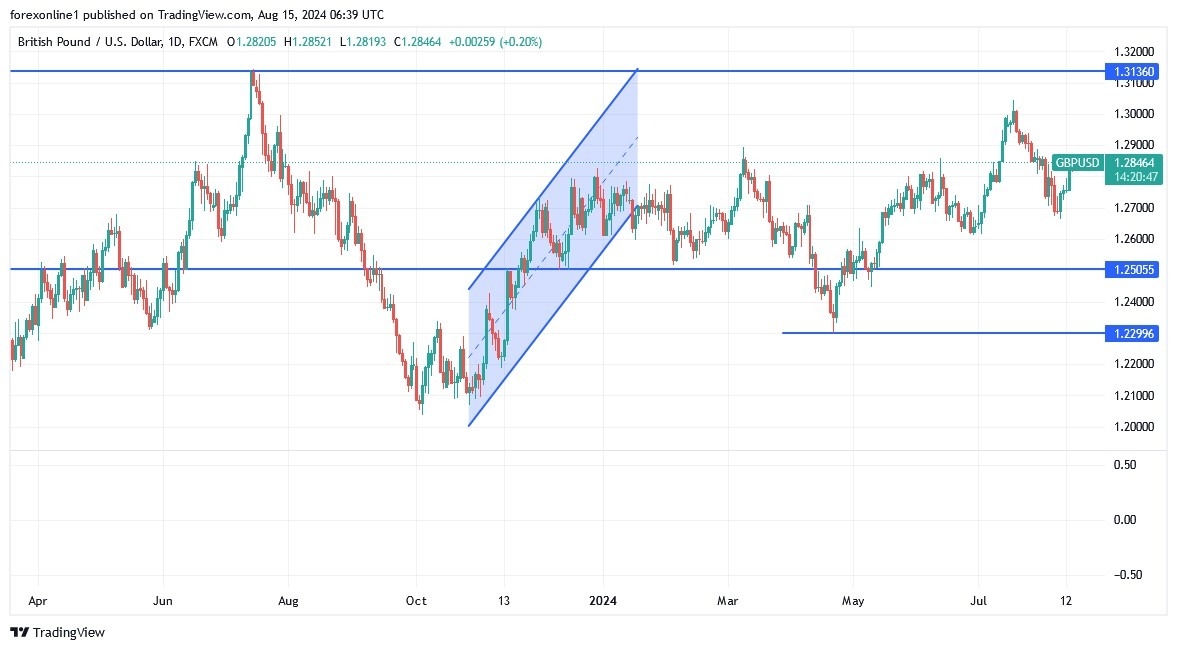
Looking ahead, the lack of immediate releases from both Britain and the US may focus interest rate set comments from the Federal Reserve and Bank of England in the coming days. On the other hand, any jumpy trade may lead to investors favoring the safe-haven US dollar against its riskier rivals. Meanwhile, a wave of optimism may instead lead to the risk-sensitive pound sterling taking precedence. Moreover, British inflation numbers and the content of the FOMC meeting minutes have the most impact on the performance of the price of the British pound against the US dollar GBP/USD, which is still moving within an upward channel. Technically, the bulls’ control over the trend will be strengthened by moving above the resistance 1.2775, and expectations may increase for the psychological resistance 1.3000 if it stabilizes above the resistance 1.2840.

Ready to trade our daily Forex analysis? Check out the best forex trading company in UK worth using. 

Source link

23 05, 2024

Gold, EUR/USD, USD/JPY – Price Action Analysis & Technical Outlook

By |2024-05-23T03:22:32+03:00May 23, 2024|Forex News, News|0 Comments

For an extensive analysis of gold’s medium-term fundamental and technical outlook, download our quarterly trading forecast now!

Recommended by Diego Colman

Get Your Free Gold Forecast

GOLD PRICE FORECAST – TECHNICAL ANALYSIS

Gold (XAU/USD) dropped sharply on Wednesday, but managed to hold above support at $2,375. Bulls need to defend this technical floor tenaciously to avoid a deeper retrenchment; failure to do so could lead to a move towards $2,360. If weakness persists, the focus will shift to $2,335, the 38.2% Fibonacci retracement of the 2024 rally.

In the event of a bullish reversal from current levels, buyers may feel emboldened to initiate a push towards $2,420. On further strength, attention is likely to gravitate towards $2,430. Overcoming this barrier may be challenging, but a breakout could potentially usher in a rally toward the all-time high located in the vicinity of $2,450.

GOLD PRICE TECHNICAL CHART

Gold Price Chart Created Using TradingView

Stay ahead of the curve and improve your trading prowess! Download the EUR/USD forecast for a thorough overview of the pair’s technical and fundamental outlook.

Recommended by Diego Colman

Get Your Free EUR Forecast

EUR/USD FORECAST – TECHNICAL ANALYSIS

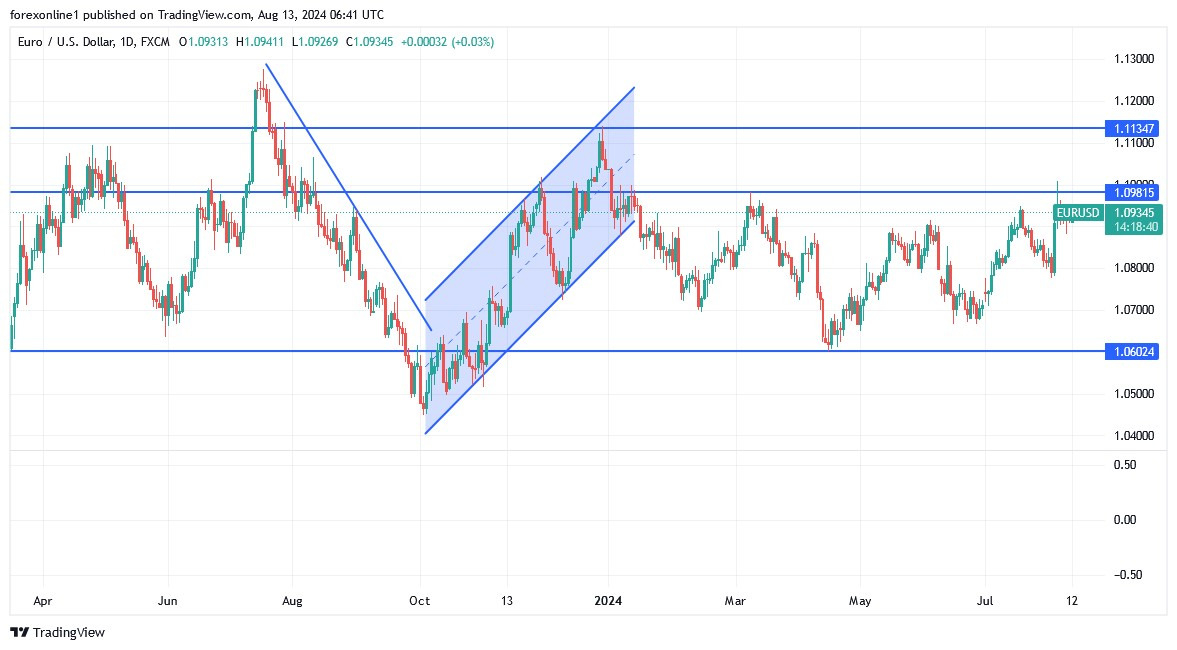
EUR/USD continued to decline on Wednesday, approaching a key support zone at 1.0810. To sustain a bullish outlook against the U.S. dollar, the euro must stay above this threshold; loss of this floor could trigger a retreat towards the 200-day simple moving average at 1.0790. Further weakness would then put the spotlight on 1.0725.

In the scenario of a bullish turnaround, the first major resistance worth watching emerges at 1.0865, where a crucial trendline intersects with the 50% Fibonacci retracement of the 2023 decline. Overcoming this technical obstacle won’t be easy, but a successful breakout could see bulls targeting 1.0980, the March swing high.

EUR/USD PRICE ACTION CHART

EUR/USD Chart Created Using TradingView

For a complete overview of the USD/JPY’s technical and fundamental outlook, make sure to download our complimentary quarterly forecast!

Recommended by Diego Colman

Get Your Free JPY Forecast

USD/JPY FORECAST – TECHNICAL ANALYSIS

USD/JPY pushed higher on Wednesday, closing in on horizontal resistance at 156.80. Bears must defend this barrier diligently; failure could pave the way for a climb to 158.00 and eventually 160.00. Any advance to these levels should be approached with caution due to the risk of intervention by Japanese authorities to bolster the yen, which could cause a sharp downward reversal.

Conversely, if sellers mount a comeback and spark a bearish swing, initial support looms at 154.65. While the pair is expected to stabilize around these levels during a pullback, a breach might lead to a swift descent toward the 50-day simple moving average at 153.75. Further losses from there could expose trendline support just above the 153.00 mark.

USD/JPY PRICE ACTION CHART

USD/JPY Chart Created Using TradingView

Source link

23 05, 2024

Weakness expected to accelerate below 1.0790

By |2024-05-23T01:21:34+03:00May 23, 2024|Forex News, News|0 Comments

You have reached your limit of 5 free articles for this month.

Get Premium without limits for only $9.99 for the first month

Access all our articles, insights, and analysts.

Your coupon code


UNLOCK OFFER

  • EUR/USD dropped to multi-day lows near 1.0820.
  • The US Dollar picked up extra pace amidst higher yields.
  • Fed speakers remain on the cautious side regarding rate cuts.

The US Dollar (USD) managed to extend its weekly recovery and maintain the risk complex under heightened pressure on Wednesday, dragging EUR/USD to fresh five-day lows near the 1.0820 region.

The decent bounce in the Dollar coincided with a generally positive performance in US yields across different durations, as investors continued to anticipate the Federal Reserve (Fed) beginning its easing cycle in September, in contrast to the possibility of the European Central Bank (ECB) initiating interest rate cuts potentially as early as June.

Regarding the Fed, the CME Group’s FedWatch Tool suggests a nearly 62% probability of lower interest rates by September.

Meanwhile, two Federal Reserve officials, President of the Boston Federal Reserve Susan Collins and President of the Federal Reserve Bank of Cleveland Loretta Mester, stated on Tuesday night that they still anticipate a continued decline in inflation. However, they believe the process will take time, and central bankers will need to be patient in deciding when it is appropriate to cut interest rates.

Further support for the continuation of the current Fed’s tight stance came after the FOMC Minutes of the May 1 meeting also highlighted a debate about the restrictiveness of current monetary policy in light of the economy’s strength. This discussion is crucial, as the policy needs to be “sufficiently” restrictive to curb inflation effectively.

In the meantime, the unchanged monetary policy landscape highlights the firm divergence between the Federal Reserve and other G10 central banks, particularly the European Central Bank (ECB).

Regarding the ECB, President Christine Lagarde expressed strong confidence in controlling Eurozone inflation, attributing this to the gradual resolution of the energy crisis and the easing of supply chain bottlenecks.

Looking forward, the relatively subdued economic fundamentals in the Eurozone, coupled with the resilience of the US economy, support the ongoing narrative of Fed-ECB policy divergence and lean towards a stronger Dollar in the longer run, especially considering the rising probability of the ECB reducing rates well before the Fed.

Given this perspective, the potential for further weakness in EUR/USD should be considered in the medium term.

EUR/USD daily chart

EUR/USD short-term technical outlook

On the upside, EUR/USD is expected to face first resistance at the May top of 1.0894 (May 16), seconded by the March peak of 1.0981 (March 8) and the weekly high of 1.0998 (January 11), all before reaching the key 1.1000 barrier.

In the other direction, a break below the 200-day SMA of 1.0787 could prompt the May low of 1.0649 (May 1) to emerge on the horizon ahead of the 2024 bottom of 1.0601 (April 16) and the November 2023 low of 1.0516 (November 1). Once this zone is cleared, the pair may go for the weekly low of 1.0495 (October 13, 2023), the 2023 bottom of 1.0448 (October 3), and the 1.0400 round milestone.

So far, the 4-hour chart indicates some correction from recent peaks. That said, there is an immediate uphill challenge at 1.0894, followed by 1.0942. Meanwhile, the initial contention is at 1.0821, followed by 1.0766. The relative strength index (RSI) dropped to around 43.

  • EUR/USD dropped to multi-day lows near 1.0820.
  • The US Dollar picked up extra pace amidst higher yields.
  • Fed speakers remain on the cautious side regarding rate cuts.

The US Dollar (USD) managed to extend its weekly recovery and maintain the risk complex under heightened pressure on Wednesday, dragging EUR/USD to fresh five-day lows near the 1.0820 region.

The decent bounce in the Dollar coincided with a generally positive performance in US yields across different durations, as investors continued to anticipate the Federal Reserve (Fed) beginning its easing cycle in September, in contrast to the possibility of the European Central Bank (ECB) initiating interest rate cuts potentially as early as June.

Regarding the Fed, the CME Group’s FedWatch Tool suggests a nearly 62% probability of lower interest rates by September.

Meanwhile, two Federal Reserve officials, President of the Boston Federal Reserve Susan Collins and President of the Federal Reserve Bank of Cleveland Loretta Mester, stated on Tuesday night that they still anticipate a continued decline in inflation. However, they believe the process will take time, and central bankers will need to be patient in deciding when it is appropriate to cut interest rates.

Further support for the continuation of the current Fed’s tight stance came after the FOMC Minutes of the May 1 meeting also highlighted a debate about the restrictiveness of current monetary policy in light of the economy’s strength. This discussion is crucial, as the policy needs to be “sufficiently” restrictive to curb inflation effectively.

In the meantime, the unchanged monetary policy landscape highlights the firm divergence between the Federal Reserve and other G10 central banks, particularly the European Central Bank (ECB).

Regarding the ECB, President Christine Lagarde expressed strong confidence in controlling Eurozone inflation, attributing this to the gradual resolution of the energy crisis and the easing of supply chain bottlenecks.

Looking forward, the relatively subdued economic fundamentals in the Eurozone, coupled with the resilience of the US economy, support the ongoing narrative of Fed-ECB policy divergence and lean towards a stronger Dollar in the longer run, especially considering the rising probability of the ECB reducing rates well before the Fed.

Given this perspective, the potential for further weakness in EUR/USD should be considered in the medium term.

EUR/USD daily chart

EUR/USD short-term technical outlook

On the upside, EUR/USD is expected to face first resistance at the May top of 1.0894 (May 16), seconded by the March peak of 1.0981 (March 8) and the weekly high of 1.0998 (January 11), all before reaching the key 1.1000 barrier.

In the other direction, a break below the 200-day SMA of 1.0787 could prompt the May low of 1.0649 (May 1) to emerge on the horizon ahead of the 2024 bottom of 1.0601 (April 16) and the November 2023 low of 1.0516 (November 1). Once this zone is cleared, the pair may go for the weekly low of 1.0495 (October 13, 2023), the 2023 bottom of 1.0448 (October 3), and the 1.0400 round milestone.

So far, the 4-hour chart indicates some correction from recent peaks. That said, there is an immediate uphill challenge at 1.0894, followed by 1.0942. Meanwhile, the initial contention is at 1.0821, followed by 1.0766. The relative strength index (RSI) dropped to around 43.

Source link

22 05, 2024

GBP-JPY Forecast: What TipRanks’ Indicators Are Saying

By |2024-05-22T23:20:22+03:00May 22, 2024|Forex News, News|0 Comments

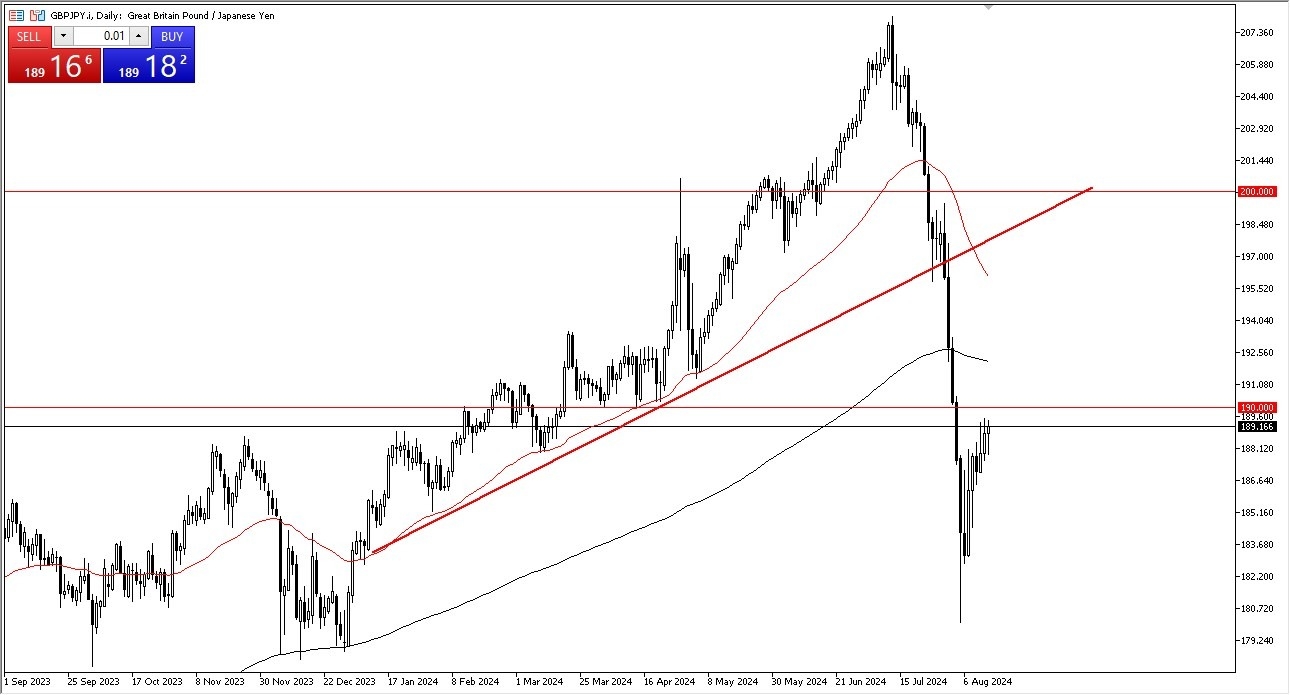
For GBP-JPY traders, TipRanks’ indicators offer a mixed bag of bullish and bearish signals. GBP-JPY is the forex pair for those who thrive on chaos. This is the realm where volatility reigns supreme. TipRanks has served up some juicy indicators that paint both bullish and bearish pictures, depending on your timeframe. Let’s dissect these indicators and see if we can figure out which way the wind is blowing. 

Long-Term Outlook

The 20-period EMA on the one-month timeframe is hanging out at 180.0050, while GBP-JPY is partying at 199.1870. That’s a clear Buy signal. In addition, the 50-period EMA is chilling at 167.1628. With the price way above, it’s another solid buy. However, the MACD indicator is at 9.5596, whispering, “Sell.” This suggests the bullish party might be winding down.

So, the long term looks pretty bullish, with prices soaring above EMAs, but MACD is giving us the side-eye. In other words, don’t be surprised to see a dip in the near future.

Moving to the two-week timeframe, the 20-period EMA is at 187.6927, while the 50-period EMA is at 177.6928. The price is comfortably above both, giving another Buy nod. However, the MACD indicator, at 5.6820, suggests selling.

Short-Term Outlook

Looking at the weekly timeframe, the 20-period EMA is sitting at 191.5116, and GBP-JPY’s price is at 199.1870, which screams Buy. The 50-period EMA is at 185.3181, and with the price well above, it’s a double Buy. The MACD indicator is at 3.4548, nudging us towards Selling. Could a pullback be looming?

For short-term traders, the pair looks bullish, but the MACD says don’t get too comfy—there might be some bumps ahead.

Last but not least, the daily 20-period EMA is at 195.7053, and with the price at 199.1870, it’s another Buy signal. The 50-period EMA is at 193.4638, and the price is still comfortably above, making it a Buy. The MACD indicator is at 1.4829, hinting at selling.

Across the board, two main technical conditions are occurring:

  1. GBP-JPY’s price is above the EMAs. 
  2. The MACD is flashing Sell. 

While the overall trend is bullish, GBP-JPY might be overbought. Someone looking to enter long where it’s at might end up holding onto some pain while the GBP-JPY retraces. Sometimes, not taking a trade is the best option. 

Live Currency Rates – TipRanks.com

Source link

22 05, 2024

Resistance ahead of CPI (Video)

By |2024-05-22T19:18:04+03:00May 22, 2024|Forex News, News|0 Comments

  • The British pound has been somewhat noisy during the trading session, as we initially dropped to, only to turn around and show signs of life again.
  • Ultimately, this is a market that I think will eventually try to break higher and reach the 1.28 level.
  • However, it is worth noting that CPI numbers are coming out of the United Kingdom on Wednesday, and that will have a major influence on what happens next.

With this being the case, I think you’ve got a situation where traders continue to see this as a market that is probably more or less short term base than anything else. So I think you have to be extraordinarily cautious. With that being said, position sizing will be crucial as you could find a bit of trouble if you get overextended.

What if we drop?

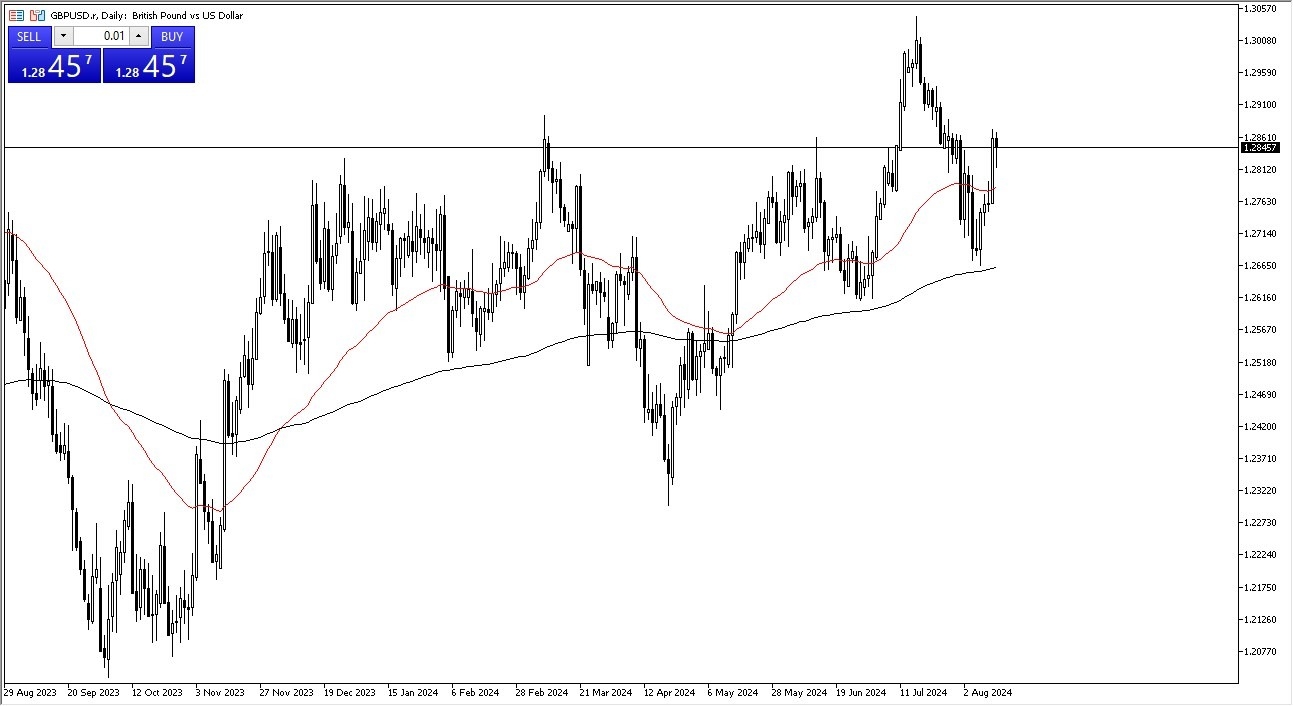
If we do break down below the 1.2650 level, then it opens up a move down to the 50 day EMA. Possibly even the 200 day EMA. If we were to break above the 1.28 level, then it opens up the possibility of a complete retracement of this sell off, which is closer to the 1.29 level above. But I think that probably gives way to 1.31 over the longer term.

GBP/USD is a pair that is looking for its range for the year, and I do think we’re closer to the top than the bottom. But the CPI numbers obviously can have a major influence on what happens over the next several sessions. So do be aware of that. Choppy behavior is probably the norm here, and I do think that the 1.28 level is going to be a fairly significant and important resistance barrier that is worth paying attention to. Anything above there gets interesting, and it could cause quite a bit of volatility. If we see the US dollar drop in general, that may be what happens but at the same time there are a lot of concerns out there that could have money running right back to the United States.

Ready to trade our daily Forex forecast? Here’s a list of some of the top forex brokers UK to check out. 

Source link

22 05, 2024

USD/JPY Analysis Today 22/5: Uptrend Remains Dominant -Chart

By |2024-05-22T17:17:22+03:00May 22, 2024|Forex News, News|0 Comments

  • Despite the decline in the US dollar against other currencies since the release of below-expected US inflation figures, the overall trend for USD/JPY remains bullish.
  • This week’s gains extended above the 156.55 resistance level before settling around 156.15 in early Wednesday trading ahead of the release of the minutes of the latest FOMC meeting.
  • Overall, the divergence between Fed and BoJ policy will continue to drive the bulls’ control of the trend.

In general, interest rates on mortgages, credit cards, and other payments have become more expensive as the Fed has kept its key rate at its highest level in more than two decades. It is trying to walk a tightrope, squeezing the economy enough with high interest rates to kill high inflation but not enough to trigger a painful recession. Meanwhile, a positive report last week showed that US inflation may finally be heading in the right direction after a disappointing start to the year, raising hopes that such a “soft landing” for the economy may be possible. Also, this boosted hopes that the Fed could cut its key rate once or twice this year.

On the other hand, according to stock trading platforms, the S&P 500 and Nasdaq stock indexes added 0.2% each to close at new record highs. The Dow Jones 100 rose 0.1%, closing near its record highs. Overall, investors assessed a series of earnings reports from retailers and looked ahead to Nvidia’s results due out tomorrow, while absorbing the latest comments from Fed officials.

Earlier, Fed official Christopher Waller said he needed to see several more months of positive data before considering US interest rate cuts, although he later expressed his preference for “a series of cuts.”

In corporate news, Lowe’s shares fell 1.7% after the retailer warned that consumer demand is unlikely to improve this year, despite reporting upbeat earnings. Also, Macy’s shares fell 2.4% after first-quarter sales and profits fell, although results still exceeded expectations. Peloton shares fell 16.4% after announcing the “global refinancing” operation, which includes the offering of convertible bonds and a five-year term loan worth $1 billion.

USD/JPY Technical Analysis and Expectations Today:

There is no change in our technical view of the performance of the price of the US dollar against the Japanese yen (USD/JPY), which is bullish. Moreover, this trend may remain so until there is actual intervention from Japan in the forex currency markets to prevent further collapse of the currency price, which would harm the Japanese economy. According to the general upward trend, the nearest resistance levels are 157.00, 157.85, and 159.00, respectively. Recently, the currency pair’s gains continued to move technical indicators towards strong overbought levels. Today, all focus will be on the content of the minutes of the last meeting of the US Federal Reserve.

Ready to trade our Forex daily analysis and predictions? Here are the best regulated trading brokers to choose from. 

Source link

22 05, 2024

Euro buyers hesitate ahead of FOMC Minutes

By |2024-05-22T15:16:50+03:00May 22, 2024|Forex News, News|0 Comments

You have reached your limit of 5 free articles for this month.

Get Premium without limits for only $9.99 for the first month

Access all our articles, insights, and analysts.

Your coupon code


UNLOCK OFFER

  • EUR/USD extends its sideways grind at around 1.0850 on Wednesday.
  • The near-term technical outlook highlights waning interest from buyers.
  • Federal Reserve will release the minutes of the April 30-May 1 policy meeting later.

EUR/USD fluctuated in a tight range on Tuesday and closed the day virtually unchanged. The pair continues to move up and down in a narrow band at around 1.0850 early Wednesday as investors refrain from taking large positions while searching for the next catalyst.

After opening in the negative territory on Tuesday, Wall Street’s main indexes closed marginally higher. The improvement seen in risk mood made it difficult for the US Dollar to gather strength during the American trading hours and allowed EUR/USD to hold its ground.

Euro PRICE This week

The table below shows the percentage change of Euro (EUR) against listed major currencies this week. Euro was the strongest against the Japanese Yen.

  USD EUR GBP JPY CAD AUD NZD CHF
USD   0.19% -0.22% 0.55% 0.32% 0.47% 0.31% 0.39%
EUR -0.19%   -0.44% 0.42% 0.14% 0.33% 0.13% 0.22%
GBP 0.22% 0.44%   0.72% 0.58% 0.76% 0.56% 0.64%
JPY -0.55% -0.42% -0.72%   -0.25% -0.07% -0.22% -0.15%
CAD -0.32% -0.14% -0.58% 0.25%   0.11% -0.01% 0.08%
AUD -0.47% -0.33% -0.76% 0.07% -0.11%   -0.20% -0.10%
NZD -0.31% -0.13% -0.56% 0.22% 0.00% 0.20%   0.08%
CHF -0.39% -0.22% -0.64% 0.15% -0.08% 0.10% -0.08%  

The heat map shows percentage changes of major currencies against each other. The base currency is picked from the left column, while the quote currency is picked from the top row. For example, if you pick the Euro from the left column and move along the horizontal line to the US Dollar, the percentage change displayed in the box will represent EUR (base)/USD (quote).

The economic calendar will not offer any high-impact data releases on Wednesday. In the late American session, the Federal Reserve (Fed) will release the minutes of the April 30-May 1 policy meeting.

Market participants started to lean toward a 25 basis points Fed rate cut in September following the April inflation data. The Fed’s publication will show discussions among policymakers that took place before the release of the April Consumer Price Index (CPI) data. Hence, the minutes are unlikely to provide any important clues regarding the rate outlook. Nevertheless, in case markets adopt a cautious stance, the USD could stay resilient and cause EUR/USD to stretch lower.

On Thursday, S&P Global will release the preliminary May Manufacturing and Services PMI reports for Germany, the Eurozone and the US.

EUR/USD Technical Analysis

EUR/USD trades in the lower half of the ascending regression channel coming from mid-April and the Relative Strength Index (RSI) indicator on the 4-hour chart stays slightly below 50, reflecting buyers’ hesitancy.

1.0840-1.0830 (50-period Simple Moving Average (SMA), Fibonacci 61.8% retracement of the latest downtrend) aligns as first support before 1.0810-1.0800 (lower limit of the ascending channel, static level) and 1.0785 (100-period SMA).

On the upside, first resistance is located at 1.0870 (mid-point of the ascending channel) ahead of 1.0920 (upper limit of the ascending channel) and 1.0940 (static level).

Economic Indicator

FOMC Minutes

FOMC stands for The Federal Open Market Committee that organizes 8 meetings in a year and reviews economic and financial conditions, determines the appropriate stance of monetary policy and assesses the risks to its long-run goals of price stability and sustainable economic growth. FOMC Minutes are released by the Board of Governors of the Federal Reserve and are a clear guide to the future US interest rate policy.

Read more.

Last release: Wed Apr 10, 2024 18:00

Frequency: Irregular

Actual:

Consensus:

Previous:

Source: Federal Reserve


  • EUR/USD extends its sideways grind at around 1.0850 on Wednesday.
  • The near-term technical outlook highlights waning interest from buyers.
  • Federal Reserve will release the minutes of the April 30-May 1 policy meeting later.

EUR/USD fluctuated in a tight range on Tuesday and closed the day virtually unchanged. The pair continues to move up and down in a narrow band at around 1.0850 early Wednesday as investors refrain from taking large positions while searching for the next catalyst.

After opening in the negative territory on Tuesday, Wall Street’s main indexes closed marginally higher. The improvement seen in risk mood made it difficult for the US Dollar to gather strength during the American trading hours and allowed EUR/USD to hold its ground.

Euro PRICE This week

The table below shows the percentage change of Euro (EUR) against listed major currencies this week. Euro was the strongest against the Japanese Yen.

  USD EUR GBP JPY CAD AUD NZD CHF
USD   0.19% -0.22% 0.55% 0.32% 0.47% 0.31% 0.39%
EUR -0.19%   -0.44% 0.42% 0.14% 0.33% 0.13% 0.22%
GBP 0.22% 0.44%   0.72% 0.58% 0.76% 0.56% 0.64%
JPY -0.55% -0.42% -0.72%   -0.25% -0.07% -0.22% -0.15%
CAD -0.32% -0.14% -0.58% 0.25%   0.11% -0.01% 0.08%
AUD -0.47% -0.33% -0.76% 0.07% -0.11%   -0.20% -0.10%
NZD -0.31% -0.13% -0.56% 0.22% 0.00% 0.20%   0.08%
CHF -0.39% -0.22% -0.64% 0.15% -0.08% 0.10% -0.08%  

The heat map shows percentage changes of major currencies against each other. The base currency is picked from the left column, while the quote currency is picked from the top row. For example, if you pick the Euro from the left column and move along the horizontal line to the US Dollar, the percentage change displayed in the box will represent EUR (base)/USD (quote).

The economic calendar will not offer any high-impact data releases on Wednesday. In the late American session, the Federal Reserve (Fed) will release the minutes of the April 30-May 1 policy meeting.

Market participants started to lean toward a 25 basis points Fed rate cut in September following the April inflation data. The Fed’s publication will show discussions among policymakers that took place before the release of the April Consumer Price Index (CPI) data. Hence, the minutes are unlikely to provide any important clues regarding the rate outlook. Nevertheless, in case markets adopt a cautious stance, the USD could stay resilient and cause EUR/USD to stretch lower.

On Thursday, S&P Global will release the preliminary May Manufacturing and Services PMI reports for Germany, the Eurozone and the US.

EUR/USD Technical Analysis

EUR/USD trades in the lower half of the ascending regression channel coming from mid-April and the Relative Strength Index (RSI) indicator on the 4-hour chart stays slightly below 50, reflecting buyers’ hesitancy.

1.0840-1.0830 (50-period Simple Moving Average (SMA), Fibonacci 61.8% retracement of the latest downtrend) aligns as first support before 1.0810-1.0800 (lower limit of the ascending channel, static level) and 1.0785 (100-period SMA).

On the upside, first resistance is located at 1.0870 (mid-point of the ascending channel) ahead of 1.0920 (upper limit of the ascending channel) and 1.0940 (static level).

Economic Indicator

FOMC Minutes

FOMC stands for The Federal Open Market Committee that organizes 8 meetings in a year and reviews economic and financial conditions, determines the appropriate stance of monetary policy and assesses the risks to its long-run goals of price stability and sustainable economic growth. FOMC Minutes are released by the Board of Governors of the Federal Reserve and are a clear guide to the future US interest rate policy.

Read more.

Last release: Wed Apr 10, 2024 18:00

Frequency: Irregular

Actual:

Consensus:

Previous:

Source: Federal Reserve


Source link

22 05, 2024

Pound Sterling edges higher as markets doubt BoE pivot in June

By |2024-05-22T13:15:51+03:00May 22, 2024|Forex News, News|0 Comments

You have reached your limit of 5 free articles for this month.

Get Premium without limits for only $9.99 for the first month

Access all our articles, insights, and analysts.

Your coupon code


UNLOCK OFFER

  • GBP/USD climbed to a two-week high above 1.2750 on Wednesday.
  • Inflation in the UK declined at a slower pace than expected in April.
  • Markets doubt a BoE policy pivot in June.

GBP/USD gathered bullish momentum and reached its strongest level since March 21 above 1.2750 in the early European session on Wednesday. Although the pair erased a large portion of its gains, it holds comfortably above 1.2700.

The data published by the UK’s Office for National Statistics (ONS) showed on Wednesday that inflation in the UK, as measured by the change in the Consumer Price Index (CPI), declined to 2.3% on a yearly basis in April from 3.2% in March. This reading, however, came in above the market expectation of 2.1%. The core CPI, which excludes volatile food and energy prices, rose 3.9% in the same period, surpassing analysts’ estimate of 3.6%. 

UK CPI inflation declines to 2.3% in April, closing in on BoE’s target.

According to Reuters’ BOEWATCH tool, the probability of a Bank of England (BoE) rate cut in June declined to 12% from 50% after the release of the inflation data. On the same not, Barclay’s announced that they removed the expectation of a BoE policy pivot in June. Similarly, TD Securities analysts said that they are now anticipating the BoE to lower the policy rate in August, instead of June.

British Pound PRICE Today

The table below shows the percentage change of British Pound (GBP) against listed major currencies today. British Pound was the strongest against the Swiss Franc.

  USD EUR GBP JPY CAD AUD NZD CHF
USD   0.08% -0.12% 0.20% 0.08% 0.10% -0.34% 0.25%
EUR -0.08%   -0.19% 0.10% 0.00% 0.02% -0.44% 0.17%
GBP 0.12% 0.19%   0.30% 0.17% 0.22% -0.25% 0.37%
JPY -0.20% -0.10% -0.30%   -0.13% -0.11% -0.55% 0.06%
CAD -0.08% -0.01% -0.17% 0.13%   0.02% -0.40% 0.16%
AUD -0.10% -0.02% -0.22% 0.11% -0.02%   -0.45% 0.17%
NZD 0.34% 0.44% 0.25% 0.55% 0.40% 0.45%   0.60%
CHF -0.25% -0.17% -0.37% -0.06% -0.16% -0.17% -0.60%  

The heat map shows percentage changes of major currencies against each other. The base currency is picked from the left column, while the quote currency is picked from the top row. For example, if you pick the British Pound from the left column and move along the horizontal line to the US Dollar, the percentage change displayed in the box will represent GBP (base)/USD (quote).

Later in the American session, the Federal Reserve (Fed) will release the minutes of the April 30-May 1 policy meeting. Since this meeting took place before the US inflation data for April, the minutes are unlikely to offer any new information that could influence the market pricing of the Fed rate outlook.

GBP/USD Technical Analysis

GBP/USD faces strong resistance at 1.2760 -1.2775, where the Fibonacci 78.6% retracement of the latest downtrend meets the upper limit of the ascending regression channel. Above this resistance area, 1.2800 (psychological level, static level) could act as next interim resistance before 1.2850 (static level).

On the downside, 1.2705-1.2700 (20-period Simple Moving Average (SMA) on the 4-hour chart, mid-point of the ascending channel) aligns as key support before 1.2660 (Fibonacci 61.8% retracement) and 1.2640 (50-period SMA).

Inflation FAQs

Inflation measures the rise in the price of a representative basket of goods and services. Headline inflation is usually expressed as a percentage change on a month-on-month (MoM) and year-on-year (YoY) basis. Core inflation excludes more volatile elements such as food and fuel which can fluctuate because of geopolitical and seasonal factors. Core inflation is the figure economists focus on and is the level targeted by central banks, which are mandated to keep inflation at a manageable level, usually around 2%.

The Consumer Price Index (CPI) measures the change in prices of a basket of goods and services over a period of time. It is usually expressed as a percentage change on a month-on-month (MoM) and year-on-year (YoY) basis. Core CPI is the figure targeted by central banks as it excludes volatile food and fuel inputs. When Core CPI rises above 2% it usually results in higher interest rates and vice versa when it falls below 2%. Since higher interest rates are positive for a currency, higher inflation usually results in a stronger currency. The opposite is true when inflation falls.

Although it may seem counter-intuitive, high inflation in a country pushes up the value of its currency and vice versa for lower inflation. This is because the central bank will normally raise interest rates to combat the higher inflation, which attract more global capital inflows from investors looking for a lucrative place to park their money.

Formerly, Gold was the asset investors turned to in times of high inflation because it preserved its value, and whilst investors will often still buy Gold for its safe-haven properties in times of extreme market turmoil, this is not the case most of the time. This is because when inflation is high, central banks will put up interest rates to combat it. Higher interest rates are negative for Gold because they increase the opportunity-cost of holding Gold vis-a-vis an interest-bearing asset or placing the money in a cash deposit account. On the flipside, lower inflation tends to be positive for Gold as it brings interest rates down, making the bright metal a more viable investment alternative.


  • GBP/USD climbed to a two-week high above 1.2750 on Wednesday.
  • Inflation in the UK declined at a slower pace than expected in April.
  • Markets doubt a BoE policy pivot in June.

GBP/USD gathered bullish momentum and reached its strongest level since March 21 above 1.2750 in the early European session on Wednesday. Although the pair erased a large portion of its gains, it holds comfortably above 1.2700.

The data published by the UK’s Office for National Statistics (ONS) showed on Wednesday that inflation in the UK, as measured by the change in the Consumer Price Index (CPI), declined to 2.3% on a yearly basis in April from 3.2% in March. This reading, however, came in above the market expectation of 2.1%. The core CPI, which excludes volatile food and energy prices, rose 3.9% in the same period, surpassing analysts’ estimate of 3.6%. 

UK CPI inflation declines to 2.3% in April, closing in on BoE’s target.

According to Reuters’ BOEWATCH tool, the probability of a Bank of England (BoE) rate cut in June declined to 12% from 50% after the release of the inflation data. On the same not, Barclay’s announced that they removed the expectation of a BoE policy pivot in June. Similarly, TD Securities analysts said that they are now anticipating the BoE to lower the policy rate in August, instead of June.

British Pound PRICE Today

The table below shows the percentage change of British Pound (GBP) against listed major currencies today. British Pound was the strongest against the Swiss Franc.

  USD EUR GBP JPY CAD AUD NZD CHF
USD   0.08% -0.12% 0.20% 0.08% 0.10% -0.34% 0.25%
EUR -0.08%   -0.19% 0.10% 0.00% 0.02% -0.44% 0.17%
GBP 0.12% 0.19%   0.30% 0.17% 0.22% -0.25% 0.37%
JPY -0.20% -0.10% -0.30%   -0.13% -0.11% -0.55% 0.06%
CAD -0.08% -0.01% -0.17% 0.13%   0.02% -0.40% 0.16%
AUD -0.10% -0.02% -0.22% 0.11% -0.02%   -0.45% 0.17%
NZD 0.34% 0.44% 0.25% 0.55% 0.40% 0.45%   0.60%
CHF -0.25% -0.17% -0.37% -0.06% -0.16% -0.17% -0.60%  

The heat map shows percentage changes of major currencies against each other. The base currency is picked from the left column, while the quote currency is picked from the top row. For example, if you pick the British Pound from the left column and move along the horizontal line to the US Dollar, the percentage change displayed in the box will represent GBP (base)/USD (quote).

Later in the American session, the Federal Reserve (Fed) will release the minutes of the April 30-May 1 policy meeting. Since this meeting took place before the US inflation data for April, the minutes are unlikely to offer any new information that could influence the market pricing of the Fed rate outlook.

GBP/USD Technical Analysis

GBP/USD faces strong resistance at 1.2760 -1.2775, where the Fibonacci 78.6% retracement of the latest downtrend meets the upper limit of the ascending regression channel. Above this resistance area, 1.2800 (psychological level, static level) could act as next interim resistance before 1.2850 (static level).

On the downside, 1.2705-1.2700 (20-period Simple Moving Average (SMA) on the 4-hour chart, mid-point of the ascending channel) aligns as key support before 1.2660 (Fibonacci 61.8% retracement) and 1.2640 (50-period SMA).

Inflation FAQs

Inflation measures the rise in the price of a representative basket of goods and services. Headline inflation is usually expressed as a percentage change on a month-on-month (MoM) and year-on-year (YoY) basis. Core inflation excludes more volatile elements such as food and fuel which can fluctuate because of geopolitical and seasonal factors. Core inflation is the figure economists focus on and is the level targeted by central banks, which are mandated to keep inflation at a manageable level, usually around 2%.

The Consumer Price Index (CPI) measures the change in prices of a basket of goods and services over a period of time. It is usually expressed as a percentage change on a month-on-month (MoM) and year-on-year (YoY) basis. Core CPI is the figure targeted by central banks as it excludes volatile food and fuel inputs. When Core CPI rises above 2% it usually results in higher interest rates and vice versa when it falls below 2%. Since higher interest rates are positive for a currency, higher inflation usually results in a stronger currency. The opposite is true when inflation falls.

Although it may seem counter-intuitive, high inflation in a country pushes up the value of its currency and vice versa for lower inflation. This is because the central bank will normally raise interest rates to combat the higher inflation, which attract more global capital inflows from investors looking for a lucrative place to park their money.

Formerly, Gold was the asset investors turned to in times of high inflation because it preserved its value, and whilst investors will often still buy Gold for its safe-haven properties in times of extreme market turmoil, this is not the case most of the time. This is because when inflation is high, central banks will put up interest rates to combat it. Higher interest rates are negative for Gold because they increase the opportunity-cost of holding Gold vis-a-vis an interest-bearing asset or placing the money in a cash deposit account. On the flipside, lower inflation tends to be positive for Gold as it brings interest rates down, making the bright metal a more viable investment alternative.


Source link

Go to Top