GBP/JPY hits weekly lows below 212.00 after rejection at 213.30 on Thursday.
The Yen rallies following bold intervention warnings by Japanese authorities.
The pair is testing the ascending trendline support from early November lows.
The Yen is outperforming most of its peers in an otherwise quiet session on Friday, as Japanese authorities ramped up their threats of intervention. The GBP/JPY is extending its reversal from long-term highs above 214.00 to test levels below the 212.00 line at the time of writing. comments
The Japanese Finance Minister, Satsuki Katayama, affirmed in a press conference on Friday that she would not “rule out any options” to defend the Japanese currency. Katayama also recalled that the joint statement with the US in September was “extremely significant and included language on intervention,” hinting at a concerted action with US economic authorities.
Technical analysis: Testing the ascending trendline near 212.00
The 4-hour chart shows the GBP/JPY trading right above 212.00, testing the support area in the confluence of the late December highs, and the ascending trendline support from the November lows in the area between 211.60 and 212.00.
The broader trend remains bullish, but technical indicators hint at a fading momentum. The Moving Average Convergence Divergence (MACD) remains below zero, reflecting a moderate bearish pressure. The Relative Strength Index (RSI) sits near 42in neutral-to-bearish territory.
A confirmation below the mentioned 211.60 level would put the bullish trend into question, and increase pressure towards 210.00, where bears were capped on December 24 and 31 and January 8. To the upside, Thursday’s high, near 213.30 are closing the path to the long-term highs, at 214 30 hit earlier in the week.
(The technical analysis of this story was written with the help of an AI tool.)
Japanese Yen Price Today
The table below shows the percentage change of Japanese Yen (JPY) against listed major currencies today. Japanese Yen was the strongest against the US Dollar.
USD
EUR
GBP
JPY
CAD
AUD
NZD
CHF
USD
-0.12%
-0.20%
-0.30%
-0.06%
-0.10%
-0.43%
-0.23%
EUR
0.12%
-0.09%
-0.17%
0.05%
0.02%
-0.30%
-0.12%
GBP
0.20%
0.09%
-0.08%
0.15%
0.11%
-0.21%
-0.02%
JPY
0.30%
0.17%
0.08%
0.26%
0.20%
-0.13%
0.07%
CAD
0.06%
-0.05%
-0.15%
-0.26%
-0.06%
-0.39%
-0.20%
AUD
0.10%
-0.02%
-0.11%
-0.20%
0.06%
-0.33%
-0.15%
NZD
0.43%
0.30%
0.21%
0.13%
0.39%
0.33%
0.19%
CHF
0.23%
0.12%
0.02%
-0.07%
0.20%
0.15%
-0.19%
The heat map shows percentage changes of major currencies against each other. The base currency is picked from the left column, while the quote currency is picked from the top row. For example, if you pick the Japanese Yen from the left column and move along the horizontal line to the US Dollar, the percentage change displayed in the box will represent JPY (base)/USD (quote).
Copper price provided a new negative close below the barrier at$5.9700, announcing to delay the bullish attack, to begin activating the bearish corrective trend by reaching $5.7900 initially, approaching the initial suggested target in the previous report.
Stochastic exit from the overbought level will increase the negative pressure on the price, which makes us keep the bearish corrective suggestion, to expect targeting $5.6000 level, to press on the extra support at $5.5100.
The expected trading range for today is between $5.6000 and$5.8600
The Pound Sterling (GBP) started off the week on a firm footing against the US Dollar (USD) and jumped to 1.3486 on Monday, following criminal charges against Federal Reserve’s (Fed) Chair Jerome Powell over cost overrun in the reconstruction of Washington’s headquarters.
However, the GBP/USD pair turned down steadily as the week passed after Bank of England (BoE) policymaker Alan Taylor delivered dovish comments on the monetary policy outlook, and investors shifted their focus to the Fed’s monetary policy decision scheduled later this month.
Pound Sterling turned upside down
The Pound Sterling gained sharply against the US Dollar on Monday after United States (US) federal prosecutors opened a criminal investigation into Fed Chair Powell over mismanaging funds in the reconstruction of Washington’s headquarters.
In response, Powell said that the “new threat is not about the renovation project but a pretext”. He also added that the threat of criminal charges is a “consequence of the Fed setting interest rates based on its assessment of the public interest rather than the president’s preferences”.
Market experts viewed the accusation of cost overruns against Powell as an attack on the central bank’s independence, which could undermine US assets and impact the US sovereign rating in the long run.
It remained clear from US President Donald Trump’s comments over the past several months that he was unhappy with the Fed not reducing interest rates aggressively, criticizing Chairman Powell several times for the same.
On Tuesday, US President Trump criticized Fed’s Powell again after the release of the Consumer Price Index (CPI) data for December, which showed price pressures rising steadily, demonstrating his dislike for him for not prioritizing his economic agenda. “We have very low inflation. That would give ’too late Powell’ the chance to give us a nice beautiful big rate cut,” Trump said.
Chiefs from global central banks came in support of Powell, stating that “Independence of central banks is a cornerstone of price, financial and economic stability in the interest of the citizens that we serve”, and “we stand in full solidarity with the Fed System and its Chair Jerome H. Powell.”
However, the steady US CPI report on Tuesday provided relief for the US Dollar against the British currency, as it intensified speculation that the Fed will announce a pause in its ongoing monetary-easing campaign at its policy meeting later this month.
On Wednesday, dovish commentary from BoE’s Taylor on the monetary policy outlook dragged the Pound Sterling further against the US Dollar.
Taylor said in a speech on Wednesday that inflation could return to the central bank’s 2% target in mid-2026 more quickly than having to wait until 2027, and projected that interest rates could “normalise to neutral sooner rather than later”. In the December policy meeting, the BoE guided that the monetary policy will remain on a “gradual downward path”.
The impact of expectations for the Fed holding interest rates steady and BoE Taylor’s dovish commentary was significant for GBP/USD, restraining the pair from regaining ground despite strong United Kingdom (UK) monthly Gross Domestic Product (GDP) data for November on Thursday.
The Office for National Statistics (ONS) reported that the economy returned to growth after contracting 0.1% in both September and October. The GDP growth came in at 0.3%, stronger than estimates of 0.1%. Month-on-month (MoM) Industrial and Manufacturing Production also grew at a robust pace of 1.1% and 2.1%, respectively.
GBP/USD revisited a four-week low around 1.3360 on late Thursday as the US Dollar Index (DXY) posted a fresh six-week high at 99.50, following a few Fed officials. Kansas Fed Bank President Jeffrey Schmid and Atlanta Fed Bank President Raphael Bostic came out in support for modestly restrictive monetary policy stance, citing upside inflation risks. “We need to stay restrictive because inflation is too high,” Bostic said, adding, “I expect inflation pressures will continue through 2026 as many businesses are still incorporating tariffs into prices.”
UK employment and inflation data to drive GBP next week
The major events for the Pound Sterling in January’s third week will be the release of UK employment data for the three months ending in November and the Consumer Price Index (CPI) data for December, which will be released on Tuesday and Wednesday, respectively.
Investors will pay close attention to both data for fresh cues on the BoE’s likely interest rate decision at its first monetary policy meeting of 2026 on February 5.
The UK ILO Unemployment Rate jumped to 5.1% in the three months ending October, the highest level seen since March 2021. Meanwhile, inflationary pressures cooled down for the second straight month in November after peaking in September.
Next week, investors will also focus on the UK Retail Sales data for December, and on the preliminary S&P Global Purchasing Managers’ Index (PMI) data for January for both the UK and the US.
During the week, US President Donald Trump could also reveal the name of the next Fed Chairman. In December, Trump said that he could announce Powell’s successor at the Fed sometime in January. The comments from Trump in his latest interviews indicated that White House Economic Adviser Kevin Hassett, former Fed Chair Kevin Warsh, and current Fed Governors Christopher Waller and Michelle Bowman are major contenders to replace Jerome Powell.
GBP/USD Technical Analysis
In the daily chart, GBP/USD trades at 1.3404. The 21-day Simple Moving Average (SMA) rises above the longer ones, while the 50- and 200-day SMAs advance and the 100-day SMA flattens. Price holds above the 50- and 100-day averages but sits beneath the 21-day, with the 200-day SMA at 1.3406 acting as immediate resistance and the 100-day at 1.3365 supporting. The Relative Strength Index (RSI) at 48 (neutral) edges higher but remains below the midline, indicating subdued momentum.
A break above the 200-day SMA at 1.3406 could open a path toward the rising 21-day SMA at 1.3460, while a pullback would shift focus to the 100-day SMA at 1.3365 and then the 50-day at 1.3335. The upward slope of the 200-day SMA underpins the medium-term bias, but traction would improve if the RSI reclaims 50. A sustained move through nearby resistance would favor an extension toward the short-term average, whereas failure to gain above the long-term gauge would keep the pair contained within the moving-average cluster.
(The technical analysis of this story was written with the help of an AI tool.)
Inflation FAQs
Inflation measures the rise in the price of a representative basket of goods and services. Headline inflation is usually expressed as a percentage change on a month-on-month (MoM) and year-on-year (YoY) basis. Core inflation excludes more volatile elements such as food and fuel which can fluctuate because of geopolitical and seasonal factors. Core inflation is the figure economists focus on and is the level targeted by central banks, which are mandated to keep inflation at a manageable level, usually around 2%.
The Consumer Price Index (CPI) measures the change in prices of a basket of goods and services over a period of time. It is usually expressed as a percentage change on a month-on-month (MoM) and year-on-year (YoY) basis. Core CPI is the figure targeted by central banks as it excludes volatile food and fuel inputs. When Core CPI rises above 2% it usually results in higher interest rates and vice versa when it falls below 2%. Since higher interest rates are positive for a currency, higher inflation usually results in a stronger currency. The opposite is true when inflation falls.
Although it may seem counter-intuitive, high inflation in a country pushes up the value of its currency and vice versa for lower inflation. This is because the central bank will normally raise interest rates to combat the higher inflation, which attract more global capital inflows from investors looking for a lucrative place to park their money.
Formerly, Gold was the asset investors turned to in times of high inflation because it preserved its value, and whilst investors will often still buy Gold for its safe-haven properties in times of extreme market turmoil, this is not the case most of the time. This is because when inflation is high, central banks will put up interest rates to combat it.
Higher interest rates are negative for Gold because they increase the opportunity-cost of holding Gold vis-a-vis an interest-bearing asset or placing the money in a cash deposit account. On the flipside, lower inflation tends to be positive for Gold as it brings interest rates down, making the bright metal a more viable investment alternative.
The USD/JPY price analysis remains choppy despite a risk-off move in equities.
Reduced odds of early Fed rate cuts amid upbeat US data keep the greenback supported.
Japan’s political concerns weigh on the yen, but FX intervention warnings limit the downside.
The USD/JPY price is holding in a tight 158.40–158.60 range, shrugging off a modest risk-off move in US equities. Tech led the pullback, with the Nasdaq 100 down about 1.0%, while the S&P 500 and Dow slipped less. Despite softer risk sentiment, the dollar side of the pair remains well-supported, with the Dollar Index near 99.3, close to monthly highs.
–Are you interested in learning more about forex tools? Check our detailed guide-
The macro backdrop in the US still points to a firm dollar and an uptrend in USD/JPY. November retail sales rebounded about 0.6% MoM after a small October decline, and producer prices went near 3.0% YoY on both headline and core measures.
The unemployment rate around 4.4% does not point to a sharp labor-market downturn. This combination of strong demand, rising upstream prices, and stable jobs has pushed back expectations of the first Fed cut to June.
In the near term, rates are expected to stay in the 3.50–3.75% range. There is no longer a strong expectation of aggressive early easing in markets, which supports yields and keeps USD/JPY dips toward 155.00 well bid.
On the Japanese side, politics and FX intervention are more important to the story than domestic yields. Officials have been warning more and more against “one-way excessive moves.” Chief Cabinet Secretary Seiji Kihara has even said that intervention could occur if the yen weakens too quickly.
That has helped JPY outperform some high-beta currencies on days when risk is low. But the “Takaichi trade” goes the other way; hopes for an early snap election, a win for Sanae Takaichi, and a budget with excessive spending support Japanese stocks more than the currency, leaving no clear way for the BoJ.
The 4-hour chart for USD/JPY shows selling pressure, as the price is below the 20-period MA. However, the pair has formed a bullish doji candlestick pattern, revealing sustained buying on the dips. Meanwhile, the pair continues to consolidate after falling from the 159.45 peak.
–Are you interested in learning more about the best crypto exchange? Check our detailed guide-
The RSI remains flat near 50.0, suggesting no clear momentum, while the MAs still point to more gains. The pair is expected to oscillate between 157.50 and 159.50. A clear breakout in either direction could trigger a meaningful trending move.
Looking to trade forex now? Invest at eToro!
68% of retail investor accounts lose money when trading CFDs with this provider. You should consider whether you can afford to take the high risk of losing your money.
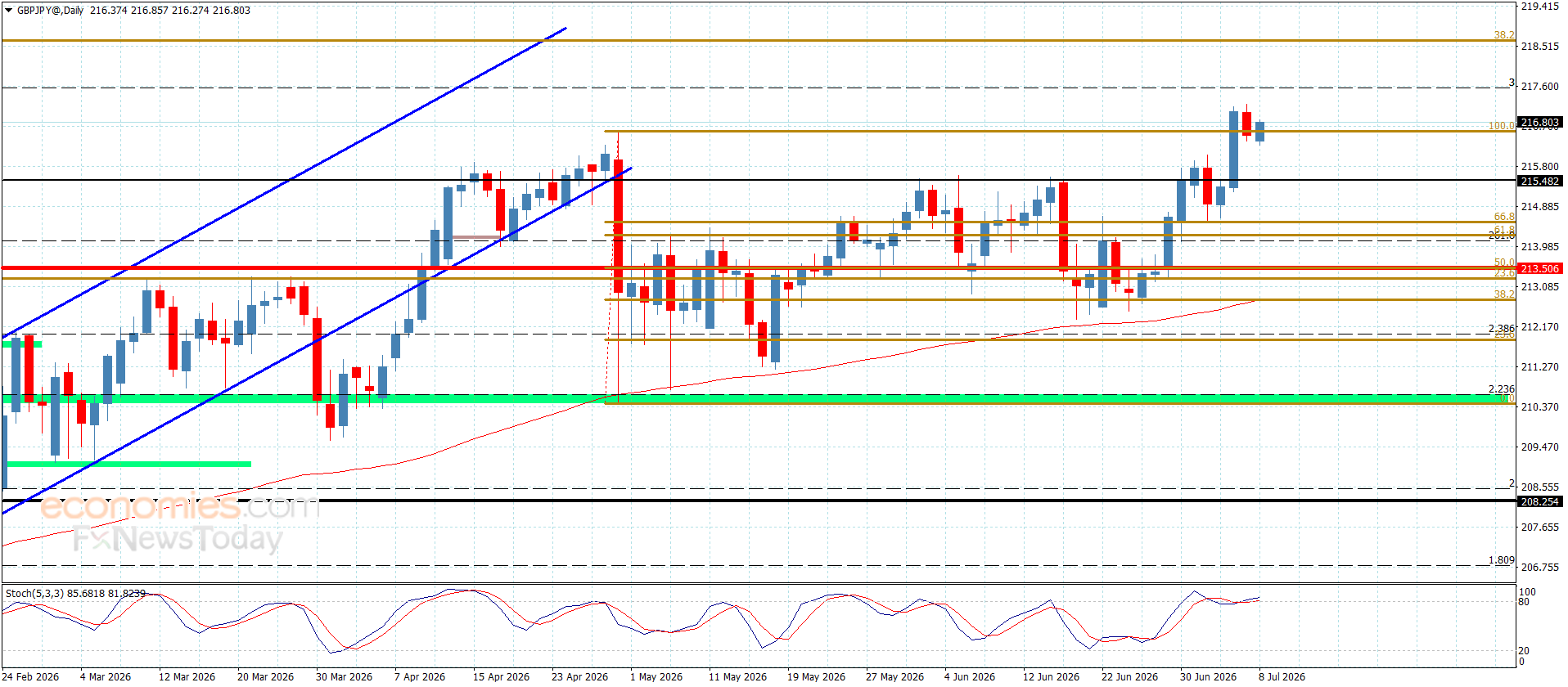
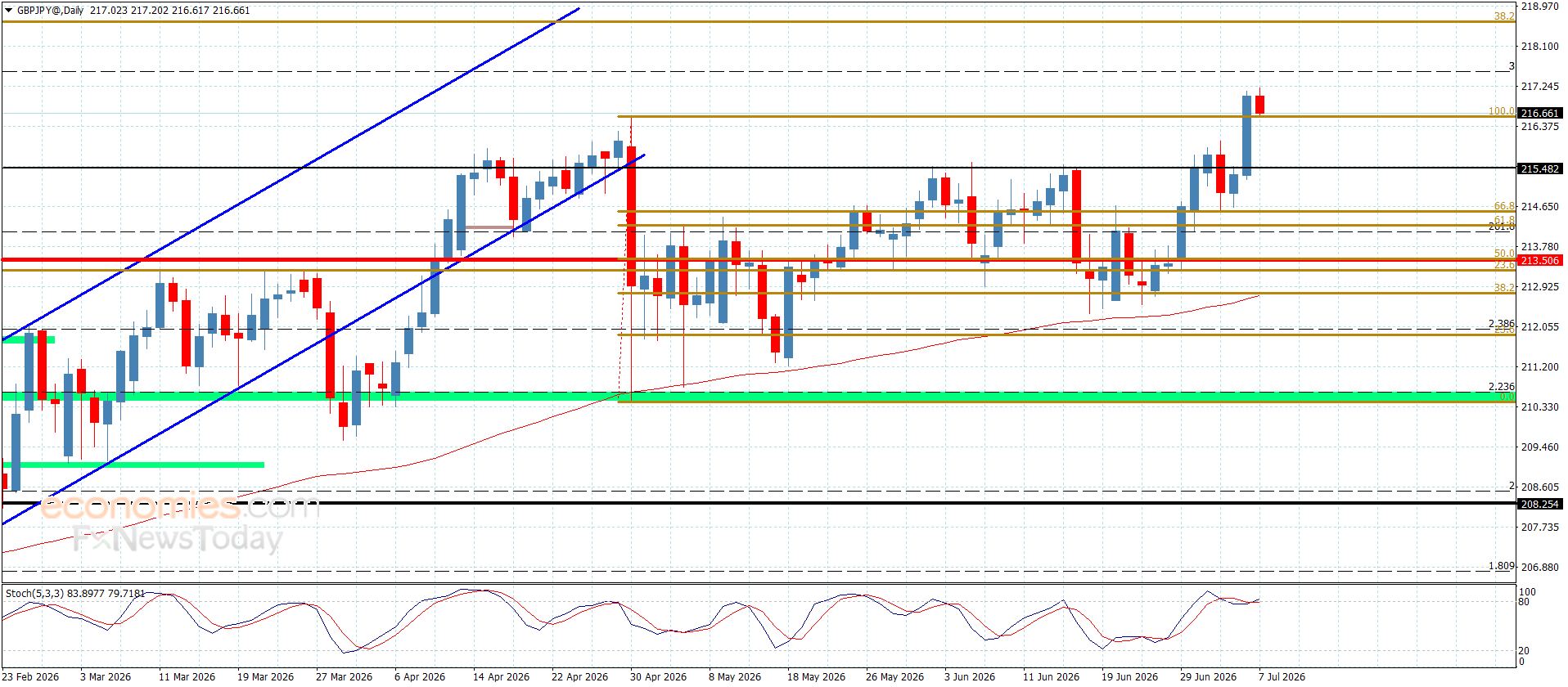
The British Pound drops versus the Japanese Yen as the Friday’s Asian session begins, courtesy of Japanese authorities’ verbal intervention, which boosted the Asian currency. The GBP/JPY trades at 212.20 after falling from yearly highs near 214.30.
GBP/JPY Price Forecast: Technical outlook
The technical picture shows that the GBP/JPY uptrend is poised to continue, despite the ongoing pullback. It should be said that the pair dipped as a ‘bearish harami’ two candle pattern emerged near yearly highs, followed by a subsequent bearish candle that pushed the cross to new three-day lows of 212.00.
Momentum favors sellers as the Relative Strength Index (RSI) retreated from overbought territory, triggering a sell signal.
If GBP/JPY extends its losses decisively below 212.00, then it could challenge the 20-day SMA at 211.42. Once surpassed, traders will eye 210.00.
Conversely, if the cross-pair rises past the January 15 high of 213.31, the next key resistance would be the yearly peak at 214.29.
GBP/JPY Price Char — Daily
GBP/JPY Daily Chart
Japanese Yen Price This week
The table below shows the percentage change of Japanese Yen (JPY) against listed major currencies this week. Japanese Yen was the strongest against the Swiss Franc.
USD
EUR
GBP
JPY
CAD
AUD
NZD
CHF
USD
0.20%
0.14%
0.30%
-0.19%
-0.29%
-0.24%
0.31%
EUR
-0.20%
-0.07%
0.18%
-0.39%
-0.48%
-0.43%
0.10%
GBP
-0.14%
0.07%
0.23%
-0.32%
-0.42%
-0.36%
0.18%
JPY
-0.30%
-0.18%
-0.23%
-0.52%
-0.63%
-0.56%
-0.02%
CAD
0.19%
0.39%
0.32%
0.52%
-0.12%
-0.04%
0.50%
AUD
0.29%
0.48%
0.42%
0.63%
0.12%
0.06%
0.60%
NZD
0.24%
0.43%
0.36%
0.56%
0.04%
-0.06%
0.52%
CHF
-0.31%
-0.10%
-0.18%
0.02%
-0.50%
-0.60%
-0.52%
The heat map shows percentage changes of major currencies against each other. The base currency is picked from the left column, while the quote currency is picked from the top row. For example, if you pick the Japanese Yen from the left column and move along the horizontal line to the US Dollar, the percentage change displayed in the box will represent JPY (base)/USD (quote).
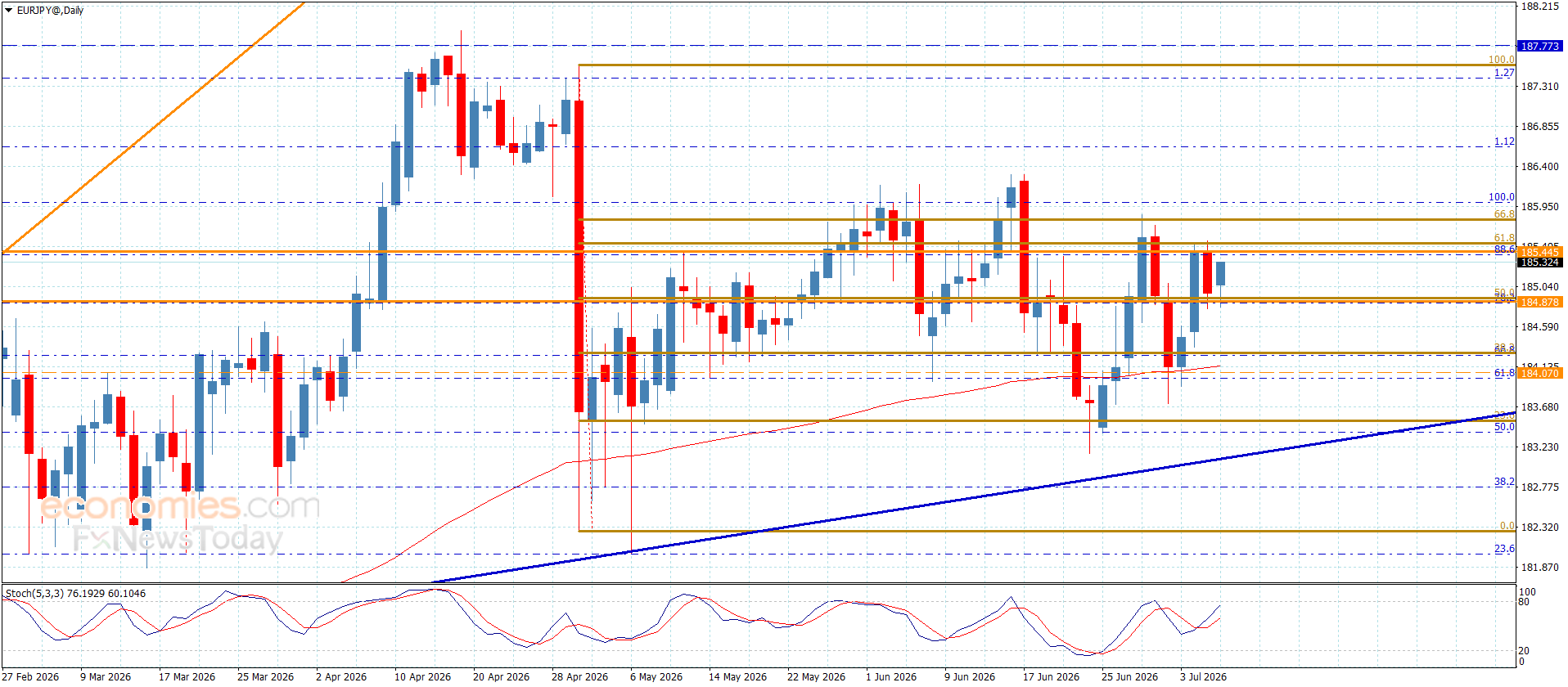
The euro weakened temporarily against the yen due to yen-driven risk flows, but the broader uptrend remains intact. Structural policy differences favor buying dips, with expectations for a rebound and continued positive momentum.
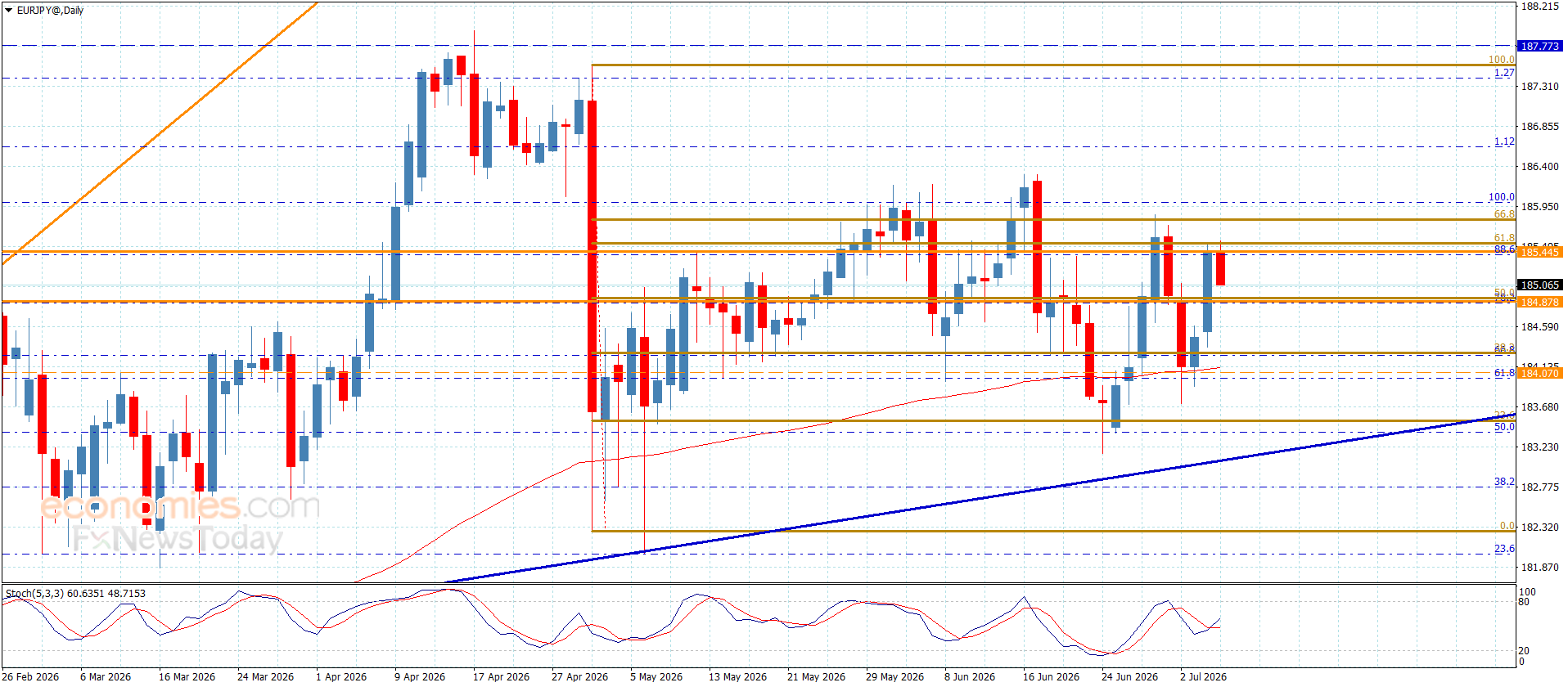
The euro has struggled a bit against the Japanese yen during the trading session on Wednesday, but this has been a Japanese yen-related move and not really anything to do with the euro. There are a lot of geopolitical concerns out there, and the handful of traders who believe in doomsday are buying the yen for the session. The reality is that the trend is very strong and is light years away from changing.
At this point in time, to assume that sooner or later the buyers come back is the camp being taken. Somewhere near the 183 level, there should be traders willing to get involved, assuming the market gets anywhere near there. The 50-day EMA is at the 181.67 yen level, and there are also a couple of trend lines in the same mix.
Monetary Policy and Carry Trade Support
The Japanese yen is backed by a Bank of Japan that simply cannot do anything to tighten monetary policy significantly, and that is the part that most traders need to be paying attention to. The focus is on a drop and a bounce. So far, the drop has occurred, but the bounce has not. Once the market starts to take off to the upside, there is a willingness to buy the right-hand side of the V pattern.
This could send the market towards the 186 level, possibly even higher than that. Ultimately, traders get paid at the end of every day to collect the carry trade. With that being said, this is a market with no interest in shorting. The overall momentum and bulk of the market’s attitude remain positive, and this dip should offer a buying opportunity for those patient enough.
Christopher Lewis has been trading Forex and has over 20 years experience in financial markets. Chris has been a regular contributor to Daily Forex since the early days of the site. He writes about Forex for several online publications, including FX Empire, Investing.com, and his own site, aptly named The Trader Guy. Chris favours technical analysis methods to identify his trades and likes to trade equity indices and commodities as well as Forex. He favours a longer-term trading style, and his trades often last for days or weeks.
The British Pound is breaking below the 50-day EMA, and I think it is finally starting to roll over. I did previously suggest that maybe this was a topping pattern. I think on Thursday, we’re starting to get that answer.
With that being the case, the 200-day EMA is the next target, and then after that, we could be looking at the 1.30 level. I have no interest in buying anymore, at least not until we break above 1.36, something that I just don’t see happening in the short term.
EUR/GBP Technical Analysis
The Euro has bounced slightly against the British Pound during trading on Thursday as the 200-day EMA continues to offer support. That being said, I still think this is a pair that probably falls, but short-term rallies are likely in the meantime.
I’m willing to fade those short-term rallies at the first signs of exhaustion. The 0.86 level underneath, I think, is your initial target. Anything below there really opens up the downside here, and we could go looking to the 0.85 level, followed by the 0.84 level. Above, the 50-day EMA offers a bit of a ceiling.
For a look at all of today’s economic events, check out our economic calendar.
The Pound to US Dollar exchange rate (GBP/USD) slipped back on Thursday after an initial lift from stronger-than-expected UK growth data faded, leaving investors unconvinced that the rebound marked a turning point for the British economy.
At the time of writing, GBP/USD was trading around $1.3415, drifting lower after an early uptick following the UK’s GDP release.
The Pound briefly found support after data from the Office for National Statistics showed the UK economy expanded by 0.3% month-on-month in November, reversing October’s 0.1% contraction and beating expectations for a modest 0.1% rise.
However, the upbeat headline failed to generate lasting momentum. November’s expansion marked the first month of growth since June and was widely viewed by markets as a technical rebound rather than evidence of renewed economic strength.
Confidence was further tempered by concerns over the composition of the growth. A sizeable portion of the increase was driven by a sharp 25.5% surge in car manufacturing, as Jaguar Land Rover ramped up output following disruption caused by a cyber-attack earlier in the year.
As these caveats sank in, Sterling gave back its initial gains and slipped back into a softer trading range.
The US Dollar, meanwhile, traded without strong direction as improving global risk appetite reduced demand for traditional safe havens. A brighter market mood followed signs of easing tensions in the Middle East after Iran paused planned executions linked to recent protests, prompting the US to dial back the prospect of military action.
Save on Your GBP/USD Transfer
Get better rates and lower fees on your next international money transfer.
Compare TorFX with top UK banks in seconds and see how much you could save.
Despite the shift towards a more positive risk backdrop, the Dollar managed to hold its ground. A mild uptick in US Treasury yields helped underpin the currency, limiting losses even as investors tentatively rotated into higher-risk assets.
GBP/USD Forecast: Fed Speakers and US Output in Focus
Looking ahead to Friday, the Pound to Dollar exchange rate may be influenced by the release of US industrial production data. Output is forecast to have risen by just 0.1% in December, a slowdown that could place modest pressure on the Dollar if confirmed.
Later in the session, comments from Federal Reserve policymakers Michelle Bowman and Philip Jefferson will be closely watched. Both are viewed as leaning dovish, and any remarks reinforcing expectations of looser monetary policy could weigh on the US currency.
With no major UK economic releases scheduled, Sterling may continue to take its cues from broader market sentiment. A sustained improvement in risk appetite could support the increasingly risk-sensitive Pound, while renewed caution would be more likely to favour the US Dollar.
Like this piece? Please share with your friends and colleagues:
International Money Transfer? Ask our resident FX expert a money transfer question or try John’s new, free, no-obligation personal service! ,where he helps every step of the way,
ensuring you get the best exchange rates on your currency requirements.
The US dollar initially rallied against the Japanese Yen on Wednesday, but continues to see a lot of noise. Nonetheless, this is a longer-term uptrend.
The US dollar initially rallied against the Japanese Yen during trading on Wednesday, but then gave back gains as we pulled back toward the 158 yen level. The 158 yen level is an area that has been significant resistance in the past, so it will be interesting to see whether or not it holds up as support.
There is a lot of concern out there about the United States possibly attacking Iran, but we have been down this road numerous times, so I don’t really know what changes longer-term structurally. As a result, if we do bounce from here, I am very interested in buying the US dollar.
I have no interest in shorting this market. I don’t care what it did during the trading session on Wednesday; it doesn’t change reality. The reality is that we have broken above a major resistance area and now we are testing it.
Support Levels and Long-Term Targets
Whether or not it holds remains to be seen, but I think the 50-day EMA underneath is going to be a significant support level as well. With all of that, I believe you have a situation where buyers are going to be looking to take advantage of value when they can get it and possibly try to push this market to the 160 yen level.
160 is an area that the Bank of Japan intervened in a couple of years ago. Ultimately, as long as the destruction of the Japanese Yen is somewhat subtle and slow-moving, I think we probably have a situation where the Bank of Japan stays out of it.
Structural technical analysis dictates that we could be looking at a 400 pip move from the breakout point at 158 yen, which leads me to believe we could go to 162 yen. I think, given enough time, that is exactly what happens, but we may get a little bit of noise here with some geopolitical issues.