The main tag of Forex News Today Articles.
You can use the search box below to find what you need.
[wd_asp id=1]

28 03, 2026

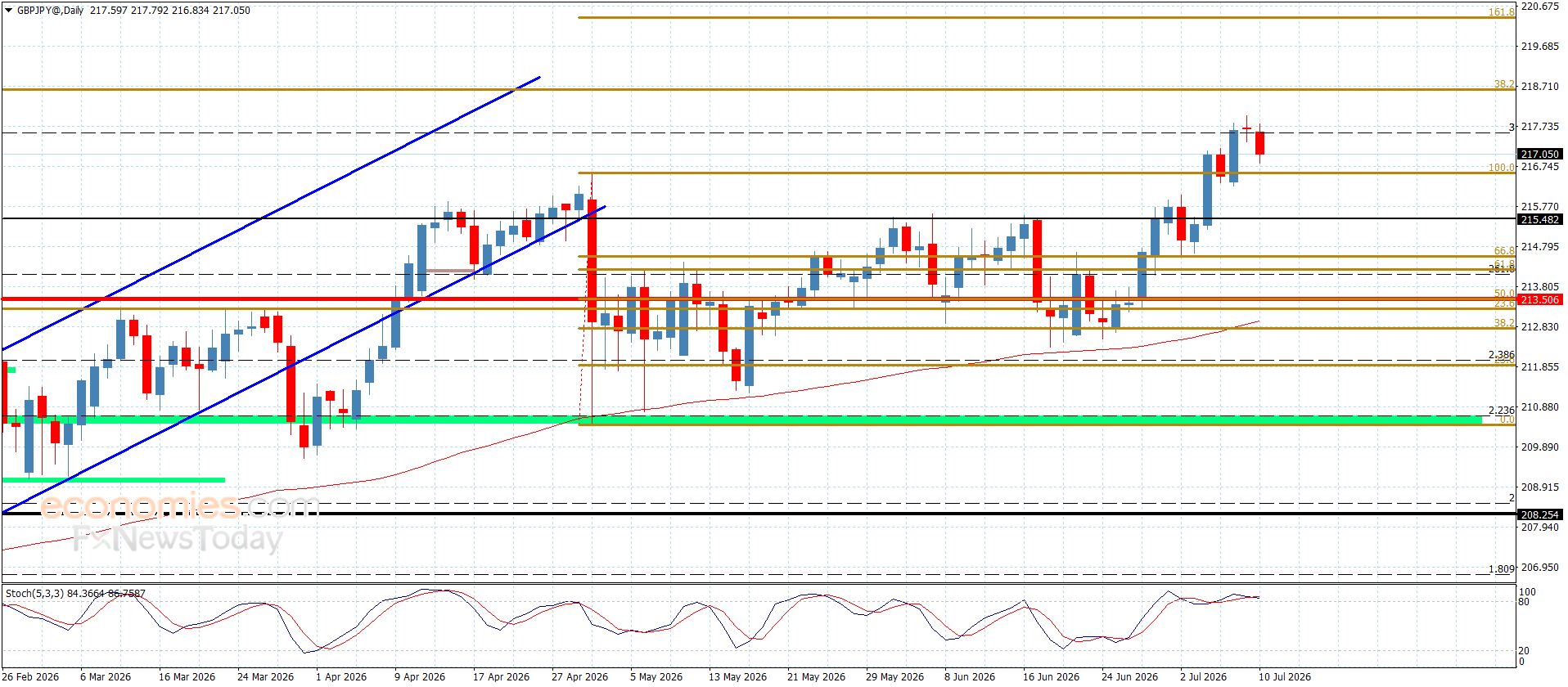
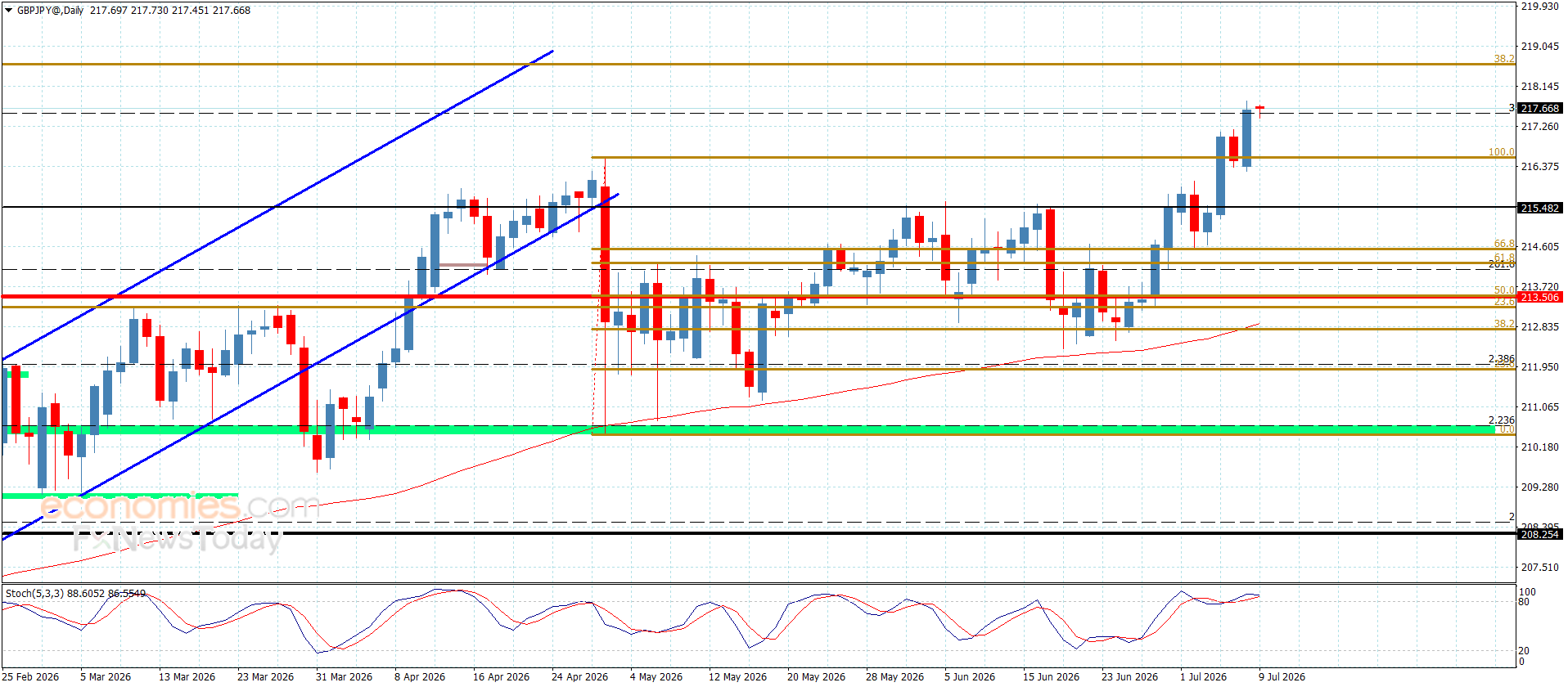
The GBPJPY is without any news– Forecast today – 27-3-2026

By |2026-03-28T03:39:15+02:00March 28, 2026|Forex News, News|0 Comments

The GBPJPY pair didn’t move anything since yesterday, due to the continuation of forming a strong obstacle at 213.30 level against resuming the bullish scenario, holding is sideways range near 212.90 level.


Confirming that breaching the obstacle and holding above it is important, to reinforce the chances of reaching extra positive stations that are located near 214.05 and 215.20, while the failure of the breach might push it to form corrective trading, which forces it to suffer some losses by reaching 212.35 followed by the main bullish channel’s support at 211.80.


The expected trading range for today is between 212.35 and 214.05


Trend forecast: Sideways until achieving the breach 


Source link

27 03, 2026

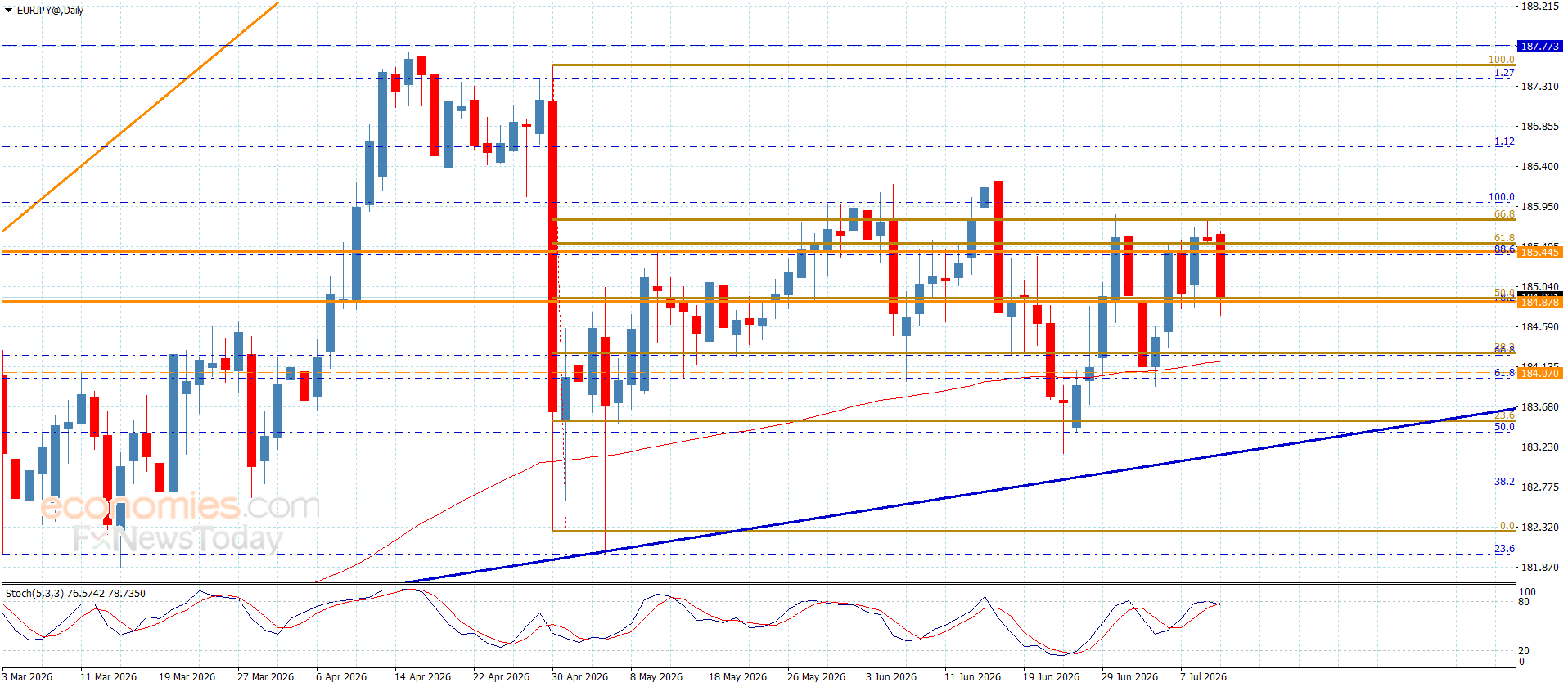
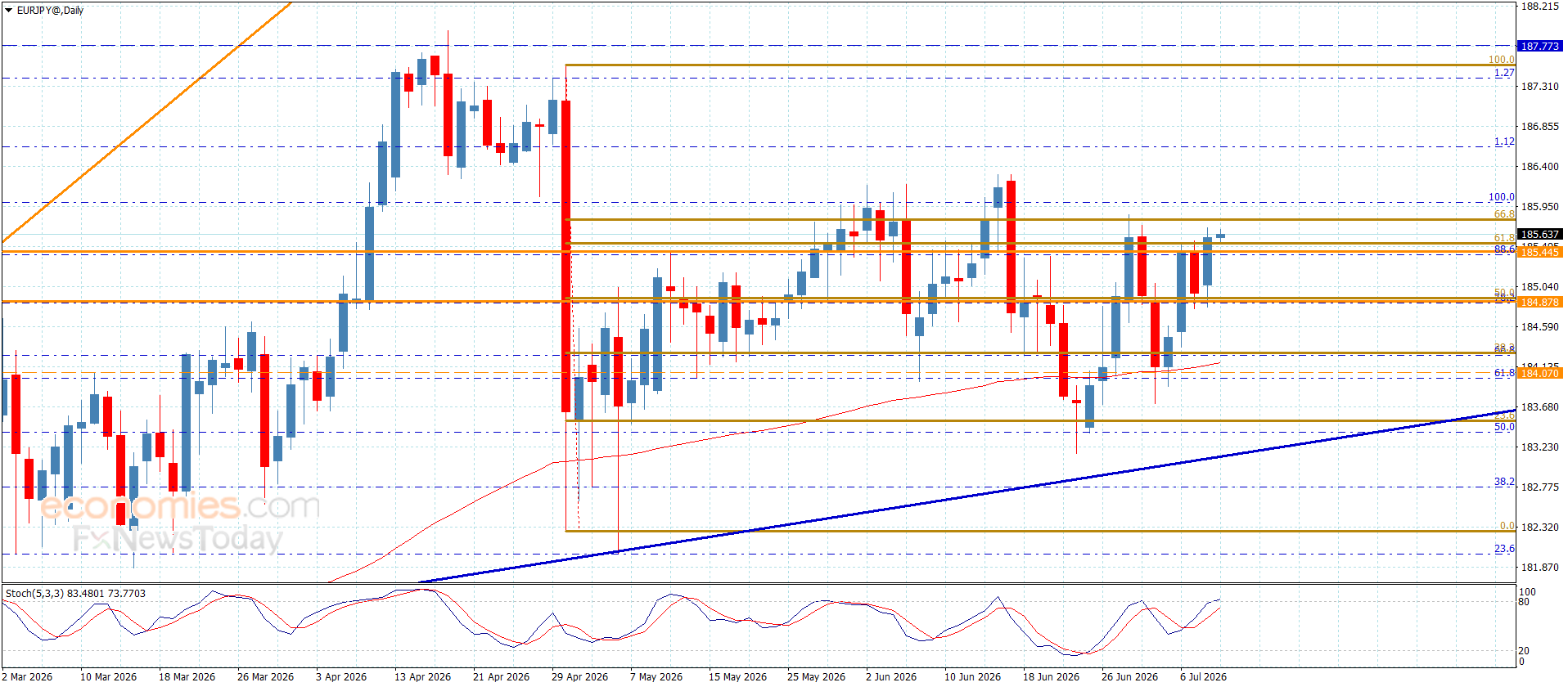
The EURJPY needs to confirm the breach– Forecast today – 27-3-2026

By |2026-03-27T23:36:58+02:00March 27, 2026|Forex News, News|0 Comments

The GBPJPY pair didn’t move anything since yesterday, due to the continuation of forming a strong obstacle at 213.30 level against resuming the bullish scenario, holding is sideways range near 212.90 level.


Confirming that breaching the obstacle and holding above it is important, to reinforce the chances of reaching extra positive stations that are located near 214.05 and 215.20, while the failure of the breach might push it to form corrective trading, which forces it to suffer some losses by reaching 212.35 followed by the main bullish channel’s support at 211.80.


The expected trading range for today is between 212.35 and 214.05


Trend forecast: Sideways until achieving the breach 


Source link

27 03, 2026

EUR/GBP Forecast: Critical Upside Risks Emerge As Bank Of England Shifts Dovishly

By |2026-03-27T19:36:03+02:00March 27, 2026|Forex News, News|0 Comments

LONDON, March 2025 – The EUR/GBP currency pair faces significant upside pressure as the Bank of England unexpectedly reprices its monetary policy stance toward dovish territory, according to fresh analysis from ING’s global financial research team. This development marks a pivotal shift in cross-channel currency dynamics, potentially reshaping trading strategies and economic forecasts for the remainder of 2025. Market participants now closely monitor this evolving situation, particularly as European Central Bank policy diverges from its British counterpart.

EUR/GBP Technical and Fundamental Analysis

ING’s currency strategists identify multiple converging factors driving potential EUR/GBP appreciation. Firstly, the Bank of England’s recent communications indicate reduced hawkishness compared to previous quarters. Consequently, interest rate differential expectations between the Eurozone and United Kingdom are narrowing. Meanwhile, economic data from both regions shows diverging trajectories, with European recovery gaining momentum as British growth faces headwinds.

Technical analysis reveals the currency pair testing key resistance levels. Specifically, the 0.8600 level represents a critical psychological barrier. Additionally, moving average convergence suggests bullish momentum may be building. Historical volatility patterns indicate potential breakout conditions, especially when combined with fundamental policy shifts. Market positioning data further supports this view, showing reduced speculative short positions on the euro against sterling.

Bank of England Policy Repricing Dynamics

The Bank of England’s dovish pivot stems from several economic developments. Inflation metrics have shown consistent improvement throughout early 2025, falling closer to the central bank’s 2% target. Simultaneously, labor market indicators reveal softening conditions, with unemployment edging higher and wage growth moderating. These factors collectively reduce pressure for additional monetary tightening.

Monetary Policy Committee communications reflect this changing outlook. Recent meeting minutes emphasize increased data dependency and reduced forward guidance certainty. Market participants now price in fewer rate hikes than previously anticipated. Furthermore, terminal rate expectations have declined by approximately 25 basis points since December 2024. This repricing directly impacts currency valuation models, particularly for sterling crosses.

Comparative Central Bank Policy Trajectories

The European Central Bank maintains a comparatively more hawkish stance. Recent ECB communications emphasize persistent inflation concerns in services sectors. Additionally, Eurozone economic resilience continues to surprise analysts, supporting tighter policy maintenance. This policy divergence creates favorable conditions for euro appreciation against currencies experiencing dovish shifts.

Historical analysis reveals similar patterns during previous policy divergence episodes. Typically, currency pairs respond strongly to relative central bank positioning changes. The current EUR/GBP situation mirrors 2017 dynamics when BoE dovishness preceded significant pair appreciation. However, each episode contains unique characteristics requiring careful analysis.

Economic Fundamentals Supporting EUR Strength

Eurozone economic indicators show surprising resilience. Manufacturing PMI data has stabilized above contraction levels since January 2025. Meanwhile, services sector activity continues expanding, supported by strong consumer spending. Energy price normalization provides additional support, reducing imported inflation pressures and improving trade balances.

Structural factors also favor euro stability. The European Union’s NextGenerationEU implementation progresses steadily, supporting investment across member states. Furthermore, banking sector strength has improved significantly since 2023 stress tests. These developments contrast with British economic challenges, creating fundamental support for EUR/GBP appreciation.

United Kingdom Economic Challenges

British economic data reveals mounting difficulties. Consumer confidence indicators remain depressed despite fiscal support measures. Additionally, business investment shows hesitation amid political uncertainty and trade relationship questions. Housing market activity has slowed considerably, impacting related economic sectors and consumer wealth effects.

Productivity growth continues disappointing analysts, limiting potential output expansion. Brexit-related trade frictions persist, though adaptation continues. These factors collectively pressure the Bank of England toward accommodative policy, particularly as inflation moderates. The resulting monetary policy environment creates sterling vulnerability against major counterparts.

Market Implications and Trading Considerations

Currency market participants must adjust positioning accordingly. ING analysts recommend monitoring several key indicators. Firstly, Bank of England voting patterns provide crucial policy direction signals. Secondly, inflation expectation metrics influence medium-term policy trajectories. Thirdly, economic growth differentials between regions determine fundamental support levels.

Risk management considerations become particularly important during policy transition periods. Volatility typically increases as markets digest new information and adjust expectations. Position sizing should account for this elevated uncertainty. Additionally, correlation patterns may shift, requiring portfolio rebalancing across currency exposures.

Key technical levels to watch include:

  • Immediate resistance at 0.8620-0.8650 range
  • Support consolidation around 0.8520-0.8550 zone
  • 200-day moving average at 0.8585 as pivot point
  • Year-to-date high at 0.8680 as major breakout level

Historical Context and Pattern Recognition

Previous Bank of England policy shifts provide valuable context. The 2016 post-Brexit dovish pivot saw EUR/GBP appreciate approximately 15% over six months. Similarly, the 2020 pandemic response created significant currency pair volatility. However, current conditions differ meaningfully from these episodes, requiring nuanced interpretation.

Central bank communication analysis reveals evolving patterns. Modern monetary authorities increasingly emphasize forward guidance and data dependency. This approach potentially reduces extreme market reactions but extends adjustment periods. Understanding these communication frameworks helps anticipate policy trajectory changes and currency impacts.

Expert Perspectives and Institutional Views

Financial institution research shows growing consensus around EUR/GBP upside potential. Multiple major banks have revised forecasts upward since February 2025. However, disagreement persists regarding magnitude and timing. Some analysts emphasize technical resistance levels, while others focus on fundamental divergences.

ING’s analysis incorporates proprietary models and historical pattern recognition. Their team emphasizes risk-adjusted positioning rather than directional certainty. This approach acknowledges multiple possible outcomes while identifying highest-probability scenarios. Such balanced analysis proves particularly valuable during policy transition periods.

Conclusion

The EUR/GBP currency pair faces meaningful upside risks as Bank of England policy reprices dovishly. ING’s analysis identifies converging technical and fundamental factors supporting appreciation potential. Market participants should monitor evolving economic data and central bank communications closely. Additionally, risk management remains crucial during this policy transition period. The EUR/GBP forecast consequently reflects increased bullish potential, though volatility may accompany directional moves.

FAQs

Q1: What does “dovish repricing” mean for the Bank of England?
The Bank of England’s dovish repricing indicates reduced expectations for interest rate increases. Markets now anticipate fewer hikes and potentially earlier rate cuts than previously expected.

Q2: How does Bank of England policy affect EUR/GBP exchange rates?
Dovish Bank of England policy typically weakens sterling against the euro. Lower interest rate expectations reduce foreign investment attractiveness, decreasing demand for British currency.

Q3: What economic indicators most influence EUR/GBP movements?
Inflation data, growth differentials, and central bank communications most significantly impact the currency pair. Employment figures and trade balances also contribute to fundamental valuation.

Q4: How reliable are currency forecasts during policy transitions?
Forecast reliability decreases during policy transitions due to elevated uncertainty. Analysts emphasize probability ranges rather than precise predictions during such periods.

Q5: What time horizon does ING’s EUR/GBP analysis cover?
ING’s analysis typically covers three to twelve-month horizons. Short-term technical factors and long-term fundamentals receive balanced consideration in their comprehensive approach.

Disclaimer: The information provided is not trading advice, Bitcoinworld.co.in holds no liability for any investments made based on the information provided on this page. We strongly recommend independent research and/or consultation with a qualified professional before making any investment decisions.

Source link

27 03, 2026

GBP/USD: Elliott wave analysis and forecast for 27.03.26–03.04.26

By |2026-03-27T15:35:06+02:00March 27, 2026|Forex News, News|0 Comments

The article covers the following subjects:

Major Takeaways

  • Main scenario: Consider long positions from corrections above the level of 1.3207 with a target of 1.3870–1.4300. A buy signal: the price holds above 1.3207. Stop Loss: below 1.3207, Take Profit: 1.3870–1.4300.
  • Alternative scenario: Breakout and consolidation below 1.3207 will allow the pair to continue declining to the levels of 1.3000–1.2700. A sell signal: the 1.3207 level is broken to the downside. Stop Loss: above 1.3207, Take Profit: 1.3000–1.2700.

Main Scenario

Consider long positions from corrections above the level of 1.3207 with a target of 1.3870–1.4300.

Alternative Scenario

Breakout and consolidation below 1.3207 will allow the pair to continue declining to the levels of 1.3000–1.2700.

Analysis

On the weekly time frame, an ascending wave of larger degree (A) of B is developing. Within it, wave 1 of (A) has formed, and a downward correction has been completed as wave 2 of (A). The third wave 3 of (A) appears to continue forming on the daily chart, with wave iii of 3 developing as its part. The third wave of smaller degree (iii) of iii has likely started developing on the H4 chart, with wave i of (iii) formed as its part. If the presumption is correct, GBP/USD will continue to rise to the levels of 1.3870–1.4300. The level of 1.3207 is critical in this scenario as a breakout below it will enable the pair to continue declining to the levels of 1.3000–1.2700.


This forecast is based on the Elliott Wave Theory. When developing trading strategies, it is essential to consider fundamental factors, as the market situation can change at any time.

Price chart of GBPUSD in real time mode

The content of this article reflects the author’s opinion and does not necessarily reflect the official position of LiteFinance broker. The material published on this page is provided for informational purposes only and should not be considered as the provision of investment advice for the purposes of Directive 2014/65/EU.


According to copyright law, this article is considered intellectual property, which includes a prohibition on copying and distributing it without consent.

Rate this article:

{{value}} ( {{count}} {{title}} )


Source link

27 03, 2026

Bulls retain control despite intervention warnings

By |2026-03-27T11:34:09+02:00March 27, 2026|Forex News, News|0 Comments

The USD/JPY pair turns positive for the fourth straight day following an intraday dip to the 159.45 area and touches a fresh high since July 2024 during the early European session on Friday. Given that Japan depends mostly on oil imports from the Middle East, the ongoing Iran war has been fueling worries that Japan’s economy will come under substantial strain in the foreseeable future. This, in turn, continues to undermine the Japanese Yen (JPY), which, along with the emergence of some US Dollar (USD) buying, acts as a tailwind for the currency pair. However, intervention fears might hold back the JPY bears from placing fresh bets and cap any further upside for spot prices.

The JPY hovers around the key 160 psychological mark against the USD, a key threshold level at which authorities stepped into the currency market multiple times in 2024. Moreover, Japan’s Finance Minister Satsuki Katayama has signaled that authorities are ready to take “bold” and “decisive” steps against excessive volatility in the currency market. The market implication, however, has been limited amid contrasting headlines over peace talks to end the war in the Middle East. Furthermore, supply disruptions caused by the effective closure of the Strait of Hormuz remain supportive of elevated energy prices, which could worsen Japan’s trade balance and weaken its economic outlook.

Despite US President Donald Trump’s ceasefire rhetoric, comments from Iranian officials dampen hopes for an immediate de-escalation of tensions. Meanwhile, Trump announced that he will delay strikes on Iran’s energy infrastructure and extended the deadline to reopen the Strait of Hormuz until April 6. Investors, however, remain worried about a further escalation of the conflict amid the deployment of additional US troops in the region. This keeps geopolitical risks in play, which, along with bets for an interest rate hike by the US Federal Reserve (Fed), lifts the USD closer to the weekly high. The fundamental backdrop, in turn, backs the case for a further USD/JPY appreciation.

USD/JPY daily chart

Technical Analysis:

Against the backdrop of the recent rebounds from the critical 200-day Exponential Moving Average (EMA), a sustained move and acceptance above the 160.00 mark will be seen as a fresh trigger for bullish traders. The Relative Strength Index hovers around 61, staying in bullish territory without overbought conditions, which signals ongoing buying pressure but reduced urgency to extend the rally aggressively.

However, the Moving Average Convergence Divergence (MACD) line has flattened just above the zero line with only a slight positive edge over its signal line, suggesting waning but still positive momentum. Hence, it will be prudent to wait for some follow-through buying before positioning for further gains towards the next relevant hurdle near the 160.50 region en route to the 161.00 round-figure mark.

On the downside, initial support emerges at 158.50, followed by firmer demand near 157.70, the prior breakout area. A daily close below 157.70 would weaken the bullish structure and expose the 156.20 consolidation zone, well above the 200-day EMA. As long as the USD/JPY pair remains above 158.50, dips are more consistent with consolidation inside an ongoing uptrend rather than a completed top.

(The technical analysis of this story was written with the help of an AI tool.)

Source link

27 03, 2026

Forecast update for EURUSD -26-03-2026.

By |2026-03-27T07:32:44+02:00March 27, 2026|Forex News, News|0 Comments

The GBPAUD confirmed the continuation of the bullish corrective scenario by moving way from the main support at 1.8675, achieving several gains by its rally towards 1.9270, taking advantage of the continuation of providing positive momentum by stochastic in the previous period.


Forming extra support at 1.9060 level will increase the efficiency of the bullish corrective track, to keep waiting for attacking 1.9310 level, and surpassing it will open the way for recording extra gains that might begin at 1.9400 reaching 1.9515.


The expected trading range for today is between 1.9155 and 1.9310


Trend forecast: Bullish


Source link

27 03, 2026

The EURJPY in its way to activate the bullish trend– Forecast today – 26-3-2026

By |2026-03-27T03:31:49+02:00March 27, 2026|Forex News, News|0 Comments

Copper price stayed below $5.5100, maintaining its negative stance and increasing the likelihood of forming short-term corrective downward waves. Since yesterday, the price has been fluctuating near $5.4200, affected by the ongoing divergence in key indicators, particularly the moving average 55 positioned above current trading levels.


It is important for the price to gather bearish momentum during today’s sessions, which would facilitate targeting first $5.2700, followed by the next key support near $4.9500. However, a strong push above $5.5100 with a positive close would cancel this bearish outlook and give the price a chance to start recovering, potentially moving first toward $5.6300.


The expected trading range for today is between $5.2700 and $5.5100


Trend forecast: Bearish


Source link

26 03, 2026

GBP/USD Forecast: Pound Sterling Choppy as Iran Talk Uncertainty Persists

By |2026-03-26T23:30:00+02:00March 26, 2026|Forex News, News|0 Comments


– Written by

The Pound US Dollar (GBP/USD) exchange rate moved without a clear trajectory on Thursday, amid uncertainty around US-Iran peace negotiations.

At the time of writing, GBP/USD was trading at $1.3364, having wavered throughout the session.

The US Dollar experienced uneven movement, rising early in the session before giving back those gains, as uncertainty surrounding potential US-Iran peace talks clouded market sentiment.

Earlier in the week, US President Donald Trump suggested that discussions were underway to bring an end to the conflict, a claim swiftly dismissed by Tehran.

Since then, reports have remained mixed, with speculation ranging from informal contact to the possibility of structured negotiations taking place in the coming days.

Washington has also tabled a peace proposal that Iran has publicly rejected, though there are suggestions it is still being weighed behind closed doors. At the same time, the deployment of an additional 2,000 US troops to the region has raised questions about the credibility of de-escalation efforts.

Amid these conflicting signals, the safe-haven US Dollar found it difficult to establish a clear trend.

Save on Your GBP/USD Transfer

Get better rates and lower fees on your next international money transfer.
Compare TorFX with top UK banks in seconds and see how much you could save.


Compare the Best GBP/USD Rates »

The Pound struggled to find momentum, with the absence of notable UK economic releases leaving Sterling without a clear catalyst.

With little fresh data to guide markets, GBP traded cautiously as investors continued to assess how the ongoing Middle East crisis could influence the UK’s economic outlook.

While rising energy prices may encourage the Bank of England to maintain a more restrictive policy stance, they also risk placing additional pressure on already weak growth prospects.

Short-Term GBP/USD Forecast: UK Retail Sales in Focus

Friday’s UK retail sales figures could act as a headwind for the Pound. Forecasts suggest sales volumes contracted by 0.8% in February, with a drop of this scale likely to raise fresh concerns about the resilience of the UK economy.

Across the Atlantic, the final reading of the US consumer sentiment index is also due. If confidence is confirmed to have weakened or revised lower, this could place some downward pressure on the US Dollar.

Developments in the US-Iran conflict are expected to remain a key driver of movement. Any indication that both sides are willing to engage in meaningful peace discussions may lift market sentiment and support GBP/USD. On the other hand, further escalation could reinforce demand for the safe-haven US Dollar and potentially push the exchange rate lower.

Like this piece? Please share with your friends and colleagues:


International Money Transfer? Ask our resident FX expert a money transfer question or try John’s new, free, no-obligation personal service! ,where he helps every step of the way,
ensuring you get the best exchange rates on your currency requirements.

TAGS: Pound Dollar Forecasts

Source link

26 03, 2026

Yen Slides Amid Rising Oil Pressures. Forecast as of 26.03.2026

By |2026-03-26T19:29:10+02:00March 26, 2026|Forex News, News|0 Comments

The Japanese government doubts that intervening in the Forex market will drive the USD/JPY pair down. The US dollar is strong amid surging Brent crude prices. Let’s discuss this and develop a trading plan.

The article covers the following subjects:

Major Takeaways

  • The Japanese government is stepping up its verbal interventions.
  • Japan is planning to intervene in the oil market.
  • The BoJ may raise rates as early as April.
  • Long positions on the USD/JPY pair can be opened on a breakout of 159.7.

Weekly Fundamental Forecast for Yen

While the Japanese government says it is ready to intervene in the currency market at any moment, it is also considering a large-scale plan to deploy its $1.4 trillion in reserves across other markets. The crude oil futures market, in particular, is in the spotlight. The recent rally in Brent crude—triggered by the closure of the Strait of Hormuz—has become a major concern for Prime Minister Sanae Takaichi.

Japan has considerable experience with currency interventions, but its effectiveness has often depended on periods of US dollar weakness. With the Fed signaling the end of its monetary tightening cycle and a potential shift toward rate cuts, pressure on USD/JPY has increased. It seems that Tokyo has been waiting for the right moment to act.

USD/JPY Rate and Currency Interventions

Source: Bloomberg.

This time, however, the Fed is largely sidelined. The futures market gives a 63% probability that the US regulator will keep rates unchanged through the end of 2026. At the same time, the trajectory of the US dollar is increasingly tied to oil prices. In other words, any decline in USD/JPY quotes is likely to be temporary as long as Brent crude prices remain elevated. Addressing the root cause of the problem would, in turn, ease pressure on the Japanese currency.

At the same time, Japanese officials continue to fuel concerns in the domestic currency market. Finance Minister Satsuki Katayama has described the USD/JPY rally as disconnected from fundamentals and warned that intervention in the foreign exchange market could occur at any moment. She has been echoed by Deputy Minister for International Affairs Atsushi Mimura. Alongside this, Bank of Japan Governor Kazuo Ueda has indicated that the Middle East conflict will have only a temporary impact on the economy and reiterated that the central bank is still considering further rate hikes. These factors would support the yen.

However, the currency remains weak. This weakness, combined with rising import costs driven by higher oil prices, is increasing the risk of renewed inflationary pressure, even as inflation has recently fallen below the 2% target for the first time since March 2022.

Japan CPI

Source: Bloomberg.

In this context, the Bank of Japan’s potential moves are truly mind-boggling. The central bank refrained from raising the overnight rate even though consumer prices remained above target for four years. Now, it is considering rate hikes while the CPI slides below 2%. It is nothing short of a paradox.

In reality, central bank actions are typically preventive. If rising inflation expectations are not contained early, they can spiral out of control. This is precisely why Nomura expects the BoJ to increase the overnight rate in April.

Weekly USDJPY Trading Plan

Interventions in the oil market are unlikely to achieve lasting results. Brent is reacting primarily to news of ongoing negotiations, and any funds Japan injects will likely only suppress prices temporarily. The same logic applies to the USD/JPY pair. As a result, a sustained break above the resistance level at 159.7 could serve as a strong signal to add to previously established long positions.


This forecast is based on the analysis of fundamental factors, including official statements from financial institutions and regulators, various geopolitical and economic developments, and statistical data. Historical market data are also considered.

Price chart of USDJPY in real time mode

The content of this article reflects the author’s opinion and does not necessarily reflect the official position of LiteFinance broker. The material published on this page is provided for informational purposes only and should not be considered as the provision of investment advice for the purposes of Directive 2014/65/EU.


According to copyright law, this article is considered intellectual property, which includes a prohibition on copying and distributing it without consent.

Rate this article:

{{value}} ( {{count}} {{title}} )


Source link

26 03, 2026

Navigating The Critical Downside Bias Within A Persistent Trading Range

By |2026-03-26T15:28:29+02:00March 26, 2026|Forex News, News|0 Comments

Singapore, March 2025 – The EUR/USD currency pair, the world’s most traded forex instrument, currently exhibits a pronounced downside bias according to technical analysis from United Overseas Bank (UOB). However, this bearish pressure operates firmly within a well-defined and persistent broader trading range, creating a complex landscape for traders and investors navigating the 2025 financial markets. This analysis examines the technical structure, fundamental underpinnings, and potential market implications of this configuration.

EUR/USD Technical Structure: Defining the Range

United Overseas Bank’s Global Economics & Markets Research team identifies specific technical levels that confine the current price action. The pair has consistently found support near the 1.0650 level throughout the first quarter of 2025. Conversely, multiple rally attempts have faltered around the 1.0950 resistance zone. This 300-pip corridor has contained most trading activity since late 2024. Consequently, the market demonstrates clear memory at these psychological and technical junctures. The 100-day and 200-day simple moving averages currently converge within this range, further emphasizing its technical significance. Meanwhile, momentum indicators like the Relative Strength Index (RSI) frequently oscillate between oversold and neutral territory without reaching overbought extremes, confirming the range-bound nature with a bearish tilt.

Key Technical Levels for Q2 2025

The following table summarizes the critical technical zones identified by UOB and corroborated by market price action:

Level Type Price Zone Significance
Immediate Resistance 1.0880 – 1.0900 Previous swing high & 50-day SMA
Major Range Resistance 1.0950 – 1.0980 Q1 2025 highs & descending trendline
Immediate Support 1.0720 – 1.0700 Recent consolidation low
Major Range Support 1.0650 – 1.0630 Critical multi-month floor

Fundamental Drivers Behind the Range and Bias

The technical pattern directly reflects a stalemate in fundamental monetary policy divergence. On one side, the European Central Bank maintains a cautious stance despite easing inflationary pressures. The ECB’s Governing Council emphasizes data dependency, particularly regarding wage growth trends in the Eurozone. Therefore, market expectations for rate cuts remain measured and gradual. Conversely, the Federal Reserve’s policy trajectory dominates the dollar’s narrative. Strong U.S. labor market data and resilient consumption figures have prompted the Fed to delay its own easing cycle. This policy differential creates a fundamental headwind for the euro, explaining the pair’s downside bias. However, the range persists because neither central bank exhibits urgency for aggressive action, leading to a equilibrium of expectations.

Furthermore, global risk sentiment and geopolitical developments provide alternating support and pressure. For instance, periods of market stress typically bolster the U.S. dollar’s safe-haven status, testing the lower bounds of the range. Conversely, improving global growth prospects or de-escalation in geopolitical tensions can trigger euro rallies toward range resistance. Economic data releases, especially inflation prints (CPI) and Purchasing Managers’ Index (PMI) surveys from both regions, act as frequent catalysts for volatility within the established boundaries. Traders consistently monitor these releases for signals that could break the stalemate.

Comparative Economic Indicators

The range-bound price action mirrors closely matched economic indicators. Key metrics include:

  • Inflation Trends: Both Eurozone and U.S. headline inflation have converged toward 2.5-3.0%, reducing a major policy divergence driver.
  • Growth Expectations: IMF forecasts for 2025 GDP growth show marginal differences, with the U.S. slightly ahead.
  • Yield Differentials: The 2-year government bond yield spread between Germany and the U.S. has stabilized, anchoring the currency pair.

Market Implications and Trader Positioning

This technical setup presents distinct scenarios for different market participants. For short-term tactical traders, the defined range offers clear opportunities. The strategy involves selling rallies near resistance and buying dips near support, always respecting the range boundaries. Position sizing and strict stop-loss management become paramount, as false breakouts remain a constant risk. For longer-term institutional investors and corporate treasurers, the environment necessitates a focus on hedging currency exposure. The persistent range reduces the urgency for directional bets but increases the value of options strategies that profit from continued volatility and time decay. According to Commitments of Traders (COT) data from the Commodity Futures Trading Commission, speculative net positioning on the euro remains near neutral levels, reflecting market indecision and alignment with the range-bound thesis.

Moreover, the downside bias suggests a slight preference for bearish strategies. This includes put option structures or ratio spreads that benefit more from a decline than a rally. However, the strength of the range support at 1.0650 tempers expectations for a sustained collapse. A decisive weekly close below this level would signal a potential breakdown, shifting the technical outlook and likely triggering a wave of stop-loss orders. Conversely, a sustained move above 1.0980 would invalidate the immediate downside bias and open the path toward higher resistance levels near 1.1100. The market currently assigns a higher probability to a test of the lower boundary before any sustained upward breakout.

Historical Context and Range Persistence

Extended trading ranges are not uncommon for major currency pairs. The EUR/USD spent most of 2023 oscillating within a 1.0500-1.1000 band before breaking higher. Historical analysis shows that such consolidation phases often precede significant directional moves. The duration of the current range, now exceeding five months, suggests building energy for a future breakout. The eventual direction will likely hinge on which central bank shifts its communication stance more dramatically. Analysts also watch for exogenous shocks, such as significant changes in energy prices or unforeseen political events within the Eurozone or United States, which could serve as catalysts to break the technical deadlock. Monitoring trading volume during tests of range boundaries provides crucial clues; weakening volume on bounces and increasing volume on sell-offs would confirm the downside bias.

Conclusion

The EUR/USD pair presents a classic case of conflicting market forces resulting in constrained price action. The technical analysis from UOB correctly identifies a downside bias within a broad and resilient trading range. This configuration reflects a fundamental standoff between the ECB and the Fed, with economic data flows alternately supporting each currency. For market participants, this environment demands discipline, favoring range-trading strategies while preparing for an eventual breakout. The critical levels of 1.0650 support and 1.0950 resistance will continue to define the pair’s trajectory in the second quarter of 2025, serving as the primary benchmarks for assessing any shift in market structure.

FAQs

Q1: What does ‘downside bias within a broad range’ mean for EUR/USD?
It means the currency pair is more likely to move toward the lower end of its established trading channel (e.g., 1.0650) than the upper end (e.g., 1.0950), but a complete breakdown below the range is not the base case. Sellers generally have more control in the short term.

Q2: What fundamental factors are causing this range-bound trading?
The primary cause is a convergence in monetary policy outlooks between the European Central Bank and the U.S. Federal Reserve. Both are in a data-dependent holding pattern regarding interest rates, eliminating a major driver of sustained directional trends for the exchange rate.

Q3: How should a trader approach this market setup?
Traders often employ range-bound strategies, such as buying near identified support levels and selling near resistance, with tight risk management. They also monitor for a decisive breakout above or below the range with increasing volume, which would signal a potential new trend.

Q4: What would signal a break of the current EUR/USD range?
A sustained daily and weekly close, confirmed by strong trading volume, above the 1.0980 resistance or below the 1.0650 support level would signal a valid breakout. A single spike outside the range is often a false signal.

Q5: Who is UOB and why is their analysis significant?
United Overseas Bank (UOB) is a major Asian financial institution with a respected Global Economics & Markets Research team. Their analysis is closely followed because it provides a well-informed, institutional perspective on forex markets, combining technical and fundamental insights.

Disclaimer: The information provided is not trading advice, Bitcoinworld.co.in holds no liability for any investments made based on the information provided on this page. We strongly recommend independent research and/or consultation with a qualified professional before making any investment decisions.

Source link

Go to Top