Disclaimer: The opinions expressed by our writers are their own and do not represent the views of U.Today. The financial and market information provided on U.Today is intended for informational purposes only. U.Today is not liable for any financial losses incurred while trading cryptocurrencies. Conduct your own research by contacting financial experts before making any investment decisions. We believe that all content is accurate as of the date of publication, but certain offers mentioned may no longer be available.
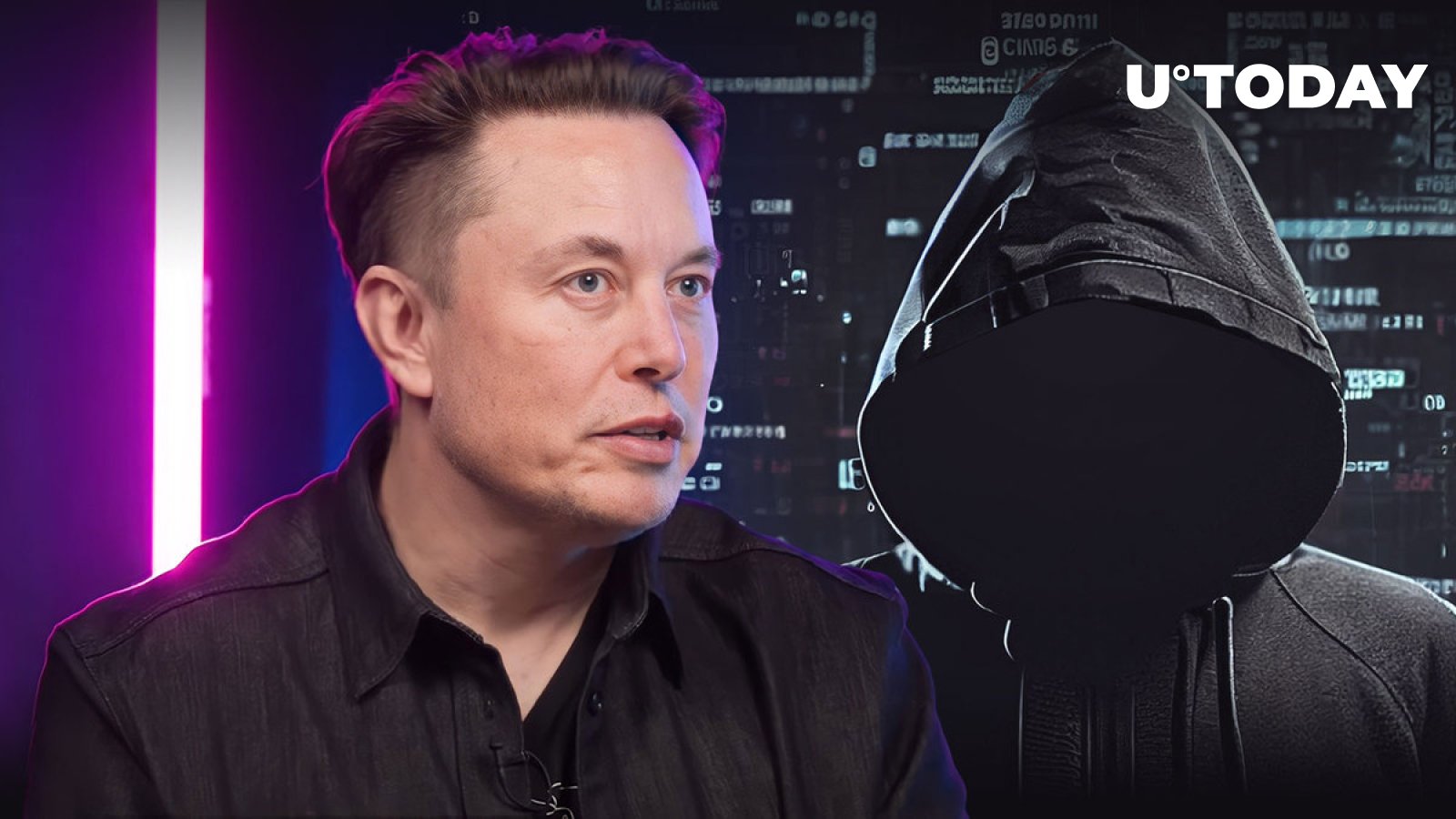
The pseudonymous leader of SHIB, widely known as Shytoshi Kusama, has taken to the Twitter/X platform to comment on a historical tweet of Elon Musk, in which Tesla boss (who did not own Twitter back then) commented on the importance of memes in the modern culture.
Even though Musk published that tweet in June 2020, Kusama still found it important to respond to it.
Shytoshi Kusama benefits from Musk’s meme tweet
Back then, centibillionaire Musk shared his belief that the person “who controls memes, controls the universe.” That tweet brought on a wave of supporting and joyful comments from the crypto community.
Shytoshi Kusama quoted this tweet, adding the hashtag #Shibarmy and an animated GIF that says “SOON.” Kusama also thanked the SHIB user who brought this tweet to his attention, even though the SHIB lead did not call him by the name nor did he tag that person.
Shiba Inu started in 2020 as a coin inspired by memes about the Shiba Inu dog breed, but over the next few years, it overgrew the “meme coin stage,” going far beyond it, particularly when it became one of the sponsors of ETH Toronto in 2023, where Kusama gave a speech via an AI app and launched the Layer-2 solution Shibarium. Shiba Inu quickly turned into the second largest meme-inspired crypto by the market capitalization size, and currently it is sitting on the 10th spot on CoinMarketCap, closely following Dogecoin, which holds the ninth position on that website.
First Shiba AI chatbot released
Shibarium partner Bad Idea AI has announced the launch of the very first Shiba AI bot named S.A.R.A.H. BAD’s tweet specified that it will add “humor, wit and safety” to conversations of the SHIB community.
1/ In support of our amazing partnershib with the $SHIB community, we at $BAD Idea AI are excited to announce the newest addition to their community: Shiba_AI.
Affectionally known as S.A.R.A.H., their new AI companion will join in their conversations adding humor, wit & safety. pic.twitter.com/pZvTGPikrT
In many ways, the post specifies, the Shiba AI bot is similar to the BAD AI bot, which is already operating in the Shibarium Tech channel on Telegram and also in SHIB international groups — more than 207 of them with 121,010 users overall. On March 8, over 2,684 people used the new AI bot already, according to the post.
S.A.R.A.H. will also be operating there. It will support all things for Shiba Inu, as well as for other projects in the SHIB and Shibarium ecosystem.
Lava, a novel decentralized lending market platform, made its debut on March 7, introducing an answer aimed toward revolutionizing the decentralized finance (DeFi) panorama.
The platform guarantees to deal with the problem of impermanent loss, a major impediment for liquidity suppliers on decentralized exchanges.
By leveraging its infrastructure, Lava intends to boost automated market makers (AMMs) liquidity positions, thereby mitigating impermanent loss and boosting liquidity effectivity throughout numerous blockchain networks.
The problem of impermanent loss has been a persistent concern throughout the DeFi sector, deterring institutional traders and hindering market effectivity.
John Lo, managing associate of digital belongings at Recharge Capital, underscored the importance of this downside, stating, “This isn’t solely a significant ache level for customers, but in addition a difficulty that has precipitated a regression towards conventional structure and one that forestalls environment friendly markets on-chain.”
Impermanent loss happens when the worth of a token fluctuates after being deposited into an AMM as a part of yield farming, a course of totally different from staking, aimed toward incomes rewards by way of token lending.
Lava’s modern strategy is about to open up new prospects for DeFi by selling a extra democratic type of market making that competes with centralized counterparts.
In keeping with Lo, “Various market makers already present numerous advantages over conventional structure, and Lava completes, if not unifies these advantages.”
The platform’s backing by Recharge Capital signifies a powerful endorsement, positioning Lava to boost liquidity depth within the crypto market and encourage broader participation from liquidity suppliers.
A particular characteristic of Lava is its concentrate on combating impermanent loss by way of a novel mechanism that enables for arbitrage between market maker charges by way of the collateralization and lending of liquidity positions.
This allows customers to navigate between DeFi and centralized finance protocols effortlessly, optimizing yield for passive liquidity suppliers and contributing to a extra environment friendly market price dedication.
Lava operates on a multichain foundation, with preliminary availability on the Arbitrum and Base blockchains, signaling its dedication to increasing its attain throughout further blockchain networks sooner or later.
This strategic strategy underscores Lava’s ambition to pioneer options for impermanent loss and foster a extra inclusive and environment friendly DeFi ecosystem.
Looking out to the rest of 2024, it also appears La Nina will make its return sometime around July to September. Should this indeed be the case, it is likely a bullish outcome for natural gas prices given it would potentially bring a warmer than usual summer (and thus higher demand for natural gas due to higher electricity consumption).
La Nina could also bring with it increased hurricane activity in the Gulf of Mexico, which has the potential to disrupt both production and transport of natural gas. This could be both bullish or bearish depending on whether any disruptions are that of domestic transport/production versus LNG exports internationally.
But, until then, the weather outlook remains bearish to neutral.
Final thoughts
While the overall outlook for natural gas prices in the near term in no longer as bearish as it has been in recent months, the picture is not yet bullish either. How far (if at all) prices can rally over the next three six months depends much on whether La Nina can emerge in time for the northern hemisphere summer and the bullish weather follow suit, in addition to the extent of any production response of producers to potentially higher prices. Should these two factors tilt bullishly while LNG export capacity continues to grow, natural gas prices could well finish 2024 much higher than where they are now, but there is much to get through from now until then.
In the meantime, it’s also worth noting we are through the negative seasonality from a price perspective, with the next three months or so generally bullish for natural gas prices.
Disclaimer: The opinions expressed by our writers are their own and do not represent the views of U.Today. The financial and market information provided on U.Today is intended for informational purposes only. U.Today is not liable for any financial losses incurred while trading cryptocurrencies. Conduct your own research by contacting financial experts before making any investment decisions. We believe that all content is accurate as of the date of publication, but certain offers mentioned may no longer be available.
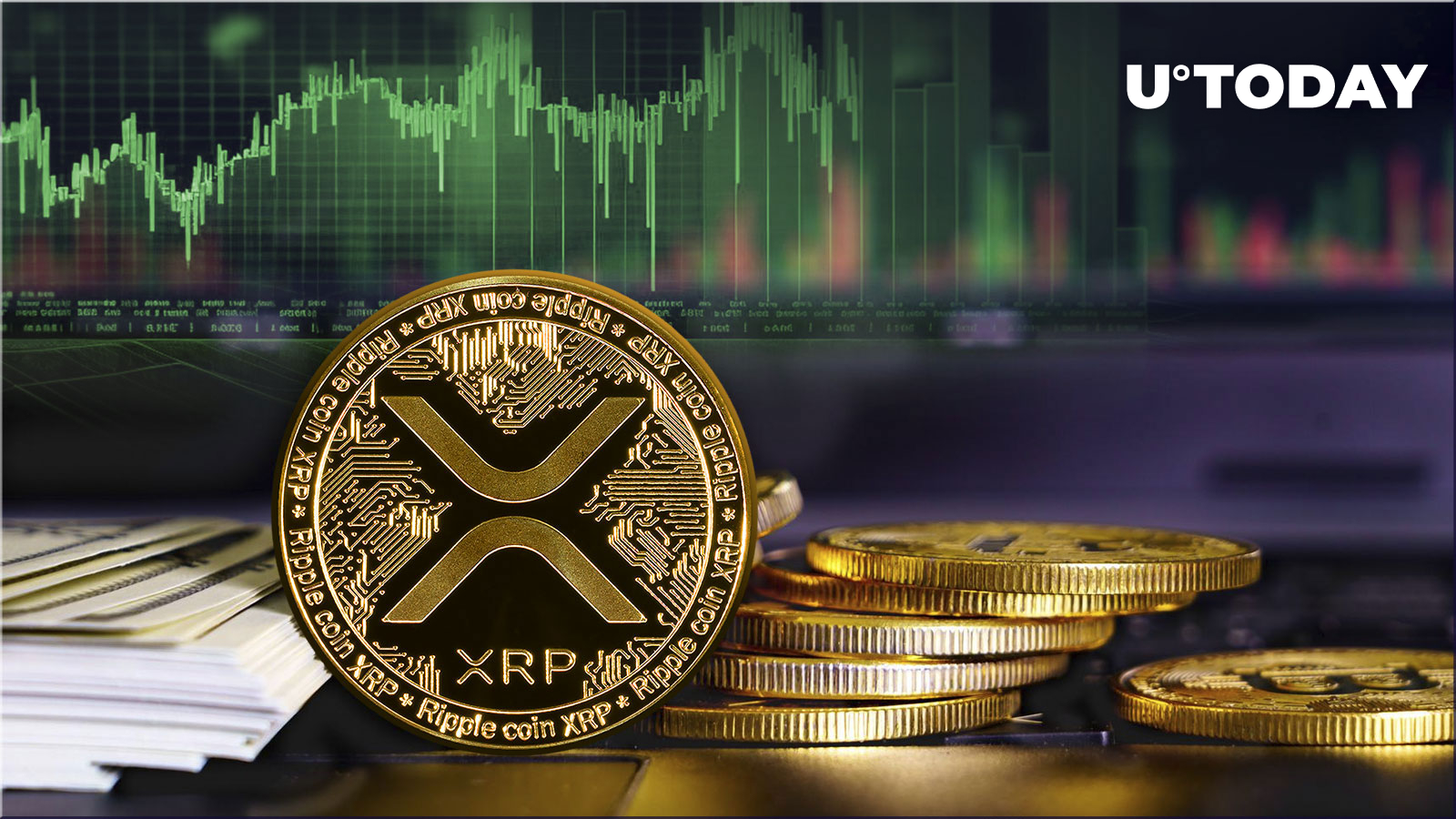
In a startling development on the crypto market, more than $11 million worth of XRP, equivalent to 18.91 million coins, was mysteriously transferred from major cryptocurrency exchange Binance to an unidentified wallet. The major XRP transaction was highlighted by Whale Alert, a popular service that tracks significant cryptocurrency transactions.
This transfer comes on the heels of a similar event just yesterday, when, as previously reported by U.Today, approximately 18.34 million XRP, valued at $11.2 million at the time, was moved from Binance to an unknown destination. These back-to-back high-value withdrawals have sent ripples through the cryptocurrency community, prompting a flurry of speculation and analysis.
XRP enthusiasts and analysts frequently monitor such large-scale transactions, known as “whale movements,” for insights into market trends. Large withdrawals from exchanges like Binance often suggest strategic movements by major players in the space. These actions can be signs of XRP accumulation, where big players are increasing their holdings in anticipation of future price increases.
XRP price movements
The timing of these transactions is particularly noteworthy given the recent performance of XRP. The current price of XRP is $0.6246, marking a slight increase of 0.11% over the last 24 hours. More impressively, the currency has surged 21.79% in the last 30 days, reflecting growing investor interest and optimism in the asset’s future.
Adding to the market dynamics, data from CoinGlass indicates a significant level of trading activity surrounding XRP. In the last 24 hours, there have been $1.15 million in liquidations, with $606.22K stemming from long liquidations and $545.80K from short liquidations. These figures suggest a volatile market environment for XRP, with traders actively betting on both sides of the price movement.
Such high liquidation volumes highlight the speculative nature of the market and the high stakes involved in trading this digital currency. Considering the implications of these large-scale XRP movements, the overall sentiment in the market appears to be bullish. However, as with all investments, especially in the highly volatile cryptocurrency market, risks remain. Investors and enthusiasts alike are advised to exercise caution.
Looking for budget-friendly scalability? Dive into these affordable Ethereum alternatives promising faster speeds, lower fees, and exciting potential.
Ethereum (ETH), the second-largest cryptocurrency by market capitalization, has revolutionized the decentralized finance (DeFi) space. In less than a decade, Ethereum has carved out its space in the highly competitive crypto market. Crypto analysts believe that Ethereum is the best-positioned cryptocurrency to challenge Bitcoin (BTC) for the top spot.
However, Ethereum faces scalability challenges, leading to high transaction fees and network congestion. Crypto circles online also speculate a potential centralization threat for Ethereum, which would hurt its decentralization.
Additionally, the rapid growth in Ethereum’s popularity has made it an expensive altcoin to own. At the time of writing, Ethereum was trading at $3,498, with a market capitalization of over $420 billion. This has spurred the development of alternative cryptocurrencies aiming to address these issues surrounding Ethereum and provide faster, cheaper, and more efficient experiences.
Here, we explore three affordable alternatives to Ethereum that are worth considering in 2024:
Mantle (MNT): Scaling Ethereum with Optimism Rollups
Mantle is a Layer 2 scaling solution built on top of the Ethereum blockchain. Mantle utilizes Optimism rollups, a technology that bundles transactions off-chain and processes them in batches on the main chain, significantly reducing gas fees and increasing transaction throughput.
Affordability: MNT, the native token of Mantle, currently trades at around $0.88, making it an accessible entry point for investors seeking exposure to the Ethereum scaling space.
Key Features:
Faster Transactions: Mantle promises significantly faster transaction speeds compared to Ethereum, aiming to handle thousands of transactions per second.
Lower Fees: By leveraging Optimism rollups, Mantle aims to drastically reduce transaction fees compared to the mainnet, making DeFi and other blockchain applications more affordable.
Security: Mantle inherits the security of the underlying Ethereum blockchain, ensuring a high degree of trust and reliability for users.
Interoperability: Mantle is designed to be interoperable with other Ethereum-based applications and protocols, allowing users to seamlessly move their assets between different platforms.
Potential Challenges:
Early Stage: Mantle is still under development, and its long-term success depends on its ability to attract developers and users to its ecosystem.
Competition: The Layer 2 scaling space is highly competitive, with established players like Polygon and Arbitrum constantly challenging Mantle and vying for market share.
BEFE Token (BEFE): The Blockchain Ecosystem for Everyone Token
BEFE was launched by the BEFE crypto team in November 2023. In less than four months, this memecoin has managed to return over 558% to early investors. This altcoin currently boasts a market capitalization of more than $47.5 million, and has witnessed a maximum daily trading volume of $2.34 million so far.
Affordability: Being an early stage memecoin, BEFE is currently available to investors at a modest price of $0.00047, which is significantly less than that of Ethereum.
Key Features:
Tax-Free: BEFE offers users zero taxes on transactions.
Hype factor: As a new memecoin, BEFE is much more relevant in terms of online hype and current social media trends.
People’s Coin: BEFE was brought to market via fair launch, meaning there were no token allocations or pre-sales, thereby ensuring equitable distribution.
Exponential Profit Potential: Memecoins like BEFE are known for their potential to go on unprecedented rallies and yield exponential profits.
Potential Challenges:
Adoption: As a relatively new memecoin, BEFE is still cultivating a dedicated community.
Price Fluctuation: Memecoins are inherently volatile investment vehicles which tend to experience considerable fluctuation in their price.
Aptos (APT): Secure and Scalable Blockchain with Innovative Features
Aptos is a new Layer 1 blockchain designed to offer high throughput, low latency, and secure transactions. Aptos utilizes a custom consensus mechanism called Block-STM and the Move programming language, aiming to provide a robust and efficient platform for dApps.
Affordability: APT, the native token of the Aptos blockchain, currently trades at around $12, making it the most expensive option on this list but still cheaper than Ethereum. However, the potential for future growth could justify the higher price point of Aptos for some investors.
Key Features:
Scalability and Security: Aptos claims to achieve high transaction throughput while maintaining strong security through its innovative consensus mechanism and programming language.
User-Friendly: Aptos aims to be user-friendly and developer-friendly, with features designed to simplify the development and deployment of dApps on its platform.
Strong Team: Aptos is backed by a team of experienced engineers and entrepreneurs from Meta (formerly Facebook) and other leading technology companies.
Potential Challenges:
Newcomer: Aptos is a recent arrival in the blockchain space, and its long-term success remains to be proven.
Competition: Aptos faces stiff competition from established Layer 1 blockchains like Solana and Avalanche, which already have a significant head start in terms of adoption and ecosystem development.
Disclaimer: This is a paid press release, BSC.News does not endorse and is not responsible for or liable for any content, accuracy, quality, advertising, products, or other materials on this page. The project team has purchased this advertisement article for $300. Readers should do their own research before taking any actions related to the company. BSC.News is not responsible, directly or indirectly, for any damage or loss caused or alleged to be caused by or in connection with the use of or reliance on any content, goods, or services mentioned in the press release.
In a startling revelation, on-chain data has unveiled a substantial surge in Shiba Inu token purchases, totaling over $10 million in the last 24 hours. Blockchain explorers have tracked the movement of a staggering 311.17 billion Shiba Inu tokens to an unknown wallet, executed in two sizable transactions.
The first transfer saw an enigmatic individual funneling 288.639 billion SHIB, valued at $9.1 million, into the anonymous wallet. Following closely behind it, a more modest transfer of 22.531 billion SHIB, equivalent to $736,080, was completed, reportedly originating from the Bitvavo exchange.
What is intriguing is the potential link between these transactions and European crypto platform Bitvavo, as suggested by insights from Arkham Intelligence. Speculation arises as to whether these unknown wallets might also be associated with the said platform.
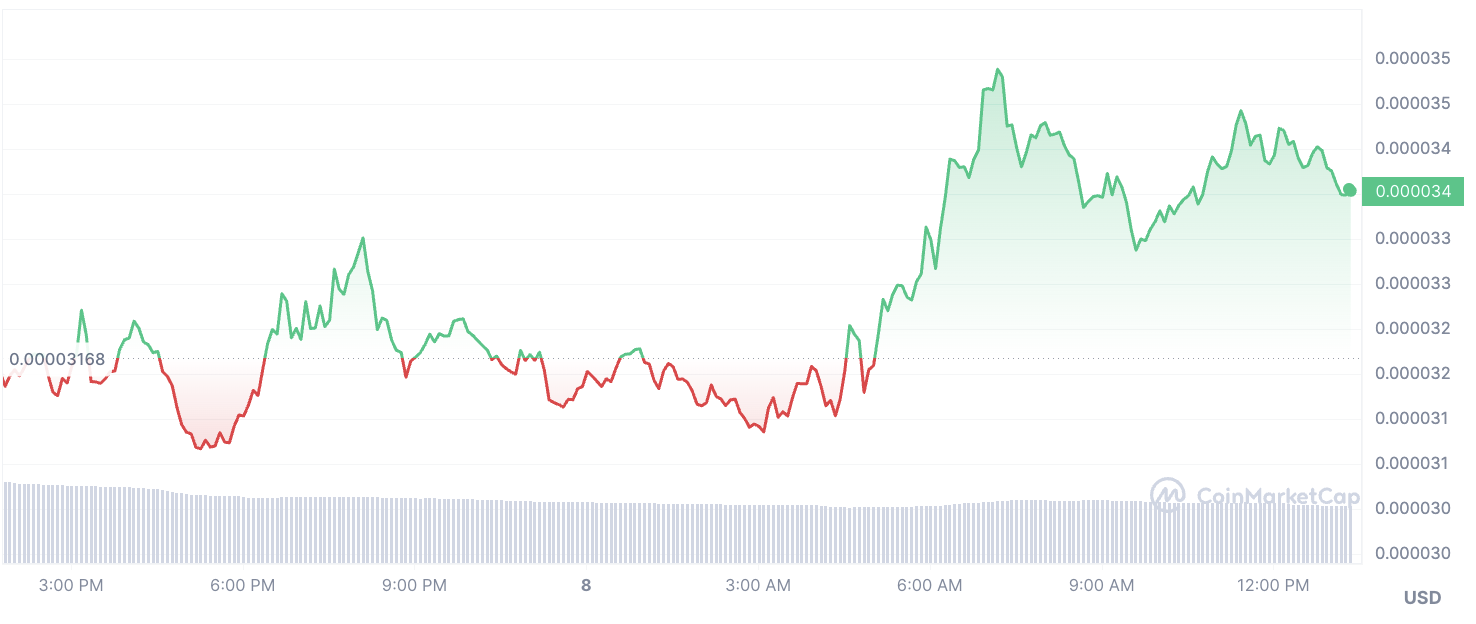
The timing of these massive token movements holds particular significance, occurring just before Shiba Inu experienced a notable surge of over 7.5% in its price. Notably, this surge found support at the familiar level of $0.00003 per token, culminating in a valuation of $0.000034 per SHIB.
The juxtaposition of these events sparks curiosity, prompting questions about the underlying dynamics driving Shiba Inu’s recent activity. With the past week already marked by notable developments in the SHIB ecosystem, this latest revelation only serves to heighten interest in the meme cryptocurrency’s trajectory.
Disclaimer: The opinions expressed by our writers are their own and do not represent the views of U.Today. The financial and market information provided on U.Today is intended for informational purposes only. U.Today is not liable for any financial losses incurred while trading cryptocurrencies. Conduct your own research by contacting financial experts before making any investment decisions. We believe that all content is accurate as of the date of publication, but certain offers mentioned may no longer be available.
Shiba Inu lead known under the pseudonym Shytoshi Kusama has sent a message to the SHIB community warning them to beware of scams to do with SHIB meme coin and its ecosystem.
From time to time, Kusama and SHIB marketing expert Lucie emerge on X/Twitter with similar warnings, as the crypto space offers plenty of opportunities not only for investors but also for scammers and con artists.
This time, Shytoshi Kusama warned the community against falling for scams to do with KNINE token, launched by the recently announced Shibarium partner in liquid staking, K9 Finance DAO.
Kusama also spread the word about a closer integration between the SHIB team and the team of the aforementioned K9 Finance. Shytoshi Kusama and Shiba Inu lead developer Kaal Dhairya have been appointed K9’s official advisors. K9’s tweet hints that this appointment is related to the aforementioned launch of the KNINE token on layer-2 solution Shibarium.
Shibarium team teases large SHIB burns coming
The aforementioned SHIB team member, Lucie, has tweeted that by now the SHIB team has set aside a massive 40 ETH from transaction fees for making SHIB burns. This is the equivalent of slightly more than $3,390 and is worth a whopping 4,690,279,616 Shiba Inu meme coins.
The team started SHIB burns at the end of November and burned chunks that contained billions of SHIB from then until February. Thus, they destroyed approximately 36 billion Shiba Inu by transferring them to unspendable wallets.
In January, the SHIB team started testing an automated mode for burning Shiba Inu. Lucie did not name any particular date when the burn would take place, but she just recommended that the SHIB army watch out for further announcements.
Earlier this week, Lucie addressed the SHIB community on their frequent comments about the SHIB team allegedly doing nothing to increase burns.
In response to those comments, Lucie cited a message by mysterious SHIB founder Ryoshi, who disappeared from social media radar in 2022. Ryoshi advised those who are not happy with slow burns to start burning SHIB themselves.
So far, according to Shibburn, within the last 24 hours, the SHIB community has transferred a total of 48,209,535 SHIB meme coins out of the circulating supply, with 42,466,919 SHIB being the largest chunk burned so far.
Jerome Powell, Chair of the Federal Reserve, indicated possible rate cuts in the future, although their timing remains uncertain. He emphasized a cautious approach, focusing on achieving sustainable inflation movement towards a 2% target.
Treasury Yields and Dollar Performance
Significant movements in Treasury yields and the U.S. Dollar were observed last week. The benchmark 10-year Treasury note saw a decline of 2.51%, closing at 4.079%. Concurrently, the U.S. Dollar Index (DXY) experienced a downturn, settling at 102.741, down by 1.10%. These shifts have bolstered gold’s appeal, making it a more attractive investment.
Labor Market Data’s Influence
Friday’s U.S. labor market data, showed an uptick in unemployment and moderated wage gains against strong job growth, reinforcing the expectation of a Fed rate cut around June. This anticipation positively influenced the gold market, suggesting strong potential for continued price increases.
Central Bank Gold Purchases
Central banks, especially those in emerging markets, continue to accumulate gold, contributing to the metal’s high prices. Their strategy to diversify reserves and lessen reliance on the U.S. Dollar has further increased demand for gold.
Impact of CPI and PPI Reports
The upcoming Consumer Price Index (CPI) and Producer Price Index (PPI) reports could significantly impact gold prices. Higher-than-expected CPI and PPI readings may suggest persistent inflation, potentially causing the Federal Reserve to hesitate on rate cuts. This scenario could lead to a consolidation in gold prices as investors reassess the likelihood of continued monetary easing. Conversely, lower-than-anticipated inflation figures could reinforce the expectation of rate cuts, further boosting gold’s appeal as a safe-haven asset.
Short-Term Market Forecast
Considering these factors, the short-term outlook for gold is bullish. The combination of Federal Reserve policy expectations, the weakened U.S. Dollar, declining Treasury yields, and sustained demand from central banks supports an upward trend in gold prices. However, investors should closely monitor the CPI and PPI reports, as they could sway market sentiment and Federal Reserve policy, impacting gold prices in the near term.
OPEC+ remains steadfast in its significant production cut into the second quarter of 2024. Led by Saudi Arabia and Russia, this collective decision includes Saudi Arabia upholding its 1 million bpd cut and Russia contributing an additional reduction of 471,000 bpd. These measures cumulatively represent about 5.7% of global daily demand, demonstrating OPEC+’s dedicated approach to stabilizing the oil market in the face of variable demand.
U.S. Energy Information Administration (EIA) Report
The latest EIA report revealed a smaller-than-expected increase in U.S. crude inventories, alongside significant decreases in gasoline and distillate stockpiles. This trend indicates an upturn in fuel demand and refining activity, potentially supportive of WTI crude oil prices.
China’s Market Influence
China’s early 2024 crude oil import growth contrasts sharply with its overall decrease in imports, showing reluctance to pay high oil prices. This cautious approach by one of the world’s largest oil consumers presents a complex variable in the equation of global oil demand.
Federal Reserve’s Policy Anticipation
Jerome Powell, the Federal Reserve Chair, has hinted at possible interest rate reductions later in 2024, depending on inflation trends. This potential shift in monetary policy is a critical factor influencing investor confidence and, consequently, commodity markets, including crude oil.
Short-Term Forecast
The WTI crude market currently reflects a balance between bullish influences, such as OPEC+ supply cuts and geopolitical concerns, and bearish aspects like China’s reduced import enthusiasm and anticipated supply increments from non-OPEC+ nations. Despite the IEA projecting a record global oil supply from these countries, the market remains tempered due to these conflicting forces.
In the near term, WTI futures might see limited growth, spurred by OPEC+ supply strategies and geopolitical unrest. Nevertheless, traders should remain alert to fluctuations in China’s demand patterns and broader economic indicators, particularly in light of the Fed’s evolving monetary stance. The market’s direction in the forthcoming weeks could pivot significantly based on these crucial developments, demanding a flexible and informed trading approach.
Solana has seen industry-leading levels of growth and activity in recent months.
A series of airdrops have helped usher in its resurgence.
Speculators have flowed into the network, despite outages and fallout from FTX.
Solana enthusiasts have long dubbed the layer 1 blockchain an “Ethereum killer.” But a better moniker might be “bear market survivor.”
Whipsawed by the crash in DeFi valuations in 2022 and its exposure to FTX, a former business partner, Solana’s SOL token lost 94% of its value in that annus horribilis, which was way worse than the 67% decline in Ether.
DeFi users feared the blockchain network wouldn’t be able to recover and was doomed to become just another forgotten project.
Yet lately many in the Solana community are basking in its rekindled radiance.
Stay ahead of the game with our weekly newsletters
Its assets have steadily grown to about $1.6 billion, according to DefiLlama. And SOL’s 450% surgeduringthe past 12 monthstrouncesEther’s 82% gain.
Moreover, last year the number of daily active Solana wallets tripled compared to a 3% uptick in active Ethereum wallets, according to Messari, the crypto research firm.
Major issues
Still, there are major issues.
Solana has long been plagued by outages to its blockchain network, which makes it hard to establish the blockchain as a reliable processor of transactions.
Join the community to get our latest stories and updates
And for all its heat, Solana’s total value still comprises only 2.7% of the DeFi market compared to Ethereum’s 59.5% slice.
But everyone loves a comeback story, and Solana has a good one.
FTX and the great rebuild
Solana sprang from a whitepaper published in 2017 by Anatoly Yakovenko, a Ukrainian-born software engineer educated at the University of Illinois.
Solana launched the SOL token in March 2020, and two months later created its first set of transactions. Solana caught fire during DeFi Summer in 2021, a heady time when coin values skyrocketed and new decentralised finance projects hit the scene every week.
Venture capital investment in crypto soared. According to DefiLlama, crypto projects raised $40 billion in 2021, more than six times the level the prior year.
Few firms threw money into new crypto projects like FTX, the crypto exchange co-founded and led by Sam Bankman-Fried. The crypto wunderkind also ran a hedge fund called Alameda Research and was a big fan of Solana.
He tweeted he was a buyer of Solana’s SOL token. In his book about Bankman-Fried, Going Infinite, author Michael Lewis said the FTX chief owned anywhere between 10% and 15% of the entire SOL supply through his companies. Solana ecosystem tokens became known as “Sam coins” in the crypto space.
I’ll buy as much SOL has you have, right now, at $3.
Then, FTX collapsed in November 2022., wiping out about $275 billion dollars from the crypto market. It tanked investor confidence in the entire sector.
The FTX collapse decimated crypto’s total market capitalisation in November 2022. (Tradingview)
A year later, while on trial, Bankman-Fried attributed the crash in FTX’s FTT token and Solana’s token to the collapse of his exchange, confirming the hunches of crypto commentators the year before.
In November, a US jury found him guilty on seven counts of fraud and conspiracy in connection with the legerdemain he used at FTX and Alameda.
It’s taken about a year for Solana to dig out from under the rubble of FTX. Airdrops have helped. These are distributions of free tokens designed to whet the appetite among users of new protocols.
They can be quite lucrative but timing is everything.
In November, the Pyth and Jito protocols launched airdrops worth a combined $290 million into the Solana ecosystem, which drove hype, but they dropped rapidly and deeply in the following weeks.
Another driver of Solana’s popularity: memecoins. These tokens have become a popular feature on Solana’s blockchain network. Crypto speculators have piled into Bonk and similar offerings on to capture outsized gains.
Solana’s low transaction fees have provided another edge against Ethereum, which in times of heightened activity or network congestion can see fees cost many dollars per transaction.
Solana can process 65,000 transactions per second compared to 15 for Ethereum, which means Solana is probably more scalable than its older rival.
But cheaper fees and faster processing won’t mean much if Solana can’t stay online. And with 15 outages in the last three years, this has become a serious problem.
In early February, Solana went down again for four hours in what developers called a “performance degradation.” A post-mortem released by Solana on February 9 identified a bug in Solana’s caching code as the source of the outage.
DefiLlama data shows SOL fell 4% fall during the outage. Once back online, Solana token’s price recovered and continued to rise throughout the week.
Solana Labs, the company behind the Solana blockchain, did not immediately respond to DL News’ request for comment.
The outage followed some good news. Yakovenko stated in September 2023 that developers were working on making validation more accessible to Solana users staking small amounts.
Around that time, payments giant Visa announced it would include Solana in its stablecoin settlements infrastructure.
Meanwhile, Solana is making inroads in the NFT market. It is now outpacing Ethereum in terms of sales of nonfungible tokens.
For all the drama, the bottom line is that Solana has become a must-have asset when investors are building crypto portfolios.
Its market value is more than twice as much as Cardano and Polkadot combined. And for all of Solana’s limitations the network continues to challenge Ethereum in the race to win over more users.
More than anything, Solana has proven its resilience, at least in terms of its popularity. But until it solves its outage issue, investors may wonder how long that lasts.




:quality(70)/cloudfront-eu-central-1.images.arcpublishing.com/dlnews/7LAXVZP2W5C3JHNACKK3HB3SSY.jpg "How Solana went from FTX casualty to DeFi’s brightest star with a 450% surge – DL News")