The main tag of Gold Price Articles.
You can use the search box below to find what you need.
[wd_asp id=1]
The main tag of Gold Price Articles.
You can use the search box below to find what you need.
[wd_asp id=1]
The EURJPY pair continued to provide weak sideways trading in Friday, affected by the continuation of forming 50%Fibonacci correction level at 183.40 barrier, while the current support settles near182.00 level, its stability decelerates the attempts of resuming the negative attack.
The contradiction of the main indicators makes us stay neutral for today and monitor the price behavior until surpassing one of these levels, so breaching the barrier will allow it to record some extra gains, to expect forming initial negative target at 181.55 level.
The expected trading range for today is between 182.00 and 183.00
Trend forecast: Neutral
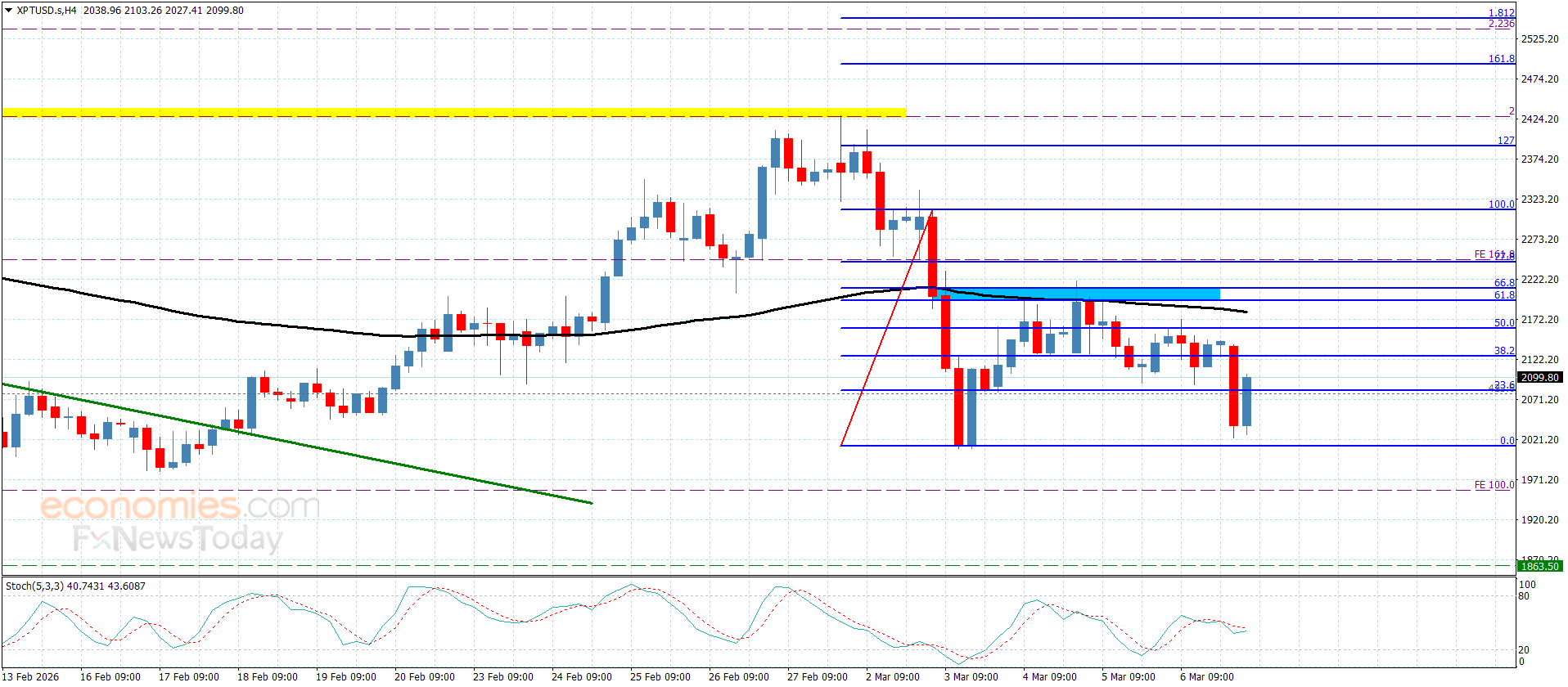
Platinum price formed a new bearish attack with the beginning of today’s trading, to approach from the targeted obstacle near $2010.00, which forced it to form bullish corrective rebound, to settle near $2100.00.
The bullish corrective rebound will not threaten the main bearish trend, depending on the main stability below $2210.00, besides the continuation of providing negative momentum by the main indicators, therefore, we will keep the bearish attempts in the current period, which might target 2040.00 and 2010.00 level.
The expected trading range for today is between $2010.00 and $2150.00
Trend forecast: Bearish
Platinum price formed a new bearish attack with the beginning of today’s trading, to approach from the targeted obstacle near $2010.00, which forced it to form bullish corrective rebound, to settle near $2100.00.
The bullish corrective rebound will not threaten the main bearish trend, depending on the main stability below $2210.00, besides the continuation of providing negative momentum by the main indicators, therefore, we will keep the bearish attempts in the current period, which might target 2040.00 and 2010.00 level.
The expected trading range for today is between $2010.00 and $2150.00
Trend forecast: Bearish
Coffee price kept its stability above 275.80 support until this moment, attempting to find a chance to reduce the losses, farming sideways waves by its fluctuation near 280.00 level.
The price needs new bullish momentum, reinforcing the chances of beginning recovering the losses, to expect its rally towards 293.50 directly, to press on the barrier at 301.00, while the decline below the current support will confirm the continuation of the negativity in the upcoming trading, expecting the next negative target at 264.80 level.
The expected trading range for today is between 275.00 and 293.50
Trend forecast: Bullish
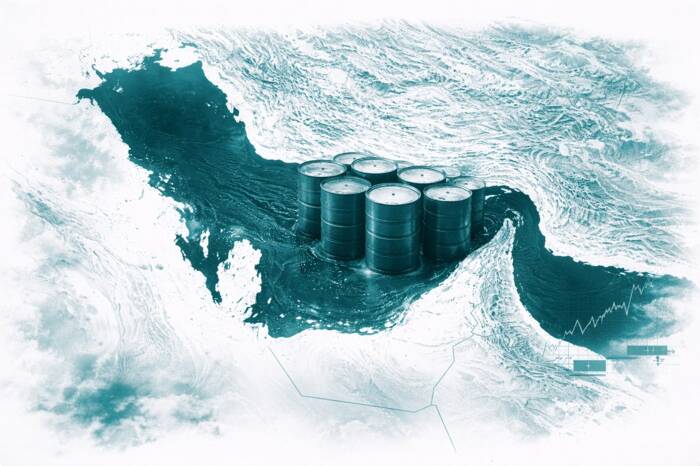
According to Wall Street Journal, the United Arab Emirates and Kuwait had begun to curb oil production as the closure of the Strait of Hormuz affects the flow of supplies and fills storage facilities. Abu Dhabi National Oil Co. said it is managing offshore production levels to deal with storage requirements. Kuwait Petroleum Corp. also cut output at oil fields and refineries after Iranian threats against safe passage through Hormuz.
Kuwait started to reduce output by some 100,000 barrels per day early Saturday. The reduction is nearly triple on Sunday. This implies that cuts may be up to around 300,000 barrels per day or higher depending on storage levels and the situation around Hormuz.
Kuwait produced about 2.57 million barrels per day in January and relies completely on the Strait of Hormuz for exports. This is a heavy dependence that makes the country vulnerable as there are not many alternative routes from where shipments can come.
The UAE is in a better position but is still facing pressure. The country produced more than 3.5 million barrels per day in January as OPEC’s third largest producer. It is able to bypass Hormuz via a 1.5 million barrel per day pipeline to Fujairah on the western coast and also take advantage of international storage facilities.
Disruptions are spreading in the region. Iraq has begun to withhold production for storage tank saturation. Saudi Arabia shut its largest refinery and Qatar closed the world’s largest liquefied natural gas export plant after drone attacks. Saudi Arabia has diversified some of its crude exports to Yanbu on the Red Sea but this route is not capable of completely replacing exports that usually pass through the Strait of Hormuz.
The current supply shock is already having an impact on consumers all over the world. Asian refiners are beginning to report shortages as shipments from the Gulf slow down. When there are fewer cargoes available to the market, refiners must scale down operations or seek out other supplies. This situation makes energy more expensive not only for businesses but also for households.
At the same time, the global economy is still showing signs of growth. This causes inflationary effect of higher oil prices to be stronger as energy demand is still firm. The ISM Manufacturing PMI is 52.4% which signifies mild expansion of industrial sector.
Economists and oil market analysts have hiked their oil price forecasts for 2026 amid rising geopolitical tensions and heightened war premium due to the U.S.-Iran standoff.
Both crude oil benchmarks are now expected to average above $60 per barrel this year, with price forecasts higher by about $1.50 per barrel compared to a month ago, the monthly Reuters poll showed on Friday.
Despite ongoing concerns about an oversupplied market, the 34 analysts and economists surveyed by Reuters in February raised their projections in view of uncertainties in how the Iran crisis would unfold in the coming weeks and months.
In the February poll, Brent Crude prices are expected to average $63.85 per barrel in 2026. This month’s estimate is higher compared to the January forecast of $62.02.
The analysts in the poll expect the U.S. benchmark, WTI Crude, to average above $60 per barrel this year, too—at $60.38 a barrel, up from $58.72 expected in January.
Year to date, Brent price have averaged $70.48 per barrel and WTI – $65.01 a barrel.
Early on Friday, both benchmarks were trading 3% higher, with Brent near $73 and WTI at $67, after the United States and Iran adjourned the Thursday talks with plans for another round of negotiations next week.
Oman’s Foreign Minister, Badr Albusaidi, who was mediating the indirect talks in Geneva, said the parties had made “significant progress” in the nuclear talks. Next week, negotiations are set to be held in Vienna, Austria.
It is the ongoing U.S.-Iran standoff that has been the main driver of oil analysts in the Reuters poll to raise their oil price forecasts for this year.
Currently, the geopolitical risk premium already baked in the price of oil is about $4-$10 per barrel, analysts say.
The war premium, the OPEC+ supply policy, and the fundamentals in supply-demand balances will steer the direction of oil prices this year, they note.
By Michael Kern for Oilprice.com
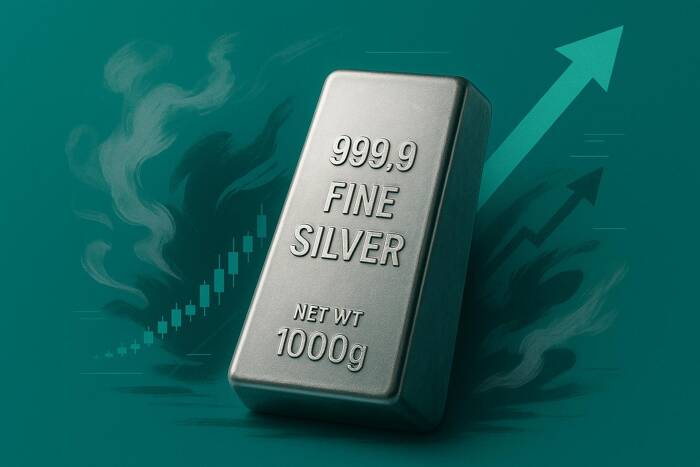
Silver (XAG/USD) trades modestly higher on Friday as the US Dollar (USD) and Treasury yields ease following softer-than-expected US Nonfarm Payrolls (NFP) data. Despite the intraday bounce, the white metal remains on track for its first weekly decline in three weeks.
At the time of writing, XAG/USD is trading around $84.27, up nearly 2.73% on the day after rebounding from a daily low near $80.17.
Meanwhile, the escalating US-Iran conflict continues to offer some underlying support to safe-haven assets, helping limit deeper losses in Silver.
However, rising Oil prices driven by supply disruptions through the Strait of Hormuz are fueling global inflation concerns. As a result, traders are trimming expectations for Federal Reserve (Fed) interest rate cuts, which tends to weigh on the non-yielding metal.
From a technical perspective, Silver is showing signs of consolidation after retreating from the upper Bollinger Band earlier this week. On the daily chart, price action is attempting to stabilise around the middle Bollinger Band near $83, which also serves as the 20-day Simple Moving Average (SMA), keeping the near-term bias neutral to slightly bullish.
Momentum indicators point to a lack of strong directional conviction. The Relative Strength Index (RSI) is hovering near the 50 mark, suggesting balanced momentum after the recent pullback.
The Moving Average Convergence Divergence (MACD) indicator (12, 26, close, 9) is flattening near the zero line, suggesting fading bearish momentum, though the MACD line remains slightly below the signal line.
The Average Directional Index (ADX) is trending lower near 18, indicating weakening trend strength and reinforcing the view that the market has shifted into a range-bound phase.
On the downside, a decisive break below the middle Bollinger Band could expose the lower Bollinger Band around $72 as the next support level, followed by the February swing low near $64.08.
On the upside, a clear break above the upper Bollinger Band near $93.86 would be needed to attract fresh buying interest. A move beyond this level could open the door toward the $100 psychological mark, which may cap gains initially before a potential extension toward a retest of the all-time high near $121.66.
Silver is a precious metal highly traded among investors. It has been historically used as a store of value and a medium of exchange. Although less popular than Gold, traders may turn to Silver to diversify their investment portfolio, for its intrinsic value or as a potential hedge during high-inflation periods. Investors can buy physical Silver, in coins or in bars, or trade it through vehicles such as Exchange Traded Funds, which track its price on international markets.
Silver prices can move due to a wide range of factors. Geopolitical instability or fears of a deep recession can make Silver price escalate due to its safe-haven status, although to a lesser extent than Gold’s. As a yieldless asset, Silver tends to rise with lower interest rates. Its moves also depend on how the US Dollar (USD) behaves as the asset is priced in dollars (XAG/USD). A strong Dollar tends to keep the price of Silver at bay, whereas a weaker Dollar is likely to propel prices up. Other factors such as investment demand, mining supply – Silver is much more abundant than Gold – and recycling rates can also affect prices.
Silver is widely used in industry, particularly in sectors such as electronics or solar energy, as it has one of the highest electric conductivity of all metals – more than Copper and Gold. A surge in demand can increase prices, while a decline tends to lower them. Dynamics in the US, Chinese and Indian economies can also contribute to price swings: for the US and particularly China, their big industrial sectors use Silver in various processes; in India, consumers’ demand for the precious metal for jewellery also plays a key role in setting prices.
Silver prices tend to follow Gold’s moves. When Gold prices rise, Silver typically follows suit, as their status as safe-haven assets is similar. The Gold/Silver ratio, which shows the number of ounces of Silver needed to equal the value of one ounce of Gold, may help to determine the relative valuation between both metals. Some investors may consider a high ratio as an indicator that Silver is undervalued, or Gold is overvalued. On the contrary, a low ratio might suggest that Gold is undervalued relative to Silver.
Important DisclaimersFXEmpire is owned and operated by Empire Media Network LTD., Company Registration Number 514641786, registered at 7 Jabotinsky Road, Ramat Gan 5252007, Israel. The content provided on this website includes general news and publications, our personal analysis and opinions, and materials provided by third parties. This content is intended for educational and research purposes only. It does not constitute, and should not be interpreted as, a recommendation or advice to take any action, including making any investment or purchasing any product. Before making any financial decision, you should conduct your own due diligence, exercise your own discretion, and consult with competent advisors. The content on this website is not personally directed to you, and we do not take into account your individual financial situation or needs. The information contained on this website is not necessarily provided in real time, nor is it guaranteed to be accurate. Prices displayed may be provided by market makers and not by exchanges. Any trading or other financial decision you make is entirely your own responsibility, and you must not rely solely on any information provided through the website. FXEmpire does not provide any warranty regarding the accuracy, completeness, or reliability of any information contained on the website and shall bear no responsibility for any trading losses you may incur as a result of using such information. The website may include advertisements and other promotional content. FXEmpire may receive compensation from third parties in connection with such content. FXEmpire does not endorse, recommend, or assume responsibility for the use of any third-party services or websites. Empire Media Network LTD., its employees, officers, subsidiaries, and affiliates shall not be liable for any loss or damage resulting from your use of the website or reliance on the information provided herein.Risk DisclaimersThis website contains information about cryptocurrencies, contracts for difference (CFDs), and other financial instruments, as well as about brokers, exchanges, and other entities trading in such instruments. Both cryptocurrencies and CFDs are complex instruments and involve a high risk of losing money. You should carefully consider whether you understand how these instruments work and whether you can afford to take the high risk of losing your money. FX Empire encourages you to conduct your own research before making any investment decision and to avoid investing in any financial instrument unless you fully understand how it works and the risks involved.
Listen to this article
Estimated 5 minutes
The audio version of this article is generated by AI-based technology. Mispronunciations can occur. We are working with our partners to continually review and improve the results.
As conflict continues in the Middle East, soaring oil prices have left many wondering what’s next for Alberta’s resource-heavy economy.
West Texas Intermediate (WTI) crude, the benchmark for oil prices in North America, rose above $90 Friday morning and ended the day at just over $91 — a dramatic increase from before the U.S. and Israel launched an attack on Iran last weekend.
ATB Financial’s chief economist Mark Parsons says those prices could lead to short-term revenue increases in Alberta, but the longer term impact remains to be seen.
“I don’t think producers are going to suddenly change their budgets based on what’s happened in the last week,” he said. “We need to see this continue for a little bit longer.”
The province is operating on a $4.1-billion deficit in the current fiscal year, while Budget 2026 forecasts a $9.4-billion deficit for the fiscal year ahead.
The latest budget, which covers the fiscal year beginning this April, forecasts WTI crude at $60.50 US per barrel, while the current fiscal year ending on March 31 was based on an average of $61.50.
“The province is relying on a very volatile revenue base, and it can easily go the other way,” Parson said.
“The question for the Alberta government is how much can they bank on this revenue to meet ongoing spending needs caused by population growth like schools, hospitals, road infrastructure. So that problem hasn’t gone away.”
Speaking to reporters Friday, Minister of Transportation and Economic Corridors Devin Dreeshen said “we’ll see what happens” when asked what oil prices could mean for Budget 2026 and projects going forward.
“Obviously, from a budgeting standpoint, it does have to extend throughout the entire year to make a big difference,” he said, not addressing any specific projects.
Parsons said the higher oil prices would lead to “an uplift in revenues in the energy producing provinces of Alberta, Saskatchewan, Newfoundland. In the provinces that don’t produce energy, it’s mostly higher costs … what you’re going to see is uneven impacts across the country.”
The price of Western Canadian Select, Canadian oil traded at a discount to WTI, could also benefit due to a potential shortage of heavy crude coming from the Middle East, Parsons said.
It’s unclear how much higher crude prices could get, but some experts have bold projections: oil market analyst Rory Johnston took to social media Friday to forecast WTI prices reaching upwards of $200 US per barrel unless traffic through the Strait of Hormuz resumes.
The strait is a narrow passage between Iran and Oman through which one-fifth of the world’s crude oil travels. Oil tanker traffic there has plummeted since the conflict began.

CBC’s senior business correspondent Peter Armstrong explains what’s happening around the critical shipping lanes in the Strait of Hormuz on Monday as conflict escalates following U.S. and Israeli attacks on Iran.
The $200 prediction seems “a bit high” to Tristan Goodman, president of the Explorers and Producers Association of Canada, but he says he could see prices cross the $100 mark if current trends continue.
“It really depends on the situation on the ground and what’s been taken offline,” he said. “It’s not just about [passage through the Strait of Hormuz], it’s a matter of what oil facilities and oil production is still online within the region.”
Goodman said “it’s quite surprising how quickly producers can bring that production back online, which is a beneficiary to maintain price stability.”
That stability is crucial in a situation evolving this rapidly, he said.
“I think you’re probably going to see higher prices going forward, regardless of what happens within that area,” he said. “Even if stability starts to come back, and there’s resolution to this conflict — which actually doesn’t look like that’s going to be the case right away here — you’ll still see some high prices.”

With the Iran war threatening to upend much of the world’s oil and gas supply from Gulf states, experts say there could be a big uptick in demand for Canadian energy products, but Canada’s limited ability to get the products to market could be an obstacle.
Soaring prices aren’t necessarily a good thing for producers in the industry, especially when they change so dramatically and come with such unpredictability, Goodman said.
“It always sounds great to have really high prices, but actually even the producers don’t want that, because then you start to have negative impacts across the economic system,” he said.
“Once you get [oil prices] above $100 … it’s positive in one sense, from the short-term, from a profit perspective, but it’s not necessarily giving the stability you need within your product.”
Gas prices averaged 144.3 cents per litre across Canada on Friday, according to CAA National — a significant increase from 127.6 cents per litre last month.
Goodman and Parsons say the situation could lead to increased investor confidence in Canada, but that more certainty is needed domestically.
“I think investors are going to be looking at Canada as a pretty safe place to put their money. The question is: can we build the pipelines, the market access that’s needed to increase our production?” Parsons said.