The main tag of Gold Price Articles.
You can use the search box below to find what you need.
[wd_asp id=1]
The main tag of Gold Price Articles.
You can use the search box below to find what you need.
[wd_asp id=1]
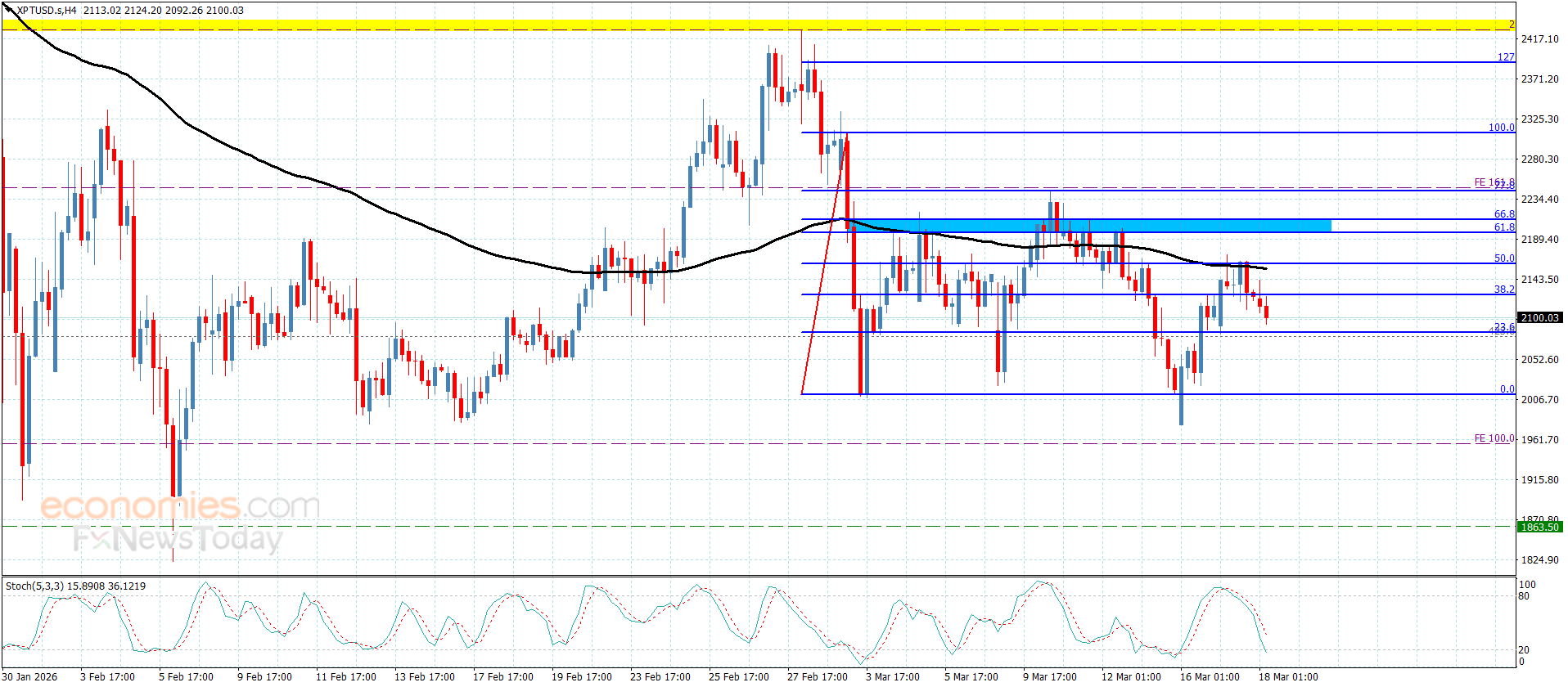
No change on platinum price negative track until this moment, due to its negative stability below $2210.00 level, forming some bearish waves and targeting $2090.00 level, approaching the suggested initial target in the previous report.
Providing negative momentum by the main indicators will assist to confirm the dominance of the negative scenario, to keep waiting for targeting extra stations by reaching $2015.00, while its rally above the barrier and providing a positive close will provide new chances to attempt to build a new bullish track directly to $2250.00 reaching 2310.00 level.
The expected trading range for today is between $2015.00 and $2140.00
Trend forecast: Bearish
The US stock market is likely to open higher in Wednesday’s trading session, March 18, as futures of the three key averages—the S&P 500, Dow Jones Industrial Average, and Nasdaq Composite—are trading lower by 0.4%, 0.4%, and 0.3%, respectively, as crude oil prices stabilised following a sharp run-up, while investors’ awaiting the US Federal Reserve policy decision.
The S&P 500 has closed higher over the last two trading sessions, marking the first such instance since the start of the Iranian war.
Brent crude oil prices dropped to $100 per barrel earlier in the day after rising to $105 in the previous session. Higher oil prices are boosting energy stocks, supporting the key indices to stay afloat.
Meanwhile, the dollar index, which tracks its performance against a basket of major currencies, has largely remained unchanged at 99.56 in today’s session.
The dollar had climbed above 100.3 on Friday, its highest level since mid-May 2025, and ended last week up 1.66%, marking its second consecutive weekly gain. So far this month, the dollar has strengthened by 2%, the biggest monthly gain since July 2025, when it rose 3.37%.
The US Federal Reserve’s policy decision is due later in the day, where policymakers are widely expected to hold rates steady, with traders anticipating only one 25-basis-point cut, possibly in September.
Investors are assessing that higher crude oil, gas, and fertiliser prices, triggered by the ongoing war in the Middle East, could prompt the central bank to hold interest rates until late 2026.
Before pausing rate cuts in January, policymakers had reduced short-term interest rates three consecutive times, indicating that the impact of US President Donald Trump’s tariffs on the economy was limited.
However, the ongoing US-Iran war has led to a sharp rise in energy prices, making policymakers’ jobs more difficult, given an already soft labour market.
Economists are forecasting that if the seizure of the Strait of Hormuz remains in place for more weeks, it could impact consumer spending, as more household income is spent on fuel, leaving less money for other goods and services, resulting in higher unemployment in the world’s largest economy.
Higher oil prices could also lead to increases in consumer goods prices, which may add further strain to consumer spending, the main growth engine for the US economy.
With crude oil prices running high, many economists expect the Fed will have to raise its inflation forecast to as high as 3% even by late 2026. An increase of that magnitude could be hard to reconcile with further interest rate cuts.
In the January meeting, most policymakers cautioned that progress toward the 2% inflation objective could be slower and more uneven than previously expected. They emphasised that inflation running persistently above target remains a key concern.
The US central bank has been battling to bring inflation down to its long-term 2% target since the pandemic, with prices remaining persistently high.
Meanwhile, the US job market is sputtering. Last month, employers cut 92,000 jobs. In 2025, they added fewer than 10,000 jobs a month, marking the weakest hiring outside recession years since 2002.
A combination of rising prices and higher unemployment is generally the worst-case scenario for central bankers.
On the economy front, the world’s largest economy has been resilient in the face of President Donald Trump’s import taxes and deportations. However, the US Commerce Department reported on March 13 that economic growth slowed sharply in the last three months of 2025 to 0.7%, half its initial estimate of fourth-quarter growth and down from a strong 4.4% expansion in the third quarter.
Disclaimer: We advise investors to check with certified experts before making any investment decisions.
Important DisclaimersFXEmpire is owned and operated by Empire Media Network LTD., Company Registration Number 514641786, registered at 7 Jabotinsky Road, Ramat Gan 5252007, Israel. The content provided on this website includes general news and publications, our personal analysis and opinions, and materials provided by third parties. This content is intended for educational and research purposes only. It does not constitute, and should not be interpreted as, a recommendation or advice to take any action, including making any investment or purchasing any product. Before making any financial decision, you should conduct your own due diligence, exercise your own discretion, and consult with competent advisors. The content on this website is not personally directed to you, and we do not take into account your individual financial situation or needs. The information contained on this website is not necessarily provided in real time, nor is it guaranteed to be accurate. Prices displayed may be provided by market makers and not by exchanges. Any trading or other financial decision you make is entirely your own responsibility, and you must not rely solely on any information provided through the website. FXEmpire does not provide any warranty regarding the accuracy, completeness, or reliability of any information contained on the website and shall bear no responsibility for any trading losses you may incur as a result of using such information. The website may include advertisements and other promotional content. FXEmpire may receive compensation from third parties in connection with such content. FXEmpire does not endorse, recommend, or assume responsibility for the use of any third-party services or websites. Empire Media Network LTD., its employees, officers, subsidiaries, and affiliates shall not be liable for any loss or damage resulting from your use of the website or reliance on the information provided herein.Risk DisclaimersThis website contains information about cryptocurrencies, contracts for difference (CFDs), and other financial instruments, as well as about brokers, exchanges, and other entities trading in such instruments. Both cryptocurrencies and CFDs are complex instruments and involve a high risk of losing money. You should carefully consider whether you understand how these instruments work and whether you can afford to take the high risk of losing your money. FX Empire encourages you to conduct your own research before making any investment decision and to avoid investing in any financial instrument unless you fully understand how it works and the risks involved.
The EURJPY repeated attempts to form bullish waves due to providing positive momentum by the main indicators in the last period, to move away from the support at 182.00 and recording some gains by reaching 183.55.
We couldn’t confirm regaining the bullish bias unless breaching the barrier at 184.40 level and holding above it, therefore, we expect forming unstable mixed trading, to keep waiting for surpassing the main levels to confirm the main trend in the upcoming period.
The expected trading range for today is between 182.55 and 184.00
Trend forecast: Fluctuating within the bearish track
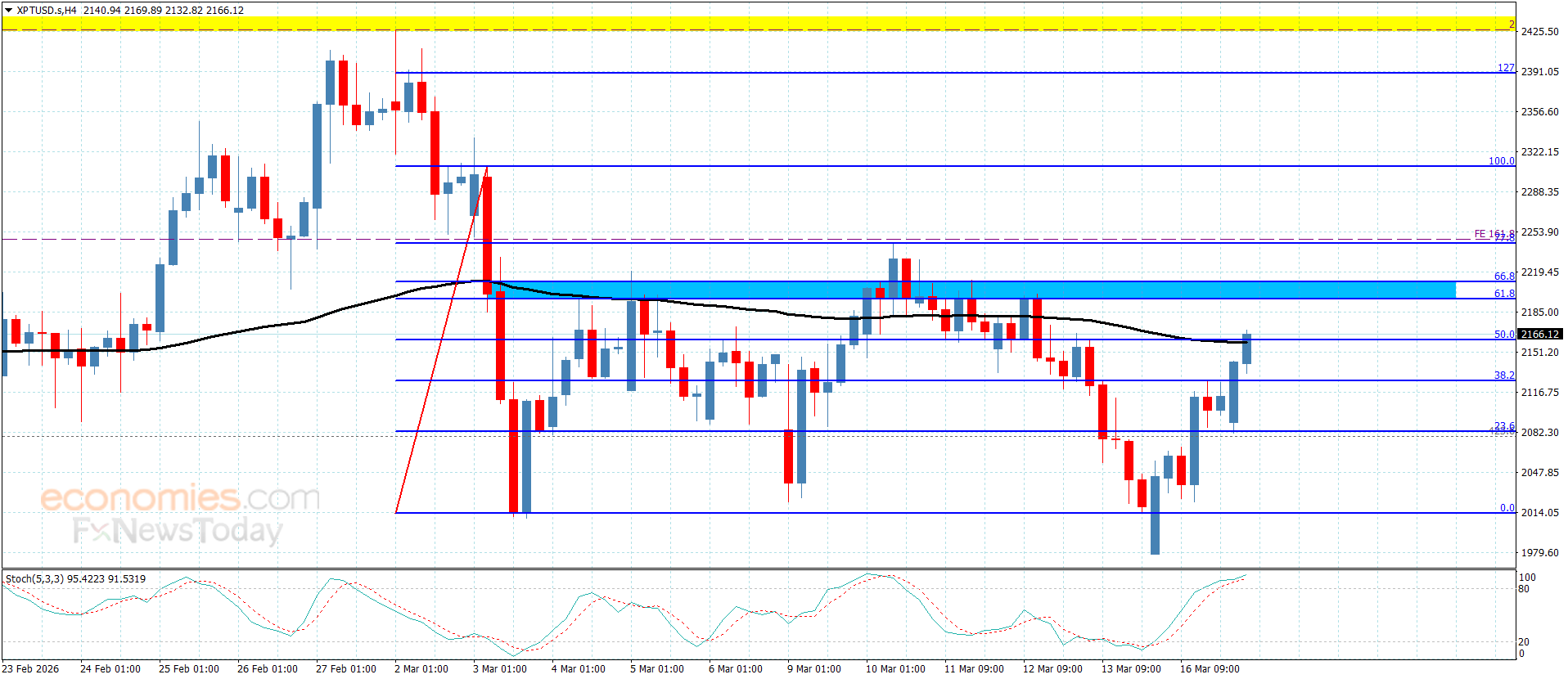
Platinum price was influenced by yesterday’s trading, gaining additional positive pressure as the stochastic indicator surged toward overbought levels. This forced the price to delay the expected bearish corrective move and achieve some gains, currently advancing toward $2170.00, where it faces the 55-period moving average.
We expect the price to form some sideways trading. If it remains below the barrier at $2210.00, it may start forming new bearish waves, attempting to reach $2080.00 and then $2015.00. On the other hand, a return to an upward trend would require a positive four-hour close above $2245.00.
The expected trading range for today is between $2080.00 and $2200.00
Trend forecast: Bearish
Platinum is a rare precious metal that is widely used not only in jewellery but also in the industrial sector. Around 44% of global demand comes from car manufacturers, who use platinum in the production of catalytic converters.
Since platinum is a commodity, investing in the XPTUSD pair requires a different approach than investing in traditional instruments such as stocks or bonds. The price of this precious metal is influenced by numerous factors, including the US Fed’s monetary policy, the global economic situation, and platinum mining rates. Read on to find out the potential trajectory of the XPTUSD exchange rate in 2026 and beyond.
The article covers the following subjects:
The current XPT price is $2 138.95 as of 18.03.2026.
The highest XPT price of $2920.41 was reached on 26.01.2026, while the all-time low of $562.25 was set on 16.03.2020.
According to analytical platforms, the price of platinum is expected to trade within the range of $2,228.74–$2,297.89 in 2026. A more optimistic scenario suggests a price surge to $3,337.00–$3,504.00.
Forecasts for 2027 remain optimistic. Conservative estimates suggest a range of $2,373.50–$2,438.51, while more upbeat projections point to growth up to $3,760.00.
Further appreciation of the asset is expected through 2030. Some forecasts indicate a range of $2,805.92–$2,871.69, while others suggest that platinum may soar to $6,138.00.
The long-term outlook for the asset is relatively vague. Nevertheless, some analytical platforms predict that platinum could reach $9,457.00 by 2037.
The current XPT price is $2 138.95 as of 18.03.2026.
It is crucial to monitor the following parameters to assess the prospects of the precious metal:
Year-over-Year Inflation Rate (US), determined based on the Consumer Price Index (CPI), which measures changes in the prices of goods and services.
Interest Rate (US): The cost of borrowing funds, expressed as a percentage of the borrowed amount. It impacts investment and consumer spending.
52-Week Range: The highest and lowest prices of the asset over the past year.
Trading Volume: A metric used in financial markets to track the total amount of trading activity.
Yearly Change: The cumulative change in the asset’s price over the past year.
Fear and Greed Index: A real-time indicator reflecting investor sentiment and expectations about the asset.
|
Indicator |
Value |
|
Year-over-year inflation rate (US) |
2.39% |
|
Interest rate (US) |
3.5–3.75% |
|
52-week range |
$822.59–$2,920.55 |
|
Technical analysis signal |
Moderate Buy |
|
Average daily trading volume |
23,300 contracts (CME, February 2026) |
|
Yearly change |
150% |
On the weekly chart, XPT/USD has maintained an uptrend following a sharp rally from the $900.00–$1,100.00 area. The price of $2,157.00 remains above the EMA21, EMA50, and EMA100 moving averages, suggesting that bulls remain in control, although volatility has increased.
The $2,000.00–$2,015.00 area serves as the nearest support. Below that, the $1,690.00 level and the lower Bollinger Band zone around $1,345.00 are key. The nearest resistance area is between $2,450.00 and $2,850.00, and the upper Bollinger Band is at $2,682.00.
After the market overheated, it entered a consolidation phase. MACD remains above zero, but the histogram is turning down, and the indicator lines are flattening, suggesting weakening momentum. The RSI is around 56, signaling no overbought conditions and leaving room for a new upward move.
As long as the price trades above $2,000.00, the general sentiment will remain bullish, though signs of a slowdown are emerging following the sharp rise in recent weeks.
Below are the projected price levels for XPTUSD over the next 12 months.
|
Month |
Minimum, $ |
Maximum, $ |
|
April 2026 |
2,000.00 |
2,200.00 |
|
May 2026 |
2,050.00 |
2,250.00 |
|
June 2026 |
2,080.00 |
2,300.00 |
|
July 2026 |
2,120.00 |
2,350.00 |
|
August 2026 |
2,180.00 |
2,420.00 |
|
September 2026 |
2,220.00 |
2,500.00 |
|
October 2026 |
2,280.00 |
2,580.00 |
|
November 2026 |
2,350.00 |
2,680.00 |
|
December 2026 |
2,400.00 |
2,780.00 |
|
January 2027 |
2,450.00 |
2,880.00 |
|
February 2027 |
2,500.00 |
2,980.00 |
|
March 2027 |
2,550.00 |
3,000.00 |
The baseline scenario suggests opening trades near key support levels and on breakouts of resistance levels. The bullish area is located in the $2,000.00–$2,050.00 range, where price action has previously found support and where several moving averages converge. If reversal candlesticks appear in this zone, it could signal an opportunity to open long positions.
An alternative scenario involves entering the market after a consolidation above the $2,450.00 resistance level, confirming the continuation of the uptrend. The nearest target is in the $2,680.00 area, where partial profit-taking is possible. If bullish momentum strengthens, the market may test the $2,850.00–$3,000.00 zone.
Additional confirmation can come from a bullish MACD crossover and the RSI rising above 60, signaling a renewed buying pressure.
Forecasts suggest moderate volatility in the platinum market in 2026. Most analytical platforms anticipate a fluctuating market with periods of growth and correction. Investor demand is expected to remain strong, and the trading range is likely to shift higher during the year.
Price range: $2,199.66–$2,297.89.
According to WalletInvestor, the price of XPTUSD is likely to remain stable in 2026, trading within a narrow range. By year-end, an uptrend is likely, with the price reaching a high of $2,297.89.
|
Month |
Open, $ |
Close, $ |
Minimum, $ |
Maximum, $ |
|
April |
2,199.66 |
2,226.05 |
2,199.66 |
2,232.07 |
|
May |
2,223.15 |
2,234.94 |
2,223.15 |
2,237.79 |
|
June |
2,234.60 |
2,229.34 |
2,229.34 |
2,234.91 |
|
July |
2,230.74 |
2,236.22 |
2,228.43 |
2,240.15 |
|
August |
2,234.21 |
2,233.33 |
2,220.76 |
2,234.21 |
|
September |
2,233.62 |
2,218.14 |
2,216.56 |
2,237.23 |
|
October |
2,218.79 |
2,224.44 |
2,216.44 |
2,226.74 |
|
November |
2,226.18 |
2,228.92 |
2,225.90 |
2,230.82 |
|
December |
2,228.74 |
2,297.89 |
2,228.74 |
2,297.89 |
Price range: $1,904.60–$2,531.60.
Gov Capital anticipates high volatility in platinum prices in 2026. The projected range for the middle of the year is $2,021.92–$2,471.24. By the end of the year, the asset’s price could rise to $2,036.37–$2,488.90.
|
Month |
Open, $ |
Average, $ |
Close, $ |
|
April |
2,291.33 |
2,519.14 |
2,063.52 |
|
May |
2,244.16 |
2,468.58 |
2,019.74 |
|
June |
2,246.58 |
2,471.24 |
2,021.92 |
|
July |
2,083.08 |
2,291.39 |
1,874.77 |
|
August |
2,116.22 |
2,327.84 |
1,904.60 |
|
September |
2,177.64 |
2,395.40 |
1,959.87 |
|
October |
2,199.72 |
2,419.70 |
1,979.75 |
|
November |
2,220.60 |
2,442.66 |
1,998.54 |
|
December |
2,262.63 |
2,488.90 |
2,036.37 |
Price range: $1,991.00–$3,504.00.
LongForecast also points to significant volatility. Analysts expect platinum prices to rise in 2026, though periods of correction are likely. The price will likely peak at $3,504.00 in November.
|
Month |
Open, $ |
Min–Max, $ |
Close, $ |
|
April |
2,291.00 |
2,236.00–2,641.00 |
2,413.00 |
|
May |
2,413.00 |
2,413.00–2,691.00 |
2,563.00 |
|
June |
2,563.00 |
2,563.00–2,838.00 |
2,703.00 |
|
July |
2,703.00 |
2,703.00–3,015.00 |
2,871.00 |
|
August |
2,871.00 |
2,871.00–3,201.00 |
3,049.00 |
|
September |
3,049.00 |
2,822.00–3,120.00 |
2,971.00 |
|
October |
2,971.00 |
2,971.00–3,313.00 |
3,155.00 |
|
November |
3,155.00 |
3,155.00–3,504.00 |
3,337.00 |
|
December |
3,337.00 |
3,016.00–3,337.00 |
3,175.00 |
According to most forecasts, the platinum market will continue to expand in 2027. However, most analysts expect the trend to be moderately bullish, without dramatic increases. Periods of volatility are possible due to shifts in demand and macroeconomic factors.
Note: The price ranges reflect the asset's expected volatility throughout the year. Lows and highs may not be shown in the summary tables.
Price range: $2,298.84–$2,438.51.
According to WalletInvestor, platinum may continue to rise steadily. Short-term corrections are possible throughout the year. If favorable market conditions persist, the XPT/USD rate may reach a high of $2,438.51 by year-end.
|
Quarter |
Minimum, $ |
Average, $ |
Maximum, $ |
|
Q1 |
2,298.84 |
2,357.44 |
2,376.46 |
|
Q2 |
2,343.62 |
2,373.95 |
2,382.12 |
|
Q3 |
2,360.81 |
2,373.64 |
2,384.14 |
|
Q4 |
2,360.25 |
2,392.31 |
2,438.51 |
Price range: $1,840.37–$2,531.60.
Gov Capital suggests that the XPT price will exhibit significant volatility throughout 2027. At the same time, XPT/USD quotes are expected to rebound to higher levels following minor corrections.
|
Quarter |
Minimum, $ |
Average, $ |
Maximum, $ |
|
Q1 |
1,952.66 |
2,408.62 |
2,531.60 |
|
Q2 |
1,970.66 |
2,433.70 |
2,492.49 |
|
Q3 |
1,840.37 |
2,249.34 |
2,312.99 |
|
Q4 |
1,889.74 |
2,309.69 |
2,395.40 |
Price range: $3,004.00–$3,765.00.
According to LongForecast, the XPT/USD market will remain volatile in 2027. Despite periodic declines, the overall trend is expected to be relatively stable. The price will likely peak at $3,765.00 by the end of the second half of the year.
|
Quarter |
Minimum, $ |
Average, $ |
Maximum, $ |
|
Q1 |
3,208.00 |
3,443.00 |
3,760.00 |
|
Q2 |
3,196.00 |
3,508.00 |
3,765.00 |
|
Q3 |
3,036.00 |
3,273.00 |
3,573.00 |
|
Q4 |
3,004.00 |
3,275.00 |
3,597.00 |
According to analysts, the XPTUSD rate will remain fairly volatile in 2028, trading within a wide range, with periods of growth and short-term corrections expected.
Price range: $2,449.96–$2,578.28.
According to WalletInvestor, the XPT/USD is expected to continue rising moderately in 2028. However, analysts anticipate periods of short-term volatility. If demand remains strong, the price of platinum could gradually rise to $2,578.28.
|
Quarter |
Minimum, $ |
Average, $ |
Maximum, $ |
|
Q1 |
2,449.96 |
2,501.85 |
2,521.19 |
|
Q2 |
2,493.21 |
2,517.71 |
2,526.32 |
|
Q3 |
2,504.23 |
2,524.07 |
2,528.58 |
|
Q4 |
2,505.17 |
2,534.05 |
2,578.28 |
Price range: $1,840.37–$2,531.60.
Gov Capital indicates that platinum prices will likely remain highly volatile. The XPTUSD price is expected to decline throughout 2028, though rebounds to higher levels are possible. The price is expected to peak at $2,531.60 in the first quarter.
|
Quarter |
Minimum, $ |
Average, $ |
Maximum, $ |
|
Q1 |
1,952.66 |
2,408.62 |
2,531.60 |
|
Q2 |
1,970.66 |
2,433.70 |
2,492.49 |
|
Q3 |
1,840.37 |
2,249.34 |
2,312.99 |
|
Q4 |
1,889.74 |
2,309.69 |
2,395.40 |
Price range: $2,898.00–$3,640.00.
According to LongForecast, the price of XPTUSD will continue to fluctuate widely in 2028. However, despite periodic declines, the potential for growth will remain.
|
Quarter |
Minimum, $ |
Average, $ |
Maximum, $ |
|
Q1 |
2,898.00 |
3,192.00 |
3,485.00 |
|
Q2 |
3,136.00 |
3,354.00 |
3,640.00 |
|
Q3 |
2,941.00 |
3,212.00 |
3,452.00 |
|
Q4 |
2,989.00 |
3,181.00 |
3,547.00 |
Forecasts for 2029 suggest that the platinum market will strengthen in the long term. The XPTUSD price is expected to trade within a wide range, with periods of growth and short-term corrections projected.
Price range: $2,589.52–$2,729.15.
WalletInvestor assumes that the price of XPT/USD will continue to trend upward. Minor pullbacks are likely throughout the year, but the overall trend will remain bullish. By the end of the year, the price is expected to reach a high of $2,729.15.
|
Quarter |
Minimum, $ |
Average, $ |
Maximum, $ |
|
Q1 |
2,589.52 |
2,645.57 |
2,665.56 |
|
Q2 |
2,633.84 |
2,659.38 |
2,670.37 |
|
Q3 |
2,648.40 |
2,667.37 |
2,672.77 |
|
Q4 |
2,648.81 |
2,676.67 |
2,729.15 |
Price range: $1,840.37–$2,531.60.
Gov Capital indicates that significant price volatility will likely persist. The XPT market is expected to change direction several times throughout 2029. However, periods of decline are likely to be followed by a recovery to higher levels.
|
Quarter |
Minimum, $ |
Average, $ |
Maximum, $ |
|
Q1 |
1,952.66 |
2,408.62 |
2,531.60 |
|
Q2 |
1,970.66 |
2,433.70 |
2,492.49 |
|
Q3 |
1,840.37 |
2,249.34 |
2,312.99 |
|
Q4 |
1,889.74 |
2,309.69 |
2,395.40 |
Price range: $2,766.00–$3,751.00.
According to LongForecast, platinum is expected to trade within a wide range in 2029. However, the overall trend is expected to remain upward. According to the forecast, the average price of the asset will rise from $3,059.00 to $3,431.00.
|
Quarter |
Minimum, $ |
Average, $ |
Maximum, $ |
|
Q1 |
2,824.00 |
3,059.00 |
3,378.00 |
|
Q2 |
2,766.00 |
3,091.00 |
3,472.00 |
|
Q3 |
2,874.00 |
3,217.00 |
3,583.00 |
|
Q4 |
3,183.00 |
3,431.00 |
3,751.00 |
Analysts believe that the platinum market will enter a new cycle in 2030. Significant volatility is expected to persist. According to forecasts, the XPTUSD price will trade within a wide range, reflecting changes in industrial demand and the global economic situation.
Price range: $2,732.03–$2,871.69.
WalletInvestor projects that the XPT/USD will continue to rise gradually. However, short-term pullbacks are possible throughout the year. If market momentum remains stable, the price of platinum will likely surge to $2,871.69 by the end of the year.
|
Quarter |
Minimum, $ |
Average, $ |
Maximum, $ |
|
Q1 |
2,732.03 |
2,789.24 |
2,809.39 |
|
Q2 |
2,774.65 |
2,805.19 |
2,814.25 |
|
Q3 |
2,792.78 |
2,808.92 |
2,816.72 |
|
Q4 |
2,792.59 |
2,816.22 |
2,871.69 |
Price range: $1,840.37–$2,531.60.
Gov Capital suggests that XPT/USD quotes will fluctuate widely in 2030, with periods of decline and recovery expected. This trend reflects shifts in the balance of supply and demand in the platinum market, as well as uncertainty regarding long-term market conditions.
|
Quarter |
Minimum, $ |
Average, $ |
Maximum, $ |
|
Q1 |
1,952.66 |
2,408.62 |
2,531.60 |
|
Q2 |
1,970.66 |
2,433.70 |
2,492.49 |
|
Q3 |
1,840.37 |
2,249.34 |
2,312.99 |
|
Q4 |
1,889.74 |
2,309.69 |
2,395.40 |
Long-term forecasts for platinum prices beyond 2030 remain uncertain, as the market is driven by factors such as technological advancements, the development of hydrogen energy, and global industrial shifts. These factors can significantly affect the structure of demand and supply for platinum.
According to CoinPriceForecast, the XPT/USD price is likely to continue its steady growth. By the end of 2031, the price could reach $6,975.00, and by 2035, it may approach $8,186.00. By 2037, a rise to $9,457.00 is possible.
BeatMarket offers a more conservative scenario. According to the forecast, by 2031, the platinum price may trade between $2,939.24 and $2,951.45.
|
Year |
Coin Price Forecast, $ |
Beat Market, $ |
|
2031 |
6,975.00 |
2,951.45 |
|
2035 |
8,186.00 |
– |
|
2037 |
9,457.00 |
– |
|
2040 |
– |
– |
Media sentiment plays a significant role in shaping investors’ short-term expectations, as public discussions amplify market reactions to key levels and technical signals. For the XPT/USD market, social media sentiment analysis helps traders understand how the market is interpreting the current trend phase and assess the outlook for future price movements.
User @DeepValueSignals notes that a potential pullback to the $1,400.00–1,500.00 support zone does not cancel the bullish scenario. The correction is seen as a regular market phase within the ascending channel. The user maintains a moderately bullish outlook for platinum prices.
User @HedgehogTrader highlights the current rally and suggests there is potential for a gain of around 30% to return to the highs of 2026. This assessment reinforces the bullish sentiment and expectations that the upward trend will continue.
User @KIZILDAĞ also confirms that the uptrend remains intact, but warns of a possible correction following the recent rally.
In general, media sentiment regarding XPTUSD remains moderately bullish: market participants acknowledge the strength of the current trend but also expect short-term corrections.
Platinum hit its all-time high of $2920.41 on 26.01.2026.
The lowest XPT price of $562.25 was set on 16.03.2020.
It is essential to evaluate historical data to make predictions as accurate as possible. The chart below shows the XPTUSD pair’s performance over the last ten years.
At the beginning of 2020, platinum demand fell sharply amid the COVID-19 pandemic, pushing prices down to $561.01. By the end of 2020, however, prices began to recover, supported by expectations of a global economic rebound and promising developments in hydrogen technologies.
Between 2021 and 2025, platinum traded within a wide range of $822.59–$1,317.41, reacting primarily to macroeconomic factors and geopolitical risks.
From May to December 2025, prices rose sharply, reaching $2,421.59, driven by heightened geopolitical tensions, high inflation, a weaker US dollar, and strong industrial demand.
Following a strong rally in late 2025, the platinum market faced high volatility in 2026. In January, XPT prices continued to rise, reaching a new all-time high of around $2,920.55 amid strong industrial and investor demand for the precious metal.
However, a sharp correction followed in February, and the price temporarily fell to around $2,000.00. In March, the market recovered, with platinum trading in the $2,160.00–$2,200.00 range.
Analyzing the fundamental factors that influence the value of XPTUSD plays a crucial role in forecasting future prices. This provides a comprehensive view of market conditions, helping traders make more informed decisions.
Demand and Supply. The balance between industrial demand (automotive industry, electronics, chemical industry) and supply from mines in South Africa, Russia, and other producing countries.
Geopolitical Factors. Political risks in producing countries, sanctions, and trade wars.
Economic Stability. The state of the global economy, inflation, and interest rates.
Currency Exchange Rates. The relationship between the U.S. dollar (the primary currency for platinum trading) and the currencies of producing countries.
Technological Innovations. The development of new technologies that reduce the need for platinum.
Investment Demand. Interest from institutional investors and individuals.
Automotive Standards. Stricter environmental regulations that encourage the use of platinum in catalytic converters.
Platinum Inventories. The level of reserves held by producers and consumers.
Prices of Other Metals. The cost of palladium, rhodium, and gold, which can serve as alternatives to platinum.
Energy Crisis. The impact of electricity prices on platinum production.
Platinum is the third most popular precious metal. When investing in this type of asset, a number of certain features should be taken into account:
South Africa is the world’s major platinum miner, accounting for approximately 70% of the global reserves. Consequently, production levels are heavily influenced by the region’s geopolitical and macroeconomic conditions.
Platinum serves as both an industrial and jewelry commodity, with the automotive sector driving most of the global demand, accounting for 44% of production. Meanwhile, the creation of ingots and coins makes up around 10%–15% of the market.
Platinum is less liquid in the market than gold and silver due to low investor demand.
The development of green energy has a mixed impact on the use of platinum in manufacturing. On the one hand, the precious metal is used in the production of catalysts for diesel cars. On the other hand, the shift to electric vehicles, which do not require these catalysts, is pushing diesel and petrol engines out of the market. However, hydrogen energy, which is rapidly advancing, is closely tied to platinum. Consequently, the future demand for platinum will largely hinge on the development of green energy.
The jewelry industry is the second largest sector in terms of consumption, representing nearly one-third of the total platinum supply. The main target market for jewelry made from this precious metal is China.
First and foremost, platinum is an excellent tool for diversifying your investment portfolio, helping to mitigate risks associated with other assets. Platinum began to gain recognition as an investment asset in the second half of the 20th century. Nowadays, there are many ways to invest in this asset:
Buying shares in an ETF (exchange-traded investment fund) with net assets consisting of ingots;
Buying physical metal, such as platinum ingots and coins.
Buying the precious metal by opening an unallocated metal account in banks;
Use of complex derivative instruments, like futures or CFDs, for speculation on the financial market;
Investing in shares of public companies engaged in the exploration and mining of precious metals, including platinum.
This section explores the advantages and disadvantages of investing in platinum.
Industrial Importance of the Precious Metal. Platinum plays a significant role in the automotive industry and the emerging hydrogen energy sector. This can contribute to stable growth in investor interest.
Diversification of the Investment Portfolio. Adding platinum to your investment portfolio helps hedge risks from declines in other assets.
Undervaluation of Platinum and Growth Potential. Current platinum prices are lower compared to historical averages. This could lead to price increases if demand rises or supply decreases in the market.
Lack of Regular Income Like Dividends or Interest from Deposits. This means that to generate profit, you need to sell part or all of your assets.
Volatility. Due to lower interest from market participants, platinum’s volatility is generally lower than that of gold or silver. However, in some cases, platinum prices can be more volatile due to industrial demand for the metal.
VAT Taxation. Unlike gold, platinum is subject to value-added tax, which can negatively impact the overall profitability of your investments. An exception is when platinum is stored in offshore locations or customs warehouses.
To forecast the price of platinum, we use a comprehensive approach.
1. Fundamental analysis includes:
Analysis and evaluation of forecasts from major analytical agencies;
Analysis of supply and demand in the platinum market;
Monitoring the exchange rates of the U.S. dollar, South African rand, and currencies of platinum-producing countries;
Assessment of progress in green energy and its development prospects (innovation adoption, development of new products, etc.);
Evaluation of news related to the precious metal;
Assessment of geopolitical and macroeconomic factors affecting the metal’s value.
2. Analysis of market sentiment and social media trends.
3. Technical analysis includes:
Evaluation of technical indicators to track current trends, their strength, and identify potential buying/selling zones;
Analysis of candlestick and chart patterns to predict changes in the precious metals market in advance.
The combination of these methods allows us to identify current market sentiment, enter trades at the most favorable prices, and set trading and investment goals in advance.
Platinum (XPT) is emerging as a compelling long-term investment. Its allure stems from strong industrial demand, a pivotal role in green energy, and limited supply.
The XPTUSD pair offers a valuable opportunity to diversify your investment portfolio. However, caution is advised, as the platinum market tends to be less liquid and highly sensitive to global economic shifts. This asset may appeal to investors with a moderate risk appetite who are looking for long-term potential rather than rapid gains.
The content of this article reflects the author’s opinion and does not necessarily reflect the official position of LiteFinance broker. The material published on this page is provided for informational purposes only and should not be considered as the provision of investment advice for the purposes of Directive 2014/65/EU.
According to copyright law, this article is considered intellectual property, which includes a prohibition on copying and distributing it without consent.
Costco Wholesale Corporation (COST) stock price declined in its latest intraday trading, as it attempts to gain positive momentum that could help it recover and rise again, amid the dominance of a short-term corrective bullish trend, with price moving alongside a supporting trendline. In addition, positive pressure continues as the stock trades above its 50-day SMA, while the RSI continues to deliver positive signals in the background.
Therefore we expect the stock price to rise during its upcoming trading sessions, as long as it remains stable above the support level at $980.00, targeting the resistance level at $1,028.
Today’s price forecast: Bullish
No news for the EURJPY pair due to the continuation of the main indication contradiction, to keep providing mixed trading, fluctuating near 182.60 level, reminding you that the stability below 184.40 level might assist renewing the negative attempts by breaking 182.00 level, to target extra bearish stations by reaching 181.55 and 180.80.
While the price failure of the break might help it to form some bullish waves, to rally towards %50 Fibonacci correction level at 183.35, reaching the mentioned barrier, representing the key of detecting the main trend in the upcoming trading.
The expected trading range for today is between 182.00 and 183.00
Trend forecast: Fluctuating within the bearish track
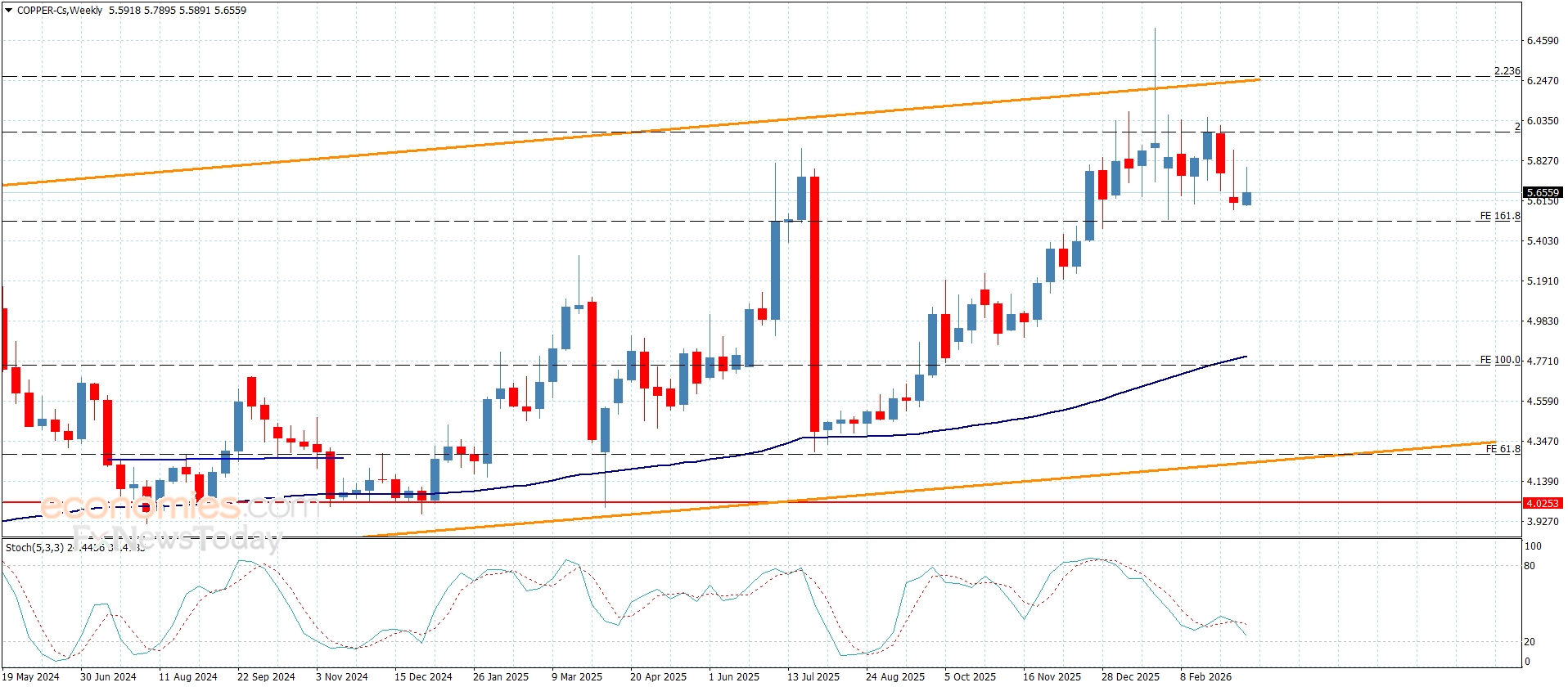
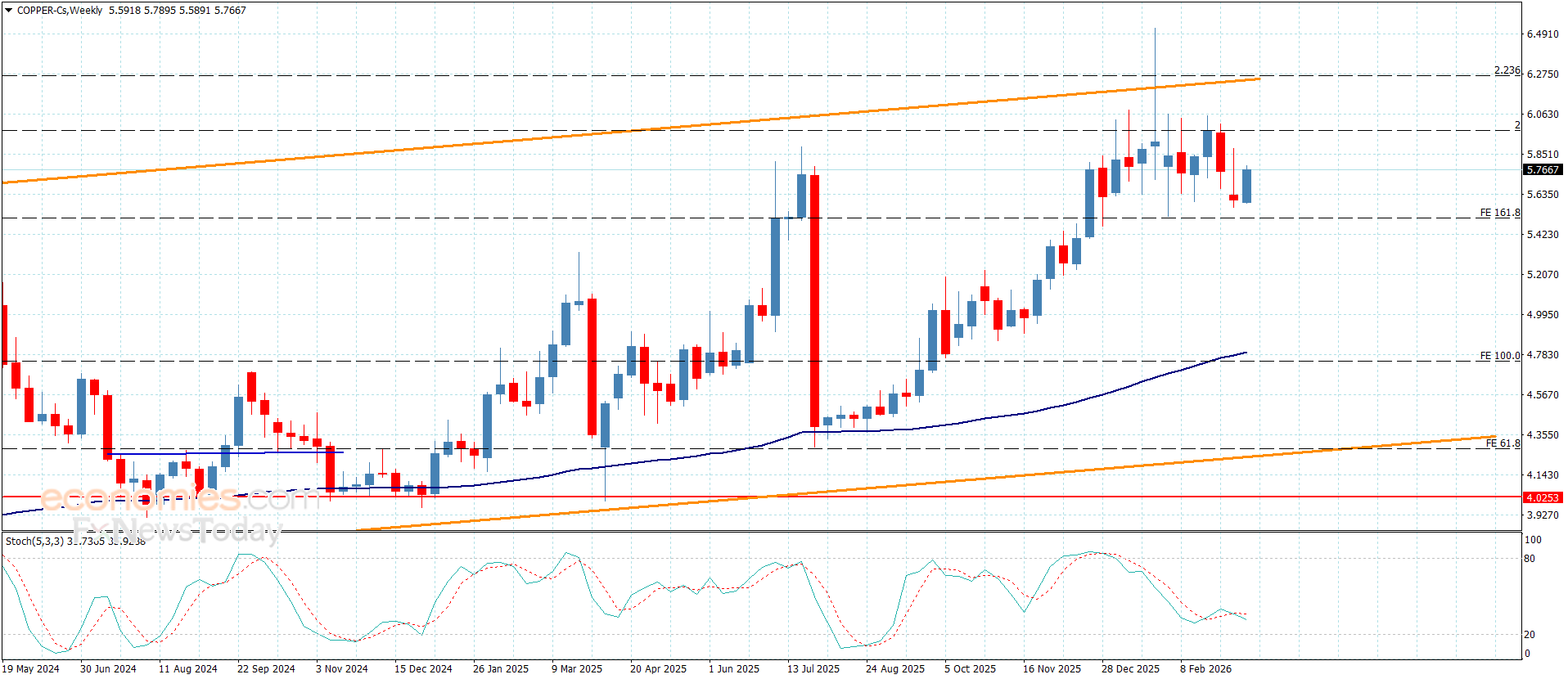
Copper price once again yielded to the stability of the additional support level at $5.5100, prompting it to form new upward waves and stabilize near the $5.7600 level, thereby postponing the previously expected corrective decline
The continued conflict among the main indicators is likely to push the price toward mixed and unstable trading. It is worth noting that repeated stability below the barrier at $5.9700 encourages us to wait for the price to gather additional negative momentum, which would make it easier for it to move toward $5.5100. A break below this support could extend the corrective decline toward further levels, starting at $5.3900 and then $5.2200.
The expected trading range for today is between $5.6200 and $5.8800.
Trend forecast:Sideways