Chile Bumps Up Copper Price Forecast and Flags Lagging Collahuasi Output
Chile, the world’s leading copper supplier, has revised its copper price forecast upward for 2025. The government now projects an average price of $4.28 per pound, representing an increase from its previous estimate of $4.26 per pound. This adjustment reflects ongoing market dynamics and global demand patterns affecting the red metal.
Finance Minister Mario Marcel presented this updated outlook to Congress on July 23, 2025, highlighting how shifting market fundamentals continue to support stronger pricing despite operational challenges at key mining assets.
Key Factors Influencing the Updated Forecast
- Global supply constraints across major producing regions, particularly in central Africa and parts of South America
- Continued robust industrial demand despite economic headwinds in manufacturing sectors
- Market anticipation of upcoming trade policy changes, especially U.S. tariffs
- Declining inventory levels across major exchanges like the LME and COMEX
- Increasingly bullish investor sentiment toward industrial metals critical to energy transition
The government’s willingness to revise its forecast upward, even marginally, signals confidence in copper’s fundamental outlook despite operational challenges in the domestic mining sector.
What’s Happening at the Collahuasi Mine?
Production Challenges at a Critical Copper Asset
During his congressional presentation, Finance Minister Marcel specifically highlighted production issues at the Collahuasi mine as a significant concern affecting the mining sector’s contribution to economic growth. This major copper operation, jointly operated by Glencore and Anglo American, has experienced a notable decline in output in recent months.
The mine, located in Chile’s copper-rich northern region, ranks among the world’s largest copper operations with historical production exceeding 565,000 tonnes annually. Its strategic importance to both the companies and Chile’s economy makes any production disruption particularly significant.
Operational Impact Assessment
- Production volumes have moderated significantly compared to previous operating periods
- The underperformance represents a material deviation from projected output targets
- Ripple effects throughout Chile’s mining sector are impacting supply chain operations
- Technical challenges may include declining ore grades in certain extraction zones
- Recovery timeline remains uncertain, with companies yet to provide comprehensive guidance
Industry analysts note that water management has been an ongoing challenge at Collahuasi, with previous disruptions in 2021 linked to water scarcity issues. The high-altitude operation faces unique operational challenges that can impact production efficiency and recovery rates.
How Are US Tariffs Affecting Global Copper Markets?
Market Response to 50% Copper Tariffs
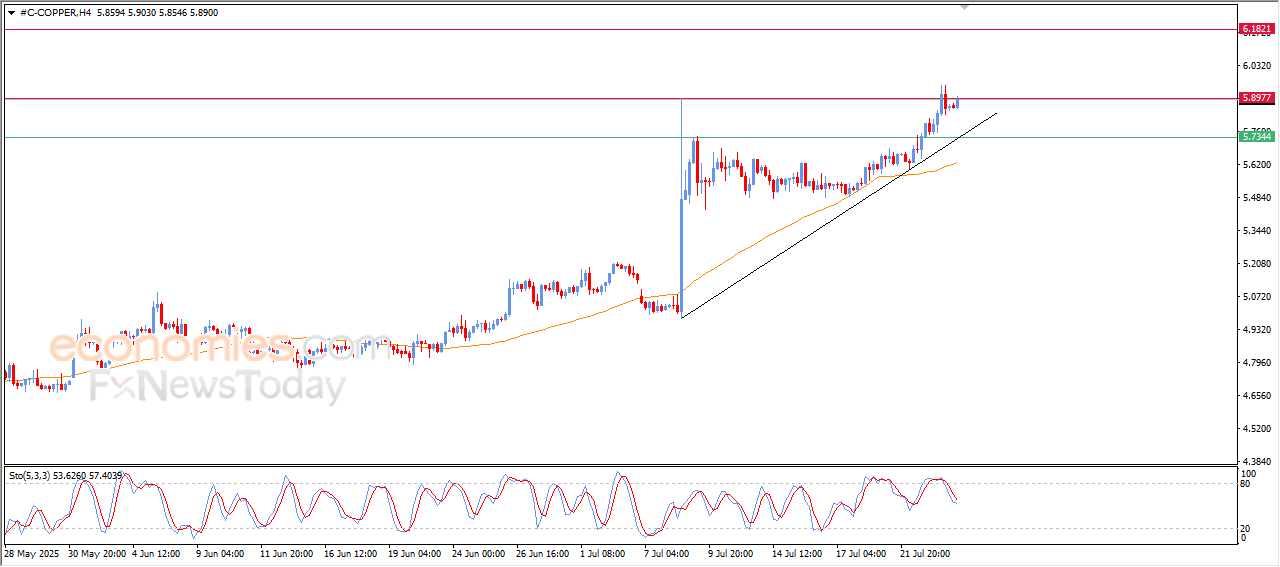
The United States has announced 50% tariffs on copper imports scheduled to take effect on August 1, 2025. According to Codelco’s chairperson (Chile’s state mining company and the world’s largest copper producer), these tariffs have already influenced record copper prices in the US market and contributed to global price volatility.
“We’re seeing unprecedented price differentials developing between regional markets,” noted Codelco’s chair during recent commentary on market conditions. “The anticipated US tariffs impact on copper are creating significant distortions in traditional trading patterns.”
The tariff announcement is particularly consequential given that Chile supplied approximately 42% of U.S. copper imports in 2024, making it the largest supplier to the American market.
Tariff Implementation Timeline and Market Effects
- August 1, 2025: Scheduled implementation date for 50% US copper tariffs
- Price impacts already visible in forward markets with U.S. premiums expanding
- Trading patterns shifting as buyers accelerate purchases ahead of implementation
- Supply chain reconfiguration underway with smelters adjusting destination markets
- Regional price differentials expanding beyond historical norms, creating arbitrage opportunities
The tariffs represent part of a broader trade policy shift that has already begun reshaping global metals markets, with producers increasingly looking to diversify customer bases to mitigate concentration risk.
What Is Chile’s Economic Growth Outlook?
GDP Projections Amid Mining Sector Challenges
Despite the production issues at Collahuasi and broader mining sector headwinds, Chile has maintained its official GDP growth estimate at 2.5% for 2025. This stability in the forecast suggests that other economic sectors have successfully compensated for the mining sector’s underperformance.
“Non-mining GDP has compensated for a drop in the mining sector’s contribution,” Minister Marcel explained to legislators, highlighting the economy’s increasing diversification beyond its traditional resource extraction base.
Economic Indicators and Projections
| Economic Indicator |
2025 Forecast |
Change from Previous Estimate |
| GDP Growth |
2.5% |
Unchanged |
| Average Copper Price |
$4.28/lb |
Increased from $4.26/lb |
| 2026 Copper Price Forecast |
$4.30/lb |
Unchanged |
| Inflation Outlook |
Maintained |
Unchanged |
| Non-Mining GDP |
Outperforming |
Compensating for mining sector |
The resilience of Chile’s economic forecast despite mining challenges demonstrates the country’s partially successful efforts to diversify its economic base beyond its traditional reliance on copper exports, which have historically accounted for over 40% of export revenues.
The Strategic Importance of Major Copper Operations
The specific mention of Collahuasi’s production challenges by Chile’s Finance Minister underscores the mine’s significance to the national economy. As one of the world’s largest copper operations, its performance directly affects export revenues, tax receipts, and employment in the mining sector.
Located in the Tarapacá region, Collahuasi employs over 5,200 workers directly and supports thousands more indirectly through its supply chain, making it a critical economic engine for northern Chile. The operation has historically contributed significantly to regional development through both direct employment and community investment programs.
Economic Ripple Effects
- Reduced export earnings from lower copper volumes impact Chile’s trade balance
- Mining royalties, which fund approximately 15% of Chile’s social programs, face potential shortfalls
- Employment stability concerns arise in mining-dependent communities where alternative industries are limited
- Regional supply chain disruptions affect hundreds of vendors and service providers
- Development initiatives in northern Chile may face delayed implementation due to reduced fiscal resources
According to industry analysts, each percentage point decline in Collahuasi’s production equates to approximately $45-60 million in reduced export value at current prices, highlighting the material economic impact of operational disruptions.
What Are the Copper Market Trends Beyond 2025?
Medium-Term Price and Production Outlook
Chile’s finance ministry has maintained its copper price forecast for 2026 at $4.30 per pound, suggesting expectations of continued strong pricing beyond the current year. This outlook reflects structural market factors including persistent supply constraints, growing demand from energy transition sectors, and limited new project development.
Copper’s critical role in electrification has cemented its status as an essential energy transition metal. Electric vehicles require approximately three times more copper than internal combustion vehicles, while renewable energy infrastructure demands significantly higher copper intensity than traditional power generation.
Forward-Looking Market Indicators
- Sustained high price environment projected through 2026 with potential for further strengthening
- Limited new major projects entering production pipeline due to declining ore grades globally
- Growing rising copper demand trends from renewable energy, grid infrastructure, and electric vehicle sectors
- Industry analysts project potential global supply deficits reaching 6.5 million tonnes by 2030
- Increased focus on copper’s role in decarbonization efforts driving strategic stockpiling
The lack of significant new copper projects entering production in the medium term creates a structural support for prices, as existing mines face declining grades and increased production costs.
How Are Global Market Uncertainties Affecting Copper?
Volatility Factors in the Copper Market
The Codelco chairperson specifically cited “global uncertainty” as a driver of price volatility in copper markets. This uncertainty stems from multiple factors including escalating trade tensions, shifting monetary policy expectations, and evolving energy transition timelines.
Copper’s unique position as both an industrial metal and financial asset makes it particularly susceptible to macroeconomic sentiment shifts. The metal often trades on expectations of future economic activity, creating price movements that sometimes precede actual changes in physical demand.
Key Market Uncertainty Drivers
- Evolving trade policies among major economies creating unpredictable market access conditions
- Central bank monetary tightening cycles affecting financing costs for major infrastructure projects
- Regional economic growth differentials impacting demand patterns across consumer markets
- Supply chain reconfiguration efforts as companies seek to build resilience and redundancy
- Resource nationalism trends in producing countries potentially affecting investment conditions
“Copper markets are experiencing unprecedented uncertainty as both traditional industrial demand signals and emerging energy transition requirements compete for attention from investors and operators,” notes the Codelco chair. “This creates both challenges and opportunities for major producers.”
The intersection of these uncertainty factors has contributed to copper’s price volatility despite its strong fundamental outlook, creating tactical trading opportunities alongside long-term investment potential.
What Should Investors Monitor in Chile’s Copper Sector?
Critical Indicators for Market Participants
For investors and market participants tracking Chile’s copper sector, several key indicators warrant close attention in the coming months as the situation evolves. These metrics provide insight into both near-term price movements and longer-term structural trends.
Chile’s position as the world’s largest copper producer means developments in its mining sector often have outsized effects on global markets. The country’s sliding-scale royalty system (currently 0-8% based on price levels) remains under review, with potential implications for investment and production economics.
Essential Monitoring Points
-
Production recovery timeline at Collahuasi
- Company guidance on remediation efforts
- Quarterly production reports from joint venture partners
- Regional water availability metrics affecting operations
-
Government policy developments
- Potential adjustments to Chile’s mining royalty framework
- Environmental permitting timelines for expansion projects
- Water rights allocations in copper-producing regions
-
Export and production metrics
- Monthly export volume data from Chilean customs
- Processing rates at major smelting facilities
- Concentrate shipment volumes to key Asian markets
-
Sustainability performance indicators
- Water reuse rates at major mining operations
- Progress toward renewable energy transition targets
- Community relations metrics in mining regions
-
Operational updates from major producers
- Capital expenditure plans for brownfield expansions
- Technology deployment to address declining ore grades
- Labor relations and contract negotiation schedules
Investors should particularly focus on Collahuasi’s recovery trajectory, as its production volumes significantly influence Chile’s overall copper output and export capacity. Additionally, tracking the global copper production forecast provides essential context for understanding supply dynamics.
FAQ: Chile’s Copper Market Outlook
What is Chile’s current copper price forecast for 2025?
Chile has revised its copper price forecast to $4.28 per pound for 2025, up from the previous estimate of $4.26 per pound. This adjustment was announced by Finance Minister Mario Marcel on July 23, 2025, and reflects current copper price predictions from industry experts.
Which major copper mine in Chile is experiencing production issues?
The Collahuasi mine, operated by Glencore and Anglo American, has been specifically identified as experiencing a notable decline in production output. This high-altitude operation ranks among the world’s largest copper mines.
How has Chile’s GDP forecast been affected by mining sector challenges?
Chile has maintained its 2.5% GDP growth forecast for 2025 despite mining sector challenges, as non-mining sectors have compensated for the reduced mining contribution. This demonstrates the economy’s increasing diversification.
When will the US implement its 50% tariff on copper imports?
The 50% tariff on copper imports to the United States is scheduled to take effect on August 1, 2025. These tariffs have already influenced pricing patterns and trading relationships in anticipation of implementation, as reported by Reuters.
What is Chile’s copper price forecast for 2026?
Chile’s finance ministry maintains its copper price forecast for 2026 at $4.30 per pound, reflecting expectations of continued strong market fundamentals beyond the current year.
How do production issues at single mines affect Chile’s broader economy?
Major mines like Collahuasi directly impact export revenues, tax receipts, and regional employment. The Finance Minister’s specific mention of Collahuasi demonstrates how individual operations can have material effects on national economic performance.
Another important trend to watch is the development of the Argentina copper system, which could potentially impact the regional supply dynamics over the coming years.
Disclaimer: This article contains forward-looking statements regarding copper prices, production levels, and economic impacts. These projections involve inherent uncertainties, and actual outcomes may differ from forecasts. Investors should conduct their own research before making investment decisions based on this information.
Want to Spot the Next Major Copper Discovery Before the Market?
Discovery Alert’s proprietary Discovery IQ model delivers instant notifications on significant ASX copper discoveries, transforming complex mineral data into actionable investment insights before the broader market catches on. Explore our dedicated discoveries page to see how early detection of mineral discoveries can lead to exceptional investment returns.