The main tag of Gold News Today Articles.
You can use the search box below to find what you need.
[wd_asp id=1]

28 02, 2026

XAG/USD Soars Past $90 as AI Valuation Fears Trigger Stunning Safe-Haven Rush

By |2026-02-28T19:02:05+02:00February 28, 2026|Forex News, News|0 Comments


BitcoinWorld

Silver Price Forecast: XAG/USD Soars Past $90 as AI Valuation Fears Trigger Stunning Safe-Haven Rush

Global financial markets witnessed a significant shift on Thursday, March 13, 2025, as the silver price (XAG/USD) surged decisively above the $90 per ounce threshold, marking its highest nominal level in history. This remarkable rally, primarily driven by escalating concerns over artificial intelligence stock valuations, has triggered a substantial rotation into traditional safe-haven assets. Consequently, analysts are now revising their silver price forecast upward, citing a complex interplay of technological uncertainty and macroeconomic hedging.

Silver Price Forecast: Analyzing the Breakthrough Above $90

The London Bullion Market Association recorded the spot silver price at $90.42 per ounce during European trading hours, representing a 4.7% single-day gain. This movement follows a sustained upward trajectory that began in late 2024. Market technicians highlight that silver has now broken through a critical multi-decade resistance zone between $85 and $88. Historically, such breakouts have preceded extended bullish phases for the white metal. Furthermore, trading volume for silver futures on the COMEX exchange surged to 235% of its 30-day average, indicating strong institutional participation in this move.

Several key technical indicators now support a constructive silver price forecast. The 50-day moving average has crossed bullishly above the 200-day average, forming what traders call a “golden cross.” Additionally, the relative strength index (RSI) for XAG/USD sits at 68, suggesting momentum without immediate overbought conditions. Market structure data from the Commodity Futures Trading Commission also reveals that managed money accounts have increased their net-long positions in silver futures for seven consecutive weeks.

Historical Context of Silver Price Milestones

To understand the significance of the $90 level, analysts often examine previous silver price peaks. The table below shows key historical highs and their catalysts:

Year Price Peak (Nominal USD) Primary Catalyst
1980 $48.70 Hunt Brothers accumulation, high inflation
2011 $49.51 Post-financial crisis QE, debt ceiling fears
2020 $29.86 Pandemic-driven monetary stimulus
2025 (Current) $90.42+ AI valuation risk, monetary regime uncertainty

This current rally differs fundamentally from past surges. Previously, inflation fears or specific market manipulations drove prices. Today, the catalyst stems from a sectoral rotation away from overvalued technology assets.

AI Valuation Risks: The Unconventional Driver of Safe-Haven Demand

The immediate catalyst for silver’s surge appears rooted in growing investor apprehension regarding artificial intelligence company valuations. Major AI-focused equity indices have experienced increased volatility throughout Q1 2025, following a series of critical developments:

  • Regulatory Scrutiny: The European Union’s AI Act, fully implemented in January 2025, imposes stringent compliance costs on developers.
  • Earnings Disappointments: Several leading AI firms reported slowing revenue growth against elevated expectations.
  • Technical Limitations: Reports of diminishing returns in large language model scaling have raised questions about the sustainability of the AI investment thesis.

This uncertainty has prompted a broad-based reassessment of risk across asset classes. Consequently, portfolio managers are reducing exposure to high-beta technology stocks and reallocating to assets with negative correlation to equity volatility. Silver, with its dual characteristics as both a monetary metal and an industrial commodity, has become a preferred vehicle for this rotation. Notably, silver’s industrial demand profile, particularly in photovoltaic solar panels and electronics, provides a fundamental floor, while its historical role as a store of value offers upside during periods of financial stress.

The Mechanics of the Flight to Safety

The capital flow from AI equities to precious metals follows a clear pattern. First, volatility spikes in the Nasdaq AI Index trigger risk parity fund rebalancing. These systematic funds automatically sell volatile assets and buy stable ones. Second, discretionary macro hedge funds, anticipating further tech sector weakness, establish long positions in silver futures as a hedge. Finally, retail investors, through physically-backed silver ETFs like iShares Silver Trust (SLV), provide sustained buying pressure. This three-tiered demand creates a powerful upward price dynamic that technical resistance levels struggle to contain.

Broader Market Impacts and Macroeconomic Backdrop

The surge in silver occurs within a complex global macroeconomic environment. Central banks, particularly the Federal Reserve, maintain a data-dependent stance on interest rates. While inflation has moderated from 2023 peaks, persistent services inflation and a weakening US Dollar Index have enhanced the appeal of non-yielding assets like precious metals. Moreover, geopolitical tensions continue to simmer, adding another layer of safe-haven demand. Central bank purchasing of gold, which reached record levels in 2024, has also created a positive spillover effect into the silver market, as these metals often move in correlation.

From a supply perspective, the silver market remains structurally tight. The Silver Institute’s 2024 report highlighted a fourth consecutive annual physical deficit, with demand outstripping mine supply by 142 million ounces. Primary silver mine production faces challenges from declining ore grades and rising energy costs. Meanwhile, industrial demand, especially from the green energy transition, continues its secular growth trend. This fundamental supply-demand imbalance provides a supportive backdrop for higher prices, irrespective of financial flows.

Expert Analysis and Forward-Looking Projections

Leading commodity analysts from institutions like Bloomberg Intelligence and the World Bank have updated their silver price forecast. Their consensus suggests a trading range of $85-$105 per ounce for the remainder of 2025, contingent on several factors:

  • Federal Reserve Policy: A pivot to rate cuts would weaken the dollar and boost metals.
  • AI Sector Performance: Continued volatility would sustain safe-haven inflows.
  • Industrial Activity: Strong photovoltaic adoption supports base demand.

Dr. Elena Vargas, Head of Commodities Research at Global Markets Advisory, stated in a recent client note: “The convergence of financial hedging demand and robust physical fundamentals creates a rare bullish setup for silver. While prices may experience short-term consolidation, the path of least resistance appears higher, particularly if equity market corrections deepen.” This expert view underscores the unique confluence of drivers behind the current rally.

Conclusion

The silver price forecast has turned decisively bullish as XAG/USD breaches the historic $90 level. This movement stems not from traditional inflation fears but from a sophisticated capital rotation driven by AI valuation risks. The metal’s dual role as both an industrial input and a monetary asset positions it uniquely to benefit from current market dislocations. While volatility should be expected, the combination of tight physical supply, sustained industrial demand, and its newfound status as a hedge against technology sector volatility suggests the rally may have further room to run. Investors and analysts will closely monitor both equity market sentiment and central bank policy for cues on silver’s next directional move.

FAQs

Q1: What exactly caused silver to jump above $90?
The primary catalyst was a rapid shift of investment capital away from overheated artificial intelligence stocks into traditional safe-haven assets. Fears about AI company valuations, regulatory costs, and slowing growth triggered this sector rotation.

Q2: Is silver still a good investment after such a big price move?
Many analysts believe the fundamental picture remains supportive due to structural supply deficits and growing industrial demand from green technologies. However, as with any asset that has experienced a sharp rally, short-term pullbacks are possible and investors should consider their risk tolerance.

Q3: How does AI volatility affect a physical commodity like silver?
It affects it through financial market channels. When AI stocks fall, fund managers rebalance portfolios, often buying assets with low or negative correlation to tech equities. Silver, traded via futures and ETFs, receives these flows, which then impact the global spot price.

Q4: What’s the difference between the current silver rally and the 2011 peak?
The 2011 peak was driven by quantitative easing and debt ceiling fears post-financial crisis. The 2025 rally is primarily driven by sector-specific risk (AI) and a flight to safety within a still-growing economy, coupled with a persistent physical market deficit.

Q5: Could the price of silver go back down?
Yes, all markets are cyclical. A significant cooling of AI sector fears, a much stronger US dollar, or a sharp decline in industrial activity could apply downward pressure. The current bullish forecast depends on the continuation of the present macroeconomic and sectoral trends.

This post Silver Price Forecast: XAG/USD Soars Past $90 as AI Valuation Fears Trigger Stunning Safe-Haven Rush first appeared on BitcoinWorld.


Source link

28 02, 2026

oil prices today: Why are global oil prices rising now and will Brent crude go from $72.48 to $80 per barrel in next jump? ​Global oil price rise, analysts insights and market outlook explained. Here’s what should investors do now

By |2026-02-28T15:01:04+02:00February 28, 2026|Forex News, News|0 Comments


Why are global oil prices rising now and will Brent crude go from $72.48 to $80 per barrel in next jump? Global oil prices are rising sharply as the United States and Israel have launched a large-scale military operation against Iran. The attacks have brought the Strait of Hormuz into the conflict zone, creating concerns about potential disruptions to oil exports from the Middle East. Over 20 per cent of the world’s crude passes through this waterway. Traders and analysts are factoring in a risk premium. Brent crude settled at $72.48 per barrel, with forecasts suggesting prices could reach $80.

Why Are Global Oil Prices Rising Now and Will Brent Crude Go from $72.48 to $80 Per Barrel in Next Jump?

Global oil prices are rising due to escalating tensions in the Middle East. The United States and Israel have launched a military operation against Iran. This action has brought the Strait of Hormuz into the conflict zone, increasing the risk of disruptions to crude exports. Over 20 per cent of global oil passes through this waterway. Brent crude settled at $72.48 per barrel, and analysts say prices could reach $80 per barrel if supply disruptions occur. Traders are factoring in a “war premium” due to the current geopolitical situation.

Why Are Global Oil Prices Rising Now?

Oil prices are rising because of potential supply disruptions from the Middle East. The US and Israel’s military operation against Iran has increased uncertainty. Missile attacks in the Strait of Hormuz and threats to Iran’s naval forces create concerns about oil movement. The risk premium added by traders reflects fears of interruptions to global supply. Even limited military escalation can push prices higher, while strong demand and low inventories add pressure to the market.

Global Oil Price Rise Explained

Global oil prices are rising due to the US and Israel launching a massive military operation against Iran. The attack has brought the Strait of Hormuz into a conflict zone, which could disrupt crude exports from Middle Eastern countries.

Geopolitical Tensions and Oil Supply

Over 20 per cent of the world’s oil passes through the Strait of Hormuz, connecting the Persian Gulf with the Gulf of Oman and the Arabian Sea. Heavy missile attacks and US President Donald Trump’s statement on destroying Iran’s navy have raised concerns about movement of oil from the region.


Analysts expect a “war premium” to push oil prices higher due to coordinated attacks by the US and Israel. Tehran has launched retaliatory strikes, increasing risks of supply disruptions.

Brent Crude and Market Impact

Oil prices rose about 2 per cent on Friday. Brent crude settled at $72.48 per barrel. Barclays Bank stated Brent crude could rise to around $80 per barrel if there is any significant supply disruption. The bank added that the market is pricing in a risk premium due to ongoing geopolitical tensions.Barclays said that even if escalation does not immediately disrupt supply, a 1 million barrel per day outage could push Brent crude to $80. Traders are also monitoring US-Iran nuclear negotiations, which have not reached an agreement.

US-Iran Relations and Market Risk

US President Donald Trump expressed disappointment over negotiations with Iran and warned that force may be necessary. The large US military presence in the region increases the likelihood of future strikes, contributing to oil market uncertainty.

Barclays noted that if no supply disruption occurs, and Iran’s response is less severe than expected, oil prices could decline by $3 to $5 per barrel. However, the market is structurally tightening with low spare capacity, limited inventories, and strong demand, keeping prices under pressure.

Barclays said recent history may reduce the risk premium if tensions fade. Yet, the combination of military actions, tight supply, and strategic chokepoints like the Strait of Hormuz continues to create upside potential for oil prices.

Will Brent Crude Go from $72.48 to $80 Per Barrel in Next Jump?

Analysts at Barclays Bank suggest that Brent crude could reach $80 per barrel if there is a significant supply disruption. Even a one million barrel per day outage would push prices higher. Currently, Brent crude is at $72.48 per barrel. If tensions ease or Iran’s response is limited, the market could see a $3–$5 decline per barrel. However, structural market factors such as tight inventories and low spare capacity may support higher prices in the near term.

Analysts Insights and Market Outlook

Barclays and other market analysts note that the oil market is experiencing a risk premium due to geopolitical tensions. Analysts say that while escalation does not always lead to immediate supply disruption, even minor outages can create price spikes. The market is structurally tightening with low spare capacity, firm demand, and limited inventories. Traders are watching US-Iran negotiations and regional military actions to assess potential supply risks. Overall, geopolitical risks remain a major factor for oil prices in the coming weeks.

What Should Investors Do Now?

Investors should monitor global events and oil market trends closely. With Brent crude at $72.48 per barrel, they should prepare for possible volatility. Analysts suggest factoring in risk premiums and potential supply disruptions. If tensions escalate, prices may rise toward $80 per barrel. Conversely, if no disruption occurs, prices could fall by $3–$5. Investors should balance risk and exposure, follow official updates from the US, Iran, and Israel, and consider using hedging strategies or diversified energy investments to manage price fluctuations.

FAQs

Why are global oil prices rising now?
Global oil prices are rising due to US-Israel attacks on Iran and threats to the Strait of Hormuz. Traders are factoring in a risk premium for potential supply disruptions.

Will Brent crude reach $80 per barrel soon?
Brent crude could reach $80 per barrel if supply from the Middle East is disrupted. Analysts note the risk premium is influenced by geopolitical tensions and tight oil inventories.


Source link

28 02, 2026

XAG/USD jumps above $90 as AI valuation risks boost safe-haven demand

By |2026-02-28T11:00:02+02:00February 28, 2026|Forex News, News|0 Comments


Silver price (XAG/USD) is up 2.4% to near $90.60 during the European trading session on Friday. The white metal strengthens as escalating concerns over valuations of Artificial Intelligence (AI) stocks have prompted demand for safe-haven assets.

On Thursday, the S&P 500 tumbled to near 6,900, and its futures have fallen further during the day, following an over 5% decline in the share price of Nvidia, which is the world’s largest producer of AI and sophisticated chips. Though the company posted stellar first quarter numbers of 2026, investors worry about the sustainability of AI capital expenditure (capex), and overcapacity risks.

In addition to AI valuation concerns, sliding United States (US) treasury yields have also improved the Silver’s appeal. 10-year US bond yields have fallen to near 4%, the lowest level seen in over a year. Lower yields on interest-bearing assets prompt demand for non-yielding assets, such as Silver.

On the geopolitical front, the meeting between the US and Iran over nuclear issues in Geneva on Thursday concluded on a positive note. Oman’s Foreign Minister, Badr al-Busaidi, said in early trade that talks between both nations on nuclear issues have made “significant progress,” and they will resume next week in Vienna. Signs of easing geopolitical woes often diminish demand for safe-haven assets.

In Friday’s session, investors will focus on the US Producer Price Index (PPI) data for January, which will be published at 13:30 GMT.

Silver technical analysis

XAG/USD trades higher above $90 as of writing. The near-term bias tilts mildly bullish as price holds above the 20-day Exponential Moving Average, which is around $85 and underpins the recent rebound from the mid-$70s area. The sequence of higher lows from $73.64 through the current consolidation supports a recovery structure rather than a continuation of the prior sharp decline from above $110.

The 14-day Relative Strength Index (RSI) continues to wobble inside the 40.00-60.00 range, demonstrating a sideways trend.

Initial support emerges at the 20-day EMA near $85.00, with a break below exposing the psychological level of $80 and then the February 20 low around $77.50 area as deeper downside levels.

On the topside, immediate resistance aligns with the recent plateau around $92.50, and a daily close above would open room toward $96.00 and then the psychological $100.00 handle.

(The technical analysis of this story was written with the help of an AI tool.)

Silver FAQs

Silver is a precious metal highly traded among investors. It has been historically used as a store of value and a medium of exchange. Although less popular than Gold, traders may turn to Silver to diversify their investment portfolio, for its intrinsic value or as a potential hedge during high-inflation periods. Investors can buy physical Silver, in coins or in bars, or trade it through vehicles such as Exchange Traded Funds, which track its price on international markets.

Silver prices can move due to a wide range of factors. Geopolitical instability or fears of a deep recession can make Silver price escalate due to its safe-haven status, although to a lesser extent than Gold’s. As a yieldless asset, Silver tends to rise with lower interest rates. Its moves also depend on how the US Dollar (USD) behaves as the asset is priced in dollars (XAG/USD). A strong Dollar tends to keep the price of Silver at bay, whereas a weaker Dollar is likely to propel prices up. Other factors such as investment demand, mining supply – Silver is much more abundant than Gold – and recycling rates can also affect prices.

Silver is widely used in industry, particularly in sectors such as electronics or solar energy, as it has one of the highest electric conductivity of all metals – more than Copper and Gold. A surge in demand can increase prices, while a decline tends to lower them. Dynamics in the US, Chinese and Indian economies can also contribute to price swings: for the US and particularly China, their big industrial sectors use Silver in various processes; in India, consumers’ demand for the precious metal for jewellery also plays a key role in setting prices.

Silver prices tend to follow Gold’s moves. When Gold prices rise, Silver typically follows suit, as their status as safe-haven assets is similar. The Gold/Silver ratio, which shows the number of ounces of Silver needed to equal the value of one ounce of Gold, may help to determine the relative valuation between both metals. Some investors may consider a high ratio as an indicator that Silver is undervalued, or Gold is overvalued. On the contrary, a low ratio might suggest that Gold is undervalued relative to Silver.


Source link

28 02, 2026

WTI Crude Oil: Elliott wave analysis and forecast for 27.02.26–06.03.26

By |2026-02-28T06:59:13+02:00February 28, 2026|Forex News, News|0 Comments


The article covers the following subjects:

Major Takeaways

  • Main scenario: Consider short positions from corrections below the level of 67.30 with a target of 55.00–50.50. A sell signal: the price holds below 67.30. Stop Loss: above 67.30, Take Profit: 55.00–50.50.
  • Alternative scenario: Breakout and consolidation above the level of 67.30 will allow the asset to continue rising to the levels of 77.50–87.00. A buy signal: the level of 67.30 is broken to the upside. Stop Loss: below 67.30, Take Profit: 77.50–87.00.

Main Scenario

Consider short positions from corrections below the level of 67.30 with a target of 55.00–50.50.

Alternative Scenario

Breakout and consolidation above the level of 67.30 will allow the asset to continue rising to the levels of 77.50–87.00.

Analysis

A descending correction appears to continue forming as the second wave of larger degree (2) on the weekly chart, with wave C of (2) developing as its part. On the daily time frame, a bullish correction appears to have formed as the fourth wave iv of C, and the fifth wave v of C has started developing. The third wave of smaller degree (iii) of v of C has presumably been completed on the H4 time frame. The fourth wave (iv) of v has finished forming as a local correction. If the presumption is correct, WTI will continue to drop to 55.00–50.50 within wave (v) of v. The level of 67.30 is critical in this scenario as a breakout above it will enable the price to continue rising to the levels of 77.50–87.00.


This forecast is based on the Elliott Wave Theory. When developing trading strategies, it is essential to consider fundamental factors, as the market situation can change at any time.

Price chart of USCRUDE in real time mode

The content of this article reflects the author’s opinion and does not necessarily reflect the official position of LiteFinance broker. The material published on this page is provided for informational purposes only and should not be considered as the provision of investment advice for the purposes of Directive 2014/65/EU.


According to copyright law, this article is considered intellectual property, which includes a prohibition on copying and distributing it without consent.

Rate this article:

{{value}} ( {{count}} {{title}} )


Source link

28 02, 2026

Natural gas price confirms the break– Forecast today – 27-2-2026

By |2026-02-28T02:57:58+02:00February 28, 2026|Forex News, News|0 Comments


Platinum price succeeded in testing $2245.00 support, to receive a new bullish momentum, forming strong bullish waves, recording several gains by its stability at $2405.00.


Providing positive momentum by the main indicators will ease the way for the rally towards $2465.00, forming second main target in the current trading, note that resuming the rise again requires breaching near $2525.00 and holding above it to reinforce the chances for reaching new positive stations in the medium period.


The expected trading range for today is between $2275.00 and $2470.00


Trend forecast: Bullish


Source link

27 02, 2026

Copper price surpasses the barrier– Forecast today – 27-2-2026

By |2026-02-27T22:57:13+02:00February 27, 2026|Forex News, News|0 Comments


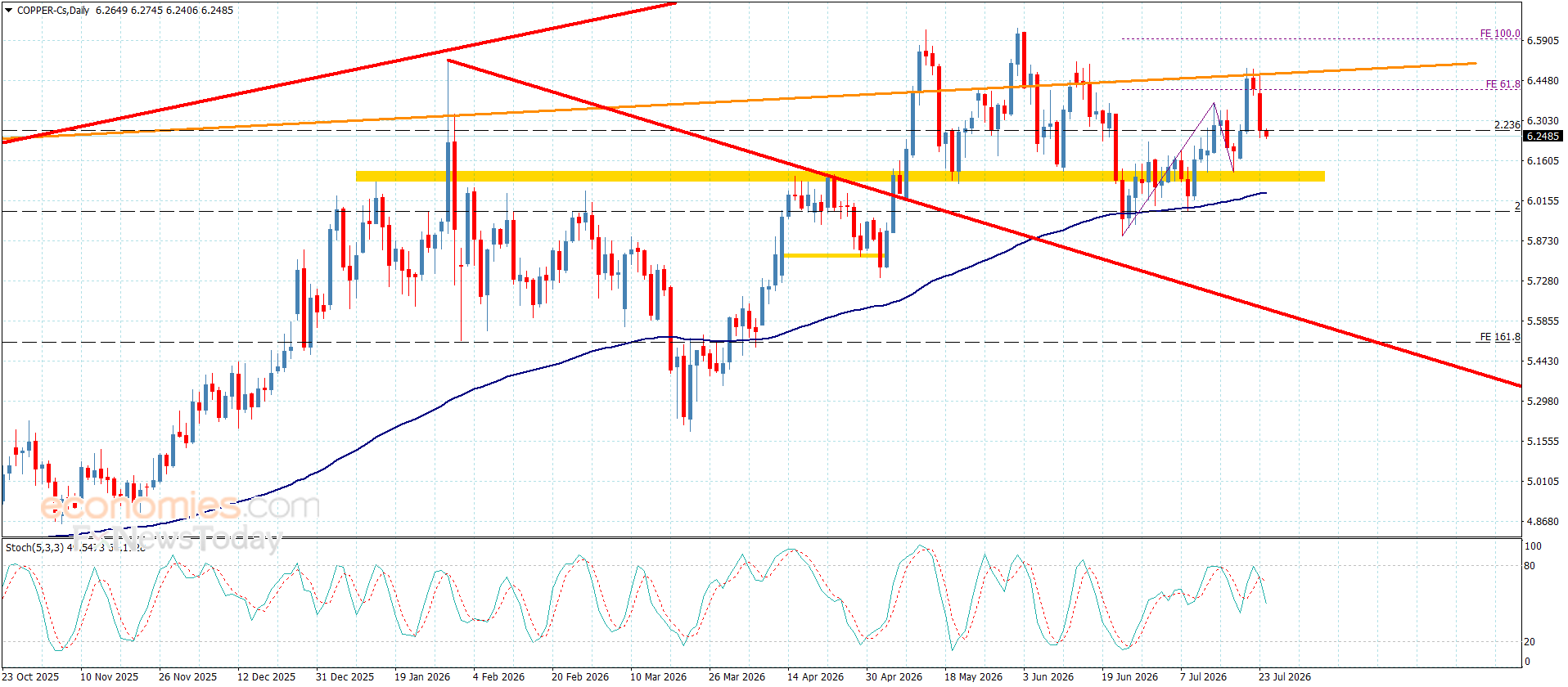
Copper price resumed bullish attempts to fluctuate above $5.9700 barrier, announcing its readiness to form new bullish waves in the near period, note that positive close above this barrier, to support the chances of its rally towards positive stations that begin at $6.1200 and $6.2400.


While the return fluctuates below $5.9700 will force it to delay the bullish rally, and there is chance to form bearish corrective waves to target $5.8200 and $5.7400 before any new attempt to reach the previously suggested targets.


The expected trading range for today is between $5.900 and $6.1200


Trend forecast: Bullish


Source link

27 02, 2026

Platinum price keeps rising– Forecast today – 27-2-2026

By |2026-02-27T18:56:17+02:00February 27, 2026|Forex News, News|0 Comments


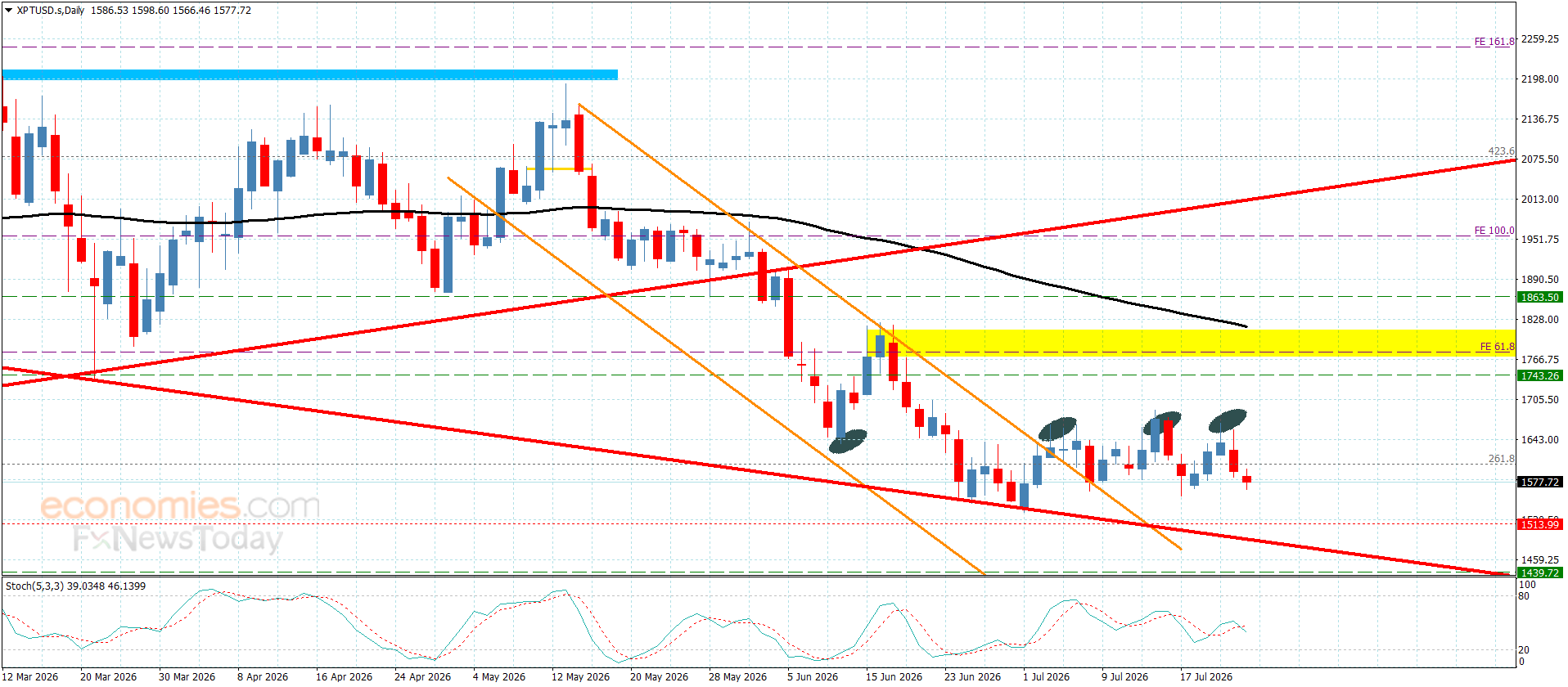
Platinum price succeeded in testing $2245.00 support, to receive a new bullish momentum, forming strong bullish waves, recording several gains by its stability at $2405.00.


Providing positive momentum by the main indicators will ease the way for the rally towards $2465.00, forming second main target in the current trading, note that resuming the rise again requires breaching near $2525.00 and holding above it to reinforce the chances for reaching new positive stations in the medium period.


The expected trading range for today is between $2275.00 and $2470.00


Trend forecast: Bullish


Source link

27 02, 2026

Brent $72, WTI $67 Between War Risk And $60 Targets

By |2026-02-27T14:55:12+02:00February 27, 2026|Forex News, News|0 Comments


Oil Price Map: WTI CL=F And Brent BZ=F Between Surplus Models And War Risk

Spot Levels For Oil, WTI CL=F And Brent BZ=F After The Latest 1% Pullback

WTI CL=F is trading near $67.07, having faded from an earlier move that took it down to roughly $65.75. Brent BZ=F sits around $72.34 after slipping from about $71.03. The pullback is modest – roughly 1% – and follows a strong run driven by US–Iran tension. The key point is simple: spot is holding in the high-$60s for CL=F and low-$70s for BZ=F, while the main bank decks still anchor fair value closer to $60 over the coming year. That mismatch between current pricing and modelled equilibrium is the heart of the current risk range for oil.

Goldman’s Oil Deck: Brent At $60 In Q4 2026 With A 2.3M Bpd Surplus

Goldman Sachs now projects Brent around $60 and WTI roughly $56 for Q4 2026. For the full year, the bank expects Brent to average $64 a barrel, up from a previous $56 call, and WTI to average $60 versus a prior $52. The shift acknowledges tighter-than-expected inventories and a stronger starting point, but the structure remains bearish versus today’s prices. The forecast still embeds a 2.3 million barrels-per-day surplus in 2026 and assumes no Iran-related supply disruption and no Russia–Ukraine peace deal that radically reshapes flows. In its framework, today’s Brent level in the low-$70s carries about a $6 geopolitical premium plus another roughly $5 overshoot versus a fair-value path driven by rising OECD stocks. If tensions ease and stocks build, that premium is designed to fade out of the curve.

Morgan Stanley’s View: Short-Term Risk Premium, Same $60 Brent Anchor

Morgan Stanley’s numbers are aligned with that structural story but recognise the near-term risk bid. The bank now sees Brent averaging $62.50 in Q2 2026, up from $57.50, and $60 in Q3, also lifted from $57.50. The message is clear: a higher path in the short run due to geopolitical risk, then a glide path back toward $60 as long as flows remain intact. At current levels, Brent near $72 and WTI near $67 trade roughly 15–20% above the range that both houses consider sustainable once the risk premium leaks out and the 2.3 million bpd surplus reasserts itself. For CL=F and BZ=F, that means every spike driven by headlines has to be measured against models that still see mid-$60s as a ceiling, not a floor.

US–Iran Standoff: Largest US Build-Up Since 2003 Keeps Oil Supported

The market is not trading bank spreadsheets in a vacuum. The US has executed its largest regional military build-up since the 2003 Iraq invasion, positioning assets for a sustained campaign if ordered. At the same time, Oman’s foreign minister confirms a third round of US–Iran nuclear talks in Geneva, scheduled for Thursday. That combination explains the price action: oil rallied hard into the weekend on headlines that war looked “increasingly likely,” then gave back roughly 1% when the Geneva track was confirmed and some traders booked profits. Trump has raised the global tariff rate from 10% to 15% and publicly set a 10–15 day window for Tehran to accept strict conditions on its nuclear programme. On the other side, Iranian leadership has little domestic room to accept those demands without collapsing its internal legitimacy. That is why seasoned energy strategists argue that it is difficult to see both fleets quietly turning back without either a deal that looks like capitulation for one side, or a direct confrontation. As long as that structural conflict is unresolved, Oil, WTI CL=F and Brent BZ=F will carry a persistent risk premium.

Hormuz And Gulf Infrastructure: The $90–$100 Oil Scenario

The upside risk is straightforward. If diplomacy fails and military action begins, Iran has two clear levers: attack on production facilities in Saudi Arabia, the UAE or Kuwait, and disruption of shipping through the Strait of Hormuz, where roughly a fifth of global seaborne crude moves. FGE’s Fereidun Fesharaki explicitly points to $90–$100 Brent as “within reach” if Middle East supply is hit. That is not a theoretical model; it reflects past episodes where partial loss of Gulf barrels or credible threats to Hormuz pushed benchmarks sharply higher. In that environment, the 2.3 million bpd surplus disappears overnight and the debate shifts from inventory builds to basic availability. For BZ=F, a jump from $72 into a $90–$100 band becomes a live scenario. For CL=F, a proportionate move would target the mid-$80s and above.

Global Tariffs At 15%: Demand Damage On Top Of Supply Fear

While the supply side is dominated by US–Iran risk, demand faces its own shock. Trump’s decision to lift temporary tariffs from 10% to 15% on all imports adds a new drag on global trade and industrial activity. Higher uniform tariffs raise input costs, slow cross-border flows and, if persistent, erode global GDP. China has already called on Washington to reverse the measures to avoid broader trade disruption. If the 15% rate holds or moves toward the 15–20% band that some policy voices favour, refined product consumption, freight demand and industrial fuel use will feel the pressure. That is the mechanism behind forecasts that still put Brent around $60–$65 and WTI around $56–$61 through 2027. Even when the Middle East risk premium is high, tariff-driven demand risk pushes in the opposite direction, limiting how long Oil, CL=F and BZ=F can sustain triple-digit levels without real physical shortages.

OPEC+, OECD Stocks And The 2.3M Bpd Surplus Path

Underneath the noise, the supply-demand balance still leans toward surplus on paper. Goldman’s 2.3 million bpd 2026 surplus forecast already trims both supply and demand by 0.2 million bpd against earlier assumptions because Asian growth has softened at the margin. The supply side is downgraded in Kazakhstan, Venezuela, Iran and Iraq after repeated misses on realised output, but this is offset by upgrades across the Americas and within core OPEC producers that still have spare capacity in reserve. Critically, OPEC+ is expected to begin raising production gradually from Q2 2026 because OECD inventories have not swollen enough to justify deeper restraint. That means any risk-driven rally in Oil faces a cartel that is willing to add barrels once prices stretch too far above the $60–$70 band. At the other end of the spectrum, if sanctions relief accelerates for Iran or Russia and more barrels hit the water, bank models point to downside risks of roughly $5 for Brent and $8 for WTI versus their Q4 2026 targets.

Technical Structure In WTI CL=F: 66.43 Resistance, 64.14 Mid-Support, 62.36 Line In The Sand

The chart on CL=F reflects that macro tug-of-war. On the daily time frame, WTI has rallied back to a resistance cluster around $66.43–$66.50. Each test of that band has met supply as traders fade geopolitically driven spikes and lean into the surplus narrative. Support levels are staggered below spot. Around $64.14 sits a mid-range demand zone where short-term buyers start to appear. Deeper down, $62.36 marks a more important support shelf. As long as CL=F holds above $62.36 on daily closes, the bullish case for tactical longs remains intact: there is a clear risk marker, and the market can continue to use geopolitical dips to reload. A decisive breakout above the $66.50 band opens a path toward $70.50, which is the next major technical reference from recent swing highs. Failure at resistance and a break below $64.14 would put $62.36 back into focus and strengthen the argument that the price action is rolling back toward the bank decks rather than breaking away from them.


Short-Term Volatility: ATR Expansion Signals Wider Daily Swings In Oil

Volatility has ticked higher again across OilWTI CL=F and Brent BZ=F. On the 4-hour and daily charts, Average True Range has climbed, which translates directly into larger candles and wider daily ranges. When ATR rises, each bar carries more risk, stops need more space, and gap risk increases on geopolitical headlines. This environment favours momentum strategies but punishes late entries. From a structural perspective, rising ATR fits a market that has shifted from quiet range trading into active expansion as US–Iran headlines, Geneva talks, tariff changes and revised bank forecasts all hit the tape within days of each other. As long as ATR stays elevated, traders should expect sharp responses around levels like $66.43, $64.14, $62.36 for CL=F and $70–$75 for BZ=F.

Macro Spillovers: Lower Oil Helps Inflation While Exporters Face Budget Pressure

At today’s levels and the bank forecast path, oil is no longer behaving like the main inflation engine it was at $100 plus. If Brent averages around $64 in 2026 and drifts toward $60 in Q4 as Goldman expects, fuel costs and freight rates ease further, giving households and companies some breathing room. That supports consumption and makes it easier for central banks to argue for stable or lower policy rates, especially if other inflation components cool. For exporting economies and high-cost producers, the story is less comfortable. A $60–$65 Brent world compresses margins for capital-intensive upstream projects, particularly outside the Gulf. It forces capex rationing, encourages portfolio high-grading and puts pressure on fiscal balances in countries whose budgets were built around higher reference prices. That is one reason sovereigns in the Gulf are pushing hard on projects like the $100 billion Jafurah development and new condensate streams: they need diversified hydrocarbon and non-oil revenue to handle a structurally lower oil-price base.

Positioning Oil Between $60 Models And $100 Shock: Where WTI CL=F And Brent BZ=F Stand Now

The current tape places WTI CL=F near $67 and Brent BZ=F around $72. Those marks sit midway between two credible poles. On one side, bank models and surplus math point to Brent at $60–$65 and WTI at $56–$61 through 2027, underpinned by a 2.3 million bpd surplus, gradual OPEC+ supply increases and tariff-related demand risks. On the other, US military deployments, explicit talk of likely conflict, and the structural vulnerability of Gulf infrastructure and the Strait of Hormuz make $90–$100 Brent a realistic outcome if the worst-case scenario materialises. Spot is not cheap relative to the surplus view and not expensive relative to the war case. It is pricing a blend of both: some risk premium, some surplus, and a sizeable amount of uncertainty.

Oil Verdict – WTI CL=F And Brent BZ=F: Tactical Buy On Dips, Structural Sell Into Spikes

Bringing the numbers and structure together points to a split stance on OilWTI CL=F and Brent BZ=F. In the near term, while WTI holds above $62.36 and continues to respect the $66.43 band, the bias is bullish on geopolitical dips. US–Iran risk, the largest US build-up in the region since 2003 and credible scenarios involving Hormuz or regional facilities justify maintaining tactical long exposure when prices retreat toward support. On a 6–12 month horizon, with Goldman and Morgan Stanley both anchoring Brent around $60–$64, WTI around $56–$60, and a 2.3 million bpd surplus plus OPEC+ flexibility in the background, chasing spikes into the $70s–$80s turns unattractive unless actual supply is hit. In that medium-term window, rallies driven purely by headlines and sentiment look better suited for scaling out or building staggered short exposure than for fresh aggressive longs. Under current information, the stance is clear: short-term, oil leans bullish on controlled pullbacks; structurally, it trends toward a HOLD / SELL-ON-STRENGTH profile unless the Middle East moves from brinkmanship to real disruption.

That’s TradingNEWS


Source link

27 02, 2026

Gold (XAU/USD) Price Forecast and Analysis for Today, Tomorrow, Next Week, and 30 Days

By |2026-02-27T10:52:00+02:00February 27, 2026|Forex News, News|0 Comments


Gold (XAU/USD) is generally regarded as a safe-haven asset. The price of gold is influenced by geopolitical events, inflation rates, and shifts in interest rates. In the face of global economic uncertainty, the precious metal remains the primary defensive asset in investment portfolios.

This article examines the factors driving the future of gold quotes and presents a forecast for the day, week, and month ahead. The price analysis encompasses macroeconomic data, political events, and technical analysis to facilitate the most accurate trading forecast for the XAUUSD.

The article covers the following subjects:

Expert Technical Analysis for XAU/USD for Today

The 4-hour chart shows the following signals:

  • Doji candlestick pattern (1) near the $5,153.72 level points to continued market uncertainty. It was followed by the Hammer pattern (2), signaling a potential upside move.

  • MACD is moving sideways in the negative zone, suggesting a range-bound trading pattern.

  • RSI is holding near 56 in neutral territory, indicating that the price may rise or fall.

  • MFI is neutral in the mid-range, with no clear buy or sell signals.

  • VWAP and SMA20 are near the market price, which suggests consolidation.

Trading Plan for XAUUSD for Today

Gold forecast for today:

  • Key support levels: $5,153.72, $5,107.72, $5,052.87, $4,996.26, $4,937.88, $4,881.57, $4,821.84, $4,760.74, $4,701.55, $4,645.91, $4,576.74.

  • Key resistance levels: $5,208.41, $5,266.41, $5,320.89, $5,370.11, $5,426.67, $5,490.37, $5,548.44, $5,608.39.

  • Base scenario: Open long positions (1) on increased volume above the $5,208.41 level, with price targets at $5,266.41, $5,320.89, $5,370.11, $5,426.67, $5,490.37, $5,548.44, and $5,608.39. Stop Loss (3): $5,180.72.

  • Alternative scenario: Open short positions (2) on increased volume below the $5,153.72 level, with price targets at $5,107.72, $5,052.87, $4,996.26, $4,937.88, $4,881.57, $4,821.84, $4,760.74, $4,701.55, $4,645.91, and $4,576.74. Stop Loss (3): $5,180.72.

The analysis is provided by Alan Tsagaraev.

Alan Tsagaraev is an independent trader and analyst specializing in stock, foreign exchange, and cryptocurrency markets. He holds a degree in Economics and has been a professional investor and financial market trader since 2019. Over the course of his career, he has increased his capital more than tenfold.

XAU/USD Real-Time Market Status

Gold is trading at $5 178.91 as of 27.02.2026.

Gold Price Forecast for Tomorrow

February 28 and March 1, 2026, are non-trading days for gold. On March 2, XAUUSD is projected to stabilize within the $5,107.72–$5,208.41 range. The price could move in either direction.

Gold price prediction tomorrow:

Date

Daily Low, $

Daily High, $

Average price, $

02.03.2026

5,052.87

5,320.89

5,186.88

Gold Price Forecast for Next Week

Moderate gold price volatility is expected this week amid key macroeconomic releases, including the February manufacturing PMI, the Federal Reserve’s Beige Book, initial jobless claims in the US, and other economic indicators.

Gold price prediction this week:

Date

Weekly Low, $

Weekly High, $

Average Price, $

02.03.2026–

08.03.2026

4,881.57

5,426.67

5,154.12

Gold Price Prediction for Next 30 Days

In February 2026, gold prices may be highly volatile amid geopolitical tensions and interest rate changes. Inflation expectations will likely support the precious metal, but a stronger US dollar may limit price gains. Experts expect gold to trade in the $4,914.81–$5,719.00 range by the end of the month.

Gold price forecast 30 days:

Month

Monthly Low, $

Monthly High, $

Average price, $

February

4,005.79

6,005.00

5,005.39

Gold Outlook: Market Sentiment and Key Events for the Next 30 Days

The following factors may influence the price of XAUUSD during the current month:

  • In 2025, global gold demand rose to 5,002 tonnes. Key drivers included geopolitical instability and strong investor interest. Supported by record prices, the total value of gold demand surged by 45% to $555 billion, while investment volumes reached 2,175 tonnes.
  • Demand for gold bars and coins climbed to 1,374 tonnes, while inflows into gold ETFs increased to 801 tonnes, confirming gold’s role as a store of value during periods of instability.
  • Gold purchases by central banks totaled 863 tonnes in 2025 and are expected to ease slightly to 850 tonnes in 2026.
  • Jewelry sector: Due to exceptionally high prices, global jewelry sales fell 18% in 2025, with the sharpest decline recorded in China, where demand dropped by 24%.
  • Mining and supply: Global gold production reached 3.67 thousand tonnes in 2025, while recycled gold supply increased by 2–3%.
  • The World Gold Council (WGC) expects investment interest in XAUUSD to remain strong, along with steady demand for physical gold, driven by ongoing geopolitical tensions, expectations of interest rate cuts, and pressure on the US dollar. At the same time, consumer demand may remain constrained due to elevated prices.
  • According to CME Group data, the probability of an interest rate cut to 3.25–3.50% in March stands at 2%. Meanwhile, 98% of market participants expect rates to remain unchanged at 3.50–3.75%. Keeping borrowing costs at current levels could limit the upside potential of XAUUSD.
  • Donald Trump has named Kevin Warsh as the next Chair of the Federal Reserve. Potential regulatory policy changes could put additional pressure on gold prices.
  • Mar. 2 — Release of US Manufacturing PMI for February.
  • Mar. 4 — Release of February ADP Nonfarm Employment Change data, the Services PMI, and the Federal Reserve’s Beige Book.
  • Mar. 5 — Release of US initial jobless claims data.
  • Mar. 6 — Release of US unemployment rate data.

Price Analysis and Forecasting Methodology

Our daily Gold price analysis and forecasting methodology includes:

  • Analysis of fundamental factors and expert opinions influencing XAUUSD short-term price movements.
  • Technical analysis of the asset’s charts from H1 to H4 time frames, including identification of key support and resistance levels, examination of technical indicators, and study of candlestick and chart patterns.
  • Assessment of market sentiment through the analysis of posts and comments on social media, offering insights into the gold price’s next move.

Gold (XAU/USD) Price Forecast FAQs

Price chart of XAUUSD in real time mode

The content of this article reflects the author’s opinion and does not necessarily reflect the official position of LiteFinance broker. The material published on this page is provided for informational purposes only and should not be considered as the provision of investment advice for the purposes of Directive 2014/65/EU.


According to copyright law, this article is considered intellectual property, which includes a prohibition on copying and distributing it without consent.

Rate this article:

{{value}} ( {{count}} {{title}} )


Source link

27 02, 2026

XAG/USD moves above mid-$89.00s, eyes further gains

By |2026-02-27T06:51:22+02:00February 27, 2026|Forex News, News|0 Comments


Silver (XAG/USD) struggles for a firm near-term direction and remains confined in a multi-day-old range during the Asian session on Friday. The white metal currently trades just above mid-$89.00s, up nearly 1.0% for the day, with technical setup favoring bullish traders and backing the case for a further appreciating move.

The XAG/USD holds well above the rising 100-period Exponential Moving Average (EMA) on the 4-hour chart, near $84.40, keeping the short-term uptrend structure intact despite recent consolidation. Momentum has cooled from prior overbought conditions, with the Relative Strength Index easing toward 58, yet staying above the 50 midline and indicating underlying buying pressure.

The Moving Average Convergence Divergence (MACD) indicator (12, 26, 9) remains slightly negative but is contracting toward the zero line, which suggests fading downside momentum after the latest pullback from the $91 mark. Meanwhile, immediate support emerges at $88.20, where the latest reaction low sits above the 100-period EMA, followed by $87.50 and then the dynamic floor around $84.40.

A sustained break below $87.50 would weaken the bullish tone and expose a deeper retracement toward the $84.00–84.40 area. On the upside, initial resistance stands at $90.00, ahead of the recent swing high around $91.10. A clear 4-hour close above $91.10 would reopen the topside and could extend the advance toward the $93.00 region, in line with the prevailing positive bias.

(The technical analysis of this story was written with the help of an AI tool.)

XAG/USD 4-hour chart

Silver FAQs

Silver is a precious metal highly traded among investors. It has been historically used as a store of value and a medium of exchange. Although less popular than Gold, traders may turn to Silver to diversify their investment portfolio, for its intrinsic value or as a potential hedge during high-inflation periods. Investors can buy physical Silver, in coins or in bars, or trade it through vehicles such as Exchange Traded Funds, which track its price on international markets.

Silver prices can move due to a wide range of factors. Geopolitical instability or fears of a deep recession can make Silver price escalate due to its safe-haven status, although to a lesser extent than Gold’s. As a yieldless asset, Silver tends to rise with lower interest rates. Its moves also depend on how the US Dollar (USD) behaves as the asset is priced in dollars (XAG/USD). A strong Dollar tends to keep the price of Silver at bay, whereas a weaker Dollar is likely to propel prices up. Other factors such as investment demand, mining supply – Silver is much more abundant than Gold – and recycling rates can also affect prices.

Silver is widely used in industry, particularly in sectors such as electronics or solar energy, as it has one of the highest electric conductivity of all metals – more than Copper and Gold. A surge in demand can increase prices, while a decline tends to lower them. Dynamics in the US, Chinese and Indian economies can also contribute to price swings: for the US and particularly China, their big industrial sectors use Silver in various processes; in India, consumers’ demand for the precious metal for jewellery also plays a key role in setting prices.

Silver prices tend to follow Gold’s moves. When Gold prices rise, Silver typically follows suit, as their status as safe-haven assets is similar. The Gold/Silver ratio, which shows the number of ounces of Silver needed to equal the value of one ounce of Gold, may help to determine the relative valuation between both metals. Some investors may consider a high ratio as an indicator that Silver is undervalued, or Gold is overvalued. On the contrary, a low ratio might suggest that Gold is undervalued relative to Silver.


Source link

Go to Top