Important DisclaimersThe content provided on the website includes general news and publications, our personal analysis and opinions, and contents provided by third parties, which are intended for educational and research purposes only. It does not constitute, and should not be read as, any recommendation or advice to take any action whatsoever, including to make any investment or buy any product. When making any financial decision, you should perform your own due diligence checks, apply your own discretion and consult your competent advisors. The content of the website is not personally directed to you, and we does not take into account your financial situation or needs.The information contained in this website is not necessarily provided in real-time nor is it necessarily accurate. Prices provided herein may be provided by market makers and not by exchanges.Any trading or other financial decision you make shall be at your full responsibility, and you must not rely on any information provided through the website. FX Empire does not provide any warranty regarding any of the information contained in the website, and shall bear no responsibility for any trading losses you might incur as a result of using any information contained in the website.The website may include advertisements and other promotional contents, and FX Empire may receive compensation from third parties in connection with the content. FX Empire does not endorse any third party or recommends using any third party’s services, and does not assume responsibility for your use of any such third party’s website or services.FX Empire and its employees, officers, subsidiaries and associates, are not liable nor shall they be held liable for any loss or damage resulting from your use of the website or reliance on the information provided on this website.Risk DisclaimersThis website includes information about cryptocurrencies, contracts for difference (CFDs) and other financial instruments, and about brokers, exchanges and other entities trading in such instruments. Both cryptocurrencies and CFDs are complex instruments and come with a high risk of losing money. You should carefully consider whether you understand how these instruments work and whether you can afford to take the high risk of losing your money.FX Empire encourages you to perform your own research before making any investment decision, and to avoid investing in any financial instrument which you do not fully understand how it works and what are the risks involved.
United States´ second round of tepid data weighed on Wall Street.
Upcoming US data could speed up the Federal Reserve’s decision to trim rates.
XAU/USD turned near-term neutral, bulls seem unwilling to give up.
Gold consolidative phase continued on Wednesday, with XAU/USD seesawing around $2,325.00 a troy ounce. Financial markets are gearing up for upcoming first-tier United States (US) data following a batch of discouraging figures. Following softer-than-anticipated S&P Global PMIs released on Monday, the country reported Durable Goods Orders rose 2.3% in March, missing the 2.5% anticipated. Furthermore, the February reading was downwardly revised to 1.5% from the previous estimate of 2.2%.
Overall, US data is showing the economy is not doing well enough for the Federal Reserve (Fed) to maintain rates at current record highs for as long as policymakers may want. Market participants are starting to suspect so and will get some certainties in the next couple of days. On Thursday, the US will release the preliminary estimate of the Q1 Gross Domestic Product (GDP), which is expected to show that the economy grew at an annualized pace of 2.5% in the three months to March. On Friday, the focus will shift to the March Personal Consumption Expenditures (PCE) Price Index, the Federal Reserve’s (Fed) favorite inflation gauge.
Meanwhile, intraday news affected Wall Street. US indexes trade with modest losses, unable to replicate the positive tone of their Asian and European counterparts. The US Dollar is also suffering from softer-than-anticipated figures, although activity remains limited across the different boards.
XAU/USD short-term technical outlook
XAU/USD keeps hovering around the 23.6% Fibonacci retracement of the $1,996.06/$2,431.43 rally, unable to clearly recover above the level. The daily chart shows the pair is also stuck around a bullish 20 Simple Moving Average (SMA), while technical indicators lack directional strength just above their midlines. It seems that sellers are not yet willing to jump in while buyers are making tepid attempts to resume the rally.
Technical readings in the 4-hour chart show limited bullish potential, as the pair trades below the 20 and 100 Simple Moving Averages (SMAs), with the shorter one accelerating south below the longer one, usually seen as a sign of growing selling pressure. Technical indicators, in the meantime, remain within negative levels, with the Momentum indicator advancing and the Relative Strength Index (RSI) indicator consolidating around 43.
Support levels: 2,310.00 2,295.20 2,282.90
Resistance levels: 2,348.30 2,361.55 2,372.90
XAU/USD Current price: $2,328.21
United States´ second round of tepid data weighed on Wall Street.
Upcoming US data could speed up the Federal Reserve’s decision to trim rates.
XAU/USD turned near-term neutral, bulls seem unwilling to give up.
Gold consolidative phase continued on Wednesday, with XAU/USD seesawing around $2,325.00 a troy ounce. Financial markets are gearing up for upcoming first-tier United States (US) data following a batch of discouraging figures. Following softer-than-anticipated S&P Global PMIs released on Monday, the country reported Durable Goods Orders rose 2.3% in March, missing the 2.5% anticipated. Furthermore, the February reading was downwardly revised to 1.5% from the previous estimate of 2.2%.
Overall, US data is showing the economy is not doing well enough for the Federal Reserve (Fed) to maintain rates at current record highs for as long as policymakers may want. Market participants are starting to suspect so and will get some certainties in the next couple of days. On Thursday, the US will release the preliminary estimate of the Q1 Gross Domestic Product (GDP), which is expected to show that the economy grew at an annualized pace of 2.5% in the three months to March. On Friday, the focus will shift to the March Personal Consumption Expenditures (PCE) Price Index, the Federal Reserve’s (Fed) favorite inflation gauge.
Meanwhile, intraday news affected Wall Street. US indexes trade with modest losses, unable to replicate the positive tone of their Asian and European counterparts. The US Dollar is also suffering from softer-than-anticipated figures, although activity remains limited across the different boards.
XAU/USD short-term technical outlook
XAU/USD keeps hovering around the 23.6% Fibonacci retracement of the $1,996.06/$2,431.43 rally, unable to clearly recover above the level. The daily chart shows the pair is also stuck around a bullish 20 Simple Moving Average (SMA), while technical indicators lack directional strength just above their midlines. It seems that sellers are not yet willing to jump in while buyers are making tepid attempts to resume the rally.
Technical readings in the 4-hour chart show limited bullish potential, as the pair trades below the 20 and 100 Simple Moving Averages (SMAs), with the shorter one accelerating south below the longer one, usually seen as a sign of growing selling pressure. Technical indicators, in the meantime, remain within negative levels, with the Momentum indicator advancing and the Relative Strength Index (RSI) indicator consolidating around 43.
Wednesday’s oil prices edged higher after unexpected U.S. crude stock reductions suggested strong demand, juxtaposed with ongoing Middle East tensions. Contrary to forecasts of an 800,000 barrel increase, API data revealed a decrease of over 3 million barrels for the week ending April 19.
A dip in U.S. business activity to a four-month low implies potential rate cuts, potentially spurring oil demand from the top global consumer. While the Middle East conflicts continue, current impacts on oil supplies are minimal, with new sanctions against Iran on the horizon but not immediately affecting supply.
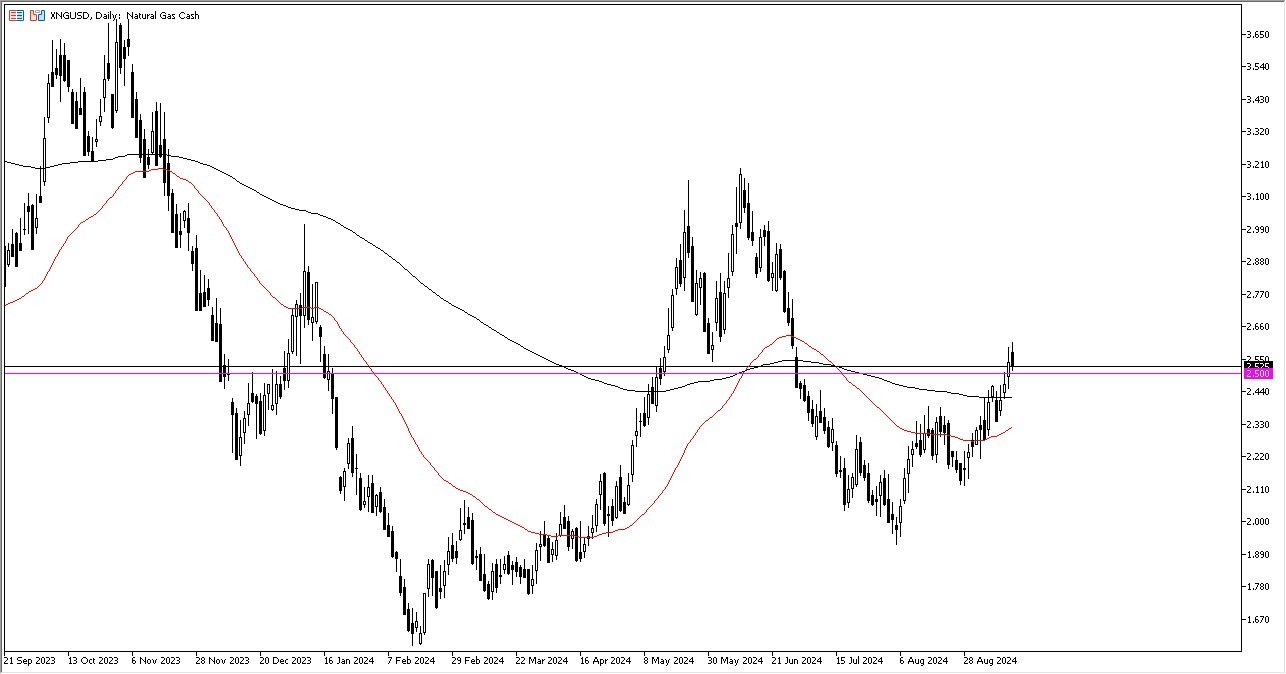
A decisive rally above today’s high will trigger a bullish continuation of the advance that began from the most recent swing low at 1.64. That low tested support around the bottom of a symmetrical triangle consolidation pattern. Once support is seen at the bottom of a triangle and it turns up, a continuation towards the top boundary line of the pattern to test resistance is most likely. Also, since the triangle is well formed, with four points creating the boundaries of the pattern, a breakout can happen from the current advance.
Next Target is Top of Triangle
Resistance may not halt the advance at the top boundary line and instead a breakout could occur. However, keep in mind that upward momentum is essentially beginning from the recent swing low. So, even if the top line is broken there may not be enough demand on the sidelines to keep prices rising in the short term. An alternative bullish scenario would be to see signs of resistance around the top line on the initial approach. And that resistance leads to either consolidation or a pullback as natural gas sets up for a new entry that leads to a decisive upside breakout.
The short-term bearish scenario would see resistance around the top boundary line, leading to a retracement that takes natural gas back down to test support around the lower boundary line. That scenario increases the chance for a bearish breakdown from the triangle pattern.
Weekly Pattern is Bullish
As discussed in Monday’s article on natural gas, the weekly chart pattern shows a breakdown of a bearish shooting star candle last week, followed by a bullish breakout of a hammer candlestick this week. In other words, the market on a weekly basis gave a clear bearish signal, and then flipped around the gave a clear bullish signal. This type of flip from bear to bull in a short period of time is what can lead to sharp moves. In this case up. Certainly, there are no signs of it yet, however.
For a look at all of today’s economic events, check out our economic calendar.
Disappointing United States PMIs pressured the US Dollar after Wall Street’s opening.
Market players await the US Gross Domestic Product and an inflation update.
XAU/USD maintains its bearish tone in the near term, near-term support at $2,310.
Spot Gold trades flat for the day around $2,326, recovering from an intraday low of $2,291.26. XAU/USD fell on the back of a better market mood, keeping the US Dollar on the back against most major currencies. The USD scenario partially changed after the release of discouraging US data, as the preliminary estimates of the April S&P Global PMIs missed the market’s expectations. The Manufacturing PMI shrank to 49.9 from 51.9 in March, while the Services PMI slid to 50.9 from 51.7. The Composite PMI resulted then in 50.9, down from 52.1 in the previous month.
Wall Street shrugged off the dismal figures and maintained a positive tone, but market players decided to sell the USD. Soft growth-related data may force the Federal Reserve (Fed) to trim interest rates sooner rather than later, somehow backing the better tone of equities.
Critical United States (US) data will be released later in the week. The country will unveil the first estimate of the Q1 Gross Domestic Product (GDP) next Thursday, and is expected to show the economy grew at an annualized pace of 2.5% in the three months to March. Also, the US will publish the March Personal Consumption Expenditures (PCE) Price Index on Friday, the Federal Reserve’s (Fed) favorite inflation gauge. The report will lose some of its usual relevance after the GDP data release, which includes a quarterly PCE Price Index estimate, but could still anticipate the Fed’s course.
XAU/USD short-term technical outlook
From a technical point of view, XAU/USD seems poised to extend its slide. It’s currently battling with the 23.6% Fibonacci retracement of the $1,996.06/$2,431.43 rally, unable to recover above the level clearly. Furthermore, the daily chart shows technical indicators maintain uneven downward slopes near their midlines, still retreating from extreme overbought readings. At the same time, XAU/USD remains above bullish moving averages, with the 20 SMA providing near-term support at around $2,310.
In the near term, and according to the 4-hour chart, the risk skews to the downside. A mildly bullish 100 SMA limits intraday advances, while the 20 SMA gains downward traction above the longer one. At the same time, technical indicators corrected from oversold readings before resuming their slides within negative levels.
Support levels: 2,310.00 2,295.20 2,282.90
Resistance levels: 2,348.30 2,361.55 2,372.90
XAU/USD Current price: $2,326.11
Disappointing United States PMIs pressured the US Dollar after Wall Street’s opening.
Market players await the US Gross Domestic Product and an inflation update.
XAU/USD maintains its bearish tone in the near term, near-term support at $2,310.
Spot Gold trades flat for the day around $2,326, recovering from an intraday low of $2,291.26. XAU/USD fell on the back of a better market mood, keeping the US Dollar on the back against most major currencies. The USD scenario partially changed after the release of discouraging US data, as the preliminary estimates of the April S&P Global PMIs missed the market’s expectations. The Manufacturing PMI shrank to 49.9 from 51.9 in March, while the Services PMI slid to 50.9 from 51.7. The Composite PMI resulted then in 50.9, down from 52.1 in the previous month.
Wall Street shrugged off the dismal figures and maintained a positive tone, but market players decided to sell the USD. Soft growth-related data may force the Federal Reserve (Fed) to trim interest rates sooner rather than later, somehow backing the better tone of equities.
Critical United States (US) data will be released later in the week. The country will unveil the first estimate of the Q1 Gross Domestic Product (GDP) next Thursday, and is expected to show the economy grew at an annualized pace of 2.5% in the three months to March. Also, the US will publish the March Personal Consumption Expenditures (PCE) Price Index on Friday, the Federal Reserve’s (Fed) favorite inflation gauge. The report will lose some of its usual relevance after the GDP data release, which includes a quarterly PCE Price Index estimate, but could still anticipate the Fed’s course.
XAU/USD short-term technical outlook
From a technical point of view, XAU/USD seems poised to extend its slide. It’s currently battling with the 23.6% Fibonacci retracement of the $1,996.06/$2,431.43 rally, unable to recover above the level clearly. Furthermore, the daily chart shows technical indicators maintain uneven downward slopes near their midlines, still retreating from extreme overbought readings. At the same time, XAU/USD remains above bullish moving averages, with the 20 SMA providing near-term support at around $2,310.
In the near term, and according to the 4-hour chart, the risk skews to the downside. A mildly bullish 100 SMA limits intraday advances, while the 20 SMA gains downward traction above the longer one. At the same time, technical indicators corrected from oversold readings before resuming their slides within negative levels.
Oil prices rebounded in Asian trading on Tuesday, finding support from the prospect of tightening supplies over the coming months, despite easing concerns of an Iran-Israel war which had previously escalated oil prices to near six-month highs.
The decline in geopolitical risk premiums in oil was linked to reduced fears of direct conflict between Iran and Israel, as Iran downplayed the impact of recent strikes and showed no immediate intent to retaliate.
However, the oil market remains underpinned by structural tightness, notably due to recent production cuts by Russia and steady U.S. fuel demand as the spring driving season kicks off.
Additionally, the U.S. is intensifying sanctions on Iranian oil exports, which could further strain global supply. This backdrop suggests a potentially bullish outlook for oil as driving season approaches, despite the current geopolitical ebb.
Natural Gas Price Forecast
Natural Gas (NG) Price Chart Natural Gas (NG) saw a modest decline in today’s trading session, falling 0.27% to a price of $2.051. The commodity is currently trading just below its pivot point at $2.06, suggesting a cautious market sentiment. If NG surpasses this level, it could indicate a shift towards a bullish trend.
Resistance levels are positioned at $2.11, $2.17, and $2.25, which could cap upward movements. Conversely, support levels are established at $2.00, followed by more substantial floors at $1.91 and $1.85, where buyers might step in.
The 50-day and 200-day Exponential Moving Averages at $1.95 and $1.91 respectively, suggest a potential for price stabilization or an upward correction if declines continue. The overall technical stance indicates a bearish bias below $2.06, but a break above could alter the market outlook to more bullish.
WTI Oil Price Forecast
WTI Price Chart USOIL prices saw a modest increase today, trading at $82.31, up 0.28%. The asset hovers above its pivot point at $81.15, indicating a potential for continued bullish movement if it sustains above this level. Key resistance levels are identified at $84.39, $86.22, and $87.74, which could cap upward trends.
Conversely, support levels are established at $79.60, $78.44, and $76.22, where declines may find a floor. The 50-day and 200-day Exponential Moving Averages, at $83.41 and $82.50 respectively, support a positive bias.
Overall, the market posture is bullish above $81.15, with a break below this threshold possibly triggering a sharper sell-off.
Brent Oil Price Forecast
Brent Price Chart
UKOIL price rose slightly to $87.42, marking a 0.33% increase. Positioned just above the pivot point at $86.14, the outlook remains bullish above this threshold. Resistance levels are set at $88.26, $89.27, and $90.86, potentially challenging further price advances.
Supports are identified at $84.63, $83.17, and $81.80, which may stabilize prices against downward movements. The 50-day Exponential Moving Average (EMA) at $88.24 and the 200-day EMA at $87.02 reinforce the current price dynamics.
The technical posture suggests that remaining above $86.14 is bullish, while a dip below could signal a significant sell-off.
For a look at all of today’s economic events, check out our economic calendar.
Gold prices settled around $2300 per ounce (XAUUSD) on Tuesday’s trading, hovering near their lowest levels in about three weeks as fears of a wider Middle East conflict receded.
Investors had reduced their investments in safe-haven assets in favor of riskier assets after Tehran downplayed the significance of Israel’s retaliatory drone strike against Iran in an effort to ease tensions.
In addition, continued pressure on gold prices came from hawkish comments from several Federal Reserve officials, who reiterated the possibility of keeping US interest rates high for an extended period to control inflation.
Higher interest rates tend to reduce the attractiveness of non-yielding assets like gold.
According to economic calendar data, investors are now looking ahead to the release of US personal consumption expenditure (PCE) data for March on Friday, which is the Federal Reserve’s preferred inflation gauge, for more clarity on the direction of monetary policy. Investors are also awaiting US first-quarter GDP figures.
Commenting on gold market performance, Richard Gris, Director of Gold, and FX Analysis at ITCM Markets, said that the easing of Middle East tensions “has seen some profit-taking, and there is likely to be some tactical short-selling, given the recent rally in gold prices.” Overall, however, the yellow metal is still up about 16% since mid-February, with gains supported by geopolitical risks, central bank buying and Chinese consumer demand. Moreover, the precious metal had risen despite gains in the US dollar and Treasury yields amid signals that the Federal Reserve will delay its much-anticipated pivot.
Currently, traders are turning their attention to US economic data scheduled for release this week, including the Fed’s preferred measure of inflation, which may give more clues on the path of monetary policy. Policymakers have turned increasingly hawkish on interest rate expectations in recent weeks after a series of strong inflation reports. As markets continue to ease expectations of monetary easing this year, the price of the metal may have to reckon with the possibility of a higher interest rate environment for a longer period, a scenario that would typically be a headwind for gold since it does not pay interest.
Gold Price Forecast and Analysis Today:
Based on the performance on the daily timeframe chart, the price of gold (XAUUSD) is still in an upward trend despite recent selling pressure. Technically, the first break in the trend will occur if the price of gold moves towards support levels of $2265 and $2155 per ounce respectively. Recently, we still prefer buying gold from all downward levels as geopolitical tensions have eased but not ended, and global central bank purchases of gold remain at record levels. At the same time, many central banks are considering easing their policies. therefore, if the price of gold stabilizes above the resistance level of $2365, bulls may find an opportunity to retest the psychological resistance level of $2400 once again.
Silver price extends its downside near $26.95 on Tuesday.
The easing fear of wider tensions in the Middle East improves market sentiment.
Reduced Fed rate cut speculation boosts the USD and drags the white metal lower.
Silver price (XAG/USD) trades on a softer note for the second consecutive day around $26.95 on Tuesday during the early European session. The easing fear of wider Middle East tensions improves market sentiment and creates a headwind for the precious metal. Traders prefer to wait on the sidelines ahead of the US preliminary S&P Global Purchasing Managers Index (PMI) data for April, due later on Tuesday.
The silver price drifts sharply lower to nearly three-week lows as concerns about a potential broader conflict in the Middle East fade, leading traders to reduce their precious metal positions and favour riskier assets. Iranian Foreign Minister Hossein Amirabdollahian stated on Friday that Iran does not plan to respond to Israel’s retaliatory strike, while Israeli authorities remained mostly silent. The absence of public statements afterward tends to imply that both sides are attempting to ease tensions.
Additionally, the lower expectation for interest rate cuts from the US Federal Reserve (Fed) amid the robust. US economic data and hawkish stances from policymakers provide some support to the US Dollar (USD) and weigh on the US Dollar-denominated silver. New York Fed President John Williams noted that he doesn’t feel urgency to cut interest rates, given the strength of the economy. Meanwhile, Chicago Fed President Austan Goolsbee stated that the Fed’s current restrictive monetary policy is appropriate due to the robust US economic data.
It’s worth noting that the higher-for-longer US rate narrative might dampen demand for white metal, a non-interest-bearing asset. The chance of a June cut has fallen to 15%, and the odds of a July cut have dropped below 45%. A September cut is not fully priced in, with the probability falling below 70%, according to the CME FedWatch Tool.
Gold price sees a fresh leg down in Asia on Tuesday even as risk flows dissipate.
Receding fears over Middle East escalation offset subdued US Dollar and Treasury bond yields.
Gold price remains heavily oversold on the 4H chart, rebound appears in the offing.
Gold price is extending the previous day’s corrective decline into Tuesday’s Asian trading, having hit the lowest level in 12 days at $2,296.
Global Preliminary PMIs to dominate on Tuesday
Easing worries of a wider regional conflict in the Middle East combined with a tech rally on Wall Street overnight contributed to the latest leg down in Gold price, as risk flows extended into Asia.
However, investors seem to turn cautious ahead of the key US tech earnings reports and preliminary business PMI data from the UK, Eurozone and the US, which could help provide cues on the timing of the interest rate cuts by major central banks, especially by the US Federal Reserve (Fed).
Last week, Fed policymakers, including Chair Jerome Powell, joined the chorus to maintain the rates ‘higher for longer’. Markets now price in the first Fed rate cut in September, according to the CME Group’s FedWatch Tool. Meanwhile, the total easing expected this year would just be 40 basis points, a sea change from about 150 basis points of cuts priced in at the beginning of the year, per Reuters.
Increased bets for delayed Fed rate cuts continue to act as a headwind for the Gold price alongside hopes that there would be no further escalation in the conflict between Israel and Iran after the latter downplayed Israel’s retaliatory drone strike against Tehran.
In the lead-up to the global PMI data releases, the US Dollar consolidates the previous pullback amid a cautious market mood. If risk-aversion picks up steam on disappointing PMI reports, the US Dollar could regain upside traction, exacerbating the pain in Gold price.
However, dismal PMIs could also imply decelerating economic performance in advanced economies, fanning expectations of early policy pivot. The revival in the bets for an earlier than September Fed rate cut could help Gold price stage a decent upswing.
The US S&P Global preliminary Manufacturing PMI is seen a tad higher at 52.0 in April, against the 51.9 reading in March. The Services PMI is also likely to rise to 52.0 in the same period versus a 51.7 figure reported previously.
Gold price technical analysis: Four-hour chart
As observed on the four-hour chart, Gold price came under intense selling pressure after yielding a four-hourly candlestick close below the 50-Simple Moving Average (SMA), then at $2,370.
The sell-off extended below the 100-day SMA support at $2,334, having tested bids under $2,300.
The Relative Strength Index (RSI), a leading indicator, is in a highly oversold region, near 28.50, suggesting that a rebound remains on the cards in the near term.
If Gold price attempts a tepid bounce, the initial hurdle would be seen at around the $2,320 round level, above which the 100-SMA support-turned-resistance at $2,334 will be tested.
A sustained move above the latter is critical to unleashing further recovery toward the 21-SMA and 50-SMA confluence points near $2,365.
The rebound in Gold price could remain limited, as a 21-SMA and 50-SMA Bear Cross remains in play.
Should Gold sellers refuse to give in, the next key demand area is seen between $2,284 and $2,274.
The last line of defense for Gold buyers could be the 200-SMA, aligned at $2,252.
Gold FAQs
Gold has played a key role in human’s history as it has been widely used as a store of value and medium of exchange. Currently, apart from its shine and usage for jewelry, the precious metal is widely seen as a safe-haven asset, meaning that it is considered a good investment during turbulent times. Gold is also widely seen as a hedge against inflation and against depreciating currencies as it doesn’t rely on any specific issuer or government.
Central banks are the biggest Gold holders. In their aim to support their currencies in turbulent times, central banks tend to diversify their reserves and buy Gold to improve the perceived strength of the economy and the currency. High Gold reserves can be a source of trust for a country’s solvency. Central banks added 1,136 tonnes of Gold worth around $70 billion to their reserves in 2022, according to data from the World Gold Council. This is the highest yearly purchase since records began. Central banks from emerging economies such as China, India and Turkey are quickly increasing their Gold reserves.
Gold has an inverse correlation with the US Dollar and US Treasuries, which are both major reserve and safe-haven assets. When the Dollar depreciates, Gold tends to rise, enabling investors and central banks to diversify their assets in turbulent times. Gold is also inversely correlated with risk assets. A rally in the stock market tends to weaken Gold price, while sell-offs in riskier markets tend to favor the precious metal.
The price can move due to a wide range of factors. Geopolitical instability or fears of a deep recession can quickly make Gold price escalate due to its safe-haven status. As a yield-less asset, Gold tends to rise with lower interest rates, while higher cost of money usually weighs down on the yellow metal. Still, most moves depend on how the US Dollar (USD) behaves as the asset is priced in dollars (XAU/USD). A strong Dollar tends to keep the price of Gold controlled, whereas a weaker Dollar is likely to push Gold prices up.
Gold price sees a fresh leg down in Asia on Tuesday even as risk flows dissipate.
Receding fears over Middle East escalation offset subdued US Dollar and Treasury bond yields.
Gold price remains heavily oversold on the 4H chart, rebound appears in the offing.
Gold price is extending the previous day’s corrective decline into Tuesday’s Asian trading, having hit the lowest level in 12 days at $2,296.
Global Preliminary PMIs to dominate on Tuesday
Easing worries of a wider regional conflict in the Middle East combined with a tech rally on Wall Street overnight contributed to the latest leg down in Gold price, as risk flows extended into Asia.
However, investors seem to turn cautious ahead of the key US tech earnings reports and preliminary business PMI data from the UK, Eurozone and the US, which could help provide cues on the timing of the interest rate cuts by major central banks, especially by the US Federal Reserve (Fed).
Last week, Fed policymakers, including Chair Jerome Powell, joined the chorus to maintain the rates ‘higher for longer’. Markets now price in the first Fed rate cut in September, according to the CME Group’s FedWatch Tool. Meanwhile, the total easing expected this year would just be 40 basis points, a sea change from about 150 basis points of cuts priced in at the beginning of the year, per Reuters.
Increased bets for delayed Fed rate cuts continue to act as a headwind for the Gold price alongside hopes that there would be no further escalation in the conflict between Israel and Iran after the latter downplayed Israel’s retaliatory drone strike against Tehran.
In the lead-up to the global PMI data releases, the US Dollar consolidates the previous pullback amid a cautious market mood. If risk-aversion picks up steam on disappointing PMI reports, the US Dollar could regain upside traction, exacerbating the pain in Gold price.
However, dismal PMIs could also imply decelerating economic performance in advanced economies, fanning expectations of early policy pivot. The revival in the bets for an earlier than September Fed rate cut could help Gold price stage a decent upswing.
The US S&P Global preliminary Manufacturing PMI is seen a tad higher at 52.0 in April, against the 51.9 reading in March. The Services PMI is also likely to rise to 52.0 in the same period versus a 51.7 figure reported previously.
Gold price technical analysis: Four-hour chart
As observed on the four-hour chart, Gold price came under intense selling pressure after yielding a four-hourly candlestick close below the 50-Simple Moving Average (SMA), then at $2,370.
The sell-off extended below the 100-day SMA support at $2,334, having tested bids under $2,300.
The Relative Strength Index (RSI), a leading indicator, is in a highly oversold region, near 28.50, suggesting that a rebound remains on the cards in the near term.
If Gold price attempts a tepid bounce, the initial hurdle would be seen at around the $2,320 round level, above which the 100-SMA support-turned-resistance at $2,334 will be tested.
A sustained move above the latter is critical to unleashing further recovery toward the 21-SMA and 50-SMA confluence points near $2,365.
The rebound in Gold price could remain limited, as a 21-SMA and 50-SMA Bear Cross remains in play.
Should Gold sellers refuse to give in, the next key demand area is seen between $2,284 and $2,274.
The last line of defense for Gold buyers could be the 200-SMA, aligned at $2,252.
Gold FAQs
Gold has played a key role in human’s history as it has been widely used as a store of value and medium of exchange. Currently, apart from its shine and usage for jewelry, the precious metal is widely seen as a safe-haven asset, meaning that it is considered a good investment during turbulent times. Gold is also widely seen as a hedge against inflation and against depreciating currencies as it doesn’t rely on any specific issuer or government.
Central banks are the biggest Gold holders. In their aim to support their currencies in turbulent times, central banks tend to diversify their reserves and buy Gold to improve the perceived strength of the economy and the currency. High Gold reserves can be a source of trust for a country’s solvency. Central banks added 1,136 tonnes of Gold worth around $70 billion to their reserves in 2022, according to data from the World Gold Council. This is the highest yearly purchase since records began. Central banks from emerging economies such as China, India and Turkey are quickly increasing their Gold reserves.
Gold has an inverse correlation with the US Dollar and US Treasuries, which are both major reserve and safe-haven assets. When the Dollar depreciates, Gold tends to rise, enabling investors and central banks to diversify their assets in turbulent times. Gold is also inversely correlated with risk assets. A rally in the stock market tends to weaken Gold price, while sell-offs in riskier markets tend to favor the precious metal.
The price can move due to a wide range of factors. Geopolitical instability or fears of a deep recession can quickly make Gold price escalate due to its safe-haven status. As a yield-less asset, Gold tends to rise with lower interest rates, while higher cost of money usually weighs down on the yellow metal. Still, most moves depend on how the US Dollar (USD) behaves as the asset is priced in dollars (XAU/USD). A strong Dollar tends to keep the price of Gold controlled, whereas a weaker Dollar is likely to push Gold prices up.