The main tag of GoldPrice Articles.
You can use the search box below to find what you need.
[wd_asp id=1]
The main tag of GoldPrice Articles.
You can use the search box below to find what you need.
[wd_asp id=1]
Occidental Petroleum Corporation (OXY) declined slightly in its latest intraday trading after the stock collided with the resistance of its previous 50-day SMA, as it attempts to acquire positive momentum that may help it overcome its negative pressure. This comes under the dominance of a short-term corrective ascending trend, with the price moving alongside a supporting trendline, accompanied by positive signals from the RSI indicators.
Therefore we expect the stock to rise in its upcoming trading, but only if it first breaks the resistance level of $43.45, targeting thereafter its next resistance at $46.00.
Today’s price forecast: Neutral
Spot Gold trades with a soft tone in the American session on Monday, easing from an early peak of $4,219 a troy ounce and currently hovering in the $4,190 region. The US Dollar (USD) shed some ground at the beginning of the day amid mounting speculation that the Federal Reserve (Fed) will deliver a dovish monetary policy decision.
Back when policymakers met in October, Chairman Jerome Powell noted a December interest rate cut was not to be taken for granted, due to the uncertainty related to the lack of official data throughout the federal government shutdown. The government reopened, and data is slowly back, but that’s not behind speculation of an upcoming rate cut: Market participants believe the Fed will act on the back of a deteriorated labor market.
Some clues on the employment situation will appear on Tuesday, as ADP will release the 4-week average Employment Change, while the Bureau of Labor Statistics (BLS) will publish the JOLTS Job Openings reports for September and October. The Fed is scheduled to announce its decision on monetary policy on Wednesday. As investors gear up for the announcements, price action across the FX board remains subdued.
XAU/USD losses steam in the near term, and the 4-hour chart shows it trades at $4,190.24, below the day’s opening price by $19.89. The 20-period Simple Moving Average (SMA) turned marginally lower but remains above rising 100- and 200-period SMAs, preserving a broader positive bias. Price holds above the medium- and long-term averages yet sits beneath the 20 SMA, keeping the immediate tone capped; the 20 SMA provides near-term resistance at $4,206.92. At the same time, the Momentum indicator slips below 0 and extends lower, while the Relative Strength Index (RSI) indicator heads south at around 44, supporting the ongoing bearish case. A recovery through the short-term average would ease pressure and open room for a rebound, while failure to reclaim it would keep sellers in control.
In the daily chart, XAU/USD trades above all its moving averages, with the 20-day SMA advancing well above the 100- and 200-day SMAs, reflecting buyers’ control. At the same time, the Momentum indicator holds above its midline but has eased from recent highs, indicating buying interest is losing steam. Finally, the RSI eases but stands at 58, limiting the bearish potential in the wider perspective. As long as price remains above the 20-day SMA, an upside extension could follow, while a pullback would eye the 100-day SMA at $3,784.84 as next support.
(The technical analysis of this story was written with the help of an AI tool)
Prices ran hot last week on colder outlooks and anticipation of hefty draws in the next three EIA storage reports. But over the weekend, the European (EC) weather model shifted notably warmer for the 8–15 day period, blunting the bullish narrative. The GFS model still leans colder, but even that has moderated.
That’s not what bulls wanted to see. Traders betting on sustained winter demand were leaning heavily on those extended forecasts to keep the rally going. Instead, the shift back toward seasonal or above-average temps later this month throws cold water on the idea of a sustained push above $5.50.
Last week’s EIA report showed a 12 Bcf draw — modest, but expected for the week ending Nov 28. Total stocks now sit at 3,923 Bcf, still 191 Bcf above the five-year average. With three bigger draws on deck due to this week’s frigid system sweeping across the northern U.S., bulls are counting on storage to tighten quickly.
But positioning is tricky here. The market wants to price in those stronger withdrawals — and there’s a decent case for it — but if weather models continue to lean mild into late December, the risk is that even strong EIA prints get faded. Especially if buyers start questioning how long the cold sticks around.
Technically, the retreat from $5.496 isn’t just profit-taking — it’s a sentiment shift. The 50% retracement at $4.953 is being tested right now, and it’s a line in the sand. A clean break could trigger momentum selling toward $4.73. On the flip side, if models trend back colder and $4.953 holds, dip buyers may re-emerge.
Bottom line: the weather premium is under review. Models have turned against the bulls for now, and the price action reflects that. If we get another round of milder updates, the selloff likely deepens. But if the cold snaps back into the 8–15 day window, traders could chase another leg higher.
Select market data provided by ICE Data Services. Select reference data provided by FactSet. Copyright © 2025 FactSet Research Systems Inc.Copyright © 2025, American Bankers Association. CUSIP Database provided by FactSet Research Systems Inc. All rights reserved. SEC fillings and other documents provided by Quartr.© 2025 TradingView, Inc.
Silver has pushed higher over the past week, supported by a combination of falling U.S. yields, a softer dollar and rising conviction that the Federal Reserve is moving closer to a rate cut next week. That shift has revived interest across the precious-metals complex, but silver has outperformed thanks to its higher beta to easing financial conditions. At the same time, positioning has turned more constructive as investors add exposure to metals with strong momentum ahead of key risk events.
The rally is also getting a lift from firm industrial demand indicators, with solar and electronics orders remaining resilient and exchange inventories still relatively tight. This has created a short-term squeeze dynamic: with physical supply not keeping pace, even modest speculative inflows have had an outsized impact on prices. The key watchpoints for the coming days will be U.S. inflation data, central-bank communication and any shifts in yields, all of which could either extend silver’s breakout or trigger a quick bout of profit-taking after a strong run.
Silver (XAG/USD) daily chart
Past performance is not a reliable indicator of future results.
On the chart, last week’s rally caused XAG/USD to re-enter into overbought territory in the RSI, which is likely attracting some interest from sellers. The bias remains constructive with the path of least resistance pointing higher. However, the continuation of the rally is likely to come with bouts of selling as some participants ease out of the positions, so a further reversal below $55 cannot be discarded. The setup is also looking very speculative with exponential gains over the past few days so a deeper reversal could eventually be triggered.
The main risk event before the meeting is Friday’s delayed September PCE report, which could easily upset the market if inflation prints firmer than expected. A surprise on the upside – especially a core print with a 3-handle – would likely force a quick unwind of rate-cut bets and trigger a USD rebound, weighing on sentiment and likely pushing silver lower. Conversely, a soft PCE number followed by cautious Fed communication next week could reinforce downward pressure on the dollar, allowing risk appetite to get another boost. Because of this, the setup heading into the FOMC is one where silver’s next move is highly data-dependent, with volatility the most likely outcome
On Monday, December 8, 2025, oil prices are holding close to two‑week highs, with Brent crude trading just under $64 per barrel and U.S. West Texas Intermediate (WTI) hovering around $60 per barrel in early trade. [1]
The market is being pulled in two directions:
Below is a detailed look at where prices stand today, what’s driving the market on December 8, 2025, and how forecasts for 2026 and beyond are shaping trader sentiment.
As of Monday:
Both benchmarks are consolidating gains after notching their strongest closes in about two weeks at the end of last week. [6]
Even with today’s bounce, prices remain well below the $80+ levels seen in 2024, aligning with U.S. Energy Information Administration (EIA) estimates that Brent averaged around $81 per barrel last year. [7]
Oil is trading like a macro asset again, and today’s pricing is heavily influenced by expectations that the Federal Reserve will cut interest rates by 25 basis points at its December meeting.
Analysts quoted by Reuters say the market is in “wait‑and‑see” mode ahead of the Fed decision: strong confirmation of a rate‑cutting cycle could keep crude supported, while a more hawkish tone could quickly knock prices lower. [10]
Geopolitical risk remains a key ingredient in today’s price:
At the same time, Russia is assuring key buyers that supply will keep flowing. President Vladimir Putin recently pledged “uninterrupted” fuel shipments to India, underlining how Moscow is leaning on Asian markets to absorb barrels barred from Western buyers. [14]
The net effect: geopolitics is supportive for prices today, even as longer‑term forecasts point to oversupply.
Fresh data from Asia, released today, is another reason oil is firming.
Reuters data show that India’s fuel demand in November climbed to 21.27 million metric tons, a six‑month peak: [15]
These numbers tell traders that demand in one of the world’s fastest‑growing economies is still robust, helping offset weak spots elsewhere.
China’s customs data, also reported today, show crude oil imports of 50.89 million metric tons in November, equivalent to 12.38 million barrels per day – the highest daily level since August 2023. [18]
Interestingly, refinery utilization rates actually eased and refined product output fell by about 5.7% month‑on‑month, meaning Chinese refiners are stocking up on cheap feedstock ahead of 2026 import quotas rather than responding to a sudden consumption boom. [21]
For the oil market, this data suggests that Asian buyers are still absorbing large crude volumes, but part of today’s demand is opportunistic stocking – something that could soften later if prices or quotas move.
Behind today’s relatively firm prices is an increasingly bearish supply–demand balance for 2026.
In the longer term, the OPEC World Oil Outlook 2025 projects that global oil demand does not peak this decade, instead rising toward about 123 million barrels per day by 2050 in its central scenario. [25]
The International Energy Agency (IEA) is considerably more bearish for the mid‑2020s:
In short: the IEA sees the market “increasingly lopsided”, with supply forging ahead while demand growth looks modest by historical standards. [29]
The U.S. EIA’s latest Short‑Term Energy Outlook adds a clear price tag to this oversupply story:
Put together, the big three – OPEC, IEA and EIA – all now see some level of surplus in 2026. The disagreement is over how big that glut will be.
Wall Street and bank research desks are broadly aligned with the agencies:
Today’s Reuters piece also highlights analysis from the Commonwealth Bank of Australia: the bank sees oversupply fears eventually materializing, especially as Russian crude and refined products increasingly work around sanctions. Its base case is for futures to “gradually track towards $60 per barrel through 2026.” [35]
Given that Brent and WTI are trading very close to that $60 handle today, the market is behaving as if current prices are roughly in line with the medium‑term equilibrium, with limited conviction about a sustained move much higher or lower in the near term.
From today’s vantage point (December 8, 2025), traders are focused on a handful of catalysts that could quickly shift prices away from the current ~$60–64 band:
The combination of $60–64 crude and a 2026 outlook in the mid‑$50s suggests that:
As always, none of this should be considered personalized investment advice. Oil remains a highly volatile asset class, and sudden geopolitical or macro shocks can overwhelm even the best‑informed forecasts.
Q: What is the oil price today, December 8, 2025?
A: Brent crude is trading just under $64 per barrel, while WTI is around $60 per barrel, near two‑week highs. [46]
Q: Why are oil prices up today?
A: Prices are supported by expectations of a Fed rate cut, which could boost global growth, and by strong demand signals from India and China, alongside ongoing geopolitical risks around Russian supply and potential new sanctions. [47]
Q: Will oil prices rise or fall in 2026?
A: Most major forecasters – including the IEA, EIA, OPEC and large banks – see a market surplus in 2026 and expect Brent to average around the mid‑$50s, below today’s levels, though opinions differ on the scale of the glut. [48]
Q: What are the biggest risks to the current outlook?
A: The main wildcards are the Federal Reserve’s policy path, Russia‑Ukraine developments, the severity of sanctions on Russian and Venezuelan oil, and the strength of Asian demand. A large supply disruption or unexpectedly strong growth could push prices higher than forecast; a deeper glut could push them lower. [49]
1. www.reuters.com, 2. www.reuters.com, 3. www.reuters.com, 4. www.reuters.com, 5. www.reuters.com, 6. www.reuters.com, 7. www.foxbusiness.com, 8. www.reuters.com, 9. accesswdun.com, 10. www.reuters.com, 11. www.reuters.com, 12. www.reuters.com, 13. www.reuters.com, 14. www.bloomberg.com, 15. www.reuters.com, 16. www.reuters.com, 17. www.reuters.com, 18. www.reuters.com, 19. www.reuters.com, 20. www.reuters.com, 21. www.reuters.com, 22. www.reuters.com, 23. www.reuters.com, 24. www.reuters.com, 25. www.energyconnects.com, 26. www.reuters.com, 27. www.reuters.com, 28. www.reuters.com, 29. www.reuters.com, 30. www.eia.gov, 31. www.eia.gov, 32. www.jpmorgan.com, 33. www.reuters.com, 34. finance.yahoo.com, 35. www.reuters.com, 36. www.reuters.com, 37. www.reuters.com, 38. www.reuters.com, 39. www.reuters.com, 40. www.reuters.com, 41. www.eia.gov, 42. www.foxbusiness.com, 43. www.reuters.com, 44. www.ief.org, 45. www.reuters.com, 46. www.reuters.com, 47. www.reuters.com, 48. www.reuters.com, 49. www.reuters.com
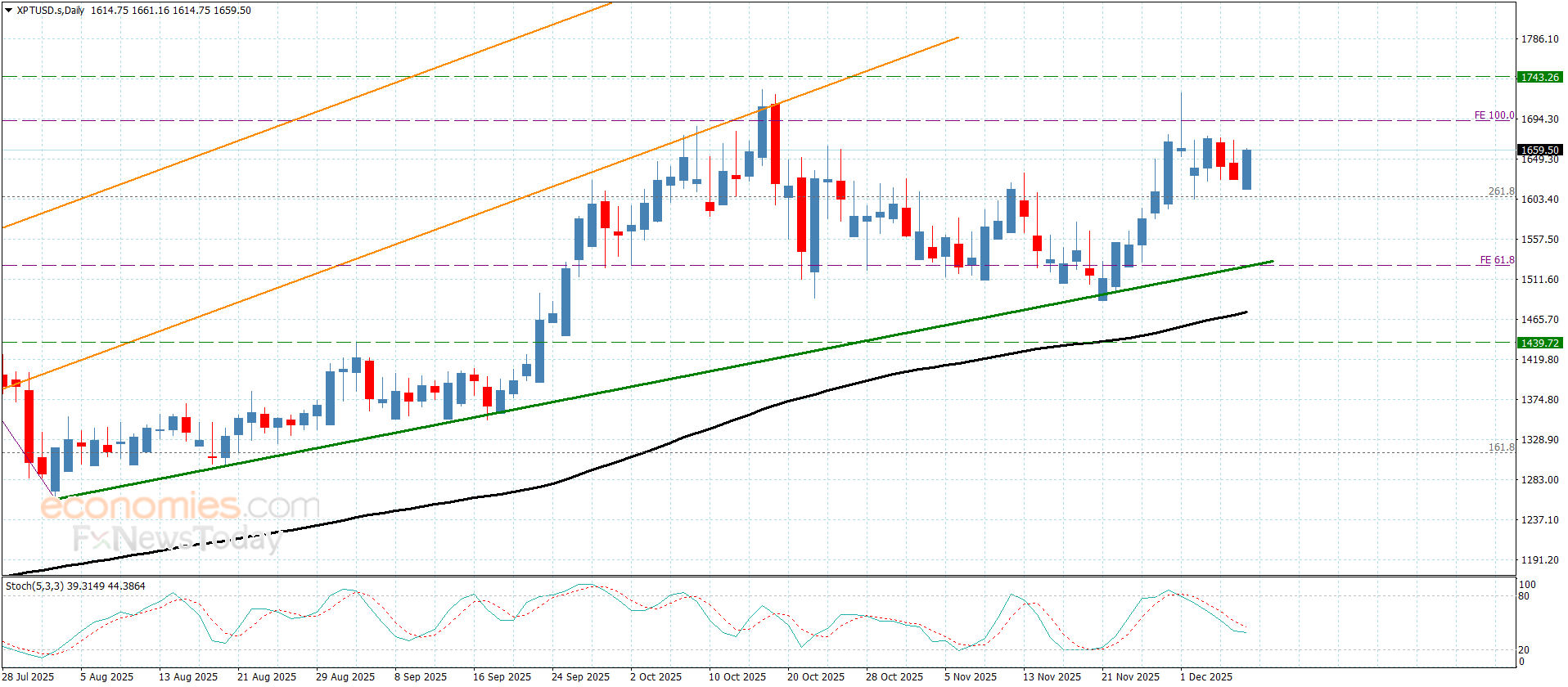
Copper price confirmed the stability of the bullish scenario by its attempt to settle above $5.3200 level, reinforcing the chances of recording new gains in the near sessions, the continuation of providing positive momentum by stochastic will ease the mission of reaching the next target at $5.5000, monitoring it as it formed extra barrier as appear in the above image.
Reaching below $5.3200 and providing negative close might force it to provide corrective trading, which forces it to decline towards $5.1500 before reaching the previously waited target.
The expected trading range for today is between $5.2500 and $5.5000
Trend forecast: Bullish
Please Register or Sign in to view this content.
Quantum Commodity Intelligence is a premium paid subscription service for professionals in the oil, biofuels, carbon, ammonia and hydrogen markets.
Quantum Oil service subscribers have access to:
Get in touch with us for subscription information on all Quantum platforms, or help with the service.
Copper price confirmed the stability of the bullish scenario by its attempt to settle above $5.3200 level, reinforcing the chances of recording new gains in the near sessions, the continuation of providing positive momentum by stochastic will ease the mission of reaching the next target at $5.5000, monitoring it as it formed extra barrier as appear in the above image.
Reaching below $5.3200 and providing negative close might force it to provide corrective trading, which forces it to decline towards $5.1500 before reaching the previously waited target.
The expected trading range for today is between $5.2500 and $5.5000
Trend forecast: Bullish
Gold is trading around a flat line near the $4,200 mark, starting a crucial US Federal Reserve (Fed) week on a cautious footing.
Amid sustained US Dollar (USD) weakness and simmering geopolitical tensions between Japan and China, Gold buyers continue to provide a floor while sellers keep lurking at higher levels.
The upside remains guarded, anticipating a probable hawkish guidance from the Fed this week. The Fed is widely expected to lower the interest rates by 25 basis points (bps) to 3.5%-3.75%, with the odds currently sitting close to 90%, the CME Group’s FedWatch Tool shows.
The Fed’s outlook on the 2026 rate path will also hold the key, leaving Gold wavering in a tight range at the start of the week on Monday.
The recent series of unimpressive US economic data continues to favor the dovish Fed expectations.
Meanwhile, markets remain cautious after Japanese Defence Minister Shinjiro Koizumi reported on Sunday, Chinese fighter jets twice directed fire-control radar at its F-15 aircraft over international waters near Okinawa.
On the other hand, Beijing accused Japanese jets of interrupting their air training.
Gold finds additional support from a solid growth in China’s Exports for November, with both the Yuan and USD-denominated jump reported at 5.7% and 5.9%, respectively. China is the world’s top yellow metal consumer.
In the day ahead, Gold will continue to take cues from broad market sentiment in the absence of top-tier US economic data. Geopolitical developments in Asia will also be closely monitored.
In the daily chart, the 21-day Simple Moving Average (SMA) climbs above the 50-, 100-, and 200-day SMAs, with all slopes rising and price holding above them, reinforcing a bullish bias. The 21-day SMA at $4,147.93 offers nearby dynamic support, while the 50-day SMA at $4,084.46 underpins the advance. The Relative Strength Index (RSI) sits at 61.33, edging higher from 60.31 and signaling firm, but not overbought, momentum. Measured from the $4,381.17 high to the $3,885.84 low, the 61.8% retracement at $4,191.95 has been surpassed, hinting the prior bearish phase is losing strength.
Upside extension faces resistance at the 78.6% retracement at $4,275.16; a decisive close above this barrier would open the path toward the prior top. If buyers fail to sustain above the 61.8% marker, a pullback could revisit the 50% retracement at $4,133.50. Beneath that, trend support remains defined by rising moving averages, with the 50-day SMA cushioning the downside. Overall, momentum and trend alignment favor dips being bought while Fibonacci thresholds frame the next directional cues.
(The technical analysis of this story was written with the help of an AI tool)
Monetary policy in the US is shaped by the Federal Reserve (Fed). The Fed has two mandates: to achieve price stability and foster full employment. Its primary tool to achieve these goals is by adjusting interest rates.
When prices are rising too quickly and inflation is above the Fed’s 2% target, it raises interest rates, increasing borrowing costs throughout the economy. This results in a stronger US Dollar (USD) as it makes the US a more attractive place for international investors to park their money.
When inflation falls below 2% or the Unemployment Rate is too high, the Fed may lower interest rates to encourage borrowing, which weighs on the Greenback.
The Federal Reserve (Fed) holds eight policy meetings a year, where the Federal Open Market Committee (FOMC) assesses economic conditions and makes monetary policy decisions.
The FOMC is attended by twelve Fed officials – the seven members of the Board of Governors, the president of the Federal Reserve Bank of New York, and four of the remaining eleven regional Reserve Bank presidents, who serve one-year terms on a rotating basis.
In extreme situations, the Federal Reserve may resort to a policy named Quantitative Easing (QE). QE is the process by which the Fed substantially increases the flow of credit in a stuck financial system.
It is a non-standard policy measure used during crises or when inflation is extremely low. It was the Fed’s weapon of choice during the Great Financial Crisis in 2008. It involves the Fed printing more Dollars and using them to buy high grade bonds from financial institutions. QE usually weakens the US Dollar.
Quantitative tightening (QT) is the reverse process of QE, whereby the Federal Reserve stops buying bonds from financial institutions and does not reinvest the principal from the bonds it holds maturing, to purchase new bonds. It is usually positive for the value of the US Dollar.