The main tag of GoldPrice Articles.
You can use the search box below to find what you need.
[wd_asp id=1]
The main tag of GoldPrice Articles.
You can use the search box below to find what you need.
[wd_asp id=1]
Gold is seeing a deep correction early Friday, challenging bids near the $5,100 kevel, following intense volatility witnessed on Thursday.
Gold is down nearly 3% so far this Friday, yet on track for the largest monthly advance since January 1980.
The latest corrective pullback could be attributed mainly to a strong comeback staged by the US Dollar (USD) across the board. A cocktail of factors emerges as a tailwind to the Greenback, offering a much-needed reprieve.
The Wall Street Journal (WSJ) reported that US President Donald Trump and Senate Democrats struck a deal to avert a government shutdown, lending support to the buck.
Additionally, the Fed’s cautious hold decision and profit-taking following the recent meltdown to four-year lows collaborate to the USD’s resurgence heading into Trump’s announcement of the US Federal Reserve (Fed) Chair pick due later in the American morning on Friday.
The Trump administration is preparing to nominate former Fed Governor Kevin Warsh to be the next Chair, Bloomberg reported on Friday.
Despite the sharp correction in the bright metal, bargain hunting cannot be ruled out as geopolitical risks remain elevated between the US and Iran, while markets digest the latest tariff threats by Trump on Cuba and Canada.
The White House said that Trump signed an executive order that would impose tariffs on countries that provide oil to Cuba, per Reuters.
Looking, Trump’s announcement of his Fed Chair pick and US Producer Price Index (PPI) data are eagerly awaited for the next critical move in Gold.
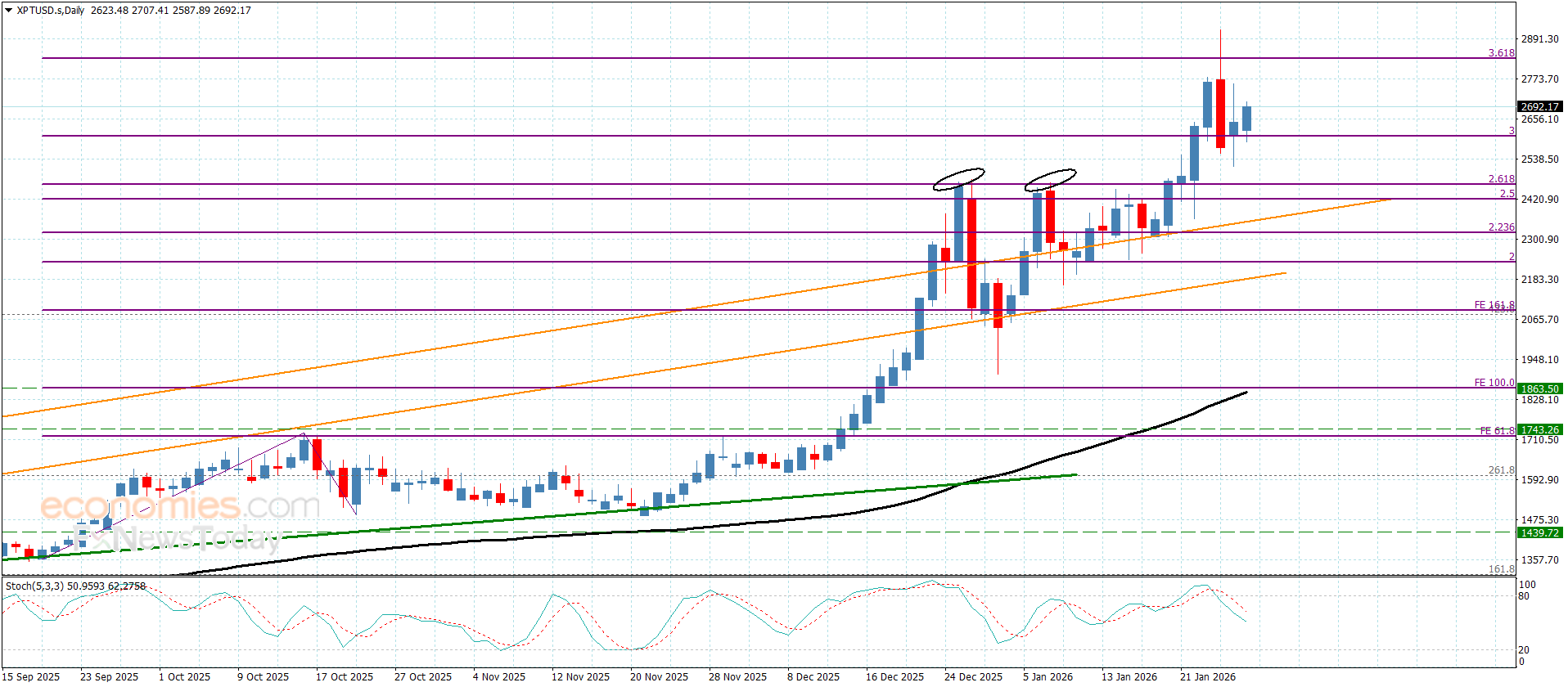
In the daily chart, XAU/USD trades at $5,195.05. The 21-day Simple Moving Average (SMA) rises above the 50- and 100-day, while the 200-day SMA also trends higher. Price holds above these averages, reinforcing a bullish bias. The Relative Strength Index (RSI) is at 72.07 (overbought), with momentum still firm. Immediate support is at the 21-day SMA at $4,764.72.
Shorter SMAs remaining stacked above longer ones underscore the prevailing uptrend, with the 50-day SMA at $4,481.84 underpinning the structure. The 100- and 200-day SMAs continue to advance, confirming the broader positive slope. RSI stays elevated, which could cap near-term upside and favor consolidation rather than reversal. Pullbacks would be expected to find support near the 50-day SMA, while sustained trade above the short-term averages keeps the path of least resistance to the upside.
(The technical analysis of this story was written with the help of an AI tool.)
(This story was corrected on January 30 at 4:12 GMT to say in the first bullet point that “Gold corrected steeply early Friday, not correctly steeply.)
Gold has played a key role in human’s history as it has been widely used as a store of value and medium of exchange. Currently, apart from its shine and usage for jewelry, the precious metal is widely seen as a safe-haven asset, meaning that it is considered a good investment during turbulent times. Gold is also widely seen as a hedge against inflation and against depreciating currencies as it doesn’t rely on any specific issuer or government.
Central banks are the biggest Gold holders. In their aim to support their currencies in turbulent times, central banks tend to diversify their reserves and buy Gold to improve the perceived strength of the economy and the currency. High Gold reserves can be a source of trust for a country’s solvency. Central banks added 1,136 tonnes of Gold worth around $70 billion to their reserves in 2022, according to data from the World Gold Council. This is the highest yearly purchase since records began. Central banks from emerging economies such as China, India and Turkey are quickly increasing their Gold reserves.
Gold has an inverse correlation with the US Dollar and US Treasuries, which are both major reserve and safe-haven assets. When the Dollar depreciates, Gold tends to rise, enabling investors and central banks to diversify their assets in turbulent times. Gold is also inversely correlated with risk assets. A rally in the stock market tends to weaken Gold price, while sell-offs in riskier markets tend to favor the precious metal.
The price can move due to a wide range of factors. Geopolitical instability or fears of a deep recession can quickly make Gold price escalate due to its safe-haven status. As a yield-less asset, Gold tends to rise with lower interest rates, while higher cost of money usually weighs down on the yellow metal. Still, most moves depend on how the US Dollar (USD) behaves as the asset is priced in dollars (XAU/USD). A strong Dollar tends to keep the price of Gold controlled, whereas a weaker Dollar is likely to push Gold prices up.

Why are oil and copper prices rising to record highs and will they increase further or fall down is driven by a mix of geopolitical risk, currency movement, and investor activity. Oil prices moved higher due to concerns over possible supply disruption linked to Iran and Middle East tensions. Copper prices climbed to record levels as speculative funds increased positions, supported by expectations of higher spending on power, data centres, and energy transition projects. A weak US dollar made commodities cheaper for global buyers. Future price direction depends on geopolitical developments, actual demand trends, supply responses, and whether speculative interest continues or fades.
Why are oil prices rising to record highs is mainly linked to fears of supply disruption from Iran, one of the largest OPEC producers. Reports of potential US military action and new European Union sanctions raised concerns over oil flows through the Strait of Hormuz. At the same time, the US dollar stayed weak, supporting oil demand. Oil prices also gained support from expectations that interest rates may stay steady, which can support economic activity and fuel consumption in major economies.
The oil prices are rising to record highs due to oil market fears. Oil prices climbed about 4% after reports said the United States may take action against Iran. Iran is a major OPEC producer.
Brent crude rose to $70.90 per barrel. WTI rose to $65.56 per barrel. Both reached levels last seen months ago. Markets fear Iran may respond by targeting regional oil flows. The Strait of Hormuz carries about 20 million barrels per day.
The European Union also imposed sanctions on Iran. It targeted officials and entities linked to protest crackdowns. The EU also designated Iran’s Revolutionary Guards as a terrorist group. This raised supply risk concerns.
Why are oil and copper prices rising to record highs and will they increase further or fall down also depends on supply changes. Russia may increase exports if peace talks with Ukraine progress. Russia is one of the top oil producers.
Kazakhstan said Chevron will restore full production at the Tengiz field soon. Venezuela lawmakers are discussing oil reforms. These steps may raise future supply and ease prices.
Analysts say current prices include a geopolitical risk premium. Any easing in tensions may reduce oil prices.
Why are oil and copper prices rising to record highs and will they increase further or fall down is also linked to the dollar. The dollar is near multi-year lows. A weak dollar makes oil cheaper for global buyers.
The Federal Reserve signaled rates may stay steady. Lower borrowing costs can support demand. Brent’s premium over WTI rose above $5. This may increase US crude exports.
Why are oil and copper prices rising to record highs and will they increase further or fall down includes copper market forces. Copper rose above $14,000 per ton. Speculative funds led buying, mainly in China.Copper is used in power, construction, and energy systems. Investors expect higher spending on data centers and power grids. A weak dollar also supported prices.
However, physical demand in China remains weak. Exchange inventories remain high. Analysts warn prices may not match supply and demand conditions.
Why are oil and copper prices rising to record highs and will they increase further or fall down depends on geopolitics and demand. Oil may fall if Iran tensions ease or supply rises. Copper may correct if speculation slows and demand stays weak.
What should investors do is a key question as oil and copper prices trade near record levels. Investors should track geopolitical developments linked to Iran and the Middle East, as headlines can shift prices quickly. They should also watch supply signals from OPEC, Russia, Kazakhstan, and Venezuela. For copper, investors should monitor physical demand data from China and inventory levels on exchanges. Price moves are being driven by speculation and currency trends, so risk management is important. Investors may consider avoiding overexposure and staying prepared for sharp corrections if conditions change.
Why are oil and copper prices rising to record highs and will they increase further or fall down now?
Oil prices rose due to Iran risks and dollar weakness. Copper prices rose due to speculation and growth expectations. Future moves depend on geopolitics, demand data, and currency trends.
Will oil and copper prices fall after hitting record levels?
Prices may fall if Middle East tensions ease, supply increases, or speculative trading slows. Weak physical demand and high inventories may also pressure copper and oil prices.
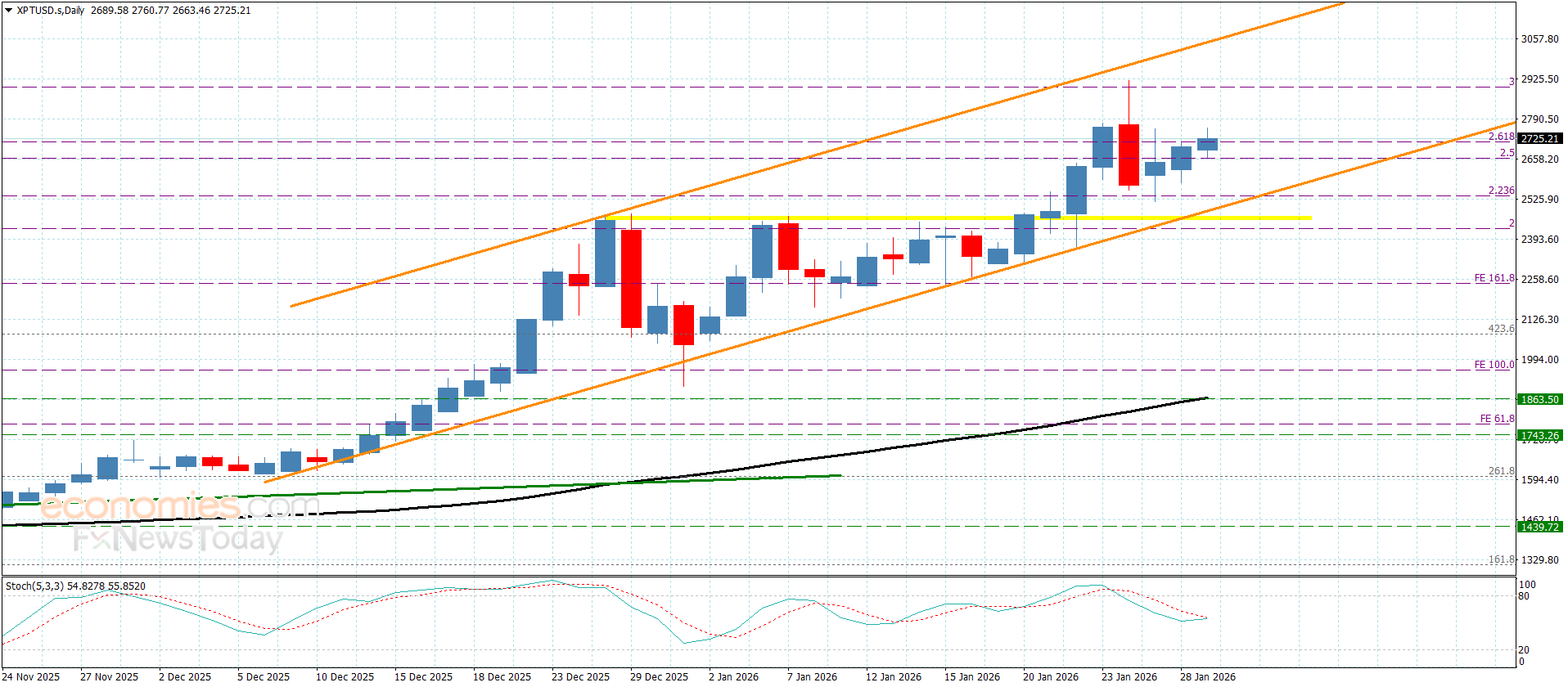
Copper price succeeded in activating the bullish attack by surpassing $5.9700 barrier, to begin recording clear gains by reaching $6.2300, recording extra suggested target in the previous report.
Note that the stability above $5.9700 level might form an important support, besides providing bullish momentum by the main indicators, these factors support resuming the bullish attack, to expect targeting new stations that might begin at $6.4100.
The expected trading range for today is between $6.0700 and $6.4100
Trend forecast: Bullish
Silver price (XAG/USD) continues its winning streak that began on January 22, trading around $117.70 per troy ounce during the Asian hours on Thursday. Silver price surged to a fresh record high of $119.42 earlier, supported by persistent safe-haven demand amid economic and geopolitical uncertainty. The grey metal has climbed more than 65% so far this month.
Investor appetite for precious metals, including Silver remained strong despite a rebound in the US Dollar (USD), highlighting robust hedging demand against currency risks. US Treasury Secretary Scott Bessent reiterated the US commitment to a strong dollar policy, while the Federal Reserve left interest rates unchanged at its January meeting, citing still-elevated inflation and resilient economic growth.
Fed Chair Jerome Powell said job gains have cooled and the unemployment rate is stabilising, adding that the Fed is “well positioned” to assess data meeting by meeting and is not on a preset path for future rate decisions.
Safe-haven demand for precious metals, including Silver, strengthened against the backdrop of global trade frictions. Renewed protectionist rhetoric ahead of the US election has heightened concerns over tariffs, supply-chain disruptions, and inflationary pressures. Market sentiment was further dampened by fears of a potential US government shutdown, which could delay key economic data releases.
Geopolitical risks remained elevated amid escalating Middle East tensions. US President Donald Trump urged Iran on Wednesday to return to negotiations over its nuclear programme, warning that any future US attack would be far more severe. Tehran responded by threatening retaliation against the US, Israel, and their allies, per Reuters.
At the same time, solid industrial demand from renewable energy and electronics sectors continued to tighten supply, reinforcing Silver’s upward momentum. Prices have also been supported by investors seeking cheaper alternatives to Gold, alongside supply constraints and momentum-driven buying.
Silver is a precious metal highly traded among investors. It has been historically used as a store of value and a medium of exchange. Although less popular than Gold, traders may turn to Silver to diversify their investment portfolio, for its intrinsic value or as a potential hedge during high-inflation periods. Investors can buy physical Silver, in coins or in bars, or trade it through vehicles such as Exchange Traded Funds, which track its price on international markets.
Silver prices can move due to a wide range of factors. Geopolitical instability or fears of a deep recession can make Silver price escalate due to its safe-haven status, although to a lesser extent than Gold’s. As a yieldless asset, Silver tends to rise with lower interest rates. Its moves also depend on how the US Dollar (USD) behaves as the asset is priced in dollars (XAG/USD). A strong Dollar tends to keep the price of Silver at bay, whereas a weaker Dollar is likely to propel prices up. Other factors such as investment demand, mining supply – Silver is much more abundant than Gold – and recycling rates can also affect prices.
Silver is widely used in industry, particularly in sectors such as electronics or solar energy, as it has one of the highest electric conductivity of all metals – more than Copper and Gold. A surge in demand can increase prices, while a decline tends to lower them. Dynamics in the US, Chinese and Indian economies can also contribute to price swings: for the US and particularly China, their big industrial sectors use Silver in various processes; in India, consumers’ demand for the precious metal for jewellery also plays a key role in setting prices.
Silver prices tend to follow Gold’s moves. When Gold prices rise, Silver typically follows suit, as their status as safe-haven assets is similar. The Gold/Silver ratio, which shows the number of ounces of Silver needed to equal the value of one ounce of Gold, may help to determine the relative valuation between both metals. Some investors may consider a high ratio as an indicator that Silver is undervalued, or Gold is overvalued. On the contrary, a low ratio might suggest that Gold is undervalued relative to Silver.
Meanwhile, Silver is also seeing strong gains, trading at $119.13 with a 1.96% rise, as safe-haven demand grows amid global uncertainties and US dollar weakness.
On the geopolitical front, concerns about US tariffs have returned after Germany, the Eurozone’s largest economy, lowered its growth forecasts for this year and next. Meanwhile, the tension is also rising in the Middle East, as US President Donald Trump warned Iran to come to the table on nuclear weapons, or face stronger attacks. Iran fired back, threatening the US, Israel, and their allies.
Meanwhile, Russia keeps hitting Ukrainian cities, with a recent drone strike on a passenger train killing five people. All this uncertainty, along with some selling of the US dollar, is keeping Gold in demand.
On the US front, the Federal Reserve kept interest rates unchanged after its two-day meeting, as most expected. Two Fed officials, Stephen Miran and Christopher Waller, wanted a small cut instead. Fed Chair Jerome Powell said inflation is still higher than the 2% target, but markets barely reacted. Meanwhile, worries are growing that the Fed may not be fully independent, with a DOJ investigation into Powell and efforts to remove Governor Lisa Cook raising concerns about political pressure.
For now, traders expect rates to stay steady through this quarter and possibly until Powell’s term ends in May, though two cuts are priced in for 2026. This outlook is keeping the US Dollar from gaining much and giving Gold a boost, as investors favor the safe-haven metal. All eyes are now on Thursday’s jobless claims data for fresh market movement.
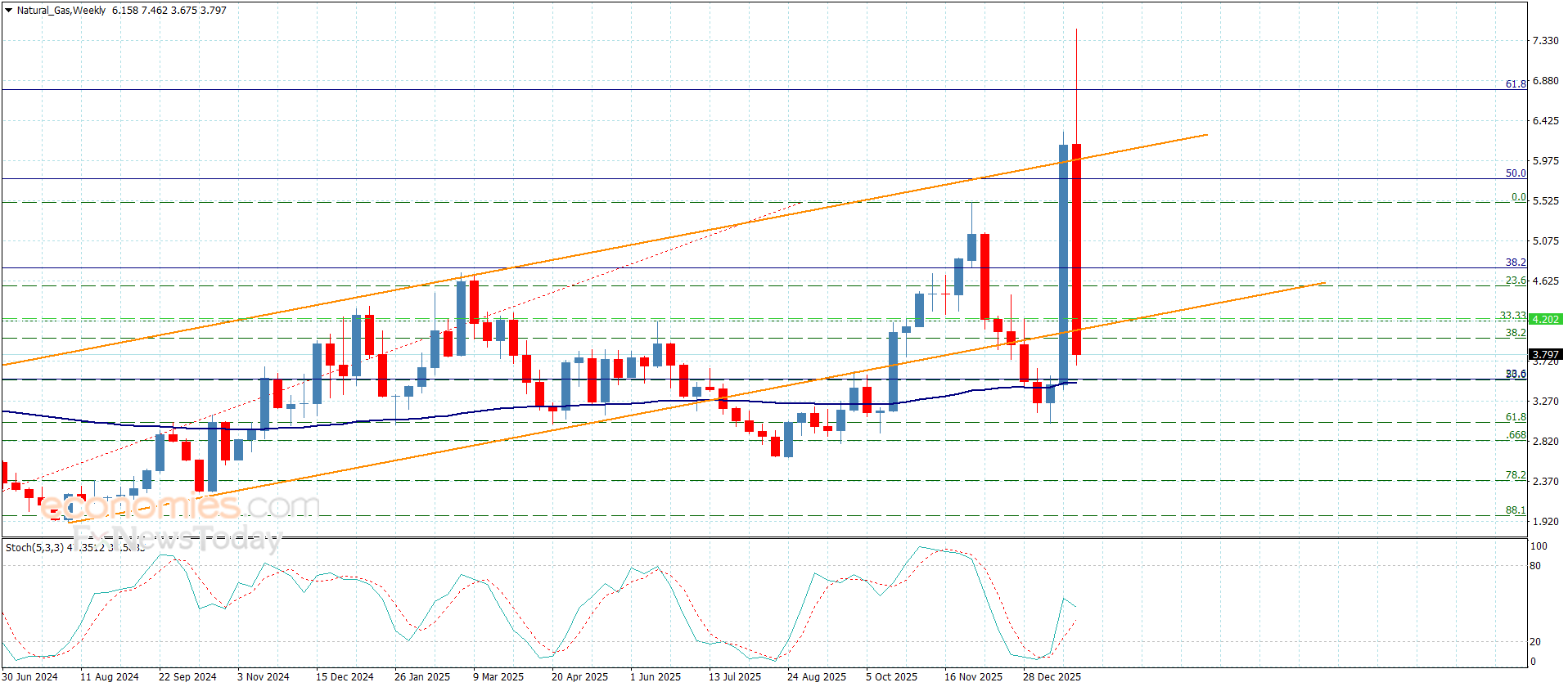
Natural gas price continued providing weak sideways trading, affected by the contradiction between the main indicators besides forming a significant obstacle against the attempts to renew the bullish attack, fluctuating near $3.850.
There is a chance for forming new bearish waves, to press on the moving average 55 at $3.450, and surpassing it might extend the losses towards $3.050, facing the extension of historical support, while the price success in surpassing $4.000 level and holding above it will allow it to renew the bullish attempts, to expect targeting $4.220 and $4.450 level.
The expected trading range for today is between $3.450 and $4.050
Trend forecast: Bearish
Copper price repeatedly provided sideways trading in the last period, affected by the contradiction between the main indicators, which forces it to settle below $5.9700 barrier, which obstructs the chances of resuming the bullish trend.
All that confirms the price surrender to sideways trading, to keep waiting to achieve the required breach, to open the way for recording new gains by its rally towards $6.1200 reaching the next target at $6.2400.
The expected trading range for today is between $5.7500 and $6.1200
Trend forecast: Sideways until achieving the breach
Natural gas price repeatedly provided negative close below the broken support at $4.100 level, forming a new resistance against the current trading, and stochastic attempt to provide negative momentum by reaching below 50 level will force the price to form new bearish waves, reaching $3.450 and surpassing it might force it to decline towards $3.220, to test high liquidity grab zones.
While the rally above $4.100 and providing bullish close will increase the chances of forming new bullish waves, to attempt to reach $3.370 initially, then waiting for targeting %38.2 Fibonacci correction level near $4.750.
The expected trading range for today is between $3.450 and $4.100
Trend forecast: Bearish
Silver price (XAG/USD) continues its winning streak for the fifth consecutive session, trading around $115.10 per troy ounce during the early European hours on Wednesday. Safe-haven silver rises toward its January 26 record high of $117.74 as investors shifted into defensive assets.
Precious metals, including Silver attract investors following President Donald Trump’s remarks that he is unconcerned about the USD’s recent slide, strengthened expectations that the administration is comfortable with a weaker greenback to boost export competitiveness.
Ongoing policy uncertainty in Washington, including tariff threats and challenges to the Federal Reserve’s (Fed) independence, along with the “Sell America” narrative, continues to dominate sentiment, further supporting gains in precious metals.
The Federal Reserve is expected to leave rates steady at 3.50%–3.75% after its two-day meeting on Wednesday, following three straight cuts in 2025. Attention will turn to the post-meeting press conference for signals on the policy path ahead.
Citi Commodities Research global head Maximillian J. Layton said that Silver is poised to extend its outperformance after breaking above $100.00 per troy ounce. Layton said bullish drivers, including elevated geopolitical risks and renewed concerns over Federal Reserve independence, are likely to persist in the near term. Citi has raised its three-month Silver price forecast to $150.00 from $100.00 previously, per Dow Jones Newswires.
In China, a pure-play Silver fund halted trading after a surge in demand drove its premium far above the value of its underlying assets. Silver has attracted strong retail interest as prices continue to rally, prompting manufacturers to shift production from jewelry toward one-kilogram Silver bars.
Silver is a precious metal highly traded among investors. It has been historically used as a store of value and a medium of exchange. Although less popular than Gold, traders may turn to Silver to diversify their investment portfolio, for its intrinsic value or as a potential hedge during high-inflation periods. Investors can buy physical Silver, in coins or in bars, or trade it through vehicles such as Exchange Traded Funds, which track its price on international markets.
Silver prices can move due to a wide range of factors. Geopolitical instability or fears of a deep recession can make Silver price escalate due to its safe-haven status, although to a lesser extent than Gold’s. As a yieldless asset, Silver tends to rise with lower interest rates. Its moves also depend on how the US Dollar (USD) behaves as the asset is priced in dollars (XAG/USD). A strong Dollar tends to keep the price of Silver at bay, whereas a weaker Dollar is likely to propel prices up. Other factors such as investment demand, mining supply – Silver is much more abundant than Gold – and recycling rates can also affect prices.
Silver is widely used in industry, particularly in sectors such as electronics or solar energy, as it has one of the highest electric conductivity of all metals – more than Copper and Gold. A surge in demand can increase prices, while a decline tends to lower them. Dynamics in the US, Chinese and Indian economies can also contribute to price swings: for the US and particularly China, their big industrial sectors use Silver in various processes; in India, consumers’ demand for the precious metal for jewellery also plays a key role in setting prices.
Silver prices tend to follow Gold’s moves. When Gold prices rise, Silver typically follows suit, as their status as safe-haven assets is similar. The Gold/Silver ratio, which shows the number of ounces of Silver needed to equal the value of one ounce of Gold, may help to determine the relative valuation between both metals. Some investors may consider a high ratio as an indicator that Silver is undervalued, or Gold is overvalued. On the contrary, a low ratio might suggest that Gold is undervalued relative to Silver.
Jan 28, 2026
IndexBox has just published a new report: United Kingdom – Coffee (Green) – Market Analysis, Forecast, Size, Trends and Insights.
The UK green coffee market saw a significant contraction in consumption and imports in 2024, with consumption falling to 120K tons and imports to 146K tons. However, exports surged by 34% to 26K tons. Brazil remains the dominant import source, while Germany, France, and Belgium are the top export destinations. The market value is forecast to grow at a CAGR of +1.6% to $588M by 2035, despite a modest volume CAGR of +0.2%. Import and export prices rose sharply in 2024, indicating changing market dynamics.
Key Findings
Driven by rising demand for green coffee in the UK, the market is expected to start an upward consumption trend over the next decade. The performance of the market is forecast to increase slightly, with an anticipated CAGR of +0.2% for the period from 2024 to 2035, which is projected to bring the market volume to 123K tons by the end of 2035.
In value terms, the market is forecast to increase with an anticipated CAGR of +1.6% for the period from 2024 to 2035, which is projected to bring the market value to $588M (in nominal wholesale prices) by the end of 2035.
In 2024, the amount of coffee (green) consumed in the UK fell rapidly to 120K tons, reducing by -15.1% compared with 2023. In general, consumption saw a slight setback. As a result, consumption reached the peak volume of 182K tons. From 2019 to 2024, the growth of the consumption failed to regain momentum.
The revenue of the green coffee market in the UK reduced to $496M in 2024, dropping by -7.2% against the previous year. This figure reflects the total revenues of producers and importers (excluding logistics costs, retail marketing costs, and retailers’ margins, which will be included in the final consumer price). Over the period under review, consumption, however, recorded a relatively flat trend pattern. As a result, consumption attained the peak level of $586M. From 2023 to 2024, the growth of the market remained at a somewhat lower figure.
In 2024, imports of coffee (green) into the UK fell to 146K tons, waning by -9.2% on 2023 figures. In general, imports, however, showed a relatively flat trend pattern. The most prominent rate of growth was recorded in 2018 with an increase of 66%. As a result, imports reached the peak of 193K tons. From 2019 to 2024, the growth of imports remained at a somewhat lower figure.
In value terms, green coffee imports rose slightly to $654M in 2024. Over the period under review, total imports indicated a perceptible increase from 2013 to 2024: its value increased at an average annual rate of +3.3% over the last eleven-year period. The trend pattern, however, indicated some noticeable fluctuations being recorded throughout the analyzed period. Based on 2024 figures, imports decreased by -8.4% against 2022 indices. The pace of growth appeared the most rapid in 2022 with an increase of 57%. As a result, imports reached the peak of $714M. From 2023 to 2024, the growth of imports remained at a somewhat lower figure.
In 2024, Brazil (65K tons) constituted the largest green coffee supplier to the UK, accounting for a 44% share of total imports. Moreover, green coffee imports from Brazil exceeded the figures recorded by the second-largest supplier, Vietnam (25K tons), threefold. The third position in this ranking was taken by Colombia (11K tons), with a 7.4% share.
From 2013 to 2024, the average annual growth rate of volume from Brazil stood at +6.9%. The remaining supplying countries recorded the following average annual rates of imports growth: Vietnam (-4.0% per year) and Colombia (-4.7% per year).
In value terms, Brazil ($258M) constituted the largest supplier of coffee (green) to the UK, comprising 39% of total imports. The second position in the ranking was held by Vietnam ($96M), with a 15% share of total imports. It was followed by Colombia, with a 9.2% share.
From 2013 to 2024, the average annual rate of growth in terms of value from Brazil stood at +8.7%. The remaining supplying countries recorded the following average annual rates of imports growth: Vietnam (+0.5% per year) and Colombia (-0.9% per year).
In 2024, the average green coffee import price amounted to $4,482 per ton, increasing by 14% against the previous year. In general, import price indicated a pronounced increase from 2013 to 2024: its price increased at an average annual rate of +3.2% over the last eleven-year period. The trend pattern, however, indicated some noticeable fluctuations being recorded throughout the analyzed period. Based on 2024 figures, green coffee import price increased by +69.5% against 2019 indices. The growth pace was the most rapid in 2017 an increase of 45% against the previous year. The import price peaked in 2024 and is likely to see steady growth in years to come.
Average prices varied somewhat amongst the major supplying countries. In 2024, amid the top importers, the countries with the highest prices were Ethiopia ($5,774 per ton) and Colombia ($5,584 per ton), while the price for Vietnam ($3,864 per ton) and Indonesia ($3,952 per ton) were amongst the lowest.
From 2013 to 2024, the most notable rate of growth in terms of prices was attained by Vietnam (+4.7%), while the prices for the other major suppliers experienced more modest paces of growth.
In 2024, approx. 26K tons of coffee (green) were exported from the UK; growing by 34% on the previous year. Overall, exports posted a resilient expansion. The most prominent rate of growth was recorded in 2022 with an increase of 101% against the previous year. The exports peaked in 2024 and are expected to retain growth in the near future.
In value terms, green coffee exports skyrocketed to $122M in 2024. Over the period under review, exports posted a buoyant increase. As a result, the exports reached the peak and are likely to continue growth in the immediate term.
Germany (6.5K tons), France (6K tons) and Belgium (3.2K tons) were the main destinations of green coffee exports from the UK, together comprising 60% of total exports.
From 2013 to 2024, the most notable rate of growth in terms of shipments, amongst the main countries of destination, was attained by Belgium (with a CAGR of +65.3%), while the other leaders experienced more modest paces of growth.
In value terms, Germany ($29M), France ($25M) and Belgium ($15M) constituted the largest markets for green coffee exported from the UK worldwide, with a combined 56% share of total exports.
Belgium, with a CAGR of +59.4%, saw the highest rates of growth with regard to the value of exports, among the main countries of destination over the period under review, while shipments for the other leaders experienced more modest paces of growth.
In 2024, the average green coffee export price amounted to $4,718 per ton, with an increase of 59% against the previous year. Over the period under review, the export price recorded a relatively flat trend pattern. The export price peaked at $5,684 per ton in 2014; however, from 2015 to 2024, the export prices failed to regain momentum.
There were significant differences in the average prices for the major external markets. In 2024, amid the top suppliers, the country with the highest price was Poland ($14,865 per ton), while the average price for exports to Italy ($3,837 per ton) was amongst the lowest.
From 2013 to 2024, the most notable rate of growth in terms of prices was recorded for supplies to Poland (+10.0%), while the prices for the other major destinations experienced more modest paces of growth.
This report provides a comprehensive view of the green coffee industry in the United Kingdom, tracking demand, supply, and trade flows across the national value chain. It explains how demand across key channels and end-use segments shapes consumption patterns, while also mapping the role of input availability, production efficiency, and regulatory standards on supply.
Beyond headline metrics, the study benchmarks prices, margins, and trade routes so you can see where value is created and how it moves between domestic suppliers and international partners. The analysis is designed to support strategic planning, market entry, portfolio prioritization, and risk management in the green coffee landscape in the United Kingdom.
The report combines market sizing with trade intelligence and price analytics for the United Kingdom. It covers both historical performance and the forward outlook to 2035, allowing you to compare cycles, structural shifts, and policy impacts.
This report provides a consistent view of market size, trade balance, prices, and per-capita indicators for the United Kingdom. The profile highlights demand structure and trade position, enabling benchmarking against regional and global peers.
The analysis is built on a multi-source framework that combines official statistics, trade records, company disclosures, and expert validation. Data are standardized, reconciled, and cross-checked to ensure consistency across time series.
All data are normalized to a common product definition and mapped to a consistent set of codes. This ensures that comparisons across time are aligned and actionable.
The forecast horizon extends to 2035 and is based on a structured model that links green coffee demand and supply to macroeconomic indicators, trade patterns, and sector-specific drivers. The model captures both cyclical and structural factors and reflects known policy and technology shifts in the United Kingdom.
Each projection is built from national historical patterns and the broader regional context, allowing the report to show where growth is concentrated and where risks are elevated.
Prices are analyzed in detail, including export and import unit values, regional spreads, and changes in trade costs. The report highlights how seasonality, freight rates, exchange rates, and supply disruptions influence pricing and margins.
Key producers, exporters, and distributors are profiled with a focus on their operational scale, geographic footprint, product mix, and market positioning. This helps identify competitive pressure points, partnership opportunities, and routes to differentiation.
This report is designed for manufacturers, distributors, importers, wholesalers, investors, and advisors who need a clear, data-driven picture of green coffee dynamics in the United Kingdom.
The market size aggregates consumption and trade data, presented in both value and volume terms.
The projections combine historical trends with macroeconomic indicators, trade dynamics, and sector-specific drivers.
Yes, it includes export and import unit values, regional spreads, and a pricing outlook to 2035.
The report benchmarks market size, trade balance, prices, and per-capita indicators for the United Kingdom.
Yes, it highlights demand hotspots, trade routes, pricing trends, and competitive context.

.webp "United Kingdom’s Green Coffee Market Forecast Shows Modest 1.6% CAGR Value Growth Amid Shifting Trade Patterns – News and Statistics")