The main tag of GoldPrice Articles.

You can use the search box below to find what you need.

[wd_asp id=1]

11 06, 2026

Organic Flavored Coffee Market Growth Outlook to 2035: Premiumization, E-Commerce, and Natural Flavor Trends – News and Statistics

By |2026-06-11T04:48:35+03:00June 11, 2026|Forex News, News|0 Comments


Abstract

According to the latest IndexBox report on the global Organic Flavored Coffee market, the market enters 2026 with broader demand fundamentals, more disciplined procurement behavior, and a more regionally diversified supply architecture.

The global organic flavored coffee market is entering a phase of structural transformation, bifurcating into two distinct strategic arenas: a high-volume, mainstream segment competing on distribution efficiency and price, and a premium, benefit-led segment competing on brand narrative, ingredient provenance, and experiential claims. Private-label penetration is accelerating, particularly in Europe and North America, moving beyond simple price-based alternatives to develop tiered portfolios that directly challenge mid-tier branded players on quality and flavor sophistication, compressing margin structures. E-commerce and Direct-to-Consumer (DTC) channels are not merely supplemental sales avenues but are becoming critical platforms for brand launch, consumer data acquisition, and testing high-margin, limited-edition innovations that would be untenable in a traditional retail shelf-set. The supply chain for certified organic flavoring agents (e.g., natural oils, extracts) represents a persistent bottleneck, creating volatility in cost and availability that disproportionately impacts smaller brands lacking long-term contracts, while advantaging vertically integrated players. Consumer purchasing logic is shifting from a singular flavor preference model to a multi-attribute decision matrix weighing organic certification, flavor authenticity (natural vs. artificial), ethical sourcing claims, and functional benefits (e.g., adaptogens, mushroom blends), elevating the importance of clear, credible on-pack communication. Retail channel strategy is diverging: mass grocery channels are dominated by high-velocity core flavors and aggressive promotional cycles, while specialty grocery and e-commerce support a long-tail of niche flavors and premium brands, creating a fragmented route-t

The baseline scenario for the organic flavored coffee market through 2035 assumes steady macroeconomic growth in developed regions, moderate inflation, and continued consumer migration toward premium, ethically sourced, and health-oriented food and beverage options. Under this scenario, the market is expected to expand at a compound annual growth rate (CAGR) of approximately 6.8% from 2026 to 2035, with the market index reaching 192 by 2035 (2025=100). Growth will be supported by rising disposable incomes in emerging markets, particularly in Asia-Pacific and Latin America, where a growing middle class is adopting Western coffee consumption habits. In mature markets, volume growth will be modest, but value growth will be robust as consumers trade up to higher-priced organic and specialty flavored offerings. The premiumization trend is underpinned by a shift in consumer values: organic certification is increasingly viewed as a proxy for quality and environmental responsibility, while natural flavorings (e.g., vanilla bean, hazelnut oil, cinnamon extract) command a price premium over artificial alternatives. E-commerce will continue to gain share, accounting for an estimated 25-30% of total retail sales by 2035, up from roughly 15% in 2025, driven by subscription models, DTC brands, and the convenience of repeat purchasing. Private-label penetration will rise further, particularly in Europe and North America, as retailers invest in premium-tier own-brand offerings that mimic the quality and packaging of national brands. However, the baseline scenario also incorporates headwinds: supply chain constraints for certified organic flavoring agents will persist, leading to periodic price spikes and margin compression for smaller players. Regulatory tightening around organic certi

Demand Drivers and Constraints

Primary Demand Drivers

  • Rising consumer preference for organic and natural ingredients, driving demand for certified organic flavored coffee with natural flavorings.
  • Premiumization trend as consumers trade up to higher-priced, specialty, and artisan coffee products with unique flavor profiles.
  • Expansion of e-commerce and DTC channels enabling brand discovery, subscription models, and access to niche flavors.
  • Growing health and wellness awareness, with consumers seeking functional benefits such as adaptogens, mushroom blends, and reduced sugar.
  • Increasing coffee culture in emerging markets, particularly in Asia-Pacific and Latin America, where organic flavored coffee is seen as a status symbol.
  • Sustainability and ethical sourcing concerns, with organic certification serving as a proxy for environmental and social responsibility.

Potential Growth Constraints

  • Supply chain bottlenecks for certified organic flavoring agents (e.g., natural oils, extracts), causing cost volatility and availability issues.
  • Higher price points of organic flavored coffee compared to conventional alternatives, limiting adoption in price-sensitive segments.
  • Regulatory tightening around organic certification and natural flavor labeling, increasing compliance costs and complexity.
  • Climate change risks to arabica coffee supply, potentially raising raw material costs and impacting margins.
  • Intense competition from private-label brands, particularly in Europe and North America, compressing margins for mid-tier branded players.

Demand Structure by End-Use Industry

At-Home Consumption (Retail) (estimated share: 55%)

The at-home consumption segment remains the largest end-use sector for organic flavored coffee, accounting for an estimated 55% of global market value in 2025. This segment is driven by the enduring shift toward home-based coffee rituals, accelerated by the pandemic and sustained by the convenience and cost savings of brewing at home. Consumers in this segment are increasingly trading up from conventional to organic flavored options, motivated by health, environmental, and taste considerations. The rise of specialty brewing equipment (e.g., pour-over, espresso machines, single-serve pod systems) has expanded the at-home repertoire, creating demand for a wider variety of flavors and roast profiles. Through 2035, growth will be supported by the expansion of e-commerce and subscription models, which offer convenience and discovery. Key demand-side indicators include household penetration of organic coffee, average price per pound, and repeat purchase rates. The segment is bifurcating into a high-volume, value-oriented tier (private label, mainstream flavors) and a premium tier (artisan brands, limited-edition flavors, single-origin beans). Private-label penetration is rising, particularly in Europe and North America, as retailers develop premium-tier own-brand offerings that compete on quality and flavor sophistication. Major trends include the growth of single-serve capsules (des Current trend: Stable growth driven by premiumization and home brewing rituals.

Major trends: Rise of subscription-based coffee delivery models for recurring revenue and customer loyalty, Growth of single-serve capsules with organic flavored options, despite sustainability pushback, Increasing demand for whole bean coffee as consumers invest in home grinding equipment, Functional flavored coffees incorporating adaptogens, mushrooms, and other wellness ingredients, and Private-label premiumization as retailers launch tiered own-brand organic flavored lines.

Representative participants: Starbucks Corporation, The J.M. Smucker Company, Keurig Dr Pepper Inc, Nestlé S.A, Peet’s Coffee & Tea, and Counter Culture Coffee.

Out-of-Home Consumption (Cafés, Restaurants, Hotels) (estimated share: 25%)

The out-of-home consumption segment, encompassing cafés, restaurants, hotels, and other foodservice establishments, represents approximately 25% of the global organic flavored coffee market. This segment is driven by the proliferation of specialty coffee shops and the integration of organic flavored options into foodservice menus as a point of differentiation. Consumers increasingly expect organic and ethically sourced options when dining out, particularly in urban centers and among younger demographics. The segment is characterized by higher price points and margins compared to retail, but also by greater volatility tied to foot traffic and economic cycles. Through 2035, growth will be supported by the expansion of coffee shop chains in emerging markets, particularly in Asia-Pacific and the Middle East, where Western coffee culture is gaining traction. Key demand-side indicators include café traffic counts, average check size, and the share of specialty coffee beverages on menus. The segment is also seeing innovation in cold brew and ready-to-drink (RTD) formats, which are increasingly offered in foodservice settings. However, competition from at-home brewing and the rise of remote work may temper growth in some mature markets. Major trends include the use of organic flavored syrups and sauces, the popularity of seasonal and limited-time offerings, and the integration of susta Current trend: Moderate growth driven by specialty coffee culture and premium menu offerings.

Major trends: Expansion of specialty coffee chains in emerging markets, driving demand for organic flavored options, Integration of organic flavored cold brew and RTD formats into foodservice menus, Seasonal and limited-time flavor offerings to drive trial and repeat visits, Sustainability and ethical sourcing as key brand differentiators for cafés and restaurants, and Rise of coffee subscription services for foodservice operators to ensure consistent supply.

Representative participants: Starbucks Corporation, Nestlé S.A, illycaffè S.p.A, Peet’s Coffee & Tea, La Colombe Coffee Roasters, and The Kraft Heinz Company.

Ready-to-Drink (RTD) Coffee (estimated share: 12%)

The ready-to-drink (RTD) coffee segment, including bottled, canned, and carton-based organic flavored coffee beverages, accounts for approximately 12% of the global market and is the fastest-growing end-use sector. This segment is driven by consumer demand for convenience, portability, and premium on-the-go options. RTD organic flavored coffee appeals to time-pressed consumers who seek a high-quality, organic alternative to traditional soft drinks or energy drinks. The segment has seen significant innovation in flavor profiles, including cold brew, nitro-infused, and dairy-free options (e.g., oat milk, almond milk). Through 2035, growth will be fueled by expanding distribution in convenience stores, supermarkets, and e-commerce, as well as by the entry of major beverage companies into the organic space. Key demand-side indicators include retail shelf space, velocity per SKU, and repeat purchase rates. The segment is highly competitive, with both established coffee brands and new entrants vying for market share. Major trends include the rise of functional RTD coffees (e.g., with added protein, vitamins, or adaptogens), the use of sustainable packaging (e.g., aluminum cans, recyclable cartons), and the growth of cold brew as a premium subcategory. However, the segment faces challenges from high price points relative to conventional RTD coffee and from supply chain complexities fo Current trend: High growth driven by convenience and on-the-go consumption.

Major trends: Rapid growth of cold brew and nitro-infused organic flavored RTD coffee, Functional RTD coffees with added protein, vitamins, or adaptogens for health-conscious consumers, Sustainable packaging innovations, including aluminum cans and recyclable cartons, Expansion of dairy-free and plant-based milk options in RTD coffee, and Increased distribution in convenience stores and e-commerce channels.

Representative participants: Starbucks Corporation, Nestlé S.A, Keurig Dr Pepper Inc, The Kraft Heinz Company, La Colombe Coffee Roasters, and Califia Farms.

E-Commerce & Direct-to-Consumer (DTC) (estimated share: 6%)

The e-commerce and DTC segment, while currently representing only about 6% of total market value, is a critical growth channel and a strategic priority for many brands. This segment includes sales through brand-owned websites, online marketplaces (e.g., Amazon, Alibaba), and subscription services. It is driven by the convenience of home delivery, the ability to offer a wider assortment of flavors and formats than retail shelves, and the opportunity for brands to build direct relationships with consumers. Through 2035, e-commerce is expected to capture a growing share of total organic flavored coffee sales, potentially reaching 25-30% of retail sales, as subscription models become more prevalent and as consumers become more comfortable purchasing food and beverage products online. Key demand-side indicators include website traffic, conversion rates, average order value, and customer lifetime value. The segment is particularly important for small and medium-sized brands that lack the resources to secure retail distribution, as well as for testing new flavors and limited-edition offerings. Major trends include the rise of personalized subscription boxes, the use of social media and influencer marketing for brand discovery, and the integration of loyalty programs and data analytics to drive repeat purchases. However, the segment faces challenges from high shipping costs, the need f Current trend: High growth as a channel for brand discovery, subscription, and premium offerings.

Major trends: Growth of personalized subscription boxes offering curated flavor selections, Use of social media and influencer marketing for brand discovery and trial, Integration of loyalty programs and data analytics to drive repeat purchases, Limited-edition and seasonal flavors launched exclusively online to create urgency, and Expansion of DTC brands into retail channels after establishing online presence.

Representative participants: Starbucks Corporation, Nestlé S.A, Counter Culture Coffee, Equal Exchange, Allegro Coffee Company, and La Colombe Coffee Roasters.

Industrial & Foodservice Ingredients (estimated share: 2%)

The industrial and foodservice ingredients segment, representing approximately 2% of the global organic flavored coffee market, encompasses sales of bulk organic flavored coffee to food manufacturers (e.g., for use in ice cream, baked goods, confectionery) and to large-scale foodservice operators (e.g., hotel chains, corporate cafeterias, airlines). This segment is driven by the growing incorporation of organic flavored coffee into a wider range of food products, as manufacturers seek to capitalize on consumer demand for organic and premium ingredients. Through 2035, growth will be supported by the expansion of the organic food sector overall and by the increasing use of coffee flavors in non-beverage applications. Key demand-side indicators include food production volumes, new product launches featuring organic coffee, and the price spread between organic and conventional coffee. The segment is characterized by long-term contracts, bulk pricing, and a focus on consistency and supply reliability. Major trends include the use of organic coffee in plant-based and dairy-alternative products, the development of organic coffee extracts and concentrates for industrial use, and the growing demand for organic flavored coffee in the hospitality sector. However, the segment faces challenges from price volatility in the organic coffee market and from competition with conventional coffee i Current trend: Stable growth driven by demand from food manufacturers and large-scale foodservice operators.

Major trends: Incorporation of organic flavored coffee into plant-based and dairy-alternative products, Development of organic coffee extracts and concentrates for industrial food manufacturing, Growing demand from the hospitality sector for bulk organic flavored coffee, Use of organic coffee in premium ice cream, baked goods, and confectionery, and Long-term contracts and supply chain partnerships to ensure consistency and quality.

Representative participants: Nestlé S.A, The J.M. Smucker Company, The Kraft Heinz Company, illycaffè S.p.A, and Allegro Coffee Company.

Key Market Participants

Regional Dynamics

North America (estimated share: 38%)

North America remains the largest market, driven by high per capita coffee consumption, strong organic food culture, and a mature retail and e-commerce infrastructure. Growth is primarily value-driven as consumers trade up to premium organic flavored offerings. Private-label penetration is rising, compressing margins for mid-tier brands. Direction: Stable growth with premiumization focus.

Europe (estimated share: 30%)

Europe is a mature market with strong organic certification standards and consumer awareness. Growth is supported by premiumization and the expansion of specialty coffee culture, particularly in the UK, Germany, and Scandinavia. Regulatory tightening around organic claims and packaging sustainability will shape competitive dynamics. Direction: Moderate growth with regulatory and sustainability focus.

Asia-Pacific (estimated share: 18%)

Asia-Pacific is the fastest-growing region, fueled by rising disposable incomes, urbanization, and the adoption of Western coffee habits in countries like China, Japan, South Korea, and Australia. Organic flavored coffee is often positioned as a premium imported product. E-commerce is a key channel for market entry and expansion. Direction: High growth driven by emerging coffee culture and rising incomes.

Latin America (estimated share: 8%)

Latin America benefits from being a major coffee-producing region, with growing domestic consumption of organic and specialty coffee. Countries like Brazil and Colombia are seeing increased demand for organic flavored coffee, supported by a rising middle class and tourism. Export-oriented production also influences local market dynamics. Direction: Moderate growth with production and consumption potential.

Middle East & Africa (estimated share: 6%)

The Middle East & Africa region is a small but growing market, driven by expatriate communities, tourism, and the expansion of Western-style cafés in urban centers. Demand is concentrated in the UAE, Saudi Arabia, and South Africa. High import costs and limited local organic coffee production constrain volume growth, but premium pricing supports value. Direction: Low but steady growth with niche premium demand.

Market Outlook (2026-2035)

In the baseline scenario, IndexBox estimates a 6.8% compound annual growth rate for the global organic flavored coffee market over 2026-2035, bringing the market index to roughly 192 by 2035 (2025=100).

Note: indexed curves are used to compare medium-term scenario trajectories when full absolute volumes are not publicly disclosed.

For full methodological details and benchmark tables, see the latest IndexBox Organic Flavored Coffee market report.


Source link

11 06, 2026

Today’s Platinum Price in Sivagangai – Live Platinum Rate per Gram & Kg

By |2026-06-11T00:47:01+03:00June 11, 2026|Forex News, News|0 Comments


Stay informed on platinum price trends in Sivagangai. Today’s rates stand at ₹51,020
for 10g, ₹5,10,200 for 100g, and ₹51,02,000 for 1kg. In June, platinum
saw fluctuations. The highest rate for 100g touched ₹5,95,300,
and the lowest fell to ₹5,10,200. For 1kg, prices ranged from
₹51,02,000 to ₹59,53,000.

Global supply chains, mining rates, and geopolitical issues are major drivers of platinum
prices. Demand from the auto and electronics industries adds pressure. Exchange rate
movements, especially against the US dollar, combined with inflation trends and central
bank strategies, contribute significantly to changes in platinum’s market price.


Source link

10 06, 2026

XAG/USD Forecast Today 10/06: Bearish Momentum (Video&Chart)

By |2026-06-10T20:46:02+03:00June 10, 2026|Forex News, News|0 Comments


  • Silver has been very negative during the Tuesday session, as we are looking at the markets breaking away from the negative correlation between rates and silver prices.

  • This has been a major factor, but it looks to be breaking down.

Silver price has been hit hard during the trading session here on Tuesday as it has been a wild day to say the least. Ultimately, this is a market that continues to see a lot of questions asked about risk appetite, and what’s interesting is that we even had a situation where interest rates dropped and we have silver collapsing. That generally isn’t what happens most times, but with that being said, I think you have to look at this as a market that will continue to see the breaking of the hammer from the previous session, I think opens up the possibility of a drop down to the $60 level.

Technical Horizons and Bearish Momentum

If we did turn back around, then you could see the $70 level offer a bit of a ceiling right along with that 200-day EMA.

Quite frankly, this is a market that I think is going to continue to see a lot of trouble. If we were to somehow break down below $60, that is going to be horrible. If we can recapture $70 and we are going to do that in the next 24 hours most likely, then it would be a bullish sign.

I think you have to be very careful here, but clearly the bears have made their intentions known and certainly have grabbed hold of the markets. This remains a market that has a lot of negativities to it, and although I think it goes much higher eventually, the reality is that we are far from it.

Ready to trade our daily forex analysis and predictions? Here are the best Silver trading brokers to choose from.

Christopher Lewis is a technical analyst and market commentator at DailyForex with more than two decades of trading experience in Forex and other leveraged markets. Based in Columbus, Ohio, he specializes in chart-based analysis of major currency pairs, stock indices, commodities, and energy markets, focusing on clear support and resistance levels, trend structure, and risk management. Christopher produces daily written and video analysis for traders who rely on technical setups to navigate volatile market conditions

As seen on: Pairs Of Aces Podcast,The Trader Guy, FXEmpire


Source link

10 06, 2026

Brent Crude Falls Below $91 as Middle East Conflict Eases

By |2026-06-10T16:44:35+03:00June 10, 2026|Forex News, News|0 Comments


Brent crude oil prices fell sharply on Tuesday, slipping below $91 per barrel as traders unwound a geopolitical risk premium that had supported prices for much of the year amid tensions in the Middle East.

The global oil benchmark traded between $90.87 and $91.70 per barrel during the session, extending losses from last week’s highs and marking one of its steepest daily declines in recent weeks.

The move comes as markets respond to signs of de-escalation between Iran and Israel, reducing fears of disruptions to energy supplies moving through the Strait of Hormuz, one of the world’s most strategically important oil transit routes. The sell-off reflects a broader recalibration of risk across energy markets.

From Geopolitical Spike to Risk Repricing

Oil markets have experienced extraordinary volatility throughout 2026. Brent climbed steadily during the second quarter as concerns mounted over regional conflict and the possibility of supply interruptions affecting Gulf exports.

The benchmark’s recent trajectory illustrates the rapid shift in market sentiment having traded between $91 – $94.98 per barrel in June so far.

At its June peak, Brent was approaching levels that many analysts believed reflected a significant geopolitical premium rather than underlying market fundamentals.

The latest price decline is likely to intensify attention on future OPEC+ production decisions as the alliance has spent much of the past two years balancing efforts to support prices against concerns over losing market share to non-OPEC producers.

For oil-dependent economies, including Nigeria, Brent’s trajectory remains particularly important.

Higher crude prices support government revenues, strengthen export earnings and improve foreign exchange inflows. Conversely, sustained declines could complicate fiscal planning and weaken external balances, especially for countries still navigating currency and debt challenges.

Strait of Hormuz Deadlock Persists

Concerns surrounding the Strait of Hormuz have been a defining feature of oil markets this year.

The waterway carries roughly one-fifth of global petroleum consumption and remains a critical artery for crude exports from major producers including Saudi Arabia, Iraq, Kuwait, the United Arab Emirates and Iran.

Even temporary threats to shipping in the region as it has been witnessed so far can trigger sharp movements in oil prices, given the limited availability of alternative export routes.


SEO Keywords:


Source link

10 06, 2026

Platinum price reaches the initial target– Forecast today – 10-6-2026

By |2026-06-10T12:43:09+03:00June 10, 2026|Forex News, News|0 Comments


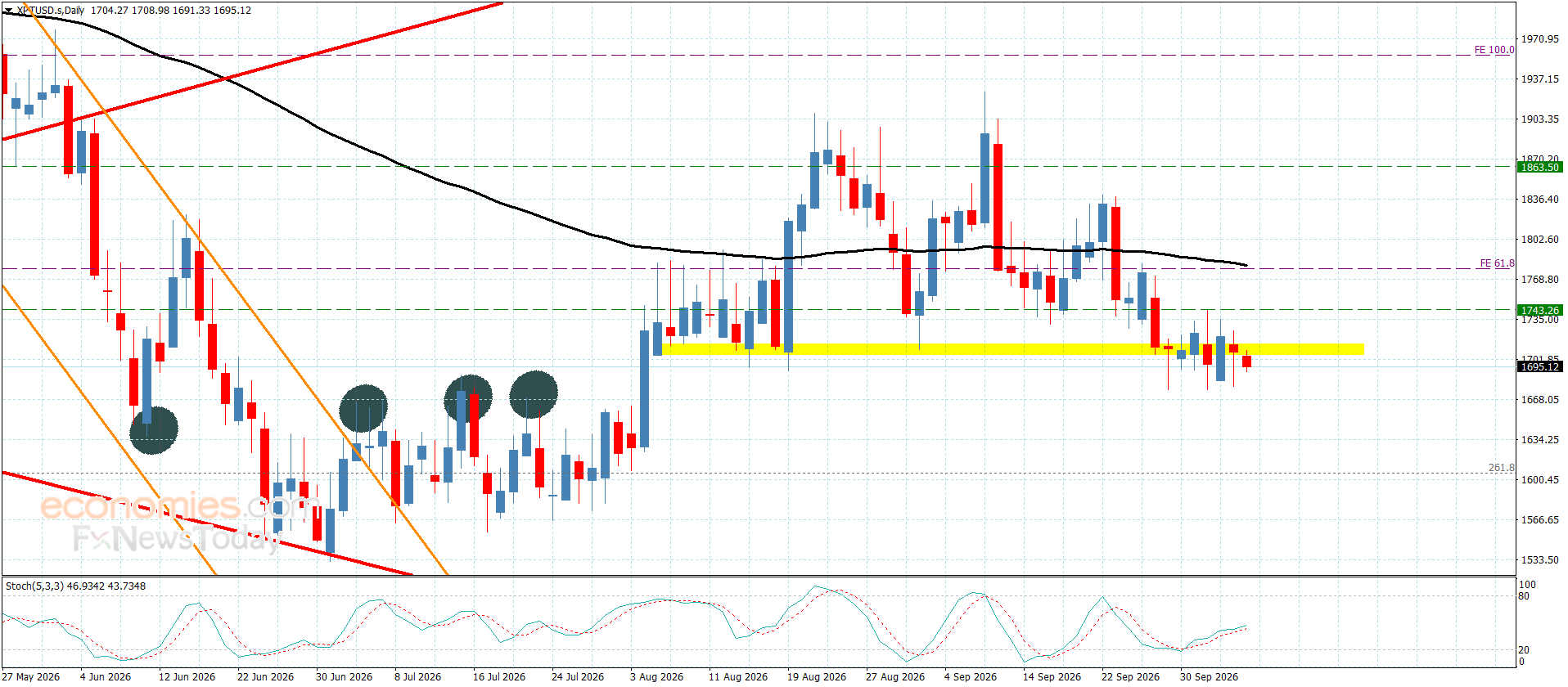
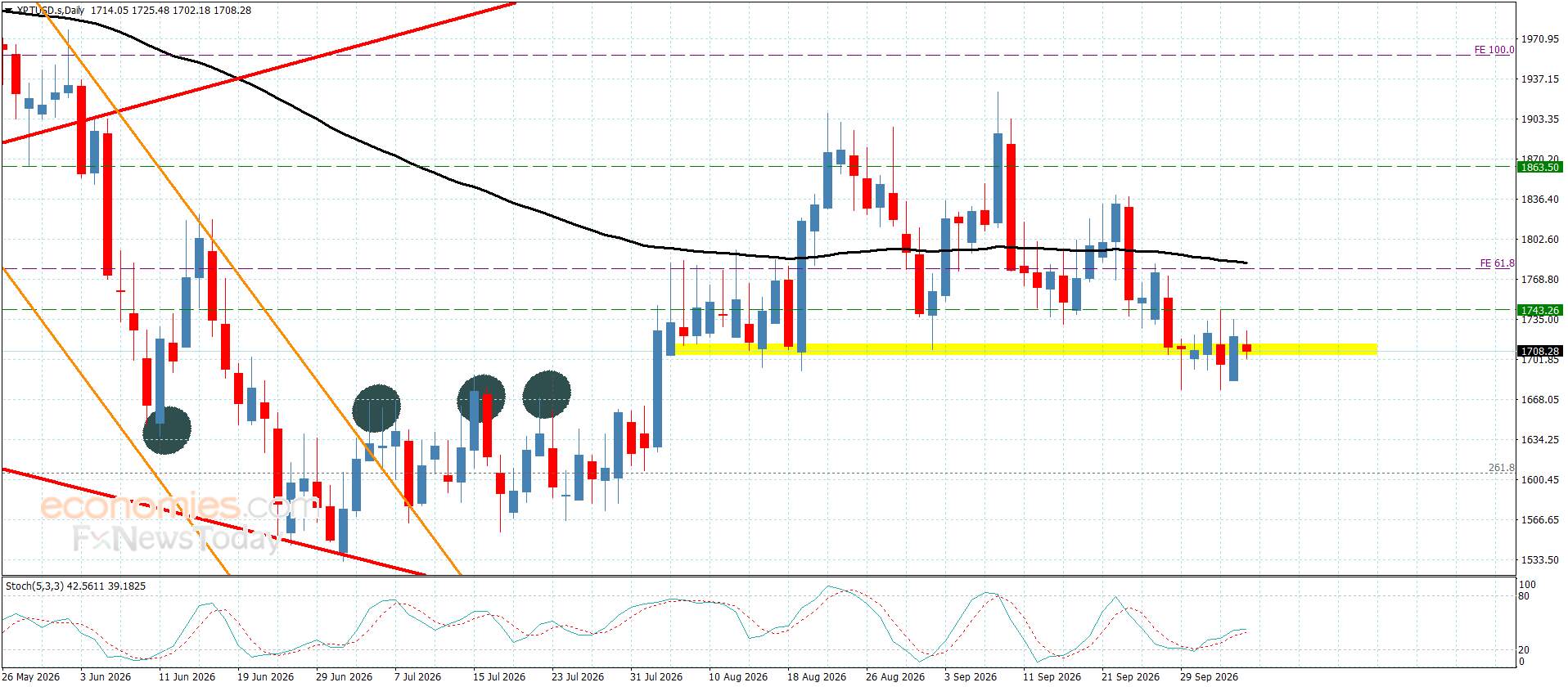
The continuation of facing negative pressure by Platinum price led it form new bearish waves, to settle below $1742.00 level, surpassing the initial extra target by reaching $1660.00.


The continuation of providing negative momentum by the main indicators, by the stability below $1865.00 resistance, these factors supports the continuation of the negativity, which might target new negative stations that are represented by $1640.00 and $1605.00.


The expected trading range for today is between $1605.00 and $1740.00


Trend forecast: Bearish


Source link

10 06, 2026

Today’s Platinum Price in Rajkot – Live Platinum Rate per Gram & Kg

By |2026-06-10T08:42:31+03:00June 10, 2026|Forex News, News|0 Comments


Explore the latest platinum price insights for Rajkot. As of now, platinum trades at
₹54,100 per 10g, ₹5,41,000 per 100g, and ₹54,10,000 per kg. In
June, prices shifted significantly. For 100g, the max was
₹5,95,300, and the min was ₹5,41,000. The

1kg rate fluctuated between ₹54,10,000 and
₹59,53,000.

Platinum pricing depends on mining output, worldwide demand, and political factors.
Heavy industrial use, particularly in automotive and electronic sectors, creates
significant market pull. Exchange rate shifts—most notably the US dollar—along with
inflation and central bank policies, directly affect the metal’s financial performance.


Source link

10 06, 2026

Silver Price Forecast: XAG/USD bears target $60 as selling pressure intensifies

By |2026-06-10T04:41:33+03:00June 10, 2026|Forex News, News|0 Comments


Silver (XAG/USD) tumbles more than 3.5% on Tuesday as price action remains driven by rapidly changing headlines surrounding the Middle East war. At the time of writing, XAG/USD is trading around $65.50, its lowest level since March 23.

US President Donald Trump said in a Truth Social post that “the United States must, of necessity, respond to this attack” after Iran allegedly shot down a US Apache helicopter over the Strait of Hormuz.

The comments contrasted sharply with Trump’s earlier remarks that negotiations with Iran were in the “final throes” and that an agreement could be reached within days.

Following the latest developments, the US Dollar Index (DXY) trimmed earlier losses and climbed back toward the 100.00 mark as investors sought safety in the Greenback.

Meanwhile, Silver continues to face headwinds from growing expectations that the Federal Reserve (Fed) may need to raise interest rates to contain inflationary pressure stemming from elevated Oil prices.

Traders are now looking ahead to the US Consumer Price Index (CPI) report due on Wednesday. A hotter-than-expected reading would reinforce expectations of higher-for-longer interest rates, providing additional support to the US Dollar and potentially adding further pressure on non-yielding assets such as Silver.

Technical analysis:

On the daily chart, the near-term bias remains bearish, with price holding below the 20-day Simple Moving Average (SMA) component of the Bollinger Bands at roughly $75.26 and even below the lower band near $65.79, underscoring persistent downside pressure.

Momentum indicators reinforce this soft tone, as the Relative Strength Index (RSI) hovers around 33 in near-oversold territory while the Moving Average Convergence Divergence (MACD) stays negative, suggesting that sellers retain control despite some proximity to stretched conditions.

On the topside, immediate resistance appears at the Bollinger lower band around $65.79, with further hurdles at the Bollinger midline near $75.26 and the upper band toward $84.72, levels that would need to be reclaimed to ease the current bearish structure.

On the downside, the next notable cushion is the horizontal support at $60.00, where a decisive break would open the door to a deeper corrective leg, while holding above this floor could encourage a period of consolidation within the broader downtrend.

(The technical analysis of this story was written with the help of an AI tool.)


Source link

10 06, 2026

Coffee prices today 9/6: Domestic prices rebound

By |2026-06-10T00:39:30+03:00June 10, 2026|Forex News, News|0 Comments


Domestic coffee prices

The domestic coffee market in the morning trading session of June 9, 2026 recorded a return to increase after previous downward adjustment sessions.

According to survey data in key growing areas of the Central Highlands, bulk purchase prices simultaneously increased by 300 to 500 VND per kg compared to yesterday’s trading session, bringing the average price level of the whole region to 85,500 VND/kg.

Specifically, in Dak Lak and Gia Lai, the price both increased by 400 VND, currently trading at 85,500 VND/kg.

In Dak Nong (old), the purchase price increased by 300 VND, reaching the threshold of 85,600 VND/kg, continuing to be the locality with the highest price in the region. In Lam Dong, the price of raw coffee beans increased by 500 VND, reaching 85,000 VND/kg.

Along with coffee, pepper prices also increased by 500 VND, reaching 140,500 VND/kg, while the USD/VND exchange rate at Vietcombank slightly increased by 6 VND, reaching 26,098 VND/USD. This increase shows a slight recovery against supply and demand pressure from the world market.

World coffee prices

In the world market, the diễn biến of coffee prices in the nearest closing session continued to show a clear differentiation between the two main futures exchanges.

On the London exchange, Robusta futures for July 2026 delivery maintained a slight growth momentum when increasing by another 17 USD, equivalent to 0.51%, closing the session at 3,333 USD/ton.

Conversely, on the New York exchange, Arabica futures for July 2026 were under adjustment pressure, down 0.60 cents, equivalent to 0.24%, falling to 245.90 cents/lb.

Coffee price assessment

The pressure weighing on Arabica prices mainly comes from the harvesting activities taking place in Brazil, combined with the weakening of the Brazilian Real against the USD, creating momentum for farmers to boost sales.

However, the decline of world coffee is being significantly restrained by falling inventory data. Specifically, Arabica inventories on the ICE exchange have fallen to a 6-month low of 412,422 bags, while Robusta inventories remain at a low level, playing a role as a “base” to prevent prices from falling deeply.

The coffee market is currently in a state of stalemate between the record seasonal supply from Brazil (forecast at 71.9 million bags) and the real concern of grain shortage. In addition, risk factors such as the El Niño phenomenon, the closure of the Hormuz Strait causing global transport disruptions are still supporting price sentiment in the long term.

In the near future, coffee prices are likely to continue to fluctuate according to weather and currency exchange rates in Brazil.


Source link

9 06, 2026

Brent crude oil price forecast as the consolidation continues: will it rise or crash?

By |2026-06-09T20:38:33+03:00June 9, 2026|Forex News, News|0 Comments


Brent crude oil price remains in a narrow range this week as investors watch the new developments in the ongoing US-Iran crisis. It was trading at $95.40 today, June 5, after Hezbollah rejected the new ceasefire agreement between Israel and Lebanon. 

Brent and the West Texas Intermediate have barely moved this week as investors assessed the current phase of the US-Iran crisis and the dwindling US Strategic Reserves. 

Odds of a quick deal between the two sides have now dropped substantially this week as ceasefire talks stalled. Worse, the recent ray of hope between Israel and Lebanon found a major roadblock after Hezbollah rejected the ceasefire. 

Hezbollah argued that the ceasefire was not in Lebanon’s interest and amounted to surrender. This means that the fighting between Hezbollah and Israel will continue in the foreseeable future, something that Israel wants. 

The challenge, however, is that Iran has insisted that any deal with the US will be contigent on the developments in Lebanon. 

Therefore, there is a real risk that the US and Iran will restart their bombing campaigns. Just this week, Iran launched a barrage of missiles towards Kuwait in response to US attacks on its targets.

A renewed phase of fighting would be risky for the world economy, as it would push crude oil prices much higher than where they are today. Besides, data show that US oil inventories have continued falling, while drawdowns from the Strategic Petroleum Reserves (SPR) have accelerated and moved to the lowest level in years. If this trend continues, chances are that these reserves wil run out in months.

At the same time, the US is now in its driving season, where petroleum demand is usually at its highest. As a result, some top officials and experts warn of an impending danger in the world’s oil market if the Strait of Hormuz continues its closure for longer.

Before the war, 20.3 million barrels of oil used to pass through the Strait of Hormuz each day. This figure has now been reduced to near zero by Iran’s closure and the US blockade. 

The world has found some extra oil, with Saudi Arabia boosting its pipeline exports, surging to 7 million barrels per day. Oil exports from the US and other countries like Canada has soared. This, however, has not been enough to offset the losses from the Strait.

Brent crude oil price chart | Source: TradingView

The daily chart reveals that Brent crude oil price has been sending mixed signals in the past few weeks. On the one hand, it has moved below the 50-day Exponential Moving Average (EMA), a sign that bears remain in control.

Brent has also formed a double-top pattern, a common bearish reversal sign in technical analysis. If this happens, Brent may drop to the key support level at $60. 

On the other hand, Brent has formed an island reversal pattern, which happens after a big down gap. If this happens, the price may rebound and move above the key resistance level at $100. Such a move may also push it to $110 and above.


Source link

9 06, 2026

The GBPJPY approaches the target– Forecast today – 9-6-2026

By |2026-06-09T16:36:34+03:00June 9, 2026|Forex News, News|0 Comments


The GBPJPY pair formed more bearish waves, approaching 212.80 to begin recovering some losses by its rally towards 214.00 as appears in the above image.


Reminding you that the stability of the trading below 214.50 level will increase the chances of facing new bearish pressures, repeating the attempts of reaching 212.80, as breaking it will open the way for resuming the negative attack and reaching 212.00 and 211.45, while breaching the barrier and holding above it will cancel the negative scenario, opening the way for activating the bullish trend again by targeting 215.30 level initially.


The expected trading range for today is between 213.20 and 214.50


Trend forecast: Bearish


Source link

Go to Top