
Minerals and supplements for cattle | News

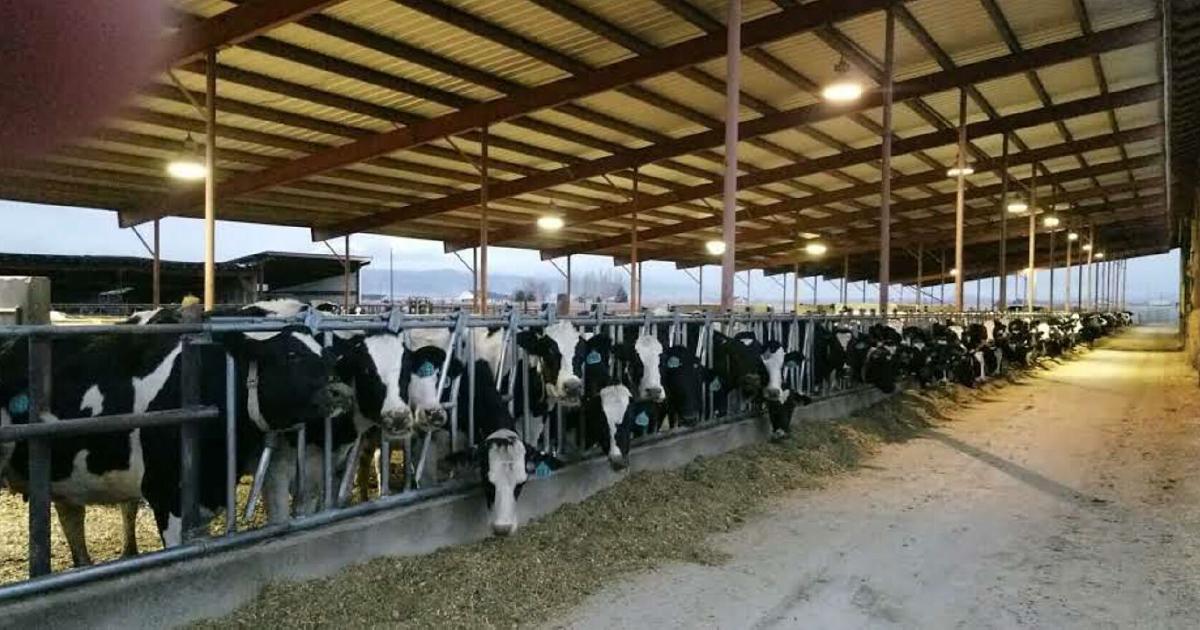
(Photo by Rick Norell)
Nutrition is extremely important for optimum health and productivity in dairy animals, so most dairies have rations formulated by a nutritionist to make sure all the important nutrients are present in the diet and in correct balance. This includes vitamins, minerals, protein, fat, water and energy. Many dairies use a TMR to deliver these in a form that will be readily consumed by the cattle.
The TMR mix may change a little with the seasons but mainly changes with the age and stage of the animal, such as where the cow is in her lactation/production cycle. Dr. Scott Poock, Associate Extension Professor, University of Missouri, explains that if the cows are receiving a TMR year round, it doesn’t change much with the seasons. It changes more if the cow is going from dry to lactating, or from lactating to dry. “A difference that does occur with the seasons, however, is when we have heat stress in the summer. That’s when we need to change the ration so it’s a little more energy-dense because the cow is not eating as much, due to the heat,” he says.
She will also be losing fluid and electrolytes, through sweat and excessive salivation as she pants or slings saliva over her back in an attempt to cool off. “In that situation we want to provide feed that’s more energy-dense (since she is eating less total feed) and increase the bicarb for rumen health. We also increase the sodium, because even though cows don’t sweat a lot, they do sweat, and salivate more—losing sodium.”
Winter challenges are generally not as dramatic as heat of summer. “The cow can eat more in winter (cold weather increases her appetite) and increase the calories to generate heat; her intake won’t drop like it does in summer. In hot weather we increase bicarb and potassium—which will raise the DCAD (dietary cation-anion difference) of the diet—and the cows are able to withstand the heat stress a little better,” says Poock.
“Some diets will increase potassium for the lactating cow but we can’t do that in the dry cows or we will mess up their calcium metabolism. For the lactating cow, however, increasing the potassium in the summer will help mitigate heat stress.”
When the diet is delivered as a TMR, all the things needed by that cow will be added into it, rather than given as a supplement, per se. “For a grazing dairy, however, one thing that will change in the spring—especially with rapidly growing grass—is the need for magnesium. It’s fairly common to increase magnesium levels in the minerals that are being supplied, to prevent grass tetany, and more importantly, milk fever. If you have a grazing herd that’s seasonal and they are calving in the spring, the increase in magnesium will help prevent grass tetany but also milk fever (caused by low calcium levels) because those two minerals are tied in together,” he says.
“The Parathyroid Hormone (PTH) receptor works better when the magnesium levels are in proper order. In that situation you also have to be careful with potassium because it will block magnesium absorption. During the summer if you increase potassium you need to also increase magnesium, to make sure the calcium metabolism is staying balanced,” he says.
Breeding-age heifers and bred heifers should also be receiving a TMR, since they will soon be moving into that stage of their lives to become cows. “The majority of them should start receiving a TMR shortly after weaning, because this is what they will be living on for the rest of their lives.” They need to be adjusted to that early on.
Vitamins are also important, as well as the minerals. “Biotin is very important year round, but maybe even more in summer because of heat stress and the increased chance of acidosis and subsequent laminitis. Zinc is also important for hoof health and should be part of the ration anyway,” says Poock.
If the dairy is working with a good nutritionist, everything should be covered. “If you have a nutritionist and veterinarian involved on a routine basis, this should all be taken care of. A 1000-cow dairy (or larger) should have their nutritionist on the farm at least monthly and preferably more often—and have weekly communication even when the nutritionist is not at the farm. A 200-cow dairy might have monthly visits to the farm. The veterinarian should also be closely involved,” he says.
“I took seminars in nutrition, not because I wanted to do nutrition work for my dairy clients, but because I wanted to understand enough so that I could be helpful; more than likely I would be on the farm more often than the nutritionist. Then if I see something that should be addressed or changed, I could let the nutritionist know. The goal is for both parties to always be working together to make the farm more profitable.” It can be very helpful to have more boots on the ground and eyes on the farm—a good team effort so everything can run smoothly and cow health and milk production can be optimum.
Source link











Share this article: