
Category: Forex News, News
EUR/USD Forecast: Fears boost US Dollar demand, war-end hopes dilute
The US Dollar (USD) surged the most in two weeks in mid-May, resulting in EUR/USD falling to 1.1617, its lowest in over a month. The pair held nearby as Friday came to an end, hinting at a downward continuation in the upcoming days. Markets seem to have woken up from their recent lethargy, with action gaining momentum across all financial boards.
Iran’s war keeps leading the way
It was all about the USD and the Iran war implications once again. Not that there was any fresh news on the Middle East front, but data is finally showing the impact of soaring Oil prices. The Bureau of Labor Statistics (BLS) reported that inflation in the United States (US), as measured by the change in the Consumer Price Index (CPI), jumped to 3.8% YoY in April from 3.3% in the previous month. The core annual CPI, which excludes volatile food and energy prices, rose at an annualized pace of 2.8%, also higher than the March print of 2.6%.

More relevant, “The index for energy rose 3.8% in April, accounting for over 40% of the monthly all items increase,” the BLS reported.
Additionally, the Producer Price Index (PPI) rose to 6% in the same period, up from the revised 4.3% posted in March. The core annual PPI came in at 5.2% following the previous reading of 4%.
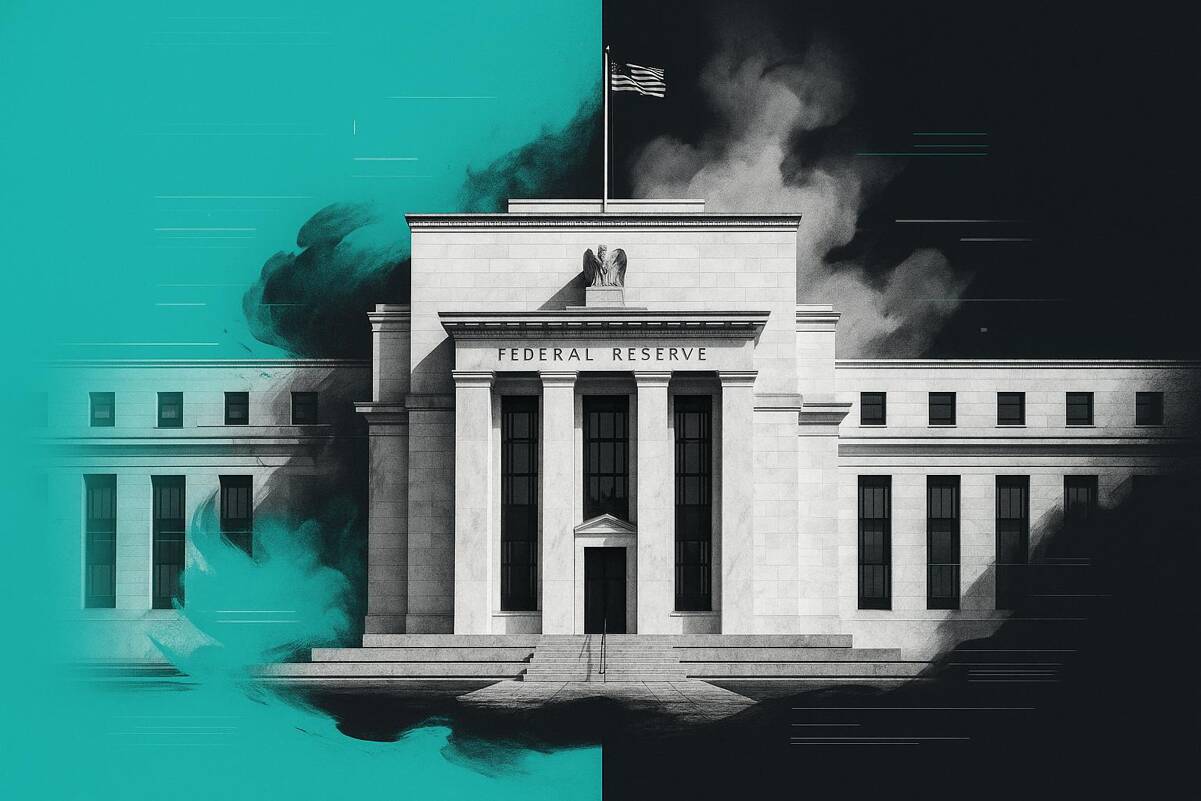
Much hotter-than-anticipated inflation figures boosted speculation that the Federal Reserve (Fed) will hike interest rates at least once before the year-end.
Other than that, the country released April Retail Sales, which were up a modest 0.5% in the month as expected. Tepid consumption added to speculation that the Fed is headed into rate hikes.
Meanwhile, Kevin Warsh was confirmed as the next Fed Chair. Stephen Miran resigned, and the former Chair, Jerome Powell, is now staying as Governor. The new Fed’s configuration gives no answers: financial markets are still uncertain about what would happen with the Central Bank under a Chair selected by President Donald Trump to “deliver” interest rate cuts.
Also, US President Donald Trump met his Chinese counterpart, Xi Jinping. The meeting ended with little to report. Talks were good, according to both parties, but other than the mutual agreement on the need to reopen the Strait of Hormuz, there was no material progress in their troubled trade relationship.

On Friday, however, President Trump announced that China would buy “billions of dollars” in soybeans, but there was no response from Beijing. Trump also spit multiple lines on Iran, claiming that the US achieved “total victory,” also noting success in resolving complex issues with Tehran, then stating “we don’t need the Strait of Hormuz open.” Anyway, seems speculative interest is not actually paying attention to his words, but rather waiting for some facts.
By the end of the week, the barrel of West Texas Intermediate (WTI) Crude Oil flirts with $100, hinting at little hope for a resolution of the Middle East conflict.
Stagflation at the shores of the Old Continent
Data coming from the European Union (EU) also reflected the impact of the Iran war. Germany confirmed that the Harmonized Index of Consumer Price (HICP) hit 2.9% YoY in April, as previously anticipated, still well above the European Central Bank (ECB) 2% goal.
The country’s ZEW survey showed Economic Sentiment improved in May to -10.2 from the previous -17.2, although the assessment of the current situation deteriorated further in the same month, down to -77.8 from the -73.7 posted in April. For the EU, the Economic sentiment also improved, printing at -9.1.
Meanwhile, the Eurozone reported that the Q1 Gross Domestic Product (GDP) was up a modest 0.1% in the quarter, while up 0.8% on a yearly basis.
The Euro bloc is facing heightened risks of stagflation — something that ECB policymakers are well aware of — another outcome of the energy supply/price shock resulting from the Iran war.
More growth data in the docket
In the upcoming days, the macroeconomic calendar will include the Federal Open Market Committee (FOMC) minutes and the preliminary estimates of the May S&P Global Purchasing Managers’ Index (PMIs) for most major economies. Additionally, Germany will publish an update of the Q1 GDP.
Beyond data, sentiment will remain as the main market mover.
EUR/USD Technical Outlook:
The EUR/USD pair turned bearish in the daily chart. EUR/USD trades beneath a dense cluster of moving averages. The 200-day Simple Moving Average (SMA) at 1.1684, the 100-day SMA at 1.1706, and the 20-day SMA at 1.1719 all sit overhead, with the shorter one gaining downward traction. The picture suggests rallies will attract sellers. At the same time, technical indicators are gaining downward momentum below their midlines, with the Relative Strength Index (RSI) at 41.7.
Bigger time frames also hint at lower lows ahead. In the weekly chart, EUR/USD remains well above the 100- and 200-week SMAs at 1.1247 and 1.0952, respectively, but extended its slide below a flat 20-week SMA at 1.1695, which now acts as immediate resistance and caps upside attempts. The Momentum indicator grinds lower around neutral levels, while the RSI indicator turned south but stands at 48, hinting, but not confirming, dominant selling pressure.
Immediate resistance comes at the 20-week SMA at 1.1695, followed by the daily cluster of moving averages. Gains beyond 1.1720 seem unlikely, although once the area is clear, the pair could extend its rally towards 1.1800. On the downside, initial support is implied by the current weekly low in the 1.1610 area, followed by the 1.1550 price zone. Once below the latter, a long term static area at around 1.1470 comes next.
(The technical analysis of this story was written with the help of an AI tool.)


Written by : Editorial team of BIPNs
Main team of content of bipns.com. Any type of content should be approved by us.




Share this article: