About Editorial team of BIPNs

Main team of content of bipns.com. Any type of content should be approved by us.
6 06, 2025

Banks Expect WTI Oil Prices Below $60 for 2025

By |2025-06-06T12:19:37+03:00June 6, 2025|Forex News, News|0 Comments


WTI oil prices are set to average $58.30 per barrel this year, amid rising OPEC+ and U.S. production and relatively stable global oil demand, a survey of banks by law firm Haynes Boone showed on Wednesday.

A total of 28 banks – a record high number – participated in Haynes Boone’s Spring 2025 Energy Bank Price Deck Survey, now in its 12th year. The banks on average expect WTI Crude prices to average $58.30 per barrel in 2025, down from $61.89 a barrel expected in Haynes Boone’s Fall 2024 survey.

The banks’ reduction of the forecast could be explained with the $10 a barrel price slump in April, the law firm said.

The Spring 2025 survey shows about a $1.50 a barrel decrease in year-to-year projected prices compared to the Fall 2024 survey, but follows a similar path with average oil prices remaining in the $56.24–$57.24 per barrel range through 2034.

“This general decrease in oil prices may be attributable to increased production volume expectations stemming from enhanced OPEC production and the Trump administration’s pro-production and deregulation agenda, interacting with relatively unchanged global oil demand forecasts,” Haynes Boone said.

Banks are unmoved by the short-term U.S. trade policy and other noise factors and prefer to focus on market fundamentals, according to the law firm.

“The drop in April had to be factored in, but banks are not letting short-term volatility drive their long-term thinking,” Energy Practice Group Partner Kim Mai said.

“The results suggest that banks believe the underlying supply-demand dynamics will generally rebalance over time. It’s a vote of confidence in market fundamentals during a volatile policy environment.”

Moreover, the banks’ price deck “is always a little bit lower than market prices because banks are conservative in their projections,” Mai told Bloomberg, commenting on the survey.

Early on Wednesday, WTI prices were trading at around $63 per barrel, which is about the same as the breakeven price for drilling a new well for many U.S. shale producers.

U.S. shale production will likely plateau if WTI oil prices remain in the low $60s per barrel, and decline at prices in the $50s, ConocoPhillips chairman and CEO Ryan Lance said last month.

Executives said in the Dallas Fed Energy Survey in Q1 indicated that their companies need an average $65 per barrel to profitably drill a new well.

By Charles Kennedy for Oilprice.com

More Top Reads From Oilprice.com


Source link

6 06, 2025

USD/JPY Forecast: Japanese Yen Primed for Breakout Ahead of Double Data Hit

By |2025-06-06T12:18:33+03:00June 6, 2025|Forex News, News|0 Comments

If you think this week’s calm in will last, think again. With the US labour market and inflation in focus, history suggests volatility is just around the corner.

USD/JPY Payrolls Primer

USD/JPY has been rangebound this week heading into a period laden with major risk events, as flagged in the released last weekend. Given the historical precedent around this time of the month, the flaky price action seen recently may soon give way to something more meaningful, with U.S. and set to shake things up.

These reports could act as catalysts to either reignite the broader bearish trend or trigger a sharp bullish reversal, especially given how pessimistic sentiment towards the U.S. outlook is among investors right now.

Major Volatility Events Near

While USD/JPY has been especially volatile over the past year, driven by divergent monetary policy settings, new political leadership in both nations, heightened geopolitical tensions, and another U.S.-initiated trade war—payrolls and CPI reports have consistently packed a punch.

Source: LSEG, David Scutt

Over the past 12 months, USD/JPY’s average daily trading range has been 160 pips, or 1.07% of the prior close. On payrolls days, that climbs to 198 pips (1.32%), and on CPI days it’s even higher at 205 pips (1.35%).

Granted, these are just averages—and a data release alone doesn’t guarantee fireworks. But when a surprise hits, the moves can be big. Of the last 12 payrolls reports, the largest reaction was 2.25%, with the smallest at 0.66%. For CPI, the range was even wider—2.68% at the top and 0.76% at the bottom.

Unemployment Key Figure

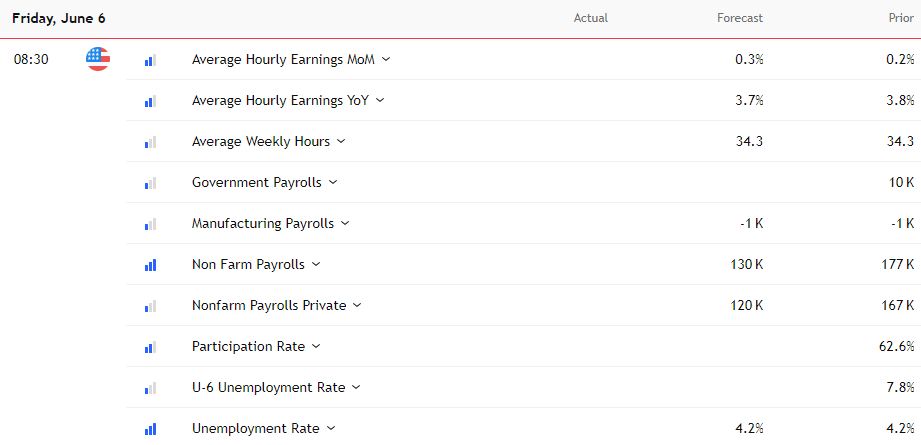
Payrolls Forecast

Source: TradingView (U.S. EDT Shown)

Even if Friday’s payrolls release produces an average-sized move, the modest range we’ve seen this week could easily be broken, depending on the details in both the establishment and household surveys. Initially, markets tend to respond to whether payrolls beat or miss expectations, often brushing aside significant revisions to prior reports.

But if the payrolls figure sends a conflicting signal to the , don’t be surprised if the latter drives direction once initial volatility fades. After all, when officials release economic projections, they forecast unemployment, not payrolls. And given the mechanics of the household survey, the labour force participation rate arguably carries just as much weight for the Fed given the implications for unemployment and wage pressures.

USD/JPY Range May Come Under ThreatUSD/JPY-Daily Chart

Source: TradingView

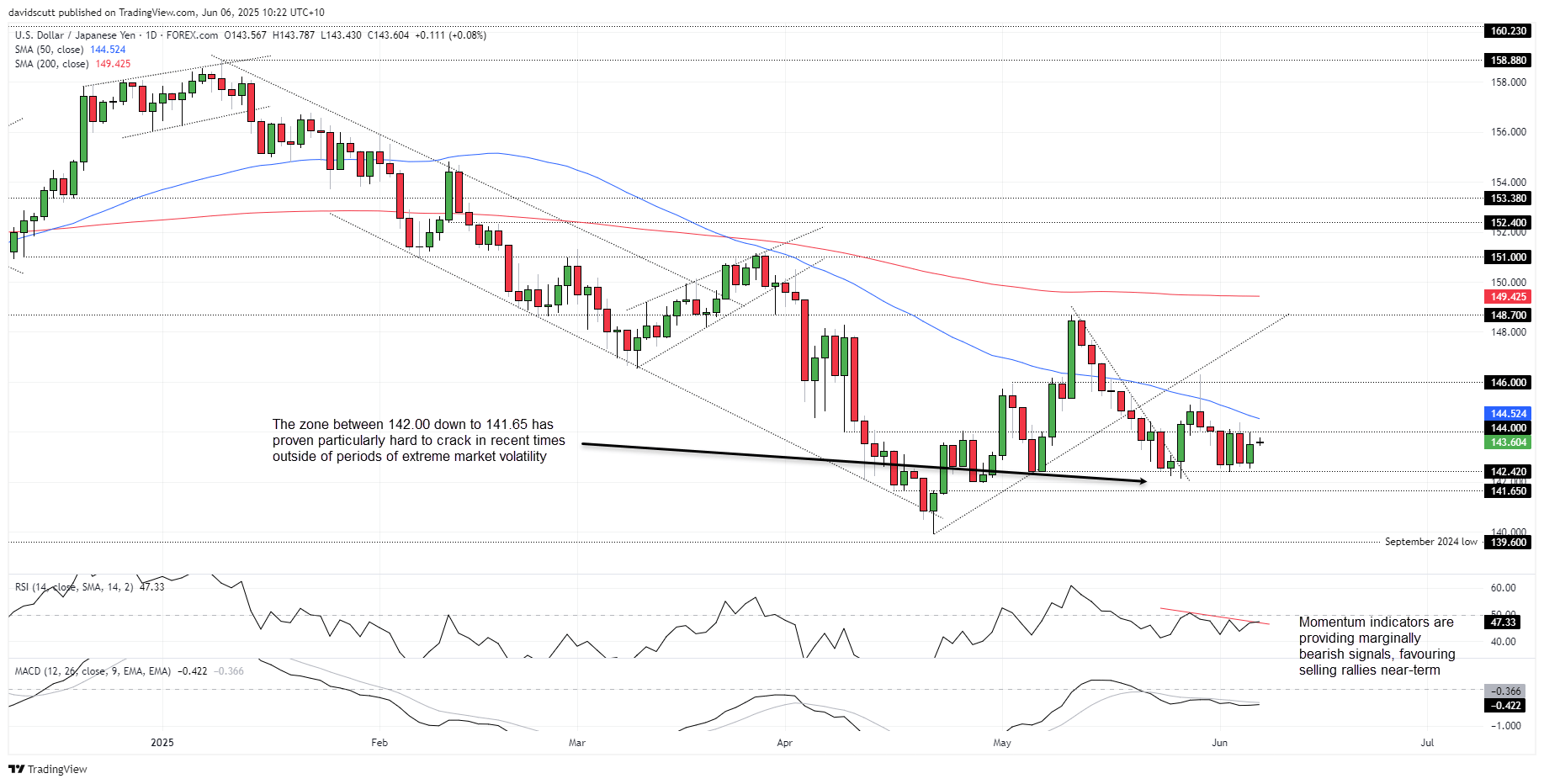
USD/JPY trades in the lower half of its recent range heading into the payrolls report. Each day this week, the price has tested and failed at 144, reinforcing its importance. On the downside, 142.42 was tagged once and bounced, adding to five prior failed attempts to close below the level since early May. That gives traders a well-defined range to work with ahead of the release.

With RSI (14) sitting marginally below 50 and trending lower, and MACD beneath the signal line in negative territory, momentum tilts to the downside—suggesting selling rallies may offer better risk-reward than buying dips in the current environment.

Beneath 142.42, the May 27 low of 142.12 is the next level of interest. A break there could put sub-142 levels back in play. While minor support is located at 141.65, recent dips below 142 have tended to reverse quickly—outside of periods of extreme market stress. That makes price action below 142 especially important, if it trades there. A clean break of 141.65 would increase the likelihood of a retest of the April swing low at 139.88.

Above 144, Wednesday’s high of 144.40 is the next level to watch. A break above could trigger a squeeze toward the 50-day moving average or resistance at 146, depending on the payrolls details and how risk assets respond.

Lately, stronger economic data has been met with a positive response across risk assets, even as it reduces the likelihood of near-term Fed cuts—suggesting that for now, good news is still good news.

Original Post


Source link

6 06, 2025

Sexual Health Supplements Market Size, Share

By |2025-06-06T12:07:57+03:00June 6, 2025|Dietary Supplements News, News|0 Comments


Report Overview

The Global Sexual Health Supplements Market size is expected to be worth around US$ 9.9 Billion by 2034, from US$ 3.8 Billion in 2024, growing at a CAGR of 10.1% during the forecast period from 2025 to 2034. North America held a dominant market position, capturing more than a 39.3% share and holds US$ 1.5 Billion market value for the year.

Sexual Health Supplements Market Size, Share

Sexual health supplements are nutritional formulations developed to support various aspects of sexual wellness. These supplements are commonly used by both men and women to improve libido, stamina, hormonal balance, and reproductive function. Typically available over the counter, they are often preferred for their natural ingredients and non-prescription status. According to the World Health Organization (WHO), self-care interventions, including supplement use, play a key role in promoting sexual and reproductive health globally.

Aging populations and increased global health awareness are major factors driving the demand for sexual health supplements. As people grow older, conditions such as erectile dysfunction and reduced libido become more prevalent. For example, older adults increasingly turn to supplements to manage these age-related concerns. Additionally, rising awareness of preventive health encourages the use of vitamins and herbal products to enhance sexual function. This shift is aligned with WHO’s initiatives promoting sexual health as a crucial component of overall well-being.

Accessibility to supplements has significantly improved through the rise of e-commerce platforms. Online retail provides a discreet, convenient method for purchasing these products. For instance, digital channels now allow consumers to bypass potential embarrassment or stigma often associated with in-person purchases. Cultural shifts are also influencing market growth. Conversations around sexual health are becoming more open, leading to a greater willingness to seek effective, natural support products.

Scientific studies highlight the efficacy of key supplement ingredients such as L-arginine and ashwagandha. For example, L-arginine, which supports nitric oxide (NO) production, improves blood flow and erectile function. Clinical trials have shown that doses between 2.5 and 5 grams per day enhance erectile performance in men with mild to moderate dysfunction. Additionally, ashwagandha, taken at 225 mg/day or 400 mg/day, has been shown to reduce cortisol levels and stress, both of which affect sexual performance.

Micronutrients like zinc, selenium, vitamin C, and vitamin E are also essential for reproductive and immune health. According to nutritional guidelines, adult men require 11 mg/day of zinc, while women need 8 mg/day. For selenium, the recommended intake is 55 µg/day. Vitamin C is advised at 90 mg/day for men and 75 mg/day for women, while vitamin E is recommended at 15 mg/day. Deficiencies in these nutrients are linked to reduced sperm quality, fertility issues, and immune dysfunction.

Regulatory oversight remains critical to the supplement landscape. For instance, the U.S. FDA and the National Center for Complementary and Integrative Health (NCCIH) have flagged several sexual enhancement products for containing unlisted pharmaceutical substances. These findings emphasize the need for consumers to consult healthcare professionals before using supplements. Trustworthy sourcing, quality control, and verified claims are vital for the continued growth and credibility of the sexual health supplements sector.

Key Takeaways

  • The global sexual health supplements market is projected to reach approximately US$ 9.9 billion by 2034, rising from US$ 3.8 billion in 2024.
  • This market is anticipated to grow at a compound annual growth rate (CAGR) of 10.1% during the forecast period from 2025 to 2034.
  • In 2024, natural-based supplements led the composition segment, accounting for over 43.7% of the total market share.
  • Male consumers held the largest end-user share in 2024, representing more than 55.2% of the sexual health supplements market.
  • Middle-aged adults emerged as the dominant age group in 2024, contributing over 46.2% to the overall market share.
  • Capsules were the most preferred formulation in 2024, capturing more than 32.0% of the market.
  • Libido enhancement remained the top application segment, holding over 28.3% share of the global market in 2024.
  • Offline channels, including pharmacies and retail stores, led distribution in 2024, with a market share exceeding 56.6%.
  • North America dominated the global landscape in 2024, capturing over 39.3% share and reaching a market value of US$ 1.5 billion.

Composition Analysis

In 2024, the Natural Section held a dominant market position in the Composition Segment of Sexual Health Supplements Market, and captured more than a 43.7% share. This was mainly due to rising consumer interest in plant-based and herbal products. People are increasingly choosing natural supplements for their perceived safety and minimal side effects. Ingredients such as maca root, ginseng, and tribulus are becoming more popular. The shift toward organic and traditional remedies continues to influence consumer buying behavior worldwide.

The Synthetic Section also accounted for a significant portion of the market. These supplements are often preferred for their fast-acting results and standardized dosages. They are frequently used in clinical settings or under medical advice. However, growing concerns about long-term use and potential health risks have limited their broader appeal. Regulatory authorities in many countries have imposed strict guidelines, which has affected the market presence of synthetic formulations. As a result, consumer trust remains cautious in this segment.

The Blend Section, which includes both natural and synthetic ingredients, has shown steady growth. These formulations aim to offer a balanced approach by combining natural extracts with synthetic compounds. Many consumers view these blends as effective and safer than fully synthetic alternatives. The growing demand for targeted and reliable performance solutions is supporting this trend. Manufacturers are also promoting these products as advanced formulas, further boosting their market adoption in both developed and emerging regions.

End-User Analysis

In 2024, the Men’s Section held a dominant market position in the End-User Segment of Sexual Health Supplements Market, and captured more than a 55.2% share. This strong presence was linked to rising concerns among men about declining testosterone levels and sexual performance. Increased openness in discussing male health issues led to higher product adoption. Many men also turned to supplements for stamina and energy. Accessibility through online platforms further boosted sales in this segment across both urban and semi-urban regions.

The Women’s Segment is projected to grow steadily due to greater awareness about hormonal balance and sexual wellness. More women are now using supplements for issues related to menopause, libido, and reproductive health. Products that include natural ingredients such as maca root, ginseng, and ashwagandha are preferred for their safety and benefits. Public health initiatives focused on women’s health also contributed to product visibility. Changing lifestyle patterns and stress-related hormonal issues are pushing more women toward preventive supplement use.

The Unisex Segment showed consistent growth, especially among couples and wellness-focused individuals. These supplements are often marketed as general enhancers for energy, circulation, and mood. Shared use simplifies purchase decisions, and growing trust in herbal and non-prescription products supports adoption. The rise of e-commerce and influencer marketing played a role in expanding this category. Consumers increasingly seek solutions that address stress and fatigue, which are common factors affecting sexual health across genders.

Sexual Health Supplements Market ShareSexual Health Supplements Market Share

Age Group Analysis

In 2024, the Middle-aged Adults section held a dominant market position in the Age Group Segment of Sexual Health Supplements Market and captured more than a 46.2% share. This group, aged between 40 and 59, showed the highest demand due to age-related health concerns. Common issues like hormonal imbalance and reduced sexual function led to increased supplement use. Consumers in this group preferred natural and plant-based formulations. Easy access to non-prescription products further supported growth in this segment.

Older adults aged 60 and above represented the second-fastest-growing segment. This trend was influenced by rising awareness about sexual health in older populations. Improved life expectancy and focus on maintaining quality of life supported higher supplement consumption. Products designed for energy, stamina, and hormone support were especially popular. Support from healthcare professionals for select supplements also encouraged usage. As a result, this age group contributed significantly to the market’s expansion in the sexual wellness category.

Teenagers and young adults formed the smallest share but showed growing interest. Males aged 18 to 30 sought supplements for boosting energy, reducing stress, and enhancing libido. Social media trends and digital marketing played a big role in influencing this group. Despite their rising interest, strict regulations and safety concerns limited market penetration. Still, the segment gained attention from brands targeting lifestyle-conscious youth. The long-term potential of this segment depends on evolving regulatory clarity and product safety validation.

Formulation Analysis

In 2024, the Capsules Section held a dominant market position in the Formulation Segment of Sexual Health Supplements Market, and captured more than a 32.0% share. This growth can be linked to their ease of use and accurate dosage delivery. Consumers often prefer capsules due to better absorption and long shelf life. These benefits make capsules a favored option among adults seeking privacy and convenience. The availability of herbal and natural capsule-based supplements has also contributed to their increasing adoption.

Tablets accounted for a considerable market share after capsules. Their longer shelf life and low production costs support wide usage. Many consumers choose tablets for multivitamin-based sexual wellness products. However, their slower absorption compared to capsules may deter younger users seeking quicker results. Despite this, tablets remain a reliable and cost-effective choice. Manufacturers continue to offer diverse formulations in tablet form, which helps maintain their market relevance across different consumer groups.

Liquids and powders are emerging as alternatives, especially for those who prefer fast-acting or customizable options. Liquid supplements appeal to older adults who may have difficulty swallowing pills. Powders are gaining popularity in fitness-related sexual health products. The Others segment, including gummies and sprays, is growing steadily. This growth is supported by product innovation and increasing demand from younger consumers. These novel forms offer convenience and variety, attracting new users in the evolving sexual health supplement market.

Application Analysis

In 2024, the Libido Enhancement section held a dominant market position in the Application Segment of Sexual Health Supplements Market and captured more than a 28.3% share. This segment benefited from growing awareness of sexual wellness and increasing consumer comfort with natural supplements. Digital health platforms and social media campaigns promoted openness around libido concerns. Products targeting both men and women contributed to strong sales. The demand was also supported by rising interest in non-prescription and herbal alternatives for improving intimacy.

The Sexual Dysfunction segment recorded significant growth due to the high prevalence of issues like erectile dysfunction and hormonal imbalance. According to the U.S. National Institutes of Health, over 30 million men are affected by erectile dysfunction. Consumers are turning to supplements that help with hormone support and blood circulation. These products offer a convenient option for individuals avoiding prescription medications. This segment continues to grow as aging populations seek accessible and effective solutions to manage sexual health.

The Stamina and Endurance segment also saw increasing popularity, especially among fitness-focused individuals and younger users. These supplements are widely used for boosting energy, improving performance, and enhancing physical endurance. Meanwhile, the Fertility segment expanded due to delayed parenthood and growing infertility concerns. Demand for natural fertility boosters increased across both genders. The Others segment includes products aimed at stress, mood, and energy, all of which influence sexual well-being. These combined trends suggest growing acceptance of supplements as part of holistic sexual health.

Distribution Channel Analysis

In 2024, the Offline Section held a dominant market position in the Distribution Channel Segment of Sexual Health Supplements Market and captured more than a 56.6% share. This stronghold was largely due to the presence of well-established pharmacies, drug stores, and hypermarkets. These outlets offered consumers easy access and personalized buying experiences. Many customers, especially older individuals, preferred in-store purchases for privacy and professional guidance. The trust in pharmacists and the ability to verify products physically also played a key role.

Pharmacies and drug stores contributed heavily to offline sales through professional consultation and convenient locations. These stores stocked a wide range of products, making them a preferred choice for regular buyers. Hypermarkets and supermarkets added value by offering discounts, product bundles, and educational in-store displays. Seasonal campaigns and promotional events helped increase product visibility. The ability to compare brands in person encouraged customer loyalty and boosted sales across different supplement categories.

Despite the rise of e-commerce, the offline model continued to dominate due to consumer habits and immediate product access. While online channels offered convenience, many buyers still opted for traditional stores. Offline channels remain essential, particularly in regions with limited digital infrastructure. The need for discreet, trustworthy purchasing environments supports the offline channel’s growth. The consistent supply chain, face-to-face support, and physical product presence make offline platforms a cornerstone in the expansion of the sexual health supplements market.

Key Market Segments

By Composition

By End-User

By Age Group

  • Teenagers & Young Adults
  • Middle-aged Adults
  • Older Adults (60+)

By Formulation

  • Capsules
  • Tablets
  • Liquids
  • Powders
  • Others

By Application

  • Libido Enhancement
  • Sexual Dysfunction
  • Stamina and Endurance
  • Fertility
  • Others

By Distribution Channel

  • Online
  • Offline
    • Hypermarkets/Supermarkets
    • Pharmacies & Drug Stores
    • Others

Drivers

Growing Demand for Natural and Herbal Sexual Health Solutions

The demand for natural and herbal products is significantly shaping the sexual health supplements market. A notable shift toward plant-based alternatives is being observed, particularly among middle-aged adults seeking safer, non-prescription options. According to the National Center for Complementary and Integrative Health (NCCIH), 17.7% of U.S. adults use herbal supplements. This trend reflects a growing acceptance of natural wellness approaches. Herbal supplements are being favored over synthetic treatments for improving libido, hormonal balance, and stamina, boosting their market share in sexual health.

The rising prevalence of sexual health concerns globally is further accelerating this demand. Health agencies estimate that the number of individuals experiencing sexual health issues will exceed 320 million by 2025. This growing burden has encouraged the adoption of herbal and alternative therapies. Many consumers prefer supplements perceived as safer and free from side effects compared to pharmaceutical solutions. As awareness spreads, herbal formulations are becoming a trusted option for managing sexual health conditions.

Moreover, widespread dietary supplement use supports this growth. According to CDC data from 2017–2018, 57.6% of U.S. adults reported taking supplements, with usage higher among women (63.8%) than men (50.8%). This widespread behavior indicates a strong consumer base already engaged in wellness supplementation. As awareness increases around sexual health and natural remedies, this foundation will likely foster greater adoption. The integration of sexual health supplements into daily routines continues to drive sustained market expansion.

Restraints

Insufficient Regulatory Oversight and Product Adulteration Risks

The absence of mandatory FDA pre-market approval for dietary supplements, including those for sexual health, has resulted in significant safety concerns. Under the DSHEA of 1994, supplements are classified as food products. This limits the FDA’s authority to post-market interventions. Manufacturers are responsible for product safety and labeling, but there is no consistent enforcement before market entry. This regulatory gap has allowed many unverified sexual health supplements to enter the market, raising questions about product reliability and consumer protection.

Between 2007 and 2016, the FDA found 776 dietary supplements adulterated with unapproved drugs, with 353 linked to sexual enhancement. Many of these products contained undeclared pharmaceutical ingredients such as sildenafil and dapoxetine. These substances pose serious health risks, especially when users unknowingly consume them. The inclusion of these drugs without disclosure can cause dangerous interactions with prescribed medications. This prevalence of adulteration highlights a critical public health issue related to unregulated sexual health products.

Consumers often believe these supplements are safe due to their natural claims. However, inadequate labeling and a lack of transparency contribute to accidental consumption of harmful substances. From 2004 to 2021, over 79,000 adverse event reports were linked to dietary supplements, signaling widespread health implications. The absence of clear regulatory checks undermines trust and may deter potential users. Stronger oversight, including pre-market testing and accurate labeling, is necessary to ensure safety in the sexual health supplements sector.

Opportunities

Rising Emphasis on Reproductive Health and Self-Care Interventions

A growing emphasis on sexual and reproductive health education is positively influencing the demand for sexual health supplements. Public health bodies, including the CDC, are actively promoting awareness around fertility, hormonal disorders, and sexual wellness. This shift has created favorable market conditions for products that support testosterone, menopausal health, and fertility. With over 40% of U.S. adolescents reporting sexual activity, the awareness of reproductive health needs is translating into increasing demand for accessible, over-the-counter health solutions.

Access to reproductive healthcare among youth also supports this trend. Between 2006 and 2010, more than 76.5% of sexually experienced females and 62.5% of males aged 15–19 in the U.S. received reproductive health services. This access promotes early engagement with health interventions and supplements. As adolescents and young adults increasingly seek non-prescription alternatives, sexual health supplements stand to benefit from this proactive health behavior.

Furthermore, the World Health Organization (WHO) recognizes self-care as a critical element of public health strategy. It supports the use of over-the-counter aids, including supplements, for contraception and fertility. This institutional backing further validates the role of natural supplements in addressing hormonal and sexual health needs. Products targeting menopausal symptoms and testosterone support are now better positioned to gain consumer trust and regulatory acceptance.

Trends

Rising Demand for Online and Direct-to-Consumer (DTC) Channels in Sexual Health Supplements

The digital transformation of healthcare is driving significant change in how consumers access sexual health supplements. Increasing numbers of individuals, especially younger adults, are purchasing these products online for privacy and ease. Online platforms allow users to avoid stigma or discomfort often associated with in-person shopping. As a result, brands that offer online shopping with discreet packaging and secured payment systems are witnessing higher engagement and customer retention, especially in urban and digitally connected regions.

Telehealth integration has further accelerated the popularity of direct-to-consumer models. Many platforms now offer virtual consultations, allowing users to receive expert recommendations without visiting a clinic. This model provides an end-to-end service, from diagnosis to product delivery. Such integration enhances trust and convenience, which are key purchase drivers for sexual wellness products. The trend is particularly evident in North America, where healthcare digitization and consumer tech adoption are comparatively more advanced.

Subscription-based models are also gaining momentum. These services provide regular, automated delivery of sexual health supplements, ensuring consistent usage. This model supports long-term wellness and improves adherence to supplementation regimens. Additionally, companies benefit from predictable revenue and stronger customer relationships. As digital health infrastructure expands, the demand for online and DTC sexual health products is expected to rise further, making this a dominant trend in the coming years.

Regional Analysis

In 2024, North America held a dominant market position, capturing more than a 39.3% share and holds US$ 1.5 Billion market value for the year. This growth has been supported by high awareness about sexual wellness across the region. Many adults are turning to dietary and herbal supplements to manage age-related and lifestyle-induced issues. In the U.S. and Canada, the availability of over-the-counter products has made it easier for consumers to access these solutions without the need for prescriptions.

Consumer behavior in North America has also shifted toward preventive health. People are now more open to discussing sexual wellness. As a result, demand for sexual health supplements continues to grow. The market is further strengthened by trust in local regulatory systems. This ensures safety and quality for most products sold in the region. Brand recognition and customer loyalty are also helping drive repeat purchases, especially for gender-specific formulations.

E-commerce has played a key role in expanding access to supplements. Many companies use digital platforms to market directly to consumers. This allows for better targeting and broader reach. Rising disposable incomes and a large aging population are additional contributors. These groups often prefer natural alternatives over pharmaceutical treatments. As a result, North America remains the leading region in the global sexual health supplements sector, supported by favorable economic and social factors.

Sexual Health Supplements Market RegionsSexual Health Supplements Market Regions

Key Regions and Countries

  • North America
  • Europe
    • Germany
    • France
    • The UK
    • Spain
    • Italy
    • Russia
    • Netherland
    • Rest of Europe
  • Asia Pacific
    • China
    • Japan
    • South Korea
    • India
    • New Zealand
    • Singapore
    • Thailand
    • Vietnam
    • Rest of APAC
  • Latin America
    • Brazil
    • Mexico
    • Rest of Latin America
  • Middle East & Africa
    • South Africa
    • Saudi Arabia
    • UAE
    • Rest of MEA

Key Players Analysis

The global sexual health supplements market is highly fragmented, with multiple players competing through innovation and expansion. Key companies are introducing natural and safe products to meet the growing demand for sexual wellness, energy, and hormonal balance. GNC Holdings LLC leads with a wide range of male enhancement and stamina supplements. Its scientific formulations and retail network help maintain its stronghold in North America. Meanwhile, Himalaya Drug Company stands out in the Ayurvedic segment, backed by clinical validation and traditional medicine, with growth driven from Asia-Pacific and the Middle East.

Amway plays a major role through its Nutrilite brand, targeting premium consumers across global markets. Its vast direct-selling network enhances consumer access, while R&D investments support personalized health offerings. Nature’s Bounty appeals to both men and women with its transparent, herbal-based supplements. Its wide distribution in pharmacies and wellness stores strengthens its position across North America and Europe. Strategic collaborations and third-party testing further enhance brand trust and consumer engagement.

Metagenics caters to the clinical segment, focusing on practitioner-prescribed, functional supplements. Its hormone-balancing and sexual wellness formulations are grounded in clinical research. This science-backed approach helps the brand gain acceptance among health professionals. NOW Foods, on the other hand, offers value-based solutions with clean-label products such as vegan and non-GMO supplements. Its pricing strategy and quality control ensure steady growth in North America and expanding access in Europe and Asia.

Other regional players contribute to intense market fragmentation, especially in emerging economies. These include local brands offering traditional supplements or region-specific formulas. Many new entrants rely on online platforms and influencer marketing to target younger consumers. Direct-to-consumer (DTC) models are increasingly popular, driven by digital engagement and health transparency. Overall, strategic focus on natural ingredients, clinical backing, and broad market access defines the competitive landscape for sustained growth.

Market Key Players

  • GNC Holdings LLC
  • Himalaya Drug Company
  • Amway
  • Nature’s Bounty
  • Metagenics
  • NOW Foods
  • Life Extension
  • Source Naturals
  • Twinlab
  • Force Factor LLC
  • Nutraceutical Corporation
  • Swisse Wellness
  • Solgar
  • BioXgenic
  • Irwin Naturals

Recent Developments

  • In March 2025: Amway reported a 3% decline in its overall revenue for the year 2024, totaling $7.4 billion USD. Despite this downturn, the company experienced a 2% increase in sales of its Nutrilite brand of supplements. This growth in the nutritional segment highlights a consumer shift towards health and wellness products, which could encompass sexual health supplements, although specific product categories were not detailed.
  • In October 2024: Nature’s Bounty expanded its women’s wellness portfolio by introducing the Intimacy Booster, a supplement designed to enhance sexual pleasure and support overall intimate well-being. This product combines clinically studied ingredients such as KSM-66® Ashwagandha and Panax Ginseng, which have been associated with improved arousal, lubrication, and stress reduction. The formulation aims to address common concerns related to women’s sexual health and is available through major retailers including Amazon, CVS, and Kroger.
  • In May 2024: Metagenics introduced the HerWellness™ product line, focusing on women’s hormonal health. This line includes formulations combining botanicals like saffron and green tea extract with activated Vitamin B6, aiming to support hormone balance and alleviate symptoms associated with perimenopause and menopause. The launch underscores Metagenics’ commitment to science-based, natural solutions for women’s health.
  • In 2023: GNC launched “GNC Men’s ArginMax,” an advanced sexual health supplement formulated to enhance sexual desire and performance. This patented formula includes a blend of L-arginine, ginseng, and ginkgo biloba, ingredients known to support nitric oxide production and improve blood flow. The product aims to address common sexual health concerns among men, reflecting GNC’s focus on evidence-based solutions in the wellness market.

Report Scope


Source link

6 06, 2025

Here is the Cardano Price by the End of 2025, According to Deepseek

By |2025-06-06T12:05:57+03:00June 6, 2025|Crypto News, News|0 Comments

DeepSeek, a prominent AI model, predicts Cardano price could see significant growth before the end of this year, 2025.

In recent days, Cardano has struggled to maintain momentum. As of June 6, ADA’s price stood at $0.639, marking a 5.7% decrease in just 24 hours. From June 1 to June 6, ADA faced consistent downward pressure, hitting a low of $0.62. 

However, this short-term struggle doesn’t appear to reflect a lack of long-term potential. AI-based predictions, in particular, point toward substantial growth for Cardano before the end of the year, despite the current volatility.

AI Model Predict Significant Growth for Cardano

Notably, China’s advanced AI model, DeepSeek, has presented a bold prediction for Cardano price, according to TapTools. 

DeepSeek forecasts that ADA could experience a remarkable 10x increase in value by the end of 2025, potentially reaching $7 per token. This prediction has triggered excitement, especially within the Cardano community, as it suggests that despite recent market challenges, the token may still have significant room for growth.

This forecast represents an ambitious target, as Cardano would need to surge by roughly 1,029% to reach $7. However, TapTools did not present specific reasons behind DeepSeek’s prediction.

Despite this, some market observers expressed skepticism about the validity of AI forecasts, especially considering the level of speculation during the bear market. One critic pointed out that “speculation and hopium” posted repeatedly on social media, particularly on X, could have impacted the quality of AI-driven predictions. 

Despite mixed opinions, some traders are beginning to see potential in the current price dip. One user shared their regret for selling ADA recently but noted that the ongoing drop could present an opportunity to buy at a lower price.

Divergent Price Predictions from Analysts

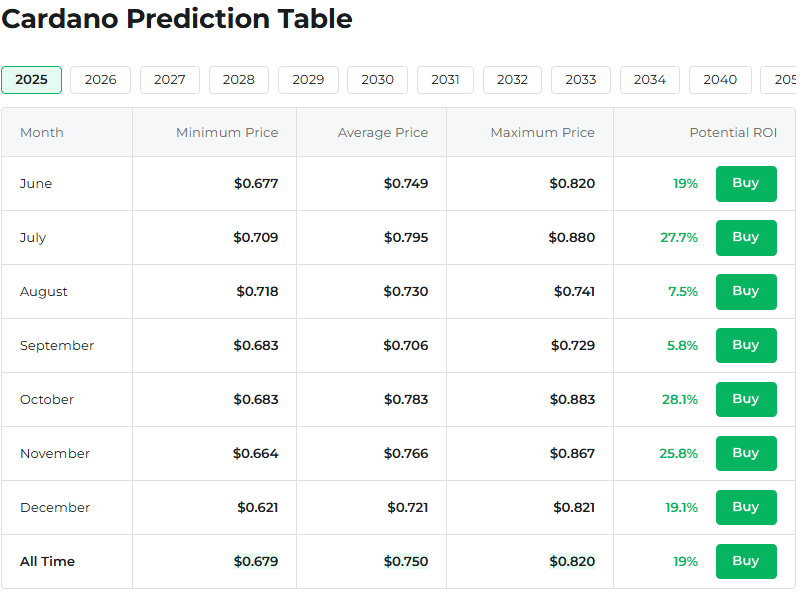
In contrast to DeepSeek’s optimistic forecast, several crypto analytic platforms have provided their own price predictions for Cardano by 2025. For instance, Changelly anticipates ADA will trade between $0.621 and $0.821, with an average of $0.721 this year.

Here is the Cardano Price by the End of 2025, According to Deepseek
Cardano Price Prediction | Changelly

CoinCodex is slightly more bullish, predicting ADA to range from $0.87 to $0.94, with an average price of $0.9. Meanwhile, Investing Haven provides a broader range, from $0.66 to $1.88, with a more optimistic peak target of $2.36.

These varying predictions highlight the uncertainty surrounding Cardano’s future but also suggest that growth potential remains on the horizon.

Cardano Journey to $7

Meanwhile, Egrag Crypto, a crypto analyst on X, previously drew comparisons between Cardano and XRP’s performance during the 2021 bull run. Egrag noted that XRP underperformed during that period, failing to break its all-time high despite the broader market surge. 

He believes Cardano may follow a similar path in the current cycle, underperforming compared to other assets. 

Egrag’s analysis suggests two key takeaways: First, ADA might not be the most profitable coin from its current price point, especially when compared to other mid-cap assets with more room to grow. Second, while a 10x move to $7 is possible, it would require the total cryptocurrency market cap to grow to $10 trillion.

DisClamier: This content is informational and should not be considered financial advice. The views expressed in this article may include the author’s personal opinions and do not reflect The Crypto Basic opinion. Readers are encouraged to do thorough research before making any investment decisions. The Crypto Basic is not responsible for any financial losses.


Source link

6 06, 2025

Rebounding: The Mini-Trampoline Workout Celebrities Swear By

By |2025-06-06T11:18:15+03:00June 6, 2025|Fitness News, News|0 Comments


Rebounding doesn’t just sound fun — it feels fun. It takes you right back to those carefree childhood days when jumping on a trampoline felt like flying. No calorie counting, no pressure — just movement, freedom, and pure joy.

It’s more than just a fitness trend — it’s a low-impact, full-body workout with serious health benefits. And yes, celebrities, wellness coaches, and fitness lovers can’t stop bouncing.

Rebounding is a mini-trampoline workout that involves a variety of low-impact bouncing movements — from light jogs and jumps to core and strength exercises — all done on a rebounder (a small, high-quality trampoline designed for fitness). It’s suitable for all ages and fitness levels and offers a powerful mix of cardio, strength, and detox benefits.

5 Health Benefits of Rebounding

  1. Boosts Heart Health and Cardiovascular Fitness
    Rebounding raises your heart rate and improves blood circulation, stamina, and aerobic capacity — all while staying gentle on your joints. A short 15–20-minute bounce session can be as effective as a run, without the wear and tear.
  2. Promotes Lymphatic Drainage and Natural Detox
    The vertical motion of bouncing helps stimulate the lymphatic system, flushing toxins and waste from the body. This supports immune health, reduces bloating, and helps you feel lighter and more energized.
  3. Builds Muscle and Bone Strength
    It may feel like play, but rebounding engages over 400 muscles, including your core, legs, and stabilizers. It also helps strengthen bones and reduces the risk of osteoporosis through gentle, weight-bearing motion.
  4. Improves Balance, Coordination & Body Awareness
    The unstable surface of the rebounder challenges your coordination and enhances proprioception (your body’s ability to sense movement and position). It’s ideal for athletes, seniors, or anyone recovering from injuries.
  5. Lifts Mood & Reduces Stress Naturally
    Rebounding stimulates the release of endorphins and serotonin, boosting your mood, reducing stress, and improving mental clarity. Just a few minutes of bouncing can make you feel energized and uplifted.

How To Start

You don’t need a gym membership or a celebrity trainer. Just a little space, a good mini-trampoline, and the motivation to start bouncing back to better health.

  • Choose a Quality Rebounder: Look for one with durable springs or bungee cords, non-slip feet, and a sturdy frame.
  • Start Small: Begin with 5–10 minute sessions daily. Listen to your body and gradually increase intensity.
  • Mix Movements: Alternate between gentle bounces, light cardio moves, and resistance training for a well-rounded routine.
  • Stay Consistent: Aim for 3–5 sessions per week to see results in energy, tone, and overall wellness.

Whether you’re a busy professional, a wellness seeker, or someone looking for a fun and effective home workout, rebounding may be your best fitness investment in 2025. It’s joint-friendly, space-saving, and packed with feel-good benefits that go beyond weight loss or toning.

Rebounding is more than just a fitness trend — it’s a joyful, energizing way to move your body, boost your health, and connect with your inner child.

Disclaimer
The Content is not intended to be a substitute for professional medical advice, diagnosis, or treatment. Always seek the advice of your physician or other qualified health provider with any questions you may have regarding a medical condition.


Source link

6 06, 2025

Gold (XAUUSD) & Silver Price Forecast: Will NFP Data Trigger Breakouts?

By |2025-06-06T10:19:10+03:00June 6, 2025|Forex News, News|0 Comments


Dollar Rebounds While Gold Eyes $3,400 Break

The U.S. dollar rebounded from six-week lows reached on Thursday, as traders adjusted their positions ahead of high-impact macroeconomic data. The Dollar Index (DXY) climbed toward 104.15, supported by improving sentiment surrounding U.S.-China trade negotiations.

This modest rebound capped gold’s upside momentum, keeping prices below the psychologically important $3,400 level.

“Until gold closes decisively above $3,400, bulls may remain hesitant,” said David Lennox, a market strategist at Fat Prophets. “The market is looking for confirmation that inflation and labor weakness will force the Fed’s hand.”

Fed Rate Cut Bets Hinge on Job Growth Slowdown

The spotlight now shifts to the U.S. employment report. Economists polled by Reuters expect nonfarm payrolls to have risen by 130,000 in May, down from April’s 177,000 gain. The unemployment rate is expected to hold steady at 4.2%. A weaker-than-expected print could reinforce bets that the Federal Reserve will begin cutting rates as early as September.

CME’s FedWatch tool currently prices in a 72% chance of at least two 25-basis-point rate cuts by year-end. Recent soft labor data, including higher-than-expected jobless claims and slowing wage growth, underpin that dovish tilt.

Gold and silver—both non-yielding assets—remain highly sensitive to rate outlooks. A softer jobs number may offer the breakout trigger precious metals need to clear current resistance levels. Until then, prices are likely to remain range-bound as markets await clarity.


Source link

6 06, 2025

Pound Sterling closes in on key resistance area

By |2025-06-06T10:17:00+03:00June 6, 2025|Forex News, News|0 Comments

  • GBP/USD holds above 1.3550 in the European session on Wednesday.
  • The pair clings to a bullish bias in the near term.
  • Technical buyers could take action with a break above 1.3590-1.3600.

GBP/USD holds its ground and trades above 1.3550 in the European session on Thursday after posting small gains on Wednesday. In case the pair manages to break above the 1.3590-1.3600 resistance area, it could continue to stretch higher in the near term.

British Pound PRICE This week

The table below shows the percentage change of British Pound (GBP) against listed major currencies this week. British Pound was the strongest against the US Dollar.

USD EUR GBP JPY CAD AUD NZD CHF
USD -0.53% -0.73% -0.39% -0.54% -1.04% -1.23% -0.33%
EUR 0.53% -0.22% 0.16% -0.02% -0.50% -0.74% 0.20%
GBP 0.73% 0.22% 0.41% 0.20% -0.29% -0.52% 0.41%
JPY 0.39% -0.16% -0.41% -0.17% -0.66% -0.88% -0.04%
CAD 0.54% 0.02% -0.20% 0.17% -0.48% -0.72% 0.21%
AUD 1.04% 0.50% 0.29% 0.66% 0.48% -0.17% 0.79%
NZD 1.23% 0.74% 0.52% 0.88% 0.72% 0.17% 0.93%
CHF 0.33% -0.20% -0.41% 0.04% -0.21% -0.79% -0.93%

The heat map shows percentage changes of major currencies against each other. The base currency is picked from the left column, while the quote currency is picked from the top row. For example, if you pick the British Pound from the left column and move along the horizontal line to the US Dollar, the percentage change displayed in the box will represent GBP (base)/USD (quote).

The renewed selling pressure surrounding the US Dollar (USD) helped GBP/USD gain traction on Wednesday.

Ahead of Friday’s highly-anticipated Nonfarm Payrolls data, the disappointing private sector employment reading, which showed an increase of 37,000 in May, weighed on the USD on Wednesday. Moreover, the Institute for Supply Management (ISM) reported that the Services Purchasing Managers Index (PMI) fell into the contraction territory at 49.9 in May from 51.6 in April. This reading came in below the market expectation of 52.

In the second half of the day, weekly Initial Jobless Claims data from the US will be watched closely by market participants. Investors expect the number of first-time applications for unemployment benefits to edge lower to 235,000 in the last week of May from 240,000. In case there is a noticeable decline in this data, with a reading below 220,000, the USD could stay resilient against its rivals and limit GBP/USD’s upside. Conversely, a disappointing print at or above 240,000 could open the door for another leg higher in the pair.

Investors will also pay attention to the European Central Bank’s (ECB) policy announcements. A dovish ECB tone could trigger capital outflows out of the Euro into Pound Sterling. In this scenario, GBP/USD could push higher even if the data releases from the US seem USD-positive at first.

GBP/USD Technical Analysis

GBP/USD trades above the ascending trend line and the Relative Strength Index (RSI) indicator on the 4-hour chart stays near 60, suggesting that the bullish bias remains intact.

On the upside, 1.3590-1.3600 (static level, round level) aligns as the first resistance area. A daily close above this region could attract technical buyers and pave the way for an extended uptrend toward 1.3700 (round level, static level) and 1.3760 (upper limit of the ascending regression channel).

Looking south, support levels could be seen at 1.3540 (mid-point of the ascending channel, ascending trend line), 1.3500 (static level, round level) and 1.3450 (100-period SMA).

Pound Sterling FAQs

The Pound Sterling (GBP) is the oldest currency in the world (886 AD) and the official currency of the United Kingdom. It is the fourth most traded unit for foreign exchange (FX) in the world, accounting for 12% of all transactions, averaging $630 billion a day, according to 2022 data.
Its key trading pairs are GBP/USD, also known as ‘Cable’, which accounts for 11% of FX, GBP/JPY, or the ‘Dragon’ as it is known by traders (3%), and EUR/GBP (2%). The Pound Sterling is issued by the Bank of England (BoE).

The single most important factor influencing the value of the Pound Sterling is monetary policy decided by the Bank of England. The BoE bases its decisions on whether it has achieved its primary goal of “price stability” – a steady inflation rate of around 2%. Its primary tool for achieving this is the adjustment of interest rates.
When inflation is too high, the BoE will try to rein it in by raising interest rates, making it more expensive for people and businesses to access credit. This is generally positive for GBP, as higher interest rates make the UK a more attractive place for global investors to park their money.
When inflation falls too low it is a sign economic growth is slowing. In this scenario, the BoE will consider lowering interest rates to cheapen credit so businesses will borrow more to invest in growth-generating projects.

Data releases gauge the health of the economy and can impact the value of the Pound Sterling. Indicators such as GDP, Manufacturing and Services PMIs, and employment can all influence the direction of the GBP.
A strong economy is good for Sterling. Not only does it attract more foreign investment but it may encourage the BoE to put up interest rates, which will directly strengthen GBP. Otherwise, if economic data is weak, the Pound Sterling is likely to fall.

Another significant data release for the Pound Sterling is the Trade Balance. This indicator measures the difference between what a country earns from its exports and what it spends on imports over a given period.
If a country produces highly sought-after exports, its currency will benefit purely from the extra demand created from foreign buyers seeking to purchase these goods. Therefore, a positive net Trade Balance strengthens a currency and vice versa for a negative balance.

Source link

6 06, 2025

The Antioxidant Revolution Driving Global

By |2025-06-06T10:07:12+03:00June 6, 2025|Dietary Supplements News, News|0 Comments


Vitamin E Market Size, Share & Forecast

The global vitamin E market stands at the forefront of the health and wellness revolution, experiencing unprecedented growth as consumers worldwide prioritize preventive healthcare and natural solutions. The global vitamin E market was valued at approximately USD 6.75 billion in 2023 and is expected to reach around USD 10.80 billion by 2033, growing at a CAGR of about 4.6% from 2024 to 2033. This remarkable expansion reflects a fundamental shift in consumer behavior toward proactive health management and the increasing recognition of vitamin E’s multifaceted benefits.

The natural vitamin E segment demonstrates even more impressive momentum, with projections indicating growth from $910 million in 2025 to $1.31 billion by 2030 at a CAGR of 7.48%. This growth trajectory underscores the market’s evolution from basic nutritional supplementation to sophisticated wellness solutions that address diverse health concerns across multiple demographics.

Get a free sample report: https://datahorizzonresearch.com/request-sample-pdf/vitamin-e-market-4276

Market Segmentation: Diverse Applications Fueling Growth

Application Segments Driving Market Expansion

Dietary Supplements Lead the Charge The dietary supplements segment dominates the vitamin E market, accounting for over 50% of global market share. This leadership position stems from growing health consciousness, an aging global population, and increasing awareness of vitamin deficiencies. Modern consumers are investing in preventive healthcare measures, with vitamin E supplements serving as accessible tools for immune support, cardiovascular health, and antioxidant protection.

Cosmetics Industry Embraces Natural Beauty The cosmetics application segment is experiencing exceptional growth at a 5% CAGR, driven by the clean beauty movement and consumer demand for natural ingredients. Vitamin E’s proven benefits for skin protection, anti-aging properties, and UV damage prevention have made it an essential ingredient in premium skincare formulations. From sunscreens and moisturizers to anti-aging serums and eye creams, vitamin E has become synonymous with effective, natural skincare solutions.

Animal Feed Fortification Gains Momentum The animal feed segment represents a significant growth opportunity, particularly as global meat consumption rises and livestock producers seek natural solutions for animal health. Vitamin E supplementation in animal feed supports immune function, reproduction, and meat quality, making it an increasingly valuable component in modern agricultural practices.

Functional Foods and Beverages Expand Market Reach The integration of vitamin E into functional foods and beverages reflects broader consumer trends toward nutrition-enhanced products. This segment benefits from the convenience factor and the growing preference for natural fortification over synthetic alternatives.

Product Type Differentiation

Natural vs. Synthetic: The Clear Winner Natural vitamin E products, including mixed tocopherols and tocotrienols, are experiencing superior growth compared to synthetic alternatives. Consumers increasingly prefer naturally-sourced ingredients due to perceived health benefits, environmental consciousness, and regulatory support for natural products. This preference has driven innovation in extraction methods and sourcing practices, with companies investing heavily in sustainable, natural vitamin E production.

Ask for a discount: https://datahorizzonresearch.com/ask-for-discount/vitamin-e-market-4276

Regional Market Dynamics: Global Opportunities and Local Advantages

North America: Market Leadership Through Innovation

North America maintains its position as the largest vitamin E market, commanding over 40% of global market share. This dominance stems from several factors: stringent regulations limiting synthetic ingredients in cosmetics and nutraceuticals, high per capita healthcare spending, and strong consumer awareness of vitamin deficiencies. The region’s robust animal feed industry and increasing meat consumption further support market growth.

Asia-Pacific: The Fastest-Growing Region

The Asia-Pacific region emerges as the fastest-growing market for vitamin E, driven by rising disposable incomes, expanding pharmaceutical industries, and growing health consciousness. Countries like Japan and China are experiencing particularly strong growth due to aging populations and supportive government initiatives promoting nutritional supplementation.

Europe: Sustainable Growth Through Regulation

European markets benefit from comprehensive regulatory frameworks that favor natural ingredients and sustainable production practices. Germany leads regional growth, particularly in cosmetics applications, while the broader European market shows strong demand for clean-label products and organic formulations.

Market Drivers: The Forces Behind Vitamin E’s Success

Health and Wellness Megatrend

The global shift toward preventive healthcare and wellness optimization serves as the primary driver for vitamin E market growth. Consumers are increasingly educated about the role of antioxidants in combating oxidative stress, supporting immune function, and preventing chronic diseases. This knowledge translates into sustained demand for vitamin E supplements and fortified products.

Aging Population Demographics

Demographic trends strongly favor vitamin E market expansion. As global populations age, the demand for products that support healthy aging, cognitive function, and immune support continues to grow. Vitamin E’s established benefits for cardiovascular health, skin maintenance, and overall vitality make it particularly relevant for older consumers.

Clean Beauty Revolution

The cosmetics industry’s transformation toward natural, sustainable ingredients has created substantial opportunities for vitamin E suppliers. Consumers are increasingly scrutinizing ingredient lists and favoring products with recognizable, natural components. Vitamin E’s proven efficacy in skincare applications positions it as a cornerstone ingredient in the clean beauty movement.

Chronic Disease Prevention Focus

Rising awareness of chronic diseases such as cardiovascular conditions, diabetes, and cancer has heightened interest in preventive nutrition. Vitamin E’s antioxidant properties and potential protective effects against various health conditions make it an attractive option for health-conscious consumers seeking natural prevention strategies.

Innovation and Technology Trends: Shaping the Future

Advanced Delivery Systems

Companies are investing in innovative delivery mechanisms to enhance vitamin E bioavailability and consumer convenience. These include liposomal formulations, sustained-release capsules, and novel topical applications that improve absorption and efficacy.

Sustainable Sourcing Initiatives

Environmental consciousness is driving innovation in vitamin E production and sourcing. Companies are developing more sustainable extraction methods, investing in organic farming partnerships, and implementing circular economy principles in their operations.

Personalized Nutrition Integration

The growing trend toward personalized nutrition presents opportunities for customized vitamin E formulations tailored to individual health profiles, genetic factors, and lifestyle requirements.

Challenges and Market Dynamics

Supply Chain Considerations

The vitamin E market faces ongoing challenges related to raw material sourcing, particularly for natural variants. Weather conditions, agricultural yields, and geopolitical factors can impact supply stability and pricing.

Regulatory Landscape Navigation

Different regulatory requirements across global markets require companies to maintain compliance with varying standards for product claims, ingredient sourcing, and manufacturing practices.

Competition and Market Consolidation

The market features intense competition among established players and emerging brands, driving innovation while potentially impacting profit margins.

Future Outlook: A Market Poised for Continued Growth

The vitamin E market’s future appears exceptionally promising, supported by multiple converging trends that favor sustained growth. The increasing integration of vitamin E into diverse product categories, from traditional supplements to innovative cosmetic formulations and functional foods, demonstrates the ingredient’s versatility and market potential.

Key growth catalysts for the coming years include expanding applications in nutraceuticals, continued innovation in natural extraction methods, and growing consumer acceptance of premium-priced natural products. The market’s evolution toward more sophisticated, targeted formulations addressing specific health concerns positions vitamin E as an essential component of the broader health and wellness ecosystem.

As consumers become increasingly educated about nutrition and proactive about health management, the vitamin E market stands ready to meet growing demand with innovative solutions that combine efficacy, safety, and sustainability. This convergence of consumer trends, technological advancement, and market opportunity creates a compelling landscape for continued investment and growth in the vitamin E sector.

The market’s trajectory suggests that vitamin E will continue to play an increasingly important role in global health and wellness strategies, making it an attractive opportunity for stakeholders across the value chain, from raw material suppliers to finished product manufacturers and retailers.

Contact:

Ajay N

Ph: +1-970-672-0390

Latest Reports:

https://datahorizzonresearch.com/planetary-mill-market-31316

https://datahorizzonresearch.com/planetary-cycloid-reducer-market-31317

https://datahorizzonresearch.com/planer-heat-pipe-market-31318

https://datahorizzonresearch.com/plant-based-nonwoven-fabric-market-31319

https://datahorizzonresearch.com/plankton-sampler-market-31320

https://datahorizzonresearch.com/plasma-cryogenic-freezers-market-31321

https://datahorizzonresearch.com/plasma-asher-market-31322

https://datahorizzonresearch.com/plasma-arc-melting-furnace-market-31323

https://datahorizzonresearch.com/plasma-apheresis-machines-market-31324

https://datahorizzonresearch.com/plant-protection-equipment-market-31325

https://datahorizzonresearch.com/plant-genotyping-equipment-market-31326

https://datahorizzonresearch.com/plastic-bags-making-machine-market-31327

https://datahorizzonresearch.com/plastic-alternative-packaging-market-31328

https://datahorizzonresearch.com/plastic-airless-packaging-market-31329

https://datahorizzonresearch.com/plasma-volume-expander-market-31330

https://datahorizzonresearch.com/plasma-transferred-arc-welding-machine-market-31331

https://datahorizzonresearch.com/plasma-separation-equipment-market-31332

https://datahorizzonresearch.com/plasma-resectoscope-market-31333

https://datahorizzonresearch.com/offshore-rental-equipment-market-31334

https://datahorizzonresearch.com/offshore-half-height-open-top-container-market-31335

https://datahorizzonresearch.com/offshore-equipment-leasing-market-31336

https://datahorizzonresearch.com/offshore-containers-market-31337

https://datahorizzonresearch.com/offset-printing-plate-making-consumables-market-31338

https://datahorizzonresearch.com/offset-lithography-printing-presses-market-31339

https://datahorizzonresearch.com/offset-lithography-printing-machine-market-31340

https://datahorizzonresearch.com/off-road-equipment-technology-market-31341

https://datahorizzonresearch.com/offshore-wind-power-equipment-market-31342

https://datahorizzonresearch.com/oil-borne-wood-preservatives-market-31343

https://datahorizzonresearch.com/oil-blotting-paper-market-31344

https://datahorizzonresearch.com/oil-and-gas-pump-market-31345

https://datahorizzonresearch.com/oil-free-ultra-high-vacuum-coating-equipment-market-31346

https://datahorizzonresearch.com/oil-free-scroll-air-compressors-market-31347

https://datahorizzonresearch.com/oil-free-screw-air-compressor-market-31348

https://datahorizzonresearch.com/oil-free-rotary-screw-compressor-market-31349

https://datahorizzonresearch.com/oil-free-piston-compressor-market-31350

https://datahorizzonresearch.com/oil-free-centrifugal-chillers-market-31351

https://datahorizzonresearch.com/oil-fired-water-heater-market-31352

https://datahorizzonresearch.com/oilfield-equipment-rental-services-market-31353

https://datahorizzonresearch.com/oilfield-chains-market-31354

https://datahorizzonresearch.com/oil-discharge-monitoring-equipment-market-31355

https://datahorizzonresearch.com/oil-tank-valves-otv-market-31356

https://datahorizzonresearch.com/oil-sealed-vacuum-pumps-market-31357

https://datahorizzonresearch.com/oil-pump-motors-market-31358

https://datahorizzonresearch.com/oilless-reciprocating-air-compressors-market-31359

https://datahorizzonresearch.com/oil-in-water-monitor-market-31360

https://datahorizzonresearch.com/oil-impregnated-paper-bushings-market-31361

https://datahorizzonresearch.com/oil-well-hydraulic-fracturing-proppant-market-31362

https://datahorizzonresearch.com/oled-equipment-market-31363

https://datahorizzonresearch.com/olympic-weight-plate-market-31364

https://datahorizzonresearch.com/olivine-sand-market-31365

Company Name: DataHorizzon Research

Address: North Mason Street, Fort Collins,

Colorado, United States.

Ph: +1-970-672-0390

DataHorizzon is a market research and advisory company that assists organizations across the globe in formulating growth strategies for changing business dynamics. Its offerings include consulting services across enterprises and business insights to make actionable decisions. DHR’s comprehensive research methodology for predicting long-term and sustainable trends in the market facilitates complex decisions for organizations.

This release was published on openPR.


Source link

6 06, 2025

Expert Predicts XRP Price if Solana Reaches $1,000, Advises Patience

By |2025-06-06T10:05:29+03:00June 6, 2025|Crypto News, News|0 Comments

As June sets in with altcoins like XRP and Solana underperforming compared to Bitcoin, market analysts are painting a more optimistic picture.

In May, Bitcoin reached a new all-time high of $111,980, setting a historic milestone. Despite this, leading altcoins like Solana and XRP lagged behind Bitcoin’s momentum and failed to set new highs. Still, market watchers anticipate a potential altcoin season in June, during which top coins could perform significantly better.

Given the uncertainty surrounding altcoin performance, analysts urge patience, suggesting that long-term investors who remain steadfast could be rewarded.

Bitcoin Can Still Hit $200K

In a recent post on X, veteran trader “Crypto Fergani” shared his outlook for the potential peak prices of various coins, including Bitcoin. He projected that Bitcoin’s bullish momentum could drive its price to a peak of $200,000 per coin.

Recall that Bitcoin reached $111,980 on May 22, hitting a peak valuation of $2.22 trillion, a market cap that briefly allowed it to surpass both Google and Amazon in global rankings. However, Bitcoin has since corrected by 8% and has returned to the $103,000 level.

Still, industry observers like Fergani believe Bitcoin’s price could double from here and surpass $200,000.

Bitcoin’s potential rally to $200,000 would likely boost interest in the altcoin market, particularly among investors who now view BTC as too expensive.

As a result, Fergani projects that Ethereum, the leading altcoin, could reach $10,000 per coin. With its current price at $2,521, this would represent a 3x increase from current levels.

Where XRP Could Go After Solana Hits $1,000

Fergani expects even more impressive gains from Solana and XRP. He projects Solana could reach a peak of $1,000. With SOL currently trading at $154, reaching $1,000 would represent a 566% upside for current holders.

As for XRP, he forecasts a peak of $10, which would be a 370% gain from its current price of $2.13.

Among the major altcoins, XRP is the one that has not broken its all-time high for several cycles. However, popular opinion in the crypto community suggests that this cycle may finally end XRP’s nearly eight-year drought. Many believe a $10 price target is realistic, though some are predicting even bolder figures.

Other Expert Opinions on XRP’s Outlook This Cycle

For example, George Tung, founder of CryptosRUs, recently predicted that XRP could rise to $8–$10 by the end of 2025 as a conservative estimate.

He cites XRP’s strong fundamentals, resilience across multiple market cycles, and growing institutional interest, including several ETF filings, as key drivers.

Tung also compared XRP’s potential 4x gain to a projected 2x gain for Bitcoin and a 3x gain for Ethereum. Similarly, former skeptic Davinci Jeremie now acknowledges XRP’s institutional traction and sees a potential high of $24.

While uncertainty still surrounds these ambitious price predictions, Fergani advises investors to remain patient as these forecasts play out.

DisClamier: This content is informational and should not be considered financial advice. The views expressed in this article may include the author’s personal opinions and do not reflect The Crypto Basic opinion. Readers are encouraged to do thorough research before making any investment decisions. The Crypto Basic is not responsible for any financial losses.

Source link

6 06, 2025

XAU/USD keeps bullish bias intact ahead of the US NFP test

By |2025-06-06T08:18:14+03:00June 6, 2025|Forex News, News|0 Comments


  • Gold price bounces but remains in a familiar range on NFP Friday.
  • The US Dollar finds demand amid US-China optimism, Trump-Musk feud.    
  • Gold price needs to scale key daily resistance at $3,377 to resume the uptrend.  
  • A weak May US jobs report could revive the Gold price record rally.

Gold price is reversing a part of the previous sell-off and defends $3,350 early Friday as traders reposition ahead of the all-important US Nonfarm Payrolls (NFP) data release.  

Gold price at the mercy of US NFP and trade headlines

Despite staging a minor rebound, Gold price remains in a familiar range seen so far this week as all eyes remain on the critical US labor market report on Friday for a fresh directional impetus.

Trade optimism continues to keep the US Dollar (USD) afloat even as the recent slew of US economic data disappointed and revived dovish Federal Reserve (Fed) expectations. This resurgence in the USD demand limits any upside attempts in Gold price.  

Hopes of a sustained US-China trade deal rekindled after US President Donald Trump said on Truth Social on Thursday that he had a “very good phone call” with Chinese President Xi Jinping, during which they discussed the intricacies of the trade deal.

Additionally, the ongoing spat over the spending bill between Trump and Space X founder Elon Musk took an ugly turn on Thursday, fuelling a big sell-off in Tesla shares.

Musk said Trump was in the Epstein files and should be impeached. Trump responded by saying that he was taking away Elon’s subsidies, knocking off Tesla nearly 15% on the day.

This negatively impact risk sentiment and revived the USD’s appeal as a safe-haven currency.

At the moment, the US Dollar is drawing support from profit-taking as traders cash in on their USD shorts heading into the US NFP test.

The Greenback holds its recovery following a steep decline, triggered by the European Central Bank’s (ECB) hawkish policy signal, which sent the EUR/USD pair sharply higher, smashing the USD alongside.

Will a weak US NFP report boost Gold price?

The Nonfarm Payrolls (NFP) data is expected to show the US economy added 130K jobs in May. The April NFP data beat estimates with 177K job creation. 

A reading below 100K level could cast doubts on the health of the US labor market, which will likely bring forward bets for a July Fed rate cut, boosting the non-yielding Gold price at the expense of the US Dollar.

If the data surprises with a reading above 200K, Gold price could come under strong bearish pressures. Strong US employment data would justify the Fed’s prudence on interest rates, lending support to the Greenback.

At the moment, the CME Group’s FedWatch Tool shows a 54% chance of the Fed lowering rates by 25 basis points (bps) in September.

Gold price technical analysis: Daily chart

Nothing changes for Gold price, technically, as the bullish outlook remains intact.

Buyers continue to hold above the confluence of the 21-day Simple Moving Average (SMA) and the 38.2% Fibonacci Retracement (Fibo) level of the April record rally at $3,297.

Meanwhile, the 14-day Relative Strength Index (RSI) is holding well above the midline, adding credence to the bullish potential.

Gold buyers must yield a daily/ weekly closing above the 23.6% Fibo resistance at $3,377 to resume the recent uptrend toward the lifetime highs of $3,500.

Ahead of that, the May high of $3,439 must be taken out.

Alternatively, sellers could attempt control on a break below the falling trendline resistance-turned-support, now at $3,318.

The next powerful support is seen at the abovementioned confluence of $3,297.

Additional declines will challenge the 50-day SMA at $3,262, below which the last line of defense for buyers is aligned at $3,232, the 50% Fibo level of the same ascent.

Economic Indicator

Nonfarm Payrolls

The Nonfarm Payrolls release presents the number of new jobs created in the US during the previous month in all non-agricultural businesses; it is released by the US Bureau of Labor Statistics (BLS). The monthly changes in payrolls can be extremely volatile. The number is also subject to strong reviews, which can also trigger volatility in the Forex board. Generally speaking, a high reading is seen as bullish for the US Dollar (USD), while a low reading is seen as bearish, although previous months’ reviews ​and the Unemployment Rate are as relevant as the headline figure. The market’s reaction, therefore, depends on how the market assesses all the data contained in the BLS report as a whole.


Read more.


Source link

Go to Top