About Editorial team of BIPNs

Main team of content of bipns.com. Any type of content should be approved by us.
20 04, 2026

Euro to Dollar Week Ahead Forecast: EUR/USD Hits 6-Week Best

By |2026-04-20T14:09:03+02:00April 20, 2026|Forex News, News|0 Comments


– Written by

The Euro to Dollar exchange rate (EUR/USD) has pushed above 1.1800 to six-week highs, as the dollar weakened amid easing geopolitical tensions and renewed doubts over US policy credibility.

While markets have priced in optimism over a potential Iran resolution, analysts warn that near-term upside may be limited, even as the broader outlook remains tilted towards further EUR/USD gains.

EUR/USD Forecasts: Dollar vulnerability

ING is still backing year-end Euro-to Dollar (EUR/USD) gains to 1.20

Nordea is forecasting stronger EUR/USD gains to 1.25 at the end of this year.

EUR/USD secured net gains to a 6-week above 1.18 with the dollar index at the lowest level since early March. Markets overall took an optimistic stance on the Iran conflict with hopes that a ceasefire would be extended with progress towards a more decisive deal.

There is still a high degree of uncertainty over the Iran situation. Rabobank commented; “EU and GCC officials have predicted that a deal between the US and Iran may take close to 6 months as counterparties argue back and forth on the subject of enriching uranium and developing nuclear capabilities.”

Save on Your EUR/USD Transfer

Get better rates and lower fees on your next international money transfer.
Compare TorFX with top UK banks in seconds and see how much you could save.


Compare the Best EUR/USD Rates »

ING doubts the Euro can make further near-term headway; In the shorter run, we see risks mildly tilted on the downside for EUR/USD, and we target 1.170 for the end of the second quarter. Markets have already leaned aggressively into the de‑escalation trade.”

The dollar was also hampered by fresh reservations over Federal Reserve policy with President Trump again threatening to fire Chair Powell if there is a delay in appointing Warsh as his replacement and Powell stays as chair.

According to ING; “If anything, risks sit on the upside relative to our 1.20 year‑end target, as the ECB might end up delivering two hikes after all and political uncertainty building into the November midterms could trigger more US‑specific dollar weakness. And if Republicans lose both houses of Congress, limits on Trump’s ability to pursue new fiscal stimulus could reinforce structurally bearish views on the dollar.

Nordea is also bearish on the dollar; “Confidence in the US government has not improved in recent weeks – quite the opposite – which could weigh further on the dollar in the years ahead.”

It added; “Our broader narrative has been that dollar weakness over the coming years will, in part, be driven by a reallocation away from US assets and towards other investment opportunities.”

MUFG notes the importance of economic developments; “The only scope for a notable gain for the dollar would be if we saw a period of strong risk-off on global recession being priced that would result in a big decline in global equities of around 20%. That’s still a considerable risk and as time passes the impact of the supply disruption will become more evident.”

Like this piece? Please share with your friends and colleagues:


International Money Transfer? Ask our resident FX expert a money transfer question or try John’s new, free, no-obligation personal service! ,where he helps every step of the way,
ensuring you get the best exchange rates on your currency requirements.

TAGS: Euro Dollar Forecasts

Source link

20 04, 2026

The CADCHF fluctuates below the barrier– Forecast today – 20-4-2026

By |2026-04-20T10:14:59+02:00April 20, 2026|Forex News, News|0 Comments


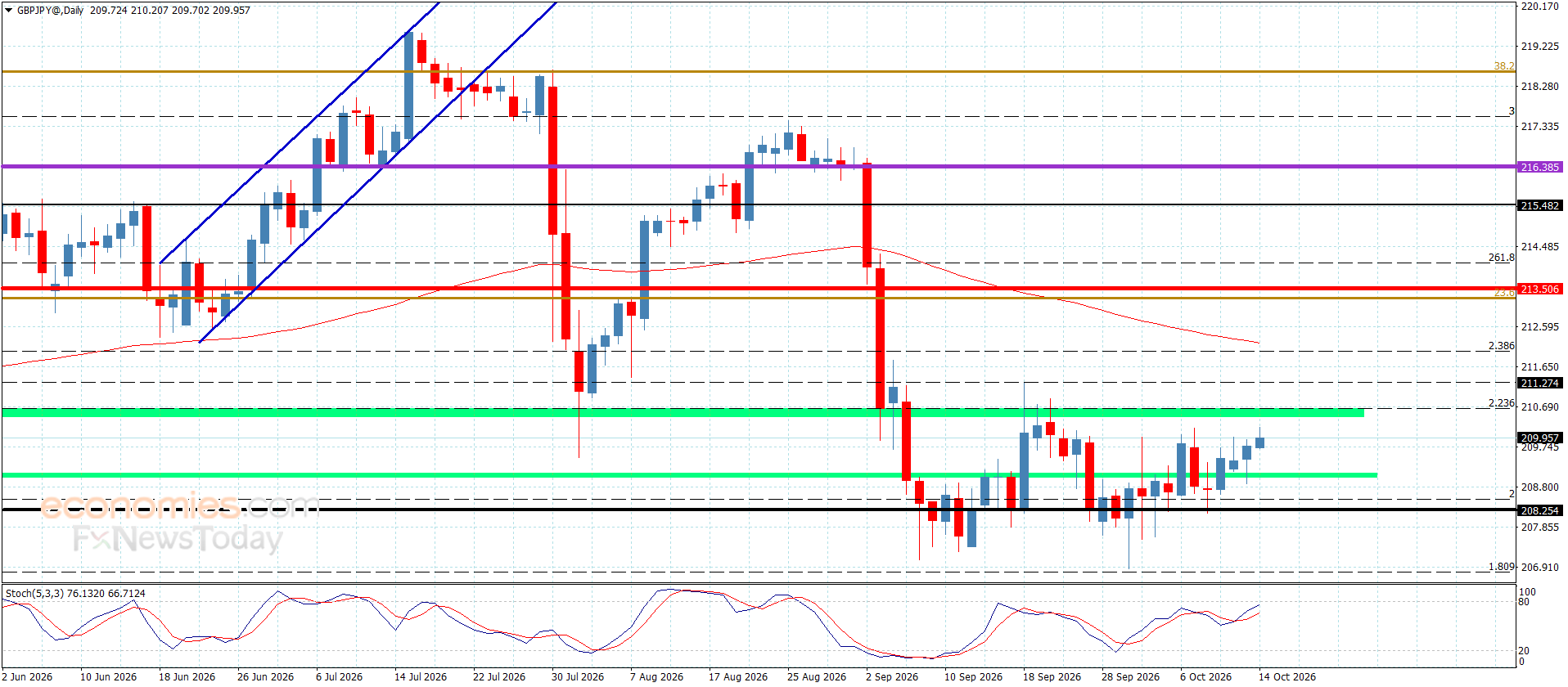
The GBPJPY pair surrendered to stochastic negativity in Friday, forcing it to delay the bullish rally, forming bearish corrective waves, to test the initial support level at 214.19, to settle above it.


The stability above the current support will provide a chance for renewing the bullish attempts by its rally initially towards 215.10, and surpassing it might extend the trading towards 215.70, while the continuation of the negative pressures might force it to provide more corrective trading to reach the main support at 213.30.


The expected trading range for today is between 214.10 and 215.70


Trend forecast: Bullish


Source link

20 04, 2026

The GBPJPY reaches the support– Forecast today – 20-4-2026

By |2026-04-20T10:08:04+02:00April 20, 2026|Forex News, News|0 Comments

The GBPJPY pair surrendered to stochastic negativity in Friday, forcing it to delay the bullish rally, forming bearish corrective waves, to test the initial support level at 214.19, to settle above it.


The stability above the current support will provide a chance for renewing the bullish attempts by its rally initially towards 215.10, and surpassing it might extend the trading towards 215.70, while the continuation of the negative pressures might force it to provide more corrective trading to reach the main support at 213.30.


The expected trading range for today is between 214.10 and 215.70


Trend forecast: Bullish


Source link

20 04, 2026

Copper price needs a new bullish momentum– Forecast today – 17-4-2026

By |2026-04-20T02:13:09+02:00April 20, 2026|Forex News, News|0 Comments


Copper price began its trading by losing the bullish momentum due to stochastic attempt to end the bullish rally, to settle again near $5.9700 level, which formed strong barrier in the previous trading.


The stability above $5.9700 supports the chances of gathering the required extra positive momentum to motivate the bullish rally that might target $6.1550 and $6.2500, while the decline below it might force it to provide temporary trading, to target $5.8100 before reaching the additional positive targets.


The expected trading range for today is between $5.9100 and $6.1550


Trend forecast: Fluctuated


Source link

19 04, 2026

Weekly Forex Forecast – 19th to 24th April 2026 (Charts)

By |2026-04-19T22:12:17+02:00April 19, 2026|Forex News, News|0 Comments


I wrote on 12th April that the best trades for the week would be:

  1. Long of the USD/JPY currency pair following a daily (New York) close above ¥160.

  2. Long of Brent Crude Futures in the small chance we get a daily close above $112.50.

Neither of these trades set up.

A summary of last week’s most important data in the market:

  1. US PPI – considerably worse than expected, showing a month-on-month increase of only 0.5% while 1.1% was widely forecasted. This undershot helped the US Dollar lose some value.

  2. UK GDP –better than expected, showing a month-on-month increase of 0.5% while only 0.1% was forecasted. This didn’t have much effect upon the Pound.

  3. Australia Unemployment Rate – as expected, no change at 4.3%.

Last week’s economic data releases were much less influential upon the markets than the US/Iran negotiations. Optimism that the war will come to a full end soon with some kind of deal and an open Strait of Hormuz has increased, and this has sent stock markets soaring, especially in the USA. The S&P 500 Index has risen by over 13% within just the past three weeks after reaching a new 7-month low. It closed Friday at a new record high! This is a huge turnaround, and April is on track to being the best month for the S&P 500 Index in 52 years.

Despite the optimism, the Iranians are publicly goading the USA, declaring they are refusing President Trump’s red lines, and acted to re-close the Strait of Hormuz yesterday after temporarily opening it. President Trump has continued with a mixture of publicly expressed optimism with the occasional comment following Iran’s fire on vessels attempting to transit about how more bombs will probably be required.

Prediction markets generally think that this war will end formally by the end of May. This suggests that the crowd might be overly optimistic, paving the way for a potential surprise to the downside if hostilities suddenly resume. It remains very difficult to see how the USA’s bottom line – no nuclear program and an open Strait of Hormuz – can be reconciled with the shibboleths of the Islamic Republic of Iran, although the Islamic Republic has been seriously weakened and is now being bankrupted. However, one of the most powerful politicians in Iran, the Parliament speaker Ghalibaf, said just a few hours ago that negotiations were making progress but there are still some gaps, which sounds as if Trump’s general optimism is not misplaced.

It is worth mentioning that the current ceasefire expires by this Wednesday.

The outcome of negotiations and the ceasefire concerning the Middle Easy war is likely to remain more influential that any economic data releases which are scheduled over the coming week, as we approach the deadline for the expiry of the current two-week ceasefire and await to see whether it will be extended or something else will be agreed.

The coming week’s most important data points, in order of likely importance, are:

  1. US Retail Sales

  2. UK CPI (inflation)

  3. Canada CPI (inflation)

  4. New Zealand CPI (inflation)

  5. Germany & UK Flash Services & Manufacturing PMI

  6. UK Retail Sales

  7. UK Claimant Count Change (Unemployment Claims)

Currency Price Changes and Interest Rates

For the month of April, I forecasted that the USD/JPY currency pair would rise in value. The performance of the forecast so far:

Weekly Forex Forecast – 19th to 24th April 2026 (Charts)

Last week, I made the following forecasts for the coming week:

  • AUD/JPY short – this was a losing trade, as the cross rose by 0.98%.

  • NZD/JPY short – this was a losing trade, as the cross rose by 0.32%.

  • NZD/CAD short – this was a winning trade, as the cross fell by 0.33%.

Overall, the trades gave a loss of 0.97%, which is an average loss of 0.32% per trade.

The Australian Dollar was the strongest major currency last week, while the US Dollar was the weakest.

Next week’s volatility is likely to remain relatively low. However, the ongoing war in the Middle East (subject to the current ceasefires) retains the ability to roil the market if there are any surprises. This could generate volatility in the US Dollar, the Japanese Yen, and the Canadian Dollar, not to mention stock markets.

You can trade these forecasts in a real or demo Forex brokerage account.

Key Support/Resistance Levels for Popular Pairs

Weekly Forex Forecast – 19th to 24th April 2026 (Charts)

Key Support and Resistance Levels

US Dollar Index

The US Dollar printed a bearish candlestick, with a significant lower wick, and a close that was within the lower half of its range. We have a bearish long-term trend, with the 3-month trend bearish and the 6-month trend also bearish.

Despite the seeming bearish trend, looking at the price chart below, we can see that the greenback is really within a long-term consolidation phase, so we cannot really expect much of a trend in the US Dollar here.

I think the greenback will be more driven by the progress in the current Middle East ceasefire talks – if war breaks out again, it will likely boost the Dollar, not so much as a haven but more as an effect of the inflationary shock of the rising energy prices. If the ceasefire becomes something more durable, conversely, it will probably be bearish for the US Dollar. This latter scenario is what the market is strongly expecting right now, so I will generally prefer to be short of the US Dollar over the coming week, unless the USA/Iran war restarts.

Weekly Forex Forecast – 19th to 24th April 2026 (Charts)

US Dollar Index Weekly Price Chart

AUD/USD

The AUD/USD currency pair was at the heart of the Forex market yet again last week, with the Aussie gaining by more than any other major currency, while the US Dollar was the biggest loser. There has been a very long-term bullish trend in the Aussie, which seemed to have decoupled from risk sentiment to some extent, but we see the Aussie getting bid hard as the world enjoys the increasing expectation that there will be a peace deal soon concluded between Iran and the USA. This is also leading to a decline in the USD, as a safe haven is no longer in such demand.

Another factor pushing the Australian Dollar higher is the relatively hawkish central bank agenda of the RBA, which is likely to hike rates again. The AUD has the highest overnight carry of any major currency, so the Aussie is also being used as a long component in carry trades, possibly against the Swiss Franc or Japanese Yen (the Yen is probably better value overall for that role).

Technically, there is a long-term bullish trend. The price reached a new 3-year high last Friday above $0.7220 but then fell firmly. The price chart below shows last week printed a fairly large bullish candlestick, but it definitely has an upper wick to watch out for.

I think the coming week could give more good long trade opportunities. The support near $0.7150 looks quite strong, so a bullish bounce there might be a good trade entry signal. However, longs will need to watch out for more strong selling potentially above $0.7200.

This pair will likely be at the heart of market volatility, which can be great for day traders, and follow sentiment on the Middle East and the second order effect of a commodity price shock, both up and down.

Weekly Forex Forecast – 19th to 24th April 2026 (Charts)

AUD/USD Weekly Price Chart

USD/JPY

The USD/JPY currency pair lost some ground last week, three weeks after finally making the long-anticipated bullish breakout beyond the big round number at ¥160. The problem is not Yen weakness, which can be taken for granted over the long-term it seems. The problem for progress higher by this currency pair is the renewed weakness in the US Dollar now that there is a ceasefire seen as leading to a peace deal in the Middle East war, because if there is a longer-term agreement it will remove some inflationary pressure from the Fed through lower energy prices.

Trend traders will be worrying about the slight bearish bias we are seeing near the highs and the price’s unwillingness to break out, especially above the ¥160 level. The Japanese Yen is weak but the Bank of Japan might get nervous and work for an intervention to strengthen the Yen above that level, adding a potential extra hurdle for bulls.

Bulls might however be encouraged by the fact we see significant lower wicks on all the recent weekly candlesticks below. There is also a very solid ascending trend line which has been supporting the price action for a year.

If we do not see the price make a firm bullish move soon, I fear that we might have a bit of a bearish head and shoulders chart pattern which might complete below ¥157.50, finally knocking out most trend traders from their long position, although some will be setting their stop losses for a break below the trend line at about ¥155.

I remain long, but more cautious traders might want to wait for a daily (New York) close above ¥160 before entering a new long trade.

Weekly Forex Forecast – 19th to 24th April 2026 (Charts)

USD/JPY Weekly Price Chart

S&P 500 Index

The S&P 500 Index has been on a wild ride over the past few weeks, rising by more than 13% in value within that time, especially over the past week. If this holds up, it will be the biggest calendar month gain by the Index since 1987, or possibly even 1974. This is quite an extraordinary turnaround after the price fell by about 10% to spend several days trading below the 200-day simple moving average and reaching new 7-month low prices. This is extraordinarily high volatility and an unusual event.

Stock markets are soaring through the same driver that was sending them plummeting just three or four weeks ago – the war between the USA and Iran. The ceasefire and negotiations have generated an increasingly strong expectation that the war will end soon with a comprehensive peace deal. This sent markets soaring higher, and we saw this Index end the week very near the high of its large range after reaching a new all-time high above 7,150.

This is overall a bullish development, this strong breakout to a new record high, and it is generally a signal that the price will go on to rise over the coming months. However, it might be worth considering what could happen if the war unexpectedly resumes this Wednesday when the two-week ceasefire expires. I find it hard to believe the Islamic Republic will accept giving up its nuclear program and will instead try to draw the USA into a long war of attrition, hoping the American eventually give up enough to accept some kind of compromise that leaves their nuclear program to fight for another day. If the war resumes, this would likely send stock markets sharply lower again. However, as a trend trader, I follow what happens, not what I think might happen, and I had to go long at this bullish breakout.

Weekly Forex Forecast – 19th to 24th April 2026 (Charts)

S&P 500 Index Weekly Price Chart

NASDAQ 100 Index

Everything I wrote above about the S&P 500 Index applies equally to the NASDAQ 100 Index, with the small adjustment that the bullish breakout to new record highs here looks maybe slightly less strong. However, the NASDAQ 100 averages a higher return than the S&P 500 Index, so if you want to be long there, you should seriously consider being long here too.

Weekly Forex Forecast – 19th to 24th April 2026 (Charts)

NASDAQ 100 Index Weekly Price Chart

Brent Crude Oil Futures

Brent Crude Oil fell again last week, continuing its journey lower as the USA/Iran ceasefire has continued to hold and give rise to strong expectations of a comprehensive peace deal by the end of May. Just as this has pushed stocks higher, it has sent crude oil lower. Another factor here is the Strait of Hormuz, which Iran opened on Friday before closing again on Saturday and firing on at least three tankers, as the USA continues its blockade of traffic to and from Iranian ports.

This new situation might push the price up a bit, but it is very unlikely to send prices to new highs. I am not sure that the price will fall a great deal further even if there is a peace deal, it may take a while to do that, but it should continue to trade lower in that scenario.

The surprise to consider is, what if all the positivity from President Trump is a feint and he is planning to pretend to negotiate a ceasefire extension, but will then order a fresh attack on Iran the minute the ceasefire expires this Tuesday / Wednesday. If this happened, it would certainly send the price of oil racing higher, we might even see the price rise by $20 in a single day.

I think that unless you have a strong view on whether a resumption of the war is likely, there is no point trading crude oil right now, but on a surprise resumption of the war, a long trade could be a good idea.

I will go long here if we get a daily (New York) close above $112.50 per barrel.

If you do go long, Brent will likely be the better vehicle than WTI, as it is more exposed to events in the Strait of Hormuz.

Weekly Forex Forecast – 19th to 24th April 2026 (Charts)

Brent Crude Oil Futures Daily Price Chart

I see the best trades this week as:

  1. Long of the USD/JPY currency pair following a daily (New York) close above ¥160.

  2. Long of Brent Crude Futures if we get a daily close above $112.50. This is extremely unlikely to set up unless there is a surprise resumption of the war.


Source link

19 04, 2026

Japanese Yen Forecast: USD/JPY Consolidation Masks Rising Intervention Risks

By |2026-04-19T22:05:04+02:00April 19, 2026|Forex News, News|0 Comments

Japanese Yen, USD/JPY Key Points

  • Ongoing yen weakness has prompted aggressive verbal intervention from Japan’s Finance Ministry.
  • Back in January, coordinated “price checks” between the US and Japan led to a 2100-pip drop in USD/JPY over 10 trading days.
  • Other yen crosses are at even more extreme levels, with GBP/JPY at 18-year highs and EUR/JPY testing 43-year highs.

With headlines out of the Middle East seemingly trending in the right direction (for today at least!), traders are refocusing on more traditional market drivers like economic data and policy decisions.

On the former front, the US reported another solid reading on initial unemployment claims this morning, showing just 207K new Americans claiming unemployment benefits last week, below the 213K expected by markets, bringing the 4-week moving average to an historically low 210K. On the back of this report, the US dollar is the second strongest major currency on the day.

Arguably the most important (non-Iran) headline of the week so far comes from the policy side, where Japan’s Finance Minister Satsuki Katayama has upped her “verbal intervention” in recent days. In today’s Asian session, she noted that authorities are “closely watching” FX moves, that the recent round of yen weakness is “affecting livelihoods” of Japanese citizens, that she plans to “further intensify” communication with US Treasury Secretary Bessent and is prepared to take “bold action” if necessary.

For readers not used to reading between the lines of policymaker comments, it’s clear that Japan’s Finance Ministry is growing increasingly uncomfortable with the yen’s ongoing weakness, raising the odds of outright intervention in the forex market to support the yen.

Traders will recall a similar situation in January, where Katayama and Bessent worked together to conduct price checks in the market, the final step before outright intervention, which led to a near-term bottom in the yen, though it’s now weakened beyond that point. Because the current US Administration is loathe to see continued strength in the greenback, continued coordination across the Pacific on this situation makes sense.

As we head into the weekend, readers should be aware of the risk of a similar situation playing out, especially if USD/JPY rallies above the psychologically-significant 160 level.

Japanese Yen Technical Analysis: USD/JPY Daily Chart


image-20260416131609-1

Source: Tradingview, StoneX

Technically speaking, the recent consolidation in USD/JPY masks the broader yen weakness that we’re seeing in other crosses. As the chart above shows, both GBP/JPY and EUR/JPY have seen larger rallies so far this month, taking those pairs to 18-year and 43-year (!!) highs respectively.

If USD/JPY plays catch-up with those crosses (potentially on the back of another delay in US-Iran peace talks over the weekend), Japanese authorities may feel compelled to intervene, likely leading to a large downside move in yen crosses. To put some numbers around it, January’s price checks kicked off a 2100-pip drop in USD/JPY over the next 10 days, and that fell short of direct intervention.

For traders, the takeaway is clear: While the current fundamental and technical setup favors continued strength in USD/JPY and other yen crosses, the risk of a sharp downside reversal is rising, especially if USD/JPY breaks above the 160.00 level heading into the weekend.

— Written by Matt Weller, Global Head of Research

Check out Matt’s Daily Market Update videos on YouTube and be sure to follow Matt on Twitter: @MWellerFX


Source link

19 04, 2026

Crude Oil Weekly Forecast – 19/04: Lower Value (Chart)

By |2026-04-19T18:11:05+02:00April 19, 2026|Forex News, News|0 Comments


Day traders may feel as if last week was an opportunity to ride momentum lower in WTI Crude Oil, but be unsure of where things are going next.

After essentially starting the past Monday with a spike higher that put the commodity at nearly $97, this after closing the prior week before around $90, another set of volatility awaits WTI Crude Oil. The commodity went into this weekend near $83,60, this after actually touching the $79,00 vicinity on Friday.

Large speculators in WTI Crude Oil have had a month and a half of wild rides to navigate and there are more coming. News this weekend shows there is a lack of clarity regarding what is taking place in the Hormuz Strait because of the Iranian war saga. The U.S White House which had been saying they had blockaded the waterway, did admit that Iran had shut off some the shipping as of Saturday. And Iran seems to be saying with conviction via some of its mouthpieces that the strait is closed again.

WTI Crude Oil and Supply

Via international ocean navigation sites it is being reported that shipping has slowed down in the Hormuz Strait once again. This article is being written on Sunday morning and as most people know who are following the developments from the Middle East, things can change fast. The closing price of WTI Crude Oil around the $83,60 mark is certain to endure another spike on early Monday. The direction of that spike tomorrow and how it is perceived will depend on positions being held now and what will happen in the first hours of WTI Crude Oil opening.

Depending on news developments over the next 24 hours, Monday is certain to be another turbulent trading situation in WTI. The ability to traverse to a low of nearly $79 on Friday shows where optimistic outlooks can take Crude Oil prices. The bounce upwards as the weekend set in shows the quick reactionary results that can flourish. Value velocity in WTI Crude Oil remains a danger. Supply is the key in the short-term and if the Strait of Hormuz suffers from ships turning around and deciding not to enter the waterway, the price of WTI Crude Oil will be disrupted upwards too.

Near-Term and Gambling on WTI Crude Oil

Certainly there is money to be made by speculating on WTI Crude Oil because of its dynamic price action it is now presenting. Picking the right direction based on perceptions is the most important piece of the gambling endeavor.

  • WTI Crude Oil technical prices are of interest for traders to gauge sentiment.

  • However, the fast paced action of the commodity is a bit like a roulette table depending on which news generates the biggest reaction.

WTI Crude Oil Weekly Outlook:

Speculative price range for WTI Crude Oil is 75.000 to 105.000

So where is the price going to go in WTI Crude Oil? If there is an early Monday morning lurch upwards above $90 this will indicate nervousness has returned and large traders are actually uncertain of what is taking place in the Strait of Hormuz. This seems to be a likely reaction while trying to get a sense of the news on Sunday. The potential price differential in WTI Crude Oil via lows and highs in the coming days could be electric.

Yet, if things change towards positive sentiment again today into tomorrow, and if this is accomplished via proof that oil tanker shipping is functioning, then WTI Crude Oil could remain tranquil. The ability to go below $80 is possible once again, but this will need additional proof of facts for large traders to create downwards momentum. Betting on WTI Crude Oil by day traders must be done carefully and strict risk management is needed. The commodity will remain a focus for all global investors this week.


Source link

19 04, 2026

Gold (XAUUSD) Price Forecast: Price Prediction Hinges on Fed, Inflation, Oil

By |2026-04-19T14:10:03+02:00April 19, 2026|Forex News, News|0 Comments


Daily Gold (XAU/USD)

Spot Gold closed higher on Friday, but off its high for the session. The main trend is still down according to the main swing chart, but the minor swing chart is trending higher. Long-term support is the 200-day moving average at $4210.83. Short-term resistance is the 50-day moving average at $4897.88.

In addition to the 50-day moving average resistance, retracement zone resistance comes in at $4850.68 to $5028.04.

The near-term direction is likely to be determined by trader reaction to the 50-day moving average at $4897.88. A sustained move over this level could create the upside momentum needed to challenge $5028.04. This could be the trigger point for an acceleration into a pair of main tops at $5238.78 and $5419.66.


Source link

19 04, 2026

Coffee prices on April 19: Week of unexpected developments, large fluctuation range

By |2026-04-19T10:09:09+02:00April 19, 2026|Forex News, News|0 Comments


Domestic coffee prices

The domestic coffee market entered Sunday (April 19) with a closing price lower than last week by about 600 VND/kg. The first trading session of the week started with a price threshold of 86,000 VND/kg. Then the price range continuously increased and peaked at 88,300 VND/kg. However, the high price range decreased sharply towards the end of the week, down to 85,100 VND/kg. This shows a fairly large fluctuation range, about 3,200 VND/kg.

Detailed purchase prices in key localities:

Dak Nong (old): Recorded price of 85. 200 VND/kg.

Dak Lak and Gia Lai: Maintain a trading level of 85,000 VND/kg.

Lam Dong: Anchored at the lowest level in the region at 84,500 VND/kg.

Compared to the peak of 96,600 VND/kg set on March 7, the current coffee price has evaporated by about 11,500 VND/kg.

Coffee price trend in the week from April 13-19. 4. Chart: Ha Linh

World coffee prices

On the London exchange, the price of online Robusta coffee for May 2026 futures contracts closed last week at $3,388/ton, down $64/ton compared to the previous week. July 2026 futures contracts fell $24/ton, to $3,263/ton.

In the same direction, the New York Stock Exchange, Arabica coffee futures for May 2026 delivery fell 10.8 US cents/lb last week, reaching 289.3 US cents/lb. July 2026 contracts plummeted 11.65 US cents/lb, reaching 284.25 US cents/lb.

Market outlook

The world coffee market closed the last trading session of the week in red, extending the decline on both the London and New York exchanges as selling pressure increased in most trading terms.

This is also the second consecutive week that world coffee prices have ended in red, showing a rapid change in the supply-demand balance and macroeconomic factors. The reopening of the Strait of Hormuz has reduced oil prices by about 10%, thereby reducing global shipping costs.

When logistics pressure subsided, one of the important supports for agricultural product prices, including coffee, also weakened. At the same time, the market shifted to a state of less concern about supply shortages, causing speculative buying power to decrease significantly.

However, the market is not entirely negative. In Vietnam – the world’s largest Robusta supplier, the price decrease has stimulated buying demand. As of April 17, Robusta inventories managed by ICE continued to plummet, down to 3,838 lots. This is also the lowest level in 16 months – a factor limiting the market’s deep decline.


Source link

19 04, 2026

Current price of oil as of April 17, 2026

By |2026-04-19T06:08:19+02:00April 19, 2026|Forex News, News|0 Comments


At 8:30 a.m. Eastern Time today, oil was priced at $96.18 per barrel with Brent serving as the benchmark (we’ll explain different benchmarks later in this article). That’s a drop of 88 cents compared with yesterday morning and around $28 higher than the price one year ago.

Oil price per barrel % Change
Price of oil yesterday $97.06 -0.90%
Price of oil 1 month ago $103.47 -7.04%
Price of oil 1 year ago $67.82 +41.81%
Price of oil yesterday
Oil price per barrel $97.06
% Change -0.90%
Price of oil 1 month ago
Oil price per barrel $103.47
% Change -7.04%
Price of oil 1 year ago
Oil price per barrel $67.82
% Change +41.81%

Will oil prices go up?

It’s impossible to forecast oil prices with detailed precision. Many different elements affect the market, but ultimately it boils down to supply and demand. When worries about economic recession, war, and other large-scale disruptions increase, oil’s path can shift fast.

How oil prices translate to gas pump prices

Gas prices at the pump don’t only track crude oil. They also include what it takes to refine and move that fuel, the taxes layered on top, and the extra markup your local station adds to stay in business.

Since crude oil generally makes up a majority of the per-gallon cost, changes in its price have an outsized impact. When oil surges, gas prices typically rise in tandem. But when oil retreats, gas prices often lag on the way down, a trend sometimes described as “rockets and feathers.”

The role of the U.S. Strategic Petroleum Reserve

In case of emergency, the U.S. has a store of crude oil known as the Strategic Petroleum Reserve. Its primary purpose is energy security in case of disaster (think sanctions, severe storm damage, even war). But it can also go a long way toward softening crippling price hikes during supply shocks.

It’s not a long-term answer and is more meant to provide temporary relief, assisting consumers and keeping critical parts of the economy running, like key industries, emergency services, public transportation, etc.

How oil and natural gas prices are linked

Both oil and natural gas are key sources of the energy we use every day. Because of this, a big change in oil prices can affect natural gas. For example, if oil prices increase, some industries may swap natural gas for some segments of their operations where possible, which increases demand for natural gas.

Historical performance of oil

To gauge oil’s performance, we often turn to two benchmarks:

  • Brent crude oil, the main global oil benchmark.
  • West Texas Intermediate (WTI), the main benchmark of North America

Between these two, Brent better represents global oil performance because it prices much of the world’s traded crude. And, it’s often the best way to track historical oil performance. In fact, even the U.S. Energy Information Administration now uses Brent as its primary reference in its Annual Energy Outlook.

Looking at the Brent benchmark across several decades, oil has been anything but steady. It’s seen spikes due to factors such as wars and supply cuts, and it’s also seen crashes from global recessions and an oversupply (called a “glut”). For example:

  • The early 1970s brought the first big oil shock when the Middle East cut exports and imposed an embargo on the U.S. and others during the Yom Kippur War.
  • Prices dropped in the mid-1980s for reasons such as lower demand and more non-OPEC oil producers entering the industry.
  • Prices spiked again in 2008 with increased global demand, but it soon plummeted alongside the global financial crisis.
  • During the 2020 COVID lockdown, oil demand collapsed like never before—bringing prices below $20 per barrel.

All to say, oil’s historical performance has been anything but smooth. Again, it’s hugely affected by wars, recessions, OPEC whims, evolving energy initiatives and policies, and much more.

Energy coverage from Fortune

Looking to stay up-to-date regarding the latest energy developments? Check out our recent coverage:

Frequently asked questions

How is the current price of oil per barrel actually determined?

The current price of oil per barrel depends largely on supply and demand, including news about potential future supply and demand (geopolitics, decisions made by OPEC+, etc.). In the U.S., prices also move based on how friendly an administration is to drilling, as it can affect future supply. For example, 2025 saw the Trump administration move to reopen more than 1.5 million acres in the Coastal Plain of the Arctic National Wildlife Refuge for oil and gas leasing, reversing the Biden administration’s policy of limiting oil drilling in the Arctic.

How often does the price of oil change during the day?

The price of oil updates constantly when the “futures” markets are open. A futures market is effectively an auction where people agree to buy or sell oil in the future. As long as people and companies are trading contracts, the oil price is changing.

How does U.S. shale oil production affect the current price of oil?

In short, shale is rock that contains oil and natural gas. Think of shale as energy yet to be tapped. The more shale the U.S. accesses, the more energy we’ll have—and the more easily oil prices can keep from spiking as much thanks to a greater supply.

How does the current price of oil impact inflation and the broader economy?

When oil is expensive, it tends to make everyday items cost more. This can be related to energy (your heating, gas utilities, etc.), but it’s also due to the logistics involved with making those items accessible to you. Shipping, for example, can affect the price of things at the grocery store, as it’s more expensive to get those products from warehouses and farms onto the shelf.


Source link

Go to Top