About Editorial team of BIPNs

Main team of content of bipns.com. Any type of content should be approved by us.
28 12, 2025

The Realistic Path to a $1 Milestone

By |2025-12-28T03:53:56+02:00December 28, 2025|Crypto News, News|0 Comments

BitcoinWorld

Dogecoin Price Prediction 2026-2030: The Realistic Path to a $1 Milestone

As global cryptocurrency markets mature in 2025, investors worldwide are asking a crucial question: Can Dogecoin’s unique trajectory realistically lead to a $1 valuation between 2026 and 2030? This comprehensive analysis examines DOGE’s historical patterns, current adoption metrics, and future market dynamics to provide evidence-based projections.

Dogecoin Price Prediction: Understanding the $1 Question

Dogecoin’s journey from meme to mainstream cryptocurrency represents one of digital finance’s most fascinating narratives. Originally created in December 2013 by Billy Markus and Jackson Palmer as a lighthearted alternative to Bitcoin, DOGE has evolved into a serious digital asset with a market capitalization that frequently ranks among the top fifteen cryptocurrencies globally. The coin’s inflationary supply model, which adds approximately 5 billion new DOGE annually through mining rewards, creates fundamentally different economic dynamics than Bitcoin’s deflationary approach.

Market analysts consistently monitor several critical factors when projecting Dogecoin’s future value. Transaction volume across major exchanges provides insight into investor interest, while merchant adoption rates indicate real-world utility. Furthermore, development activity on the Dogecoin blockchain and integration with payment platforms like Tesla and AMC Theatres demonstrate growing institutional acceptance. These elements collectively form the foundation for any serious price prediction analysis.

Historical Performance and Market Context

Dogecoin’s price history reveals remarkable volatility alongside sustained growth periods. The cryptocurrency traded below $0.01 for most of its existence until 2021, when it surged to an all-time high of $0.7376 on May 8, 2021. This 15,000% increase within five months demonstrated DOGE’s capacity for explosive growth during favorable market conditions. However, the subsequent correction to approximately $0.05 by July 2021 highlighted the asset’s vulnerability to broader cryptocurrency market trends.

Several key events have historically influenced Dogecoin’s valuation significantly. Elon Musk’s public endorsements on social media platforms consistently generated short-term price spikes, while integration with payment processors like BitPay expanded the coin’s utility. The 2021 collaboration with the SpaceX DOGE-1 mission to the moon symbolized Dogecoin’s cultural impact beyond financial markets. These developments established important precedents for understanding how future events might affect DOGE’s price trajectory toward the $1 threshold.

Expert Analysis and Economic Fundamentals

Financial institutions and cryptocurrency research firms approach Dogecoin predictions with varying methodologies. Bloomberg Intelligence analyst Mike McGlone frequently emphasizes Dogecoin’s correlation with broader cryptocurrency trends, particularly Bitcoin’s performance. Meanwhile, blockchain analytics platform CoinMetrics focuses on on-chain data, including active address counts and transaction value. These analytical approaches provide complementary perspectives on DOGE’s potential path forward.

The table below summarizes recent institutional predictions for Dogecoin’s price targets:

Source 2026 Prediction 2028 Prediction 2030 Prediction
WalletInvestor $0.18 – $0.35 $0.40 – $0.65 $0.70 – $0.95
DigitalCoinPrice $0.25 – $0.45 $0.55 – $0.80 $0.85 – $1.10
TradingBeasts $0.15 – $0.30 $0.35 – $0.60 $0.65 – $0.90

These projections consistently identify several crucial factors that could accelerate or hinder Dogecoin’s progress toward $1:

  • Regulatory developments in major markets like the United States and European Union
  • Technological upgrades to the Dogecoin network’s transaction speed and security
  • Mainstream payment integration with additional retailers and service providers
  • Broader cryptocurrency adoption driving overall market capitalization growth

The Road to $1: Technical and Adoption Requirements

Reaching a $1 valuation requires Dogecoin to achieve specific technical and adoption milestones. Currently trading with a circulating supply exceeding 132 billion coins, a $1 price would translate to a market capitalization surpassing $132 billion. This valuation would place DOGE among the world’s top financial assets, comparable to major corporations like Starbucks or Boeing. Achieving this position necessitates substantial growth in both user adoption and transaction volume.

Several development initiatives could potentially accelerate Dogecoin’s progress. The Dogecoin Foundation has announced plans for network improvements, including enhanced security protocols and reduced transaction fees. Additionally, increased developer activity on GitHub suggests growing technical commitment to the project. These improvements might address current limitations and position DOGE more competitively against payment-focused cryptocurrencies like Litecoin and Bitcoin Cash.

Comparative Analysis with Similar Cryptocurrencies

Examining Dogecoin’s trajectory alongside comparable assets provides valuable context for price predictions. Litecoin, often called “digital silver” to Bitcoin’s “digital gold,” reached its all-time high of $412.96 in May 2021. This represented a market capitalization of approximately $28.8 billion at its peak. For Dogecoin to reach $1, it would need to achieve nearly five times Litecoin’s maximum historical valuation, highlighting the scale of required growth.

Similarly, Ripple’s XRP token demonstrates how regulatory developments can dramatically affect cryptocurrency valuations. XRP’s ongoing legal proceedings with the U.S. Securities and Exchange Commission have created significant price volatility since December 2020. Dogecoin benefits from clearer regulatory positioning as a decentralized cryptocurrency, potentially reducing similar legal uncertainties. This regulatory clarity might provide DOGE with advantages in institutional adoption compared to tokens with unresolved legal status.

Market Dynamics and External Influences

Global economic conditions significantly influence all cryptocurrency valuations, including Dogecoin. During periods of monetary expansion and low interest rates, investors typically demonstrate increased appetite for risk assets like cryptocurrencies. Conversely, tightening monetary policies often correlate with cryptocurrency market contractions. The Federal Reserve’s interest rate decisions and inflation management strategies will likely impact DOGE’s price trajectory throughout the prediction period.

Technological advancements in the broader blockchain ecosystem also affect Dogecoin’s competitive position. The emergence of layer-2 scaling solutions, improved wallet security, and enhanced privacy features across multiple blockchain networks raise user expectations for all cryptocurrencies. Dogecoin’s development community must maintain pace with these innovations to preserve the asset’s relevance. Failure to implement competitive technological improvements could limit DOGE’s growth potential regardless of favorable market conditions.

Social media influence remains uniquely significant for Dogecoin compared to other major cryptocurrencies. Analysis of Twitter, Reddit, and TikTok engagement metrics reveals strong correlations between social media activity and DOGE price movements. This relationship creates both opportunities and vulnerabilities. While positive social sentiment can drive rapid price appreciation, it also increases susceptibility to coordinated manipulation or sudden sentiment shifts. Investors should consider this distinctive characteristic when evaluating Dogecoin’s risk profile.

Conclusion

Dogecoin’s path to a $1 valuation between 2026 and 2030 depends on multiple converging factors. Technological development, regulatory clarity, mainstream adoption, and favorable market conditions must align for DOGE to achieve this significant milestone. While historical performance demonstrates Dogecoin’s capacity for extraordinary growth, the scale required for a $1 valuation presents substantial challenges. Investors should monitor development progress, adoption metrics, and broader cryptocurrency trends when assessing Dogecoin’s long-term potential. This Dogecoin price prediction analysis provides a framework for understanding the realistic possibilities and requirements for reaching the psychologically important $1 threshold.

FAQs

Q1: What is the most realistic Dogecoin price prediction for 2026?
Most analysts project Dogecoin trading between $0.15 and $0.45 in 2026, depending on broader cryptocurrency market conditions and DOGE-specific developments.

Q2: Can Dogecoin realistically reach $1 by 2030?
While possible, reaching $1 by 2030 requires substantial growth in adoption, technological improvements, and favorable market conditions exceeding current projections.

Q3: What factors most influence Dogecoin’s price predictions?
Key factors include Bitcoin’s performance, regulatory developments, merchant adoption rates, technological upgrades, and social media sentiment.

Q4: How does Dogecoin’s inflationary supply affect price predictions?
The annual 5 billion DOGE issuance creates consistent selling pressure from miners, potentially limiting price appreciation compared to deflationary cryptocurrencies.

Q5: What would Dogecoin’s market capitalization be at $1?
With approximately 132 billion circulating coins, a $1 Dogecoin price would equal a market capitalization exceeding $132 billion.

This post Dogecoin Price Prediction 2026-2030: The Realistic Path to a $1 Milestone first appeared on BitcoinWorld.

Source link

28 12, 2025

Downtrend Holds As Buyers Defend Late December Base

By |2025-12-28T01:52:34+02:00December 28, 2025|Crypto News, News|0 Comments

  • ADA holds the $0.34–$0.35 base, but the descending channel still controls trend direction.
  • Repeated failures below the $0.36–$0.38 EMA cluster keep rallies corrective.
  • Midnight and treasury funding improve long-term outlook, not short-term price action.

Cardano price today trades near $0.35 as the token attempts to stabilize into the final sessions of 2025. ADA remains under pressure after a 58% decline year to date, with price still nearly 90% below its $3.10 all-time high. Sellers continue to control the broader structure, but downside momentum has slowed as the market probes for a durable base.

Descending Channel Defines The Primary Trend

ADA Price Action (Source: TradingView)

On the daily chart, Cardano remains locked inside a well-defined descending channel that has guided price lower since October. Each rally attempt has stalled beneath falling resi…

Read The Full Article Cardano Price Prediction: Downtrend Holds As Buyers Defend Late December Base On Coin Edition.

Source link

27 12, 2025

Why $1.77 Support Is the Level Traders Can’t Ignore

By |2025-12-27T23:51:32+02:00December 27, 2025|Crypto News, News|0 Comments

XRP is currently trading around $1.85, which tells us something important: this isn’t about getting caught up in hype or an attention-grabbing story anymore; it is about what’s really going on with the structure. The price action has slowed down since that pullback from $2.11, and now XRP is at a technical crossroads, with the next move potentially setting the tone for the next few weeks.

Right now, XRP has a market capitalization of around $111.9 billion – putting it at number five out of all the cryptos – and with a daily trading volume of roughly $1.53 billion, that’s not panic selling so much as steady participation. We like that kind of stability – especially when XRP is having to navigate a tightening technical range.

XRP Price Prediction: Descending Channel Keeps XRP Contained

Looking at the 4-hour chart, XRP price prediction seems bearish as XRP is still stuck inside a descending channel, which has had a series of lower highs since that $2.11 peak, and no matter how hard it tries, each recovery has been pushed back down by falling trend resistance.

Meanwhile, the 50-EMA sits at just over $1.88 and the 100-EMA at $1.92. At the same time, the decline hasn’t been a wild, impulsive free-fall, suggesting it’s still possible to think in terms of distribution rather than a complete and utter collapse.

You can see that the price is still below the 50-EMA near $1.88 and the 100-EMA around $1.92, which also reinforces some caution for the short term. But – and this is a big but – sellers have so far failed to force a sustained breakdown, which suggests that the downward pressure is starting to ease off a bit rather than intensify.

Candlesticks and RSI Signal Compression

Looking at the candles, you can see that we’re mostly seeing small bodies, with spinning tops and doji-like formations – and that says a lot about the hesitation we’re seeing right now. No one – at least, not yet – has really got a clear upper hand.

XRP Price Chart – Source: Tradingview

With the RSI hovering around the low 40s, you can see that we’re not really seeing any sharp upward or downward momentum – it’s just sort of steady. And it’s also worth noting that – and this is a big positive – we’re not seeing any bearish divergence, which actually reduces the chances of a sharp, sudden plunge lower. Instead, XRP is just compressing near the support level.

Key Levels That Define the Next Move

So, to summarize where we are now, the technical roadmap is fairly clear:

  • The big resistance zone is currently at $1.88–$1.92
  • If we can break through above $1.92 then we’ve got the green light to head upwards – and the targets would be $1.96, then $2.05–$2.10.
  • Support is down at $1.77
  • Downside risk kicks in if that support starts to fail and we drop below $1.65

As long as that support at $1.77 holds, we’re still just in a consolidation phase – and not bearing the brunt of some kind of breakdown.

If we can break through $1.92, that’s been shown to shift the momentum back towards the buyers – and that opens up the door for another run towards $2.05–$2.10. But until then, patiently waiting for what happens next is probably the smartest move.

Maxi Doge: The Meme Coin Built for Maximum Hype

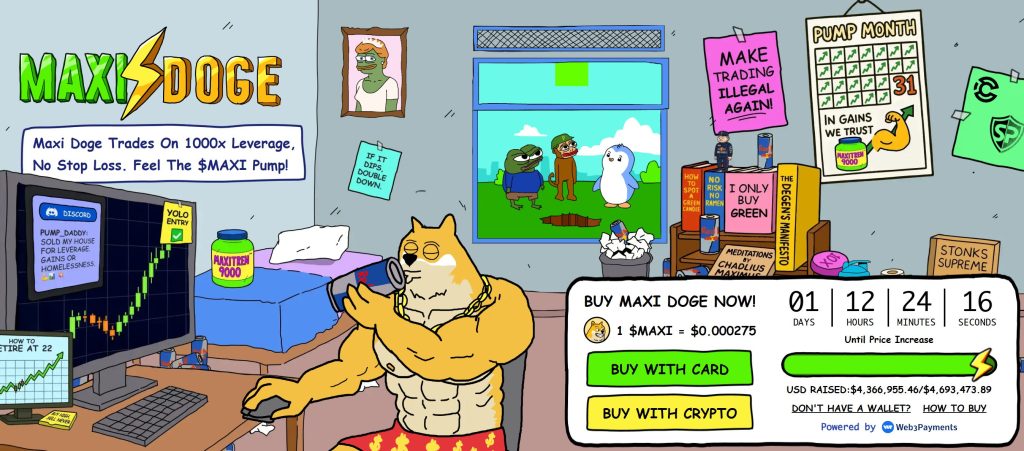
Maxi Doge is exploding in popularity as traders rush toward its high-energy meme identity and fast-growing presale. With over $4.36 million raised, it’s quickly becoming one of the standout meme tokens of the year.

The project mixes bold branding with real engagement features, from ROI contests to nonstop community events, giving it more personality and momentum than typical dog coins. Its shredded, leverage-obsessed mascot has already turned Maxi Doge into a recognizable culture coin.

Holders can also stake $MAXI for daily smart-contract rewards and unlock access to exclusive competitions and partner events. The staking utility adds a passive-earning layer that keeps users active and invested in the ecosystem.

This image has an empty alt attribute; its file name is image-427-2-1024x451.jpg

With $MAXI priced at $0.000275 and the next increase approaching, the presale continues to gain speed. If you’re looking for a meme coin built on hype, personality, and real community energy, Maxi Doge is shaping up to be one worth watching.

Click Here to Participate in the Presale

The post XRP Price Prediction: Why $1.77 Support Is the Level Traders Can’t Ignore appeared first on Cryptonews.

Source link

27 12, 2025

Henry Hub Firms on Colder Forecasts as LNG Flows Stay Near Records

By |2025-12-27T22:39:07+02:00December 27, 2025|Forex News, News|0 Comments


NEW YORK, Dec. 27, 2025, 12:14 p.m. ET — Market closed

Natural gas is heading into the final trading days of 2025 with a familiar winter driver back in control: weather. After sliding for two straight weeks, U.S. natural gas futures steadied and turned higher on Friday as forecasters dialed up colder risks into early January—an outlook that could tighten near-term balances even as Lower 48 production remains at record territory and LNG export demand stays historically strong. [1]

For investors, the key question into Monday’s open isn’t just whether “it gets colder.” It’s whether the latest weather models, LNG terminal operations, and storage expectations align in a way that forces the market to reprice quickly in thin year-end liquidity—especially with a rescheduled federal storage report due during regular U.S. trading hours. [2]

Where U.S. natural gas prices stand heading into Monday

Front-month NYMEX natural gas (January) was trading around $4.29 per million British thermal units (mmBtu) on Friday, up about 1% on the session and on track for a weekly gain that would snap a two-week losing streak. [3]

Holiday conditions mattered too. “There’s going to be thinner volume on the holiday week,” Robert DiDona, president of Energy Ventures Analysis, said, arguing that lighter participation can make prices more sensitive to shifting fundamentals—especially weather. [4]

The setup into early January looks constructive on paper: meteorologists were projecting a nationwide temperature step-down through roughly Jan. 10, with U.S. Heating Degree Days (HDDs) rising in recent forecasts—still below normal in the two-week view, but trending colder versus earlier model runs. [5]

Weather is the catalyst, but supply is the ceiling

The most immediate bullish lever is demand. LSEG projections cited in market coverage showed average Lower 48 demand (including exports) rising from about 136.1 billion cubic feet per day (bcfd) this week to about 138.5 bcfd over the next two weeks, reflecting stronger heating needs. [6]

At the same time, the market is still dealing with a supply backdrop that can blunt rallies. LSEG also pegged December Lower 48 output at record levels—around 109.8 bcfd—topping November’s prior record. [7]

That tug-of-war—cold-driven demand versus record production—helps explain why natural gas has been volatile rather than trending cleanly in one direction. Investors should expect that dynamic to continue into January, with each major weather update effectively testing how tight balances really are.

LNG exports remain the wild card, and Freeport is back in focus

LNG has become one of the most important swing factors for U.S. natural gas pricing, and the market received fresh reminders this week that operational hiccups can quickly move sentiment.

In a Reuters-reported regulatory update carried by BOE Report, Freeport LNG said all three trains at its Texas export facility experienced a trip due to an interruption of feed gas. The filing said operators managed cooldowns and restarts “to minimize flaring.” [8]

Why does that matter? Freeport’s three trains are capable of turning roughly 2.4 bcfd of natural gas into LNG—enough scale that disruptions can ripple into U.S. balances and sometimes global benchmarks. [9]

By the end of the week, however, Freeport indicated that operations had resumed across all three trains after the temporary trip, easing fears of an extended outage. [10]

More broadly, average gas flows to the eight large U.S. LNG export plants were running around 18.4 bcfd so far this month—near record territory and up from a record monthly average in November, according to the same market snapshot. [11]

For investors, the takeaway is straightforward: as long as LNG feedgas stays near these highs, the U.S. market can tighten quickly when cold weather arrives—yet brief outages can produce sudden, sharp swings in either direction.

Global backdrop: sanctions, supply delays, and the long LNG cycle

The near-term U.S. price story is weather and LNG operations. The longer-term story is what global LNG supply and demand will look like by the end of the decade—because that trajectory increasingly shapes capital spending, pipeline buildouts, and the valuation story for gas-linked equities.

One major signal in the last 48 hours came from Russia. Deputy Prime Minister Alexander Novak said Russia has pushed back “by several years” its plan to reach an annual LNG output target of 100 million tons, citing the impact of Western sanctions. An updated government strategy sees Russia producing 90–105 million tons by 2030 and 110–130 million tons by 2036, Reuters reported. [12]

The global competitive set matters for U.S. investors because U.S. LNG is priced off Henry Hub plus liquefaction and shipping—meaning international supply constraints, policy shifts, and competing volumes can change how “pull” from overseas markets translates into U.S. demand.

Permian pipelines and the next LNG wave: Enverus lays out the bottlenecks

While daily weather drives the screen price, infrastructure is shaping the next decade of U.S. natural gas demand—and that includes the pipeline network needed to move gas from production basins to the Gulf Coast.

A newly highlighted Enverus Intelligence Research (EIR) analysis projects U.S. LNG feedgas demand rising to 33 bcfd by 2030, with potential to approach 50 bcfd by 2035 if planned expansions move forward. To support that, the research points to about 9.0 bcfd of new Permian pipeline capacity to the Gulf Coast, plus more than 12 bcfd of additional coastal pipeline capacity dedicated to LNG supply. [13]

“While there is ample pipeline capacity from the Permian Basin and along the Gulf Coast to supply incremental LNG feedgas to 2030,” EIR director Alex Ljubojevic said, “the challenge lies in ensuring long-term natural gas supply for additional LNG expansion.” [14]

Reporting on the analysis also flagged a potential long-run supply gap: EIR expects the Haynesville to peak around 19 bcfd in 2033 before declining, while Permian dry gas output could climb toward ~40 bcfd by 2050—yet infrastructure and resource development would still be needed to close a projected 2–8 bcfd gap by 2035. [15]

The counterpoint: renewables could change LNG’s long-run math

Not everyone believes LNG demand growth will remain as durable as today’s project pipeline implies.

In a Reuters Breakingviews column published Friday, analysts argued that rapid advances in solar, wind, and batteries could turn an expected LNG glut into an even deeper oversupply problem. The piece cited industry warnings about overbuilding, including TotalEnergies CEO Patrick Pouyanné saying the sector is “building too much,” and commentary from LNG executives about market exuberance. [16]

For investors, this debate matters because it could determine which gas-focused companies are rewarded for expanding—and which are penalized for pursuing long-cycle projects that arrive into weaker-than-expected demand.

Stock market context: year-end trading, light volume, and why gas can still move

U.S. equity markets are closed today, but the broader tone into the final week of 2025 is one of muted conviction and thinner participation—conditions that can amplify moves in commodities and energy-linked names once markets reopen.

On Friday, Wall Street ended a light-volume post-Christmas session nearly unchanged, with all three major indexes slightly lower but near all-time highs, Reuters reported—an environment consistent with late-December positioning and “Santa Claus rally” narratives. [17]

Natural gas often trades to its own rhythm, but thin liquidity and year-end positioning can still influence volatility across related equities (producers, midstream, utilities, LNG exporters) when headline catalysts hit.

What investors should know before the next U.S. session

With the market closed now, here are the key catalysts and risk points that could shape Monday’s open and the week ahead:

1) Weather model updates can reprice the strip quickly

The market is leaning heavily on forecasts calling for colder conditions into early January. Any material warming or further cooling in high-population regions (especially the eastern half of the U.S.) can shift demand expectations fast—and in year-end liquidity, those shifts can be exaggerated. [18]

2) A rescheduled EIA storage report hits during regular hours Monday

The most important scheduled data point is the U.S. government’s Weekly Natural Gas Storage Report, which is on a holiday-adjusted schedule.

The last reported EIA figure showed working gas in storage at 3,579 Bcf for the week ending Dec. 12—down 167 Bcf from the prior week and still within the five-year range. [19]

The release schedule shows the next storage report is set for Monday, Dec. 29 at 12:00 p.m. ET (holiday adjustment). That timing places it squarely in the middle of the regular U.S. equity and futures session, when liquidity is typically deeper—and when the market can react immediately. [20]

3) LNG feedgas and Freeport operations remain a volatility trigger

Freeport’s trip and restart underscores how sensitive U.S. balances are to LNG export operations. With monthly LNG feedgas still running near record levels in the broader system, any unplanned downtime—or confirmation that facilities are running cleanly—can shift the near-term supply-demand picture. [21]

4) Positioning: speculators have been adjusting exposure

CFTC data cited in market coverage showed speculators reduced net long positions across major U.S. natural gas markets in the week ending Dec. 16. That kind of positioning shift can matter into headline-heavy periods because it influences how much “dry powder” exists on either side of the trade. [22]

Bottom line

Natural gas is heading into the next session with bullish near-term momentum driven by colder forecasts and persistently strong LNG export pull—yet the rally is still navigating record production and the potential for sharp swings tied to LNG terminal operations and storage data.

For Monday, the market’s focal points are clear: weather updates into early January, operational stability at major LNG facilities (with Freeport back in the spotlight), and a holiday-shifted EIA storage report landing mid-session. [23]

References

1. www.worldenergynews.com, 2. www.worldenergynews.com, 3. www.worldenergynews.com, 4. www.worldenergynews.com, 5. www.worldenergynews.com, 6. www.worldenergynews.com, 7. www.worldenergynews.com, 8. boereport.com, 9. boereport.com, 10. www.worldenergynews.com, 11. www.worldenergynews.com, 12. www.reuters.com, 13. www.enverus.com, 14. www.enverus.com, 15. www.enverus.com, 16. www.reuters.com, 17. www.reuters.com, 18. www.worldenergynews.com, 19. ir.eia.gov, 20. ir.eia.gov, 21. www.worldenergynews.com, 22. www.worldenergynews.com, 23. www.worldenergynews.com


Source link

27 12, 2025

Resveratrol’s Impact on Weight and Hormones Reviewed

By |2025-12-27T21:55:37+02:00December 27, 2025|Dietary Supplements News, News|0 Comments


In the relentless pursuit of unraveling the complexities of obesity treatment, resveratrol—a naturally occurring polyphenol found predominantly in grapes and red wine—has emerged as a promising candidate due to its purported metabolic and anti-inflammatory properties. However, despite its popularity as a dietary supplement, the definitive effects of resveratrol on key anthropometric indices such as body weight, body mass index (BMI), and waist circumference, as well as on metabolic regulators like adiponectin and leptin, remain mired in uncertainty. A groundbreaking study published in the International Journal of Obesity in late 2025 offers a sweeping evaluation, synthesizing evidence from randomized controlled trials to clarify resveratrol’s impact on individuals with overweight and obesity.

This comprehensive systematic review and meta-analysis, led by Setayesh, Arzhang, Baniasadi, and colleagues, represents one of the most graded and rigorous aggregations of clinical data to date. By meticulously assessing trials that administered resveratrol supplements in varying dosages and durations, the research aimed to distill a coherent understanding of its physiological effects. The rationale is rooted in the biochemical roles of adiponectin and leptin—two adipocyte-derived hormones critical for regulating energy balance and glucose metabolism. Elevated leptin levels, often accompanied by leptin resistance, correlate with obesity, while adiponectin is generally thought to exert protective metabolic effects.

Contrary to the hopeful prospect that resveratrol might meaningfully reduce body mass or favorably modulate these hormones, the analysis reveals an inconclusive landscape. The aggregate data failed to demonstrate statistically significant improvements in anthropometric markers or consistent hormonal shifts across the studied populations. These findings cast a nuanced light on the often overstated benefits of resveratrol supplementation, suggesting that any potential metabolic advantages may be context-dependent or require more prolonged intervention periods to manifest.

Diving deeper, the investigators highlighted the variability in study methodologies as a formidable obstacle in reaching definitive conclusions. Studies included in the meta-analysis varied widely in terms of resveratrol dosage, ranging from modest 150 mg daily intakes to as high as 2 grams, with intervention durations spanning weeks to several months. This heterogeneity inevitably confounds efforts to extrapolate a universal therapeutic guideline. Moreover, participant characteristics such as baseline metabolic health, age, and concurrent lifestyle factors were inconsistently accounted for, adding to the interpretational challenges.

An additional layer of complexity lies in the pharmacokinetics of resveratrol itself. Despite demonstrated efficacy in preclinical models, including rodent studies showing significant reductions in adiposity and improvements in insulin sensitivity, human metabolism of resveratrol is notoriously rapid, leading to low bioavailability. This metabolic reality raises questions about whether the oral supplementation regimens applied in human trials achieve adequate systemic concentrations to replicate the preclinical benefits observed.

The researchers critically examined alterations in circulating adiponectin and leptin levels, given their pivotal roles in obesity pathophysiology. While some individual trials reported mild elevations in adiponectin or reductions in leptin, these effects were not consistently replicated across the pooled data set. Notably, the timing of these hormonal measurements post-supplementation emerged as a possible confounder, along with the sensitivity of assay methodologies employed, which may contribute to statistical noise obscuring true biological shifts.

Interestingly, the meta-analysis underscores the need to redefine endpoints when investigating nutraceutical interventions for obesity. Traditional anthropometric measures alone may insufficiently capture subtle metabolic modulations, thus prompting a call for integrating advanced biomarkers and imaging modalities in future studies. The authors propose longitudinal designs encompassing metabolic flux analyses and tissue-specific assessments to better elucidate resveratrol’s bioactivity profile.

In parallel, the interplay between resveratrol and the gut microbiome has been spotlighted in burgeoning research yet remains underexplored within clinical trials. Emerging evidence suggests that modulation of gut microbial composition could influence host metabolism and adipokine secretion, potentially serving as an indirect mechanistic route for resveratrol’s actions. Future investigations that holistically incorporate host-microbe interactions may unlock novel therapeutic avenues.

Beyond metabolic parameters, resveratrol’s anti-inflammatory and antioxidant effects, documented extensively in vitro and in animal models, invite ongoing scrutiny. Understanding whether these properties translate into systemic benefits for human patients with obesity—who often bear a chronic low-grade inflammatory burden—is crucial. The current meta-analysis underscores the paucity of robust data linking supplementation to improvements in inflammatory biomarkers, reinforcing the thesis that resveratrol’s clinical impact may be more modest than popularly perceived.

The translational gap between promising preclinical insights and equivocal clinical outcomes is emblematic of broader challenges in obesity pharmacotherapy. Precious few compounds achieve meaningful efficacy without adverse effects, underpinning the imperative for rigorous, large-scale human trials with standardized protocols. This meta-analysis, by synthesizing extant data, serves as a clarion call for harmonizing research methodologies to advance evidence-based recommendations.

Moreover, the socio-behavioral dimensions of obesity intervention should not be underestimated. The allure of supplement-based solutions like resveratrol often eclipses fundamental lifestyle modifications that consistently demonstrate robust efficacy. Recognizing supplements as adjunctive rather than primary therapeutic agents is vital in public health messaging.

The study’s authors also advocate for personalized medicine approaches to identify potential responders—subpopulations with distinct genetic, metabolic, or epigenetic profiles who might derive greater benefit from resveratrol. Such stratification could optimize therapeutic outcomes and mitigate blanket assumptions about supplement efficacy.

Ultimately, this meta-analytic work illuminates the intricate and multifactorial nature of obesity management. While resveratrol holds biochemical promise, its role as a standalone intervention remains unsubstantiated by current clinical evidence. The findings encourage tempered optimism and underscore the necessity of multi-dimensional approaches incorporating diet, exercise, pharmacology, and possibly targeted nutraceuticals.

With obesity rates climbing globally, the imperative for efficacious, accessible, and safe interventions is paramount. The evolving evidence base around resveratrol supplementation contributes a critical piece to this complex puzzle, informing both clinicians and individuals seeking scientifically grounded guidance amid a sea of health claims.

As research continues to unfold, the integration of cutting-edge omics technologies and longitudinal cohort studies will be instrumental in dissecting the nuanced interactions between resveratrol, adipose tissue biology, and systemic metabolism. These future endeavors may ultimately clarify whether resveratrol can be harnessed as a valuable component within the comprehensive therapeutic armamentarium against obesity.

For now, it remains clear that despite the decades of enthusiasm surrounding this polyphenolic compound, resveratrol is not a panacea. Nonetheless, its biological potency and safety profile warrant continued investigation under stringent clinical frameworks to fully elucidate its potential and limitations in human metabolic health.

Subject of Research: The impact of resveratrol supplementation on anthropometric indices and adipocyte-derived hormone levels in individuals with overweight and obesity.

Article Title: The effect of resveratrol supplementation on anthropometric indices, adiponectin and leptin levels in individuals with overweight and obesity: a graded, systematic review and meta-analysis of randomized controlled trials.

Article References:
Setayesh, A., Arzhang, P., Baniasadi, M.M. et al. The effect of resveratrol supplementation on anthropometric indices, adiponectin and leptin levels in individuals with overweight and obesity: a graded, systematic review and meta-analysis of randomized controlled trials. Int J Obes (2025). https://doi.org/10.1038/s41366-025-01994-0

Image Credits: AI Generated

DOI: 10.1038/s41366-025-01994-0 (Published 27 December 2025)

Tags: adiponectin and leptin relationshipbody mass index and resveratroldietary supplements for obesitymetabolic impact of resveratrolmetabolic syndrome and polyphenolsobesity treatment innovationspolyphenols and obesity treatmentrandomized controlled trials on weight managementred wine health benefitsresveratrol hormonal regulationresveratrol weight loss effectssystematic review on resveratrol


Source link

27 12, 2025

SOL Gains Adoption, But Pepeto’s Early

By |2025-12-27T21:50:45+02:00December 27, 2025|Crypto News, News|0 Comments

Solana remains one of the clearest high-performance Layer 1 stories in crypto market news today, and it keeps attracting traders who want speed, low fees, and an active ecosystem. On CoinMarketCap, SOL is trading around $122.01 with a market cap near $68.65B dollars, which places it firmly in large-cap territory.

That status shapes any Solana price prediction, because large caps usually deliver steadier moves rather than the explosive repricing seen in early-stage cycles. This is why many investors pair a proven network like Solana with an asymmetric position that targets the next 100x meme coin-style upside. Smart allocation is about mixing conviction with optionality.

Solana Price Prediction: A Realistic Upside Path

A realistic SOL outlook is built around adoption, developer activity, and the network’s ability to keep capturing users during risk-on periods. Solana has shown it can pull retail flow quickly when sentiment turns bullish, and its ecosystem often rebounds fast once market liquidity improves.

However, with tens of billions in market cap, a 2x move requires enormous inflows, and larger multiples require a full cycle of sustained demand. SOL can still trend higher, but the math makes it less likely to be the best crypto to buy now for traders chasing life-changing percentage returns.

Why SOL Can Look Capped Versus Micro Valuations

Large caps like SOL benefit from deep liquidity and broad exchange support, but those strengths can also dampen thin order book repricing. Once a coin becomes top-tier infrastructure, returns tend to track macro risk appetite more than pure narrative bursts.

Historically, the biggest percentage gains in late-cycle phases often came from smaller memes and presales, because the base was small and narrative demand arrived faster than the market could price it. This rotation logic is why watchlists often include Solana for strength and a presale for asymmetry.

Pepeto as the Asymmetric Alternative With Utility Built In

Pepeto ( https://pepeto.io ) is positioned as meme culture plus real utility, often framed as PEPE plus technology plus optimization. It is built on the Ethereum mainnet and aims to be a full-stack meme trading hub rather than a single-token story.

The ecosystem includes PepetoSwap, presented as a zero-fee swap for frequent traders; Pepeto Bridge (https://pepeto.io/#bridge) for cross-chain movement; and Pepeto Exchange, positioned as a verified meme exchange where all swap, exchange, and trade volume routes through the $PEPETO token, converting platform usage into token demand.

Pepeto’s presale price is 1 PEPETO equal to $0.000000173. Total supply is fixed at 420 trillion (https://pepeto.io/#tokenomics) . Staking APY is positioned around 216% (https://pepeto.io/en/staking) , encouraging holders to lock supply and reduce near-term sell pressure. The project has raised more than $7.1 million, has completed audits with SolidProof (https://pepeto.io/assets/documents/audit-solidproof.pdf) and Coinsult (https://coinsult.net/projects/pepeto/) , and has built a community exceeding 100,000 members.

The central support thesis is ecosystem plus volume equals demand, reinforced by a narrative that 850-plus projects are already applying to list, which implies a pipeline of future activity that can translate into stronger demand for the token.

Two additional tailwinds strengthen the early entry logic. First, as crypto regulation tightens and exchanges become more selective, audited presales with transparent structure can gain a legitimacy advantage, which is why many traders treat Pepeto as the best crypto presale to buy candidate.

Second, the smart money meme veterans narrative is growing, with traders who lived through DOGE, SHIB, and PEPE cycles allegedly rotating into the next setup before listings and influencer coverage, which often defines the last clean entry window.

How to Buy Pepeto

To participate, visit https://pepeto.io and connect a compatible Web3 wallet. You can buy using ETH, USDT, BNB, or a bank card through the supported checkout, then stake immediately to activate the high APY window before broader exchange exposure begins. The official site also promotes a $700000 giveaway, so verify the exact domain before connecting any wallet to avoid imitation pages.

Final Outlook: SOL as Adoption, Pepeto as the Multiplier

Solana remains a high-quality adoption bet, but its return profile is more likely to be steady momentum than exponential repricing. Pepeto is positioned as the higher-risk, higher-reward leg that can amplify the next rotation into memes and presales. The aggressive thesis is direct.

Volume routed through the ecosystem can create repeated demand for $PEPETO, staking can reduce circulating supply, audits support credibility, and early-stage pricing can reward the first movers.

In a market where people search for the best crypto investment ideas, the best crypto to invest in, the best meme coin to buy, and the next meme coin to explode, the biggest regret usually comes from entering after the mainstream wave has already repriced the base. If Solana is the foundation, Pepeto is built to be the upside engine.

To stay ahead of key updates, listings, and announcements, follow Pepeto on its official channels only:

Website: https://pepeto.io

X (Twitter): https://x.com/Pepetocoin

Telegram: https://t.me/pepeto_channel

Instagram: https://www.instagram.com/pepetocoin/

The safest entries often exist before safety feels necessary.

Contact: Dani Bonocci

Website: https://www.tokenwire.io

Phone: +971586738991

SOURCE: Pepeto

Press release distribution

This release was published on openPR.


Source link

27 12, 2025

Latest Updates for Dec. 22, 2025 – Sector Rotation Pushes NFTs Higher; RWA and DeFi Extend Gains

By |2025-12-27T20:44:46+02:00December 27, 2025|News, NFT News|0 Comments


Crypto markets posted broad gains over the past 24 hours, led by a sharp rebound in NFTs and steady upside in major tokens. Sector data from Coingecko shows the NFT category climbing nearly 6 percent, with smaller-cap names such as Audiera jumping more than 60 percent. Bitcoin briefly reclaimed the $89,000 level and Ethereum broke above $3,000, helping lift related sectors including RWA, Layer 1, DeFi and Meme assets. A handful of pockets lagged: AI-linked tokens and Layer 2s edged lower despite isolated winners. Sector index readings signal improving sentiment across real-world asset, Layer 1, and centralized finance baskets.

But what else is happening in crypto news today? Follow our up-to-date live coverage below.

The post [LIVE] Crypto News Today: Latest Updates for Dec. 22, 2025 – Sector Rotation Pushes NFTs Higher; RWA and DeFi Extend Gains appeared first on Cryptonews.


Source link

27 12, 2025

What Happens to Your Body When You Take Ashwagandha

By |2025-12-27T17:53:37+02:00December 27, 2025|Dietary Supplements News, News|0 Comments


Ashwagandha is an herb that has many applications in Ayurvedic medicine, based on its purported anti-anxiety, anti-inflammatory, antioxidant, and memory-enhancing properties. Although studies show potential benefits, there isn’t enough robust research to say whether ashwagandha actually improves all the conditions people use it for.

Ashwagandha has been used for hundreds of years in Ayurverdic medicine, but its popularity has skyrocketed since adaptogens entered the wellness market. Adaptogens are herbs and plants that may help your body adapt to stress.

Some research supports that ashwagandha supplements may help reduce stress and anxiety. A small 2019 study of 58 people found that those who took 250-600 milligrams of ashwagandha extract for eight weeks had less perceived stress and lower levels of the stress hormone cortisol.

Other small studies of people who took ashwagandha for 60 days found that the supplement reduced symptoms of anxiety and stress.

However, a 2021 review of preclinical and clinical studies concluded that there’s not enough evidence to determine the right dosage and form of ashwagandha for treating stress and anxiety.

Results from a few clinical trials suggest that taking ashwagandha may help improve sleep.

As you sleep, you progress through a series of sleep cycles, each made up of distinct sleep stages. Having interrupted sleep is disruptive to your sleep cycle, potentially causing you to need more sleep than the standard eight hours to feel restored.

A 2021 review of five studies found that taking an ashwagandha supplement in doses of 250-600 milligrams per day had a small but significant effect on improving sleep compared to a placebo. These benefits were greatest when the dosage was 600 milligrams a day and when participants took the supplement for at least eight weeks.

A 2022 study also suggests that, at a dosage of 700 milligrams per day, ashwagandha extract may significantly improve energy levels.

Some research has shown that ashwagandha may play a role in improving athletic performance. A 2020 review found that taking ashwagandha significantly improved the maximum oxygen consumption (VO2 max) in healthy adults and athletes, which can contribute to improved aerobic ability.

Ashwagandha may have some properties that make it a helpful complement to diabetes treatment. A review published in 2024 found that clinical evidence is limited, but some studies suggest that compounds found in ashwagandha, called withanolides, may help protect against insulin resistance and improve HbA1c levels in people with diabetes.

Ashwagandha may help improve aspects of male infertility. A 2018 review of four clinical trials found that participants with symptoms of infertility who took ashwagandha saw improvements in areas including sperm concentration and motility, semen volume, and testosterone level.

Researchers reported no harmful side effects, either. However, they note that these promising results don’t have enough evidence to fully support this benefit and that more clinical trials are needed.

A study published in 2017 suggests that taking ashwagandha may help protect or improve aspects of cognitive function in adults with mild impairment. These aspects include:

  • Memory: Your brain’s ability to store and access information and experiences
  • Executive function: Allows for planning, problem solving, decision making, and goal-directed behavior
  • Attention: The ability to focus and concentrate on something selectively
  • Information processing speed: How quickly you can take in and use or respond to information

Participants took a twice-daily dose of 300 milligrams of ashwagandha root extract for eight weeks, which researchers found both safe and effective.

Some research suggests that ashwagandha may be most effective when taken consistently for at least eight weeks. It’s best to check with a doctor before adding a new supplement to your diet. Your doctor can help determine the proper dosage for your overall health and for the benefits you’re interested in achieving.

With your doctor’s guidance, consider adding ashwagandha powder or extract to your coffee, blending it into a smoothie, or mixing it into oatmeal. Ashwagandha is also available as tablets or capsules you can take by mouth.


Source link

27 12, 2025

We Asked a Doctor If Omega-3s Can Help Boost Your Mood

By |2025-12-27T15:52:47+02:00December 27, 2025|Dietary Supplements News, News|0 Comments


Omega-3s are healthy fats that support various body functions, especially brain development and function. Research shows that people with anxiety or depressive disorders have lower amounts of omega-3s than people without mood disorders, suggesting a relationship between fatty acid consumption and mental health.

We asked our Chief Medical Officer, Sohaib Imtiaz, MD, if increasing omega-3 intake can help boost your mood.

*This interview has been edited and condensed for clarity.

Q: Most people think of the heart-health benefits of omega-3s. Can they also help improve your mood?

Imtiaz: Omega-3s can help reduce inflammation, improve your neurotransmitter (chemical messengers) function, and support your brain cell membranes, which help maintain elasticity for proper communication between the brain cells. All of these functions contribute to your brain health and mood.

While the evidence on omega-3s for mood is mixed, there is some thought that supporting the neurotransmitters serotonin and dopamine with omega-3s can have mood-stabilizing effects.

Some studies suggest that omega-3s can be beneficial as an add-on therapy for managing symptoms of depression. Meaning, if you already take standard antidepressants, you may benefit from an omega-3 supplement. However, you can’t just rely on omega-3s alone to cure your depression.

What About Omega-6s?

Omega-6 and 3s are both polyunsaturated fats essential for health. Eating too much omega-6 can have an inflammatory effect, but that doesn’t mean they are inherently “bad.” When it comes to your mood, what matters the most is paying attention to how much omega-6 you eat compared to your omega-3 intake.

In the modern diet, many people have an omega-6 to omega-3 ratio of 10:1 or 20:1 or higher, primarily due to the prevalence of processed foods in their diet. The ideal ratio is debated, but a ratio of 1:1 to 4:1 is generally considered optimal, with a lower ratio being better for overall health.

Omega-6s typically come from sources like:

  • Safflower oil
  • Sunflower oil
  • Corn oil
  • Soybean oil
  • Sunflower seeds
  • Walnuts
  • Pumpkin seeds

How to Balance Fatty Acid Intake

Healthcare providers don’t routinely test your omega-6-to-omega-3 ratio with standard bloodwork, but some companies offer this type of testing.

If you’re living with a mood disorder like anxiety or depression, one step toward improving your mental health is to incorporate more omega-3s in your diet, through foods like:

  • Oily fish such as salmon, herring, mackerel, and sardines
  • Fish oil and flaxseed oil
  • Flaxseeds
  • Walnuts
  • Chia seeds

Rather than trying to minimize sources of omega-6 fats, focus on increasing the amount of omega-3s in your diet to decrease your omega-6:omega-3 ratio and improve your overall health.

Verywell Health uses only high-quality sources, including peer-reviewed studies, to support the facts within our articles. Read our editorial process to learn more about how we fact-check and keep our content accurate, reliable, and trustworthy.

By Sohaib Imtiaz, MD

Dr. Imtiaz is the Chief Medical Officer for the People Inc. Health Group. He is a board-certified lifestyle medicine doctor who brings expertise in digital health, preventive medicine, and human behavior.


Source link

27 12, 2025

Cardano Price Prediction Slow Development Progress Caps

By |2025-12-27T15:47:46+02:00December 27, 2025|Crypto News, News|0 Comments

Pepeto (https://pepeto.io) is gaining mindshare in crypto news today because traders are pairing conservative large caps with early high beta exposure. On CoinMarketCap, Cardano is ranked #10 with an ADA price today at $0.344031, a live market cap of $12,361,920,780, and a 24-hour trading volume of $525,430,130. Circulating supply is 35,932,600,980 ADA with a max supply of 45,000,000,000. For broader context, Bitcoin price today is $87,224.89 with a market cap of $1,741,629,386,904, while Ethereum price today is $2,904.21 with a market cap of $350,523,749,521.

Cardano remains respected for its research-first posture, formal methods, and a governance culture that prioritizes resilience. That credibility matters, but it also creates a predictable trade-off. Slower delivery and longer upgrade cycles can limit headline momentum during bull markets, when attention usually rewards speed. Because ADA already sits at a multibillion-dollar scale, it typically needs sustained inflows to deliver large percentage moves, rather than a single viral catalyst.

This is why an honest Cardano price prediction must focus on realistic outcomes. ADA can still trend higher when the market broadens, yet the probability of extreme multiples is lower than it was earlier in its life. The upside case is measured appreciation tied to liquidity conditions, not a sudden overnight repricing into a new category.

Technical Analysis for ADA Using Trend Structure, RSI, MACD, and Volume

From a technical lens, ADA traders often begin with trend structure. The 200-day moving average is widely treated as the macro filter. When price holds above it and higher lows appear, buyers usually have the upper hand. When price loses it and fails to reclaim, consolidation often stretches longer.

The 50-day moving average is the swing checkpoint. A reclaim above it can act as the first signal that momentum is turning. RSI helps confirm whether demand is rebuilding. RSI that holds above its midline after pullbacks often aligns with healthier trends. MACD adds a timing layer. A compressed MACD that flips positive can signal a new impulse, especially when the move is supported by rising volume.

Three scenarios frame the next leg. Scenario one is a constructive continuation, where ADA builds a higher low base and presses into prior resistance zones. Scenario two is a range, where price chops while the market waits for broader risk-on confirmation. Scenario three is a reset, where ADA revisits support before the next expansion. In all three, the key for traders is confirmation and patience, because ADA often requires time to translate fundamentals into price.

Why Bull Markets Reward Speed and How Rotation Capital Behaves

Bull cycles are not only about technology. They are about flows. Capital usually begins in majors, then expands into large caps, then rotates into smaller narratives once confidence builds. That rotation behavior is why searches for crypto market news and the best crypto to buy now spike alongside the best crypto presale to buy lists. Traders want a core position that can compound and a momentum sleeve that can multiply faster.

ADA is built for long timelines, which fits patient investors. Yet narrative momentum often moves faster than protocol roadmaps. When the market turns risk on, traders frequently look for the next Dogecoin, the next Shiba Inu, or the next Pepecoin because the math is different at smaller bases. A relatively modest wave of new demand can produce dramatic percentage moves in early-stage assets, while large caps need billions in net buying to do the same.

This is the point where utility starts to matter inside memes. Pure hype models can pump fast, but they often fade when attention moves. If a project can link speculation to ongoing usage, it has a better chance of holding traction after the first surge. That is the lens many traders now use when they evaluate the next meme coin to explode.

Pepeto Demand Engine Details Plus How to Buy Pepeto

Pepeto (https://pepeto.io) positions itself as meme culture plus real utility, described as “PEPE plus Technology plus Optimization” on the Ethereum mainnet. The core pitch is a full infrastructure stack built to route activity into token demand. PepetoSwap is presented as a zero-fee swap. Pepeto Bridge (https://pepeto.io/#bridge) is designed for cross-chain movement. Pepeto Exchange is positioned as a verified meme exchange where all exchange and trading volume routes through $PEPETO.

Tokenomics are structured to support early participation and reduce near-term sell pressure. Total supply is 420,000,000,000,000, commonly framed as 420 trillion (https://pepeto.io/#tokenomics) . Staking APY is marketed around 216% (https://pepeto.io/en/staking) , which incentivizes locking supply rather than flipping early. Pepeto cites audits by SolidProof https://pepeto.io/assets/documents/audit-solidproof.pdf) and Coinsult (https://coinsult.net/projects/pepeto/) and highlights a strong early believer community of 100,000+ members. The ecosystem story also leans on breadth, with 850+ projects applying to build and route volume through the stack.

Presale positioning is the timing hook. The current presale price is $0.000000173 per token, with $7,113,592.37 raised toward a $7,438,289 target. A countdown timer is active for the next price increase, which means entry costs rise by design as the presale advances.

To stay ahead of key updates, listings, and announcements, follow Pepeto on its official channels only:

Website: https://pepeto.io

X (Twitter): https://x.com/Pepetocoin

Telegram: https://t.me/pepeto_channel

Instagram: https://www.instagram.com/pepetocoin/

Initial phases define future positioning, once breakout forms, this floor closes.

Contact: Dani Bonocci

Website: https://www.tokenwire.io

Phone: +971586738991

SOURCE: Pepeto

Press release distribution

This release was published on openPR.


Source link

Go to Top