
About Editorial team of BIPNs

Main team of content of bipns.com. Any type of content should be approved by us.
26 12, 2025

Dec. 25, 2025 News Roundup on Oil Prices, LNG, Natural Gas and Sanctions

By |2025-12-26T00:16:36+02:00December 26, 2025|Forex News, News|0 Comments


December 25, 2025 — Energy stocks are heading into 2026 with a rare mix of forces pulling in opposite directions: bearish oil-price forecasts tied to oversupply, winter-driven natural gas volatility, and fresh geopolitical and sanctions-related headlines that can swing sentiment fast—even during holiday-thinned trading.

On the commodity side, oil ended the latest session near the low-$60s (Brent) and high-$50s (WTI), with year-end commentary increasingly focused on a 2026 surplus narrative. [1] But on the headlines side, developments involving Venezuela, Russia, and European sanctions are keeping risk discussions alive—especially in LNG and shipping-linked names. [2]

Below is what matters most for investors tracking energy stocks—from integrated oil majors and E&Ps to pipelines, refiners, oilfield services, LNG exporters, and gas-heavy producers—based on news and analysis dated Dec. 25, 2025 and the latest major forecasts available as of today.


Oil sets the baseline for energy stocks—and the baseline is weakening

Even with market activity muted around Christmas, oil’s “signal” for equity investors remains clear: prices are still struggling, and multiple forecasters expect the market to remain well supplied next year.

Recent pricing context:

  • Brent crude was last around $61–$62 per barrel and WTI around $58 per barrel in the latest reported settlement window. [3]
  • Regional equity markets tied closely to oil also reflected softer tone, with commentary pointing to oil’s weak 2025 performance and pressure on sentiment. [4]

For energy stocks, this matters because upstream cash flows (especially unhedged shale producers and international E&Ps) are still strongly linked to crude benchmarks. But the market is also showing that equities don’t always mirror barrels—and 2025 is becoming the textbook example.

Barron’s highlighted that despite a steep 2025 drop in WTI, energy stocks held up better than many expected, helped by shareholder returns and cost discipline among large producers. [5]

Takeaway: Oil is not screaming “boom,” but equity resilience is real—especially where dividends, buybacks, and diversified earnings streams soften the blow.


The 2026 oil price forecast picture: EIA points lower, Wall Street clusters in the mid-$50s

The most-cited anchor forecast in U.S. markets remains the U.S. Energy Information Administration (EIA).

In its December 2025 Short-Term Energy Outlook, the EIA forecast:

  • Brent spot average ~ $55.08/bbl in 2026
  • WTI spot average ~ $51.42/bbl in 2026
  • A backdrop of rising global inventories, with inventory builds expected to exceed 2 million barrels/day in 2026 [6]

EIA also expects OPEC+ to undershoot targets (in effect tightening relative to headline quotas), forecasting OPEC+ output about 1.3 million b/d less than targeted production in 2026, alongside continued Chinese stock-building that can dampen near-term downside. [7]

On the bank side, Reuters reported Goldman Sachs projecting lower oil prices in 2026, with Brent averaging $56/bbl and WTI $52/bbl, unless major supply shocks or deeper OPEC cuts change the equation. [8]

What this means for energy stocks:
A mid-$50s Brent world doesn’t automatically crush energy equities—especially if producers maintain:

  • low reinvestment rates,
  • steady buybacks/dividends,
  • and balance sheet restraint.

But it does raise the bar: companies must out-execute rather than rely on price tailwinds.


Geopolitics isn’t “gone”—it’s just competing with oversupply

Dec. 25’s headlines underscored a key nuance: even if the oil market is structurally well supplied, political disruption risk still exists, and it tends to matter most at the margins—shipping, sanctions compliance, and regional supply chains.

Venezuela: blockade rhetoric raises “tail risk” talk

Russia compared a reported U.S.-ordered “quarantine” of Venezuelan waters to “piracy,” a reminder that even a small probability of disruption can influence short-dated pricing and sentiment in oil-sensitive names. [9]

Serbia’s NIS: sanctions show how quickly operational reality can change

Reuters reported Serbia backing talks involving Hungary’s MOL and Russian stakeholders over NIS, a sanctioned Serbian oil firm. The story highlighted that while OFAC reportedly allowed negotiations until March 24, the firm still lacked an operating license to buy and refine crude, contributing to a refinery shutdown dynamic. [10]

Equity implication: Refiners, regional distributors, and logistics-linked players can see outsized effects from sanctions mechanics—even when global benchmark prices are calm.


LNG is the energy stocks “second act,” and Russia just signaled delays

If oil is the baseline, LNG is increasingly the growth (and geopolitics) story—especially for gas producers, exporters, and midstream names tied to liquefaction and pipelines.

On Dec. 25, Reuters reported Russia delaying its target of producing 100 million tons/year of LNG by “several years” due to sanctions, with revised strategy numbers pointing to 90–105 million tons by 2030 and up to 130 million tons by 2036. [11]

At the same time, gas flows to Asia remain central. Reuters reported Gazprom saying gas supplies to China would reach 38.8 bcm in 2025—about 1 bcm above contractual obligations—and are expected to rise to 40 bcm in 2026. [12]

Why this matters for energy stocks:

  • LNG delays for one major supplier can reshape expectations for global LNG balances, shipping rates, and the negotiating power of alternative suppliers.
  • Pipeline gas commitments (like Russia-to-China volumes) influence long-term demand expectations, which feeds into valuation narratives for LNG-linked projects elsewhere.

Natural gas volatility: storage draws, winter demand, and an EIA forecast reset

While oil has been sliding, U.S. natural gas has been the more volatile energy tape—especially with winter weather and storage expectations driving sharp moves.

An Investing.com market note published today pointed to a forecast -158 Bcf storage withdrawal (week ending Dec. 19), which would push inventories to 3,420 Bcf, described as below both the prior year and five-year average benchmarks cited in the analysis. [13]

Meanwhile, the EIA’s STEO raised its winter gas view:

  • Henry Hub forecast to average almost $4.30/MMBtu this winter (Nov–Mar), citing colder-than-expected December weather
  • Henry Hub forecast around $4.01/MMBtu on average in 2026 [14]

And despite a lower rig count trend, Reuters reported Baker Hughes data showing U.S. energy firms added rigs in the week ending Dec. 23 (released early for the holiday), with oil rigs at 409 and total rigs at 545. [15]

Equity implication: Gas-heavy producers can outperform even in a weak-oil year when:

  • winter demand tightens balances,
  • LNG export growth supports structural demand,
  • and supply discipline (or infrastructure constraints) amplifies price response.

But the risk cuts both ways—weather shifts can reverse pricing quickly.


Refining and product markets: China keeps export quotas steady for 2026

For refiners and integrated majors, the downstream side can sometimes offset weaker crude—especially when product markets are tight.

On Dec. 25, Reuters reported China issued its first batch of 2026 refined fuel export quotas:

  • 19 million tons for gasoline/diesel/jet fuel exports
  • 8 million tons for low-sulfur marine fuel
    The report also noted China’s refined product exports in the first eleven months of 2025 at 52.65 million tons, down 3.2% year over year. [16]

Separately, EIA’s STEO flagged that refining margins have been influenced by constrained global refinery production and sanctions-related trade shifts, while still expecting supportive margin dynamics into 2026 compared to 2025 (with uncertainty). [17]

Why investors care:
China’s quota policy affects Asia’s product flows, which can ripple into:

  • global diesel/gasoline cracks,
  • refinery utilization decisions,
  • and earnings power for refiners and integrated majors.

So where do energy stocks fit in 2026? A practical sector map

Energy stocks rarely move as one group for long. Here’s how today’s news-and-forecast mix tends to sort the subsectors:

Integrated majors: “duration” plus buybacks

Majors often fare better in weak crude periods because they combine upstream earnings with refining/marketing and trading. The 2025 pattern of oil prices falling while large energy equities held up has been linked to cost discipline, buybacks, and dividend support in market commentary. [18]

Upstream E&Ps: quality and balance sheets matter more in a $50–$55 world

If EIA’s ~$51 WTI 2026 average holds, the winners are usually those with:

  • lower breakevens,
  • flexible capex,
  • and hedging strategies that don’t cap upside excessively. [19]

Midstream and LNG infrastructure: volume narratives can beat price narratives

LNG delays in Russia and continued Asia demand signals keep infrastructure optionality valuable, even if commodity prices are soft. [20]

Refiners: watch product exports and policy

China’s steady quotas and EIA’s margin discussion reinforce that refiners can still have earnings power even when crude is weak—depending on product tightness and regional outages. [21]

Oilfield services: late-cycle sensitivity

Rig counts and upstream budget restraint can pressure pricing for drill-bit-exposed services, even if production stays high due to efficiency. [22]

Power and “energy-adjacent” beneficiaries: data centers push demand growth

EIA expects U.S. electricity generation growth to continue into 2026, driven in part by large loads like data centers, concentrated in regions such as ERCOT and PJM. [23]
That matters for gas demand, grid investment, and firms tied to power infrastructure.


The 5 catalysts energy stock investors are watching next

  1. Inventory reality vs. forecast narrative
    EIA’s projected inventory builds (and the market’s willingness to store barrels) will heavily influence price expectations. [24]
  2. OPEC+ policy execution
    The difference between headline targets and realized output can tighten or loosen balances more than headlines suggest. [25]
  3. Sanctions enforcement and shipping friction
    Venezuela and Russia-related headlines can create sharp, short-lived risk premiums—especially in thin liquidity. [26]
  4. Natural gas storage and winter weather
    Storage withdrawals and shifting degree-day forecasts can reprice gas quickly, impacting gas-heavy equities. [27]
  5. China’s product and crude flow management
    Export quotas and stockpiling behavior influence global refining and crude balances, affecting both upstream and downstream names. [28]

Bottom line: Energy stocks are entering 2026 in “cash-flow mode,” not “commodity boom mode”

As of Dec. 25, 2025, the dominant setup for energy equities looks like this:

  • Oil: bearish-to-neutral on forecasts (EIA ~$51 WTI / ~$55 Brent for 2026) [29]
  • Gas: structurally supported by LNG growth but tactically dominated by winter volatility [30]
  • Geopolitics: not pricing like 2022-era panic, but still capable of sudden shocks [31]
  • Stocks: increasingly judged on capital discipline, dividends, buybacks, and resilience—rather than pure commodity beta [32]

For investors, that means 2026 is likely to reward selectivity: the companies that can defend margins and returns in a mid-cycle price environment may continue to outperform—even if the barrel itself stays under pressure.

This article is for informational purposes only and does not constitute investment advice.

References

1. www.reuters.com, 2. www.reuters.com, 3. www.reuters.com, 4. www.reuters.com, 5. www.barrons.com, 6. www.eia.gov, 7. www.eia.gov, 8. www.reuters.com, 9. www.reuters.com, 10. www.reuters.com, 11. www.reuters.com, 12. www.reuters.com, 13. www.investing.com, 14. www.eia.gov, 15. www.reuters.com, 16. www.reuters.com, 17. www.eia.gov, 18. www.barrons.com, 19. www.eia.gov, 20. www.reuters.com, 21. www.reuters.com, 22. www.reuters.com, 23. www.eia.gov, 24. www.eia.gov, 25. www.eia.gov, 26. www.reuters.com, 27. www.investing.com, 28. www.reuters.com, 29. www.eia.gov, 30. www.eia.gov, 31. www.reuters.com, 32. www.barrons.com



Source link

25 12, 2025

ADA Faces Pressure as Developers Push Midnight Expansion

By |2025-12-25T23:26:36+02:00December 25, 2025|Crypto News, News|0 Comments

  • ADA remains below key EMAs, keeping short-term structure bearish despite brief rebounds
  • Futures open interest and spot outflows signal weak conviction and cautious positioning
  • Midnight’s Starstream adds privacy-focused zkEVM tools, offering long term support

Cardano (ADA) continues to trade under pressure as technical weakness on lower timeframes contrasts with fresh signals from its development ecosystem. On the 4-hour chart, ADA remains stuck in a short-term downtrend, reflecting cautious sentiment across the broader crypto market. Price action shows sellers controlling rebounds, while buyers struggle to reclaim key technical levels. 

ADA Technical Structure Signals Ongoing Weakness

ADA trades near $0.36 after repeated failures to regain momentum following its mid-December peak. The 4-hour structure shows consistent lower highs and lower lows, confirming a b…

Read The Full Article Cardano Price Prediction: ADA Faces Pressure as Developers Push Midnight Expansion On Coin Edition.

Source link

25 12, 2025

XAG/USD Holds Near $72 After Record High — Latest News, 2026 Forecasts, and What Happens Next

By |2025-12-25T22:15:34+02:00December 25, 2025|Forex News, News|0 Comments


December 25, 2025 — Silver prices are pausing near historic highs on Christmas Day, after a blistering year-end rally pushed spot silver into fresh record territory. With many major financial markets shut or running on holiday-thin liquidity, today’s price action is less about fresh positioning and more about consolidation — but the bigger story is that silver has entered what several analysts describe as “price discovery” after breaking multi-year resistance and posting one of its strongest years on record. [1]

Silver price today: where XAG/USD stands on 25.12.2025

Spot silver was around $71.9 per ounce on December 25, 2025, according to TradingEconomics, effectively flat on the day and just below the latest all-time highs logged this week. [2]

That “just below” matters: Reuters reported silver hit an all-time high near $72.70 before easing back toward $71.94 in a modest pullback described as profit-taking after a record run. [3]

Futures snapshots tell a similar holiday story. Investing.com listed silver futures around $71.875 with volume shown as 0—a reminder that Christmas conditions can freeze normal trading and make “today’s” levels look static until liquidity returns. [4]

Why silver is consolidating now — and why the rally happened in the first place

1) Rate-cut expectations are the core tailwind

The dominant macro driver behind precious metals’ year-end surge has been the market’s conviction that U.S. monetary policy will keep easing. Reuters noted the Federal Reserve cut rates three times in 2025, and traders were pricing two more cuts next year—a classic supportive backdrop for non-yielding assets like gold and silver. [5]

Other Reuters reporting through the week echoed the same theme: softer labor and inflation signals bolstered the case for additional rate cuts, while analysts highlighted that silver has been “leading” gold at points during the rally. [6]

2) The U.S. dollar’s slump amplified the move

A weaker dollar typically makes dollar-priced commodities more attractive to non-U.S. buyers. Reuters described the dollar as having slumped significantly in 2025, helping to power the precious-metals surge. [7]

3) Geopolitical risk kept “safe-haven” demand alive

Silver is unusual because it straddles two roles: a precious metal with safe-haven appeal and a critical industrial input. Reuters coverage tied the precious-metals rally to rising geopolitical tensions and trade-related uncertainty, including developments linked to Venezuela. [8]

4) The real differentiator: a multi-year physical deficit and tightening inventories

Multiple analysts point to the same structural issue underneath the rally: silver has been running a deficit for years, and physical tightness has become harder to ignore as prices climb.

  • Reuters quoted strategists describing a market that has been in deficit for five years, with rising industrial demand reinforcing the squeeze. [9]
  • The Silver Institute (citing Metals Focus) estimated the 2025 deficit at about 95 million ounces, marking the fifth successive deficit, with a large cumulative shortfall across 2021–2025. [10]

In a market like silver — smaller than gold and increasingly demanded by industry — persistent deficits can create the kind of “air pocket” dynamics that turn rallies into breakouts.

Industrial demand is no longer a side story — it’s the main plot

Silver’s industrial profile is central to the bullish thesis because it links the metal to long-duration themes like electrification and data infrastructure.

ING emphasized that industrial demand accounts for more than half of total silver consumption, and while solar growth may slow after peak installation years in China, demand tailwinds remain from electrification, grid upgrades, and increased silver content in automotive components (including hybrids and EVs). [11]

IG’s 2026 outlook went further, arguing demand remains broad-based across solar, EVs, semiconductors, 5G, and AI-related power infrastructure, while also highlighting how hard substitution can be in performance-sensitive applications. [12]

Reuters also framed silver’s “perfect storm” as a blend of investment demand and the industrial pull from AI data centers, solar, and EVs, with momentum buying layered on top. [13]

The “flow” problem: China, London, and tariff fears

Holiday sessions hide volatility — but they don’t remove the deeper plumbing issues that can whip silver around when markets reopen.

ING flagged a set of conditions that help explain why silver can spike or gap more aggressively than gold:

  • Chinese exchange-linked stockpiles falling toward multi-year lows
  • Record Chinese silver exports (ING cited October exports above 660 tonnes)
  • Elevated lease rates in London (around 6%, per ING), even after large inflows
  • A lingering risk that silver could be caught up in tariff policy, especially after being added to a U.S. “critical minerals” context that could raise the odds of import restrictions [14]

Reuters reporting earlier in the month also linked tariff concerns to physical dislocations and liquidity stress in the London spot market, reinforcing the idea that silver’s rally is not purely “paper-driven.” [15]

2026 silver price forecasts: what major analysts are actually projecting

Forecasts for silver in 2026 are wide — and that dispersion is itself a signal. Silver is historically volatile, and analysts are splitting into two camps: “bank-base-case” pricing and “breakout-extension” pricing.

Bank/strategy forecasts cluster around the mid-to-high $50s (with upside cases)

  • Reuters reported Macquarie strategists expect silver to average about $57 per ounce in 2026, citing supply-demand deficits and strong import demand dynamics. [16]
  • IG’s 2026 outlook said the average of major banks places silver in the $56–$65 range for 2026, describing that as the conservative view. [17]

This is a critical takeaway for readers: even relatively “measured” forecasts still imply silver stays far above the levels that defined most of the pre-breakout decade.

Bullish strategist targets converge around $75 (and sometimes higher)

Several market professionals quoted in Reuters pointed to $75 as a psychologically and technically important milestone:

  • Reuters cited Jim Wyckoff (Kitco) pointing to $75/oz as a next upside objective into year-end, while noting technicals remained bullish. [18]
  • In another Reuters report, a WisdomTree strategist said silver could gain to close to $75/oz by the end of next year (i.e., end of 2026). [19]
  • Reuters also quoted commentary warning that year-end profit-taking could still trigger pullbacks even in a bullish trend. [20]

“Technical extension” scenarios: $72–$88 becomes the map if the breakout holds

IG outlined a more technical pathway: once silver cleared the long-term ceiling and held above it, the next measured-move extensions in their framework pointed to $72 and $88. [21]

One nuance here is timing: silver is already flirting with the low-$70s zone now. That means the “$72” area is no longer a distant projection — it’s becoming a near-term battleground where traders will judge whether the breakout is consolidating or exhausting.

Gold-silver ratio: the “relative value” signal traders keep watching

Silver’s outperformance has also shown up in the gold-silver ratio, a long-followed measure of how many ounces of silver it takes to buy one ounce of gold.

Reuters reported the gold-silver ratio narrowed to around 64 from about 105 in April, reflecting how aggressively silver has caught up during the year-end sprint. [22]

IG noted that long-run historical averages are often discussed in the 40–60 zone, and argued that further compression would imply additional relative strength for silver — even if gold prices merely hold steady. [23]

Technical and short-term analysis for Dec. 25: key levels traders are citing

Because today is holiday-thinned, most technical notes are anchored to the last “normal” session’s close and framed as setups for when markets reopen.

  • FXEmpire described silver holding near $71.85, after a pullback from just under $73.80, with an important support zone near $70.20 (and a deeper risk point around the high-$60s). It also noted momentum cooling — more consistent with consolidation than an immediate trend break. [24]
  • FXLeaders similarly framed silver near $71.85, calling attention to support levels around $70.75 and $69.55 in holiday conditions where volume is thin. [25]

From a news-reader standpoint, the technical message is straightforward: the uptrend remains intact above the low-$70s/high-$60s supports, but the market is extended enough that sharp pullbacks are possible — especially once liquidity returns and year-end portfolio rebalancing resumes.

A quick note on India’s silver market (MCX): bullish breakout language dominates

India is a key demand center for physical silver, and local-market commentary has turned increasingly bullish.

The Times of India highlighted analyst commentary pointing to a breakout structure in MCX Silver, with support near 215,000 and an upside target around 240,000 (pricing in rupees terms on the exchange). [26]

Even for global readers who don’t trade MCX, this matters because India’s import demand and retail participation can influence physical flows — a theme Reuters has also referenced in discussing drivers of silver’s record highs. [27]

What could move silver next: 5 catalysts to watch after the holiday

  1. Fed repricing: If markets reduce expectations for 2026 cuts, silver can drop fast. If cuts look more likely, the rally can re-accelerate. [28]
  2. Dollar direction: A renewed dollar decline tends to support metals; a sharp dollar rebound can cap upside. [29]
  3. Geopolitics and trade policy: Venezuela-linked headlines and broader tariff uncertainty have already been cited as tailwinds for safe-haven demand. [30]
  4. Physical tightness signals: Watch inventories, lease rates, and cross-region flows (London–U.S.–China). ING’s work suggests this “plumbing” can matter as much as macro. [31]
  5. Industrial demand prints: Solar, grid, EV, and AI data-center buildouts remain key demand narratives — but any evidence of a sharper slowdown could hit sentiment given silver’s industrial exposure. [32]

Bottom line: Silver’s 2025 breakout is real — but the ride into 2026 is likely to stay wild

As of December 25, 2025, silver is consolidating near $72/oz, after printing fresh records and capping a year defined by falling-rate expectations, a weaker dollar, geopolitical risk, and a widely cited multi-year supply deficit. [33]

For 2026, mainstream forecasts cluster around the mid-to-high $50s on average (with upside cases), while several strategists continue to flag $75 as a plausible milestone if macro tailwinds and physical tightness persist. [34]

The caution is embedded in the same story: silver’s market structure and dual-demand profile make it prone to steep corrections, especially when positioning gets crowded — meaning the next leg up, if it comes, may not be a straight line. [35]

This article is for informational purposes only and does not constitute investment advice.

References

1. tradingeconomics.com, 2. tradingeconomics.com, 3. www.reuters.com, 4. www.investing.com, 5. www.reuters.com, 6. www.reuters.com, 7. www.reuters.com, 8. www.reuters.com, 9. www.reuters.com, 10. silverinstitute.org, 11. think.ing.com, 12. www.ig.com, 13. www.reuters.com, 14. think.ing.com, 15. www.reuters.com, 16. www.reuters.com, 17. www.ig.com, 18. www.reuters.com, 19. www.reuters.com, 20. www.reuters.com, 21. www.ig.com, 22. www.reuters.com, 23. www.ig.com, 24. www.fxempire.com, 25. www.fxleaders.com, 26. timesofindia.indiatimes.com, 27. www.reuters.com, 28. www.reuters.com, 29. www.reuters.com, 30. www.reuters.com, 31. think.ing.com, 32. think.ing.com, 33. tradingeconomics.com, 34. www.reuters.com, 35. www.reuters.com


Source link

25 12, 2025

XRP Holds Near $1.87 as Spot ETF Assets Near $1.25B and Traders Eye $1.77 Support

By |2025-12-25T21:25:36+02:00December 25, 2025|Crypto News, News|0 Comments

XRP price action is staying surprisingly active for Christmas Day, even as many markets are operating with thinner liquidity and lighter participation. As of the latest available data on December 25, 2025, XRP is trading around $1.87, modestly higher on the day after dipping and rebounding back into the mid‑$1.80s. [1]

The bigger story isn’t a sudden breakout—it’s the growing tension between institutional-style demand (via newly launched U.S. spot XRP ETFs) and a spot price that remains stuck in a narrow range, with multiple outlets pointing to key levels around $1.77 (support) and $1.98 (resistance) as the near-term “decision zone.” [2]

Below is a full roundup of today’s (25.12.2025) XRP news, forecasts, and market analyses, plus what they imply for the next few sessions.


XRP Price Today: Where XRP Is Trading on Christmas Day

Market pricing late on Dec. 25 shows XRP hovering around $1.87, after an intraday move that included a pullback and quick recovery. [3]

Trading coverage on the day described XRP spending much of the session around the $1.86 area, dipping, and then being pushed back toward $1.87—a “green on Christmas” narrative driven more by a rebound than by a trend change. [4]

One important nuance: some same-day analyses referenced XRP closer to the $1.80 region (often because they’re framing a support test rather than the latest tick). That difference is typical on volatile days, and it underscores why traders are treating the current tape as a range market, not a breakout. [5]


What’s Driving XRP Price on Dec. 25, 2025

Across the day’s reporting and analysis, three themes keep repeating:

1) XRP ETFs keep absorbing capital—yet price is still ranging

Multiple Dec. 25 writeups point to continued ETF demand as a supportive backdrop, with combined inflows reported around $1.13B and assets under management above $1.2B (figures cited in market commentary). [6]

At least one widely circulated headline framing today is blunt: ETF assets have climbed toward/above ~$1.25B, but XRP price has “stalled” in its trading range. [7]

That divergence matters because it suggests one (or more) of the following may be happening simultaneously:

  • ETF inflows are being offset by profit-taking elsewhere in the market.
  • Liquidity conditions (holiday trading) are muting follow-through.
  • Traders are waiting for a catalyst strong enough to force a directional move.

2) Short-term market structure: liquidations show a “dip then snapback”

One of today’s most concrete micro-signals came from liquidation data cited in market coverage: in a one-hour window, liquidations skewed heavily toward shorts, consistent with a quick dip being bought and sellers getting squeezed out. [8]

This doesn’t automatically translate into a sustained rally—but it helps explain why XRP can look “flat” on the day while still producing tradable intraday swings.

3) Sentiment is ugly—contrarians are watching that closely

A Dec. 25 analysis piece highlighted “fear zone” conditions for XRP sentiment (attributed to Santiment) and argued that extreme negativity has historically coincided with stabilization and rebounds in some instances. [9]

That same analysis also cited on-chain exchange supply dynamics: XRP balances on Binance were described as falling to their lowest level since July 2024, which—if accurate—can reduce immediate sell pressure and amplify price sensitivity to incremental demand. [10]


Spot XRP ETFs: The Institutional Pipeline That’s Reshaping the Narrative

Whether you’re bullish or bearish, it’s hard to cover XRP in late 2025 without acknowledging that U.S. spot XRP ETF launches changed the market structure—creating a regulated on-ramp for allocators who won’t custody tokens directly.

A quick snapshot of the key products and launches frequently referenced in XRP coverage:

  • Canary Capital’s spot XRP ETF (XRPC) launched on Nasdaq (announced Nov. 13, 2025). [11]
  • Bitwise XRP ETF (ticker: XRP) announced with trading start in late Nov. 2025 on NYSE. [12]
  • Franklin Templeton’s Franklin XRP ETF (XRPZ) launched Nov. 24, 2025 on NYSE Arca. [13]
  • Grayscale XRP Trust ETF (GXRP) is listed on NYSE Arca, with public quotation and ETP listing date shown as Nov. 24, 2025 on its product page. [14]
  • 21Shares XRP ETF (TOXR) shows an inception date of Dec. 11, 2025, and the issuer’s product page lists AUM around $255M (as of Dec. 23, 2025). [15]

The market’s immediate takeaway from today’s coverage: ETFs can generate steady demand without instantly “fixing” price action—especially when broader crypto sentiment is weak and technical overhead resistance remains heavy. [16]


XRP Technical Analysis Today: Key Levels Traders Are Watching

While exact levels vary by analyst and timeframe, today’s most repeated zones are remarkably consistent across outlets:

Levels highlighted in Dec. 25 analysis

  • $1.77: widely cited as a critical structural support; a daily close below it is framed as a bearish signal by at least one technical analysis outlet. [17]
  • $1.92: cited as a trendline / recovery hurdle in one analysis focused on resistance stacking overhead. [18]
  • $1.96–$2.00: a dense resistance pocket cited alongside holder concentration data in one report. [19]
  • $1.98: repeatedly framed as the breakout trigger—the level that has capped upside attempts since mid‑December. [20]
  • $2.12 (then $2.23): cited as potential follow-through zones if $1.98 breaks with strength. [21]
  • $1.61: framed as a deeper “must-defend” support zone in a separate channel-based outlook. [22]

What this technical map implies

Put simply, today’s technical commentary paints a market where:

  • Bulls want to see $1.98 reclaimed to argue the downtrend is easing. [23]
  • Bears focus on whether XRP loses $1.77, which could open the door to lower tests. [24]

On-Chain and Whale Activity: Accumulation, But Not a Frenzy

One of the more detailed Dec. 25 analyses pointed to cautious whale adding across two large-holder cohorts, estimating roughly $200 million worth of net additions based on changes in wallet cohort balances over the prior few days. [25]

The tone of that analysis is important: it does not claim aggressive accumulation. Instead, it frames whale behavior as a supportive “tailwind” that could help a reversal if price confirms by clearing resistance levels. [26]

Separately, the “exchange reserves down” angle—especially focused on Binance balances—has been used today as an argument that sell-side supply may be tightening. [27]


Ripple/XRP Fundamentals in Today’s News Cycle: Adoption vs. Token Price

A recurring debate in XRP coverage today is the gap between Ripple’s ecosystem milestones and XRP’s token performance.

One widely distributed finance piece noted that Ripple has processed $95B in payments, while also arguing that XRP’s 2025 price performance shows adoption metrics and token price don’t always move in lockstep. [28]

This line of thinking matches a broader theme you’ll see in many XRP discussions: even if Ripple’s payments and infrastructure business expands, XRP’s price still depends on market structure, liquidity, regulatory framing, and how much of that activity meaningfully translates into sustained XRP demand.


XRP Price Forecasts and Predictions Published/Updated on Dec. 25, 2025

Forecasts are not guarantees—especially in crypto—but today’s “prediction stack” is useful because it shows where expectations cluster.

Short-term: “mostly flat” predictions dominate

  • A Binance-hosted price prediction page listed XRP around $1.8725 for Dec. 25, 2025, implying a largely stable day rather than a major directional move. [29]
  • CoinCodex’s near-term outlook referenced XRP around $1.86 for this date (again, broadly consistent with a tight range). [30]

End of December 2025: tight band forecasts

One widely referenced monthly forecast projected XRP could end December 2025 around $1.87, with a band near $1.82–$1.87. [31]

This is notable because it aligns with what traders are seeing on the chart: price action compressing near a decision area, with neither side convincingly breaking control.


Scenario-Based Bull Cases Trending Today: Japan and Pension Funds

Some of today’s most viral XRP content isn’t classic technical analysis—it’s scenario modeling based on institutional adoption narratives.

“Japan as a full-scale use case” scenario

A Dec. 25 commentary framed Japan as a potential first “full-scale institutional use case” for XRP due to FX volatility and existing Ripple-linked relationships (notably SBI). It laid out scenario ranges such as $3–$5 (base), $8–$12 (optimistic), and $15+ (aggressive)—explicitly presented as modeled paths, not forecasts. [32]

“Pension fund interest in XRP ETFs” scenario

Another Dec. 25 piece suggested that after retail-driven ETF demand, the “next phase” could involve pension funds and insurers, and it included chatbot-based scenario math (for example, hypothetical $10B–$20B incremental inflows and “multiplier effect” logic). This is inherently speculative, but it’s clearly part of today’s XRP discourse. [33]

For a Google News–style framing, the key takeaway is: the narrative bid for XRP is increasingly institutional, but the market still wants confirmation in the form of price reclaiming major resistance levels.


The Regulatory Backdrop Still Matters (Even When Today Is Quiet)

Even on a holiday, XRP’s price is trading inside a 2025 context shaped by regulation and market access.

Earlier in 2025, Reuters reported the SEC dropped its appeal in the long-running Ripple case, following a district court decision (a milestone frequently cited as part of the “regulatory clarity” arc around XRP). [34]

And Reuters also covered Ripple-backed Evernorth’s plan to raise over $1B via a Nasdaq listing to build an XRP-focused treasury strategy—another example of crypto’s growing integration with public-market structures. [35]

Those aren’t “Dec. 25 breaking news” items, but they help explain why spot XRP ETFs exist in late 2025 and why institutional flows are now a daily part of the XRP market conversation.


What to Watch Next for XRP Price

If you’re tracking XRP into the final days of 2025, today’s coverage suggests a practical checklist:

  • Does XRP hold $1.77 on a daily close? Several analysts treat that as the line between “base building” and “breakdown risk.” [36]
  • Can XRP reclaim $1.98 with volume? Multiple Dec. 25 analyses frame this as the breakout trigger. [37]
  • Do ETF inflows remain uninterrupted? Reports circulating today emphasize the streak effect and the psychological signal of consistent demand. [38]
  • Are exchange balances continuing to fall? The “supply leaving exchanges” narrative is being used today as a potential bullish ingredient—but it needs price confirmation. [39]
  • Do macro conditions and broader crypto risk appetite improve after the holiday? Thin liquidity can distort signals; the first full trading sessions after major holidays often provide cleaner confirmation.

Bottom Line: XRP’s Christmas Tape Is Calm on the Surface—But the Setup Is Active

On Dec. 25, 2025, XRP is not “doing nothing.” It’s compressing—with price near $1.87, sentiment described as deeply negative in parts of the market, and a steady flow of ETF-driven institutional interest building underneath the chart. [40]

That combination is exactly what fuels the current debate: whether XRP is quietly building a base ahead of a reclaim of the $2 handle—or whether overhead resistance and weak risk appetite keep it trapped (or push it lower) into year-end.

The next decisive move likely hinges less on Christmas-day candles and more on whether XRP can defend $1.77 and break $1.98 in the sessions that follow. [41]

References

1. u.today, 2. beincrypto.com, 3. u.today, 4. u.today, 5. www.fxleaders.com, 6. www.fxleaders.com, 7. www.mexc.co, 8. u.today, 9. www.fxleaders.com, 10. www.fxleaders.com, 11. www.etf.com, 12. bitwiseinvestments.com, 13. www.franklintempleton.com, 14. etfs.grayscale.com, 15. www.21shares.com, 16. www.fxleaders.com, 17. beincrypto.com, 18. www.fxleaders.com, 19. www.fxleaders.com, 20. beincrypto.com, 21. beincrypto.com, 22. www.fxleaders.com, 23. beincrypto.com, 24. beincrypto.com, 25. beincrypto.com, 26. beincrypto.com, 27. www.fxleaders.com, 28. finance.yahoo.com, 29. www.binance.com, 30. coincodex.com, 31. changelly.com, 32. thecryptobasic.com, 33. thecryptobasic.com, 34. www.reuters.com, 35. www.reuters.com, 36. beincrypto.com, 37. beincrypto.com, 38. www.fxleaders.com, 39. www.fxleaders.com, 40. www.fxleaders.com, 41. beincrypto.com

Source link

25 12, 2025

XAU/USD Holds Near $4,480 After Breaking $4,500 — Latest News, Drivers, and 2026 Forecasts (Dec. 25, 2025)

By |2025-12-25T20:14:33+02:00December 25, 2025|Forex News, News|0 Comments


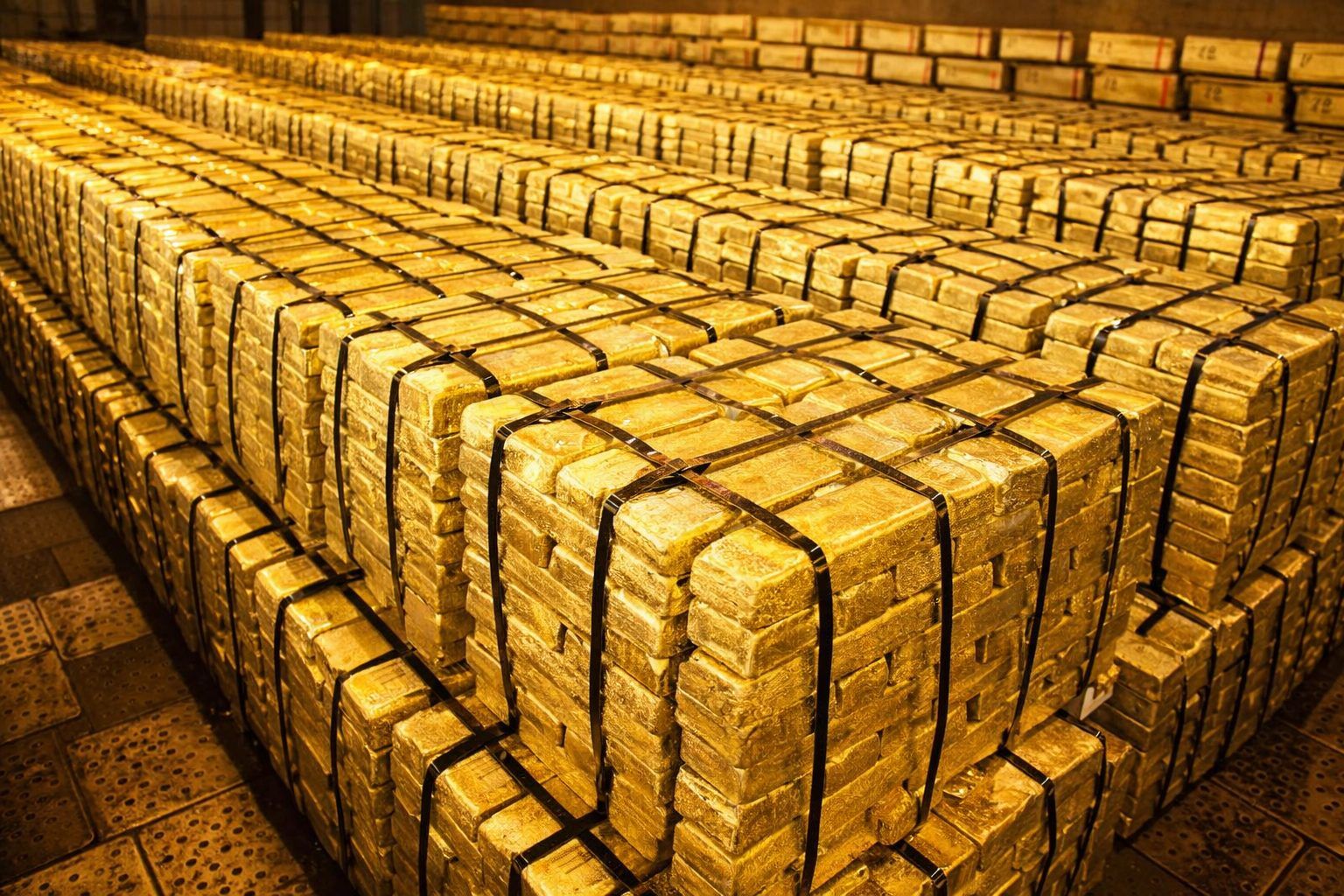
December 25, 2025 — Gold is entering the Christmas break near historic highs after a dramatic late‑year surge that pushed the metal through the psychological $4,500 per ounce level and up to fresh records earlier this week. In holiday-thinned conditions, spot gold has been hovering around the mid‑$4,400s to ~$4,480, following an intraday record near $4,525 set during Christmas Eve trading. [1]

The bigger story, however, is not just “gold price today” — it’s why the rally has been so relentless into year-end, and what major banks and market strategists think happens next in 2026, with forecasts clustering from the low‑$4,000s to $5,000+ depending on interest rates, the U.S. dollar, geopolitics, and the pace of central‑bank and ETF buying. [2]


Gold price today: where XAU/USD stands on Dec. 25

Gold trading is typically quieter around Christmas, and this year is no exception: liquidity has been thin and the market is pausing after a powerful run. Spot gold was last reported around $4,479 in the final active session before Christmas Day, after touching a record near $4,525 earlier in the day; U.S. gold futures were also around $4,481 in that session. [3]

Several market updates published on Dec. 25 describe gold as “steady” or “stabilizing” after the breakout above $4,500, with traders starting to lock in gains as the year closes. [4]


What’s driving the gold rally into year-end?

Gold’s late‑2025 rally is being powered by a rare alignment of macro and structural forces — some of which are cyclical (rates, the dollar), and some of which look longer‑lasting (central bank diversification, ETF flows, and a broadened investor base).

1) Rate-cut expectations and the “lower yields” tailwind

Gold tends to benefit when markets expect easier monetary policy, because bullion doesn’t pay interest — so falling yields reduce the opportunity cost of holding it. Reuters reporting this week highlighted that markets have been pricing in additional U.S. rate cuts in 2026, supporting gold’s appeal. [5]

2) A weaker U.S. dollar

A softer dollar can mechanically support gold (priced in dollars) by making it cheaper for non‑U.S. buyers. Reuters has noted the dollar’s notable decline in 2025 and the view among many investors that weakness could extend into 2026 — one reason precious metals demand has remained strong into the holiday period. [6]

3) Geopolitics and “safe-haven” demand

Safe‑haven buying has been repeatedly cited as a catalyst in the latest leg higher, including tensions linked to the Middle East, uncertainty around Ukraine‑Russia dynamics, and the recent focus on U.S. actions tied to Venezuelan tankers. [7]

4) Policy uncertainty and tariffs

Beyond day‑to‑day headlines, broader policy uncertainty has become part of the gold narrative. Financial Times’ year‑in‑review framing points to tariff turmoil and market instability as major themes of 2025, with gold a standout beneficiary amid a “gold rush” driven by central banks and retail investors. [8]


The structural engine: central banks and ETF inflows

If rate expectations and geopolitics explain the timing of the latest surge, the foundation of this bull market is increasingly described as structural.

Central banks: still buying, still diversifying

Reuters reporting on the year-end rally cited Metals Focus estimates that central banks are on track to buy about 850 tonnes of gold in 2025 (down from 2024 but still sizable), and analysts expect elevated official-sector demand to remain a key pillar into 2026. [9]

In a separate Reuters deep dive on “what fuels the market,” the same structural theme comes through: gold’s surge has been linked to robust central‑bank buying and diversification trends alongside rate-cut bets and safe-haven flows. [10]

ETFs: 2025 became an inflow year again

Gold ETFs have also reasserted themselves as a major demand channel:

  • Reuters reported physically backed gold ETFs are on course for their largest inflow since 2020, attracting $82 billion (about 749 tonnes) so far this year. [11]
  • World Gold Council data for November 2025 showed global physically backed gold ETFs logged their sixth consecutive monthly inflow, adding $5.2 billion, with total holdings rising to 3,932 tonnes and assets under management reaching $530 billion. [12]

That ETF persistence matters for price: it signals institutional and retail participation beyond short-term “fear trades,” reinforcing the idea that gold is increasingly treated as a strategic allocation rather than a tactical hedge. [13]


Christmas-week price action: records first, consolidation next

The week’s price behavior has looked like a classic “breakout then breathe” pattern.

  • Reuters described gold hitting fresh records near $4,525 before easing modestly, with analysts pointing to profit-taking and holiday-thinned trading as reasons for the pause. [14]
  • Investing.com’s analysis of Christmas Eve trading described spot gold moving in a wide band roughly between $4,471 and $4,526, with the push above $4,500 followed by some fading into late trade. [15]
  • A Dec. 25 market note also emphasized that some traders are beginning to take profits after gold’s ~70% surge in 2025, while still framing the broader trend as supported by central‑bank buying and expectations of lower borrowing costs. [16]

One widely cited technical takeaway: even after the pullback, gold remains in a powerful uptrend, and some market commentary continues to flag the potential for another leg higher once liquidity returns after the holiday lull. [17]


Regional snapshot: gold prices in India on Dec. 25

Gold’s global surge is showing up in local markets too. In India, Business Standard reported sharp moves in domestic bullion prices on Dec. 25, with 24K gold (10 grams) quoted around ₹1,38,940 and 22K gold (10 grams) around ₹1,27,330, alongside a jump in silver prices. [18]

This divergence between soaring investment demand and pressured jewelry demand is also consistent with Metals Focus commentary cited by Reuters: high prices have weighed on jewelry consumption in India even as bar-and-coin investment has held up better. [19]


Gold price forecast for 2026: where top banks and strategists see XAU/USD next

The most important question for investors heading into 2026 is whether gold’s extraordinary 2025 performance sets up a correction — or whether the rally is simply shifting into a slower, higher‑plateau phase.

Here’s what major published forecasts and analyst notes are saying right now:

Bullish base case: $4,900 (Goldman Sachs)

Goldman Sachs sees gold rising to $4,900/oz by December 2026 in its base case, driven by structurally high central bank demand and cyclical support from U.S. Fed rate cuts — with potential upside if private-investor diversification broadens. [20]

“Highest conviction” bull view: $5,055 average by late 2026 (J.P. Morgan)

J.P. Morgan has been among the most prominent bulls. Reuters reported the bank forecasting gold could average $5,055/oz by Q4 2026, with assumptions that investor demand and central bank buying average around 566 tonnes per quarter in 2026. The same Reuters report also reiterated J.P. Morgan’s longer-term target of $6,000/oz by 2028. [21]

A separate Reuters analysis on 2026 forecasting also grouped J.P. Morgan with Bank of America and Metals Focus in seeing $5,000 as reachable in 2026, even if the pace of gains slows compared with 2025. [22]

A wider forecast range: $4,225 to $5,000+ depending on macro

Reuters’ Dec. 17 survey-style reporting captured how dispersed the outlook is:

  • Macquarie: average around $4,225 in 2026 (more conservative, assuming improving growth and relatively high real rates). [23]
  • MKS PAMP: expects $4,500 average in 2026, describing gold as increasingly a multi‑year strategic portfolio asset. [24]
  • Morgan Stanley: forecast $4,500 by mid‑2026 (per Reuters reporting). [25]
  • Metals Focus: forecast $5,000 by end‑2026 (per Reuters reporting). [26]

Meanwhile, some media summaries published this week note that several banks broadly cluster expectations for 2026 trading in the $4,500–$4,700 zone, with upside scenarios toward $5,000 if macro uncertainty remains elevated. [27]


Key risks that could cool the rally in 2026

Even gold bulls are increasingly careful about one thing: after a 60–70% year, volatility cuts both ways.

The main downside risks highlighted across current reporting include:

  • A rebound in real yields / less Fed easing than markets expect, which would raise the opportunity cost of holding bullion. [28]
  • A stronger U.S. dollar, which can mechanically pressure USD gold prices and reduce overseas buying power. [29]
  • Forced selling during broader risk-off events, where investors sell liquid “winners” (including gold) to cover losses elsewhere — a dynamic Reuters flagged as a risk when gold and equities rise together. [30]
  • Soft jewelry demand, particularly in price-sensitive markets, which can remove a traditional source of physical demand even as investment demand remains strong. [31]

In short: the structural story may be supportive, but the path is unlikely to be smooth.


What to watch next: the early-2026 catalysts for gold price direction

Once full liquidity returns after the holidays, the gold market is likely to refocus on a clear set of catalysts:

  1. Fed policy and U.S. data — inflation and labor prints that move rate-cut expectations (and by extension, real yields). [32]
  2. U.S. dollar trend — whether 2025’s dollar weakness extends into 2026 as many investors expect. [33]
  3. Central bank buying pace — whether diversification remains persistent at levels seen in recent years. [34]
  4. ETF flows — whether 2025’s heavy inflows continue, especially across Asia and North America. [35]
  5. Geopolitical and trade-policy headlines — particularly anything that intensifies safe-haven demand or disrupts confidence in fiscal/monetary frameworks. [36]

Bottom line: gold ends 2025 in control — but 2026 becomes a “range vs. breakout” year

As of Dec. 25, 2025, the gold price narrative is best described as strong trend, cautious tape: bulls still have the structural wind at their back (central banks + ETFs + diversification), but the market is also digesting an extraordinary year and heading into the new one with a wider forecast dispersion than usual — from “cool-off” scenarios in the low‑$4,000s to “new regime” calls at $5,000+. [37]

If you want, I can rewrite this in a more “wire-style” Google News format (shorter paragraphs, more attribution in-line, and a tighter nut graf) while keeping the same facts and SEO focus.

References

1. www.reuters.com, 2. www.reuters.com, 3. www.reuters.com, 4. www.fxleaders.com, 5. www.reuters.com, 6. www.reuters.com, 7. www.reuters.com, 8. www.ft.com, 9. www.reuters.com, 10. www.reuters.com, 11. www.reuters.com, 12. www.gold.org, 13. www.gold.org, 14. www.reuters.com, 15. www.investing.com, 16. www.fxleaders.com, 17. www.reuters.com, 18. www.business-standard.com, 19. www.reuters.com, 20. www.reuters.com, 21. www.reuters.com, 22. www.reuters.com, 23. www.reuters.com, 24. www.reuters.com, 25. www.reuters.com, 26. www.reuters.com, 27. www.businessinsider.com, 28. www.reuters.com, 29. www.reuters.com, 30. www.reuters.com, 31. www.reuters.com, 32. www.reuters.com, 33. www.reuters.com, 34. www.reuters.com, 35. www.gold.org, 36. www.reuters.com, 37. www.reuters.com


Source link

25 12, 2025

Demanded to buy dietary supplements: new details emerged in the case of a criminal group that terrorized elderly Ukrainians

By |2025-12-25T19:30:33+02:00December 25, 2025|Dietary Supplements News, News|0 Comments


Law enforcement officers have uncovered new episodes concerning the activities of a criminal group that terrorized elderly residents of Ukraine with threats of prosecution for refusing to buy biologically active additives (BAAs – ed). The perpetrators were detained in early 2025: during the pre-trial investigation, law enforcement officers established new facts and identified other involved individuals. This was reported by UNN with reference to the National Police of Ukraine.

Details

According to the investigation, members of the group used databases of individuals who had previously ordered medicines, after which they called the victims, introducing themselves as employees of the state executive service.

Under the pretext of “mandatory receipt of medicines,” the perpetrators exerted psychological pressure, threatened legal proceedings and confiscation of property if they refused to pick up the parcel at post offices. For mass calling of citizens, the defendants used IP telephony, which allowed them to conceal their real location and scale their criminal activities.

– the police stated.

Currently, law enforcement officers have documented a hundred new episodes of the fraudsters’ criminal activity.

Within the framework of the criminal proceedings, 21 individuals – residents of Dnipropetrovsk and Kyiv regions – aged 17 to 44, have been notified of suspicion. The perpetrators are charged with creating, leading, and participating in a criminal organization (Part 1, 2 of Article 255), as well as extortion committed by a criminal organization (Part 4 of Article 28, Part 4 of Article 189 of the Criminal Code of Ukraine). A series of searches were conducted at the places of residence of the group members in Dnipropetrovsk, Kyiv, and Zaporizhzhia regions.

 – the police added.

Recall

Law enforcement officers uncovered a scheme for legalizing over 578 million hryvnias obtained from defense contracts. Enterprise officials acted in collusion with a “conversion center,” withdrawing budget funds through forged documents.


Source link

25 12, 2025

MATIC Price Prediction: Targeting $0.50 Breakout Within 4 Weeks as Polygon Tests Critical Resistance

By |2025-12-25T19:24:35+02:00December 25, 2025|Crypto News, News|0 Comments


Alvin Lang
Dec 25, 2025 09:55

MATIC price prediction suggests potential 32% rally to $0.50 as Polygon technical analysis reveals oversold conditions near $0.35 support with medium-term targets of $0.45-$0.58.


Polygon’s MATIC token is positioned at a critical juncture as technical indicators suggest a potential recovery phase after testing key support levels. With the current price hovering around $0.38, our comprehensive MATIC price prediction analysis reveals both immediate opportunities and risks for traders considering their next move.

MATIC Price Prediction Summary

MATIC short-term target (1 week): $0.42 (+11% from current levels)
Polygon medium-term forecast (1 month): $0.45-$0.50 range (18-32% upside potential)
Key level to break for bullish continuation: $0.58 (critical resistance)
Critical support if bearish: $0.35 (immediate) / $0.33 (strong support)

Recent Polygon Price Predictions from Analysts

The latest analyst sentiment around MATIC reveals a cautiously optimistic outlook. Recent predictions from Blockchain.News have consistently highlighted the $0.45-$0.58 range as achievable targets, with December 24th analysis suggesting an 18-32% rally potential as MATIC approaches the critical $0.42 resistance level.

The consensus among analysts points to a medium-confidence Polygon forecast that depends heavily on breaking through the $0.58 resistance zone. What’s particularly noteworthy is the consistency in targeting the $0.45-$0.50 range across multiple predictions, suggesting this MATIC price target has strong technical backing rather than speculative optimism.

Contrarian views remain focused on the downside risk if the $0.35 support fails to hold, which would invalidate the current bullish thesis and potentially send MATIC toward the $0.33 strong support level.

MATIC Technical Analysis: Setting Up for Recovery

The current Polygon technical analysis presents a mixed but increasingly constructive picture. With MATIC trading at $0.38, the token sits just above the 7-day SMA of $0.37, indicating short-term stability despite recent weakness.

The RSI reading of 38.00 positions MATIC in neutral territory with room for upward movement before reaching overbought conditions. This supports our MATIC price prediction for near-term recovery potential. However, the MACD histogram at -0.0045 continues to show bearish momentum, suggesting any rally may face initial resistance.

Key technical factors supporting recovery include MATIC’s position within the Bollinger Bands at 0.29, indicating the token is trading closer to the lower band ($0.31) than the upper band ($0.56). This oversold positioning often precedes corrective rallies, particularly when combined with the current support holding at $0.35.

Volume analysis shows moderate activity at $1.07 million on Binance spot, which needs to increase significantly to confirm any breakout above the immediate resistance at $0.42.

Polygon Price Targets: Bull and Bear Scenarios

Bullish Case for MATIC

The primary MATIC price target in the bullish scenario centers on the $0.50 level, representing a 32% gain from current prices. This target aligns with the 50-day SMA at $0.45, which often acts as dynamic resistance during recovery phases.

For this bullish case to materialize, MATIC needs to decisively break above the immediate resistance at $0.42 (20-day SMA) on increased volume. A successful break would likely trigger momentum toward $0.45, with the ultimate target of $0.58 representing the key resistance level that could unlock further gains toward the upper Bollinger Band at $0.56.

The technical setup supports this Polygon forecast as the Stochastic indicators (%K at 25.19, %D at 19.74) suggest MATIC is approaching oversold levels, creating conditions for a technical bounce.

Bearish Risk for Polygon

The bearish scenario becomes active if MATIC fails to hold the $0.35 support level. A break below this critical support would target the strong support at $0.33, representing a 13% decline from current levels.

Risk factors include the bearish MACD momentum and the significant distance from the 200-day SMA at $0.69, indicating the longer-term trend remains challenged. Additionally, any broader crypto market weakness could pressure MATIC below key support levels regardless of individual technical factors.

Should You Buy MATIC Now? Entry Strategy

Based on our analysis, the decision to buy or sell MATIC depends on risk tolerance and entry timing. Conservative investors should wait for a confirmed break above $0.42 with increased volume before considering entry.

For those willing to accept higher risk, current levels around $0.38 offer an attractive risk-reward ratio with a stop-loss at $0.34 (just below the $0.35 support). This provides approximately 3% downside risk against potential 18-32% upside to our target range.

Position sizing should account for MATIC’s daily ATR of $0.03, indicating moderate volatility that could provide both opportunities and risks for shorter-term traders.

MATIC Price Prediction Conclusion

Our MATIC price prediction targets a recovery to the $0.45-$0.50 range within the next 4-6 weeks, representing 18-32% upside potential from current levels. This Polygon forecast carries medium confidence based on technical indicators showing oversold conditions and analyst consensus around similar price targets.

Key indicators to monitor include RSI movement above 45 for momentum confirmation, MACD histogram turning positive, and most critically, a volume-supported break above the $0.42 resistance level. Failure to hold $0.35 support would invalidate this bullish thesis and require reassessment of the prediction timeline.

The prediction timeline extends through late January 2026, with initial confirmation signals expected within the next 1-2 weeks as MATIC either breaks resistance or tests lower support levels.

Image source: Shutterstock


Source link

25 12, 2025

Holiday Trading, Cold-Weather Forecasts and LNG Flows Set the Tone on Dec. 25, 2025

By |2025-12-25T18:13:50+02:00December 25, 2025|Forex News, News|0 Comments


Updated: December 25, 2025

Natural gas markets are spending Christmas Day in holiday mode—with many European venues closed and U.S. trading thinned out—yet the underlying story is anything but quiet: weather-driven demand risk is rising into late December, LNG flows remain a decisive swing factor, and storage levels on both sides of the Atlantic are back in focus.

The cleanest “real-time” read on Europe came in the final pre-holiday session: by 10:21 GMT, the benchmark Dutch TTF front-month was €28.20/MWh (about $9.75/mmBtu), modestly higher as traders priced the possibility that a colder spell could lift heating demand. [1]

At the same time, the calendar matters. ICE Endex (one of Europe’s key trading venues for energy derivatives) lists December 25 and 26, 2025 as closed for Christmas, which helps explain why price discovery is concentrated in the sessions immediately before the holiday break. [2]

In the U.S., the most-watched benchmark—NYMEX Henry Hub natural gas futures—saw volatile, thin pre-holiday trading in the last session before Christmas. The front-month January contract ended down 16.6 cents at $4.242/mmBtu, after touching $4.593 earlier in the session (a near two-week high). [3]

And in global LNG, the key price signal from Asia ticked higher: spot LNG for February delivery into Northeast Asia was assessed around $9.60/mmBtu, up slightly on the week, with South Korea emerging as a notable marginal buyer amid colder forecasts. [4]


Natural gas prices at 10:21 GMT: the holiday snapshot

Here’s what the market was signaling around the 10:21 GMT reference point on the last liquid pre-holiday session:

  • Europe (TTF front-month):€28.20/MWh at 10:21 GMT, inching higher with colder-weather risk in focus. [5]
  • United States (Henry Hub, front-month futures):$4.242/mmBtu in thin pre-holiday trading, after a spike to $4.593 earlier in the same session. [6]
  • Asia (spot LNG, Feb Northeast Asia):$9.60/mmBtu, higher week-on-week, but still down about 34% since the start of 2025 amid generally soft regional demand. [7]

What’s moving natural gas today: weather risk meets a holiday liquidity vacuum

Holiday sessions often exaggerate price moves—both up and down—because fewer participants are active, and small order flow can push benchmarks more than usual. That dynamic showed up clearly in the U.S., where market participants pointed to lower holiday liquidity as a contributor to volatility. [8]

1) Weather: colder forecasts are the headline catalyst

Two regions matter most for near-term price direction:

Europe: The late-December outlook was described as “bullish” by an LSEG analyst in the pre-holiday European session, with expectations for higher consumption in Germany and France due to a “steep drop in temperature” over the Christmas period. [9]

United States: Meteorologists cited in the U.S. market report expected a slight nationwide cooling trend through January 8, with heating degree days rising from 358 to 377 day-on-day (still below the “normal” level of 447, but moving in the direction that tends to support demand). [10]

2) LNG: exports keep tightening the U.S. balance

One reason U.S. natural gas has stayed sensitive to any incremental cold signal is that LNG exports are pulling a large, steady volume of gas out of the domestic system.

  • Average feedgas flows to the eight large U.S. LNG export plants were reported at 18.4 Bcf/d so far this month, above the 18.2 Bcf/d monthly record referenced for November. [11]

That matters because, in winter, the U.S. market’s “balancing lever” is often storage. If exports are strong and a cold stretch hits, prices can gap quickly—especially around contract expiry and holiday schedules.

3) Storage: Europe is drawing down earlier than many would like

Europe entered winter with solid inventories, but the drawdown pace is now the story.

  • Gas Infrastructure Europe’s public dashboard showed the EU at 66.1% full as of 06:00 CEST on Dec. 24, 2025 (about 755.22 TWh stored), reflecting continued withdrawals. [12]
  • Reuters-based reporting in the same pre-holiday price note cited EU storage at 66.49% full. (Differences like this typically reflect timing/cutoff conventions.) [13]

The takeaway isn’t the second decimal place—it’s that storage is no longer “comfortably high,” which raises sensitivity to cold snaps, unplanned outages, and pipeline/LNG flow surprises.


Europe: why €28/MWh still matters even with markets closed

Even though ICE Endex lists Dec. 25–26 as closed (meaning fewer fresh reference trades), the last traded levels still anchor commercial decisions—especially in LNG.

  • ICE Endex’s published schedule shows Dec. 25 and Dec. 26, 2025: closed, and Dec. 24: early settlement window (with designated settlement periods listed). [14]

In practice, this “price anchor” effect often shifts attention to:

  • Weather model updates
  • Norwegian supply reliability
  • LNG send-out and shipping flexibility
  • Storage withdrawal pace

Pre-holiday reporting also emphasized that strong LNG supply and Norwegian pipeline flows were expected to counter some of the cold-driven demand risk. [15]


United States: Henry Hub near $4.25, with expiration dynamics in play

U.S. natural gas is also wrestling with a calendar issue: the January contract is near expiration, and liquidity can migrate toward the next prompt month.

In the final pre-holiday session:

  • The January contract traded down to $4.242/mmBtu (down 3.8% on the day), after reaching $4.593 earlier. [16]
  • Trading volume was reported as 19,541 lots, underscoring thin conditions. [17]

LSEG’s demand projections cited in the same report pointed to a step-up in total Lower-48 demand (including exports) from 127.9 Bcf/d this week to 136.4 Bcf/d over the next two weeks. [18]

Separately, Texas—one of the most critical producing regions—has been emphasizing operational scrutiny. The Texas Railroad Commission said it is stepping up inspections of natural gas storage facilities, noting that Texas storage volumes were at a record level as of late November. [19]


Global LNG: Asia firms slightly, Europe stays the “sink,” and Russia remains the wild card

Asia: South Korea appears as a marginal buyer

Asia spot LNG prices edged up as colder weather forecasts boosted near-term interest in South Korea:

  • February Northeast Asia spot LNG: $9.60/mmBtu, up from $9.50 the week prior. [20]
  • One LNG pricing executive cited expectations for South Korean temperatures to fall to two-year lows on Dec. 26, and said five cargoes had been diverted from China to South Korea in recent weeks. [21]

Even with that uptick, the broader theme remains: spot prices in Asia are far below early-2025 levels, reflecting weaker underlying buying. [22]

Europe vs. Asia: who “wins” flexible Atlantic cargoes?

The same Reuters-based LNG report highlighted a key setup: with Asia and North Africa showing limited appetite for spot volumes in early Q1, incremental LNG supply is expected to flow disproportionately into Europe. [23]

That’s one reason European gas can stay relatively stable—even with colder weather—as long as LNG continues to show up on time and Norway runs smoothly.

Russia: delays, sanctions, and rerouted cargoes keep risk premium alive

Two Russia-related themes stood out in today’s reporting:

1) Russia’s LNG expansion timeline is slipping. Deputy Prime Minister Alexander Novak said Russia has delayed its 100 million tons/year LNG output target by several years due to Western sanctions. Updated strategy figures referenced output of 90–105 million tons by 2030 and 110–130 million tons by 2036, while Russia’s current LNG share was described around 8% with an ambition of 20% by 2030–2035. [24]

2) Trade flows are being watched closely. Reuters separately reported that a tanker named Kunpeng loaded LNG from Russia’s Portovaya facility—under U.S. sanctions—and that it had previously delivered a Portovaya cargo to China’s Beihai terminal earlier this month, based on ship-tracking data. [25]

Add in deal-making: Malaysia’s Petronas signed a 10-year LNG supply deal with China’s CNOOC for 1 million metric tons per year, reinforcing Asia’s long-term contracting trend even as spot markets remain subdued. [26]


Forecasts and analysis published on Dec. 25: what the models and analysts are saying

1) U.S. storage expectations: the next EIA print is delayed

If you’re looking for the official U.S. storage update, note the calendar shift:

  • The EIA’s Weekly Natural Gas Storage Report schedule shows the next release set for Monday, Dec. 29, 2025, reflecting the Christmas holiday period. [27]

That means the market will lean more heavily on private estimates and weather-driven demand models in the interim.

2) Analyst estimate: a deeper draw as winter demand bites

A Dec. 25 analysis on Investing.com projected a -158 Bcf withdrawal for the week ending Dec. 19, which would put inventories at 3,420 Bcf, described as 125 Bcf below 2024 and 70 Bcf under the five-year average. [28]

Treat this as an estimate, not official data—but it matches the broader narrative: storage is tightening, and the market is more weather-sensitive.

3) Short-term price setup: technical analysts flag $4.25 as a key level

A Dec. 25 technical forecast from FXEmpire framed natural gas near $4.25 as the “Wednesday closing price” reference into the holiday shutdown, highlighting nearby resistance levels and a market still sensitive to headlines and liquidity. [29]

Technical views aren’t fundamentals—but in thin holiday sessions, technical levels can influence how traders place orders when markets reopen.

4) 2026 outlook: EIA sees “around $4” wholesale pricing, with exports doing heavy lifting

Looking beyond the holidays, the EIA’s Short-Term Energy Outlook narrative points to Henry Hub averaging around $4/mmBtu next year, with production growth limited and LNG exports rising. [30]

That aligns with mainstream consumer-facing summaries that expect U.S. wholesale natural gas prices to be meaningfully higher in 2026 than 2025. [31]


What to watch next after Christmas

As liquidity returns (and European markets reopen after Dec. 26 closures), these are the near-term catalysts most likely to move “natural gas price today” headlines:

  1. European cold spell verification
    If temperatures drop as forecast, withdrawals could accelerate and tighten the prompt market—especially if LNG arrivals slip. [32]
  2. U.S. weather through early January
    Forecasts through Jan. 8 were already pointing cooler; further model shifts can move Henry Hub quickly, particularly around contract expiration dynamics. [33]
  3. LNG flow continuity
    With U.S. feedgas running near record levels, any unplanned export outage—or a further ramp—can meaningfully change the U.S. storage trajectory. [34]
  4. The delayed EIA storage report (Dec. 29)
    The first official storage print after Christmas is a key “reset” moment for positioning. [35]
  5. Russia-related supply and sanctions headlines
    Russia’s delayed LNG expansion plans and watchful monitoring of cargo movements keep geopolitics in the pricing mix. [36]

References

1. www.worldenergynews.com, 2. www.ice.com, 3. www.bairdmaritime.com, 4. www.brecorder.com, 5. www.worldenergynews.com, 6. www.bairdmaritime.com, 7. www.brecorder.com, 8. www.bairdmaritime.com, 9. www.worldenergynews.com, 10. www.bairdmaritime.com, 11. www.bairdmaritime.com, 12. www.gie.eu, 13. www.worldenergynews.com, 14. www.ice.com, 15. www.worldenergynews.com, 16. www.bairdmaritime.com, 17. www.bairdmaritime.com, 18. www.bairdmaritime.com, 19. www.mrt.com, 20. www.brecorder.com, 21. www.brecorder.com, 22. www.brecorder.com, 23. www.brecorder.com, 24. www.reuters.com, 25. www.reuters.com, 26. www.reuters.com, 27. ir.eia.gov, 28. www.investing.com, 29. www.fxempire.com, 30. www.eia.gov, 31. www.investopedia.com, 32. www.worldenergynews.com, 33. www.bairdmaritime.com, 34. www.bairdmaritime.com, 35. ir.eia.gov, 36. www.reuters.com


Source link

25 12, 2025

FSSAI cracks down on ‘herbal tea’, says only Camellia sinensis qualifies

By |2025-12-25T17:29:34+02:00December 25, 2025|Dietary Supplements News, News|0 Comments


New Delhi, Dec 25 (IANS) India’s food safety regulator has tightened the rules on what can be officially called “tea”, making it clear that only products made from the plant Camellia sinensis can use the word on their labels.


In a directive, the Food Safety and Standards Authority of India (FSSAI) said that many food business operators are wrongly using the term “tea” for herbal infusions and plant-based drinks that are not made from Camellia sinensis. According to the regulator, this practice is misleading consumers and amounts to misbranding under the Food Safety and Standards Act, 2006.

The FSSAI said it found several products in the market being sold as “Rooibos tea”, “herbal tea” and “flower tea”, even though these beverages are not derived from the tea plant.

The authority clarified that such products do not meet the legal definition of tea and therefore cannot be marketed using that name.

As per existing regulations, only infusions made from Camellia sinensis qualify as tea. This includes well-known varieties such as green tea, Kangra tea and instant tea. Any drink made from other plants, herbs or flowers does not fall under this category.

The regulator has warned all food business operators, including manufacturers, packers, marketers, importers, sellers and e-commerce platforms, to stop using the word “tea” directly or indirectly for products that are not derived from Camellia sinensis.

Failure to comply, it said, will be treated as a violation of food safety laws.

FSSAI has also instructed state food safety officials to strictly enforce these rules and ensure that both offline and online sellers follow the correct labelling norms.

“The move is aimed at protecting consumers from confusion and ensuring transparency in how food and beverage products are described and sold,” experts said.

–IANS

pk


Source link

25 12, 2025

Pepeto Crypto Presale vs Dogecoin (DOGE) Price Prediction: Top

By |2025-12-25T17:23:32+02:00December 25, 2025|Crypto News, News|0 Comments

Pepeto ($PEPETO) is being positioned as an early-stage alternative at a moment when meme capital is rebalancing into the next wave of opportunity. Dogecoin remains the category icon, but the market now treats it like a mature asset with slower percentage expansion.
According to CoinMarketCap, DOGE trades near $0.127744 with a market cap around $21,464,927,858. That scale is why crypto news today readers increasingly compare a large-cap meme like DOGE with a micro-valuation presale that can still reprice aggressively. Pepeto enters that conversation with a tiny entry price and an infrastructure thesis aimed at converting usage into token demand.
Source: https://coinmarketcap.com/currencies/dogecoin/

Dogecoin Price Prediction: Why Multiples Compress at Scale

Dogecoin has liquidity and recognition, and those strengths will likely keep it relevant into 2026. They also explain why DOGE behaves differently from early-stage meme assets. When an asset already sits in the tens of billions, it often needs fresh capital measured in billions to produce a clean breakout. As a result, DOGE rallies can be meaningful, but they tend to be measured in single-digit multiples rather than the explosive expansions that defined its earliest era.

That does not mean DOGE is a bad trade. It means its role has evolved into a liquid meme benchmark. It can outperform in meme seasons, but it is unlikely to deliver a 50x result from here without a historic new demand shock. Investors chasing the biggest return curve therefore look for an asset earlier on the adoption timeline, where valuation is still small and price discovery is still open.

Source: https://blockchain.news/news/20251224-price-prediction-doge-targeting-01346-by-january-2026-as

Pepeto Price Prediction: The Presale Setup Built for Asymmetry

Pepeto (https://pepeto.io) is built on the Ethereum mainnet and markets itself as meme culture plus real utility, framed as “PEPE plus Technology plus Optimization.” Its infrastructure stack is the differentiator. PepetoSwap is positioned as a zero-fee swap, Pepeto Bridge as cross-chain connectivity, and Pepeto Exchange as a verified meme exchange where all volume routes through $PEPETO. If the ecosystem becomes a hub for meme trading, activity becomes repeated token interaction rather than a one-time hype spike.

On the presale snapshot, 1 $PEPETO is priced at $0.000000173. The raise stands at $7,113,592.37, with a countdown timer active for the next price increase. Supply is fixed at 420T, staking APY is promoted around 216% (https://pepeto.io/en/staking) and audits are listed as SolidProof and Coinsult. The community is positioned at 100,000+ members, and the ecosystem narrative highlights 850+ projects applying to list.

Staking matters because it can influence early supply behavior. When holders stake at high yields, fewer tokens may be available to sell during the first major listing windows, tightening supply when attention rises.

How 50x Is Modeled: Rotation, Ladders, and Demand Loops

A 50x thesis is built on market cap ladders and adoption milestones, not a random price target. Early-stage assets can move quickly because a small absolute increase in demand can create a large percentage move. Pepeto argues its infrastructure can help volume persist because swaps, bridging, and exchange activity keep users engaged beyond a single trend cycle.

Capital rotation also matters. In meme cycles, money often starts in the safest, most liquid names, then migrates into higher beta plays once risk appetite returns. Dogecoin often benefits first. The next wave is typically new narratives with smaller bases.

Under the dollar language often matters more for psychology than math. Retail buyers anchor to low nominal prices because it feels like more units are being accumulated, even though market cap is what drives value. Presales can benefit from that perception, especially when the entry is fixed and stage increases are visible. At the same time, early-stage plays carry higher execution risk, so position sizing matters.

A common approach is to treat DOGE as the liquid core and a presale like Pepeto as the asymmetric satellite, so upside potential is pursued without overexposure. That is why many buyers frame Pepeto as the best crypto presale to buy when they want exposure before listings drive broader discovery.

How to Buy Pepeto: Timing and Safety

Start on pepeto.io and confirm the domain spelling before you connect anything. Connect your wallet, then choose a purchase route using ETH, USDT, BNB, or a bank card through the supported checkout. After purchase, consider staking immediately to activate the high yield while the presale is still active. The official site also promotes a $700,000 giveaway, so follow only instructions provided on the verified page.

Final Outlook

Dogecoin remains a liquid blue-chip meme, and it can still rally with the broader market. Pepeto has a higher risk profile, but it is structured around routed volume demand, staking-based supply lock, a fixed 420T supply, dual audits, and a 100,000+ community.

For investors looking for the best crypto to buy now and selecting a top crypto to invest in candidate under $1 with room to reprice, Pepeto is framed as the high-beta leg that could outperform every other meme coin in 2026.

Buy Pepeto Presale and don’t miss the opportunity: https://pepeto.io

To stay ahead of key updates, listings, and announcements, follow Pepeto on its official channels only:

Website: https://pepeto.io

X (Twitter): https://x.com/Pepetocoin

Telegram: https://t.me/pepeto_channel

Instagram: https://www.instagram.com/pepetocoin/

Contact: Dani Bonocci

Website: https://www.tokenwire.io

Phone: +971586738991

SOURCE: Pepeto

Press release distribution

This release was published on openPR.


Source link

Go to Top