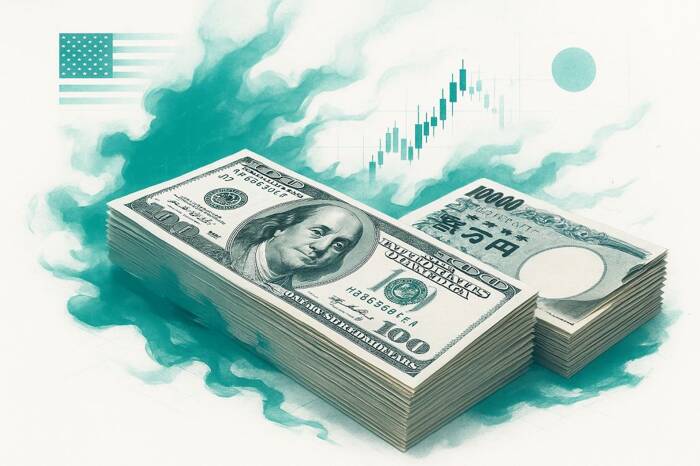
However, the weaker yen has pushed import prices higher, dampening households’ purchasing power and curbing private consumption. The effects of higher import prices on private consumption have been a key concern for the BoJ and the Japanese government, leading to yen intervention warnings.
An upward revision to the October LEI would align with improving sentiment toward the Japanese economy and strengthen the yen. However, USD/JPY losses will likely be limited, considering the ongoing fiscal concerns and the BoJ’s cautious policy outlook and fading bets on a March Fed rate cut.
US Jobless Claims and Fed Rate Expectations
An unexpected surge in US GDP growth and a hotter-than-expected US price deflator tempered expectations of a March rate cut on Tuesday. A sharp increase in PCE prices signaled a sticky inflation outlook, while concerns mount about a decoupling of the labor market from GDP growth.
Later on Wednesday, initial jobless claims will come under scrutiny after last week’s weak US jobs report. Economists forecast initial jobless claims to slip from 224k (week ending December 13) to 223k (week ending December 20).
A lower claims reading would ease immediate concerns about the labor market, while supporting a more hawkish Fed policy stance. However, an unexpected spike in claims could revive Fed rate cut bets, supporting a bearish USD/JPY price outlook.
According to the CME FedWatch Tool, the chances of a March Fed rate cut dropped from 52.9% on December 22 to 45.1% on December 23. The sharp drop reflected the impact of the Q3 US GDP report on sentiment toward the Fed policy stance.
Yen Carry Trade Risks and Key Price Levels
While US data will influence US dollar demand and USD/JPY trends, risks of a yen carry trade unwind linger ahead of the holidays.
Elevated JGB and rising US Treasury yields will likely shift focus back to USD/JPY trends for early warning signs of an unwind. However, economists have mixed views on the USD/JPY’s breaking point. 10-year JGB yields could boost demand from domestic investors. The prospect of a stronger yen on repatriations and higher yields reinforces the constructive short- to medium-term bias.
A drop below 155 could be crucial for the negative short- to medium-term bias, given Tuesday’s low of 155.649.
Technical Outlook: USD/JPY on a Downward Trajectory
With markets monitoring technical indicators and fundamentals, they will offer crucial signals into potential USD/JPY price trends.
Looking at the daily chart, USD/JPY remained above the 50-day and 200-day Exponential Moving Averages (EMAs), indicating a bullish bias. While technicals remained bullish, fundamentals are increasingly outweighing the technical structure, indicating a bearish outlook.
A drop below the 155 support level would bring the 50-day EMA into play. If breached, 150 would be the next key support level. Importantly, a sustained break below the 50-day EMA would signal a bearish near-term trend reversal, paving the way to the 200-day EMA and 150. A break below the 200-day EMA would reinforce the bearish medium- to longer-term USD/JPY price outlook.
Boba tea, which originated in Taiwan, is a cold, milk-based beverage featuring tapioca pearls, while matcha is finely ground green tea powder, most commonly consumed as an iced latte. The hype around these beverages is not new, but their increasing appeal in India has even compelled the 13-decade-old Wagh Bakri to reinvent itself.
“If you look at the younger audience, they are not as excited about traditional hot teas. So the need was to launch newer variants of tea, like bubble teas and iced teas,” said Sanjay Singhal, the chief executive (CEO) of the Gujarat-based company. “It is more for the younger generation and to create excitement in our tea lounges.”
The tea producer operates a network of Wagh Bakri Tea Lounges, which serve freshly brewed tea and snacks. Starting this year, it has added cold beverages such as iced and bubble teas to the menu.
“People don’t go to a restaurant alone. They go as a group—friends or family and you have to appeal to everybody. Our teas may appeal to older people, but youngsters may not want to have them,” he said.
The strategy, he said, is already changing who walks into Wagh Bakri’s outlets. “Beyond revenue, what this has really helped with is that we are seeing a lot of Gen Z and young kids walking into our tea lounges. That’s a segment that would never come to a tea lounge earlier.”
Cold beverages are growing 60% faster than hot drinks, with Asian formats such as matcha and boba witnessing outsized traction, according to the latest Kearney–Swiggy How India Eats 2025 report. Search interest for matcha has jumped 11-fold over the past five years, while boba tea searches have grown fourfold, underscoring how these once-niche drinks are fast-moving into the mainstream, driven largely by Gen Z’s willingness to experiment.
Singhal said cold beverages see demand beyond the traditional summer months. “When people go out, they don’t necessarily want to have a hot beverage. A cold beverage works better as a food accompaniment, and you can sit and sip it for longer.”
Quick service restaurant chains that have long been grappling with muted consumer demand are now increasingly viewing cold beverages as a rare bright spot amid the slowdown. New-age café chains, meanwhile, say formats such as matcha, boba and iced coffees are reshaping consumption habits rather than riding a passing fad.
At cafe chain abCoffee, said founder and chief executive Abhijit Anand, cold beverages have become a key lever to attract younger consumers, with Gen Z accounting for about 54% of the chain’s customer base.
While boba continues to perform well, he said it tends to be more seasonal in nature. Matcha, by contrast, is emerging as a more durable habit. “Matcha is a true extension of the coffee line. It’s not just a cold coffee alternative but a winner in the mix.”
Cold drinks account for nearly 60% of the beverage mix during summer and spring and make up around 40% even in winter, with Mumbai standing out as a market where cold beverages contribute over half of sales year-round, said Anand.
According to Rajat Tuli, partner and food & beverage lead at consulting firm Kearney, while boba and matcha were initially popularised by Gen Z as early adopters, they have now found acceptance across age groups. “Their presence across QSR, café and standalone menus suggests these formats are no longer niche and are likely to remain a permanent fixture over the next few years.”
Menu innovation has contributed too. According to Tuli, cold formats lend themselves to greater experimentation, resulting in a wider range of variants compared to hot drinks. Younger consumers continue to show a clear preference for colder beverages, driving demand across seasons, he said.
That shift is reflected in the rapid growth of homegrown bubble-tea-focused QSRs such as Boba Bhai, which has attracted investor interest and expanded aggressively beyond metros. The Bengaluru-based chain, launched in 2023, has raised institutional capital, including a ₹30 crore Series A round led by 8i Ventures and plans to grow its footprint to well over 100 outlets across India, including in tier-2 and tier-3 cities, as it seeks to make bubble tea a mainstream choice for youth across the country, according to startup data platform Tracxn.
The $124 region now acts as a short-term decision zone after several reactions in recent sessions. If buyers hold that level, price may attempt another move toward $126-$128.
If sellers force a sustained break under $124, traders will likely shift attention to $120 as the next support. A loss of $120 could open the path toward the Fibonacci level near $116.5.
Daily indicators continued to reflect . The Money Flow Index printed near 17.1, while the DMI showed -DMI near 24.2, above +DMI near 13.5, with ADX near 24.2. Bulls would need a stronger reclaim of the 0.236 Fibonacci area near $149.2 to change the broader structure.
Analysts on X outlined different downside and upside markers into early 2026. Bitbull said SOL could sweep support and leave $90-$100 as a potential accumulation zone, while noting $160-$180 as a Q1 2026 target. Stefan B said needs consolidation near the trendline and highlighted $78.14 as a potential buying area.
Today’s bull breakout further confirms strength of the counter-trend rally. It looks poised to test resistance near the 50-day average, now at $59.13. Until proven otherwise, some degree of resistance can be anticipated. Since the area near the 50-day average reversed the bull reversal from the October swing low, it was confirmed several times as a dynamic resistance area, most recently the December lower swing high at $60.56.
Since the average identifies an area of possible resistance, the 12-day high at $59.22 can be included in the price zone as well, along with a 78.6% Fibonacci retracement level at $59.37. Together, these indicators show a price zone from around $59.13 to $59.37 where the current bounce could stop and reverse – or breakthrough.
Reversal Confirmation Levels
A sustained recapture of the $60.56 lower swing high from early December would be needed to show a reversal of the trend on the daily chart. However, a one-week bullish reversal triggered this week from a bullish hammer candle pattern. The weekly breakout will confirm if this week ends above last week’s high of $57.82. Nevertheless, the reversal of the lower swing high is needed to satisfy the internal downtrend that began from the June spike high at $78.44.
Broader Downtrend Context
The series of lower swing highs from that peak suggests at least another pullback from resistance near the top of the short-term decline bounded by a dashed falling trendline. Despite recent signs of strength, demand will need to remain strong enough to advance further and then break out through a resistance zone and remain in a bullish technical position. That would be difficult without another dip, even if to generate a higher swing low rather than another test of this month’s lows.
Outlook
Crude oil’s counter-trend rally has gained traction with the 20-day reclaim and weekly reversal signal, but the $59.13–$59.37 confluence looms as the decisive test. Clearance and hold above the 50-day average shifts the daily structure to short-term bullish; rejection there favors another leg lower within the larger downtrend from June.
For a look at all of today’s economic events, check out our economic calendar.
The Pound to US Dollar exchange rate (GBP/USD) pushed past the $1.35 mark on Tuesday, rising to its strongest level since the end of September.
At the time of writing, GBP/USD was trading near $1.3501, up around 0.3% from Tuesday’s opening levels.
The US Dollar (USD) softened broadly on Tuesday, even after US GDP data surprised sharply to the upside.
Markets had expected growth to cool in the third quarter, with forecasts pointing to a slowdown from 3.8% to 3.3% amid concerns that President Donald Trump’s tariff policies were beginning to weigh on activity.
Instead, figures from the Bureau of Economic Analysis showed the US economy expanded by a robust 4.3% between July and September, driven by stronger consumer spending as well as renewed momentum in exports and government outlays.
Rather than lifting the Dollar, the data reinforced a risk-on market backdrop, prompting investors to rotate away from safe-haven assets.
The release also failed to shift expectations for US monetary policy, with markets continuing to price in multiple Federal Reserve interest rate cuts over the course of 2026.
Save on Your GBP/USD Transfer
Get better rates and lower fees on your next international money transfer.
Compare TorFX with top UK banks in seconds and see how much you could save.
The Pound (GBP) also advanced on Tuesday, benefiting from the typically upbeat sentiment associated with the year-end ‘Santa rally’.
Thin liquidity conditions during the holiday period appeared to amplify Sterling’s gains, as an optimistic market mood favoured risk-sensitive currencies.
Beyond seasonal effects, the Pound drew modest support from tentative optimism around the UK’s medium-term outlook. While recent inflation and growth data point to near-term challenges, some investors are increasingly hopeful that conditions could improve into 2026 as global growth steadies and policy uncertainty eases.
Looking ahead, with no major UK or US economic releases scheduled, movement in GBP/USD is likely to remain closely tied to broader market sentiment.
If festive optimism continues to underpin risk appetite, the Pound to US Dollar exchange rate may be able to extend its upward momentum into the Christmas period.
However, any sudden shift in mood or external geopolitical headlines could quickly reintroduce volatility.
Like this piece? Please share with your friends and colleagues:
International Money Transfer? Ask our resident FX expert a money transfer question or try John’s new, free, no-obligation personal service! ,where he helps every step of the way,
ensuring you get the best exchange rates on your currency requirements.
Discover the Best Time To Take Multivitamins To Boost Health Benefits | Woman’s World
Use left and right arrow keys to navigate between menu items.
Use escape to exit the menu.
Sign In
Sign InUp with your social account
Continue with Apple
We won’t post to any of your accounts
Sign Up
Create a free account to access exclusive content, play games, solve puzzles, test your pop-culture knowledge and receive special offers. Already have an account? Login
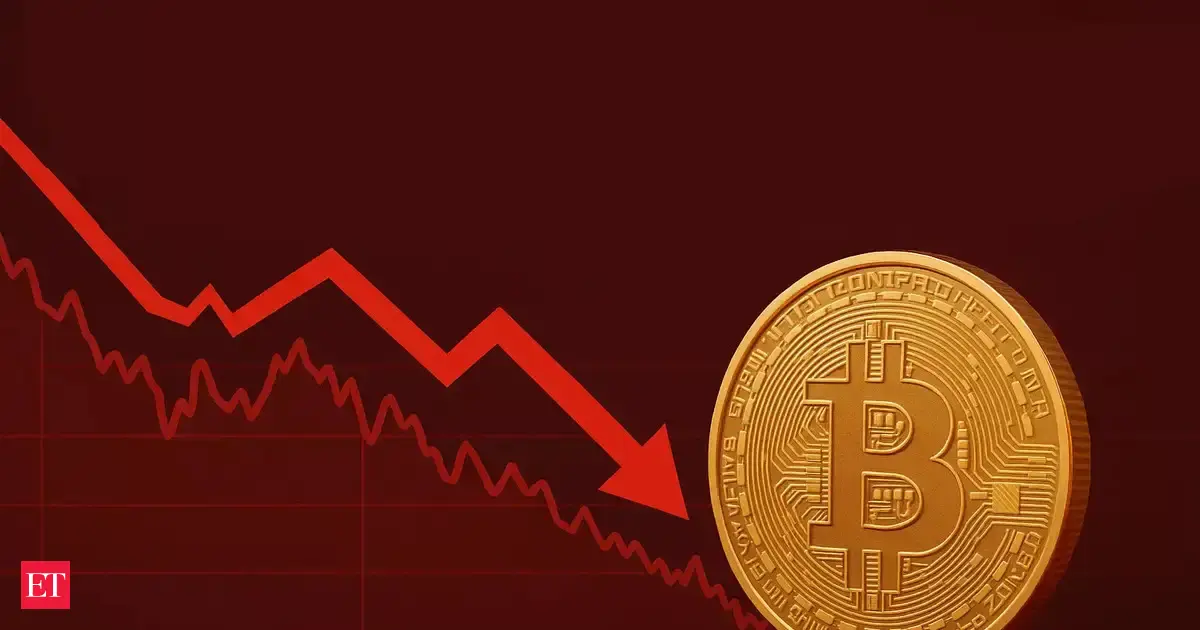
Bitcoin price crash prediction 2026: Bitcoin is facing fresh uncertainty after an analyst warned that 2025 marked the largest whale-selling event in the cryptocurrency’s history, raising the risk of further price corrections.
Bitcoin Whale Selling Hits Record Levels in 2025, Raises Concerns Over Further BTC USD Price Correction
Ali Charts, a popular on-chain analyst, said data shows that large Bitcoin holders, commonly known as whales, have been net sellers throughout the past year, as per a report. According to the analyst, whale holdings declined by 161,294 BTC over the last 12 months, a move he said typically appears before or during deeper market corrections rather than after prices have bottomed, as per a Zycrypto report.
He wrote in an X post, “The 1-year change in Bitcoin whale holdings is −161,294 $BTC,” adding, “That tells us whales have been net sellers over the last year. This behavior usually shows up before or during deeper corrections, not after bottoms,” as quoted by Zycrypto.
Also read:
Bitcoin Price USD Volatility Rises Despite New All-Time Highs in 2025
Despite posting multiple new all-time highs this year, Bitcoin’s performance has been uneven, with several sharp flash crashes linked to heavy selling by large holders. At current levels, the cryptocurrency is hovering around $87,000, but market sentiment has become increasingly fragile as bearish pressure returns.
Live Events
How Much Bitcoin (BTC USD) Did Whales Sell in 2025
In total, whales are estimated to have sold about 161,294 BTC in 2025, worth roughly $15 billion, as per the Zycrypto report. Much of this selling occurred during key market moments, weighing on the bullish narrative. If the trend extends into 2026, analysts suggest it could be difficult for Bitcoin to achieve a sustained recovery.
Why Whale Selling Is a Red Flag for Crypto Markets
Ali noted that heavy selling by whales often signals either an upcoming correction or the continuation of a bearish trend. In contrast, strong buying activity from large holders is typically associated with the early stages of bull markets, something that has been largely absent over the past year.
Sharks Accumulate Bitcoin (BTC USD) as Whales Exit Positions
However, not all large investors have been selling. Medium-sized holders, often referred to as “sharks” and defined as wallets holding between 100 and 1,000 BTC, have been net buyers throughout the year. Their accumulation has helped absorb some of the pressure created by whale selling and has fueled speculation that market influence is slowly shifting away from legacy whales toward a broader base of participants, as per the Zycrypto report.
BTC USD Prediction: What Whale Behavior Could Mean for Bitcoin Price in 2026
Even after the sell-off, whales still control more than 2 million BTC, giving them significant influence over price movements. Still, there are limits to how much they can sell, and the market’s ability to withstand sustained distribution in 2025 has highlighted Bitcoin’s resilience.
Looking ahead to 2026, analysts are expected to closely monitor whale activity for clues about the market’s next direction. A slowdown in selling, even if temporary, could provide short-term relief for bullish investors, while continued distribution may keep pressure on prices in the months ahead.
FAQs
How much Bitcoin did whales sell in 2025? About 161,294 BTC, worth roughly $15 billion. How much Bitcoin do whales still control? More than 2 million BTC.
The US economy grew faster than anticipated in the third quarter.
Consumer Confidence in the United States fell for a fifth consecutive month.
XAU/USD flirted with $4,500, maintaining its positive momentum despite overbought.
Gold price soared to a fresh all-time high on Tuesday, trading at $4,497 a troy ounce during European trading hours as market players kept dropping the US Dollar (USD). The bright metal also found favor in Middle East tensions, following weekend headlines indicating Israel is considering resuming its war with Iran.
The USD, however, found some near-term footing at the beginning of the American session after the release of mixed United States (US) data. The ADP Employment Change 4-week average showed that the private sector added an average of 11,500 jobs per week, in the week ending December 6, slightly below the previous 16,250 but still positive. Additionally, the Q3 Gross Domestic Product (GDP) reported annualized growth of 4.3% in the three months to September, well above the previous 3.8% and the expected 3.3%. On a negative note, the GDP Price Index, a measure of inflation, jumped from 2.1% to 3.7%.
The country also reported that Durable Goods Orders fell 2.2% in October, a worsening from the 0.7% advance posted in September. Finally, CB Consumer Confidence in December edged lower for the fifth consecutive month, declining to 89.1 from 92.9 in November.
Most countries celebrate Christmas, which means there won’t be any macroeconomic releases to worry about in the coming days. Japan is the only exception, releasing some interesting figures, including Tokyo Consumer Price Index (CPI) data, next Friday.
XAU/USD short-term technical outlook
The XAU/USD fell towards the $4,450 region with the headlines, but resumed its advance after the dust settled, and trades around $4,480 at the time of writing.
Technically, the 4-hour chart shows XAU/USD trades at $4,474.84, holding on to modest intraday gains. The 20-, 100-, and 200-period Simple Moving Averages (SMAs) are bullish, with the price holding above all three, usually indicating that bulls maintain the lead. The 20 SMA near $4,398.04 offers nearby dynamic support. At the same time, the Momentum indicator eased but holds well above its midline, while the Relative Strength Index (RSI) indicator stands at 70. With the Momentum still positive and the RSI stretched, consolidation could precede another leg higher. A sustained push from current levels would extend the uptrend, while a pullback that holds above the cited SMAs would keep the bullish structure intact.
In the daily chart, XAU/USD trades far above an ascending 20-day SMA, with the latter developing above the 100- and 200-day SMAs. Price holds above all three, with the 20-day SMA at $4,267.83 providing nearby support and the 100-day SMA at $3,891.93 anchoring the trend. Finally, the Momentum indicator advances above its midline, while the RSI indicator at 80 barely decelerated its advance.
(The technical analysis of this story was written with the help of an AI tool)
The Pound to Dollar exchange rate (GBP/USD) edged higher as a softer US currency offset lingering concerns over the UK growth outlook.
Markets are increasingly focused on Fed policy and political pressure for looser monetary conditions in the US.
Any further gains in GBP/USD are likely to depend on continued dollar losses rather than renewed confidence in the UK economy.
GBP/USD Forecasts: Close to 2-Month Highs
The Pound to Dollar (GBP/USD) exchange rate has secured net gains to around 1.3440 on Monday with pair within touching distance of 2-month highs just above 1.3450.
The Pound has secured a limited net gain in global markets while there was a generally soft dollar.
The main focus was a fresh surge in precious metals prices with gold and silver both surging to fresh record highs.
Save on Your GBP/USD Transfer
Get better rates and lower fees on your next international money transfer.
Compare TorFX with top UK banks in seconds and see how much you could save.
US equity markets held firm, although the FTSE 100 index posted a decline of just over 0.5%.
There is the risk of choppy trading in the very short term as trading volumes dip ahead of the Christmas holiday period.
Federal Reserve policy and personnel will remain a key element over the next few months.
At this stage, markets are pricing in close to a 20% chance of a further cut in January with a round a 50% chance of a cut by March.
Danske Bank commented; “We expect the Fed to pause in January and deliver two additional 25bp cuts in 2026, in March and June.”
The policy outlook is complicated by the fact that a new Fed Chair will be nominated while the Administration is continuing to lobby for faster and further rate cuts.
According to MUFG; “Whether Hassett, Waller, or Warsh is chosen, the likelihood is that the new Chair will be more aligned with Trump’s views and will push more forcefully for fundamental change at the Fed that will inevitably shape investor expectations that the Fed will align more toward policies to fuel growth over price stability rather than the current symmetric policy approach.
It added; “This would give momentum to the US yield curve steepening which tends to coincide with a weaker dollar.”
Markets will also be monitoring any developments surrounding the Supreme Court with two crucial cases surrounding the dismissal of Fed Governor Cook and Trump’s reciprocal tariffs.
Domestically, the final GDP data for the third quarter confirmed GDP growth of 0.1%, although there was a slight downward revision to 0.1% for the second quarter from the previous estimate of 0.2%.
The year-on-year growth rate was unchanged at 1.3% due to a small upward revision to 2024 data.
AJ Bell head of financial analysis Danni Hewson remains uneasy over the outlook; “With the Bank of England expecting growth to come to a standstill in the last few months of the year, thanks in part to the impact of the Budget on overall confidence, it’s clear there are huge challenges to overcome if the UK’s growth story is going to become more compelling.”
Elsewhere, the current account deficit was estimated at £12.1bn for the third quarter of 2025 from a revised £21.2bn the previous quarter.
Danske Bank is still concerned over balance of payments risks; “The UK runs a large current-account deficit, which makes GBP vulnerable when capital inflows fade.”
Like this piece? Please share with your friends and colleagues:
International Money Transfer? Ask our resident FX expert a money transfer question or try John’s new, free, no-obligation personal service! ,where he helps every step of the way,
ensuring you get the best exchange rates on your currency requirements.
MATIC price prediction shows potential 18-53% upside to $0.45-$0.58 range if critical $0.58 resistance breaks, though immediate support at $0.35 remains crucial for bulls.
Polygon (MATIC) finds itself at a critical technical juncture as December 2025 draws to a close, trading near its 52-week lows with mixed signals emerging from key indicators. Our comprehensive MATIC price prediction analysis suggests a potential recovery phase may be brewing, contingent upon breaking through crucial resistance levels in the coming weeks.
MATIC Price Prediction Summary
• MATIC short-term target (1 week): $0.35-$0.42 range (+8% upside potential)
• Polygon medium-term forecast (1 month): $0.45-$0.58 range (+18-53% upside potential)
• Key level to break for bullish continuation: $0.58 resistance
• Critical support if bearish: $0.35, with ultimate support at $0.33
Recent Polygon Price Predictions from Analysts
The latest analyst consensus reveals a cautiously optimistic outlook for Polygon’s price trajectory. Multiple forecasts from Blockchain.News over the past three days consistently point to a MATIC price target in the $0.35-$0.42 range for short-term trading, while medium-term projections suggest a more substantial recovery to $0.45-$0.58.
This Polygon forecast alignment among analysts indicates strong technical confluence around key resistance levels. The recurring mention of the $0.58 level as a critical breakout point suggests this price zone will determine whether MATIC can mount a meaningful recovery from its current oversold conditions. Notably, all recent predictions carry medium confidence levels, reflecting the uncertain market environment but acknowledging the technical setup for potential upside.
The analyst community appears divided between immediate caution and medium-term optimism, with most agreeing that breaking the $0.58 resistance could trigger a 53% rally from current levels.
MATIC Technical Analysis: Setting Up for Potential Reversal
Current Polygon technical analysis reveals a mixed but potentially improving picture. Trading at $0.38, MATIC sits just above the critical $0.35 support level that analysts have repeatedly identified as crucial for maintaining bullish structure. The token’s position within the Bollinger Bands at 0.29 suggests it’s trading in the lower portion of its recent range, often a precursor to mean reversion moves.
The RSI reading of 38.00 places MATIC in neutral territory with room to move higher before reaching overbought conditions. This positioning is particularly significant given the token’s proximity to its 52-week low of $0.37, suggesting limited downside risk relative to potential upside.
However, bearish momentum persists with the MACD histogram at -0.0045 and the price trading below all major moving averages except the 7-day SMA ($0.37). The 20-day SMA at $0.43 represents the first major hurdle, followed by the critical $0.58 resistance that has captured analyst attention.
Volume analysis from Binance spot trading shows $1.07 million in 24-hour volume, indicating moderate interest but lacking the conviction typically seen during major breakouts. This suggests any MATIC price prediction should account for potentially choppy price action until volume confirms directional moves.
Polygon Price Targets: Bull and Bear Scenarios
Bullish Case for MATIC
The primary bullish scenario for our MATIC price prediction centers on breaking above the $0.42 immediate resistance, which would likely trigger momentum toward the critical $0.58 level. Successfully clearing this zone could unleash the 53% rally that analysts have identified, targeting the $0.58-$0.60 range initially.
Beyond $0.58, the next significant target sits at the 50-day SMA of $0.45, which would represent an 18% gain from current levels. A sustained break above this level could open the door to testing the upper Bollinger Band at $0.56 and potentially the $0.60 psychological resistance.
For this bullish Polygon forecast to materialize, MATIC needs to see increased buying volume and RSI momentum above 50. The stochastic indicators at %K 25.19 and %D 19.74 provide ample room for upward movement before reaching overbought territory.
Bearish Risk for Polygon
The bearish scenario becomes active if MATIC fails to hold the $0.35 support level that analysts have consistently highlighted. A break below this zone would likely target the $0.33 strong support, representing a 13% decline from current levels and testing the 52-week low area.
Further deterioration could see MATIC challenge the lower Bollinger Band at $0.31, which would represent a significant breakdown from current technical structure. This scenario becomes more probable if the MACD histogram continues to trend lower and RSI breaks below 30 into oversold territory.
Key risk factors include broader cryptocurrency market weakness, reduced institutional interest in Layer 2 solutions, or failure to maintain developer activity on the Polygon network.
Should You Buy MATIC Now? Entry Strategy
Based on current technical levels, the question of whether to buy or sell MATIC depends heavily on risk tolerance and investment timeframe. For aggressive traders, the current $0.38 level presents a compelling risk-reward opportunity with tight stop-losses below $0.35.
Conservative investors should wait for confirmation above $0.42 before establishing positions, as this would signal the beginning of the analyst-predicted recovery phase. This approach sacrifices some upside potential but significantly reduces the risk of catching a falling knife.
Position sizing should remain conservative given the medium confidence levels expressed by analysts. A scale-in approach works well in this environment, with initial positions at current levels and additional buying on any dip toward $0.35 support, provided that level holds on increased volume.
Stop-loss levels should be placed below $0.33 for most positions, as a break of this level would invalidate the bullish thesis and suggest further downside ahead.
MATIC Price Prediction Conclusion
Our MATIC price prediction suggests a 18-53% upside potential over the next 4-6 weeks, targeting the $0.45-$0.58 range that analyst forecasts consistently highlight. However, this Polygon forecast carries medium confidence given the current bearish momentum and requires confirmation above key resistance levels.
The critical factor for this prediction remains the $0.58 resistance level, which has emerged as the make-or-break point for MATIC’s recovery prospects. Traders should monitor this level closely, along with volume confirmation and RSI momentum above 50 for validation of the bullish scenario.
Timeline for this prediction centers on the next 4-6 weeks, with initial confirmation signals expected within 1-2 weeks if the recovery scenario begins to unfold. Failure to hold $0.35 support would invalidate this prediction and suggest further consolidation or decline ahead.