About Editorial team of BIPNs

Main team of content of bipns.com. Any type of content should be approved by us.
10 12, 2025

EUR/USD Analysis 10/12: Currency traders cautiously (Chart)

By |2025-12-10T16:34:04+02:00December 10, 2025|Forex News, News|0 Comments

EUR/USD Analysis Summary Today

  • Overall Trend: Neutral.
  • Support Levels for EUR/USD Today: 1.1590 – 1.1520 – 1.1470.
  • Resistance Levels for EUR/USD Today: 1.1680 – 1.1760 – 1.1820.

EUR/USD Trading Signals:

  • Buy EUR/USD from the support level of 1.1540 with a target of 1.1800 and a stop-loss at 1.1480.
  • Sell EUR/USD from the resistance level of 1.1740 with a target of 1.1500 and a stop-loss at 1.1800.

Technical Analysis of EUR/USD Today:

Dear reader, as observed in market performance, the EUR/USD pair is showing stability within a short-term ascending triangle pattern, with the price currently testing the horizontal resistance level at the psychological mark of 1.1650. This chart pattern typically signals bullish continuation, suggesting the possibility of an upward breakout. The EUR/USD is trading around the 1.1645 level, hovering just below the resistance area that has capped gains since late November.

A decisive break above this ceiling could lead to a measured ascent equal to the height of the triangle pattern, targeting the 1.1750 level or higher. This would confirm a shift in momentum and restore buyer control over the market. However, if the resistance holds, the EUR/USD pair may retreat to test support levels within the triangle. The ascending trend line, which connects the pair’s lows since mid-November, lies around the 1.15500 support level, coinciding with the dynamic support of the 100-day Simple Moving Average (SMA) and the 200-day SMA. Technically, these moving averages have recently converged and begun to flatten, reflecting market indecision.

Meanwhile, the convergence of the 100- and 200-period SMAs suggests that a breakout in either direction could determine the next move for the currency pair. A bounce off the trend line support would keep the triangle intact and pave the way for another attempt to break above the top. The Stochastic oscillator is currently hovering in the middle, showing neither strong buying nor selling pressure. The oscillator has room to rise towards overbought territory, which could support a potential upside if resistance is broken.

The Relative Strength Index (RSI) is also in neutral territory around the 50 level, allowing for movement in either direction. An upward move would indicate strengthening bullish momentum, while a decline might suggest that sellers are successfully defending the resistance zone.

Trading Tips:

Dear TradersUp trader, be cautious. The EUR/USD pair may be affected by the eagerly awaited FOMC decision today, where the Federal Reserve is expected to cut US interest rates, perhaps signaling a more cautious pace for future monetary policy easing.

Euro/Dollar Trading Influenced by the Future of ECB Policies

According to Forex currency market trades, a “hawkish” bias in Eurozone interest rate expectations is supporting the EUR/USD exchange rate. In this context, an influential European Central Bank (ECB) official stated that she is comfortable with current market bets that the Eurozone central bank’s next move will be a rate hike. Isabel Schnabel, a member of the ECB Governing Council, stated in an interview earlier this week that “markets and survey participants expect the next step to be a rate hike, even if it is not soon. I am quite comfortable with this expectation.”

Jana Randow, who conducted the interview with Schnabel for Bloomberg, said she was “surprised by the ‘hawkish’ nature of her stance.” She added: “Of course, we knew she had these ideas, but hearing her be so explicit that the next move will likely be a rate hike… was certainly news we didn’t expect from her.”

Across reliable trading platforms, the surprise was reflected in Eurozone bond yields outperforming US and UK bond yields, mirroring the shift in expectations regarding the ECB’s interest rate policy. Expectations for the ECB’s rate path have risen.

Technically, the euro/dollar exchange rate reached a resistance level of 1.1672 and is maintaining its gains this December, remaining above its key 55-day moving average. The recent weakness of the US dollar is not the only factor supporting the euro against the dollar. Last week, Germany boosted the euro when German factory orders rose 1.5% in October, five times the market expectation of 0.3%, and September’s reading was revised upwards from 1.1% to 2.0%.

French industrial production also surprised expectations, exceeding forecasts with a 0.2% increase compared to the anticipated 0.1% decline. Spanish output rose 0.7%, surpassing expectations of 0.5%. Overall, the strong growth trajectory and persistently high inflation reinforce Schnabel’s argument for keeping interest rates unchanged.

Regarding the future of monetary policy, with the US Federal Reserve poised to cut interest rates today, the divergence in interest rate policies between the US and the Eurozone will continue to strengthen the euro against the US dollar.

Ready to trade our Forex daily forecast? We’ve shortlisted the best currency trading platforms in the industry for you.

Source link

10 12, 2025

2025 has been a landmark year for prebiotics according to Clasado

By |2025-12-10T16:28:02+02:00December 10, 2025|Dietary Supplements News, News|0 Comments


As 2025 draws to a close, Clasado Biosciences is reflecting on a landmark year that underlines the accelerating importance of prebiotics in health and nutrition product innovation.


The prebiotic category has experienced remarkable growth throughout 2025, with new prebiotic products launched across a spectrum of categories, from functional beverages and sports nutrition to everyday wellness supplements.


Clasado believes this surge in commercial activity reflects growing consumer understanding of the gut microbiome’s role in overall health and signals a maturation of the prebiotics market as it moves from niche ingredient to mainstream innovation driver.


Reflecting this maturation, the global prebiotics market is projected to grow at a compound annual growth rate of almost 15% to 2030, according to Grand View Research, while Google Trend data for global consumer ‘prebiotic’ searches shows continual growth from 2020 to 2025.


Marking a highly successful year for Clasado, the prebiotic specialist’s ingredient, Bimuno GOS, secured Gold at the NutraIngredients USA Awards in the Sports Nutrition category, followed by Silver in Immune Health and Bronze in Digestive Health at the Natural Choice Awards 2025.


Perhaps most significantly, 2025 saw Bimuno GOS surpass 125 scientific publications, further strengthening its position as the most comprehensively studied galactooligosaccharides (GOS) prebiotic available to formulators.


This milestone was driven by two particularly noteworthy studies: research published in Metabolites demonstrating bifidogenic efficacy at ultra-low doses of just 380 mg daily and a Nottingham Trent University study showing that Bimuno GOS supports gut barrier integrity and immune health in athletes during high-intensity exercise in challenging conditions.


2025 has also seen Clasado engaging at key industry events, including SupplySide Global, Vitafoods Europe and Asia, Probiota Europe and Americas and the Nutraceuticals Europe summit.


Per Rehné, CEO at Clasado, commented: “2025 has been an exceptional year for our team, especially in areas of collaboration and partnership. This year reflects a fundamental shift in how the health and nutrition industry views gut health.”


“For years, prebiotics lagged behind probiotics in consumer awareness; many people simply didn’t understand what prebiotics were or how they supported health. However, the market is telling us a very different story now.”


“We have already seen major global brands increasing the launches of prebiotic-containing products during the last several years and 2025 has brought explosive growth in the prebiotic functional drinks category.”


“This sends a clear signal to formulators about where the future of microbiome modulation lies.”


“Consumers are making it abundantly clear that gut health is a key priority and they’re seeking products backed by credible science.”


“From ultra-low dose formats that work in compact capsules to performance-focused sports nutrition products, the science behind Bimuno GOS continues to open new possibilities for brands and formulators.”


“As we look ahead, we see tremendous opportunity for prebiotics to play an even more central role in addressing the health challenges that matter most to consumers.”


The combination of commercial recognition and scientific advancement positions Clasado strongly as the health and nutrition industry continues to prioritise evidence-based ingredients that deliver measurable benefits.


Source link

10 12, 2025

Bitcoin price BTC USD today: Bitcoin moves toward a $100000 rally: Bitcoin price forecast: Will BTC break $100,000 as Fed rate decision sparks volatility? Bitcoin price today approaches $94,253

By |2025-12-10T16:19:21+02:00December 10, 2025|Crypto News, News|0 Comments

Bitcoin price holds above $92,000 as markets brace for one of the most sensitive Federal Reserve decisions of the year, setting the stage for a potentially explosive move in the coming hours. Traders are positioning carefully. Liquidity is thin. Volatility is rising. And every signal points to a market waiting for a catalyst big enough to break Bitcoin out of its tight range. The tone has shifted, and the data shows it clearly.

Bitcoin’s weekend recovery continued into midweek, helping the coin stay comfortably above $92,000 despite choppy trading. The market has now priced in an 89% chance of a 25 bps Fed rate cut, but this is the lowest level of confidence seen before any FOMC meeting this year. That uncertainty is why every trader is on edge. A softer message from the Fed could spark a rally. A cautious tone could send Bitcoin right back into its restless, sideways pattern.

Volatility is already creeping higher. BTC’s 7-day volatility hit 3.4%, the highest since October 14, signaling growing nervousness across the market. Price swings have become sharper and more frequent, a typical sign of low liquidity and fewer active buyers and sellers. This environment often produces sudden breakouts. Not gradually—but in a single, rapid move.

Futures activity confirms the tension. Bitcoin Open Interest on CME has barely moved, stuck between 121,000 and 122,000 BTC for five straight trading days. That is one of the eight lowest OI volatility readings ever recorded. Historically, such quiet stretches appear right before major market action. The market is frozen in place because big players are waiting for Powell’s signal before deploying capital.

But some data is turning positive. Institutional appetite for Bitcoin is showing early signs of a rebound. US-listed spot Bitcoin ETFs pulled in $151.74 million in fresh inflows on Tuesday, reversing Monday’s $60.48 million outflow. It’s not a huge surge, but it shows improving sentiment at a critical moment. When ETF inflows rise during low-liquidity phases, they often act as a stabilizer—supporting the price and reducing downside pressure. Continued inflows this week would be an important signal for traders betting on a breakout.


Bitcoin’s technical picture is centered around a single decisive number: $94,253. This is the 61.8% Fibonacci retracement level, drawn from the April low of $74,508 to the October all-time high of $126,199. BTC tapped this level again on Tuesday but failed to close above it. A clean break and daily close above $94,253 would open the door toward the psychologically charged $100,000 level—a target bulls have been watching for months.

Momentum indicators are leaning slightly bullish. The RSI is above 50, showing fading bearish strength. The MACD remains in bullish crossover, holding the upside bias that first appeared at the end of November. These signals don’t guarantee a rally, but they support the case for a breakout if the Fed’s tone turns friendly.Still, the next move depends entirely on the Fed. A clear path toward more cuts could spark risk appetite across markets, giving Bitcoin the strength to finally break past resistance. A cautious or hawkish Powell could inject fresh uncertainty and keep BTC trapped below $94,000. Traders are watching every clue—from Powell’s wording to the updated economic projections—because even a subtle signal can shift the entire crypto landscape.

Why is Bitcoin steady above $92,000 as the Fed meets?

Bitcoin started the week with a modest recovery, rising enough to reclaim and hold the $92,000 level. The move comes as traders anticipate a possible 25-basis-point rate cut from the Federal Reserve, which has been battling persistent inflation and a mixed economic backdrop. Even a widely expected rate decision can move markets when uncertainty is high, and this week is no exception.

Bitcoin’s recovery started over the weekend and has carried into midweek. The price action has remained firm despite thin liquidity, which often leaves the market vulnerable to sharp swings. Still, buyers have managed to keep BTC comfortably above immediate support levels, showing that the broader uptrend hasn’t lost its footing.

The Federal Open Market Committee’s discussion on interest rates will be the week’s most important event for global markets. For Bitcoin, which often thrives in low-rate environments, the Fed’s tone on inflation and future cuts will be just as important as the decision itself. Any indication of a softer policy stance could help reinforce risk appetite.

Market positioning shows that traders have priced in an 89% probability of the Fed delivering the expected rate cut. But this is the lowest level of certainty seen before an FOMC meeting this year. The hesitation highlights how sensitive investors have become to small changes in Powell’s guidance, making Wednesday a potential inflection point for Bitcoin.

Is Bitcoin preparing for a volatility spike after the Fed announcement?

Recent trading patterns point toward rising volatility. The 7-day Bitcoin volatility touched 3.4% last week — the highest since mid-October. This rise reflects the choppy, uneven trading conditions that have developed due to lower liquidity and fewer active players in the market.

Daily price swings have also become more pronounced. Bitcoin has seen a series of wide intraday moves, suggesting that traders are positioning aggressively ahead of the Fed decision. This type of behavior is common around major macroeconomic events, but it can easily turn into a sharp upward or downward breakout once the news hits.

Open Interest in Bitcoin futures has remained unusually flat. It has stayed locked between 121,000 and 122,000 BTC for five consecutive trading days — one of the lowest volatility periods ever recorded in futures activity. Historically, such quiet conditions often precede strong market moves. This lack of futures participation suggests traders are waiting for the Fed before committing capital.

Many analysts believe that once participation on CME rises again, the direction of the next move will become clear. If futures traders return in strong numbers after the Fed announcement, it will help confirm whether Bitcoin is ready for an upside breakout or preparing to retest lower ranges.

For now, the setup points to potential volatility driven by anticipation rather than momentum. But that momentum could quickly return if new economic signals emerge.

Are institutional investors showing renewed confidence in Bitcoin?

A mild but noticeable improvement has appeared in institutional flows. US-listed spot Bitcoin ETFs recorded $151.74 million in inflows on Tuesday, reversing the previous day’s $60 million outflow. This quick swing back to inflows is a positive sign and suggests that long-term investors still view Bitcoin as a strategic asset.

ETF inflows matter because they represent steady, regulated demand. When institutions buy through ETFs, it often reflects a broader shift in confidence rather than short-term speculation. For Bitcoin to regain momentum and push higher, this inflow trend needs to continue and expand throughout the week.

The recovery in ETF demand has also supported price stability above $92,000. These inflows serve as an anchor when market liquidity is low, reducing the likelihood of sudden drops. Traders typically watch ETF data closely because it offers a reliable snapshot of larger investor sentiment.

If the Fed delivers a dovish message or hints at further easing, ETF demand could rise again as institutions seek alternative stores of value. But a more cautious Fed tone may cool inflows temporarily. The next few days will set the tone for how institutional investors respond heading into year-end.

Will Bitcoin break above its key resistance at $94,253?

Bitcoin has gained 2.82% so far this week, supported by steady buying and a rebound from weekend levels. The price has repeatedly tested a major technical barrier: the 61.8% Fibonacci retracement, located at $94,253. This level is drawn from the April low of $74,508 to the October all-time high of $126,199.

BTC briefly touched this resistance earlier but failed to close above it. The market is now approaching it again. A decisive daily close above $94,253 could unlock room for a move toward the psychological $100,000 level — a round number that carries significant emotional and technical weight.

Technical indicators offer cautious optimism. The Relative Strength Index (RSI) has moved above the neutral 50 line, signaling improving momentum. Meanwhile, the MACD continues to maintain its bullish crossover from late November, suggesting that upward pressure still exists.

However, resistance levels become even more important during periods of low liquidity. If Bitcoin fails to break through $94,253 again, it may slip back into a choppy range as traders wait for stronger catalysts. The Fed’s guidance could be the spark that decides whether the breakout succeeds this time.

Source link

10 12, 2025

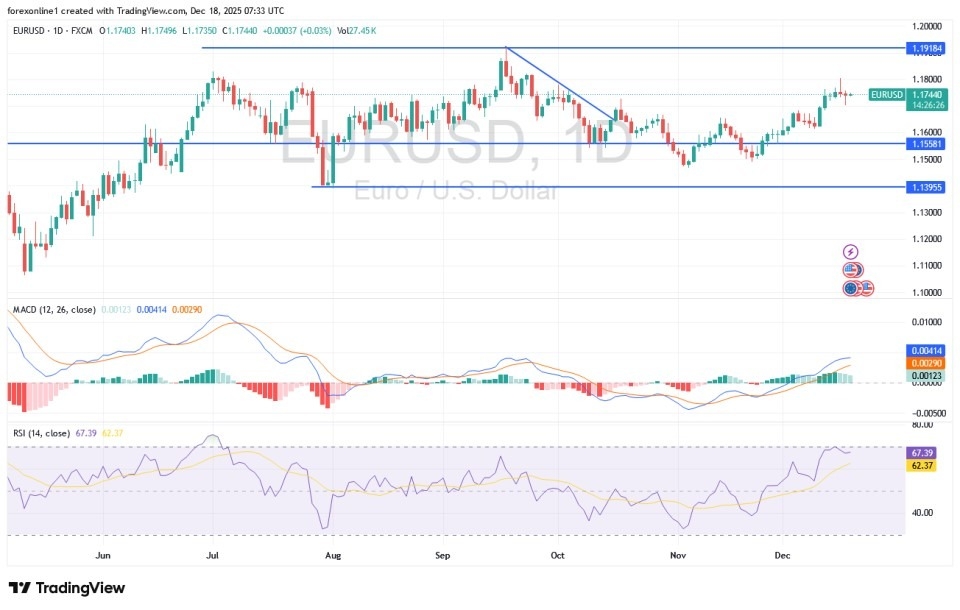
Forecast update for EURUSD -10-12-2025.

By |2025-12-10T15:05:13+02:00December 10, 2025|Forex News, News|0 Comments


Natural gas prices activated the scenario of gathering the gains by reaching below the extra support at $4.750, targeting $4.580 level as appears in the above image.


Stochastic exit from the overbought that might increase the temporary negative pressure on the price, to expect reaching $4.420 and there is a chance for retesting the next support at $4.200, while the price success to step above $4.750 will increase the chances of forming strong bullish trading, to repeat the attempts of reaching $5.100.


The expected trading range for today is between $4.420 and $4.800


Trend forecast: Bearish


Source link

10 12, 2025

British Pound-to-Dollar Forecast: GBP Struggles to Hold 1.33 Ahead of Fed

By |2025-12-10T14:33:14+02:00December 10, 2025|Forex News, News|0 Comments


– Written by

The Pound to Dollar exchange rate (GBP/USD) drifted toward 1.3315 as markets turned cautious ahead of the Fed decision and doubts emerged over how far US rates can fall next year.

Support above 1.33 looks fragile, especially if Powell delivers a hawkish tone alongside an expected cut.

With a BoE move also priced in for next week, direction now hinges on central-bank messaging.

GBP/USD Forecasts: Battles to Hold 1.33

The GBP to USD rate has not been able to make headway on Tuesday and has drifted to around 1.3315 amid narrow ranges.

According to UoB; “the price action still appears to be part of a range-trading phase. Today, we expect GBP to trade between 1.3290 and 1.3350.”

Convera FX and macro strategist Antonio Ruggiero commented; “sterling is holding above $1.33 for now, but support looks fragile ahead of the Fed meeting and could slip if Jerome Powell, the Fed chair, sounds hawkish.”

Save on Your GBP/USD Transfer

Get better rates and lower fees on your next international money transfer.
Compare TorFX with top UK banks in seconds and see how much you could save.


Compare the Best GBP/USD Rates »

Markets remain very confident that the Bank of England will cut interest rates at next week’s meeting, although a split vote is very likely.

In testimony to the Treasury Select committee, MPC member Mann maintained concerns over core inflation and it will be difficult to convince her to back a rate cut next week.

Federal Reserve policy will remain a key element for markets.

There are still very strong expectations that the Fed will cut interest rates by a further 25 basis points on Wednesday. There has been no unofficial push back from Fed officials and it will now be a major surprise if rates are not lowered.

Markets, however, are slightly less confident that rates will be cut again early in 2026.

The shift in expectations surrounding global rates has also triggered doubts whether the US central bank can continue to lower rates throughout 2026.

ING commented; “the reassessment of the Fed easing cycle proved the bigger story. There are now high expectations of a ‘hawkish cut’ at Wednesday evening’s FOMC decision.

Markets will monitor comments from Chair Powell and also note the new interest rate forecasts from committee members.

ING added; “With market pricing of further Fed easing still vulnerable, we suspect the dollar’s downside is limited into the Fed meeting.

As far as data is concerned, the NFIB small-business confidence index improved to 99.0 for November from 98.2 the previous month.

NFIB Chief Economist Bill Dunkelberg commented; “Although optimism increased, small business owners are still frustrated by the lack of qualified workers. Despite this, more firms still plan to create new jobs in the near future.”

The latest ADP weekly data indicated that private employers added a small number of jobs in the latest week.

The evidence suggests that there has not been further labour-market deterioration which will make it more difficult for the Fed to justify lower rates.

There will still be concerns over threats to Fed independence amid the appointment of a new Chair and potential changes to the board.

Like this piece? Please share with your friends and colleagues:


International Money Transfer? Ask our resident FX expert a money transfer question or try John’s new, free, no-obligation personal service! ,where he helps every step of the way,
ensuring you get the best exchange rates on your currency requirements.

TAGS: Pound Dollar Forecasts

Source link

10 12, 2025

Matcha made in heaven | Honolulu Star-Advertiser

By |2025-12-10T14:27:04+02:00December 10, 2025|Dietary Supplements News, News|0 Comments


1/4

Swipe or click to see more

Photo by Cassidy Apo

Hojicha Latte ($6.50)

Matcha made in heaven | Honolulu Star-Advertiser

2/4

Swipe or click to see more

Photo by Cassidy Apo

Matcha Kuromitsu Latte ($6.90); Matcha Soft Serve with Shiratama and Azuki ($7); Hojicha with Nama Chocolate ($7.50)

3/4

Swipe or click to see more

Photo by Cassidy Apo

Strawberry Matcha Milk ($7)

4/4

Swipe or click to see more

Photo by Cassidy Apo

Earl Grey ($9)


Source link

10 12, 2025

Weather-driven spike or onset of bullish trend — TradingView News

By |2025-12-10T13:04:02+02:00December 10, 2025|Forex News, News|0 Comments


On Tuesday, US natural gas price extended losses from the previous session in reaction to forecasts of warmer weather in most parts of the country. Near-record output and ample inventories have further fueled the pullback, even as the bulls remain in control. Meanwhile, European prices are under selling pressure as investors weigh the prospects of a peace deal and subsequent easing of Russian sanctions.

Europe Vs US natural gas prices: The paradox that lies within

This time of the year is usually marked by higher natural gas prices as investors price in increased warming demand during the Northern Hemisphere’s winter season. In fact, weather forecast is one of the bullish factors that bolstered US natural gas prices to a three-year high late last week. Besides, record LNG exports to Europe have fueled the months-long rally. 

While the short-term outlook remains positive, investors appear to weigh on whether the recent surge is the onset of a larger bullish trend or just a weather-driven spike that will soon fade. Indeed, this dilemma, coupled with the expected profit-booking, explains the pullback recorded since the start of the week.

According to the updated weather forecast, most parts of the US are expected to experience warmer temperatures in the near term. Atmospheric G2 has indicated that the eastern and southern US will be colder for the period between 18th and 22nd December, while other regions remain warmer.

In its latest weekly report, EIA highlighted a draw of 12 Bcf compared to the expected 15 Bcf. Subsequently, the surplus surged from 160 Bcf to 191 Bcf. In addition to the ample amount of natural gas in storage, the near-record output is weighing on the prices.

Nonetheless, steady LNG exports continue to offer support to US natural gas prices while exerting selling pressure in the European market. In the current month, the natural gas flows to the eight major LNG export plants within the US are averaging at 18.9 Bcf/per day compared to the monthly record high hit in November at 18.2 Bcf/per day.

 Meanwhile, prospects of a peace deal that could see the return of Russian gas have pushed the benchmark for European prices, Dutch TTF, to the lowest level since April 2024. 

US natural gas price technical analysis

Late last week, the Henry Hub natural gas futures rallied to a three-year high at $5.50 per MMBtu as it marked seven consecutive weeks of gains. Since late September, it has recorded higher highs and higher lows as a positive demand outlook fuels the bullish sentiment. 

On Tuesday, it extended losses from the previous session, having pulled back below the psychologically crucial zone of $5.00. At the time of writing, the US natural gas was trading at $4.81. 

Despite the pullback, the bulls are still in control as the asset continues to trade above the 25 and 50-day EMAs. Indeed, the decline can be perceived as a cool-off rather than trend reversal.

In the immediate term, the range between Monday’s intraday high of $5.20 and the resistance-turn-support zone of $4.70 will be worth watching. Below that zone, the bulls will be keen on defending the crucial support at $4.50 as they gather enough momentum for a rebound. On the flip side, a bounceback past the range’s upper limit will give buyers a chance to retest the 3-year high at $5.50.


Source link

10 12, 2025

USD/JPY Forecast: Markets Calm Under 157.00 Ahead of Fed

By |2025-12-10T12:32:04+02:00December 10, 2025|Forex News, News|0 Comments

  • USD/JPY forecast remains mildly soft ahead of the FOMC rate decision.
  • Next Fed Chair headlines keep the markets uncertain.
  • Technically, the price could test the 200-day moving average before accumulating sufficient buying.

The USD/JPY price traded with mild softness on Tuesday as the Dollar Index drifted lower following fresh headlines about the next Fed leadership. The US dollar also remains under pressure amid the looming Fed rate decision today. Meanwhile, the US JOLTS Job Openings data provided some relief to the pair.

If you are interested in automated forex trading, check our detailed guide-

The delayed data showed a slight improvement in the labor markets, but the figures are not strong enough to dispel the cooling signs. The job openings are drifting to multi-year lows, highlighting that the labor market conditions are easing rapidly than expected. The data holds more weight, as it is the final indicator before the Fed’s rate decision, with the November NFP data set scheduled for release next week. This cements the dovish Fed odds, with almost certain rate cut.

Political developments are also affecting the markets. According to the Wall Street Journal, the US President is preparing a final round of interviews with potential candidates to replace Fed Chair Powell. The news injected uncertainty into global markets, particularly regarding the Fed’s monetary policy path for 2026. Kevin Warsh, a potential candidate, is viewed as more hawkish than Kevin Hassett. Market participants remain sensitive to the leadership shift, as it could alter expectations for Fed policy.

From the Japanese side, the yen remains bid due to safe-haven flows as the global risk sentiment softened ahead of the key FOMC decision. The Bank of Japan continues to offer no new catalyst to the market, while its policy remains accommodative and yields are contained; the USD/JPY pair still depends on the Fed and US economic data.

USD/JPY Key Events Ahead

Today’s essential data ahead of the FOMC decision is the Employment Cost Index, which can provide a temporary impetus to the market. Overall, the pair remains vulnerable to further downside if US yields continue to ease after the soft JOLTS print.

Traders are now watching Powell’s press conference and the updated dot plot for clues on how aggressively the Fed intends to cut rates through 2025. Until then, USD/JPY is likely to trade with a mild bearish bias, lacking conviction to the upside.

USD/JPY Technical Forecast: Correction Before Upside

USD/JPY Forecast: Markets Calm Under 157.00 Ahead of Fed
USD/JPY 4-hour chart

The 4-hour chart for USD/JPY shows a bullish crossover of 20- and 50-period MA. However, the 100- and 200-period MAs stay flat, pointing to a lack of market catalyst. Meanwhile, the RSI is flat near the overbought region. The conditions suggest a potential pullback to 156.00 before the upside continuation.

Are you interested to learn more about forex options trading? Check our detailed guide-

Conversely, moving below the 156.00 mark could augment selling pressure, moving to the 200-period MA and the demand zone near 155.00.

Looking to trade forex now? Invest at eToro!

68% of retail investor accounts lose money when trading CFDs with this provider. You should consider whether you can afford to take the high risk of losing your money.

Source link

10 12, 2025

Demand for Arabinoxylan Fiber in Japan | Global Market Analysis Report

By |2025-12-10T12:26:09+02:00December 10, 2025|Dietary Supplements News, News|0 Comments


Demand for Arabinoxylan Fiber in Japan Forecast and Outlook 2025 to 2035

Demand for arabinoxylan fiber in Japan is rising, with the industry valued at USD 68.4 million in 2025 and forecast to reach USD 119.9 million by 2035, reflecting a CAGR of 5.8%. Key sectors driving this growth include animal feed, dairy products, beverages, meat products, dietary supplements, and bakery & confectionery. Animal feed accounts for 27% of demand, while the powder form dominates at 44%, owing to its versatility, ease of use, and high concentration. The primary sources of arabinoxylan fiber are wheat, rye, corn, barley, rice, and sorghum, with wheat being the dominant contributor.

Kyushu & Okinawa leads with a 7.2% CAGR, driven by an increasing focus on digestive health and wellness, particularly in Okinawa’s aging population. Kanto follows with a 6.6% CAGR, buoyed by the large urban population and growing demand for functional foods. Kansai, with a 5.8% CAGR, benefits from its vibrant food culture and rising interest in dietary supplements. Chubu, Tohoku, and the Rest of Japan show more moderate growth at 5.1%, 4.5%, and 4.3%, respectively, with increasing consumer awareness about gut health and functional nutrition. The overall growth is further supported by the rising adoption of plant-based fibers, clean-label products, and innovations in extraction and processing methods, which are boosting the appeal of arabinoxylan fiber in Japan.

Quick Stats of the Demand for Arabinoxylan Fiber in Japan

  • Demand for Arabinoxylan Fiber in Japan Value (2025): USD 68.4 million
  • Demand for Arabinoxylan Fiber in Japan Forecast Value (2035): USD 119.9 million
  • Demand for Arabinoxylan Fiber in Japan Forecast CAGR (2025-2035): 5.8%
  • Demand for Arabinoxylan Fiber in Japan Leading Source: Wheat
  • Demand for Arabinoxylan Fiber in Japan Key Growth Regions: Kyushu & Okinawa, Kanto, Kansai, Chubu, Tohoku, Rest of Japan
  • Demand for Arabinoxylan Fiber in Japan Top Players: Acetar Bio-tech Inc., Antimex Pharmaceuticals & Chemicals Ltd., BioActor BV, Cargill, Comet Biorefining

Demand for Arabinoxylan Fiber in Japan Key Takeaways


Metric Value
Demand for Arabinoxylan Fiber in Japan Value (2025) USD 68.4 million
Demand for Arabinoxylan Fiber in Japan Forecast Value (2035) USD 119.9 million
Demand for Arabinoxylan Fiber in Japan Forecast CAGR (2025-2035) 5.8%

Why is the Demand for Arabinoxylan Fiber in Japan Growing?

The demand for arabinoxylan fiber in Japan is growing as consumers become more focused on digestive health and overall wellness. Arabinoxylan, a type of soluble fiber found in plant cell walls, is gaining attention for its potential health benefits, including improved digestion, enhanced gut health, and weight management. As Japan’s population becomes more health-conscious, there is a rising interest in functional ingredients like arabinoxylan that contribute to better digestion and general well-being.

A key driver of this growth is the increasing awareness of the importance of dietary fiber in maintaining a healthy gut microbiome. As more consumers adopt health-focused diets, arabinoxylan is seen as an effective and natural source of fiber, especially for those looking to manage cholesterol levels, blood sugar, and digestive health. Arabinoxylan fiber is also being integrated into functional foods and dietary supplements, making it easier for consumers to include it in their daily routines. The growing trend towards plant-based and natural food sources is boosting the appeal of arabinoxylan as a sustainable and plant-derived fiber.

The expanding availability of arabinoxylan fiber in food products, such as functional beverages, snacks, and supplements, is making it more accessible to a wider consumer base. With continued advancements in research on the health benefits of arabinoxylan and the growing demand for natural, functional ingredients, the demand for arabinoxylan fiber in Japan is expected to increase steadily through 2035.

What is the Segment-Wise Analysis of Demand for Arabinoxylan Fiber in Japan?

Demand for arabinoxylan fiber in Japan is segmented by application, form, source, and region. By application, demand is divided into animal feed, dairy products, beverages, meat products, dietary supplements, and bakery & confectionery, with animal feed leading at 27%. The demand is also segmented by form, including powder, liquid, granules, capsules, and tablets, with powder leading at 44%. The sources of arabinoxylan fiber include wheat, rye, corn, barley, rice, and sorghum. Regionally, demand is spread across Kyushu & Okinawa, Kanto, Kansai, Chubu, Tohoku, and the rest of Japan.

How Does Animal Feed Lead the Demand for Arabinoxylan Fiber in Japan?

Japan Arabinoxylan Fiber Market Analysis By Application

Animal feed accounts for 27% of the demand for arabinoxylan fiber in Japan, driven by its nutritional benefits and its key role in improving gut health for livestock. Arabinoxylan fiber is incorporated into animal feed to enhance digestion and support the overall health of farm animals, particularly in poultry, swine, and cattle. With increasing awareness about the importance of fiber-rich diets for livestock, arabinoxylan helps in promoting healthy digestion, better absorption of nutrients, and improved overall growth rates. This growing focus on high-quality animal feed, which enhances animal health and production, has significantly contributed to the increased use of arabinoxylan. Fiber is a cost-effective, natural ingredient that can improve feed efficiency while supporting sustainable farming practices. As demand for healthier, more sustainable animal products continues to grow, arabinoxylan fiber will remain an essential component in the animal feed industry in Japan, helping producers meet consumer demands for quality and sustainability.

Why Does Powder Form Lead the Demand for Arabinoxylan Fiber in Japan?

Japan Arabinoxylan Fiber Market Analysis By Form

Powder form accounts for 44% of the demand for arabinoxylan fiber in Japan, driven by its versatility, ease of use, and high concentration, making it the preferred form for a variety of applications. The powdered form is especially popular in the food and beverage industry, where it is used in products like dietary supplements, bakery items, and beverages, offering a convenient way to incorporate fiber without altering texture or flavor. It can easily be mixed into liquids or dry ingredients, providing flexibility for manufacturers to use it in a wide range of products. The powder form also allows for precise dosing, which is essential for ensuring consistent quality in functional foods and supplements. Its stable nature, long shelf life, and easy storage make it an ideal choice for both manufacturers and consumers. As demand for fiber-rich and functional food products increases, powdered arabinoxylan fiber is expected to remain the dominant form, thanks to its practical application and ease of use.

What are the Key Trends, Drivers, and Restraints in Demand for Arabinoxylan Fiber in Japan?

Demand for arabinoxylan fiber in Japan is rising as more consumers and manufacturers focus on digestive health, gut microbiome support, and overall wellness. Arabinoxylan, a plant‑derived dietary fiber found in cereals like wheat, rice, barley, and oats, is gaining popularity as a functional ingredient in foods, beverages, and supplements. As interest grows in fiber‑rich diets and functional foods emphasizing prebiotics and gut health, arabinoxylan is emerging as a valuable fiber option. At the same time, adoption is restrained by its relatively high production and processing costs compared with simpler fiber sources. Also, supply‑chain issues and variability in raw‑material quality due to different cereal sources pose challenges for consistent large‑scale use in food manufacturing.

Why is Demand for Arabinoxylan Fiber Growing in Japan?

Demand is growing because Japanese consumers increasingly value foods that support wellness, digestion, and preventive health especially as the population ages and lifestyle‑related health awareness rises. With growing knowledge about the role of dietary fiber and prebiotics in promoting gut health, blood sugar regulation, and general digestive wellness, arabinoxylan fits well with shifting dietary preferences. Food formulators and supplement manufacturers are responding by including arabinoxylan in fiber‑enhanced foods, such as baked goods, cereals, functional bars, and dietary supplements. The broader national trend toward functional foods, clean‑label ingredients, and fiber‑enriched products further boosts its demand.

How are Technological & Industry Innovations Driving Arabinoxylan Fiber Demand in Japan?

Technological advances in extraction and purification processes make arabinoxylan fiber more viable for food and supplement applications. Improved processing enables production of high‑purity arabinoxylan with consistent functional properties, such as solubility, viscosity, and prebiotic potential, which are suitable for incorporation into bakery items, cereals, beverages, and dietary supplements. As these technologies mature, manufacturers can deliver fiber‑enriched products with better taste, texture, and stability, making them more acceptable to consumers. As the global arabinoxylan fiber industry expands and supply becomes more reliable, Japanese producers and importers find it easier to source the ingredient, further facilitating its inclusion in functional‑food portfolios.

What are the Key Challenges and Risks That Could Limit Arabinoxylan Fiber Demand in Japan?

Despite its potential, several factors could limit broader uptake of arabinoxylan fiber in Japan. First, processing and extraction costs remain relatively high, making it more expensive than conventional fiber sources, which reduces competitiveness in price‑sensitive industrys. Second, variability in raw‑material sources and quality may lead to inconsistent functional performance across batches, complicating large‑scale food formulation. Third, competition from other established prebiotic fibers, such as inulin and FOS, which are often cheaper and well understood, can limit arabinoxylan’s industry share. Finally, regulatory and labeling requirements for functional ingredients can add complexity and cost for manufacturers aiming to industry fiber‑enriched products with health claims.

What is the Regional Demand Outlook for Arabinoxylan Fiber in Japan?

Japan Arabinoxylan Fiber Market Cagr Analysis By Country


Region CAGR (%)
Kyushu & Okinawa 7.2%
Kanto 6.6%
Kansai 5.8%
Chubu 5.1%
Tohoku 4.5%
Rest of Japan 4.3%

Demand for arabinoxylan fiber in Japan is growing steadily across all regions, with Kyushu & Okinawa leading at a 7.2% CAGR, driven by rising awareness of gut health and digestive wellness. Kanto follows with a 6.6% CAGR, supported by the region’s large urban population and increasing consumer focus on functional foods. Kansai shows a 5.8% CAGR, driven by the region’s vibrant food culture and a growing interest in dietary supplements. Chubu experiences a 5.1% CAGR, with demand rising as more consumers seek fiber-rich, health-boosting products. Tohoku and the Rest of Japan see moderate growth at 4.5% and 4.3%, respectively, reflecting a gradual shift towards health-conscious eating and the adoption of functional fibers.

How is Demand for Arabinoxylan Fiber Growing in Kyushu & Okinawa?

Kyushu & Okinawa leads the demand for arabinoxylan fiber, growing at a 7.2% CAGR. The region’s increasing interest in gut health and digestive wellness is a major driver, as consumers become more aware of the benefits of dietary fiber. Okinawa, known for its focus on longevity and healthy living, has seen a rise in the adoption of functional foods like arabinoxylan fiber. As the region’s population ages, there is growing demand for products that support digestive health and overall wellness. Local food manufacturers and health food retailers are expanding their offerings to include arabinoxylan fiber-based supplements and food products. With the region’s rising interest in plant-based nutrition, arabinoxylan fiber, derived from grains like wheat, aligns with the growing trend of natural, fiber-rich diets. As consumer awareness continues to grow, demand for arabinoxylan fiber in Kyushu & Okinawa is expected to remain strong.

Why is Demand for Arabinoxylan Fiber Rising in Kanto?

Japan Arabinoxylan Fiber Market Country Value Analysis

In Kanto, demand for arabinoxylan fiber is rising at a 6.6% CAGR. The region’s large urban population, particularly in Tokyo, is a key driver of this growth, as health-conscious consumers seek functional foods that support digestive health. With busy lifestyles and an increasing interest in wellness trends, many consumers in Kanto are turning to arabinoxylan fiber as a natural way to boost their fiber intake. The rise in interest for plant-based and dietary fiber-rich foods, combined with growing awareness of gut health, is fueling the demand for arabinoxylan fiber. The increasing availability of fiber-enriched food products in superindustrys and health food stores is making it easier for consumers to incorporate arabinoxylan fiber into their diets. As the demand for health supplements and functional foods grows, arabinoxylan fiber is expected to continue to see strong growth in Kanto.

How is Demand for Arabinoxylan Fiber Expanding in Kansai?

Japan Arabinoxylan Fiber Market Kansai Market Share Analysis By Source

Kansai shows steady demand for arabinoxylan fiber, with a 5.8% CAGR. The region’s vibrant food culture, particularly in cities like Osaka and Kyoto, has seen increasing interest in health-oriented food products. With growing consumer awareness about the importance of digestive health and overall wellness, arabinoxylan fiber is gaining popularity as a natural solution to improve fiber intake. As Kansai’s food and beverage industry continues to diversify, local producers and retailers are incorporating arabinoxylan fiber into functional food products, such as dietary supplements, baked goods, and snacks. The region’s growing focus on healthy eating, particularly among younger generations, is contributing to the rising demand for fiber-rich foods. As consumers continue to embrace healthier lifestyles, demand for arabinoxylan fiber in Kansai is expected to grow steadily, supporting the region’s position in the functional food industry.

Why is Demand for Arabinoxylan Fiber Growing in Chubu?

Japan Arabinoxylan Fiber Market Chubu Market Share Analysis By Application

Chubu is witnessing steady demand for arabinoxylan fiber, growing at a 5.1% CAGR. The region’s increasing focus on health and wellness is driving demand for functional foods that support digestive health and overall well-being. As more consumers in urban centers like Nagoya turn to dietary supplements and fiber-rich foods, arabinoxylan fiber is becoming a popular option. With rising awareness of the role of fiber in supporting digestive health, there is growing adoption of arabinoxylan fiber products, especially among those seeking natural and plant-based nutrition. Local retailers and food manufacturers in Chubu are expanding their product offerings to include arabinoxylan fiber-based products, such as supplements, snacks, and fortified foods. As the region’s consumers continue to prioritize healthy eating, the demand for arabinoxylan fiber is expected to rise steadily, further supported by the trend of clean-label and functional ingredients in food products.

How is Demand for Arabinoxylan Fiber Expanding in Tohoku?

Tohoku is seeing moderate growth in arabinoxylan fiber demand, with a 4.5% CAGR. Although the region’s consumption of functional foods is smaller compared to urban areas, there is a steady rise in interest as consumers become more health-conscious. As Tohoku’s food culture evolves, there is growing awareness of the benefits of fiber for digestive health and overall wellness, contributing to the adoption of arabinoxylan fiber. The availability of fiber-enriched products in local superindustrys and health food stores is helping to increase access to arabinoxylan fiber. As younger generations in Tohoku embrace healthier lifestyles and seek out natural solutions, demand for arabinoxylan fiber is expected to grow. Over time, with increased education around the benefits of functional nutrition, demand for arabinoxylan fiber in Tohoku is likely to rise, aligning with the broader trend toward health-focused food choices.

Why is Demand for Arabinoxylan Fiber Steady in the Rest of Japan?

The Rest of Japan is experiencing steady demand for arabinoxylan fiber, with a 4.3% CAGR. Although the demand is lower compared to urban regions, there is growing interest in health and wellness, particularly among older consumers. As more people in smaller towns and rural areas become aware of the health benefits of fiber and digestive health, the demand for arabinoxylan fiber is increasing. The availability of arabinoxylan fiber-based products, such as supplements and functional foods, is improving in these areas, further fueling adoption. The rising interest in plant-based diets and natural foods is also contributing to the growth in demand. As awareness spreads and access to these products improves through retail and online platforms, the Rest of Japan is expected to see steady growth in the adoption of arabinoxylan fiber, reflecting broader trends toward health-conscious eating and functional nutrition.

What is Driving the Demand for Arabinoxylan Fiber in Japan and Who Are the Key Players Shaping the Industry?

Japan Arabinoxylan Fiber Market Analysis By Company

The demand for arabinoxylan fiber in Japan is growing due to the increasing awareness of the health benefits of dietary fibers, particularly in supporting digestive health, gut microbiota balance, and overall wellness. Arabinoxylan, a plant-based fiber found in cereal grains such as wheat, is gaining popularity for its ability to promote regularity, reduce cholesterol, and improve gastrointestinal health. As Japanese consumers become more health-conscious and seek natural, plant-derived ingredients, the demand for functional fibers like arabinoxylan is increasing, particularly among those seeking solutions for weight management, gut health, and blood sugar regulation. The rising popularity of plant-based diets and clean-label products further boosts the industry for arabinoxylan fiber in Japan.

Key players shaping the arabinoxylan fiber industry in Japan include Acetar Bio-tech Inc., Antimex Pharmaceuticals & Chemicals Ltd., BioActor BV, Cargill, and Comet Biorefining. Acetar Bio-tech Inc. leads the industry with a share of 33.0%, offering high-quality arabinoxylan fiber products that cater to both the food and pharmaceutical industries. These companies focus on providing innovative, natural fiber solutions to meet the growing demand for dietary fibers with functional benefits. Their products are increasingly used in functional foods, dietary supplements, and nutraceuticals, supporting Japan’s trend toward healthier, more sustainable food ingredients.

The growth of the arabinoxylan fiber industry in Japan is further supported by increasing consumer demand for clean-label, plant-based, and health-enhancing food ingredients. As more consumers seek to improve their gut health and overall well-being, arabinoxylan fiber is expected to play an increasingly important role in Japan’s food and supplement industrys. With continued advancements in fiber technology and a greater focus on sustainable ingredients, the arabinoxylan fiber industry is poised for sustained growth in Japan.

Key Players in Japan Arabinoxylan Fiber Demand

  • Acetar Bio-tech Inc.
  • Antimex Pharmaceuticals & Chemicals Ltd.
  • BioActor BV
  • Cargill
  • Comet Biorefining

Scope of Report


Items Values
Quantitative Units (2025) USD million
Source Wheat, Rye, Corn, Barley, Rice, Sorghum
Application Animal Feed, Dairy Products, Beverages, Meat Products, Dietary Supplements, Bakery & Confectionery
Form Powder, Liquid, Granules, Capsules, Tablets
Region Kyushu & Okinawa, Kanto, Kansai, Chubu, Tohoku, Rest of Japan
Countries Covered Japan
Key Companies Profiled Acetar Bio-tech Inc., Antimex Pharmaceuticals & Chemicals Ltd., BioActor BV, Cargill, Comet Biorefining
Additional Attributes Dollar sales by source and application; regional CAGR and growth outlook; increasing adoption of plant-based fibers; rising demand for functional foods and dietary supplements; innovations in extraction and processing methods; distribution channels including retail and e-commerce.

Japan Arabinoxylan Fiber Demand by Key Segments

Source

  • Wheat
  • Rye
  • Corn
  • Barley
  • Rice
  • Sorghum

Application

  • Animal Feed
  • Dairy Products
  • Beverages
  • Meat Products
  • Dietary Supplements
  • Bakery & Confectionery

Form

  • Powder
  • Liquid
  • Granules
  • Capsules
  • Tablets

Region

  • Kyushu & Okinawa
  • Kanto
  • Kansai
  • Chubu
  • Tohoku
  • Rest of Japan

Frequently Asked Questions

How big is the demand for arabinoxylan fiber in Japan in 2025?

The demand for arabinoxylan fiber in Japan is estimated to be valued at USD 68.4 million in 2025.

What will be the size of arabinoxylan fiber in Japan in 2035?

The market size for the arabinoxylan fiber in Japan is projected to reach USD 119.9 million by 2035.

How much will be the demand for arabinoxylan fiber in Japan growth between 2025 and 2035?

The demand for arabinoxylan fiber in Japan is expected to grow at a 5.8% CAGR between 2025 and 2035.

What are the key product types in the arabinoxylan fiber in Japan?

The key product types in arabinoxylan fiber in Japan are wheat, rye, corn, barley, rice and sorghum.

Which application segment is expected to contribute significant share in the arabinoxylan fiber in Japan in 2025?

In terms of application, animal feed segment is expected to command 27.0% share in the arabinoxylan fiber in Japan in 2025.


Source link

10 12, 2025

Solana Price Prediction Signals a Possible Trend Reversal, While DeepSnitch AI Pumps 77%

By |2025-12-10T12:17:11+02:00December 10, 2025|Crypto News, News|0 Comments

Several news and upgrades are flooding the Solana ecosystem in December. Kalshi prediction markets are now tokenized on Solana, Revolut integrated SOL for its 65 million users, Vanguard unlocked SOL ETFs for its 50 million clients, and Base launched a bridge connecting the two blockchains. This makes Solana price prediction bullish for 2026.

DeepSnitch AI is the best presale to invest in now, with a live network, three more agents operating, and users impressed with the technology. The project also launched a bonus offer giving 50% to 100% more tokens to those who invest in the coming days. The numbers exploded, raising over $710,000, and the price pumped 77%.

Coinbase Blockchain launches a bridge to connect to Solana

Base (Coinbase’s blockchain), which functions as a Layer 2 for Ethereum, announced the first native bridge with Solana. This bridge will allow users to transfer SOL and SPL tokens between the two networks. While BASE currently has a TVL of approximately $15 billion, it now has direct access to Solana’s liquidity, which currently has a TVL of $29 billion.

This will allow users to trade any token on the SOL blockchain without having to leave the Base blockchain. Solana benefits by gaining direct access to Coinbase’s over 100 million users, as well as all the institutional liquidity of the Ethereum/Base ecosystem, without needing third-party wrappers or bridges.

This update should generate a large exchange of clients and users between the two networks, boosting TVL, DeFi, and the multichain narrative. A win-win for both sides, and bullish for Solana price prediction.

DeepSnitch AI: An undervalued project with 100x potential

DeepSnitch AI is an artificial intelligence project that aims to return investment power to traders and small investors. While for a long time only big funds and whales were able to achieve explosive gains and access insider information, now DSNT comes to democratize the entire crypto market.

This is because it offers an advanced platform with AI agents that can monitor several on-chain activities, generating reports and sending users the best information in real time. This helps traders understand each market moment, as well as having access to advanced information that can help when making important investment decisions.


But there is another important detail: reports from Bank of America and major research firms like Gartner indicate that the AI ​​sector should be the fastest-growing in 2026, with expectations of growing by 25x by 2030.

So, projects like DeepSnitch AI, which are still in presale, can offer investors a real opportunity for 100x returns.

This can be even more possible with the new bonus offer, which gives investors a chance to earn 50% to 100% more tokens and multiply their bag even more. To do so, those who invest over $2,000 need to enter the code DSNTVIP50 to earn 50% more tokens. Or those who invest over $5,000 need to enter the code DSNTVIP100 to earn 100% more tokens.

Solana price prediction: $200 it’s a key price to be reached

With so much news, Solana is laying the groundwork for 2026, full of demand and use cases. This could be excellent for the token, leaving SOL investor sentiment optimistic for the coming year, and that’s why it’s one of the best cryptos to invest in 2026.

Looking at the weekly chart, SOL shows one of its best moments in recent months. The $130 region was defended, an important move because this is a price that acts as support and has held for almost 18 months. This would be one of the best risk-reward ratios for those who want to invest in SOL.

Meanwhile, the RSI is indicating exhausted selling, forming a potential double bottom, causing the MACD to signal a possible trend reversal. This could cause the Solana price prediction to bounce and test its strongest resistance at the moment, at $200. This is a psychological price that needs to be overcome for SOL to start aiming for a new ATH.

Ethereum exchanges’ balances fell to the lowest level ever

Ethereum is quietly entering its lowest market supply level ever. ETH exchange balances have just fallen below 9% of total supply, a level we’ve apparently never seen before. For comparison, BTC is still sitting near 14.8%.

While one reason for this “disappearing” supply is ETFs, other factors include staking, restaking, L2 activity, collateral loops, and long-term custody.

As a result, the Ethereum supply is becoming more restricted each day, while the price continues to fluctuate between $2,900 and $3,200. With a potential supply shock approaching, it’s possible to see ETH above $4,000 by early 2026.

Conclusion

Solana price prediction has been performing well after defending an important region at $130. Traders are targeting $200 as the next target, but the gain here would only be 55%.

For those seeking more significant gains, presales like DeepSnitch AI are the big event in the crypto market right now. With its bonus offer, investors can earn 50% more tokens using the code DSNTVIP50 or 100% more tokens using the code DSNTVIP100. This will maximize your potential gains, making this the investment with the most upside at the moment.

Visit the official website for more information, and join X and Telegram for community updates.

FAQs

Why are investors excited about DeepSnitch AI? 

DeepSnitch AI offers advanced real-time market analytics, a fast-growing presale, and bonuses of 50% to 100% extra tokens. Its early-stage pricing and strong AI narrative make it a high-upside opportunity.

What are the main Solana adoption trends right now? 

Solana adoption is accelerating thanks to several news and upgrades, including Kalshi markets on SOL, Revolut integration, SOL ETFs via Vanguard, and a new Base and Solana bridge boosting liquidity and user flow.

What supports Solana’s bullish trajectory for the coming years? 

Solana’s bullish trajectory is reinforced by defending the key $130 support zone while momentum indicators point to a trend reversal. Many traders see a potential move toward.

Source link

Go to Top