Think of Touchdown Tea as the laid-back Southern cousin to the espresso martini: Chilled green tea meets bourbon for a smooth blend of natural caffeine and earthy flavor. Created by Heather Blanchard, lead bartender at New Orleans’ Virgin Hotel, the cocktail was made with game day in mind, and it became a fall favorite at the hotel’s Pool Club. “The warmth of bourbon and the refreshing and energizing qualities of green tea keep fans fueled throughout the game,” Blanchard says. A splash of peach liqueur, honey, and lemon add a kick of bright citrus, making it a perfect tailgate drink—or a go-to porch pounder when the weather warms up.
U.Today has prepared the top three news stories over the past day.
XRP hits ultra rare golden cross versus Bitcoin
XRP has recently demonstrated curious activity on its price chart, raising questions about whether this signals the beginning of “something bigger” or just another fluctuation on the volatile crypto market. The token has experienced a remarkable 367% increase against Bitcoin since November, a performance that is hard to ignore. Now, the asset has formed a golden cross on the weekly time frame, a technical indicator that typically suggests strong bullish momentum. However, the unpredictable nature of the crypto market complicates the outlook. Currently, XRP is valued at 0.000026 BTC, reflecting a 33.8% rise over the previous 24 hours, although it remains far from its record high of 0.00025 BTC set in May 2017. Achieving such heights would require XRP’s market cap to exceed $1 trillion, which would result in the asset’s price surpassing $24.7.
6.51 trillion SHIB anomaly stuns Shiba Inu coin
According to recent data from IntoTheBlock, there has been a significant anomaly in the Shiba Inu token’s on-chain activity. Whale wallets experienced a 673% increase in outflows, totaling 6.51 trillion SHIB in just 24 hours. What makes this a rare occurrence is that this surge in outflows was matched by an equal amount of inflows (also about 6.51 trillion SHIB). Detailed data indicates that outflows slightly exceeded inflows, resulting in a net total for the period of 3.29 billion SHIB. At the price of $0.000015, this amount is worth approximately $50,000, which has minimal impact on the overall market. The data suggests a divided opinion among wealthy SHIB holders, as both selling and buying activities are occurring at significant levels. Currently, SHIB’s price remains stable within a tight range of $0.0000147 to $0.000017, with ongoing market dynamics determining where the meme token goes next.
Related
Ethereum’s Buterin says Pectra will double L2 capacity
In his recent X post, Ethereum cofounder Vitalik Buterin stated that the upcoming Pectra hard fork is set to double the capacity of layer-2 networks. This will be achieved by increasing the blob target from 3 to 6. “Blobs” are large data packets introduced with the Dencun hard fork in early 2024 that aim to enhance scalability for these networks. Buterin emphasized the necessity of scaling to retain users, warning that “if Ethereum does not offer this, then people will find it elsewhere.” The Pectra hard fork, which includes a slew of various Ethereum improvement proposals (EIPs), is scheduled for release in March. It was initially planned as the most ambitious Ethereum upgrade with 20 improvement proposals. However, it was later divided into two. Additionally, Buterin suggested that the blob target should be subject to staker voting, allowing for adjustments in response to technological advancements without waiting for future hard forks.
Affirm Holdings’ stock price (AFRM) slid in the intraday levels, amid negative pressure from trading below the 50-day SMA, with negative signals from the RSI after reaching overbought levels, as the stock tries to shake off these negative pressures, amid the dominance of the main upward trend, while trading alongside the secondary short-term trend line.
Therefore we expect the stock to return higher, targeting the pivotal resistance of $72.82, provided the support of $52.48 holds on.
Important DisclaimersThe content provided on the website includes general news and publications, our personal analysis and opinions, and contents provided by third parties, which are intended for educational and research purposes only. It does not constitute, and should not be read as, any recommendation or advice to take any action whatsoever, including to make any investment or buy any product. When making any financial decision, you should perform your own due diligence checks, apply your own discretion and consult your competent advisors. The content of the website is not personally directed to you, and we does not take into account your financial situation or needs.The information contained in this website is not necessarily provided in real-time nor is it necessarily accurate. Prices provided herein may be provided by market makers and not by exchanges.Any trading or other financial decision you make shall be at your full responsibility, and you must not rely on any information provided through the website. FX Empire does not provide any warranty regarding any of the information contained in the website, and shall bear no responsibility for any trading losses you might incur as a result of using any information contained in the website.The website may include advertisements and other promotional contents, and FX Empire may receive compensation from third parties in connection with the content. FX Empire does not endorse any third party or recommends using any third party’s services, and does not assume responsibility for your use of any such third party’s website or services.FX Empire and its employees, officers, subsidiaries and associates, are not liable nor shall they be held liable for any loss or damage resulting from your use of the website or reliance on the information provided on this website.Risk DisclaimersThis website includes information about cryptocurrencies, contracts for difference (CFDs) and other financial instruments, and about brokers, exchanges and other entities trading in such instruments. Both cryptocurrencies and CFDs are complex instruments and come with a high risk of losing money. You should carefully consider whether you understand how these instruments work and whether you can afford to take the high risk of losing your money.FX Empire encourages you to perform your own research before making any investment decision, and to avoid investing in any financial instrument which you do not fully understand how it works and what are the risks involved.
Slowing down the ageing process has been the holy grail of health goals since the beginning of time, and if social media is anything to go by, this focus on longevity is bigger than ever. Now, a new wave of research suggests omega-3 supplements might just help.
These essential fatty acids – found in oily fish and widely available in supplement form – have been linked to everything from better heart health to improved brain function. But could they also help keep your cells younger for longer? Here’s what the science says.
The Research
A recent study has found that omega-3 fatty acids could play a role in preserving telomeres – these are protective caps at the ends of our chromosomes that shorten as we age. Shorter telomeres have been linked to an increased risk of age-related diseases such as heart disease and even early mortality. Researchers studying overweight but otherwise healthy participants found that taking omega-3 supplements for four months resulted in telomere lengthening. The same participants also experienced a significant reduction in oxidative stress (a major cause of cell and tissue damage) compared to those on a placebo, suggesting a potential anti-ageing effect.
Another study suggested that omega-3s, and particularly eicosapentaenoic acid (EPA), could slow ageing by reprogramming our metabolism. The study demonstrated that supplementation with EPA activated a protein called PPAR-alpha, which regulates functions such as energy use, inflammation, and brain function. This led to an increase in ATP (adenosine triphosphate) production – the main energy source for cells – helping to preserve organ function and potentially slowing age-related decline.
Further research has shown that supplementing with omega-3 alongside vitamin D and regular exercise could further bolster the age-defying benefits. Yet another compelling reason to stick to your workout plan.
What Does This Mean For Us?
Omega-3’s are already well known for their heart, brain, and joint health benefits. But these new findings suggest they may also help slow the biological ageing process, potentially lowering the risk of conditions such as heart disease, type 2 diabetes, arthritis, and Alzheimer’s. If you don’t eat much oily fish – such as salmon, mackerel, or sardines – this research throws up another good reason to consider adding omega-3 to our supplement regiment.
While the study is promising, it’s still early days. Much of the evidence comes from short-term studies, and many of the findings in animal models have yet to be replicated in long-term human trials. The effects of omega-3 on ageing are likely influenced by factors such as diet, lifestyle, and genetics, making it difficult to pinpoint the exact benefits for everyone.
The Bottom Line
Although more research is needed in this particular area, there’s already a stack of science-backed benefits for omega-3’s, with many nutritionists and experts putting the oily capsules right at the top of their non-negotiable supplement list. And as for vitamin D and exercise? Well, did we really need another excuse to big up the benefits of working out and sunshine?
Read Next
With almost 18 years in the health and fitness space as a personal trainer, nutritionist, breath coach and writer, Andrew has spent nearly half of his life exploring how to help people improve their bodies and minds.
As our fitness editor he prides himself on keeping Men’s Health at the forefront of reliable, relatable and credible fitness information, whether that’s through writing and testing thousands of workouts each year, taking deep dives into the science behind muscle building and fat loss or exploring the psychology of performance and recovery.
Whilst constantly updating his knowledge base with seminars and courses, Andrew is a lover of the practical as much as the theory and regularly puts his training to the test tackling everything from Crossfit and strongman competitions, to ultra marathons, to multiple 24 hour workout stints and (extremely unofficial) world record attempts.
You can find Andrew on Instagram at @theandrew.tracey, or simply hold up a sign for ‘free pizza’ and wait for him to appear.
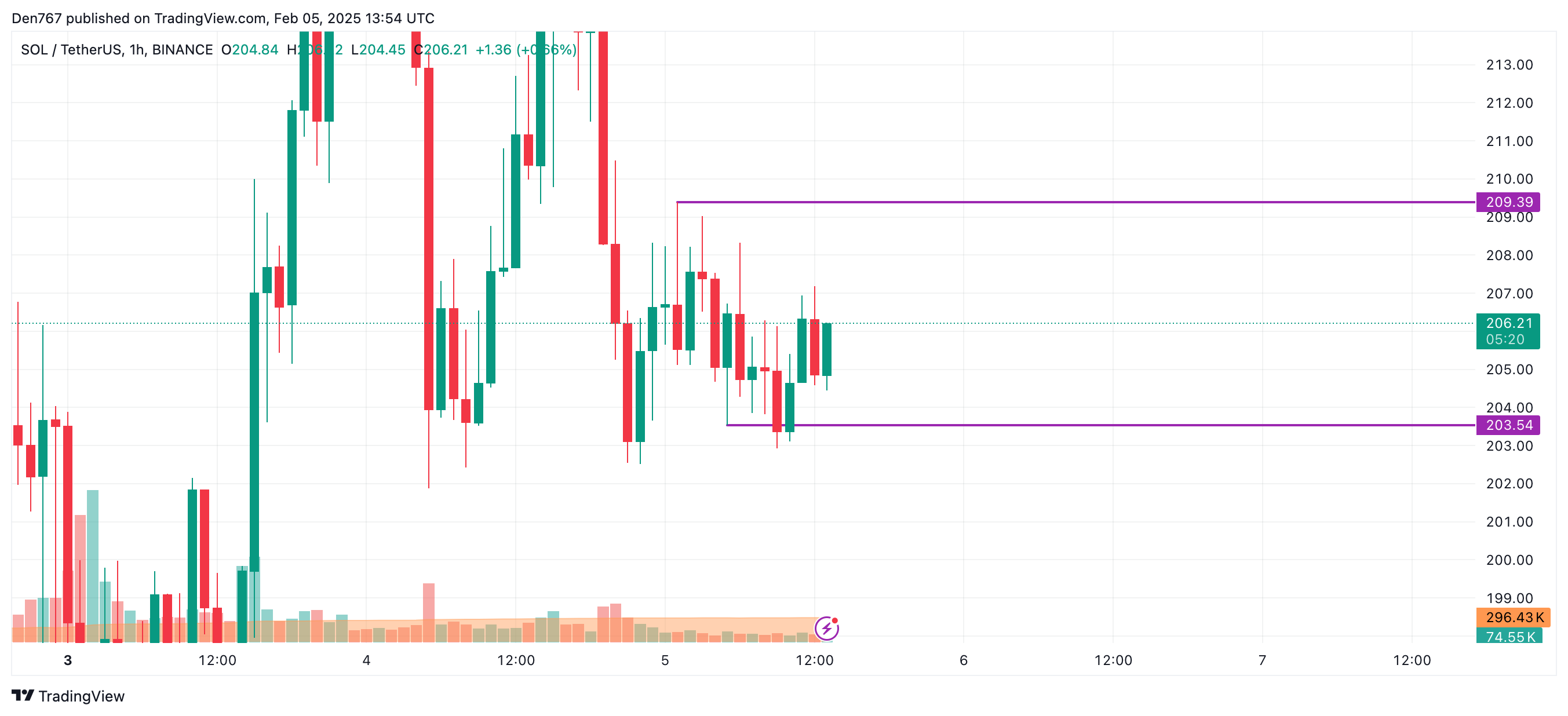
On the hourly chart, the price of SOL is rising after the false breakout of the local support of $203.54. If the growth continues, one can expect a test of the resistance level by tomorrow.
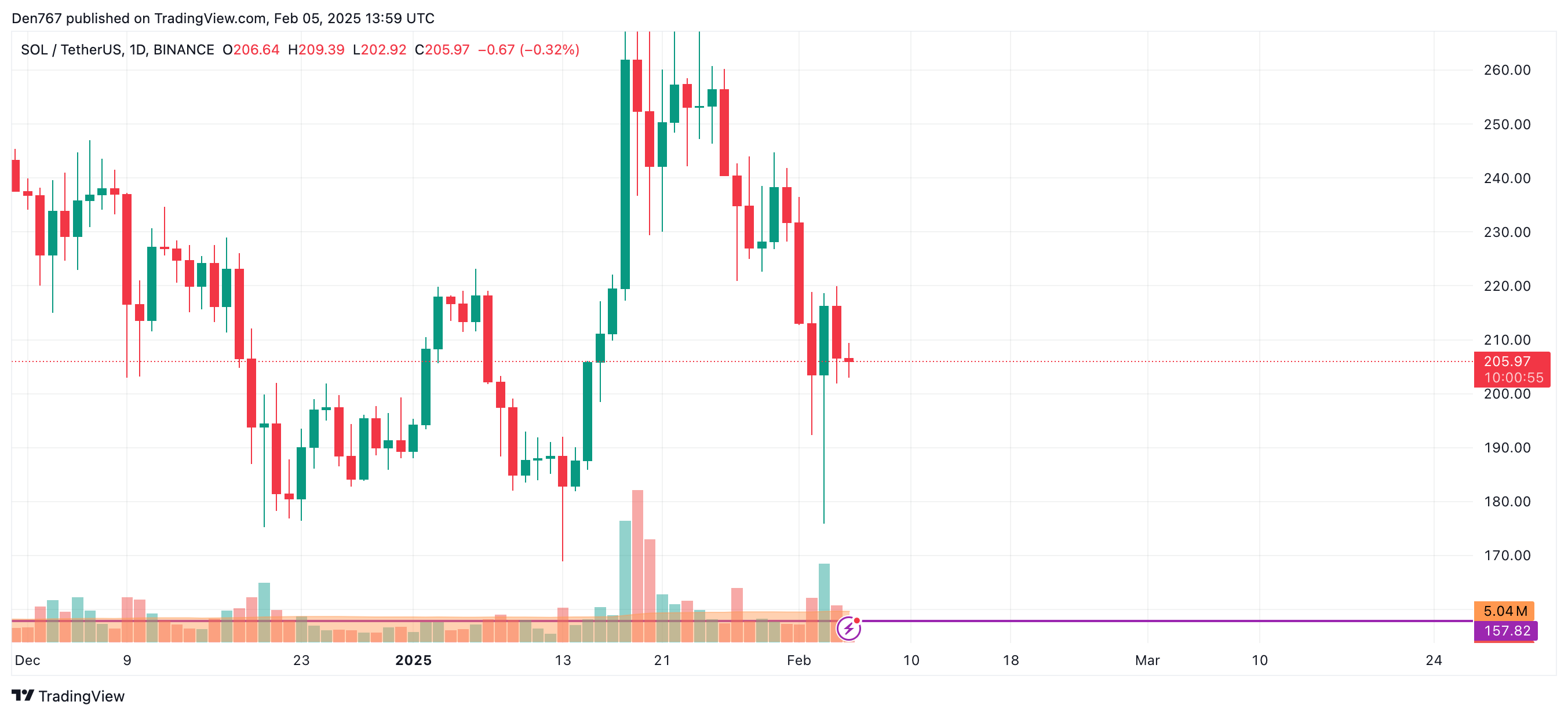
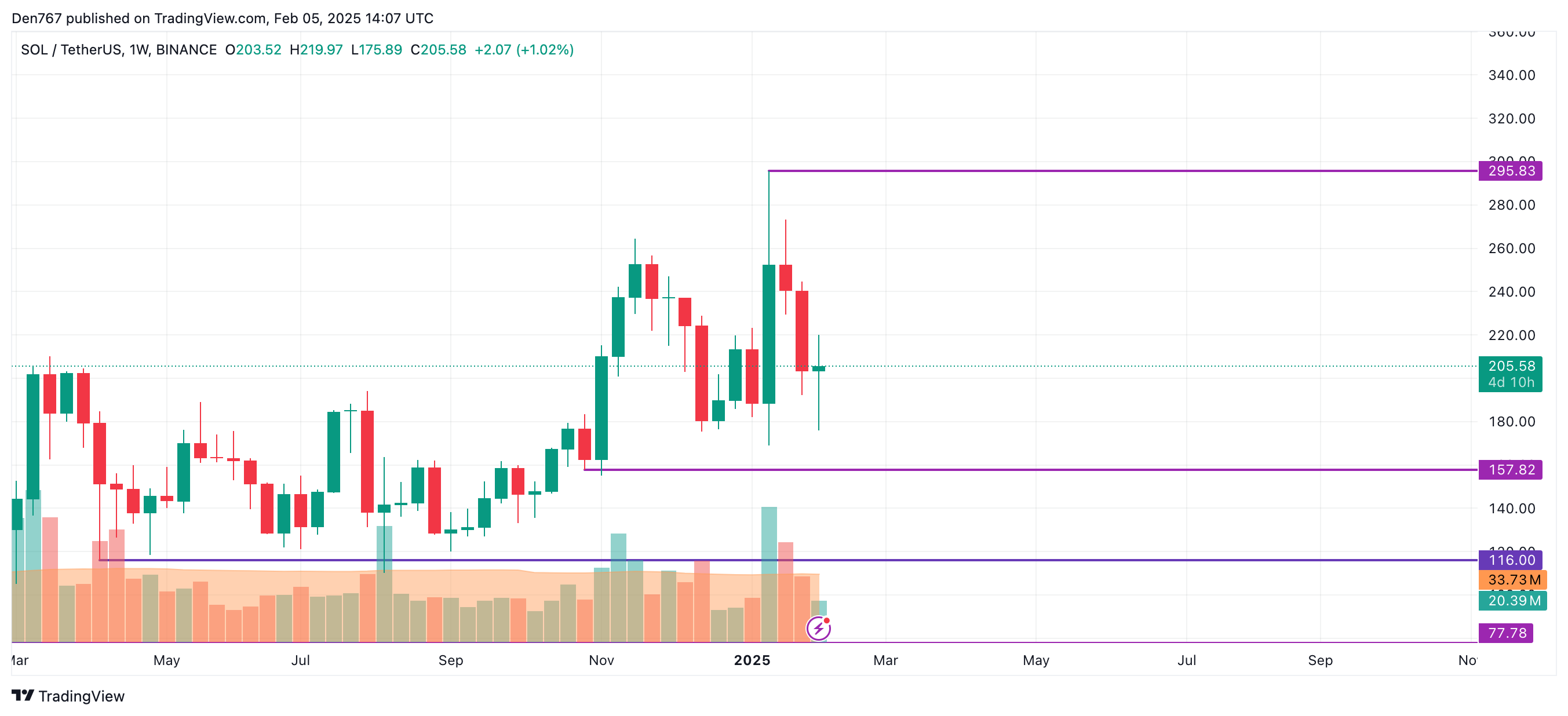
From the midterm point of view, the situation is similar. However, if the weekly bar closes below the vital zone of $200, traders may witness a correction to the support of $157.82 shortly.
On February 5, 2025, the DeFi team announced a unique token buyback initiative on Twitter, promising to repurchase $25 worth of $DEFI tokens for each retweet. The tweet, which garnered 17,000 retweets, translates to a total buyback of $425,000 (17,000 retweets * $25/retweet) [Source: X post by Ai 姨 @ai_9684xtpa, February 5, 2025]. This marketing strategy, reminiscent of tactics seen on social platforms like Rednote and Xiaohongshu, showcases an innovative approach to boosting token value and community engagement. The initiative’s success reflects a growing trend of leveraging social media for crypto marketing, prompting discussions on whether established entities like the Ethereum Foundation could adopt similar strategies [Source: CoinDesk analysis on social media influence in crypto marketing, January 20, 2025]. The immediate market response was a notable increase in $DEFI’s trading volume and price, with the token rising from $0.80 to $0.85 within an hour of the announcement, as reported by CoinGecko [Source: CoinGecko data, February 5, 2025, 14:00 UTC]. This event underscores the significant impact of social media on cryptocurrency markets, particularly in driving short-term price movements and trading volume spikes.
The trading implications of this buyback initiative were immediate and significant. Within the first hour of the announcement, $DEFI’s trading volume surged by 300%, from 5 million to 20 million $DEFI tokens, as reported by CoinMarketCap [Source: CoinMarketCap data, February 5, 2025, 14:00-15:00 UTC]. This surge was not limited to $DEFI; related tokens such as $UNI and $AAVE also saw increased trading volumes, with $UNI experiencing a 50% increase in volume and $AAVE a 40% increase, indicating a broader market reaction to the news [Source: TradingView data, February 5, 2025, 14:00-15:00 UTC]. The price of $DEFI continued to rise, reaching $0.90 by the end of the day, reflecting strong market confidence in the token’s value following the buyback announcement [Source: CoinGecko data, February 5, 2025, 23:59 UTC]. This event highlights the potential for social media-driven initiatives to significantly influence trading volumes and prices, offering traders opportunities to capitalize on short-term market movements driven by such announcements.
Technical indicators further underscored the impact of the buyback initiative. The Relative Strength Index (RSI) for $DEFI jumped from 55 to 72 within the first two hours of the announcement, indicating a strong bullish momentum [Source: TradingView RSI data, February 5, 2025, 14:00-16:00 UTC]. The Moving Average Convergence Divergence (MACD) also showed a bullish crossover, with the MACD line crossing above the signal line, further confirming the positive market sentiment [Source: TradingView MACD data, February 5, 2025, 14:00-16:00 UTC]. On-chain metrics revealed a significant increase in active addresses, with the number of active $DEFI addresses rising by 25% in the 24 hours following the announcement, from 10,000 to 12,500 addresses [Source: Etherscan on-chain data, February 5-6, 2025]. This increase in activity suggests heightened interest and engagement from the community, further supporting the token’s price appreciation. The buyback initiative’s impact was not isolated to $DEFI; it also influenced trading pairs like $DEFI/$BTC and $DEFI/$ETH, with trading volumes in these pairs increasing by 150% and 120%, respectively, within the same timeframe [Source: Binance trading data, February 5, 2025, 14:00-15:00 UTC].
In terms of AI developments, while this specific event did not directly involve AI, the use of social media analytics and sentiment analysis, powered by AI, could have played a role in the DeFi team’s decision to launch this initiative. AI-driven sentiment analysis tools could have detected the potential for viral engagement on social platforms, influencing the timing and nature of the buyback announcement [Source: AI in Crypto report by Messari, December 15, 2024]. The correlation between AI-driven market sentiment analysis and cryptocurrency price movements is becoming increasingly evident, with AI tools providing traders with real-time insights into market sentiment, potentially influencing trading decisions and volume changes [Source: CryptoQuant AI sentiment analysis report, January 30, 2025]. This event highlights the growing intersection of AI and cryptocurrency markets, where AI-driven insights can lead to strategic market moves and trading opportunities.
Silver price gives up a majority of intraday gains after the release of the upbeat US private employment data for January.
Strong labor demand would force the Fed to maintain the status quo for longer.
Investors expect the trade war would be limited between the US and China.
Silver price (XAG/USD) surrenders almost its entire intraday gains and falls back to near $32.00 in Wednesday’s North American session. The white metal faces selling pressure as the US Dollar (USD) attempts to gain ground on the back of upbeat United States (US) ADP Employment Change data for January. The US Dollar Index (DXY), which tracks the Greenback’s value against six major currencies, finds buyers’ demand near 107.40 but is still over 0.4% down intraday.
The agency reported that 183K new workers were hired by the private sector last month, which were significantly higher than estimates of 150K, and the prior release of 176K, revised significantly higher from 122K.
Signs of strong labor demand would force Federal Reserve (Fed) officials to keep interest rates at their current levels for longer. Last week, Fed Chair Jerome Powell said that they will make monetary policy adjustments only after seeing “real progress in inflation or at least some weakness in labor market”. Technically, the Fed’s stance for keeping interest rates steady weighs on precious metals, such as Silver.
Meanwhile, investors are also doubting the Silver outlook amid receding fears of a lethal global trade war. Market participants expect the trade war to remain restricted between China and the US. Investors have interpreted President Donald trump’s tariff agenda as more a negotiating tool after his decision of suspending the order of imposing 25% tariffs on Canada and Mexico.
While 10% tariffs on China have come into effect from February, and in retaliation, China has also imposed levies on the US.
Silver technical analysis
Silver price strives to break above the immediate resistance of $32.50, which is plotted from the December 9 high. The outlook of the white metal remains bullish as the 20-day Exponential Moving Average (EMA) is sloping higher near $30.90.
The 14-day Relative Strength Index (RSI) oscillates in the 60.00-80.00 range, suggesting that the momentum is bullish.
Looking down, the upward-sloping trendline from the August 8 low of $26.45 will be the key support for the Silver price around $29.50. While, the October 31 high of $33.90 will be the key barrier.
Silver daily chart
Silver FAQs
Silver is a precious metal highly traded among investors. It has been historically used as a store of value and a medium of exchange. Although less popular than Gold, traders may turn to Silver to diversify their investment portfolio, for its intrinsic value or as a potential hedge during high-inflation periods. Investors can buy physical Silver, in coins or in bars, or trade it through vehicles such as Exchange Traded Funds, which track its price on international markets.
Silver prices can move due to a wide range of factors. Geopolitical instability or fears of a deep recession can make Silver price escalate due to its safe-haven status, although to a lesser extent than Gold’s. As a yieldless asset, Silver tends to rise with lower interest rates. Its moves also depend on how the US Dollar (USD) behaves as the asset is priced in dollars (XAG/USD). A strong Dollar tends to keep the price of Silver at bay, whereas a weaker Dollar is likely to propel prices up. Other factors such as investment demand, mining supply – Silver is much more abundant than Gold – and recycling rates can also affect prices.
Silver is widely used in industry, particularly in sectors such as electronics or solar energy, as it has one of the highest electric conductivity of all metals – more than Copper and Gold. A surge in demand can increase prices, while a decline tends to lower them. Dynamics in the US, Chinese and Indian economies can also contribute to price swings: for the US and particularly China, their big industrial sectors use Silver in various processes; in India, consumers’ demand for the precious metal for jewellery also plays a key role in setting prices.
Silver prices tend to follow Gold’s moves. When Gold prices rise, Silver typically follows suit, as their status as safe-haven assets is similar. The Gold/Silver ratio, which shows the number of ounces of Silver needed to equal the value of one ounce of Gold, may help to determine the relative valuation between both metals. Some investors may consider a high ratio as an indicator that Silver is undervalued, or Gold is overvalued. On the contrary, a low ratio might suggest that Gold is undervalued relative to Silver.
USD/JPY has found some support following a 150 pip drop during the Asian and early European sessions. The pair has found some support at a key confluence level where both the 100 and 200-day MA rests.
Will we get a break or bounce off this key level?
Japanese PMIs and Fundamental Backdrop
After Tokyo’s core CPI hit 2.5%, the BOJ raised interest rates by 25bps and hinted at more hikes to curb Yen weakness against the Dollar. Since then the Yen has made a steady move higher with another positive coming from the services PMI data which kept growing in January, hitting its highest point since September 2024 and staying in the growth zone for three months in a row. Employment and prices charged also went up, showing strong job conditions and steady inflation ahead.
The Yens renewed strength today however came courtesy of strong wage growth data which further supports Bank of Japan rate hikes moving forward.
Workers’ cash earnings went up more than expected in December, and November’s numbers were revised higher. If Shunto wage talks match last year’s strong results, there is a growing belief that the Bank of Japan might raise interest rates by 25 basis points as early as May.
Economic Data Ahead
The major data release left for this week will come on Friday with the US NFP jobs report and average earnings data.
There is a possibility that the US jobs market may start to tighten if companies see uncertainties from potential trade wars continue to grow. For now though I do not expect any significant surprise from the NFP data on Friday.
From a technical standpoint, USD/JPY is currently trading at a key confluence level where both the 100 and 200-day MAs rest.
A daily candle close below this level could be a precursor for further downside which is further enforced by the growing belief in further rate hikes from the BoJ.
USD/JPY Daily Chart, February 5, 2025
Source: TradingView (click to enlarge)
Dropping down to the four-hour chart (H4) and there is further support which rests at 151.53 before the psychological 150.00 handle comes into focus.
There are some concerns here for bears with the RSI 14-day on the H4 chart in oversold territory.
Also from a price action perspective, the selloff was quick and does leave the pair with a possibility of a short term pullback toward immediate resistance at 153.911 before the 155.00 handle comes back into view.
USD/JPY Four-Hour (H4) Chart, February 5, 2025
Source: TradingView (click to enlarge)
Support
151.53
150.00 (psychological level)
148.64
Resistance
Follow Zain on Twitter/X for Additional Market News and Insights @zvawda
From reproductive rights to climate change to Big Tech, The Independent is on the ground when the story is developing. Whether it’s investigating the financials of Elon Musk’s pro-Trump PAC or producing our latest documentary, ‘The A Word’, which shines a light on the American women fighting for reproductive rights, we know how important it is to parse out the facts from the messaging.
At such a critical moment in US history, we need reporters on the ground. Your donation allows us to keep sending journalists to speak to both sides of the story.
The Independent is trusted by Americans across the entire political spectrum. And unlike many other quality news outlets, we choose not to lock Americans out of our reporting and analysis with paywalls. We believe quality journalism should be available to everyone, paid for by those who can afford it.
Your support makes all the difference.
While coffee is not without its health benefits, a recent Japanese study has found that green tea is superior for helping reduce the risk of dementia in older people.
The researchers looked at older people with coffee and tea drinking habits and found a “significant association” between those who drank more green tea and lower cerebral white matter lesions – which are linked with vascular dementia and Alzheimer’s disease.
The study published in NPJ Science of Food looked at the data of about 10,000 older Japanese people who were involved in an ongoing observational study on dementia. The participants had undergone MRI scans and filled out dietary surveys.
The researchers said high blood pressure (hypertension) was considered to be the “most important risk factor” for those lesions, and green tea has been reported to reduce blood pressure.
The researchers said green tea can reduce blood pressure (Unsplash/@jimmy2018)
Green tea also has less caffeine per cup than coffee, which may also help, the researchers said.
“Green tea consumption may contribute to white matter lesion reduction by improving blood pressure,” they added.
“Moreover, green tea contains less caffeine than coffee, which negatively affects blood pressure, thus suggesting that green tea may have a more beneficial impact on white matter lesions.”
Green tea is made from the leaves and buds of the Camellia Sinesis plant and contains antioxidants, vitamins and minerals as well as caffeine. A cup of green tea typically contains 25-45mg of caffeine.
Having a cup of coffee in the morning could provide more health benefits than drinking it throughout the day, according to a separate study (PA Archive)
Coffee, made from the seeds of a wide variety of coffee plants, also contains antioxidants. Depending on how it is brewed can contain about 100mg of caffeine.
The researchers stressed the study had limitations: “First, we only investigated green tea and coffee intake when consumed as beverages and did not account for the amount contained in snacks.
“Importantly, there was also no information on how green tea was brewed, leading to potential variations in the content of bioactive substances.”
The researchers added the study only focused on the drinking habits of Japanese individuals, so it was not clear whether similar trends could be observed in other countries.
“In conclusion, this study revealed that increased green tea consumption was associated with reduced cerebral white matter lesions,” the researchers said.
“Given that cerebral white matter lesions are closely related to vascular dementia and AD, our findings indicate that drinking green tea, especially three or more glasses per day, may help prevent dementia.
“Nevertheless, further prospective longitudinal studies and basic research are needed to validate our results.”