About Editorial team of BIPNs

Main team of content of bipns.com. Any type of content should be approved by us.
8 12, 2025

Europe Tea Market Set to Reach US$ 33.71 Billion by 2033 as Health, Premiumization & E-Commerce Drive Demand

By |2025-12-08T10:01:07+02:00December 8, 2025|Dietary Supplements News, News|0 Comments


The Europe Tea Market is entering a dynamic new phase marked by stronger consumer focus on health, sustainability, premium blends, and digital retail experiences. According to Renub Research, the Europe Tea Market is anticipated to grow from US$ 20 billion in 2024 to US$ 33.71 billion by 2033, expanding at a CAGR of 5.97% between 2025 and 2033.

This momentum reflects not only Europe’s longstanding tea culture but also a new wave of demand led by wellness-oriented consumers, specialty tea startups, and innovative retail channels reshaping how Europeans buy and consume tea.

Download Free Sample Report

Europe Tea Market Outlook

Tea is one of Europe’s most cherished beverages—steeped in tradition yet continuously reinvented. Derived from the leaves of Camellia sinensis, tea comes in many varieties including black, green, white, oolong, and herbal blends. Each form carries unique flavor notes, caffeine levels, and processing styles.

Herbal infusions such as chamomile, peppermint, hibiscus, and rooibos—naturally caffeine-free—have gained mainstream popularity as daily wellness beverages.

Tea is not only enjoyed for its comforting flavor and aroma but also for its well-documented health benefits. Rich in antioxidants like catechins and polyphenols, tea supports digestion, immune function, cardiovascular health, and mental relaxation. Herbal infusions remain deeply associated with natural healing—often used for sleep, cold relief, digestive issues, and stress management.

Within Europe, tea’s popularity spans major markets such as the United Kingdom, Ireland, Germany, France, and Russia. While black tea remains the most consumed category, green, herbal, and organic teas are fast gaining momentum. The rise of meditation, relaxation rituals, and wellness routines has further propelled the market, giving rise to premium tea salons, artisanal blends, and curated tea experiences.

Growing emphasis on sustainable sourcing, fair-trade certifications, and eco-friendly packaging is also redefining consumer expectations. As more Europeans replace sugary drinks with healthier options, tea continues to cement its position as a versatile, low-calorie beverage offering both comfort and health benefits.

Key Growth Drivers Fueling the Europe Tea Market

1. Rising Health & Wellness Awareness

Across Europe, consumers are replacing high-sugar beverages and even traditional coffee with healthier tea alternatives. Green tea, functional teas, and herbal infusions are gaining traction for their perceived benefits—ranging from detoxification and improved metabolism to immunity and mental calm.

COVID-19 played a pivotal role in accelerating this trend, pushing households to seek natural, immunity-enhancing beverages.

March 2024: Twinings launched a new line of functional tea blends designed for European consumers, infused with botanicals aimed at supporting immunity, digestion, and sleep.

As wellness becomes a lifestyle rather than a trend, tea’s role as a natural health beverage will continue to expand.

2. Surge in Specialty, Premium & Organic Tea

Premiumization is transforming the European tea landscape. Consumers—especially millennials—are experimenting with:

Single-origin teas

Luxury blends

Artisanal loose-leaf teas

Organic and ethically sourced varieties

Specialty tea houses, curated subscription boxes, and immersive store experiences are elevating tea into a lifestyle category.

January 2024: Unilever PLC introduced a premium organic tea collection with innovative eco-friendly packaging aimed at the health-conscious European audience.

This shift has opened new opportunities for boutique brands that emphasize authenticity, craftsmanship, and storytelling.

3. Rapid Expansion of E-Commerce & Digital Retail

Europe’s online tea market has witnessed exponential growth driven by convenience, variety, and influencer-driven discovery. Platforms offer access to rare, international, and niche brands not easily found in supermarkets.

Subscription models—offering monthly curated tea boxes—have become particularly popular among younger drinkers.

In the UK, online tea sales surged 70% in 2022, according to the British E-commerce Association.

Digital retail’s ability to personalize recommendations and deliver targeted wellness messaging has made it a critical distribution channel shaping the future of the industry.

Key Challenges in the Europe Tea Market

1. Market Saturation & Competition

Western Europe’s tea market is mature, with numerous local and global players battling for visibility. Price competition, limited shelf space, and strong brand loyalty create barriers for new entrants.

In markets like the UK, where tea drinking is deeply rooted, growth has plateaued. Brands must differentiate through premiumization, storytelling, health claims, or sustainability to remain competitive.

2. Volatile Raw Material Costs & Climate Impact

Tea production depends heavily on climatic conditions. Erratic weather in major producing nations—India, Kenya, China, and Sri Lanka—can lead to:

Crop damage

Cost fluctuations

Supply-chain disruptions

Rising shipping and energy costs further pressure European importers. Balancing affordability with ethical sourcing and sustainability commitments remains a key challenge across the industry.

Segment Analysis of the Europe Tea Market

Europe Green Tea Market

Green tea is witnessing a substantial surge in demand due to its antioxidant-rich profile and metabolism-enhancing properties. Fitness-focused and urban consumers are driving this category. Available as loose-leaf, tea bags, and ready-to-drink products, green tea’s versatility has broadened its reach.

Europe Black Tea Market

Black tea remains Europe’s staple—especially in the UK, Ireland, and Russia. Known for its strong flavor and caffeine content, it continues to dominate household consumption. Premium black teas, flavored blends, and organic variants are helping the category maintain relevance amid rising competition from herbal teas.

Europe Loose Tea Market

Loose-leaf tea is gaining traction among tea connoisseurs due to its superior aroma and flavor. Seen as more natural and eco-friendly compared to tea bags, loose tea is thriving through specialty stores and online platforms.

Europe Tea Bags Market

Tea bags remain the most popular format for everyday convenience. The segment is dominated by established brands offering black, flavored, and herbal variants. Innovations such as biodegradable bags, pyramid sachets, and premium infusions are rejuvenating the category.

Application & Distribution

Europe Residential Tea Market

Home consumption remains the largest segment, reinforced by increasing wellness habits and pandemic-era lifestyle changes. Consumers gravitate towards bulk packs, organic blends, and herbal infusions.

Europe Specialty Stores Market

Boutique tea stores—especially in Germany, France, and the Netherlands—offer premium experiences with single-origin teas, botanical blends, and guided tastings. These outlets play a crucial role in shaping educated, discerning tea consumers.

Europe Online Tea Market

E-commerce continues to surge across all major markets. Online stores enable:

Access to global brands

Subscription models

Customized tea curation

Broader product comparison

Influencer marketing and wellness content amplify digital engagement.

Country-Level Insights

Germany Tea Market

Germany has one of Europe’s most diverse tea cultures, with strong demand for fruit, herbal, and green teas. Organic preferences run deep among younger consumers. Specialty stores and private labels contribute significantly to the market’s growth.

United Kingdom Tea Market

Tea is synonymous with British culture, with black tea still dominating daily consumption. However, green, herbal, and functional teas are rapidly emerging. Sustainability, premium blends, and ethical sourcing are central to modern consumer preferences.

Russia Tea Market

Russia remains one of Europe’s biggest tea consumers, with a strong preference for black and fermented teas. Young consumers are gravitating toward green, fruit, and herbal infusions. Despite economic fluctuations, local production and online retail have helped sustain market growth.

France Tea Market

France’s tea landscape is shaped by an appreciation for premium, beautifully packaged products. Green tea and herbal blends appeal strongly to wellness-focused consumers. Tea is seen as a lifestyle beverage, often linked to cafés, fine dining, and artisanal experiences.

Market Segmentation Overview

Product Type

Green Tea

Black Tea

Oolong Tea

Others

Packaging

Plastic Containers

Loose Tea

Paper Boards

Aluminium

Tea Bags

Others

Application

Residential

Commercial

Distribution Channel

Supermarkets & Hypermarkets

Specialty Stores

Convenience Stores

Online Stores

Others

Countries Covered

France, Germany, Italy, Spain, United Kingdom, Belgium, Netherlands, Russia, Poland, Greece, Norway, Romania, Portugal, Rest of Europe

Key Companies (with 5 Viewpoints Each)

Associated British Foods Plc

Tata Consumer Products Limited

Unilever

Barry’s Tea

Taetea Group

Final Thoughts

Europe’s Tea Market is undergoing a profound transformation, driven by lifestyle changes, wellness trends, and consumer appetite for premium, sustainable, and experiential products. With the market set to reach US$ 33.71 billion by 2033, the industry’s future is defined by innovation—ranging from functional botanicals and artisanal blends to eco-friendly packaging and immersive digital retail strategies.

Tea is no longer just a traditional household beverage in Europe—it’s a symbol of health, culture, luxury, and mindful living. Brands that embrace authenticity, sustainability, and wellness-driven storytelling are poised to lead the next decade of growth.


Source link

8 12, 2025

DappRadar Shuts Down After Seven Years Citing Financial Unsustainability

By |2025-12-08T08:41:09+02:00December 8, 2025|News, NFT News|0 Comments


DappRadar announced it will shut down after seven years of operation. The platform cited financial unsustainability as the reason for closure. The RADAR token dropped approximately 30% immediately following the announcement on Nov. 17.

The service tracked dapps and decentralized applications across multiple blockchain networks. Services will stop “in the coming days” and the company will cease tracking blockchains and dapps, according to DappRadar’s official announcement on X.

Founders Skirmantas Januškas and Dragos Dunica stated that “running a platform of this scale became financially unsustainable in the current environment.”

RADAR reached $0.00067 at the time of the announcement. The price decline occurred within hours of the shutdown announcement.

DappRadar was founded in February 2018, inspired by the CryptoKitties boom of late 2017. The platform tracked 18,111 dapps across 93 blockchains. It served approximately 500,000 monthly users based on official website data from March 2025.

During its lifetime, the company raised $7.33 million across two funding rounds, according to Tracxn. The funding consisted of a $2.33 million seed round in September 2019 and a $5 million Series A round in May 2021. Investors included Prosus and Lightspeed Venture Partners.

The company is based in Kaunas, Lithuania, and employed an unspecified number of employees, anywhere between 11 and 50 people.

The DappRadar DAO treasury holds $1,602,289 in total assets at the time of writing. RADAR tokens account for $1,554,802 or 97% of the treasury holdings. The treasury also holds $46,162 in USDT stablecoins. Additional assets include approximately $1,325 in Ethereum and SAFE tokens. The treasury holds 2.34 billion RADAR tokens or 23.4% of the total 10 billion token supply.

Treasury records show approximately $163,000 in stablecoin outflows through November 2025, indicating a monthly operational burn rate of around $15,500. At this spending rate, current stablecoin reserves provide approximately three months of runway. The treasury’s RADAR tokens remain unliquidated.

The dapp analytics space includes competitors such as DeFiLlama and Dune Analytics. DeFiLlama operates as a TVL aggregator tracking popular chains and dapps with open-sourced data.

Platform operational challenges have affected multiple crypto services in recent months. Stream Finance suspended withdrawals in November following a $93 million loss by an external fund manager. Recent developments also include Polymarket’s UFC partnership announced on Nov. 13.


Source link

8 12, 2025

Platinum price settles above extra support– Forecast today – 8-12-2025

By |2025-12-08T08:36:06+02:00December 8, 2025|Forex News, News|0 Comments


Copper price confirmed the stability of the bullish scenario by its attempt to settle above $5.3200 level, reinforcing the chances of recording new gains in the near sessions, the continuation of providing positive momentum by stochastic will ease the mission of reaching the next target at $5.5000, monitoring it as it formed extra barrier as appear in the above image.


Reaching below $5.3200 and providing negative close might force it to provide corrective trading, which forces it to decline towards $5.1500 before reaching the previously waited target.


The expected trading range for today is between $5.2500 and $5.5000


Trend forecast: Bullish


Source link

8 12, 2025

How Aussie supplements sector is booming beyond China

By |2025-12-08T08:00:14+02:00December 8, 2025|Dietary Supplements News, News|0 Comments


The Australian industry’s export success over the past decade has largely been driven by trade with China. Total exports are now valued at $1.02bn.

Today, China (including Hong Kong) continues to dominate as the largest export destination, accounting for $690million, or 68 per cent of total exports.

However, diversification is gathering pace, with Vietnam strengthening its position as the second-largest market ($86 million, 8 per cent), followed by New Zealand ($49 million, 3 per cent), South Korea ($32 million, 3 per cent) and Thailand ($31 million, 3 per cent).

The data was revealed in trade body Complementary Medicine Australia’s (CMA) 2025 Industry Snapshot, which was launched at its annual summit, attended by NutraIngredients, last week.

The report also noted that new export opportunities were also arising, noting that “emerging demand in the United Arab Emirates further highlights Australia’s growing footprint in premium health and wellness products. Together, these markets reflect both resilience and opportunity, driven by rising incomes, a stronger focus on preventive health and ongoing demand for clean, safe and evidence-based products.”

Despite this, China remains the anchor market for Australian supplements, both as a direct export destination and through cross-border e-commerce.

The report stated that E-commerce continues to dominate distribution, now accounting for more than 60 per cent of China’s supplement sales in 2025.

“Innovation in formats such as gummies, vegan and plant-based supplements, and beauty-linked products is closely tied to these digital retail channels, providing powerful cross-border pathways for Australian brands reach Chinese consumers who increasingly value quality, authenticity and transparency,” it added.

“Australia’s reputation for ‘clean and green’ products, combined with its world-class manufacturing standards and regulatory alignment, ensures that demand from Chinese consumers remains robust.”

Meanwhile, Vietnam has rapidly emerged as one of the most dynamic markets for Australian exports. In 2024, exports reached $86 million, representing 8 per cent of Australia’s total exports and consolidating Vietnam’s position as the second-largest destination after China.

The report added: “E-commerce is playing an increasingly central role in Vietnam’s health and wellness market. From a single-digit share in 2015, online sales now account for more than 20 per cent of complementary medicines purchases by 2025. This shift has been accelerated by high digital engagement, with Vietnamese consumers turning to online platforms for convenience, product discovery and trusted international brands.

”For Australian exporters, Vietnam represents a powerful diversification opportunity. Rising disposable incomes, an expanding middle class, and strong consumer trust in Australian made products combine to create fertile ground for growth.”

Beyond China and Vietnam, other markets combine to generate a quarter of Australia’s export revenue, with India standing out as one of the other fastest-growing opportunities.

“The country’s complementary medicines market is forecast to expand at 9.0 per cent CAGR to 2030, with sports nutrition emerging as a breakout category at 15.9 per cent CAGR. This reflects India’s rapidly urbanising population, a surge in fitness culture, and increasing adoption of preventive health solutions among younger consumers,” the report noted.

Thailand and Malaysia are also demonstrating solid growth momentum. In Thailand, the complementary medicines market is projected to expand at steady rates, with sports nutrition growing at 8.0 per cent CAGR.

Malaysia is experiencing even faster growth, with sports nutrition up 10.4 per cent CAGR, supported by high health awareness and rising incomes. Ingestible beauty is also booming across ASEAN – beauty ranks among the top vitamin and dietary supplements categories in Thailand, Malaysia, and Singapore.

CMA CEO John O’Doherty said trust was a key factor in achieving exports growth.

“Trust – both at home and abroad – remains one of our industry’s greatest strengths,” he said.

“In 2025, 84 per cent of Australians expressed confidence in the safety and quality of complementary medicines, while international consumers consistently rank Australian-made products among the most trusted in the world. ‘Made in Australia’ continues to carry exceptional value, particularly in Asia, where exports exceeded $1 billion in 2024. As trade diversifies across South East Asia and emerging markets, our reputation for integrity and quality will continue to set Australia apart.”


Source link

8 12, 2025

XAU/USD continues its struggles with $4,200 as the Fed week kicks in

By |2025-12-08T06:34:53+02:00December 8, 2025|Forex News, News|0 Comments


Gold is trading around a flat line near the $4,200 mark, starting a crucial US Federal Reserve (Fed) week on a cautious footing.

Gold extends its range play, with eyes on the Fed verdict

Amid sustained US Dollar (USD) weakness and simmering geopolitical tensions between Japan and China, Gold buyers continue to provide a floor while sellers keep lurking at higher levels.

The upside remains guarded, anticipating a probable hawkish guidance from the Fed this week. The Fed is widely expected to lower the interest rates by 25 basis points (bps) to 3.5%-3.75%, with the odds currently sitting close to 90%, the CME Group’s FedWatch Tool shows.

The Fed’s outlook on the 2026 rate path will also hold the key, leaving Gold wavering in a tight range at the start of the week on Monday.

The recent series of unimpressive US economic data continues to favor the dovish Fed expectations.

Meanwhile, markets remain cautious after Japanese Defence Minister Shinjiro Koizumi reported on Sunday, Chinese fighter jets twice directed fire-control radar at its F-15 aircraft over international waters near Okinawa.

On the other hand, Beijing accused Japanese jets of interrupting their air training.

Gold finds additional support from a solid growth in China’s Exports for November, with both the Yuan and USD-denominated jump reported at 5.7% and 5.9%, respectively. China is the world’s top yellow metal consumer.

In the day ahead, Gold will continue to take cues from broad market sentiment in the absence of top-tier US economic data. Geopolitical developments in Asia will also be closely monitored.

Gold price technical analysis: Daily chart

In the daily chart, the 21-day Simple Moving Average (SMA) climbs above the 50-, 100-, and 200-day SMAs, with all slopes rising and price holding above them, reinforcing a bullish bias. The 21-day SMA at $4,147.93 offers nearby dynamic support, while the 50-day SMA at $4,084.46 underpins the advance. The Relative Strength Index (RSI) sits at 61.33, edging higher from 60.31 and signaling firm, but not overbought, momentum. Measured from the $4,381.17 high to the $3,885.84 low, the 61.8% retracement at $4,191.95 has been surpassed, hinting the prior bearish phase is losing strength.

Upside extension faces resistance at the 78.6% retracement at $4,275.16; a decisive close above this barrier would open the path toward the prior top. If buyers fail to sustain above the 61.8% marker, a pullback could revisit the 50% retracement at $4,133.50. Beneath that, trend support remains defined by rising moving averages, with the 50-day SMA cushioning the downside. Overall, momentum and trend alignment favor dips being bought while Fibonacci thresholds frame the next directional cues.

(The technical analysis of this story was written with the help of an AI tool)

Fed FAQs

Monetary policy in the US is shaped by the Federal Reserve (Fed). The Fed has two mandates: to achieve price stability and foster full employment. Its primary tool to achieve these goals is by adjusting interest rates.
When prices are rising too quickly and inflation is above the Fed’s 2% target, it raises interest rates, increasing borrowing costs throughout the economy. This results in a stronger US Dollar (USD) as it makes the US a more attractive place for international investors to park their money.
When inflation falls below 2% or the Unemployment Rate is too high, the Fed may lower interest rates to encourage borrowing, which weighs on the Greenback.

The Federal Reserve (Fed) holds eight policy meetings a year, where the Federal Open Market Committee (FOMC) assesses economic conditions and makes monetary policy decisions.
The FOMC is attended by twelve Fed officials – the seven members of the Board of Governors, the president of the Federal Reserve Bank of New York, and four of the remaining eleven regional Reserve Bank presidents, who serve one-year terms on a rotating basis.

In extreme situations, the Federal Reserve may resort to a policy named Quantitative Easing (QE). QE is the process by which the Fed substantially increases the flow of credit in a stuck financial system.
It is a non-standard policy measure used during crises or when inflation is extremely low. It was the Fed’s weapon of choice during the Great Financial Crisis in 2008. It involves the Fed printing more Dollars and using them to buy high grade bonds from financial institutions. QE usually weakens the US Dollar.

Quantitative tightening (QT) is the reverse process of QE, whereby the Federal Reserve stops buying bonds from financial institutions and does not reinvest the principal from the bonds it holds maturing, to purchase new bonds. It is usually positive for the value of the US Dollar.


Source link

8 12, 2025

Can Matcha Cause Iron Deficiency? Expert Explains the Facts

By |2025-12-08T05:59:07+02:00December 8, 2025|Dietary Supplements News, News|0 Comments


TEMPO.CO, Jakarta – Matcha has become a social media trend among Gen Z and is quickly gaining a reputation as a health-boosting beverage thanks to influencers touting its antioxidant benefits.

However, matcha has recently come under scrutiny after some people reported iron deficiency due to excessive consumption. If you enjoy matcha every day, there’s no need to stop drinking it; a few simple strategies can help minimize its impact on iron levels.

Dr. Joseph Salhab, a Florida-based gastroenterologist and health content creator specializing in digestion, liver, pancreas, and nutrition, sets the record straight about matcha and its controversial impact on iron absorption.

In an Instagram video shared on December 2nd, the gastroenterologist outlined strategies for minimizing matcha’s effects on iron absorption, offered guidance on safe consumption, and highlighted ways to enhance iron absorption from food sources.

Matcha Interferes with Iron Absorption

Dr. Salhab emphasized that while matcha is rich in antioxidants and generally beneficial, it can interfere with the absorption of some types of iron, and excessive consumption can lead to iron deficiency in severe cases.

He explained, “Although green tea and matcha are good sources of polyphenols, they may affect the absorption of non-heme iron, which is the iron obtained primarily from vegetables and non-meat sources.”

Dr. Salhab outlined simple tips to help reduce the impact of matcha on iron absorption.

1. Don’t consume matcha or green tea with or immediately after eating iron-rich foods. Wait at least one to two hours to minimize interference.

2. To improve iron absorption, pair iron-rich foods—especially those from plant sources—with foods rich in vitamin C such as bell peppers, citrus fruits, or strawberries.

3. Cook plant-based iron sources whenever possible, as iron from raw foods is often absorbed less efficiently than iron from cooked foods.

4. Limit matcha consumption to one cup a day if you are at risk of iron deficiency, and avoid drinking it throughout the day and around mealtimes.

5. Get your iron levels checked regularly.

HINDUSTAN TIMES

Read: Does Drinking Matcha Really Cause Hair Loss?

Click here to get the latest news updates from Tempo on Google News


Source link

8 12, 2025

Japanese Yen Forecast: USD/JPY Falls as Wage Growth Fuels BoJ Hike Bets

By |2025-12-08T04:03:13+02:00December 8, 2025|Forex News, News|0 Comments

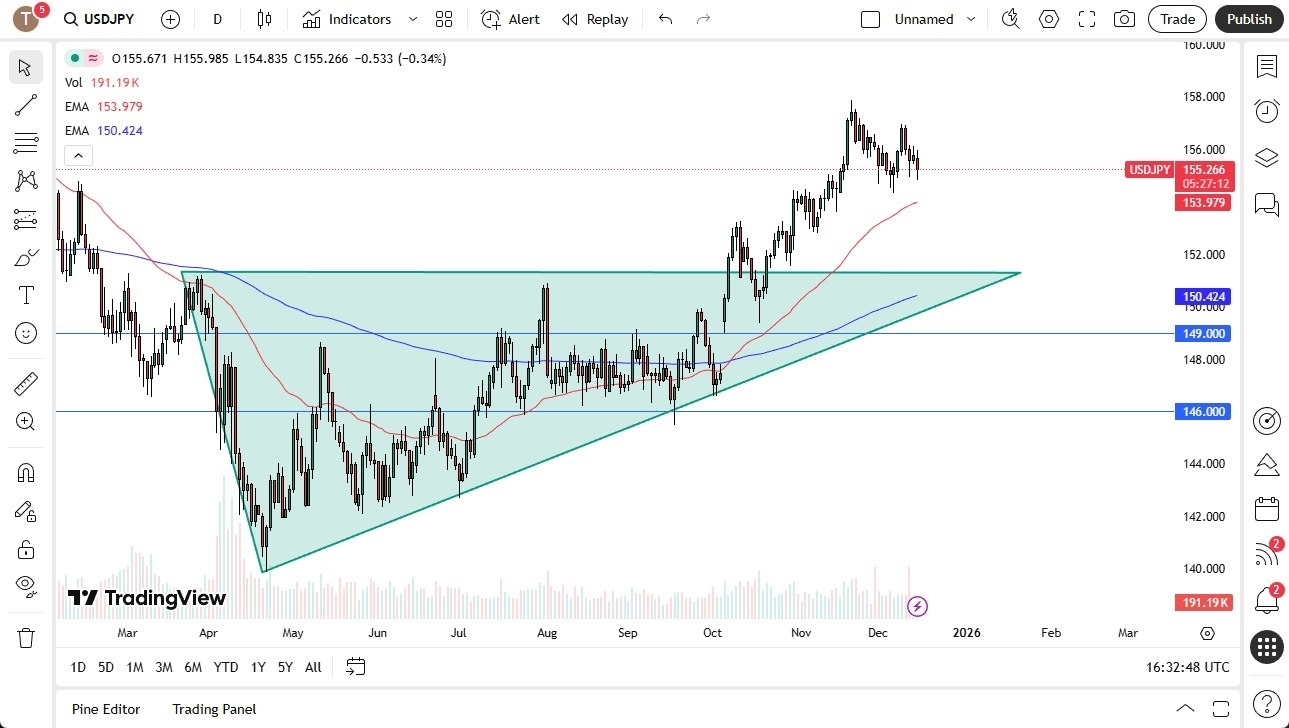
USDJPY – 1 Minute Chart – 081225

While expectations of a BoJ rate hike are strengthening yen demand, key US data will fuel speculation about multiple Fed rate cuts.

US Inflation in Focus as the Fed Decision Looms

Later on Monday, US economic data will influence USD/JPY trends as the FOMC interest rate decision and projections loom. Economists expect Consumer Inflation Expectations to soften from 3.2% in October to 3.1% in November.

A drop in the NY Fed 1-Year Consumer Inflation Expectations would align with last week’s inflation data, supporting bets on a Fed rate cut. A more dovish Fed rate path would weaken demand for the US dollar, sending USD/JPY lower, aligning with my bearish short- to medium-term outlook.

For context, the US Core PCE Price Index rose 2.8% YoY in September, down from 2.9%, while Michigan Inflation Expectations fell from 4.5% in November to 4.1% in December.

The prospect of a December Fed rate cut, further easing in H1 2026, and BoJ rate hikes are key for USD/JPY trends.

According to the CME FedWatch Tool, the probability of a December cut stood at 88.4% on December 8, up from 86.2% on December 5. Meanwhile, the chances of a March rate cut slipped from 46.5% to 46.1%.

With markets already pricing in a December cut, traders should closely monitor the chances of a March cut.

While key US inflation data will influence US dollar demand, there are no FOMC member speeches to overshadow the reports. The Fed’s Blackout Period is in effect until December 11, limiting Fed-driven volatility.

Technical Outlook: USD/JPY on a Downward Trajectory

Looking at the daily chart, USD/JPY remained above the 50-day and 200-day Exponential Moving Averages (EMAs), indicating a bullish bias. However, fundamentals have begun to shift from the technical trend, supporting a bearish outlook.

A drop below the 155 support level would pave the way toward the 50-day EMA. If breached, the 153 support level would be the next key support. Significantly, a break below the 50-day EMA would signal a bearish trend reversal, signaling a near-term drop toward 150.

Source link

8 12, 2025

Two Strikes And Firms Selling 7-OH Supplements Will Be Out Of Options To Avoid US Enforcement

By |2025-12-08T03:57:06+02:00December 8, 2025|Dietary Supplements News, News|0 Comments


Source link

8 12, 2025

Weekly Forex Forecast For DXY, EURUSD, GBPUSD, And XAUUSD (December 8-12, 2025)

By |2025-12-08T02:02:05+02:00December 8, 2025|Forex News, News|0 Comments

In today’s Weekly Forex Forecast, I’m breaking down my exact trade plan for the DXY, EURUSD, GBPUSD, and XAUUSD.

Can the euro confirm last week’s bullish change of character on the 4-hour chart?

I explain that and more in today’s video.

US Dollar Index (DXY) Forecast

The DXY did what I was anticipating last week as the market rotated lower from the upper band of its distribution channel. It was a clean reaction using the same combination of channels and SMC structure concepts I always look for.

The key for next week is the 4-hour structure. The only low that matters for market structure is 98.60. That is the level that produced the last confirmed bullish break of structure (BoS).

We also have the September FVG sitting there, still unmitigated. I want to see price tag that level next week.

If buyers defend 98.60, the bullish structure remains intact, but only if the DXY then closes above 99.12. If we close below 98.60, that would shift momentum and give us a confirmed bearish Change of Character (CHoCH).

The focus next week is simple. DXY bulls must hold above 98.60 to keep the bullish narrative alive. A sustained break below on the high time frames would confirm a bearish CHoCH.

Weekly Forex Forecast For DXY, EURUSD, GBPUSD, and XAUUSD (December 8-12, 2025) 5

EURUSD Forecast

EURUSD is showing early signs of strength after confirming a CHoCH on the 4-hour chart. That happened when price broke above the 1.16668 high.

The level buyers need to defend is 1.1590. That is the low that produced the last valid break of structure.

As long as EURUSD stays above that low, the pair has room to continue higher.

But EURUSD still depends heavily on the DXY. Before I turn bullish on the euro, I need to see the dollar index below 98.60. Until then, I’ll take last week’s EURUSD bullish CHoCH with a grain of salt.

Admittedly, last week was a bit frustrating because the EURUSD came within a few pips of sweeping the equal lows I wanted. Still, we got the EURUSD rally, which was my base case last weekend.

The bigger picture remains bullish as long as 1.1590 holds. A confirmed break below that low would invalidate the CHoCH.

Four-hour EURUSD chart showing a bullish change of character after breaking a key swing high, with price pulling back toward the 1.15912 support level that buyers need to defend. The chart also features an ascending channel outlining recent bullish structure.
Weekly Forex Forecast For DXY, EURUSD, GBPUSD, and XAUUSD (December 8-12, 2025) 6

GBPUSD Forecast

GBPUSD hit the September FVG last week that I had my eye on. That level came from a clean three candle pattern on the monthly.

The pound came close to my ideal entry zone but didn’t quite reach it. I wanted a deeper move into the pocket that showed more confluence.

Even without that, the market reacted and pushed higher, so the short-term structure remains bullish.

The bigger question is whether this is the bottom for GBPUSD or simply a relief rally within the downtrend. Some recent highs only produced wicks and not closes.

That makes it difficult to confirm a true CHoCH on higher timeframes. The DXY holding above 98.60 adds to the uncertainty.

Several inefficiencies beneath GBPUSD still need to be filled, specifically near 1.3270. If the dollar bounces from 98.60, the pound could struggle.

For now, GBPUSD is bullish in the short term. The reaction from any pullback next week will tell us whether buyers remain in control.

Four-hour GBPUSD chart highlighting a bearish area of interest near 1.34337 and a bullish area of interest around 1.32685, marked by a single print and weekly POC. The image also notes a mitigated September FVG and key support levels that may attract price next week.
Weekly Forex Forecast For DXY, EURUSD, GBPUSD, and XAUUSD (December 8-12, 2025) 7

XAUUSD (Gold) Forecast

Gold moved sideways last week, but the structure is unchanged. The 4-hour trend remains bullish, with a recent break of structure, confirming higher highs and lows.

I am watching a key pocket below current levels next week. It includes a weekly bullish FVG, a daily FVG, and a sell-side single print.

That entire area remains unmitigated. It would be a clean place for a pullback.

Last week I wanted to see gold trade into that pocket and print a lower timeframe bullish CHoCH. Instead, the market stalled and traded sideways.

The same setup is valid going into next week. As long as gold stays above the key lows just above $4,000, buyers remain in control.

The trend line below also supports the idea of continuation. I would never use a trend line on its own, but it does intersect with the $4,130 support area.

Four-hour XAUUSD chart showing a recent break of structure and a bullish area of interest formed by a weekly bullish FVG, daily bullish FVG, and single print near 4,102. The chart also highlights multiple buy-side inefficiencies above price that may serve as future targets.
Weekly Forex Forecast For DXY, EURUSD, GBPUSD, and XAUUSD (December 8-12, 2025) 8

Source link

8 12, 2025

Sip, sweat, repeat: Science shows this energizing tea can fuel your workouts

By |2025-12-08T01:56:05+02:00December 8, 2025|Dietary Supplements News, News|0 Comments


There’s no silver bullet, and plenty of “energy-boosting” fitness and wellness products are more hype than anything else. However, there are some science-based ways to boost your energy if you’re feeling sluggish at the gym. Can you really sip your way to more energy? Gulping gallons of coffee every week isn’t the recommended approach to powering through that workout.

Research shows green tea consumption can actually help prevent the production of reactive oxygen species and improve sports performance.

Catechins in green tea

Ali Senol / Pexels

Exercising, particularly in more intense or longer sessions, can cause your body to produce free radicals, which are unstable molecules. When these free radicals build up in your body, higher numbers lead to oxidative stress — a condition involving tiredness and slower workout recovery.  The powerful antioxidants in green tea, particularly catechins like EGCG, help neutralize and combat these free radicals, which can help your body better handle the stress of exercise.

Boost performance

Man running along a path

Unitea / Pixabay

In research published in the International Journal of Environmental Research and Public Health, the authors revealed that green tea consumption can boost endurance and reduce fatigue. Of course, again, it’s not a magic remedy that will solve all of your gym woes, but it’s certainly worth considering if you’re looking to add a little pep in your step. Green tea improves your body’s ability to use fat as a fuel, and that could help your stamina in the gym. Researchers from different studies have also pointed out how this could be useful for weight loss.

Boosting nitric oxide (NO)

Man wearing a black T-shirt at the gym with a towel around his neck holding a dumbbell doing one arm exercise curl

Andres Ayrton / Pexels

This research also shows green tea boosts nitric oxide, which helps to widen your blood vessels, allowing more oxygen to get to your muscles. More oxygen could mean better performance and less tiredness.

Anti-inflammatory effect

Man performing deadlift

Dogu Tuncer / Pexels

The anti-inflammatory effects of this vibrant tea could help lower muscle pain and exercise-related muscle damage.

The combo of green tea and exercise

green tea

Matcha Co / Unsplash

Combining green tea with exercise could help you feel less tired and burn more fat during your workouts, according to the research. It’s also a safer option to improve performance for most people, and it doesn’t come along with a risk of harmful side effects. Green tea can act as a natural performance enhancer if you drink it regularly, particularly before or around exercise. Research shows you can improve your endurance, lower fatigue, recover faster, and help combat oxidative stress.


Source link

Go to Top