British Pound Technical Forecast: GBP/USD Weekly Trade Levels
British Pound poised to mark fourth-monthly decline- bulls responding to key technical support
GBP/USD risk for near-term price inflection- Retail sales, U.S. Presidential Inauguration on tap
Resistance 1.2367/97, 1.2494 (key), 1.26- Support 1.2084-1.2114 (key), 1.1841/89, 1.1632
The British Pound has plunged more than 3.3% since the start of month / year with GBP/USD responding to key support this week. The four-month decline may be vulnerable while above his key inflection zone and the immediate focus on this recovery in the days ahead. Battle lines drawn on the GBP/USD weekly technical chart.
Review my latest Weekly Strategy Webinar for an in-depth breakdown of this Sterling setup and more. Join live on Monday’s at 8:30am EST.
Technical Outlook: In last month’s British Pound Weekly Forecast we noted that the GBP/USD was trading into resistance at a major pivot zone with, “the immediate focus is on a breakout of the monthly range with the broader outlook still weighted to the downside while below 1.2850.” Support broke two-weeks later with Sterling plunging more than 5.2% off the December highs.
The decline responded to key support on Monday at the 2023 yearly open / 2023 low-week close (LWC) at 1.2084-1.2114. Looking for a reaction off this mark with the immediate short-bias vulnerable while above.
Initial weekly resistance is eyed at 1.2367/97– a region defined by the April low-close, the 2023 January high-week close (HWC) and the May low-week close (LWC). Note that basic channel resistance converges on this threshold over the next few weeks and further highlight the technical significance of this threshold. Ultimately, a breach / close above the 2024 LWC at 1.2494 would be needed to suggest a more significant low was registered this week / a larger trend reversal is underway (bearish invalidation).
A break / weekly close below this key pivot zone would threaten another bout of accelerated losses with subsequent support objectives seen at the January 2024 swing low / 50% retracement of the 2022 advance at 1.1841/89 and the 2020 LWC at 1.1632– both areas of interest for possible exhaustion / price inflection IF reached.
Bottom line: A four-month sell-off takes GBP/USD into pivotal support – risk for possible inflection off this zone. From a trading standpoint, a good region to reduce short-positioning / lower protective stops- rallies should be limited to 1.2397 IF price is heading lower on this stretch with a close below 1.2084 needed to mark downtrend resumption.
Keep in mind we get the release of US & UK retail sales data the close of the week with key UK employment data and the inauguration of President Trump on tap early next week. Stay nimble into the release and watch the weekly closes here for guidance. Review my latest British Pound Short-term Outlook for a closer look at the near-term GBP/USD technical trade levels.
GBP/USD Economic Data Releases
Economic Calendar – latest economic developments and upcoming event risk.
Active Weekly Technical Charts
— Written by Michael Boutros, Sr Technical Strategist with FOREX.com
Writing in the journal npj Science in Food, a team of Japanese researchers investigated the associations between green tea or coffee intake with various measures associated with structural integrity of the brain among over 8,000 community-dwelling adults.
“Given that cerebral white matter lesions are closely related to vascular dementia and AD, our findings indicate that drinking green tea, especially three or more glasses per day, may help prevent dementia,” they reported. “Nevertheless, further prospective longitudinal studies and basic research are needed to validate our results.”
Green tea and cognitive decline
As background to their investigation, the researchers referenced previous epidemiological studies associating green tea consumption with slowing cognitive decline and noted that white matter lesions, indicative of cerebral small vessel disease, are associated with vascular dementia and Alzheimer’s disease (AD).
“Recently, a longitudinal study also identified white matter lesions as an independent risk factor for cognitive decline, even after accounting for traditional AD risk factors and MRI biomarkers, such as ApoE ε4 carrier status, total brain volume and HV,” they wrote.
With hypertension considered the most important risk factor for white matter lesions, the study also highlighted recent meta-analyses supporting the systolic and diastolic blood pressure lowering effects of regular green tea consumption
Green tea contains catechins, studied for their antioxidant and anti-inflammatory properties, anti-platelet aggregation and nitric oxide regulation in the vascular endothelium, as well as theanine with its reported antihypertensive effect. Another compound, epigallocatechin gallate, has been shown to confer neuroprotective effects by inhibiting amyloid β aggregation and production.
Study details
The current study analyzed data from a total of 8,766 adults aged 65 and older drawn from the Japan Prospective Studies Collaboration for Aging and Dementia between 2016 and 2018.
A food frequency questionnaire was used to assess green tea and coffee consumption, and brain magnetic resonance imaging assessed cerebral white matter lesions, hippocampal volume and total brain volume.
“This cross-sectional study found a significant association between lower cerebral white matter lesions and higher green tea consumption, but not coffee consumption, in older adults without dementia, even after adjusting for confounding factors,” the researchers reported. “Similar significant associations were observed when analyses were limited to older adults with normal cognitive function, excluding individuals with mild cognitive impairment.”
There were no significant differences between green tea consumption and hippocampal or total brain volume, and beneficial associations were not observed in people diagnosed with depression or with the ApoE ε4 gene variant.
“We can infer that, since depression and ApoE ε4 are strong risk factors for dementia, green tea may not be effective in reducing white matter lesions in individuals with depression and ApoE ε4,” the researchers suggested. They added that the sample size in these groups might also have been too small and that the prevalence of hypertension and diabetes was significantly higher in participants with depression.
As a limitation, the study noted that it only considered green tea and coffee consumed as beverage and not as snack, possible variations in green tea bioactive content due to brewing technique and the difficulty in determining causal relationships due to the cross-sectional nature of the research.
“Because our study was performed with older Japanese participants, it is necessary to clarify the association between green tea intake and cerebral white matter lesions in people with different ethnicities, genetics and lifestyles,” the researchers noted.
Source: npj Science of Food, doi: 10.1038/s41538-024-00364-w, “Green tea consumption and cerebral white matter lesions in community-dwelling older adults without dementia”, Authors: Shutaro Shibata et al.
The cryptocurrency market is buzzing with optimism for the next bullish run. Savvy investors now wonder how soon this cycle will run and are speculating on the Solana price prediction for January 2025. With its reputation as a high performance blockchain with low transaction costs and widespread adoption, Solana has been the crypto market’s darling for years.
However, given current market conditions and recent technological advancements, many analysts combine Solana’s technical analysis and the latest data to craft their price forecasts for its top-notch native token, SOL. Interestingly, the Solana overview and its daily chart suggest a feasible growth, with the potential of the current price reaching $1,000.
Given the current Solana cost and game-changing innovation, it might be time to buy Solana. But while the Solana price prediction unfolds, this surprising contender, Dawgz AI, steals the spotlight with its AI-meme combo. So, will SOL finally attain its maximum price this January, or will Dawgz AI make an impressive rise? Let’s learn what lies ahead in this Solana price prediction guide.
Solana Price Prediction 2025: Experts Paint a Bullish Scenario For SOL Price in The Cryptocurrency Market
The high performance blockchain platform (Solana) is stealing the spotlight again in the cryptocurrency market, with analysts offering exciting price predictions for 2025.
Known for its low transaction costs, bullish SOL tokens, and rapid processing speeds, Solana’s innovative smart contracts development continues to drive demand for decentralized applications in the cryptocurrency market.
But what’s next for Solana price and SOL tokens in the coming years? Let’s dive into the Solana price prediction and see why traders are so hyped about this crypto gem!
Solana’s Growth Potential
Many analysts see SOL price and market cap reaching new heights this year. A SOL prediction points out that it could hit a maximum price of $400 per SOL by year-end. This optimism stems from Solana’s strong fundamentals, low fees, thriving ecosystem, market capitalization, and significant network upgrades by Solana Labs.
These innovations enhance scalability and reduce transaction fees, further solidifying Solana as a leader in decentralized finance. In the near term, the average trading price for traders looking to buy Solana is projected to be between $186 and $200.
Meanwhile, the average price for Solana and its market cap across 2025 could climb steadily. Experts forecast that an increase in Solana price could be fueled by the massive adoption of smart contracts, decentralized applications, and its growing market capitalization.
So, for anyone eyeing Solana SOL at its current price for short-term gains or long-term investment, its low fees, speed, and market cap make it a prime contender in the market.
Solana Price Forecast: Riding Market Sentiment
As the crypto landscape braces for newer regulatory shifts, market sentiment plays a crucial role in shaping Solana’s trajectory. A price prediction of SOL tokens soaring beyond November’s high of $264 is possible if the Solana blockchain benefits from an approved ETF. This could drive institutional capital and boost market cap.
Notably, analysts agree that this could mark a major turning point for the Solana ecosystem, potentially pushing it beyond its maximum price of $300. However, challenges like regulatory uncertainty and crypto market volatility may limit growth in the short term.
In a more conservative scenario, the minimum price could be trading at $165, offering a solid base for recovery. The Solana price forecast for 2025 is a mix of opportunity and risk. Whether you’re intrigued by the bullish scenario or cautious about volatility, one thing is clear: Solana remains a powerhouse in the crypto world.
With the SOL prediction reaching points beyond its current average price, is a prospect worth watching.
Dawgz AI: The Next Big Thing in Meme Coins with Cutting-Edge AI Innovation
The latest data from the crypto space analysts shows that investors are buzzing about the Solana price. However, the focus is shifting to Dawgz AI, a revolutionary project with technological advancements. This leading platform combines the fun of meme culture with the utility of artificial intelligence.
As the bullish prospects for Dawgz AI continue to attract significant attention, this project is poised to lead the next wave of innovation in crypto. Dawgz AI’s innovative features center around its AI-powered trading bot, which is designed to minimize risk and maximize profits for users.
The bot empowers users to make smarter, data-driven decisions in a highly volatile market by providing real-time insights and actionable recommendations. With transparency at its core, DAGZ token has undergone a rigorous audit of its smart contracts by SolidProof, ensuring security and investor confidence.
Tokenomics Built for Long-Term Success
Dawgz AI’s native token, DAGZ, has tokenomics tailored for both early adopters and long-term investors in its growing ecosystem. Twenty percent of its supply is allocated to proof of stake rewards, and an eye-popping 800% APY makes it an irresistible opportunity for passive income seekers.
Additionally, 24% of the supply is earmarked for marketing, driving mass adoption and ensuring the project gains significant attention across the crypto community. At a current price of $0.00211 during the presale, $DAGZ offers incredible value for buyers, especially with its projected rise after launch.
The total value raised exceeds $800K, underscoring this project’s excitement. The Dawgz AI roadmap is packed with ambitious milestones, including multi-chain expansion and strategic partnerships set to take off after the presale.
Continuous enhancements to the AI bot, alongside the launch of exclusive NFT collectibles, further make it an attractive option at its current price. These innovative approaches position Dawgz AI as a leading platform to rise in value in the highly volatile meme coin market.
Combining security, transparency, and utility with its innovative features, $DAGZ is a meme coin. The latest data suggests it’s set for a bullish breakout, making it one of the hottest native coins in January.
While the Solana price prediction has investors and analysts on edge, Dawgz AI offers a golden opportunity to invest before prices rise. Also, this native token paints a bullish scenario in the crypto market starting January 2025.
Dawgz AI Is Set to Steal the Spotlight in 2025
The crypto industry is buzzing, and for good reason — both Solana and Dawgz AI are showcasing solid fundamentals and the potential for significant growth. With its high-performance blockchain, Solana continues to dominate the decentralized finance sector, benefiting from low transaction fees, security, and innovative scalability.
Based on the Solana price prediction, analysts eye a bullish scenario with the price potentially reaching impressive highs, thanks to Solana’s innovative approach and decentralized applications. Meanwhile, Dawgz AI combines the charm of meme coins with cutting-edge AI technology, positioning itself as a leader in the world of digital assets.
Backed by a vibrant community and transparent tokenomics, its presale success signals a new era of innovation. With strong market conditions propelling this innovative project toward its maximum price tokens, Dawgz AI could deliver massive gains. As you consider SOL price prediction, this year is filled with game-changing opportunities.
As the crypto market enters a new phase of bullish momentum, the question on everyone’s mind is whether Decentralized Finance (DeFi) will once again take center stage. While the DeFi boom of 2020 catalyzed the broader blockchain ecosystem, this cycle may take a more evolved and measured approach, emphasizing utility and long-term sustainability.
Why DeFi Matters More Than Ever
DeFi has transcended its experimental origins to become a cornerstone of blockchain innovation. By leveraging smart contracts and decentralized infrastructure, it has democratized access to financial services for millions of people worldwide.
DeFi isn’t a fringe experiment anymore, but a proven disruptor. In 2021, an estimated 1.4 billion people were unbanked, and another billion were underbanked. DeFi offered a pathway to financial inclusion, enabling users to bypass traditional gatekeepers. Today, stablecoins anchor the market, and DeFi lending platforms, decentralized exchanges (DEXs), and staking protocols have changed how capital flows for good.
The Current Bull Run
To evaluate the possibility of a DeFi cycle, we need to examine the current market dynamics. The ongoing bull run has seen a resurgence in Bitcoin and large cap asset prices, with total market capitalization exceeding $3 trillion USD. However, DeFi’s growth hinges on more than just market optimism.
Key Indicators to Watch
Market Liquidity: A rise in DeFi Total Value Locked (TVL) across platforms suggests increased user confidence. Recent data shows a steady climb in TVL, now exceeding $75 billion USD.
Institutional Interest: Institutional players, such as BlackRock and Goldman Sachs, are exploring DeFi infrastructure, signalling mainstream adoption.
User Growth: Wallet activity in DeFi protocols has spiked by 30% quarter-over-quarter, indicating growing user participation.
The DeFi Disruptors
The rise in DeFi TVL has brought on several new innovative solutions in the market. Among the emerging players shaping this next phase is Nudge, a company introducing a new primitive in the DeFi ecosystem: programmable incentive payments called “nudges.”
According to Markus Maier, co-founder of Nudge, “Nudges are programmable incentive payments that allow protocols to pay users for reallocating assets, liquidity, or activity on-chain. Think of it as getting paid—or ‘nudged’—to shift your assets, change to a staking provider, or start using a new Layer 2 solution.”
Nudge’s approach, termed “reallocation primitives,” represents a shift in how resources are utilized across DeFi platforms. Users can earn rewards for reallocating their assets while protocols gain measurable and scalable tools for user acquisition and retention. This concept moves beyond traditional token rewards, offering a more targeted and efficient mechanism for ecosystem growth.
“The inspiration behind nudges,” Maier adds, “was the crowded landscape of protocols competing for the same pool of users and capital. By enabling users to earn from reallocating their resources, we create new incentives that align their actions with the broader ecosystem’s success.”
Other rising players include Convex Finance and Tokemak. Convex Finance, built on top of Curve Finance, enhances yield opportunities for liquidity providers and Curve stakers by streamlining rewards and boosting incentives. Tokemak, on the other hand, serves as a decentralized liquidity provider, optimizing capital deployment across the ecosystem with its unique liquidity reactors.
While retail-centric DeFi solutions like Nudge aim to make financial tools more accessible to individual users, there is another category of DeFi applications that focuses on institutional utilities, bridging the gap between traditional finance and decentralized systems. For example, Singapore’s Project Guardian explores institutional DeFi by experimenting with tokenized bonds and deposits to assess the potential of decentralized financial infrastructures. Backed by the Monetary Authority of Singapore (MAS), it aims to integrate tokenized assets with permissioned liquidity pools, providing a secure and scalable blueprint for institutional adoption.
The Role of Regulation
One of the critical factors influencing the future of DeFi is regulation. As governments worldwide grapple with the challenges of overseeing decentralized systems, the impact of new policies on DeFi cannot be overstated. Regulatory clarity could either propel DeFi into mainstream adoption or stifle its growth.
Recent developments suggest a mixed bag for the industry. The European Union’s Markets in Crypto-Assets (MiCA)regulation aims to create a comprehensive framework for crypto assets, including DeFi protocols. While this offers a path toward legitimacy, critics argue that overly stringent requirements could hinder innovation.
In the United States, the Securities and Exchange Commission (SEC) has ramped up its scrutiny of DeFi platforms, emphasizing the need for compliance with existing securities laws. This has prompted many projects to consider decentralized autonomous organization (DAO) structures to navigate regulatory hurdles. “While regulation is necessary, it must be balanced to foster innovation,” says Maier.
For a more in-depth look at regulatory considerations, I recommend reviewing the Key Elements of an Effective DeFi Framework, published by the Crypto Council of Innovation in which I was a co-author. Here, we have outlined the principles for crafting policies that encourage innovation while ensuring consumer protection and financial stability.
What Could Drive this DeFi Cycle?
Several factors could reignite a DeFi cycle in this bull run:
Institutional Interest: With traditional financial institutions exploring blockchain technology, DeFi could serve as a bridge between centralized and decentralized systems.
Layer 2 Scaling Solutions: Emerging players in the space are making DeFi more accessible and cost-effective, potentially driving user adoption.
Tokenization of Real-World Assets: The integration of real-world assets into DeFi platforms could attract a broader audience and increase utility.
“The next DeFi cycle will prioritize utility over hype,” added Maier.
Conclusion
While uncertainties around regulation and market sentiment persist, the fundamentals of DeFi remain strong. With innovative platforms like Nudge leading the way and continued advancements in blockchain technology, the stage is set for a potential DeFi resurgence in this bull run. The next few months will be crucial in determining whether DeFi can overcome its challenges and reclaim its position as a driving force in the crypto ecosystem.
GBP/USD is edging higher after cooler-than-expected inflation helped pull gilt yields lower
UK CPI unexpectedly fell to 2.5% YoY in December, down from 2.6% and below forecasts of 2.7%. Meanwhile, service sector inflation, which the Bank of England is watching closely, cooled by more than expected to 4.4%, well below the 4.8% predicted and down from 5% in November. Sticky service sector inflation has hindered the BoE from cutting interest rates further.
Following the data the market has ramped up BoE rate cut expectations, adding 12 basis points to bets for 2025 cuts, which are now seen at 49 basis points across the year. This is still short of the central bank’s forecast for 4 rate cuts this year.
Usually, with rising rate cut expectations, the pound would fall. However, today’s data has also pulled guilty yields sharply lower, dropping by around 9 basis points on the 2-year bond, the most sensitive to Bank of England policy, which is helping to support the pound.
The data is a step in the right direction but it doesn’t mean that the UK is out of the woods just yet, particularly given that a recent survey by the British Retail Consortium shows that 2/3 of retailers will raise prices in response to higher employer Social Security costs from the budget which bodes poorly for progress in disinflation outlook. Meanwhile, the same survey of chief financial officers and finance directors at 52 major retailers found that around half plan to reduce staff hours and headcount.
There are also growing worries about UK growth, which has been on a downward trajectory since labour came to power in July. This, combined with the prospect of sticky inflation, means a stagflationary outlook is a very real problem. UK GDP data is due tomorrow and will provide further clues about the health of the UK economy.
Attention also turns to the US CPI, which is due later today and is expected to rise to 2.9% from 2.7%. What inflation could further dampen rate cut expectations, boosting the USD and pulling GBP USD lower?
GBP/USD forecast – technical analysis
GBP/USD trended lower from 1.34 to a low of 1.21 at the start of the week. The price recovered from 1.21 and trades back above the 1.22 level, bringing the RSI out of oversold territory. The long-term downtrend remains intact, but the hammer candlestick and the long lower wicks on candles this week suggest that the bottom could be in, and a bullish reversal could be in the cards.
Buyers will look to extend gains above 1.23, the April low, before focusing on 1.25, the December low into focus.
Sellers will need to take out the 1.21 low to extend losses to 1.2050, the 2023 low, and 1.20, the psychological level.
USD/JPY falls ahead of US CPI
Yen rises after hawkish BoJ comments
US CPI is expected to rise to 2.9% from 2.7%
USD/JPY tests 157.1 support
USD/JPY is falling amid a stronger yen following hawkish BoJ’s Ueda remarks. However, those gains could be short-lived ahead of US inflation data.
Governor Ueda reiterated the central bank’s commitment to raising borrowing costs if the economy continues to improve. His comments followed days of the OJ deputy governor him me know on Tuesday. The end raise as markets priced in the possibility of a rate hike at next weeks meeting.
Comments from Finance Minister Kato, who revived concerns about potential government intervention in the FX markets, also supported the yen.
Attention is now turning to US inflation data, which is expected to show that CPI increased 2.9% from 2.7% in November, marking its fifth straight monthly increase and moving further from the Fed’s 2% target.
Worries about hot inflation are already rampant in the market, with treasury yields elevated. I mean, the resilient U.S. economy and ahead of Trump’s administration. Trump is expected to implement inflationary policies.
Hotter-than-expected inflation could see the market further resist Fed rate cut bets. Currently, the market sees just one rate shot right at the end of this year. This could see USD/JPY recover higher above 158.
USD/JPY forecast – technical analysis
After a strong run-up from the 148.65 low, USD/JPY has been consolidating just below 158. The price is testing support at the 78.6% fib retracement at 157.10, as the MACD shows a bearish cross-over.
Should sellers meaningfully break below 157.10 and 156.75 the November high, a deeper selloff towards 155 round number and 152.40 the 61.8% fib level could be on the cards.
Should the 157.10-156.75 support zone hold, buyers will look to extend gains above 168.80, the 2025 high, towards 160 and 162, the 2024 high.
Collagen is key for supple skin, healthy hair, and strong nails, which is why so many people add collagen supplements to their beauty and wellness routines. Jennifer Aniston is one of them — and she loves one brand so much that she signed on as chief creative officer of the company, Vital Proteins. Amazon has slashed the prices of select Vital Proteins supplements, including one that Aniston calls her “go-to.”
Why is this a good deal? 💰
Usually retailing for $27, Vital Proteins’ Collagen Peptides Powder is $19 — that’s more than 30% off. This is the cheapest we’ve seen this dietary supplement in months, so now is a great time to finally try it — or to stock up.
Why do I need this? 🤔
This collagen powder is absorbed by your body for what some reviewers say are next-level benefits, including stronger hair, skin, nails, joints and tendons. Plus, it’s easy to add to your everyday routine — just add a pack of the easily-digestable powder to any kind of hot or cold liquid and sip away. This powder is unflavored (and made without dairy or gluten) so you really can add it to anything you like.
“My go-to collagen routine is adding Vital Proteins Collagen Peptides in my morning cup of coffee or smoothie — so easy to use,” Aniston said.
What reviewers say 💬
This powder has earned more than 50,000 five-star fans, so it’s no surprise that more than 70,000 jars have been bought in the last month alone.
Pros 👍
“Love this stuff, use it every day,” a five-star fan said. “The single packs are convenient for travel, and I love that it helps [me] get some extra protein in the mornings. I put a packet or two in my coffee every day. … I definitely notice a difference in my nails when I run out for a week or forget to pack it.”
Another fan raved: “My nutritionist recommended I get these and add them to my morning coffee and they have been a game changer. It took about 2 weeks before I noticed less aching in my joints which is major. I’m in my 30s and sit all day in my corporate job so to notice less aching in my shoulders, hips and knees is a win!
“I have never tried a product that gave me so many benefits!” another happy customer said. “Let’s start with my nails. They are as hard as acrylic. My nails never grow, and I hate taking pills like biotin. With this powder, I pour it in half a bottle of water faithfully every morning. … After about a week of taking this every morning, I haven’t been to the chiropractor in three months! My back doesn’t bother me. My knees don’t hurt after workouts. I have gotten a lot of compliments on my skin! I noticed I don’t have those ‘pockets’ around my eyes in the mornings like I used to.”
A final shopper shared: “It’s the first collagen supplement I can comfortably drink and enjoy the taste. It blends seamlessly into my coffee, smoothies, yogurt, or water with no weird aftertaste or gritty texture.”
The seemingly ageless Jennifer Aniston says collagen supplements are a part of her beauty routine. (Vital Proteins)
Want a little flavor with your collagen powder? There’s also a Vital Proteins Chocolate Collagen Powder Supplement, which has alkalized cocoa powder and stevia to thank for the sweeter taste. Add a scoop or two to your favorite drink daily: “This chocolate collagen powder not only has the benefits but also provides a flavor boost to my smoothie,” Aniston said.
Other reviewers say this one is a winner. “I have tried other brands of collagen and don’t care for their taste,” said one. “This tastes delicious, it turns my coffee into a nice hot chocolate flavor. I won’t try other brands again.”
Cons 👎
“The only downside, and this is maybe not a big deal, but it does not seem to dissolve as well as other brands,” reported another fan. “I have tried it in hot and cold. Stir, shaker, mixer bottles. Other than that, I have no complaints. I do see a difference in my hair, nail strength and joint pain.”
Another shopper noted the packaging could be improved: “I was surprised no scoop is included in this collagen (large canister) Also, the canister is so large I have a hard time opening it because I have small hands. The product itself is very good. I guess I will buy the smaller canister in the future.”
You can also get your collagen fix in gummy form. Each one of these gummies contains 2.5 grams of verisol collagen peptides. The which is reported to stimulate the inner layer of your skin to increase collagen production. They also aim to preserve the collagen you lose through the normal aging process.
“Over the years ever since I was a small child, I have experienced issues with hair loss on and off,” a satisfied customer shared. “I went back on hair vitamins and decided to try these gummies for extra measure. I am not kidding when I say within a week my nails improved noticeably (that was the first sign that these really work). My hair loss pretty much stopped in less than a month, and it’s all filling in nicely. … An added, unexpected bonus is that my joints feel better too. I never had much pain, but now I feel like I can run upstairs as good as I would have when I was a kid.”
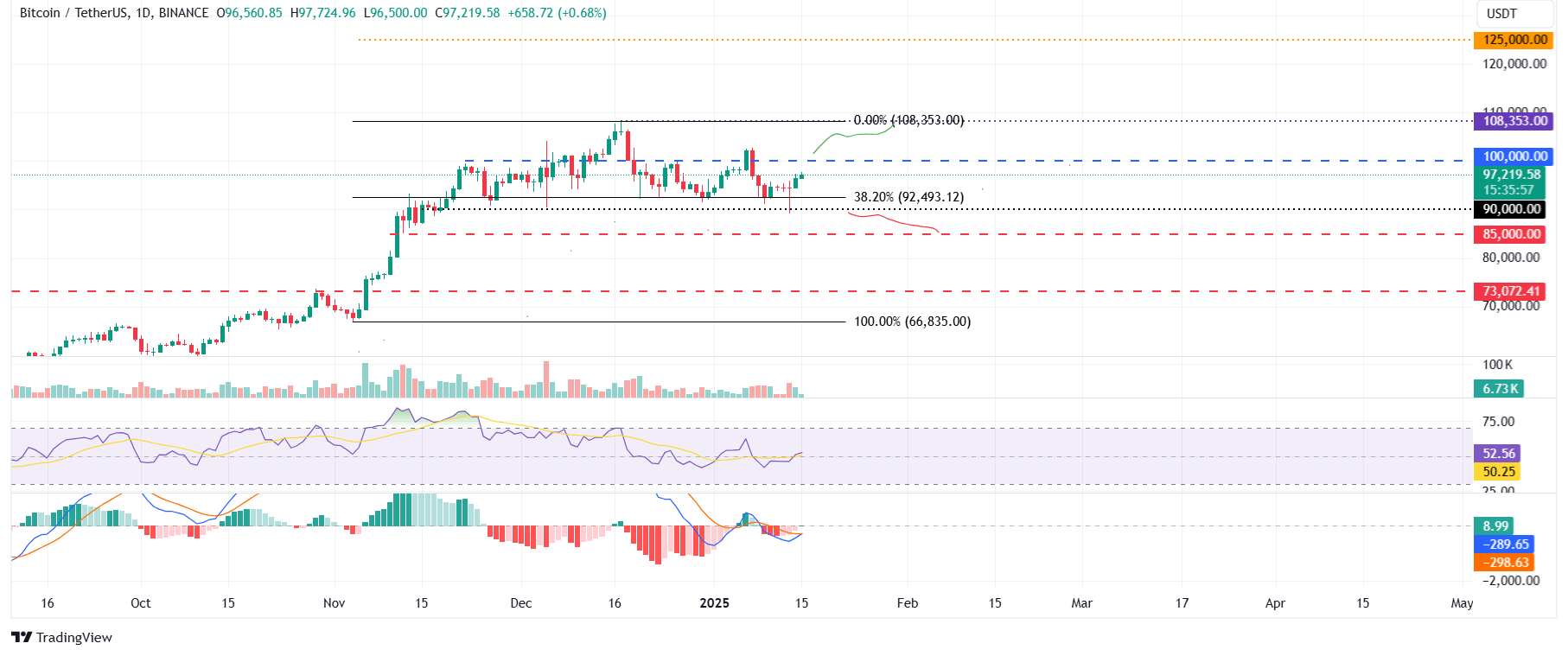
Bitcoin price recovers, trading above $97,000 on Wednesday after retesting its key psychological level of $90,000 earlier this week.
Traders should be cautious as BTC expects volatility in the upcoming US CPI data release.
A K33 report predicts Donald Trump will pursue expansionary policies, extend 2017 tax cuts, and offer more relief for working-class Americans, boosting risk assets.
Bitcoin (BTC) continues its recovery, trading above $97,000 on Wednesday after retesting its key psychological level at $90,000 earlier this week. The upcoming US Consumer Price Index (CPI) data release could bring volatility to Bitcoin, and traders should watch for it.
A K33 report this week predicts Trump will pursue expansionary policies to extend the 2017 tax cuts and add further tax relief for working-class Americans, boosting risk assets like Bitcoin.
Bitcoin expects volatility ahead of US CPI data
Bitcoin’s price recovery continues on Wednesday, trading above $97,200 after rebounding from the $90,000 psychological level earlier this week.
“Softer-than-expected inflation data from the US helped pause the recent surge in the US Treasury bond yields and boosted investors’ appetite for riskier assets,” reports FXStreet analyst Haresh Menghani.
Menghani explained further that the US Bureau of Labor Statistics reported on Tuesday that the Producer Price Index (PPI), which measures wholesale inflation, rose 0.2% in December, below the 0.3% expected and the 0.4% reading in November. The core gauge remained flat during the reported month. This comes after the upbeat US monthly jobs report on Friday and makes it difficult for investors to project the Federal Reserve’s (Fed) next moves on interest rates, which keeps the US Dollar bulls on the defensive. Meanwhile, risky assets like Bitcoin recovered slightly on Tuesday.
Moreover, Senior Analyst at FXStreet Yohay Elam reports, “After the warm-up on Tuesday, the main event awaits on Wednesday – America’s first read of consumer inflation.”
Elam continued, “The most important figure to watch is core CPI MoM, which rose by 0.3% in the past four months. The annualized rate of 0.3% MoM is roughly 3.6%, which is too high. A 2% core inflation rate is desired, and getting closer to that level would allow the Fed to cut interest rates.”
If the Fed decides to cut rates, it would boost demand for risky assets like Bitcoin and other cryptocurrencies, and investors would begin favoring higher-yield investment products.
Bitcoin highly correlated with Nasdaq – K33 Research report
Tuesday’s K33 Research “Ahead of the curve” report explained that the crypto market is caught in the same headwinds blazing through global markets.
The report explains that the rising 10-year yields, a strengthening US Dollar (USD), and reduced Fed interest cut expectations amid higher inflation expectations have curtailed marked wide momentum and pushed BTC lower, reaching levels below $90,000.
Moreover, in the past month, BTC and Nasdaq have seen higher correlations, with the current 30-day correlation between BTC and Nasdaq sitting at 2024 highs, as shown in the graph below.
BTC Vs. Nasdaq correlation chart. Source: K33 Research
K33’s analyst explains, “Trump is expected to run expansionary policies, extend the 2017 tax cuts and add further tax relief for working-class Americans, all policies that should benefit risk assets broadly.”
The analyst continued that Trump is expected to bring forward favorable crypto policies, which, in turn, should reflect well on the crypto market.
In an interview with Bloomberg on Tuesday, VanEck’s CEO, Jan van Eck, explained that vicious drawdowns up to 25% have historically been seen in Bitcoin in the past year as investors taking profits.
He further explains that it is disappointing that Bitcoin has had a high correlation with the Nasdaq over the last six months.
Eck continued, “Just as many people are looking at it for the first time, that’s not what you want. If you look at the ten-year correlations, they are almost zero, which is really what diversification should be. We’ll have to see how Bitcoin performs going forward.”
Bitcoin Price Forecast: BTC in recovery mode
Bitcoin price dipped, reaching a low of $89,256, but recovered quickly and closed above $94,500 on Monday. On Tuesday, it rebounded by 2.14% and closed above $96,500. At the time of writing on Wednesday, it continues its recovery, trading around $97,200.
If BTC continues its recovery and closes above the $100,000 level, it could extend the rally to retest the December 17, 2024, all-time high of $108,353.
The Relative Strength Index on the daily chart reads 52, above its neutral level of 50 and points upwards, indicating a rise in bullish momentum. Additionally, the Moving Average Convergence Divergence (MACD) indicator is about to flip a bullish crossover. If the MACD line closes above the signal line, it would give a buy signal and suggest an uptrend.
BTC/USDT daily chart
However, if BTC continues its correction and closes below $90,000, it will extend an additional decline to retest its next support level at $85,000.
Bitcoin, altcoins, stablecoins FAQs
Bitcoin is the largest cryptocurrency by market capitalization, a virtual currency designed to serve as money. This form of payment cannot be controlled by any one person, group, or entity, which eliminates the need for third-party participation during financial transactions.
Altcoins are any cryptocurrency apart from Bitcoin, but some also regard Ethereum as a non-altcoin because it is from these two cryptocurrencies that forking happens. If this is true, then Litecoin is the first altcoin, forked from the Bitcoin protocol and, therefore, an “improved” version of it.
Stablecoins are cryptocurrencies designed to have a stable price, with their value backed by a reserve of the asset it represents. To achieve this, the value of any one stablecoin is pegged to a commodity or financial instrument, such as the US Dollar (USD), with its supply regulated by an algorithm or demand. The main goal of stablecoins is to provide an on/off-ramp for investors willing to trade and invest in cryptocurrencies. Stablecoins also allow investors to store value since cryptocurrencies, in general, are subject to volatility.
Bitcoin dominance is the ratio of Bitcoin’s market capitalization to the total market capitalization of all cryptocurrencies combined. It provides a clear picture of Bitcoin’s interest among investors. A high BTC dominance typically happens before and during a bull run, in which investors resort to investing in relatively stable and high market capitalization cryptocurrency like Bitcoin. A drop in BTC dominance usually means that investors are moving their capital and/or profits to altcoins in a quest for higher returns, which usually triggers an explosion of altcoin rallies.
A better market mood puts pressure on US Treasury yields and the Greenback.
The December United States Consumer Price Index came in line with market’s expectations.
XAU/USD maintains its bullish strength and aims to extend gains towards record highs.
Spot Gold peaked at $2695.96 on Wednesday, helped by a bout of risk appetite. The upbeat sentiment was a combination of encouraging United States (US) earnings reports and the country’s Consumer Price Index (CPI) report. On the one hand, major US banks reported results that exceeded expectations. Goldman Sachs’ profits doubled in Q4, while JP Morgan announced that large asset and wealth management grew in the same period.
Inflation in the US, as measured by the change in the CPI rose 2.9% on a yearly basis in December from 2.7% in November, the US Bureau of Labor Statistics (BLS) reported, matching expectations. When compared to the previous month, the CPI was up 0.4%, after adding 0.3% in the previous month. The annual core CPI, which excludes volatile food and energy prices, rose 3.2%, below the expected 3.3%. The news sent stocks skyrocketing and bond yields lower as investors lifted bets on the Federal Reserve’s (Fed) upcoming rate cuts.
The macroeconomic calendar will have little to offer in the upcoming days, beyond US Retail Sales scheduled for Thursday. Sales are expected to have grown by 0.6% in December after adding 0.7% in November.
XAU/USD short-term technical outlook
The daily chart for XAU/USD shows it trades around $2,690 maintaining the bullish tone, as it keeps developing above all its moving averages, although the 20 Simple Moving Average (SMA) and the 100 SMA converge around $2.635 with no directional strength, yet acting as dynamic support. At the same time, technical indicators head north within positive levels, reflecting buyers still hold the grip.
In the near term, and according to the 4-hour chart, Gold is neutral-to-bullish. The XAU/USD quickly recovered after a dip towards a flat 20 SMA, currently providing dynamic support at around $2,677. The longer moving averages post tepid advances below the shorter one. Technical indicators, in the meantime, lack directional strength, with the Momentum indicator stuck to its 100 level and the Relative Strength Index (RSI) indicator easing at around 60.
GBP/USD is edging higher after cooler-than-expected inflation helped pull gilt yields lower
UK CPI unexpectedly fell to 2.5% YoY in December, down from 2.6% and below forecasts of 2.7%. Meanwhile, service sector inflation, which the Bank of England is watching closely, cooled by more than expected to 4.4%, well below the 4.8% predicted and down from 5% in November. Sticky service sector inflation has hindered the BoE from cutting interest rates further.
Following the data the market has ramped up BoE rate cut expectations, adding 12 basis points to bets for 2025 cuts, which are now seen at 49 basis points across the year. This is still short of the central bank’s forecast for 4 rate cuts this year.
Usually, with rising rate cut expectations, the pound would fall. However, today’s data has also pulled guilty yields sharply lower, dropping by around 9 basis points on the 2-year bond, the most sensitive to Bank of England policy, which is helping to support the pound.
The data is a step in the right direction but it doesn’t mean that the UK is out of the woods just yet, particularly given that a recent survey by the British Retail Consortium shows that 2/3 of retailers will raise prices in response to higher employer Social Security costs from the budget which bodes poorly for progress in disinflation outlook. Meanwhile, the same survey of chief financial officers and finance directors at 52 major retailers found that around half plan to reduce staff hours and headcount.
There are also growing worries about UK growth, which has been on a downward trajectory since labour came to power in July. This, combined with the prospect of sticky inflation, means a stagflationary outlook is a very real problem. UK GDP data is due tomorrow and will provide further clues about the health of the UK economy.
Attention also turns to the US CPI, which is due later today and is expected to rise to 2.9% from 2.7%. What inflation could further dampen rate cut expectations, boosting the USD and pulling GBP USD lower?
GBP/USD forecast – technical analysis
GBP/USD trended lower from 1.34 to a low of 1.21 at the start of the week. The price recovered from 1.21 and trades back above the 1.22 level, bringing the RSI out of oversold territory. The long-term downtrend remains intact, but the hammer candlestick and the long lower wicks on candles this week suggest that the bottom could be in, and a bullish reversal could be in the cards.
Buyers will look to extend gains above 1.23, the April low, before focusing on 1.25, the December low into focus.
Sellers will need to take out the 1.21 low to extend losses to 1.2050, the 2023 low, and 1.20, the psychological level.
USD/JPY falls ahead of US CPI
Yen rises after hawkish BoJ comments
US CPI is expected to rise to 2.9% from 2.7%
USD/JPY tests 157.1 support
USD/JPY is falling amid a stronger yen following hawkish BoJ’s Ueda remarks. However, those gains could be short-lived ahead of US inflation data.
Governor Ueda reiterated the central bank’s commitment to raising borrowing costs if the economy continues to improve. His comments followed days of the OJ deputy governor him me know on Tuesday. The end raise as markets priced in the possibility of a rate hike at next weeks meeting.
Comments from Finance Minister Kato, who revived concerns about potential government intervention in the FX markets, also supported the yen.
Attention is now turning to US inflation data, which is expected to show that CPI increased 2.9% from 2.7% in November, marking its fifth straight monthly increase and moving further from the Fed’s 2% target.
Worries about hot inflation are already rampant in the market, with treasury yields elevated. I mean, the resilient U.S. economy and ahead of Trump’s administration. Trump is expected to implement inflationary policies.
Hotter-than-expected inflation could see the market further resist Fed rate cut bets. Currently, the market sees just one rate shot right at the end of this year. This could see USD/JPY recover higher above 158.
USD/JPY forecast – technical analysis
After a strong run-up from the 148.65 low, USD/JPY has been consolidating just below 158. The price is testing support at the 78.6% fib retracement at 157.10, as the MACD shows a bearish cross-over.
Should sellers meaningfully break below 157.10 and 156.75 the November high, a deeper selloff towards 155 round number and 152.40 the 61.8% fib level could be on the cards.
Should the 157.10-156.75 support zone hold, buyers will look to extend gains above 168.80, the 2025 high, towards 160 and 162, the 2024 high.
Green tea is a powerful beverage with its antioxidant properties that support brain health.
As one ages, brain health starts to deteriorate, leading to Alzheimer’s disease, vascular dementia and other neurodegenerative conditions. So there’s always a lookout for food and beverages that may reduce the risk of cognitive decline. Green tea as per a study published in npj Science of Food, offers protective measures against brain health decline. Let’s see what the study’s findings have to say about this popular drink’s benefits.
Green tea is prepared from the unoxidized leaves of the camellia sinensis bush.(Shutterstock)
Green tea is already well-recognised as a potent beverage for those who seek to lose weight. Green tea supports weight loss. But this study, further adds to green tea’s many benefits, this time for brain health.
Drinking tea helps with brain health, lowering cerebral white matter lesions. Brain as one gets older, can develop problems like white matter lesions. White matter lesions suggest small vessel diseases, which are connected with cognitive decline, vascular dementia, and Alzheimer’s disease. According to the American Brain Foundation, Small vessel diseases are caused by the narrowing of arteries in the brain due to inflammation or buildup of misfolded proteins. The size of the hippocampus was also studied. It is the brain region associated with memory.
How much to drink
The study findings highlighted that those people who drank green tea had fewer white matter lesions. The researchers also specially named the amount of green tea to have after analysing the results.
In the study, participants who drank 600 ml of green tea a day had 3% less brain damage (white matter lesions) compared to those who drank 200 ml or less. So drinking almost about 3 cups or more of green tea daily would be beneficial. The study further explained that green tea contains antioxidants and anti-inflammatory properties, especially a compound called epigallocatechin gallate, which may help reduce vascular damage in the brain.
However, it was noteworthy as the study also tested with coffee. It didn’t affect the white lesions significantly as green tea did. It’s another reason to switch to healthy green tea from coffee.
Disclaimer: This article is for informational purposes only and not a substitute for professional medical advice. Always seek the advice of your doctor with any questions about a medical condition.