About Editorial team of BIPNs

Main team of content of bipns.com. Any type of content should be approved by us.
14 11, 2024

How Much Vitamin C Do You Need Per Day?

By |2024-11-14T23:40:13+02:00November 14, 2024|Dietary Supplements News, News|0 Comments


Vitamin C is a water-soluble vitamin needed for essential body processes. The human body does not make or store vitamin C, and it eliminates any excess in the urine. You must get enough vitamin C daily from food or supplements.

Vitamin C is an antioxidant, helping protect cells from damage by highly reactive oxygen molecules called free radicals. The body needs vitamin C to make skin collagen (a structural protein) and improve iron absorption. It also helps the immune system protect the body from disease.

The recommended amounts of vitamin C vary by age and are measured in milligrams (mg). Vitamin C deficiency is rare in the United States, and while taking too much vitamin C isn’t dangerous, it is always a good idea to take only the recommended daily amounts.

Recommended Daily Allowance (RDA) by Life Stage

You need to get enough vitamin C to support your immune health and other body functions. However, most people do not need vitamin C supplementation because they get enough in food and drinks.

The amount of vitamin C you need will depend on your age and the amount of vitamin C you can get from your diet. 

The National Institutes of Health (NIH) recommends the following doses of vitamin C daily:

  • Babies and infants: 40–50 mg
  • Children ages 1 to 8: 15–25 mg 
  • Children ages 9 to 13: 45 mg
  • Teens ages 14 to 18: 65–75 mg
  • Adults: 75–90 mg
  • Pregnant teens and adults: 80–85 mg
  • Breastfeeding or chestfeeding teens and adults: 115–120 mg

Within the NIH ranges, males need higher amounts of vitamin C. If you are pregnant or lactating, you will also need higher amounts. If you are pregnant, it is not a good idea to take vitamin C supplements without first talking to a healthcare provider. 

People who smoke have higher vitamin C needs. The NIH recommends an additional 35 mg of the vitamin if you are a smoker. 

How Much Vitamin C Do You Need for Specific Goals?

Vitamin C is known for boosting immunity and reducing oxidative stress (an imbalance between antioxidants and damaging free radicals in cells). It also has other health benefits. 

Boosting Immunity 

One of the main reasons for taking vitamin C supplements is to boost immunity, as vitamin C can be vital to various areas of the immune system. 

Ways in which vitamin C can boost the immune system include:

  • It encourages the production of lymphocytes and phagocytes, white blood cells that protect the body from infection.
  • It helps white blood cells function more effectively while protecting them from free radicals. These harmful molecules are responsible for oxidative stress and chronic disease.
  • It may prevent and treat respiratory and systemic infections. For a preventive effect, you would need at least 100–200 mg per day. However, treating an infection would require significantly higher doses of vitamin C to reduce the inflammatory response and metabolic demand. 
  • It plays a vital part in the skin’s defense system, acting as an antioxidant, supporting collagen production, protecting skin from sun damage, promoting wound healing, and boosting skin hydration.

Low levels of vitamin C are linked to poor health outcomes. Research shows that low vitamin C can put people at risk for inflammatory conditions.

Reducing Cancer Risk

Some research suggests that vitamin C intake in foods may reduce the risk of some cancer types. A 2021 Antioxidants review finds that consuming vitamin C from foods could potentially decrease the risk of pancreatic, breast, and pulmonary cancers. Still, more research is needed to confirm such findings.

The same report also suggests that vitamin C, already used as a complementary cancer therapy, can be administered in high doses to treat certain cancers. Research on safety and efficacy in this area is ongoing. 

The National Cancer Institute (NCI) reports some healthcare practitioners already use intravenous (IV) vitamin C to treat cancer, fatigue, and infections. According to the NCI, IV administration of vitamin C in doses of over 500 mg produces a higher blood concentration of ascorbate (a biologically active form of vitamin C) than oral supplementation.

Lowering Risk for Metabolic Syndrome

Vitamin C may help lower your risk for conditions associated with metabolic syndrome. Metabolic syndrome is a cluster of three or more conditions that increase the risk of heart attack, stroke, and diabetes. These conditions include high blood pressure, high blood sugar, abdominal obesity, high triglyceride levels, and low high-density lipoprotein (HDL) cholesterol (considered “good” cholesterol).

Research on vitamin C supplementation has shown reduced risk and improved conditions. The dosing for such studies falls between 100 mg and 150 mg.

Improving Cardiovascular Health

According to a 2020 review, Vitamin C has positive effects on cardiovascular health and blood flow. While the effects of vitamin C on heart health are promising, the authors note that more research is needed to confirm whether vitamin C alone can prevent cardiovascular disease. 

Most clinical studies recommend 500 to 1,000 mg of vitamin C daily for heart health. The NIH’s daily recommendations are much lower, at 75 mg to 90 mg.

Managing Blood Pressure

Studies have found that vitamin C may help to lower blood pressure in both people with hypertension (high blood pressure) and people without the condition.

One 2024 study aimed to evaluate the effect of a vitamin C supplement (130 mg) with a beverage containing 278.7 mg of flavonoids.

The results showed that vitamin C and flavonoids helped to prevent elevated blood pressure caused by heat exposure. The researchers attributed this to how vitamin C inhibits oxidative stress. While these results are promising, the long-term effects of vitamin C on blood pressure are not known. 

Reducing Uric Acid

Gout is a type of arthritis caused by high uric acid levels. It involves inflammation of the joints, often in the big toes. Gout attacks can cause severe swelling and pain.

A 2021 study found a strong link between vitamin C supplementation and decreased uric acid levels. In this study, a 500 mg daily vitamin C intake reduced uric acid levels.

While the researchers found the findings promising, they did not feel there was enough evidence to recommend vitamin C supplementation as a method of gout prevention or treatment. 

Preventing Iron Deficiency 

If you have an iron deficiency, your body does not have enough iron to produce the hemoglobin in red blood cells that carries oxygen to your organs and tissues. Vitamin C can improve iron absorption.

One 2020 clinical trial examined the effect of oral iron supplements and iron supplements in combination with vitamin C on treating iron deficiency anemia. It found that combining iron and vitamin C improved hemoglobin levels much better than treating with iron alone.

The dosing in this study was 100 mg iron and 200 mg vitamin C.

Promoting Eye Health 

Some research suggests that vitamin C may reduce the risk of age-related macular degeneration (AMD). According to the American Academy of Ophthalmology, 500 mg of vitamin C, combined with vitamin E, zinc, copper, lutein, and zeaxanthin, may decrease the risk for AMD.

Vitamin C may also delay the development of cataracts, which are a clouding of the eye’s normally clear lens caused by aging and diabetes.

Who Might Especially Benefit From Vitamin C?

Research shows that some people may benefit from a higher vitamin C intake. This includes:

  • Smokers and people exposed to secondhand smoke: Smokers have an up to 3 times higher risk for vitamin C deficiency due to a more significant turnover of vitamin C in the body. Cigarette smoking also increases free radicals in the body, which causes a depletion of antioxidants as they work to repair damage. Exposure to secondhand smoke can also decrease vitamin C levels.
  • Infants fed evaporated or boiled milk: Infants in developed countries are fed human milk and/or infant formula, which are vital to meeting vitamin C requirements. However, infants who are given evaporated or boiled milk cannot meet their daily vitamin C recommendations. 
  • People with limited food options: Fruits and vegetables are the best sources of vitamin C. People who do not have access to these foods may not get enough vitamin C in their diets. This can include older adults, those who can’t prepare their own food, people with alcohol or other substance use disorders, people with mental illness, and children who might not get enough vitamin C from their diet.
  • People with malabsorption and certain chronic diseases: Some medical conditions can reduce the body’s ability to absorb vitamin C. Conditions that may lead to malabsorption include celiac disease, lactose intolerance, cystic fibrosis, and bowel resection.

Additional health factors can affect a person’s vitamin C status. These include:

  • Body weight 
  • Disease states, including severe infections and conditions like cardiovascular disease and cancer
  • Genetics 
  • Pregnancy and lactation 

Can You Get Too Much Vitamin C?

Vitamin C toxicity is rare. The most common side effect of high vitamin C is gastrointestinal (GI) distress. 

GI symptoms from too much vitamin C include diarrhea, abdominal pain, nausea, and vomiting. High amounts of vitamin C may also cause headaches. If you experience these symptoms after a high vitamin C dose, cutting back or stopping supplementation can help you feel better. 

How Much Is Too Much?

If you take more than 2,000 mg of vitamin C at once, you will most likely experience digestive symptoms. GI side effects and headaches are commonly seen in people who take high doses of vitamin C supplements.

Food vs. Supplements: Which Source Is Better?

Many foods contain vitamin C, especially fruits and vegetables. You can get the recommended amounts of vitamin C from food if you are eating a balanced diet. 

For most people, getting their vitamin C from food is better than taking supplements. If you are getting enough vitamin C from your diet, you likely will not need to supplement. 

Top Foods Packed With Vitamin C

All fruits and vegetables contain vitamin C. Raw fruits and vegetables are the best sources of vitamin C. Cooking vitamin-rich foods or storing them for long periods can reduce their amount of vitamin C. 

Fruits with the highest amounts of vitamin C include:

  • Berries, such as strawberries, raspberries, blueberries, and cranberries
  • Cantaloupe 
  • Citrus fruits and juices 
  • Kiwifruit
  • Tropical fruits, including mango and pineapple 
  • Watermelon

Vegetables from the highest amounts of vitamin C include:

  • Cruciferous vegetables, such as broccoli, brussels sprouts, and cauliflower
  • Green and red peppers 
  • Leafy green vegetables, including spinach, cabbage, and kale
  • Sweet and white potatoes 
  • Tomatoes and tomato juice
  • Vegetable juices 

Various cereals, foods, and beverages are fortified with vitamin C. This means that vitamin C has been added to them. Check product labels to see which foods and beverages are vitamin C fortified. 

High Vitamin C Foods
 Food Vitamin C per Cup/Daily Value (DV) Vitamin C per 100 mg/Daily Value
Guava 377 mg /419% DV 228 mg/254% DV
Kiwifruit 167 mg/185% DV  93 mg/103% DV
Strawberries 98 mg/108% DV 59 mg/65% DV
Oranges 96 mg/106% DV 53 mg/59% DV
Broccoli 81 mg/90% DV 89 mg/99% DV
Tomatoes 55 mg/61% DV 23 mg/25% DV
Kale 23 mg/26% DV 18 mg/20% DV

What to Look for in a Vitamin C Supplement

When purchasing vitamin C supplements, consider their quality, price, form, and packaging:

  • Quality: Purchase your supplements from reputable companies that source ingredients well and follow the Food and Drug Administration (FDA) guidelines for Good Manufacturing Processes. 
  • Price: Compare different brands to find one that fits your budget.
  • Form: The main form of vitamin C is ascorbic acid. Research has not found various chemical formulations to be significantly different. You will want to pick a formulation that is easy to take. Vitamin C supplements come in liquids, powders, chewable and swallowable pills, and capsules.
  • Packaging: Choose supplements sold in dark or tinted glass bottles and airless delivery to prevent oxidation and degradation of the vitamin.

What Is Airless Delivery?

Airless delivery in medicine refers to a system in which drug formulations are not in contact with air. This protects them from oxygen, light, moisture, and dirt and ensures stability and shelf life.

Other Vitamin C Health Benefits 

Vitamin C has various benefits that are backed by science. It also has claims that are not well supported.

Some unproven claims include: 

  • Prevention of eye disease: Some evidence suggests vitamin C in a specific combination with other vitamins and nutrients reduces the risk of progression of some forms of age-related macular degeneration, but it does not prevent or cure the condition. It has also not been proven to delay or prevent cataracts.
  • Prevention of the common cold: While vitamin C can reduce the severity and duration of colds, it cannot prevent them.
  • Reducing cancer risk: Some studies have linked vitamin C to reducing cancers. Others have found that vitamin C does not affect cancer risk.
  • Treatment of lead toxicity: Research shows people with lead toxicity often have low vitamin C levels. However, no evidence shows that supplementation treats or cures lead toxicity.

Summary 

Vitamin C is a water-soluble vitamin found in certain foods and supplements. It has various health benefits, including boosting the immune system, lowering blood pressure, protecting against gout attacks, improving iron absorption, and reducing the risk of chronic diseases. 

The amount of vitamin C you need will depend on your age and how much you can get from your diet. Supplements are a great and simple way to boost your intake if you are not getting enough vitamin C from your diet. Toxicity and overdose from vitamin C are rare but possible with doses higher than 2,000 mg.

The best way to get enough vitamin C is through your diet. The best food sources of vitamin C are fruits and vegetables. If you are getting enough vitamin C from your diet, you do not need to supplement. 

Verywell Health uses only high-quality sources, including peer-reviewed studies, to support the facts within our articles. Read our editorial process to learn more about how we fact-check and keep our content accurate, reliable, and trustworthy.
  1. Office of Dietary Supplements. Vitamin C – fact sheet for health professionals.

  2. Office of Dietary Supplements. Vitamin C – consumer.

  3. Cerullo G, Negro M, Parimbelli M, et al. The long history of vitamin C: from prevention of the common cold to potential aid in the treatment of COVID-19. Front Immunol. 2020;11:574029. doi:10.3389/fimmu.2020.574029

  4. Huijskens MJ, Walczak M, Koller N, et al. Technical advance: ascorbic acid induces the development of double-positive T cells from human hematopoietic stem cells in the absence of stromal cells. J Leukoc Biol. 2014;96(6):1165-1175. doi:10.1189/jlb.1TA0214-121RR  

  5. Carr AC, Maggini S. Vitamin C and immune function. Nutrients. 2017;9(11):1211. doi:10.3390/nu9111211

  6. Pullar J, Carr A, Vissers M. The roles of vitamin C in skin health. Nutrients. 2017;9(8):866. doi:10.3390/nu9080866

  7. Crook J, Horgas A, Yoon SJ, Grundmann O, Johnson-Mallard V. Insufficient vitamin C levels among adults in the United States: Results from the NHANES Surveys, 2003-2006. Nutrients. 2021;13(11):3910. Published 2021 Oct 30. doi:10.3390/nu13113910

  8. Villagran M, Ferreira J, Martorell M, Mardones L. The role of vitamin C in cancer prevention and therapy: a literature review. Antioxidants (Basel). 2021;10(12):1894. doi:10.3390/antiox10121894

  9. National Cancer Institute. Intravenous vitamin C (PDQ®)–health professional version.

  10. Wong SK, Chin KY, Ima-Nirwana S. Vitamin C: A review on its role in the management of metabolic syndrome. Int J Med Sci. 2020;17(11):1625-1638. doi:10.7150/ijms.47103

  11. Johns Hopkins Medicine. Metabolic syndrome.

  12. Morelli MB, Gambardella J, Castellanos V, Trimarco V, Santulli G. Vitamin C and cardiovascular disease: an update. Antioxidants (Basel). 2020;9(12):1227. doi:10.3390/antiox9121227

  13. Moser MA, Chun OK. Vitamin C and heart health: a review based on findings from epidemiologic studies. Int J Mol Sci. 2016;17(8):1328. doi:10.3390/ijms17081328

  14. Du W, Zhang S, Yang J, Fan H. Effect of vitamin C and hawthorn beverage formula on blood pressure and oxidative stress in heat-exposed workers: a cluster-randomized controlled trial. Asia Pac J Clin Nutr. 2024;33(4):503-514. doi:10.6133/apjcn.202412_33(4).0005

  15. Brzezińska O, Styrzyński F, Makowska J, Walczak K. Role of vitamin C in prophylaxis and treatment of gout—a literature review. Nutrients. 2021;13(2):701. doi:10.3390%2Fnu13020701

  16. Li N, Zhao G, Wu W, et al. The efficacy and safety of vitamin C for iron supplementation in adult patients with iron deficiency anemia: A randomized clinical trial. JAMA Netw Open. 2020;3(11):e2023644. Published 2020 Nov 2. doi:10.1001/jamanetworkopen.2020.23644

  17. American Academy of Ophthalmology. Vitamins for AMD,

  18. Lim JC, Caballero Arredondo M, Braakhuis AJ, Donaldson PJ. Vitamin C and the lens: new insights into delaying the onset of cataract. Nutrients. 2020;12(10):3142. doi:10.3390/nu12103142

  19. Carr AC, Rowe S. Factors affecting vitamin C status and prevalence of deficiency: a global health perspective. Nutrients. 2020;12(7):1963. doi:10.3390/nu12071963

  20. Aversa R, Petrescu RVV, Apicella A, Petrescu FIT. We are addicted to vitamins C and E-a review. Am. J. Eng. Appl. Sci. 2016;9(4):1003-1018. doi:10.3844/ajeassp.2016.1003.1018

  21. Lentjes MAH. The balance between food and dietary supplements in the general population. Proc Nutr Soc. 2019;78(1):97-109. doi:10.1017/S0029665118002525

  22. MedlinePlus. Vitamin C.

  23. My Food Data. Top 10 foods highest in vitamin C.

  24. Food and Drug Administration. Current Good Manufacturing Practices (CGMPs) for food and dietary supplements.

  25. Godoy HT, Amaya-Farfan J, Rodriguez-Amaya DB. Degradation of vitamins. Chemical changes during processing and storage of foods. 2021:329-383. doi:10.1016/b978-0-12-817380-0.00008-7

  26. Vargason AM, Anselmo AC, Mitragotri S. The evolution of commercial drug delivery technologies. Nat Biomed Eng. 2021;5(9):951-967. doi:10.1038/s41551-021-00698-

  27. Ghanwat G, Patil AJ, Patil J, Kshirsagar M, Sontakke A, Ayachit RK. Effect of Vitamin C supplementation on blood lead level, oxidative stress and antioxidant status of battery manufacturing workers of Western Maharashtra, India. J Clin Diagn Res. 2016;10(4):BC08-BC11. doi:10.7860/JCDR/2016/15968.7528

By Lana Barhum

Barhum is a freelance medical writer with 15 years of experience with a focus on living and coping with chronic diseases.


Source link

14 11, 2024

EUR/USD Analysis Today 14/11: Breaking Crucial Level (Chart)

By |2024-11-14T23:13:30+02:00November 14, 2024|Forex News, News|0 Comments

  • Alongside the anticipated Trump policies – a stronger US dollar – US inflation figures came in stronger than expected.
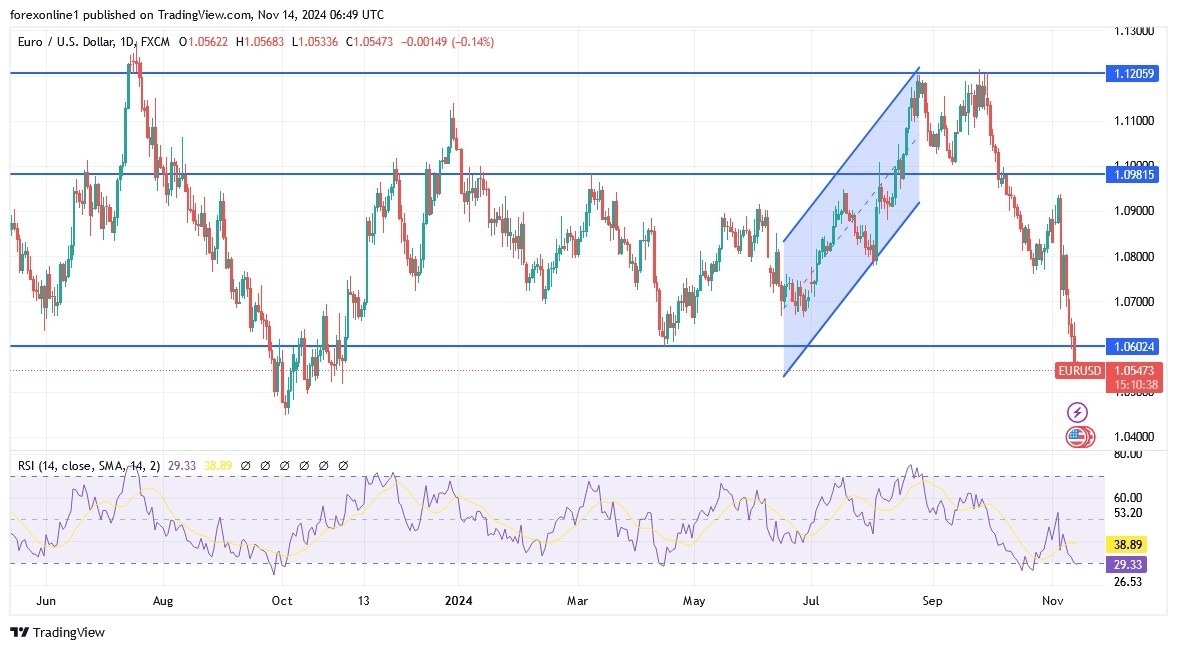
  • This brought more heavy losses to the performance of the EUR/USD currency pair, with losses extending to the support level of 1.0533.
  • Historically, this is the lowest level for the currency pair in a year which it is stable near it at the time of writing the analysis.

What do US inflation figures mean for the strength of the dollar?

Undoubtedly, the rise in US inflation rates has eased the pace of monetary policy easing by the US Federal Reserve, which is positive for the US dollar against other major currencies. Conversely, the European Central Bank is adopting an easing path. The US dollar has gained in the forex market following the rise in the main US consumer price index by 0.2% on a monthly basis in October, bringing the annual rate to 2.6% from 2.4% in September. Generally, the strength of the US dollar reflects the fading expectations of future US interest rate cuts, especially as investors are prepared for inflation to remain above the Federal Reserve’s target of 2.0% for a long time.

Will the EUR/USD reach parity?

There has been increasing talk about the possibility of the EUR/USD moving to parity at 1.1. According to reliable trading platforms, the EUR/USD pair has entered a downward trend in October, with selling intensifying after the unexpectedly strong performance of Donald Trump and the Republicans in the US presidential election vote. Expectations for further collapse of the euro against the dollar have increased as Trump wants to raise tariffs on US imports, which will affect the economies of exporters such as the eurozone. As is known, the United States is the main market for exporting manufactured goods in the eurozone, while any economic blow to China from tariffs will also affect another critical market.

Meanwhile, the ruling coalition in Germany has collapsed, and Europe’s largest economy is now facing a winter of political uncertainty ahead of the February elections.

EUR/USD Technical analysis and forecast:

The overall downward trend of the EUR/USD is gaining strength with the breaking of a key support level of 1.0600. As mentioned in previous technical analyses of the currency pair that this could give bears more strength. Therefore, dear reader, you should expect more downward pressure on the euro against the dollar daily as the picture becomes clearer for the upcoming Trump policies. At the same time, the eurozone, led by Germany, is going through political and economic turbulence.

EUR/USD Buying Signals Today:

Source link

14 11, 2024

$500 Run Like Binance Coin in 2021 Possible as Rival Eyes 19,202% Rally in 3 Weeks

By |2024-11-14T23:12:19+02:00November 14, 2024|Crypto News, News|0 Comments

DISCLAIMER: This article is a SPONSORED Press Release and does not constitute Finbold’s editorial content. Crypto assets/products involve significant risks. Do not invest unless you are prepared to lose your entire investment. For a full disclaimer, please .

Investors are interested in Solana’s price performance in 2024, as it’s a crucial indicator of its long-term potential. Analysts predict Solana’s (SOL) performance could rise to $500, a run similar to Binance Coin’s meteoric rise to a record $661.89 in 2021.

While Solana’s price gains are exciting to investors, another promising altcoin, RCO Finance, is expected to hit a 19,202 rally within three weeks. Can RCOF’s growth potential qualify it as the next big altcoin for investors?

Solana Witnesses Major Spike in Active Addresses

Multiple factors affect Solana’s potential surge to $500. Solans’s price will primarily be influenced by its ability to sustain momentum and the broader market sentiment. The rise in active addresses will help propel the altcoin’s growth and its overall market cap, regulatory climate, and network activity.

November 2024 has been a good month for Solana, with the network’s monthly active addresses rising to an incredible 138 million at the end of October 2024. This was a more than 30% increase in October as the altcoin crossed the 100 million mark.

Solana continues to show resilience, becoming an efficient blockchain platform due to its mechanism that combines proof of history with proof of stake. 

Analysts believe that the SOL price could hit $500, much like the rise of Binance Coin in 2021. Sol’s growth is also characterized by increased developer interest and interest in decentralized applications and NFTs. Soon, SOL may join the ranks of the most valuable crypto assets in the market.

RCOF Impressive 19,202% Potential Rally: AI-Powered DeFi Trading Platform

RCO Finance has positioned itself as an alternative altcoin for investors owing to its remarkable potential. One of the most striking aspects of RCOF is the forecast of a 19,202 rally in the next three weeks. RCOF’s value lies in its high growth potential and AI features that could increase prices.

By investing in RCOF, you have an opportunity to invest in real-world assets. Imagine using your crypto to invest in bonds, shares, forex, ETFs, and commodities without converting your crypto into fiat currency.

Again, using the RCOF token, you can invest over 120,000 assets with up to 1000x leverage. This diversification is quite a thrill for investors, especially considering that it’s exclusive to RCOF, thus making it a revolutionary platform.

If you are a beginner wondering how to be a successful trader without losing your investments, RCOF is ideal. Using AI and machine learning technology, RCOF AI robo-advisor creates personalized investment strategies based on your financial goals, market preference, and risk tolerance. This helps investors effectively maximize profits.

Interestingly, RCOF, as a DeFi trading platform, ensures that its users can enjoy the convenience of spending cryptocurrency anywhere in the world. 

The Debit cards are available at any time of day and complete your transactions within seconds. Similarly, any purchase made with the DeFi card makes investors eligible for attractive rewards like staking bonuses, tokens, and more.

Regarding security, RCOF has undergone a thorough audit by Solidproof and passed. This confirms the crypto’s integrity and security, making it an ideal platform for investors who value the safety of their investments.

RCO Finance Presale: An Opportunity Worth Your Investment

Solana’s potential for a $500 run is exciting, but the RCOF presale offers an excellent opportunity for investors seeking substantial gains.

The RCOF token is in the third stage, selling at $0.0558. Upon listing, it is forecasted to hit $0.60, more than 1,000x ROI.

Investors interested in the next crypto wave should consider the RCOF presale. With a projected rally of 19,202% in the coming weeks, this altcoin is ideal for its high growth potential.

Join the RCOF presale and watch your investment grow.

For more information about the RCO Finance (RCOF) Presale:

Visit RCO Finance Presale

Join The RCO Finance Community

Source link

14 11, 2024

New clinical data highlights benefits of cannabinoids for anxiety, sleep and pain

By |2024-11-14T21:39:12+02:00November 14, 2024|Dietary Supplements News, News|0 Comments


Marketers of hemp-based CBD (cannabidiol) have gotten creamed over the last several years, amid regulatory uncertainty, fierce competition and price wars.

The good news is that some human clinical studies whose results have been published in recent months show promising health effects for the broader cannabinoid category, including the CBD market.

Over the summer, Charlotte, North Carolina-based cbdMD Inc. announced the publication of its human clinical trial data, demonstrating health benefits of its broad-spectrum CBD blend.

The 12-week study of 54 healthy males and females was completed by researchers at the University of South Carolina. Among the benefits noted, participants who consumed 100 mg (milligrams) of the broad-spectrum CBD blend for 90 days realized substantial pain relief compared to the group who took a placebo.

“The primary takeaway is everyone — males and females — had a significant reduction in pain,” said Sibyl Swift, Ph.D., chief science officer and VP of regulatory affairs with cbdMD, in an interview over the summer.

In other findings from the randomized, double-blind, placebo-controlled trial, men showed notable decreases in “anger-hostility” scores after consuming the product for 60 days, while females reported reduced perceived stress levels over the 90-day period of consumption, cbdMD reported.

The results showed the broad-spectrum CBD is well-tolerated and safe and are consistent with prior toxicity research that affirms the safety of consuming 2.29 mg per kilogram of body weight daily, according to the company.

“A lot of people fail to actually look at [toxicity] endpoints when they do clinical studies,” Swift told SupplySide Supplement Journal (previously known as Natural Products Insider). “They only focus on how the product was beneficial. They don’t look at serum markers over the course of the study to determine whether or not there was a toxicological effect in people.”

The clinical trial results were published online in June in the Journal of the International Society of Sports Nutrition.

…

On July 31, Porland, Oregon-based FloraWorks announced peer-reviewed publication of its study on TruCBN, a proprietary version of cannabinol (CBN). The results of the double-blind, placebo-controlled study of over 1,000 participants were published in the journal Pharmaceuticals.

Among the key findings, 50 mg of TruCBN showed significantly improved sleep quality compared to placebo and outperformed a standard dose of melatonin. Study participants also observed no material differences in side effects compared to placebo.

In a July 31 press release, FloraWorks CEO Alleh Lindquist described publication of the clinical trial results as “a major step forward in our efforts to bring TruCBN into the mainstream markets as a safe and effective alternative in the fight against sleeplessness.”

In an interview in August with SupplySide Supplement Journal, Lindquist said he wants TruCBN to be incorporated in prominent supplement brands such as Kirkland Signature, Life Extension and Nature Made. He added his company has commenced talks with major retailers and brands.

In the dispensary market, where states regulate legal recreational cannabis, four of the five top-selling products are CBN SKUs, Lindquist said, referencing data from BDS Analytics (now known as BDSA) and Headset.

Unlike the regulatory challenges facing the CBD category, FDA has not determined that CBN cannot be marketed in supplements, and Lindquist said he wants CBN to be “sold alongside other dietary ingredients next to the melatonin on the sleep shelf.”

…

The same day as FloraWorks’ announcement, MDbio – The Doctor’s Brand (MDbio) publicized the results of its clinical trials involving more than 3,500 Americans.

Los Angeles-based MDbio shared that:

– MDcalm significantly outperformed placebo for anxiety and sleep disturbance, resulting in clinically meaningful improvements in 77% and 66% of participants, respectively, in clinical trials involving 1,461 adults. The product combines full-spectrum hemp, magnesium and a botanical blend of adaptogens.

– MDsleep significantly outperformed placebo for sleep disturbance, anxiety and stress, resulting in clinically meaningful improvements in 57%, 60% and 38% of participants, respectively, in clinical trials involving 620 U.S. adults. The supplement also significantly outperformed placebo for improved quality of life. MDsleep contains full-spectrum hemp with GABA (Gamma-aminobutyric acid), L-theanine and bio-terpene complex (hops, valerian and proprietary terpene oil blend).

– The results of the MDsleep clinical trial were published in the peer-reviewed journal, Nutrients, and the company’s CEO, Brenden Dougherty, told SupplySide Supplement Journal in August that the clinical trial results for two other products — MDcalm and MDrelief — were being submitted for peer review.

– MDrelief significantly outperformed placebo for pain interference and pain intensity in women below age 50. Averaged across all genders and ages (21 to 77), clinically meaningful improvements were observed in pain interference and pain intensity in 54% and 66% of participants respectively, in clinical trials involving 1,160 U.S. adults. The supplement blends full-spectrum hemp with geranylgeraniol, frankincense and white willow bark.

“Women under 50 responded extremely well to MDrelief in our clinicals,” Dougherty said in an interview. “So now, running a clinical of women under 50 will give us better results and potential clinical standards in that subset.”

Jeff Chen, M.D., is co-founder and CEO of Radicle Science, which conducts clinical trials on natural products. Radicle Science spearheaded the clinical trials for FloraWorks and MDbio, which was founded by four Los Angeles physicians.

MDbio’s clinical trials were noteworthy, considering the state of science to substantiate the health benefits of dietary supplement products, according to Chen and Dougherty.

“Less than 1 percent of supplement SKUs available in America have clinical evidence that they are more effective than placebo,” Chen said in a recent interview.

Dougherty described being able to share the clinical results as an “incredibly powerful” marketing tool, especially within the health care practitioner channel, and he said his company’s labels will contain a “clinically proven” seal.

“Our sleep product is clinically proven to help you get better sleep,” he said. “It’s also clinically proven to decrease stress and decrease anxiety, and it’s clinically proven to give you a better quality of life. Those are claims we can make and substantiate based on our clinical results.”

…

Making advertising and marketing claims based on clinical results is an art unto itself. Under the Dietary Supplement Health and Education Act of 1994 (DSHEA), marketers can make statements about the effects of an ingredient on the structure or function of the human body.

But the U.S. Food and Drug Administration may consider a statement an unlawful disease claim, even if a company has robust clinical evidence that a product or ingredient mitigates pain or anxiety, for example, and even if the Federal Trade Commission believes an advertisement is substantiated.

Complicating matters for the CBD category, FDA continues to assert the ingredient is excluded from the definition of a dietary supplement. Its position, based on a drug (Epidiolex) that was approved in 2018 to treat rare, severe forms of epilepsy, has not been challenged, upheld or rejected in the courts.

cbdMD’s Swift, a former official in FDA’s Office of Dietary Supplement Programs (ODSP), is aware of the federal rules and complexities surrounding the CBD category, including the potential pitfalls of touting the health benefits of a product based on clinical results.

“You have to make a business decision if you’re willing to take on the risk, and in the supplement space … we’re not going to make egregious statements about how [broad-spectrum CBD] impacts disease-level pain,” she said. “But does it impact post-workout? Absolutely.”

Radicle Science co-founder and executive chair Pelin Thorogood said there needs to be more studies on CBD and minor cannabinoids to explore how they interact with the endocannabinoid system and hopefully promote wellness across such conditions as anxiety, sleep and pain.

The “marijuana/cannabis/THC/cannabinoid universe” is facing a “trough of disillusionment,” according to Chen. But should cannabis become legalized in the coming years at the federal level, the physician anticipates a resurgence of interest and investments in the category, including in nonintoxicating cannabinoids.

In the meantime, Chen and Thorogood believe that research will continue to be led by ingredient suppliers like FloraWorks rather than finished-product brands in the cannabinoid space.

“Everything starts with ingredient suppliers,” Thorogood said.

This reality could help ingredient companies like FloraWorks build relationships with prominent supplement brands and differentiate the relatively few brands like cbdMD and MDbio that have demonstrated the health benefits of their finished products through clinical trials. According to a 2024 report published by McKinsey & Company, which surveyed more than 5,000 consumers in China, the United Kingdom and U.S., efficacy and scientific credibility are two of the most important factors when choosing wellness products.

Consumers today are “hoping … the influencer at this brand is telling them the truth,” Dougherty of MDbio said. “But we’re changing that paradigm, so you don’t have to believe in hope. You believe in our data, and you believe in science.”


Source link

14 11, 2024

UBS raises USD/JPY forecast, says another jump to 160 is possible By Investing.com

By |2024-11-14T21:13:02+02:00November 14, 2024|Forex News, News|0 Comments

Investing.com — UBS has raised its forecast for the in a note Thursday, expecting significant fluctuations in the exchange rate over the coming year.

The bank now projects the currency pair to reach 155 by December 2024, followed by 152 in March 2025, 150 in June, and 147 in September.

By year-end 2025, UBS targets 145, a revision from its earlier predictions of 147, 143, 140, and 138, respectively.

According to UBS, a near-term surge to 158-160 remains possible, especially if U.S. 10-year yields rise another 30-40 basis points, potentially hitting 4.8%.

“Based on sensitivity analysis over the past three years, a 10bp widening of the US-Japan 10-year yield differential coincides with a one-yen rise in the USDJPY exchange rate,” UBS explained.

If U.S. bond yields indeed spike to 4.8%, the bank says USD/JPY could temporarily reach 160, though they view this level as “unsustainable” and likely to invite Japanese intervention, as observed during similar peaks earlier in 2024.

UBS analysts believe the USD/JPY will face downward pressure in 2025, driven by several factors. A key factor is the anticipated Fed rate-cutting cycle, which UBS expects will lead to lower U.S. yields.

“We think current USDJPY levels are higher than justified by yield differentials,” UBS notes, estimating that the currency pair should trend toward 145-146.

Additionally, trade tensions and a potential Trump-led administration’s focus on a stronger yen may reinforce this trend.

For investors, UBS suggests that any near-term spike toward 160 could be an opportunity to “tactically sell USDJPY.” Over the long term, UBS sees multiple forces supporting a downtrend, with USD/JPY likely to end 2025 at 145.


Source link

14 11, 2024

Will Polygon MATIC Price Hit $1 on AggLayer, Trump Trade?

By |2024-11-14T21:11:12+02:00November 14, 2024|Crypto News, News|0 Comments

Polygon could be poised for a breakthrough, with $1 in near term. Trump recent election win has ignited bullish energy across the crypto market bringing bull market era, while the upcoming Aggregation Summit, AggLayer, promises to add momentum.

This AggLayer brings the brightest minds in the industry to tackle challenges like cross-chain solutions, advanced ZK technology, and next-gen security. The buzz around AggLayer could drive fresh demand for POL token, potentially lifting its value.

AggLayer Summit and Trump’s Win: A Perfect Storm for POL Token

The AggLayer Summit, happening in Bangkok Nov 10-11, will bring together leading experts in the crypto space to address some of the most important challenges facing blockchain today. This event will focus on the extensive AggLayer ecosystem, categorised into AggChains, Core Contributors, and RaaS Providers. The ecosystem includes prominent entities like TON Blockchain, Fabric, Succinct, and AltLayer, all collaborating within this unified framework.

Meanwhile,Donald Trump recent election victory has sparked a wave of optimism in the crypto market. Many investors believe his win will lead to policies that favor digital assets, boosting the sector’s growth. As a result, there’s been a noticeable shift toward a more bullish market, with expectations for favorable regulations and increased adoption of crypto. This new political landscape is fuelling optimism and could be a major factor in pushing the market to new heights, benefiting both established and emerging crypto assets.

Polygon Price Analysis: Breakout and Volume Insights

Polygon’s native POL token recently achieved a breakout on the daily chart, currently trading at $0.34. Over the past 24 hours, the price has fluctuated between $0.32 and $0.34, reflecting a 6% increase over the last week. With a 24-hour trading volume of $113 million, market activity and investor interest are clearly on the rise, signaling strength in Polygon’s current position.

As the market remains bullish, Polygon’s breakout and strong volume suggest a potential rally toward the $1 mark. The upcoming AggLayer Summit, alongside global developments like Trump’s election win, are likely to further fuel market momentum.


✓ Share:

Coingape Staff

CoinGape comprises an experienced team of native content writers and editors working round the clock to cover news globally and present news as a fact rather than an opinion. CoinGape writers and reporters contributed to this article.

Disclaimer: The presented content may include the personal opinion of the author and is subject to market condition. Do your market research before investing in cryptocurrencies. The author or the publication does not hold any responsibility for your personal financial loss.


Source link

14 11, 2024

XAU/USD trims early gains hovers around $2,575

By |2024-11-14T20:58:20+02:00November 14, 2024|Forex News, News|0 Comments


XAU/USD Current price: $2,576.61

  • Mixed United States data and Fed speakers helped US Dollar correct overbought conditions.
  • Central bank’s leaders will be on the wires during the American afternoon.
  • XAU/USD in a corrective advance that may continue in the near term.

Spot Gold trades around $2,575 a troy ounce, recovering from a fresh multi-week low of $2,536.68 posted during European trading hours. The US Dollar maintained its positive momentum until Wall Street’s opening, reaching once again fresh highs across the FX board.

United States (US) data came in mixed, as the country reported that Initial Jobless Claims shrank to 217K in the week ended November 8, better than the 223K anticipated. However, the October Producer Price Index (PPI) rose by more than expected, reviving inflation-related concerns. Wholesale inflation was up by 0.2% in the month and 2.4% from a year earlier. The core annual reading printed at 3.1%, above the 3% forecast and the previous 2.9%. The latter was upwardly revised from a previous estimate of 2.8%.

Meanwhile, different Federal Reserve (Fed) officials have been on the wires. So far, comments have added nothing new to what the market already knew about monetary policy. Later in the day, the focus will be on Chairman Jerome Powell, due to participate in a panel discussion titled “Global Perspectives” at an event hosted by the Federal Reserve Bank of Dallas. Comments on monetary policy may be limited, but questions about how the upcoming Donald Trump government will affect the central bank’s decision will be at the top of the list.

European Central Bank (ECB) President Christine Lagarde and Bank of England (BoE) Governor Andrew Bailey are also expected to share their thoughts.

XAU/USD short-term technical outlook

The daily chart for XAU/USD shows that it bounced from a bullish 100 Simple Moving Average (SMA) and that the pair develops far below a bearish 20 SMA. At the same time, technical indicators keep heading south near oversold readings, albeit losing their downward strength.

In the near term, and according to the 4-hour chart, the ongoing upward correction seems poised to continue. Technical indicators aim sharply north, albeit still below their midlines. At the same time, the 20 SMA heads firmly lower, currently providing dynamic resistance at around $2,594.20. Finally, the 100 SMA gains downward traction above the 200 SMA, approaching the longer one, usually hinting at a long-lasting bearish trend.

Support levels:  2,548.70 2,536.60 2,522.40

Resistance levels: 2,581.35 2,594.20 2,611.05


Source link

14 11, 2024

Sustainable packaging for supplements is gaining momentum

By |2024-11-14T19:38:10+02:00November 14, 2024|Dietary Supplements News, News|0 Comments


Sustainability was at the center of numerous educational sessions and heated discussions at SupplySide West last month in Las Vegas, and packaging was an especially hot topic.

The supplement industry produces billions of plastic bottles each year, the vast majority of which end up in landfills. And both governments and consumers are eager to find a better way — and reward brands that are pursuing more sustainable practices.

At the educational session, “Unwrapping sustainability: Mastering eco-friendly packaging,” one brand’s founder detailed how they fought lack of information and industry resistance to create a 100% compostable, sustainable bottle.

Here’s what experts say all supplement brands should know about sustainable packaging in 2024.

Supplement industry creates immense plastic waste

When she started the “climate-conscious vitamin” brand Terraseed in 2020, Maria Cebrian said basic information about the environmental impact of the supplement industry was hard to find. So, she and her team commissioned research themselves, and just a few of the eye-popping stats they encountered included:

– 2.3 billion: the number of plastic bottles produced by the supplement industry each year.

– Less than 30%: the amount of that plastic that gets recycled.

– 3%: The amount of that plastic that ends up in the ocean.

This definitely isn’t just a problem facing the dietary supplement industry, of course. But state and federal governments in Europe, California and elsewhere are setting ambitious plastic-reduction targets that will affect supplements just as much as other industries.

A 2022 New Hope NEXT Data & Insights survey showed that packaging matters to consumers, too. “Responsible packaging” rose to be the No. 2 eco-priority for shoppers on social media, behind only the interrelated “Environmentally responsible sourcing.”

Cebrian and other brands at SupplySide West see the writing on the wall.

“It’s not just about doing the right thing for the planet, although that has been my main motivation,” she said. “It’s also because in the next 5-10 years, we’re going to be forced as an industry to commit to sustainability whether we want to or not. This is already happening.”

The functional downside is less than you think

When Cebrian announced she was planning on not using plastic or glass in her packaging, she dropped a few jaws.

“Everyone was saying, ‘You’ll never make it happen,’” she recalled. “Machines are automated for plastic bottles. Your shelf life will be ruined.”

The second of those concerns turned out to be simpler to solve than expected. Terraseed opted for using cellulose tubes, which are made of beechwood fiber.

“You can get these everywhere now,” Cebrian said. “And they work amazingly well.”

Along with plant-based clay desiccants and compostable glue security seals, she said the brand has achieved a shelf life of 36 months.

The company had to create its own system to pack the pills, but even with this extra complication, Cebrian said the total increase in packaging cost is only 8%. And each package also contains educational materials for customers, printed on seed paper that will sprout flowers when planted.

What is sustainable packaging worth to consumers?

At the Sustainability Zone on the show floor at SupplySide West, attendants could see case studies like Terraseed’s. Others in the supplement packaging space included:

Heis Global: Plant-based compostable nutraceutical bottles derived from sugarcane.

Ultisama Supplements: 100% recyclable aluminum bottles shipped in recycled cardboard.

RTCO Packaging: Biodegradable polymer capsule bottles.

Condensa: High-efficiency monoblock aluminum bottles without adhesives.

Numerous studies have shown that consumers are theoretically willing to pay more for such sustainably packaged goods. And Cebrian said sustainable packaging brought “the opportunity of moving your price into a premium package.”

When launching Terraseed, Cebrian’s team paid for an extensive survey to determine exactly what sustainability was “worth” to supplement customers. Their answer: For a $30 multivitamin, the average “acceptable price” was $34 — a difference that more than makes up the 8% increase in packaging cost. Terraseed used this information to set the price for its Complete Multivitamin for Vegans.

Start where you’re at now

Making the switch from a more traditional system to fully sustainable, compostable packaging is daunting to say the least, but it doesn’t have to be an all-or-nothing transition. Cebrian advised these four big steps for brands looking to make meaningful progress in sustainability:

– Audit your current packaging and “packaging life cycle.”

– Set specific sustainability goals.

– Collaborate and converse with suppliers.

– Educate consumers whenever possible.

Customer outreach is crucial, Cebrian said, because many consumers are quite interested in sustainable packaging. They just didn’t realize it was possible.

“There are a lot of customers out there who have been waiting for more sustainable solutions,” she said.


Source link

14 11, 2024

Bearish bias pushes Cable below 1.2700: Analytics and Market news from 14 November 2024 15:05

By |2024-11-14T19:11:03+02:00November 14, 2024|Forex News, News|0 Comments

British Pound PRICE Today

The table below shows the percentage change of British Pound (GBP) against listed major currencies today. British Pound was the strongest against the Swiss Franc.

  USD EUR GBP JPY CAD AUD NZD CHF
USD   0.08% 0.10% 0.14% 0.17% 0.13% 0.08% 0.20%
EUR -0.08%   0.02% 0.07% 0.09% 0.04% -0.00% 0.12%
GBP -0.10% -0.02%   0.06% 0.08% 0.03% -0.02% 0.10%
JPY -0.14% -0.07% -0.06%   0.04% -0.01% -0.09% 0.07%
CAD -0.17% -0.09% -0.08% -0.04%   -0.04% -0.09% 0.03%
AUD -0.13% -0.04% -0.03% 0.00% 0.04%   -0.04% 0.08%
NZD -0.08% 0.00% 0.02% 0.09% 0.09% 0.04%   0.11%
CHF -0.20% -0.12% -0.10% -0.07% -0.03% -0.08% -0.11%  

The heat map shows percentage changes of major currencies against each other. The base currency is picked from the left column, while the quote currency is picked from the top row. For example, if you pick the British Pound from the left column and move along the horizontal line to the US Dollar, the percentage change displayed in the box will represent GBP (base)/USD (quote).


Source link

14 11, 2024

Economist Says Massive XRP Surge Similar to Dogecoin Price Explosion Is Coming

By |2024-11-14T19:10:02+02:00November 14, 2024|Crypto News, News|0 Comments

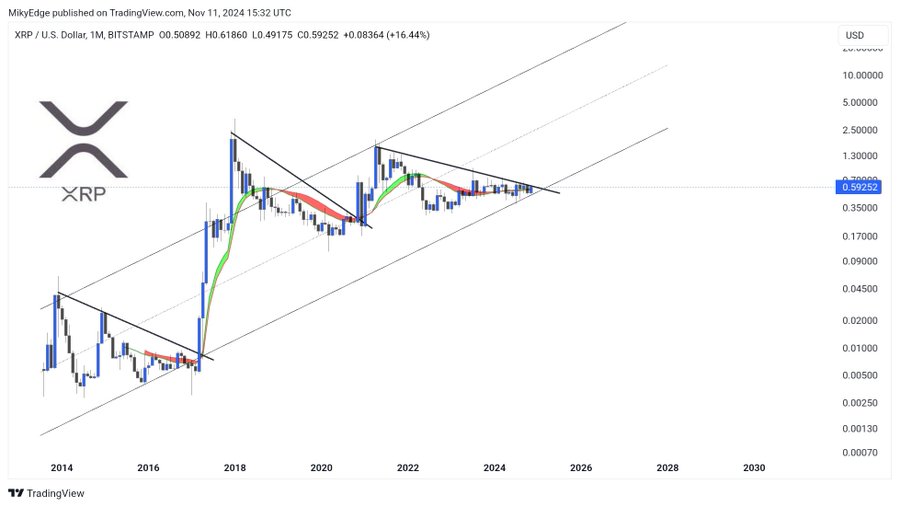
Crypto analyst and economist Mikybull has asserted that a massive surge for XRP, similar to the recent rise of Dogecoin (DOGE), is underway.

Mikybull shared this optimism in a tweet on Monday. At the time, XRP’s price action was relatively stagnant, while Dogecoin made waves in the crypto market with its impressive price rally.

For context, on November 3, Dogecoin sold at $0.1428, but nine days later, it had surged 205.25%, reaching $0.4359.

Notably, Dogecoin hadn’t traded above $0.4 since June 2021. In less than two weeks, The meme coin added over $43 billion to its market cap, surpassing USDC stablecoin and XRP in market rankings.

With XRP seeing a less comparable surge, the gap between Dogecoin and XRP widened as the meme coin’s bull run continued.

Despite XRP’s underperformance during Dogecoin’s surge, Mikybull expressed optimism about XRP’s potential.

XRP Projected Price if It Rallies Like Dogecoin

He argued that XRP is setting the stage for a major rally, similar to Dogecoin’s recent rise, with a price target of $2 by the end of 2024.

At the time of the forecast, XRP was trading around $0.5925. Remarkably, it has since surged by 24%, reaching $0.7354. This marked its highest price in eight months.

However, the seventh-largest crypto asset faced resistance that has prevented it from reclaiming the $0.74 level, the yearly high it set earlier in March. As of now, XRP is trading at $0.674.

Market watchers are hopeful that, based on recent price action, XRP could soon break through the three-year resistance level of $1, possibly as early as Friday.

In a follow-up update on XRP’s price action, Mikybull reiterated his bullish outlook, stating that XRP is primed for a “giga send.”

He pointed to the breakout from the downtrend on the RSI as a key sign of strength. Mikybull reiterated that the recent movement only strengthens his conviction that XRP is set to rally in a manner similar to Dogecoin.

XRP Enthusiasts Push for Higher Price Target

While Mikybull’s $2 end-of-year target has garnered attention, some XRP enthusiasts are more ambitious. One such enthusiast, Gauda, argued that if XRP rallies like Dogecoin, it could soar to $20 rather than just $2.

Gauda pointed out that $2 would still be well below XRP’s previous all-time high, urging Mikybull to adopt a more optimistic outlook.

DisClamier: This content is informational and should not be considered financial advice. The views expressed in this article may include the author’s personal opinions and do not reflect The Crypto Basic opinion. Readers are encouraged to do thorough research before making any investment decisions. The Crypto Basic is not responsible for any financial losses.

Source link

Go to Top