Read Transcript
Child: Welcome to my Mommy’s podcast.
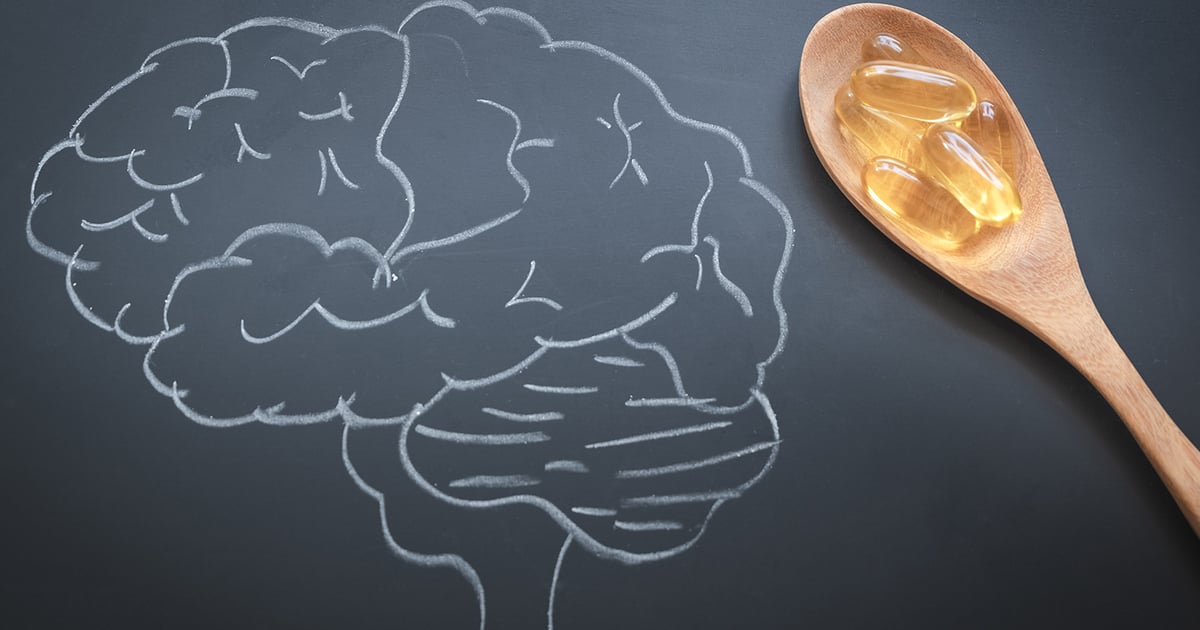
This podcast is brought to you by Puori, which is a new-to-me company that I am really loving and very excited about. You’ve probably heard about the benefits of taking omega-3s, and you also have probably heard about some of the cautions that come with this. And I love Puori because they solve these problems. The main reasons I personally take omegas every day are to support cardiovascular health, brain health, and eye health. And we of course know from all of the data that regular omega-3s can have a really beneficial effect on the body’s ability to kind of keep inflammation at bay.
But some types of omega-3s can go rancid easily, and there can actually be some issues with sourcing and contaminants in a lot of them. So for a long time, I actually didn’t take any, but noticed a difference in my labs and was looking for a really high quality omega-3. And that is why I’m really excited that I found Puori. And it’s spelled P-U-O-R-I. And their omega-3s are third-party tested and certified by the Clean Label Project and by IFOS. So this is a clean omega-3 that I can completely trust and recommend. Every batch of their fish oil and all of their supplements are tested for more than 200 contaminants, and they publish their results online, so there’s complete transparency there. I find that this dose, that I actually notice a difference from it, and I see improvements, especially in my skin. So I was really excited again to find a safe version of this.
If you want to support your health, you can add Puori O3 to your routine, just like I did. I also worked out an amazing deal with them for you guys, where you can get 20% off site-wide, and this even applies to already discounted subscriptions. You’ll get almost a third off the price. To get this offer, you need to go to my exclusive URL, which is puori.com/wellnessmama, and use the code WELLNESSMAMA. So again, that’s puori.com/wellnessmama, and make sure to use the code WELLNESSMAMA to lock in your discount.
This episode is sponsored by LMNT. That’s L-M-N-T. And this is one of my go-to companies in the summer, especially when we’re outside playing sports, sweating all the time to help replenish key electrolytes. My kids love it as well. And we drink many of their flavors with cool water and use them in the summer. But today I really want to talk about their hot drink mixes, which are not as talked about. And I absolutely love these, especially in the winter.
So LMNT has all these amazing mixes that help anyone stay hydrated without the sugar or the other dodgy ingredients that are found in a lot of sports drinks. You may not know, but electrolyte deficiency or even minor imbalance can be correlated to headaches, cramps, fatigue, brain fog, and so much more. And each stick of LMNT, or they now have sparkling cans, delivers a meaningful dose of electrolytes in the right ratio and free of sugar, artificial colors, or other dodgy ingredients. LMNT is formulated for anyone on a mission to restore health through hydration, and it’s perfectly suited for athletes, people who are fasting, those following keto, low-carb, whole food, or paleo diets.
And a lot of times we forget about hydration when it gets cold or at altitude. So for winter activities and as we get to cooler months, I love their chocolate flavors. Now these, I wouldn’t think to add to cool water, but I love them in the winter. In warm water as a hot chocolate mix, or even a lot of people are adding these to their morning coffee. They have hot drink packets featuring chocolate mint, chocolate chai, and chocolate raspberry. And these are only available when the temperatures drop. So you want to get them now and enjoy them while you can. Think hot cocoa, but with the added benefit of electrolytes. Try LMNT totally risk-free. If you don’t like it, give it away to your salty friend and they will give you your money back, no questions asked. You can check that out and get a free sample pack with any purchase by going to drinklmnt.com/wellnessmama.
Katie: Hello and welcome to the Wellness Mama podcast. I’m Katie from wellnessmama.com. And this episode goes deep on a topic that is near and dear to my heart because it’s something that has benefited me personally tremendously from understanding and implementing, and that is the topic of essential amino acids. There’s a lot of misinformation and misunderstanding around this topic. And I feel like women especially are definitely not making the best use of this supplement and all of its advantages, whether from dietary sources, and in my case, also getting tremendous benefit from supplementing with this. So to go deep on this topic, I was excited to bring in my friend, Angelo Keeley, who is probably one of the top experts in the world at this point on this topic. He’s been involved in nutrition, functional fitness, and yoga and meditation for over 20 years. But he is now the CEO of Kion, which creates the essential amino acids that I take. And after listening to this episode, you will probably understand why. Really, this topic to me is absolutely fascinating because, like I said, it’s not talked about enough. I know that we’re all talking more about the importance of dietary protein, and I’m so glad that conversation is happening. But there is a whole other level to this conversation that Angelo and I break down in this conversation today. Specifically, the really nitty-gritty on what the essential amino acids are, the ratios that are important, and how optimizing this can really help the body do things like lose fat, gain muscle, optimize neurotransmitters, hormones, mood, muscle tone as we age, and so much more. And the reason I personally take these, as Angelo will explain, there’s a tremendous amount of data on them. And a meta-analysis of this data shows that they can be multiple times more effective than dietary protein or even supplemental whey protein. So these are kind of the insurance policy that I’m using to make sure I’m getting enough of these amino acids, especially as I get older. But Angelo explains this so much better than I do. So without any further wait, let’s join him and learn. Angelo, welcome. Thanks for being here again.
Angelo: Katie, thanks for having me back. It’s always good to hang out with you and to talk.
Katie: Well, I’m always excited for our conversations. And I think today’s topic is actually especially relevant to our listeners. And we’re going to get to really deep dive on the topic of essential amino acids. And I know we’ve touched on this topic in some of our past episodes. I will link to those in the show notes for anyone who wants to listen as a kind of a foundation for this conversation. But for anyone who’s just joining us now, can you kind of give us a refresher on what are essential amino acids? So we have that as a basis for this conversation.
Angelo: Yeah, absolutely. So I think the most helpful place to start is actually in defining protein because essential amino acids are our key component of protein. So when we look at our diets, you know, we think about micronutrients, we think about macronutrients, micro meaning things like vitamins and minerals, et cetera, and macronutrients meaning carbohydrates, fat, and protein. The thing though, is that protein is fundamentally different than the other two macronutrients. The primary reason why we consume carbohydrates and fat is for energy. When you consume a carbohydrate or a fat, your body converts that into something called ATP, which is the internal energy currency of the body that it then uses to beat your heart, to move your body, to breathe your lungs, et cetera. And so that’s really cool. And yet protein is distinctly different. Protein is actually a building block of the raw materials of your body.
So I’ll use a metaphor of a house to just kind of make it make more sense. To run your house, to run your dishwasher, your laundry machine, your lights, et cetera, you need energy, right? And so you get that from the energy grid, or maybe you have solar panels, or if you ran out of energy for some reason, you might have to run a generator and burn fuel like gasoline. And with that, you’re able to run your house. Similarly, that’s why we consume carbohydrates and fat. We can actually burn them to run the body, the house of our body.
That said, just like your house, it’s made up of materials. So for example, you might have ceramic tiles on the ground or hardwood floor and you’ve got sheetrock. Well, those materials in your house, anyone who’s owned a house long enough or rented, et cetera, you know it starts to wear down over time, right? You open and close the door enough. You walk over carpet enough. Even hardwood floors can start to get worn out. Maybe you have a dog. It scratches at it. And so ultimately, you need to replace those raw materials or, and I think this maybe goes in the frame of thinking about body composition or changing our body, maybe you’re like, hey, I really want to remodel that bathroom. Like it looks kind of old and dated and I want to make it look fresh and new and better.
Well, to do any of those things, you need new raw materials. And that is how protein functions in our body. So in our bodies, we are actually made up of proteins. So while over half of us is water, the half that is solid mass, things like our vital organs, our liver, our kidneys, our heart, our spleen, and things like our lean muscle tissue and our skin and our hair and our nails, and even things like our enzymes and our hormones are all made up of proteins. The actual building blocks of those things are proteins.
And just like our house, things start to wear out. That’s actually how proteins function in our body too. Like the proteins that make up our heart right now are not always the same proteins. Those proteins over time are not as functional. And so they actually start to break down. So if I, you know, maybe the easiest thing is I just look at my skin and I know that my skin is made up of millions of proteins. But over time, each one of those little proteins is going to get old. It’s not going to be as functional as it used to be. And so we’ll actually break down. It will break apart. And when it breaks apart, what you would notice if I had a little microscope is I would see, wow, each one of those proteins is made up of 20 amino acids. And some of those amino acids need to just get peed out. They can’t be reused. They’re old. They’re not really functional anymore. Some of them, though, you can keep. So maybe similarly, if you were remodeling your house and you need to repair the hardwood floor, you might rip out some of it. And some might say, actually, that section’s fine. I’m going to leave that.
And so some of these amino acids get peed out and some of them remain. And you can actually use them to rebuild a new protein for that skin. But this is what’s obvious now is, well, some of the amino acids are gone and some of them are still there. So where do I get the new amino acids to help rebuild that skin protein or rebuild my heart tissue or all of these things? That’s why we eat protein. When we eat dietary protein, whether it comes from animals or plants, we digest that protein. We break it down into the amino acids. It goes into our blood, and it gets distributed throughout our body to help rebuild all of the proteins in our body. So that’s kind of the big frame around protein.
Now, what makes the essential amino acids as distinct from all the other amino acids that are in protein? Well, the essential amino acids are the part of the protein that your body cannot synthesize. So actually, when you eat protein and you break it down, some of them are essential amino acids and some of them are non-essential. The non-essential, your body can actually convert the essential amino acids into the non-essential if it needs to. And so typically when we’re having discussions about whether something is a complete protein or a not complete protein, lots of the debates between omnivores and vegetarians and vegans is around this idea of like, well, can you get enough complete proteins? Meaning, can you get protein sources from plants that have enough of the essential amino acids? And that’s what they’re referring to this idea of it being complete because you don’t have to, you don’t have to synthesize them, right?
That said, there’s a more interesting component of essential amino acids that I think many people are not familiar with. Essential amino acids are also the active component of the protein. Meaning when you consume that protein and you break it down, the amount of the essential amino acids that you digest and that hit your blood in a peak concentration, and literally, that’s the way it happens. Like, you can get a lot of the essential amino acids to get in your blood all at once. They communicate to your body to rebuild old proteins, to synthesize new proteins is what it’s called. So essential amino acids are the key ingredient inside of protein or could be supplemented separately via protein powder or even perhaps more ideally through an essential amino acid supplement that actually help to stimulate the new creation of new proteins throughout the body.
Katie: That was a great explanation. And I will say most of my firsthand experience with essential amino acids is anecdotal, but it’s been a repeating pattern. I’ve seen this with the athletes I work with who are very consistent with essential amino acids and the amount of muscle they’re able to gain when we’re dexing them. So we’re getting quality data to see this. But for me personally, it’s been instrumental in helping to regrow my hair and my skin improve after six pregnancies, after thyroid issues. That’s been really instrumental in my healing process. I also know from the pre-work on this episode that some really interesting information came out about a year ago in a paper related to essential amino acids. Can you walk us through what this paper explained?
Angelo: Yeah, so the paper that came out, it came out actually from an organization called the International Society of Sports Nutrition, the ISSN. And what is remarkable about this paper is not that it was a new study. It was actually basically a group of all the leading researchers in protein and amino acid research coming together and summarizing everything that we know about the subject and validating the fact that essential amino acids have a very unique role as a supplement.
And so some of the things that came out of this were basically able to show that essential amino acids are significantly more impactful, not just in whole food protein, but even in protein powder. For example, for women in their 60s, you get six times the impact from essential amino acids than you would from a protein powder gram for gram. Other really remarkable summaries like the fact that in, again, in aging women, they were able to add pounds of muscle within only a few months through making no other change other than supplementing with essential amino acids. And a variety of other different, like really just, I’m trying to just like highlight some of the biggest points from this, but basically it’s an excellent summary. So if you listen to this podcast, you’re like, well, I really want to learn more, there’s a 27-page paper out there that you can nerd out on that summarizes everything about what we know about essential amino acids.
And I think other things that add more validity to this is, things like creatine, which is very well respected as a supplement that has been shown to be efficacious over decades, numerous studies. The ISSN did a similar report on creatine a while ago. I think it had about 120 studies referenced. For this essential amino acid report, there were 137 studies referenced. So we’re talking about a supplement and a subject that is on par with something like creatine, whey protein powder, et cetera. It’s a highly, highly studied subject. So I think for the nerds like me that love amino acid and protein science, it basically just validated and made it much easier for the general public to be able to access a really clear summary of all of these studies.
Katie: Well, and I think you alluded to the answer to this, but I know one thing people may wonder is if I’m already making an effort to get enough dietary protein, which is something I’ve talked about quite a bit on this podcast, where I eat a high protein diet, is there still a benefit to essential amino acids? And what makes this different than just the protein we would get from a high protein diet?
Angelo: That’s a great question. So I think there’s three main reasons why you might consider supplementing with essential amino acids. And they would be for a fat loss without muscle loss. They would be for basically overcoming the anabolic resistance from aging, meaning the muscle loss that results from aging. And we can describe why that is, that essential amino acids can play a very distinct role in. And these are all even in people who are already consuming a healthy amount of protein. And third, if you have really distinct or unique performance goals, like you want to run faster, you want to jump higher, like you were describing working with athletes. So, I will give the examples for each one of these about why it could be distinct from protein.
So, first of all, what I would say is the recommended daily allowance for protein from the government is 0.4 grams of protein per pound of body weight. So for simple math, not assuming people weigh this, but it’s easy. You can probably adapt for yourself. If you weigh a hundred pounds, that would be 40 grams of protein per day. Since those standards were established, we actually now know that it’s much closer to actually 0.6 probably. So 60 grams of protein, if you weighted 100 pounds, 0.6 grams of protein per pound of body weight to simply not have significant health issues, to not have hair loss, like really extreme fatigue, problems with your organs, hormone function. Like we’re seeing the very bare minimum is that. And then oftentimes in health circles, what gets more often advised is something like, well, maybe a gram of protein per pound of body weight. Like that would be a healthy, sufficient amount to have lower body fat percentages, more tone, lean muscle to have a better immune system to age better, et cetera. That said, that gram of protein per pound of body weight is really an average across tons of populations. That’s across kind of all age groups, all conditions, whether you’re trying to lose weight or not, whether you’re 60 or you’re 20.
And what I would say is those population groups are actually very distinct from each other. One gram of protein per pound of body weight is a good general advice for people, someone who’s just trying to, you know, eat more protein. But it’s really not detailed or sufficient enough for many folks who have more precise goals.
So, for example, if I want to lose weight, and if I want to lose weight, like really, I think most of us, if we’re trying to lose weight, we’re not trying to lose a bunch of muscle unless you’ve been like in a bodybuilding competition or you’re, you know, like some kind of heavyweight lifter. Instead, it’s like, hey, maybe I want to lose 10 pounds of fat, but I want to maintain my muscle, right? I’m not trying to lose my muscle. Well, the way that weight loss occurs is through, there’s a core element of it that is about caloric restriction. If you eat less calories, then you burn in a day, you will lose weight. Unfortunately, that weight will not only be fat. So in our bodies, we have stores of fat. And it’s an interesting natural evolutionary aspect of us that where if we’re out hunting and we’re able to get an animal and eat a bunch of that animal all at once, we can consume it. And anything that we don’t actually burn off during that day, we get to store it as fat so that maybe the next day we can’t find food, then we can survive, right? And so that’s why we build these fat stores. So then if you go without food for a little bit, you start to burn off those fat stores.
But our muscle is actually similar. So if we go without protein and without amino acids, the essential amino acids that are within protein, this active component for enough time, as we discussed earlier, my skin tissue is constantly breaking down. So is my heart tissue. It’s all turning over and you need to build new proteins. Well, where can I get amino acids from to help rebuild these proteins, to help rebuild the skin, to help rebuild this heart tissue? The only place in my body that I can spare is my muscle. So when you deprive yourself of calories, and you deprive, and there’s a unique situation where you deprive yourself of calories, but if you don’t eat enough protein and you deprive yourself of calories, you’re not only burning your fat stores, you’re actually burning away your muscle because your muscles being broken down to supply your heart and your kidneys and your hormone needs, et cetera, with amino acids to rebuild them.
So when you’re in a caloric deficit to lose fat and you want to maintain muscle, you actually need to consume a significantly higher amount of protein. One gram of protein per pound of body weight is actually not enough. If you want to not lose any muscle, but you only want to burn fat. And what actually has been determined is that when they put folks on a 30% caloric deficit for a week, and that would be if I consume 2000 calories a day and I was going to cut 600 calories per day, then I would actually need to consume three times the amount of essential amino acids that I would normally consume in order to have a net protein balance, meaning not lose any muscle. So that just gives you an idea of like one gram of protein per pound of body weight is not enough if you’re in a cut, if you’re trying to lose fat, but you’re trying to maintain your muscle.
But then you start thinking about like, wow. And I’m saying all this in the context, too, of like, I think I hope people will, what I would advise is to eat wholesome, whole food meals multiple times a day with people you love and like have a good, healthy relationship with food. And there are times in our life where maybe we want to like cut a few pounds, right? And in those contexts, the idea of trying to eat that much more protein while I’m also on a caloric deficit, that’s pretty intense. It’s like, all I’m eating is chicken breast then, right? It’s like, there’s like, it’s just very extreme. Whereas if you could still be eating a gram of protein per pound of body weight and eating healthy amount of vegetables and fruits and things like that, and then supplementing with essential amino acids, you would be able to potentially achieve losing only fat but maintaining all of your muscle. So that’s a great example of why this kind of simple, oh, you know, gram of protein per pound of body weight doesn’t always make sense in the case of weight loss.
When we address aging, this, on the other hand, is not a short-term thing that we might manage. We might take essential amino acids for a small amount of time. Now we’re talking about aging is a progressive situation that over time makes the value of protein that we consume less efficacious and increases our need for more essential amino acids in order to maintain our muscle. And here is why that is. When we digest protein and we break it down into these amino acids and it stimulates this muscle protein synthesis, all that’s dependent on a few things.
First of all, how well can we digest the protein? And as we age, we cannot digest the protein as well as we could when we were younger. But the second more important thing is, and this is oftentimes overlooked, is that as we age, we literally are not as sensitive to the essential amino acids stimulating that new protein synthesis. And again, it makes sense. In previous generations, we didn’t live to 50, 60, 70, 80, right? Average lifespan was 40, maybe 50, right? And so at 50 years old, the body’s not thinking like, oh, I really want to use these essential amino acids to help build and maintain my muscle and to be really vibrant so I can go hiking and pick up kids, my grandkids when I’m 80, right? Like our bodies don’t, they’re not programmed in that way. And so we increasingly get less impact from protein as we age.
So this is really interesting. For someone who’s in their 20s, if you consume basically three grams of essential amino acids, it’s going to have about three times the impact of whey protein. For someone who’s 60, it’s going to have six times the impact. And there are studies showing this with women in their 60s, that three grams of essential amino acids stimulated as much muscle protein synthesis as 20 grams of whey protein. And that’s because, again, just increasingly as we age, our ability to digest that protein and our sensitivity to get those essential amino acids is not as effective. And so if you consume a supplement that can be more formulated with more ideal proportions and that is immediately digestible, like there’s really no digestion, it just goes into the blood, then it overcomes that anabolic resistance and it helps you to maintain muscle.
So these are examples of reasons why it’s good to try to eat these daily higher amounts of protein intake. But at a certain age, you’re simply not going to get the impact. Like telling a 25-year-old to eat a gram of protein per pound of body weight is one thing. Telling a 45- or 55- or 65-year-old woman that is very different. They’re simply not the same thing because our bodies don’t use them in the same way.
Katie: Well, I just took so many notes. That was, I feel like a mini masterclass on this topic. That was awesome. And I think you really helped dispel the myth. I think a lot of us, maybe from social media, maybe from kind of old school bodybuilding, got the idea that you cannot lose fat and maintain or gain muscle at the same time. And it seems like what you’re explaining with this analysis of data is that not only is this possible, or at least avoiding as much muscle loss, but in losing fat at the same time.
And I’ve seen this play out with, like I mentioned, the younger athletes, even the younger ones who are in their 20s, they’re able to gain muscle so quickly. And I think for like the teenage populations, especially they’re laying down skeletal muscle that’s going to benefit them their whole life. But many of us listening might be past those years. And so it’s important. I think what you pointed out that it actually gets more effective the older you get and sort of helps solve a problem we know that we have with muscle loss as we age with inability to digest protein as well as we age. But this seemingly is a way to help give the body the right building blocks it needs to kind of head off some of those problems.
I’m sure you get these questions a lot but can you kind of explain any key differences from something like essential amino acids compared to branch chain amino acids or to collagen, or you already kind of broke down the difference with whey protein and how effective it is. But I know those are common supplements people take when they’re aware of and trying to strive to consume more protein.
Angelo: Absolutely. So I’ll do a quick comparison to a whole food protein itself and put all of these supplements in context to it. When and how they might be valuable or not? So as I mentioned earlier, and I just want to go into again, the amount of essential amino acids that hit the blood at a peak concentration level is what determines how much protein synthesis gets stimulated. So the amount of new proteins that are going to get made, it’s directly connected to how many essential amino acids and what concentration you can get in the blood at once.
So what’s really interesting and many people don’t know, and again, I share this information for context and to understand it, but not to advise you to like eat in these specific ways. I advise people to eat awesome whole food meals and supplement where appropriate. A 30-gram serving of protein from beef, stimulates as much muscle protein synthesis as over twice that amount, 70 grams of beef protein, if you eat it as part of a mixed meal. So if I have a 12 ounce steak and it’s approximately 70 grams of protein in that steak with broccolis, potatoes, et cetera, that will stimulate as much as if I just ate less than half that amount of beef, but I ate it on its own. And the reason for that is because, again, the essential amino acids are not being impacted by all these other materials in the digestive system, like the potatoes and the broccoli, et cetera, right? They’re able to just be by themselves. They’re broken down more quickly and they hit the blood more quickly.
So it’s an interesting idea of just saying like, wow, even the way that I eat my food could have an impact on how much protein synthesis happens. Now, again, I’m not encouraging people to break apart their meals in this kind of way. That said, to explain it to an even greater degree, whey protein powder and whey protein is the most often studied because it has, kind of the most ideal combination of essential amino acids. And it has the least amount of carbohydrates and fat, et cetera. And so that’s why it’s been kind of the most ideally studied protein powder, but this would probably be true similar for something like a beef protein isolate, et cetera, but a whey protein powder gram for gram, so if you get, let’s say you had 20 grams of whey protein and 20 grams of steak will stimulate three times as much protein synthesis as that steak.
And why is that? That’s because the protein powder, again, has even less of the other stuff. It’s just basically the essential and the non-essential amino acids, and it’s very little of other things. And thus your body’s able to digest it and get it into the blood, and it’s able to stimulate even more protein synthesis. And so this is why then the essential amino acids are even more impactful. When you take the essential amino acids, you’ve stripped out all of the non-essential amino acids, right? So in a whey protein powder, you’re basically getting essential and non-essential, and then some minerals, a little bit of carbohydrates, and some fat, right? With the essential amino acids, it’s none of the non-essential, and it’s immediately digestible. And that’s why it has three times the impact in young adults. Again, it’s like six times the impact in older adults than the whey protein powder. So that kind of gives you the idea of how these things work and why.
Well, where does collagen fit in this? Well, collagen is not a complete protein. It doesn’t have a sufficient amount of all nine of the essential amino acids. And it’s very deficient in some of the most important ones like leucine, isoleucine, valine. It’s actually very deficient in the BCAAs. And because it’s so deficient in those BCAAs, it’s a very poor supplement if you’re trying to stimulate new protein synthesis. What collagen can be good for is that it’s extremely high in some non-essential amino acids, proline, hydroxyproline, glycine, that can play an instrumental role specifically in things like joint and skin and hair. That said, I think it’s a supplement that’s much more indicated for a much older demographic, as many of us actually don’t probably have that need. If we ate sufficient protein and we supplemented with essential amino acids, it’s unlikely that we’d really need to, that would be the best bang for your buck to supplement with it. That said, if you’re 60 years old and you really are trying to just amp up the elasticity of your skin, then it could make sense.
So what about BCAAs? So BCAAs are three of the essential amino acids. They’re called the branched-chain amino acids. And like I said, it’s actually what collagen is deficient in. So it’s an interesting conversation to kind of compare collagen, BCAAs, EAAs, because BCAAs have what collagen doesn’t in some ways. That said, what BCAAs don’t have is they don’t have the other six essential amino acids. And these became a popular supplement because in the way that protein, the way that science works, right, we never have all the information. We’re constantly building a hypothesis. We see something happen in nature. We build a hypothesis around it. We test it. We try to determine some kind of quote truth from it. And then we have an observable fact like, oh, that’s cool. Now we know this and maybe we can use this, right?
So some of the earliest observations about branched-chain amino acids was, wow, these seems like they’re really important. Maybe they’re the active component of protein. Maybe they’re the most important thing. And what if we just gave these three amino acids to folks? Would we get all the benefits of protein? And the initial studies showed that it looked like, wow, yeah, you just take these three. It will stimulate protein synthesis. But over the course of decades, it’s been pretty, it’s conclusive for at least 10 years now that BCAAs are actually not effective. When you take the BCAAs on their own, they create this really big spike in protein synthesis and then an immediate crash. And there’s a crash because you don’t get any of the building blocks. You don’t have the other essential amino acids. And thus, what I would say is BCAAs on their own are really just kind of a waste. Like I wouldn’t advise them for almost anyone. I mean, there could be some very specific indications, but I would give those more in like private advice. Whereas the collagen, yeah, if you’re like older and you have budget and you really want to invest in something like that, maybe like really want to invest in your joint and skin health. That said, I think something like essential amino acids and even a whey protein powder are a better investment.
Katie: Awesome. And being aware that a lot of our listeners are women, I would love to know if there’s data on anything specific to women and how we interact differently with essential amino acids and or our need for them. Because I know women were not largely included in medical research until 1993 but are being included more so now. But is there any data looking at women specifically when it comes to essential amino acids?
Angelo: This is one really cool thing about the space of essential amino acids is that there are tons of studies on women and from all different age groups actually. It is the case that oftentimes studies they’re just done with 20-year old males. But actually with essential amino acids, as I was referencing many studies earlier, and if you look at the ISSN report, I mean, there are tons of studies on women with essential amino acids. What I would say is that generally the overview is that there’s not that much difference actually between women and men and the types of outcomes. Now, every single study is going to show slightly different outcomes. What I would say is everything that I’ve been sharing is accurate for women. And it’s basically just as accurate for men in terms of like how the essential amino acids work and why they work.
Now, what unique differences are there? I think that if there’s anything that is potentially distinct, it’s actually the period of like perimenopause and menopause overall. And that is because it’s really because of the other things that are going on in a woman’s life experience and health at that time. So if you take a couple who’s 50 years old, a man and a woman couple, both of them are going to have a decreased ability to digest protein. Both of them are going to have a reduced sensitivity to the amino acids to stimulate new protein synthesis. And thus, both of them are going to get much more benefit from essential amino acids than they will from, say, whole food protein than they would have 20 years before.
The thing that’s more distinct about the woman, though, is that if she’s having other types of more common menopausal symptoms, like reduced sleep, like much more fluctuating hormone levels, and having all these other types of kind of distresses, like just overall stress during that period, stress has an incredibly negative impact on protein synthesis. And so the woman is going to potentially be much more anabolically resistant during that period than say, her male counterpart will be. And it’s because of these things, like if I and it’s really actually quite interesting that we talk about protein synthesis, we’re talking about resistance training and nutrition but sleep is probably the most important thing. The amount of sleep that you get has a huge impact on the ability for your body to synthesize new proteins the next day, and if a woman had very stressing sleep all night, and for multiple days on end and weeks and months, it’s really going to impact her. So, I think that there’s actually a really unique indication that for essential amino acids being even more important for a female counterpart than the male during that period.
Katie: That’s great to know. And there’s a couple other areas of how essential amino acids impact us that I want to get your take on before we go deep into some nuance and use cases and how to really dial in how we can each individually best use these. And the first, I know there’s a lot more talk recently, even in the mainstream media about metabolic health, especially, unfortunately, the number of Americans who are not metabolically healthy. But do these have any impact there? Like, what do we know about how essential amino acids can help with metabolism in general or blood sugar regulation or metabolic health?
Angelo: So I’ll answer this in two ways. One is what happens when you actually take essential amino acids. And then the second is going to be what’s the outcome of essential amino acids and really the role of muscle for metabolic health. So when you take essential amino acids, what happens is you stimulate this new protein synthesis. And when you stimulate that new protein synthesis, that is an energy intensive process to rebuild the proteins in my muscle, to rebuild the proteins in my skin, et cetera, that takes energy. So you actually, there’s something called diet induced thermogenesis, and there is a slight increase in your metabolism simply to conduct all of this new protein synthesis. So there’s a positive impact immediately in that way.
Secondarily though, the more muscle that you have, the better metabolic health that you will have. It’s pretty, it’s pretty close correlation in that way. And it’s clearly, it seems pretty causative. And the reason for that is because when you consume, well, two things, first, I’m going to speak more to metabolism. Then I’ll speak actually to like blood sugar regulation.
So in terms of metabolism, if you replace one pound of fat in your body with one pound of muscle, you will burn more calories every day. And the reason for that is really what I just described. Even when I sit, when I was talking about taking the essential amino acids, the proteins in that muscle have to be rebuilt constantly. And that is an energy intensive process. And if you go and exercise those muscles, if you go for a walk or go to Pilates or yoga or lift weights, again, you’re, you’re making it to where those muscles have to be rebuilt even more, and they consume even more energy. So the more lean muscle that you have throughout your body, the higher the metabolism you will have, and the more calories you will burn both at rest and when you exercise. So overall, it’s going to enhance your ability to eat and enjoy food and stay active, et cetera.
Another very distinct role of muscle is that it absorbs the vast majority of the sugar that you consume, on average about 80%. So when you consume the sugar and these carbs, that’s actually where the glucose goes. It goes into your muscle. It’s what absorbs it. And so if you build and maintain more muscle, then it’s able to absorb more of that sugar. And similarly, if you exercise that muscle a lot and you reduce the glycogen stores inside the muscle, then again, you can replenish that with more sugar. So there’s a pretty clear indication that improving your lean muscle mass reduces your risk of metabolic disease.
Katie: Probably the best explanation I’ve heard specific to that. And I appreciate you getting so clear and so deep on that topic. What about, I know this is also top of mind for a lot of people, the impact on mood and mental health. Like we’ve probably all heard that the gut is the second brain. We know that a lot of neurotransmitters are made in the gut. And I believe there’s also a protein connection here. But is there anything specific to these essential amino acids in particular?
Angelo: Neurotransmitters themselves are amino acids or the metabolites of amino acids. So literally these chemicals through which we experience all of our emotions are, and they are, they are straight up an amino acid, like GABA is an amino acid, right? Or they’re the metabolite of one. So even take, for example, something like tryptophan. So, tryptophan turns into 5-HTP and then 5-HTP turns into serotonin and then serotonin turns into melatonin. That’s literally the chemical metabolite process if you go and Google it. And so you can see that consuming and maintaining enough protein and amino acids and maintaining a healthy balance can play a very significant role in how we experience life in terms of mood.
On another level, though, this idea, I think, of energy and of fatigue is much more nuanced than we think. Like oftentimes, I mean, the most natural way that I think about energy is like caffeine, right? I mean, well, I guess it would be like if I slept enough, I have more or less energy. Or if I’m excited, I have energy. But also like if I’m feeling kind of out of it all, I’ll take some caffeine and that will give me energy. Well, when you take caffeine, actually what happens is you just block some receptors in the brain that inhibits your ability to feel certain sensations of tired. And then it makes you feel like you’re more alert.
On the other hand, if you can maintain a healthier balance of amino acids and combination, and this, I’m not trying to like say bad things, but I drink coffee like every day. I love coffee, but if you maintain a healthier balance of protein and essential amino acids, you can overall support likely better, more regulated mood. And it’s going to have a role in our perception of what energy is. That said, when you actually talk about, say, energy production, like when you’re exercising, like, hey, I’m going to go run and I want to make sure I have enough energy for it. It’s not just like the caffeine to make me not think about it and feel kind of hyped up, but like literally, can I feel, can I feel like able and capable in my muscles and my body to keep running?
Well, when, when we go for a run, we are converting sugars into this ATP as quickly as we can so that we can keep running and we can have the energy to do it. And what happens is actually certain amino acids, leucine in particular, but the branched-chain amino acids actually play a unique facilitator role at the site of the mitochondria and the muscle to actually convert the sugars into the ATP. And so we oxidize, we burn a lot more of these amino acids, not as an energy source, but actually as facilitators of the mitochondria to convert the energy. And so when you consume essential amino acids, say before a longer or during a longer endurance activity, you help stave off some of the muscle fatigue that could potentially happen from oxidizing so many more essential amino acids than you typically would if you were just standing around or walking, not exercising. So there’s a very unique role actually for essential amino acids, both in helping regulate mood at the level of the brain, but also at the level of the muscle and our sense of energy.
Katie: That’s great to know. And I would love to now get kind of granular in sort of how we can pinpoint the optimal way to sort of introduce and use essential amino acids, particular to our specific goals or our particular ideas of what we’re trying to work toward. So I guess a broad start would be how can we figure out kind of working backwards, how much we might need and or is there any kind of upper limit that we know of from the data of taking too many essential amino acids?
Angelo: So I’ll start with the upper limit and then we can speak to when and how to use it. The upper limit is very high. It’s actually a hundred grams of essential amino acids per day. So that would be the equivalent of like, for my company, Kion, would be like 20 servings. Like that is a lot. I’d say it’s like a clinical amount probably, if you got significantly injured and you were having to recover from some type of serious type of surgery, et cetera. And you really were trying to maintain your muscle mass and trying to just potentially get back to how you were sooner.
But for more kind of consistent daily use, you know, what I like to always advise people and to try to keep it simple for folks is adhering to a health regimen is much more important than trying to perfect a health regimen. You know, like I can go on and on about like, I should be doing this training and then that training and I need to eat this and do that. It’s like, you know, personally I think that like, if I could only do one thing, I’d probably lift weights and walk before I would run. And so if that’s the case, like, well, then that’s maybe what I want to do. On the other hand, like if I really like running, just go for a run, you know, like do anything you will do that will actually be good and healthy for you.
And so when I think about essential amino acids, I would just start with the basic principle of it is like an insurance policy, particularly I’m speaking to people in our situation where, we’re not 20 years old anymore. And we’re aging, we’re parents, we’re trying to stay vibrant and healthy. We want to be around for our grandkids, et cetera. What do I need to do to maintain my vitality, to maintain my lean muscle mass, to maintain ideally a better body composition over the course of my life? Not because I’m trying to like be a swimsuit model or something like that, because I’m literally just trying to stay healthy and vibrant. And it is really just starting with one serving of essential amino acids every day and being consistent with it. And that said, as I get older, yeah, there’s more and more benefit to take even more than one serving per day. You take twice a day, et cetera.
Or if I’m going through a certain phase where I’m trying to lose a few pounds of fat, then like, yeah, maybe I restrict a little bit more of the amount of like dessert I’m having with my kids. And instead I have some amino acids during that period. And by doing that, I’m actually ensuring that I’m maintaining my lean muscle, while still getting to hang out with my family during that period. But it’s not like a long-term thing.
And when you get into like, okay, well, let’s say, I’m starting it by taking it once a day. Well, what’s the best time of day to take it. That’s another really unique thing about essential amino acids is there really is not a wrong time. And I’ll give a few examples of that. I think ideally as we age, my recommendation would be to try to eat more small meals throughout the day. That said, people have very different approaches. Some people like to go on more extended intermittent fasting. And if that works for folks, I think that’s great. That said, what I would say is that as we age, it becomes more and more challenging to maintain our lean muscle, right, as we’ve talked about earlier.
And how is it through our behaviors that we lose more lean muscle? Well, the way that protein synthesis works is that when we consume a sufficient dose of protein or of essential amino acids, it kickstarts this process of protein synthesis. And that process lasts for a few hours, three to four hours after which it ends. And then soon thereafter, we’re going to go into a net protein negative balance, meaning we have less protein amino acids than we need in order to maintain all of our bodily functions. So what’s going to happen is we actually start to break down muscle.
Now, if you go six hours without eating, it’s not like you’re going to break down all your bicep muscle, right? But if every single day I go for extended periods without eating. And I’m over 40 years old, now I’m over 50, now I’m over 60, you’re going to be eating away at muscle over the years, over the decades, because every single time you go for more than a few hours, that’s simply what happens.
So a recommendation I would make is using essential amino acids initially, probably in those in-between periods. If you like to go more extended periods without eating, you like to wake up in the morning and not eat right away, which I personally don’t like to eat right in the morning, I take essential amino acids first thing in the morning. And I know I’m stimulating a new bout of protein synthesis, but my digestion, I’m not like all full food and kind of, I just don’t like feeling full first thing in the morning. That’s a great opportunity, or it could be mid-morning or midafternoon in between lunch and dinner, but finding those kind of open spots, because what that is going to do is it’s going to not only give you more daily protein or daily essential amino acid intake, it’s going to optimize like when you get it during those empty spots.
That said, if you instead like drinking it with your meal, as I described earlier, when you actually eat a mixed meal, like you eat chicken on salad, you’re stimulating a lot less protein synthesis than you think because of the chicken mixing with the dressing and mixing with the lettuce. If you drink the amino acids during that time, they’ll actually kickstart this process of protein synthesis and make sure that you better utilize the chicken that is in that salad, which is a newer idea for me. Honestly, it’s not something I thought much about or spoke to a few years ago, but as more and more of the research has emerged around this, and I’ve been able to speak with the leading academic researchers in the field, this is actually what they are advising for things like older adults, who really need to more strategically think about how they can maintain their lean muscle. And then I think if, you know, again, like if you’re in a short-term weight loss phase, really, I think as often as you can throughout the day.
And last, if you are more performance oriented, and this is around exercise, you want to make, you want to drink it so that you can make exercise easier, better, get more gains from it, which you will like it. There’s an incredible multiplication effect between taking the amino acids and the exercise itself. The most ideal time is to take it before you exercise that will have the greatest impact. Taking it during though is fine. And taking it after also has great benefits. It’s just, you know, I don’t know exactly what the percentage difference is. It’s probably like 20 to 30% less efficacious if you take it after. You’re just simply not getting the magnifying effect of the amino acids stimulating the protein synthesis. And then that on top of the protein synthesis stimulation from the exercise itself.
Katie: You preemptively answered a couple of the questions I was going to ask next. And that was great. I was making so many notes. But it sounds like then this is good confirmation that right now with trying to gain muscle and doing a lot of track workouts with my kids, I’m taking often three to five doses a day, which seemingly is well in the safe zone and not hitting the upper limit, which was good to hear. But also that there’s kind of like benefits, like you mentioned, to taking them with meals to actually improve the absorption and usage of the food you’re getting at the meals. But also that they seemingly are in a little bit of almost like a gray area safe zone. Even if you’re trying to time restricted, eat a little bit or just don’t want to eat in the morning, you can take those to give your body the signal of muscle protein synthesis without having to ingest a full meal. So you kind of get the benefits of not really consuming too many calories, but starting the metabolic process that you’re trying to accomplish.
Angelo: Exactly.
Katie: That is fascinating. Okay. Any other tips related to specifically taking amino acids and or what to look for? I know I take yours and that’s the one I would recommend, but for what people should look for in one of these supplements and optimize how effective they’re going to be if they’re going to take them.
Angelo: So these supplements are a category where there are a few very important fundamentals that I would encourage people to definitely look for. Number one, you absolutely do not want to buy an essential amino acid that is a proprietary blend. And what that means is if you look at the back of the amino acid and it say, it tells you, hey, there’s five grams of amino acids. And then it lists them out in order, but it doesn’t tell you how much of each one don’t buy it. And the reason for that is because it is very important what the proportions are. And I’ll get into what those portions are in a second, but you don’t want just like, you can’t like switch how much histidine there is with tryptophan or switch how much there is of that. And even if someone tells you, hey, this is like the ideal ratio. If it’s the ideal ratio, then just publish it on your label. Like all of this is open science. It’s NASA studies, NIH studies, tons of different studies from all these medical branches and University of Texas, a university of Arkansas. Like these are very widely published open studies. There’s no reason that someone needs to be hiding the amount of the amino acids that are in the product. So if it says proprietary, like take it off your list.
Number two, once you know it’s not proprietary and it has the exact amino acids, you definitely want all nine of the amino acids, all nine of the essential. Some in the past have said, oh, you can just use eight. Or for example, you could do three of just the branch chain amino acids. Again, the science is widely published. It’s not like Angelo is making this up. This is like what the whole research community has shown. You need all nine. So that’s important.
Then the next most important factor is, well, how much of each one? And the proportions of the amino acids themselves, again, has been studied at length by many different institutions, by many different sponsors and groups. This isn’t like a proprietary thing that one company paid for. And here’s the formula that you want. And I’m going to explain why you want it. So what has been uncovered over time is that you want to start the formula actually with the same proportions of amino acids as they exist in human skeletal muscles. So if you did a biopsy of the muscle in my arm, you would see it. There’s a certain amount of tryptophan, histidine, leucine, isoleucine, valine. And those are just the proportions that make up our own muscle tissue.
After that, you then increase the leucine to where you make it 40% of the final formula. And by increasing it, which you basically double the amount of leucine. And then similarly, you need to increase the other two branch chain amino acids, isoleucine and valine and the lysine. The lysine is also very important to increase because it’s slower to get into the muscle tissue. And so if any of those are not increased to maintain their original proportions, then what happens is they can slow the amount of protein synthesis.
And that formula, that is exactly what you will see on the Kion label, for example. So, if you’re trying to maybe compare to a different product, you’re not exactly sure like how to think through this math. You could just get the Kion bottle and look at it and kind of compare it and see if it’s close enough. I mean, I close enough. Ideally it would be that those specific amounts. And really that is the formula that is the most well studied and has just been used through so many different types of studies.
And then the last thing I’d say is you don’t really need anything else. Maybe some supplement brands will try to put other types of amino acids in it, arginine, which is not an essential amino acid, citrulline. These are not bad things. They’re just not necessary for all of the science we discussed today, all you need is these nine essential amino acids in these very well studied proportions that I’m describing. You don’t necessarily need these other things. So unless you’re interested and motivated to go and research those other amino acids, understand maybe why you want them. Maybe they might help with some specific exercise benefit. I would just not look, I would look for something cleaner and simpler with just the nine. And then you don’t really need anything else.
Again, someone might try to throw in some fancy new, you know, whatever new term they have, right. When someone’s trying to sell a supplement product, like they’ll have some new special ingredient. Like, again, this is a really widely studied subject and going back to some of your questions earlier, like what’s actually been studied with women and what has actually been shown to work. And so rather than trying to introduce a bunch of these other weird things, like just stick with the basics and then look for something ideally with natural flavors and ideally no artificial sweeteners, et cetera. And then I think that’s a good solid product. And obviously me sharing all this, like, that’s what I believe in. And that’s what the science has told us to do. So that’s what we’ve done with Kion. But yeah, that’s what I would look for.
Katie: Amazing. Well, I feel like this is a topic I already thought I knew a lot about, and I learned so much in this episode with you. And I will, of course, make sure that links to the studies that we’ve talked about, as well as links to Kion and the amino acids I take are in the show notes at wellnessmama.fm. But of course, those are also available on your website. I’ll just make sure people can find them. Angelo, this has been such a great conversation. You are an absolute wealth of knowledge, and it’s always a joy to talk to you. I always learn so much. Thank you so much for the time and being here today and for everything you shared.
Angelo: Thank you so much, Katie. It’s great being here.
Katie: And thank you for listening. And I hope you will join me again on the next episode of the Wellness Mama podcast.
If you’re enjoying these interviews, would you please take two minutes to leave a rating or review on iTunes for me? Doing this helps more people to find the podcast, which means even more moms and families could benefit from the information. I really appreciate your time, and thanks as always for listening.








✓ Share: