About Editorial team of BIPNs

Main team of content of bipns.com. Any type of content should be approved by us.
24 11, 2025

Forecast update for EURUSD -24-11-2025.

By |2025-11-24T15:43:13+02:00November 24, 2025|Forex News, News|0 Comments


The EURNZD price is forced to form mixed trading, despite its stability within the bullish channel’s levels, affected by the strength of the barrier of 2.0635, fluctuating near 2.0550 level, taking advantage of the continuation of the support stability at 2.0410, increasing the chances of gathering the required bullish momentum of resuming the bullish attack.


Stochastic fluctuation below 80 level confirms the effect of the temporary sideways bias dominance, to keep waiting for gathering bullish momentum to ease the mission of surpassing the barrier at 2.0635, to begin targeting the extra stations near 2.0700 and 2.0760.


The expected trading range for today is between 2.0475 and 2.0635


Trend forecast: Bullish


Source link

24 11, 2025

USD/JPY Forecast Today 24/11: Remains Supported (Chart)

By |2025-11-24T15:22:11+02:00November 24, 2025|Forex News, News|0 Comments

  • The US dollar slid quickly against the Japanese yen on Friday before stabilizing, with buyers expected to appear on further dips.
  • Wide interest rate differentials and limited BoJ tightening prospects continue to underpin longer-term bullish pressure.

The US dollar dropped against the Japanese yen rather quickly during the trading session on Friday, as we are testing the 156.50 yen level. That being said, we are seeing a little bit of a bounce at this point at the end of the session, and it suggests that we continue to see a little bit of hesitation on the downside. Even if we do fall from here, we will likely continue to see plenty of buyers near the 155 yen level, followed by the 154 yen level, and then ultimately the 153 yen level, where the 50-day EMA is racing toward it.

Underlying Rate-Differential Support

The 158 yen level has been a bit of a barrier, and that’s not a huge surprise considering that it’s been important in the past. But I look at this through the prism of a market that has a major interest rate differential, and therefore, you have to keep in mind that a lot of professional traders are collecting swap at the end of the session.

Ultimately, it’s not until we are looking at this as a market that cannot be shorted anytime soon, and really, it’s not until we break down below the 150 yen level. All things being equal, this is a very volatile market, but with the Bank of Japan in a situation where they may not be able to tighten monetary policy anytime soon, and after the most recent election, it certainly looks like there won’t be the political will. I do think it’s probably only a matter of time before we go higher, but this pullback makes sense as people may have been taking profit heading into the weekend.

Want to trade our USD/JPY forex analysis and predictions? Here’s a list of forex brokers in Japan to check out.

Christopher Lewis has been trading Forex and has over 20 years experience in financial markets. Chris has been a regular contributor to Daily Forex since the early days of the site. He writes about Forex for several online publications, including FX Empire, Investing.com, and his own site, aptly named The Trader Guy. Chris favours technical analysis methods to identify his trades and likes to trade equity indices and commodities as well as Forex. He favours a longer-term trading style, and his trades often last for days or weeks.

Source link

24 11, 2025

At-Home Micronutrient Testing Market Growth

By |2025-11-24T15:10:04+02:00November 24, 2025|Dietary Supplements News, News|0 Comments


Report Overview

Global At-Home Micronutrient Testing Market size is expected to be worth around US$ 592.8 Million by 2034 from US$ 321.8 Million in 2024, growing at a CAGR of 6.3% during the forecast period 2025 to 2034. In 2024, North America led the market, achieving over 39.7% share with a revenue of US$ 127.8 Million.

The at-home micronutrient testing market has grown into a transformative segment of modern healthcare, reshaping how individuals track and manage their nutritional well-being. By offering convenient tools for evaluating micronutrient levels without requiring a clinic or laboratory visit, the market enables consumers to oversee their health directly from home.

At-Home Micronutrient Testing Market Growth

These solutions allow users to understand their vitamin, mineral, and antioxidant status through technologically advanced testing methods, helping them make informed choices about diet, supplementation, and lifestyle improvements. Most kits rely on simple collection techniques such as finger-prick blood spots or saliva samples which are processed in certified laboratories to generate detailed reports. Many platforms now complement results with personalized nutritional insights, dietary guidance, and supplement suggestions tailored to each individual’s needs.

By focusing on ease of use, affordability, and wide availability, the market has expanded access to micronutrient assessments across diverse age groups and health profiles. Its value lies in strengthening preventive healthcare by enabling early recognition of nutrient deficiencies and metabolic imbalances before they progress into more serious health issues. As consumer awareness increases, at-home micronutrient testing continues to support proactive, data-driven approaches to everyday wellness.

At-home kits enable users to collect finger-prick blood, saliva, or urine samples and receive digital reports that explain deficiencies in vitamins, minerals, and essential biomarkers linked to immunity, metabolism, and energy levels. For instance, platforms offering vitamin D and B12 testing have seen rising adoption among people experiencing fatigue or low immunity, especially after lifestyle disruptions during the pandemic.

Companies increasingly integrate these tests with telehealth consultations, supplement recommendations, and fitness tracking apps to provide a complete wellness ecosystem. Examples include home kits paired with mobile dashboards that compare past and present nutrient levels, helping users understand dietary gaps.

The convenience of doorstep delivery and lab-verified results strengthens consumer trust, while expanding e-commerce channels improves accessibility. Growing interest from athletes, individuals following vegan diets, and people managing chronic conditions also contributes to market traction. As personalized nutrition advances, at-home micronutrient testing becomes a key entry point for continuous health monitoring.

Key Takeaways

  • In 2024, the market generated a revenue of US$ 321.8 Million, with a CAGR of 6.3%, and is expected to reach US$ 592.8 Million by the year 2034.
  • The Product segment is divided into Strips, Cassettes, Kits, and Others, with Strips taking the lead in 2024 with a market share of 42.5%.
  • The Micronutrient Type segment is divided into Vitamins, Minerals, and Comprehensive panels, with Vitamins taking the lead in 2024 with a market share of 51.7%
  • The Distribution Channel segment is divided into Hospital pharmacies, Online pharmacies, Retail pharmacies, Hypermarkets, and Others, with Online pharmacies taking the lead in 2024 with a market share of 43.5%
  • North America led the market by securing a market share of 39.7% in 2024.

Product Analysis

Strips account for the largest share of the at-home micronutrient testing market with 42.5% because they offer quick, low-cost, and user-friendly testing for common nutrients such as vitamin D, iron, and B-vitamins. Consumers prefer strips due to their simplicity—most require only a drop of blood or urine and provide results within minutes without the need for specialized equipment.

This convenience aligns well with the growing trend of routine self-monitoring, especially among individuals managing fatigue, immunity concerns, or dietary restrictions. Fitness-focused users and people following vegan or low-nutrient diets frequently adopt strip-based tests to track essential biomarkers associated with energy metabolism.

For example, vitamin D and iron deficiency strips are widely used in regions with limited sunlight exposure or among menstruating women, where deficiency risks are higher. The affordability of strips also expands adoption among younger users and first-time testers. Manufacturers continue to enhance strip sensitivity and colorimetric accuracy, making them more reliable for home use. As preventive healthcare awareness increases, strips remain the entry-level product preferred by a broad demographic, sustaining their dominant market position.

In August 2024, Quest Diagnostics, a major provider of diagnostic information services, introduced 13 new blood tests aimed at assessing micronutrient deficiencies. These tests help individuals determine whether they lack essential vitamins and minerals required for maintaining overall health. The panels are offered directly to consumers and can be purchased exclusively through questhealth.com.

Micronutrient Type Analysis

Vitamins form the leading micronutrient testing segment with 51.7% market share because deficiencies in vitamin D, B12, and folate are widely recognized and frequently screened by both consumers and healthcare providers. These nutrients directly influence immunity, bone strength, mood regulation, neurological function, and overall metabolic performance, making them central to preventive health routines. For example, vitamin D insufficiency is prevalent among indoor workers and older adults, driving high demand for simple at-home vitamin D tests.

Vitamin B12 testing is also growing among individuals following plant-based diets, where deficiency risk is higher due to limited dietary sources. Home-based vitamin tests are often bundled in easy-to-use kits that allow users to collect finger-prick samples and access digital reports with actionable insights.

The widespread availability of vitamin-specific panels through online pharmacies and consumer wellness platforms reinforces their dominance. As wellness programs and tele-nutrition services increasingly emphasize personalized vitamin optimization, this category continues to attract both routine and first-time users, solidifying its position as the most sought-after micronutrient testing type.

Distribution Channel Analysis

Online pharmacies dominated the distribution channel landscape with 43.5% market share as consumers increasingly prefer digital platforms for purchasing home diagnostic kits due to convenience, privacy, and wider product availability. The ability to compare brands, read reviews, and order tests without visiting physical stores drives strong adoption, especially among tech-savvy urban populations.

Many leading online health platforms also integrate value-added services such as subscription testing plans, sample-collection guides, teleconsultations, and personalized supplement recommendations. For example, companies offering vitamin D, B12, or multinutrient panels often provide mobile dashboards that track historical test trends, enhancing engagement and repeat usage.

Online channels are particularly effective for reaching individuals with busy schedules or limited access to diagnostic labs. They also support direct-to-consumer marketing, enabling emerging brands to scale rapidly without relying on retail presence. Seasonal promotions and automated re-ordering features further stimulate consistent demand.

At-Home Micronutrient Testing Market SizeAt-Home Micronutrient Testing Market Size

Key Market Segments

By Product

  • Strips
  • Cassettes
  • Kits
  • Others

By Micronutrient Type

  • Vitamins
  • Minerals
  • Comprehensive panels

By Distribution Channel

  • Hospital pharmacies
  • Online pharmacies
  • Retail pharmacies
  • Hypermarkets
  • Others

Drivers

Growing consumer shift toward preventive and personalized nutrition

The rise of preventive healthcare and personalized nutrition is expected to strengthen demand for at-home micronutrient testing as consumers increasingly monitor deficiencies that influence energy, immunity, cognitive performance, and metabolic health. A growing volume of clinical literature highlights the widespread prevalence of micronutrient gaps, such as vitamin D insufficiency affecting more than one-third of adults in several countries, which encourages individuals to seek convenient and affordable testing options without visiting a clinic.

The shift toward virtual care ecosystems further accelerate home-based testing adoption, as digital platforms integrate micronutrient reports with supplement recommendations, teleconsultations, and lifestyle guidance. Companies offering finger-prick vitamin D, B12, iron, or magnesium tests have expanded online distribution, enabling rapid purchase, doorstep delivery, and seamless digital result interpretation.

Examples include platforms providing personalized dashboards that show trends over time, correlating diet patterns with test outcomes. Consumers engaged in fitness programs, weight-loss regimens, or immunity-focused lifestyles increasingly prefer home tests to understand nutrient gaps that influence performance or fatigue levels.

With rising awareness through health campaigns and educational content from healthcare providers, the driver gains momentum as more individuals adopt proactive monitoring rather than waiting for clinical symptoms to emerge. This structural consumer behavior shift continues to anchor growth.

Restraints

Limited accuracy compared to laboratory-based diagnostics

Despite rising demand, accuracy challenges associated with home-based micronutrient tests act as a restraint, as results may vary due to collection inconsistencies, environmental exposure, or limitations of finger-prick sampling for certain analytes.

For example, blood spot tests may not perfectly reflect serum concentrations for markers such as zinc or magnesium because micronutrient distribution differs between plasma and whole-blood compartments. This discrepancy leads some clinicians to caution against using home kits for complex deficiency assessment, especially for patients with underlying conditions or those requiring high-precision monitoring.

Additionally, improper collection techniques, such as insufficient blood volume or contamination during sample drying, can lead to errors or invalid results. Users without medical training may find it difficult to follow exact procedural steps, increasing the probability of variability compared to standardized phlebotomy in diagnostic labs. Regulatory considerations also restrict certain biomarkers from being offered outside professional settings, limiting the scope of nutrients measurable at home.

For example, some markets allow only specific vitamin assays through direct-to-consumer channels, while others require physician involvement. These combined concerns reduce confidence among healthcare professionals, potentially slowing adoption among populations that rely on clinically validated results. The restraint persists as long as testing accuracy remains uneven across nutrient categories.

Opportunities

Integration of AI-enabled personalized nutrition ecosystems

A major opportunity emerges from integrating at-home micronutrient testing into AI-driven personalized nutrition platforms that combine biomarker data, dietary habits, genomic markers, and lifestyle inputs into tailored recommendations. As consumers increasingly adopt digital health tools, companies are developing algorithms that correlate micronutrient levels with sleep quality, activity performance, stress responses, and dietary intake patterns.

For example, vitamin D trends can be linked with sunlight exposure data from wearable devices, while iron or B12 levels may be analyzed alongside menstrual cycle tracking or diet logs to predict depletion risks. This integrated ecosystem creates recurring revenue models through subscription-based testing, supplement delivery programs, and personalized meal planning applications.

Startups are exploring AI-generated supplement formulation systems that adjust dosage recommendations based on follow-up test results, enabling dynamic correction of deficiencies. Partnerships between diagnostics firms, nutrition technology companies, and wellness platforms present opportunities to expand market reach across fitness, corporate wellness, and preventive health services.

As governments and health organizations emphasize chronic disease prevention through nutrition, digital micronutrient monitoring platforms align with population-level health goals. The rise of remote care and tele-nutrition services strengthens this opportunity, allowing micronutrient testing to function as a foundational component of long-term health optimization.

Impact of Macroeconomic / Geopolitical Factors

Macroeconomic and geopolitical factors influence the At-Home Micronutrient Testing Market by shaping consumer spending, supply chain stability, and access to diagnostic materials. Periods of economic slowdown typically shift household spending toward essential healthcare, which benefits at-home testing because it offers a lower-cost alternative to clinical diagnostics.

However, inflation-driven increases in raw material and logistics costs can raise kit prices, affecting affordability in price-sensitive markets. Geopolitical tensions also impact the sourcing of assay components, microfluidic cartridges, reagents, and lateral-flow materials, which are often manufactured across multiple countries. Disruptions in global trade routes or restrictions on chemical exports may slow production timelines and limit inventory availability for online and retail channels.

Public health policy changes in response to geopolitical events further influence demand. For example, global energy and food supply uncertainties increase consumer awareness of immunity, fatigue, and nutritional well-being, contributing to higher self-monitoring behavior.

Shifts in labor markets, such as the rise of remote work, encourage more people to adopt home diagnostics rather than visiting clinics. At the same time, increased government scrutiny over cross-border data transfers and digital health privacy may affect how testing companies store and process user data.

Latest Trends

Rapid adoption of home-based finger-prick vitamin and mineral panels

A prominent trend in the market is the rapid adoption of home-based finger-prick testing panels that allow individuals to measure multiple vitamins and minerals in a single kit with minimal effort. These panels often include vitamin D, B12, folate, ferritin, magnesium, zinc, and other commonly deficient nutrients, offering a broader view of nutritional status than single-analyte tests.

Consumers increasingly prefer bundled panels because they provide deeper insight into health drivers such as fatigue, hair thinning, muscle performance, and immune resilience. The convenience of collecting a small blood sample at home and shipping it to certified laboratories aligns well with work-from-home lifestyles and the broader acceptance of telehealth services.

Companies expanding test portfolios frequently promote user-friendly sampling devices designed to reduce discomfort and improve sample accuracy, which enhances trust and repeat usage. In addition, the trend is reinforced by growing online health communities where individuals share experiences, compare deficiency patterns, and seek advice on restoring optimal nutrient levels.

Regional Analysis

North America is leading the At-Home Micronutrient Testing Market

North America represents the largest regional share in the At-Home Micronutrient Testing Market due to its strong digital health adoption, high prevalence of vitamin and mineral deficiencies, and widespread integration of home-based diagnostics into consumer wellness routines. The region benefits from advanced telehealth frameworks, making it easier for users to combine at-home testing with remote consultations and personalized supplement plans.

For example, at-home vitamin D and B12 testing is commonly used in the US among individuals with limited sun exposure or plant-based diets, two groups where deficiency risks are significantly higher. The presence of major consumer-focused diagnostic brands with nationwide distribution further supports market concentration.

Online pharmacies and direct-to-consumer wellness platforms also have strong penetration, enabling rapid purchasing and access to multi-panel micronutrient kits. High disposable income and growing interest in preventive health contribute to continued regional dominance.

The Asia Pacific region is expected to experience the highest CAGR during the forecast period

Asia Pacific is the fastest-growing region due to rising health awareness, expanding middle-class populations, and rapid adoption of digital wellness services. Increasing urbanization and lifestyle changes in countries such as China, Japan, and South Korea contribute to higher rates of nutrient deficiencies, prompting more individuals to use home-based vitamin and mineral testing kits.

At-home diagnostics are also gaining traction due to crowded healthcare systems, where consumers prefer convenient self-testing to avoid long clinic wait times. For example, vitamin D deficiency screening demand has surged in urban centers with indoor-dominant lifestyles.

The region’s strong e-commerce infrastructure accelerates accessibility, with online pharmacies offering bundled micronutrient panels at competitive prices. Local wellness brands are increasingly partnering with diagnostic labs to launch culturally tailored tests such as iron panels for women or B-vitamin screenings for vegetarian populations further boosting growth.

At-Home Micronutrient Testing Market RegionAt-Home Micronutrient Testing Market Region

Key Regions and Countries

North America

Europe

  • Germany
  • France
  • The UK
  • Spain
  • Italy
  • Russia
  • Netherland
  • Rest of Europe

Asia Pacific

  • China
  • Japan
  • South Korea
  • India
  • Australia
  • New Zealand
  • Singapore
  • Thailand
  • Vietnam
  • Rest of APAC

Latin America

  • Brazil
  • Mexico
  • Rest of Latin America

Middle East & Africa

  • South Africa
  • Saudi Arabia
  • UAE
  • Rest of MEA

Key Players Analysis

Key players in the market include Everlywell, LetsGetChecked, Thorne, Labcorp, Quest Diagnostics, ZRT Laboratory, MyLabBox, Genova Diagnostics, Nutritional Testing Services, Vitagene, GenePlanet, imaware, and Other key Players.

Everlywell is a US-based at-home testing company offering micronutrient panels (e.g., vitamin D, B12) that use CLIA-certified labs, mail-in self-collection kits and digital results within days. LetsGetChecked is a direct-to-consumer provider whose micronutrient test covers vitamins D, B12, E and minerals like copper and selenium, with home blood-sample kits and results in 2-5 days plus board-certified clinical support.

Thorne is a wellness brand offering at-home biomarker and micronutrient tests tied to its nutrition/supplement ecosystem, including home sample collection and personalized follow-up via its health intelligence platform.

Top Key Players

  • Everlywell
  • LetsGetChecked
  • Thorne
  • Labcorp
  • Quest Diagnostics
  • ZRT Laboratory
  • MyLabBox
  • Genova Diagnostics
  • Nutritional Testing Services
  • Vitagene
  • GenePlanet
  • imaware
  • Other key Players

Recent Developments

  • In May 2022 Everlywell announced the expansion of its nutritional health suite, launching a line of vitamins and supplements alongside its at-home micronutrient test offerings.
  • In September 2022 LetsGetChecked announced a US $20 million strategic investment from Morgan Health (a unit of JPMorgan Chase & Co.) aimed at scaling access to at-home diagnostics and personalised health services.

Report Scope


Source link

24 11, 2025

XRP News Today: ETF Buzz vs. Technical Doubts – What’s Next for XRP?

By |2025-11-24T15:07:08+02:00November 24, 2025|Crypto News, News|0 Comments

As of November 24, 2025, XRP is back in the spotlight. The crypto world is buzzing with talk about a possible XRP exchange-traded fund (ETF). Many traders see this as a big step that could pull more institutional money into the market. The excitement is real. But so are the doubts.

While social media is full of bold predictions, XRP’s price charts tell a different story. The technical signals still look weak. Momentum is slow. Key resistance levels remain unbroken. This makes some traders wonder if the ETF buzz is enough to push XRP into a strong rally.

At the same time, Ripple continues to expand its global payment solutions. Banks and financial firms still see value in its fast, low-cost transactions. This gives XRP a solid use case that most altcoins lack.

So now the big question stands: Does the ETF hype outweigh the technical concerns? Or is the market moving faster than XRP’s actual performance? The answer may shape what happens next for one of crypto’s most watched assets.

XRP Market Overview 

Meyka AI: XRP USD (XRPUSD) Stock Overview

As of November 24, 2025, XRP trades near the $2 mark. Price moved up from lows earlier in the year. The token saw strong inflows after several ETF developments surfaced. Still, daily swings remain large. Traders show a mix of hope and caution. Volume has risen on some days. That increase often comes during ETF-related headlines. Such swings point to high interest and high risk.

The XRP ETF Buzz: What’s Driving the Hype?

Regulatory shifts in 2025 opened new doors. The SEC adopted generic listing standards for crypto ETFs in September. This change makes it easier for funds to list assets on major exchanges. Market participants then speculated that XRP products could follow. That talk turned louder when clearing systems and filings hinted at upcoming ETF listings. Those moves do not mean formal approval yet. But they signal that big firms are preparing for launch.

Several asset managers listed XRP products or filed paperwork. Some exchanges and custodians prepared settlement lines. The market responded fast. Media coverage and influencer posts amplified the story. On top of that, Ripple’s legal clarity in 2025 removed a major barrier. That clarity made institutional conversations more practical. The combined effect boosted demand for XRP exposure through ETFs and funds.

Technical Analysis Raises Red Flags

Charts show mixed signals. XRP broke into higher ranges earlier in November. Then the price pulled back to a decision zone. Momentum indicators do not look strongly bullish. Moving averages are close together. That reduces clear trend confirmation. Several technical traders point to repeating resistance at certain levels. Failure to hold above these levels often triggers sharper drops. Thus, some technical analysts advise caution until clear breakouts occur.

XRP News Today: ETF Buzz vs. Technical Doubts – What’s Next for XRP?
Meyka AI: Momentum Indicators & Trend Current Overview

On-chain technicals add nuance. Exchange inflows jumped recently. Dormant whales moved large amounts. Such transfers increased selling pressure on some days. When whales deposit in exchanges, the market often faces a sharper short-term supply. That activity can cancel bullish ETF flows and create price dislocation. Monitoring whale and exchange flows remains critical for short-term traders.

Fundamental Factors Supporting XRP

Beyond charts, XRP retains clear utility. Ripple’s On-Demand Liquidity (ODL) keeps finding partners overseas. Banks and payment firms still test or use XRP rails for fast transfers. That real-world use case is rarer among top altcoins. Legal clarity in 2025 also helped. Courts and settlements reduced uncertainty about XRP’s status in public markets. This removal of legal overhang makes long-term institutional interest more realistic.

An ETF listing would widen access. Retail and institutional investors can buy XRP exposure through regulated wrappers. That tends to reduce custody friction and increase capital flow. However, actual adoption by banks and payment firms depends on compliance, KYC, and internal risk rules. Utility alone does not guarantee instant price gains.

ETF Hype vs. Technical Reality: The Core Debate

Optimists point to the clearing preparations and legal progress. They expect steady inflows once funds go live. ETF listings in other crypto markets set a precedent. Inflows can lift liquidity and raise valuation multiples. Pundits also cite on-chain accumulation as a bullish sign. Recent fund flows into XRP ETFs have shown notable sums.

Skeptics highlight immediate selling from whales. Some large holders sold into ETF demand. That trade can mute rallies. Also, charts do not yet show a clean breakout. The market often prices in expected events before they happen. When the event arrives, traders may sell the news. That pattern could lead to sudden dips even if long-term fundamentals are sound.

What’s Next for XRP?

Short term: expect volatility. Watch the $2.30-$2.50 zone as a resistance area in late November 2025. A sustained move above those levels would signal stronger momentum. If the price falls below $1.80, bears may push toward lower support. Traders should follow daily volume and whale flows closely. Price reaction to ETF listings or DTCC/clearing announcements will be decisive.

Medium term (3-6 months): ETF launches or S-1/S-3 filings will be the main catalysts. Additional Ripple partnership news can help. Also, watch macro liquidity and Bitcoin trends. Crypto flows often track larger market risk appetite. On-chain metrics such as long-term holder accumulation and exchange reserves will shape the trend.

Long term (2026+): institutional adoption and real payments use will matter most. If banks integrate ODL at scale, XRP’s utility case strengthens. ETF access can lock in passive demand. But regulatory shifts and competitive tech remain risks. A clear adoption path could push valuation much higher. Failure to expand use cases may limit gains.

Smart Steps for Handling XRP Market Volatility

Adopt strict position sizing. Use stop losses and clear profit targets. Track on-chain flows and exchange balances daily. Treat ETF chatter as a catalyst, not a certainty. Balance technical signals with fundamental events. For portfolio exposure, consider staged entry. Using tools such as an AI stock research analysis tool can help analyze flows and filings efficiently, but do not rely solely on automation. Always validate automated outputs with primary filings or reputable news.

Final Words

XRP sits at a crossroad on November 24, 2025. ETF preparations and legal clarity support a bullish narrative. Still, technical weakness and whale selling create real short-term risks. Traders should remain alert. Follow ETF filings, clearing notices, on-chain flows, and major partnership announcements. Those signals will decide whether ETF buzz turns into a lasting trend or a short-lived rally.

Frequently Asked Questions (FAQs)

Is an XRP ETF coming in 2025?

As of November 24, 2025, no XRP ETF is officially approved. Some filings and rumors exist, but regulators have not confirmed anything yet. Investors are still waiting for clear news.

Why is the XRP price not rising even with the ETF news?

XRP price stays quiet because charts show weak momentum. Some large holders are selling on rallies. ETF talk creates hope, but the market needs stronger demand to move higher.

What is the XRP price prediction after a possible ETF launch?

No one can predict the price with certainty. If an ETF is approved, demand may rise. But price will still depend on market trends, risk levels, and investor interest.

Disclaimer: The content shared by Meyka AI PTY LTD is solely for research and informational purposes. Meyka is not a financial advisory service, and the information provided should not be considered investment or trading advice.

Source link

24 11, 2025

EUR/USD Forecast: Fed Cut Speculations Limit Losses, Eyes on Key Releases

By |2025-11-24T13:21:04+02:00November 24, 2025|Forex News, News|0 Comments

  • EUR/USD forecast remains tilted to the upside amid narrowing rate differentials.
  • The short-term view remains consolidating, with focus on German IFO data.
  • Technical forecast is mildly bearish within the current consolidation, supported by 1.1470, with eyes on 1.1590.

The EUR/USD forecast remains slightly up on Monday, as renewed odds of a December Fed rate cut have pressured the US dollar. The pair stays steady above the 1.1500 level as the Dollar Index pulls back while the ECB’s interest rate outlook remains stable.

-Are you looking for the best AI Trading Brokers? Check our detailed guide-

The New York Fed President William’s comments suggested that labor market risks outweigh concerns about inflation. This pushes rate cut expectations, with markets reacting swiftly. The CME FedWatch tool now shows a 70% probability of a rate cut, up from 30% last week.

Still, the Fed’s outlook remains mixed, with other officials, such as Lorie Logan and Susan Collins, cautioning against premature easing. These comments have limited dollar selling, but the broader narrative tilts toward policy loosening.

On the European side, the ECB is widely expected to keep interest rates unchanged in December, supported by stable inflation at around 2% and resilient labor markets. This has kept the EUR/USD safe from downside shocks.

Markets now focus on Germany’s IFO Business Climate Survey, projected to tick up to 88.5. Before the data release, the pair appears to be supported by a firm ECB, reigniting speculation about Fed rate cuts.

Strategists maintain a positive medium-term outlook for the euro, as Danske Bank expects the pair to move to 1.2200 over the next 12 months, as rate differentials narrow. Meanwhile, Morgan Stanley forecasts 1.23 by mid-2026 but anticipates a subsequent pullback.

Key Events Ahead

  • Germany IFO Business Climate – Monday
  • US September PPI – Tuesday
  • US Retail Sales – Tuesday
  • FOMC Speakers – Throughout the Week
  • Eurozone confidence and sentiment surveys – Later in the week

EUR/USD Technical Forecast: Range-bound Above 1.1500

EUR/USD Forecast: Fed Cut Speculations Limit Losses, Eyes on Key Releases
EUR/USD 4-hour chart

The EUR/USD 4-hour chart shows a mild bearish tilt as the price remains below the 20-period MA but is supported by the 1.1500 level ahead of swing low support near 1.1470. The RSI staying below the 50.0 mark, pointing south, suggests more weakness.

-Are you looking for the best MT5 Brokers? Check our detailed guide-

However, the overall trend remains one of consolidation, looking for a catalyst to trigger a breakout. If a bullish surprise occurs, the price could test the ultimate resistance near the 200-period MA at 1.1590.

Looking to trade forex now? Invest at eToro!

75% of retail investor accounts lose money when trading CFDs with this provider. You should consider whether you can afford to take the high risk of losing your money.

Source link

24 11, 2025

DOGE Price Prediction 2025

By |2025-11-24T13:06:05+02:00November 24, 2025|Crypto News, News|0 Comments

Dogecoin trades near $0.1478, showing a one-month drop of 25.69% and a weekly decline of 8.3%. The timing is interesting because DOGE enters a major catalyst window as Grayscale prepares to launch the GDOG ETF on the New York Stock Exchange. ETFs often shift market psychology fast, and traders are watching to see whether DOGE reacts like Bitcoin did during its ETF debut or takes a more gradual path. 

The setup raises a simple question: Is DOGE preparing for its next major trend?

ETF Debuts Reshape Market Expectations

Grayscale’s new DOGE and XRP ETFs arrive at a time when the market is warming up to regulated crypto products. GDOG will become one of the first Dogecoin-linked ETFs available to U.S. investors, and the fund uses spot DOGE as its underlying asset.

Some elements in this launch stand out:

  • GDOG converts from an existing private trust

  • Coinbase handles custody

  • NYSE Arca provides the listing venue

This combo signals strong compliance alignment. It also gives DOGE a direct pipeline into traditional portfolios. Many observers expect GDOG to attract meaningful attention, especially with analyst Eric Balchunas projecting up to $11 million in first-day volume. It’s rare for a meme coin to gain institutional framing like this. DOGE now stands beside BTC, ETH, and XRP in ETF-ready status.

Regulatory Climate Improves

A key driver of these ETF approvals comes from SEC Chairman Paul Atkins. He shifted the agency’s stance from restrictive enforcement to transparency-based oversight. His “Project Crypto” approach encourages compliant issuers to enter regulated markets.

This creates a healthier environment for DOGE. Even better, GDOG arrives alongside GXRP, forming a broader wave of non-BTC, non-ETH ETFs. If institutions diversify into alternative assets, DOGE may benefit more than expected.

Institutional and Retail Dynamics Strengthen DOGE’s Case

ETF inflows often behave as accelerators. If GDOG follows historical patterns, traders may see an influx of both institutional flows and retail interest. Consider why this matters:

  • Retail participation rises when access becomes easier

  • Institutions prefer regulated, custodied exposure

  • Meme-driven assets benefit from momentum cycles

DOGE has always thrived on narrative shifts. With ETF approval, the narrative gains a new angle: “compliance premium.”

Leverage Adds Volatility Through TXXD

Source: X

The launch of the 21Shares 2x Long DOGE ETF (TXXD) introduces a high-intensity product built for short-term traders. The leveraged nature makes DOGE more visible to traders seeking amplified exposure. It also hints at increased intraday volatility.

This fund tracks DOGE’s daily performance with double sensitivity, which raises an interesting question: Will this increase market depth or exaggerate short-term liquidation events? Or should we treat TXXD with caution due to its compounding effects.

Technical Outlook: Reaction Zone Ahead

DOGE trades around $0.1466, holding a mid-range position. The structure shows consolidation and weakness, with room for a dip toward $0.09270, a strong historical support area. Many watch that zone closely, if the current one breaks, since it marks a key reaction area.

Source: X

If buyers defend current levels, price may push toward resistance at $0.30 and $0.48. A break and close above those levels would signal a stronger shift toward bullish territory. For now, DOGE remains in a neutral-to-bearish setup while holding potential for a sharp recovery if ETF momentum supports inflows.

Dogecoin Price Prediction Table: 2025

2025 $0.11 $0.19 $0.42
November 2025 $0.12 $0.15 $0.21
December 2025 $0.13 $0.17 $0.24

Conclusion

DOGE’s ecosystem enters a new phase as ETF products strengthen its legitimacy and broaden investor access. The combination of GDOG, TXXD, and improved regulatory clarity gives DOGE fresh catalysts heading into the final months of 2025. 

While risks exist, the landscape now favors structured institutional participation. DOGE’s 2025 outlook hinges on whether buyers defend key levels and whether ETF inflows activate the next bullish cycle.

Source link

24 11, 2025

The EURNZD remains bullish – Forecast today – 24-11-2025

By |2025-11-24T11:41:06+02:00November 24, 2025|Forex News, News|0 Comments


The EURNZD price is forced to form mixed trading, despite its stability within the bullish channel’s levels, affected by the strength of the barrier of 2.0635, fluctuating near 2.0550 level, taking advantage of the continuation of the support stability at 2.0410, increasing the chances of gathering the required bullish momentum of resuming the bullish attack.


Stochastic fluctuation below 80 level confirms the effect of the temporary sideways bias dominance, to keep waiting for gathering bullish momentum to ease the mission of surpassing the barrier at 2.0635, to begin targeting the extra stations near 2.0700 and 2.0760.


The expected trading range for today is between 2.0475 and 2.0635


Trend forecast: Bullish


Source link

24 11, 2025

The GBPJPY gathers some gains– Forecast today – 24-11-2025

By |2025-11-24T11:20:03+02:00November 24, 2025|Forex News, News|0 Comments

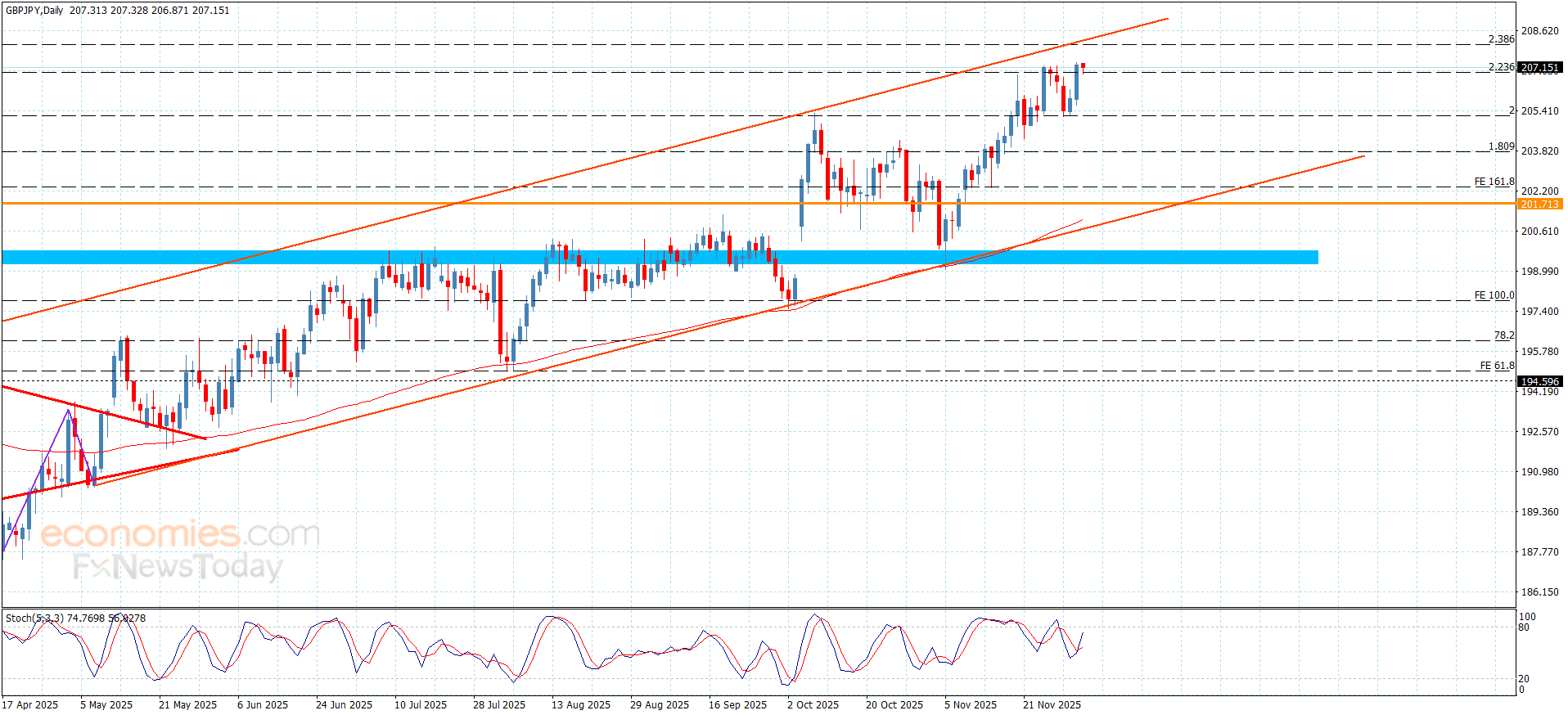
The GBPJPY pair ended its last bullish rally by recording the target at 206.90, facing strong barriers to push it to activate the attempts of gathering the gains by reaching 204.30, to provide some sideways trading by its fluctuation near %2.00 Fibonacci extension level at 205.20.


Note that stochastic exit from the overbought level might force the price to resume the bearish corrective attempts, to renew the pressure on 204.20 level, then wait for testing extra support at 203.75. 


The expected trading range for today is between 204.30 and 205.70


Trend forecast: Bearish


Source link

24 11, 2025

ADA Reclaims Lost Ground as AlphaPepe

By |2025-11-24T11:05:10+02:00November 24, 2025|Crypto News, News|0 Comments

ADA starts to recover near $0.40 as AlphaPepe’s high-conviction presale emerges as the favoured side-bet.

Cardano has spent much of the past month on the defensive. After trading comfortably above 0.50-0.60 USD in October, ADA slid hard through November, dropping roughly 30% and briefly threatening a deeper breakdown. That drawdown pushed it into what several on-chain and technical models describe as an “extreme buy” zone, with valuation metrics flashing undervaluation even as price continued to bleed.

Now, ADA is starting to fight back. Recent data shows Cardano trading near 0.40 USD https://coinmarketcap.com/currencies/cardano/, with some exchanges marking it around 0.40-0.42 USD after a bounce from the low 0.30s. Network headlines are turning positive again: the chain just surpassed 116 million transactions, recent governance stress tests have been digested, and analysts are beginning to talk about recovery rather than capitulation.

Alongside this emerging rebound story, a new side-bet is gaining traction among traders: AlphaPepe (ALPE) https://alphapepe.io/, a meme-coin presale on BNB Chain that kept growing even during the harshest part of the bear. As ADA reclaims lost ground, AlphaPepe is becoming a popular complement for investors seeking a more aggressive edge.

ADA Reclaims Support After a Punishing Drop

Over the last 30 days, Cardano’s price action has been brutal but instructive. ADA fell from the mid-0.50s toward the low 0.30s, wiping out weeks of gains and flipping prior support levels into resistance almost overnight. A network incident that temporarily slowed block production added short-term anxiety, but price ultimately held above the critical 0.30 USD zone that many analysts flagged as make-or-break support.

Following that flush, ADA began to stabilise. Today’s trading near 0.40 USD suggests buyers have stepped back in around that area, treating it as a reasonable entry zone rather than abandoning the asset. On-chain data backs this up: market value to realised value (MVRV) ratios and other cycle indicators show ADA in an historically attractive band, even as some technical signals still point to lingering downside risk.

At the same time, Cardano’s fundamental story has not gone away. The network just crossed more than 116 million lifetime transactions, conference coverage from Cardano Summit 2025 highlighted progress on governance, layer-2s and identity, and the Cardano Foundation has publicly discussed the roadmap toward a potential spot ADA ETF in the coming year. The result is a curious mix: price weakness, but growing confidence that the long-term thesis is intact.

Cardano Price Prediction: Recovery Path with Conditions

Short-term ADA forecasts now revolve around one core question: can the 0.30-0.35 USD region remain a durable floor? Most serious analysis agrees that holding above this band keeps a bullish recovery scenario alive. If that zone fails decisively, more bearish targets in the low 0.20s come into focus.

Assuming support holds, there is a growing consensus that ADA can grind higher over the coming weeks. Several projection models published in November see average prices around the low 0.40s for the remainder of the month, with potential to reach the mid-0.50s if market conditions improve into December. One widely cited forecast suggests ADA could trade in a 0.41-0.60 USD channel through late 2025, with the upper end representing roughly a 40-45% gain from current levels if everything breaks in its favour.

Over a longer horizon, into 2026-2030, the range of predictions widens dramatically. Some models cap upside around 1 USD, others see room for a return to prior cycle highs in the 2-3 USD area, and a few outliers call for even higher valuations. The common thread is that Cardano’s future path depends on adoption of its DeFi stack, real-world tokenisation, scaling progress and whether it can convert its research-first reputation into dominant user share.

For now, the near-term story is simpler: ADA has reclaimed some lost ground and is trying to turn a bruising drawdown into a base-building phase.

AlphaPepe: The Side-Bet That Survived the Bear

While Cardano fought to hold the 0.30 USD line, AlphaPepe https://alphapepe.io/ was quietly sending a very different signal. As majors bled and sentiment soured, AlphaPepe’s presale was still onboarding more than 100 new holders per day. That kind of growth in the middle of a risk-off environment is unusual. It suggests that even while traders were de-risking from large caps, they were still willing to allocate fresh capital to a presale they considered unusually trustworthy.

Now that markets are stabilising and Bitcoin is back above 85,000 USD, that trickle has become a stronger current. AlphaPepe’s holder count has pushed past 3,700, the presale total is closing in on the 450,000 USD mark, and mentions of ALPE are spreading across presale roundups and meme-coin watchlists. In other words, the project that grew through the bear is now accelerating into the recovery.

At the heart of this confidence is how AlphaPepe has been structured. Tokens are delivered instantly to investors as they buy – no waiting for a claim portal, no uncertain unlock schedule. That instant delivery has become one of the project’s strongest trust signals, especially for traders scarred by presales that locked funds for months. Staking is live during the presale, letting buyers put their ALPE to work immediately, and multiple USDT reward rounds have already been paid out to participants, proving that the rewards model is more than marketing.

The $1,000 AlphaPepe Scenario and Structural Hype

Investors are not just attracted to mechanics; they are running the numbers. At a presale price around 0.00743 USD, a 1,000 USD allocation buys roughly 134,500 ALPE tokens.

If, after listing and price discovery, AlphaPepe were to trade at around 0.075 USD – ten times the presale level – that 1,000 USD entry would be worth roughly 10,000 USD. This is purely hypothetical and not a promise, but it illustrates why traders are willing to treat AlphaPepe as a high-upside complement to more conservative ADA exposure. The asymmetry simply does not exist in a large-cap like Cardano at current valuations.

AlphaPepe’s presale is also designed around structural price momentum. Every stage of the sale runs on a schedule of regular price increases, typically weekly. As each stage closes, the token price edges higher, ensuring that earlier buyers enjoy the lowest cost basis and reinforcing a sense of urgency among new entrants. This structural step-up model is feeding hype organically: each time the price ticks up, more traders realise that waiting simply means paying more later.

Early Callers Are Doubling Down

Part of what is driving the narrative now is that several analysts, YouTubers and presale commentators flagged AlphaPepe early, before it had mainstream attention. They pointed to features that are still rare in meme-coin presales: instant token delivery, live staking, a 10/10 audit score, locked liquidity and genuine reward payouts.

Those same voices are not quietly walking away now that AlphaPepe has gained traction; they are doing the opposite. Many have publicly stated that they are increasing their exposure, arguing that the original thesis – a meme coin with real mechanics and strong community growth – is being validated in real time. That consistency between early conviction and current positioning is driving a second wave of interest, as newer traders tend to pay attention to projects where early advocates are still clearly committed.

ADA and AlphaPepe: A Two-Layer Strategy

For investors, the emerging strategy is not to choose between Cardano and AlphaPepe, but to use them together. ADA provides the fundamentals-based layer: a research-driven, proof-of-stake chain with a deep development roadmap, growing transaction volume and improving institutional narratives, including talk of a future ADA ETF. Its job in a portfolio is to act as a core smart-contract allocation, potentially benefiting from broader market recovery and continued on-chain growth.

AlphaPepe is the speculative overlay: a high-beta meme-coin presale with credible delivery and clear upside scenarios, powered by instant token access, staking, reward pools and a structurally rising presale price. Its role is to provide the asymmetric return potential that large caps like ADA cannot realistically offer from current levels.

In a recovering market, that combination is compelling. ADA can regain lost ground as sentiment improves; AlphaPepe can amplify upside if meme-coin risk appetite returns.

Website: https://alphapepe.io/

Telegram: https://t.me/alphapepejoin

X: https://x.com/alphapepebsc

FAQs

Where is Cardano trading now and what has changed recently?

Cardano is trading near 0.40 USD after falling from the mid-0.50s. It has bounced from support around the low 0.30s and is now trying to build a base above that zone, with on-chain metrics suggesting undervaluation relative to recent history.

What do analysts see for ADA in the near term?

Most short-term projections see ADA oscillating in a 0.40-0.55 USD range if support holds, with the potential to approach 0.60 USD in a more optimistic recovery scenario. Losing the 0.30-0.34 USD region would weaken that view significantly.

Why is AlphaPepe being mentioned alongside Cardano?

Because ADA is a fundamentally strong but slower-moving large-cap, while AlphaPepe offers high-beta, early-stage upside. Many investors are using ADA as a core holding and AlphaPepe as a speculative side-bet.

How did AlphaPepe perform during the bear phase?

Even in the most bearish stretch, more than 100 new holders were joining AlphaPepe’s presale each day, showing consistent confidence despite wider market fear. That growth has accelerated as conditions improved.

What could 1,000 USD in AlphaPepe become?

At a presale price of about 0.00743 USD, 1,000 USD buys around 134,500 ALPE. If ALPE were to trade at 0.075 USD after listing, that position would be worth roughly 10,000 USD. This is a scenario, not a guarantee, but it illustrates the kind of asymmetry that draws traders in.

AFFILIATE AVENUE LTD

128 City Road, London, England, EC1V 2NX

cs@coinfunnel.io

Jack Duffy

At CoinFunnel, we help blockchain projects and crypto startups grow their audience, increase adoption, and build community through strategic marketing.

This release was published on openPR.

Source link

24 11, 2025

Aave News Today: The Two Sides of DeFi: Aave’s Expansion Increases Volatility Concerns

By |2025-11-24T09:41:37+02:00November 24, 2025|News, NFT News|0 Comments


The

Aave

(AAVE) ecosystem is currently experiencing increased speculative activity, as both on-chain metrics and market trends indicate the possibility of heightened short-term fluctuations. Market participants are paying close attention to the token’s price action around the 0.57 support mark—a pivotal level that, if lost, could prompt additional selling. Recent whale transactions and leveraged trades have brought further attention to the mounting risks associated with the DeFi lending protocol’s native asset.

A prominent Aave whale has recently increased their holdings, acquiring 24,000 AAVE tokens and bringing their total to 276,000 AAVE at an average entry price of $165 each. This accumulation,

according to COINOTAG News

, demonstrates that large investors continue to show interest despite the token’s history of price swings. Nevertheless, this whale’s position remains exposed to potential downturns, as seen during the October 11 flash crash when part of their leveraged holdings was liquidated at $101, resulting in a loss of 32,000 AAVE.

At the same time,

another Aave participant has started to reduce leverage

on an $80 million long bet in

wrapped Bitcoin

(WBTC), reflecting a more cautious stance as the position approaches a $65,436 liquidation point. This position, open since May 2025, consists of 550.2

WBTC

supplied to Aave and $28.09 million in stablecoin liabilities. Should the price fall to the critical threshold, forced liquidations could occur, potentially intensifying downward momentum for both WBTC and AAVE.

These risks are further magnified by Aave’s growing footprint within the DeFi sector.

Tangem has just introduced a new feature

that enables users to earn real-time returns on stablecoins through Aave’s platform. While this development highlights Aave’s foundational role in decentralized finance, it also brings up questions about liquidity management and the risks associated with concentrated leverage.

Technical analysis points to a fragile outlook for the AAVE token. Both traders and analysts are watching the 0.57 Fibonacci retracement as a crucial psychological level. A breach could lead to a wider selloff, especially if liquidations pick up pace. “The market is on the verge of a correction,” commented one DeFi strategist, emphasizing that the actions of major holders and leveraged traders often serve as early warnings of broader market stress.

At present, Aave’s ecosystem presents both opportunities and risks: while innovation and user growth are accelerating, the same factors that drive expansion could also introduce volatility if not carefully managed.


Source link

Go to Top