PCOS Supplements Market | Global Market Analysis Report
PCOS Supplements Market Forecast and Outlook 2025 to 2035
The global PCOS supplements market is projected to reach USD 4.99 billion by 2035, recording an absolute increase of USD 3.69 billion over the forecast period. The market is valued at USD 1.30 billion in 2025 and is set to rise at a CAGR of 14.4% during the assessment period.
The market is expected to grow by approximately 3.8 times during the same period, supported by increasing prevalence of polycystic ovary syndrome among women of reproductive age worldwide, driving demand for specialized nutritional interventions and increasing investments in evidence-based formulations with clinical efficacy across hormonal regulation and fertility applications globally.
Quick Stats for PCOS Supplements Market
- PCOS Supplements Market Value (2025): USD 1.30 billion
- PCOS Supplements Market Forecast Value (2035): USD 4.99 billion
- PCOS Supplements Market Forecast CAGR: 14.4%
- Leading Ingredient Type in PCOS Supplements Market: Myo-inositol-based supplements (41.8%)
- Key Growth Regions in PCOS Supplements Market: Asia Pacific, North America, and Europe
- Top Players in PCOS Supplements Market: Himalaya Wellness, Theralogix, Allara Health, The S’moo Co., Fertility Family, SOVA, MyOva, Girl Vitamins, New Leaf Products, Zazzee Naturals
Women with PCOS face mounting pressure to manage complex metabolic and hormonal imbalances while addressing fertility concerns and skin health complications, with modern PCOS supplement products providing documented therapeutic benefits including improved insulin sensitivity, enhanced ovulation rates, and regulated menstrual cycles compared to conventional pharmaceutical interventions alone.
Rising awareness about holistic PCOS management and expanding telemedicine platforms enabling personalized supplement recommendations create substantial opportunities for manufacturers and healthcare partners. However, limited clinical standardization and regulatory variations across markets may pose obstacles to widespread medical acceptance.
The myo-inositol-based supplements segment dominates market activity, driven by extensive clinical evidence supporting inositol’s role in improving insulin resistance and ovarian function across diverse PCOS phenotypes worldwide. Women increasingly recognize the therapeutic benefits of myo-inositol supplements, with typical product offerings providing effective metabolic regulation and hormonal balance at accessible price points through established healthcare distribution networks.
The micronutrient & omega-3 segment demonstrates robust growth potential, supported by rising awareness about comprehensive nutritional deficiencies in PCOS patients and evidence-based protocols integrating essential vitamins, minerals, and anti-inflammatory compounds in modern therapeutic approaches.
Capsules & tablets emerge as the dominant dosage form, reflecting consumer preference for convenient oral supplementation and precise dosage control in daily PCOS management routines. Online stores represent the leading sales channel, driven by direct-to-consumer supplement brands and e-commerce accessibility enabling discreet purchasing for women seeking PCOS management solutions.
Regional dynamics show North America maintaining market leadership, supported by high PCOS awareness levels and established supplement consumption patterns across women’s health categories. Asia Pacific demonstrates the fastest growth trajectory driven by increasing PCOS diagnosis rates and expanding middle-class populations adopting preventive healthcare approaches, while Europe emphasizes clinical validation and regulatory compliance for supplement quality standards.
India leads country-level growth through extensive urban health consciousness and telemedicine adoption, followed by China supported by traditional medicine integration with modern supplement formulations. The competitive landscape features moderate concentration with Himalaya Wellness maintaining market leadership position, while specialized players including Theralogix, Allara Health, and The S’moo Co. compete through targeted PCOS-specific formulations and comprehensive patient education programs across diverse therapeutic applications.
PCOS Supplements Market Year-over-Year Forecast 2025 to 2035
Between 2025 and 2029, the PCOS supplements market is projected to expand from USD 1.30 billion to USD 2.25 billion, resulting in a value increase of USD 0.95 billion, which represents 25.7% of the total forecast growth for the period. This phase of development will be shaped by rising demand for myo-inositol and evidence-based formulations addressing hormonal imbalances, product innovation in gummy and powder formats with enhanced palatability and compliance rates, as well as expanding integration with digital health platforms and telemedicine consultation services. Companies are establishing competitive positions through investment in clinical research partnerships, advanced formulation technologies, and strategic market expansion across online retail, pharmacy channels, and direct-to-consumer distribution models.
From 2029 to 2035, the market is forecast to grow from USD 2.25 billion to USD 4.99 billion, adding another USD 2.74 billion, which constitutes 74.3% of the overall expansion. This period is expected to be characterized by the expansion of specialized product applications, including fertility-focused formulations and dermatologist-recommended acne management supplements tailored for specific PCOS phenotypes, strategic collaborations between supplement manufacturers and women’s health clinics, and an enhanced focus on clinical validation and third-party testing standards. The growing emphasis on personalized nutrition protocols and rising consumer preference for combination supplements addressing multiple PCOS symptoms will drive demand for comprehensive therapeutic solutions across diverse patient populations.
PCOS Supplements Market Key Takeaways
| Metric | Value |
|---|---|
| Market Value (2025) | USD 1.30 billion |
| Market Forecast Value (2035) | USD 4.99 billion |
| Forecast CAGR (2025-2035) | 14.4% |
Why is the PCOS Supplements Market Growing?
The PCOS supplements market grows by enabling women with polycystic ovary syndrome to manage complex metabolic and hormonal imbalances while addressing fertility goals and associated health complications without exclusive reliance on pharmaceutical interventions.
Women with PCOS face mounting pressure to regulate menstrual cycles and improve fertility outcomes while managing insulin resistance, weight gain, acne, and hirsutism, with modern supplement formulations typically providing targeted nutritional support including myo-inositol for ovarian function, omega-3 for inflammation reduction, and micronutrients for metabolic optimization compared to conventional treatments alone, making therapeutic supplementation essential for comprehensive PCOS management.
The women’s health industry’s need for accessible and evidence-based nutritional interventions creates demand for specialized PCOS supplement solutions that can provide hormonal regulation, enhance reproductive outcomes, and support metabolic health without compromising safety profiles or causing pharmaceutical side effects.
Healthcare provider endorsements and clinical evidence supporting supplement efficacy drive adoption in reproductive health environments, endocrinology practices, and integrative medicine settings, where therapeutic outcomes have direct impact on patient quality of life and fertility success rates.
The increasing PCOS diagnosis rates globally, affecting approximately 10% of women of reproductive age, create expanding patient populations seeking complementary management approaches. Rising consumer awareness about the metabolic and hormonal mechanisms underlying PCOS enables informed supplement selection and adherence to evidence-based protocols.
However, clinical heterogeneity among PCOS phenotypes and variable regulatory standards across markets may limit standardization of therapeutic approaches and optimal dosing protocols among diverse patient populations with different symptom profiles.
Segmental Analysis
The market is segmented by ingredient, dosage form, indication, sales channel, and region. By ingredient, the market is divided into myo-inositol-based supplements, micronutrient & omega-3, herbal supplements, and others. Based on dosage form, the market is categorized into capsules & tablets, powders, gummies, and liquids.
By indication, the market includes menstrual cycle support, hormonal regulation, fertility improvement, acne and skin health, and others. Based on sales channel, the market is divided into hypermarket & supermarket, pharmacy & drug stores, and online stores. Regionally, the market is divided into Asia Pacific, Europe, North America, Latin America, and Middle East & Africa.
By Ingredient, Which Segment Accounts for the Dominant Market Share?
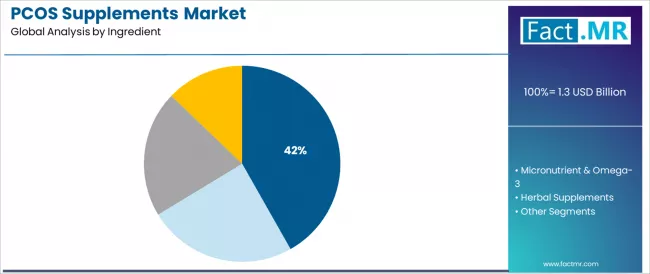
The myo-inositol-based supplements segment represents the dominant force in the PCOS supplements market, capturing 41.8% of the total market share in 2025. This established ingredient category encompasses solutions featuring clinically validated insulin sensitizing properties and ovarian function optimization capabilities, including advanced formulations combining D-chiro-inositol ratios and bioavailability enhancement technologies that enable superior therapeutic outcomes and patient compliance across reproductive health and metabolic management applications worldwide.
The myo-inositol segment’s market leadership stems from its superior clinical evidence base, with solutions capable of addressing core PCOS pathophysiology including insulin resistance, hyperandrogenism, and ovulatory dysfunction while maintaining excellent safety profiles and tolerability standards across diverse patient populations.
The micronutrient & omega-3 segment maintains a substantial market share in the 32-34% range, serving health-conscious PCOS patients who require comprehensive nutritional support addressing multiple deficiency patterns including vitamin D, B-complex vitamins, zinc, magnesium, and anti-inflammatory essential fatty acids for metabolic and hormonal optimization.
These solutions offer broad-spectrum nutritional benefits for women managing complex PCOS symptomatology while providing sufficient efficacy to support conventional treatment protocols. The micronutrient segment demonstrates strong growth potential, driven by expanding awareness of nutritional deficiencies in PCOS populations and increasing emphasis on preventive health approaches.
Within the ingredient category, herbal supplements including spearmint extract, cinnamon, and berberine demonstrate growing adoption, driven by patient preference for natural therapeutic options and emerging clinical evidence supporting metabolic and anti-androgenic benefits. This sub-segment benefits from traditional medicine integration and consumer demand for plant-based alternatives.
Key therapeutic advantages driving the myo-inositol segment include:
- Advanced insulin sensitization mechanisms with clinically demonstrated improvements in glucose metabolism and reduction in hyperinsulinemia across PCOS phenotypes
- Established ovarian function enhancement allowing improved follicular development and ovulation rates without extensive pharmaceutical intervention complexity
- Enhanced hormonal regulation features enabling androgen reduction and menstrual cycle normalization while maintaining formula integrity and therapeutic consistency
- Superior safety profile providing optimal risk-benefit ratios for reproductive-age women across various PCOS severity levels and comorbidity profiles
By Dosage Form, Which Segment Accounts for the Largest Market Share?
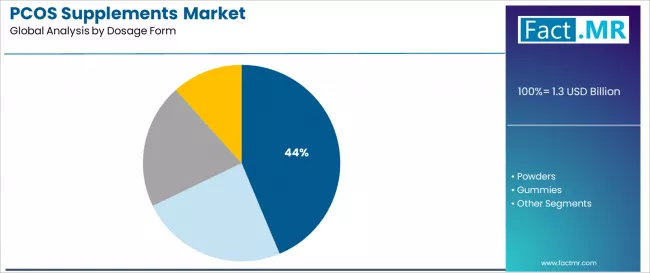
Capsules & tablets dominate the PCOS supplements dosage form landscape with a 43.7% market share in 2025, reflecting the critical role of conventional oral solid dosage forms in supporting precise dosing, extended shelf stability, and familiar administration protocols across patient populations worldwide.
The capsules & tablets segment’s market leadership is reinforced by patient preferences for convenient daily supplementation routines, pharmaceutical-grade manufacturing standards, and compatibility with multi-ingredient formulation complexities that characterize comprehensive PCOS management protocols.
Within this segment, capsules represent the preferred format for many manufacturers, driven by their ability to mask ingredient tastes, enable controlled release mechanisms, and accommodate diverse formulation requirements including oil-based and hygroscopic ingredients. This sub-segment benefits from established consumer familiarity and perception of pharmaceutical-grade quality standards.
The gummies segment represents a rapidly growing dosage form category, demonstrating strong expansion through specialized requirements for improved patient compliance, palatability enhancement, and lifestyle-oriented supplement positioning in consumer health markets. This segment benefits from younger demographic adoption patterns that prioritize enjoyable consumption experiences and reduced pill fatigue in chronic supplementation scenarios.
The powders segment maintains meaningful presence through versatility in dosing flexibility and beverage fortification applications, while the liquids category serves specific patient segments preferring rapid absorption and ease of swallowing for comprehensive nutritional delivery.
Key market dynamics supporting dosage form growth include:
- Capsule and tablet format expansion driven by pharmaceutical manufacturing standards and precise dose control, requiring advanced coating technologies and stability optimization
- Gummy format modernization trends require specialized formulation expertise for active ingredient stability and sugar content management
- Integration of sustained-release technologies enabling once-daily dosing convenience and improved therapeutic consistency across patient populations
- Growing emphasis on vegetarian capsule options and clean label formulations driving ingredient transparency without gelatin limitations
By Indication, Which Segment Accounts for a Significant Market Share?
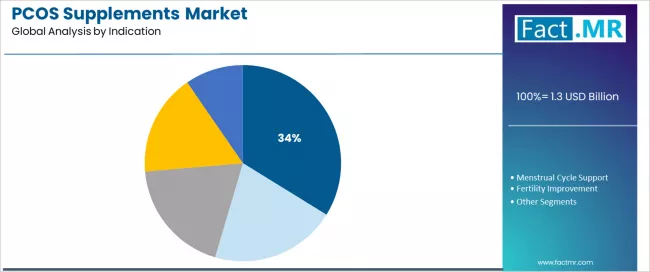
Hormonal regulation represents a leading indication segment in the PCOS supplements market with a 33.8% market share in 2025, reflecting the fundamental role of hormonal imbalance management in PCOS pathophysiology and patient quality of life. The hormonal regulation segment demonstrates consistent demand driven by the need to address hyperandrogenism, irregular menstrual cycles, and associated metabolic complications across diverse PCOS phenotypes and severity levels.
The fertility improvement segment emerges as an important indication category with robust growth potential, driven by the significant proportion of PCOS patients experiencing infertility challenges and seeking non-pharmaceutical interventions to enhance conception outcomes. Women pursuing fertility goals require specialized supplement formulations capable of supporting ovulation restoration, improving egg quality, and optimizing reproductive hormone balance for successful conception and pregnancy maintenance.
Within indication applications, menstrual cycle support demonstrates strong baseline demand as women seek to establish regular menstruation patterns and reduce dysmenorrhea associated with PCOS. Acne and skin health applications address the dermatological manifestations of hyperandrogenism, including persistent acne, seborrhea, and hirsutism that affect patient self-esteem and quality of life.
Key indication dynamics include:
- Hormonal regulation requirements accelerating across newly diagnosed PCOS populations with emphasis on androgen reduction and metabolic balance restoration
- Fertility improvement applications driving demand for ovulation-supporting formulations and preconception nutritional optimization protocols
- Menstrual cycle support prioritizing cycle regularity and symptom management through targeted nutritional interventions
- Acne management emphasizing anti-inflammatory and anti-androgenic supplement ingredients for comprehensive skin health improvement
By Sales Channel, Which Segment Accounts for the Dominant Market Share?
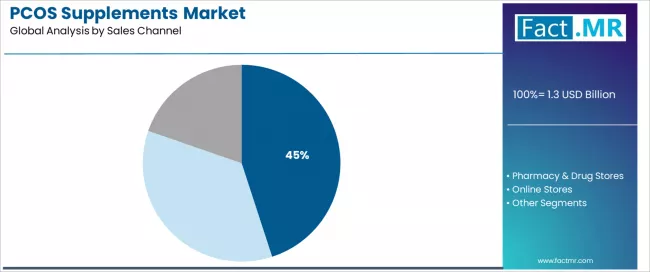
Online stores dominate the PCOS supplements distribution landscape with a 45.0% market share in 2025, reflecting the critical role of digital commerce in supporting accessible product availability, discreet purchasing experiences, and direct-to-consumer brand engagement across women’s health categories worldwide.
The online stores segment’s market leadership is reinforced by consumer preferences for convenient home delivery, extensive product information access, and subscription-based replenishment models that reduce purchasing friction in chronic supplementation protocols.
Within this segment, brand-owned e-commerce platforms represent a growing distribution approach, driven by direct customer relationships, personalized recommendation engines, and integrated educational content supporting informed purchasing decisions. This sub-segment benefits from superior margin structures and customer data insights that enable targeted marketing and product development strategies.
The pharmacy & drug stores segment represents an important distribution category demonstrating steady growth through professional consultation availability, immediate product access, and healthcare provider recommendation pathways. Pharmacists provide valuable counseling on supplement selection, potential drug interactions, and appropriate dosing protocols that enhance patient safety and therapeutic outcomes.
The hypermarket & supermarket segment maintains presence through mainstream consumer accessibility and integrated shopping convenience, while specialty health stores serve dedicated wellness-focused consumer segments seeking curated product selections and expert recommendations.
Key market dynamics supporting sales channel growth include:
- Online channel expansion driven by telemedicine integration and digital health platform partnerships, requiring seamless e-commerce fulfillment capabilities
- Pharmacy channel modernization trends require professional training programs and clinical education supporting evidence-based supplement recommendations
- Integration of subscription commerce models enabling automated replenishment and customer retention optimization
- Growing emphasis on direct-to-consumer brand strategies driving competitive differentiation without traditional retail limitations
What are the Drivers, Restraints, and Key Trends of the PCOS Supplements Market?
The market is driven by three concrete demand factors tied to women’s health outcomes. First, rising PCOS prevalence rates and increasing diagnosis capabilities create expanding patient populations seeking effective symptom management solutions, with supplementation representing a critical complementary approach to pharmaceutical treatments in comprehensive care protocols, requiring widespread product availability. Second, growing clinical evidence supporting supplement efficacy in PCOS management drives healthcare provider recommendations and patient adoption, with numerous studies demonstrating significant benefits in insulin sensitivity, ovulation rates, and hormonal balance through targeted nutritional interventions by 2030. Third, increasing consumer health consciousness and preference for natural therapeutic options enable more holistic disease management approaches that improve patient satisfaction while reducing pharmaceutical dependency and associated side effect concerns.
Market restraints include limited regulatory standardization and quality control variations across supplement manufacturers that can challenge consistent therapeutic outcomes and patient confidence in product efficacy, particularly in regions where dietary supplement oversight remains fragmented and third-party testing adoption proves limited. Raw material sourcing challenges for premium ingredients including pharmaceutical-grade myo-inositol and omega-3 concentrates pose another significant obstacle, as PCOS supplement production depends on specialized suppliers and quality verification protocols, potentially affecting product availability and price competitiveness. Healthcare provider skepticism regarding supplement efficacy and lack of insurance coverage for nutritional interventions create additional barriers for mainstream medical acceptance, demanding extensive clinical validation and professional education initiatives.
Key trends indicate accelerated personalized nutrition adoption in developed markets, particularly North America and Europe, where consumers demonstrate willingness to invest in tailored supplement protocols based on genetic testing, hormonal profiling, and symptom severity assessments. Telemedicine integration trends toward virtual consultation models with prescription supplement protocols and remote monitoring systems enable convenient access to specialized care that optimizes treatment adherence and clinical outcomes. However, the market thesis could face disruption if significant advances in pharmaceutical PCOS treatments or major shifts in dietary intervention approaches reduce reliance on traditional supplement-based management strategies.
Analysis of the PCOS Supplements Market by Key Countries
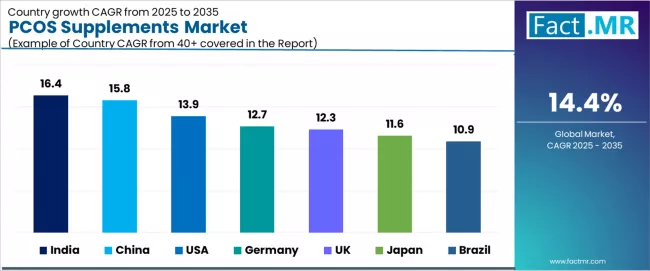
| Country | CAGR (2025 to 2035) |
|---|---|
| India | 16.4% |
| China | 15.8% |
| USA | 13.9% |
| Germany | 12.7% |
| UK | 12.3% |
| Japan | 11.6% |
| Brazil | 10.9% |
The global PCOS supplements market is expanding rapidly, with India leading at a 16.4% CAGR through 2035, driven by increasing PCOS awareness, expanding healthcare access, and rising disposable incomes supporting preventive health adoption.
China follows at 15.8%, supported by traditional medicine integration, growing women’s health focus, and extensive e-commerce penetration. USA records 13.9%, reflecting an established landscape with continuous product innovation and strong clinical validation emphasis.
Germany advances at 12.7%, leveraging quality standards and evidence-based healthcare approaches. UK posts 12.3%, focusing on pharmacy-led distribution and professional recommendations, while Japan grows steadily at 11.6%, emphasizing quality formulations and dermatological applications. Brazil demonstrates 10.9% growth, anchored by urbanization and expanding middle-class health consciousness.
How is India Leading Global Market Expansion?
India demonstrates the strongest growth potential in the PCOS supplements market with a CAGR of 16.4% through 2035. The country’s leadership position stems from rapidly increasing PCOS diagnosis rates, expanding urban healthcare infrastructure, and growing awareness about women’s reproductive health challenges driving adoption of therapeutic supplements.
Growth is concentrated in major metropolitan areas and tier-1 cities, including Mumbai, Delhi, Bangalore, and Hyderabad, where women are increasingly seeking evidence-based nutritional interventions for comprehensive PCOS management beyond conventional pharmaceutical approaches.
Distribution channels through online health platforms, pharmacy chains, and women’s health clinics expand product accessibility across urban populations and educated consumer segments. The country’s growing integration of Ayurvedic principles with modern supplement formulations provides strong momentum for culturally appropriate PCOS solutions, including comprehensive adoption across income segments seeking affordable yet effective interventions.
Key market factors:
- Urban women populations concentrated in metropolitan areas and technology hubs with rising health awareness levels
- E-commerce growth through platforms including Amazon India, Flipkart, and specialized health marketplaces enabling convenient product access
- Comprehensive telemedicine expansion ecosystem, including virtual consultation platforms with proven women’s health capabilities
- Local manufacturing development featuring companies like Himalaya Wellness offering culturally relevant and competitively priced formulations
Why is China Emerging as a High-Growth Market?
In major urban centers including Beijing, Shanghai, Shenzhen, and Guangzhou, the adoption of PCOS supplement solutions is accelerating across women of reproductive age, driven by increasing lifestyle-related PCOS prevalence and growing emphasis on integrative medicine approaches. The market demonstrates strong growth momentum with a CAGR of 15.8% through 2035, linked to comprehensive healthcare modernization trends and increasing focus on preventive women’s health management.
Patients in China are implementing traditional Chinese medicine principles integrated with modern nutritional supplements to enhance fertility outcomes while meeting growing expectations in holistic health management. The country’s expanding middle class creates ongoing demand for premium imported supplement brands, while increasing emphasis on natural ingredients drives adoption of herbal and plant-based PCOS formulations.
Key development areas:
- Urban professional women leading PCOS supplement adoption with emphasis on fertility enhancement and hormonal balance
- Distribution expansion through both traditional pharmacy channels and rapidly growing online health platforms
- Technology integration enabling smart health apps and personalized supplement recommendation systems
- Growing preference for combination products addressing multiple PCOS symptoms alongside domestic manufacturers offering traditional medicine alternatives
What drives USA’s Market Resilience?
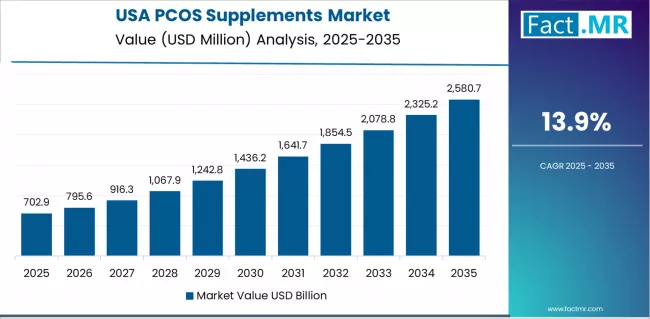
USA’s market expansion is driven by diverse consumer preferences, including evidence-based formulations in health-conscious markets and comprehensive women’s health solutions across mainstream segments. The country demonstrates steady growth potential with a CAGR of 13.9% through 2035, supported by continuous product innovation from established supplement manufacturers and specialized PCOS-focused brands.
American consumers face implementation challenges related to insurance coverage limitations and out-of-pocket costs for nutritional interventions, requiring brands to demonstrate clear value propositions and clinical efficacy. However, established supplement consumption habits and high health literacy create stable baseline demand for PCOS supplements, particularly among women actively managing reproductive health where evidence-based nutritional support drives primary purchasing decisions.
Market characteristics:
- Reproductive-age women and fertility-focused segments showing robust demand with substantial annual consumption across therapeutic applications
- Regional preferences varying between clinical validation emphasis in major metropolitan areas and natural formulation focus in wellness-oriented markets
- Future projections indicate continued premiumization with emphasis on personalized nutrition protocols and genetic-based recommendations
- Growing emphasis on subscription models and direct-to-consumer brands supporting patient convenience and treatment adherence
How does Germany Demonstrate Clinical Validation Leadership?
The German market leads in evidence-based PCOS supplement adoption based on integration with healthcare provider recommendations and pharmaceutical-grade quality standards for enhanced therapeutic reliability. The country shows strong potential with a CAGR of 12.7% through 2035, driven by strict regulatory oversight and consumer preferences for clinically validated formulations in major markets, including Bavaria, North Rhine-Westphalia, Baden-Württemberg, and Hesse.
German women are adopting PCOS supplements through pharmacy consultations and gynecologist recommendations for comprehensive symptom management, particularly in healthcare-conscious populations and professionally guided treatment protocols demanding rigorous quality credentials. Distribution channels through apotheke networks and specialized women’s health centers expand coverage across urban centers and medically informed consumer communities.
Leading market segments:
- Pharmaceutical-grade product adoption in major urban centers implementing comprehensive clinical validation requirements
- Pharmacy partnerships with healthcare providers achieving high professional endorsement rates
- Strategic collaborations between supplement manufacturers and medical research institutions expanding credibility
- Focus on third-party testing and certification programs addressing quality assurance requirements
What positions UK for Professional Distribution Leadership?
In London, Manchester, Birmingham, and other major cities, women are implementing PCOS supplement solutions through pharmacy consultations and healthcare provider recommendations, with documented case studies showing substantial symptom improvement through professionally guided nutritional protocols. The market shows steady growth potential with a CAGR of 12.3% through 2035, linked to ongoing pharmacy channel expansion, professional education initiatives, and emerging telemedicine consultation models in major regions.
Women are adopting evidence-based PCOS supplements with professional oversight to enhance treatment safety while maintaining standards demanded by healthcare-integrated purchasing pathways. The country’s established pharmacy infrastructure creates ongoing opportunities for professional-grade supplement launches that differentiate through clinical validation and practitioner endorsement.
Market development factors:
- Healthcare-guided consumers leading adoption of professionally recommended PCOS supplements across UK
- Pharmacy-led consultation services providing growth opportunities in community healthcare settings
- Strategic partnerships between pharmacies and supplement brands expanding professional distribution
- Emphasis on clinical trial data and peer-reviewed evidence supporting product claims across consumer applications
How Does Japan Show Quality Excellence Leadership?
Japan’s PCOS supplements market demonstrates sophisticated consumer preferences focused on formulation quality and dermatological benefits optimization, with documented integration of advanced manufacturing technologies achieving substantial improvement in ingredient purity and bioavailability across women’s health applications.
The country maintains steady growth momentum with a CAGR of 11.6% through 2035, driven by mature market dynamics emphasizing product excellence and continuous quality improvement methodologies that align with Japanese consumer standards applied to health and wellness products.
Major metropolitan areas, including Tokyo, Osaka, Nagoya, and Fukuoka, showcase advanced adoption of PCOS supplement protocols where pharmaceutical-grade ingredients integrate seamlessly with beauty-focused formulations and comprehensive skin health programs.
Key market characteristics:
- Quality-conscious women consumers driving demand for premium formulations with emphasis on purity and efficacy testing
- Quality partnerships enabling consistent product excellence with comprehensive safety verification programs
- Technology collaboration between Japanese companies and international supplement manufacturers expanding formulation capabilities
- Emphasis on beauty-from-within concepts and skin health applications addressing androgenic acne management
What Characterizes Brazil’s Market Development?
In major metropolitan centers including São Paulo, Rio de Janeiro, Brasília, and Belo Horizonte, the adoption of PCOS supplement solutions is expanding across urban women populations, driven by increasing reproductive health awareness and rising middle-class consumption patterns. The market demonstrates solid growth potential with a CAGR of 10.9% through 2035, linked to comprehensive healthcare infrastructure expansion and increasing focus on women’s wellness product availability in pharmacy and online channels.
Women in Brazil are implementing modern PCOS management practices and purchasing affordable supplement products to enhance reproductive health outcomes while meeting growing expectations in urban healthcare environments. The country’s expanding retail pharmacy networks create ongoing demand for competitively priced PCOS formulations, while increasing fertility clinic partnerships drive adoption of evidence-based nutritional protocols.
Key development areas:
- Urban professional women leading PCOS supplement adoption with emphasis on fertility support and hormonal balance
- Distribution expansion through pharmacy chains and online health platforms providing accessible product availability
- Local manufacturing capabilities supporting competitive pricing and market-appropriate product formulations
- Integration of healthcare provider education programs and patient awareness campaigns supporting category growth
Europe Market Split by Country
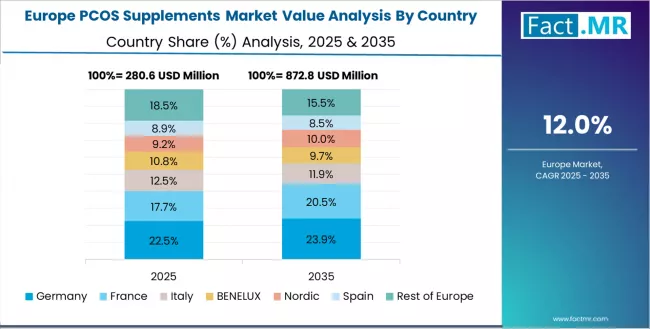
The PCOS supplements market in Europe is projected to grow from USD 0.31 billion in 2025 to USD 1.21 billion by 2035, registering a CAGR of 14.6% over the forecast period. Germany is expected to maintain its leadership position with a 28.5% market share in 2025, adjusting to 28.0% by 2035, supported by its extensive pharmaceutical-grade quality standards, professional healthcare distribution networks, and comprehensive clinical validation emphasis serving major European markets.
The UK follows with a 21.0% share in 2025, projected to reach 21.5% by 2035, driven by comprehensive pharmacy-led distribution and professional consultation models in major urban regions implementing evidence-based PCOS management protocols. France holds a 19.0% share in 2025, expected to maintain 19.3% by 2035 through ongoing development of natural ingredient products and specialized women’s health retail channels. Italy commands a 15.5% share, while Spain accounts for 12.0% in 2025.
The rest of Europe region is anticipated to gain momentum, expanding its collective share from 4.0% to 4.2% by 2035, attributed to increasing PCOS supplement adoption in Nordic countries and emerging Eastern European markets implementing modern women’s healthcare practices.
How does Quality Define PCOS Supplement Adoption in Japan?
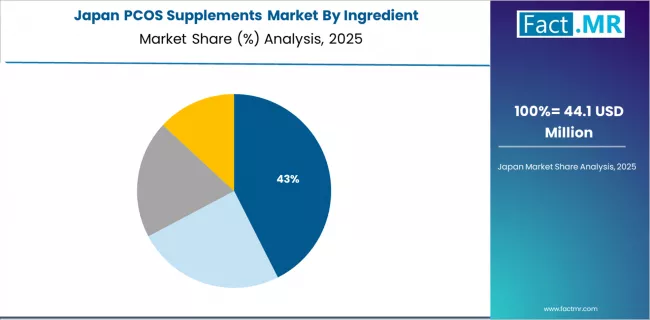
The Japanese PCOS supplements market demonstrates a mature and quality-focused landscape, characterized by sophisticated integration of beauty-enhancing formulations with hormonal balance technologies across women’s health applications, pharmacy distribution channels, and dermatology clinic recommendations. Japan’s emphasis on product excellence and comprehensive safety testing drives demand for pharmaceutical-grade PCOS supplement solutions that support holistic wellness initiatives and skin health requirements in daily women’s healthcare routines.
The market benefits from strong partnerships between international supplement manufacturers and domestic wellness brands, including established pharmacy chains and beauty retailers, creating comprehensive distribution ecosystems that prioritize product quality and consumer education programs. Metropolitan consumer segments showcase advanced PCOS supplement implementations where multi-benefit formulations achieve performance improvements through integrated beauty-from-within approaches and comprehensive nutritional optimization programs.
What drives Premium Positioning in South Korea’s Market?
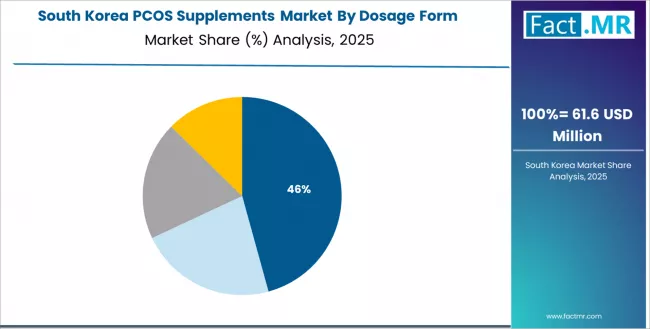
The South Korean PCOS supplements market is characterized by strong premium product presence, with companies like local wellness brands and international players including specialized women’s health companies maintaining significant positions through comprehensive product portfolios and K-beauty-integrated formulations for hormonal balance and skin health applications.
The market is demonstrating a growing emphasis on beauty-wellness convergence and specialized anti-androgenic benefits, as Korean women increasingly demand premium PCOS supplements that combine hormonal regulation with skin brightening properties and anti-acne ingredients deployed across urban populations and beauty-conscious consumer segments.
Local brand innovations and specialty product launches are gaining market share through strategic emphasis on fermented botanicals, offering specialized formulations including collagen-enhanced variants and probiotic-enriched solutions for comprehensive women’s wellness support.
The competitive landscape shows increasing collaboration between supplement manufacturers and women’s health clinics, creating hybrid distribution models that combine medical expertise with consumer trend insights and social media influencer marketing capabilities.
Competitive Landscape of the PCOS Supplements Market
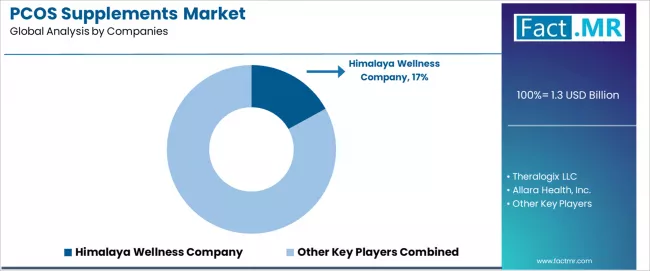
The PCOS supplements market features approximately 15-20 meaningful players with moderate concentration, where the top three companies control roughly 25-35% of global market share through established brand recognition, clinical validation efforts, and multi-channel distribution networks. Competition centers on ingredient innovation, clinical evidence generation, and direct-to-consumer engagement rather than price competition alone.
Market leaders include Himalaya Wellness, Theralogix, and Allara Health, which maintain competitive advantages through comprehensive PCOS-specific product portfolios, evidence-based formulation capabilities, and deep expertise in women’s reproductive health, creating high brand trust among consumers seeking therapeutic solutions.
These companies leverage healthcare provider relationships and ongoing clinical research collaborations to defend market positions while expanding into adjacent categories including prenatal supplements and women’s multivitamin applications.
Challengers encompass specialized PCOS-focused brands including The S’moo Co., Fertility Family, and SOVA, which compete through targeted product positioning and strong engagement with PCOS patient communities through social media platforms and influencer partnerships.
Women’s health specialists, including MyOva, Girl Vitamins, and New Leaf Products, focus on specific formulation approaches or patient segments, offering differentiated capabilities in personalized nutrition protocols, lifestyle-oriented supplement solutions, and condition-specific ingredient combinations.
Emerging direct-to-consumer brands and natural product manufacturers create competitive pressure through innovative subscription models and community-building strategies, particularly in high-growth markets including USA and India, where digital health adoption provides advantages in patient education and ongoing engagement approaches.
Market dynamics favor companies that combine clinical credibility with consumer-centric brand positioning that addresses the complete patient journey from diagnosis through long-term symptom management and fertility goal achievement.
Strategic emphasis on transparent ingredient sourcing, third-party quality testing, and healthcare provider education programs enables differentiation in increasingly competitive women’s health supplement segments across developed and emerging markets.
Global PCOS Supplements Market – Stakeholder Contribution Framework
PCOS supplements represent a critical women’s health product category that enables patients with polycystic ovary syndrome to manage complex hormonal and metabolic imbalances while addressing fertility goals and quality of life concerns without exclusive pharmaceutical dependency, typically providing targeted nutritional support including insulin sensitization, ovarian function enhancement, and anti-inflammatory benefits compared to conventional treatments alone while ensuring improved symptom control and comprehensive wellness outcomes.
With the market projected to grow from USD 1.30 billion in 2025 to USD 4.99 billion by 2035 at a 14.4% CAGR, these solutions offer compelling advantages for hormonal regulation applications, online distribution channels, and diverse patient populations seeking evidence-based natural interventions. Scaling market penetration and clinical acceptance requires coordinated action across healthcare policy, clinical research standards, supplement manufacturers, healthcare providers, and patient education initiatives.
How Could Governments Spur Local Development and Adoption?
- Women’s Health Programs: Include PCOS awareness in national health initiatives, providing targeted support for diagnosis campaigns in primary care settings and supporting research institutions through development grants and clinical trial funding.
- Tax Policy & Investment Support: Implement reduced tax rates for women’s health supplements, provide tax incentives for companies investing in clinical research and quality manufacturing practices, and establish favorable import duty structures that encourage pharmaceutical-grade ingredient procurement over conventional alternatives.
- Regulatory Framework Development: Create streamlined approval processes for new supplement formulations across women’s health applications, establish clear safety standards and efficacy documentation requirements for consumer protection, and develop international harmonization protocols that facilitate cross-border evidence sharing.
- Healthcare Integration & Coverage: Fund integration of nutritional counseling in PCOS care pathways, invest in healthcare provider education initiatives that bridge conventional medicine with evidence-based supplementation, and explore insurance coverage models for clinically validated supplement protocols.
- Research & Innovation Support: Establish public-private partnerships for PCOS supplement research, support academic-industry collaborations investigating mechanism of action and optimal dosing protocols, and create regulatory environments that encourage innovation in personalized nutrition approaches.
How Could Industry Bodies Support Market Development?
- Clinical Standards & Evidence: Define standardized efficacy endpoints for PCOS supplement research across hormonal, metabolic, and fertility outcomes, establish universal quality testing protocols and bioavailability standards, and create evidence databases that healthcare providers can rely on for treatment recommendations.
- Market Education & Best Practices: Lead messaging that demonstrates PCOS supplement benefits, emphasizing complementary role with conventional treatments, evidence-based ingredient selection, and realistic outcome expectations compared to pharmaceutical-only approaches.
- Quality Assurance Standards: Develop guidelines for ingredient sourcing, manufacturing excellence, third-party testing requirements, and label accuracy, ensuring consumer safety across production and distribution operations.
- Professional Development: Run certification programs for healthcare providers, nutritionists, and patient educators on optimizing PCOS supplement protocols, ingredient-drug interactions, and personalized treatment approaches in diverse patient populations.
How Could Manufacturers and Technology Players Strengthen the Ecosystem?
- Advanced Product Development: Develop next-generation PCOS supplement formulations with enhanced bioavailability, optimized ingredient ratios, and application-specific characteristics that enhance therapeutic effectiveness while reducing pill burden and improving patient compliance.
- Clinical Validation Programs: Provide comprehensive clinical trial data, real-world evidence studies, and mechanism of action research that supports healthcare provider confidence and informed patient decision-making.
- Patient Education Initiatives: Offer comprehensive information about PCOS pathophysiology, supplement mechanisms of action, and realistic treatment timelines that help patients make informed decisions aligned with personal health priorities and fertility goals.
- Research & Development Networks: Build comprehensive R&D capabilities, collaborative clinical research programs, and bioavailability testing systems that ensure PCOS supplements maintain high efficacy standards and consistent quality across diverse patient populations.
How Could Healthcare Providers and Educators Navigate the Market?
- Evidence-Based Protocol Integration: Incorporate validated PCOS supplement protocols into comprehensive treatment plans, with particular focus on myo-inositol formulations, micronutrient optimization, and lifestyle integration for holistic patient care.
- Patient Counseling Excellence: Establish comprehensive patient education programs addressing supplement selection, realistic outcome expectations, and integration with conventional treatments through optimized consultation frameworks and follow-up protocols.
- Multidisciplinary Care Models: Implement integrated care teams combining gynecologists, endocrinologists, nutritionists, and mental health professionals that provide comprehensive PCOS management addressing medical, nutritional, and psychological aspects.
- Outcomes Monitoring Systems: Develop standardized patient outcome tracking, hormonal response monitoring, and quality of life assessments that enable continuous protocol optimization and evidence generation.
How Could Investors and Financial Enablers Unlock Value?
- Clinical Research Financing: Provide growth capital for established companies like Himalaya Wellness, Theralogix, and emerging brands to fund clinical trials and evidence generation initiatives that support mainstream medical acceptance.
- Innovation Investment: Back startups developing advanced delivery systems, personalized formulation platforms, and digital health integration technologies that enhance therapeutic efficacy and patient engagement.
- Market Expansion Funding: Finance distribution expansion strategies for supplement manufacturers establishing operations in high-growth regions including India and China, supporting localization initiatives that address cultural preferences while maintaining quality standards.
- Digital Health Integration: Support companies developing telemedicine platforms, AI-driven personalization engines, and patient community applications that enhance treatment adherence and clinical outcomes through technology-enabled care delivery.
Key Players in the PCOS Supplements Market
- Himalaya Wellness Company
- Theralogix LLC
- Allara Health, Inc.
- The S’moo Co.
- Fertility Family Ltd.
- SOVA (SOVA Health / SOVA Nutrition)
- MyOva Ltd.
- Girl Vitamins (Girl Vitamins LLC)
- New Leaf Products Ltd.
- Zazzee Naturals (Zazzee Naturals LLC)
Scope of the Report
| Items | Values |
|---|---|
| Quantitative Units | USD 1.30 Billion |
| Ingredient | Myo-inositol-based supplements, Micronutrient & Omega-3, Herbal Supplements, Others |
| Dosage Form | Capsules & Tablets, Powders, Gummies, Liquids |
| Indication | Menstrual Cycle Support, Hormonal Regulation, Fertility Improvement, Acne and Skin Health, Others |
| Sales Channel | Hypermarket & Supermarket, Pharmacy & Drug Stores, Online Stores |
| Regions Covered | Asia Pacific, Europe, North America, Latin America, Middle East & Africa |
| Country Covered | India, China, USA, Germany, UK, Japan, Brazil, and 40+ countries |
| Key Companies Profiled | Himalaya Wellness, Theralogix, Allara Health, The S’moo Co., Fertility Family, SOVA, MyOva, Girl Vitamins, New Leaf Products, Zazzee Naturals |
| Additional Attributes | Dollar sales by ingredient and dosage form categories, regional adoption trends across Asia Pacific, Europe, and North America, competitive landscape with supplement manufacturers and healthcare distribution companies, product specifications and formulation requirements, integration with telemedicine platforms and personalized nutrition protocols, innovations in bioavailability enhancement and combination therapies, and development of specialized applications with clinical validation and evidence-based treatment capabilities. |
PCOS Supplements Market by Segments
-
Ingredient :
- Myo-inositol-based Supplements
- Micronutrient & Omega-3
- Herbal Supplements
- Others
-
Dosage Form :
- Capsules & Tablets
- Powders
- Gummies
- Liquids
-
Indication :
- Menstrual Cycle Support
- Hormonal Regulation
- Fertility Improvement
- Acne and Skin Health
- Others
-
Sales Channel :
- Hypermarket & Supermarket
- Pharmacy & Drug Stores
- Online Stores
-
Region :
- Asia Pacific
- China
- Japan
- South Korea
- India
- Australia
- Thailand
- Rest of Asia Pacific
- Europe
- Germany
- UK
- France
- Italy
- Spain
- Denmark
- Sweden
- Norway
- Rest of Europe
- North America
- Latin America
- Brazil
- Argentina
- Rest of Latin America
- Middle East & Africa
- South Africa
- Saudi Arabia
- UAE
- Kuwait
- Rest of Middle East & Africa
- Asia Pacific