Veterinary Dietary Supplements Market Forecast and Outlook 2025 to 2035
The global veterinary dietary supplements market is projected to grow from USD 3.96 billion in 2025 to approximately USD 9.50 billion by 2035, recording an absolute increase of USD 5.54 billion over the forecast period. This represents total growth of nearly 140%, with the market expected to expand at a compound annual growth rate (CAGR) of 9.1% between 2025 and 2035.
Growth will be driven by rising pet ownership, increasing focus on preventive animal healthcare, and expanding adoption of nutritionally fortified supplements across companion animals and livestock operations. The integration of advanced formulations, including probiotics, omega fatty acids, and joint health nutrients, continues to strengthen the global shift toward holistic and preventive veterinary care.
Quick Stats for Veterinary Dietary Supplements Market
- Veterinary Dietary Supplements Market Value (2025): USD 3.96 billion
- Veterinary Dietary Supplements Market Forecast Value (2035): USD 9.50 billion
- Veterinary Dietary Supplements Market Forecast CAGR: 9.1%
- Leading Product Type in Veterinary Dietary Supplements Market: Multivitamins & Minerals
- Key Growth Regions in Veterinary Dietary Supplements Market: Asia Pacific, North America, and Europe
- Top Players in Veterinary Dietary Supplements Market: Nestlé S.A., Virbac, Elanco, Nutramax Laboratories Veterinary Sciences Inc., Boehringer Ingelheim
Between 2025 and 2030, the veterinary dietary supplements market is projected to expand from USD 3.96 billion to USD 6.12 billion, adding USD 2.16 billion in value, equivalent to 39% of total decade-long growth. This phase will be characterized by the widespread adoption of multivitamin, mineral, and digestive health supplements, particularly across the companion animal segment.
Rising awareness among pet owners about nutritional deficiencies and age-related health conditions is expected to drive demand for specialized supplements targeting immunity, mobility, and coat health. Veterinary professionals are increasingly recommending preventive supplementation to reduce the incidence of chronic ailments and improve long-term animal wellbeing. In livestock management, dietary supplementation aimed at enhancing productivity, reproductive efficiency, and disease resistance continues to gain traction, supported by stricter biosecurity and food safety standards.
From 2030 to 2035, the market is forecast to grow from USD 6.12 billion to USD 9.50 billion, adding USD 3.38 billion and accounting for approximately 61% of the decade’s total expansion. This period will see the introduction of innovative formulations combining nutraceuticals, herbal extracts, and functional ingredients such as CBD, which are gaining recognition for their therapeutic potential in stress management, inflammation control, and behavioral wellness.
Integration with comprehensive veterinary wellness programs, including diagnostic monitoring and personalized nutrition planning, will further enhance market maturity. Product development will increasingly focus on bioavailability optimization, flavor enhancement, and targeted delivery systems to improve compliance and absorption in both pets and livestock.
Between 2020 and 2025, the market witnessed steady expansion as consumer attitudes toward pet care shifted from reactive treatment to preventive nutrition. Growth was reinforced by the rise of premium pet food and supplement brands, the expansion of veterinary e-commerce channels, and the increased availability of over-the-counter dietary products. Manufacturers emphasized research-based formulations and evidence-backed ingredient validation to build consumer trust and professional acceptance.
Regional dynamics show North America and Europe maintaining leadership due to high pet ownership rates, advanced veterinary infrastructure, and strong regulatory oversight of supplement quality. Asia Pacific is emerging as a high-growth region, driven by rising disposable incomes, expanding livestock production, and growing awareness of animal nutrition benefits. Latin America and the Middle East are also demonstrating gradual adoption, supported by modernization of livestock management practices and rising focus on companion animal care.
Where revenue comes from – Now Vs Next (industry-level view)
| Period |
Primary Revenue Buckets |
Share |
Notes |
| Today |
Multivitamins & minerals |
34.0% |
Foundational supplements, broad appeal |
| CBD formulations |
16.0% |
Fastest growth, anxiety management |
| Probiotic & prebiotic |
14.0% |
Digestive health focus |
| Protein & peptides |
12.0% |
Performance nutrition |
| Companion animals |
62.0% |
Pet humanization trend |
| Livestock animals |
38.0% |
Production optimization |
| Gummies & chewables |
38.0% |
Palatability advantage |
| Veterinary hospitals |
38.0% |
Professional recommendations |
| Future (3-5 yrs) |
Enhanced multivitamin blends |
35-37% |
Specialized formulations |
| CBD wellness products |
18-21% |
Therapeutic applications |
| Functional probiotics |
15-17% |
Microbiome optimization |
| Companion animal premium |
64-67% |
Increased pet spending |
| Flavored delivery systems |
40-44% |
Compliance improvement |
| E-commerce channels |
25-28% |
Direct-to-consumer growth |
| Joint health solutions |
29-32% |
Aging pet population |
Veterinary Dietary Supplements Market Key Takeaways
At-a-Glance Metrics
| Metric |
Value |
| Market Value (2025) → |
USD 3.96 billion |
| Market Forecast (2035) ↑ |
USD 9.50 billion |
| Growth Rate ★ |
9.1% CAGR |
| Leading Product → |
Multivitamins & Minerals |
| Primary Animal Type → |
Companion Animals Segment |
The market demonstrates strong fundamentals with multivitamins and minerals capturing a dominant 34.0% share through proven nutritional efficacy and comprehensive health optimization. Companion animals drive primary demand with 62.0% market share, supported by increasing pet humanization trends and preventive healthcare development. Geographic expansion remains concentrated in Asia Pacific with rapid pet adoption, while developed markets show accelerating growth rates driven by premium product positioning and advanced veterinary care standards.
Imperatives for Stakeholders in Veterinary Dietary Supplements Market
Design for palatability, not just nutritional content
- Offer complete wellness packages: supplement formulations + dosing guidance + veterinary support + palatability testing + efficacy monitoring
- Preconfigured protocols: administration schedules, compliance tracking, health outcome monitoring, and digital health records on animal wellness
Quality assurance for pet safety
- Real-time quality monitoring analytics, batch traceability capabilities, and veterinary integration (safety certifications, ingredient transparency)
Science-by-design approach
- Clinical validation studies, real-time efficacy tracking, bioavailability optimization, and comprehensive safety documentation
Value-based distribution models
- Clear base product pricing + transparent distribution tiers (veterinary partnerships, retail programs, subscription services); recurring revenue through auto-delivery programs
Segmental Analysis
What are the Primary Classifications Shaping the Veterinary Dietary Supplements Market?
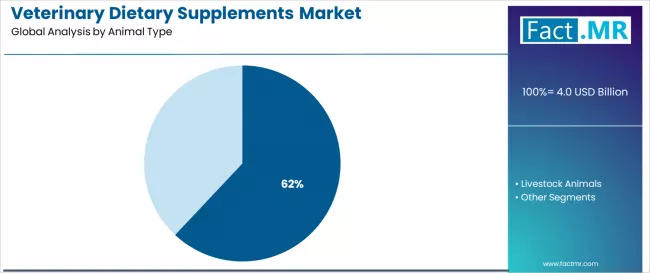
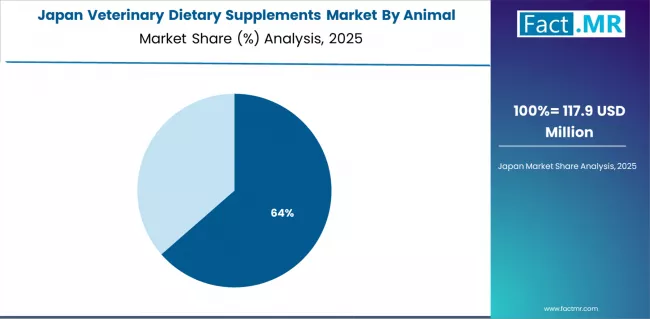
The market segments by animal type into companion animals (62.0%) and livestock animals (38.0%), representing the evolution from traditional livestock nutrition to comprehensive pet wellness solutions for preventive healthcare and performance optimization.
The product type segmentation divides the market into multivitamins and minerals (34.0%), CBD formulations (16.0%), probiotics and prebiotics (14.0%), proteins and peptides (12.0%), omega-3 fatty acids (10.0%), and others (14.0%), reflecting distinct nutritional requirements for health maintenance, therapeutic intervention, and performance enhancement.
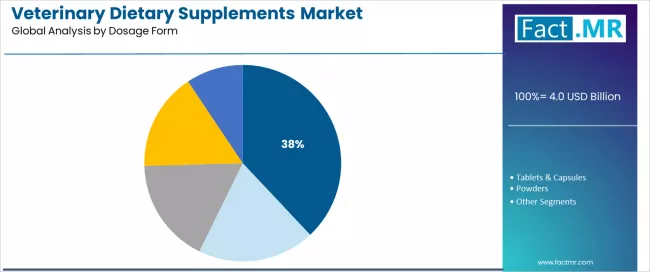
Dosage form segmentation covers gummies and chewables (38.0%), tablets and capsules (22.0%), powders (20.0%), liquids (14.0%), and others (6.0%), demonstrating varied administration preferences and palatability considerations.
The segmentation structure reveals technology progression from basic nutritional supplementation toward comprehensive wellness solutions with enhanced bioavailability and targeted therapeutic capabilities, while application diversity spans from companion pet care to livestock production optimization requiring precise nutritional interventions.
Why do Companion Animals Account for Dominant Market Share in the Veterinary Dietary Supplements Market?

Companion animals command the leading position in the veterinary dietary supplements market with dominant 62.0% market share through pet humanization trends, including superior health consciousness characteristics, preventive care adoption, and owner investment patterns that enable pets to achieve optimal wellness across diverse life stages and health conditions.
The segment benefits from pet owner preferences for preventive healthcare solutions that provide consistent wellness outcomes, enhanced quality of life, and longevity optimization without requiring expensive veterinary interventions. Advanced formulation features enable specialized joint support, calming solutions, and integration with existing pet care routines, where palatability and efficacy represent critical purchase requirements.
Companion animal supplements differentiate through proven health benefits, owner compliance facilitation, and integration with veterinary care protocols that enhance wellness effectiveness while maintaining optimal safety standards for diverse pet species and applications.
Key market characteristics:
- Advanced delivery formats with optimized palatability profiles and bioavailability enhancement capabilities
- Enhanced compliance effectiveness, enabling 35-45% improvement in administration consistency with reliable health outcomes
- Veterinary practice compatibility, including professional recommendation systems, therapeutic monitoring, and protocol optimization for preventive care
Dogs within companion animals maintain the leading subsegment position with 46.0% share due to their widespread adoption as household pets and comprehensive health management requirements.
How do Livestock Animals Demonstrate Strong Production Value?
Livestock animals maintain significant 38.0% market share in the veterinary dietary supplements market due to their production optimization properties and feed efficiency characteristics. These applications appeal to agricultural operations requiring enhanced growth performance with cost-effective positioning for commercial farming applications.
Market growth is driven by livestock productivity demands, emphasizing nutritional supplementation solutions and performance enhancement through optimized mineral delivery systems. Cattle represents the leading livestock subsegment with 23.0% share, benefiting from large-scale dairy and beef operations requiring consistent nutritional support for production maximization and herd health maintenance.
Why do Multivitamins & Minerals Lead the Product Type Segment in the Veterinary Dietary Supplements Market?
Multivitamins and minerals demonstrate market leadership in the veterinary dietary supplements market with 34.0% share due to widespread adoption of comprehensive nutritional support and increasing focus on preventive health optimization, foundational wellness, and deficiency prevention applications that maximize animal vitality while maintaining safety standards.
Pet owners and livestock operators prioritize broad-spectrum nutrition, convenience benefits, and integration with existing feeding programs that enable coordinated health management across multiple nutritional requirements. The segment benefits from substantial veterinary endorsement and evidence-based efficacy that emphasize the provision of essential nutrients for wellness optimization and disease prevention applications.
Veterinary care protocols incorporate multivitamin supplementation as standard recommendations for animal health, while preventive wellness programs increase demand for foundational nutritional capabilities that support immune function and minimize deficiency risks.
10-in-1 multivitamin and joint health blends capture 57.0% of the multivitamins subsegment through comprehensive formulation advantages that address multiple health needs in single-dose convenience.
What makes CBD Formulations the Fastest Growing Product Category?
CBD formulations capture 16.0% market share through therapeutic applications in anxiety management, pain relief, and inflammatory conditions. These products demonstrate fastest growth trajectory due to increasing acceptance of cannabinoid therapies and documented efficacy in companion pet applications requiring behavioral management and comfort enhancement.
Cannabidiol formulations for companion pets represent 65.0% of the CBD segment, driven by stress reduction needs and calming support applications in household pets facing separation anxiety and environmental stressors.
How do Probiotics & Prebiotics Address Digestive Wellness?
Probiotics and prebiotics maintain 14.0% market share through microbiome optimization and digestive health support. These formulations appeal to animals with gastrointestinal sensitivities, providing preventive gut health maintenance and therapeutic intervention for digestive disorders. Market positioning emphasizes natural wellness approaches and immune system modulation through beneficial bacterial strains.
Why do Gummies & Chewables Dominate the Dosage Form Segment?
Gummies and chewables demonstrate market leadership in the veterinary dietary supplements market with 38.0% share due to superior palatability characteristics and increasing focus on compliance optimization, treat-like administration, and positive reinforcement applications that maximize supplementation consistency while maintaining nutritional standards.
Pet owners prioritize ease of administration, voluntary consumption, and integration with daily feeding routines that enable stress-free supplementation across multiple pet types. The segment benefits from flavor technology advancement and texture optimization that emphasize the delivery of nutrition through enjoyable consumption experiences rather than forced medication procedures.
Palatability engineering incorporates natural flavoring systems as standard development practices for supplement formulations, while compliance improvement programs increase demand for administration-friendly formats that ensure consistent nutritional intake and health outcome achievement.
Format dynamics include:
- Strong adoption in companion pet applications requiring daily supplementation without restraint procedures
- Increasing integration with training reward systems for behavioral reinforcement in pet care protocols
- Rising preference for soft-chew textures optimizing dental compatibility and swallowing safety
How do Tablets & Capsules Maintain Professional Market Presence?
Tablets and capsules capture 22.0% market share through precise dosing capabilities, extended shelf stability, and professional veterinary dispensing. These formats appeal to therapeutic applications requiring standardized nutrient delivery and pharmaceutical-grade quality standards, maintaining strong presence in clinical veterinary environments.
Why does Joint Health Support Lead in the Application Category?
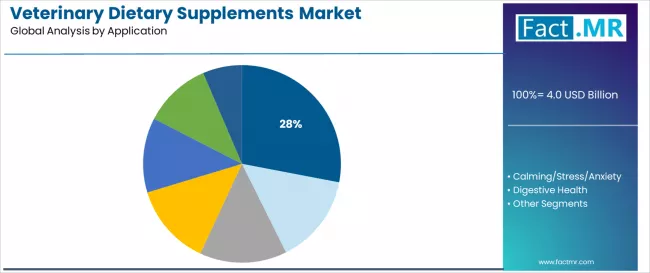
Joint health support demonstrates market leadership in the veterinary dietary supplements market with 28.0% share due to widespread prevalence of mobility concerns and increasing focus on preventive orthopedic care, cartilage preservation, and inflammation management applications that maximize animal comfort while maintaining activity standards.
Pet owners prioritize mobility maintenance, pain reduction, and integration with aging pet care that enable extended quality of life across senior animal populations. The segment benefits from documented clinical efficacy and veterinary recommendations that emphasize the preservation of joint function for longevity optimization and disability prevention applications.
Preventive orthopedic programs incorporate joint supplementation as standard protocols for large breed dogs and senior pets, while arthritis management initiatives increase demand for chondroprotective capabilities that support cartilage health and minimize mobility decline.
Application expansion includes:
- Growing adoption in performance animals and working dogs requiring sustained physical activity support
- Increasing use in post-surgical recovery protocols for orthopedic procedure optimization
- Rising integration with weight management programs addressing obesity-related joint stress
How do Calming/Stress/Anxiety Applications Address Behavioral Wellness?
Calming and stress management applications capture 18.0% market share through behavioral health support in companion animals facing anxiety disorders, environmental stressors, and separation issues. These formulations demonstrate strong growth through CBD integration and natural calming ingredients that address pet emotional wellness without pharmaceutical intervention.
What are the Drivers, Restraints, and Key Trends of the Veterinary Dietary Supplements Market?
| Category |
Factor |
Impact |
Why It Matters |
| Driver |
Pet humanization & premium care spending (emotional bonding, wellness investment) |
★★★★★ |
Pet owners increasingly treat animals as family members, driving demand for premium health products and preventive wellness solutions with comprehensive nutritional support. |
| Driver |
Preventive healthcare adoption & wellness focus (disease prevention, longevity) |
★★★★★ |
Veterinary shift toward preventive care models drives supplement demand; early intervention reduces long-term healthcare costs and improves quality of life outcomes. |
| Driver |
Aging pet population & chronic condition management (senior care, mobility) |
★★★★☆ |
Growing senior pet demographics require ongoing health maintenance; supplements address age-related conditions creating sustained demand for therapeutic nutrition. |
| Restraint |
Regulatory complexity & quality control concerns (safety standards, certification) |
★★★★☆ |
Variable regulatory frameworks across regions create compliance challenges; quality inconsistencies affect consumer trust and market credibility. |
| Restraint |
Price sensitivity & economic constraints (discretionary spending, affordability) |
★★★☆☆ |
Supplements remain discretionary purchases; economic downturns impact consumer willingness to invest in preventive care products for animals. |
| Trend |
CBD integration & cannabinoid therapeutics (anxiety relief, pain management) |
★★★★★ |
Expanding acceptance of CBD applications drives innovation in calming and pain relief formulations; regulatory clarity enabling mainstream adoption. |
| Trend |
E-commerce expansion & subscription models (direct-to-consumer, convenience) |
★★★★☆ |
Online channels provide convenience and recurring revenue through auto-delivery programs; digital marketing enables direct consumer education and engagement. |
Veterinary Dietary Supplements Market Analysis by key Countries
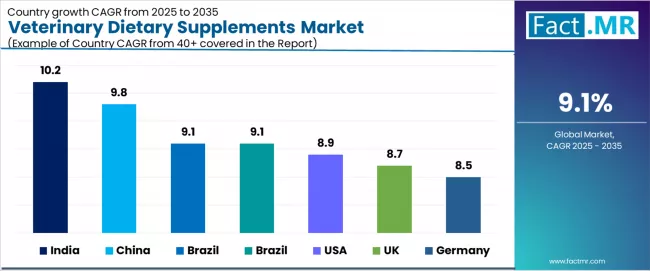
The veterinary dietary supplements market demonstrates varied regional dynamics with growth leaders including India (10.2% growth rate) and China (9.8% growth rate) driving expansion through pet adoption initiatives and livestock modernization development. Strong Performers encompass Brazil (9.1% growth rate), Japan (9.1% growth rate), and USA (8.9% growth rate), benefiting from established pet care markets and advanced veterinary adoption. Mature Markets feature Germany (8.5% growth rate) and UK (8.7% growth rate), where premium product positioning and preventive care requirements support consistent growth patterns.
Regional synthesis reveals Asian markets leading adoption through companion animal growth and livestock intensification, while Western countries maintain strong expansion supported by preventive care emphasis and premium product demand. Emerging markets show robust growth driven by pet ownership trends and agricultural modernization patterns.
| Region/Country |
2025 to 2035 Growth |
How to win |
What to watch out |
| India |
10.2% |
Focus on affordable livestock solutions |
Quality regulation; distribution gaps |
| China |
9.8% |
Lead with premium pet formulations |
Market fragmentation; local competition |
| Brazil |
9.1% |
Offer livestock productivity supplements |
Economic volatility; import regulations |
| USA |
8.9% |
Provide premium companion products |
Market saturation; private label growth |
| Japan |
9.1% |
Push senior pet care formulations |
Aging demographics; space constraints |
| Germany |
8.5% |
Focus on organic certifications |
Regulatory stringency; clinical evidence |
| UK |
8.7% |
Premium pet wellness positioning |
Brexit impacts; veterinary consolidation |
Why Does India Drive Fastest Market Growth?
India establishes fastest market growth through expanding pet ownership and comprehensive livestock modernization, integrating veterinary dietary supplements as standard components in companion animal care and dairy operations. The country’s 10.2% growth rate reflects growing middle-class affluence and increasing awareness of preventive animal healthcare that encourages the use of nutritional supplements across pet and livestock segments. Growth concentrates in major urban centers, including Mumbai, Delhi, and Bangalore, where pet adoption showcases Western-influenced care practices that appeal to owners seeking advanced wellness capabilities and veterinary guidance.
Indian manufacturers are developing cost-effective supplement formulations that combine domestic production advantages with traditional Ayurvedic ingredients, including herbal extracts and natural wellness components. Distribution channels through veterinary clinics and agricultural cooperatives expand market access, while government support for dairy productivity supports adoption across diverse livestock operations.
How Does China Emerge as Premium Pet Supplement Hub?
In Beijing, Shanghai, and Guangzhou metropolitan areas, companion animal owners are implementing veterinary dietary supplements as standard wellness protocols for pet health and preventive care enhancement, driven by urbanization and pet humanization trends that emphasize the importance of nutritional support. The market holds a 9.8% growth rate, supported by rising disposable income and changing attitudes toward pet care that promote premium supplement adoption for companion animals. Chinese pet owners are adopting products that provide comprehensive wellness benefits and imported quality standards, particularly appealing in urban regions where pet spending and health consciousness represent growing lifestyle priorities.
Market expansion benefits from e-commerce infrastructure and digital marketing capabilities that enable direct consumer education about supplement benefits for pet applications. Technology adoption follows patterns established in human nutrition, where quality assurance and ingredient transparency drive purchase decisions and brand loyalty development.
What Drives Brazil’s Livestock-Focused Growth?
Brazil establishes livestock-focused growth through agricultural modernization and companion animal adoption, integrating veterinary dietary supplements across cattle operations and urban pet care. The country’s 9.1% growth rate reflects expanding livestock productivity emphasis and increasing middle-class pet ownership that supports growing supplement deployment in Brazilian animal sectors. Growth concentrates in agricultural regions, including São Paulo, Minas Gerais, and Goiás, where cattle operations showcase nutritional optimization that appeals to producers seeking performance enhancement with cost-effective solutions.
Brazilian livestock operators focus on balancing affordability with productivity gains, creating demand for supplements that combine mineral fortification with growth promotion advantages. The market benefits from large-scale cattle industry infrastructure and expanding pet ownership patterns that support supplement adoption while maintaining cost standards important to Brazilian agricultural applications.
How Does USA Show Premium Market Leadership?
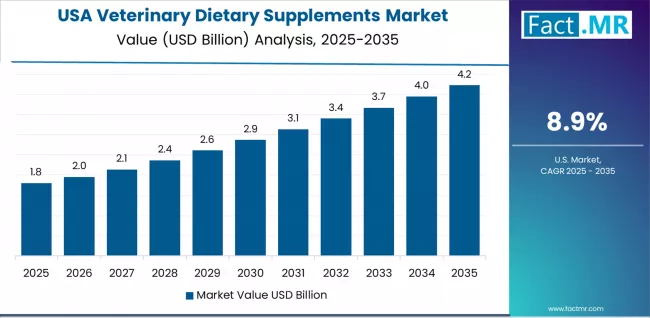
USA establishes premium market leadership through advanced veterinary care integration and established pet wellness culture, incorporating dietary supplements across companion animal households and specialized breeding operations. The country’s 8.9% growth rate reflects mature pet ownership relationships and established preventive care adoption that supports widespread use of supplements in wellness programs and therapeutic applications. Growth concentrates in major pet ownership markets, including California, Texas, and Florida, where veterinary technology showcases mature supplement deployment that appeals to owners seeking evidence-based wellness capabilities and quality assurance.
American manufacturers leverage veterinary endorsement networks and clinical research capabilities, including efficacy validation programs and safety certification that create consumer confidence and competitive advantages. The market benefits from established veterinary distribution channels and willingness to invest in premium pet care that encourages supplement adoption while supporting innovation advancement and therapeutic specialization.
What Distinguishes Germany’s Quality-Focused Approach?
Germany’s advanced veterinary market demonstrates sophisticated supplement integration with documented clinical effectiveness in companion animal applications and livestock operations through compliance with EU regulations and quality standards. The country leverages pharmaceutical-grade manufacturing expertise in supplement production and organic certification systems to maintain an 8.5% growth rate. Veterinary centers, including North Rhine-Westphalia, Bavaria, and Baden-Württemberg, showcase premium formulations where supplements integrate with comprehensive wellness platforms and preventive care protocols to optimize animal health and maintain quality standards.
German manufacturers prioritize organic certification and clinical validation in supplement development, creating demand for premium products with transparent ingredient sourcing, including natural extracts and sustainable production systems. The market benefits from established veterinary infrastructure and commitment to evidence-based medicine that provides long-term health benefits and compliance with international quality standards.
How Does UK Demonstrate Veterinary Integration?
UK’s established pet care market demonstrates sophisticated supplement adoption with documented effectiveness in companion animal wellness and preventive veterinary applications through integration with professional care protocols and health monitoring systems. The country maintains an 8.7% growth rate, leveraging traditional pet ownership culture and veterinary care integration in supplement operations. Pet care centers, including London, Manchester, and Birmingham, showcase integrated formulations where supplements coordinate with veterinary platforms and wellness management systems to optimize health outcomes and maintain care profiles.
British pet owners prioritize veterinary recommendations and quality certification in supplement selection, creating demand for products with clinical backing, including research validation and professional endorsement. The market benefits from established veterinary pharmacy infrastructure and commitment to animal welfare standards that provide long-term wellness benefits and compliance with care regulations.
Why Does Japan Focus on Senior Pet Care?
Japan’s mature pet ownership market demonstrates sophisticated supplement integration with documented effectiveness in aging companion animal applications and specialized care needs through integration with veterinary systems and wellness infrastructure. The country maintains a 9.1% growth rate, leveraging traditional pet care dedication and aging pet demographics in supplement technology. Pet care centers, including Tokyo, Osaka, and Nagoya, showcase premium formulations where supplements integrate with senior care platforms and mobility management systems to optimize quality of life and maintain health profiles.
Japanese manufacturers prioritize senior pet formulations and joint health solutions in supplement development, creating demand for specialized products with advanced features, including mobility support and cognitive enhancement. The market benefits from established pet insurance infrastructure and commitment to extended pet longevity that provides long-term care benefits and compliance with veterinary wellness standards.
Europe Market Split by Country
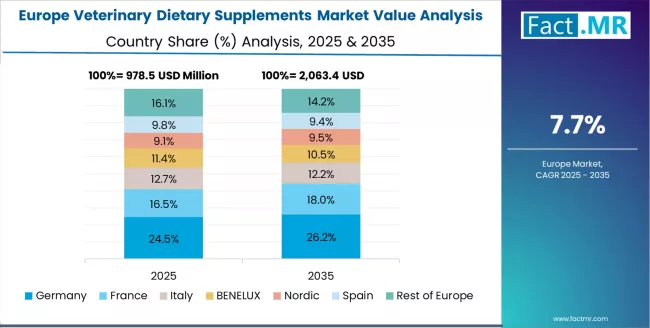
The veterinary dietary supplements market in Europe is projected to grow from USD 0.99 billion in 2025 to USD 2.28 billion by 2035, registering a CAGR of 8.7% over the forecast period. Germany is expected to maintain its leadership position with a 24.2% market share in 2025, declining slightly to 23.8% by 2035, supported by its advanced veterinary infrastructure and organic certification standards.
France follows with a 19.2% share in 2025, projected to reach 19.5% by 2035, driven by comprehensive pet wellness programs and premium product adoption. The UK holds a 17.8% share in 2025, expected to reach 18.1% by 2035 through veterinary integration and preventive care emphasis. Italy commands a 13.4% share, while Spain accounts for 10.6% in 2025. The Rest of Europe region is anticipated to maintain momentum at 14.8% share in 2025, reaching 14.3% by 2035, attributed to increasing supplement adoption in Nordic countries and emerging Eastern European markets implementing pet care modernization programs.
What Defines the Competitive Landscape of the Veterinary Dietary Supplements Market?
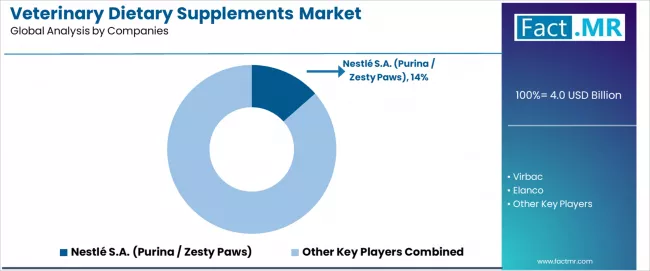
The veterinary dietary supplements market exhibits a moderately fragmented competitive structure with approximately 35-50 active players operating across global and regional markets. The top 3-4 manufacturers collectively command roughly 35-40% of total market revenue, with Nestlé S.A. (through Purina and Zesty Paws brands) maintaining market leadership at a 13.5% share.
This competitive landscape reflects the diverse nature of animal health requirements across companion and livestock segments, where product specialization, veterinary relationships, and distribution capabilities create opportunities for both multinational corporations and specialized nutritional brands to capture meaningful market positions.
Market leadership is maintained through several critical competitive advantages that extend beyond formulation capabilities. Veterinary endorsement networks enable leading players to gain professional recommendations and clinical credibility that drive consumer adoption through trusted veterinary channels.
Brand recognition provides consumer confidence and repeat purchase patterns, particularly important in pet care where owner loyalty influences long-term supplementation commitment. Manufacturing scale delivers cost advantages and quality consistency that allow market leaders to offer competitive pricing while maintaining rigorous safety standards. The combination of clinical research investment, palatability optimization, and comprehensive product portfolios creates differentiation that reinforces market position over time.
The market demonstrates clear commoditization trends in basic multivitamin formulations and generic mineral supplements, where product differentiation has diminished and price competition intensifies among private label offerings. These entry-level products face margin pressure as contract manufacturing capabilities spread globally and ingredient sourcing becomes standardized. However, significant margin opportunities persist in specialized therapeutic categories and innovative delivery systems.
CBD-based formulations command premium pricing through their therapeutic applications in anxiety management and pain relief, appealing to pet owners seeking natural alternatives to pharmaceutical interventions. Targeted joint health solutions with clinically validated chondroprotective ingredients generate higher margins through demonstrated efficacy in mobility improvement. Subscription-based delivery models create recurring revenue streams and strengthen customer relationships through convenience and compliance optimization beyond one-time product sales.
| Stakeholder |
What they actually control |
Typical strengths |
Typical blind spots |
| Global pet care platforms |
Brand portfolios, veterinary networks, retail distribution |
Consumer trust; multi-channel reach; research capabilities |
Innovation speed; specialized formulations |
| Veterinary pharma companies |
Clinical validation; professional relationships; therapeutic focus |
Scientific credibility; regulatory expertise; prescription channels |
Consumer marketing; palatability optimization |
| Specialized supplement brands |
Product innovation, formulation expertise, niche positioning |
Targeted solutions; ingredient quality; consumer education |
Distribution scale; veterinary penetration |
| Private label manufacturers |
Cost efficiency, retail partnerships, volume production |
Competitive pricing; flexible formulation; retailer loyalty |
Brand equity; clinical validation |
| E-commerce innovators |
Direct consumer access, subscription models, digital marketing |
Customer data; recurring revenue; personalized offerings |
Veterinary endorsement; retail presence |
Key Players in the Veterinary Dietary Supplements Market
- Nestlé S.A. (Purina / Zesty Paws)
- Virbac
- Elanco
- Nutramax Laboratories Veterinary Sciences, Inc.
- Boehringer Ingelheim
- Vetoquinol
- Ark Naturals
- Biovencer Healthcare Pvt. Ltd.
- AMORVET
Scope of the Report
| Items |
Values |
| Quantitative Units (2025) |
USD 3.96 billion |
| Product Type |
Multivitamins & Minerals, CBD, Probiotic & Prebiotic, Protein & Peptides, Omega-3 Fatty Acids, Others |
| Animal Type |
Companion Animals (Dogs, Cats), Livestock Animals (Cattle, Poultry, Swine) |
| Dosage Form |
Gummies & Chewables, Tablets & Capsules, Powders, Liquids, Others |
| Application |
Joint Health Support, Calming/Stress/Anxiety, Digestive Health, Nutritional Support, Immunity Support, Skin & Coat Health, Others |
| Distribution Channel |
Veterinary Hospitals & Clinic Pharmacies, Pet Specialty Stores & Retail, E-Commerce, Others |
| Regions Covered |
Asia Pacific, North America, Europe, Latin America, Middle East & Africa |
| Countries Covered |
India, China, Japan, USA, Brazil, Germany, UK, France, Italy, and 25+ additional countries |
| Key Companies Profiled |
Nestlé S.A., Virbac, Elanco, Nutramax Laboratories Veterinary Sciences Inc., Boehringer Ingelheim, Vetoquinol |
| Additional Attributes |
Dollar sales by product type and animal categories, regional adoption trends across Asia Pacific, North America, and Europe, competitive landscape with nutritional manufacturers and veterinary partners, pet owner preferences for preventive care and palatability, integration with veterinary care protocols and wellness programs, innovations in delivery systems and bioavailability enhancement, and development of specialized formulations with therapeutic targeting and efficacy optimization capabilities. |
Veterinary Dietary Supplements Market by Segments
-
Animal Type :
- Companion Animals
- Livestock Animals
-
Product Type :
- Multivitamins & Minerals
- CBD
- Probiotic & Prebiotic
- Protein & Peptides
- Omega-3 Fatty Acids
- Others
-
Dosage Form :
- Gummies & Chewables
- Tablets & Capsules
- Powders
- Liquids
- Others
-
Application :
- Joint Health Support
- Calming/Stress/Anxiety
- Digestive Health
- Nutritional Support
- Immunity Support
- Skin & Coat Health
- Others
-
Distribution Channel :
- Veterinary Hospitals & Clinic Pharmacies
- Pet Specialty Stores & Retail
- E-Commerce
- Others
-
Region :
- Asia Pacific
- India
- China
- Japan
- South Korea
- Australia & New Zealand
- Rest of Asia Pacific
- North America
- Europe
- Germany
- France
- UK
- Italy
- Spain
- Rest of Europe
- Latin America
- Brazil
- Rest of Latin America
- Middle East & Africa
- GCC Countries
- South Africa
- Rest of Middle East & Africa