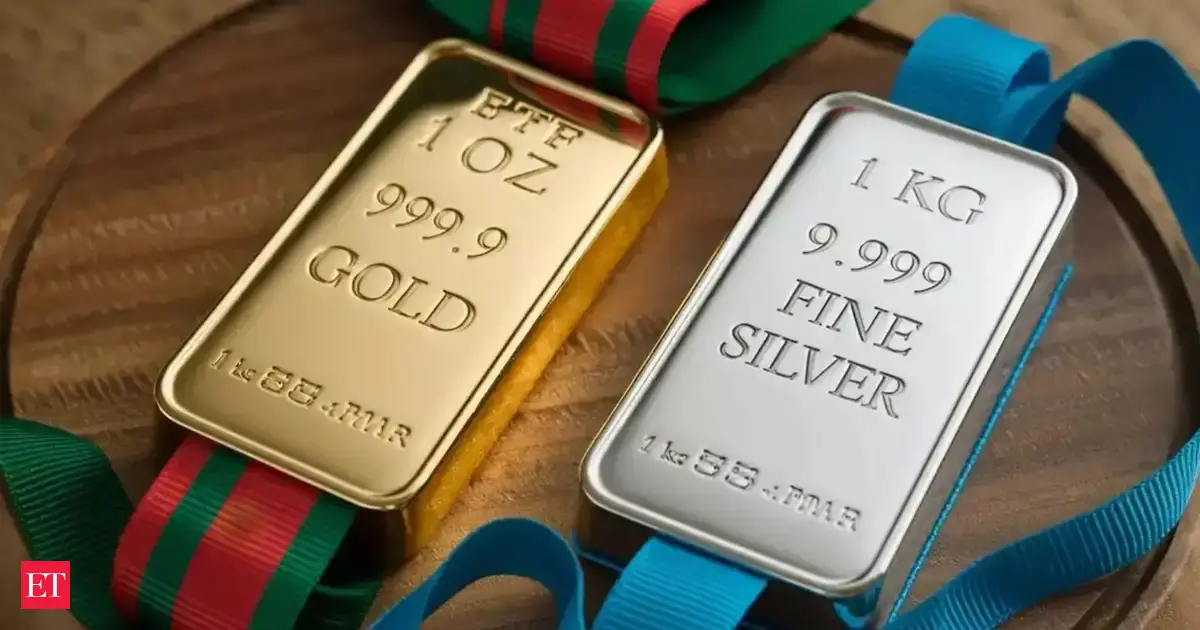
Gold, silver, platinum, and palladium price todayhave fallen as investors booked profits and the U.S. dollar strengthened. Spot gold dropped to a near two-week low, while silver, platinum, and palladium also saw declines. Market analysts expect continued volatility ahead due to U.S. inflation data, geopolitical tensions, and central bank decisions affecting bullion prices.
Gold, silver, platinum and palladium price today
Gold, silver, platinum, and palladium prices fell on Wednesday after a steep decline in the previous session. Spot gold was down 1.4% at $4,067.31 per ounce as of 0941 GMT. Earlier, it had risen to $4,161.17. U.S. gold futures for December delivery fell 0.7% to $4,081.30 per ounce.
The U.S. dollar index hovered near a one-week high. A stronger dollar makes bullion more expensive for international buyers. Gold prices dropped 5.3% on Tuesday after a record high of $4,381.21. Prices are up 54% this year due to geopolitical and economic uncertainty, expectations of U.S. rate cuts, and strong ETF inflows.
Ricardo Evangelista, analyst at ActivTrades, said traders booked profits after recent gains pushed gold into overbought territory. On the technical side, gold is supported by the 21-day moving average at $4,005. Investors are waiting for the U.S. Consumer Price Index (CPI) report on Friday. Gold benefits from low interest rates because it is a non-yielding asset.
A Reuters poll of economists suggests the Federal Reserve may cut its key interest rate by 25 basis points next week and again in December.
Live Events
Meanwhile, a planned summit between U.S. President Donald Trump and Russian President Vladimir Putin was postponed. Uncertainty remains over a possible meeting between Trump and Chinese President Xi Jinping. StoneX analyst Rhona O’Connell said any dips could trigger fresh buying interest due to ongoing global uncertainties.
Silver price today
Spot silver fell 0.9% to $48.28 per ounce after a 7.1% drop on Tuesday. In the U.S. market, silver slumped 8% on October 21, the sharpest one-day fall since 2021. Prices are down nearly 12% from their lifetime high of $54.47 per ounce. Analysts attribute the decline to a stronger U.S. dollar, delayed rate cut expectations, and lower industrial demand.
Platinum and palladium price today
Platinum fell 0.1% to $1,549.53 per ounce. Palladium dropped 1% to $1,394.52 per ounce. Analysts suggest both metals may see fluctuations as markets respond to global economic and geopolitical factors.
Market reactions and investor outlook
Gold futures dropped 0.5% to $4,087.70 per ounce, while spot gold retreated 4% to $4,088.45. ING analysts said profit-taking was the main reason after recent overbought conditions. Easing tensions between the U.S. and China also contributed to the sharp fall, but traders remain cautious ahead of delayed U.S. inflation data and upcoming trade talks involving the U.S., China, and India.
Gold remains up 56% year-to-date. Citigroup downgraded its outlook from “overweight” to a cautious stance due to excessive long positions. Analysts said gold may consolidate around $4,000 per ounce in coming weeks. Long-term fundamentals remain strong because of inflation concerns, central bank buying, and geopolitical tensions.
Oil and currency impact
Oil prices rose on Wednesday due to supply concerns and optimism around U.S.–China trade talks. Brent crude futures gained 1.5% to $62.21 per barrel, and West Texas Intermediate rose 1.6% to $58.12.
Sterling fell 0.3% to $1.3331 after flat inflation data. The U.S. dollar index remained steady at 98.95. FTSE 100 was up 0.6% at 9,486 points.
FAQs
Why did gold, silver, platinum, and palladium prices fall today? Prices fell due to profit booking by investors, a stronger U.S. dollar, and easing geopolitical tensions, which reduced immediate buying demand in global markets.
What is the outlook for gold and silver in the near future? Analysts expect volatility but long-term support from inflation concerns, central bank buying, and geopolitical risks, keeping demand for gold and silver stable.
PUNE. India, Oct. 22, 2025 /PRNewswire/ — A new in-depth analysis by Credence Research forecasts explosive growth for the global probiotic market, underscoring a profound global shift towards preventative health and wellness. The market size, which grew from USD 62.3 billion in 2018 to USD 99.29 billion in 2024, is anticipated to reach an impressive valuation of USD 280.37 billion by 2032. This remarkable trajectory corresponds to a robust compound annual growth rate (CAGR) of 13.92% during the forecast period from 2025 to 2032.
This growth is being propelled by increasing consumer awareness of the gut microbiome’s crucial role in overall health, extensive scientific research validating the benefits of specific probiotic strains, and the expansion of probiotic applications beyond traditional dairy products into a vast array of functional foods, supplements, and even skincare.
The report, titled “Probiotic Market: Global Industry Analysis, Size, Share, Growth, Trends, and Forecast, 2025-2032,” provides a granular view of the forces shaping this dynamic industry. Probiotics, defined as live microorganisms that confer a health benefit when consumed in adequate amounts, are at the forefront of the functional foods movement. Once primarily associated with yogurt, these beneficial bacteria are now integral components in dietary supplements, fermented beverages like kombucha and kefir, snack foods, and specialized formulas for infants and animals. The market’s expansion reflects a more educated consumer base actively seeking products that support digestive health, boost immunity, and may even influence mental well-being, a concept known as the gut-brain axis.
Market Overview
The global probiotic market has transitioned from a niche segment to a mainstream powerhouse in the health and wellness industry. Its substantial growth from USD 62.3 billion in 2018 to USD 99.29 billion in 2024 is a testament to the rising consumer demand for products that offer tangible health benefits. The market is projected to continue this impressive upward trend, with a forecast value of USD 280.37 billion by 2032, reflecting a strong CAGR of 13.92%.
This momentum is fundamentally linked to a paradigm shift in consumer health perspectives, where proactive wellness and disease prevention are prioritized. The scientific community’s growing body of evidence linking a balanced gut microbiome to improved digestion, enhanced immune function, and better mental health has been instrumental in building consumer trust and driving adoption. For instance, the demand for probiotic supplements saw a significant uptick throughout 2024, as consumers sought targeted, high-potency solutions for specific health concerns, moving beyond general wellness to address issues like IBS symptoms or post-antibiotic recovery. This increasing sophistication in consumer demand is pushing manufacturers towards strain-specific formulations and innovative delivery formats that ensure the viability and efficacy of the probiotics.
The primary determinant of market growth is the escalating public awareness regarding the pivotal role of the gut microbiome in overall health. Consumers are increasingly educated about the connection between gut health and digestive function, immunity, skin conditions, and even mental clarity. This knowledge empowers them to proactively seek out probiotic-fortified foods and supplements to support their well-being. This trend is amplified by wellness influencers, health publications, and targeted marketing campaigns. For instance, in early 2025, a leading international food company launched a “Happy Gut” range of cereals and snack bars, explicitly marketing the inclusion of clinically studied probiotic strains to appeal directly to health-conscious families.
Scientific Validation and Strain-Specific Research
Continuous investment in research and development (R&D) and the growing body of clinical evidence supporting the efficacy of specific probiotic strains are critical growth drivers. Scientific studies that validate the health benefits of particular strains for conditions like irritable bowel syndrome (IBS), traveler’s diarrhea, or immune response enhancement lend credibility to products and build consumer trust. This focus on science allows brands to differentiate their offerings in a crowded market. For example, in late 2024, a leading bioscience firm published a peer-reviewed study demonstrating the effectiveness of its patented Lactobacillus plantarum strain in modulating stress responses, providing a strong scientific basis for its use in new psychobiotic formulations.
Diversification of Probiotic Applications
The expansion of probiotics into a wide array of product categories beyond traditional yogurt and dairy is a major factor fueling market growth. Probiotics are now incorporated into dietary supplements, functional beverages, chocolates, snack bars, cereals, and even pet food and cosmetic products. This diversification makes probiotics accessible and appealing to a broader demographic, including those with dietary restrictions like lactose intolerance or vegan lifestyles. For instance, the launch of a new line of probiotic-infused fruit juices and waters in March 2025 by a major beverage company was aimed at capturing consumers who want functional benefits in a convenient, on-the-go format.
Key Growth Barriers
Stringent regulatory requirements surrounding health claims for probiotics present a significant obstacle for manufacturers. In many regions, particularly Europe, regulatory bodies like the European Food Safety Authority (EFSA) have a very strict and scientific evidence-based approach to approving health claims, making it difficult for brands to market the specific benefits of their products. This forces companies to use generic wellness-related language, which can confuse consumers and limit a product’s perceived value. The extensive and costly clinical trials required to substantiate a specific health claim can be prohibitive for smaller companies and slow down innovation in the market.
The inherent technical challenges related to the stability and viability of probiotic strains pose another major growth barrier. Probiotics are live organisms that are sensitive to heat, moisture, and acidity. Ensuring that a sufficient number of bacteria survive the manufacturing process, shelf life, and transit through the acidic environment of the stomach to colonize the gut is a complex scientific and logistical challenge. Inconsistent product quality or low viability can lead to a lack of efficacy, resulting in consumer disappointment and skepticism. This makes quality control and the development of robust delivery technologies, such as microencapsulation, critical but costly necessities for manufacturers.
Key Market Trends
The emergence of personalized probiotics based on individual microbiome analysis is a transformative market trend. Leveraging at-home testing kits, companies can analyze a person’s unique gut flora and provide a customized blend of probiotic strains tailored to their specific needs, whether for improving digestion, boosting immunity, or achieving other health goals. This hyper-personalized approach moves beyond one-size-fits-all solutions and resonates with consumers seeking bespoke wellness products. For example, in 2025, several direct-to-consumer wellness brands expanded their subscription services, offering monthly deliveries of personalized probiotic formulas based on quarterly microbiome re-testing to adjust for changes in the user’s gut ecosystem.
The growing interest in the gut-brain axis has given rise to “psychobiotics,” a key trend focused on probiotics that can confer mental health benefits. A growing body of research is exploring how specific probiotic strains can influence neurotransmitter production and help manage stress, anxiety, and mood. This has opened a new and exciting frontier for probiotic applications in the mental and emotional wellness space. For instance, in January 2025, a prominent supplement brand launched a “Mind & Mood” probiotic formula, featuring strains like Lactobacillus helveticus and Bifidobacterium longum, which have been studied for their potential positive effects on psychological well-being.
The increasing demand for vegan, dairy-free, and allergen-free products is heavily influencing the probiotics market. As plant-based diets become more mainstream and awareness of food intolerances grows, consumers are seeking non-dairy sources of probiotics. This trend has fueled the popularity of naturally fermented plant-based foods like kombucha, sauerkraut, and kimchi, as well as the development of probiotic supplements using vegan strains and capsules. For instance, throughout 2024, the market saw a surge in new plant-based yogurts made from almond, coconut, and oat milk, all fortified with live and active cultures to cater specifically to this consumer segment.
Key Opportunities
The application of probiotics in animal health, including both livestock and companion animals, presents a massive growth opportunity. In agriculture, probiotics are increasingly used in animal feed as a natural alternative to antibiotics to promote growth and prevent disease, aligning with global efforts to combat antimicrobial resistance. In the pet food industry, owners are seeking probiotic-fortified products to improve their pets’ digestion, skin health, and immunity. For example, a major pet food manufacturer could capitalize on this by launching a veterinary-endorsed line of dog food in 2025, featuring clinically-backed probiotic strains specifically for canine gut health.
The burgeoning field of topical probiotics for skincare represents a novel and lucrative opportunity. The concept of balancing the skin’s microbiome to improve its health and appearance is gaining significant traction in the beauty industry. Probiotic lysates and ferments are being incorporated into serums, moisturizers, and masks to help manage conditions like acne, eczema, and rosacea, as well as to strengthen the skin’s natural barrier. For instance, a luxury skincare brand launching a “Microbiome Rescue” serum containing specific lactobacillus ferments could tap into the highly profitable “science-backed beauty” segment and appeal to consumers seeking innovative solutions for skin health.
There is a significant opportunity for market expansion in emerging economies across Asia Pacific, Latin America, and Africa. While North America and Europe are relatively mature markets, rising disposable incomes, increasing urbanization, and growing health consciousness in these developing regions are creating a new wave of demand for probiotic products. International brands have the opportunity to enter these markets by adapting their products to local tastes and dietary habits and by investing in cold-chain distribution infrastructure. A strategic partnership with a local dairy company in Brazil or India to launch a co-branded probiotic drink, for example, could provide a powerful entry into these high-potential markets.
The global probiotic market is geographically diverse, with Asia Pacific standing out as the largest and fastest-growing region. This dominance is rooted in the region’s long-standing cultural tradition of consuming fermented foods rich in probiotics, such as kimchi in Korea, miso in Japan, and dahi in India. Coupled with rising disposable incomes, a growing health-conscious middle class, and increased awareness of scientifically formulated probiotics, this has created a massive and receptive market. Countries like China and India are at the forefront of this growth, driven by a huge population base and expanding manufacturing capabilities.
North America represents the second-largest market, characterized by high consumer awareness and a strong demand for probiotic supplements and functional foods. The market is heavily science-driven, with consumers often seeking products backed by clinical trials and specific strain information. Europe is another significant market, defined by its stringent regulatory landscape under EFSA, which demands a high level of scientific substantiation for health claims. This has fostered a market for high-quality, premium probiotic products. Latin America and the Middle East & Africa are promising emerging markets, poised for significant growth as consumer purchasing power increases and Western health and wellness trends become more influential.
The competitive landscape of the global probiotic market is intensely dynamic and features a mix of large, multinational ingredient suppliers, major consumer food and beverage companies, and specialized supplement brands. Key industry leaders include Chr. Hansen Holding A/S, Kerry Group plc, International Flavors & Fragrances Inc. (IFF), ADM, Probi AB, BioGaia AB, and Yakult Honsha Co., Ltd. These companies maintain their market leadership through robust R&D programs focused on discovering and patenting novel, highly effective probiotic strains, as well as through strategic mergers and acquisitions. For example, in February 2025, Kerry Group announced the acquisition of a specialized fermentation company to enhance its portfolio of vegan probiotic strains for the plant-based food sector. The market is also characterized by strategic collaborations between ingredient suppliers and consumer brands to launch innovative products, fierce competition in marketing, and a race to validate health claims through clinical research to achieve product differentiation.
Key Player Analysis
Arla Foods
BioGaia
Hansen Holding A/S
Danone
DuPont De Nemours, Inc.
General Mills, Inc.
i-Health, Inc.
Lallemand Inc.
Lifeway Foods Inc.
Mother Dairy Fruit & Vegetable Pvt. Ltd.
Kerry Group plc
Nestlé S.A.
Probi AB
Yakult Honsha Co., Ltd.
Recent Industry Developments
In January 2024, Danone Manifesto Ventures, the venture capital arm of Danone, made a strategic investment in Seedlip, a producer of non-alcoholic spirits. The investment strengthens Danone’s presence in the functional beverages segment and supports its probiotics-driven nutrition portfolio.
In March 2024, Chr. Hansen and FrieslandCampina formed a joint venture named Probiotics & Health to develop and produce next-generation probiotic ingredients for food and beverage manufacturers. The collaboration combines Chr. Hansen’s bioscience expertise with FrieslandCampina’s dairy innovation capabilities.
In May 2024, Nestlé Health Science acquired a majority stake in Persona Nutrition, a personalized nutrition company, enhancing its probiotics product range and expanding its digital health offerings.
In August 2024, ZBiotics completed a USD 12 million Series A funding round to accelerate commercialization of genetically engineered probiotics aimed at enhancing gut health.
In September 2024, ZBiotics launched its Sugar-to-Fiber Probiotic Drink Mix, its second product following the Pre-Alcohol Probiotic Drink, engineered to metabolize specific alcohol byproducts.
In July 2024, Kaneka Probiotics and AB-BIOTICS introduced Gyntima Menopause, a probiotic formulation designed to help reduce estrogen decline in peri- and post-menopausal women.
In October 2024, DSM-Firmenich identified five emerging microbiome trends at Probiota 2025, including microbiome individuality, precision delivery systems, and next-generation biotics, underscoring its leadership in tailored probiotic solutions for immunity, cognition, and metabolic health.
In March 2025, Yakult Danone India Pvt. Ltd. launched the #GutIsBusted social media campaign to promote gut health awareness across all 28 Indian states and six union territories. The campaign used humor-driven content to increase probiotic literacy and strengthen brand visibility.
In March 2025, Nature Made introduced a new product line of probiotic, prebiotic, and fiber supplements, including Probiotic + Prebiotic Fiber Gummies and Probiotics 1 Billion CFU Capsules, targeting digestive health and wellness.
In May 2025, Florastor expanded its portfolio with two products—Her Florastor Digest + De-Stress Probiotics and Digest + Metabolic Support Gummies. The formulations combine probiotics with ingredients like L-theanine to address digestive health and stress management.
In June 2025, Bioma Probiotics launched its flagship Bioma Probiotics Supplements, a blend of prebiotics, probiotics, and postbiotics offering digestive, immune, and cognitive support.
In April 2025, the European Commission approved the use of Lactobacillus rhamnosus GG as a functional ingredient in foods and dietary supplements, expanding probiotic opportunities within Europe.
In April 2025, Danone North America awarded two graduate researchers USD 25,000 each under its 2024–2025 Gut Microbiome, Yogurt, and Probiotics Fellowship. The program, in its 13th year, has provided over USD 500,000 in research funding to date.
In July 2025, Danone S.A. reported 4.1% like-for-like sales growth in Q2, driven by strong demand for probiotics-rich dairy products such as Activia in China and broader Asia-Pacific markets.
In July 2025, ClostraBio received Generally Recognized as Safe (GRAS) status for Anaerostipes caccae CLB101™, a next-generation probiotic strain targeting gut health and immune regulation.
Reasons to Purchase this Report:
Gain a comprehensive understanding of the market through qualitative and quantitative analyses, considering both economic and non-economic factors, with segmentation and sub-segmentation details provided in terms of market value (USD Billion).
Identify regions and segments expected to experience the fastest growth or dominate the market, with a detailed analysis of geographic consumption patterns and the factors driving or hindering market performance in each region.
Stay informed about the competitive environment, with rankings of major players, recent product and service launches, partnerships, business expansions, and acquisitions from the past five years.
Access detailed profiles of major market players, including company overviews, insights, product benchmarking, and SWOT analysis, to understand competitive advantages and market positioning.
Explore the present and forecasted market landscape, with insights into growth opportunities, market drivers, challenges, and constraints for both developed and emerging regions.
Benefit from Porter’s Five Forces analysis and Value Chain insights to evaluate various market perspectives and competitive dynamics.
Understand the evolving market scenario, including potential growth opportunities and trends expected in the coming years.
Credence Research is a viable intelligence and market research platform that provides quantitative B2B research to more than 2000 clients worldwide and is built on the Give principle. The company is a market research and consulting firm serving governments, non-legislative associations, non-profit organizations, and various organizations worldwide. We help our clients improve their execution in a lasting way and understand their most imperative objectives.
Contact Us
Credence Research Europe LTD 128 City Road, London, EC1V 2NX, UNITED KINGDOM Europe – +44 7809 866 263 North America – +1 304 308 1216 Australia – +61 4192 46279 Asia Pacific – +81 5050 50 9250 +64 22 017 0275 India – +91 6232 49 3207 sales@credenceresearch.com www.credenceresearch.com
Disclaimer: This is a Press Release provided by a third party who is responsible for the content. Please conduct your own research before taking any action based on the content.
The crypto market’s crash on Friday, Oct. 10, and inability to show sustained recovery mark a turning point for the industry. Long-standing blue-chip assets like Ripple (XRP) are now facing tempered expectations. Analysts who once predicted that XRP would trade above $4 before the end of the year are now trimming their outlook to the low-$3 range.
In contrast, analysts are prioritizing their time and effort in identifying new crypto startups that offer the potential for outsized returns. One project attracting attention is Digitap ($TAP), the creator of the world’s first “omni-bank,” which is part crypto broker and part fiat bank.
Inside Digitap’s App: Hold, Send, Save, Invest, and Spend
Digitap created what some analysts describe as a financial super-app or global money app. Users can hold multiple currencies (both crypto and fiat) in one account. Inside the app, users can send, receive, save, invest, and spend their money through a Visa-integrated card.
The app is already live on both the Apple App Store and Google Play Store. The app is available globally, and an optional no-KYC sign-up process allows users to access basic products without needing to provide identification.
Digitap’s target market extends beyond crypto-native users and non-crypto users who want to part ways with legacy banks in favor of new startups. There are an estimated 1.4 billion people worldwide who are unbanked or underbanked, meaning they don’t have a bank account or access to banking services. Digitap offers a global money app that doesn’t require an ID to sign up.
There are also an estimated 800 million people worldwide who rely on remittance transfers from friends and family. Legacy money remitters charge an average of 6.2%, but Digitap users can transact with each other at a rate as low as sub-1%.
Could $TAP 100x? Pricing, Valuation, and Adoption Benchmarks
Digitap’s presale is ongoing, with a current token price of $0.0194, which will rise to $0.0268 in the next stage. Over 60 million $TAP tokens have been sold, reflecting a growing consensus among investors that it is one of the best new cryptos to invest in 2025.
Given a fixed supply of 2 billion tokens, Digitap’s valuation stands at less than $40 million. Some forecasts suggest a 100x price increase from current presale levels, bringing its price to roughly $2. This is not only a realistic outlook but also quite tame by crypto standards.
Binance (BNB) is a fair comparison story. While not a direct competitor with Digitap, Binance does overlap and offers some similar crypto services. Since Binance’s very early days, the token has gained a mind-boggling 950,000%.
Aave (AAVE), which is not a direct competitor but is a crypto platform engaged in financial services, has seen its token skyrocket from around $0.25 in 2017 to an all-time high of around $660 in 2021.
These examples show that the market would gladly re-rate undervalued banking and finance tokens 100x, if not more, if they can demonstrate real-life utility.
XRP Stuck $2.30–$2.90 as Targets Trim to a $3.20 Base
After a strong start to 2025, XRP’s rally has lost momentum. Currently trading below the key $2.50 level, the stock is causing concern among chart watchers and technical analysts. The current price is much closer to the $2.30 support level than the $2.90 resistance level.
Recent catalysts to jolt the token back to life have not played out as many had hoped. Most recently, the $1 billion acquisition of GTreasury, a fintech treasury management software provider, was mostly ignored by investors.
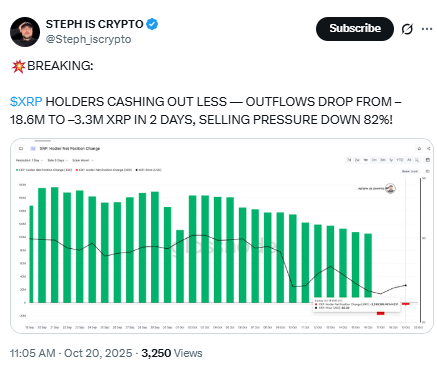
Also, a Ripple-backed company called Evernorth is raising more than $1 billion to buy XRP tokens. However, this figure is relatively small, as it will not offset the $5.4 billion worth of XRP tokens whales have been selling in recent weeks, although the pace of selling has eased in recent days.
As investors shunned recent developments, XRP’s price prediction through the end of the year has become much less aggressive. A $3.20 price target is a reasonable outlook, but analysts note it requires XRP to show investors that recent moves are economically beneficial and accretive to its long-term goals.
$TAP’s Early Utility and Low Cap Frame the 100x Debate
Analysts are openly calling $TAP one of the best cryptos to invest in now, citing its working app, Visa integration, and its low market cap. If Digitap’s omni-bank vision gains traction and shows consistent monthly active user growth, a 100x gain is on the low end of its potential.
Digitap is making all the right moves today to convince investors it is well-positioned for growth. Meanwhile, larger alts like XRP are slowing down and scrambling to invest heavily in growth through acquisitions.
Digitap is Live NOW. Learn more about their project here:
Disclaimer: This media platform provides the content of this article on an “as-is” basis, without any warranties or representations of any kind, express or implied. We assume no responsibility for any inaccuracies, errors, or omissions. We do not assume any responsibility or liability for the accuracy, content, images, videos, licenses, completeness, legality, or reliability of the information presented herein. Any concerns, complaints, or copyright issues related to this article should be directed to the content provider mentioned above.
Oil price today rose on Wednesday morning, supported by supply concerns and optimism around trade negotiations. Market sentiment improved after news that the US plans to refill its strategic petroleum reserves.
Oil Price Movement
Brent crude futures rose 1.5% to $62.21 per barrel. West Texas Intermediate (WTI) futures gained 1.6% to $58.12 per barrel. These gains followed a recovery from a five-month low on Monday. Oversupply concerns and weak demand had pressured prices earlier in the week.
Geopolitical Risks Impacting Oil Price Today
Geopolitical tensions contributed to supply-side risks. Reports indicate the planned summit between US President Donald Trump and Russian President Vladimir Putin has been postponed. Traders also responded to Western pressure on Asian buyers to reduce Russian crude purchases. This increased concerns about possible disruptions.
Mukesh Sahdev, CEO of XAnalysts, said, “Despite bearish sentiment from oversupply and weak demand, supply disruption risks in Russia, Venezuela, Colombia, and the Middle East prevent oil prices from staying below $60.”
Venezuela remains a focus of geopolitical tension. UN experts condemned recent US military actions in international waters as “extrajudicial executions” and a dangerous escalation.
Live Events
Oil Price Today – Trade Developments and Market Reaction
US and Chinese officials are scheduled to meet in Malaysia this week to discuss economic disputes. Trump expressed optimism on Monday about a fair trade deal with Chinese President Xi Jinping during a planned meeting in South Korea next week. ING commodities strategists noted, “Trump’s trade negotiation comments and the cancellation of the Trump–Putin summit are likely supporting the market.”
Oil Price Today – US Crude Inventory Data
Oil markets also reacted to US inventory data. Figures from the American Petroleum Institute showed a decline in crude, gasoline, and distillate stocks last week. This added support to prices.
Oil Price Today – Currency and Equities Updates
Sterling fell 0.3% to $1.3331 after inflation data remained flat for the third consecutive month. The pound reached a two-week low against the dollar, down from $1.34 on Tuesday. Traders expect the Bank of England may cut interest rates later this year.
The US dollar index remained steady at 98.95. The pound also edged lower against the euro, trading at €1.1485.
In equities, the FTSE 100 rose 0.6% on Wednesday morning to 9,486 points, showing a positive start alongside oil gains.
FAQs
Q1: Why did oil price today increase? A1: Oil price today rose due to supply concerns, geopolitical tensions, US–China trade optimism, and plans to refill US strategic petroleum reserves.
Q2: What are the Brent and WTI crude prices today? A2: Brent crude reached $62.21 per barrel, and WTI crude hit $58.12 per barrel as of Wednesday morning.
Balancing work, family, and the excitement of expecting can be a lot, especially as you prepare for your baby’s arrival. To help soon-to-be moms stay healthy, strong, and ready for anything, we partnered with a certified nutrition coach to test and evaluate the top prenatal multivitamins of 2025. These supplements are packed with essential nutrients to support your well-being and your baby’s development through every busy step of pregnancy, no matter what your daily schedule entails. If you’re ready to switch from your regular multivitamin to a prenatal, read on for our top picks.
Why Trust Fortune
Our team of expert testers has tried hundreds of the most popular supplements on the market today, using our comprehensive supplement testing methodology to find the best products for all folks.
Best Prenatal Vitamin Overall: Perelel Mom Multi Support Pack
Perelel Mom Multi Support Pack
Formulated for no nausea
Our Thoughts on Perelel Mom Multi Support Pack
Our pick for the best overall prenatal multivitamin is Perelel’s Mom Multi Support Pack. It was formulated by OB/GYNs and has high-quality, bioavailable ingredients. Each packet includes Vitamin D, C, and B complex, along with omega-3 DHA, biotin, ashwagandha, and more.
Kate’s first experience with this multivitamin was positive; she rated it a 5 out of 5 for initial impressions. “It comes in a large purple box and then has a pop out at the bottom where the individual pill packets are held. It almost is like a dispenser for it and is super helpful,” she said. “I haven’t seen this before with other products, so it stands out to me as good and helpful packaging.”
Our tester found the product instructions straightforward—all you have to do is take one pack daily with a glass of water. Although the pills are small, she observed that taking five capsules simultaneously was “somewhat overwhelming. Someone who doesn’t like to swallow a lot of pills may struggle taking these daily. If you take them one at a time though I had no problems swallowing them!” She gave the pills a 3 out of 5 for swallowability.
Regarding taste, Kate wasn’t the biggest fan, as she noticed an unpleasant taste and smell. That said, the side effects were minor, earning a 4 out of 5 in this category. “I’m feeling a bit tired after taking these multivitamins because of the ashwagandha and L-theanine, but nothing that would put me out from my day-to-day tasks,” she explained. “I had no digestive discomfort or any side effects besides the unpleasant taste.”
Summing up her experience, Kate said, “This is a good product for someone who wants a comprehensive vitamin pack. It’s on the pricey side, but that’s because you get five different pills consisting of multivitamins, omega DHA, biotin, and stress/cognitive support.” If you prefer a simpler prenatal product, we recommend Ritual’s Prenatal Multivitamin.
Best Prenatal Vitamin with DHA: Ritual Prenatal Multivamin
Ritual Prenatal Multivamin
A multivitamin formula including Omega-3 DHA sourced from microalgae
Our Thoughts on Ritual Prenatal Multivitamin
Ritual Prenatal Multivitamin is our pick for the best prenatal multivitamin with DHA because it includes highly bioavailable forms of folate, vitamin D, and omega-3 DHA, supporting essential pregnancy needs while remaining vegan and allergy-free. The omega-3 DHA is sourced from microalgae. This prenatal multivitamin is also non-GMO certified, Climeco certified, and has a purity award from the clean label project.
Our certified nutrition coach Pete tested Ritual’s prenatal multivitamin, giving it a 3 out of 5 for his first impression. “It’s a clear plastic container with a white screw top lid, which is easy to open and close,” Pete said. “The text on the container is white, which makes it slightly hard to read. I’d consider this product to be travel-friendly.”
Pete found the instructions “easy to read and follow” and rated them a 5 out of 5. Serving size was reasonable at two capsules per day. The patented delayed-release capsules are designed to minimize any stomach upset from the nutrients.
Swallowability was rated 3 out of 5, as Pete mentioned that some may find the capsules slightly too large. However, taste compensated for this: Ritual’s mint essence earned a 5 out of 5, making the experience more enjoyable and masking any typical vitamin aftertaste.
At $44 for 30 servings, cost per serving was $1.46 and rated 3 out of 5 for value—neither too expensive nor especially budget-friendly. Pete reported “no digestive issues or negative side effects,” with a 5 out of 5 rating in this category. He noted, “Ritual’s capsule design is noteworthy for multivitamins,” recommending it for those who value innovation and transparent ingredient sourcing.
Best Prenatal Vitamin for Before Pregnancy: Beli Women Prenatal
Beli Women Prenatal
A multivitamin formula including Omega-3 DHA sourced from microalgae
Our Thoughts on Beli Women Prenatal
Beli Women Prenatal is our top pick for prenatal vitamins before pregnancy because it offers a comprehensive nutrient blend that supports fertility and prepares the body for conception and early pregnancy stages. We like that it includes essential vitamins like folate, vitamin D, and iron.
Beli’s prenatal made a strong first impression with its design and appearance. Pete described the packaging as a “small, dark amber plastic bottle with a black lid,” which felt sturdy and professional. He rated this initial impression 5 out of 5, noting that the overall presentation suggested a well-considered product that stands out among typical vitamin bottles.
Instructions for Beli were clear and simple, as all you have to do is take three capsules daily. Pete found the directions straightforward and easy to follow, giving them another rating of 5 out of 5.
He described the capsules as “clear with a light tan powder inside.” Pete mentioned that while the capsules weren’t especially large, taking three at once could be a challenge for some, rating swallowability a 3 out of 5. The taste made the capsules easier to swallow. Pete said that the minty flavor was “subtle” and “pleasant,” earning a 5 out of 5 for taste.
Beli’s product costs $50 for 30 servings, making it relatively expensive at $1.67 per serving, which earned a 1 out of 5 rating for cost. Still, Pete experienced no digestive issues, giving this product a 5 out of 5 for side effects. Pete concluded that “this supplement is well formulated as a prenatal multivitamin,” great for those seeking a higher-end, reliable prenatal.
Best Gummy Prenatal Vitamin: Olly The Essential Prenatal Multi
Olly The Essential Prenatal Multi
An easy-to-take multivitamin flavored with raspberry and citrus
Our Thoughts on Olly The Essential Prenatal Multi
Olly The Essential Prenatal Multi is our pick for the best gummy prenatal vitamin because it’s perfect for people who don’t like swallowing pills or want a more enjoyable prenatal supplement routine. With its affordable price, pleasant raspberry citrus flavor, and chewy texture, this gummy can be an easy addition to your supplement regimen.
Pete tested this prenatal, rating it a 5 out of 5 for his first impression. “The Essential Prenatal from Olly comes in the brand’s classic design, a clear rectangular plastic container with a white screw top lid. It’s probably a bit too bulky to be considered travel-friendly,” Pete said.
He rated both swallowability and taste as 5 out of 5. “The gummies are about the size of a quarter, and have a sugary coating on the outside,” Pete said. “The flavor is pleasant and reminds me of a mix of lemon and grapefruit flavor. There is a sugary coating on the outside of the gummies,” he said. Pete didn’t experience any side effects after taking this prenatal multivitamin.
The cost per serving of Olly’s Prenatal multivitamin is cheaper than the standard prenatal supplement, and the gummy form makes it simple and easy to take. “The product does contain some key nutrients including 400 mcg of folate as well as the vitamins A, C, D, E, and B-vitamins,” said Pete. “However, it’s very low in choline, only 10 milligrams per serving, and doesn’t contain any iron.”
Pete thinks it’s best to get bloodwork done ahead of starting a prenatal vitamin, as iron needs can vary during pregnancy. If you’re looking for a prenatal supplement with iron included, we recommend trying Beli Women Prenatal.
Best Clean Prenatal Vitamin: EU Natural Prenatal Glow
EU Natural Prenatal Glow
Made with naturally sourced ingredients
Our thoughts: This prenatal stands out for its clean label, transparent ingredient sourcing, and gentle formula designed for sensitive stomachs
Main ingredients: Folate, Vitamin D, Iron, Choline, Zinc, Biotin
Serving size: Two capsules per day
Who it’s for: Moms-to-be seeking a clean, straightforward prenatal vitamin free of unnecessary fillers, artificial colors, or major allergens
What makes it different: Includes methylated versions of vitamin B12 and folate for improved absorption
Pros
Subscribe and save discount is 20% off
Non-GMO, allergen-free formula
Transparent labeling and ingredient sourcing
Cons
Scent and taste may be unpleasant
Doesn’t include calcium
Contains a proprietary blend
Our Thoughts on EU Natural Prenatal Glow
We selected EU Natural Prenatal Glow as the best clean prenatal vitamin because of its emphasis on purity and transparency. The formula is free from artificial additives, fillers, and common allergens, making it a great fit for health-conscious moms and those with dietary sensitivities. It includes important ingredients for pregnancy such as methylfolate, iron, vitamin D, and choline. Each bottle also includes a lemon-mint scent pack.
Pete rated this product a 5 out of 5 for his first impression. “It’s a clear plastic container with a black screw top lid, which is easy to open and close,” he said. The label is reddish pink in color with white lettering that Pete found easy to read. “The bottle is small enough to be travel friendly,” Pete mentioned.
He rated swallowability of this product a 3 out of 5. “The capsules are clear with a yellow powder inside. The pills are average in size, about one inch length and one centimeter in diameter. The recommending serving size is two capsules per day,” Pete said.
Pete also rated the taste a 3 out of 5. “Inside the container is a lemon-mint scent pack, which gives some flavor to the individual capsules,” he said. “It masks a slight fishy smell that comes from the bottle, likely from the Algal DHA.”
He didn’t experience any side effects after taking this prenatal vitamin, rating it a 5 out of 5 in this category. Overall, “Glow has a robust ingredients list, containing over 20 vitamins and minerals to support a healthy pregnancy,” Pete said.
“Glow contains methylated versions of vitamin B12 and folate for improved absorption, as well as a proprietary blend, their Glow Prenatal complex that includes DHA, ginger root, myo-inositol, PABA, and Bioperine. There is only 10 milligrams of DHA included, which is underdosed,” Pete said. “But the Bioperine black pepper extract may help with nutrient absorption and the ginger is included to help alleviate nausea.”
What is a Prenatal Vitamin?
A prenatal vitamin is a specialized multivitamin formulated to provide essential nutrients that support both the mother’s health and the baby’s development before and during pregnancy. These vitamins help fill dietary gaps, since pregnancy significantly increases the body’s nutritional needs. Taking a prenatal multivitamin is recommended for anyone planning to conceive, as well as throughout pregnancy and breastfeeding, to ensure enhanced nutritional support for both mom and baby.
Prenatal vitamins are not meant to replace eating whole foods, fruits, and veggies, but they offer an extra nutritional safeguard. Their purpose is to provide higher concentrations of certain nutrients—such as folic acid, iron, calcium, and vitamin D—that aid in neural development, bone growth, blood cell formation, and overall healthy pregnancy outcomes.
Common prenatal ingredients:
Folic acid (Folate): Reduces the risk of neural tube defects in the baby’s brain and spine
Iron: Supports red blood cell production and helps prevent maternal anemia
Calcium: Aids in the development of strong fetal bones and teeth
Vitamin D: Enhances calcium absorption and bone growth
Vitamin B12: Supports brain development and red blood cell formation
Iodine: Critical for fetal brain and thyroid development
Vitamin C: Assists with immune support and iron absorption
Vitamin A: Important for vision and immune function
Omega-3 DHA: Supports fetal brain and eye development
Zinc: Aids in cell growth and immune health
Choline: Supports neural tube development and brain health
How We Tested and Selected the Best Prenatal Vitamins
We evaluated and tested prenatal vitamins and scored them on a scale of 1-5 for factors such as first impressions, easy-to-follow directions, swallowability, taste, side effects, and value. Our testers evaluate the products based on their own individual experiences and preferences. We then review their testing feedback and data to share our findings and recommendations with you.
Formula
During testing, we work closely with a certified nutrition coach to identify formulas that are both effective and safe. We prioritize clinically-backed dosages that meet recommended daily values (RDVs), and check for unwanted ingredients such as artificial sweeteners, dyes, and unnecessary fillers. We recommend talking with your OB/GYN about a prenatal supplement routine to determine the best formula for your body.
Taste and Aftertaste
Although most prenatal multivitamins are capsules, we still pay careful attention to any flavor or aftertaste—knowing a supplement you’ll take daily is one you’ll enjoy, not dread. Our team paid close attention to flavors, lingering aftertastes, or odors, as these can impact how you feel about staying consistent.
Swallowability
Swallowability refers to how easy (or difficult) it is to take each pill. We measure this because pill size, texture, and coating all impact your comfort and staying consistent, and a vitamin you can’t swallow regularly just isn’t practical.
Third-Party Testing
Our team places strong emphasis on third-party tested products, which are independently tested for quality and contaminants like heavy metals. Since the FDA doesn’t regulate supplements the same way it does foods and drugs, third-party analysis offers an extra layer of confidence in safety and transparency of what you’re getting from your supplement.
Value
When considering value, we place a higher value on brands that source their ingredients in America and have certifications, such as Informed Choice.
How to Find the Best Prenatal Vitamins for You
Choosing the right prenatal multivitamin is personal—your body’s unique needs, taste preferences, and health goals all play a role. Understanding what matters most to you can help narrow down the search.
Your Body’s Needs
Every person’s prenatal journey is different. We recommend speaking with your OB/GYN to ensure you’re getting all of the vitamins and nutrients you need during the prenatal period. While these products are generally safe for most people, they may not work for everyone.
Flavors
Taste matters, even with vitamins. Most prenatal multivitamins are in capsule form, so flavor or aftertaste may be subtle, but you’ll still want something you’re comfortable taking daily. Look for a flavor profile (such as mint or citrus) that tastes pleasant to you.
Formula
Always check the ingredient list for allergens, macro breakdown (if relevant), and the dosage of essential nutrients. We recommend selecting a prenatal multivitamin formula that meets recommended daily values (RDVs) and supports your dietary preferences.
Cost
Supplements can get pricey, especially those with cleaner ingredient lists or advanced formulations. While cost matters, investing in a quality daily supplement is also an investment in your health and prenatal journey.
Third-Party Testing
We recommend that you select prenatal multivitamins that are third-party tested for purity, potency, and safety. Since the FDA doesn’t regulate supplements like they do foods or drugs, third-party testing provides extra confidence that what you’re taking is safe, potent, and free of any harmful substances.
Benefits of Prenatal Vitamins
Prenatal vitamins help fill nutritional gaps that are common due to increased nutrient requirements during pregnancy. Here are some of the benefits:
Reduces neural tube defects
Supports healthy fetal development
Promotes bone and teeth strength
Fills nutritional gaps
How to Take a Prenatal Multivitamin
Prenatal multivitamins are best taken with a liquid for ease of swallowing and for absorption. If taken along with a meal that contains healthy fats, this will boost the absorption of fat soluble vitamins, such as vitamins A, D, and K. You can mix the vitamin capsule powder into yogurt, a smoothie, or even bake with it, if you’d prefer to avoid swallowing pills.
We recommend storing the prenatal multivitamin bottle in a spot that you see daily, and consider using a tracking app to ensure you stay consistent.
What to Avoid in Prenatal Vitamins
Some supplements or vitamins are best avoided during pregnancy, either due to risks of toxicity or lack of proven benefits. Here are a few to avoid:
High doses of vitamin A: Excessive vitamin A can cause birth defects, especially in high doses or in its retinol form. Beta-carotene (provitamin A) is safer as the body converts only what it needs
Extra vitamin E supplementation: Over-supplementation of vitamin E may increase risks such as abdominal pain or premature rupture of membranes
Large doses of any nutrient: Stick to recommended daily doses
Frequently asked questions
What is the highest quality prenatal vitamin?
We chose Perelel’s Mom Multi Support Pack as the best overall prenatal vitamin. It was formulated by OB/GYNs and has high-quality, bioavailable ingredients. Each packet includes Vitamin D, C, and B complex, along with omega-3 DHA, biotin, ashwagandha, and more.
How should one choose a prenatal vitamin?
We highly recommend talking with your doctor about which prenatal vitamin is best for you given your health history and any dietary restrictions.
What to avoid when taking prenatal vitamins?
We recommend that you avoid excessive doses of any nutrient (especially vitamin A and vitamin E), products that are not third-party tested, or adding on more supplements without talking with your doctor.
Solana’s price consolidation near $184 hints at cautious accumulation before breakout
Rising open interest above $8.5B signals institutional positioning ahead of volatility
Hong Kong’s Solana ETF approval could enhance regional adoption and market confidence
Solana’s price continues to trade under pressure, consolidating near the $184 mark as investors weigh renewed market volatility and an upcoming exchange-traded fund (ETF) listing in Hong Kong.
The short-term structure suggests ongoing consolidation after October’s correction, but technical data indicates potential accumulation beneath key resistance levels. While momentum remains cautious, institutional activity around Solana’s derivatives and spot markets continues to expand, hinting at possible shifts in investor sentiment.
Short-Term Structure and Technical Outlook
Solana trades below the 20-day exponential moving average (EMA) at $188 and the 50-day EMA at $191. This shows the near-term trend is slightly bearish, though the broader structure still supports recovery.
The asset failed to reclaim the $195–$197 zone, which aligns with the 38.2% Fibonacci retracement level from the decline between $237.7 and $169.8. The rejection at this level reinforced short-term selling pressure.
Immediate support lies between $184 and $185, a zone that must hold to preserve Solana’s bullish mid-term outlook. Losing this level could expose the $175 and $170 zones, which acted as strong bases during October’s correction.
On the upside, the $195 level remains the first key resistance, followed by $203 and $211. A sustained close above these zones could signal a fresh breakout toward $223 and $237.
Open Interest and Derivatives Market Activity
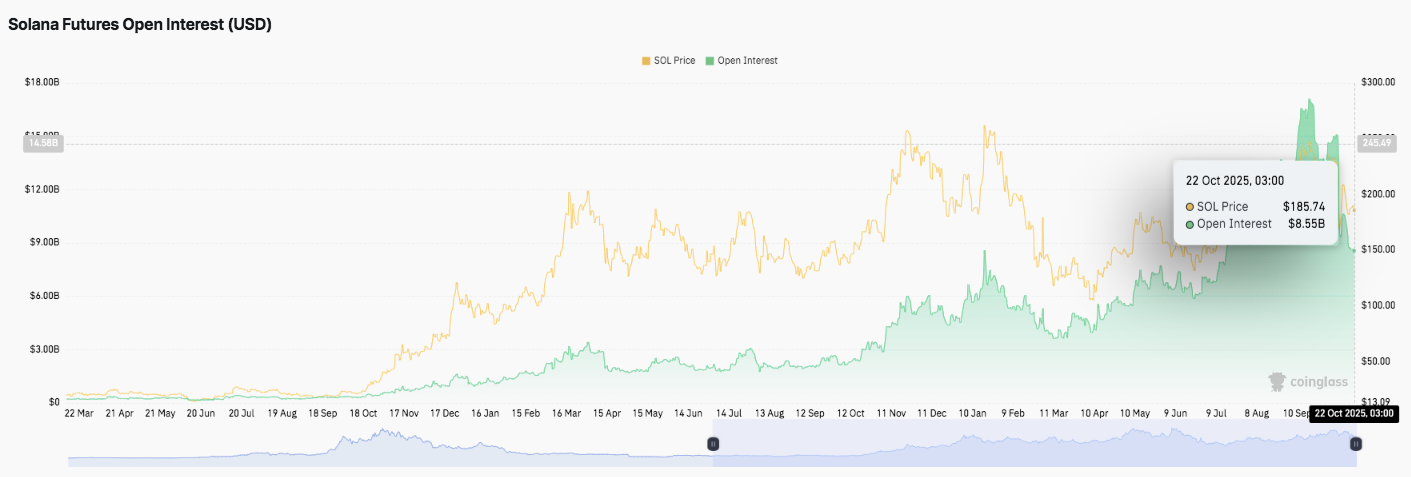
Consequently, Solana’s futures open interest has surged to $8.55 billion as of October 22, 2025. This marks one of the highest levels of speculative positioning this year. The increase highlights strong participation among institutional traders who appear to be positioning ahead of a potential market move.
While price consolidation continues, the consistent rise in open interest reflects capital rotation rather than widespread liquidation. Maintaining these levels could set the stage for volatility expansion once directional conviction returns.
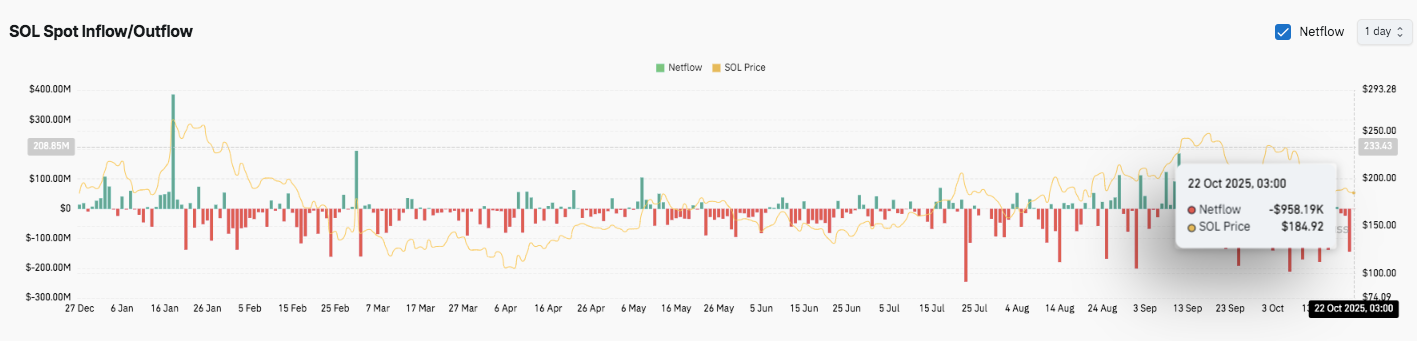
Meanwhile, Solana recorded a net outflow of nearly $958,000 on October 22, signaling mild profit-taking by traders. The move follows several weeks of alternating inflows and outflows across spot exchanges. However, long-term accumulation trends remain intact, particularly when considering earlier inflow peaks in January and July.
Moreover, Hong Kong’s securities regulator recently approved the first Solana spot ETF, managed by China Asset Management (Hong Kong). Trading begins on October 27, positioning Solana alongside Bitcoin and Ethereum as one of the few digital assets with regulated ETF exposure in Asia a development that may strengthen investor confidence and long-term market visibility.
Technical Outlook for Solana (SOL) Price
Key levels remain clearly defined as Solana enters late October trading with muted momentum but firm structural support. Upside targets include $195.8 and $203.8 as immediate resistance levels, both aligned with the 0.382 and 0.5 Fibonacci retracements. A breakout above $203.8 could extend gains toward $211.8 and $223, marking the next key supply zones.
On the downside, Solana holds initial support at $185, coinciding with the 0.236 Fibonacci zone, followed by $175 and $170 areas that previously cushioned pullbacks during October’s correction. Losing these supports may invite deeper retracement toward $160.
The current structure shows Solana compressing between the $184 and $195 range, forming a short-term consolidation wedge. This setup signals potential volatility expansion as traders await confirmation from either side.
Can Solana Hold the $184 Support?
Solana’s near-term direction depends on whether buyers can defend the $184–$185 support cluster and regain momentum above $195. Sustained closes beyond $200 could trigger renewed bullish sentiment, targeting the $211–$223 range. However, failure to hold the $184 floor risks another test of $175, possibly extending toward $170.
Market data suggests derivative activity remains elevated, reflecting investor anticipation of a breakout. With Hong Kong’s approval of a Solana spot ETF adding institutional tailwinds, price behavior around the $184–$200 band may determine whether the next move favors recovery or deeper correction.
Disclaimer: The information presented in this article is for informational and educational purposes only. The article does not constitute financial advice or advice of any kind. Coin Edition is not responsible for any losses incurred as a result of the utilization of content, products, or services mentioned. Readers are advised to exercise caution before taking any action related to the company.
Urothelial bladder cancer (UBC) is cancer that starts in the cells that line the inside of your bladder. It is the most common type of bladder cancer — and more than 19,000 women get a UBC diagnosis every year.
The good news? Bladder cancer has a five-year survival rate of more than 80% when it’s caught early — and there are many ways to treat it.
HealthyWomen spoke with Claire de la Calle, M.D., a urologist at the Fred Hutch Cancer Center who specializes in bladder cancer, to find out more about treating UBC.
What types of surgery are used to treat UBC?
Usually bladder cancer is first diagnosed with an endoscopic procedure, meaning we put a little camera through the urethra (the hole we pee through) and into the bladder, and an internal biopsy is performed. This surgery is called a transurethral resection of a bladder tumor, or TURBT.
For some bladder cancers, that’s the only step, meaning patients can be cured with that procedure. But many bladder cancer patients are going to require multiple of those surgeries. If their cancer is more advanced, then the patient might opt to have their bladder removed, and that surgery is called a radical cystectomy.
Is the treatment different for non-muscle invasive bladder cancer (NMIBC), when the tumor hasn’t spread to the bladder muscle, and muscle-invasive bladder cancer (MIBC), when it has?
Yes, that’s a great point. We really want to know if the cancer is non-muscle invasive versus muscle invasive, because the clinical pathways are completely different. For non-muscle invasive bladder cancer, we can offer treatments to try to allow the patient to keep their bladder. For muscle-invasive bladder cancer, however, oftentimes the bladder does unfortunately need to be removed.
How does intravesical therapy (putting medicine directly into the bladder) work for UBC?
For patients with low risk, non-muscle invasive bladder cancer, the treatment is that first TURBT, followed by surveillance cystoscopies (basically putting a little camera in the bladder in the clinic). It’s a five-minute procedure, and we do that regularly to confirm that the cancer is not coming back.
For non-muscle invasive bladder cancer ranging from more intermediate all the way to high risk, we have multiple intravesical (meaning “in the bladder”) therapies we can offer. We do this to try to kill any remaining cancer cells in the bladder after that initial TURBT, to prevent the cancer coming back and to try to prevent it from getting worse. So if the cancer does come back, these therapies may keep it from going deeper into the bladder wall.
The most commonly used intravesical therapy is called BCG. BCG is actually a type of immunotherapy, meaning that it primes your own immune system to attack the cancer. It’s a live, attenuated (weakened) version of a bacteria that is used to make the tuberculosis vaccine.
When BCG is put in the bladder, it basically makes the bladder think there’s an infection going on. It leads to a massive immune response that ultimately leads to an anti-cancer response. So your own immune system attacks the bladder cancer cells.
BCG is one of the very first immunotherapies ever used in medicine, and it works really well. Unfortunately, we have a BCG shortage going on right now in the United States— we’re simply not making enough BCG for all the bladder cancer patients. So in the last few years, urologists have had to find other ways to treat bladder cancer.
One of the things we’ve started doing is using intravesical chemotherapy. It’s the same chemotherapy we’ve given to patients through their veins for many, many decades. When given in the bladder, it can help reduce recurrence and the progression of non-muscle invasive bladder cancer.
Can you talk about some of the new advancements in UBC treatment?
Unfortunately, sometimes BCG does not work. For patients with non-muscle invasive bladder cancer that doesn’t respond to BCG, we have many other intravesical therapies. It’s a very active area of research.
There are a lot of trials going on right now, and several drugs that are probably going to get approved soon by the FDA. These include new ways of delivering intravesical chemotherapy.
After treatment, is there a high risk of UBC coming back?
Bladder cancer definitely tends to come back. For low risk NMIBC, recurrence rates are 30%–40%. For intermediate risk the rate is around 55%, and for high risk it’s 60%–70%.
What are some of the drawbacks and side effects of the various treatment options?
Since bladder cancer tends to come back, having to go back to the operating room a lot is a big deal. There’s the risk of repeated exposure to anesthesia, and there can be scarring in the bladder because a little piece of the bladder is removed with every surgery. There can also be blood in the urine and infections after surgery.
With intravesical therapies, the vast majority of patients do experience symptoms such as urgency, frequency and pain with urination. Fortunately, we are able to support most patients through all these side effects so they are able to continue with the treatments.
What do you wish more women understood about bladder cancer?
Unfortunately, women tend to have worse outcomes than men, and this is partly because they often aren’t diagnosed until the cancer has advanced. Many women will have blood in the urine that is assumed to be caused by a urinary tract infection (UTI). They see providers who try over and over again to treat what they think is a UTI until finally someone says, “What if this could be bladder cancer?”
So I wish more people (and providers) knew blood in the urine is never normal. It can be from a UTI, but after treatment of the infection there should be no blood left in the urine. If there is — even if it’s a microscopic amount — then the patient should definitely see a urologist.
This educational resource was created with support from Merck.
Oil price today rose on Wednesday morning, supported by supply concerns and optimism around trade negotiations. Market sentiment improved after news that the US plans to refill its strategic petroleum reserves.
Oil Price Movement
Brent crude futures rose 1.5% to $62.21 per barrel. West Texas Intermediate (WTI) futures gained 1.6% to $58.12 per barrel. These gains followed a recovery from a five-month low on Monday. Oversupply concerns and weak demand had pressured prices earlier in the week.
Geopolitical Risks Impacting Oil Price Today
Geopolitical tensions contributed to supply-side risks. Reports indicate the planned summit between US President Donald Trump and Russian President Vladimir Putin has been postponed. Traders also responded to Western pressure on Asian buyers to reduce Russian crude purchases. This increased concerns about possible disruptions.
Mukesh Sahdev, CEO of XAnalysts, said, “Despite bearish sentiment from oversupply and weak demand, supply disruption risks in Russia, Venezuela, Colombia, and the Middle East prevent oil prices from staying below $60.”
Venezuela remains a focus of geopolitical tension. UN experts condemned recent US military actions in international waters as “extrajudicial executions” and a dangerous escalation.
Live Events
Oil Price Today – Trade Developments and Market Reaction
US and Chinese officials are scheduled to meet in Malaysia this week to discuss economic disputes. Trump expressed optimism on Monday about a fair trade deal with Chinese President Xi Jinping during a planned meeting in South Korea next week. ING commodities strategists noted, “Trump’s trade negotiation comments and the cancellation of the Trump–Putin summit are likely supporting the market.”
Oil Price Today – US Crude Inventory Data
Oil markets also reacted to US inventory data. Figures from the American Petroleum Institute showed a decline in crude, gasoline, and distillate stocks last week. This added support to prices.
Oil Price Today – Currency and Equities Updates
Sterling fell 0.3% to $1.3331 after inflation data remained flat for the third consecutive month. The pound reached a two-week low against the dollar, down from $1.34 on Tuesday. Traders expect the Bank of England may cut interest rates later this year.
The US dollar index remained steady at 98.95. The pound also edged lower against the euro, trading at €1.1485.
In equities, the FTSE 100 rose 0.6% on Wednesday morning to 9,486 points, showing a positive start alongside oil gains.
FAQs
Q1: Why did oil price today increase? A1: Oil price today rose due to supply concerns, geopolitical tensions, US–China trade optimism, and plans to refill US strategic petroleum reserves.
Q2: What are the Brent and WTI crude prices today? A2: Brent crude reached $62.21 per barrel, and WTI crude hit $58.12 per barrel as of Wednesday morning.
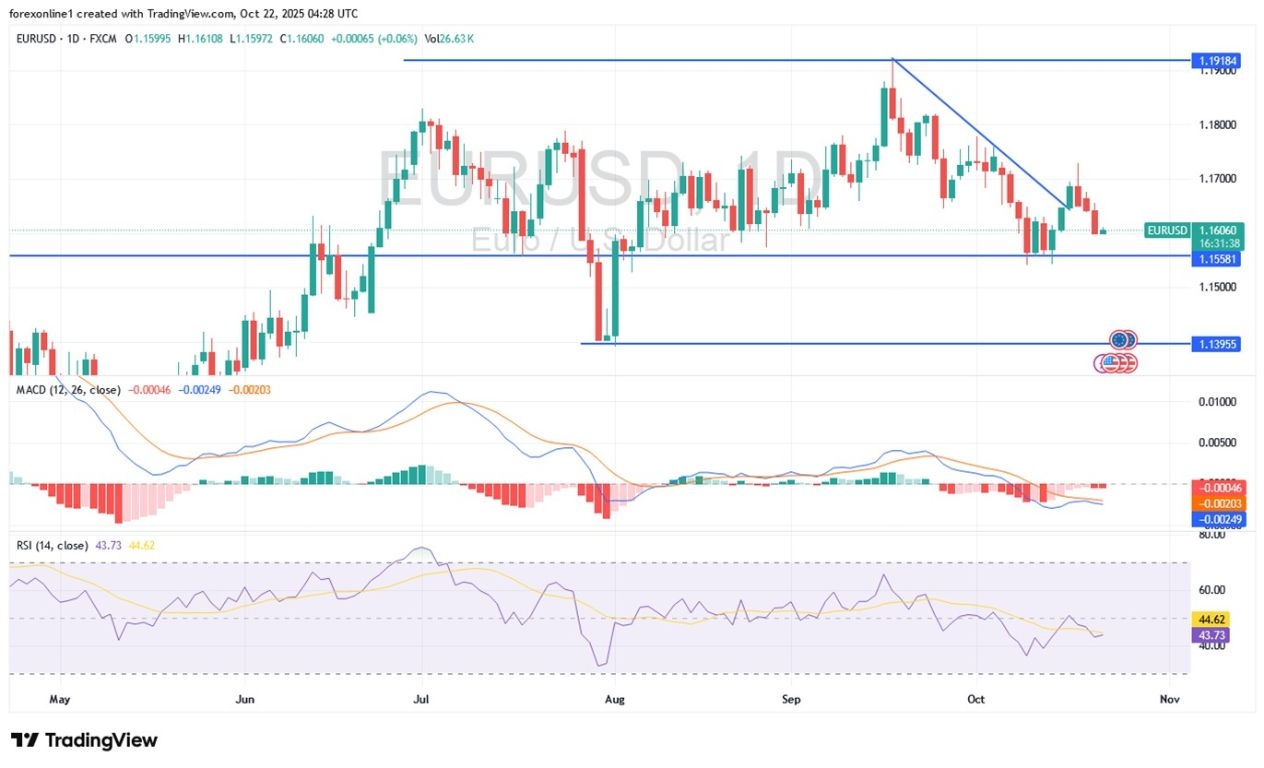
Support Levels for EUR/USD Today: 1.1570 – 1.1500 – 1.1430.
Resistance Levels for EUR/USD Today: 1.1670 – 1.1750 – 1.1810.
EUR/USD Trading Signals:
Buy the EURUSD from the support level of 1.1520, target 1.1800, and stop 1.1460.
Sell the EURUSD from the resistance level of 1.1730, target 1.1600, and stop 1.1800.
Technical Analysis of EUR/USD Today:
Investor appetite for the US Dollar as a safe haven has recently increased amid rising US-China tensions. This has led to selling pressure on the EUR/USD pair, extending losses to the 1.1600 support level today, Wednesday, October 22, 2025. With a complete absence of important US economic releases today, investors will continue to monitor for signals regarding the future policies of central banks. Today, ECB Governor Lagarde will deliver new statements at 15:30 Cairo time.
Movement of Technical Indicators Confirms EUR/USD Bias
Based on the daily chart performance and through reliable brokerage platforms, the EUR/USD price bias is currently steadily bearish. Breaking the 1.1600 support level will increase the technical losses for the currency pair. The 14-day Relative Strength Index (RSI) is currently around a reading of 43, which confirms the bearish shift, and it still has room for further decline before reaching the oversold zone. Similarly, the MACD indicator is firmly in the downward-sloping area. A break below the 1.1600 support will increase the likelihood of targeting the next, more significant support levels at 1.1550 and 1.1470, respectively.
EUR/USD Bullish Scenario
Conversely, over the same timeframe, there is no strong chance of a corrective rebound for the EUR/USD price without a renewed push towards the psychological resistance of 1.1800. Otherwise, the bears will continue to control prices.
Trading Tips:
Keep in mind that the EUR/USD pair will continue to be heavily influenced by investor risk appetite and the future easing of central bank policies.
Factors Influencing EUR/USD Trading in the Coming Days
Forex trading experts pointed to French concerns, as S&P Global Ratings recently downgraded France’s credit rating from AA- to A+ after the market close on Friday, due to persistent worries about its fiscal trajectory. On another note, important economic data will be released later in the week, with the release of the PMI Business Confidence Index and the US Consumer Price Report. At the same time, the US banking sector, the government shutdown, and political rhetoric are all expected to be influential market events.
Recently, a sense of relief has prevailed in the US banking sector, with equity markets making gains. Danske Bank noted that the earnings results of major UK banks were strong. It added: “These earnings have helped stabilize investor confidence and provided some support for the sector overall, even as concerns about smaller regional banks persist.” However, ING Bank maintained a cautious outlook, stating, “Indicators suggesting that lending issues do not extend beyond Zions Bancorp and Western Alliance may help ease pressure on the Dollar, but that may not be enough to fully calm concerns about the health of the credit market and reverse all of the Dollar’s losses.”
On the monetary policy front, financial markets are pricing in a nearly 100% probability of a rate cut next week, with more than a 95% chance that the US Federal Reserve will cut rates again at the December meeting. The Federal Reserve is currently in a media blackout period ahead of the meeting, with no official comments expected. Consequently, any unofficial media briefings will be closely monitored in case of sharp movements in equity markets.
On another front, trade tensions between the United States and China will remain a key factor. President Trump’s rhetoric was conciliatory over the weekend, raising hopes for a successful push on China.
Coffee is one of the most commonly consumed drinks in the world, known for its rich flavor and stimulating properties.
While millions of Americans enjoy coffee every day, it’s not the right fit for everyone. Some people find its caffeine content too strong, while others simply don’t love the taste.
Fortunately, there are plenty of other caffeinated drinks to choose from. From teas to fizzy drinks, here are 5 caffeinated drinks that can give you a boost—no coffee needed.
Jackyenjoyphotography / Getty Images
What it is:Matcha is a green tea powder that’s made from shade-grown green tea leaves of the Camellia sinensis plant. It’s traditionally enjoyed as a whisked tea, and can also be added to drinks like lattes and smoothies.
Caffeine content: A cup of matcha made with a teaspoon (2 grams) of matcha powder will contain between 37.8 and 88.8 milligrams of caffeine.
Why it’s a good alternative: Due to its high levels of the calming amino acid L-theanine, the energy you get from matcha is often described as gentler and more sustained than that of coffee. This makes it a smart choice for those who feel anxious and jittery after drinking coffee. Matcha is also a good source of the antioxidant epigallocatechin gallate (EGCG), which has powerful cellular-protective and anti-inflammatory effects in the body.
Flavor notes: Matcha has a grassy, earthy flavor and is delicious hot or iced. Try it with a splash of milk and a drizzle of honey.
Javier Ghersi / Getty Images
What it is:Yerba maté is a tea made from the leaves of the yerba maté tree. It’s a traditional beverage in South American countries like Argentina, Brazil, and Chile.
Caffeine content: A cup of yerba maté tea contains about 80 milligrams of caffeine, which is slightly less than the 92 milligrams of caffeine found in a cup of coffee.
Why it’s a good alternative: Yerba mate delivers a similar boost of caffeine as coffee, but without the nervous energy often associated with coffee. It contains theobromine, a stimulant that provides a milder, longer-lasting alertness than caffeine. It’s also high in protective antioxidants, like chlorogenic acid.
Flavor notes: Yerba maté has an earthy, slightly bitter flavor. It can be enjoyed hot, with or without sweetener, or iced with a squeeze of lemon.
Kilito Chan / Getty Images
What it is: Though made from the same plant as green tea, black tea has a much stronger flavor and darker color than green tea. This is because black tea leaves are exposed to air until they darken, which changes their color and taste.
Caffeine content:Black tea contains around 47 milligrams of caffeine per cup on average, which is about half of what’s found in a cup of coffee.
Why it’s a good alternative: In addition to containing much less caffeine than coffee, black tea provides L-theanine, which has a calming effect on the body. Black tea is also rich in protective compounds like theaflavins and thearubigins, which support cognitive health and may protect against chronic conditions, like heart disease.
Flavor notes: The flavor of black tea varies, and is often described as malty, fruity, or smokey. Enjoy black tea with honey and milk or as a refreshing iced tea with lemon.
mikimad / Getty Images
What it is:Green tea leaves come from tea bushes that are typically grown in full sun and aren’t shaded before harvest. This gives the leaves a bolder, slightly more bitter taste than matcha.
Caffeine content: Green tea contains around 29.4 milligrams of caffeine per cup, which is around a third of what’s found in coffee.
Why it’s a good alternative: Though its levels aren’t as high as matcha, green tea is a source of L-theanine. Paired with its low caffeine content, this makes green tea perfect for people looking for a less intense energy kick. Green tea is also high in antioxidants, like EGCG and other catechins, which support and protect overall health.
Flavor notes: Green tea has a grassy and slightly sweet flavor. It can be enjoyed plain, sweetened, or with a squeeze of lemon.
Wirestock / Getty Images
What it is: Guayusa, also known as runa tea, is made from the leaves of an evergreen tree native to the Amazon, where it has been enjoyed as an herbal tea by Indigenous communities for centuries. Guayusa extract is an ingredient in some natural energy drinks.
Caffeine content: The caffeine content of guayusa tea products varies. A 12-ounce serving of Alive Energy, which is made with guayusa extract, contains 150 milligrams of caffeine.
Why it’s a good alternative: Guayusa is naturally rich in caffeine and also contains L-theanine, which promotes a calm, focused kind of energy without the jitters often related to coffee. It’s a great choice for people who want a solid caffeine boost but don’t enjoy or tolerate coffee. Plus, guayusa offers antioxidants like chlorogenic acid, which support overall health.
Flavor notes: Guayusa has a smooth, slightly sweet flavor. In addition to guayusa-based energy drinks, you can also find loose-leaf guayusa tea, which can be enjoyed on its own or blended with other herbs like mint or a squeeze of lemon.
You don’t have to drink coffee to get a quick boost of energy. Whatever your caffeine needs or flavor preferences, there are a number of caffeinated drinks to choose from.
If you’re sensitive to caffeine, options like matcha or green tea are a great fit. For something stronger, yerba mate or a guayusa-based energy drink may be a better option.
While caffeine can give you a boost of energy, it’s important to enjoy beverages that contain this stimulant in moderation to avoid side effects like jitteriness and restlessness.








:max_bytes(150000):strip_icc()/Health-GettyImages-CaffeinatedDrinks-35da7ef3408d49f8a0452f0970bc6b09.jpg "5 Caffeinated Drinks That’ll Wake You Up—No Coffee Needed")