About Editorial team of BIPNs

Main team of content of bipns.com. Any type of content should be approved by us.
18 09, 2025

XAU/USD down but not out in the Fed’s aftermath

By |2025-09-18T17:29:45+03:00September 18, 2025|Forex News, News|0 Comments


  • Gold holds the pullback early Thursday, having renewed record highs at $3,708 in a knee-jerk reaction to the Fed announcement.
  • US Dollar recovers on Fed Chair Powell’s cautious stance on further policy easing.
  • Gold retreats from extreme overbought conditions on the daily chart, keeping buying interest alive.  

Gold is licking its wounds near $3,650 in Thursday’s Asian trades, having stalled its pullback from fresh record highs of $3,707 reached in an initial reaction to the US Federal Reserve (Fed) policy announcements.  

Gold assesses Fed’s interest rate outlook ahead of data

Gold witnessed intense volatility during the Fed event on Wednesday, initially spiking to a new lifetime high before falling as low as $3,646 to settle the day just above $3,650.

Fed delivered on the expected 25 basis points (bps) interest rate cut but the Summary of Economic Projections (SEP), the so-called Dot Plot chart, showed that the Fed policymakers project two additional rate cuts this year.

Markets read this as dovish and smashed the US Dollar (USD) across the board, spiking up Gold to new record highs.

However, the Greenback staged an impressive comeback alongside US Treasury bond yields after Fed Chairman Jerome Powell, in his post-policy meeting press conference, adopted a measured rhetoric on further policy easing.

Powell signaled caution on future rate cut outlook by saying that “the policy action as a risk-management cut in response to the weakening labour market and the central bank is in a ‘meeting-by-meeting’ situation,” per Reuters.

The resurgent USD demand and the Fed’s restraint triggered a pullback in the non-yielding Gold.

Traders are now pricing in a 87.7% chance of another 25 bps cut at the Fed’s October meeting, compared to a 74.3% probability a day earlier, according to the CME Group’s FedWatch tool.

With the dovish expectations surrounding the Fed still intact, any downside in Gold is likely to be seen as a good bargain-buying opportunity, keeping the uptrend alive.

Markets now look forward to the mid-tier US Jobless Claims data for fresh trading impetus.

Additionally, geopolitical headlines and US President Donald Trump’s commentary could also play their part in driving Gold price action in the sessions ahead.

Gold price technical analysis: Daily chart

The daily chart shows that Gold buyers seem to be given another chance for a sustained uptrend as the 14-day Relative Strength Index (RSI) has finally eased considerably from the extreme overbought zone, from 80 to 72 levels, as of writing.

If dip-buying emerges and gathers strength, Gold could retest the record high at $3,708. A daily candlestick closing above that level will open doors toward the $3,750 region.

However, Gold could challenge this week’s low at $3,627 if the corrective decline extends.

Further down, the $3,600 round figure will be tested, below which the previous week’s low of $3,578 will be next on sellers’ radars.

Gold FAQs

Gold has played a key role in human’s history as it has been widely used as a store of value and medium of exchange. Currently, apart from its shine and usage for jewelry, the precious metal is widely seen as a safe-haven asset, meaning that it is considered a good investment during turbulent times. Gold is also widely seen as a hedge against inflation and against depreciating currencies as it doesn’t rely on any specific issuer or government.

Central banks are the biggest Gold holders. In their aim to support their currencies in turbulent times, central banks tend to diversify their reserves and buy Gold to improve the perceived strength of the economy and the currency. High Gold reserves can be a source of trust for a country’s solvency. Central banks added 1,136 tonnes of Gold worth around $70 billion to their reserves in 2022, according to data from the World Gold Council. This is the highest yearly purchase since records began. Central banks from emerging economies such as China, India and Turkey are quickly increasing their Gold reserves.

Gold has an inverse correlation with the US Dollar and US Treasuries, which are both major reserve and safe-haven assets. When the Dollar depreciates, Gold tends to rise, enabling investors and central banks to diversify their assets in turbulent times. Gold is also inversely correlated with risk assets. A rally in the stock market tends to weaken Gold price, while sell-offs in riskier markets tend to favor the precious metal.

The price can move due to a wide range of factors. Geopolitical instability or fears of a deep recession can quickly make Gold price escalate due to its safe-haven status. As a yield-less asset, Gold tends to rise with lower interest rates, while higher cost of money usually weighs down on the yellow metal. Still, most moves depend on how the US Dollar (USD) behaves as the asset is priced in dollars (XAU/USD). A strong Dollar tends to keep the price of Gold controlled, whereas a weaker Dollar is likely to push Gold prices up.


Source link

18 09, 2025

Marks fresh 14-month highs near 174.50

By |2025-09-18T17:27:42+03:00September 18, 2025|Forex News, News|0 Comments

  • EUR/JPY has reached a fresh 14-month high at 174.47 on Thursday.
  • The 14-day Relative Strength Index remains above 50, indicating a persistent bullish bias.
  • The crucial level of 173.00 could act as the primary support.

EUR/JPY advances more than a quarter of a percent, trading around 174.40 during the European hours on Thursday. The technical analysis of the daily chart indicates an ongoing bullish bias as the currency cross moves upwards within the ascending channel pattern.

The 14-day Relative Strength Index (RSI) is positioned above the 50 mark, strengthening the bullish bias. Additionally, the short-term price momentum is stronger as the EUR/JPY cross remains above the nine-day Exponential Moving Average (EMA).

The EUR/JPY cross has marked a fresh 14-month high at 174.47 on Thursday, which is aligned with the crucial level at 174.50. Further advance would target the upper boundary of the ascending channel around 174.70. A break above the channel would strengthen the bullish bias and support the currency cross to explore the region around the all-time high of 175.43, reached in July 2024.

On the downside, the initial support lies at the psychological level of 173.00, followed by the nine-day EMA of 173.43. A break below this level would weaken the short-term price momentum and prompt the EUR/JPY cross to navigate the region around the ascending channel’s lower boundary around 172.20, followed by the 50-day EMA at 171.75.

EUR/JPY: Daily Chart

Euro Price Today

The table below shows the percentage change of Euro (EUR) against listed major currencies today. Euro was the strongest against the New Zealand Dollar.

USD EUR GBP JPY CAD AUD NZD CHF
USD -0.13% 0.03% 0.29% 0.05% 0.24% 1.14% -0.00%
EUR 0.13% 0.02% 0.44% 0.20% 0.34% 1.37% 0.15%
GBP -0.03% -0.02% 0.40% 0.17% 0.31% 1.27% 0.12%
JPY -0.29% -0.44% -0.40% -0.25% -0.13% 0.81% -0.28%
CAD -0.05% -0.20% -0.17% 0.25% 0.17% 1.23% -0.05%
AUD -0.24% -0.34% -0.31% 0.13% -0.17% 1.05% -0.18%
NZD -1.14% -1.37% -1.27% -0.81% -1.23% -1.05% -1.11%
CHF 0.00% -0.15% -0.12% 0.28% 0.05% 0.18% 1.11%

The heat map shows percentage changes of major currencies against each other. The base currency is picked from the left column, while the quote currency is picked from the top row. For example, if you pick the Euro from the left column and move along the horizontal line to the US Dollar, the percentage change displayed in the box will represent EUR (base)/USD (quote).

Source link

18 09, 2025

Food Antioxidants Market Size Surges to USD 4.31 Billion by

By |2025-09-18T17:19:43+03:00September 18, 2025|Dietary Supplements News, News|0 Comments


Ottawa, Sept. 18, 2025 (GLOBE NEWSWIRE) — The global food antioxidants market size stood at USD 2.32 billion in 2024 and is set to rise from USD 2.47 billion in 2025 to around USD 4.31 billion by 2034, growing at a CAGR of 6.4% during the forecast period from 2025 to 2034, according to study published by Towards FnB, a sister firm of Precedence Research.

The market is growing speedily due to high demand for enhanced shelf life of products, further leading to the growth of natural preservatives and antioxidants derived from natural sources.

Note: This report is readily available for immediate delivery. We can review it with you in a meeting to ensure data reliability and quality for decision-making.

Access the Full Study Instantly | Download Sample Pages of the Report Now@ https://www.towardsfnb.com/download-sample/5699

Food antioxidants include natural compounds such as tocopherols, ascorbates, carotenoids, rosemary extract, green tea, and grape seed extracts, as well as synthetic options such as BHA, BHT, TBHQ, and Propyl Gallate. These compounds prevent lipid oxidation, extend product shelf-life, and preserve flavor, aroma, and color. Carotenoids are included in cases where they provide both coloring and antioxidant benefits.

How are Antioxidants helping the Food and Beverage Industry?

Food oxidants available in natural and synthetic options help enhance the shelf life, taste, aroma, and appearance of food options, which is helpful for the growth of the food antioxidants market. They help to slow the release of fats and oils, which helps slow the decaying or spoiling of different food products. Such antioxidants are essential for the food and beverage industry to maintain the safety of food products and enhance the growth of the food antioxidants market.

Key Highlights of the Food Antioxidants Market

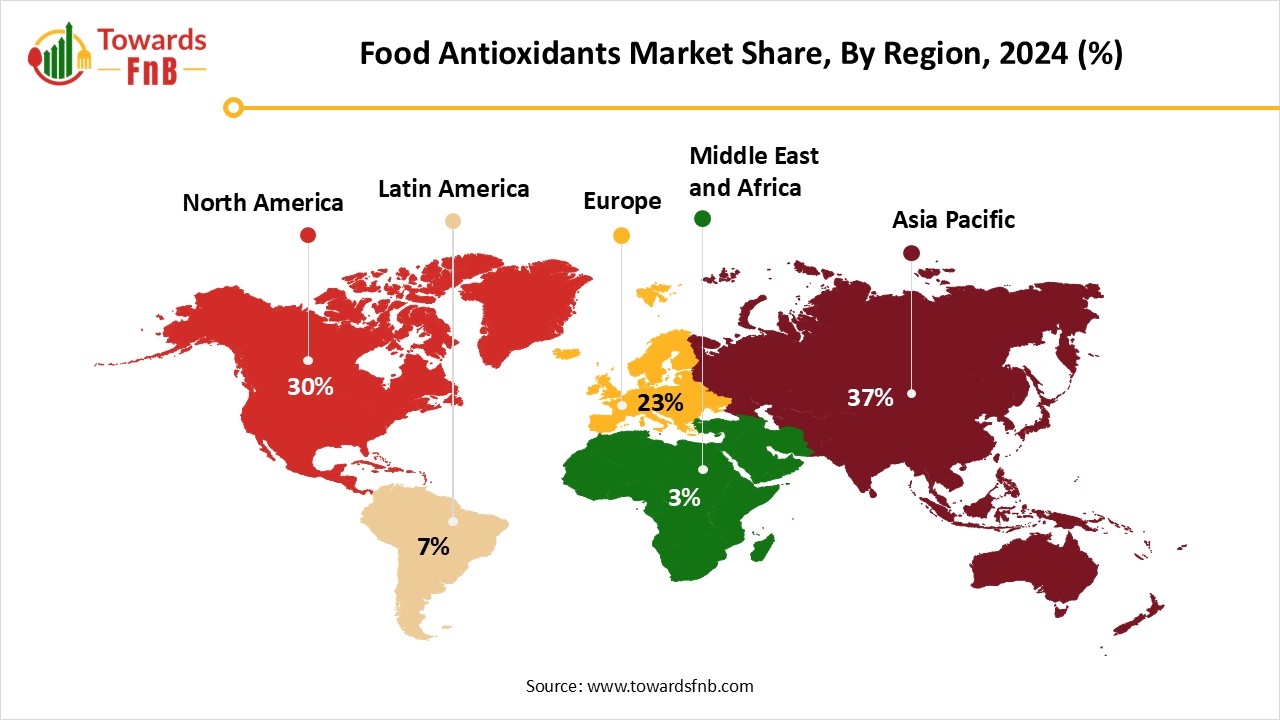
  • By region, the Asia Pacific led the food antioxidants market with highest share of 37% in 2024, whereas North America is expected to grow in the foreseeable period.
  • By type, the natural antioxidants segment led the food antioxidants market in 2024, whereas the polyphenols segment is expected to grow in the foreseeable period.
  • By application, the bakery and confectionery segment led the food antioxidants market in 2024, whereas the meat and poultry segment is expected to grow in the forecast period.
  • By form, the powder segment dominated the food antioxidants market with maximum share of 50% in 2024, whereas the liquid segment is expected to grow in the foreseeable period.
  • By source, the plant-based segment captured the maximum share of 70% in 2024, whereas the microbial-based segment is expected to grow in the foreseeable period.
  • By end user, the food processing industry segment led the food antioxidants market with largest share of 55% in 2024, whereas the dietary supplements segment is expected to grow in the foreseeable period.

Natural antioxidants continue to gain momentum in bakery and snacks as brands reformulate for clean labels while protecting shelf life. We expect mixed tocopherols and rosemary extract to lead adoption through 2030,” said Vidyesh Swar, Principal Consultant at Towards FnB.

Impact of Artificial Intelligence on the Food Antioxidants Market

Artificial intelligence (AI) is having a major impact on the food antioxidants market by enhancing product innovation, improving quality control, and optimizing supply chain efficiency. In research and development, AI-powered algorithms analyze vast datasets from nutrition science, consumer health data, and ingredient interactions to identify and optimize natural antioxidant sources such as rosemary extract, vitamin C, and tocopherols. This accelerates the creation of cleaner, more effective formulations that meet growing demand for natural, clean-label, and functional food products. Machine learning models also simulate oxidation processes, helping manufacturers predict shelf life and determine the most effective antioxidant blends for specific food categories, from beverages to processed meats. AI-enabled sensors and computer vision systems strengthen quality control by detecting impurities, monitoring antioxidant concentrations, and ensuring regulatory compliance. AI also supports sustainability by optimizing extraction methods, reducing waste, and improving energy efficiency in antioxidant production. 

View Full Market Intelligence@ https://www.towardsfnb.com/insights/food-antioxidants-market

New Trends of Food Antioxidants Market

  • High demand for functional, clean-label, and organic food items due to health-conscious consumers is helping the growth of the food antioxidants market.
  • High demand for natural antioxidants for health and wellness, along with maintaining the shelf life of products and slowing the decaying process, is also helpful for the growth of the market.

Product Survey for the Food Antioxidants Market

Product Type Key Features / Composition Benefits of Food Example Applications
Natural Antioxidants (Plant-based Polyphenols, Flavonoids, Carotenoids) Derived from sources like green tea, rosemary, turmeric, grapes, and carotenoid-rich fruits/vegetables Clean-label appeal, consumer preference for natural additives, multifunctional health benefits Bakery, beverages, dietary supplements, functional foods
Synthetic Antioxidants (BHA, BHT, TBHQ, Propyl Gallate) Chemically synthesized compounds designed to prevent oxidation Highly effective, low-cost, long shelf life, strong oxidative stability Packaged snacks, fried foods, fats/oils, meat products
Vitamin-based Antioxidants (Vitamin E, Vitamin C, Vitamin A) Includes tocopherols, ascorbic acid, retinol, and derivatives Dual role: preservation + nutritional fortification, widely accepted by consumers Beverages, infant formula, fortified foods, dairy
Enzymatic Antioxidants Enzymes like superoxide dismutase, catalase, glutathione peroxidase (less common in mass food use, more in niche/nutraceuticals) Biological antioxidant function, potential in functional foods Specialty health foods, nutraceutical formulations
Rosemary Extract & Other Herbal Extracts Concentrated extracts standardized for antioxidant compounds (carnosic acid, rosmarinic acid, etc.) Popular natural preservative, strong oxidative stability, minimal impact on flavor at optimized doses Meat, poultry, oils, sauces, frozen meals
Carotenoids (Beta-carotene, Lycopene, Lutein, Astaxanthin) Pigments with antioxidant activity often function as natural colorants Supports eye/skin health claims, strong oxidative protection, “natural + functional” Beverages, dairy, dietary supplements, and sauces
Polyphenolic Extracts (Green Tea, Grape Seed, Olive Leaf, Cocoa) High phenolic content; potent free-radical scavenging activity Natural image, health halo, multifunctional use in flavor + preservation Energy drinks, bakery, sports nutrition, and chocolate
Mixed Tocopherols (from Soy, Sunflower, etc.) Natural Vitamin E variants: fat-soluble antioxidants Popular in edible oils and fats; provides nutritional and preservation benefits Edible oils, margarine, dairy fats, and nut butters


What are the Growth Drivers of the Food Antioxidants Market?

Rising health and wellness awareness, high demand for fortified, clean-label, and functional food options, are some of the major growth drivers of the food antioxidants market. Natural antioxidants help to enhance the shelf life of food options, further fueling the growth of the market. The market also observes growth due to various other factors, such as minimizing food waste, global growth of food and beverages, and other factors. Prevalence of chronic diseases and high demand for anti-aging products also help to enhance the growth of the market.  

Food Antioxidants Market Challenge

Potential Issues May Slow the Growth of the Market

Less innovation in technologies may hamper the growth of the market. The shelf life of meat products is shorter due to lipid oxidation. The use of unhealthy synthetic antioxidants, which can cause multiple health issues, is not a preferred choice among consumers. Hence, such issues restrain the growth of the market. Enhanced technologies help to tackle such issues and allow food manufacturers to maintain the shelf life of food options such as meat, fruits and vegetables, dairy, and other similar options.

Food Antioxidants Market Opportunity

Innovation in Antioxidants Aids the Growth of the Market

Antioxidants help slow the lipid oxidation process, thereby extending the shelf life of food products. Hence, they also help to keep the meat protected from the unpleasant flavor observed due to its lower shelf life. The use of antioxidants also helps enhance the nutritional content of food options, further supporting the growth of the food antioxidants market in the foreseeable future.

For Detailed Pricing and Tailored Market Report Options, Click Here: https://www.towardsfnb.com/price/5699

Food Antioxidants Market Regional Analysis

Asia Pacific dominated the Food Antioxidants Market in 2024

The Asia Pacific led the food antioxidants market in 2024 and is continuing to grow currently due to advancements in food and beverage industry technologies, as well as the development of the food processing industry. The market is also growing in the region due to the high demand for sustainable food choices and their positive impact on the environment, which is further beneficial for market growth. High demand for a plant-based diet in India is one of the major factors for the growth of the market in the region.

Food Antioxidants Market Size Surges to USD 4.31 Billion by

North America is expected to grow in the Foreseen Period

North America is expected to experience growth in the foreseeable future due to advancements in food and beverage industry technologies, which will benefit market expansion. The new schemes and programs introduced by the USDA are helping to drive the growth of the organic sector in the region, which is further beneficial for the market’s growth in the foreseeable future.

Food Antioxidants Market Report Scope

Report Attribute Key Statistics
Base Year 2024
Forecast Period 2025 to 2034
Growth Rate from 2025 to 2034 CAGR of 6.4%
Market Size in 2024 USD 2.32 Billion
Market Size in 2025 USD 2.47 Billion
Market Size by 2034 USD 4.31 Billion
Dominated Region Asia Pacific
Fastest Growing Region North America
Regions Covered North America, Europe, Asia-Pacific, Latin America and Middle East & Africa


Have Questions? Let’s Talk—Schedule a Meeting with Our Insights Team:
https://www.towardsfnb.com/schedule-meeting

Food Antioxidants Market Segmental Analysis

Type Analysis

The natural antioxidants segment dominated the food antioxidants market in 2024 due to high demand for specific antioxidants, including vitamin A, C, E, zinc, copper, selenium, and minerals, which help mitigate the appearance of free radicals. Fruits, vegetables, grains, seafood, nuts, and seeds are some of the foods rich in antioxidants helpful for supporting overall health and fighting various diseases. A diet rich in antioxidants helps prevent cancer and is also beneficial for heart health, which in turn supports market growth.

The polyphenols segment is expected to grow in the forecast period, as some of its types possess strong antibacterial, anti-inflammatory, and antifungal properties. Polyphenolic compounds, which include phenolic acids, flavonoids, stilbenes, and lignans, play a crucial role in managing blood sugar levels, reducing heart disease risk, protecting the skin, promoting gut health, and enhancing cognitive performance. Hence, such factors aid the growth of the food antioxidants market in the foreseen period.

Application Analysis

The bakery and confectionery segment dominated the food antioxidants market in 2024 due to its capacity to enhance the shelf-life of bakery and confectionery products. High demand for natural antioxidants helps to prevent carcinogenic, mutagenic, or toxigenic effects caused by the use of synthetic antioxidants. Use of α-tocopherol, β-carotene, and ascorbic acid as natural antioxidants is helpful to enhance the shelf-life of products naturally without involving any synthetic antioxidants. The use of plant extracts, such as vanillin, curcumin, mint, and garcinia, also exhibits antioxidant properties that are beneficial for market growth.

The meat and poultry products segment is expected to grow in the foreseen period as the natural antioxidants present in meat and poultry help in chelating metal ions, inhibiting lipid peroxidation, and oxidative chain reactions. Use of ingredients such as oregano, rosemary, pomegranate, and green tea helps to lower the oxidation in meat products for enhancing product safety and sensory quality.

Form Analysis

The powder segment led the food antioxidants market in 2024 due to high demand for ingredients enriched with antioxidants in powder form, such as vitamin C, flavonoids, polyphenols, anthocyanin, betacyanin, and other essential compounds. Antioxidant-rich ingredients in powder form include Baobab Powder, Acerola Powder, Pineapple Powder, lemon powder, and some other powders, which provide vitamin C benefits for consumers. The powdered form of antioxidants is easy to mix with other ingredients, further fueling the growth of the market. Fruit, vegetable, seed, and nut powders are also easy to mix in multiple food items and are also anti-oxidative, helpful for the market’s growth.    

The liquid segment is expected to grow in the foreseen period as the segment emphasizes the multiple benefits offered by the consumption of antioxidant-rich drinks. Such drinks are helpful to relieve oxidative stress, improve cardiovascular health, lower the risk of cancer, and support overall health. Drinks such as fruit juice, vegetable juices, coffee, green tea, and other similar drinks are included in this category, further enhancing the market’s growth.

Source Analysis

The plant-based segment led the food antioxidants market in 2024, as the segment highlights multiple health benefits such as reduced inflammation, improved cognitive function, improved immunity, anti-aging, and avoiding symptoms of cancer as well. Consumption of seeds, nuts, berries, and dark chocolate helps to provide antioxidants to the body, which are helpful to keep one protected from multiple diseases and improve overall well-being. The use of ingredients such as turmeric, ginger, cinnamon, and oregano helps enhance the nutritional levels of food options, which is beneficial for market growth.

The microbial-based segment is observed to grow in the foreseen period, as microorganisms are a rich source of antioxidants. They aid the production of phenolic compounds that are naturally produced as potential compounds. Hence, the segment is observed to aid the growth of the food antioxidants market in the foreseeable period.

End User Analysis

The food processing industry segment led the food antioxidants market in 2024 due to high usage of food additives in the form of natural or synthetic antioxidants. They are highly used in fats and oils to enhance their shelf-life and appearance, which is helpful for the growth of the market. Food processing is essential to maintain the safety and quality of food products, which is helpful for the market’s growth.  

The dietary supplements segment is expected to grow in the foreseeable period, as it highlights the importance of a proper diet and the use of the right supplements to prevent multiple health issues, such as diabetes, cancer, obesity, oxidative stress, and cognitive health problems. The segment also emphasizes the importance of consuming dietary supplements for overall health and eye health, thereby further enhancing the market’s growth.  

Recent Developments in the Food Antioxidants Market

  • In July 2025, Novella, an Israeli food tech startup, developed high-value food and personal care ingredients via cell culture. (Source https://agfundernews.com)

Feel Free to Get in Touch with Us for Orders or Any Questions at: sales@towardsfnb.com

Additional Topics Worth Exploring:

  • India Flavored Milk Market: The India flavored milk market size is forecasted to expand from USD 345.96 million in 2025 to USD 560.13 million by 2034, growing at a CAGR of 5.5% during the forecast period from 2025 to 2034.
  • Soybean Seed Market: The global soybean seed market size is projected to expand from USD 11.37 billion in 2025 to USD 21.09 billion by 2034, growing at a CAGR of 7.1% during the forecast period from 2025 to 2034.
  • Wheat Protein Market: The global wheat protein market size is forecasted to reach from USD 7.69 billion in 2025 to USD 11.43 billion by 2034, expanding at a CAGR of 4.5% during the forecast period from 2025 to 2034.
  • Gummy Supplements Market: The global gummy supplements market size is expected to grow from USD 7.29 billion in 2025 to USD 13.63 billion by 2034, at a CAGR of 7.2% over the forecast period from 2025 to 2034.
  • Pulse Ingredients Market: The global pulse ingredients market size is forecasted to expand from USD 23.24 billion in 2025 to USD 30.86 billion by 2034, growing at a CAGR of 3.2% during the forecast period from 2025 to 2034.
  • Essential Oil Market: The global essential oil market size is expected to grow from USD 28.24 billion in 2025 to USD 61.83 billion by 2034, at a CAGR of 9.1% over the forecast period from 2025 to 2034.
  • Compound Feed Market: The global compound feed market size is expected to grow from USD 614.57 billion in 2025 to USD 986.58 billion by 2034, at a CAGR of 5.4% over the forecast period from 2025 to 2034.
  • Bakery Premixes Market: The global bakery premixes market size is forecasted to expand from USD 456.8 million in 2025 to USD 763.2 million by 2034, growing at a CAGR of 5.96% during the forecast period from 2025 to 2034.
  • Sweeteners Market: The global sweeteners market size is forecasted to expand from USD 113.17 billion in 2025 to USD 156.26 billion by 2034, growing at a CAGR of 3.65% during the forecast period from 2025 to 2034.
  • Functional Food Ingredients Market: The global functional food ingredients market size is forecasted to expand from USD 127.48 billion in 2025 to USD 232.40 billion by 2034, growing at a CAGR of 6.9% during the forecast period from 2025 to 2034.

Top Companies in the Food Antioxidants Market:

  • Koninklijke DSM N.V. – Supplies vitamins, carotenoids, and nutritional antioxidants for food and dietary supplements.
  • Archer Daniels Midland Company (ADM) – Produces natural antioxidants like tocopherols and plant extracts from oilseeds and specialty crops.
  • BASF SE – Offers synthetic and natural antioxidant solutions, including vitamins and carotenoids, for food fortification and preservation.
  • DuPont de Nemours, Inc. – Provides food preservation solutions and antioxidant ingredients through its nutrition and biosciences division.
  • Kemin Industries, Inc. – Develops plant-based extracts (like rosemary and green tea) as natural antioxidants for meat, oils, and packaged foods.
  • Chr. Hansen Holding A/S – Focuses on natural antioxidants through fermentation, cultures, and plant-based colorant ingredients.
  • Synthite Industries Ltd. – A leading Indian company in spice extracts and oleoresins, supplying natural antioxidants derived from herbs and spices.
  • Naturex (a Givaudan company) – Specializes in botanical extracts, including polyphenols and natural antioxidants for clean-label foods.
  • Brenntag AG – A major distributor of food antioxidants and additives, connecting global ingredient suppliers with food manufacturers.
  • Ametis, Inc. – Provides specialty bio-based antioxidant ingredients and extracts for food and nutraceuticals.
  • Indena S.p.A – Italian company known for standardized plant extracts, including polyphenols and flavonoid antioxidants.
  • Zhejiang NHU Co., Ltd. – A Chinese producer of vitamins, carotenoids, and synthetic antioxidants for the food and feed industries.
  • Jiangsu Yabang Dyestuff Co., Ltd. – Manufactures specialty chemicals and antioxidant additives, including those used in food and feed.
  • Cargill, Incorporated – Supplies tocopherols, plant extracts, and functional oils with antioxidant properties for food applications.
  • Norel S.A. – Offers feed and food additives, including antioxidants, to improve shelf life and nutritional stability.
  • PLT Health Solutions – Develops and markets natural antioxidant ingredients sourced from botanicals for functional foods and beverages.
  • Frutarom Industries Ltd. (acquired by IFF) – Provides natural flavors, plant extracts, and antioxidants used in food and nutraceuticals.
  • Natural Antioxidants Inc. – Specializes in natural, plant-based antioxidant formulations for food preservation.
  • AstaReal AB – A pioneer in natural astaxanthin production, supplying powerful antioxidant ingredients for food, beverages, and supplements.

Segments Covered in the Report

By Type

  • Natural Antioxidants
    • Plant Extracts (e.g., rosemary, green tea, grape seed)
    • Vitamins (e.g., Vitamin C, Vitamin E)
    • Carotenoids (e.g., beta-carotene, lycopene)
    • Polyphenols (under natural antioxidants)
  • Synthetic Antioxidants
    • Butylated Hydroxyanisole (BHA)
    • Butylated Hydroxytoluene (BHT)
    • Propyl Gallate (PG)
    • Tertiary Butylhydroquinone (TBHQ)

By Application

  • Bakery and Confectionery
  • Meat and Poultry Products
  • Dairy Products
  • Beverages
  • Oils and Fats
  • Snack Foods
  • Others (Seafood, Ready-to-eat foods, etc.)

By Form

By Source

  • Plant-based
  • Animal-based
  • Microbial based

By End-Use 

  • Food Processing Industry
  • Beverage Industry
  • Dietary Supplements
  • Others (Cosmetics, Pharmaceuticals, etc.)

 By Region

North America

Asia Pacific

  • China
  • Japan
  • India
  • South Korea
  • Thailand

Europe

  • Germany
  • UK
  • France
  • Italy
  • Spain
  • Sweden
  • Denmark
  • Norway

Latin America

Middle East and Africa (MEA)

  • South Africa
  • UAE
  • Saudi Arabia
  • Kuwait

Thank you for exploring our insights. For more targeted information, customized chapter-wise sections and region-specific editions such as North America, Europe, or Asia Pacific—are also available upon request.

For Detailed Pricing and Tailored Market Report Options, Click Here: https://www.towardsfnb.com/price/5699

Feel Free to Get in Touch with Us for Orders or Any Questions at: sales@towardsfnb.com

Unlock expert insights, custom research, and premium support with the Towards FnB Annual Membership. For USD 495/month (billed annually), get full access to exclusive F&B market data and personalized guidance. It’s your strategic edge in the food and beverage industry: https://www.towardsfnb.com/get-an-annual-membership

About Us

Towards FnB is a global consulting firm specializing in the food and beverage industry, providing innovative solutions and expert guidance to elevate businesses. With an in-depth understanding of the dynamic F&B sector, we deliver customized market analysis and strategic insights. Our team of seasoned professionals is committed to empowering clients with the knowledge needed to make informed decisions, ensuring they stay ahead of market trends. Partner with us as we redefine success in the rapidly evolving food and beverage landscape, and together, we’ll navigate this transformative journey.

Web: https://www.towardsfnb.com/

Our Trusted Data Partners

Precedence Research | Statifacts | Towards Packaging | Towards Chemical and MaterialsNova One Advisor | Food Beverage Strategies |

For Latest Update Follow Us:

LinkedIn | Medium| Twitter

Discover More Market Trends and Insights from Towards FnB:

➡️Confectionery Ingredients Market: https://www.towardsfnb.com/insights/confectionery-ingredients-market

➡️Soft Drink Concentrates Market: https://www.towardsfnb.com/insights/soft-drink-concentrates-market

➡️Poultry Feed Market: https://www.towardsfnb.com/insights/poultry-feed-market

➡️Canned Food Market: https://www.towardsfnb.com/insights/canned-food-market

➡️Plant-Based Protein Market: https://www.towardsfnb.com/insights/plant-based-protein-market

➡️Non-Alcoholic Beverages Market: https://www.towardsfnb.com/insights/non-alcoholic-beverages-market

➡️Salt Market: https://www.towardsfnb.com/insights/salt-market

➡️Baking Ingredients Market: https://www.towardsfnb.com/insights/baking-ingredients-market

➡️Probiotic Food Market: https://www.towardsfnb.com/insights/probiotic-food-market

➡️Protein Bar Market: https://www.towardsfnb.com/insights/protein-bar-market

➡️Dairy Processing Equipment Market: https://www.towardsfnb.com/insights/dairy-processing-equipment-market

➡️Meat Products Market: https://www.towardsfnb.com/insights/meat-products-market

➡️Gluten-Free Bakery Market: https://www.towardsfnb.com/insights/gluten-free-bakery-market

➡️Europe Nutraceuticals Market: https://www.towardsfnb.com/insights/europe-nutraceuticals-market

➡️Seed Coating Materials Market: https://www.towardsfnb.com/insights/seed-coating-materials-market

➡️Precision Fermentation Market: https://www.towardsfnb.com/insights/precision-fermentation-market

➡️Pet Dietary Supplements Market: https://www.towardsfnb.com/insights/pet-dietary-supplements-market




Source link

18 09, 2025

ETF Greenlight And Cup-And-Handle Pattern Target $550 Upside

By |2025-09-18T17:15:58+03:00September 18, 2025|Crypto News, News|0 Comments

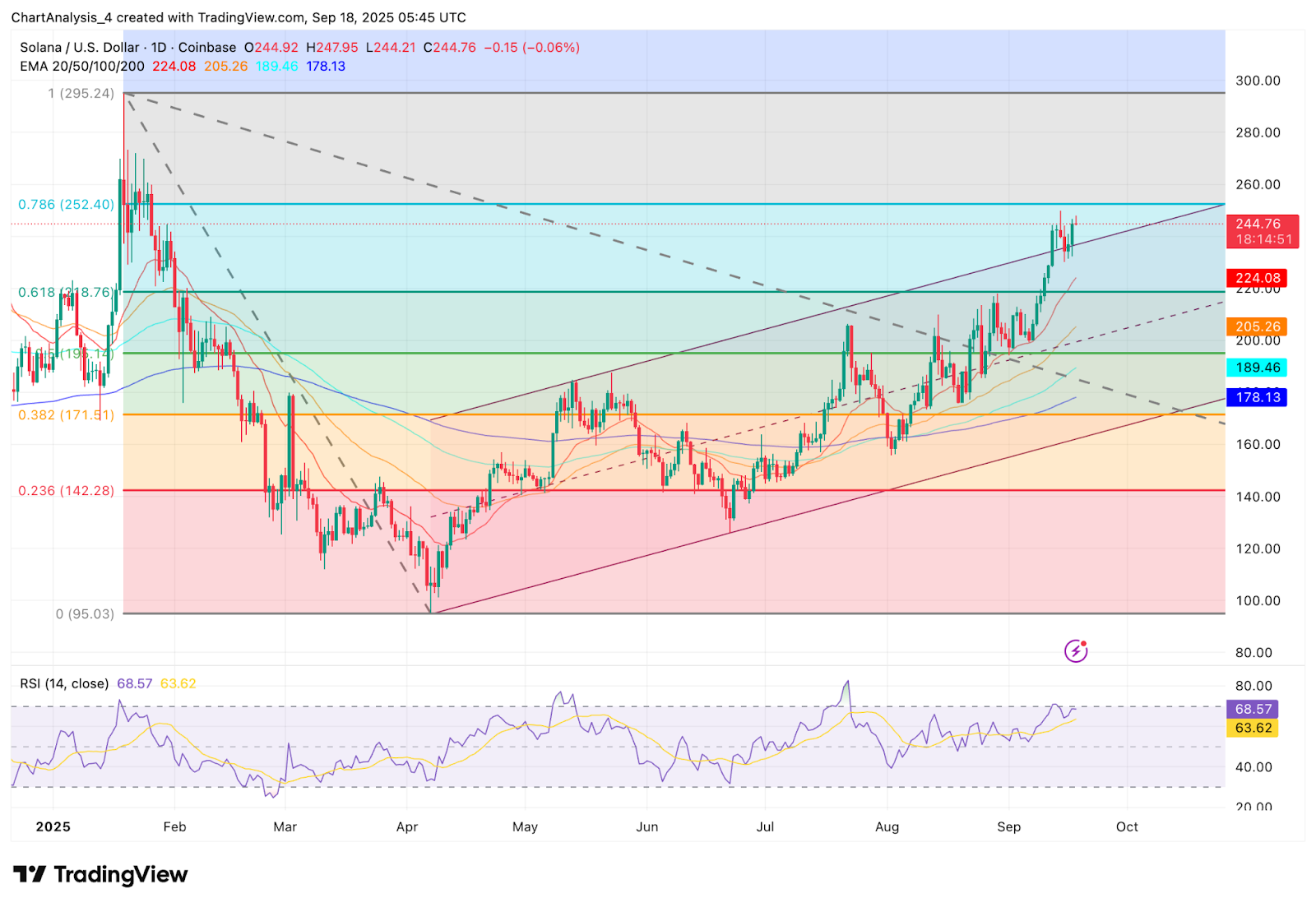
  • Solana price holds $224–$230 support while testing $246–$252 resistance as buyers eye $265 next.
  • ETF approval boosts institutional narrative, with derivatives data showing $16.5B open interest and rising longs.
  • Monthly chart confirms cup-and-handle breakout setup, projecting a long-term target near $550.

Solana price today is trading near $244, consolidating after briefly testing the $246 resistance ceiling. Buyers continue to defend the $224–$230 support zone, which aligns with the 20-day EMA cluster. The key battle now is whether SOL can extend toward $252–$265 or if sellers will force a retest of lower trendline supports.

Solana Price Holds Rising Channel Support

SOL Key Technical Levels (Source: TradingView)

The daily chart shows SOL trending within a rising channel, with support consistently defended since April. Price is currently pressing again…

Read The Full Article Solana Price Prediction: ETF Greenlight And Cup-And-Handle Pattern Target $550 Upside On Coin Edition.

Source link

18 09, 2025

Hormone-Smart Fat Loss, Diabetes Risk, and When Medication Support Makes Sense

By |2025-09-18T16:57:16+03:00September 18, 2025|Fitness News, News|0 Comments


If you’re exploring all the tools that can help you feel and perform better, you may also be researching clinically-supported options such as weight loss drugs from Canada alongside nutrition and training. Medication isn’t a shortcut, but for some women—especially those navigating insulin resistance or Type 2 diabetes—it can be a helpful adjunct to a solid plan built on protein-forward meals, strength training, daily steps, and cycle-synced recovery.

Why this matters for women’s health: multiple diabetes associations highlight that modest, sustained weight loss (5–7% of body weight) can improve glycemic control, blood pressure, triglycerides, sleep apnea symptoms, and quality of life. National diabetes organizations report that more than 1 in 10 adults live with diabetes and a large share have prediabetes, often undiagnosed. In Canada, diabetes organizations estimate over 11 million people are living with diabetes or prediabetes, while U.S. figures exceed 38 million with diabetes and many tens of millions with prediabetes. Across both countries, clinical guidance consistently points to nutrition, physical activity, and weight reduction as first-line therapy, with medications considered case-by-case—particularly when A1C targets aren’t reached with lifestyle alone.

How cycle-syncing pairs with diabetes-friendly nutrition

  • Menstruation (Days 1–5): Many women notice lower appetite or nausea here; it’s a good time for iron-smart foods (lean beef, lentils with vitamin-C veggies) and softer fibers (oats, berries, cooked greens) to support regularity without bloating. Keeping protein 25–40 g per meal prevents muscle loss if training intensity dips.
  • Follicular (Days 6–12): With energy climbing, you’ll likely hit your most consistent deficits now. If you wear a CGM for medical reasons, you may notice flatter post-meal curves when pairing protein + fiber + slow carbs (think salmon + quinoa + salad). Use the momentum to log 2–3 progressive lifts.
  • Ovulatory (Days 13–16): Performance peaks. If blood sugars trend higher with intense intervals, pair sessions with pre-/post-workout carbs (banana, rice cakes, potatoes) and keep electrolytes on hand. Women often set rep or load PRs here—wins that increase adherence.
  • Luteal (Days 17–28): The “craving zone.” Research summaries from diabetes associations note that sleep loss increases next-day hunger hormones and snack calories; luteal insomnia can make that worse. Practical fixes: PFV plates (Protein + Fiber + Volume), a planned 200–250 kcal treat, and a hard steps floor (8–10k). Many women find this removes the all-or-nothing swings that stall fat loss and glycemic targets.

Medication, appetite, and the “plan you can stick to

  1. Post-meal walks (10–15 minutes). A widely recommended tactic in diabetes education because it blunts post-prandial spikes and adds painless NEAT.
  2. Fiber target: 30–40 g/day. Each additional 5–10 g/day is linked to better glycemic control and satiety. Think legumes, chia, ground flax, berries, rye bread.
  3. Breakfast protein (30–40 g). Front-loads satiety and can steady grazing later. Greek yogurt bowls, eggs + smoked salmon, tofu scrambles are easy wins.
  4. Two “anchor workouts.” Even during chaotic weeks, protect two full-body lifts—squats/hinges/pushes/pulls. Anchors keep your identity as a lifter intact and your
    metabolism supported.
  5. Sleep as a macro. Going from 6 to 7.5–8 hours can normalize hunger signals and
    improve next-day food choices. Treat bedtime like an appointment.

A cycle-synced, diabetes-friendly sample day (Luteal phase)

Breakfast: Protein oats (oats + whey/plant protein + chia + blueberries). Coffee, if you like, consider a small splash of milk vs. sweetened creamers.
Mid-morning: Walk meeting—15 minutes outdoors.
Lunch: Big PFV bowl: grilled chicken or tofu, roasted veggies, lentils, olive-oil vinaigrette; add pickled veg for crunch.
Snack: Cottage cheese with pineapple or an apple + 1 tbsp peanut butter.
Workout: 40–50 minutes strength (goblet squat, RDL, row, incline press, carries).
Dinner: Shrimp stir-fry with mixed veg and jasmine rice or tempeh fajita bowl with beans
and peppers.
Evening ritual: Screens dimmed, herbal tea, 10 pages of fiction. If a sweet tooth hits, take it inside the plan (e.g., 150–200 kcal frozen Greek yogurt bar).

PCOS, perimenopause, and thyroid notes

  • PCOS: Prioritize strength training, protein at every meal, and carb timing (aim carbs around training) to leverage insulin sensitivity. Many women see steadier energy and fewer cravings with 30–40 g protein breakfasts.
  • Perimenopause: Symptoms often disrupt sleep and recovery. Keep loads submax when sleep is choppy, but keep lifting; layer in magnesium-rich foods (pumpkin seeds, spinach, dark chocolate).
  • Thyroid considerations: If you’re under medical care for hypothyroidism, weight loss may be slower; still, the PFV plate + strength + steps formula works—just give it a longer runway.

How to know it’s working (without obsessing over the scale)

  • Waist or clothing changes over 2–4 weeks.
  • Strength trend: you’re adding a rep or a kilo somewhere weekly.
  • Energy stability: fewer afternoon crashes, better sleep.
  • Glycemic markers (if you test): steadier post-meal readings and an A1C trend moving toward your clinician’s target across months.

Troubleshooting common roadblocks

  • “I nail weekdays but lose the weekend.” Use one maintenance-calorie day and one light-deficit day instead of two unstructured days. Plan your social meal; walk before and after.
  • “Cravings steamroll me pre-period.” Add +10 g fiber and +15–20 g protein daily during the luteal phase; pre-log a treat. Keep steps non-negotiable.
  • “My strength stalls in luteal.” Maintain the movement pattern but take 10–15% off load or reps—you’ll protect momentum and avoid injuries.
  • “Travel destroys my routine.” Anchor habits: protein at every meal, a 20-minute walk twice a day, and one hotel-gym session with goblet squats, rows, presses.

A compassionate close

Women’s bodies aren’t inconsistent—they’re cyclical. When your plan respects that rhythm, fat loss becomes simpler, steadier, and far more humane. Keep the cornerstones (protein, fiber, lifting, steps, sleep), steer with your cycle, and—if your clinician recommends it—consider whether medication support could help you stick to the plan you already believe in. Every habit above is compatible with diabetes-association guidance and designed to protect muscle, tame hunger, and support healthy blood sugars. Give the framework 8–12 weeks and track the quiet wins: how your clothes fit, how you move, and how you feel in your own skin.

Disclaimer
The Content is not intended to be a substitute for professional medical advice, diagnosis, or treatment. Always seek the advice of your physician or other qualified health provider with any questions you may have regarding a medical condition.


Source link

18 09, 2025

GBP/USD Forecast: Pound Strengthens as Market Turns to BoE

By |2025-09-18T15:25:50+03:00September 18, 2025|Forex News, News|0 Comments

  • The GBP/USD forecast indicates renewed strength in the pound as focus shifts from the Fed to the BoE.
  • Powell said the Fed would continue easing, with forecasts showing two more cuts this year.
  • The Bank of England will likely keep interest rates unchanged.

The GBP/USD forecast indicates renewed strength in the pound as focus shifts from the Fed meeting to the upcoming Bank of England meeting. Initially, the currency collapsed as the US dollar gained after the Fed decision. However, traders are now expecting a cautious tone from the Bank of England due to high UK inflation.

Are you interested in learning more about ETF brokers? Check our detailed guide-

The dollar initially collapsed after the Fed cut interest rates by 25-bps as expected. However, it recovered soon after since market participants had already priced in most of the move. Meanwhile, Powell said they would continue easing, with forecasts showing two more cuts this year. However, the outlook for next year remains uncertain, with traders having priced just one rate cut.

“The revised forecasts highlighted the degree of uncertainty that remains over the outlook,” said Elliot Clarke, head of international economics at Westpac.

“The timing and scale of the forecast rate cuts also point to lingering risks for inflation.”

Meanwhile, the Bank of England will likely keep interest rates unchanged. The central bank is grappling with high inflation that has caused caution among policymakers. Moreover, experts are only predicting one more rate cut this year.

GBP/USD key events today

  • Bank of England policy meeting
  • US unemployment claims

GBP/USD technical forecast: Bulls show readiness to bounce off the 30-SMA

GBP/USD Forecast: Pound Strengthens as Market Turns to BoE
GBP/USD 4-hour chart

On the technical side, the GBP/USD price has bounced off the 30-SMA after dropping to retest the line. If it respects this support, the bullish bias will remain intact. Meanwhile, the RSI trades above 50, suggesting solid bullish momentum.

Are you interested in learning more about Canada forex brokers? Check our detailed guide-

GBP/USD rallied to a new high in the previous session and briefly punctured the 1.3701 resistance level before pulling back sharply. The pullback allowed the price to retest the 30-SMA after such a steep climb. However, it also revealed some strength among bears, who made large red candles.

If the SMA holds firm, bulls will retest the 1.3701 resistance and likely break above to make a new high. Such a move will continue the bullish trend. On the other hand, if bulls fail to reach a new high or the SMA gives way at any point, the bias will change to bearish.

Looking to trade forex now? Invest at eToro!

68% of retail investor accounts lose money when trading CFDs with this provider. You should consider whether you can afford to take the high risk of losing your money.

Source link

18 09, 2025

There’s a dark side to matcha, Gen Z’s favourite drink

By |2025-09-18T15:18:45+03:00September 18, 2025|Dietary Supplements News, News|0 Comments


It tastes awful but it’s being glugged on every high street – health kick or fashion statement, the matcha revolution is here

The elegant, grassy flavour of powdered matcha green tea has crept out of refined Japanese restaurants and is now on every street corner, doused with syrup and served in a giant container. Matcha is taking the high street by storm – but why is Gen Z so obsessed with something that tastes so revolting?

The first time I tried the stuff was at my sister’s birthday at Nobu Park Lane, in the late 90s, where they made the most perfect chocolate fondant served with a lurid, bitter, deeply umami matcha green tea ice cream. At the time I was chugging wheatgrass shots daily at the newly opened and very exciting Fresh and Wild in Camden, so I figured if it tasted green and grassy it was probably good for me.

And good for you it is. Matcha, a powdered, concentrated form of green tea with a unique growing and processing method, is loaded with catechins (especially EGCG), which are like little bodyguards against oxidative stress and inflammation. The caffeine hit is real, but it’s slow-release thanks to L-theanine, so you get focus and calm alertness rather than the coffee jitters.

It’s also been shown in some studies to give you a metabolism boost – with one suggesting it can gently increase calorie burn and fat oxidation. The L-theanine and caffeine combo can also boost concentration, memory, and mood. And to top it off, it’s nutrient dense: because you’re consuming the whole powdered leaf, you get more chlorophyll, fibre, vitamins (A, C, K) and minerals than regular green tea.

I got used to it, and if I wasn’t drinking alcohol in a Japanese restaurant, I’d ask for a hot cup of matcha, but it wasn’t until I moved to Korea in 2013 that I began to see its other side when I learned about ceremonial matcha. I stayed with some monks while filming a TV show and they did a tea meditation. Unlike coffee, the combination of L-theanine and caffeine induces sharp focus and is used to aid meditation.

Walking around the cool food spots in Seoul, like Ikseondong and Insadong, I started seeing it in pastries: matcha millefeuille crêpes, whipped ice creams, cookies and doughnuts. I saw matcha hotdog buns and even Starbucks got in on the act with vivid green matcha lattes.

Then, when I opened Mare Street Market in Hackney seven years ago, I noticed a small local East London Matcha powder brand had launched: it was about to go mainstream over here. Now, matcha brands are exploding all over the high street. It’s a strong flavour – in fact a really bitter flavour – so why are all the kids spending £6 a day to wear – whoops, I mean drink – a matcha with their new kicks?

Gizzi knows matcha has a strong and bitter flavour, so why are people so obsessed?

My niece is 18 and she tells me her friends love Blank Street for its Daydream matcha, so that’s where I start my investigation. There’s a queue just for matcha and rumour has it they sell 1,000 a day from each site – priced at £3.90, this is good business. I ask her what it is exactly that she and her friends are interested in.

“I guess it started from the LA influencers – the kind who go to the super health food shop and home of the Hailey Bieber Smoothie, Erewhon – plus models like Iris Law, who travel a lot to Japan, and do you know the influencer Ami Charlize?” she explains. “Matcha probably is a fashion statement and, yes, it has probably become totally performative”.

My gym is at Canary Wharf and on a stomp through the shopping centre, I stumble across a massive queue and – hurrah! – it’s for a matcha latte brand. This time it’s for Heytea, a high-end Chinese brand with a small menu consisting of matcha, boba and fruit teas.

The brand is famous for its milk foams, notably a recent cream cheese froth. I try the blue coconut cloud matcha, made with blue pea flower tea and blue spirulina, which blends into a beautiful ombre of different blues. It’s like a coconut milkshake, with that classic matcha grassy edge. Does it look cool – yes! Does it taste nice: I’m not convinced.

The next day after the gym, I spot another matcha latte brand, called YUMTEA. This one is red with strawberry syrup, then white from cow’s milk and topped with matcha and foam. It tastes really good. An intense strawberry milkshake with an “adult” edge, as opposed to a bitter one.

But there’s a dark side to this light and fluffy trend. Underneath the neon-green surface an industry is being warped by our obsession. Tea farming was once slow, seasonal and respectful of the land. Now, to meet the spike in demand, vast monoculture plantations in China and Japan are sucking up water, battering soil health and leaning hard on chemical fertilisers. The irony? This drink, sold to us as a kind of liquid purity, is increasingly underpinned by farming practices that look a lot like the industrial agriculture we’re supposedly trying to escape.

And then there’s the carbon cost. Countless tins and sachets are wrapped, boxed and shipped across the globe so that someone in Shoreditch or Silver Lake can snap their morning cup for Instagram. In Japan, centuries-old traditions of shade-growing tea are being stripped back and industrialised to fuel the craze, eroding the cultural fabric along with the environment. What started as a mindful ritual is being swallowed whole by late-capitalist wellness culture, and unless we start asking where our tea comes from, this supposedly “sustainable” sip becomes hollow.

Some brands, such as Jenki, do place sustainability at the core of their business. Since 2019 they’ve sourced from the same farm in Uji, Kyoto. Co-founder Claudia Boyer travels there regularly – she tells me every visit is a reminder of the patience and care it takes to grow matcha well and how important it is to protect that craft as global demand rises.

The next day I try my first Blank Street Daydream matcha. They give me oat milk by mistake, and I loathe it. Next, I drink my first Jenki matchas, one enriched with medicinal mushrooms and the other with collagen.

I like the Turkish Delight feel of the rose collagen one, but the chocolate shroom needs to grow on me. The next day I grab another from Plant-based Hackney eateries, Third Culture. The place is more mature and I get a very elegant pandan syrup matcha. It’s OK. I’m having fun, even if I’m not sure I’m actually enjoying the drinks.

The hype beast behind matcha drinks is very convincing. I just hope the industry can respect the demand on farming. A matcha a day may keep the diseases at bay, but it isn’t a habit I think I am going to be adding to my long list of overpriced hobbies for the sake of social currency and a bitter taste in my mouth.


Source link

18 09, 2025

DOGE Traders Turn To Layer Brett After Experts Call It The Best Crypto Investment This Year

By |2025-09-18T15:14:57+03:00September 18, 2025|Crypto News, News|0 Comments

The cryptocurrency market enters 2025 with established tokens like Dogecoin facing serious challenges, despite continued institutional interest and ETF developments. While DOGE maintains solid fundamentals and Wall Street adoption momentum, its $32 billion market cap limits access to the life-changing returns that once defined the memecoin space. 

This market reality has prompted experienced investors to explore Layer Brett, a revolutionary Layer 2 memecoin currently raising over $3.76 million in presale at $0.0058 per token. Analysts suggest this strategic pivot could unlock the exponential gains that mature tokens can no longer deliver.

Wall Street legitimacy transforms DOGE fundamentals while restricting volatility

Dogecoin price prediction models reveal a token caught between institutional legitimacy and growth limitations inherent to massive market caps. The anticipated DOGE ETF launch represents a watershed moment for memecoin acceptance on Wall Street, yet seasoned traders understand that this validation also serves to reduce any hope of explosive volatility that creates generational wealth.

Current technical analysis shows DOGE consolidating between $0.21-$0.22, with resistance at $0.225 and crucial support defending $0.214. While the Federal Reserve’s expected rate cuts could trigger significant rallies relative to Bitcoin, the mathematical ceiling imposed by billions in market capitalization restricts the 100x movements that defined early DOGE adoption.

The inverse head-and-shoulders formation and recent accumulation of 680 million DOGE tokens by institutional players signal strength, but create a supply-demand dynamic that favors steady appreciation.

Revolutionary L2 memecoin architecture delivers authentic community appeal

Layer Brett is stepping up as the solution to this market maturation problem, delivering authentic memecoin energy through advanced Layer 2 technology. Unlike legacy tokens constrained by network limitations and massive valuations, $LBRETT operates on high-speed, low-cost Ethereum Layer 2 infrastructure designed for explosive scalability.

The project’s presale pricing at $0.0058 provides ground-floor access that established tokens can no longer offer. Early investors benefit from over 675% staking APY, creating immediate utility beyond speculative trading. This combination of meme culture appeal and tangible blockchain benefits addresses the core limitation facing mature tokens like Dogecoin.

Layer Brett‘s tokenomics allocate 25% specifically for enhanced staking rewards, ensuring sustainable incentives for community participation. The 30% presale allocation enables rapid development execution while maintaining decentralized principles that require no KYC verification.

Capital migration patterns expose advantages in pre-institutional assets

The current disconnect between traditional markets hitting record highs and cryptocurrency performance creates optimal conditions for strategic repositioning. While the S&P 500 and Nasdaq achieve new peaks, established crypto assets lag behind, suggesting capital rotation toward higher-potential opportunities.

Dogecoin’s institutional adoption, while positive for long-term stability, reduces the asymmetric risk-reward profiles that create exceptional returns. The billions required to move DOGE prices significantly exceed what individual or medium-sized portfolios can influence.

Layer Brett‘s smaller scale enables community-driven price discovery and rewards early adopters who identify promising projects before mainstream recognition. The $3.76 million raised so far demonstrates serious investor interest while maintaining accessibility for significant position building.

DOGE Traders Turn To Layer Brett After Experts Call It The Best Crypto Investment This Year

Expert evaluation: current presale window offers optimal positioning advantage

Market participants chasing exceptional returns require entry during pre-mainstream phases, before institutional capital creates price stability. Layer Brett‘s presale represents this critical window, combining proven memecoin market dynamics with next-generation blockchain infrastructure.

The project’s roadmap emphasizes community rewards, NFT integration, and cross-chain interoperability features that extend beyond simple token speculation. This utility foundation provides multiple value creation pathways as the Layer 2 ecosystem expands.

While Dogecoin price prediction models suggest steady appreciation, the mathematical constraints of its current valuation limit explosive potential. Layer Brett offers the exponential growth opportunity that drew investors to early DOGE, enhanced by modern blockchain technology and strategic tokenomics.

Connect your wallet and buy in today.

Website: https://layerbrett.com

Telegram: https://t.me/layerbrett

X: (1) Layer Brett (@LayerBrett) / X

Source link

18 09, 2025

Crypto lobby poll — TradingView News

By |2025-09-18T13:30:19+03:00September 18, 2025|News, NFT News|0 Comments


More than 40% of Americans are open to using decentralized finance (DeFi) protocols if proposed legislation is made law, according to a recent survey. 

Crypto lobby group the DeFi Education Fund (DEF) found in a survey released on Thursday that many Americans “are curious about DeFi” as respondents signalled a low trust in the traditional finance system.

The survey was conducted by Ipsos between Aug. 18 and 21, with 1,321 US adults polled. Ipsos Public Affairs vice president Alec Tyson said the study found “emerging awareness of cryptocurrency and decentralized finance as many Americans express frustrations with current financial institutions’ ability to deliver security, personalized control and flexibility.”

40% of Americans open to DeFi 

The poll showed that 42% said they would likely try DeFi if proposed legislation were passed into law, split between 9% who said they were “extremely or very likely” and 33% who responded they were “somewhat likely” to try.

Congress is currently looking at bills that would define the legal status of many cryptocurrencies and specify how the country’s financial regulators divvy up policing the sector.

Two in five, or 40%, of the respondents said they’d “likely try out DeFi,” with 84% of those respondents saying they’d use it to make purchases online. 

Just 12% of those surveyed said they were very or extremely interested in learning about DeFi, while nearly 40% believed that DeFi can address the issue of high transaction and service fees in banking and traditional finance.

“I would keep more of my paycheck in my pocket. I wouldn’t have to rely on any of the financial institutions, on paying them fees,” said one respondent from Queens in New York City. 

Study shows mistrust of banks and TradFi

The DEF said the survey found that trust in traditional finance was “low across the board,” with the data revealing significant variations and areas of skepticism across the financial landscape. 

Less than half of those surveyed believe the current US financial system meets their financial needs, while just a quarter thought that the traditional system is designed to benefit ordinary people.

More Americans are interested in having “control over my money at all times,” and many are looking for ways to send or receive money without a middleman, the researchers stated. 

Financial surveillance and security are also major concerns, with only 29% of Americans surveyed believing that the US financial system is secure today.

Around three-quarters of those surveyed agreed that the current financial system needs to be upgraded to combat new threats, like cybercrime or AI.

DeFi still a nascent sector

“Desire for stronger security and lower transaction fees are among the top reasons that Americans are interested in DeFi, and Americans believe DeFi can alleviate friction points in finance today,” the researchers concluded. 

Last month, US Federal Reserve Governor Christopher Waller said there was “nothing to be afraid of” about crypto payments operating outside the traditional banking system.

DeFi is still a very nascent sector with total value locked across all protocols currently standing at $160 billion, according to DefiLlama, which is less than the market capitalization of Boeing. 


Source link

18 09, 2025

BTC/USD Forecast Today 18/09: Dips Before FOMC (Video)

By |2025-09-18T13:24:54+03:00September 18, 2025|Forex News, News|0 Comments

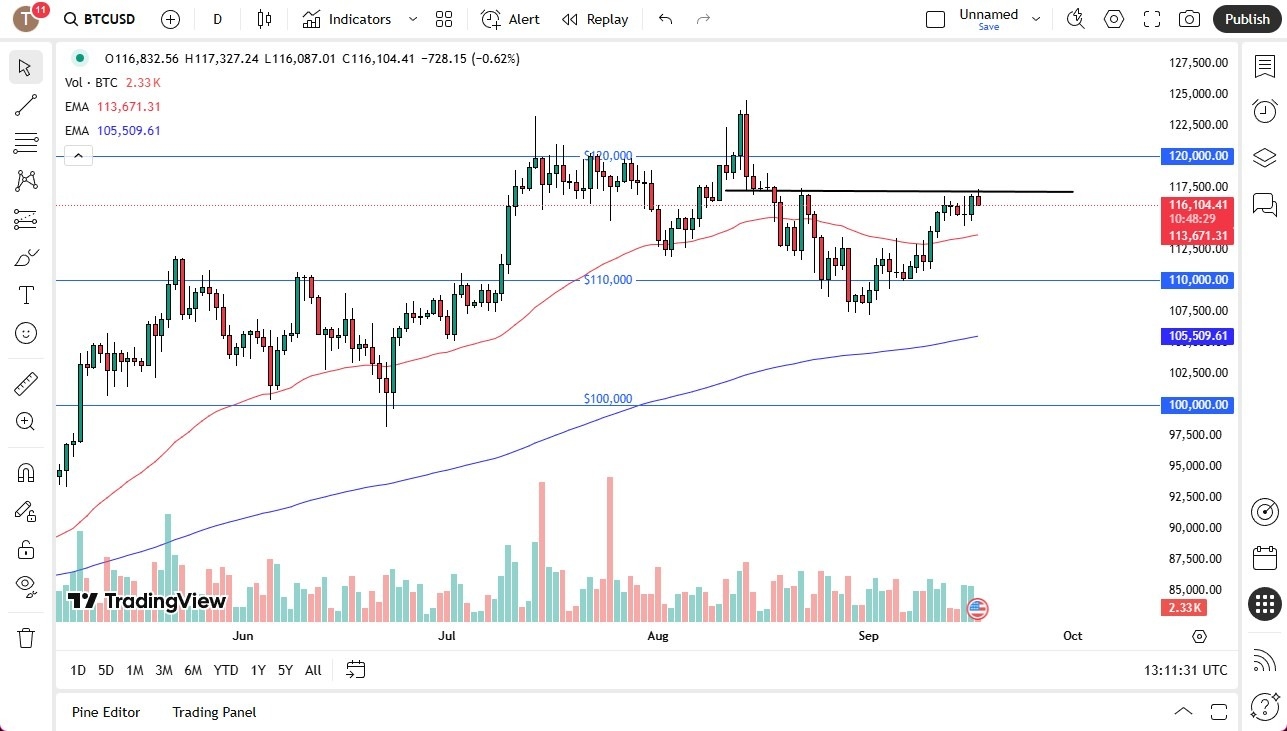
  • Bitcoin did initially try to rally during the trading session on Wednesday, but we have given back gains near the $117,000 level, an area that has been important more than once.
  • And really, with that being the case, I think you’ve got a situation where traders are looking at this through the prism of a market that has been a little bit noisy.
  • And with that being said, I think you’ve got a situation where the fact that the FOMC interest rate decision press conference and statement all come later in the day, it’s not a huge surprise to see a certain amount of hesitation or perhaps even liquidation in order to get away from the market and see what the Federal Reserve is going to do.

A lot of retail Bitcoin traders have no idea that the Federal Reserve has a major influence on Bitcoin. It always has. It’s kind of ironic because Bitcoin was essentially invented to get away from fiat currencies. And now it’s driven by central bank policy.

The Fed Will Matter

Why is this? Well, it’s because Wall Street has its hands in Bitcoin. So, Bitcoin is going to behave like every other Wall Street asset, like it or not. At this point, if Wall Street thinks that the Federal Reserve is going to be tighter than anticipated over the next six months or so, that causes panic and that probably has Bitcoin selling off.

On the other hand, if the Federal Reserve looks like they are going to cut two more times later this year and not in a panic, that could be reason enough for Bitcoin to rally and head towards the $120,000 level. This is a market that’s been very choppy and noisy as of late, but it is worth noting that recently we have formed a lower low.

Now the question is, are we going to form a lower high? I think we might know the answer to that in the next few days.

Ready to trade Bitcoin forex forecast? Here’s a list of some of the best crypto brokers to check out.

Christopher Lewis has been trading Forex and has over 20 years experience in financial markets. Chris has been a regular contributor to Daily Forex since the early days of the site. He writes about Forex for several online publications, including FX Empire, Investing.com, and his own site, aptly named The Trader Guy. Chris favours technical analysis methods to identify his trades and likes to trade equity indices and commodities as well as Forex. He favours a longer-term trading style, and his trades often last for days or weeks.

Source link

Go to Top