
Food supplements are often riskier than expected
Keystone
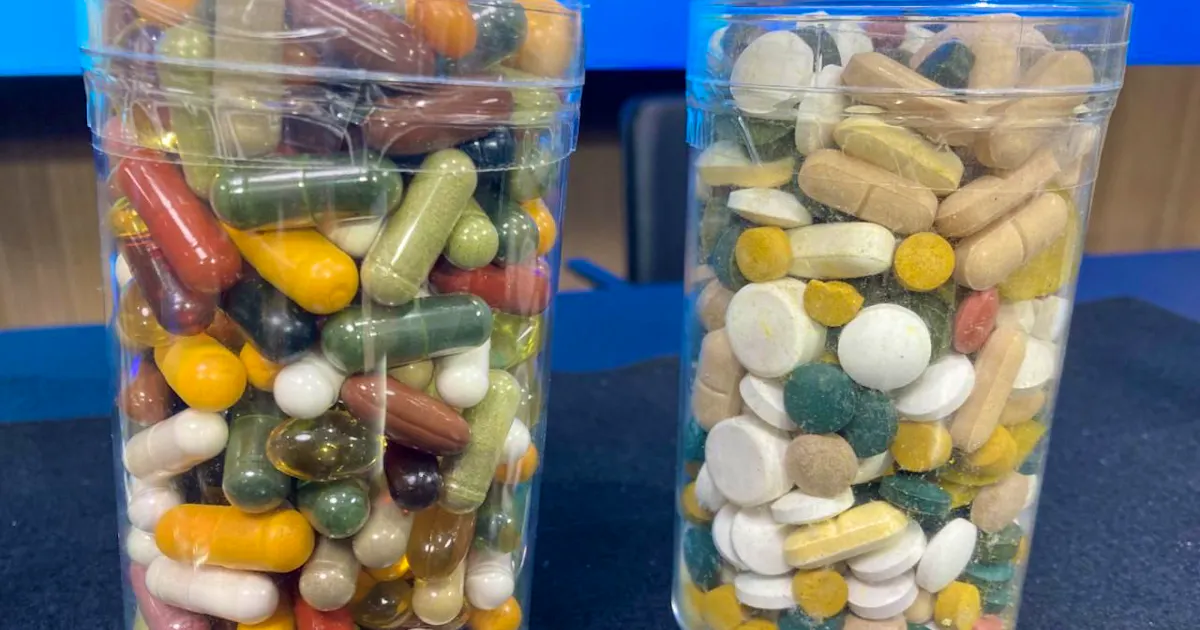
Can’t do any harm, can it? That’s probably what many people who take vitamin shots or immune capsules think. But the situation is not so clear-cut.
No time? blue News summarizes for you
- Food supplements are legally considered foodstuffs. Unlike medicines, they therefore do not have to undergo strict approval tests before being launched on the market.
- Many consumers are unaware of this and think that the products have been tested for health safety before being sold and that maximum levels for the ingredients are specified. This is not the case.
- There is a lack of awareness of the risks of food supplements.
According to consumer protection experts, consumers rarely question the use of food supplements. Many wrongly assume that they are safe and well researched.
In advertising, especially in online networks, these products are sometimes advertised with unapproved health claims, warned Jochen Geilenkirchen, head of the food team at the German Federation of Consumer Organizations (vzbv). According to him, consumers often lack awareness of the risks of food supplements. The effectiveness of the products is also often misjudged.
According to a vzbz study, 21 percent of consumers believe that food supplements are part of a healthy diet. Almost half of consumers also wrongly assume that the products are tested for health safety before they are sold. 41 percent of respondents also expect that maximum levels for the ingredients in food supplements are legally prescribed – although this is not the case according to the consumer advocates.
The consumer advocates criticize the fact that food supplements are perceived by many consumers as a kind of natural medicine, although they are legally considered foodstuffs and do not undergo strict approval tests. It is the task of politicians to strengthen food monitoring in order to protect consumers from false advertising promises.










Share this article: