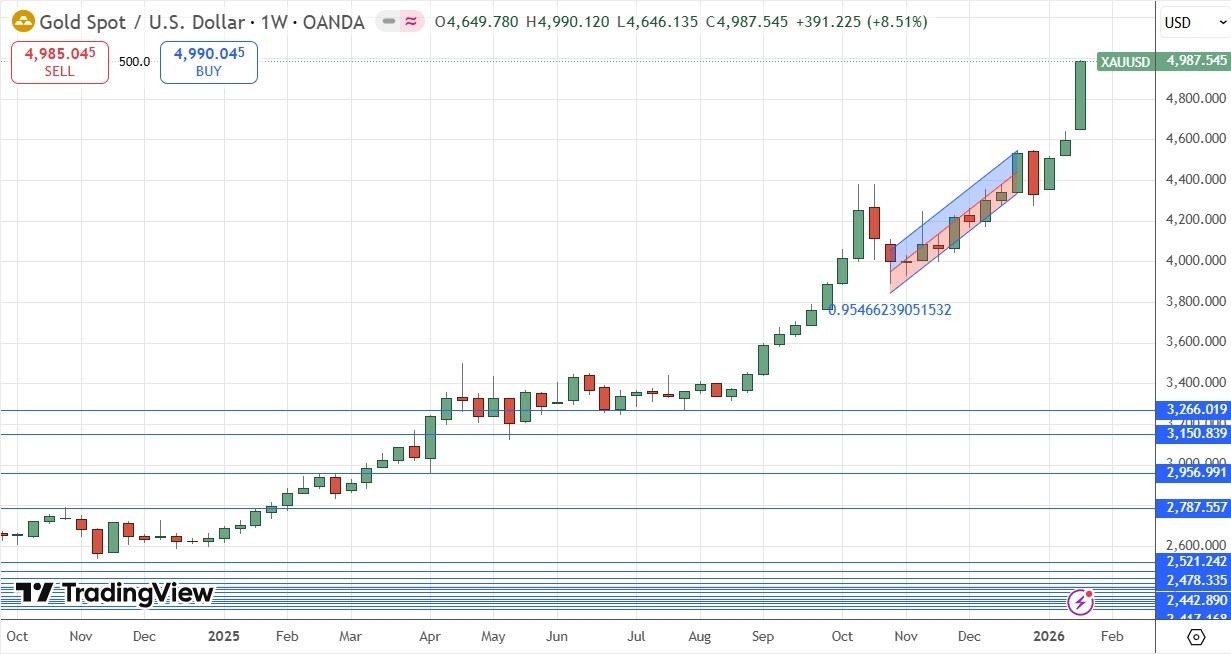
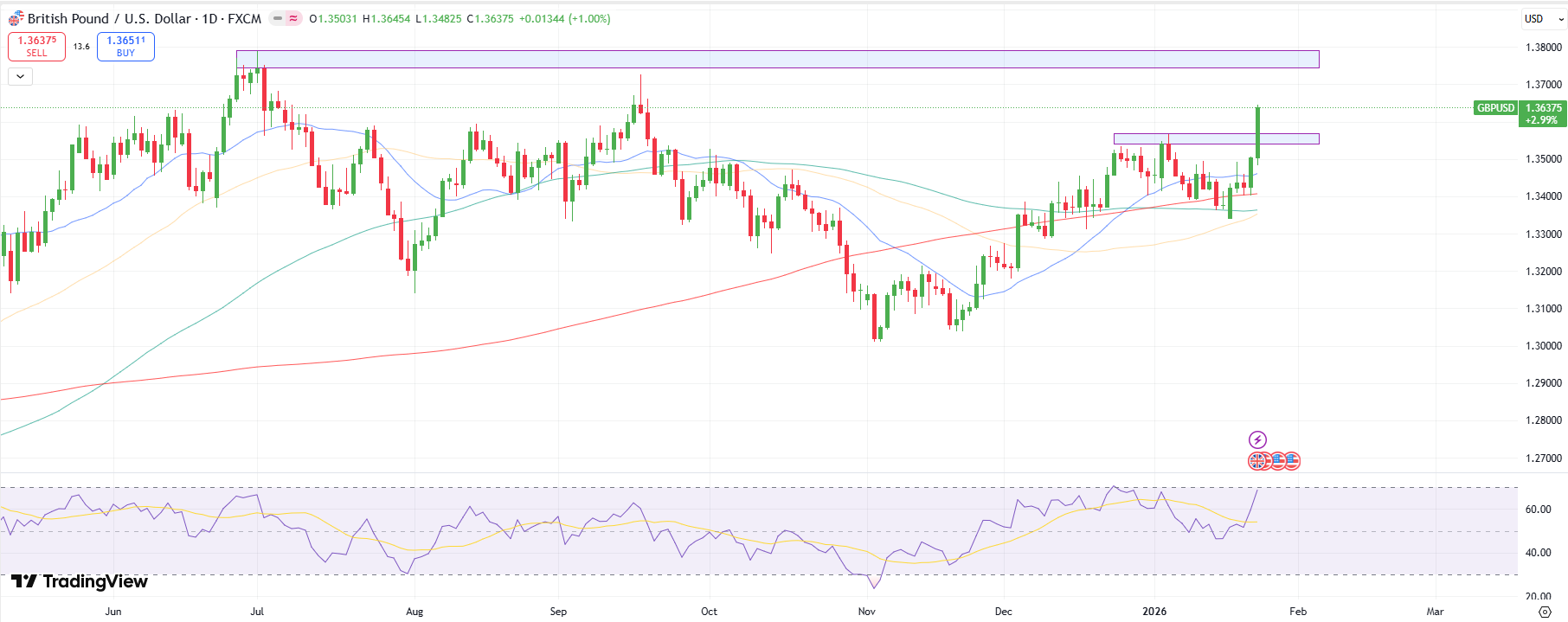
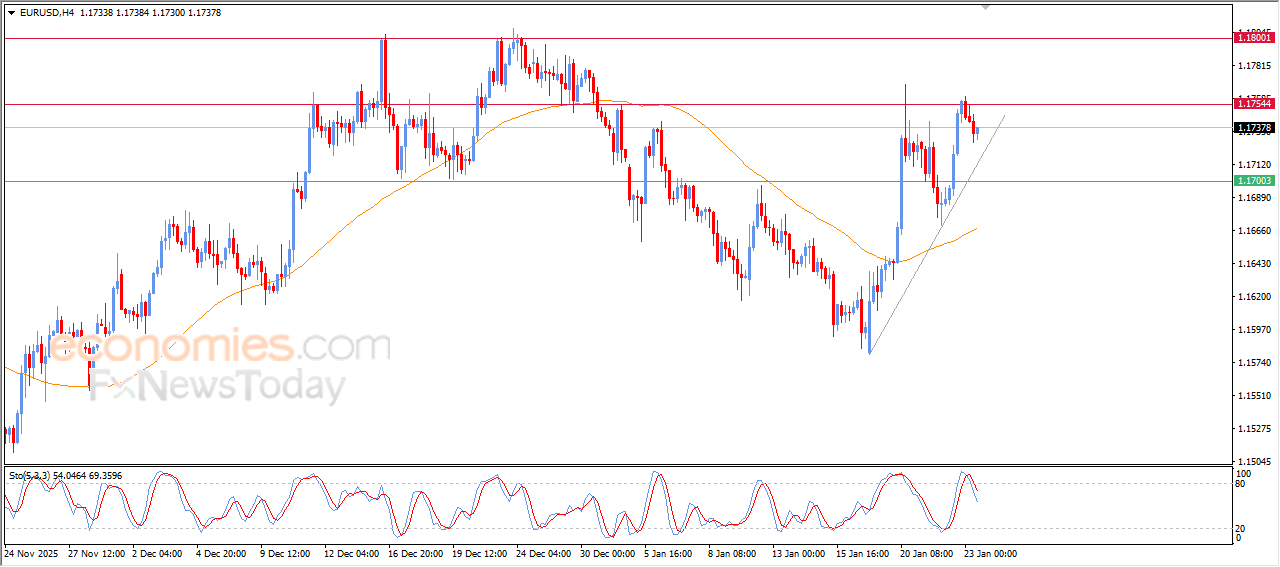
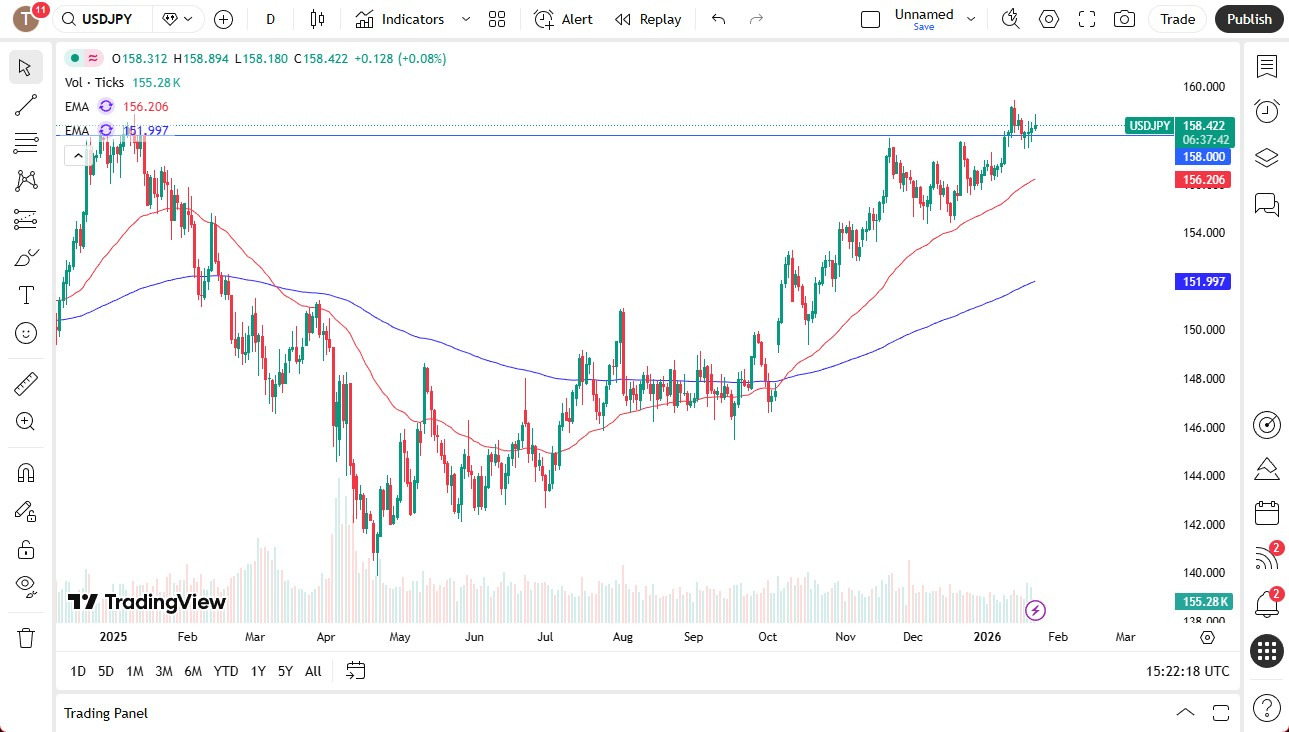
The main category of Forex News.

You can use the search box below to find what you need.

[wd_asp id=1]

15 12, 2025

The GBPJPY begins to gather the gains– Forecast today – 15-12-2025

By |2025-12-15T11:33:25+02:00December 15, 2025|Forex News, News|0 Comments

The GBPJPY pair provided a new negative close below the resistance at 208.95, to force it to activate the attempts of gathering gains, to reach 207.35 this morning, facing negative pressures by stochastic exit from the overbought level confirms the importance of reaching extra support at 206.95.


The stability above the targeted support will reinforce the chances of forming positive attempts to target 208.10 level, reaching the mentioned main resistance, while the decline below this support and providing negative close will open the way for resuming the bearish corrective attack, which might target 206.30 and 205.80 level.


The expected trading range for today is between 206.95 and 208.20


Trend forecast: Bearish


Source link

15 12, 2025

XAG/USD defends 100-hour SMA; climbs to $62.50

By |2025-12-15T10:04:05+02:00December 15, 2025|Forex News, News|0 Comments


Silver (XAG/USD) attracts fresh buyers at the start of a new week and reverses a part of Friday’s retracement slide from the all-time peak, around the $64.65 region. The white metal trades above mid-$62.00s during the Asian session, up 1.25% for the day, and seems poised to prolong its recent well-established uptrend.

From a technical perspective, the XAG/USD finds decent support and bounces off the 100-hour Simple Moving Average (SMA). The subsequent move back above the $62.00 round figure validates the positive outlook. However, neutral oscillators on the 1-hour chart and a slightly overbought Relative Strength Index (RSI) on the daily chart warrant some caution for aggressive bullish traders.

This, in turn, suggests that any further move up is more likely to face some barrier near the $63.00 mark. A sustained strength beyond, however, could lift the XAG/USD towards the next relevant hurdle near the $63.80 area. Some follow-through buying beyond the $64.00 round figure will reaffirm the constructive outlook and allow bulls to challenge the record high, around the $64.65 region.

On the flip side, weakness below the $62.00 mark might still be seen as a buying opportunity near the 100-hour SMA, currently pegged near the $61.45 region. A convincing break below, however, could drag the XAG/USD below the $61.00 round figure, towards the $60.80 zone, or Friday’s swing low. The latter should act as a key pivotal point, which, if broken, should pave the way for deeper losses.

Silver 1-hour chart

Silver FAQs

Silver is a precious metal highly traded among investors. It has been historically used as a store of value and a medium of exchange. Although less popular than Gold, traders may turn to Silver to diversify their investment portfolio, for its intrinsic value or as a potential hedge during high-inflation periods. Investors can buy physical Silver, in coins or in bars, or trade it through vehicles such as Exchange Traded Funds, which track its price on international markets.

Silver prices can move due to a wide range of factors. Geopolitical instability or fears of a deep recession can make Silver price escalate due to its safe-haven status, although to a lesser extent than Gold’s. As a yieldless asset, Silver tends to rise with lower interest rates. Its moves also depend on how the US Dollar (USD) behaves as the asset is priced in dollars (XAG/USD). A strong Dollar tends to keep the price of Silver at bay, whereas a weaker Dollar is likely to propel prices up. Other factors such as investment demand, mining supply – Silver is much more abundant than Gold – and recycling rates can also affect prices.

Silver is widely used in industry, particularly in sectors such as electronics or solar energy, as it has one of the highest electric conductivity of all metals – more than Copper and Gold. A surge in demand can increase prices, while a decline tends to lower them. Dynamics in the US, Chinese and Indian economies can also contribute to price swings: for the US and particularly China, their big industrial sectors use Silver in various processes; in India, consumers’ demand for the precious metal for jewellery also plays a key role in setting prices.

Silver prices tend to follow Gold’s moves. When Gold prices rise, Silver typically follows suit, as their status as safe-haven assets is similar. The Gold/Silver ratio, which shows the number of ounces of Silver needed to equal the value of one ounce of Gold, may help to determine the relative valuation between both metals. Some investors may consider a high ratio as an indicator that Silver is undervalued, or Gold is overvalued. On the contrary, a low ratio might suggest that Gold is undervalued relative to Silver.


Source link

15 12, 2025

The EURJPY surrenders to the stability of the barrier– Forecast today – 15-12-2025

By |2025-12-15T09:32:37+02:00December 15, 2025|Forex News, News|0 Comments

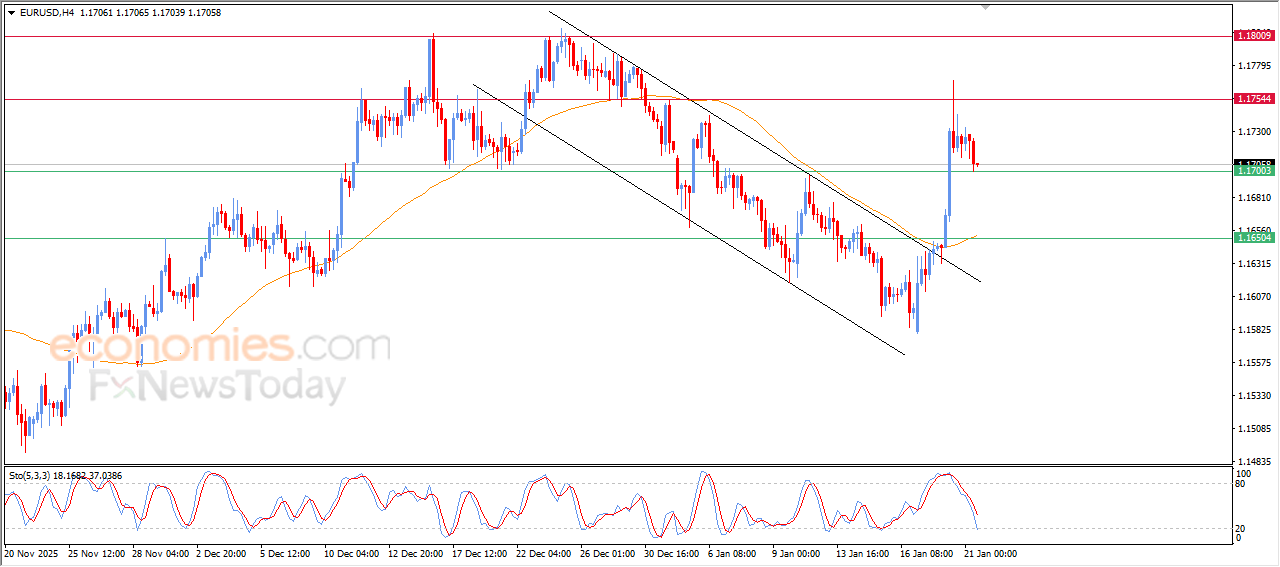
The EURJPY pair surrendered since this morning to the bearish corrective scenario, affected by the stability of the barrier near 183.30 besides stochastic exit from the overbought level, activating the attempts of gathering the gains by reaching 182.15.


Renewing the corrective attempts to test the extra support at 181.70, attempting to gather the positive momentum to form bullish waves and recover the current losses by its rally towards 182.80, 

Waiting to breach the barrier to open the way for recording new gains that might extend towards 183.50 reaching the next main target at 184.10 in the near sessions.


The expected trading range for today is between 181.70 and 182.70


Trend forecast: Fluctuated within the bullish trend


Source link

15 12, 2025

XAU/USD retains bullish bias ahead of this week’s key US macro releases

By |2025-12-15T08:03:32+02:00December 15, 2025|Forex News, News|0 Comments


Gold (XAU/USD) attracts buyers for the fifth straight day and climbs to the $4,330 region during the Asian session on Monday. The commodity remains well within striking distance of its highest level since October 21, touched on Friday, and seems poised to appreciate further amid a supportive fundamental backdrop. Traders, however, might opt to wait for this week’s important US macro releases, which would shape expectations about the Federal Reserve’s (Fed) rate-cut path and drive demand for the non-yielding yellow metal.

The delayed US Nonfarm Payrolls (NFP) report for October and Retail Sales are scheduled for release on Tuesday, along with the provisional manufacturing and services PMIs. This will be followed by the US consumer inflation figures on Thursday. Apart from this, speeches from influential FOMC members will determine the near-term trajectory for the US Dollar (USD). Investors this week will further take cues from the Bank of England (BoE) rate decision and the European Central Bank (ECB) meeting on Thursday, and the Bank of Japan (BoJ) policy update on Friday. This should provide a fresh directional impetus to the Gold price.

In the meantime, dovish US Federal Reserve (Fed) expectations fail to assist the USD to register any meaningful recovery from a two-month low, touched last Thursday, and continue to underpin the yellow metal. In a widely expected move, the US central bank lowered borrowing costs by 25 basis points (bps) at the end of a two-day policy meeting last Wednesday and projected one more rate cut in 2026. Investors, however, remain hopeful about two more rate cuts next year in the wake of Fed Chair Jerome Powell’s remarks, saying that the central bank does not want its policy to push down on job creation amid downside risks to the labor market.

Meanwhile, US President Donald Trump said last Friday that he was leaning toward choosing either former Fed Governor Kevin Warsh or National Economic Council Director Kevin Hassett to lead the US central bank next year. Market participants seem convinced that the new Trump-aligned Fed chair will be an uber-dovish and slash interest rates regardless of the economic fundamentals. This has been another factor behind the recent USD decline and suggests that the path of least resistance for the Gold price remains to the upside. Moreover, the emergence of dip-buying at the start of a new week and acceptance above the $4,300 mark validate the positive outlook.

Gold 4-hour chart

Technical Outlook

Last week’s breakout through the $4,245-4,255 supply zone was seen as a key trigger for the XAU/USD bulls. Moreover, short-term moving averages slope higher, keeping the intraday bias pointing north. The broader setup remains supportive as dips attract demand around dynamic supports. The Moving Average Convergence Divergence (MACD) histogram stays positive but has been contracting from recent peaks, suggesting fading bullish momentum; the MACD line holds above the Signal line and above the zero line. RSI (14) prints 68 (near overbought), easing from earlier extremes and hinting that upside could be capped until momentum resets.

If buyers reassert control and the MACD histogram re-expands, the advance could extend towards retesting the all-time peak, while a further contraction accompanied by an RSI roll-over from the high-60s would favor consolidation. A sustained hold above rising short-term moving averages would preserve the bullish tone, whereas a close beneath these dynamic supports would open the door to a deeper pullback. Overall, momentum remains positive but stretched, which could translate into choppy trade before a decisive break emerges.

(The technical analysis of this story was written with the help of an AI tool)


Source link

15 12, 2025

Gold climbs on rate cut expectations, safe-haven flows

By |2025-12-15T06:02:27+02:00December 15, 2025|Forex News, News|0 Comments


Gold price (XAU/USD) climbs to seven-week highs above $4,325 during the Asian trading hours on Monday. The precious metal extends its upside amid the prospect of interest rate cuts by the US Federal Reserve (Fed) next year. Lower interest rates could reduce the opportunity cost of holding Gold, supporting the non-yielding precious metal. Additionally, uncertainty and the risk-off sentiment could boost the safe-haven flows, benefiting the yellow metal price.

Nonetheless, hawkish remarks from Fed officials last week could lift the US Dollar (USD) and weigh on the USD-denominated commodity price. Traders will take more cues from the speeches by Fed Governor Stephen Miran and New York Fed President John Williams later on Monday. 

The US employment report for October and November will take center stage on Tuesday, including Nonfarm Payrolls (NFP), Average Hourly Earnings and Unemployment Rate. These reports could provide more clarity on the labor market’s health and likely influence expectations for the Fed’s January meeting.  

Daily Digest Market Movers: Gold rises as Fed delivered its final 2025 rate cut, safe-haven flows

  • Bloomberg reported on Sunday that a mass shooting at Bondi Beach in the Australian city of Sydney had killed at least 16 people and wounded 40. Australian Prime Minister Anthony Albanese said in a press conference early Monday that the shooting was a “targeted attack” on the Jewish community. He had previously described the incident as an “act of evil antisemitism, terrorism that has struck the heart of our nation.”
  • Chicago Fed President Austan Goolsbee said on Friday that he “felt the more prudent course would have been to wait for more information” before cutting rates again after a government shutdown delayed several key economic reports in October and November. 
  • Cleveland Fed President Beth Hammack stated that the central bank should keep rates high enough to continue putting downward pressure on inflation.
  • The US Fed last week announced its third and final quarter-point rate reduction this year, cutting interest rates by 25 basis points (bps) to a target range of 3.50% to 3.75%.
  • Markets are currently pricing in nearly a 76% probability that the Fed will hold interest rates steady in January 2026, compared with a 70% chance just before the December rate cut announcement, according to the CME FedWatch tool.

Gold maintains its constructive outlook in the longer term

Gold price trades in positive territory on the day. According to the four-hour timeframe, the positive outlook of the precious metal remains in play as the price holds above the key 100-day Exponential Moving Average. The Bollinger Band widens, suggesting a strong bullish trend. Furthermore, the upward momentum is reinforced by the 14-day Relative Strength Index (RSI), which stands above the midline near 68.75. This displays the bullish momentum for the yellow metal. 

On the bright side, the first upside barrier to watch is in the $4,345-$4,355 zone, representing the upper boundary of the Bollinger Band and the high of December 12. Sustained upside momentum could take XAU/USD back up to an all-time high of $4,381. Further north, the next resistance level is located at the $4,400 psychological mark. 

On the downside, the initial support level for the yellow metal is seen at the low of December 12 at $4,257. More bearish candlesticks reflect a continuation of downside pressure, possibly dragging the price down to the next bearish target at $4,200, the 100-day EMA. The next contention level emerges at $4,166, the lower limit of the Bollinger Band. 

Risk sentiment FAQs

In the world of financial jargon the two widely used terms “risk-on” and “risk off” refer to the level of risk that investors are willing to stomach during the period referenced. In a “risk-on” market, investors are optimistic about the future and more willing to buy risky assets. In a “risk-off” market investors start to ‘play it safe’ because they are worried about the future, and therefore buy less risky assets that are more certain of bringing a return, even if it is relatively modest.

Typically, during periods of “risk-on”, stock markets will rise, most commodities – except Gold – will also gain in value, since they benefit from a positive growth outlook. The currencies of nations that are heavy commodity exporters strengthen because of increased demand, and Cryptocurrencies rise. In a “risk-off” market, Bonds go up – especially major government Bonds – Gold shines, and safe-haven currencies such as the Japanese Yen, Swiss Franc and US Dollar all benefit.

The Australian Dollar (AUD), the Canadian Dollar (CAD), the New Zealand Dollar (NZD) and minor FX like the Ruble (RUB) and the South African Rand (ZAR), all tend to rise in markets that are “risk-on”. This is because the economies of these currencies are heavily reliant on commodity exports for growth, and commodities tend to rise in price during risk-on periods. This is because investors foresee greater demand for raw materials in the future due to heightened economic activity.

The major currencies that tend to rise during periods of “risk-off” are the US Dollar (USD), the Japanese Yen (JPY) and the Swiss Franc (CHF). The US Dollar, because it is the world’s reserve currency, and because in times of crisis investors buy US government debt, which is seen as safe because the largest economy in the world is unlikely to default. The Yen, from increased demand for Japanese government bonds, because a high proportion are held by domestic investors who are unlikely to dump them – even in a crisis. The Swiss Franc, because strict Swiss banking laws offer investors enhanced capital protection.


Source link

15 12, 2025

Japanese Yen Weekly Forecast: Will USD/JPY break 150 on BoJ decision?

By |2025-12-15T03:29:30+02:00December 15, 2025|Forex News, News|0 Comments

FX Empire – Tankan Large Manufacturing Index

Japan’s Services Sector in the Spotlight

On Tuesday, December 16, preliminary private sector PMI data will be in focus. The S&P Global Services PMI will be the focal point, given that services account for around 70% of the GDP. Economists forecast the S&P Global Services PMI to drop from 53.2 in November to 51.6 in December.

While slower services sector activity may signal a loss of economic momentum, holding above the 50 neutral level will be key. Furthermore, traders should focus on the employment and prices sub-components. A tighter labor market, higher wage growth (input prices), and hotter inflation (output prices) would signal a more hawkish BoJ rate path.

Will Trade Data Greenlight a December Rate Hike?

On Wednesday, December 17, Japanese trade data will provide insights into the effect of US tariffs on demand. Economists predict exports to rise 4.8% year-on-year (YoY) in November, up from 3.6% in October. Imports are expected to rise 2.5% YoY in November, up from 0.7% in October.

A sharp pickup in external demand and robust imports would support Governor Ueda’s view that US tariff risks have diminished. Given Japan’s trade-to-GDP ratio is roughly 45%, improving trade terms would boost the economy and demand for the yen.

For context, external demand fell 0.2% quarter-on-quarter in Q3, contributing to a 0.6% economic contraction. However, the US reduced tariffs on Japanese goods from 25% to 15% in Q3, boosting external demand early in Q4.

Japanese National Inflation in Focus Pre-BoJ Policy Decision

On Friday, December 19, national inflation figures will draw interest ahead of the BoJ’s monetary policy decision. Economists forecast the so-called core-core annual inflation rate to remain at 3.1% in November. Steady or rising core-core inflation would boost expectations of a more hawkish BoJ monetary policy outlook.

Source link

14 12, 2025

LME Near $12,000 as AI Demand, Tariff Flows and Supply Shocks Drive Volatility

By |2025-12-14T21:58:28+02:00December 14, 2025|Forex News, News|0 Comments


Copper is closing out 2025 with the kind of price action usually reserved for crisis commodities: sharp rallies, sudden air pockets, and a market that looks tight in some places and oddly comfortable in others. Midway through December, London Metal Exchange (LME) copper is still trading at historically elevated levels after repeatedly printing new highs this month—supported by supply disruptions, policy-driven shifts in global inventory, and a fresh narrative that “AI infrastructure is the new mega-demand driver.” [1]

So what’s the most realistic copper price forecast for December 2025—not next year, not “the decade of electrification,” but the final stretch of this month?

Based on the latest price signals, inventory movements, and the newest forecasts and analyst notes published over the past several days, the most defensible view is this: copper prices are likely to remain high and volatile through the rest of December 2025, with a market bias to hold above $11,000/ton—unless a risk-off shock or a sudden reversal of U.S.-centric stockpiling breaks the spell. [2]


Copper price right now: the key levels shaping December 2025

The latest day-delayed LME three-month closing price shows copper at $11,515 per metric ton (down 3.01% on the day shown). [3]

But the bigger signal for December is the ceiling copper has been testing: Reuters reported LME three-month copper touched $11,952/ton in intraday trading this month, keeping the market within reach of the psychologically important $12,000 threshold that traders and procurement desks watch closely. [4]

Shanghai has been reinforcing the bullish tone. Reuters also reported the most-traded Shanghai Futures Exchange (SHFE) copper contract hit fresh records around 94,570 yuan/ton during the same rally, highlighting that the bid isn’t purely a London or U.S. story. [5]

What this means for a December 2025 forecast: the market has already proven it can trade in the high-$11,000s and flirt with $12,000. The real question is whether it can stay there into month-end as liquidity thins and macro headlines hit.


Why copper is surging in December 2025: three forces dominating the tape

Copper’s late-2025 strength isn’t a single narrative. It’s a triangle: (1) supply disruptions, (2) tariff-driven stock movements, and (3) demand stories that are bigger than construction.

1) Supply shocks are stacking up—and the market is treating them as structural

Recent analysis from ING points to a year of disruptions tightening the near-term balance, naming major incidents and outages at key global operations (including Indonesia’s Grasberg, the DRC’s Kamoa-Kakula, and Chile’s El Teniente), while also flagging broader issues like declining ore grades and operational setbacks in top-producing regions. [6]

The market takeaway: even when demand is debated, supply uncertainty is real—and it’s being priced like a risk premium.

2) The copper market is “fractured” by U.S. tariff uncertainty and inventory pull

One of the most important December 2025 dynamics is that the copper market is tight outside the United States—while U.S. exchange inventories have swelled.

Reuters commentary described a “market fracture” where the U.S. has become a magnet for copper due to lingering tariff uncertainty and pricing distortions between COMEX and the LME—encouraging physical metal to flow into U.S. warehouses. [7]

In parallel, Reuters reporting this month highlighted that COMEX stocks now account for a large share of exchange-traded copper, reinforcing the idea that a significant slice of “visible inventory” has been effectively ring-fenced in the U.S. system. [8]

ING’s latest note adds more color: it argues that tariff risk and arbitrage have distorted global flows, leaving ex-U.S. inventories low, and warns that if tariff expectations change, stock could flow back out—potentially flipping the price dynamic quickly. [9]

3) AI and grid investment have become a headline catalyst (even when traditional data is mixed)

Reuters’ latest round-up on the copper rally explicitly linked the move toward $12,000 to surging demand tied to AI-powered data centers and power infrastructure, alongside renewable energy and electrification themes. [10]

At the same time, the “Doctor Copper” signal is complicated: manufacturing data in several regions has not been uniformly strong, yet copper is behaving as if demand is roaring—because the market is also pricing future infrastructure buildouts and near-term supply risk. [11]


China check: the biggest swing factor for the rest of December 2025

No December copper forecast is credible without a China reality check—because China remains the world’s dominant copper consumer and a major force in refined metal flows.

Two recent developments matter:

  • Chinese refined copper imports weakened in November as prices surged, which Reuters framed as an example of high prices reshaping trade behavior as much as “real demand” does. [12]
  • Meanwhile, more Chinese-origin copper has been showing up in LME warehouse stocks, with Reuters reporting that the share of on-warrant copper of Chinese origin rose to 85% and that absolute Chinese copper stocks on the LME increased (linked to profitable export economics). [13]

Those signals can coexist: China can be price-sensitive at the margin (imports dip) while still exporting or repositioning refined metal when arbitrage windows open.

On the policy side, sentiment got a lift after Chinese leaders signaled continued support for fiscal policy heading into 2026—news that Reuters said helped propel both SHFE and LME copper during the latest leg higher. [14]

Bottom line for December: China is unlikely to be a straight-line demand story. For the rest of the month, traders will watch whether policy optimism translates into sustained buying—or whether high prices keep triggering demand resistance.


Copper price forecast for December 2025: base case, bull case, bear case

Here’s a forecast framework that matches what markets are signaling right now—and what the latest analyst notes suggest about support, upside, and the risks that could break the trend.

Base case (most likely): elevated range, with $11,000 acting as the market’s “line in the sand”

Forecast range:$11,000–$11,900 per ton for LME three-month copper into late December
Most likely month-end zone:mid-to-high $11,000s, assuming no major macro shock

Why this is the base case:

  • ING explicitly argues that near-term disruptions should help keep a floor around $11,000/ton, while also suggesting prices may remain rangebound without stronger demand confirmation. [15]
  • LME pricing in mid-December (day-delayed close around $11,515) supports the view that the market is consolidating at very high levels rather than collapsing. [16]
  • Reuters’ reporting around the recent record highs shows the market already tested the upper end near $12,000—so a broad high-$11,000s range is consistent with observed trading. [17]

Bull case: a clean break above $12,000 if inventory tightness deepens or another supply surprise hits

Forecast range:$11,900–$12,400 per ton (with brief spikes possible)

Catalysts that could trigger the bull case before month-end:

  • Further visible inventory draws or sudden cancellations in LME stocks, extending the “ex-U.S. tightness” narrative. [18]
  • Another supply disruption headline (or slower-than-expected recoveries at major mines) that forces short covering. [19]
  • Continued policy optimism from China coupled with a supportive macro impulse (lower rates / weaker dollar).

Bear case: pullback toward (or below) $11,000 if risk sentiment snaps or if demand destruction becomes the dominant story

Forecast range:$10,700–$11,200 per ton

Bear-case triggers:

  • A broader “risk-off” episode—especially if markets extend fears around tech valuations and speculative positioning unwinds. Copper has already shown it can drop sharply after record highs when macro sentiment flips. [20]
  • Clear evidence that high prices are shutting down physical buying in key markets (China in particular), echoing the price-driven import weakness Reuters highlighted. [21]
  • Any surprise shift in the tariff/stockpiling dynamic that suggests U.S. inventories could be released back into global circulation sooner than expected (a risk ING specifically flags as meaningful). [22]

What the newest analyst forecasts say: the market is split into two camps

A key feature of December 2025 is that forecasters are not aligned. Some see this as the start of a multi-year supercycle move. Others see a near-term peak that will cool once stockpiling fades and surplus asserts itself.

The “tightness persists” camp: $12,000+ is plausible again, and $13,000 is being modeled for 2026

Over the past week, multiple bullish forecasts have been circulating:

  • ANZ Research expects copper prices to remain above $11,000/ton in 2026, with inventories potentially drawing down by 450 kt, and sees scope for prices to near $12,000 by end-2026. [23]
  • Citi has been cited in market reporting as targeting $13,000/ton over the next 6–12 months. [24]
  • J.P. Morgan has been referenced in mining-sector coverage projecting an average around $12,500/ton in Q2 2026, driven by tightness and supply-side constraints. [25]
  • Fastmarkets has argued copper remains “uniquely strained” among base metals, pointing to low inventories, physical tightness and squeezed treatment charges as a continuing theme. [26]

Even if those are primarily 2026 forecasts, they matter for December 2025 because the market trades forward: when banks raise targets and deficits are discussed, it can keep dips shallow into year-end.

The “surplus and normalization” camp: 2026 could cool into a $10,000–$11,000 range

Goldman Sachs Research published a more cautious view in the last few days:

  • Goldman expects copper prices to decline somewhat in 2026 from record highs, forecasting an LME range of $10,000–$11,000 and an average of $10,710 in H1 2026—arguing a global surplus limits sustained upside above $11,000 next year. [27]
  • Goldman also expects the global copper market to end 2025 in a surplus (their estimate: 500 kt), which directly challenges the idea that today’s high prices are purely “shortage pricing.” [28]

Why this matters for December 2025: if traders begin to believe the “surplus” framing into year-end, rallies can fade faster—especially during thin holiday liquidity.


M&A is heating up—and it’s part of the copper story now

When copper prices surge, miners get pressured to secure long-life, high-quality assets. This month’s deal headlines are reinforcing the market’s long-term conviction—even if they don’t change December spot balances overnight:

  • Teck Resources shareholders approved a merger with Anglo American in an all-stock deal intended to create a major copper producer, with Reuters noting the consolidation is linked to expectations of rising copper demand tied to AI and electrification. [29]
  • China’s Jiangxi Copper sweetened its bid for SolGold, another signal of a global scramble for copper assets as producers and state-linked players compete for future supply pipelines. [30]

For the December 2025 forecast, M&A is mostly a sentiment factor—but sentiment matters when the market is already stretched near records.


The rest-of-December watchlist: the headlines most likely to move copper next

If you’re tracking copper prices through the remainder of December 2025, these are the catalysts that can realistically shift the market within days—not quarters.

  1. LME inventory changes and cancellation activity
    December has already shown that visible inventory signals can move prices rapidly. [31]
  2. COMEX/LME spread and U.S. policy/tariff expectations
    The “U.S. stockpiling vs ex-U.S. tightness” theme remains one of the most important drivers of current structure. [32]
  3. China demand indicators (imports, premiums, and stimulus follow-through)
    Imports weakening on high prices versus policy-driven optimism is a central tug-of-war for the remainder of the month. [33]
  4. Supply disruption headlines (or credible resolution timelines)
    Markets are trading supply risk aggressively; clarity can cool volatility, while fresh problems can reignite it. [34]
  5. Risk sentiment around AI and broader markets
    Copper has been tied into the “AI buildout” narrative—and that means shocks to tech sentiment can spill into copper positioning. [35]

Outlook: where copper is most likely to land by late December 2025

Copper’s December 2025 setup is unusual: it’s bullish for reasons that are partly fundamental (real supply disruptions, tightness outside the U.S.) and partly structural/policy-driven (tariff uncertainty and inventory relocation). [36]

That mix typically produces two things:

  • High prices persist longer than skeptics expect
  • But volatility stays elevated, because a single policy clarification or a shift in macro mood can unwind part of the move quickly

Putting it together, the most realistic forecast for the remainder of December 2025 is a high but choppy market, with $11,000/ton as the key support area and $12,000/ton as the level that defines whether copper ends 2025 in full breakout mode—or in consolidation. [37]

This article is for informational purposes only and does not constitute investment advice.

References

1. www.lme.com, 2. think.ing.com, 3. www.lme.com, 4. www.tradingview.com, 5. www.tradingview.com, 6. think.ing.com, 7. www.reuters.com, 8. www.reuters.com, 9. think.ing.com, 10. www.reuters.com, 11. www.reuters.com, 12. www.reuters.com, 13. www.reuters.com, 14. www.tradingview.com, 15. think.ing.com, 16. www.lme.com, 17. www.tradingview.com, 18. www.reuters.com, 19. think.ing.com, 20. energynews.oedigital.com, 21. www.reuters.com, 22. think.ing.com, 23. www.tradingview.com, 24. www.tradingview.com, 25. www.northernminer.com, 26. www.fastmarkets.com, 27. www.goldmansachs.com, 28. www.goldmansachs.com, 29. www.reuters.com, 30. www.reuters.com, 31. www.reuters.com, 32. think.ing.com, 33. www.reuters.com, 34. think.ing.com, 35. energynews.oedigital.com, 36. think.ing.com, 37. think.ing.com


Source link

14 12, 2025

Can Brent Crude Hold the Line Above $60 as a 2026 Glut Looms?

By |2025-12-14T19:57:24+02:00December 14, 2025|Forex News, News|0 Comments


Oil prices are limping into the final weeks of 2025 with Brent crude hovering just above $60 a barrel and traders fixated on one word: oversupply. As of Friday, December 12, Brent settled at about $61.12 per barrel and WTI at $57.44, both benchmarks down more than 4% for the week and sitting near their lowest levels in several years. [1]

At the same time, big agencies and Wall Street banks are rolling out fresh forecasts that increasingly point to sub‑$60 oil in 2026, even as OPEC insists the market will be roughly balanced next year. [2]

This article pulls together the latest December 2025 data, forecasts and analysis to sketch out a near‑term oil price forecast for December 2025, and what it might mean for 2026.


Where oil prices stand in mid‑December 2025

  • Spot prices:
    • Brent crude closed around $61.12 per barrel on December 12. [3]
    • WTI settled near $57.44 per barrel the same day. [4]
  • Year‑to‑date performance:
    Brent has fallen roughly 18% in 2025 so far, while WTI is down close to 20%, as the market has steadily priced out the war‑driven risk premium of the early 2020s and refocused on swelling supply. [5]
  • Price levels vs recent history:
    The International Energy Agency (IEA) notes that North Sea Dated crude (a physical benchmark related to Brent) averaged about $63.63 per barrel in November, its fifth monthly decline in a row and the longest losing streak in over a decade — effectively putting prices near four‑year lows. [6]

In short, December 2025 oil prices are weak, but not collapsing: Brent is holding around the low $60s, yet sentiment is sharply bearish because of what’s happening in supply, demand and inventories.


Why the market has turned bearish going into December

1. A supply surge colliding with only modest demand growth

The IEA’s December 2025 Oil Market Report paints a clear picture:

  • Global oil demand is expected to rise by about 830,000 barrels per day (bpd) in 2025 and 860,000 bpd in 2026. [7]
  • But global oil supply is set to grow much faster – roughly 3 million bpd in 2025 and another 2.4 million bpd in 2026, driven heavily by non‑OPEC+ producers like the U.S., Brazil and Guyana. [8]

That imbalance is now showing up in stockpiles:

  • Observed global oil inventories hit around 8.03 billion barrels in October, the highest in four years, with stock builds averaging 1.2 million bpd in the first ten months of 2025. [9]
  • The IEA estimates the implied surplus at nearly 3.7 million bpd on average from Q4 2025 through 2026 – an unusually large overhang for this stage of the cycle. [10]

That’s why recent IEA forecasts of a glut have become one of the main downward forces on prices this month.

2. “Oil on water” and the emerging “super glut” narrative

A big part of the story is where the barrels are sitting. The IEA highlights a surge in oil on water — crude in transit or temporarily floating — as sanctioned barrels struggle to find buyers and long‑haul shipments from the Americas to Asia jump. [11]

Private‑sector and media analysis has picked this up and sharpened it:

  • A widely discussed Financial Times piece cites Trafigura’s chief economist warning of a coming “super glut” in 2026 as new supply projects ramp up while demand growth softens. He points to new output from Brazil and Guyana, cooling Chinese demand (partly due to EV adoption), and resilient U.S. supply. [12]
  • A detailed WRAL/FinancialContent analysis similarly describes a “super glut” in crude, with non‑OPEC+ supply from the U.S., Brazil, Canada and Guyana consistently outpacing demand, while EV adoption and industrial slowdowns cap consumption. [13]

Taken together, the narrative going into December is clear: there is simply too much oil around, and it’s increasingly visible in both inventories and shipping data.

3. Agencies now see lower average prices ahead

The latest U.S. Energy Information Administration (EIA) Short‑Term Energy Outlook, released on December 9, 2025, explicitly bakes falling prices into its forecast: [14]

  • The EIA expects global oil inventories to keep rising through 2026, putting continuing downward pressure on prices.
  • It projects Brent crude averaging about $69 per barrel in 2025, then dropping steeply to around $55 per barrel in 2026, staying near that level all year.
  • In a related “Today in Energy” note, the EIA forecasts WTI crude at an average of $65 in 2025 and $51 in 2026. [15]

Those numbers don’t give a precise December 2025 point forecast, but they send a strong signal: in the EIA’s baseline, the path of least resistance for prices is lower from here, not higher.

4. Demand is not collapsing – but it isn’t strong enough

It’s important to note that demand itself is not in freefall. The IEA has actually revised its 2025 and 2026 demand growth estimates up slightly, helped by a brighter macro outlook and a weaker U.S. dollar. It now expects:

  • Demand growth of 830,000 bpd in 2025 and 860,000 bpd in 2026, higher than its November outlook. [16]

Cheaper crude and a softer dollar typically support consumption, especially in emerging markets. But when supply growth is running more than double demand growth, as 2025’s numbers suggest, the demand side simply can’t absorb all the new barrels.


IEA vs OPEC vs Wall Street: diverging 2026 oil price outlooks

Even as the market leans bearish, there is no unified view on just how oversupplied 2026 will be — and that’s crucial context for any December 2025 oil price forecast.

IEA: glut of nearly 4% of global demand

The IEA’s December update trimmed its 2026 surplus estimate for the first time since May, but it still expects global supply to exceed demand by about 3.84 million bpd in 2026, close to 4% of world consumption. [17]

This forecast, heavily publicised in recent days, has weighed on prices throughout December by reinforcing expectations of:

  • Rising inventories well into 2026
  • A structural shift toward lower average prices unless supply is cut

OPEC: no glut, just balance

OPEC strongly disputes the idea of a huge oversupply:

  • In its latest monthly report, the group says OPEC+ produced 43.06 million bpd in November.
  • It forecasts demand for OPEC+ crude will average 43.0 million bpd in 2026, almost exactly matching current production. [18]
  • If the group kept output at November levels, OPEC data imply a surplus of just 60,000 bpd — essentially balanced, and nowhere near the IEA’s multi‑million‑barrel excess. [19]

OPEC+ has also said it will pause further production increases in the first quarter of 2026, citing widespread predictions of oversupply and signalling that it is prepared to defend prices if needed. [20]

Wall Street and investment banks: low 60s — or even lower

Banks and market surveys sit somewhere between these two poles – but skewing bearish:

  • A Reuters poll of 35 economists and analysts, published November 28, projects Brent averaging about $62.23/bbl in 2026 and WTI around $59/bbl, with “swelling supplies” expected to keep prices under pressure. [21]
  • Goldman Sachs recently forecast Brent at $56 and WTI at $52 in 2026, warning of a roughly 2 million bpd surplus and even flagging the risk of a temporary dip into the $40s if non‑OPEC supply proves particularly resilient or the global economy slows sharply. [22]
  • Morgan Stanley, by contrast, nudged its view slightly higher, lifting its H1 2026 Brent forecast from $57.50 to $60 on the back of OPEC+ pausing quota hikes and tighter sanctions on Russian exports. [23]
  • A recent OilPrice.com roundup notes that “most investment banks and the EIA” now expect average oil prices below $60 in 2026, reflecting the broad consensus around persistent oversupply. [24]

In other words, the centre of gravity for 2026 forecasts has shifted into the high‑50s to low‑60s range for Brent, with significant disagreement about how quickly, and from what level, prices will get there.


Oil price forecast for December 2025: what happens next?

Major agencies don’t typically publish a day‑by‑day December 2025 oil price forecast, but combining their latest projections with current market behaviour allows us to sketch plausible trading ranges and scenarios for the remainder of the month.

What the market is currently signalling

Recent weekly coverage shows a market that reacts more to glut headlines than to geopolitical risk:

  • On December 12, Brent and WTI both ended the week down more than 4% despite a U.S. seizure of a Venezuelan crude tanker and ongoing Ukraine‑related disruptions — a clear sign that traders view oversupply and potential Russia‑Ukraine peace talks as more important than isolated supply shocks right now. [25]
  • A December 13 week‑ahead outlook notes that rallies triggered by tanker seizures or refinery strikes faded quickly as investors refocused on abundant supply, rising product inventories and a looming 2026 surplus. TechStock²

Against that backdrop, here’s a scenario‑based December 2025 oil price outlook centred on Brent, with WTI typically trading a few dollars lower.

Important note: The ranges below are analytical scenarios, not guarantees, and are based on current information as of mid‑December 2025. They are not investment advice.


Base case: “slow grind lower”

Probability: High | Indicative range (rest of December): Brent ~$60–65, WTI ~$56–61

In this scenario, the narrative that has dominated early December continues:

  • Weekly data show modest crude draws but big builds in gasoline and diesel, reinforcing the idea that refiners are well‑supplied and end‑user demand is patchy. TechStock²
  • No major new OPEC+ cuts are announced before year‑end, and the group sticks to its plan to pause further hikes from Q1 2026 rather than actively tightening now. [26]
  • Markets keep trading the “2026 glut” story anchored in the IEA’s roughly 3.8–3.9 million bpd surplus forecast, only mildly offset by OPEC’s more balanced view. [27]

In this base case, December 2025 looks like a transition month:

  • Brent likely oscillates around the low $60s, with frequent tests of $60 and occasional bounces toward the mid‑$60s when geopolitics flare up.
  • WTI tends to track a few dollars below, consistent with EIA’s longer‑term expectation of a discount to Brent and a 2026 average near $51. [28]

Bearish case: “early taste of sub‑$60 Brent”

Probability: Moderate | Indicative range: Brent ~$55–60, WTI ~$51–57

Here, the glut narrative intensifies just as liquidity thins into year‑end:

  • Weekly EIA data show continued builds in product inventories and perhaps a renewed build in crude stocks, sending a signal that demand is not keeping up with supply even at current prices. TechStock²+1
  • Macro data out of China or Europe disappoint, reviving concerns about trade and manufacturing and dampening expectations for fuel demand heading into 2026. [29]
  • Traders increasingly position for the kind of “super glut” flagged by Trafigura and others, with some analysts explicitly calling for Brent to drop below $60 by the turn of the year and into the mid‑$50s in early 2026. [30]

Under these conditions, it would not be surprising to see:

  • Short‑lived breaks below $60 for Brent in late December
  • WTI probing into the low‑to‑mid $50s, closer to where EIA and some banks see its 2026 average

The main factor that could limit the downside in this scenario is the growing concern that WTI in the $50–60 range is at or below breakeven for many new U.S. shale wells, which could eventually choke off supply growth. [31]


Bullish (but unlikely) case: “geopolitics and demand surprise the market”

Probability: Lower | Indicative range: Brent ~$65–72, WTI ~$61–68

For a meaningful rally this month, several things would probably have to line up at once:

  • Geopolitical risk finally translates into sustained supply losses – for example, a broader disruption to Venezuelan exports after the recent tanker seizure, or a more serious hit to Russian export infrastructure. [32]
  • Russian and Venezuelan exports fall more sharply than currently priced in, rather than just being rerouted or delayed. [33]
  • Short‑term demand indicators, especially from Asia, surprise on the upside, and U.S. economic data remain resilient enough to calm fears of a 2026 slowdown. [34]

Even then, the substantial 2026 surplus projected by the IEA and the sub‑$60 averages envisioned by many banks suggest that any December rally would likely face heavy selling into the high $60s–low $70s, as traders view it as an opportunity to re‑establish shorts or hedge. [35]


What lower December prices mean for consumers and producers

Consumers: cheaper fuel now, more relief next year

Lower crude prices are already filtering through to refined products:

  • The EIA projects U.S. gasoline prices averaging about $3.11 per gallon in 2025 and $3.00 in 2026, with declining crude costs the main driver. [36]
  • WRAL/FinancialContent analysis goes further, suggesting U.S. retail gasoline could drop toward $2.90 per gallon in 2026, a post‑pandemic low, if Brent settles in the mid‑$50s. [37]

For households and fuel‑intensive businesses, a December spent in the low‑$60s for Brent solidifies expectations of relief at the pump in 2026.

Producers: margins squeezed, strategy under pressure

For producers, the December trend is far more uncomfortable:

  • Lower crude prices directly compress upstream margins, especially for high‑cost projects and for shale producers reliant on rapid reinvestment.
  • Analysis based on Reuters and OilPrice.com suggests that WTI in the $50–60 band is already close to or below the breakeven for many new Permian wells, raising the risk that capital spending and supply growth slow if prices stay there. [38]
  • Integrated majors with large refining and petrochemical operations can partially offset weaker upstream earnings with better downstream margins, thanks to cheaper feedstock. [39]

If December closes near current levels, it will reinforce the idea that 2024–2025’s high‑price era is over, and that oil companies must compete in a lower‑price, transition‑driven environment.


Key data and events to watch for the rest of December 2025

Several near‑term catalysts could still sway oil prices before year‑end:

  1. EIA Weekly Petroleum Status Report – December 17
    • A sharper‑than‑expected crude and product draw could spark a short‑covering rally from the low $60s for Brent.
    • Another week of large gasoline/diesel builds would reinforce the oversupply narrative and increase the odds of a sub‑$60 test. TechStock²+1
  2. Russia‑Ukraine diplomacy and sanctions headlines
    • Markets have recently reacted more strongly to peace‑deal rumours (bearish for prices) than to reports of strikes on energy infrastructure (bullish but short‑lived), a pattern that could continue into late December. TechStock²+2Reuters+2
  3. Venezuela export and tanker developments
    • The U.S. seizure of a Venezuelan crude tanker and talk of broader enforcement have raised the risk of localized heavy‑crude tightness, but the market has largely shrugged it off so far. That could change if more ships are intercepted or exports fall more sharply than expected. [40]
  4. China and global macro data
    • Industrial production, retail sales and trade numbers from China, along with delayed U.S. economic data, will shape expectations for early‑2026 oil demand — and thus for how aggressively traders price in the IEA’s glut. [41]

Bottom line: December 2025 is the “bridge month” into a cheaper‑oil era

Pulling all of this together, the most reasonable oil price forecast for December 2025 is:

  • Brent crude likely spending most of the month in a $60–65 per barrel band, with elevated risk of a temporary dip below $60 if inventory data and macro news lean bearish.
  • WTI likely trading a few dollars below Brent in a $56–61 per barrel range, with a similar downside risk toward the low‑to‑mid $50s.

The balance of evidence from the IEA, EIA, OPEC, Wall Street banks and independent analysts points toward lower average prices in 2026, with many forecasts clustering around mid‑$50s to low‑$60s for Brent and a somewhat cheaper WTI benchmark. [42]

That makes December 2025 less about spectacular price moves and more about setting the baseline for a new phase in the oil market — one defined less by scarcity and more by abundance, rising inventories and the growing weight of the energy transition.

Disclaimer: This article is for informational purposes only and does not constitute investment, trading, or financial advice. Oil markets are volatile, and prices can move sharply on new information.

References

1. www.reuters.com, 2. www.eia.gov, 3. www.reuters.com, 4. www.reuters.com, 5. tradingeconomics.com, 6. www.iea.org, 7. www.iea.org, 8. www.iea.org, 9. www.iea.org, 10. www.iea.org, 11. www.iea.org, 12. www.ft.com, 13. markets.financialcontent.com, 14. www.eia.gov, 15. www.eia.gov, 16. www.reuters.com, 17. www.reuters.com, 18. www.reuters.com, 19. www.reuters.com, 20. www.reuters.com, 21. www.reuters.com, 22. www.reuters.com, 23. www.reuters.com, 24. oilprice.com, 25. www.reuters.com, 26. www.reuters.com, 27. www.reuters.com, 28. www.eia.gov, 29. www.iea.org, 30. www.ft.com, 31. oilprice.com, 32. www.reuters.com, 33. www.iea.org, 34. www.iea.org, 35. www.eia.gov, 36. www.eia.gov, 37. markets.financialcontent.com, 38. www.reuters.com, 39. markets.financialcontent.com, 40. www.reuters.com, 41. www.reuters.com, 42. www.eia.gov


Source link

14 12, 2025

Natural Gas News: Short-Covering Possible Near Support, But Weather Drives the Market

By |2025-12-14T17:56:53+02:00December 14, 2025|Forex News, News|0 Comments


Are milder forecasts reducing winter heating demand expectations?

Yes. Atmospheric G2 projects widespread warmth across the western, central, and southern U.S. between December 17–26. That shift has quickly unwound last week’s rally to a nearly three-year high. Lower-48 gas demand on Friday was estimated at 110.6 bcf/day, down 3.4% year-over-year, showing the direct impact of weaker weather-driven consumption.

Is production strength reinforcing bearish sentiment?

Strongly. U.S. dry gas production hit 112.5 bcf/day on Friday, up 7.1% from a year ago, according to BNEF. The EIA also raised its 2025 production forecast to 107.74 bcf/day. While the active rig count slipped by 2 to 127, it remains just below a 2.25-year high. Robust supply in the face of weak demand continues to pressure prices lower.

Can a bullish storage draw offer near-term price support?

Limited. The EIA reported a -177 bcf draw for the week ending December 5—larger than both consensus and the five-year average—but inventories remain 2.8% above seasonal norms and flat year-over-year. European storage sits at 71% capacity, well below its five-year average of 81%, but LNG flows to U.S. terminals fell 3% week-over-week to 18.1 bcf/day.

Short-Term Outlook: Is further downside likely?

Bearish. With warmer forecasts extending through late December and long liquidation still in play, sellers remain in control. While some technical indicators may be signaling oversold conditions—raising the risk of a short-covering rally—any bounce must be evaluated carefully.

Traders need to distinguish between technical retracements and rallies tied to a meaningful bullish shift in the weather outlook. Continued guessing will be punished, as fundamentals will ultimately prevail. Unless forecasts turn colder or prices find firm support near $3.913, the downside bias remains intact.

More Information in our Economic Calendar.


Source link

14 12, 2025

Weekly Forex Forecast – 14th to 19th December 2025 (Charts)

By |2025-12-14T17:24:45+02:00December 14, 2025|Forex News, News|0 Comments

I wrote on the 7th December that the best trades for the week would be:

  1. Long of the S&P 500 Index following a daily close above 6,920. This did not set up.
  2. Long of Silver with half the normal position size. This gave a win of 2.71%.

Overall, these trades gave a gain of 1.36% per asset.

A summary of last week’s most important data:

  1. US Federal Funds Rate, Statement, and Projections – a rate cut of 0.25% was made, which was no surprise, although there was plenty of hidden dissent, making this widely perceived as a “hawkish cut”. However, this did not stop the US Dollar falling over the week.
  2. Bank of Canada Overnight Rate and Rate Statement – as expected, the Bank kept its interest rate unchanged, and this had little effect on the Loonie.
  3. Reserve Bank of Australia Cash Rate and Rate Statement – as expected, the Bank kept its interest rate unchanged, but signaled its discomfort with inflation, raising the prospect of rate hikes in 2026, which should give some tailwind to the Aussie going forward.
  4. Swiss National Bank Monetary Policy Rate and Monetary Policy Assessment – the zero interest rate was kept unchanged as expected, despite the deflation that has been seen in recent months. This might boost the Swissie, which is already very strong, as the Bank does not want negative interest rates, so it has nowhere to go.
  5. US JOLTS Job Openings – this was somewhat better than expected, which reduces the case for further rate cuts.
  6. US Employment Cost Index – this was slightly lower than expected.
  7. UK GDP – this unexpectedly showed a very small decrease, which is psychologically significant, as it would herald a technical recession if the decline persists over two quarters. This caused the Pound to weaken a bit.
  8. US Unemployment Claims – this was roughly as expected.
  9. Australian Unemployment Rate – this was slightly better than expected, at 4.3%, but won’t have any real effect on the interest rate outlook.

Last week’s data had a marginal impact, with the most important market outcome likely to be a continued strengthening of the Swiss Franc, which has been quietly gaining and gaining. This is a currency with a positive real rate of interest which is being allowed by its central bank to steadily strengthen. It is extremely attractive as a safe haven currency, with the Swiss National Bank’s machinations in 2015 mostly forgotten.

The other major impact was the Fed’s hawkish rate cut, with markets now pricing in only a single rate cut of 0.25% in both 2026 and 2027, even though President Trump will be appointing a new Fed Chair in May 2026 and he wants a Chair who will support aggressive rate cuts. However, Trump has now indicated that Kevin Warsh is currently favourite for the position, and he leans towards a hawkish approach.

Most stock markets ended the week slightly lower. It was generally a week of little change in the financial markets, except precious metals, which look increasingly bullish.

The US Dollar had a bearish week, breaking down below key support and invalidating its former long-term bullish trend which had recently begun.

The coming week is the last full week of open markets before the Christmas holiday gets underway. This might mean a more active market than usual, because the week is full of important central bank policy meetings (including two widely expected rate cuts) and inflation data.

We are likely to see an increase in volatility this week.

This week’s most important data points, in order of likely importance, are:

  1. US CPI (inflation) – expected to show a month-on-month increase of 0.3%.
  2. US Average Hourly Earnings – expected to show a month-on-month increase of 0.3%.
  3. US Non-Farm Employment Change
  4. European Central Bank Policy Meeting
  5. Bank of Japan Policy Meeting – a rate hike of 0.25% is expected.
  6. US Retail Sales
  7. Bank of England Policy Meeting – a rate cut of 0.25% is expected.
  8. Canadian CPI (inflation) – expected to show a month-on-month increase of 0.1%.
  9. UK CPI (inflation) – expected to show an annualised rate of 3.5%.
  10. US / UK / Germany PMI Flash Services & Manufacturing
  11. New Zealand GDP – expected to show fairly strong quarterly growth of 0.8%.
  12. US Unemployment Rate
  13. UK Retail Sales
  14. UK Claimant Count Change

Currency Price Changes and Interest Rates

For the month of December 2025, I made no forecast.

Last week, I made no forecast, as there were no recent excessive moves in currency crosses.

The Euro was the strongest major currency last week, while the Japanese Yen was the weakest. Directional volatility fell again last week, with only 19% of all major pairs and crosses changing in value by more than 1%.

Next week’s volatility could be large as there will be three major central bank policy meetings plus key inflation data.

You can trade these forecasts in a real or demo Forex brokerage account.
Weekly Forex Forecast – 14th to 19th December 2025 (Charts)

Key Support and Resistance Levels

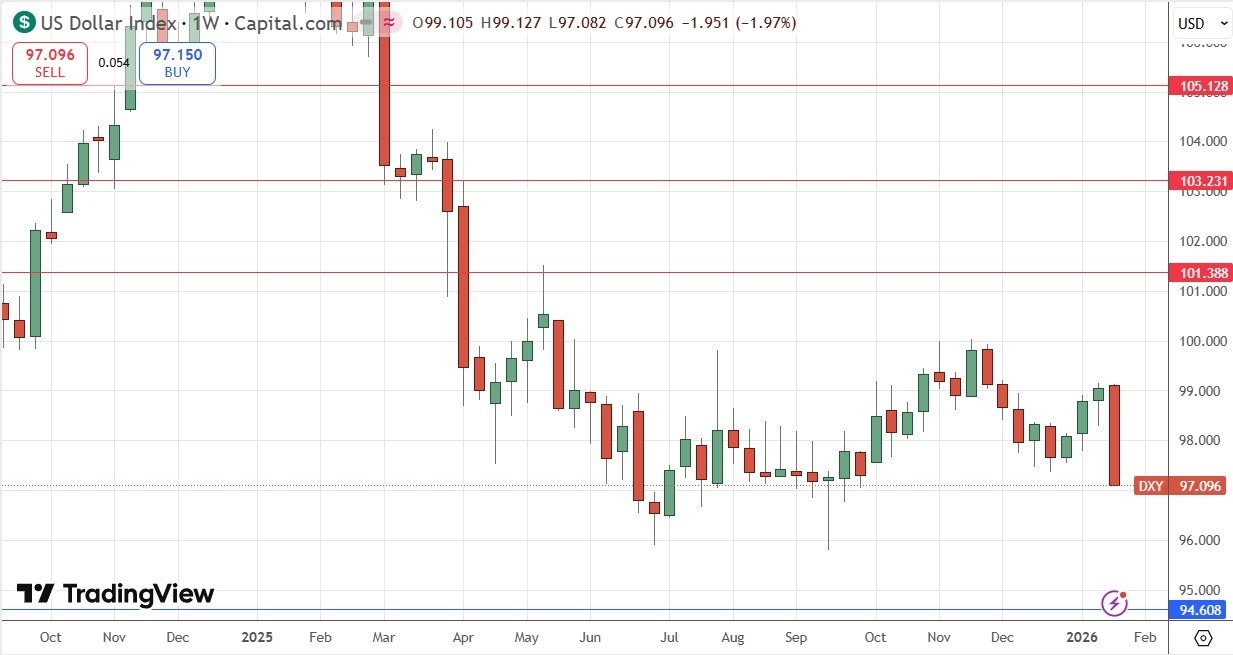
Last week, the US Dollar Index printed another bearish candlestick with only a minor lower wick. The price is still above its level of 13 weeks ago, but below its level of 26 weeks ago, so by my preferred metric, I declare the long-term bullish trend has failed. The price has also broken below a cluster of key support levels which had held for a long time, which I see as a very bearish sign for the greenback.

The Fed is cut its interest rate last week by 0.25% as was widely expected. However, the outlook for further rate cuts over the coming two years looks very slight. It is interesting that the market is shaking that off, which would normally put a bid into the Dollar, and continuing to sell it – that is a bearish sign.

I think being short of the US Dollar will be a generally good approach now, so over the coming week I will look for trades which fit that bias.

Weekly Forex Forecast – 14th to 19th December 2025 (Charts)

US Dollar Index Weekly Price Chart

The CHF/JPY currency cross weekly chart printed a powerful bullish candlestick that reached an all-time high price. This alone is a notably bullish sign but just look at the orderly ascending trend we have seen here since March this year, shown by the linear regression price channel study in the price chart below.

I usually ignore trends in currency crosses, but this is a powerful one. There are also good fundamental reasons why the Swiss Franc has been the strongest major currency over the long term, and the Japanese Yen has been the weakest.

The Swiss Franc has a zero interest rate but deflation, so the currency is naturally appreciating, while the Japanese Yen has been declining for a long time due to an ultra-loose monetary policy. However, that might change for the Yen soon, as the Bank of Japan is expected to hike rates this week, and might even begin a more aggressive and continuous round of hikes in 2026.

I will not be going long here myself, but it is something other trades might want to investigate and consider.

Weekly Forex Forecast – 14th to 19th December 2025 (Charts)

CHF/JPY Weekly Price Chart

The weekly price chart below shows that this major US stock index fell last week, after coming very close to breaking its record high just a few weeks ago. It closed at a record high closing price on Thursday, and then opened high on Friday and then fell sharply to print a bearish near pin-bar candlestick.

This is a bearish sign, which could well be dangerous to act upon. I am not advocating going short, but bulls should be worried, although it is clearly still a bull market.

I wrote a week or two ago that I was becoming more convinced that we have already seen a medium-term high in this stock market index, and this confirms my opinion. I think we are seeing a topping out which is likely to start some kind of retracement.

The Fed seems less and likely to make significant rate cuts in the foreseeable future, and there are strong and realistic concerns about an AI bubble and a general over-valuation of the stock market, so a bearish retracement cannot be a big surprise if it happens.

However, if we get a daily close with no significant upper wick on that day’s candle above the record high at 6,930, I will enter a new long trade.

Weekly Forex Forecast – 14th to 19th December 2025 (Charts)

S&P 500 Index Weekly Price Chart

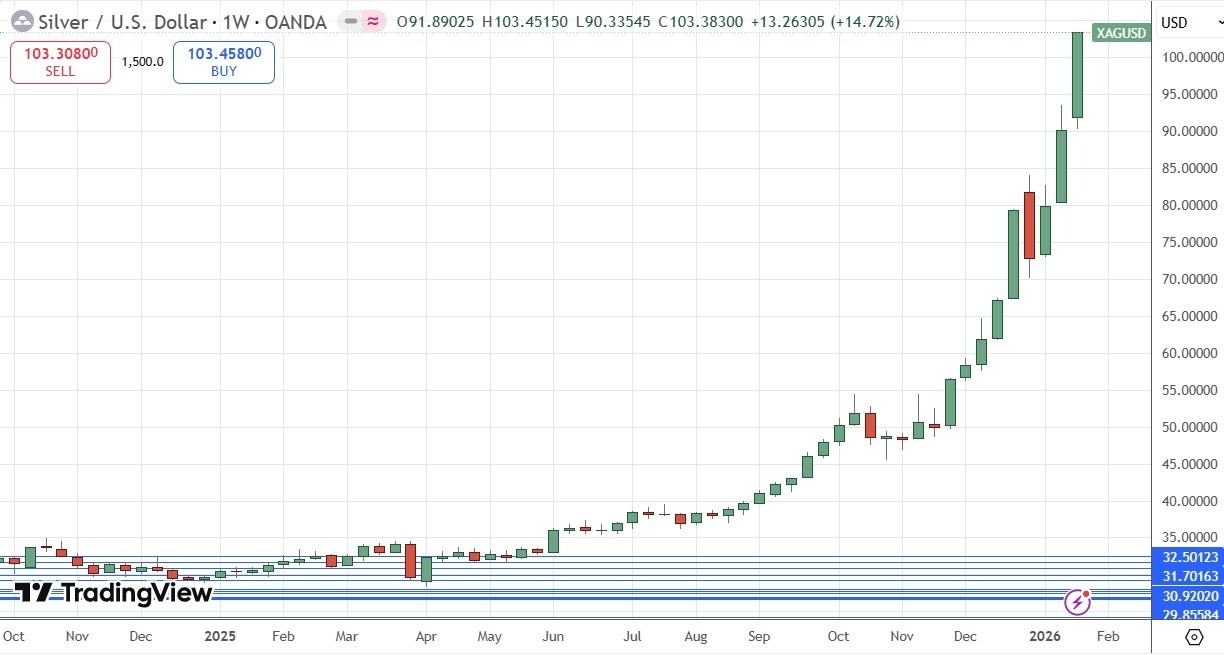
A few weeks / months ago, Silver was in a strong bullish trend which saw the price increase by about 50% in only two months. The rise peaked in October and saw quite a strong retracement, which is usually a sign that the price is not going to make new highs soon. This bearish outlook was reinforced by what seemed to be a bearish double top formed just four weeks ago. However, the price has come up again and then made a very strong bullish breakout with an unusually large move.

We saw a further gain last week as the bullish momentum continued. Volatility is high and the moves can be messy but it’s a bullish breakout that continues to advance.

Another bullish factor is that all the major precious metals rose in value last week, although there is no doubt the Silver is leading the way.

Due to the high volatility and “second bite” breakout, as well as the significant upper wick on the weekly candlestick, I think a half-sized long position is best here, and only after we see a new record high daily close at or above $63.57.

Weekly Forex Forecast – 14th to 19th December 2025 (Charts)

Silver Weekly Price Chart

All precious metals have been rising as an asset class, partly fueled by Fed policies and the declining Dollar, partly due to safe haven inflow.

Silver has clearly been leading the way, but this past week has seen Gold start to catch up with a minor bullish breakout beyond the $4,270 area.

The record high above $4,300 is now in sight, but Gold formed a pin bar on Friday which puts some doubt into whether it will retest or even exceed its record high which it made in October.

I will keep a close eye on Gold and enter a new long trade if we get a daily close above the record high, at or above $4,355.80.

If this long trade sets up, as the progress upwards has been steadier and more orderly than what we have seen in Silver, you might keep a normal position size. I will prefer to use half my normal position size.

Weekly Forex Forecast – 14th to 19th December 2025 (Charts)

Gold Weekly Price Chart

I see the best trades this week as:

  1. Long of the S&P 500 Index following a daily close above 6,920.
  2. Long of Silver with half the normal position size following a daily close above $63.57.
  3. Long of Gold with half the normal position size following a daily close above $4,355.80.

Ready to trade our weekly Forex forecast? Check out our compilation of the top 100 Forex brokers in the world.

Source link

Go to Top