The main category of Forex News.
You can use the search box below to find what you need.
[wd_asp id=1]
The main category of Forex News.
You can use the search box below to find what you need.
[wd_asp id=1]
XAU/USD trades with modest losses mid-Wednesday, confined to a tight intraday range. The pair briefly dipped below the $2,500 mark, but continued pressure on the US Dollar helped it trim intraday losses.
Investors await fresh clues from the Federal Open Market Committee (FOMC) Minutes. The Federal Reserve (Fed) met on July 31 and surprised market players with a more dovish tone, as officials showed fewer concerns about inflation and shifted the focus to the employment sector, acknowledging it has been loosening. Chairman Jerome Powell noted in the following press conference that a September rate cut was “on the table,” something the Minutes should somehow confirm.
In the meantime, a revision of Nonfarm Payrolls (NFP) showed the US economy created 818K fewer jobs than originally reported in the twelve months to March 2024, according to the Bureau of Labor Statistics. The actual job growth was then roughly 30% less than initially reported. The news further supported the case of an upcoming interest rate cut, maintaining the USD on the losing side.
The daily chart for XAU/USD shows the pair holds above all its moving averages, with a bullish 20 Simple Moving Average (SMA) accelerating north at around $2,440, while above also bullish longer ones. Technical indicators, in the meantime, lack directional strength but remain well above their midlines, limiting the chances of a downward movement.
In the near term, and according to the 4-hour chart, the corrective slide continues. XAU/USD is currently battling a bullish 20 SMA, while the 100 and 200 SMA gained upward traction far below the current level. Finally, technical indicators edged marginally lower, with the Momentum indicator approaching its 100 line. The overall picture is not enough to suggest a steeper decline ahead, although a clear break below the $2,500 mark following FOMC Minutes could open the door for a corrective extension in the upcoming sessions.
Support levels: 2,496.40 2,485.10 2,427.20
Resistance levels: 2,510.00 2,523.50 2,535.00
According to experts at Capital Economics: “The US dollar remains on the defensive as calm has quickly been restored in financial markets.”
The GBP/USD currency pair is particularly sensitive to global investor sentiment, tending to fall when markets are in “risk-off” mode and tending to rise when investor animal spirits are high. According to analysts, last week’s US economic data provided renewed support for a “soft landing” scenario, where the economy avoids a major and prolonged slowdown, aided by low inflation and low interest rates from central banks.
Commenting on the performance of the currency pair and the markets, Ruta Briskinet, Senior Forex Analyst at Convera, said: “The pound continues to benefit from the bearish outlook for the US dollar, especially given its strong performance this year. The pound is currently up around 2.0% year-to-date against the US dollar, making it the biggest winner among G10 currencies.”
Therefore, the immediate risk to GBP/USD is the Federal Reserve’s annual Jackson Hole conference in Kansas City, where Fed Chairman Powell is set to deliver a keynote speech on Friday. Analysts feel that while he may take a gloomy view on recent speculation of a 50bp rate cut in September, the overall message is likely to reassure market participants looking for confirmation that policy rate cuts are now imminent. As such, the USD may remain under pressure in the near term, although given how much the Fed has already discounted easing, we doubt there is further USD weakness ahead.
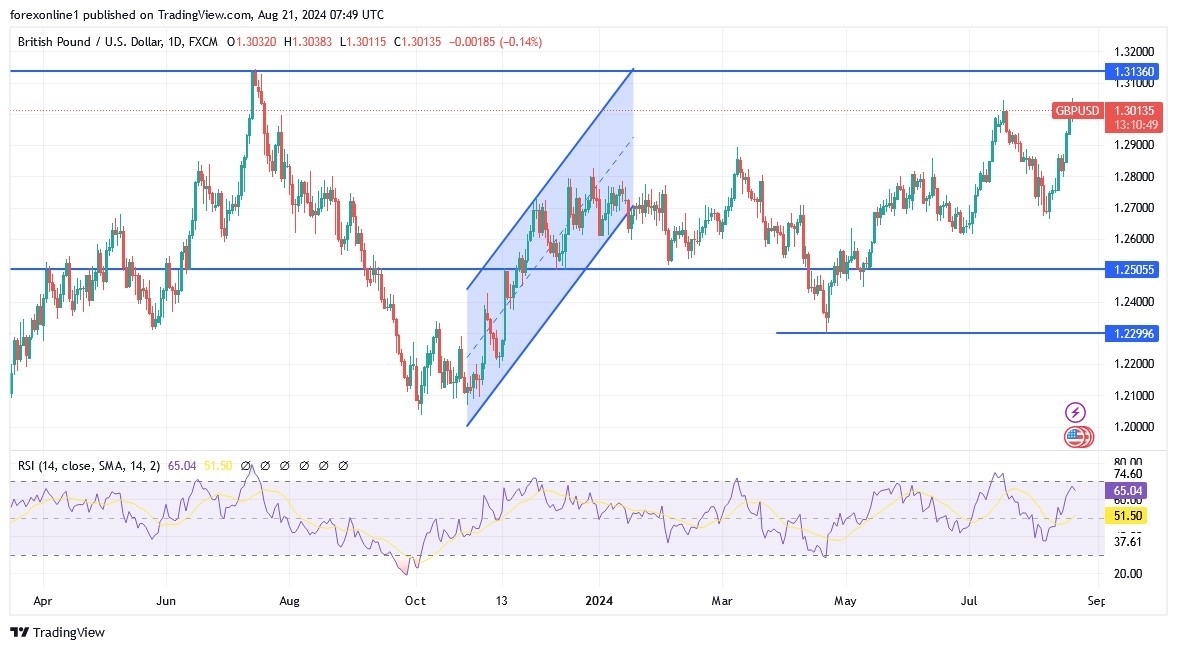
If this assessment holds true, GBP/USD could soon face resistance near its 2024 highs near 1.3130.
A more moderate market backdrop will be a key factor in determining the future performance of the pound, ensuring that any pullbacks are likely to be shallow. If the new calm persists, carry trade may re-emerge, and crucially, a return of carry trade would be supportive of the pound, as analysts believe this is the main driver behind its superior performance in 2024. Carry trade is where investors borrow in a low-interest-rate currency to invest in assets that carry higher interest rates, such as UK bonds. Consequently, this creates inflows that support the pound.
According to economists, US bond yields have weakened, and the dollar has retreated as traders bet that Powell will acknowledge a continued shift in the balance of risks facing the US economy, suggesting that the restrictive policy settings are no longer appropriate, and opening the door for an imminent easing decision. However, they do not believe that Jackson Hole will be the catalyst for the next phase of the rally. Analysts explain: “Fed Chair Powell is unlikely to put the Fed on a more aggressive easing path without sustained evidence of a turnaround in growth and employment, and investors may find themselves frustrated by the substance of his remarks.”

Based on the performance on the daily chart attached, the recent gains in the GBP/USD price are enough to push some technical indicators towards strong overbought levels. If the USD gains strong momentum from the announcement of the minutes of the last meeting of the US Federal Reserve today and the statements of the bank’s governor at the end of the week, the currency pair may be exposed to strong selling operations to take profits. Finally, we still prefer to sell the GBP/USD from every upward level and the closest resistance levels currently are 1.3085, 1.3120 and 1.3200 respectively.
Ready to trade our daily Forex analysis? We’ve made this UK forex brokers list for you to check out.
Silver price (XAG/USD) trades in a tight range below the psychological resistance of $30.00, with investors focusing on the Federal Open Market Committee (FOMC) minutes for the July monetary policy, which will be published at 18:00 GMT.
Investors await the FOMC minutes release as it will provide fresh cues about the interest rate path this year. In the July meeting, the Fed left interest rates unchanged in the range of 5.25%-5.50% but assured that policymakers are prepared to adjust the monetary policy stance in case risks emerge that could delay the attainment of banks’ goals, such as inflation at 2% along with the maintenance of full employment.
Ahead of the FOMC minutes, the US Dollar (USD) exhibits a subdued performance and remains near seven-month lows. The US Dollar Index (DXY), which tracks the Greenback’s value against six major currencies, hovers near 101.40. 10-year US Treasury yields decline to near 3.80%. Lower yields on interest-bearing assets reduce the opportunity cost of holding an investment in non-yielding assets, such as Silver.
This week, the US Dollar is expected to remain volatile as Fed Chair Jerome Powell is scheduled to speak at the Jackson Hole (JH) Symposium on Friday. Fed Powell would indicate how much the central bank could cut interest rates this year.
Silver price delivers a bullish reversal as a decisive break above August 2 high of $29.20 has faltered the lower high lower low formation on a four-hour timeframe. An upward-sloping 20-period Exponential Moving Average (EMA) near $29.20 is expected to act as a cushion for Silver price bulls.
The 14-period Relative Strength Index (RSI) falls to near 60.00, suggesting that the bullish momentum has concluded for now. However, the bullish bias remains intact.
Silver is a precious metal highly traded among investors. It has been historically used as a store of value and a medium of exchange. Although less popular than Gold, traders may turn to Silver to diversify their investment portfolio, for its intrinsic value or as a potential hedge during high-inflation periods. Investors can buy physical Silver, in coins or in bars, or trade it through vehicles such as Exchange Traded Funds, which track its price on international markets.
Silver prices can move due to a wide range of factors. Geopolitical instability or fears of a deep recession can make Silver price escalate due to its safe-haven status, although to a lesser extent than Gold’s. As a yieldless asset, Silver tends to rise with lower interest rates. Its moves also depend on how the US Dollar (USD) behaves as the asset is priced in dollars (XAG/USD). A strong Dollar tends to keep the price of Silver at bay, whereas a weaker Dollar is likely to propel prices up. Other factors such as investment demand, mining supply – Silver is much more abundant than Gold – and recycling rates can also affect prices.
Silver is widely used in industry, particularly in sectors such as electronics or solar energy, as it has one of the highest electric conductivity of all metals – more than Copper and Gold. A surge in demand can increase prices, while a decline tends to lower them. Dynamics in the US, Chinese and Indian economies can also contribute to price swings: for the US and particularly China, their big industrial sectors use Silver in various processes; in India, consumers’ demand for the precious metal for jewellery also plays a key role in setting prices.
Silver prices tend to follow Gold’s moves. When Gold prices rise, Silver typically follows suit, as their status as safe-haven assets is similar. The Gold/Silver ratio, which shows the number of ounces of Silver needed to equal the value of one ounce of Gold, may help to determine the relative valuation between both metals. Some investors may consider a high ratio as an indicator that Silver is undervalued, or Gold is overvalued. On the contrary, a low ratio might suggest that Gold is undervalued relative to Silver.
In Japan, data earlier this week showed that machinery orders, an indicator of capital spending, rose 2.1% month-on-month in June, exceeding expectations of a 1.1% increase. Data released last week also showed that the country’s economy expanded 0.8% on a quarterly basis in the second quarter, reversing a contraction of 0.6% in the first quarter and exceeding expectations of 0.5%.
On an annual basis, Japan’s economy grew 3.1% in the second quarter, reversing from a 2.3% decline in the first quarter and beating expectations of 2.1%. Now, markets are looking ahead to domestic inflation figures later this week for clarity on the Bank of Japan’s monetary policy path.
On the stock trading front, U.S. stocks ended a choppy session lower on Tuesday as investors awaited signals from the Federal Reserve on future U.S. interest rate cuts. The S&P 500 and Nasdaq 100 ended an eight-day rally, closing down 0.2% each, while the Dow Jones Industrial Average lost 61 points.
Meanwhile, the volatility has been on the rise ahead of the upcoming Jackson Hole symposium and the release of the Fed’s latest policy meeting minutes, which could provide clues on the potential size of the U.S. interest rate cut expected in September. Overall, energy and materials stocks were among the worst performers, while health and consumer staples posted the biggest gains. In corporate news, Lowe’s shares fell 1.2% after it missed revenue expectations and cut earnings forecasts, despite beating second-quarter earnings estimates. Also, Boeing shares fell 4.2% after grounding its 777X test fleet due to structural cracks. Meanwhile, Palo Alto Networks rose 7.1% on strong Q4 results and upbeat guidance, while Eli Lilly gained 3% after positive results for its weight-loss drug tripeptide.
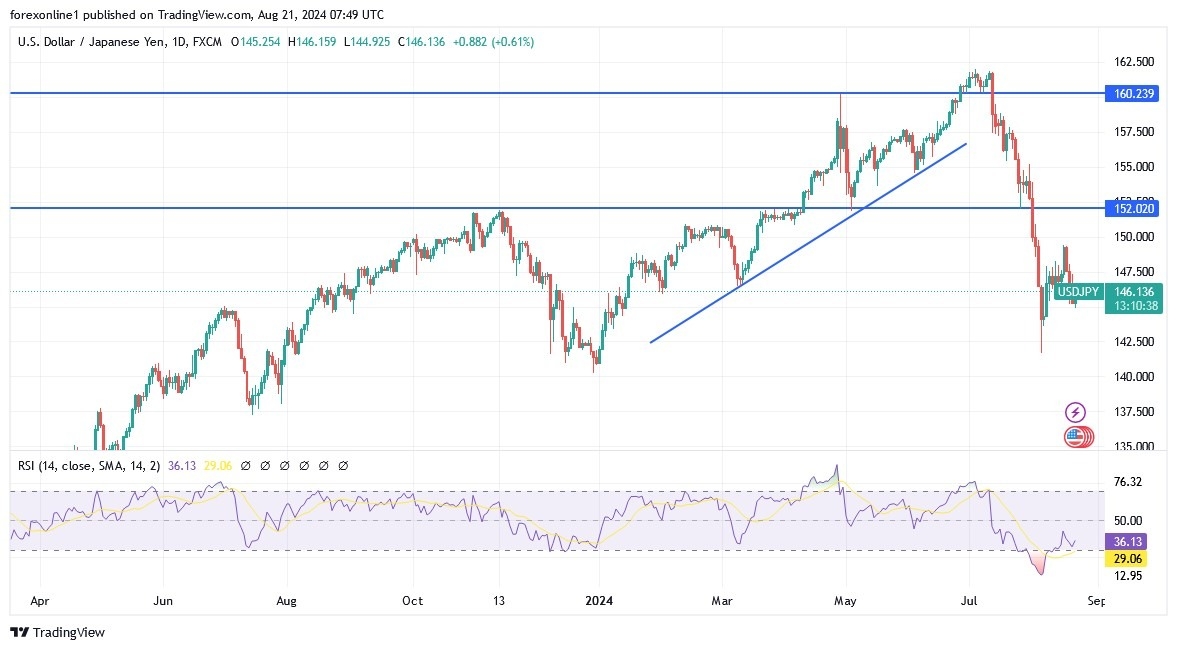
Based on the daily chart attached, the bearish trend in USD/JPY is strengthening and the next strong targets for the JPY are 143.50 and 142.00 respectively. From the latter level, it is best to think about buying the currency pair as moving towards it will move technical indicators towards strong oversold levels. On the other hand, the psychological resistance of 150.00 will remain the most important for the bulls to regain initial control over the trend. The currency pair will remain on its current path until the markets and investors react to the announcement of the minutes of the last meeting of the US Federal Reserve today, and then the statements of the bank’s governor, Jerome Powell, at the end of the week.
Ready to trade our Forex daily forecast? We’ve shortlisted the top forex brokers in the industry for you.
The EUR/USD pair keeps advancing on Wednesday, flirting with the December 2023 high at 1.1138 ahead of Wall Street’s opening. The US Dollar remains pressured despite a worsening market mood, as interest revolves around the September Federal Reserve (Fed) monetary policy meeting and whatever can influence policymakers’ decisions then.
Financial markets are “convinced” the Fed will trim interest rates when it meets next month, although it’s still unsure about the extension of such a cut. Most investors are betting for a 25 basis points (bps) trim, while the odds for a 50 bps cut stand at around 35%, according to the CME FedWatch Tool. As a result, US indexes rallied with optimism and stood near record highs while speculative interest abandoned the USD.
Markets turned cautious ahead of the Federal Open Market Committee (FOMC) meeting Minutes. The document will be released in the American afternoon but will likely have a limited impact on financial markets, given that the latest comments from Fed officials reinforced the idea of a September rate cut dropped by Fed’s Chairman Jerome Powell when the meeting took place.
The daily chart for the EUR/USD pair shows it trades around its daily opening, with technical indicators still heading higher within overbought levels. The Relative Strength Index (RSI) indicator, however, has partially lost its bullish strength, reflecting the ongoing corrective slide and still far from suggesting a downward correction. At the same time, the 20 Simple Moving Average (SMA) turned north almost vertically, reflecting buyers’ strength, but is now too far below the current level to become relevant.
In the near term, and according to the 4-hour chart, the risk is also skewed to the upside. Technical indicators have retreated from their recent highs but are far from suggesting an upcoming decline, as the Momentum indicator consolidates well above its 100 level while the RSI indicator aims marginally higher at around 76. Furthermore, all moving averages turned sharply bullish below the current level, which aligns with the dominant bullish trend.
Support levels: 1.1050 1.1020 1.0985
Resistance levels: 1.1090 1.1120 1.1160
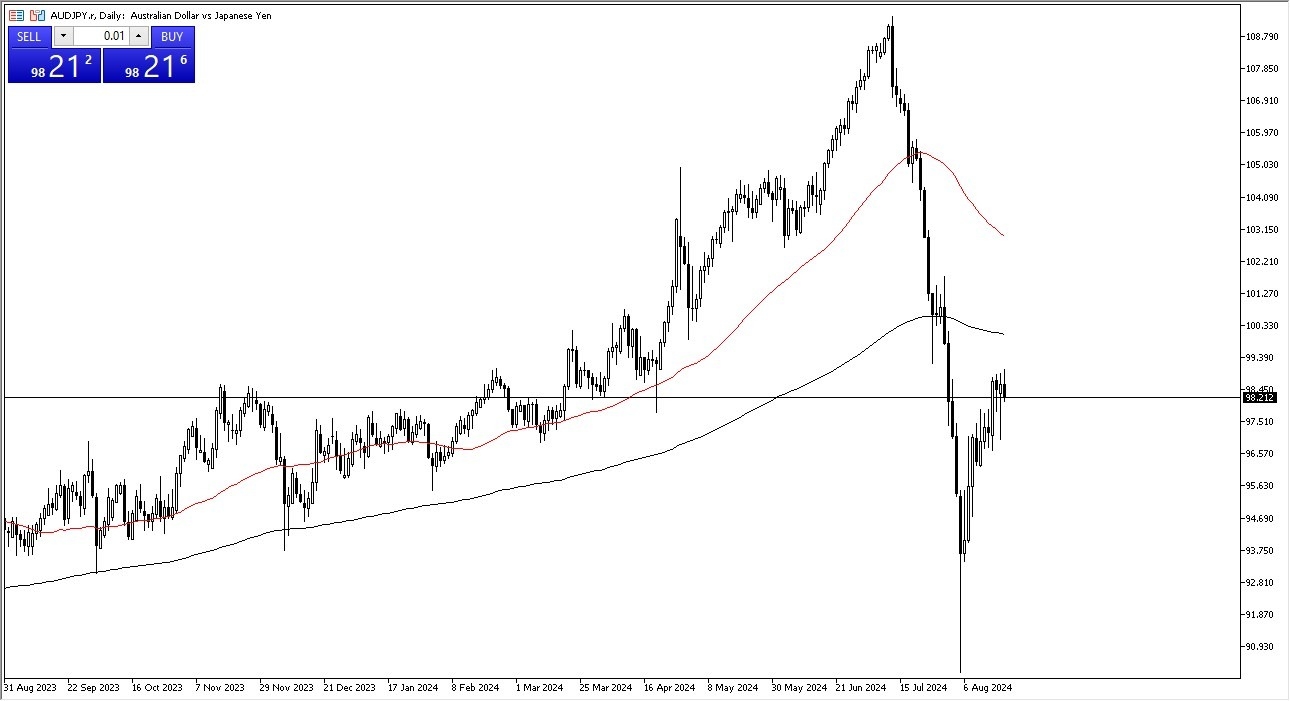
On the other hand, if we were to turn around and rally from here, we need to keep a close eye on the 200-Day EMA, which is near the ¥100 level, which in and of itself will attract a lot of attention as well. If we can break above there, then the market is likely to go much higher, perhaps reaching toward the ¥103 level. In general, this is a market that I think continues to be noisy, especially as there are a lot of questions asked about the overall risk appetite of traders around the world.
At this point, a lot of traders are starting to ask whether or not the carry trade is over. This involves borrowing Japanese yen and buying assets in other parts of the world as there are massive amounts of interest rate differentials out there that you can pick from, and of course Australia is one of the places that people go looking to in order to make money on the Japanese yen loans. By purchasing bonds that pay more, as long as the currency markets are relatively stable, this is a situation where people just simply “print money.”
The question now is whether or not the carry trade is over. Pay close attention to the overall monetary flows around the world, and you should also keep in mind that this is why JPY-related pairs all tend to move the same, because it’s all about the carry trade. In other words, you can watch other currency pair is to get a bit of a “heads up” as to where this market might go.
Ready to trade our daily Forex analysis? We’ve made a list of the best forex trading platforms for beginners worth trading with.
GBP/USD preserved its bullish momentum and advanced to its highest level since July 2023 at 1.3052 on Tuesday. The pair edges slightly lower in the European session on Wednesday but stays afloat above 1.3000.
The persistent selling pressure surrounding the US Dollar (USD) fuelled another leg higher in GBP/USD on Tuesday. Although Wall Street’s main indexes trades mixed after the opening bell, falling US Treasury bond yields forced the USD to stay on the back foot. Read more…
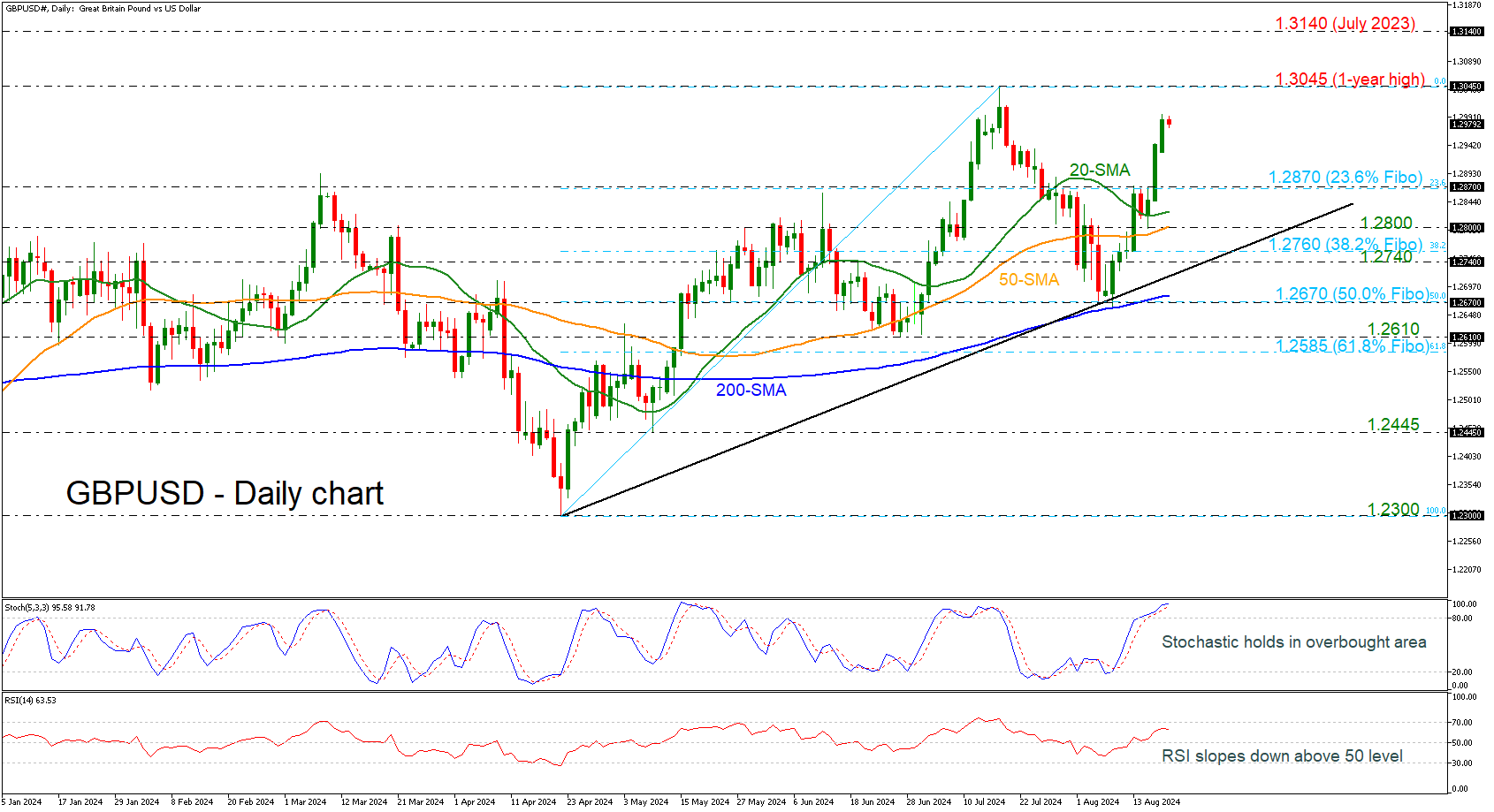
GBP/USD continues last week’s rebound off the 200-day SMA and the 50.0% Fibonacci retracement level of the up leg from 1.2300 to 1.3045 at 1.2670, but with some weakness today. The intraday bias looks neutral to negative, as the stochastic is still standing above the 80 level but is losing some steam, while the RSI, although above 50, seems to be making its way down.
If the pair manages to head higher, the one-year high of 1.3045 could serve as a trigger point for steeper bullish action. Further north, cable could run toward the 1.3140 level, a strong barrier from last year. Read more…
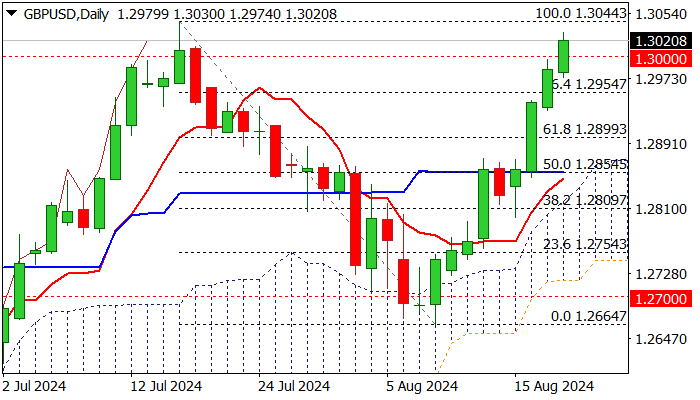
Cable broke above psychological 1.30 level on Tuesday (last probe above this barrier was on July 17/18). Rally from 1.2664 (Aug 8 low, where rising daily cloud contained previous downtrend and reversed direction) is steep and uninterrupted, holding for the second week.
Daily studies hold strong positive momentum and MA’s in bullish setup, suggesting that bulls hold grip for more gains. July peak at 1.3044 is under pressure, with firm break here to open way towards 2023 high at 1.3141. Read more…
The USD/JPY price analysis is slightly bullish as the dollar recovers ahead of the FOMC policy meeting minutes. At the same time, investors are speculating ahead of crucial speeches from top Fed and Bank of Japan policymakers.
-Are you interested in learning about the forex signals telegram group? Click here for details-
The US dollar has fallen since the beginning of the week as traders fully priced in a Fed rate cut at the September meeting. However, consumer inflation increased moderately in July, reducing bets of a 50-bps rate cut. Nevertheless, there is an over 70% chance of a smaller 25-bps cut.
Traders are on the edge, waiting to see whether policymakers will support this outlook. The FOMC minutes will show how officials decided to hold rates at the last meeting and their confidence levels with the progress on inflation.
Experts believe the market is highly dovish. Therefore, any signs that policymakers are less dovish could benefit the dollar. Powell will speak on Friday at the Jackson Hole symposium. Investors will listen keenly for hints on the size and pace of future rate cuts. If he sounds cautious or less dovish than expectations, it could trigger a rally in the dollar.
Meanwhile, Bank of Japan Governor Kazuo Ueda will also speak on Friday. Markets will wait to see if he signals another rate hike and supports the yen. A Reuters poll on Wednesday revealed that most economists expect the Bank of Japan to raise rates again this year.
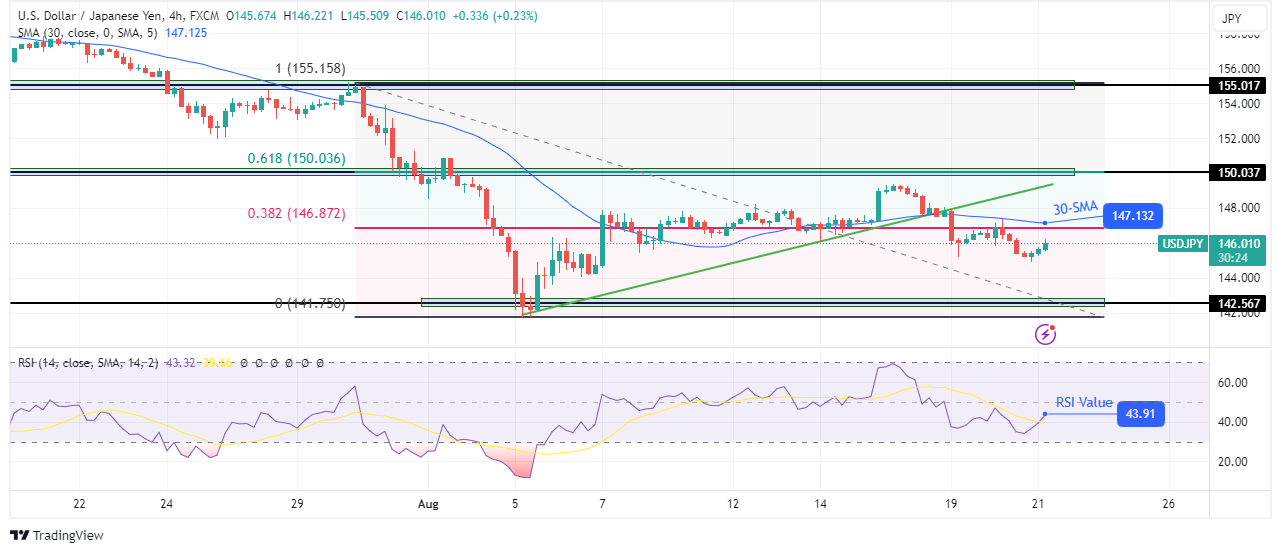
On the technical side, the USD/JPY price is recovering after making a new low. However, the bearish bias remains intact, with the price below the 30-SMA and the RSI under 50. Bears recently broke below the 0.382 Fib level.
-If you are interested in forex day trading then have a read of our guide to getting started-
The price is now trying to detach from this level but keeps pulling back. If bears regain momentum, USD/JPY will likely collapse to the 142.56 support level. On the other hand, if bulls take control with a break above the 30-SMA, the price might rally to the 150.03 resistance level.
Looking to trade forex now? Invest at eToro!
67% of retail investor accounts lose money when trading CFDs with this provider. You should consider whether you can afford to take the high risk of losing your money.
The EUR/USD forecast shows increased bullish momentum as the dollar extends its decline against the euro amid increased Fed rate cut expectations. The euro rose despite an ECB official calling for the central bank to cut rates in September.
-Are you interested in learning about the forex signals telegram group? Click here for details-
The euro has surged recently as investors fully priced in September’s first Fed rate cut. Initially, ECB policymakers had been more dovish than the Fed. Consequently, the ECB was among the first central banks to cut interest rates. Since then, policymakers have taken a cautious tone as inflation has stalled.
Meanwhile, Fed policymakers have gradually gained confidence that inflation will reach 2%. At the same time, markets are pricing a 50-bps or 25-bps rate cut in September. However, there is a higher chance the Fed will implement the smaller cut. The US economy has slowed down significantly. However, like last week’s retail sales report, there are still pockets of strength. Consequently, the Fed might opt for a more gradual pace of rate cuts.
Meanwhile, ECB’s Olli Rehn said on Tuesday that the central bank should cut rates in September due to the recent weakness in the Eurozone economy. He became one of the first officials to clearly guide the future. Economists believe the European Central Bank will cut rates in September and December.
Market participants eagerly await the Fed minutes for more guidance on the rate cut outlook. Furthermore, Powell’s speech on Friday will likely increase market volatility.
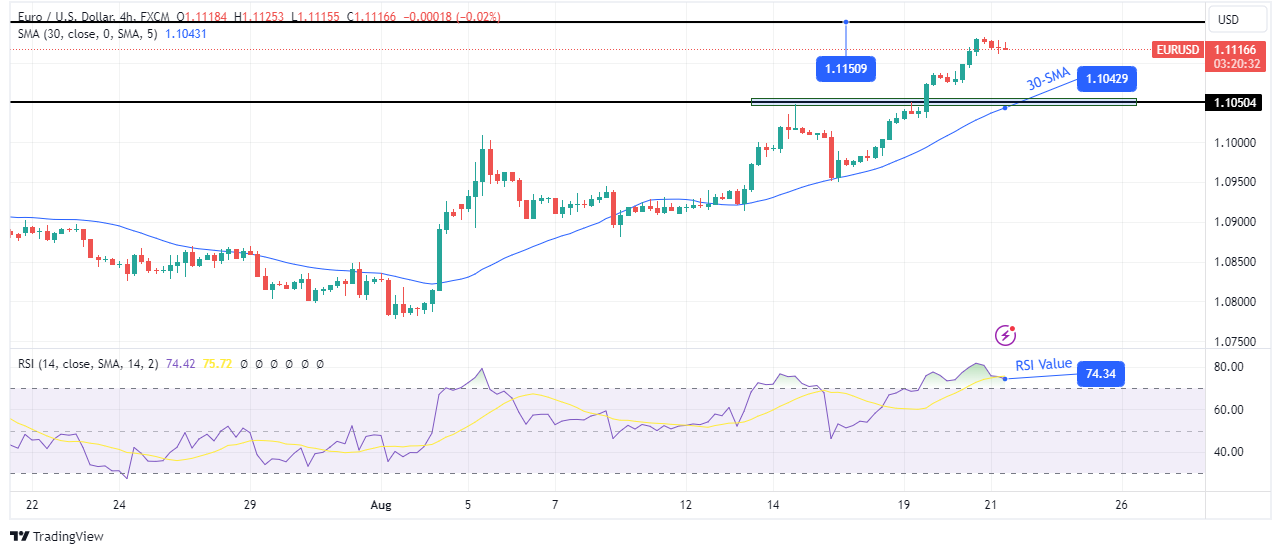
On the technical side, the EUR/USD price is in a well-developed bullish trend. The price has made a series of higher highs and lows. At the same time, it has respected the 30-SMA as support, bouncing higher every time it revisits the line. Meanwhile, the RSI trades in the overbought region, indicating massive bullish momentum.
-If you are interested in forex day trading then have a read of our guide to getting started-
The price recently broke above the 1.1050 resistance level. Bulls are now eyeing the next hurdle at the 1.1150 level. However, the price has been on a solid move without pausing. Therefore, bears might soon overpower bulls to retest the 30-SMA before the uptrend continues.
Looking to trade forex now? Invest at eToro!
67% of retail investor accounts lose money when trading CFDs with this provider. You should consider whether you can afford to take the high risk of losing your money.
The USD/JPY pair shows some resilience below the 145.00 psychological mark and staged a goodish intraday recovery from a two-week low touched earlier this Wednesday. Spot prices, for now, seem to have snapped a three-day losing streak, albeit struggled to capitalize on the move and remained below the 146.00 mark through the first half of the European session. The Japanese Yen (JPY) started losing traction after data released earlier today showed that Japan’s trade deficit ballooned to ¥621.84 billion in July amid disruptions in manufacturing output that led to a smaller-than-expected rise in exports. This overshadowed a 16.6% jump in imports, which pointed to improving domestic demand.
Furthermore, the political uncertainty fueled by Japanese Prime Minister Fumio Kishida’s decision to step down could pause the Bank of Japan’s (BoJ) plan to raise interest rates. This further seems to undermine the JPY, which, along with a modest US Dollar (USD) rebound from its lowest level since January, acts as a tailwind for the USD/JPY pair. The USD uptick, meanwhile, could be attributed to some short-covering ahead of the July FOMC meeting minutes, due later today. Apart from this, Federal Reserve (Fed) Chair Jerome Powell’s speech at the Jackson Hole Symposium on Friday will be scrutinized for cues about the central bank’s rate cut path and some meaningful impetus.
In the meantime, growing acceptance that the Fed will begin its policy easing cycle soon amid cooling inflation should keep a lid on the attempted USD recovery and cap the USD/JPY pair. Fed Governor Michelle Bowman tried to temper expectations of a near-term rate cut and said that despite the recent progress, price growth levels remain well-elevated and still uncomfortably above the central bank’s 2% goal. The markets, however, are still pricing in just over a 70% chance that the US central bank will cut rates by 25 basis points (bps) in September. Moreover, a Reuters poll showed that a slim majority of economists expect the Fed to cut rates by 25 bps at each of the remaining three meetings of 2024.
The dovish outlook keeps the US Treasury bond yields depressed, which might hold the USD bulls from placing aggressive bets. Meanwhile, investors seem convinced that an improving macroeconomic environment in Japan should encourage the BoJ to raise interest rates again later this year. This, along with persistent geopolitical risks and a slight deterioration in the global risk sentiment, should help limit any meaningful JPY downfall. Hence, it will be prudent to wait for strong follow-through buying before confirming that the USD/JPY pair has bottomed out and positioning for any meaningful appreciating move in the near term.
From a technical perspective, this week’s breakdown below the 200-hour Simple Moving Average (SMA) and the USD/JPY pair’s inability to build on the intraday bounce beyond the 23.6% Fibonacci retracement level the recent fall since last Friday warrant caution for bulls. Moreover, oscillators on the daily chart are holding deep in negative territory and have also recovered from the oversold zone, suggesting that the path of least resistance for spot prices is to the downside.
Hence, any subsequent move up could face stiff resistance near the 146.65 region or the 38.2% Fibo. level. The momentum could extend further beyond the 147.00 mark, though is likely to remain capped near the 147.15 confluence hurdle – comprising the 50% Fibo. level, 100 and 200-hour SMAs. The latter should act as a key pivotal point, which if cleared decisively should pave the way for additional gains towards the 147.70 region, or the 61.8% Fibo. level, en route to the 148.00 round figure.
On the flip side, immediate support is pegged near the 145.45-145.40 area ahead of the 145.00 psychological mark. A convincing break below will be seen as a fresh trigger for bearish traders and drag the USD/JPY pair to the next relevant support near the 144.20-144.15 region. Some follow-through selling below the 144.00 round figure should pave the way for a slide towards the 143.60 intermediate support en route to the 143.00 mark.