
Green gold: Internet hype makes Japanese matcha tea a scarce commodity
Sina Schuldt/dpa (Symbolbild)

Thanks to a host of influencers, Japanese matcha tea has advanced from an insider tip to a trend – and is now becoming scarce and expensive.
No time? blue News summarizes for you
- There has been a lot of hype surrounding Japanese matcha tea in recent years. The demand for green tea is enormous.
- The hype surrounding matcha was triggered by online influencers, among others.
- The tea powder is sold out in many places, and large café chains also offer matcha drinks.
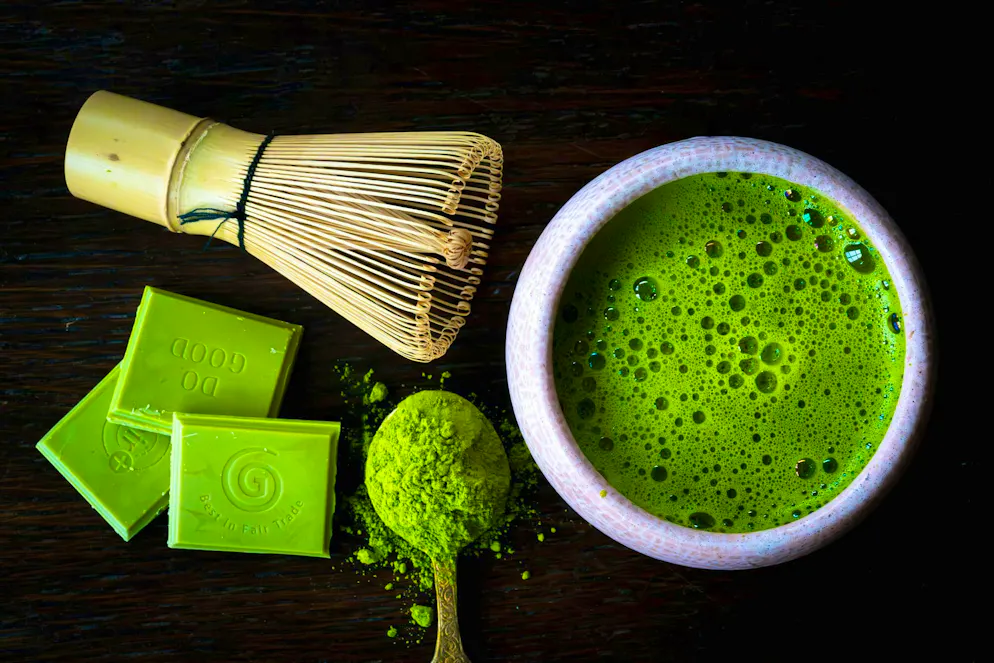
It is poisonous green, tastes like grass and is all the rage. “Iced matcha latte in particular is one of the drinks we sell the most,” says Anna, a sales assistant at a café in Berlin-Mitte. Driven by influencers, the global demand for the tea powder has risen to such an extent that farmers in Japan can no longer keep up with production. The purchase price for green tea has almost tripled within a year – matcha drinks are sold out in many places.
“Of our 25 varieties of matcha, 21 are sold out,” says Zach Mangan in Los Angeles, for example. The 40-year-old opened the “Kettl” teahouse on the famous Hollywood Boulevard in the US metropolis just this year. But even now he can no longer offer everything on the menu – there simply isn’t enough matcha powder.
Customers flock to the minimalist Japanese-style tea bar with its bamboo shelves and handmade pots. Matcha is available here with frothed milk or traditionally just stirred with hot water in a ceramic bowl. An expensive treat: a bowl of tea costs at least ten dollars (around CHF 8.00), 20 grams of powder for preparation at home between 25 and 150 dollars – if it is in stock at all.
Even more expensive because of Trump?
“One of the biggest challenges for us is telling customers that unfortunately we don’t have what they want,” says Mangan. “No matter what we try, there is simply nothing left to buy on the market.” Interest in matcha “has grown exponentially over the past ten years, but even more so in the last two to three years”.
This is also reflected in the price of matcha. It has almost tripled in Japan since last year, says Mangan. And he fears that tea could soon become even more expensive in the USA as a result of President Donald Trump’s planned tariffs of 24 percent on Japanese products.
Sina Schuldt/dpa (Symbolbild)
“We simply can’t keep up”
Thousands of kilometers away in Sayama, northwest of Tokyo, Masahiro Okutomi is overwhelmed by the demand. He is the 15th generation of his family to run the tea company. “I had to write on our website that we were no longer accepting matcha orders,” he says.
The production of the “green gold” is a complex process: the tea bushes are shaded for several weeks before harvesting to intensify the flavor and nutrients. Workers then carefully pluck the leaves by hand before they are dried and finely ground. “It takes years of practice” to make matcha properly, says Okutomi. “I’m happy that the world is interested in our matcha, but in the short term it’s almost a threat – we just can’t keep up.”
Exports doubled
The hype surrounding matcha was triggered by online influencers such as Andie Ella. The Frenchwoman has more than 600,000 subscribers on YouTube and now sells her own matcha products. She has just opened a pop-up store decorated in pastel pink in the trendy Tokyo district of Harajuku. Dozens of fans are waiting to take a photo with the 23-year-old or buy a tin of strawberry or white chocolate flavored matcha. “Matcha just looks great,” says Ella. “And the demand keeps growing.”
According to the Ministry of Agriculture, matcha accounted for more than half of the 8,798 tons of green tea exported by Japan in 2024 – twice as much as ten years ago. The Jugetsudo tea store in the touristy Tokyo district of Tsukiji is trying to keep control of its stocks in the face of rising demand. “We don’t sell large quantities to customers who we suspect of reselling the tea,” says store manager Shigehito Nishikida.
Matcha also at large café chains
“The hype has increased over the past two or three years,” reports Nishikida. “Customers now want to prepare matcha themselves, just like they see in the online media.” The invigorating, intense green tea has also long been available in café chains such as Starbucks.
Sales assistant Anna from a branch of the US coffee chain in Berlin suspects that the hype in Germany could also be due to the summer hit “Bauch, Beine, Po” by rapper Shirin David, which begins with the line “Iced Matcha Latte, too late for Pilates”. The trend has also spread via Instagram and Tiktok, Anna suspects. The 22-year-old now drinks matcha herself: “I found it took some getting used to at first, but now I like it.”











Share this article: