The main category of All News Articles.
You can use the search box below to find what you need.
[wd_asp id=1]
The main category of All News Articles.
You can use the search box below to find what you need.
[wd_asp id=1]
NEW YORK, Jan 8, 2026, 06:56 EST — Premarket
The United States Natural Gas Fund was flat at $11.78 in premarket trade, after jumping 4.4% on Wednesday. The ETF fell 3.0% on Tuesday as the gas market swung back and forth early in the new year. StockAnalysis
Benchmark Henry Hub natural gas was at $3.57 per million British thermal units (mmBtu), up 1.4% early Thursday, after trading between $3.55 and $3.63. The move comes with traders focused on fresh storage data rather than the last round of weather models. Businessinsider
UNG is built to mirror the day-to-day percentage moves in Henry Hub prices by holding short-dated natural gas futures, mainly on NYMEX and ICE. That structure can track fast moves closely, but it also means investors can get whipsawed when the fund rolls from one contract to the next.
Sprague Energy said the U.S. Energy Information Administration’s weekly storage report due later Thursday is expected to show a 108 billion cubic feet (Bcf) withdrawal for the week ended Jan. 2, versus a 40 Bcf pull a year ago and a five-year average draw of 66 Bcf. The firm also noted the February NYMEX contract settled at $3.350 on Tuesday after trading as low as $3.324. Sprague Energy
East Daley Analytics put the market’s expected withdrawal a bit higher, at 114 Bcf, and said that would leave inventories slightly above the newly recalculated five-year average while still below last year’s levels. The firm also flagged a dip in pipeline-sample volumes to an average 69.3 Bcf per day (bcfd) for the week ended Jan. 4, down 1.5% from the prior week. East Daley
The setup still looks two-sided. “Physical natural gas prices are crashing, with Henry Hub spot prices trading at a mere $2.86 per MMBtu,” Eli Rubin, an energy analyst at EBW Analytics Group, wrote in a report carried by Rigzone, while adding that “weather remains king.” Rubin also pointed to record LNG feedgas of 19.9 bcfd as a support point, but warned the February contract could slide toward $3.25 if warmth sticks. Rigzone
Moves in gas-linked equities were modest in early U.S. trading: EQT was up about 2%, Antero Resources gained about 1.8%, and LNG exporter Cheniere Energy added roughly 0.7%. Traders often treat the group as a higher-beta read on the same weather-and-storage tape that drives futures and UNG.
Weather remains the biggest unknown because it can change demand faster than production can. NOAA’s Climate Prediction Center said its Jan. 13–17 outlook starts with above-normal warmth across much of the Lower 48 before a colder trend shows up late in the period, a shift that can still leave net heating demand hard to pin down. Climate Prediction Center
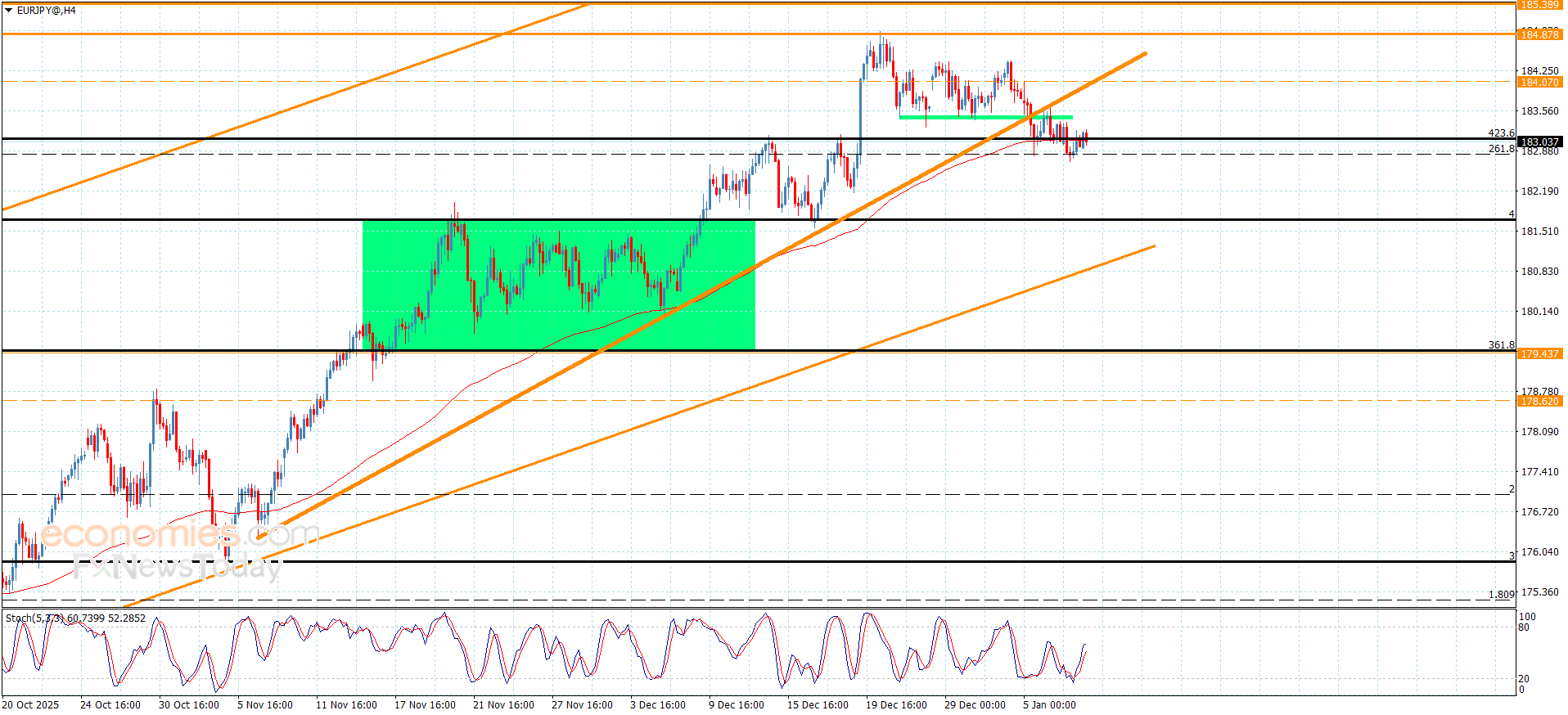
The EURJPY pair continued providing weak sideways trading, fluctuating near the extra support at 182.80, affected by the continuation of the main indicators besides forming extra obstacle at 183.50 level as appears in the above image.
Therefore, we will remain neutral until providing signal for detecting the main trend in the near and medium trading, while breaking the current support and providing negative close will confirm the bearish corrective trend, which might target 182.30 and 181.75 level initially, while breaching 183.50 level will ease the mission of detecting the bullish attempts, to expect its rally towards 183.85, to attack the broken channel’s support in order to find an exit for regaining the bullish trend again.
The expected trading range for today is between 182.80 and 183.50
Trend forecast: Neutral
The global dietary supplements market continues to demonstrate steady expansion, supported by changing health perceptions, preventive healthcare trends, and increasing interest in functional nutrition. According to MRFR analysis, the market was valued at USD 180.5 billion in 2024 and is expected to rise from USD 186.17 billion in 2025 to USD 253.7 billion by 2035, reflecting a compound annual growth rate (CAGR) of 3.14 percent during the forecast period. Growth is shaped by evolving consumer lifestyles, aging demographics, and expanded product availability across retail and digital channels. The rise in chronic lifestyle disorders and a proactive approach toward health management are also encouraging regular supplementation as part of daily routines.
“Request Free Sample” – Obtain a complimentary sample of our report to assess its quality and relevance to your requirements https://www.marketresearchfuture.com/sample_request/1134
Market Overview
Dietary supplements encompass vitamins, minerals, herbal extracts, amino acids, probiotics, and other bioactive compounds intended to enhance nutritional intake and support overall well-being. The industry is influenced by the increasing alignment between food, nutrition, and medicine, with consumers turning toward self-directed health management. The global trend toward preventive healthcare has particularly accelerated after the pandemic, prompting consumers to focus on immunity, energy, cognitive health, and digestive wellness. E-commerce expansion has further transformed availability and purchasing behavior, allowing brands to reach consumers directly with personalized offerings and subscription-based models. At the same time, regulations governing product safety and health claims are becoming more stringent, compelling manufacturers to enhance transparency, quality standards, and clinically backed formulations.
Key Players
The market landscape is moderately consolidated with several major multinational corporations and a broad base of regional and niche brands. Prominent companies active in the dietary supplements market include Abbott Laboratories, Amway, Bayer AG, Herbalife Nutrition, Pfizer Inc., Nature’s Bounty (The Bountiful Company), Glanbia Plc, Nestlé Health Science, DSM, and GNC Holdings. These players are engaged in continuous product innovation, expansion of distribution channels, acquisitions, and partnerships to reinforce their portfolios. The competitive strategy increasingly centers on specialized supplements targeting specific benefits such as joint health, immunity, women’s health, sports nutrition, and healthy aging, as well as on clean-label, organic, and plant-based formulations.
Driving Factor Trends
Multiple demand drivers are shaping the market outlook. Increasing awareness of micronutrient deficiencies, sedentary lifestyles, and stress-related disorders has elevated consumer reliance on supplemental nutrition. Rising incidences of obesity, diabetes, cardiovascular issues, and other lifestyle-associated diseases encourage individuals to adopt preventive measures instead of relying solely on clinical treatment. The aging global population is another significant catalyst, as seniors increasingly utilize supplements for bone strength, cognitive support, eye health, and overall vitality. Digital health trends, including fitness apps, wearable devices, and personalized nutrition platforms, also play an important role by educating consumers and recommending tailored supplement regimes. Additionally, natural and plant-based ingredient preferences are accelerating demand for herbal and botanical supplements, reflecting a broader shift toward clean and sustainable wellness solutions.
“Proceed to Buy” – Move forward with your purchase and gain instant access to the complete report https://www.marketresearchfuture.com/checkout?currency=one_user-USD&report_id=1134
Important Segment Analysis
The dietary supplements market can be segmented by ingredient type, product form, consumer group, and distribution channel. Vitamins and minerals continue to dominate due to their essential role in maintaining overall health, while botanical and herbal supplements are gaining momentum owing to consumer preference for natural remedies. In terms of form, tablets and capsules remain widely used because of convenience and accurate dosing, although powders, and liquid formulations are expanding rapidly-particularly among younger consumers and those seeking ease of consumption. Adult consumers represent the largest user group, but pediatric and geriatric segments are witnessing growing adoption as awareness of preventive nutrition spreads. Distribution is transitioning from traditional brick-and-mortar outlets to online platforms, with e-commerce emerging as one of the fastest-growing channels because of product variety, consumer reviews, and subscription replenishment options.
Regional Analysis
North America holds a significant share of the dietary supplements market, driven by high consumer spending power, strong wellness culture, and widespread retail and online availability. The United States in particular shows strong penetration of multivitamins, sports nutrition products, and personalized supplement programs. Europe follows with increasing adoption of natural and organic supplements, reinforced by regulatory frameworks that emphasize product quality and safety. The Asia-Pacific region is projected to witness the fastest growth during the forecast period. Factors such as rising disposable incomes, large young populations, rapidly expanding urbanization, and cultural familiarity with herbal and traditional remedies support this momentum. Countries including China, India, Japan, and South Korea are key contributors, with expanding nutraceutical manufacturing bases and growing acceptance of Western-style dietary supplementation. Latin America and the Middle East & Africa are gradually emerging markets, supported by evolving retail infrastructures and rising healthcare awareness.
“Browse Report” – Explore the report’s contents, sections, and key insights by browsing through its detailed information https://www.marketresearchfuture.com/reports/dietary-supplements-market-1134
Industry Development
The dietary supplements industry is experiencing meaningful transformation through research-driven innovation, personalization, and technological integration. Companies are increasingly investing in clinical studies, bioavailability enhancement technologies, and novel delivery systems such as microencapsulation to improve efficacy. Personalized nutrition-supported by genetic testing kits, microbiome analysis, and AI-driven health assessments-is reshaping product development and marketing strategies, enabling tailored supplementation programs rather than generalized formulations. Sustainability is becoming a central theme as manufacturers shift toward eco-friendly packaging, responsibly sourced ingredients, and transparent supply chains. Strategic mergers and acquisitions continue to reshape the competitive environment, allowing firms to expand portfolios and geographic reach. Moreover, collaborations between nutraceutical companies and pharmaceutical or wellness technology firms are blurring boundaries between conventional health care and consumer-led wellness, reinforcing the long-term growth trajectory of the dietary supplements market.
This overall outlook suggests that while growth is steady rather than explosive, the dietary supplements sector is positioned for resilience over 2025-2035, supported by preventive health priorities, innovation, and expanding access across global regions.
Discover More Research Reports on Food, Beverages & Nutrition By Market Research Future:
Hydroponics Market Research Report – Forecast till 2030 https://www.marketresearchfuture.com/reports/hydroponics-market-2453
Chia seeds Market Research Report – Forecast till 2030 https://www.marketresearchfuture.com/reports/chia-seeds-market-4299
Vanilla Market Research Report Forecast till 2030 https://www.marketresearchfuture.com/reports/vanilla-market-7806
Probiotics Market Research Report – Forecast till 2030 https://www.marketresearchfuture.com/reports/probiotics-market-966
Craft Beer Market Research Report – Forecast till 2030 https://www.marketresearchfuture.com/reports/craft-beer-market-973
Contact us:
Market Research Future (part of Wantstats Research and Media Private Limited),
99 Hudson Street,5Th Floor, New York, New York 10013, United States of America
Contact Number:
+1 (855) 661-4441 (US)
+44 1720 412 167 (UK)
+91 2269738890 (APAC)
Email: info@marketresearchfuture.com
About Market Research Future:
At Market Research Future (MRFR), we enable our customers to unravel the complexity of various industries through our Cooked Research Report (CRR), Half-Cooked Research Reports (HCRR), Raw Research Reports (3R), Continuous-Feed Research (CFR), and Market Research & Consulting Services.
MRFR team have supreme objective to provide the optimum quality market research and intelligence services to our clients. Our market research studies by products, services, technologies, applications, end users, and market players for global, regional, and country level market segments, enable our clients to see more, know more, and do more, which help to answer all their most important questions.
This release was published on openPR.
XRP began 2026 on a strong note but struggled to sustain its positive momentum over time. As of November 8, 2026, XRP has been weakening in the cryptocurrency market and trading below key levels. Ripple’s official cryptocurrency is down by more than 5% today and has experienced a 10.42% loss from its two-month high of $2.41 recorded on January 6, 2026. XRP’s price drop comes amid a 30-day streak of spot XRP ETF inflows above $1.25B and ahead of the revolutionary Market Structure bill, which will remove all regulatory uncertainties related to the digital asset.
XRP is trading at $2.15, reportedly falling below its key moving averages and immediate support levels. According to the latest market data, XRP’s decline below $2.20 is primarily due to weakening network activity and whale dumps exceeding 200 million tokens. WisdomTree, a global financial innovator known for pioneering fundamentally weighted Exchange-Traded Funds, has officially withdrawn its XRP ETF filing via SEC Rule 477 on January 6, 2026, further catalyzing the price drop. Considering XRP’s historical performance and long-term outlook, a surge beyond $10 appears highly speculative, while a more measured climb toward the $5–$8 range in 2026 seems more realistic.
According to the latest market data, XRP is in a short-term downtrend, with the digital asset’s candlestick chart showing a steady selling pressure driven by controlled profit-taking. XRP is mirroring the broader cryptocurrency market sentiment, as major assets such as BTC, ETH, SOL, and DOGE have all retreated below key support levels. XRP price today is $2.15, sliding below the $2.20 support level despite improved institutional interest and ETF inflows. XRP has closed in the green on 13 out of the past 30 sessions (43%), while the Fear and Greed Index currently stands at 28, signaling prevailing market fear. XRP’s immediate support level is identified at $2.12–$2.15, whereas it faces a strong resistance at $2.22–$2.27. A daily close above the resistance level could trigger bullish momentum and drive the digital asset price upward.
Despite the short-term bearish sentiment, XRP holders and investors are strongly backing up its long-term capabilities. Ripple is planning to expand and offer multiple services that center on XRP, which is likely to improve the digital asset adoption. Crypto and XRP analyst JackTheRipper claimed that XRP activity was heating up, stating that starting January 9, RealFi would allow all XRP payments to earn cashback, enabling users to pay with XRP and receive cashback in Real Token. He described the development as extremely bullish, adding that it could open access to a $600+ trillion global market through Real Token on the XRPL, a move he said could drive Real Token’s value sharply higher.
TheCryptoBasic reported that, amid XRP’s ongoing recovery, a prominent market analyst and Elliott Wave specialist had explained why he still believed a rally to $20 remained possible. The analyst noted that XRP began 2026 with a strong rebound, rising 22.59% in the first seven days, following a sharp 35% decline in Q4 2025 that had pushed the price below the key $2 level. He urged investors not to dismiss the possibility of XRP reaching $5 or even $20 during the current cycle, stating that his outlook was based on daily analysis of price movements and their alignment with a broader Elliott Wave structure. According to him, this broader perspective suggested that XRP was trading within an unusually tight range, a pattern that diverged from its historical price behavior.
XRP suffered a notable loss of around 5% in the second week of January, marking its first significant price drop in 2026. Despite the extended bearish sentiment, XRP’s recovery appears likely in the short term. According to the digital asset’s previous trend, XRP could target $2.35 if volume expands. XRP can recover from today’s loss if its price holds between $2.12–$2.15. A clean reclaim of over $2.22 barrier would confirm strength.
Here is the XRP price prediction for the next seven days.
| Date | Minimum | Average | Maximum |
|---|---|---|---|
| Jan 8 (Today) | $2.13 | $2.16 | $2.21 |
| Jan 9 | $2.17 | $2.29 | $2.32 |
| Jan 10 | $2.17 | $2.30 | $2.33 |
| Jan 11 | $2.17 | $2.32 | $2.36 |
| Jan 12 | $2.20 | $2.36 | $2.40 |
| Jan 13 | $2.20 | $2.36 | $2.40 |
| Jan 14 | $2.17 | $2.33 | $2.38 |
Disclaimer: XRP price prediction data is subject to change based on the market dynamics. The table is based on predictive modeling and should not be considered financial advice.
According to the price forecast, XRP can break above the $2.40 price point in the coming days, and the digital asset is expected to trade at an average price of $2.30. This trend shows that XRP will not break above the $3 psychological level before the Market Structure bill, which will be an additional boost for the digital asset.
Yes. XRP can break above $10 in 2026, but only if certain conditions are met and if there is an ideal regulatory environment. XRP’s market analysis and prior performances make it a realistic target. Industry experts believe that for XRP, 2026 will be a late bull or post-halving expansion phase. XRP could reach $10 if there is a strong bull market across crypto, massive XRPL usage growth, institutional adoption, and sustained trading above major resistance levels. Factors like weak macro liquidity, prolonged range-bound price action, and regulatory setbacks diminish the possibilities of breaking above $10.
Executive Summary
The global coffee market experienced dynamic shifts across 2025, influenced by weather disruptions in major producing regions, fluctuating global demand, evolving trade policies, and rising production costs. For the quarter ending September 2025, North America and Europe saw moderate to strong upward price trends driven by tight supplies from Brazil and Vietnam, while Asia-Pacific markets, particularly Vietnam, recorded softer prices due to abundant harvests and steady domestic supply. South America, especially Brazil, exhibited price volatility influenced by harvest cycles, regulatory shifts, and currency fluctuations.
The market’s trajectory reflects ongoing sensitivity to climatic events, logistics challenges, and macroeconomic factors. Price forecasts for Q4 2025 indicate a continued upward bias in North America and Europe, whereas APAC markets are expected to remain stable, with regional factors such as policy adjustments and export demand shaping pricing dynamics. Understanding these trends is critical for buyers, roasters, and traders seeking to navigate global supply chains efficiently.
◼ Get Instant Access to Live Coffee Prices Today: https://www.chemanalyst.com/ChemAnalyst/PricingForm?Product=Coffee
Introduction
Coffee remains one of the most widely consumed commodities globally, with complex pricing dynamics driven by supply-demand imbalances, production costs, trade flows, and consumer behavior. The global coffee market, spanning Arabica and Robusta varieties, reflects regional disparities in supply, climate impact, and consumer preferences.
In 2025, the market has been shaped by several pivotal factors: adverse weather events in key producing countries, policy and trade uncertainties, evolving consumer trends toward specialty and sustainable brews, and rising production and logistics costs. These factors have led to volatility in both spot and futures prices, compelling buyers to strategically manage procurement, anticipate cost trends, and monitor supply disruptions.
This article provides a detailed PR-style overview of coffee price movements and forecasts across global regions-North America, APAC, and Europe-covering quarterly changes, production costs, procurement behavior, logistics, and trade-flow impacts, with historical context from previous quarters.
Global Coffee Price Overview
Global coffee prices have reflected the tension between tightening supply in key producing regions and varying demand across consumer markets. Arabica, the premium variety, has been particularly sensitive to adverse weather in Brazil and Colombia, while Robusta, largely consumed in Asia and industrial blends, experienced price moderation in certain APAC regions amid robust harvests.
Global supply constraints in Brazil and Vietnam contributed to rising spot prices in North America and Europe.
APAC supply abundance, especially in Vietnam, has softened prices, though currency fluctuations, logistics costs, and policy shifts influenced export margins.
Cost pressures, including labor, transportation, fertilizer, and energy expenses, have elevated production costs across major exporting countries, impacting margins for roasters and distributors globally.
Spot prices in Q3 2025 have generally trended upward in North America and Europe, while APAC markets, particularly Vietnam, have experienced price moderation due to ample harvests. The dynamics of global trade, including regulatory and tariff impacts, continue to influence price discovery and procurement behavior.
◼ Monitor Real-Time Coffee Price Swings and Stay Ahead of Competitors: https://www.chemanalyst.com/Pricing-data/coffee-1604
Regional Analysis
North America
Quarterly Price Movements
The North American Coffee Price Index exhibited a moderate upward trend during Q3 2025. Specialty coffee brands faced increasing cost pressures, while commercial blends remained relatively stable. Robusta prices, though comparatively lower, also saw upward movement, reflecting higher demand for cost-effective blends.
September 2025 highlights:
Price increases were driven primarily by global supply disruptions, particularly in Brazil and Indonesia, where adverse weather and El Niño effects reduced output.
Lower inventories and higher import costs pushed up spot prices across North American markets.
Production and Cost Trends
Production costs remained elevated due to rising labor, transportation, and logistics expenses in key exporting regions.
North American roasters and distributors partially passed these higher costs onto consumers, impacting retail prices, especially for specialty brews.
Demand and Procurement Behavior
Consumer demand remained strong, supported by seasonal consumption, café expansion, and rising interest in premium and specialty coffee.
Price sensitivity, particularly among lower-income segments, may temper growth, prompting retailers to adjust pricing strategies to balance margins with affordability.
Logistics and Trade-Flow Impacts
Higher freight costs and potential weather-related supply disruptions have created near-term procurement risks.
Forward buying and strategic inventory management have become key tools for buyers to mitigate volatility and ensure consistent supply.
◼ Track Daily Coffee Price Updates and Strengthen Your Procurement Decisions: https://www.chemanalyst.com/ChemAnalyst/PricingForm?Product=Coffee
Historical Context
Q2 2025: Prices softened due to improved harvests in Brazil and Vietnam, easing futures markets and dampening speculative rallies.
Q1 2025: Constrained imports from Brazil and Colombia, coupled with adverse weather, created tight supply conditions and elevated prices.
Q4 2024: A severe drought in Brazil and weather disruptions in Colombia contributed to a sharp price increase in North America.
Asia-Pacific (APAC)
Quarterly Price Movements
The APAC Coffee Price Index, particularly in Vietnam, fell by 7.9% quarter-over-quarter in Q3 2025, with the average coffee price approximately USD 4,212/MT. Spot prices softened as regional supplies remained abundant and demand cooled.
September 2025 highlights:
Favorable monsoon conditions and larger harvests in Vietnam contributed to increased supply and exerted downward pressure on prices.
Export activity remained robust, though domestic consumption showed signs of softening.
Currency volatility and rising freight costs influenced export margins, elevating perceived price risks for buyers.
Production and Cost Trends
Producers faced pressure from rising energy, fertilizer, and logistics costs, narrowing profit margins and impacting pricing strategies.
Policy changes, including VAT adjustments and trade regulations, affected supplier flexibility and overall market sentiment.
Demand and Procurement Behavior
Export momentum remains strong due to international demand, although Europe’s softer import appetite and sustainability rules shaped trade flows.
Domestic consumption in APAC is moderating, prompting cautious procurement behavior.
Logistics and Trade-Flow Impacts
Freight costs and port congestion influenced delivery timelines and contributed to perceived price volatility for buyers.
Exporters leveraged abundant harvests to fulfill international contracts, but strategic shipping schedules accounted for currency and policy uncertainties.
Historical Context
Q2 2025: Vietnam experienced a two-phase price trend-April saw price upticks due to global supply concerns, followed by declines in May and June as new crop arrivals increased supply.
Q1 2025: India faced supply-side constraints from erratic rainfall and high temperatures, pushing prices upward amid strong global demand.
Q4 2024: Vietnam’s coffee harvest was disrupted by tropical storms, delaying collection and affecting quality, which contributed to elevated prices in APAC markets.
Europe
Quarterly Price Movements
Europe saw an increase in the Coffee Price Index during Q3 2025, driven by tight global supply and sustained demand across both at-home and out-of-home consumption channels. Specialty grades were particularly affected due to higher input costs, influencing retail pricing strategies.
September 2025 highlights:
Weather-related disruptions in major producing regions-including hail in Brazil and drought in Southeast Asia-reduced export volumes and pushed up spot prices.
Q4 2025 forecasts suggest a continued upward bias, particularly if adverse weather persists.
Production and Cost Trends
European roasters faced elevated production costs, particularly for specialty Arabica grades.
Logistics and labor costs in exporting countries contributed to tighter margins and higher retail pricing pressures.
Demand and Procurement Behavior
Strong seasonal consumption and café expansion supported demand, while price sensitivity among lower-income segments limited growth.
Buyers maintained a cautious approach, balancing forward procurement with spot market purchases to mitigate volatility.
Logistics and Trade-Flow Impacts
Supply-side bottlenecks, especially from Brazil and Vietnam, influenced import timelines.
Regulatory compliance, including deforestation-free sourcing rules, added complexity and potential cost to procurement strategies.
◼ Unlock Live Pricing Dashboards for Accurate and Timely Insights: https://www.chemanalyst.com/ChemAnalyst/PricingForm?Product=Coffee
Historical Context
Q2 2025: Imported coffee spot prices softened, reflecting improved global supply and moderation in speculative futures activity.
Q1 2025: Adverse weather in Brazil constrained supply, but European domestic demand remained steady.
Q4 2024: Severe droughts and rainfall disruptions in Brazil and Vietnam created tight supply conditions and elevated price volatility.
South America
South American coffee markets, particularly Brazil, showed high volatility throughout 2025. Q3 2025 saw a decline in the Coffee Price Index by 10.13% quarter-over-quarter, reflecting increased harvest output and oversupply.
September 2025 highlights:
Abundant harvests pressured prices despite ongoing weather-related risks.
Tariff policy shifts and currency volatility constrained demand, limiting price support.
Logistics bottlenecks and export delays kept prompt buyers cautious.
Historical Context
Q2 2025: Prices began high in April due to weather concerns but declined through May and June as harvest activity increased supply.
Q1 2025: Brazil experienced moderate price rises due to drought and El Niño effects impacting Arabica yields, while Robusta volumes rose.
Q4 2024: Drought conditions and El Niño effects stressed coffee crops, pushing prices higher, while logistical challenges further pressured supply chains.
Production and Cost Structure Insights
Global coffee production costs have trended upward in 2025 due to:
Labor costs: Wage increases in major exporting countries.
Transportation and logistics: Freight rates and port congestion elevated shipping costs.
Energy and fertilizer costs: Rising input costs in Brazil, Vietnam, and India impacted overall margins.
Regulatory compliance: Sustainability certifications and traceability requirements added overhead for exporters and importers.
These factors collectively influenced retail pricing, particularly for specialty and premium segments, while moderating pressures on commercial blends in cost-sensitive markets.
Procurement Outlook
North America and Europe: Buyers are expected to maintain a cautious procurement approach, balancing spot market purchases with forward contracts to hedge against potential supply disruptions and price volatility.
APAC: Procurement strategies are likely to focus on export timing, currency risk management, and policy considerations, particularly amid stable domestic supply.
South America: Buyers face risks from logistics delays, regulatory uncertainty, and currency volatility, necessitating proactive planning and flexible contracts.
Forward buying, staggered shipments, and supplier diversification remain key strategies to mitigate risks and optimize costs.
◼ Stay Updated Each Day with Verified Coffee Price Movements: https://www.chemanalyst.com/ChemAnalyst/PricingForm?Product=Coffee
FAQ
Q: Why did coffee prices rise in North America in September 2025?
A: Prices increased due to global supply disruptions in Brazil and Indonesia caused by adverse weather and El Niño effects, reducing inventories and pushing up import costs.
Q: Why did coffee prices decline in APAC during Q3 2025?
A: Favorable harvests in Vietnam increased supply, while domestic demand softened and export margins were influenced by currency and freight costs.
Q: What factors influenced European coffee prices in Q3 2025?
A: Weather-related disruptions in Brazil and Southeast Asia, combined with elevated production costs and sustained demand, drove price increases.
Q: How do production costs affect global coffee pricing?
A: Rising labor, energy, transportation, and regulatory compliance costs in exporting regions elevate the cost base for roasters and distributors, influencing retail prices.
Q: What is the forecast for coffee prices in Q4 2025?
A: North America and Europe are expected to see continued upward price trends, particularly if adverse weather persists. APAC markets are expected to remain relatively stable, influenced by export demand and policy shifts.
How ChemAnalyst Supports Coffee Buyers
ChemAnalyst provides real-time market intelligence and actionable insights for coffee buyers, traders, and procurement teams:
Real-time pricing updates: Track spot prices and historical trends across North America, APAC, Europe, and South America.
Price forecasts: Anticipate market movements and optimize procurement strategies to achieve cost savings.
Supply-chain intelligence: Monitor plant shutdowns, logistical bottlenecks, and regulatory changes that could disrupt supply.
Expert analysis: ChemAnalyst’s team of chemical engineers and market experts offer insights into the reasons behind price movements and supply-demand dynamics.
Global coverage: With offices in Houston, Cologne, and New Delhi, and presence in 50+ major trading ports, ChemAnalyst ensures comprehensive, on-the-ground information for global coffee markets.
Contact Us:
UNITED STATES
Call +1 3322586602
420 Lexington Avenue, Suite 300, New York, NY,
United States, 10170
Germany
Call +49-221-6505-8833
S-01, 2.floor, Subbelrather Straße,
15a Cologne, 50823, Germany
Email: sales@chemanalyst.com
LinkedIn: https://www.linkedin.com/company/chemanalyst/
Facebook: https://www.facebook.com/ChemAnalysts/
Twitter: https://x.com/chemanalysts
YouTube: https://www.youtube.com/@chemanalyst
Instagram: https://www.instagram.com/chemanalyst_
Website: https://www.chemanalyst.com/
About Us:
Welcome to ChemAnalyst, a next-generation platform for chemical and petrochemical intelligence where innovation meets practical insight. Recognized as “Product Innovator of the Year 2023” and ranked among the “Top 100 Digital Procurement Solutions Companies,” we lead the digital transformation of the global chemical sector. Our online platform helps companies handle price volatility with structured analysis, real-time pricing, and reliable news and deal updates from across the world. Tracking over 500 chemical prices in more than 40 countries becomes simple and efficient with us.
This release was published on openPR.
The EURJPY pair continued providing weak sideways trading, fluctuating near the extra support at 182.80, affected by the continuation of the main indicators besides forming extra obstacle at 183.50 level as appears in the above image.
Therefore, we will remain neutral until providing signal for detecting the main trend in the near and medium trading, while breaking the current support and providing negative close will confirm the bearish corrective trend, which might target 182.30 and 181.75 level initially, while breaching 183.50 level will ease the mission of detecting the bullish attempts, to expect its rally towards 183.85, to attack the broken channel’s support in order to find an exit for regaining the bullish trend again.
The expected trading range for today is between 182.80 and 183.50
Trend forecast: Neutral
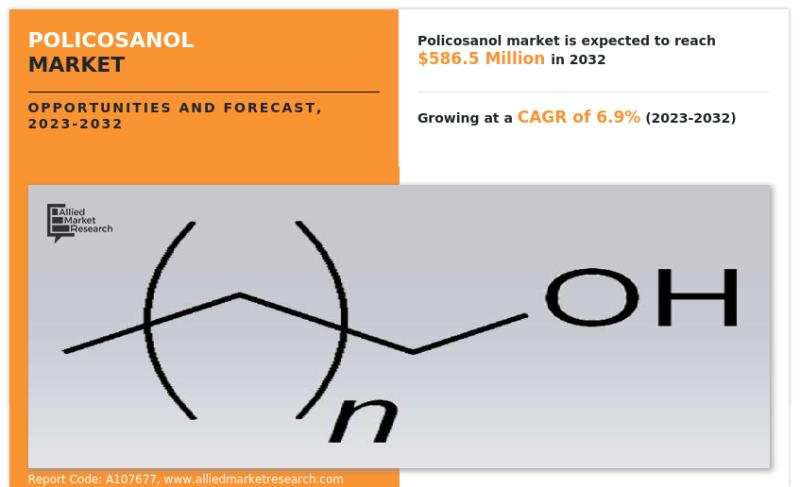
Allied Market Research has recently published a comprehensive report titled “Policosanol Market by Source (Sugarcane, Wheat Germ, Beeswax, and Others), by Application (Dietary Supplements, Pharmaceutical Drugs, Personal Care and Cosmetics, and Animal Feed): Global Opportunity Analysis and Industry Forecast, 2023-2032”. The report indicates that the policosanol market was valued at $301.0 million in 2022 and is estimated to reach $586.5 million by 2032, exhibiting a CAGR of 6.9% from 2023 to 2032.
Download Sample PDF : https://www.alliedmarketresearch.com/request-sample/A107677
Prime Growth Determinants:
The increasing emphasis on cardiovascular health among the aging population, coupled with a growing focus on preventive healthcare, drives the demand for policosanol. Known for its potential cholesterol-lowering and antiplatelet effects, policosanol is positioned as a preventive measure against heart disease and related conditions. Moreover, heightened awareness of policosanol through consumer education initiatives or marketing campaigns further contributes to market growth. However, the high costs associated with policosanol may pose a challenge to market expansion.
Key Highlights from the Report:
The report provides insights into current trends and the future scenario of the policosanol market from 2023 to 2032, identifying prevailing opportunities and potential investment pockets.
Market analysis is conducted in terms of both value ($Million) and volume (Kilotons), considering factors such as source, application, major regions, and over 15 countries.
The policosanol market is characterized by consolidation, with a few major players such as Manus Aktteva Biopharma LLP, Zxchem Group, Ambe Phytoextracts Pvt. Ltd., BOC Sciences, Huzhou Shengtao Biotech LLC, Botanic Healthcare, Bioriginal Food & Science Corp, Sabinsa, Sunpure Extracts Pvt Ltd., and Shreeji Pharma International holding significant market shares.
Purchase Enquiry Report @ https://www.alliedmarketresearch.com/purchase-enquiry/A107677
The report offers strategic planning and industry dynamics to aid decision-making for existing market players and new entrants in the policosanol industry.
Sugarcane Segment Leads the Way:
In terms of source, the sugarcane segment dominated the market in 2022, contributing to over two-fifths of the global policosanol market revenue. It is projected to maintain this lead with the highest CAGR of 7.2% during the forecast period. The demand for sugarcane is fueled by factors such as population growth, changes in consumer preferences, industrial uses, economic development, and the ongoing need for sugar as a food ingredient. Moreover, policosanol derived from sugarcane is recognized for its potential health benefits, particularly in supporting cardiovascular health by modulating cholesterol levels. This factor is expected to drive the demand for sugarcane-derived policosanol, particularly in medicinal applications.
Interested in Procuring this Report? Visit Here: https://www.alliedmarketresearch.com/policosanol-market/purchase-options
Pharmaceutical Drugs Segment Maintains Dominance:
Among applications, the pharmaceutical drugs segment held the largest share in 2022, contributing to nearly two-fifths of the global policosanol market revenue. The rising demand for pharmaceutical products and treatments, driven by factors such as aging populations, chronic diseases prevalence, and medical technology advancements, boosts the market for policosanol. Widely used to reduce LDL cholesterol and increase HDL cholesterol, policosanol finds extensive application in heart health. The dietary supplements segment is anticipated to register the highest CAGR of 7.3% during the forecast period.
Asia-Pacific Continues Dominance:
Regionally, Asia-Pacific led the market in 2022, accounting for nearly half of the global policosanol market revenue and is projected to register the highest CAGR of 7.5% during the forecast period. The Asia-Pacific policosanol market is anticipated to expand significantly, driven by countries like India, China, and Japan. The region’s growing pharmaceutical sector, where policosanol is predominantly used as an antioxidant and anticoagulant agent in drug formulations, contributes to its market growth.
Access Full Summary Report: https://www.alliedmarketresearch.com/policosanol-market-A107677
Leading Market Players:
Key market players such as Zxchem Group, Sabinsa, Sunpure Extracts Pvt Ltd., Bioriginal Food and Science Corp, Ambe Phytoextracts Pvt. Ltd., Manus Aktteva Biopharma LLP, BOC Sciences, Huzhou Shengtao Biotech LLC, Botanic Healthcare, and Shreeji Pharma International have been analyzed in detail in the report. The report provides valuable insights into their business performance, operating segments, product portfolio, and strategic moves, thereby showcasing the competitive landscape.
Contact Us:
1209 Orange Street,
Corporation Trust Center,
Wilmington, New Castle,
Delaware 19801 USA
Int’l: +1-503-894-6022
Toll Free: +1-800-792-5285
Fax: +1-800-792-5285
help@alliedmarketresearch.com
About Us
Allied Market Research (AMR) is a full-service market research and business-consulting wing of Allied Analytics LLP based in Portland, Oregon. Allied Market Research provides global enterprises as well as medium and small businesses with unmatched quality of “Market Research Reports” and “Business Intelligence Solutions.” AMR has a targeted view to provide business insights and consulting to assist its clients to make strategic business decisions and achieve sustainable growth in their respective market domain.
We are in professional corporate relations with various companies and this helps us in digging out market data that helps us generate accurate research data tables and confirms utmost accuracy in our market forecasting. Allied Market Research CEO Pawan Kumar is instrumental in inspiring and encouraging everyone associated with the company to maintain high quality of data and help clients in every way possible to achieve success. Each and every data presented in the reports published by us is extracted through primary interviews with top officials from leading companies of domain concerned. Our secondary data procurement methodology includes deep online and offline research and discussion with knowledgeable professionals and analysts in the industry.
This release was published on openPR.
Ethereum USD (ETHUSD) is trading at $3225.19 as of January 8, 2026, down 0.21% in the past 24 hours despite significant institutional developments. Morgan Stanley’s filing for a spot Ethereum ETF marks a major shift in how traditional finance approaches digital assets. The broader crypto market experienced a 3% decline in Ethereum, reflecting profit-taking after recent gains. Understanding why ETHUSD is moving requires examining both technical levels and the institutional catalyst reshaping demand patterns. Market data shows mixed signals between whale accumulation and smart money selling, creating a critical inflection point for price direction.
The 0.21% daily decline in ETHUSD appears counterintuitive given Morgan Stanley’s ETF filing, but market dynamics reveal a more nuanced picture. Profit-taking from recent rallies has created selling pressure at resistance levels near $3264.66. Institutional inflows from spot Ethereum ETFs have slowed to $2.8 billion in cumulative outflows since their October peak, suggesting consolidation rather than sustained buying.
Whale activity tells a different story. Large investors accumulated $4.83 million in spot Ethereum across 32 wallets during the past week, indicating confidence at current levels. However, smart money traders sold $8.9 million across 63 wallets in the same period, creating a tug-of-war between conviction buyers and profit-takers. This divergence explains why ETHUSD is consolidating rather than breaking decisively higher or lower.
The RSI at 53.65 indicates neutral momentum with room for upside movement before overbought conditions emerge. MACD shows a bearish signal with the histogram at 28.94, suggesting weakening momentum despite the positive crossover potential. ADX at 30.02 confirms a strong trend is developing, supporting the case for directional movement once consolidation ends.
Bollinger Bands reveal price positioning between the lower band at $2744.40 and upper band at $3295.01, with current price near the middle band at $3019.71. Support levels cluster around $3132.79 (day low), while resistance sits at $3264.66 (day high). The 50-day moving average at $3015.47 provides dynamic support, while the 200-day average at $3610.78 remains a longer-term resistance target.
Monthly Forecast: $2582.26 represents a 20% decline from current levels, reflecting worst-case scenarios if institutional demand falters. Quarterly Forecast: $3472.03 suggests a 7.6% gain, aligning with the $3450-$3500 supply zone identified in technical analysis. Yearly Forecast: $3721.34 implies 15.3% upside, supported by sustained ETF inflows and staking yield mechanisms.
The quarterly target appears most probable given current momentum and institutional positioning. Morgan Stanley’s ETF filing could accelerate the move toward $3500 if regulatory approval comes within weeks. Forecasts may change due to market conditions, regulations, or unexpected events.
Trading volume stands at $27.2 billion daily, down 13.6% from the 30-day average of $31.5 billion, indicating reduced conviction in either direction. This lower volume during a consolidation phase suggests traders are waiting for a catalyst to commit capital. The relative volume ratio of 0.0147 shows today’s activity is below average, typical of indecision periods.
Liquidation data reveals $438 million in XRP short liquidations occurred recently across the broader market, but Ethereum-specific liquidation pressure remains moderate. Long positions dominate the futures market, with open interest stable despite price weakness. This suggests leveraged traders are holding conviction bets on higher prices, reducing the risk of cascading liquidations that could accelerate declines.
Morgan Stanley’s filing for the Morgan Stanley Ethereum Trust represents the third crypto ETF filing from the investment banking giant in a single week. The fund will hold spot Ethereum and engage third-party staking services to generate additional passive yield, differentiating it from purely passive products. This structure appeals to conservative institutional investors who want exposure without speculation.
The timing matters significantly. With $1.8 trillion in assets under management, Morgan Stanley’s entry could unlock billions in new demand. Spot Ethereum ETFs have proven resilient, retaining 82% of their peak $15 billion inflows despite the October market crash. Fresh wallets created in the past 14 days added $2.34 billion in spot Ethereum, signaling threefold demand growth from new entrants. This institutional momentum supports the quarterly forecast of $3472.03.
Exchange reserves of Ethereum have declined significantly as investors prioritize staking and self-custody over immediate selling. BitMine’s $44,000 ETH staking commitment removes supply from circulation, amplifying the impact of new demand from ETFs and institutions. On-chain data shows large wallet accumulation in the $2700-$2768 and $3050-$3100 zones, confirming strategic positioning by sophisticated investors.
Staking yield mechanisms embedded in Morgan Stanley’s ETF filing create a structural advantage for Ethereum. Unlike Bitcoin, which generates no yield, Ethereum’s 3-4% annual staking returns attract yield-focused institutional capital. This economic moat widens as more supply locks into staking contracts, reducing float and increasing price sensitivity to demand shocks. The combination of supply constraints and yield generation positions ETHUSD for sustained institutional accumulation.
ETHUSD at $3225.19 reflects a critical inflection point where institutional adoption meets technical consolidation. The 0.21% daily decline masks significant structural changes reshaping Ethereum’s demand profile. Morgan Stanley’s ETF filing signals that traditional finance is moving beyond speculation toward systematic exposure, a shift that historically precedes major price appreciation cycles.
Technical analysis supports the quarterly forecast of $3472.03, with the $3450-$3500 zone representing the next meaningful resistance. RSI at 53.65 and ADX at 30.02 confirm momentum is building without yet reaching overbought extremes. Whale accumulation and staking commitments provide fundamental support, while smart money selling suggests caution about near-term rallies.
The key variable is regulatory approval timing for Morgan Stanley’s ETF. If the SEC approves within weeks, institutional capital flows could accelerate the move toward $3500. If approval delays, consolidation may extend through Q1 2026. Either scenario supports the yearly forecast of $3721.34, making ETHUSD a long-term accumulation opportunity for investors with conviction in institutional adoption. Market data shows conviction is building, even as short-term price action remains choppy.
Profit-taking from recent rallies created selling pressure at resistance levels. Smart money traders sold $8.9 million while whales accumulated $4.83 million, creating a consolidation pattern. Lower trading volume of $27.2 billion suggests traders are waiting for regulatory clarity on the ETF filing before committing fresh capital.
The quarterly forecast is $3472.03, representing a 7.6% gain from current levels. This aligns with the $3450-$3500 supply zone identified in technical analysis. The yearly forecast of $3721.34 suggests 15.3% upside if institutional demand sustains through 2026.
The filing signals institutional demand that could unlock billions in new capital. Combined with existing staking commitments like BitMine’s $44,000 ETH, supply constraints tighten. Spot Ethereum ETFs retained 82% of peak inflows despite October’s crash, proving institutional demand is resilient.
RSI at 53.65 shows neutral momentum with room for upside before overbought conditions. ADX at 30.02 confirms a strong trend is developing. Bollinger Bands position price near the middle band, supporting consolidation before the next directional move toward $3500.
Market data shows whale accumulation in the $3050-$3100 zone and staking commitments removing supply from circulation. The quarterly forecast of $3472.03 and yearly target of $3721.34 suggest favorable risk-reward for long-term investors, though short-term consolidation may persist.
Disclaimer:
Cryptocurrency markets are highly volatile. This content is for informational purposes only.
The Forecast Prediction Model is provided for informational purposes only and should not be considered financial advice.
Meyka AI PTY LTD provides market data and sentiment analysis, not financial advice.
Always do your own research and consider consulting a licensed financial advisor before making investment decisions.
Gold is nursing losses near $4,450 in Asian trading on Thursday, having suffered about a 1% correction from weekly highs of $4,500 on Wednesday. All eyes remain on the geopolitical developments and the incoming US jobless claims data for fresh trading directives.
Gold is on the defensive early Thursday, as markets assess the mixed US economic data published on Wednesday, while the US Dollar (USD) clings to recovery gains, exerting bearish pressures on the bright metal.
Data released by the Bureau of Labor Statistics (BLS) showed on Wednesday, Job Openings, a measure of labor demand, dropped 303,000 to 7.146 million by the last day of November, against expectations of a 7.6M figure.
The ADP report showed that private employment in the United States (US) increased by 41,000 jobs last month after a revised decrease of 29,000 in November. The market forecast was for a 47,000 growth.
Meanwhile, the Institute for Supply Management’s index of services rose 1.8 points to 54.4, the highest since October 2024, the group said Wednesday.
However, the downside in Gold remains cushioned as the bets for two US Federal Reserve (Fed) interest rate cuts appear intact following the latest data flow.
Markets continue to predict 61 basis points (bps) of rate cuts this year, according to data compiled by LSEG.
Additionally, China’s central bank extended its gold-buying streak to a 14th straight month in December, according to official data, providing some comfort to Gold buyers.
The main factor that could keep the ‘buy-the-dips’ trades intact for Gold is geopolitics. The focus is once again on the Greenland issue, with White House separately having confirmed discussions about acquiring Greenland, including potential military involvement.
This comes after Venezuelan President Nicolas Maduro’s capture over the weekend by the US forces.
Moreover, geopolitical tensions between China and Japan also grab attention after the former on Monday banned Japanese exports of dual-use items with potential military uses, citing national security concerns.
In response, Japan said that the ban imposed by China was “absolutely unacceptable and deeply regrettable”.
That being said, the next clear directional move in Gold hinges on Friday’s all-important US Nonfarm Payrolls report. The US labor data could offer fresh insights into the Fed’s easing trajectory for the year ahead, significantly impacting the Greenback and the non-yielding Gold.
In the daily chart, the 21-day Simple Moving Average (SMA) climbs above the 50-, 100-, and 200-day SMAs, with all slopes rising as price holds above them. This bullish alignment reinforces buyers’ control. The Relative Strength Index (RSI) prints 59.87, above the 50 midline, suggesting firm momentum without overbought conditions. The 21-day SMA at $4,373.77 offers initial dynamic support.
Holding above the medium- and long-term averages keeps the trend bias positive. A dip could find support at the 50-day SMA at $4,221.80, while the 100-day SMA at $4,008.18 underpins the broader trend. The 200-day SMA at $3,659.96 remains a distant floor. A close below the 21-day SMA would shift the tone toward consolidation, while sustained trade above these rising averages would leave the path open for further extension.
(The technical analysis of this story was written with the help of an AI tool)
Gold has played a key role in human’s history as it has been widely used as a store of value and medium of exchange. Currently, apart from its shine and usage for jewelry, the precious metal is widely seen as a safe-haven asset, meaning that it is considered a good investment during turbulent times. Gold is also widely seen as a hedge against inflation and against depreciating currencies as it doesn’t rely on any specific issuer or government.
Central banks are the biggest Gold holders. In their aim to support their currencies in turbulent times, central banks tend to diversify their reserves and buy Gold to improve the perceived strength of the economy and the currency. High Gold reserves can be a source of trust for a country’s solvency. Central banks added 1,136 tonnes of Gold worth around $70 billion to their reserves in 2022, according to data from the World Gold Council. This is the highest yearly purchase since records began. Central banks from emerging economies such as China, India and Turkey are quickly increasing their Gold reserves.
Gold has an inverse correlation with the US Dollar and US Treasuries, which are both major reserve and safe-haven assets. When the Dollar depreciates, Gold tends to rise, enabling investors and central banks to diversify their assets in turbulent times. Gold is also inversely correlated with risk assets. A rally in the stock market tends to weaken Gold price, while sell-offs in riskier markets tend to favor the precious metal.
The price can move due to a wide range of factors. Geopolitical instability or fears of a deep recession can quickly make Gold price escalate due to its safe-haven status. As a yield-less asset, Gold tends to rise with lower interest rates, while higher cost of money usually weighs down on the yellow metal. Still, most moves depend on how the US Dollar (USD) behaves as the asset is priced in dollars (XAU/USD). A strong Dollar tends to keep the price of Gold controlled, whereas a weaker Dollar is likely to push Gold prices up.
Image © Adobe Images
CIBC says the U.S. dollar is likely to weaken into the first half of 2026 before stabilising and recovering later in the year, describing its outlook as “U-shaped”.
The Canadian bank said “risks will push the USD lower in the next couple of quarters”, arguing that downside risks to the U.S. labour market and growth will outweigh any modest upside risks to inflation.
CIBC said unresolved questions over who ultimately bears the cost of tariffs are “stagflationary and should push USDs lower in the early months of 2026”.
How much are you sending from pounds to dollars?
Your potential USD savings on this GBP transfer:
$318
By using specialist providers vs high street banks
Compare GBP to USD Rates Now →
Free comparison • No commitment required • Takes 2 minutes
It warned that if firms absorb tariff costs, they may be forced to cut labour to protect margins, while if consumers pay, inflationary pressures would rise, both scenarios weighing on the dollar.
The bank also said uncertainty over Federal Reserve independence could be a major theme early next year, noting that “the appointment of the Federal Reserve Chair has yet to be decided”.
Legal challenges to Trump’s IEEPA tariffs could further undermine the greenback, with CIBC saying a ruling against them would likely trigger rallies in trade-sensitive currencies that would “mechanically lead to a weaker greenback”.
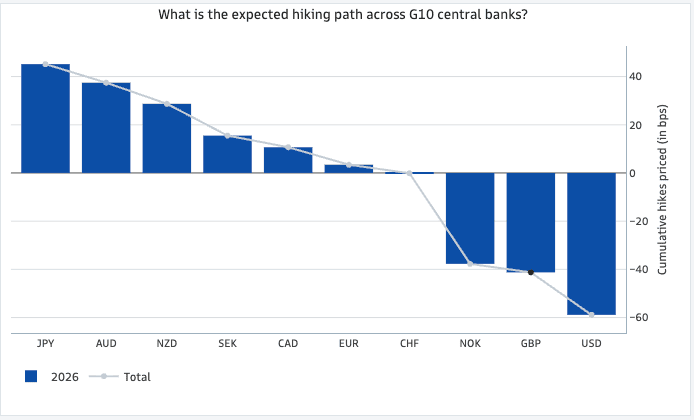
Above: Traders are betting the Fed will be the biggest cutter this year, underpinning a bearish USD consensus.
CIBC said these risks are front-loaded and “not long lasting”, arguing that markets will eventually conclude that expectations for U.S. interest rate cuts have gone too far.
The bank believes the Fed’s estimate of neutral interest rates is mispriced, saying “the true value is 50bps higher”, which should ultimately support the dollar later in 2026.
CIBC said it expects “an inflection point for the greenback to turn slightly higher” by mid-year, forecasting the dollar index to fall to 96.0 by the end of the second quarter before recovering to 97.30 by the end of 2026.
For the likes of EUR/USD and GBP/USD the implications are relatively straightforward: As long as the dollar index is falling, these pairs are rising.
All else equal, further advances into the middle of the year before falling into year-end.