The main category of All News Articles.
You can use the search box below to find what you need.
[wd_asp id=1]
The main category of All News Articles.
You can use the search box below to find what you need.
[wd_asp id=1]
Market analysts point out that the continued progress of the US Senate Crypto Bill is seen by some investors as an important signal that the crypto industry is moving towards a more standardized and institutionalized operating phase. Against this backdrop, the market is not only focusing on XRP’s price potential but also beginning to re-examine long-term return logic, passive income models, and the value of DeFi infrastructure.
In this round of discussions, M DeFi’s Passive Income model has gradually attracted market attention and is regarded as a structured return path that is different from short-term speculation.
About Us | M DeFi
M DeFi is a DeFi platform focused on decentralized finance infrastructure (DeFi) and innovative yield models.
Through a transparent yield settlement mechanism, cloud-based crypto mining technology, and a green energy crypto mining system, the platform provides users with a way to **participate in a cryptocurrency passive income network without needing to master complex technologies**.
The platform consistently emphasizes:
Transparent Yield Model
Risk-Aware Participation
Compliance and Prudence
Sustainable Development
With Crypto Passive Income and DeFi Yield becoming an industry trend, M DeFi’s passive income model is gradually attracting the attention of global investors.
Key Strengths of M DeFi
✔ Stable DeFi Yield Model: Based on robust computing infrastructure and system models, rather than short-term price speculation.
✔ Daily Yield Settlement: Yields are credited to accounts daily, with traceable and verifiable records.
✔ Green cryptocurrency cloud computing: Prioritizing the use of clean energy to enhance sustainability.
✔ Extremely Low Barrier to Entry: No mining rigs required, no maintenance needed, and no electricity costs.
✔ Global DeFi Ecosystem: Continuously expanding its node and partner network to enhance system resilience.
Start Crypto Passive Income Easily
Users only need to complete:
1️⃣ New users receive a $17 bonus upon registration.
2️⃣ Select a revenue plan
3️⃣ The system will automatically run the revenue model.
All technical calculations, computing power scheduling, and revenue distribution processes are completed by the system, and users can view their assets and revenue status in a transparent environment.
Featured Plans
Investment Amount: $100 | Term: 2 days | Daily Yield: $4 | Total Return: $100 + $8
Investment Amount: $500 | Term: 6 days | Daily Yield: $6 | Total Return: $500 + $36
Investment Amount: $1500 | Term: 10 days | Daily Yield: $20.85 | Total Return: $1500 + $208.5
Investment Amount: $5200 | Term: 22 days | Daily Yield: $80.6 | Total Return: $5200 + $1773.2
Investment Amount: $11000 | Term: 27 days | Daily Yield: $192.5 | Total Return: $11000 + $5197.5
The above are sample product information; please refer to the platform’s official announcements for details.
Contact Us
For further information about:
M DeFi Platform
DeFi Yield Solutions
Crypto Passive Income Participation
You can contact us through the following official channels:
👉 Website: https://mdefim.com/
👉 Email: info@mdefim.com
(Click here to download the M DeFi app)
Conclusion | As Regulation Returns to Rationality, Long-Term Return Models Become the New Focus
With the ongoing progress of the US Senate Crypto Bill, market discussions have revived the expectation of XRP reaching $3; simultaneously, the logic of crypto investment is shifting from price trading to passive return models.
Against this backdrop, M DeFi’s passive income model has become one of the important reference points for investors re-evaluating their asset allocation structures.
In the future, transparency, sustainable returns, and compliance pathways may become key to the development of the cryptocurrency industry.
info@mdefim.com
M DeFi is a DeFi platform focused on decentralized finance infrastructure (DeFi) and innovative yield models.
This release was published on openPR.
Green tea and coffee are two popular beverages that can increase alertness and are associated with a range of health benefits, including supporting heart health. However, the best one for boosting energy and protecting your cardiovascular system depends on your goals and individual needs.
Whether you get better energy from green tea or coffee depends on your goals. While caffeine content varies, coffee generally has more per serving—about 80 to 100 milligrams (mg) per 8 ounces compared with 25 to 50 mg in the same amount of green tea. “The higher concentration of caffeine in coffee gives people a quicker and bigger boost of energy,” said Natasha Bhuyan, MD, a family physician and national medical director at One Medical.
Green tea, on the other hand, may not provide an immediate jolt, but it contains compounds that support more sustained alertness. “Green tea contains L-theanine, which is an amino acid that can promote calm alertness and reduce jitteriness,” Alison Swiggard, MS, RDN, LD, a registered dietitian with CV Wellbeing, told Health.
Both coffee and green tea may support heart health, said Michelle Routhenstein, MS, RD, CDCES, CDN, a preventive cardiology dietitian at Entirely Nourished. This is likely due to green tea’s catechins and coffee’s chlorogenic acids.
“Green tea may offer a slight benefit for LDL oxidation and blood vessel function, while coffee is consistently associated with lower all-cause and cardiovascular mortality,” she said. According to Routhenstein, population studies have linked both beverages to reduced risks of heart disease and stroke.
However, acute blood pressure spikes are more pronounced with coffee, Routhenstein said, so those with high blood pressure or arrhythmias may benefit from green tea or decaffeinated options.
Certain factors can influence how each beverage affects your body.
When it comes to energy, “individual tolerance, sleep quality, intake of food, and anxiety levels matter more than the beverage itself,” Swiggered explained. Another factor is how quickly you metabolize caffeine, Routhenstein said. “Fast metabolizers may experience a milder, shorter stimulant effect from coffee, while slow metabolizers may feel jittery or notice longer-lasting effects.”
For heart health, preparation matters. If you add sugar or cream to coffee but drink green tea plain, green tea may be the healthier option, Routhenstein noted.
It’s also important to consider digestive sensitivity. For people with IBS or sensitive digestion, coffee may worsen symptoms, Swiggard said. Because caffeine can act as a mild diuretic and bladder irritant, it may increase urinary urgency and frequency in those who are sensitive or have conditions like pelvic floor dysfunction. “Because green tea has less caffeine, it’s often gentler on the bladder,” she added.
Ultimately, the ideal beverage depends on your individual physiology. “The ‘better’ choice is the one you feel best drinking without unwanted side effects,” Swiggard said.
XRP has reclaimed the $2.00 (£1.49) level after a sharp, high-volume move that has reignited debate across the crypto market. The token linked to Ripple surged above a long-standing resistance zone, but rather than delivering clarity, the breakout has left traders divided over what comes next. For some, the move signals the start of a renewed rally. For others, it raises the risk of another false dawn.
XRP climbed from the high-$1.80s to around $2.02 in a single session (£1.50), marking an 8% gain over 24 hours. The rally gathered momentum as buyers forced a clean break through $1.96 (£1.46), a level that had repeatedly capped upside attempts in recent trading.
What set this move apart was volume. Trading activity surged well above recent averages as price pushed through resistance, suggesting participation from larger players rather than a thin, stop-driven spike. That dynamic has encouraged some traders to treat the move as a more credible breakout than previous attempts.
The $2.00 mark is both a psychological barrier and a technical reference point for XRP price prediction models. Over recent weeks, rallies above $2.00 struggled to hold, often reversing quickly as sellers stepped in. Each failure reinforced caution around the level.
This time, XRP not only touched $2.00 but spent time trading above it, shifting attention away from the initial breakout and toward whether the market can defend this area. Sustained trade above $2.00 would mark a change in behaviour compared with earlier sessions.
Despite the focus on $2.00, many traders view $1.96 as the real line in the sand. According to CoinDesk, that level previously acted as resistance and has now flipped into potential support. In technical terms, this ‘flip’ is often where breakouts are validated or rejected.
If XRP can hold above $1.96 on pullbacks, it strengthens the case that buyers are in control. A decisive move back below it, however, would suggest the breakout has failed, opening the door to a return toward prior trading ranges.
Following the initial surge, XRP pulled back modestly from session highs near $2.03 (£1.51). Crucially, that retracement was limited to well under 1% and did not trigger heavy selling. Price action instead began to consolidate around the $2.01 to $2.03 zone.
For bullish traders, this pattern matters. Consolidation above former resistance is often seen as a sign of acceptance at higher levels. If this behaviour continues, attention could shift toward nearby resistance levels just above $2.03 as potential next targets.
Not all traders are convinced. XRP has a recent history of ‘breakouts without follow-through’, where strong moves above resistance quickly faded. From this perspective, the risk is that the current rally proves to be another liquidity event rather than the start of a sustained trend.
A slip back below $2.00, followed by a failure to defend $1.96, would reinforce that view. In that scenario, sellers could regain control and push XRP back into the range it has struggled to escape.
For now, XRP price prediction hinges on a narrow set of levels. Holding above $2.00 keeps the bullish case alive, while $1.96 remains the critical support that must be defended. With early-January positioning still sensitive, how XRP behaves around these prices is likely to shape sentiment in the days ahead.
The breakout has answered one question by clearing resistance. Whether it can answer the next one, by holding those gains, is what has the market watching closely.
Detox supplements abound, claiming to boost energy and metabolism, help with weight loss, cleanse your colon, reduce gas and bloating and–of course–remove toxins from your body. It’s easy to see the appeal, especially when you’re in need of a reset or looking for more energy. But despite the detox supplement boom, the science behind these claims is thin.
Plus, your body doesn’t need a detox, says Heather Gosnell, M.D.
“The liver and kidneys are already incredibly efficient, self-regulating organs designed to filter and eliminate waste continuously,” adds Gosnell. Not only are these organs built for detoxing, some supplements can actually harm them. “The most dangerous ‘detox’ supplements are the ones that damage the very organs they claim to help,” says Gosnell.
Here’s what experts want you to know about the dangerous side effects of using supplements to detox, plus proven strategies to help you feel your very best.
Many detox supplements contain polyphenols such as resveratrol or EGCG from green tea extract. In proper amounts, polyphenols act as antioxidants, protecting our cells from damaging oxidative stress that can contribute to chronic diseases.
While the amounts of polyphenols naturally found in whole foods can be beneficial, the excessive doses in some supplements can work against you. For instance, abnormally large amounts of polyphenols may inhibit iron absorption, increasing the risk of iron deficiency. That can lead to fatigue, headaches, dizziness and trouble concentrating.
“Research shows that many seemingly natural supplements can cause liver inflammation, elevate liver enzymes or in rare cases, cause liver failure,” explains Kiran Campbell, RDN.
Green tea extract, often used in detox supplements that claim to boost energy or speed weight loss, makes an appearance here, too. Evidence suggests that high doses of a compound in green tea, called epigallocatechin gallate (EGCG), can injure the liver. It is unclear exactly how this happens. However, experts suspect too much EGCG may increase levels of harmful molecules in the liver or interact with a liver enzyme, called cytochrome P450 (CYP450), which is needed to break down drugs, toxins and alcohol to detoxify the body naturally.
Colon-cleanse supplements may also include several herbs that can also lead to liver damage, when used in excessive amounts, especially if they include ashwagandha, senna or cascara sagrada. However, liver damage isn’t the only reason to avoid some of these herbs. “The misuse of harsh stimulant laxatives like senna or cascara sagrada in high-dose cleanses causes severe diarrhea, leading to dangerous fluid loss and electrolyte imbalances,” Gosnell explains.,
“Another danger of detox supplements is drug interactions,” explains Gosnell. “Many herbs interfere with drug metabolism, which can lead to either toxic levels in the blood or render prescribed medications ineffective.”
One major offender is grapefruit extract, which may be found in detox supplements claiming to increase fat burning or promote gut health. Grapefruit is notorious for interfering with CYP450 enzymes, potentially altering the effectiveness of a long list of medications, especially cholesterol-lowering drugs. Ditto for licorice extract, another common addition to detox supplements.
Green tea extract makes the list as well. It has been shown to interfere with the effectiveness of medications used to treat high blood pressure, cholesterol and osteoporosis. If you’re wondering why green tea extract seems to cause so many adverse effects, it can be helpful to know that it has been studied in far more detail than many other supplements. So, it’s hardly the only troublemaker. There’s just more research behind it.
Supplements are not regulated by the Food and Drug Administration the same way that medications are. As a result, there is less oversight to ensure they are free of contaminants or that they even contain the ingredients they claim to.
To complicate matters, supplements often contain heavy metals, undisclosed or synthetic ingredients, and even unapproved drugs that are known to be liver toxins, says Gosnell. “In fact, high concentrations of some supplement components can overwhelm the liver’s metabolic pathways, leading to inflammation, elevated liver enzymes and even liver failure requiring a transplant or resulting in death,” she notes.
“What people usually mean when they say they want a ‘detox’ is that they want to feel lighter, less sluggish or more energized,” says Juliana Crimi, RD, M.H.Sc. Instead of supplements, focus on these simple habits that actually support your body’s natural detox systems.
Detox supplements may be trendy. But they’re not backed by strong science, and in many cases, they can do more harm than good. The truth is, your body already has its own sophisticated detox system: Your liver and kidneys. Instead of focusing on supplements, prioritize the basics: good sleep, proper hydration and a balanced, high-fiber eating plan. As Crimini puts it, “If you want a reset, start with your plate and your pillow, not a pill.”
The Solana price forecasting in 2026 indicates the recovery of the network due to FTX bankruptcy and rehabilitation of the DeFi environment. The trading trend of SOL indicates that the asset is resilient as the value locked in DeFi is rebounding and developer allocations are returning. Previous stability issues have been overcome in network performance, which forms the basis of appreciation.
The technical targets imply 2x and 3x growth with a range of 200-300 level on the current level. Yet Solana faces competition from Ethereum Layer 2 solutions offering similar speed advantages with greater security. History Network outage imposes institutional reluctance to adoption by the enterprise. As Solana regains DeFi momentum, the opportunities of the meme trading infrastructure have better asymmetric profiles.
Bridging the lack of trust and technological doubt is needed to succeed in Solana. Meme infrastructure is used in an existing massive trading economy with no risks of network dependency. At presale pricing of $0.000000175 with more than $7.14M raised and staking yields between 216%, Pepeto (https://pepeto.io/) considered the best crypto to buy builds Ethereum based meme infrastructure while Solana pursues DeFi recovery.
Solana Recovery Trajectory and Price Targets
According to Solana technical analysis, the price will be between 2026 price is between $200 and $400 on the condition of the growth of the DeFi and its stability in the form of a demonstrated stable network. Existing levels of trading of between $100 and $150 provide 2x to 3x of upside.
Total value locked growth is a catalyst to the popularity of DeFi as projects bring about resurrection after the FTX exodus. Ecosystem depth is availed by major DeFi protocols rebuilding on Solana. Jupiter aggregator and Marinade staking exhibit traction of application. Measures of developer activity indicate that the presence of hackathons and grant programs to builders benefits developer activity.
But still difficulties exist that curtail loving explosions. There is a lack of trust that is created by network outage history. Several high profile downtimes that cut across the board caused bad reputation. What the institutional participants need is regular uptime before investing huge capital.
Competition from Ethereum Layer 2 solutions intensifies. Arbitrum, Optimism, and Base offer similar transaction speeds with Ethereum security backing. This splits high performance blockchain demand on numerous networks. FTX association is still forming marketing difficulties. Solana brand had to deal with FTX downfall and SBF criminal charges, which had devastated its technical recovery. It takes years of reliable functioning and development of the ecosystem to restore institutional confidence.
Pepeto Ethereum Foundation Eliminating Network Risk
Pepeto (https://pepeto.io/) builds on Ethereum mainnet eliminating network outage vulnerabilities affecting Solana projects. Ethereum decade plus operational history demonstrates reliability. Validators are thousands of people who make real decentralization vs. Solana smaller set. There are no downtime patterns in infrastructure.
Zero fee swaps through PepetoSwap built on proven Ethereum foundation require no network stability assumptions. The Pepeto Bridge connects established chains rather than experimental networks. The Pepeto Exchange with more than 850 project applications attracts projects prioritizing reliability over pure performance.
Community with more than 100K members is sustained with a strong security base with no worries of failure to address the community. Capital raised surpassing $7.14M reflects participant preference for Ethereum reliability. Staking yields between 216% operate through audited Ethereum contracts from SolidProof and Coinsult.
Meme trading infrastructure can be used to serve an existing market without necessarily having to adopt Solana requirements. The swaps have zero fees, and traders can also use them irrespective of the success of the Solana DeFi recovery. Bridge enables Solana participation for those choosing experimental networks while maintaining Ethereum security foundation.
Positioning between Meme Infrastructure and DeFi Platform.
The positioning of the market supports meme infrastructure over competition in DeFi platform. Solana competes against Ethereum, Ethereum Layer 2s, and other high performance chains for DeFi market share. This contest divides the capital and developer focus. Winning share: to be successful there is a need to win share away out of established alternatives. Entire meme trading economy is served by meme infrastructure notwithstanding, which blockchains houses individual projects.
PepetoSwap zero fee trading benefits meme traders across all chains. The Pepeto Bridge connects multiple networks capturing cross chain meme activity. The Pepeto Exchange aggregates meme projects from various ecosystems. This chain agnostic strategy increases addressable market against platform specific positioning.
The profiles of returns are not similar. Solana 3x relative to the current level reflects good absolute returns but low percentages returns. Pepeto (https://pepeto.io/) achieving conservative market caps delivers 10x to 50x returns from presale pricing. The portfolio mathematics prefer asymmetries in an opportunity. SolidProof and Coinsult auditing helps to minimize the risk. The concept of tokenomics with 420T supply will support mass participation at affordable rates.
The positioning of Infrastructure Over Platform Risk.
Accessing meme trading infrastructure without Solana network dependency requires Ethereum based positioning. Navigate to the official Pepeto platform at Pepeto.io (https://pepeto.io/) and verify the URL to avoid fraudulent sites. Connect a wallet such as MetaMask or Trust Wallet to Ethereum network. Choose payment options between ETH, USDT, BNB or bank card through Web3Payments integration.
Purchase PEPETO at presale price of $0.000000175 per token before stage based increases eliminate asymmetric entry. Activate staking to earn between 216% APY on reliable Ethereum infrastructure. On its official site, it gives away a giveaway of $700K to its early entrants.
Presale phases are progressed on the basis of countdown timers and funds collected. Every closure increases prices and focus on supply. Meme infrastructure built on proven Ethereum foundation eliminates Solana specific risks while serving entire meme trading economy.
Solana price forecast The targets of 2x to 3x returns in the price range of $200 to $400 with network health concerns and the competition of the DeFi platform. Pepeto (https://pepeto.io/) builds Ethereum based meme infrastructure eliminating Solana specific risks. Zero fee swaps, cross chain bridge, and verified exchange are used in the whole meme economy. This is the most well-minded crypto presale of the infrastructure positioning, not based on network dependence. Each time there is a closure of a stage, the window gets narrower.
To stay ahead of key updates, listings, and announcements, follow Pepeto on its official channels only:
Website: https://pepeto.io
X (Twitter): https://x.com/Pepetocoin
Telegram: https://t.me/pepeto_channel
Instagram: https://www.instagram.com/pepetocoin/
Entry lanes like this favor proactive positioning, because once awareness saturates, this access tier closes.
Contact: Dani Bonocci
Website: https://www.tokenwire.io
Phone: +971586738991
SOURCE: Pepeto
Press release distribution
This release was published on openPR.
I wrote on the 28th December that the best trades for the week would be:
Overall, these trades gave a large loss of 14.24% (2.85% per asset), although this was less than the previous week’s amazing gain of 22.41%.
A summary of last week’s most important data:
Last week’s data had very little impact on the markets.
Of course, last week saw the New Year holiday and as such markets were partially closed or mostly quiet with relatively thin liquidity.
The early part of the week was dominated by a sudden collapse in the value of all the precious metals, especially the minor precious metals (Silver, Platinum, and Palladium). This bubble finally burst, with a typical minor bounce back on the Tuesday followed by a further decline on the Wednesday. New highs in the near term look unlikely. We will probably see a consolidation with gradually declining volatility.
The item which will dominate the news as we enter the new week is the American military action in Venezuela which has overthrown the Maduro regime – Maduro is now under arrest and facing potential criminal charges in New York. From the few weekend markets that exist, despite a lot of condemnation of the move, stock markets and risky assets are responding with minor positivity. This development might have the greatest effect in the WTI Crude Oil market, where prices are already low, and may now fall further. Venezuela is a major oil producer, and its oil exports were sanctioned by the USA. The new President is a supporter of the Maduro regime and it remains to be seen whether Venezuela now orients towards a more US-friendly position – in her initial comments, she says “we will not be slaves”, but what she will actually do remains to be seen.

The coming week will finally see the world fully back online with strong liquidity, as the Christmas / New Year holiday finally comes to an end in the West.
New years often start with choppy trading and confusing trend reversals, so it can be a challenging time to trade.
This week’s most important data points, in order of likely importance, are:
Tuesday is a public holiday in Italy.
Currency Price Changes and Interest Rates
For the month of December 2025, I made no forecast.
For the month of January 2026, I forecast that the USD/JPY currency pair will rise in value.
Last week, I made no forecast, as there were no recent excessive moves in currency crosses. I again make no forecast, as low volatility persists.
The US Dollar was the strongest major currency last week, while the New Zealand Dollar was the weakest. Directional volatility fell again last week, with only 4% of all major pairs and crosses changing in value by more than 1%.
Next week’s volatility will be considerably higher.
You can trade these forecasts in a real or demo Forex brokerage account.
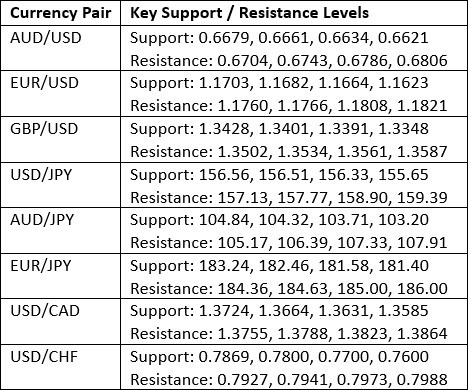
Key Support and Resistance Levels
Last week, the US Dollar Index printed a bullish inside bar and closed quite near the high of its range. These are moderately bullish signs. The price action is again suggesting a weak long-term bullish trend with the price above its levels of both 13 and 26 weeks ago.
The FOMC Meeting Minutes showing a lot of doubt about rate cuts may have given a very slight hawkish tilt which helped the Dollar advance last week. The big selloff in precious metals might also have helped.
I take a weakly bullish bias on the US Dollar right now. However, not much is going on here, so it will probably make sense to consider other assets on their own over the coming week.
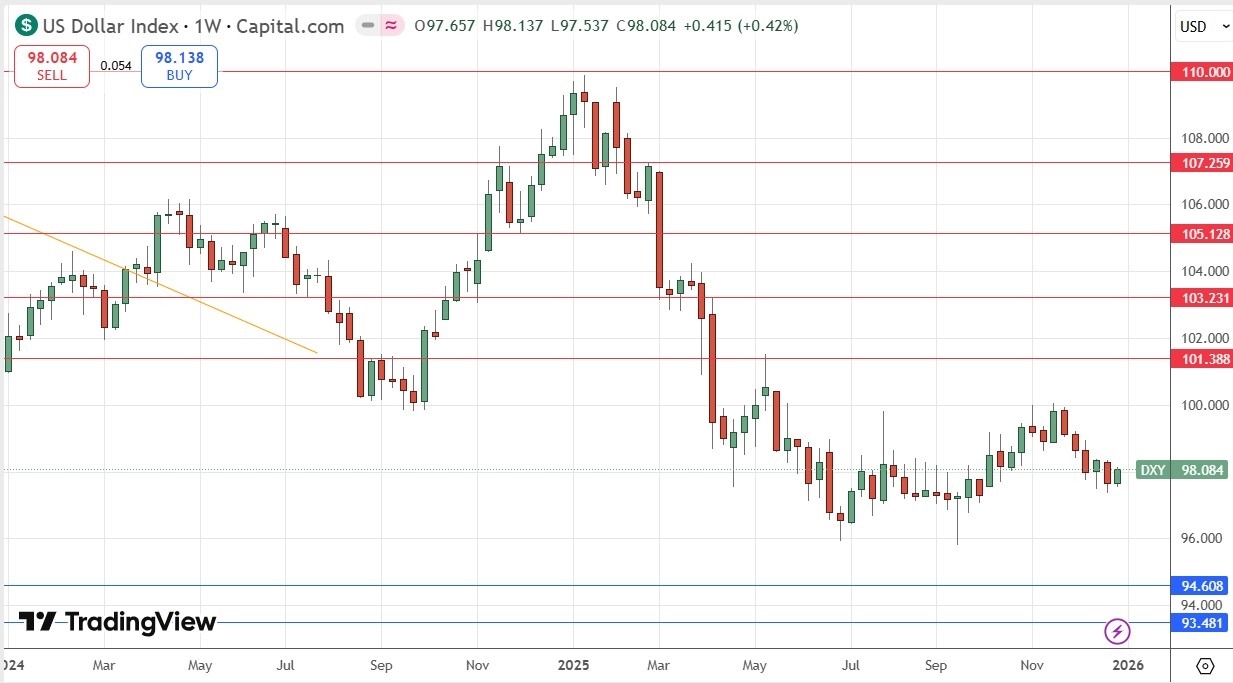
US Dollar Index Weekly Price Chart
The USD/JPY currency pair advanced last week, the move was relatively subdued. The price has not challenged the important recent swing high lately but may be building for another challenge.
The price chart below shows a strong long-term bullish trend that has started to run out of momentum. There is no reason it cannot reactivate, which is probably mostly due to a weak Japanese Yen with a central bank that wants to hike rates but cannot do so without risking a debt crisis.
The US Dollar has been consolidating lately but is again starting to show signs of strength.
I think that if we get a significant bullish breakout with a daily close above ¥157.75 then a long trade entry will be an interesting trade.
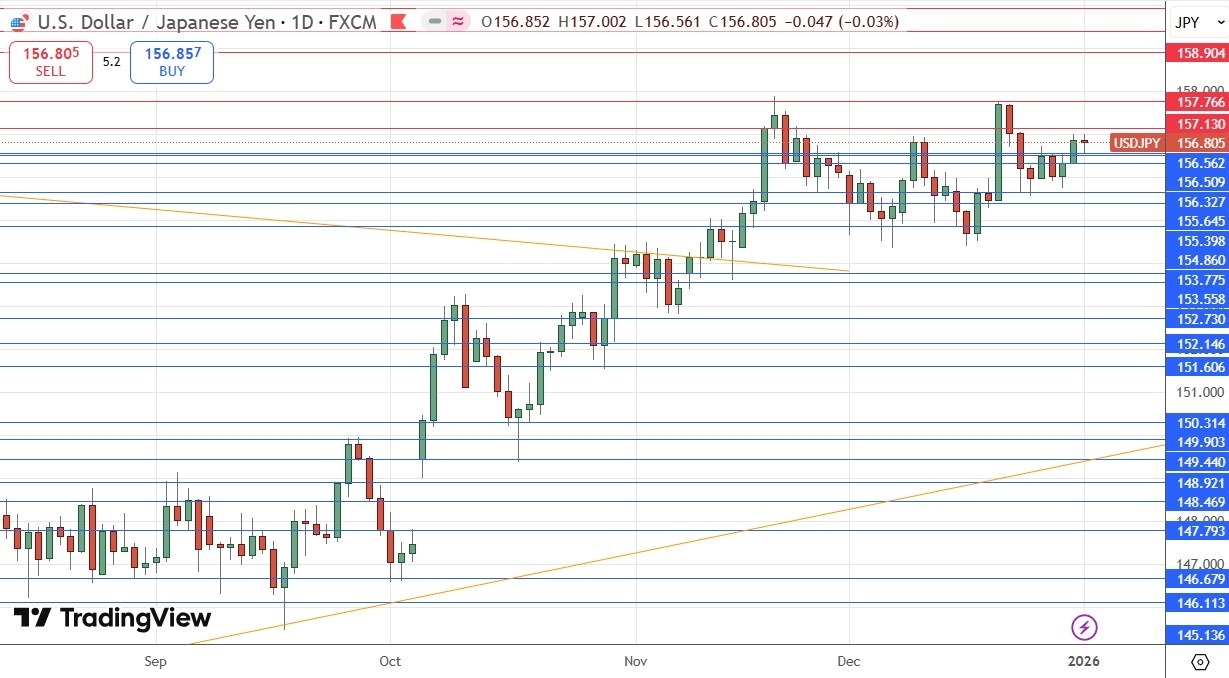
USD/JPY Daily Price Chart
After reaching a new record high the week before last week, the price action made a textbook moderate reversal pattern, and that continued during the past week.
The selloff was partially driven by the bursting of the precious metals bubble.
Last year’s performance was stellar, at over 15%, and even with this bearish turn new highs still look likely. However, it is the start of a new calendar year and trading can be very unpredictable, so it is best to wait for a new record high daily (New York) close at 6,940 or above.
More cautious traders might prefer to wait for the big round number at 7,000 to be broken before entering a new long trade.
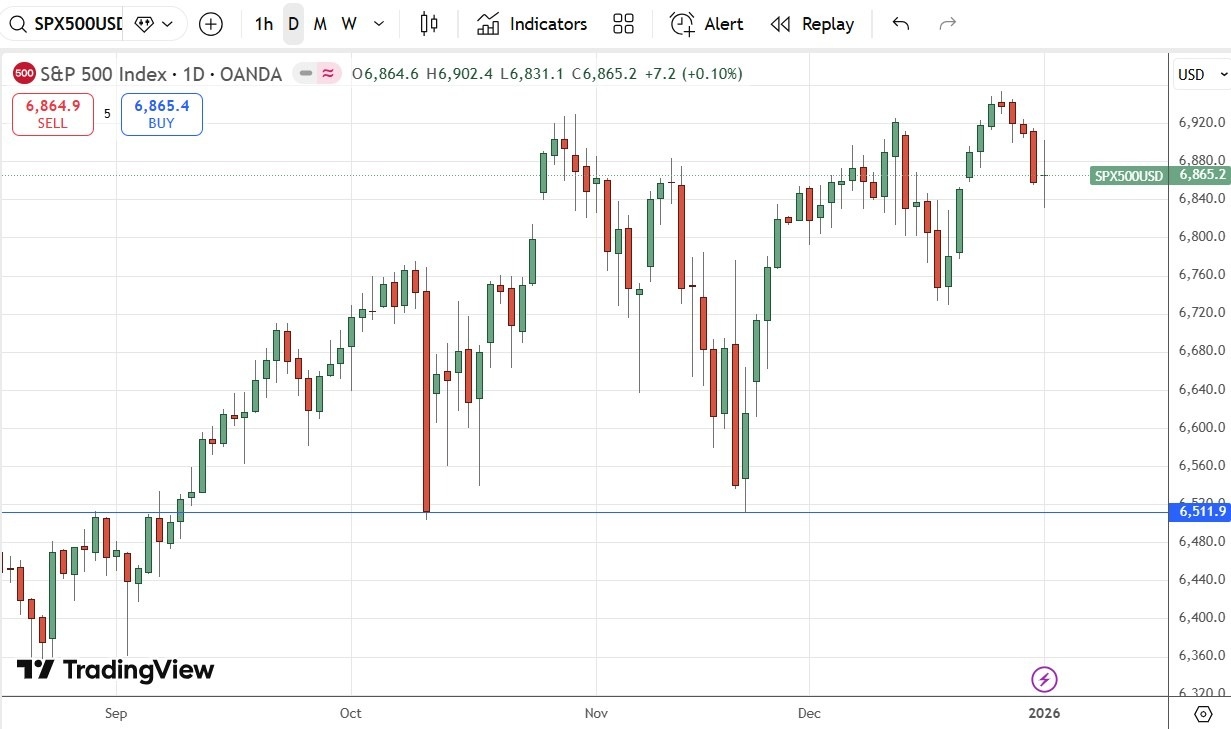
S&P 500 Index Daily Price Chart
Silver’s wild, meteoric rise ended dramatically last Monday, as its price and the prices of all precious metals plummeted. Gold held up best, it was the minor / industrial precious metals that saw huge drops of more than 10% in one day.
What we have seen since Monday is classic “burst bubble” price action, with railroad tracks swinging up and down with gradually decreasing volatility.
This strongly suggests that we have seen the end of the former strong trend and the beginning of a longer consolidation.
However, it is possible that the trend could resume. I will enter a new long trade if we get a daily (New York) close above $80.
Some analysts suggest this was not a bubble but a panic due to China imposing export controls on Silver for the first time. I think this is very unlikely, as there should be a plentiful available supply at current prices.
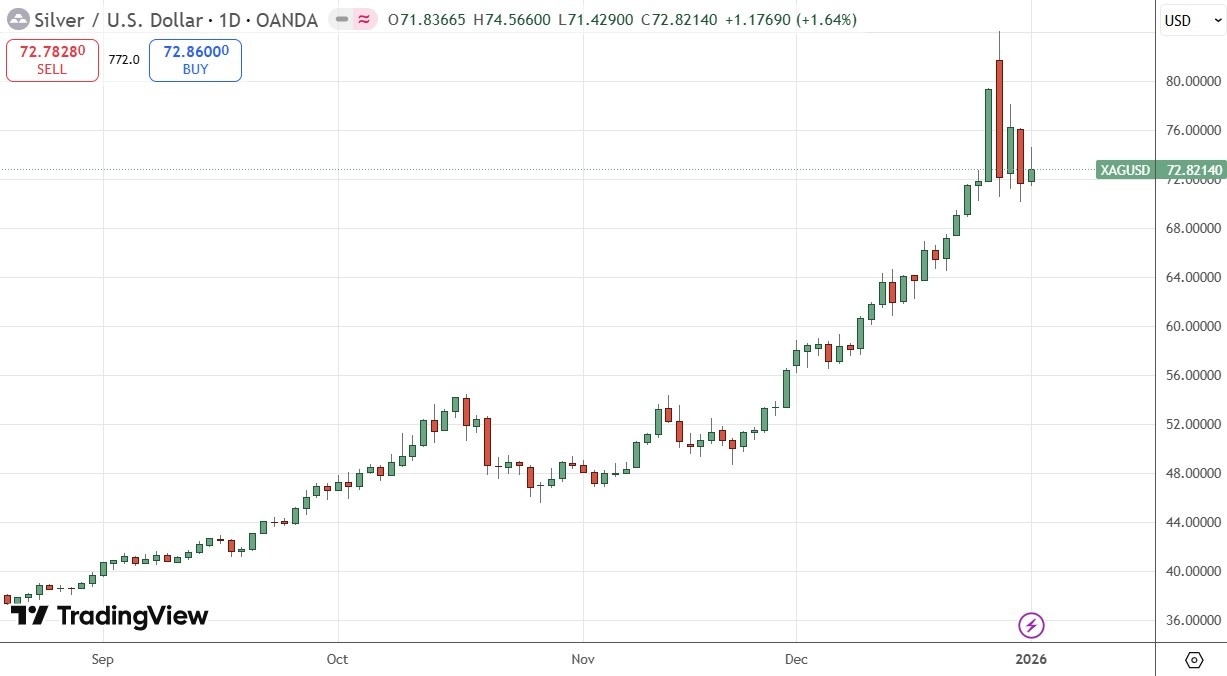
Silver Daily Price Chart
Gold saw a sharp drop last Monday, as did all other precious metals. Interestingly, although new highs for any precious metal look unlikely to happen in the near future, Gold had the smallest of all bullish bounces in precious metals after the initial drop, looking at the daily price chart below. This might be a bearish sign.
I am prepared to enter another long trade if we do get a new record high daily (New York) closing price (above $4,533.21), but I really doubt that this will happen.
The bearish swing in the S&P 500 Index also makes me more bearish on Gold, as recent years have seen a strong positive correlation between these two assets.
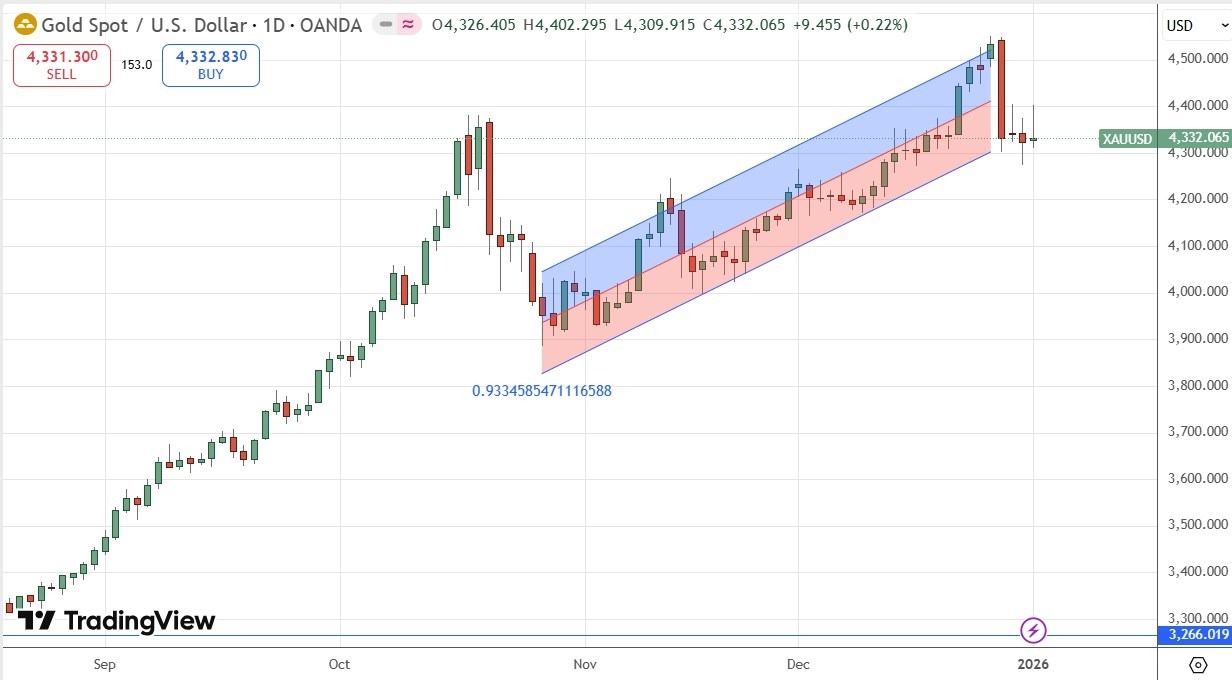
Gold Daily Price Chart
I see the best trades this week as:
Ready to trade our Weekly Forex forecast? Check out our list of the best Forex brokers in the world.
Dutch Bros is known for cultivating an image and lifestyle (Broista lifestyle, if that’s a thing?) and being easily accessible via their drive thru oriented shops. They’re even cutting into Starbucks and Dunkin’s market share quite quickly, with plans to open 150 locations per year. They serve massive, sweet drinks and bump trendy music. So while expectations were never high, a lot of customers were excited to see matcha added to their menu. There’s just one catch: it’s not matcha, it’s a syrup made from green tea extract.
Matcha is supposed to be made from green tea that’s been ground into a fine powder, then whisked with hot water. It creates a grassy, intense, and powerful little drink, somewhat akin to tea espresso. Rumors on Reddit say the syrup is made from some kind of matcha concentrate, but Redditors and reviewers online aren’t really sold on it. It’s described as overly sweet and totally lacks any of the distinctive characteristics matcha is supposed to be known for. It seems these matcha drinks share matcha’s signature color, and not much else.

It’s hard to bag on Dutch Bros for this matcha mishap, because while Starbucks claims to use real matcha in their drinks, the powder they use comes presweetened. It seems if you desire raw, unadulterated matcha, it’s a matcha bar or a fancy, craft coffee place for you. But this raises a point for me that I find fascinating: differences in taste across cultures.
Matcha is an interesting drink simply because, when made with high grade matcha (which is hard to come by because it is bonkers expensive), it yields a cup of tea that is sweet, savory, umami, grassy, vegetal and bitter. It’s not as simple or straightforward as say, a cup of bagged green tea or even most common loose leaf green teas.
But we’ve come to think of drinks like matcha as a quick fix for energy, something trendy and fun to partake in, as something that should be made like a latte. And while innovations and cultural adaptations of food are, in general a good thing, matcha is supposed to take time. As a barista, nothing was worse than a string of matcha orders during a rush. The dosage, the whisking, the proper water temperature — it’s just hard to say it’s an efficient drink to make. So it’s no surprise big chains use syrups and other shortcuts. But we should at least have the decency to say it’s not really matcha.
Mitochondrial is one of the most talked-about metabolic supplements right now, especially among people who struggle with low energy, stubborn fat, and slow metabolism despite diet and exercise. Marketed as a science-backed mitochondrial support formula, Mitochondrial claims to help the body produce energy more efficiently, burn fat at the cellular level, and improve overall metabolic health without stimulants or extreme dieting. In this in-depth Mitochondrial review, we take a realistic look at how it works, what’s inside, real benefits, possible downsides, and whether it’s actually worth your money. This article is written to help you make an informed decision – not to sell you false promises.
What Is Mitochondrial and How Is It Supposed to Work?
Mitochondrial is a di*tary supplement designed to support mitochondrial function, which plays a key role in how your body converts nutrients into usable energy. Instead of focusing on appetite suppression or stimulants, Mitochondrial targets the root cause of low energy and slow fat burning by improving cellular efficiency. According to the official website, the formula aims to activate dormant metabolic processes that naturally decline with age, stress, and poor lifestyle habits. This approach appeals especially to people over 30 who feel tired, sluggish, or stuck at the same weight despite trying multiple diets or supplements in the past.
👉 Visit the official product website
https://544982inojom9o37kd-dagcr04.hop.clickbank.net
Mitochondrial Ingredients: What’s Inside the Formula?
Mitochondrial uses a blend of plant-based antioxidants and adaptogens such as Maqui Berry, Rhodiola Rosea, Amla Fruit, Schisandra, Haematococcus (astaxanthin source), and Cocoa Extract. These ingredients are known for their antioxidant properties and potential role in reducing oxidative stress – a key factor linked to mitochondrial decline. While individual ingredients have scientific support for cellular health and energy metabolism, it’s important to be honest: there are no large independent clinical trials proving Mitochondrial as a finished product causes direct fat loss. That said, the ingredient profile is clean, stimulant-free, and generally well tolerated.
Real User Experiences: What Do Customers Report?
User feedback for Mitochondrial is mixed but generally positive. Many users report improved daily energy levels, better mental focus, and less afternoon fatigue after consistent use for several weeks. Some also mention gradual fat loss, particularly around stubborn areas like the abdomen. However, results are not instant. Most positive experiences appear after 3-6 weeks of continuous use, especially when combined with basic lifestyle improvements like walking or balanced meals. Users expecting dramatic weight loss without any effort may be disappointed, which is important to state clearly.
Potential Downsides and Honest Criticism
Mitochondrial is not without drawbacks. First, the price is higher than standard supplements, which may not suit every budget. Second, while the formula is natural, results vary depending on age, metabolism, and lifestyle, so it’s not a guaranteed solution for everyone. Lastly, because Mitochondrial is popular, there are reports of fake copies sold outside the official website, which can pose safety risks. For this reason, ordering only through the official source is strongly recommended.
Is Mitochondrial Safe?
Based on the disclosed ingredients, Mitochondrial appears safe for most healthy adults when used as directed. It contains no stimulants, no synthetic fat burners, and no habit-forming substances. Still, anyone with medical conditions, pregnancy, or medication use should consult a healthcare professional before starting any supplement. Mitochondrial also comes with a 90-day money-back guarantee, which reduces financial risk for first-time users.
Final Verdict: Is Mitochondrial Worth Trying?
Mitochondrial is not a miracle weight-loss pill, but it can be a solid option for people who want to support their metabolism and energy levels in a more natural, sustainable way. Its focus on mitochondrial health makes it different from typical fat burners, and the ingredient profile is well thought out. If you’re realistic about expectations and consistent with usage, Mitochondrial may help you feel more energized and support gradual fat loss over time.
Company / Brand Name: Mitochondrial
Business Model: Online supplement brand (Direct-to-Consumer)
Registered / Operational Address:
Mitochondrial
United States
Customer Support Email:
📧 support@Mitochondrial .com
(recommended for media, review, and partnership requests)
Customer Support Availability:
Online support via email and website contact form
Response times may vary depending on request volume
Refund & Order Support:
All order-related questions, refunds, and guarantee claims are handled directly through the official website and customer support team.
👉 Want to Try Mitochondrial for Yourself?
👉 Order directly from the official source to avoid fakes and access the refund guarantee:
👉 Click here to get Mitochondrial now:
https://544982inojom9o37kd-dagcr04.hop.clickbank.net
Mitochondrial is marketed as a premium supplement brand focused on metabolic health and mitochondrial support. The company positions itself in the wellness and nutrition sector, with a strong emphasis on plant-based ingredients, antioxidant research, and age-related metabolic decline. According to the official website, Mitochondrial was developed to address common issues such as low energy levels, slow metabolism, and difficulty losing weight by targeting cellular energy production rather than using stimulants or aggressive appetite suppressants.
The brand primarily operates through direct-to-consumer online sales, allowing it to control distribution, customer support, and refund policies. Mitochondrial highlights transparency, a simplified ingredient formula, and a 90-day money-back guarantee as core elements of its brand philosophy. While the company focuses heavily on educational marketing around mitochondria and metabolism, it also emphasizes that results may vary depending on individual lifestyle, diet, and consistency of use.
This release was published on openPR.
The price action underscored XRP’s sensitivity to crypto-related regulatory developments on Capitol Hill, driven by the resolution of the SEC vs. Ripple case.
The US Court of Appeals approved Ripple and the SEC’s appeal withdrawal motions on August 22. The court ruling legitimized XRP as a non-security, paving the way to the US XRP-spot ETF market.
XRP-spot ETF flow trends and crypto-related legislative developments reaffirmed the bullish short-term (1-4 weeks) outlook, with a $2.5 price target. Meanwhile, increased utility, expectations of Fed rate cuts, and the Senate passing the Market Structure Bill reinforce the positive longer-term price trajectories:
Several scenarios could unravel the positive outlook. These include:
These scenarios would likely push the token toward $1.75, indicating a bearish trend reversal.
XRP gained 0.60% on Saturday, January 3, consolidating the previous day’s 6.76% rally, closing at $2.0184. The token mirrored the broader crypto market cap, which advanced 0.71%.
Despite heading for a four-day winning streak, XRP traded below the 50-day and 200-day Exponential Moving Averages (EMAs), suggesting a bearish bias. While technicals remained bearish, bullish fundamentals are building, countering the technical structure.
Key technical levels to watch include:
Looking at the daily chart, a breakout above the 50-day EMA would indicate a near-term bullish trend reversal. A sustained move through the 50-day EMA would bring the 200-day EMA and the $2.5 resistance level into play.
A breakout above the EMAs would reinforce the bullish medium-term outlook and the longer-term (8-12 weeks) $3.66 price target.
The dietary supplement industry is at a pivotal moment. As people place greater emphasis on proactive health, prevention, and daily wellness, dietary supplements have become an essential part of how individuals support their bodies and overall quality of life. Behind every trusted supplement is one critical foundation: responsible, high-quality manufacturing.
Consumers today are more health-conscious than ever. Rather than waiting for illness, people are seeking ways to support energy, recovery, immune function, longevity, and overall well-being through informed nutrition and supplementation. This shift has driven rapid growth across the dietary supplement sector, spanning both human and pet health.
As demand increases, so does the need for supplements that are safe, effective, and thoughtfully formulated. Manufacturing plays a defining role in ensuring products truly support health rather than simply meeting market trends.
The growth of the dietary supplement industry presents significant opportunities within manufacturing — particularly in innovation. Modern supplement manufacturing is where science, technology, and quality systems converge to turn health-focused ideas into reliable products.
Innovation in manufacturing enables:
· Science-informed, accurately dosed supplements consumers can trust
· Improved manufacturing technologies that enhance consistency, safety, and scalability
· Formulation advancements that support bioavailability and functional delivery
· Adaptation to evolving regulatory and quality expectations
· Infrastructure that supports responsible growth and global distribution
When innovation is integrated into manufacturing, it strengthens the entire supplement industry and protects the people who rely on these products for their health.
Montana Global Health, based in Kalispell, is a contract manufacturer of dietary supplements for both human and pet health. We work with clients across the United States and around the world, manufacturing products that are shipped globally while maintaining consistent standards for quality, documentation, and compliance.
Our role is to support brands committed to proactive wellness, transparency, and integrity. From ingredient sourcing and formulation support to scale-up and final production, every decision impacts consumer trust and long-term outcomes.
As individuals continue to prioritize their health, dietary supplements will remain an important tool in preventive and supportive care. The future of the industry will be shaped by manufacturers who embrace innovation, accountability, and higher standards.
Manufacturing opportunities in dietary supplements extend beyond growth alone. They represent a chance to improve health outcomes, support informed consumer choices, and build an industry grounded in quality and integrity.
Terri Chichester is the founder of Montana Global Health, a contract manufacturer of human and pet dietary supplements based in Kalispell.
:max_bytes(150000):strip_icc()/Health-green-tea-vs-coffee-c27b067d41714b578a37410856bbf010.png "Which Is Better for Your Energy and Heart Health?")

:max_bytes(150000):strip_icc()/No-You-Shouldnt-Take-Supplements-to-Detox-Your-Body---Heres-Why-d16ec4cd6a234113bc0d374fe634a0fc.jpg "4 Dangerous Side Effects of Using Supplements to Detox")