The main category of All News Articles.
You can use the search box below to find what you need.
[wd_asp id=1]
The main category of All News Articles.
You can use the search box below to find what you need.
[wd_asp id=1]
In recent years, the quest for effective treatments and supplements that can aid cognitive function has captured the attention of both researchers and healthcare enthusiasts. The exploration of natural compounds continues to hold promise, with various dietary supplements emerging for their potential neuroprotective properties. A groundbreaking study has been conducted by a team of scientists, including Aboubaker, D.H., Elsayed, A.A.A., and El-Gohary, A., titled “Author Correction: Introduction of Cistanche phelypaea fatty acids as a new natural neurotrophic supplement by evaluating its effects in normal and Alzheimer’s diseased rats.” This significant research delves into the therapeutic potential of Cistanche phelypaea, an herb long recognized in traditional medicine, regarded for its supposed cognitive-enhancing properties.
Cistanche phelypaea, a member of the Orobanchaceae family, has garnered interest due to its unique bioactive compounds, particularly fatty acids, that are believed to play a crucial role in cellular health and cognitive function. The herb has been used in traditional Asian medicine, yet its systematic exploration within modern scientific contexts is still emerging. The current investigation evaluates how these fatty acids may function as neurotrophic supplements, providing the necessary support for neuronal health and regeneration.
Neurotrophic factors are essential for the growth, survival, and differentiation of neurons. They are critical players in the maintenance of brain health, and their deficiency is often linked to neurodegenerative diseases such as Alzheimer’s. In this study, the authors sought to determine whether Cistanche phelypaea could enhance the presence or activity of these neurotrophic factors, ultimately leading to improved cognitive function in both normal conditions and in the presence of Alzheimer’s pathology.
To conduct their research, the team utilized an animal model, deploying both healthy and Alzheimer’s diseased rats in a series of behavioral and biochemical assays. The choice of rats as their model organism allowed for sufficient ethical flexibility while providing reliable insights into mammalian biology. Through rigorous experimentation, they could glean data on how the administration of Cistanche phelypaea fatty acids influenced cognitive performance and neurochemical markers associated with brain health.
One of the standout results from this research was a marked improvement in cognitive performance among the rats that received the fatty acids. The researchers employed a series of mazes and memory tasks to assess the cognitive abilities of the subjects. Rats administered with Cistanche phelypaea showed enhanced memory recall and spatial navigation abilities compared to those in the control group. Such findings are critical as they suggest that the fatty acids could counteract cognitive decline, especially in the context of Alzheimer’s disease.
Biochemical analyses further substantiated the behavioral results. Blood samples and brain tissues were examined for changes in levels of neurotrophic factors such as Brain-Derived Neurotrophic Factor (BDNF), which is crucial for synaptic plasticity and overall brain function. The study reported elevated levels of BDNF in the brain tissues of treated rats, indicating that Cistanche phelypaea may indeed facilitate neuroprotection and neurogenesis. This biochemical support complements the observed behavioral improvement, suggesting a dual mechanism at play.
The implications of this study extend far beyond the laboratory. As the global population ages, the incidence of neurodegenerative diseases is projected to rise significantly. The quest for effective treatments has become an urgent priority on the public health front. The results from Aboubaker et al.’s research open new avenues for exploring natural therapies and encourage further investigation into plant-based compounds that can contribute positively to brain health.
Moreover, the research also highlights the importance of revisiting traditional herbal practices through the lens of modern science. Cistanche phelypaea’s long-standing use in traditional medicine can inform contemporary clinical applications, bridging the gap between ancient wisdom and scientific validation. This study thus not only reinforces the value of natural products but also emphasizes the need for rigorous scientific investigation into herbal medicine.
As the scientific community continues to investigate potential solutions to combat cognitive decline, this study serves as a beacon of hope. With natural neurotrophic supplements like Cistanche phelypaea gaining recognition, there may soon be viable alternatives to synthetic drugs that often come with a myriad of side effects. The positive results from this research underscore the necessity for continued exploration of botanical compounds that hold promise for brain health.
Furthermore, this exploration is particularly timely given the rising interest in personalized medicine and wellness. Many individuals are actively seeking natural supplements to improve their cognitive performance, enhance memory, or support overall brain health. As interest flourishes in this area, studies like this one contribute valuable knowledge that aids consumers in making informed choices about their health.
However, it is essential to approach this emerging field with a balanced perspective. While the potential benefits of Cistanche phelypaea are promising, there remains a need for thorough clinical trials in humans before establishing definitive efficacy and safety profiles. The research team acknowledges that more extensive studies are required to ascertain optimal dosages and long-term effects, ensuring that the transition from animal models to human applications is safely navigated.
In conclusion, the work of Aboubaker and colleagues represents a pivotal step in understanding the neuroprotective potential of Cistanche phelypaea fatty acids. Their findings not only enrich the existing literature on neurotrophic supplementation but also invigorate the discourse surrounding natural therapeutics in cognitive health. As research in this field progresses, there is hope that such natural compounds could become integral components of strategies aimed at mitigating the impact of neurodegenerative diseases and enhancing cognitive well-being.
While the present study is promising, it is crucial to keep in mind the broader context of brain health. Lifestyle factors such as diet, exercise, and mental stimulation consistently demonstrate their significance in supporting cognitive function. Integrating natural supplements with a holistic approach to brain health may provide the best outcomes for individuals looking to maintain cognitive vitality throughout their lives. Research like that conducted by Aboubaker et al. plays a vital role in directing attention to natural solutions, encouraging both scientific inquiry and public awareness of the potential benefits of herbal supplements.
Subject of Research: The effects of Cistanche phelypaea fatty acids as a natural neurotrophic supplement.
Article Title: Author Correction: Introduction of Cistanche phelypaea fatty acids as a new natural neurotrophic supplement by evaluating its effects in normal and Alzheimer’s diseased rats.
Article References:
Aboubaker, D.H., Elsayed, A.A.A., El-Gohary, A. et al. Author Correction: Introduction of Cistanche phelypaea fatty acids as a new natural neurotrophic supplement by evaluating its effects in normal and Alzheimer’s diseased rats. Sci Rep 15, 45801 (2025). https://doi.org/10.1038/s41598-025-34156-3
Image Credits: AI Generated
DOI: 10.1038/s41598-025-34156-3
Keywords: Cistanche phelypaea, fatty acids, neurotrophic supplement, Alzheimer’s disease, cognitive function.
Tags: Alzheimer’s disease treatment researchbioactive compounds for neuronal healthCistanche phelypaea fatty acidscognitive enhancement through supplementsdietary supplements for brain regenerationfatty acids and neuronal survivalnatural compounds for brain healthneuroprotective properties of herbal remediesneurotrophic supplements for cognitive functionOrobanchaceae family medicinal usestherapeutic potential of Cistanchetraditional medicine and modern science
The New Year is here, and the cryptocurrency market will behave nothing like a trained predator, which will be efficient and ruthless. XRP stands out as one of the most anticipated digital assets of 2026, with market analysts and expert traders suggesting that its potential is virtually limitless. In the early session of 2026, XRP is not looking well in the cryptocurrency market. According to the latest market data, the official cryptocurrency of Ripple, and the fifth-largest cryptocurrency by market cap, is trading below the $1.85 support level.
The XRP price today is $1.84, and it has been trading between $1.84 and $1.88 as of early January 2026. XRP Ledger’s digital asset is 1.34% down today over the past 24 hours, extending its short-term bearish momentum. Its market analytics show that XRP plummeted as low as $1.81 on January 1st, and based on the market trend, conservative estimates range from a minimum of $1.84 to $2.70 by the end of January. XRP’s support holds near $1.82-$1.77, but a breakdown below this point could lead to a steep price drop, leading to $1.60.
According to the current market stats, XRP is trading at $1.84, significantly below the $2 psychological level. Despite the Santa Claus Rally and the new year’s fresh start, XRP struggled in the market and extended its mixed to bearish momentum. XRP’s extended short-term bearish trend is mainly due to whale dumping, technical weakness, and altcoin underperformance in the cryptocurrency market. XRP recorded a monthly decline of 8.61%, marking a significant price drop over the past two months. XRP has traded 13/30 (43%) days in green, and the Fear & Greed Index displays 21, which means “Extreme Fear” in the market, and investors are now cautious. XRP’s price volatility is recorded at $5.04, and it is trading below both the 50-Day SMA ($ 2.06) and the 200-Day SMA ($ 2.48).
Industry experts and analysts are starting 2026 with a fresh mindset, and they are optimistic about XRP’s market performance.
Crypto analyst page Mr. Bullish posted on X that XRP had swept liquidity from a strong support zone and had quickly reclaimed it, showing that buyers were active.
He mentioned that the price had given a clean retest and was now holding above support, which confirmed bullish intent. He stated that the next major liquidity zone was above the descending trendline, and the price was likely to move higher to grab that liquidity. He added that as long as support held, bullish continuation was expected and advised to manage risk properly.
Jake Claver, the CEO of Digital Ascension Group, previously predicted that XRP would hit $100 before the end of 2025, and the whole XRP community was thrilled, but the legendary price prediction didn’t play out.
Investors and XRP holders have been criticizing Jake ever since. XRP holder Crypto Luke responded to the matter and commented that Jake’s prediction hadn’t played out. He emphasized that the important part was that the fundamentals of $XRP hadn’t changed. He noted that if anything, time had been extended, not that the thesis was invalidated. He stated that understanding the asset mattered more than any content creator’s price/time predictions.
Despite the strong institutional inflows and ETF momentum, XRP is still sluggish in the cryptocurrency market. It is now consolidating between $1.84 and $1.89. XRP trades at an average of approximately $1.83 today on New Year’s Day, with a significant drop in its market capitalization. According to XRP’s live market data, no surge to $2 psychological level is confirmed at the moment.
Here is the XRP price prediction for the next seven days.
| Date | Min Price | Avg Price | Max Price |
|---|---|---|---|
| Jan 1, 2026 | $1.83 | $1.86 | $1.89 |
| Jan 2, 2026 | $1.82 | $1.84 | $1.86 |
| Jan 3, 2026 | $1.81 | $1.83 | $1.85 |
| Jan 4, 2026 | $1.81 | $1.83 | $1.85 |
| Jan 5, 2026 | $1.83 | $1.85 | $1.87 |
| Jan 6, 2026 | $1.86 | $1.88 | $1.90 |
| Jan 7, 2026 | $1.86 | $1.88 | $1.90 |
Disclaimer: XRP price prediction data is speculative and subject to change
According to the XRP short-term price forecast, the digital asset is expected to trade at an average maximum price of 1.87 for the next seven days. Coincodex analysts predicted that, according to their latest XRP price prediction, XRP was forecasted to drop by -0.74% and reach $1.83 by January 31, 2026.
XRP shows strong capabilities and potential for a 2026 comeback. According to the market trend and its historical data, a potential breakout above $3 can be expected in early 2026. If bullish catalysts like ETF inflows and regulatory clarity play a superior role, XRP could trade at a higher price of $20 by the end of the first half of this year. Ripple’s ODL expansion and CBDC integrations will enhance XRP’s utility and its role in global payments. In summary, an XRP comeback appears likely in 2026 if ETF and adoption trends hold, though volatility demands caution.
Cryptocurrency price predictions, including those for XRP, are highly speculative and based on historical data, technical analysis. Past performance and market evaluation do not guarantee future results; consult a financial expert before investing.
As the GameFi sector enters its next phase of evolution, the traditional model of relying on a single blockbuster title to sustain an ecosystem is facing rigorous challenges. Today, the high-profile Web3 gaming project RuneSoul set the market ablaze by officially announcing the closing of a $30 million strategic investment round.
This massive capital injection is more than just “fueling the tank”; it serves as a clarion call for the expansion of the RuneSoul ecosystem. Official sources state that the funds will be primarily allocated toward a comprehensive strategic pivot and infrastructure overhaul. RuneSoul is transcending its identity as a standalone 3A ARPG blockchain game to become a full-scale Web3 Gaming Aggregator & Launchpad.
Breaking GameFi Silos: The “Super Connector” of the Industry
The Web3 gaming industry has long struggled with a “supply-demand mismatch”: talented developers often lack Web3 publishing expertise, while token holders and large-scale guilds are starved for high-quality, sustainable content.
RuneSoul’s transformation aims to fill this market vacuum by positioning itself as a definitive Connector:
Supply Side: Providing traditional game studios and Web3 developers with low-barrier “blockchain-integration” gateways, solving technical hurdles and complex economic model design.
Demand Side: Aggregating global players, top-tier guilds, and distribution channels to tackle the challenges of fragmented traffic and skyrocketing user acquisition costs.
A One-Stop Full-Stack Solution: Building an Ecological Moat
Unlike standard launchpads that offer limited “listing” or “NFT sale” functions, RuneSoul’s “Web3 Gaming Full Lifecycle Solution” is far more ambitious and execution-focused. 9The platform will deliver core services across five key dimensions:
Issuance: Facilitating initial asset offerings (INO/IDO) based on proven tokenomic models.
Growth & Incentive: Leveraging SocialFi mechanisms for viral growth and precision user matching, supported by multi-tiered incentive systems for player retention.
Asset Management: Offering secure, user-friendly built-in wallets and a marketplace to bridge asset barriers between different games.
On-chain Data: Tracking real-time behavior to provide developer user-personas and investor decision-making tools.
Settlement System: An efficient on-chain settlement layer ensuring all revenues are transparent and settled instantly.

From GameFi 4.0 to Industry Infrastructure
At its inception, RuneSoul introduced the concept of GameFi 4.0, emphasizing the deep integration of gameplay and social utility. With this $30M infusion, RuneSoul is now scaling this philosophy from a “single game” to an “entire ecosystem.”
This pivot leverages RuneSoul’s track record—including the successful launch of $RST, high-fidelity graphics, and a robust community—to incubate a new wave of high-quality titles.
“If Steam is the lighthouse of Web2 gaming, RuneSoul aspires to be the gateway for Web3 gaming,” stated the core team. This $30 million investment is not only a validation of RuneSoul’s past performance but a high-stakes bet on its “platform-centric” future.

Safe-haven demand remains a significant long-term tailwind for gold and, of course, there’s lots more going on beyond the Fed’s policy moves that’s keeping gold in demand as a safe-haven asset. The global security situation remains tense, which is keeping people flocking to gold when they get nervous, even as markets are a bit thin and people take profits at the end of the year.
Central Bank Buying has helped keep the longer-term trend going strong and underpinning the whole gold price rally is the fact that central banks have kept buying gold & that the gold-backed ETFs are still holding pretty strong. All this steady demand has really helped absorb any volatility that’s come up and keep prices supported above some key long-term averages.
When the markets finally get back to work after the New Year break, you can bet that traders will be focusing hard on Fed guidance, real interest rates, and geopolitics to see if gold can finally make a move above where it is now or if it just goes sideways for a bit before deciding which way to go next.
Gold holds near $4,310 after the Dec 31 close. On reopening, a break above $4,360 targets $4,400–$4,450, while a slip below $4,280 risks $4,255 support.
Marks & Spencer is launching a range of foods tailored to people taking weight-loss injections as use of the drugs accelerates in the UK.
The new range of 20 “nutrient-dense” products from the retailer is aimed at customers taking GLP-1 weight-loss medications, as supermarkets increasingly adapt to the impact the drugs are having on shopping baskets.
The range will go on sale in M&S foodhalls from January 5 and includes salads, meals and bread designed to deliver high levels of fibre, vitamins and minerals in smaller portions.
There has been a dramatic rise in the use of GLP-1 drugs in the UK. Online searches and private prescriptions have increased sharply, driven by their effectiveness for weight loss and widespread media attention. About 1.5 million people in the UK are now estimated to be accessing GLP-1 treatment privately, while NHS England prescriptions for the injections have risen by around 900 per cent since 2020.
GLP-1 medications — known formally as glucagon-like peptide-1 (GLP-1) receptor agonists — were originally developed to treat type 2 diabetes by helping to regulate blood sugar. In recent years, drugs such as semaglutide (sold as Ozempic for diabetes and Wegovy for weight loss) and tirzepatide (sold as Mounjaro) have surged in popularity for their weight-loss effects, as they suppress appetite, slow digestion and signal fullness to the brain.
• Our writers’ share tips for 2026, plus last year’s winners and losers
Nutrient-dense foods are those that provide a concentrated source of vitamins, minerals, fibre, healthy fats and protein relative to their calorie content. M&S said the range was developed by its nutritionists in consultation with the British Nutrition Foundation, using criteria that ensure each product delivers more nutrients per mouthful.
M&S said the new range had been developed to address the nutritional challenges that can arise when people eat less, whether due to medication, age or lifestyle. A reduced appetite can make it harder to consume enough fibre and essential nutrients, increasing the risk of deficiencies and digestive side effects such as constipation.
Grace Ricotti, M&S head of food nutrition, said: “Our nutrient-dense range is perfect for customers looking to support their health as each recipe is packed with the key nutrients we all need in our diets.
“With the increase in popularity of weight-loss injections, a reduced appetite can mean missing out on important nutrients and that’s why nutrient density is so important.
“These new meals, snacks and drinks can help everyone get more fibre, vitamins and minerals in their diet.”
Supermarkets and consumer goods companies are increasingly catering to households using the drugs. Morrisons was the first UK supermarket to announce a dedicated “GLP-1 friendly” range, developed with sports nutrition brand Applied Nutrition, under its “Small & Balanced” banner. Nestlé, the consumer goods giant, has launched a frozen food brand in the US aimed at GLP-1 users, while Haleon, the British multinational consumer healthcare company, has introduced a multivitamin designed to help replenish nutrients for people eating less.
The trend is expected to accelerate further as GLP-1 medications move beyond injections. Tablet versions are beginning to reach the market, with US regulators approving an oral version of Wegovy and rival pills expected to follow, potentially widening access to the drugs.
While the drugs are approved for diabetes and obesity treatment, clinicians have raised concerns about the number of people accessing them outside clinical pathways for cosmetic weight loss. The long-term consequences of widespread use are still being studied, particularly as lower calorie intake can increase the risk of nutrient deficiencies if diets are not carefully managed.
The Solana [SOL] blockchain emerged as the biggest revenue-generating chain of 2025, followed by Hyperliquid [HYPE]. Solana saw $1.3 billion in revenue, while Hyperliquid and third-placed TRON [TRX] revenues measured $816 million and $608 million, respectively.
The on-chain usage also remained consistently high. The positive outlook for Solana lasted for most of the year, but the 10/10 crash snuffed out bullish market sentiment. That sell-off sent SOL below the $200-mark, and it has been a bear-dominated market since.
Its strong blockchain performance was accompanied by a leverage-driven tug-of-war between SOL bulls and bears at the $120-support zone. At the time of writing, the $130-zone was a firm obstacle for the bulls, while the $120-area emerged as a support level.
The 1-day price structure was bearish. To flip it bullishly, SOL would need to close a daily trading session above $127.87, the local swing high. The evidence at hand did not show that such a move was brewing.
The CMF on the daily chart has been well below -0.05 over the past two months to indicate sustained, heavy capital flows out of the market. This selling pressure was accompanied by a strong downtrend, which has only lost strength over the last ten days.
The DMI showed a lack of trend at the time of writing, and a move past $130 could change this. The lack of demand meant traders would need patience.
The downtrend has slowed down over the past month though. The capital outflows were severe, but a market structure shift could inspire bullish confidence.
This outcome did not seem likely at press time, but traders need to be open to the possibility.

Source: SOL/USDT on TradingView
The downtrend has slowed down, but an uptrend hasn’t been established yet. Instead, a short-term range between $117 and $128 was established, and lower timeframe traders can use this to their advantage.
Swing traders can wait for a move beyond the range to catch the next impulse move.
Disclaimer: The information presented does not constitute financial, investment, trading, or other types of advice and is solely the writer’s opinion
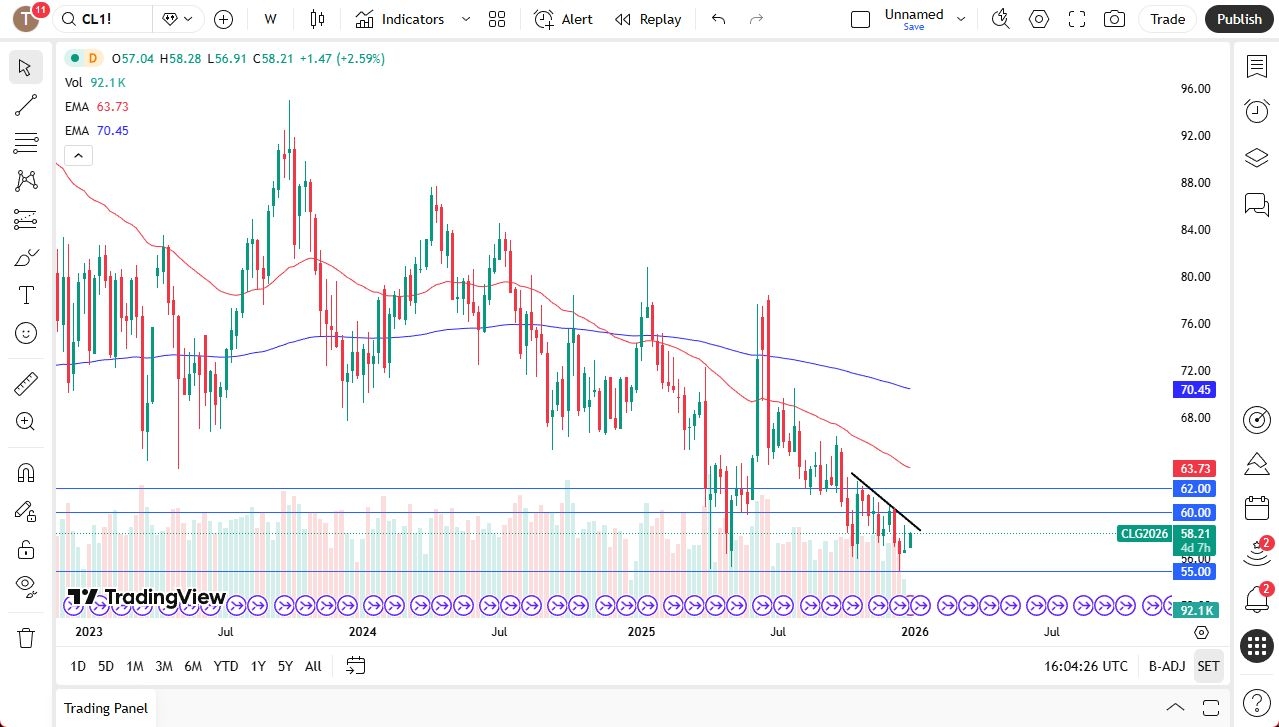
The $55 level has been a major floor in the light sweet crude oil market.
Crude oil markets have been generally negative during December as we continue to pay close attention to a downtrend line. But perhaps more importantly, I think we’re going to continue to pay a lot of attention to the $55 level. The $55 level has been a major floor in the light sweet crude oil market, and I think that continues to be a major battleground.
Whether or not we can break down below, there is still a question that remains to be answered, but I would not be surprised at all to see more of the same action in January that we have seen in both November and December. Quite frankly, the only sign of life in this market over the last couple of months has been due to new sanctions against Russia. And that bullish behavior was squashed almost immediately.
This has shown that the $62 level is a major resistance barrier that I think is going to take some type of external pressure to break above. I also believe that January will end up being fairly weak from a cyclical standpoint as well, as typically speaking, January is somewhat soft. All things being equal, I think that January will behave in the same way we have seen the oil market behave in general, that anytime we get some type of rally, you’re looking to sell the first signs of exhaustion.
I do not want to get long of oil anytime soon because we do have massive amounts of supply coming out of Guyana and the United States, just to name a couple of places. In other words, the market is awash in oil, and therefore, it’s counterintuitive to think that prices will rise anytime soon. Yes, there will be more sanctions against Russia, would be my bet, but really, at the end of the day, Russian oil still ends up in Europe and Asia, and to a lesser extent, even the United States. So, it’s all a shell game. We have plenty of oil out there. I think we continue to see a lot of overhang as far as selling pressure is concerned.
Ready to trade daily crude oil price analysis? We’ve shortlisted the best Forex Oil trading brokers in the industry for you.
Christopher Lewis has been trading Forex and has over 20 years experience in financial markets. Chris has been a regular contributor to Daily Forex since the early days of the site. He writes about Forex for several online publications, including FX Empire, Investing.com, and his own site, aptly named The Trader Guy. Chris favours technical analysis methods to identify his trades and likes to trade equity indices and commodities as well as Forex. He favours a longer-term trading style, and his trades often last for days or weeks.
BNBUSD currently trades at $863.66, up by $3.13 today. This article examines whether BNBUSD can surpass $880 in January 2026, providing insights from recent market data and technical indicators.
As of now, BNBUSD stands at $863.66, having increased by $3.13 or 0.36%. It hit a low of $857.16 and a high of $876.58 today. With a market cap of $125.76 billion, the trading volume is at 2.53 billion, which is slightly below its average of 3.59 billion, indicating reduced activity.
The current RSI for BNBUSD is at 46.17, suggesting that it is nearing an oversold territory. The MACD shows a bullish histogram at 4.72, indicating potential upward movement. However, the Awesome Oscillator at -22.39 suggests a bearish outlook. Notably, the ADX value of 34.79 points to a strong trend, but with mixed signals, investors remain cautious.
Market forecasts predict BNBUSD to reach $877.01 in the next month, with a quarterly target of $989.62. A significant factor is the potential yearly decline to $654.31, partly due to macroeconomic uncertainties. Nonetheless, over the next five years, the target is $1,060, suggesting long-term optimism.
Several factors could impact BNBUSD in the upcoming months. Regulatory changes, technological advancements, and the overall health of the crypto market are crucial variables. The price can also be influenced by unexpected market events or macroeconomic shifts, as highlighted by Meyka AI’s analyses.
BNBUSD has shown a strong trend, but mixed indicators around $863.66 make its immediate future uncertain. Could it reach $880 in January 2026? The technical forecasts and current market sentiment reflect both possibilities and challenges. As always, forecasts can change due to macroeconomic shifts, regulations, or unexpected events affecting the crypto market.
As of the latest data, BNBUSD is priced at $863.66, showing a $3.13 increase today. Explore more details on the BNBUSD page.
The RSI is at 46.17, MACD histogram is positive at 4.72, indicating slight bullish momentum, but the Awesome Oscillator is at -22.39, suggesting bearish sentiment.
The monthly target is $877.01, with a higher quarterly forecast of $989.62, but it could dip to $654.31 over the year amid various influences. Long-term projections look more optimistic.
Key factors include regulatory changes, market trends, and unexpected economic events, all of which can influence BNBUSD’s movement in the market as analyzed by Meyka AI.
While technical indicators and forecasts suggest it could happen, achieving $880 depends on several market dynamics and unforeseen events. Currently, BNBUSD is close, at $863.66.
Disclaimer:
Cryptocurrency markets are highly volatile. This content is for informational purposes only.
The Forecast Prediction Model is provided for informational purposes only and should not be considered financial advice.
Meyka AI PTY LTD provides market data and sentiment analysis, not financial advice.
Always do your own research and consider consulting a licensed financial advisor before making investment decisions.
Marks & Spencer is launching a range of foods tailored to people taking weight-loss injections as use of the drugs accelerates in the UK.
The new range of 20 “nutrient-dense” products from the retailer is aimed at customers taking GLP-1 weight-loss medications, as supermarkets increasingly adapt to the impact the drugs are having on shopping baskets.
The range will go on sale in M&S foodhalls from January 5 and includes salads, meals and bread designed to deliver high levels of fibre, vitamins and minerals in smaller portions.
There has been a dramatic rise in the use of GLP-1 drugs in the UK. Online searches and private prescriptions have increased sharply, driven by their effectiveness for weight loss and widespread media attention. About 1.5 million people in the UK are now estimated to be accessing GLP-1 treatment privately, while NHS England prescriptions for the injections have risen by around 900 per cent since 2020.
GLP-1 medications — known formally as glucagon-like peptide-1 (GLP-1) receptor agonists — were originally developed to treat type 2 diabetes by helping to regulate blood sugar. In recent years, drugs such as semaglutide (sold as Ozempic for diabetes and Wegovy for weight loss) and tirzepatide (sold as Mounjaro) have surged in popularity for their weight-loss effects, as they suppress appetite, slow digestion and signal fullness to the brain.
• Our writers’ share tips for 2026, plus last year’s winners and losers
Nutrient-dense foods are those that provide a concentrated source of vitamins, minerals, fibre, healthy fats and protein relative to their calorie content. M&S said the range was developed by its nutritionists in consultation with the British Nutrition Foundation, using criteria that ensure each product delivers more nutrients per mouthful.
M&S said the new range had been developed to address the nutritional challenges that can arise when people eat less, whether due to medication, age or lifestyle. A reduced appetite can make it harder to consume enough fibre and essential nutrients, increasing the risk of deficiencies and digestive side effects such as constipation.
Grace Ricotti, M&S head of food nutrition, said: “Our nutrient-dense range is perfect for customers looking to support their health as each recipe is packed with the key nutrients we all need in our diets.
“With the increase in popularity of weight-loss injections, a reduced appetite can mean missing out on important nutrients and that’s why nutrient density is so important.
“These new meals, snacks and drinks can help everyone get more fibre, vitamins and minerals in their diet.”
Supermarkets and consumer goods companies are increasingly catering to households using the drugs. Morrisons was the first UK supermarket to announce a dedicated “GLP-1 friendly” range, developed with sports nutrition brand Applied Nutrition, under its “Small & Balanced” banner. Nestlé, the consumer goods giant, has launched a frozen food brand in the US aimed at GLP-1 users, while Haleon, the British multinational consumer healthcare company, has introduced a multivitamin designed to help replenish nutrients for people eating less.
The trend is expected to accelerate further as GLP-1 medications move beyond injections. Tablet versions are beginning to reach the market, with US regulators approving an oral version of Wegovy and rival pills expected to follow, potentially widening access to the drugs.
While the drugs are approved for diabetes and obesity treatment, clinicians have raised concerns about the number of people accessing them outside clinical pathways for cosmetic weight loss. The long-term consequences of widespread use are still being studied, particularly as lower calorie intake can increase the risk of nutrient deficiencies if diets are not carefully managed.