The main category of All News Articles.
You can use the search box below to find what you need.
[wd_asp id=1]
The main category of All News Articles.
You can use the search box below to find what you need.
[wd_asp id=1]
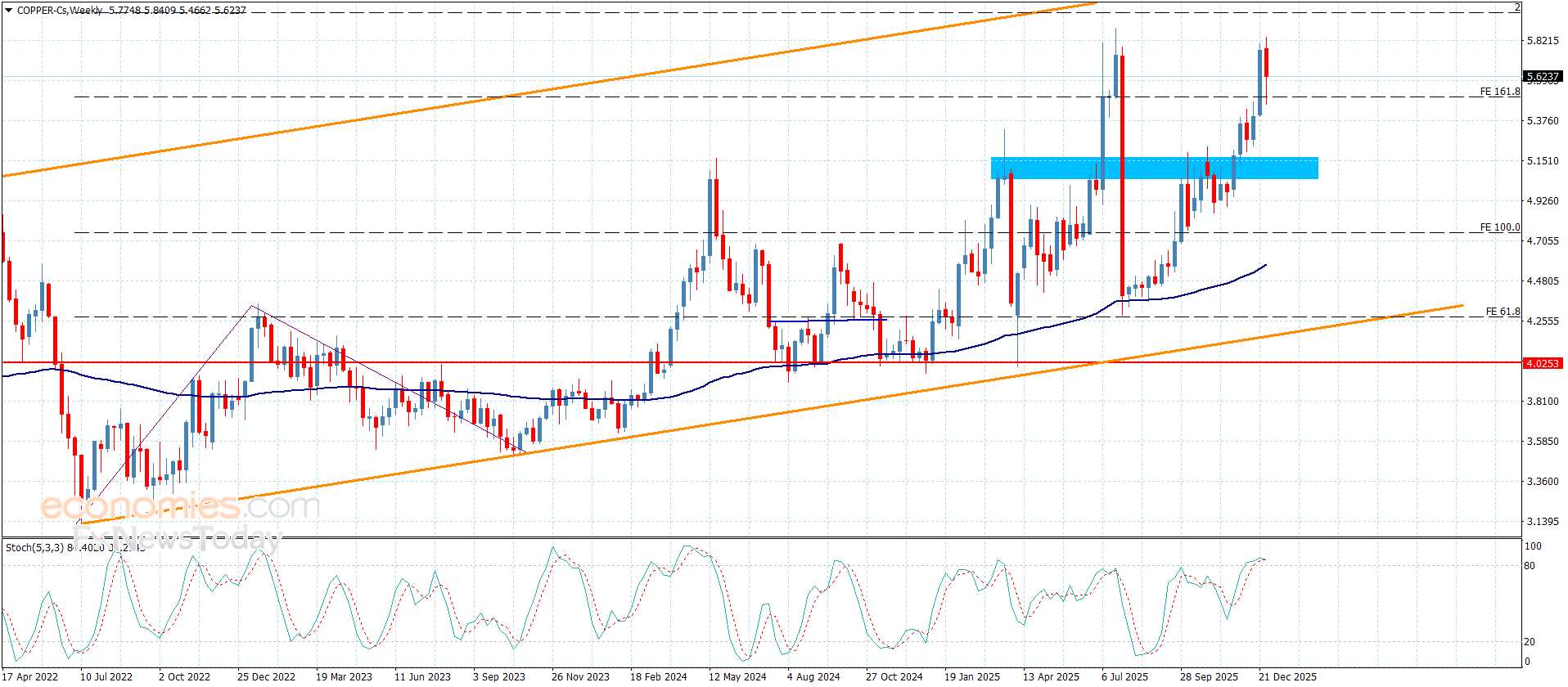
Copper price repeatedly forming weak trading, attempting to surpass stochastic negativity by its fluctuation above EMA50 at $5.5100, the continuation of the sideways bias dominance is expected until gathering the required bullish momentum to resume the bullish attack and achieving extra gains by its rally towards $5.8000 reaching the next resistance at $5.9700.
While the decline below the current support will force it to delay the bullish attack and form bearish waves, which forces it to suffer some losses by reaching $5.3200 followed by the base of the next sport at 5.1500 level.
The expected trading range for today is between $5.5500 and $5.8000
Trend forecast: Bullish
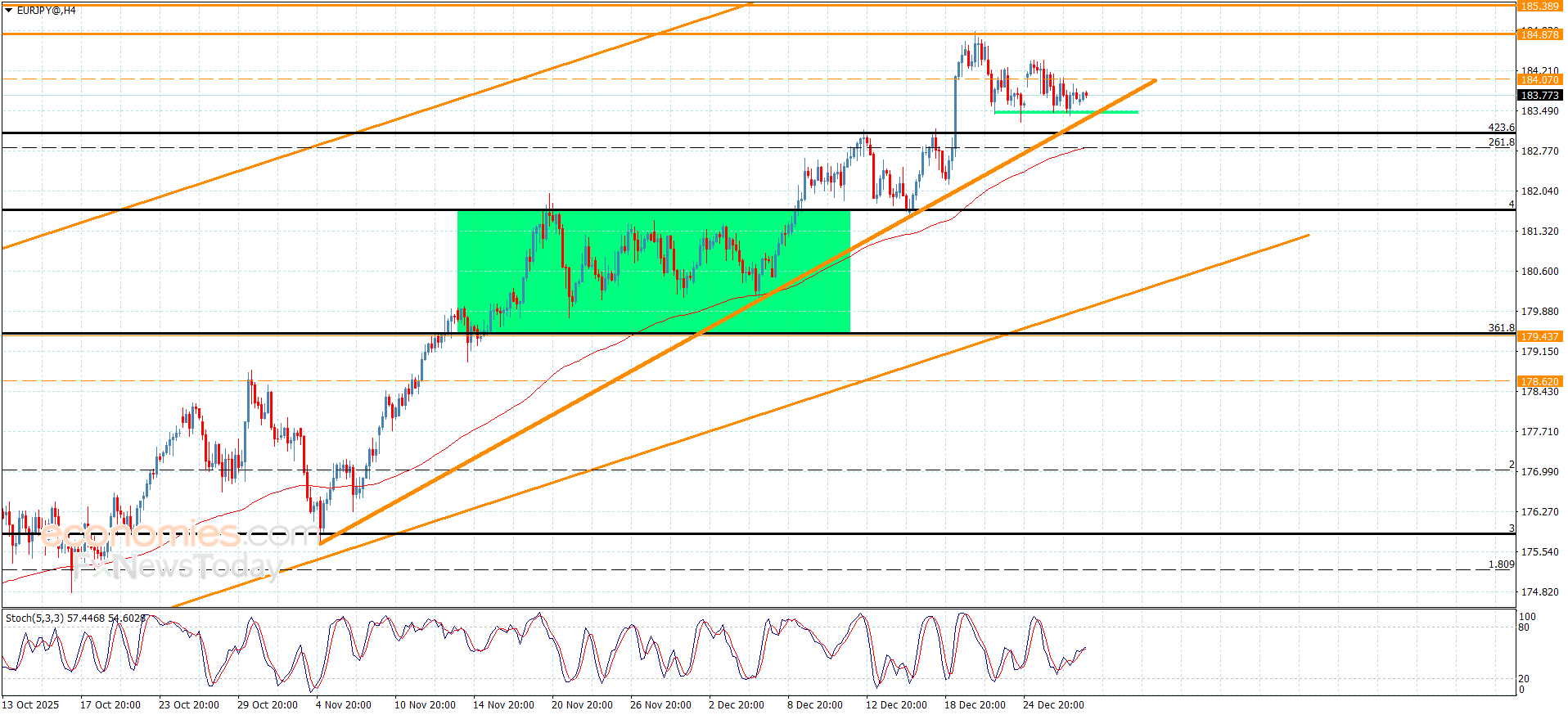
The EURJPY pair began activating with the main indicators’ positivity, to end the bearish corrective attempts after hitting 183.40 level, which represents an extension for the main bullish channel’s support.
Note that renewing the bullish attack requires surpassing extra barrier at 184.40, therefore, we expect the price confinement within these levels until breaching the barrier, to begin recording clear gains by its rally towards 184.85 and 185.40.
The expected trading range for today is between 183.40 and 184.10
Trend forecast: sideways
Marks & Spencer is launching a range of foods tailored to people taking weight-loss injections as use of the drugs accelerates in the UK.
The new range of 20 “nutrient-dense” products from the retailer is aimed at customers taking GLP-1 weight-loss medications, as supermarkets increasingly adapt to the impact the drugs are having on shopping baskets.
The range will go on sale in M&S foodhalls from January 5 and includes salads, meals and bread designed to deliver high levels of fibre, vitamins and minerals in smaller portions.
There has been a dramatic rise in the use of GLP-1 drugs in the UK. Online searches and private prescriptions have increased sharply, driven by their effectiveness for weight loss and widespread media attention. About 1.5 million people in the UK are now estimated to be accessing GLP-1 treatment privately, while NHS England prescriptions for the injections have risen by around 900 per cent since 2020.
GLP-1 medications — known formally as glucagon-like peptide-1 (GLP-1) receptor agonists — were originally developed to treat type 2 diabetes by helping to regulate blood sugar. In recent years, drugs such as semaglutide (sold as Ozempic for diabetes and Wegovy for weight loss) and tirzepatide (sold as Mounjaro) have surged in popularity for their weight-loss effects, as they suppress appetite, slow digestion and signal fullness to the brain.
• Our writers’ share tips for 2026, plus last year’s winners and losers
Nutrient-dense foods are those that provide a concentrated source of vitamins, minerals, fibre, healthy fats and protein relative to their calorie content. M&S said the range was developed by its nutritionists in consultation with the British Nutrition Foundation, using criteria that ensure each product delivers more nutrients per mouthful.
M&S said the new range had been developed to address the nutritional challenges that can arise when people eat less, whether due to medication, age or lifestyle. A reduced appetite can make it harder to consume enough fibre and essential nutrients, increasing the risk of deficiencies and digestive side effects such as constipation.
Grace Ricotti, M&S head of food nutrition, said: “Our nutrient-dense range is perfect for customers looking to support their health as each recipe is packed with the key nutrients we all need in our diets.
“With the increase in popularity of weight-loss injections, a reduced appetite can mean missing out on important nutrients and that’s why nutrient density is so important.
“These new meals, snacks and drinks can help everyone get more fibre, vitamins and minerals in their diet.”
Supermarkets and consumer goods companies are increasingly catering to households using the drugs. Morrisons was the first UK supermarket to announce a dedicated “GLP-1 friendly” range, developed with sports nutrition brand Applied Nutrition, under its “Small & Balanced” banner. Nestlé, the consumer goods giant, has launched a frozen food brand in the US aimed at GLP-1 users, while Haleon, the British multinational consumer healthcare company, has introduced a multivitamin designed to help replenish nutrients for people eating less.
The trend is expected to accelerate further as GLP-1 medications move beyond injections. Tablet versions are beginning to reach the market, with US regulators approving an oral version of Wegovy and rival pills expected to follow, potentially widening access to the drugs.
While the drugs are approved for diabetes and obesity treatment, clinicians have raised concerns about the number of people accessing them outside clinical pathways for cosmetic weight loss. The long-term consequences of widespread use are still being studied, particularly as lower calorie intake can increase the risk of nutrient deficiencies if diets are not carefully managed.
Solana continues to position itself as one of the most ambitious blockchain ecosystems in the market. Developers, investors, and institutions now focus on its long term growth story. The network has moved beyond recovery mode and entered a phase of structured expansion. Each upgrade adds credibility to Solana’s ambition.
The current Solana price forecast reflects more than market optimism. It captures measurable progress across infrastructure, adoption, and capital inflows. Solana no longer relies on hype driven cycles alone. It now builds value through execution and developer momentum.
As 2026 approaches, analysts increasingly discuss higher valuation ranges for SOL. Projections suggest steady appreciation early in the year. Stronger upside potential appears possible by year end. This outlook aligns closely with the Solana roadmap 2026 and ecosystem growth plans.
📈SOLANA TO $400 BY Q4 2026?
Solana’s 2026 roadmap signals steady upside, with Firedancer, RWA expansion, and stablecoin growth potentially driving SOL’s price.
Targets range from $130–$200 in early 2026 to $280–$400 by year-end. pic.twitter.com/9Vp5yixena
— Coin Bureau (@coinbureau) December 31, 2025
Firedancer stands as one of Solana’s most anticipated technical upgrades. Jump Crypto designed this validator client to boost speed and resilience. The upgrade reduces single client risk across the network. It also improves transaction reliability under heavy demand.
SOL already processes high transaction volumes efficiently. Firedancer aims to elevate this advantage further. Developers expect higher throughput without sacrificing decentralization. These improvements attract institutional builders and high frequency applications.
The Solana price forecast benefits directly from this development. Faster and more stable infrastructure strengthens confidence among long term holders. It also supports higher on chain activity during market peaks. That combination often translates into stronger valuation support.
Tokenized real world assets continue to gain momentum across blockchain markets. Solana has emerged as a favored network for these experiments. Low fees and high speed make it attractive for asset issuers. Financial institutions value predictable execution environments.
Projects now tokenize treasuries, credit instruments, and commodities on Solana. This trend expands the network’s utility beyond speculation. It also diversifies transaction demand across market cycles. These factors improve sustainability for the ecosystem.
The SOL price prediction improves when real world adoption rises. Institutional participation reduces volatility over time. It also introduces deeper liquidity sources. The Solana roadmap 2026 clearly prioritizes this expansion strategy.
Stablecoins form the backbone of decentralized finance activity. Solana has seen rapid growth in stablecoin circulation. Users rely on the network for payments, trading, and yield strategies. These flows generate consistent transaction volumes.
Major stablecoin issuers continue expanding Solana support. Developers integrate stablecoins into consumer focused applications. This growth supports daily usage rather than speculative spikes alone. Networks with consistent usage often command higher valuations.
The SOL price forecast reflects this structural shift. Stablecoin activity anchors the ecosystem during volatile periods. It also supports faster recoveries during bullish cycles. Analysts consider this factor critical for late 2026 projections.
Solana competes directly with Ethereum and emerging alternatives. It differentiates through performance and cost efficiency. Many users prioritize experience over ideology. Solana delivers smooth interactions consistently.
Institutions also prefer predictable infrastructure. SOL offers that advantage through technical upgrades. Firedancer further strengthens this positioning. Competing networks still struggle with congestion and fee volatility.
This competitive edge strengthens the SOL price prediction narrative. Markets reward networks that scale effectively. Solana’s execution track record supports premium valuation expectations.
Silver price (XAG/USD) has lost its nearly a 4.5% gain registered in the previous session, trading around $72.50 during the Asian hours on Wednesday. Silver prices came under pressure after the CME raised margin requirements on Silver futures, prompting leveraged traders to reduce positions as prices became technically stretched. Analysts said the pullback reflected position unwinding rather than any deterioration in underlying demand.
However, Silver prices are on track for an annual gain of over 150% in 2025, marking the metal’s strongest yearly performance. The rally accelerated after US President Donald Trump’s global tariff rollout and has been further supported by persistent geopolitical tensions, US rate cuts, and strong industrial demand, especially from the solar, electronics, and data-center sectors.
Silver’s rally has also been driven by a surge in speculative demand in China, pushing Shanghai Futures Exchange premiums to record highs. The elevated premiums signal intense local demand and have tightened global supply chains, mirroring earlier inventory squeezes in London and New York vaults.
Meanwhile, the Federal Open Market Committee’s (FOMC) December Meeting Minutes, released Tuesday, showed most participants favored pausing further rate cuts if inflation continues to ease. Some officials also argued for holding rates steady after three cuts this year aimed at supporting a weakening labor market.
The demand for safe-haven metals, including silver, increases over the geopolitical tensions, Uncertainty over a Russia-Ukraine peace deal, renewed Middle East tensions, and frictions between the US and Venezuela.
Silver is a precious metal highly traded among investors. It has been historically used as a store of value and a medium of exchange. Although less popular than Gold, traders may turn to Silver to diversify their investment portfolio, for its intrinsic value or as a potential hedge during high-inflation periods. Investors can buy physical Silver, in coins or in bars, or trade it through vehicles such as Exchange Traded Funds, which track its price on international markets.
Silver prices can move due to a wide range of factors. Geopolitical instability or fears of a deep recession can make Silver price escalate due to its safe-haven status, although to a lesser extent than Gold’s. As a yieldless asset, Silver tends to rise with lower interest rates. Its moves also depend on how the US Dollar (USD) behaves as the asset is priced in dollars (XAG/USD). A strong Dollar tends to keep the price of Silver at bay, whereas a weaker Dollar is likely to propel prices up. Other factors such as investment demand, mining supply – Silver is much more abundant than Gold – and recycling rates can also affect prices.
Silver is widely used in industry, particularly in sectors such as electronics or solar energy, as it has one of the highest electric conductivity of all metals – more than Copper and Gold. A surge in demand can increase prices, while a decline tends to lower them. Dynamics in the US, Chinese and Indian economies can also contribute to price swings: for the US and particularly China, their big industrial sectors use Silver in various processes; in India, consumers’ demand for the precious metal for jewellery also plays a key role in setting prices.
Silver prices tend to follow Gold’s moves. When Gold prices rise, Silver typically follows suit, as their status as safe-haven assets is similar. The Gold/Silver ratio, which shows the number of ounces of Silver needed to equal the value of one ounce of Gold, may help to determine the relative valuation between both metals. Some investors may consider a high ratio as an indicator that Silver is undervalued, or Gold is overvalued. On the contrary, a low ratio might suggest that Gold is undervalued relative to Silver.
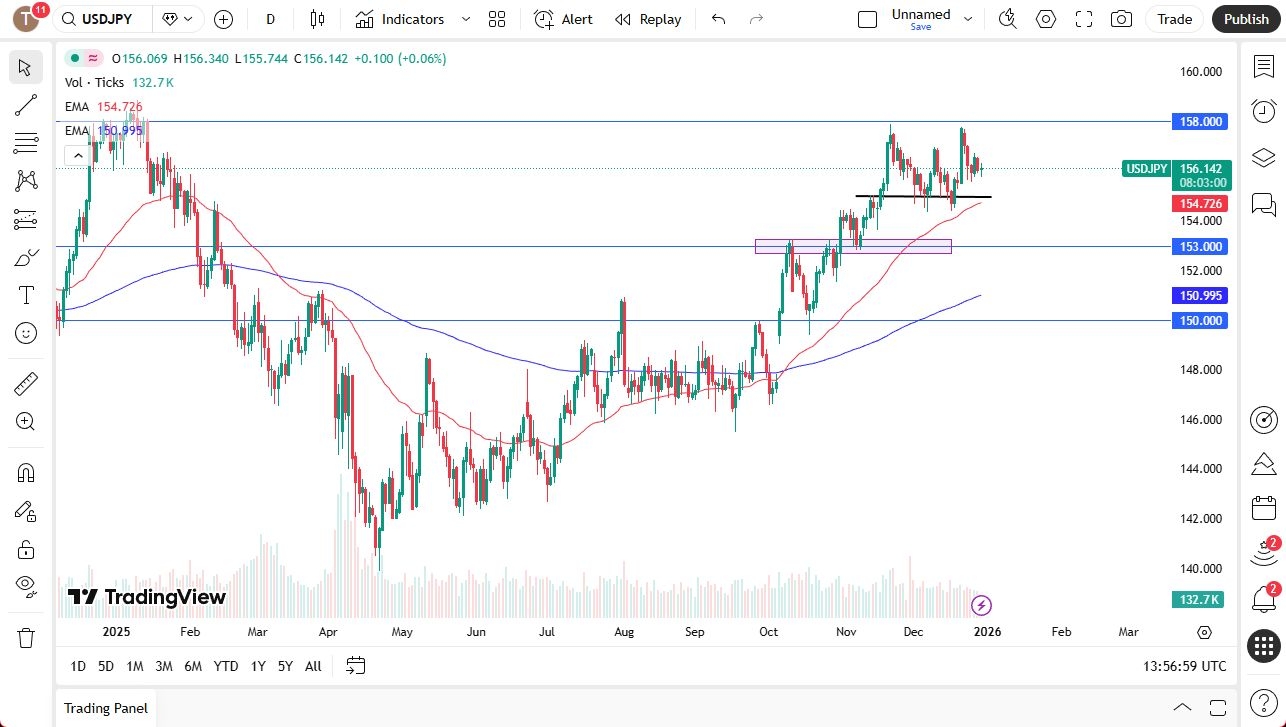
The US dollar has been choppy against the Japanese yen during trading on Tuesday, as we are simply flailing about trying to find some type of momentum. I don’t think we’re going to, at least not in the short term, as we are going to be more worried about the holiday and the lack of liquidity than anything else.
All things being equal, this is a market that I think is going to continue to pay close attention to the 50-day EMA underneath, which is sitting just below the 155 yen level. I suspect that area in that general vicinity is your short-term floor, while the 158 yen level above is your ceiling.

I don’t expect to see any major change in the short term, but I do recognize that eventually we will have to break out of this range. If we can get above the 158 yen level, then I do think that the dollar will go to the 160 yen level. A breakdown below the 154.50 yen level opens up a move down to the 153 yen level.
Fundamentally speaking, the Bank of Japan did just raise rates, and the Federal Reserve is expected to cut once or twice in 2026, but the reality is that the interest rate differential is still wide enough that you can drive a truck through it, and the Bank of Japan really has no ability to tighten monetary policy significantly.
We are starting to hear murmurs of Japan tightening, and while that might be true to a point, the demographics of the country and quite frankly, the debt load don’t allow that to be a major feature going forward. I like the idea of buying dips against the yen and will continue to do so.
Want to trade our USD/JPY forex analysis and predictions? Here’s a list of forex brokers in Japan to check out.
Christopher Lewis has been trading Forex and has over 20 years experience in financial markets. Chris has been a regular contributor to Daily Forex since the early days of the site. He writes about Forex for several online publications, including FX Empire, Investing.com, and his own site, aptly named The Trader Guy. Chris favours technical analysis methods to identify his trades and likes to trade equity indices and commodities as well as Forex. He favours a longer-term trading style, and his trades often last for days or weeks.
Marks & Spencer is launching a range of foods tailored to people taking weight-loss injections as use of the drugs accelerates in the UK.
The new range of 20 “nutrient-dense” products from the retailer is aimed at customers taking GLP-1 weight-loss medications, as supermarkets increasingly adapt to the impact the drugs are having on shopping baskets.
The range will go on sale in M&S foodhalls from January 5 and includes salads, meals and bread designed to deliver high levels of fibre, vitamins and minerals in smaller portions.
There has been a dramatic rise in the use of GLP-1 drugs in the UK. Online searches and private prescriptions have increased sharply, driven by their effectiveness for weight loss and widespread media attention. About 1.5 million people in the UK are now estimated to be accessing GLP-1 treatment privately, while NHS England prescriptions for the injections have risen by around 900 per cent since 2020.
GLP-1 medications — known formally as glucagon-like peptide-1 (GLP-1) receptor agonists — were originally developed to treat type 2 diabetes by helping to regulate blood sugar. In recent years, drugs such as semaglutide (sold as Ozempic for diabetes and Wegovy for weight loss) and tirzepatide (sold as Mounjaro) have surged in popularity for their weight-loss effects, as they suppress appetite, slow digestion and signal fullness to the brain.
• Our writers’ share tips for 2026, plus last year’s winners and losers
Nutrient-dense foods are those that provide a concentrated source of vitamins, minerals, fibre, healthy fats and protein relative to their calorie content. M&S said the range was developed by its nutritionists in consultation with the British Nutrition Foundation, using criteria that ensure each product delivers more nutrients per mouthful.
M&S said the new range had been developed to address the nutritional challenges that can arise when people eat less, whether due to medication, age or lifestyle. A reduced appetite can make it harder to consume enough fibre and essential nutrients, increasing the risk of deficiencies and digestive side effects such as constipation.
Grace Ricotti, M&S head of food nutrition, said: “Our nutrient-dense range is perfect for customers looking to support their health as each recipe is packed with the key nutrients we all need in our diets.
“With the increase in popularity of weight-loss injections, a reduced appetite can mean missing out on important nutrients and that’s why nutrient density is so important.
“These new meals, snacks and drinks can help everyone get more fibre, vitamins and minerals in their diet.”
Supermarkets and consumer goods companies are increasingly catering to households using the drugs. Morrisons was the first UK supermarket to announce a dedicated “GLP-1 friendly” range, developed with sports nutrition brand Applied Nutrition, under its “Small & Balanced” banner. Nestlé, the consumer goods giant, has launched a frozen food brand in the US aimed at GLP-1 users, while Haleon, the British multinational consumer healthcare company, has introduced a multivitamin designed to help replenish nutrients for people eating less.
The trend is expected to accelerate further as GLP-1 medications move beyond injections. Tablet versions are beginning to reach the market, with US regulators approving an oral version of Wegovy and rival pills expected to follow, potentially widening access to the drugs.
While the drugs are approved for diabetes and obesity treatment, clinicians have raised concerns about the number of people accessing them outside clinical pathways for cosmetic weight loss. The long-term consequences of widespread use are still being studied, particularly as lower calorie intake can increase the risk of nutrient deficiencies if diets are not carefully managed.
XRP was the most traded asset on Uphold in 2025. The exchange confirmed the ranking on X, thanking “one of the most engaged and supportive communities in the digital asset ecosystem.”
The broader backdrop matters here, as this was not an easy year for crypto.
Bitcoin is down 30% from its ATH, and the overall altcoin market has fallen sharply too. Trading activity narrowed, and only a handful of tokens continued to attract consistent volume.
XRP was one of them.
Uphold has long been viewed as one of the more XRP-friendly platforms, having kept the token listed even during the height of regulatory uncertainty in the U.S. That decision appears to have paid off. As trading conditions tightened this year, XRP users stayed active.
In 2025, Uphold expanded XRP-related utility, including yield-focused options tied to the Flare Network. The platform also ran XRP-centered promotions earlier in the year, keeping the asset visible and liquid for users.
At the same time, Uphold itself was growing. The exchange added 74 new tokens, rolled out 45 blockchain integrations, and announced 16 new partnerships across payments and infrastructure. Even with more assets competing for attention, XRP still came out on top.
XRP also benefited from changes outside the exchange. Legal developments reduced long-standing uncertainty, making the asset easier to evaluate for larger investors.
In November, the Canary Capital XRP ETF launched, adding a new way to gain exposure and interest expanded.
According to Motley Fool, analysts expect XRP to nearly triple to around $5 by 2030.
One key factor is XRP’s potential role as a bridge currency for cross-border payments on the Ripple network, where transactions are completed faster and at lower cost than traditional systems like SWIFT.
Separately, “World’s Smartest Man” Younghoon Kim, who claims an IQ of 276, wrote on X that XRP may outperform gold and silver in 2026.
Stay ahead with breaking news, expert analysis, and real-time updates on the latest trends in Bitcoin, altcoins, DeFi, NFTs, and more.
Analyst outlooks for XRP are improving due to its utility in cross-border payments and reduced legal uncertainty, but all crypto investments carry significant risk and volatility.
Some market commentators suggest XRP could outperform precious metals, but this is speculative. Crypto is far more volatile than gold, making direct comparisons risky for long-term portfolios.
Some financial analysts project XRP could reach around $5 by 2030, based on its potential role as a bridge currency for efficient international payments.
CoinPedia has been delivering accurate and timely cryptocurrency and blockchain updates since 2017. All content is created by our expert panel of analysts and journalists, following strict Editorial Guidelines based on E-E-A-T (Experience, Expertise, Authoritativeness, Trustworthiness). Every article is fact-checked against reputable sources to ensure accuracy, transparency, and reliability. Our review policy guarantees unbiased evaluations when recommending exchanges, platforms, or tools. We strive to provide timely updates about everything crypto & blockchain, right from startups to industry majors.
All opinions and insights shared represent the author’s own views on current market conditions. Please do your own research before making investment decisions. Neither the writer nor the publication assumes responsibility for your financial choices.
Sponsored content and affiliate links may appear on our site. Advertisements are marked clearly, and our editorial content remains entirely independent from our ad partners.
Copper price repeatedly forming weak trading, attempting to surpass stochastic negativity by its fluctuation above EMA50 at $5.5100, the continuation of the sideways bias dominance is expected until gathering the required bullish momentum to resume the bullish attack and achieving extra gains by its rally towards $5.8000 reaching the next resistance at $5.9700.
While the decline below the current support will force it to delay the bullish attack and form bearish waves, which forces it to suffer some losses by reaching $5.3200 followed by the base of the next sport at 5.1500 level.
The expected trading range for today is between $5.5500 and $5.8000
Trend forecast: Bullish
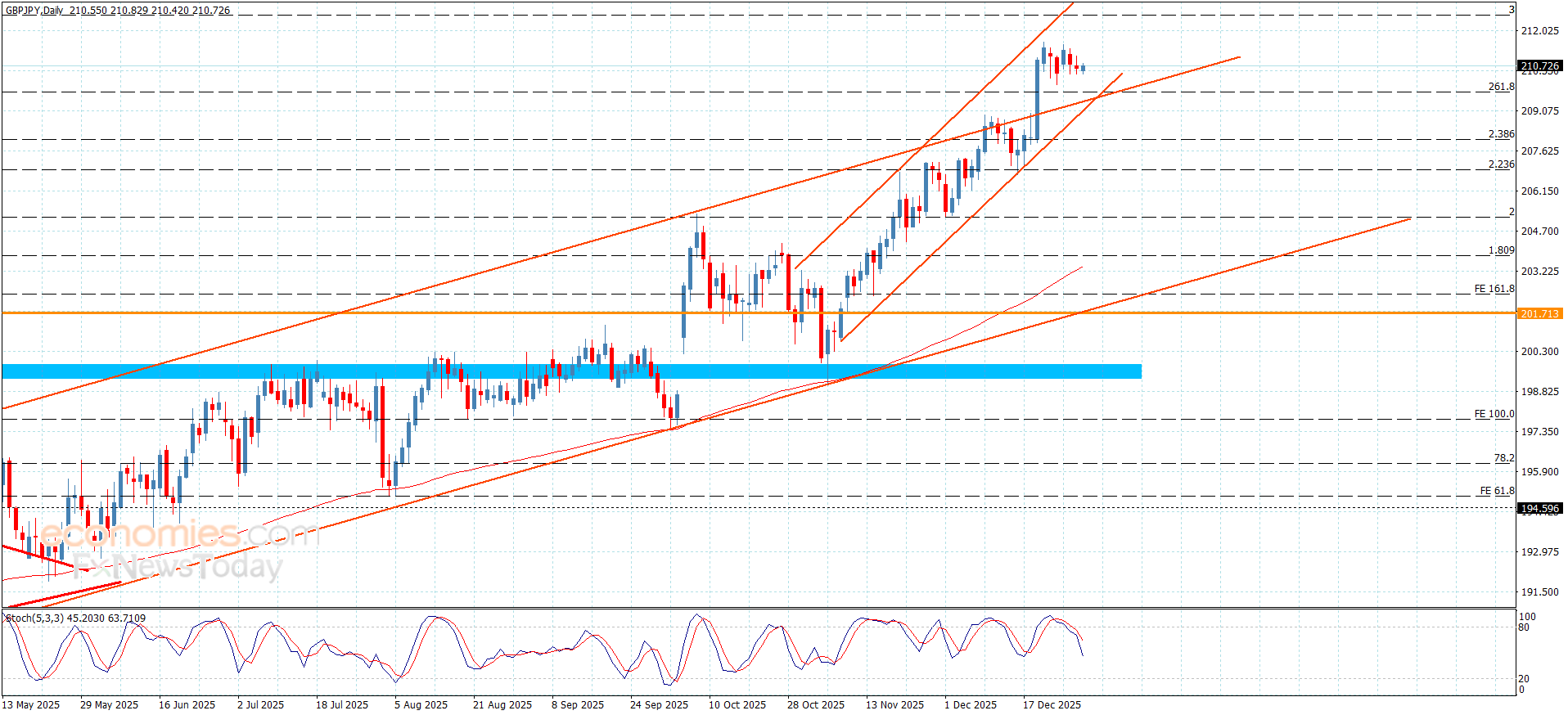
The GBPJPY pair repeatedly providing weak sideways trading by its fluctuating near 210.70 level, affected by the contradiction between the main indicators, while the negative stability below 211.30 barrier keeps the bearish correction scenario, which might target 209.70 level reaching 209.10 support.
Note that surpassing the barrier and holding above will confirm its readiness to renew the bullish attempts, to expect recording new gains by its rally towards 211.90 and 212.65.
The expected trading range for today is between 209.30 and 211.20
Trend forecast: Bearish