The main category of All News Articles.
You can use the search box below to find what you need.
[wd_asp id=1]
The main category of All News Articles.
You can use the search box below to find what you need.
[wd_asp id=1]
Silver price (XAG/USD) rallies further to near $72.70 during the early European trading session on Wednesday. The white metal extends its bull run as Federal Reserve (Fed) dovish expectations for 2026 remain broadly firm, even as the United States (US) Q3 Gross Domestic Product (GDP) came in surprisingly higher.
According to the CME FedWatch tool, traders see a 70.6% that the Fed will reduce interest rates by at least 50 bps in 2026, signaling a higher scope of interest rate cuts than the Fed’s projections in its dot plot last week. The Fed’s dot plot showed that policymakers collectively see the Federal Funds Rate heading to 3.4% by the end of 2026, indicating that there won’t be more than one interest rate cut.
Theoretically, lower interest rates by the Fed bode well for non-yielding assets, such as Silver.
On Tuesday, the US GDP data showed that the economy grew at a robust pace of 4.3% year-on-year (YoY). Economists expect the US GDP growth to come in lower at 3.3% from 3.8% recorded in the second quarter of the year.
In Wednesday’s session, investors will focus on Initial Jobless Claims data, which will be published at 13:30 GMT. Individuals claiming jobless benefits for the first time are expected to have remained steady at 223K.
In the daily chart, XAG/USD trades at $72.19. The 20-day exponential moving average is ascending, and price holds well above it, reinforcing a firm bullish bias. The average’s positive slope continues to support the advance. RSI (14) at 80.95 is overbought, signaling stretched momentum that could precede consolidation.
Should momentum cool, pullbacks could find support at the 20-day EMA around $63.07. The uptrend would remain intact while above this dynamic floor, whereas a loss of that level would expose a deeper retracement as overbought conditions unwind.
(The technical analysis of this story was written with the help of an AI tool.)
Silver is a precious metal highly traded among investors. It has been historically used as a store of value and a medium of exchange. Although less popular than Gold, traders may turn to Silver to diversify their investment portfolio, for its intrinsic value or as a potential hedge during high-inflation periods. Investors can buy physical Silver, in coins or in bars, or trade it through vehicles such as Exchange Traded Funds, which track its price on international markets.
Silver prices can move due to a wide range of factors. Geopolitical instability or fears of a deep recession can make Silver price escalate due to its safe-haven status, although to a lesser extent than Gold’s. As a yieldless asset, Silver tends to rise with lower interest rates. Its moves also depend on how the US Dollar (USD) behaves as the asset is priced in dollars (XAG/USD). A strong Dollar tends to keep the price of Silver at bay, whereas a weaker Dollar is likely to propel prices up. Other factors such as investment demand, mining supply – Silver is much more abundant than Gold – and recycling rates can also affect prices.
Silver is widely used in industry, particularly in sectors such as electronics or solar energy, as it has one of the highest electric conductivity of all metals – more than Copper and Gold. A surge in demand can increase prices, while a decline tends to lower them. Dynamics in the US, Chinese and Indian economies can also contribute to price swings: for the US and particularly China, their big industrial sectors use Silver in various processes; in India, consumers’ demand for the precious metal for jewellery also plays a key role in setting prices.
Silver prices tend to follow Gold’s moves. When Gold prices rise, Silver typically follows suit, as their status as safe-haven assets is similar. The Gold/Silver ratio, which shows the number of ounces of Silver needed to equal the value of one ounce of Gold, may help to determine the relative valuation between both metals. Some investors may consider a high ratio as an indicator that Silver is undervalued, or Gold is overvalued. On the contrary, a low ratio might suggest that Gold is undervalued relative to Silver.
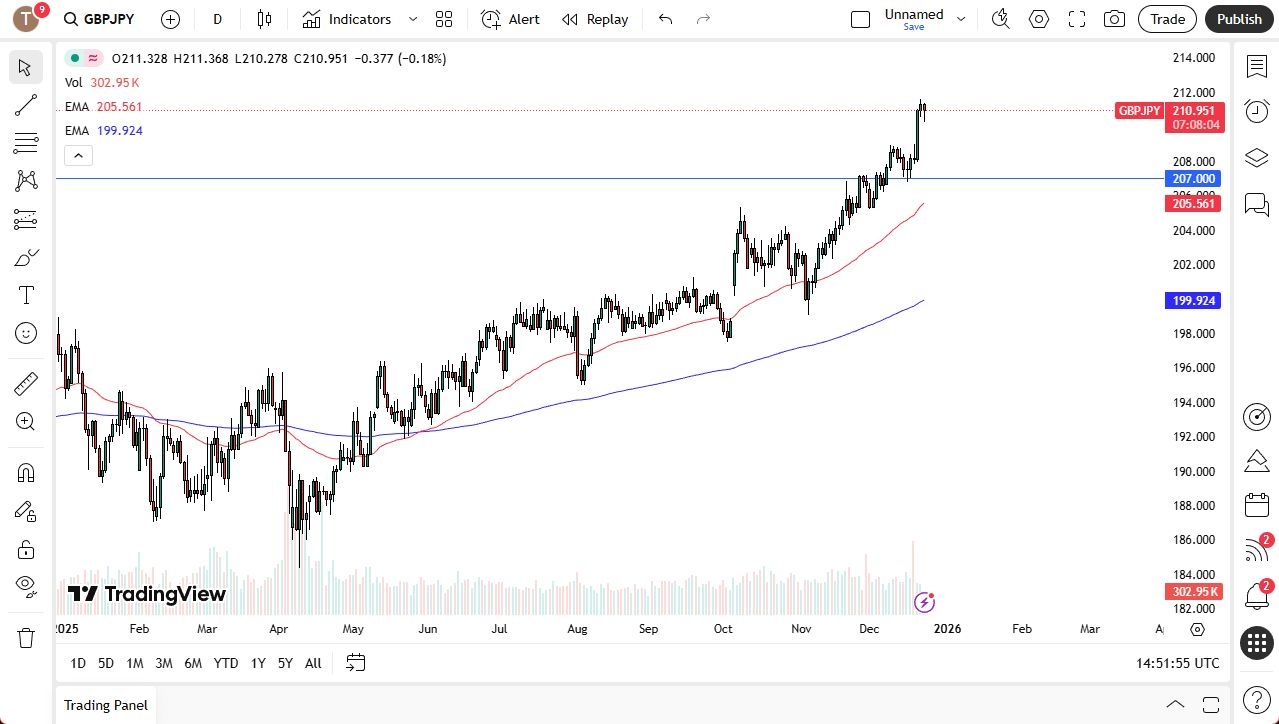
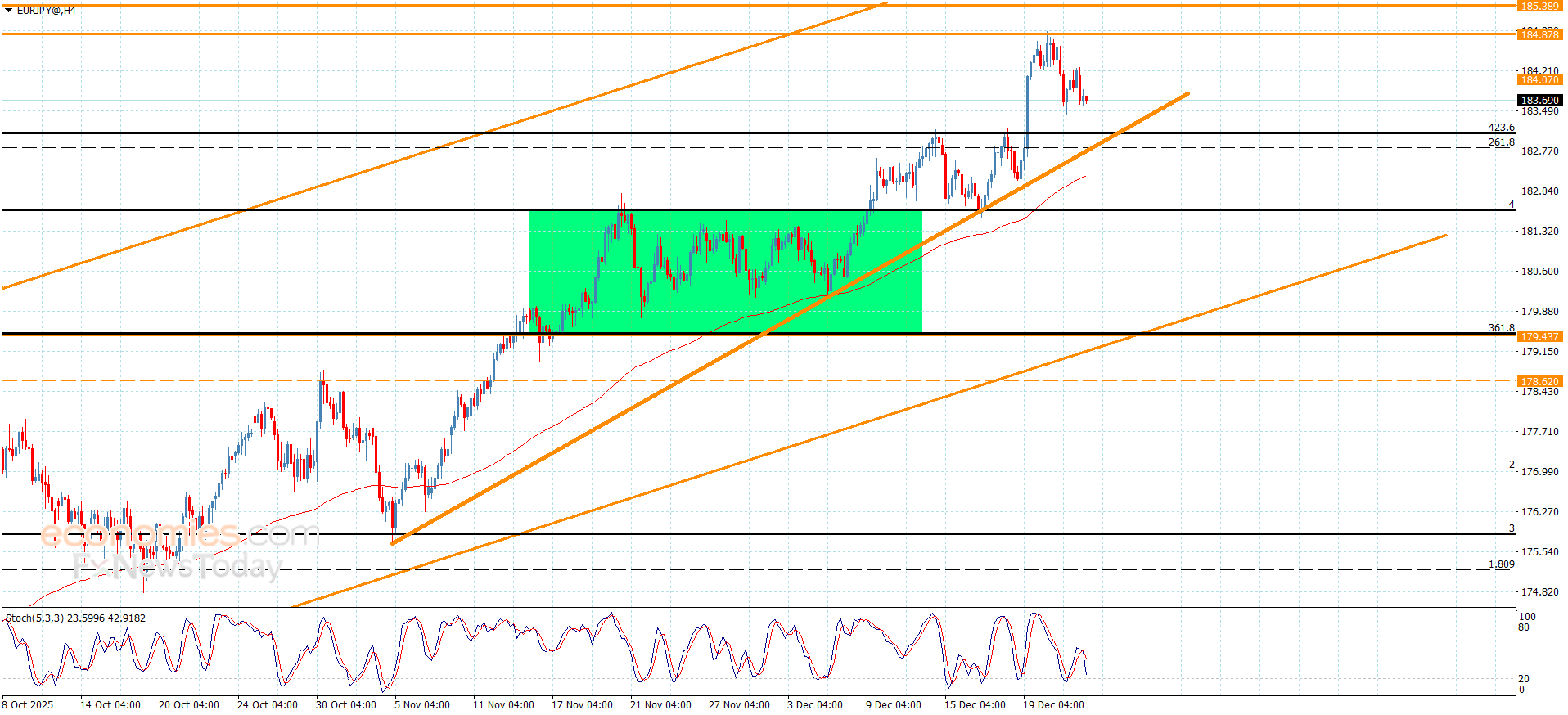
Ultimately, breaking above the recent 209 yen level was a very strong sign as to where we are going next. As the Bank of Japan tightened rates a bit, the bond market is up in arms and suggesting that they can only do so much. With that being said, and the interest rate differential coming into focus here, I do think you continue to see a big move to the upside.

Short-term pullbacks continue to be buying opportunities, and it’s really not until we break down below 208 yen that I would consider stepping back and staying away from the pair. I don’t have any interest in shorting this pair anytime soon, and quite frankly, if I were to buy the yen, it would be against lower-yielding currencies if we saw a major trend change, for example, maybe short the Swiss franc against the yen.
With all of this being said, I do think that the upward target is probably somewhere closer to the 214 yen level over the next several weeks. I do recognize that the lack of liquidity coming in the next few days will continue to be a bit of an issue, but it can also provide an opportunity. For example, you may have traders looking to take some profit out of the market, and that could send this market down for a day or two, and it could give you an opportunity based on that alone.
Another thing that can happen this time of year is maybe the lack of volume makes for erratic moves, so if you are already long of this market, you may have traders who are short trying to cover, and it can cause a spike. Either way, no matter what, at this point, there’s only one direction I’m looking to trade in this market, and that is with the positive currency swap to the upside.
Begin trading our daily forecasts and analysis. Here is a list of Forex brokers in Japan to work with.
Christopher Lewis has been trading Forex and has over 20 years experience in financial markets. Chris has been a regular contributor to Daily Forex since the early days of the site. He writes about Forex for several online publications, including FX Empire, Investing.com, and his own site, aptly named The Trader Guy. Chris favours technical analysis methods to identify his trades and likes to trade equity indices and commodities as well as Forex. He favours a longer-term trading style, and his trades often last for days or weeks.
The global creatine monohydrate market is demonstrating strong and sustained expansion, underpinned by rising health consciousness, increased sports participation, and growing demand for performance-enhancing nutritional supplements. In 2025, the global creatine monohydrate market size is likely to be valued at approximately US$ 341.0 million. Over the forecast period from 2025 to 2032, the market is projected to reach US$ 757.0 million, registering a robust compound annual growth rate (CAGR) of 12%. This significant growth trajectory reflects both increasing adoption across diverse consumer groups and continuous innovation in product formulations and delivery formats.
Creatine monohydrate, widely recognized for its efficacy in enhancing muscle strength, endurance, and recovery, has transitioned from a niche supplement used primarily by professional athletes to a mainstream health and wellness product. The growing popularity of fitness regimes, bodybuilding, and high-intensity training programs across both developed and emerging economies has played a critical role in expanding the consumer base. Additionally, the rising prevalence of lifestyle-related health concerns, such as obesity and metabolic disorders, has driven individuals toward structured exercise programs supported by nutritional supplementation.
Another key growth driver is the expanding application of creatine monohydrate beyond sports nutrition. Increasing research and clinical interest in its potential benefits for cognitive health, aging populations, and therapeutic applications have widened its market scope. Manufacturers are also benefiting from improved supply chain efficiencies and advancements in raw material processing, which have enhanced product purity, consistency, and scalability. Together, these factors are creating a favorable environment for sustained market growth during the forecast period.
Get Your FREE Sample Report Instantly – Click Now: https://www.persistencemarketresearch.com/samples/12268
Segmentation Analysis
By Type
By type, the creatine monohydrate market is segmented into pharmaceutical-grade creatine monohydrate, food-grade creatine monohydrate, and micronized creatine monohydrate. Among these, micronized creatine monohydrate currently dominates the market due to its superior solubility, improved absorption characteristics, and reduced gastrointestinal discomfort compared to conventional forms. The finer particle size of micronized variants has made them particularly attractive to fitness enthusiasts and professional athletes seeking faster and more efficient nutrient uptake.
Pharmaceutical-grade creatine monohydrate is experiencing steady growth, driven by its high purity standards and increasing use in clinical and research settings. As regulatory scrutiny intensifies and consumers become more informed about quality certifications, demand for pharmaceutical-grade products is expected to grow at an accelerated pace. Food-grade creatine monohydrate continues to hold a significant share, particularly in mass-market dietary supplements and fortified food products, supported by its cost-effectiveness and broad regulatory acceptance.
By Product Type
From a product perspective, the market is categorized into powders, capsules/tablets, liquids, and blended formulations. Creatine monohydrate powder remains the most widely consumed product type, owing to its affordability, flexibility in dosing, and ease of integration into protein shakes and pre-workout formulations. Powdered products are favored by both individual consumers and commercial gyms, contributing to their dominant market share.
Capsules and tablets are witnessing increasing adoption, particularly among consumers seeking convenience, precise dosing, and portability. This segment is gaining traction among working professionals and aging consumers who prioritize ease of consumption. Liquid creatine formulations, although still a niche segment, are gradually gaining acceptance due to advancements in stabilization technologies that improve shelf life and bioavailability. Blended formulations, which combine creatine monohydrate with amino acids, vitamins, or herbal extracts, are growing rapidly as brands focus on differentiated offerings tailored to specific fitness and wellness goals.
By Distribution Channel
In terms of distribution channels, the market is segmented into online retail, specialty nutrition stores, supermarkets and hypermarkets, and direct-to-consumer channels. Online retail platforms have emerged as the fastest-growing channel, driven by the expansion of e-commerce infrastructure, increased digital literacy, and the availability of detailed product information and reviews. The convenience of home delivery and access to a wide range of brands have further accelerated online sales.
Specialty nutrition stores continue to play a crucial role, particularly in providing expert guidance and personalized recommendations to consumers. Supermarkets and hypermarkets contribute significantly to volume sales, especially for established brands targeting mass-market consumers. Direct-to-consumer channels are gaining importance as manufacturers seek to strengthen brand loyalty, gather consumer insights, and improve profit margins by bypassing intermediaries.
Need Tailored Insights? Request Customization Now: https://www.persistencemarketresearch.com/request-customization/12268
Regional Insights
Regionally, North America currently holds the leading share of the global creatine monohydrate market. The region’s dominance is attributed to a well-established sports nutrition industry, high disposable incomes, and a strong culture of fitness and athletic performance. The presence of major market players, extensive research and development activities, and widespread acceptance of dietary supplements further reinforce North America’s leadership position.
Europe represents another significant market, supported by increasing health awareness, a growing aging population, and expanding participation in recreational sports and fitness activities. Countries such as Germany, the United Kingdom, and France are key contributors, driven by strong regulatory frameworks that ensure product quality and safety, thereby enhancing consumer trust.
The Asia-Pacific region is expected to be the fastest-growing market during the forecast period. Rapid urbanization, rising middle-class populations, and increasing adoption of Western fitness trends are driving demand across countries such as China, India, Japan, and South Korea. Additionally, the expansion of e-commerce platforms and growing investments in fitness infrastructure are accelerating market penetration. Latin America and the Middle East & Africa are also witnessing steady growth, supported by increasing awareness of sports nutrition and gradual improvements in distribution networks.
Unique Features and Innovations in the Market
The modern creatine monohydrate market is characterized by continuous innovation aimed at improving efficacy, safety, and consumer experience. Advances in manufacturing processes have enabled the production of ultra-pure creatine monohydrate with minimal impurities, enhancing product reliability and performance. Innovations in micronization and encapsulation technologies have further improved solubility and absorption, addressing long-standing concerns related to digestibility.
Digital technologies are playing an increasingly important role in shaping the market. Artificial intelligence (AI) is being utilized by manufacturers to analyze consumer behavior, optimize formulations, and predict demand patterns. Internet of Things (IoT)-enabled fitness devices and applications are indirectly enhancing market growth by promoting data-driven training programs that emphasize the role of supplements in achieving performance goals. While 5G technology is still in its early stages of impact, its potential to enable real-time data sharing and personalized nutrition recommendations is expected to further transform consumer engagement and product development strategies.
Market Highlights
One of the primary reasons for the widespread adoption of creatine monohydrate is its strong scientific backing and proven efficacy in improving physical performance. Businesses across the sports nutrition, fitness, and healthcare industries are increasingly incorporating creatine-based products into their portfolios to meet rising consumer demand. Cost-effectiveness compared to other performance-enhancing supplements also makes creatine monohydrate an attractive option for both manufacturers and consumers.
Regulatory support and standardization have played a crucial role in market expansion. In many regions, creatine monohydrate is recognized as a safe and well-researched supplement, which has facilitated its inclusion in a wide range of consumer products. Sustainability considerations are also gaining importance, with manufacturers exploring environmentally responsible sourcing of raw materials and adopting energy-efficient production processes to align with evolving regulatory and consumer expectations.
Secure Your Full Report – Proceed to Checkout: https://www.persistencemarketresearch.com/checkout/12268
Key Players and Competitive Landscape
The global creatine monohydrate market is moderately consolidated, with several leading players competing on the basis of product quality, brand reputation, and distribution reach. Key companies operating in the market include BASF SE, AlzChem Group AG, NutraBio Labs, Inc., Glanbia plc, and MuscleTech. These companies have established strong positions through continuous investment in research and development, strategic partnerships, and global expansion initiatives.
BASF SE is recognized for its strong chemical manufacturing expertise and emphasis on high-purity creatine monohydrate products. The company’s focus on quality assurance and regulatory compliance has enabled it to maintain long-term relationships with major supplement brands. AlzChem Group AG is known for its vertically integrated production model, which ensures consistent supply and quality control, making it a preferred supplier in the global market.
NutraBio Labs, Inc. has differentiated itself through transparency and clean-label formulations, catering to health-conscious consumers seeking traceable and certified products. Glanbia plc leverages its extensive global distribution network and strong brand portfolio to reach a broad consumer base, while MuscleTech focuses on innovation and marketing-driven strategies to appeal to performance-oriented athletes.
Looking ahead, the competitive landscape is expected to evolve as new entrants introduce innovative formulations and established players expand into emerging markets. Mergers, acquisitions, and strategic collaborations are likely to intensify as companies seek to enhance their technological capabilities and geographic presence. The continued evolution of regulatory frameworks and advancements in nutrition science are expected to create new opportunities for growth, positioning creatine monohydrate as a cornerstone ingredient in the global sports nutrition and wellness industry.
Explore the Latest Trending Research Reports:
Kelp Market Opportunities: https://www.persistencemarketresearch.com/market-research/kelp-market.asp
Pregelatinized Flour Market Opportunities: https://www.persistencemarketresearch.com/market-research/pregelatinized-flour-market.asp
Puffed Food Market Opportunities: https://www.persistencemarketresearch.com/market-research/puffed-food-market.asp
About Persistence Market Research:
At Persistence Market Research, we specialize in creating research studies that serve as strategic tools for driving business growth. Established as a proprietary firm in 2012, we have evolved into a registered company in England and Wales in 2023 under the name Persistence Research & Consultancy Services Ltd. With a solid foundation, we have completed over 3600 custom and syndicate market research projects, and delivered more than 2700 projects for other leading market research companies’ clients.
Our approach combines traditional market research methods with modern tools to offer comprehensive research solutions. With a decade of experience, we pride ourselves on deriving actionable insights from data to help businesses stay ahead of the competition. Our client base spans multinational corporations, leading consulting firms, investment funds, and government departments. A significant portion of our sales comes from repeat clients, a testament to the value and trust we’ve built over the years.
Contact Us:
Persistence Market Research
Second Floor, 150 Fleet Street,
London, EC4A 2DQ, United Kingdom
USA Phone: +1 646-878-6329
UK Phone: +44 203-837-5656
Email: sales@persistencemarketresearch.com
Web: https://www.persistencemarketresearch.com
This release was published on openPR.
On 7 December 2025, XRP is trading a little above the psychologically crucial $2.00 level, with a market cap around the mid‑$120 billion range and sitting among the top four cryptocurrencies by size. [1]
At the same time, U.S. spot XRP ETFs have quietly absorbed close to $900 million in just a few weeks, even as price has slipped from its summer highs near $3.60. [2]
Yet sentiment sits deep in “extreme fear”, and December forecasts for XRP now range from sub‑$2.00 retests to bullish calls near $3.00. [3]
This article pulls together the latest news, on‑chain data, and analyst predictions as of 7 December 2025 to map out what XRP might realistically do for the rest of December.
Quick disclaimer: Nothing here is financial advice. Crypto is highly volatile; always do your own research and never invest money you can’t afford to lose.
On 7 December, a daily analysis from U.Today notes that $2.00 is the key short‑term support, with XRP trading just under or around that level and no clear bullish reversal yet on higher time frames. A weekly close below $2, the piece warns, could open a deeper correction toward the $1.40–$1.60 zone. [6]
Changelly’s real‑time dashboard paints a similar picture: price near $2.04, a 7% weekly decline, only 11 green days out of the last 30, and a Fear & Greed Index score of 20 — “Extreme Fear.” [7]
In other words: price is holding, but confidence is fragile.
Despite the gloomy mood on social media and among retail traders, institutional money is quietly flowing in.
Put simply: retail sentiment is fearful and choppy; institutions are steadily buying through ETFs and OTC channels. That divergence is one of the defining features of XRP’s December setup.
Beyond price and ETFs, XRP Ledger (XRPL) metrics have turned unusually active.
Meanwhile, Brave New Coin’s latest XRP insight describes a liquidation heatmap cluster around $2.25–$2.30, with price repeatedly defending the $2.00 floor and ETF filings indicating daily inflows of around $12–15 million. The analysis characterizes XRP’s structure as “quietly preparing for its next decisive move”, warning that a breakdown under $2 could send price toward $1.85–$1.90, while a push through $2.35–$2.40 would confirm a bullish reversal. [17]
In parallel, InvestX notes that Ripple recently transferred 250 million XRP from escrow, with price consolidating between $2.00–$2.10 and resistance around $2.30–$2.40. The piece speculates that if those tokens aren’t immediately pushed to exchanges, a perceived supply squeeze could support a move toward $2.50 as volatility compresses and Bollinger Bands tighten. [18]
Net message from on‑chain data: XRP is highly active, whales and ETFs are accumulating, but mid‑tier holders are still taking profits — a classic late‑stage consolidation profile.
Ripple’s long‑running battle with the U.S. Securities and Exchange Commission has effectively ended during 2025:
That legal closure has clearly helped unlock the current wave of ETF launches and institutional interest.
Ripple’s enterprise story also keeps evolving:
Ripple’s RLUSD stablecoin — launched in late 2024 and expanded through 2025 — is the other big fundamental piece:
24/7 Wall St. stresses that RLUSD “fixes the problem” of banks avoiding XRP because of volatility: they can first adopt RLUSD for settlements, then later use XRP as a bridge asset once corridors are mature. In the short term, that may support RippleNet growth without immediately boosting XRP’s on‑chain volume, but over time it could create a stronger foundation for true utility‑driven demand. [26]
Fundamentally, then, XRP enters late 2025 with:
But the translation of all that into sustained, on‑chain XRP demand and price appreciation remains uneven.
Across today’s analyses, a few price zones show up again and again.
If bulls can clear that $2.25–$2.30 band with conviction:
Taken together, the technical consensus looks like this:
Different research desks and platforms are publishing explicit numbers for December 2025. Here’s how they line up:
Changelly’s fresh 7 December 2025 update projects for December 2025: [36]
That forecast basically envisions a choppy but sideways month where XRP spends most of its time between $2.00 and $2.30.
Indian exchange Coindcx takes a more optimistic stance. Its December outlook suggests: [37]
Coindcx explicitly mentions $2.85 as a plausible year‑end target, contingent on XRP holding above $2 and the overall market staying bullish.
Coinpedia’s piece summarizing Gemini’s XRP price prediction for December 2025 lays out a probability‑based view: [38]
CCN’s early‑December technical deep‑dive frames December as a two‑path month: [39]
The “AI vs. human” narrative has also become a story in itself:
While not strictly about December, several research notes tie the month’s outlook into a broader 2026–2027 story:
Those longer‑term projections matter mainly as context: they remind us that December 2025 is just one monthly candle inside a much bigger story.
Taking all of the above into account — current price, ETF flows, on‑chain metrics, technical structure, and published forecasts — here’s a scenario framework for the rest of December 2025.
Approximate range: $1.95 – $2.40
This scenario lines up most closely with Changelly, parts of CCN, and the more cautious segments of institutional research:
In this outcome, XRP might finish December somewhere in the low‑to‑mid $2s, close to its current value — frustrating for traders, but consistent with a consolidation phase before a bigger move in 2026.
Approximate range: $2.40 – $3.00+
This scenario reflects the more optimistic outlooks from Coindcx, Gemini, CryptoPotato, CoinCentral and parts of 24/7 Wall St. [45]
Conditions that would favor it:
If those dominoes fall, a run into the $2.60–$2.85 zone looks plausible, with a stretch target up toward $3.00–$3.10 in line with Gemini’s and Coindcx’s high‑end December forecasts. [48]
Given we are already a week into December, such a move would likely require one or two strong, news‑driven weeksrather than a slow grind.
Approximate range: $1.60 – $1.90 (with tail risk to $1.25)
The bearish scenario pulls mostly from U.Today, CCN, Geminis’ downside and 24/7 Wall St.’s risk cases: [49]
In that case, $1.77 (CCN’s key support) becomes the first major downside magnet, with U.Today and Gemini both flagging the possibility of deeper extensions toward $1.40–$1.60 or, in a tail‑risk event, $1.25. [52]
Given the still‑strong ETF and whale accumulation signals, this appears less likely than a choppy or mildly bullish December, but it remains a meaningful risk if $2 fails convincingly.
If you’re following XRP into year‑end, the key metrics and headlines to monitor are:
Putting everything together, the weight of current data suggests XRP is more likely to spend December oscillating between roughly $2.00 and the low‑$2.00s, with a realistic shot at a late‑month push toward $2.50–$2.80 if $2.28 breaks — and a still‑present but lower‑probability risk of a drop into the high‑$1 range if $2 fails.
Whatever your view, position sizing and risk management matter far more than any single price target — especially in a market where fear, ETFs, and on‑chain activity are all telling slightly different stories.
XRP | xrp ripple price prediction 2030 | crypto #Shorts
1. coinmarketcap.com, 2. cryptopotato.com, 3. changelly.com, 4. coinmarketcap.com, 5. cryptopotato.com, 6. u.today, 7. changelly.com, 8. en.cryptonomist.ch, 9. finance.yahoo.com, 10. finance.yahoo.com, 11. coincentral.com, 12. cryptopotato.com, 13. coinpaper.com, 14. cryptopotato.com, 15. cryptopotato.com, 16. cryptopotato.com, 17. bravenewcoin.com, 18. investx.fr, 19. www.reuters.com, 20. www.reuters.com, 21. zycrypto.com, 22. 247wallst.com, 23. 247wallst.com, 24. bloomingbit.io, 25. thedefiant.io, 26. 247wallst.com, 27. www.ccn.com, 28. u.today, 29. coinpedia.org, 30. bravenewcoin.com, 31. coinpedia.org, 32. en.cryptonomist.ch, 33. www.ccn.com, 34. coinpedia.org, 35. coindcx.com, 36. changelly.com, 37. coindcx.com, 38. coinpedia.org, 39. www.ccn.com, 40. finance.yahoo.com, 41. changelly.com, 42. 247wallst.com, 43. cryptopotato.com, 44. bravenewcoin.com, 45. coindcx.com, 46. cryptopotato.com, 47. bravenewcoin.com, 48. coindcx.com, 49. u.today, 50. bravenewcoin.com, 51. cryptopotato.com, 52. u.today, 53. u.today, 54. coinpedia.org, 55. cryptopotato.com, 56. cryptopotato.com, 57. 247wallst.com
BLIFE Protocol, a decentralized initiative built on the Bitcoin blockchain and focused on merging Web3 applications with cultural and gaming experiences, has announced its merger with Portal, an interoperability and liquidity infrastructure designed for Web3 gaming. Following the merger, the combined entity will operate under the Portal brand, signaling a unified strategy to reduce fragmentation across the blockchain gaming ecosystem.
Portal has positioned itself as an omnichain Web3 gaming platform with the objective of bringing together a highly fragmented market. Its core aim is to create a single environment that supports both game distribution and player engagement across multiple blockchains. By integrating BLIFE’s Bitcoin-native ecosystem, Portal intends to strengthen its ability to connect diverse networks while expanding its reach into the Bitcoin community.
BLIFE has been focused on extending Bitcoin’s foundational principles into emerging areas of the Bitcoin ecosystem. Over the past two years, the protocol has concentrated on developing Web3-native infrastructure that enables broader adoption on Bitcoin. Its portfolio includes BLIFE.ID, described as the first identity passport inscribed on Bitcoin, and Odin.fun, a rapidly expanding memecoin trading platform. These products have played a role in onboarding tens of thousands of Bitcoin users into Web3 environments.
Through this merger, BLIFE’s ecosystem and community will be integrated into Portal’s interoperability-driven infrastructure. This move is expected to complement Portal’s existing cross-chain audience with BLIFE’s highly engaged Bitcoin-focused community, particularly within gaming and Web3 culture.
Portal will continue supporting cross-chain gaming while incorporating BLIFE’s Bitcoin-based initiatives. Leadership of the combined company will be overseen by Benjamin Charbit, who previously served as a game director at Ubisoft, including work on Assassin’s Creed IV: Black Flag. His appointment as chief executive officer is intended to bring traditional gaming expertise into the evolving Web3 gaming space.
Animoca Brands, a global digital assets company recognized for its role in advancing blockchain and tokenized assets, will support Portal’s relaunch. As an early supporter of BLIFE, Animoca Brands plans to provide new capital and strategic access to its gaming portfolio to strengthen Portal’s operations and accelerate its roadmap. In addition, G-20 will participate as an ecosystem and strategic partner, further reinforcing industry backing for the merged platform.
Today, we are incredibly excited to announce that @Portalcoin is now officially merging with BLIFE.
This merger is a significant step forward in our mission to connect all of Web3 gaming, supported by @animocabrands and G-20.
For more details ➡️ https://t.co/zKm6xdxOyu https://t.co/VXOxUvk76J
— BLIFE Protocol (@BLIFEProtocol) December 22, 2025
A key element of the merger involves BLIFE’s acquisition of Beyond in mid-2025. Beyond is a tridirectional Bitcoin Layer 1 bridge designed to connect Bitcoin with other major blockchains. With its mainnet launch approaching, Beyond will be incorporated into Portal’s interoperability stack. This integration is expected to give Portal native Bitcoin connectivity and a proprietary cross-chain bridge, positioning the platform as a primary entry point for Bitcoin users seeking access to Web3 gaming.
The inclusion of Beyond is anticipated to enhance Portal’s ability to offer seamless movement of assets and liquidity across chains, reinforcing its ambition to serve as a universal gateway for cross-chain gaming experiences.
The merger brings BLIFE’s products, community, and Bitcoin-focused infrastructure into Portal’s broader interoperability framework, including Portal Hub, the platform’s discovery and connectivity layer. Portal’s long-term mission centers on connecting every blockchain, liquidity pool, and on-chain game into a single universal liquidity layer. This approach is designed to allow developers to tap into deep, ecosystem-wide liquidity while improving game discovery and accessibility for players.
Portal’s leadership has indicated that aligning BLIFE’s Bitcoin-centric efforts with Portal’s cross-chain tooling is expected to unlock new practical use cases. By combining infrastructure, communities, and upcoming bridge technology, the merged entity aims to create improved connectivity for developers and players while establishing a more cohesive foundation for the future of Web3 gaming.
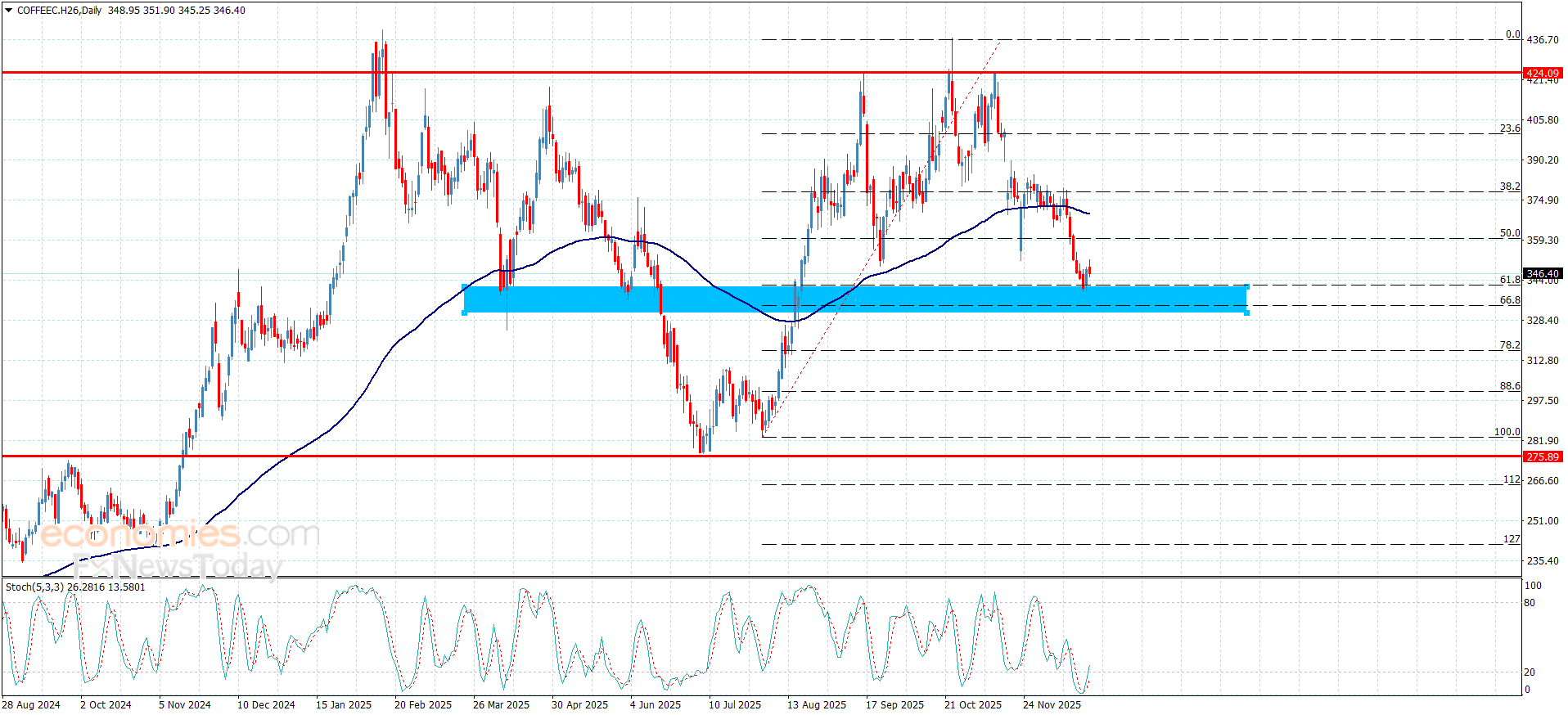
Coffee price surrendered to the negative pressures, forcing it to suffer several losses towards 339.20, facing a strong support base as appears in the above image.
The price stability above this support and stochastic attempt to exit the oversold level might provide a chance to recover several losses by its rally towards 359.80, then wait for facing the moving average 55 near 368.50.
The expected trading range for today is between 338.00 and 359.80
Trend forecast: Bullish
Copper price activated with the main indicators again, surpassing the barrier at $5.5000, announcing its readiness to achieve extra gains on a near-term basis, therefore, we will keep our bullish expectations, reminding you that the extra target near $5.6300 and $5.7400 level.
Note that the price stability below the current barrier might force it to form mixed trading, and there is a chance of testing the support at $5.1500.
The expected trading range for today is between $5.3900 and $5.6300
Trend forecast: Bullish
Asia Pacific Prebiotics Market Overview
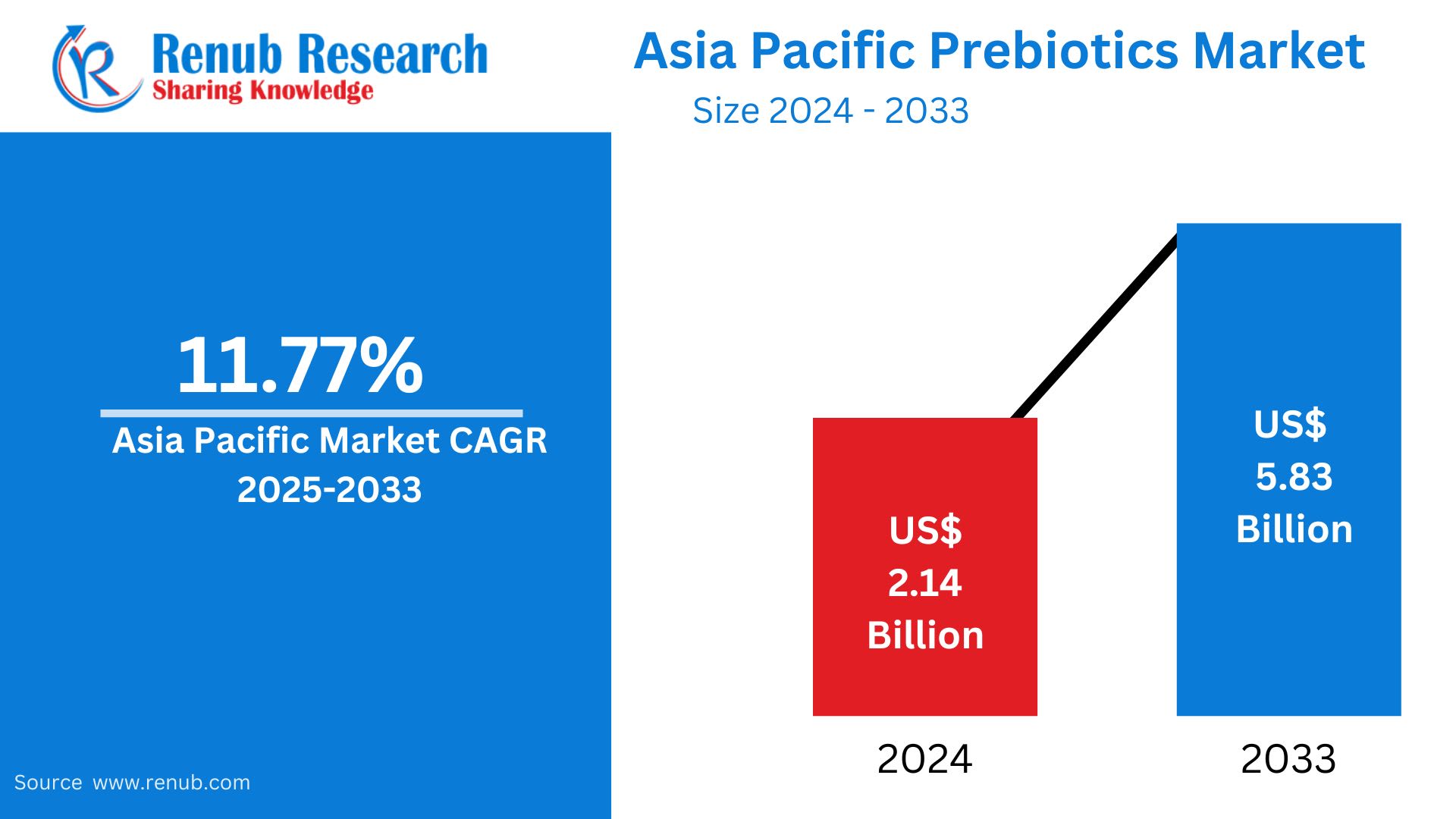
The Asia Pacific Prebiotics Market is entering a phase of rapid and sustained expansion, driven by shifting dietary habits, rising health consciousness, and strong innovation in functional nutrition. According to Renub Research, the market is expected to grow from US$ 2.14 billion in 2024 to US$ 5.83 billion by 2033, registering a robust CAGR of 11.77% from 2025 to 2033.
Prebiotics are indigestible food components that selectively stimulate the growth and activity of beneficial gut bacteria. Unlike probiotics, which are live microorganisms, prebiotics act as nourishment for existing good bacteria in the digestive system. Common examples include inulin, fructooligosaccharides (FOS), galactooligosaccharides (GOS), and mannan-oligosaccharides (MOS), naturally found in foods such as whole grains, onions, garlic, bananas, and chicory roots.
In Asia Pacific, prebiotics have moved beyond niche health supplements and are now integral to functional foods, beverages, infant nutrition, dietary supplements, and animal feed. Their role in improving digestive health, enhancing immunity, supporting nutrient absorption, and potentially lowering disease risk has made them highly attractive to both consumers and manufacturers.
Why Asia Pacific Is a High-Growth Prebiotics Market
Several structural and lifestyle shifts are converging to make Asia Pacific one of the most promising regions for prebiotics:
Rising urbanization and changing dietary patterns
Increased disposable incomes and middle-class expansion
Rapid growth of functional food and beverage industries
Strong biotechnology and ingredient innovation
Aging populations seeking preventive healthcare solutions
Together, these factors are transforming gut health from a clinical concern into a mainstream wellness priority.
Growth Drivers for the Asia Pacific Prebiotics Market
Rising Consumer Awareness of Digestive and Immune Health
One of the most powerful drivers of the prebiotics market is growing awareness of the gut–immunity connection. Consumers across Asia Pacific are increasingly informed about how digestive health influences immunity, metabolism, and overall wellbeing.
Public health campaigns, social media wellness influencers, nutritionists, and healthcare professionals are actively promoting the importance of maintaining a balanced gut microbiome. This has led to higher consumption of prebiotic-enriched foods such as fortified dairy products, cereals, beverages, and supplements. Consumers are also favoring natural, preventive health solutions over reactive medical treatments, further accelerating demand.
Growing Elderly Population Seeking Gut Health Support
Asia Pacific is aging faster than any other region, and this demographic shift is having a direct impact on prebiotics demand. Aging is often associated with digestive inefficiency, weakened immunity, and reduced nutrient absorption—areas where prebiotics offer measurable benefits.
Japan alone has over 36 million people aged 65 and above, while China had approximately 297 million people aged 60+ in 2023, accounting for over one-fifth of its population. As older consumers seek functional foods and supplements to support digestive comfort and long-term health, prebiotics have emerged as a preferred solution.
Advances in Biotechnology Enhancing Prebiotic Production
Technological progress is reshaping how prebiotics are developed and delivered. Innovations in microbial fermentation, enzymatic processing, and ingredient purification have improved the quality, efficacy, and stability of prebiotic compounds.
A notable example is the June 2023 collaboration between Sanofi and AB-BIOTICS in South Korea to launch scientifically backed probiotics targeting cholesterol control—highlighting the broader “biotics” innovation wave influencing prebiotics as well. These advancements not only improve health outcomes but also reduce production costs over time, making prebiotics more accessible across diverse income groups.
Challenges Facing the Asia Pacific Prebiotics Market
High Production Costs
Despite strong demand, high production costs remain a significant challenge. Manufacturing prebiotics often requires advanced extraction technologies, specialized enzymes, and strict quality controls. Sourcing high-quality raw materials—such as specific plant fibers or oligosaccharides—can be costly and vulnerable to supply chain fluctuations.
These factors increase product pricing, limiting penetration in price-sensitive markets across Southeast Asia and parts of South Asia.
Regulatory Complexity Across Countries
Asia Pacific’s regulatory landscape is fragmented, with each country enforcing its own standards for food safety, labeling, and health claims. Navigating approvals for functional foods and dietary supplements can be time-consuming and expensive for manufacturers.
Inconsistent regulations can delay product launches, increase compliance costs, and discourage smaller players from entering the market. Lack of harmonized standards also creates confusion among consumers, affecting trust and adoption.
Country-Level Market Insights
China Prebiotics Market
China represents one of the fastest-growing prebiotics markets in Asia Pacific. Rising urbanization, lifestyle-related digestive issues, and increasing disposable incomes are fueling demand for gut health products. Functional foods and supplements are increasingly viewed as preventive healthcare tools rather than optional wellness products.
Government support for nutrition and health innovation, combined with strong domestic manufacturing capabilities, is enabling rapid product diversification. Despite regulatory hurdles, China’s emphasis on immunity and digestive health positions it as a cornerstone market for prebiotics.
India Prebiotics Market
India’s prebiotics market is expanding steadily, driven by rising awareness of digestive health and growing interest in functional nutrition. Urban lifestyles, coupled with increasing prevalence of diabetes and obesity, are prompting consumers to seek gut-friendly dietary solutions.
The growth of e-commerce platforms has significantly improved product accessibility, while biotechnology advancements have enhanced ingredient availability and effectiveness. As preventive healthcare gains traction, India is emerging as a key growth engine in the region.
Japan Prebiotics Market
Japan has long been a global leader in functional foods, making it a mature yet innovative prebiotics market. An aging population and strong cultural acceptance of health-promoting foods have encouraged widespread use of ingredients such as inulin, FOS, and GOS.
Prebiotics are commonly incorporated into infant nutrition, functional beverages, dairy products, and supplements. Supportive government policies and a strong emphasis on scientific validation continue to drive market stability and innovation.
Malaysia Prebiotics Market
Malaysia’s prebiotics market is benefiting from rising middle-class incomes, urbanization, and increasing health awareness. Consumers are actively seeking functional foods that support digestive and immune health.
Expansion of online retail channels has improved nationwide distribution, while biotechnology progress has enhanced product quality. Malaysia’s growing role in the regional health food ecosystem makes it an increasingly important market within Southeast Asia.
Recent Developments in the Asia Pacific Prebiotics Market
September 2024: Samyang Holdings Corporation invested over US$ 105 million in a new Specialty Plant in Ulsan, South Korea. The facility includes a prebiotics plant producing resistant dextrin and fructo-oligosaccharide powder, with an annual capacity of 13,000 tons.
January 2024: Regulatory discussions intensified across the region, including proposals to regulate probiotics in Hong Kong and initiatives to standardize postbiotics in China—moves expected to indirectly influence the broader biotics ecosystem.
November 2023: Ting Li Development, the investment arm of Ting Hsin International Group, formed a strategic alliance to reduce sugar and carbohydrate content in food and beverage products, boosting demand for functional alternatives like prebiotics.
Asia Pacific Prebiotics Market Segmentation
By Product
Inulin
Fructooligosaccharides (FOS)
Galactooligosaccharides (GOS)
Mannan-oligosaccharides (MOS)
Other Types
By Source
Roots
Cereals & Grains
Fruits & Vegetables
Others
By Application
Food & Beverages
Dietary Supplements
Animal Feed
By Functionality
Gut Health
Cardiovascular Health
Bone Health
Immunity
Weight Management
Others
By Country
China, Japan, India, South Korea, Thailand, Malaysia, Indonesia, Australia, New Zealand, Rest of Asia Pacific
Competitive Landscape and Company Analysis
The Asia Pacific prebiotics market is moderately consolidated, with global and regional players competing through innovation, capacity expansion, and strategic partnerships. Key companies profiled include:
Baolingbao Biology Co., Ltd.
Tata Chemicals Ltd.
Quantum Hi-Tech (Guangdong) Biological Co., Ltd.
CJ CHEILJEDANG CORP.
Meiji Holdings Co., Ltd.
Fuji Nihon Corporation
Nestlé S.A.
Each company is analyzed across four dimensions: overview, key personnel, recent developments, and financial insights, offering a comprehensive view of competitive dynamics.
Final Thoughts
The Asia Pacific prebiotics market is transitioning from a specialized nutrition segment to a mainstream health category. With strong consumer awareness, rapid urbanization, an aging population, and continuous biotechnology innovation, the region is set to remain a global growth hotspot.
While challenges such as high production costs and regulatory complexity persist, ongoing investments, scientific validation, and expanding functional food portfolios are expected to offset these barriers. As gut health continues to shape future wellness trends, prebiotics will play a central role in Asia Pacific’s evolving nutrition ecosystem—making this market one to watch closely through 2033.
Most of the ambitious Solana price prediction made earlier this year have failed with SOL price about to close the year significantly lower than its opening price.
The Solana network still maintained relatively healthy growth in key areas despite the price action shortcomings.
While the SOL price prediction has been underwhelming, it also warrants a fresh take at the potential future movement of the coin in 2026. But before that, here’s a brief run-down on the cryptocurrency’s recent performance.
SOL price initially kicked off the year on a bullish leg which was so promising that the coin achieved an all-time high at $295 in January this year. However, bearish price action in the second half of 2025 eliminated those gains.

The $124 SOL press time price tag was equivalent to a 34% discount from its opening price tag in 2025. The Solana blockchain maintained healthy growth and development despite the bearish price action.
Solana made significant strides in the last 12 months that could cement its position as a mainstream financial infrastructure. For starters, the network shrugged off network stability fears that were previously perpetuated by past downtime incidents.
The network became one of the top chains that institutional investors adopted for their real-world assets (RWA) rollouts. Numerous companies including Gemini, and Fidelity have already integrated into Solana.
The fact that major traditional institutions have been adopting Solana was a major win for the network. This robust adoption may just be the start, and it could underscore the Solana network’s ability to take advantage of the RWAs narrative in 2026.
Solana’s appeal to the RWAs segment indicates that it could leverage robust growth when the segment enters an exponential growth phase. This could potentially happen in 2026, but it may not be the only narrative in favor of Solana.
The Solana ETFs narrative also played out in favor of the bullish Solana price prediction this year. This is because ETFs demonstrated healthy demand for SOL, especially through staking ETFs.
This alone revealed a preference for long term investment with a focus on passive gains. This may contribute to a higher floor price for the cryptocurrency.
SOL price action versus Solana network milestones and developments suggest a divergent outcome. This suggests that Solana price action was mostly driven by market forces rather than fundamental factors.
However, SOL price was already significantly discounted at the time of observation. This suggests that investors may find it undervalued especially considering Solana ETFs, development and adoption narratives, as well as its alignment with key narratives.
Experts are now re-evaluating their Solana price prediction with those factors in mind. Polymarket currently predicts a 79% chance that SOL price will drop below $100 in 2026.
The prediction market also forecasted a 23% chance that SOL price will surge above $300 in 2026 based on the latest market factors. In other words, the market currently maintains a bearish bias for the cryptocurrency.
This suggests that SOL prospects in 2026 could largely remain under the influence of the global macro-economic conditions.
Nevertheless, Solana price at recent lows may offer opportunity for long term investors to accumulate at discounted price levels.
The post Solana Price Prediction: Can SOL Witness Recovery In 2026 Amid Robust Developments appeared first on The Coin Republic.
Ethereum (ETHUSD) has recently dipped to $2957.18, marking a 1.68% decrease in the last 24 hours. Traders are curious if ETH will find support for a rebound this December. We delve into what the numbers reveal and what could be next for Ethereum.
Ethereum’s current trading price is $2957.18, reflecting a $50.51 drop from its previous close of $3007.69. The day’s trading has seen ETH dipping to a low of $2900.00, while its peak was $3033.98. Despite this dip, Ethereum remains significantly higher than its year low of $1383.26, but well below its year high of $4955.9.
The Relative Strength Index (RSI) for ETH stands at 44.64, suggesting it’s close to oversold. Meanwhile, the MACD is at -94.20, with a histogram value of 10.20, signaling potential bullish divergence. The ADX indicates a strong trend at 34.21. Bollinger Bands reveal volatility with an upper band at $3328.46 and a lower band at $2757.05, highlighting potential support near the $2757 level.
Volume is slightly below average with 241,126,915 traded, compared to a typical 271,019,312. The On-Balance Volume (OBV) at -480,720,744,429 suggests bearish pressure persists. The Money Flow Index (MFI) is at 48.44, indicating neutral market sentiment. Meyka AI’s forecast places ETH at $3086.8 monthly and $3862.33 quarterly, reflecting a cautiously optimistic outlook.
Predictive models estimate ETHUSD might reach $3086.8 in the coming month. This aligns with the potential for a seasonal end-of-year rally. However, forecasts can change due to macroeconomic shifts, regulations, or unexpected events affecting the crypto market. It’s crucial to monitor external conditions, as these can significantly impact price movements.
Ethereum’s current price challenges suggest a period of consolidation, with technical indicators pointing to potential for a rebound. Monitoring support levels closely and keeping an eye on broader market trends will be essential for traders. With Meyka AI forecasting a moderate rise, Ethereum’s trajectory remains poised for an intriguing month ahead.
Ethereum is currently trading at $2957.18, reflecting a 1.68% decrease from the previous close of $3007.69 as of today, December 23, 2025, at 9:01 AM UTC.
Key indicators include an RSI at 44.64 (close to oversold), a MACD of -94.20, and an ADX of 34.21 indicating a strong trend. Bollinger Bands are showing potential support and resistance near $2757 and $3328 respectively.
The monthly forecast for ETHUSD is approximately $3086.8, indicating a potential rebound from current levels, although market conditions can alter this outlook.
ETHUSD has seen a 5.43% increase over the past year, showing resilience despite recent downturns in the short-term market conditions. However, it’s trading significantly below its year high of $4955.9.
Macroeconomic changes, regulatory shifts, or unexpected market events could impact ETHUSD’s price, altering forecasts despite current technical signals suggesting potential for recovery.
Disclaimer:
Cryptocurrency markets are highly volatile. This content is for informational purposes only.
The Forecast Prediction Model is provided for informational purposes only and should not be considered financial advice.
Meyka AI PTY LTD provides market data and sentiment analysis, not financial advice.
Always do your own research and consider consulting a licensed financial advisor before making investment decisions.