The main category of All News Articles.
You can use the search box below to find what you need.
[wd_asp id=1]
The main category of All News Articles.
You can use the search box below to find what you need.
[wd_asp id=1]
December 22, 2025 — Natural gas markets are starting the holiday-shortened week with a familiar winter tug-of-war: early-season cold boosted prices and withdrawals, but a shift toward milder forecasts is now cooling bullish momentum even as LNG export demand remains elevated.
In the U.S., front-month NYMEX natural gas futures slipped close to 2% in morning trade as forecasters leaned warmer into early January and Lower 48 production continued to surprise to the upside. Overseas, European gas prices edged lower in thin pre-holiday trading as steady supply from Norway and LNG flows helped offset expectations of stronger heating demand. Meanwhile, a wave of policy and geopolitics headlines—from Australia’s new gas reservation framework to fresh Russia-to-China pipeline and sanctioned LNG shipping developments—kept global traders focused on 2026–2027 contract risk and supply security.
U.S. natural gas futures fell by roughly 1.9% in the morning session, with the January contract around $3.901 per MMBtu at 09:40 a.m. ET, pressured by both higher production and forecasts that point to warmer-than-normal temperatures into early January—conditions that typically reduce heating demand. [1]
This pullback follows a sharp early-December run-up that briefly pushed Henry Hub pricing to multi-year highs. The American Gas Association’s latest market indicators describe a clear shift in sentiment: after an early cold snap, demand has eased and futures have been “retreating,” with weather remaining the dominant driver of daily volatility. [2]
Key U.S. price context (December swing):
The near-term narrative has shifted from “how cold did it get?” to “how warm will it be next?” Meteorologists cited in today’s market reporting expect the U.S. to remain mostly warmer than normal through early January, which would limit space-heating demand relative to seasonal norms. [5]
The AGA likewise points to holiday-period moderation, citing NOAA Climate Prediction Center outlooks that tilt above-normal across much of the country into the first week of the new year, with some regional exceptions. [6]
What matters for traders is not just temperature direction, but the speed and confidence of model changes. A single forecast shift can reprice the entire front of the curve, especially when liquidity thins around Christmas and New Year’s.
Even in winter, it’s hard for prices to sustain a rally when supply keeps setting new highs.
Financial firm LSEG data referenced in today’s reporting shows average Lower 48 output climbing to a record 109.9 Bcf/d so far in December, eclipsing November’s monthly record. [7]
The AGA similarly notes that after hitting an all-time daily high late last month, production dipped briefly and then rebounded; as of Dec. 22, output remained meaningfully higher than the same period last year (AGA cites +4.8% year over year). [8]
Why this matters for “natural gas price today” searches:
When supply is printing records, bullish weather needs to be consistently colder than normal—not just briefly cold—to keep prices elevated. Otherwise, the market tends to sell rallies and reward storage comfort.
Demand cooled week over week, but it’s not collapsing. The AGA reports total demand (including exports) for the week ending Dec. 22 fell 11.5% week over week while still running slightly above last year’s level for the comparable week. [9]
On the storage side, the latest widely cited U.S. weekly pull was sizable: the EIA reported a 167 Bcf withdrawal for the week ending Dec. 12, leaving working gas inventories at 3,579 Bcf. The AGA states stocks were about 0.9% above the five-year average at that point, though below year-ago levels. [10]
Bottom line: the early-winter drawdown was real, but strong production and still-comfortable inventories are limiting the urgency premium—especially when warmer forecasts appear.
If there’s a consistent floor under U.S. gas demand, it’s LNG.
Today’s reporting puts average feedgas flows to the eight large U.S. LNG export plants at 18.5 Bcf/d so far this month, up from a prior monthly record in November. [11]
AGA’s December 22 indicators add more color:
In other words: even if residential/commercial heating softens on warmth, export pull can keep the overall balance tighter than it looks from weather alone.
For readers looking beyond today’s tick-by-tick move, the EIA’s Short-Term Energy Outlook provides the clearest baseline forecast widely used in the market:
This is the macro framework traders are testing daily against real-time weather and production data.
European prices opened the week slightly softer, with trading described as narrow and holiday-thinned.
Reuters reporting cited Dutch February TTF down modestly to about €27.70/MWh in morning trade, while UK day-ahead prices also eased. Market participants pointed to steady Norwegian pipeline supply and LNG availability offsetting the colder-demand outlook. [18]
Storage remains the key European risk variable. Reuters also cited Gas Infrastructure Europe data putting EU storage around 67.24% full, and noted that lower inventory levels could encourage additional LNG procurement into January and February if winter demand strengthens. [19]
European takeaway: the region is not “out of gas,” but it is more sensitive to cold snaps and supply disruptions than it would be with storage closer to last year’s levels.
One of the biggest policy headlines of Dec. 22 comes from Australia, where the government unveiled a domestic gas reservation framework aimed at preventing future east-coast shortages and smoothing price spikes.
Reuters reports the plan would require LNG exporters on Australia’s east coast to allocate 15% to 25% of output for domestic use starting in 2027, with the mechanism designed around new contracts rather than existing long-term commitments. [20]
Australian media reporting frames the move as a “historic” shift for the east coast and suggests reserved volumes could reach hundreds of petajoules annually, with the policy intended to slightly oversupply the domestic market and put downward pressure on prices. [21]
Why this matters globally: Australia is a top-tier LNG exporter into Asia, and any policy that changes how incremental supply is marketed can ripple into longer-dated LNG pricing, portfolio contracting strategy, and buyer diversification plans.
Two Russia-linked gas developments reported on Dec. 22 underscore the market’s geopolitical undercurrent:
A Reuters report says Russian pipeline exports to China via Power of Siberia are expected to reach ~38.6–38.7 bcm in 2025, up from 31 bcm in 2024, and roughly at/above the pipeline’s planned annual capacity. The report also notes discussions on additional projects (including Power of Siberia 2), with pricing still a major hurdle. [22]
Reuters also reported that the LNG tanker Kunpeng loaded a cargo from Russia’s Portovaya LNG plant—despite Western sanctions—based on ship-tracking data. The vessel arrived Dec. 18 and departed with a cargo on Dec. 21, according to the report. [23]
For the market, these stories are less about today’s Henry Hub tick and more about future trade flows, enforcement risk, and how quickly supply can be rerouted when traditional buyers reduce purchases.
With Christmas approaching and liquidity thinning, the next moves could be driven by a small number of catalysts:
1. www.bairdmaritime.com, 2. www.aga.org, 3. www.aga.org, 4. www.aga.org, 5. www.bairdmaritime.com, 6. www.aga.org, 7. www.bairdmaritime.com, 8. www.aga.org, 9. www.aga.org, 10. www.aga.org, 11. www.bairdmaritime.com, 12. www.aga.org, 13. www.aga.org, 14. www.eia.gov, 15. www.eia.gov, 16. www.eia.gov, 17. www.eia.gov, 18. www.tradingview.com, 19. www.tradingview.com, 20. www.reuters.com, 21. www.theguardian.com, 22. www.reuters.com, 23. www.reuters.com, 24. www.bairdmaritime.com, 25. www.bairdmaritime.com, 26. www.bairdmaritime.com, 27. www.aga.org, 28. www.tradingview.com, 29. www.reuters.com, 30. www.reuters.com
Fiber has a great reputation for helping people keep their bowel movements regular, and during the Ozempic boom, it’s become an even more buzzy nutrient thanks to its ability to support weight loss and improve satiety (like GLP-1s). But this special carbohydrate can actually do so much more than just keep you on a schedule and promote good gut health. New research suggests fiber could actually support good brain health, too.
Right now, only about 5 percent of Americans get enough fiber in their diet, so it might be time to rethink how much fiber you’re getting on a daily basis. One way is by loading up on psyllium husk, which has been dubbed “nature’s Ozempic.”
Here’s why you may want to consider adding more fiber—and psyllium husk—to your day, plus how to actually go about it, according to experts.
Meet the experts: Molly Rapozo, RDN, is a senior nutrition and health educator at Pacific Neuroscience Institute at Providence Saint John’s Health Center in Santa Monica, CA; Jessica Cording, RD, CDN, is the author of The Little Book of Game-Changers; Clifford Segil, DO, a neurologist at Providence Saint John’s Health Center in Santa Monica, CA.
Recent research shows loading up on fiber can do your brain health a solid.
One randomized controlled trial published in Nature Communications last year split 36 pairs of twins into two groups: One took a placebo and the other took a daily fiber supplement for 12 weeks. The researchers discovered that people in the fiber supplement group did better on brain function assessment tests and showed better reaction times and processing speeds than those in the placebo group.
A slightly older rat study also found that psyllium husk in particular reduced white matter damage in the brain, which is a symptom associated with dementia.
The link between getting plenty of fiber and good brain health is likely tied to the gut-brain axis, a network of connections between your gut and your brain, says Clifford Segil, DO, a neurologist at Providence Saint John’s Health Center in Santa Monica, CA.
“I often see patients with gastrointestinal complaints like abdominal pain also have neurological complaints like headaches,” he says. “Fiber is important for gastrointestinal health as it helps our bodies excrete out waste and aids in flushing our system.”
Dr. Segil says he’s seen patients have fewer headaches when they’re able to take care of their gut health. “A happy gut with fiber may cause a happy brain by helping our bodies clean themselves out and balance things better,” he says.
Let’s back up a sec: Psyllium husk is a soluble plant fiber, which means it pulls in water and creates a gel-like substance in your gut, says Jessica Cording, RD, CDN, author of The Little Book of Game-Changers. “It helps with building stool bulk and can help you to feel full,” she explains.
And yes, Cording says that psyllium husk is a great tool for upping your fiber intake. “It can support heart health, digestive regularity, and weight management,” she says.
A diet high in fiber—including psyllium husk—”is healthy for diabetes, hypertension, and for both cardiovascular and cerebrovascular health,” Dr. Segil says.
Eating a diet rich in plants is the best way to meet your fiber needs, according to Molly Rapozo, RDN, senior nutrition and health educator at Pacific Neuroscience Institute at Providence Saint John’s Health Center in Santa Monica, CA. And those same fiber sources tend to be nutrient rich, so it’s a win-win.
Here are some of the best sources of fiber, according to the Dietary Guidelines for Americans:
Fiber recommendations vary slightly by age and gender, but it’s generally suggested that you aim to consume 28 grams a day.
If you’re taking fiber supplements for the first time, start small (think ½ teaspoon in an 8-ounce glass of water once a day) before ramping up, according to Mount Sinai. You can gradually up your dosage as time goes on.
While psyllium husk is a common fiber supplement, Cording says you can also get in fiber by adding chia seeds to your diet. “You can also look for products that use chicory root and inulin as the fiber source,” she says.
Again, if you’re able to get fiber in your diet from your diet alone, that’s great. But if you need a boost, adding psyllium husk to your day isn’t a bad idea—for your body or your mind.


This capsule is designed to help you maintain healthy blood sugar levels, lower cholesterol, promote digestion and gut health, and support regular bowel movements. Another perk? Metamucil is a top-recommended brand, according to our experts, so you can trust the quality and purity of your supps.

“These are orange sorbet-flavored and get their fiber from chicory root providing three grams of fiber per two gummies,” Amy Gorin, RDN, an inclusive plant-based dietitian previously told WH. Taking them will keep you regular and support good gut bacteria.

This plant-based, water-soluble fiber helps you deal with constipation and aids digestion overall. It’s sugar-free, mixes easily with your favorite bev, and it’s rich in antioxidants.

Korin Miller is a freelance writer specializing in general wellness, sexual health and relationships, and lifestyle trends, with work appearing in Men’s Health, Women’s Health, Self, Glamour, and more. She has a master’s degree from American University, lives by the beach, and hopes to own a teacup pig and taco truck one day.
Cardano price action continues to reflect strain as ADA trades within a fragile short-term structure. The 4-hour chart shows persistent weakness, with sellers maintaining control despite brief recovery attempts.
ADA remains locked in a short-term downtrend on the 4-hour timeframe. Price continues to trade below key moving averages, including the 20, 50, 100, and 200 EMAs. Consequently, bearish momentum remains intact across lower timeframes.
Recent price action shows a mild rebound from the $0.346 to $0.350 zone. However, buyers failed to sustain momentum, and lower highs…
Read The Full Article Cardano Price Prediction: ADA Price Outlook Weakens Despite Stable Derivatives Activity On Coin Edition.
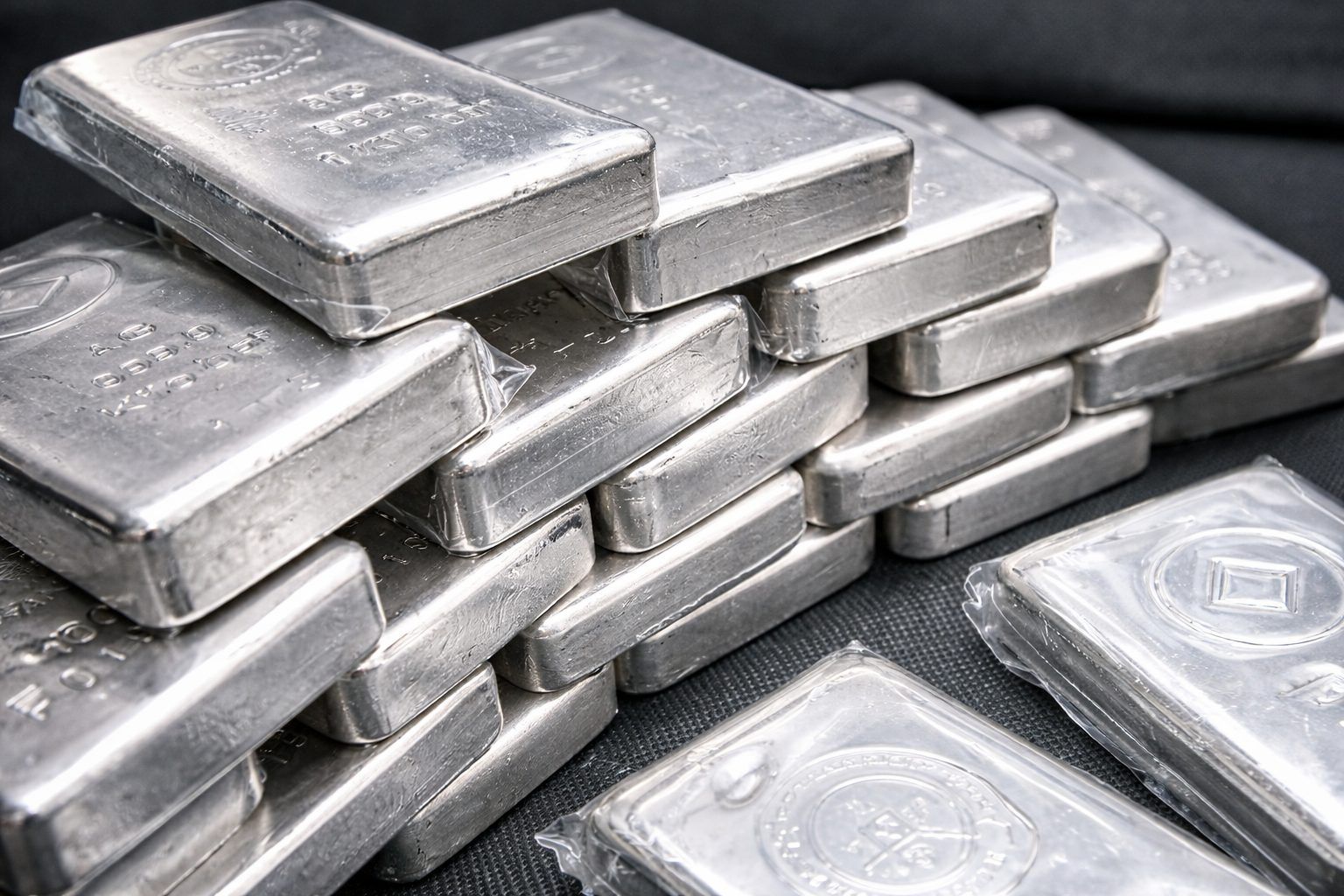
Silver is extending one of the most dramatic bull runs in modern commodities history, with prices hovering near record territory on Monday, December 22, 2025. Around 1:38 p.m. ET, spot silver (XAG/USD) was trading roughly in the high-$68s per ounce, after pushing to fresh all-time highs earlier in the session. One widely followed retail spot quote showed $68.89/oz at 1:20 p.m. ET, up about 2.1% on the day. [1]
The bigger headline: silver has repeatedly printed new records in December and is now riding a powerful mix of rate-cut expectations, a softer U.S. dollar, safe-haven demand tied to geopolitical risk, and a still-tight physical market. Reuters reported spot silver touched a new all-time peak around $69.44/oz on Monday before easing back. [2]
Below is what’s moving the silver price today, how analysts are framing the rally, and what the latest forecasts and technical levels suggest for the days ahead.
Silver’s intraday action has been volatile but directionally bullish:
Silver’s 2025 move is also historically large. Reuters put silver’s year-to-date gain at roughly ~139%, dramatically outpacing gold on a percentage basis. [6]
The macro backdrop remains the core engine. Multiple reports describe investors positioning for looser U.S. monetary policy in 2026, a setup that tends to support non-yielding assets like precious metals.
Reuters said expectations of easier policy and a weaker dollar have been central to the late-year precious metals surge, with traders reacting to recent U.S. inflation and labor data that reinforced rate-cut bets. [7]
Business Insider similarly tied the record push in gold and silver to renewed market confidence that rates will trend lower into 2026, increasing the appeal of hard assets versus cash and bonds. [8]
Today’s rally isn’t only macro—it’s also risk hedging. Reuters highlighted rising safe-haven flows as U.S.-Venezuela tensions escalated following President Donald Trump’s announcement of a “blockade” targeting sanctioned oil tankers moving in and out of Venezuela. [9]
On top of that, FXStreet framed silver’s jump as part of a broader flight to safety amid renewed tension in the Middle East, noting Israel–Iran headlines as a catalyst during the Asian session. [10]
Silver is behaving like a hybrid: part safe haven, part industrial metal. Reuters has repeatedly emphasized the market’s focus on a persistent supply-demand deficit, while also pointing to investment flows. [11]
Business Insider added another layer: silver (along with copper) is being treated as an “AI and electrification” metal because of its role in data infrastructure and electrification, at a time when supply pressures remain a theme. [12]
A major reason silver’s move is commanding attention is that it’s arriving late in the year—when markets often get thin and profit-taking typically increases.
Reuters quoted analysts observing that investors have not treated the year-end period as a time to step away from the trade, with strong demand pushing prices to records anyway. [13]
That said, several analysts are also warning that silver’s volatility cuts both ways. Reuters has flagged the risk of steep corrections even in a structurally bullish market, simply because silver historically moves faster than gold in both directions. [14]
A key metric confirming silver’s outperformance is the gold–silver ratio (how many ounces of silver it takes to buy one ounce of gold).
Reuters reported the ratio has narrowed to roughly 64, down sharply from about 105 in April, reflecting how aggressively silver has caught up—and, recently, outpaced. [15]
FXStreet also pegged the ratio near 64.06 on Monday. [16]
In plain terms: silver isn’t just rising because gold is rising—silver is rising faster.
Forecasts for silver are widening—bulls point to structural deficits and macro tailwinds, while cautious houses warn that the pace of gains looks unsustainable in a straight line.
In Reuters’ Dec. 22 coverage, Macquarie strategists said drivers behind silver’s recent highs include the persistent deficit and stronger import demand in India during the festive period—and they expect silver to average $57 per ounce in 2026. [17]
That forecast matters because it implies meaningful downside from today’s near-$69–$70 neighborhood, even while acknowledging supportive fundamentals.
CBS News cited Capital Economics projecting gold could fall to $3,500 by the end of next year, arguing that a cooling in gold’s speculative boom would likely spill into silver as well. [18]
CBS also quoted Global X ETFs’ Trevor Yates describing the latest leg of the rally as being driven by a 2026 outlook featuring lower rates and a potentially softer dollar, adding that the firm remains constructive on both gold and silver (while acknowledging the path won’t be smooth). [19]
Bottom line on forecasts today: even among bullish narratives, there’s a growing emphasis on volatility and the risk that silver can overshoot before it mean-reverts.
Technical analysts are largely aligned that the trend remains bullish—but momentum indicators are stretched.
FXStreet’s technical forecast described silver as extending a well-established uptrend and printing fresh records around the $69.45 area during the Asian session. It also highlighted that last week’s breakout through $66.40–$66.50 was an important trigger level, while warning that overbought RSI readings argue for caution when chasing breakouts. [20]
A separate market write-up echoed that bullish bias, pointing to silver holding above its 100-hour moving average and showing strengthening momentum signals. [21]
What this means in practice:
The rally is not just a U.S. dollar story. In India, Times of India reported silver futures surged to a record ₹2,14,534 per kilogram on MCX as the global rally spilled over into domestic markets. [22]
This matters because India can be a major swing factor in physical demand—especially during periods of strong seasonal buying.
Silver is now trading in a zone where headlines can move price quickly, because positioning is heavy and liquidity can be thinner near year-end. The market’s next moves are likely to hinge on:
As of early afternoon on December 22, 2025, silver remains near record levels, supported by a powerful combination of macro tailwinds, geopolitical risk hedging, and tightness themes in the physical market. [27]
But today’s coverage also makes one point increasingly clear: the higher silver goes, the more the market is bracing for sharp swings—especially with technical signals stretched and forecasts for 2026 diverging widely. [28]
1. www.bullion.com, 2. www.reuters.com, 3. www.bullion.com, 4. www.reuters.com, 5. www.investing.com, 6. www.reuters.com, 7. www.reuters.com, 8. www.businessinsider.com, 9. www.reuters.com, 10. www.fxstreet.com, 11. www.reuters.com, 12. www.businessinsider.com, 13. www.reuters.com, 14. www.reuters.com, 15. www.reuters.com, 16. www.fxstreet.com, 17. www.reuters.com, 18. www.cbsnews.com, 19. www.cbsnews.com, 20. www.fxstreet.com, 21. uk.investing.com, 22. timesofindia.indiatimes.com, 23. www.reuters.com, 24. www.reuters.com, 25. www.reuters.com, 26. www.reuters.com, 27. www.reuters.com, 28. www.fxstreet.com
Updated: December 22, 2025, 1:41 p.m. ET (18:41 UTC)
XRP is trading around $1.94 at roughly 1:41 p.m. ET on December 22, 2025, as buyers try (again) to regain the psychologically important $2.00 level. In today’s session, XRP has ranged roughly between $1.91 and $1.94, reflecting a market that’s stabilizing—but still struggling to spark a decisive breakout.
Despite the sideways price action, activity remains heavy: CoinMarketCap lists XRP’s 24-hour trading volume at about $2.29 billion, with XRP up about 1.4% over the past 24 hours and holding the #5 spot by market cap (around $116.95 billion). [1]
The big theme on December 22, 2025 is a tug-of-war:
Several analysts note that XRP has held above $1.90 support but repeatedly failed to clear $2.00, leaving price stuck in a tight band where every rally attempt meets sellers. [2]
Here’s the “where we are” snapshot as of early afternoon U.S. hours:
For a broader daily view, Investing.com’s daily data for Dec. 22 shows XRP trading around $1.93, with an approximate high near $1.95 and low near $1.91 (figures vary slightly by venue/index methodology). [4]
One of the most important XRP narratives today is that money is still flowing in—even while price stalls.
Analysts tracking SoSoValue-reported flows say:
These figures are widely cited across multiple market updates today, with the nuance that the latest week’s inflow pace was described as the weakest since launch—still positive, but not accelerating the way bulls would like. [5]
Two explanations show up repeatedly in today’s analysis:
Beyond XRP-specific ETFs, the broader digital-asset fund backdrop turned risk-off this week.
CoinShares’ weekly fund flows report (published today) says digital-asset investment products saw about $952 million in outflows, attributing the move to delays in the U.S. “Clarity Act” and concerns over whale selling. Outflows were concentrated mostly in U.S.-based products (~$990M), led by Ethereum (~$555M) and Bitcoin (~$460M). [8]
In that same CoinShares data, XRP-linked products bucked the trend, drawing roughly $62.9 million of inflows (with Solana also positive). That contrast—broad outflows while XRP demand stays positive—is a big reason XRP keeps showing up on “watchlists” today even without a clean price breakout. [9]
Across the day’s technical notes, a few price zones repeat.
FXStreet describes XRP’s RSI around 42 (suggesting weak-to-neutral momentum) while also noting a MACD buy signal on the daily chart—an example of why today’s outlook is often framed as “cautiously constructive, but not confirmed.” [16]
Meanwhile, U.Today’s intraday read puts local resistance around $1.9493, suggesting that if bulls keep control, a push into $1.97–$1.98 is plausible—again pointing back to that crucial pre-$2 zone. [17]
Today’s market commentary isn’t one-sided. It splits into two camps: early bottoming signals and still-bearish structure.
Crypto.news highlights a swing failure pattern (SFP) around $1.80, a formation often interpreted as sellers exhausting momentum. In that view, the market needs to reclaim $1.98 to confirm strength, which could open a path toward $2.20. [18]
AMBCrypto adds a sentiment angle, saying XRP has slipped into Santiment’s “fear zone,” a condition they argue has historically coincided with local bottoms. They also point to stabilization behavior around the $1.83–$1.87 area in recent price action. [19]
Other coverage stresses that XRP is still trading below multiple EMAs, meaning rallies can remain corrective until price breaks and holds above major resistance. [20]
Forecasting crypto is inherently uncertain, but here’s what today’s most-cited outlooks imply—grouped by time horizon.
FXEmpire’s analysis suggests a break above $2 could open the path toward $2.5 and $3.0 targets over the coming weeks, while also emphasizing that ETF inflow momentum has cooled versus earlier weeks. [23]
Binance’s XRP price-prediction page (a model/tool-style forecast) shows XRP projected around the $1.93–$1.94 area for late December dates—essentially calling for a modest, low-volatility drift unless a catalyst breaks the range. [24]
The Motley Fool revisits the question of whether XRP could reach $10 in 2026, arguing it would require conditions like strong ETF demand and/or structural buying waves similar to prior explosive runs. It’s a speculative scenario—but it’s part of the bullish narrative circulating today. [25]
If you’re tracking XRP into year-end, today’s coverage suggests focusing on a few “market-moving” categories:
As of 1:41 p.m. ET on December 22, 2025, XRP is hovering near $1.94, with strong trading activity and steady inflows into XRP-linked products—but still trapped beneath the market’s most important near-term ceiling at $2.00. [30]
The market’s message today is consistent: flows are supportive, sentiment is tense, and the chart needs confirmation. If XRP can reclaim $1.98–$2.00 and then tackle higher EMA resistance, forecasts expand quickly. If not, traders remain focused on defending $1.90 and avoiding a breakdown toward $1.77 and below. [31]
1. coinmarketcap.com, 2. www.fxstreet.com, 3. coinmarketcap.com, 4. www.investing.com, 5. www.fxempire.com, 6. www.fxstreet.com, 7. www.fxempire.com, 8. researchblog.coinshares.com, 9. researchblog.coinshares.com, 10. crypto.news, 11. www.fxstreet.com, 12. www.fxstreet.com, 13. www.fxstreet.com, 14. www.fxstreet.com, 15. www.fxstreet.com, 16. www.fxstreet.com, 17. u.today, 18. crypto.news, 19. ambcrypto.com, 20. www.fxstreet.com, 21. www.fxstreet.com, 22. crypto.news, 23. www.fxempire.com, 24. www.binance.com, 25. www.fool.com, 26. www.fxempire.com, 27. decrypt.co, 28. www.fxstreet.com, 29. www.fxstreet.com, 30. coinmarketcap.com, 31. www.fxstreet.com
NEXUS Co., Ltd, a company listed on South Korea’s KOSDAQ market and the developer of the CROSS blockchain gaming platform, has entered into a memorandum of understanding with CertiK, a globally recognized blockchain security firm. The collaboration reflects a growing emphasis on trust, security, and regulatory readiness as Web3 gaming platforms aim to reach mainstream audiences.
The agreement was announced on December 22, 2025, at a time when the CROSS ecosystem was undergoing active expansion. The timing underscores the increasing importance of robust security frameworks and compliance measures for blockchain-based gaming and payment solutions. The MOU was signed by NEXUS Chief Executive Officer Henry Chang and CertiK Co-founder and Chief Executive Officer Ronghui Gu, marking the beginning of a long-term strategic relationship between the two organizations.
NEXUS oversees the core infrastructure of the CROSS platform, including blockchain-based gaming services, a decentralized exchange, digital wallets, and creator-focused tools. The partnership arrives as the company prepares to introduce stablecoin-enabled payment systems designed to simplify in-game and service-related transactions. These developments make security and compliance critical priorities for the platform’s next phase of growth.
CertiK has built a strong reputation in the Web3 sector for its smart contract audits, real-time risk detection, and continuous on-chain monitoring services. The firm has assessed more than 5,000 blockchain projects and plays a role in safeguarding digital assets valued at approximately $600 billion. Its client base includes major industry players such as Ethereum, Binance, and Tether, highlighting its influence and credibility within the blockchain ecosystem.
The partnership aligns with NEXUS’s strategy of embedding security into the platform from the earliest stages of development. As CROSS scales through the use of software development kits, application programming interfaces, wallets, and digital marketplaces, comprehensive protection is essential to prevent vulnerabilities. This need becomes even more pronounced with the introduction of stablecoins, where secure settlement and payment reliability are vital for user confidence.
Under the MOU, the partnership is structured around four primary pillars. The first focuses on security and smart contract auditing, with CertiK conducting in-depth reviews of CROSS components related to gaming, payments, and stablecoin contracts to ensure transparency and scalability.
The second area involves live on-chain risk monitoring. This includes continuous oversight of blockchain activity and smart contracts, along with the sharing of security intelligence to identify and mitigate threats before they escalate.
NEXUS 🤝 CertiK
Our DevCo has signed an MOU with global Web3 security leader @CertiK to strengthen blockchain security, audits, compliance and stablecoin infrastructure across the CROSS ecosystem. 🔐🌍
Read the Announcement: https://t.co/XsMdMu5CQo pic.twitter.com/zFLaRbmRzd
— CROSS (@CROSS_gamechain) December 22, 2025
The third pillar addresses compliance and stablecoin frameworks tailored to Asian markets. This aspect emphasizes regulatory checks and best practices that align with global standards for gaming payments and cross-border transactions.
The final area centers on business development and regional expansion. Both companies plan to collaborate on market strategies, ecosystem growth initiatives, and partner engagement across Asia. CertiK is also evaluating the possibility of a strategic investment in NEXUS to further reinforce the long-term partnership.
CROSS is supported by a team of more than 100 professionals specializing in blockchain technology and gaming. Through this partnership, the platform is expected to enhance payment security, strengthen user trust, and improve compliance across its ecosystem. As Web3 gaming continues to evolve, such measures are becoming essential for sustainable growth and broader adoption.
NEXUS leadership has indicated that the collaboration represents a significant milestone, enabling the company to adopt global-grade security standards while accelerating infrastructure and business expansion. The firm has emphasized its commitment to building systems that combine innovation with resilience and transparency to support long-term growth.
From CertiK’s perspective, the partnership reflects the rising need for strong governance, compliance, and security as stablecoins and on-chain gaming gain traction. The company views its work with NEXUS as a meaningful step toward raising security standards across the Web3 industry and supporting the ecosystem’s continued innovation and maturity.
At 11:14 GMT, XAUUSD is trading $4408.58, up $69.81 or +1.61%.
Gold’s advance shows conviction rather than late-stage exhaustion. The metal is now up nearly 70% year-to-date, marking its strongest annual performance since 1979. Central bank accumulation, sustained portfolio hedging, and persistent geopolitical risk continue to absorb supply, keeping pauses brief and shallow.
The former resistance at $4381.44 has been decisively cleared. What capped price last week is now accepted above, reinforcing confidence that higher levels are being built on participation, not thin volume spikes.
A key signal today is gold’s resilience in the face of rising Treasury yields. The U.S. 10-year yield is ticking higher, yet gold shows no sensitivity. When gold rallies alongside firmer yields, it typically reflects urgency to secure exposure rather than rate-driven positioning, reinforcing the strength of current demand.
This behavior suggests positioning is being driven by capital preservation and risk hedging rather than tactical rate trades.
Expectations for lower U.S. interest rates remain a core tailwind. Federal Reserve Governor Stephen Miran reiterated that easing inflation supports rate cuts to offset labor market risks. Gold continues to benefit from lower real-rate expectations even as nominal yields firm.
Managing hypertension (high blood pressure) is necessary to lower your risk of other health conditions, like heart attack or stroke. To best manage high blood pressure, you may need to avoid certain supplements because they can affect your blood pressure or make your blood pressure medication less effective.
Vitamin D is a vitamin naturally found in certain foods and available as a supplement. Your body also makes vitamin D when your skin is exposed to ultraviolet (UV) rays from the sun. Vitamin D is necessary for many body functions, like bone health and inflammation.
Some researchers have found that vitamin D may help treat high blood pressure, specifically doses of 200-8,000 International Units (IU) per day. Doses of vitamin D larger than 10,000 IU per day can lead to dangerous side effects, like high levels of calcium (hypercalcemia). Hypercalcemia can cause many issues over time, including high blood pressure.
High doses of vitamin D can also interact with certain diuretics (water pills) used to treat high blood pressure. This interaction can cause your body to not get rid of enough calcium, raising your calcium levels and possibly raising your blood pressure.
Talk to your primary care provider about your vitamin D levels. They can test your levels to determine if vitamin D supplementation would be useful for you and your blood pressure.
Licorice root (Glycyrrhiza glabra) is an herb used as a flavoring in food, candy, and tobacco products. In traditional medicine, the root has been used to treat lung disease, liver disease, and wounds.
Licorice contains glycyrrhizic acid (GA), an ingredient that can raise blood pressure and cause serious side effects if you have high blood pressure. GA doses as low as 100 milligrams daily have been shown to raise blood pressure.
Supplements with GA can also interact with diuretics and blood pressure medications. The supplement may affect how well blood pressure medication works and raise your risk of side effects. Specifically, licorice root can raise sodium levels and lower potassium levels in your body. This effect, combined with a diuretic, can lead to dangerously low levels of potassium.
If you have high blood pressure, it’s best to avoid using products with licorice root.
St. John’s wort (Hypericum perforatum) is a plant used to treat symptoms of depression and menopause. Despite its historical use as a traditional medicine, the plant may dangerously interact with a variety of medications. St. John’s wort weakens the effects of many medications, including some used to treat high blood pressure.
Examples of blood pressure medications that interact with St. John’s wort include:
These interactions likely occur because St. John’s wort blocks the medication from being absorbed in the body as it normally would.
Talk with your healthcare provider before taking St. John’s wort. They can tell you if the supplement may interact with any other medications or supplements you are taking.
Arnica is a flower in the sunflower family. The flower has been used to help with bruising, inflammation, and swelling when applied directly to the skin.
Experts recommend against taking arnica by mouth due to a risk for significant side effects. These side effects may include high blood pressure, increased bleeding, vomiting, diarrhea, and damage to your heart or other organs.
Bitter orange (Citrus aurantium) is taken from the fruit or peel of a bitter orange. The fruit and its peel can be used to add flavor to drinks or aromas to perfumes. The bitter orange supplement is often used to help with weight loss and improve sports performance.
Bitter orange contains p-Synephrine, a type of stimulant similar to ephedrine. The U.S. Food and Drug Administration (FDA) has banned ephedrine stimulants because they can cause health issues like stroke and heart attack. Though bitter orange is not banned, it should be used with extreme caution.
Studies have shown that bitter orange supplements can raise blood pressure and heart rate. The supplement can also raise your risk for other serious side effects like stroke and heart attack. However, bitter orange found in food and drinks is not likely to affect your blood pressure or cause these side effects.
Talk with your healthcare provider before taking bitter orange.
People may respond to certain supplements differently. Factors that may affect how you respond to a supplement include genetics, diet and nutrition, age, gut health, and overall health status. Take note of any side effects or symptoms you experience when starting a new supplement or vitamin.
Before starting any new vitamins or supplements, talk to your doctor. They can help you decide if the vitamin or supplement would be useful and safe for you to take. Your doctor can also compare the new supplement to all the medications, vitamins, and other supplements you already take to identify potential interactions.
The recently launched NIGHT crypto token is in a strong bull run, with demand continuing to rise. Midnight jumped to a high of $0.1131, its highest point since Dec. 9, and 195% above its all-time low, giving it a market capitalization of over $1.7 billion.
The Midnight token price is in a strong bull run, making it one of the best-performing coins in the cryptocurrency industry. This surge is happening in a high-volume environment, with the 24-hour figure rising to over $6.3 billion.
NIGHT’s volume makes it the third-most actively traded token in the crypto market, after Bitcoin and Ethereum. This is a notable development as NIGHT, a Cardano Native Token (CNA), was launched two weeks ago.
There are three main reasons why the NIGHT token is soaring. First, most experts believe that privacy will be one of the most critical themes in the crypto market in the coming year.
READ MORE: Silver Price Surged and Beat Gold, Crypto in 2025: Is a Crash Coming?
This theme has become more popular following the recent Zcash price surge, which has transformed it into the privacy industry’s largest player after Monero. Midnight aims to be a major player in the privacy industry by leveraging the zero-knowledge proof (zk) technology.
Second, Charles Hoskinson remains highly optimistic about Midnight and its growth trajectory. He believes the Midnight can increase DEX volume on Cardano from $4.3 million to billions once stablecoins and bridges launch on the network.
Need some stables and bridges. Then they will 100x. Now is a good time to go long on Cardano DEXes.
— Charles Hoskinson (@IOHK_Charles) December 21, 2025
Third, the NIGHT token is rising as traders anticipate the upcoming Midnight mainnet launch, which is scheduled to begin in the first quarter of the year. A federated mainnet will launch in Q1, followed by an incentivized testnet in Q2, with the full mainnet launching later this year.
Finally, the token is soaring as the futures open interest jumps. It rose to a record high of $135 million, up sharply from $41 million at launch earlier this month. This is a sign that demand for the token is in a strong uptrend.

The hourly chart shows that the NIGHT token price has rebounded in the past few days, moving from a low of $0.035 on Dec. 9 to the current $0.1050.
It has moved above the 50-period and 25-period moving averages, a sign that bulls are in control. It is also a sign of Fear of Missing Out (FOMO).
The Relative Strength Index (RSI) and other top oscillators have continued rising, signaling rising momentum. Therefore, the token will likely continue to rise as bulls target the key resistance level at $0.1500.
READ MORE: Here’s Why the Crypto Market is Going Up Today: Is This a Santa Claus Rally?





:max_bytes(150000):strip_icc()/Health-GettyImages-2095806325-d4d356b94c914e64a1f7459f169e0e58.jpg "5 Supplements To Avoid if You Have High Blood Pressure")