The main category of All News Articles.
You can use the search box below to find what you need.
[wd_asp id=1]
The main category of All News Articles.
You can use the search box below to find what you need.
[wd_asp id=1]
Do not wait for the moment when everyone agrees. That is when the best entry is gone. Each presale stage is priced higher, and once Tier-1 listings and exchange headlines hit, the market will not offer a second entry at microscopic levels. If you want the trade that can rewrite a portfolio, act while Pepeto is still early, lock your position, and let the cycle reward the first movers.
GABIT, a longevity-focused, full-stack healthtech platform, has acquired clean nutrition brand Näck for an undisclosed amount, expanding its presense beyond health tracking into supplements and nutrition-led outcomes.
The acquisition brings Näck’s supplement portfolio into GABIT’s ecosystem, which already spans continuous health tracking, diagnostics, personalised fitness and nutrition plans, AI-led health coaching, and longevity-focused skincare.
Post-acquisition, Näck’s supplements will be embedded into GABIT’s platform, allowing users to track how supplement intake impacts measurable outcomes such as sleep quality, recovery, and metabolic health.
Founded in 2020 by Malin Petersson, Sahil Marwaha, Philip Göransson, Kelsang Dolma, Anthony Igoe, and Ricky Teja, Näck is a Swedish-Indian wellness brand positioned around transparent, science-backed nutrition. Its supplements are formulated to meet recommended dietary allowances where applicable and carry Informed Choice certification.
GABIT, which was founded in 2022 by Gaurav Gupta and Arpana Shahi, operates a full-stack health platform centred on four pillars: fitness, sleep, stress, and nutrition. Its titanium-built Smart Ring tracks health metrics continuously, while the software layer converts this data into personalised recommendations around activity, recovery, and diet.
Beyond tracking, GABIT integrates smart scales, continuous glucose monitoring (CGM) data, and in-depth blood work, enabling users to monitor more than 150 health markers and biomarkers across sleep, recovery, nutrition, metabolism, stress, and long-term health trends in one place.
“With this acquisition, we’re bringing nutrition into the same measurable loop as movement, sleep, and recovery,” said Gaurav Gupta.
“Näck stands for nutrition that is simple, transparent, and rooted in science. At GABIT, we’ve always believed that health is interconnected. This acquisition is a natural next step, because the impact of what you put into your body should be just as measurable as how you move, sleep, recover, and live. When supplements, diagnostics, and continuous tracking come together, health stops being vague and starts becoming measurable.”
Arpana Shahi said the combined platform would make it possible for users to directly link habits to outcomes.
“Good habits feel even better when they show up in your data. Imagine taking a supplement for better sleep and actually being able to measure its effect on your deep sleep. Or adjusting your nutrition through supplements and seeing tangible changes in recovery, energy, or metabolic health. That’s the future of health we’re building.”
Pepeto offers what mature large caps cannot: a micro entry price, audited contracts, real utility, and exposure to the next meme cycle before listings and mass attention arrive. This early window, for the investor who is interested in the most optimal crypto presale to purchase with actual asymmetry, is the type of opportunity that very few of them receive twice in their lifetime.
The crypto is currently at a crossroads. Assets ranked among high-growth altcoins to buy now, like Litecoin and Cardano, continue to face slow price action, leading to bearish sentiments among investors, while smaller new cryptocurrencies of 2025 quietly gain popularity.
Amid all this, investors searching for the best crypto to invest in are shifting their focus from established coins to crypto presales with real growth potential.
One such project drawing fast attention is Tapzi. It is building the world’s first skill-based crypto gaming ecosystem. Besides, it has a clear roadmap and hence is emerging as a high-reward entry for those who want to invest in new crypto coins.
Tapzi: A Skill-Based Web3 Gaming Platform Built for Real Demand and Long-Term Growth
Tapzi, a project currently ranked as the best crypto presale https://www.tapzi.io/?u_id=u4zuoB, is creating the world’s first skill-based Web3 gaming platform. It will contain games like chess, tic-tac-toe, rock-paper-scissors, and more that token holders can play and win from.
It relies on skills unlike every other crypto game that depend on luck and randomness. Players will have to stake Tapzi tokens to play these skill-based games, and the winner gets the prize pool. Smart contracts of Tapzi ensure a fair and transparent gameplay with instant reward distribution.
For those concerned about security and trust, Tapzi has audited its smart contracts through CertiK and SolidProof. These audits play an important role in identifying security risks and ensuring that user funds remain protected. For long-term investors, independent audits determine project reliability.
Apart from games, Tapzi’s roadmap includes the launch of NFT avatars through which players can build digital identities on the platform. Mobile apps are also in development to support global access and increase daily active users. The project plans to host major tournaments to create competitive excitement and to allow players to win larger rewards.
Tapzi will also grow across multiple blockchains, such as Ethereum and Polygon. This multi-chain approach helps improve scalability and keeps transaction costs affordable. Another major development in the Tapzi roadmap is the upcoming SDK for game developers. Through this, outside developers could create new games inside the Tapzi ecosystem. Instead of remaining limited to only classic games, the platform can expand into a full gaming network with many skill-based titles. As more games enter the platform, user activity and token demand can grow at the same time.
Its potential is evident from its presale performance. Out of 150 million tokens, Tapzi has already sold more than 110 million, which means more than 77 percent of the token allocation. Currently, it is priced at $0.0035 for a limited time and will be listed at $0.01, marking a direct 3x gain. Hence, it’s the perfect time for investors to capitalize early on this best crypto to invest in under a dollar. https://www.tapzi.io/?u_id=u4zuoB
Tapzi has a capped supply of 5 billion coins, thus avoiding unnecessary token minting. Players must use TAPZI tokens to enter matches, and rewards come from those same tokens. Hence, the demand for TAPZI tokens is always high and doesn’t depend on external factors.
With a live product, fast-growing presale, upcoming audits, and a clear expansion plan, Tapzi shows the qualities that many investors look for when searching for high-reward early entries in crypto. It also stands out as the best gaming crypto currently in the market. https://www.tapzi.io/?u_id=u4zuoB
The Growing Demand for Gaming Crypto Tokens and Why Tapzi Fits the Trend
Gaming is one of the largest and fastest-growing entertainment industries in the world. Market research indicates that blockchain gaming could generate tens of billions of dollars in annual revenue over the next few years.
Growth comes from mobile gamers, casual players, competitive communities, and users in developing regions who see Web3 gaming as a new income source. Tapzi sits directly inside this growth wave because it keeps gameplay simple while offering real earning opportunities.
Tapzi chooses classic games for a reason. Chess rewards deep thinking and long-term strategy. Tic-tac-toe delivers fast gameplay for short breaks. Rock-paper-scissors offers instant matches that rely on quick decisions and pattern recognition. These games do not require training or expensive equipment. Anyone can start playing within minutes.
Tapzi turns these everyday games into reward-based competitions through staking. Two players stake TAPZI tokens https://www.tapzi.io/?u_id=u4zuoB, they compete, and the better player wins the full reward. There are no hidden rules or complex systems. The outcome depends purely on performance. This fairness builds trust and encourages repeat participation.
Many blockchain games depend heavily on chance, rare items, or expensive in-game assets. Tapzi avoids these barriers. Players do not need to buy costly objects to compete. Skill alone determines success. This makes the platform inclusive for beginners and experienced players alike.
Mobile gaming plays a major role in global adoption. Billions of users around the world rely on smartphones for daily entertainment. Tapzi’s upcoming mobile apps open the platform to massive global markets such as Asia, Africa, Latin America, and Eastern Europe.
Since Tapzi games require low device power and short play sessions, the platform fits perfectly into mobile lifestyles.
Community also drives the success of gaming platforms. Players enjoy competing with friends, tracking their rankings, and participating in tournaments.
Tapzi plans to introduce global tournaments that allow users from different regions to compete for prizes. NFT avatars will help players build identity and attachment to the platform. These social elements increase long-term engagement and token use.
Blockchain gaming also grows because it gives users real digital ownership. In traditional games, players often lose their progress or assets if servers shut down. In Web3, rewards belong to the user. Tapzi supports this through direct token rewards that players fully control.
As Web3 adoption rises and more users seek fair earning platforms, gaming tokens are likely to remain among the strongest performers. Tapzi fits this trend through its easy gameplay, fair staking model, and worldwide reach.
Other Best Crypto to Invest in Now Under $1 Along With Tapzi
1. Stellar (XLM)
Stellar focuses on fast and low-cost cross-border payments. It helps users transfer funds across countries with minimal fees. XLM remains one of the most reliable under-$1 cryptocurrencies with strong real-world financial use.
2. VeChain (VET)
VeChain supports supply-chain tracking, product authentication, and business transparency. Many global companies use their blockchain to reduce fraud. VET continues to attract long-term investors because of its strong enterprise utility.
3. The Sandbox (SAND)
The Sandbox powers a virtual world where users buy land, build games, and trade digital assets. While the metaverse sector moves in cycles, SAND still benefits from digital ownership demand and strong brand presence.
4. Harmony (ONE)
Harmony focuses on fast and low-cost blockchain transactions for decentralized apps. Developers use it for Web3 services and small-scale projects. ONE remains a technically focused under-$1 token.
All four of these top cryptos for investment offer solid value, but none combine early-stage pricing, live gaming utility, fast presale momentum, and direct player rewards the way Tapzi currently does.
Conclusion: Best Crypto To Invest in
Litecoin and Cardano are facing slow growth and uncertain momentum, due to which many investors are searching for stronger growth opportunities. Web3 gaming is one of the fastest-growing blockchain sectors, with revenue expected to reach multi-billion-dollar levels in the upcoming years.
Tapzi already works inside this high-growth space with a live gaming demo, fast presale growth, capped token supply, and a roadmap built around mobile access and developer expansion.
With more than 110 million tokens sold in Stage 1, a current presale price of $0.0035, and a confirmed listing price of $0.01, Tapzi offers a clear early-entry advantage. Its focus on skill-based rewards, fair competition, and global reach strengthens its long-term outlook. For investors actively searching for the best crypto to invest in now https://www.tapzi.io/?u_id=u4zuoB in a market filled with uncertainty, Tapzi stands out as a high-reward opportunity backed by real progress and rising demand.
Join Tapzi’s $500,000 community giveaway and compete across nine prize categories to earn $TAPZI tokens-sign up today and become an early adopter!
Media Links:
Website: https://www.tapzi.io/
Whitepaper: https://docs.tapzi.io/
X Handle: https://x.com/Official_Tapzi
Frequently Asked Questions About the Best Crypto To Invest in
Is Tapzi the best crypto to invest in for early buyers?
Tapzi offers a live gaming demo, strong presale demand, and a low entry price. These factors make it attractive for early-stage investors.
How do players earn rewards on Tapzi?
Players stake TAPZI tokens before matches. The winner receives the pooled tokens automatically through smart contracts.
Is Tapzi a safe project for long-term holding?
Tapzi plans to complete audits through CertiK and SolidProof. The platform also uses transparent blockchain settlement for rewards.
Will Tapzi add more games in the future?
Yes. The roadmap includes NFT avatars, mobile apps, tournaments, multi-chain support, and tools for developers to add new games.
Disclaimer: This article is for informational purposes only and does not constitute financial advice. Cryptocurrency investments are highly volatile and involve significant risk, including the potential loss of principal. Always perform your own due diligence or consult a licensed financial advisor before making investment decisions.
Crypto Press Release Distribution by https://btcpresswire.com
This release was published on openPR.
Fortescue Ltd (ASX: FMG) heads into the weekend with investors juggling three big forces that rarely play nicely together: an iron ore market that’s proving tougher than many expected, a fresh push into copper via the proposed buyout of Alta Copper, and a decarbonisation strategy that’s shifting from “hydrogen hype” toward nearer-term industrial projects like green iron and electrification. [1]
On the last trading day before Saturday, December 20, Fortescue shares closed at A$21.88 on Friday (Dec. 19), down 3.23% on the session—after trading between A$21.75 and A$22.50—with volume around 16.84 million shares, notably above recent norms. [2]
That selloff matters because it arrived after the stock had recently tagged a 52‑week high of A$23.38 on Dec. 11, leaving FMG about 6.4% below that peak at Friday’s close. [3]
Because the ASX is closed on Saturday, the “today” reference point for Fortescue stock is the most recent close: Friday, Dec. 19, 2025. On that day, FMG opened at A$22.41, hit a high of A$22.50, dipped to A$21.75, and finished at A$21.88 (‑3.23%). [4]
The down day also came with a clear “attention signal” in activity: FT market data shows an average volume around 8.14m, while Friday’s volume on Investing.com’s historical tape was roughly 16.84m—roughly double the typical clip. [5]
Fortescue is still, first and foremost, an iron ore business—so the real heartbeat is the China steel/iron ore complex.
A Reuters commodities column this week highlighted the odd divergence: China’s steel production is sliding, yet iron ore imports look set to hit a record in 2025. Reuters cited November steel output at 69.87 million tonnes (‑10.9% y/y) and argued 2025 output is tracking toward the lowest annual total since 2018, even as iron ore imports for the year are on pace to top 2024’s record. [6]
Iron ore pricing has been resilient in that environment. Reuters noted Singapore iron ore contracts were on a rising trend from US$93.35/t (July 1) and closed at US$106.25/t earlier this week, near a Dec. 4 high close of US$107.90/t. [7]
The catch (and it’s a big one): Reuters also pointed to port stockpiles rising (SteelHome data), suggesting there’s only so far restocking can run before import strength cools. [8]
For Fortescue investors, that’s the central near-term question: is iron ore strength a durable “floor” (helping margins and dividends), or a restocking mirage before a softer 2026?
The forward view is where “FMG stock forecast” conversations get spicy.
Westpac’s December 2025 commodities update expects a pullback: it forecasts a 20% decline in iron ore to US$83/t by end‑2026, tying the call to falling Chinese steel production, rising port inventories, and the growing gap between Chinese steel prices and input costs. [9]
ING’s commodities team is also leaning bearish, but a touch less dramatic on averages: ING says 2026 faces a “more challenging” backdrop and explicitly states, “We see prices averaging $95/t in 2026.” [10]
ING also frames Guinea’s Simandou as a genuine supply wildcard, saying Simandou is expected to ship around 20 million tonnes in 2026 and ramp toward 120 million tonnes per year by 2030. [11]
Meanwhile, Australia’s Resources and Energy Quarterly (December 2025) strikes a policy-grade version of the same story: iron ore prices have been “more resilient than expected,” but are forecast to decline in coming years due to rising supply from Africa, Brazil and Australia, and it forecasts Australian iron ore export earnings easing from $116b (2024–25) to $114b (2025–26) and $107b (2026–27). [12]
The short version: the macro tape is still supportive today, but a lot of serious forecasters see 2026 as the year the supply/demand math starts acting like the adult in the room.
The biggest Fortescue-specific catalyst in December has been its plan to buy the remaining stake in Alta Copper.
Fortescue announced (via ASX release) it will acquire the ~64% of Alta Copper it doesn’t already own, via its subsidiary Nascent Exploration, offering C$1.40 per share in cash—an implied equity value of C$139 million—with Alta’s board supporting the transaction. [13]
Key deal mechanics investors are watching:
Strategically, it puts Fortescue more visibly into the copper lane—where long-run demand narratives (electrification, grids, data centres) have kept prices buoyant.
Reuters, reporting on copper markets on Dec. 19, noted copper prices hovering near record highs amid tight supply concerns and highlighted bullish long-term calls like Goldman Sachs pointing to US$15,000/ton by 2035 (even as near-term forecasts vary). [16]
That doesn’t automatically make Alta Copper a near-term earnings driver—it’s a development-stage story with permitting, community engagement and build-out risk—but it does signal Fortescue’s capital allocation is no longer a single-commodity bet. [17]
Fortescue’s “energy and green tech” narrative hasn’t vanished. It’s evolving—more practical boots, fewer moon boots.
Fortescue and Taiyuan Iron and Steel Group (TISCO), a subsidiary of China Baowu, are collaborating on a hydrogen‑based, plasma‑enhanced metallurgical process aimed at cutting emissions in steelmaking.
Reuters reported the partnership includes building and operating a trial line that could produce 5,000 metric tons of hot metal, and that Fortescue will fund the project using its Pilbara iron ore. [18]
Fortescue’s own release frames it as a potential pathway to reduce or eliminate some traditionally high‑emissions steps (like sintering/pelletizing/coking) and as a response to growing demand for lower‑emissions steelmaking inputs. [19]
On the “do the work, not the vibes” side, Fortescue says it delivered its first large-scale BYD Battery Energy Storage System (BESS) to North Star Junction in the Pilbara: 48 containers, providing 250 MWh and 50 MW (five hours). It’s positioned as the first step in a planned 4–5 GWh BESS rollout across its Pilbara energy network. [20]
In Europe, the timeline is stretching.
Statkraft announced it and Fortescue agreed to amend and extend the conditional power agreement for Fortescue’s Holmaneset green hydrogen/green ammonia project. The amendments extend the agreement timeframe to 2029 and expand it to cover a 10-year power supply, with the PPA conditional on financial close and commercial operations starting. [21]
Fortescue’s project page describes Holmaneset as a proposed project with stated capacity of 40k tonnes per year (green hydrogen) and status listed as scoping. [22]
Taken together, the message to markets is subtle but important: Fortescue’s decarbonisation push is increasingly about de-risking its own operations (power, electrification) and building optionality in green iron—while some hydrogen export ambitions are being given more runway. [23]
Even in a week dominated by macro and deal headlines, Fortescue’s core attraction remains the same: a large, cash-generative iron ore operation with a history of shareholder returns.
Fortescue’s investor material highlights FY25 Underlying EBITDA of US$7.9bn, NPAT of US$3.4bn, and A$3.4bn in dividends paid (FY25). [24]
Market data on FT shows FMG at Friday’s close carrying a market cap around A$69.62bn, with an indicated annual dividend yield around 5.03% (based on its displayed annual dividend figure and price data). [25]
Dividends are never guaranteed (commodity cycles have sharp teeth), but for many portfolios, Fortescue is still treated as an iron ore + yield exposure—just with more strategic “call options” attached than it had a few years ago. [26]
Here’s where the plot thickens.
Several widely followed consensus aggregators currently show average price targets below FMG’s latest close, implying the market price is running ahead of the typical analyst midpoint.
Why might targets lag the share price?
Because analysts aren’t just forecasting Fortescue-the-company; they’re forecasting the iron ore price regime (and therefore margins) that Fortescue will live in. And right now, major outlooks (Westpac, ING, Australia’s REQ) are collectively leaning toward a softer iron ore environment into 2026–27, even if 2025 finishes strong. [31]
Fortescue’s investor key dates show the December Quarterly Production Report is scheduled for 22 January 2026—the next big “hard numbers” catalyst for shipments and costs. [32]
Investors will look for updates on the expected January 2026 shareholder meeting and any signals around permitting strategy and development timetable for Cañariaco. [33]
The near-term iron ore bid has been supported by imports/restocking, but Reuters’ analysis suggests inventories are already elevated, which could cap further upside if steel demand doesn’t improve. [34]
ING explicitly flags Simandou as a supply game-changer over the next few years, and both ING and Australia’s REQ point to rising supply from multiple regions as a core reason prices could trend lower. [35]
Announcements like the Pilbara BESS rollout, the TISCO green iron trial, and the Holmaneset power agreement extension are worth tracking—not because they change next quarter’s earnings, but because they shape Fortescue’s cost base, strategic positioning, and future optionality. [36]
As of Dec. 20, 2025, Fortescue stock is being pulled by two magnets at once: resilient iron ore pricing in late 2025 (good for cash flow) and increasingly cautious 2026 forecast frameworks (bad for mid-cycle valuation assumptions). [37]
Layer on top Fortescue’s copper pivot (Alta Copper), and the company starts to look less like a pure iron ore dividend machine—and more like an iron ore cash engine trying to buy itself a second (and third) act. Whether that earns a higher multiple or just adds execution risk is exactly what the next few quarters of delivery will decide. [38]
1. www.reuters.com, 2. www.investing.com, 3. markets.ft.com, 4. www.investing.com, 5. markets.ft.com, 6. www.reuters.com, 7. www.reuters.com, 8. www.reuters.com, 9. www.westpaciq.com.au, 10. think.ing.com, 11. think.ing.com, 12. www.industry.gov.au, 13. content.fortescue.com, 14. content.fortescue.com, 15. www.reuters.com, 16. www.reuters.com, 17. content.fortescue.com, 18. www.reuters.com, 19. www.fortescue.com, 20. www.fortescue.com, 21. www.statkraft.com, 22. www.fortescue.com, 23. www.statkraft.com, 24. investors.fortescue.com, 25. markets.ft.com, 26. investors.fortescue.com, 27. in.tradingview.com, 28. in.investing.com, 29. fintel.io, 30. simplywall.st, 31. www.westpaciq.com.au, 32. investors.fortescue.com, 33. content.fortescue.com, 34. www.reuters.com, 35. think.ing.com, 36. www.fortescue.com, 37. www.reuters.com, 38. content.fortescue.com
Solana price is testing the crucial $100–$130 support zone as price hits multi-month lows, with market watchers looking for signs of stabilization or a decisive breakdown.
Solana price is trading near its lowest levels since April as price action continues to weaken following months of downside pressure. With SOL now testing a historically important support zone between $100 and $130, analysts are divided on whether the move represents late-stage downside or a potential long-term entry area.
While short-term momentum remains fragile, multiple chart-based signals suggest the current range could prove decisive for Solana’s next major move.
As of December 18, 2025, Solana was trading around $123, marking its lowest price since April. According to Cheds Trading, SOL’s recent decline has pushed the price into a zone not visited for several months, reinforcing the significance of current levels.
Solana trades near $123 at multi-month lows, with price pressing the lower Bollinger Band as downside momentum remains dominant. Source: Cheds Trading via X
The chart shared by Cheds shows SOL trading below key moving averages, with price hugging the lower Bollinger Band, typically a sign of strong downside momentum rather than consolidation. Historically, similar conditions have preceded either sharp relief bounces or extended base-building phases.
Analyst Kamran Asghar highlighted that Solana is now testing the $100–$130 support zone for the first time in months, a region that previously acted as a launchpad for major upside moves earlier in the cycle.
Solana price shows repeated reactions from this area across 2024 and early 2025, suggesting it remains a structurally important demand zone. A sustained hold above this band could allow SOL to stabilize and attempt a higher-low formation, while a clean breakdown would weaken the broader market structure.

Solana tests the key $100–$130 support zone, a historically important demand area. Source: Kamran Asghar via X
Importantly, Kamran framed the zone as a test, not a confirmed bottom, reinforcing the need for confirmation before drawing bullish conclusions.
Adding a technical counterbalance to the bearish trend, CryptoCurb noted the presence of a daily RSI bullish divergence forming near $125 monthly support. According to his analysis, this marks the fifth instance in the past two years where a similar divergence has appeared at comparable levels.

A daily RSI bullish divergence is forming near $125 support, hinting at potential seller exhaustion. Source: CryptoCurb via X
Historically, these divergences have aligned with medium-term bottoms for Solana, often preceding strong recoveries. However, the signal remains conditional and depends on price holding current support levels rather than continuing lower.
CryptoCurb emphasized that while RSI divergence can indicate seller exhaustion, it does not invalidate the broader downtrend unless confirmed by price reclaiming higher levels.
While Solana’s price action remains under pressure, ETF flow data suggests institutional interest has not weakened to the same extent. According to data shared by Elja, Solana ETFs have continued to record steady inflows even as SOL trades roughly 50% below its recent highs.
Elja noted that capital has consistently entered Solana-related ETFs throughout the drawdown, a behavior often associated with longer-term positioning rather than short-term speculation. This divergence between price weakness and sustained inflows adds context to SOL’s current test of the $100–$130 support zone, indicating that selling pressure has not been accompanied by broad institutional withdrawal.

Solana ETF inflows remain steady despite price weakness, signaling continued institutional interest during the drawdown. Source: Elja via X
However, while ETF inflows do not immediately reverse trends, they often reflect early positioning. If broader market sentiment turns bullish, this sustained institutional interest suggests Solana could be among the assets positioned to lead the next recovery phase, provided key technical levels are reclaimed.
Solana remains significantly below its January 2025 all-time high near $293, reflecting a deep corrective phase that mirrors broader altcoin market conditions. Short-term traders are focused on whether SOL can hold above the $100–$130 support zone, while longer-term participants are watching for structural confirmation through reclaiming key moving averages.

Solana current price is $123.45, down -3.89% in the last 24 hours. Source: Brave New Coin
Market sentiment around SOL is currently mixed, balancing bearish price structure against improving momentum signals and institutional participation.
Solana price is at a critical inflection point. The $100–$130 support zone represents a major technical test, reinforced by historical price reactions and emerging RSI divergence. While downside risks remain if support fails, analysts see growing evidence that selling pressure may be slowing near current levels.
For now, SOL’s outlook remains conditional. A sustained defense of support could allow consolidation and recovery attempts, while a breakdown would keep the broader downtrend intact. Traders and investors alike will be watching closely to see how Solana responds at this key level.
Jakarta, Pintu News – Decentralized Finance (DeFi) is only a few years away from reaching mainstream adoption, according to Chainlink founder Sergey Nazarov. Despite this, there are still several regulatory and institutional challenges to overcome before DeFi can scale globally. Nazarov estimates that DeFi is currently 30% of the way to mass adoption.
According to Sergey Nazarov, one of the major barriers to DeFi adoption is regulatory uncertainty and the need to comply with Know Your Customer (KYC) and Anti-Money Laundering (AML) requirements. Michael Egorov, founder of Curve Finance, also emphasized that legal and regulatory uncertainty is a major challenge to DeFi adoption.
In addition, issues related to liquidity and transparency of transactions as well as technical security risks are also major concerns. As clearer regulations are implemented, it is expected that there will be increased trust and adoption from large institutions.
Nazarov added that global adoption of DeFi will reach 70% when there is a clear and efficient path for institutional users to put their capital and client money into DeFi.
Read also: 7 Crypto Neobanks with the Potential to Shine in 2026
Nazarov believes that regulatory clarity will start from the United States and will quickly spread to other countries. Many governments are following the US lead because they want to be compatible with the US financial system.
Michael Selig, chief counselor for the crypto task force at the US Securities and Exchange Commission, stated that DeFi is still considered a buzzword and more focus should be given to onchain applications and their features.
The US government’s approval of DeFi could trigger a domino effect in many countries, accelerating the integration of traditional financial systems with blockchain-based financial systems. This will pave the way for more institutional capital to flow into DeFi.
Also read: 10 Crypto Cross-Chains that Have the Potential to Rise in 2026
Nazarov predicts that DeFi adoption will reach 100% by 2030, when the proportion of client or institutional capital in DeFi systems can be significantly compared to the traditional financial system (TradFi). As this percentage grows, more people will realize the potential of DeFi.
This momentum is driven by growing institutional adoption of stablecoins and tokenized assets. DeFi lending protocols have experienced significant momentum, with total locked value increasing by more than 72% since the beginning of the year, from $53 billion to over $127 billion. This growth demonstrates DeFi’s huge potential in transforming the global financial landscape.
With the various challenges and opportunities that exist, the future of DeFi looks bright. As supportive regulations develop and trust from large institutions increases, DeFi has the potential to become a major component of the global financial system. We may witness a major transformation in the coming years as DeFi continues to develop and mature.
Decentralized Finance (DeFi) is an inter-peer financial service built on the blockchain network, enabling financial transactions without traditional intermediaries.
Sergey Nazarov is the founder of Chainlink, a platform that facilitates secure interactions between smart contracts and real-world data.
Clear regulations are needed to increase trust and security in DeFi transactions, enable more institutional adoption and comply with existing laws.
With advancements in regulation and technology, as well as increased trust from large institutions, DeFi is expected to reach full global adoption by 2030.
The approval of DeFi by the US government could trigger wider adoption globally, as many countries tend to follow the policies and standards set by the US in the financial system.
That’s the latest information about crypto. Follow us on Google News to get the latest crypto news about crypto projects and blockchain technology. Also, learn crypto from scratch with complete discussion through Pintu Academy and stay up-to-date with the latest crypto market such as bitcoin price today, xrp coin price today, dogecoin and other crypto asset prices through Pintu Market.
Enjoy an easy and secure crypto trading experience by downloading Pintu crypto app via Google Play Store or App Store now. Also, get a web trading experience with various advanced trading tools such as pro charting, various types of order types, and portfolio tracker only at Pintu Pro.
*Disclaimer
This content aims to enrich readers’ information. Pintu collects this information from various relevant sources and is not influenced by outside parties. Note that an asset’s past performance does not determine its projected future performance. Crypto trading activities have high risk and volatility, always do your own research and use cold cash before investing. All activities of buying and selling bitcoin and other crypto asset investments are the responsibility of the reader.
Reference
Natural gas markets closed the week with a split personality: U.S. futures bounced off fresh lows even as milder weather forecasts capped upside, European prices ticked higher on weaker wind output, and Asian spot LNG fell to its lowest level since April 2024 as demand stayed soft.
The result is a global gas story defined by abundant supply, weather-driven volatility, and a growing debate over how profitable incremental LNG exports will be as price spreads narrow—all while major policy and project decisions reshape the outlook for 2026 and beyond.
Here’s where the most-followed gas markers stood during Friday’s session:
Those headline numbers mask a crucial nuance: the market is being pulled in opposite directions. On one side, weather forecasts reduce near-term heating demand. On the other, LNG export feedgas remains near record highs, keeping a firm bid under U.S. supply-demand balances even when the forecast turns warm. [4]
U.S. gas traders spent Dec. 19 wrestling with one dominant question: Is this winter demand going to show up in time to tighten balances—or will mild forecasts and record output keep the market comfortably supplied?
Reuters data cited in market coverage showed forecasts for mostly warmer-than-normal U.S. weather through Jan. 3, which tends to reduce heating demand versus seasonal norms. [5]
That warmth showed up in projected demand: LSEG estimates referenced in the same reporting pointed to Lower 48 demand (including exports) falling from about 144.6 bcfd this week to roughly 127.5 bcfd over the next two weeks—a meaningful step down for mid-winter. [6]
Even with mild forecasts, U.S. export pull remained the market’s stabilizer. Reported flows to the eight major LNG export plants averaged about 18.5 bcfd so far in December, above November’s 18.2 bcfd record. [7]
This matters because LNG demand is sticky—term contracts, cargo scheduling, and liquefaction operations can keep feedgas elevated even when domestic weather turns warm.
On the supply side, LSEG data cited in the same coverage pegged Lower 48 production at about 109.6 bcfd so far in December, matching November’s record pace. [8]
In other words, the U.S. market is balancing:
Two separate intraday storylines captured the volatility:
That kind of reversal is classic “weather + positioning” natural gas behavior.
If you want a single indicator of whether traders fear winter scarcity, watch the calendar spreads.
On Dec. 19, Reuters market coverage noted that the March-over-April 2026 spread was trading around a record-low ~1 cent, signaling traders were not paying up for late-winter risk versus shoulder-season supply. [11]
Storage data also helped frame the picture:
Bottom line: withdrawals have been meaningful, but not yet “scarcity signaling.” The curve is still telling you the market expects supply to be adequate—unless weather surprises.
European wholesale gas moved up modestly Friday morning, and the reason wasn’t a sudden supply shock—it was power-market physics.
The front-month TTF contract was up around €28.05/MWh as forecasts for lower wind generation implied higher gas burn for power. [14]
But the upside was limited by a familiar set of anchors:
The key European takeaway for Dec. 19: power-sector swings (wind output) can move the prompt contract, but storage and pipeline supply have kept rallies contained.
Asian spot LNG extended its downtrend, with Reuters-reported market estimates putting February Northeast Asia spot LNG at $9.50/MMBtu, down from $10 the prior week and the weakest since April 2024. [17]
Why the softness?
A separate, highly relevant datapoint: S&P Global reported Chinese domestic LNG prices fell to five-year winter lows, highlighting oversupply and muted demand conditions inside the region that can blunt spot LNG buying. [20]
Shipping economics quietly reinforced the global split:
That matches the bigger theme of late 2025: Europe continues to act as the balancing market—absorbing flexible LNG when Asia demand is price-sensitive.
One of the most consequential pieces of Dec. 19’s natural gas news wasn’t a price tick—it was a project decision.
Energy Transfer said it would suspend development of the Lake Charles LNG export project, citing a mix of rising costs, global LNG oversupply concerns, and a strategic preference for pipeline investments. [23]
Why this matters for natural gas markets:
A Dec. 19 analysis piece highlighted that the profit window for spot U.S. LNG cargoes has tightened, as U.S. gas prices rose while Europe and Asia LNG prices softened—compressing the spread exporters rely on. [25]
Reuters commentary earlier in December similarly pointed to the Henry Hub–TTF spread shrinking and warned that if spreads narrow enough, some LNG volumes could become uneconomic versus variable costs, particularly in a more oversupplied global market later this decade. [26]
This is the crucial “second layer” of today’s market:
Forecasts published and referenced around this period converge on a clear near-term message: winter strength, then moderation—but with plenty of volatility risk.
EIA’s December Short‑Term Energy Outlook projected:
EIA also projected the annual Henry Hub price at $3.56 in 2025 and $4.01 in 2026, alongside rising U.S. LNG exports (about 14.9 bcfd in 2025 and 16.3 bcfd in 2026 in the STEO overview). [28]
A Reuters-cited Goldman outlook projected TTF around €29/MWh in 2026 and €20/MWh in 2027, while forecasting U.S. gas around $4.60/MMBtu in 2026 and $3.80/MMBtu in 2027—a framework aimed at balancing supply growth with rising LNG-linked demand. [29]
Two structural stories continued to shape sentiment in the background:
These don’t necessarily move Henry Hub day-to-day, but they influence where LNG goes, how hard Europe competes for supply in cold spells, and how new supply projects are justified.
1. www.tradingview.com, 2. www.tradingview.com, 3. www.tradingview.com, 4. www.tradingview.com, 5. www.tradingview.com, 6. www.tradingview.com, 7. www.tradingview.com, 8. www.tradingview.com, 9. www.tradingview.com, 10. www.tradingview.com, 11. www.tradingview.com, 12. www.eia.gov, 13. www.tradingview.com, 14. www.tradingview.com, 15. www.tradingview.com, 16. www.tradingview.com, 17. www.tradingview.com, 18. www.tradingview.com, 19. www.tradingview.com, 20. www.spglobal.com, 21. www.tradingview.com, 22. www.tradingview.com, 23. www.reuters.com, 24. www.reuters.com, 25. gasoutlook.com, 26. www.reuters.com, 27. www.eia.gov, 28. www.eia.gov, 29. www.reuters.com, 30. www.reuters.com, 31. www.reuters.com, 32. www.tradingview.com, 33. www.tradingview.com, 34. www.tradingview.com, 35. www.tradingview.com, 36. www.spglobal.com
The conversation around women’s health in their 40s is shifting from quiet acceptance to informed, proactive care. Actor Soha Ali Khan spoke openly about perimenopause, a phase that often goes unaddressed despite affecting many women. Unlike menopause, which marks a single point in time, perimenopause is a gradual transition that can begin as early as 35 and continue for several years. During this phase, hormonal changes such as fluctuating estrogen levels, lower progesterone levels, and elevated cortisol can influence energy levels, mood, sleep, and overall well-being, as reported by Health Shots.
Soha highlights that while balanced meals and regular movement remain essential, they may not always be enough on their own. Her approach emphasises the importance of personalisation through bloodwork, stressing that one should take supplements with careful consideration. Consulting a doctor and getting blood tests done before starting any routine helps identify specific needs and avoid unnecessary intake. Informed, doctor-guided support during perimenopause can help women maintain better health and balance through their 40s and beyond.
‘My body is changing in my 40s. Listening to it means nutrition, movement… and yes, supplements. I believe in taking supplements because perimenopause (which is not menopause and can happen from as young as 35 and last as long as a decade) is a crucial phase for every woman. This is my personalised kit. You should always consult a doctor, but trust me, supporting your body during this time is truly important,” Soha captioned her Instagram post.
Soha Ali Khan also explains that not every supplement in her routine is meant to correct a deficiency. Based on her bloodwork and medical guidance, Soha’s daily supplement routine is designed to support overall wellness during perimenopause with clear intent behind each choice.
Soha notes that not every supplement addresses a deficiency. She includes a B-complex supplement despite having normal B12 levels, using it to support metabolism, manage fatigue, and ease the “brain fog” commonly linked to hormonal changes during perimenopause.
Her day begins with Vitamin D3 (four drops), which supports bone strength, immune health, and mood balance, areas commonly affected during hormonal shifts. This is paired with zinc and collagen, a combination designed to support skin health, antioxidant defence, and promote stronger hair and scalp.
A single omega-3 capsule supports heart health, brain function, and helps manage internal inflammation. Milk thistle is included to support liver detoxification and help you ease bloating or sluggishness.
At bedtime, magnesium supports muscle relaxation, nervous system balance, and bone health, contributing to better rest and recovery.
Soha Ali Khan’s supplement stash highlights the importance of listening to the body’s changing signals in your 40s and responding with medical guidance. Her routine is based on blood tests and doctor advice, not guesswork. If you’re considering supplements, the first step should always be to get your bloodwork done and consult a doctor to understand what your body truly needs before starting any regimen.
Perimenopause is a hormonal transition phase that can begin in the mid-30s and last several years before menopause.
Soha uses supplements to support hormonal balance, maintain energy levels, and promote overall health under the guidance of a medical professional.
Not always. Needs vary by individual, which is why blood tests and doctor advice are essential.
No. Supplements work in conjunction with a balanced diet, regular exercise, and healthy lifestyle habits.
(Note to readers: This article is for informational purposes only and not a substitute for professional medical advice. Always seek the advice of your doctor with any questions about a medical condition.)
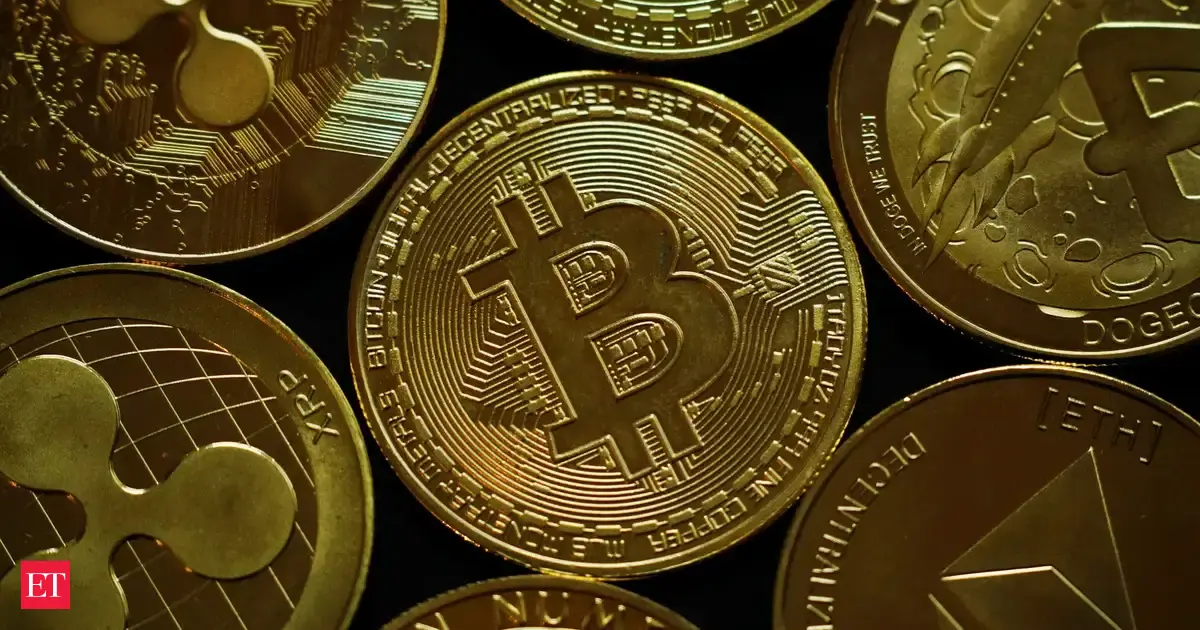
The forecast comes from a probability-weighted model developed by Gabriel Selby and Mark Pilipczuk of CF Benchmarks, a company owned by crypto exchange Kraken. Their base-case scenario puts Bitcoin at $1.42 million per coin by 2035, representing a gain of more than 1,500% from recent prices, as per a report. In that scenario, Bitcoin would capture roughly 33% of gold’s total market capitalization and deliver an expected annualized return of about 30.1%, as per a Decrypt report.
According to the analysts, growing institutional participation could play a key role in reshaping Bitcoin’s market behavior. The report notes that as institutional involvement deepens, price volatility is likely to continue declining.
At the same time, Bitcoin’s link to concerns around monetary debasement could help keep its correlation with traditional asset classes low, strengthening its appeal as a portfolio diversifier. Improved regulatory clarity, wider institutional acceptance and deeper liquidity are also cited as factors that could boost Bitcoin’s long-term investability.
The model also outlines more extreme scenarios. In a bullish case, Bitcoin’s price could rise as high as $2.95 million per coin by 2035, as per the Decrypt report. That outlook assumes Bitcoin emerges as a dominant global store of value, driven by broad institutional and sovereign adoption.
Also read: Voters may be rethinking everything: 2028 US Presidential polls reveal a stunning shift
On the other end of the spectrum, the bear case keeps Bitcoin closer to its historical growth trend, valuing it at about $637,000 per coin by 2035, equivalent to roughly 16% of gold’s market capitalization.
While those projections may appear ambitious, they are not out of step with other high-profile Bitcoin forecasts.
Ark Invest founder Cathie Wood has predicted Bitcoin could reach $1.2 million by 2030, though that estimate is lower than her earlier $1.5 million target. Ark has also outlined a scenario where Bitcoin could climb to $2.4 million by 2030 in one of its “Big Ideas” reports.
Strategy chairman Michael Saylor has said he expects Bitcoin to hit $1 million within the next four to eight years and believes the asset could eventually move toward $20 million over a longer time frame if it delivers sustained annual gains of around 30%, as per the Decrypt report.
Even Coinbase CEO Brian Armstrong has also publicly supported the idea of multi-million-dollar Bitcoin prices in the future.
How high could Bitcoin go by 2035?
The model’s base case projects Bitcoin at $1.42 million per coin by 2035.
What is the bullish Bitcoin price target in the report?
In the bull case, Bitcoin could reach as high as $2.95 million per coin by 2035.