The main category of All News Articles.
You can use the search box below to find what you need.
[wd_asp id=1]
The main category of All News Articles.
You can use the search box below to find what you need.
[wd_asp id=1]
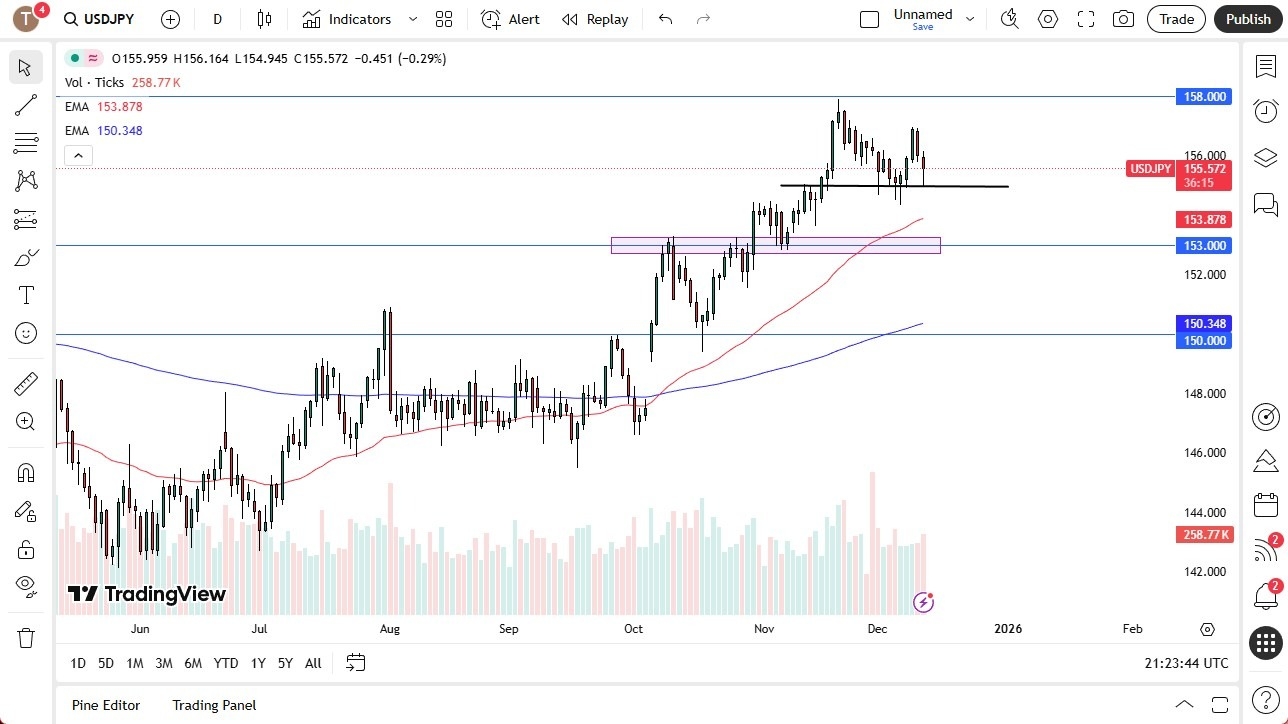
The US dollar has fallen pretty significantly against the Japanese yen during trading here on Thursday, but the 155 yen level has been like a floor, and we’ve bounced quite nicely. So to me, it looks like we’re at least trying to consolidate after all. There are a lot of questions out there about what’s going to happen next with the Federal Reserve, because we had suggested previously that there were going to be multiple interest rate cuts, but now the data-dependent phrase keeps getting kicked around.

With that being said, and the fact that the Bank of Japan has no real intention of tightening up monetary policy if they can avoid it, that makes sense that we will eventually go higher. And even if we do break down from here, I see the 50-day EMA at the 153.88 level offer in support, followed by the 153 yen level.
All things being equal, you know, I’ve been pretty obvious about it that I’m a buyer here of this pair, and I like these pullbacks for a little bit of value. I look for short-term pullbacks that show signs of bounces like we have had on Thursday as a potential entry. I build on a position, I collect swaps at the end of the day, and my account grows as a result. If we were to break down below the 152.80 yen level, then it’s possible that the market could drop to the 200-day EMA.
That being said, I think we’re going to see a lot of choppy and volatile trading as we more likely than not probably try to stabilize. The question is, what’s the floor? Is it 155 yen or is it 153? We’ll know in a few days.
Want to trade our USD/JPY forex analysis and predictions? Here’s a list of forex brokers in Japan to check out.
Christopher Lewis has been trading Forex and has over 20 years experience in financial markets. Chris has been a regular contributor to Daily Forex since the early days of the site. He writes about Forex for several online publications, including FX Empire, Investing.com, and his own site, aptly named The Trader Guy. Chris favours technical analysis methods to identify his trades and likes to trade equity indices and commodities as well as Forex. He favours a longer-term trading style, and his trades often last for days or weeks.
Vitamin B12 Study: The elderly often report nutritional deficiency and rely on taking multivitamins. Now, new research from Mass General Brigham, Boston, suggests that long-term multivitamin supplementation could reduce hypertension risk and blood pressure (BP) in specific groups of older adults.
The blood pressure reduction is tied to correcting deficiencies in minerals like magnesium and potassium and vitamins, which play a key role in blood pressure regulation. The elderly, who have poor nutritional status, are likely to be deficient in micronutrients, which the researchers claim can be made up by supplements.
Why was the study conducted?
The study recruited about 8,900 women above 60 to test the potential effects of cocoa extract and multivitamin-multimineral (MVM) supplements on older adult health. Study authors said that since vitamins and minerals play a known role in regulating blood pressure, they were exploring supplementation as an accessible method to take care of deficiencies in the elderly. In the end, they found that there were small but still significant improvements in blood pressure readings of participants who at the start of the study had been on poor diets.
However, Dr Babir Singh, chairman, Cardiac Sciences, Max Healthcare, argues that “multivitamin tablets do not do much to the body. I never prescribe any B vitamin supplements to anybody without going by the dietary route first. That, if done properly, can take care of the recommended daily quota. Still if any deficiency cannot be addressed fully, then we administer a supplement specific to the low nutrient that a person’s blood work shows. Supplements are intended only for the very sick patient who is not able to eat properly at all.” Excerpts:
Which vitamins and minerals are crucial for maintaining blood pressure?
Vitamins B6, B9 or folate and B12 help regulate and process homocysteine, an amino acid which, when high, damages blood vessel lining and increases blood clots. They also support red blood cell production. In minerals, we need potassium which counteracts sodium (Indians have more salt) by helping kidneys excrete it and relaxing blood vessel walls. Magnesium helps relax blood vessels, allowing better blood flow and regulating vessel constriction/relaxation. Calcium is essential for blood vessel contraction and relaxation. Vitamin D and C reduce inflammation and improve blood vessel function.
Why are the elderly more prone to micronutrient deficiency
Ageing slows digestion as there is a decrease in stomach acid, which affects nutrient absorption. The elderly also slow down. Now less physical activity means muscle mass goes down. This reduces overall calorie requirements but vitamin/mineral needs stay the same or increase. That’s why the nutrient demand is high. The elderly also tend to have low appetite.
Story continues below this ad
Conditions like heart disease or diabetes increase nutrient needs while reducing appetite and ability to cook. Many drugs can interfere with nutrient absorption or cause side effects like appetite loss. Oral health is a big challenge as tooth loss and dentures make the elderly averse to chewing and limits food variety. Sometimes they tend to miss meals.
How much B vitamins are needed by the elderly and can they be sourced from diet?
Usually, standard daily amounts of 2.4 mcg work for a healthy body but because of poor absorption issues, sometimes they need around 10-12 mcg of B vitamins. Even then this can be easily met from food sources like fish, eggs, milk and milk products, leafy greens, whole grains, legumes, nuts and even from plant-based and fortified foods. Sometimes, you get them in a single, balanced meal, too. What you need is a healthy diet matched by movement or physical activity to manage heart health.
Also, a supplement will not reduce your blood pressure automatically if it is high. For that, you need to consult your doctor and follow their advice. Hypertension, or high blood pressure, is a serious risk factor for cardiovascular disease, particularly among genetically-prone Indians. The idea of preventive cardiac health should begin in your 20s with a balanced diet, exercise, sleep and lifestyle routine, followed up with regular screening.
In 2014, a not-for-profit foundation was formed by members of the Dogecoin team to provide support, advocacy, trademark protection and governance for the cryptocurrency project. However, the foundation was dissolved over time.
After several years of being inactive, the foundation was relaunched in 2021 with a “renewed focus on supporting the Dogecoin Ecosystem, community and promoting the future of the Dogecoin Blockchain.” In addition to some of the original core team, the project now has some seasoned industry players as part of its board of advisors.
According to the foundation’s website, members of the board will meet monthly to discuss issues relating to Dogecoin.
In regards to its advisors, the group is made up of Dogecoin founder Billy Markus, the project’s core developer Max Keller, Ethereum founder Vitalik Buterin and Elon Musk as represented by the head of the Musk’s family office, Jared Birchall.
Members of the Board of Advisors will function in various capacities. While Keller will serve as the project’s technical advisor, Markus will be in charge of the community and memes. Meanwhile, Buterin will function as the blockchain and crypto advisor for the foundation, and Birchall will represent Elon Musk as legal and financial advisor.
As a first assignment, the Board of Advisors will be working to secure three-year funding that would allow it to employ a small, dedicated staff to work on Dogecoin full-time. Up until now, the work on the ecosystem has been done by volunteers.
By Linzi Martinez, CPT, INHC, BA
The fitness world is entering a breakthrough era. If the last few years were about “just move more,” 2026 is about precision, personalization, and intelligent support meeting you exactly where you are, and evolving with you as your body, lifestyle, hormones, and goals shift. The days of generic programs are fading fast. Today’s apps are smarter, more intuitive, more biologically informed, and more capable of delivering actual results than ever before.
A powerful combination of AI innovation, wearable integration, human expertise, and a growing understanding that fitness is no longer about workouts alone. It’s about whole-person health…sleep, stress, hormones, metabolism, mindset, and daily accountability…finally coming together in one ecosystem.
And for the first time, the technology has caught up.

2026 is shaping up to be the year that fitness apps move from being simple tools to becoming full-fledged wellness partners, supporting everything from strength training and metabolic health to stress management, gut function, and hormonal balance. The level of innovation, intelligence, and accessibility is extraordinary and the industry is recognizing it in a big way.
From free apps making high-quality training accessible to everyone, to mid-tier AI platforms delivering adaptive programs, to elite concierge services offering white-glove care with real human experts, this year’s lineup reflects one of the most exciting evolutions the fitness world has ever seen.
Below are the apps poised to dominate 2026—three in each category; each offering something powerful, unique, and perfectly aligned with the future of wellness.
These apps are perfect if you’re self-motivated and want world-class workouts, expert guidance, and plenty of structure—without spending a dime. What makes 2026 so exciting is how high-end these free platforms have become.

NTC continues to dominate the free-fitness world with one of the most comprehensive workout libraries anywhere online. Nike Members now get unlimited access to 190+ free workouts across strength, endurance, yoga, mobility, Pilates, recovery, and even mindset training. The interface feels premium, the production quality is exceptional, and the level of coaching rivals paid programs. This year, Nike added more structured programs, progression-based plans, and specialty series for mobility, athletes, and beginners …making it a true all-in-one platform for anyone seeking professional-quality workouts without cost.
Women who want high-quality, structured training without the price tag.

FitOn exploded in popularity because it brings together the feel of boutique studio classes like Pilates, yoga, HIIT, strength, dance cardio with the accessibility of a free app. In 2026, FitOn continues expanding its offerings into stress management and recovery, integrating meditations, breathing sessions, and stretching flows that support women dealing with burnout, anxiety, or hormonal stress. Its celebrity-led classes and community-driven energy make working out feel fun, uplifting, and achievable.
Women who crave variety, energy, community, and stress relief while keeping fitness fun and free.

Samsung’s partnership with iFIT has created one of the most seamless, integrated fitness experiences available. Users can access monthly free guided workouts including strength, yoga, Pilates, core, recovery, walking, and barre directly inside Samsung Health. Automatic syncing with Galaxy watches creates a unified, user-friendly wellness dashboard.
Women who want smart, integrated tracking and a polished fitness experience.
Disclaimer
The Content is not intended to be a substitute for professional medical advice, diagnosis, or treatment. Always seek the advice of your physician or other qualified health provider with any questions you may have regarding a medical condition.
As Web3 gaming continues to evolve, TON Station has emerged as one of the most active and engaging platforms built directly inside Telegram. For millions of daily players seeking instant rewards, faster progression, and accessible gameplay, the TON Station Daily Combo remains one of the most efficient ways to earn points with minimal effort. If you are looking for the verified TON Station Daily Combo for December 12, 2025, this in-depth guide provides everything you need to know, from today’s promo code update to strategy tips that can help you climb the leaderboard more quickly.
TON Station is a Telegram-based play-to-earn game powered by The Open Network (TON), designed to reward users for completing tasks, quests, and interactive activities. It enables players to accumulate in-game points that can eventually be exchanged for real $TONS tokens, making it one of the more practical reward-driven experiences in today’s Web3 market.
The Daily Combo is an important part of this system. It allows players to enter a four-card combination once every 24 hours. If the combination is correct, players instantly receive a reward, often significantly larger than rewards from regular in-game tasks. For beginners, the Daily Combo is especially appealing because it minimizes the guesswork. Most players simply check trusted TON Station communities, such as official Telegram groups and media partners like hokanews, to obtain the verified combination before entering it into the game.
Though simple in concept, the Daily Combo has become one of the most anticipated features, attracting both casual and competitive players who rely on these daily rewards to accelerate progress.
At the time of writing, the official TON Station Daily Combo code for December 12, 2025, has not yet been released.
Today’s Promo Code: Coming Soon
Promo codes typically drop at unpredictable hours through official TON Station social channels, Discord servers, and Telegram groups. Players often monitor these channels closely since promo codes usually remain valid only for one-day cycles. When the correct combination becomes available, it is typically confirmed and reposted through community-led platforms like hokanews.
The speed at which players enter the code often determines whether they receive their bonus before the daily reset at midnight.
Although the Daily Combo for December 12 is still pending release, players are encouraged to stay alert and check periodically. There are multiple reasons why completing the Daily Combo today can provide significant advantages.
TON Station is recognized for its generous daily reward system. The Daily Combo requires almost no time to complete and offers comparatively higher returns than other in-app tasks. A correct entry grants an immediate boost in points, helping players advance through the game with less manual effort.
For extra rewards, check out TON Station Daily Combo Today 08 December 2025 Ari and explore more thrilling tasks!

Progression within TON Station is tied to activity level and points earned. The Daily Combo allows players to jump ahead quickly, especially when combined with other in-game missions. As users accumulate more points, they unlock additional rewards, features, and sometimes priority access to new game updates or token conversions.
TON Station does not operate in isolation. Many users simultaneously participate in other similar Telegram-based games such as Metropolis World, Kokodi Game, Pixelverse, or Notcoin. These games often share a common audience and encourage cross-platform engagement. By completing the Daily Combo alongside these additional quests, users can maximize their daily earning potential across all platforms.
For players committed to staying active across multiple ecosystems, the Daily Combo is an essential part of an efficient daily gaming routine.
Because the Daily Combo does not require complex gameplay, new users can participate from day one without needing prior experience. It provides an easy pathway for individuals who want to gradually explore the Web3 environment.
While the promo code for December 12 is still “Coming Soon,” it will eventually be published on official TON Station channels throughout the day. Users should be aware of the following sources:
Official TON Station Telegram Channel
The developers often release the combination directly through Telegram.
TON Station Discord Servers
Many new updates, including promo codes and event announcements, appear first in Discord communities.
Web3 News Outlets and Partner Sites
Trusted media platforms such as hokanews frequently verify and publish the Daily Combo once confirmed.
TON Station Social Media Accounts
X (formerly Twitter), Instagram, and community-driven Facebook groups regularly share updates.
Promo codes expire at midnight each day, so players must act quickly to claim rewards before the 24-hour cycle resets.
Redeeming the Daily Combo is a straightforward process. Even players who are new to TON Station can complete the steps in under a minute.
Search for the TON Station bot inside Telegram or use the official link provided on the platform’s website. Once the bot loads, you will see the main game interface.
Inside the bot interface, look for the Daily Combo menu item. The layout may vary slightly depending on updates, but it is typically located within the main navigation dashboard.
Once the correct daily combination is available, enter the four-card sequence exactly as provided by trusted sources. Accuracy matters, as incorrect combinations will fail to trigger the reward.
After entering the combination, submit it and wait for system confirmation. If correct, the bonus points will immediately be added to your account balance.
These points can then be saved, spent, or combined with other daily missions to maximize your daily credit total.
To understand why players consistently return to TON Station, it is important to consider how daily participation benefits long-term progress. TON Station’s design strongly encourages user consistency, offering various advantages to players who log in each day.
Many rewards in the game increase in value the longer a player maintains a daily streak. Missing even one day can reset progress, making consistency a key factor for maximizing rewards.
As players accumulate more points, they move closer to obtaining convertible $TONS tokens. These tokens can have real monetary value depending on market conditions.
The Daily Combo serves as a central anchor for daily gameplay. Since it requires only a few seconds to complete, many players begin their day with the Daily Combo and proceed to additional tasks afterward.
Daily engagement means users stay informed about new events, limited-time bonuses, and special promotions that may offer exclusive prizes.
For users who want to extract maximum value from TON Station, there are several strategies commonly used by experienced players:
Promo codes are sometimes released early in the day. Entering them as soon as they are available helps avoid missing the midnight reset.
Following several TON Station communities ensures you receive the correct code quickly, reducing the risk of misinformation.
Engaging in other TON ecosystem games increases your overall token earnings.
Streak bonuses provide exponential value and can multiply daily rewards significantly.
The TON Station Daily Combo remains one of the most valuable tools for earning fast, effortless rewards within the TON Web3 gaming ecosystem. Whether you are a long-time player or a newcomer exploring Telegram-based Web3 games, the Daily Combo offers a simple yet powerful opportunity to boost your progress every day.
Although the December 12, 2025 Daily Combo code is still pending release, staying connected to official TON Station channels and media platforms like hokanews will ensure you receive the verified combination the moment it becomes available.
Until then, continuing to engage with TON Station’s daily quests, streak missions, and bonus tasks is the best way to remain competitive and accelerate your journey toward earning real $TONS tokens.
hokanews.com – Not Just Crypto News. It’s Crypto Culture.
Writer
@Erlin
Erlin is an experienced crypto writer who loves to explore the intersection of blockchain technology and financial markets. She regularly provides insights into the latest trends and innovations in the digital currency space.
Check out other news and articles on Google News
The EUR/USD marked a 10-week high near 1.1750 on Thursday before retreating mildly in today’s Asian session as the US dollar staged a rebound. The pullback came after two solid sessions for the pair, which followed the Fed rate cut and dismal US jobless claims data, reinforcing dollar weakness.
If you are interested in automated forex trading, check our detailed guide-
The immediate correction suggests profit-taking and stabilization of the greenback, but the broader perspective remains euro-supportive, as the Fed is expected to continue easing next year.
The Federal Reserve delivered its third 25 bps rate cut of 2025 on Wednesday, lowering the benchmark range to 3.50% – 3.75%. Although the committee remained split, the statement tempered expectations of further easing. However, the market participants viewed Powell’s tone as less hawkish, acknowledging the downside risks in the labor market. This, combined with Thursday’s downbeat US jobless claims data with a rise of 44,000, reinforced the view that labor markets are cooling. The Fed’s dovish tilt seems justified, pushing the Dollar Index (DXY) towards a 7-week low near the 98.00 area.
Political noise is also keeping the dollar on the back foot, as renewed speculation about Fed independence has unsettled investors. The White House officials’ insistence on further rate cuts continues to weigh on the greenback. This has drawn the market’s attention to Kevin Hassett, widely seen as a potential new Fed Chair, who is considered rate-friendly. According to the CME FedWatch Tool, the markets are pricing in a 58% probability of two rate cuts by October 2026, well above the Fed’s dot plot.
From the Eurozone, the ECB is expected to hold in the December meeting, pointing to the potential end of the easing cycle. ECB President Lagarde and other policymakers have reiterated that the current situation seems reasonable and requires no further cuts in the near term. This ECB-Fed divergence continued to favor dip buying in EUR/USD.
The near-term direction of the pair will depend on US data. Traders will keep an eye on comments from Fed Cleveland’s President Beth Hammack and Chicago’s President Goolsbee later today. However, the key catalyst will be the NFP data due next week.
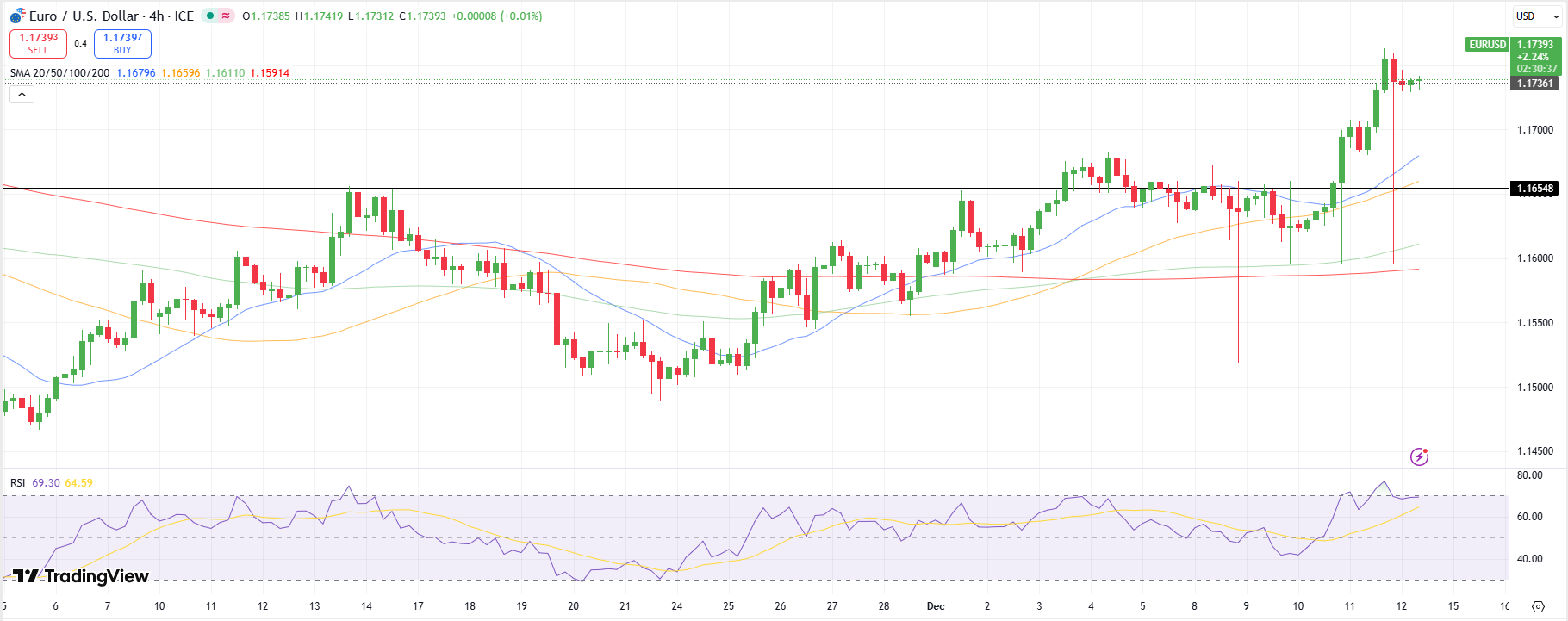
The EUR/USD 4-hour chart displays two significant spikes, indicating intense buying pressure. Though the RSI is now in the overbought zone, the bias remains tilted to the upside. The key moving averages, stacking one above the other, also support the upside.
–Are you interested to learn more about forex options trading? Check our detailed guide-
The key resistance for the pair emerges at 1.1800, while the immediate support lies at 1.1700, ahead of 1.1650 and 1.1600. The prices could consolidate here and might correct lower to attract more buying.
Looking to trade forex now? Invest at eToro!
68% of retail investor accounts lose money when trading CFDs with this provider. You should consider whether you can afford to take the high risk of losing your money.
The global krill oil market is valued at USD 2.8 billion in 2025 and is set to reach USD 5.4 billion by 2035, recording an absolute increase of USD 2.6 billion over the forecast period. This translates into a total growth of 92.9%, with the market forecast to expand at a compound annual growth rate (CAGR) of 6.8% between 2025 and 2035.
The overall market size is expected to grow by approximately 1.9X during the same period, supported by increasing consumer awareness of omega-3 fatty acids, growing demand for marine-derived nutritional supplements, and rising adoption of krill oil products across dietary supplement applications, functional food sectors, and pharmaceutical formulations.
The soft gel capsule segment is set to register 56.7% of the krill oil market in 2025. Soft gel capsules enable manufacturers to deliver concentrated krill oil formulations with superior bioavailability and enhanced stability characteristics across multiple consumer applications, providing optimal nutrient absorption for health and wellness applications. These delivery systems offer performance characteristics that allow supplement companies to achieve consistent product quality and maintain effective preservation during extended shelf life periods while ensuring reliable potency levels over diverse storage conditions.
Dietary supplement applications are projected to register 61.4% of the krill oil market in 2025. Krill oil in supplement formulations enables enhanced nutritional profiles, omega-3 delivery mechanisms, and health benefit positioning that are essential for nutraceutical companies, pharmaceutical manufacturers, and functional food producers. These applications provide the foundation mechanisms necessary for consumer health products to function effectively in demanding nutritional markets while maintaining consistent bioactive compound delivery and reliable therapeutic potential capabilities.
The market encompasses various extraction technologies, processing methods, and specialized formulation systems tailored for specific consumer applications. Modern krill oil products incorporate advanced extraction techniques, phospholipid preservation capabilities, and enhanced purity characteristics that can operate effectively across diverse supplement environments while maintaining consistent omega-3 content over extended product cycles. The integration of cold extraction processes, antioxidant preservation systems, and bioavailability enhancement has further strengthened the value proposition of these nutritional products among health-conscious consumers seeking premium marine-derived supplements and therapeutic efficacy reliability.
Between 2025 and 2030, the krill oil market is projected to expand from USD 2.8 billion to USD 3.9 billion, resulting in a value increase of USD 1.1 billion, which represents 42.3% of the total forecast growth for the decade. This phase of development will be shaped by increasing health consciousness worldwide, rising demand for premium omega-3 supplements, and growing availability of advanced extraction technologies across nutraceutical applications, functional food sectors, and pharmaceutical formulations.
Between 2030 and 2035, the market is forecast to grow from USD 3.9 billion to USD 5.4 billion, adding another USD 1.5 billion, which constitutes 57.7% of the overall ten-year expansion. This period is expected to be characterized by the advancement of specialized formulation systems, the development of targeted therapeutic applications, and the expansion of personalized nutrition solutions across diverse health categories. The growing emphasis on bioavailability optimization and advanced delivery mechanisms will drive demand for innovative krill oil varieties with enhanced phospholipid content, improved stability profiles, and superior therapeutic functionalities.
| Metric | Value |
|---|---|
| Estimated Value in (2025E) | USD 2.8 billion |
| Forecast Value in (2035F) | USD 5.4 billion |
| Forecast CAGR (2025 to 2035) | 6.8% |
Market expansion is being supported by the increasing global emphasis on preventive healthcare approaches and the corresponding shift toward marine-derived omega-3 supplements that can provide superior bioavailability while meeting consumer requirements for enhanced nutritional profiles and evidence-based health benefit solutions. Modern supplement users are increasingly focused on incorporating omega-3 products that can enhance cardiovascular health while satisfying demands for consistent, precisely delivered phospholipid conditions and optimized absorption protocols. Krill oil products’ proven ability to deliver therapeutic excellence, bioactive benefits, and diverse application possibilities makes them essential components for health-focused consumers and wellness-oriented supplement manufacturers.
The growing focus on cognitive health and cardiovascular wellness is driving demand for high-performance omega-3 systems that can support distinctive health outcomes and comprehensive nutritional delivery across supplement environments, pharmaceutical formulations, and functional food systems. Consumer preference for products that combine therapeutic excellence with bioavailability optimization is creating opportunities for innovative implementations in both traditional and emerging health applications. The rising influence of astaxanthin content and advanced extraction methods is also contributing to increased adoption of premium krill oil solutions that can provide authentic health benefits and reliable potency characteristics.
At the regulatory level, dietary supplement guidelines provide compliance frameworks for omega-3 product formulations, with specific requirements for purity standards and bioactive content already established. Health authorities note high rates of krill oil adoption and premium supplement integration, which is evidence of a mature, efficacy-driven implementation process. Meanwhile, regional regulations like health claim approvals and quality certification requirements make therapeutic positioning and purity assurance obligations explicit for supplement manufacturers and krill oil producers.
The market is segmented by product type, application sector, extraction method, distribution channel, and region. By product type, the market is divided into soft gel capsules, liquid formulations, powder extracts, chewable tablets, and other product configurations. Based on application sector, the market is categorized into dietary supplements, functional foods, pharmaceuticals, cosmeceuticals, and other sector categories. By extraction method, the market includes supercritical CO2 extraction, solvent extraction, enzymatic extraction, cold pressing, and other extraction platforms. By distribution channel, the market encompasses online retail, specialty stores, pharmacies, supermarkets, and other distribution services. Regionally, the market is divided into North America, Europe, Asia Pacific, Latin America, Middle East & Africa, and other regions.
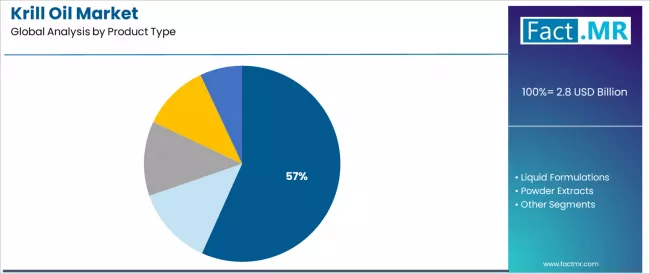
The soft gel capsule segment is projected to account for 56.7% of the krill oil market in 2025, reaffirming its position as the leading product technology. Supplement manufacturers and nutraceutical companies increasingly utilize soft gel capsule systems for their superior encapsulation characteristics, established stability standards, and essential performance in diverse consumer applications across multiple health sectors.
Soft gel capsules’ proven performance characteristics and established reliability directly address consumer requirements for comprehensive bioavailability and optimal absorption precision in nutritional and therapeutic applications. This technology segment forms the foundation of modern supplement delivery patterns, as it represents the product type with the greatest formulation versatility and established compatibility across multiple omega-3 systems.
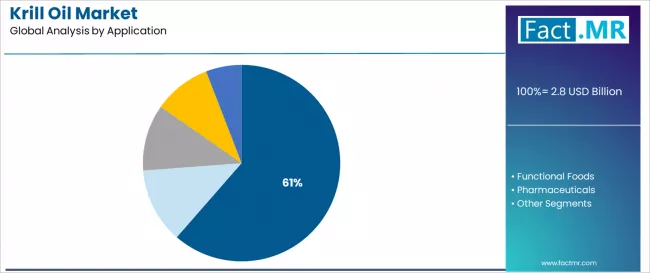
Dietary supplement applications are projected to represent 61.4% of the krill oil market in 2025, underscoring their critical role as the primary application sector for health-focused consumers seeking superior nutritional benefits and enhanced wellness credentials. Supplement users and health-conscious individuals prefer dietary supplement applications for their established therapeutic requirements, proven health demand, and ability to maintain exceptional bioactive delivery while supporting versatile wellness coverage during diverse health activities.
Positioned as essential applications for wellness-focused consumers, dietary supplement offerings provide both therapeutic excellence and health optimization advantages. The segment is supported by continuous improvement in extraction technology and the widespread availability of established efficacy standards that enable health assurance and premium positioning at the consumer level.
The krill oil market is advancing rapidly due to increasing health consciousness adoption and growing need for premium omega-3 solutions that emphasize superior bioavailability across nutritional segments and therapeutic applications. The market faces challenges, including competition from fish oil alternatives, supply chain limitations, and regulatory compliance factors affecting adoption rates. Innovation in extraction technology enhancement and advanced formulation systems continues to influence market development and expansion patterns.
The growing adoption of krill oil products with phospholipid processing and bioavailability optimization is enabling consumers to develop health strategies that provide distinctive therapeutic benefits while commanding intelligent absorption enhancement and superior nutritional characteristics. Phospholipid applications provide enhanced bioavailability consistency while allowing more advanced therapeutic optimization features across various health categories. Users are increasingly recognizing the nutritional advantages of bioavailability positioning for comprehensive wellness outcomes and technology-integrated health processes.
Modern krill oil manufacturers are incorporating advanced extraction processing, real-time purity optimization capabilities, and intelligent quality systems to enhance therapeutic effectiveness, improve product stability, and meet consumer demands for premium nutritional solutions. These systems improve therapeutic effectiveness while enabling new applications, including specialized formulation programs and targeted health protocols. Advanced technology integration also allows manufacturers to support wellness optimization positioning and therapeutic management beyond traditional omega-3 performance requirements.
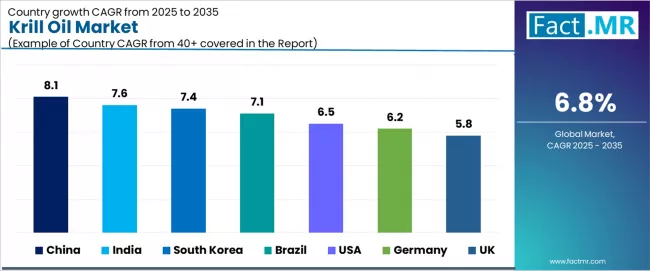
| Country | CAGR (2025-2035) |
|---|---|
| China | 8.1% |
| India | 7.6% |
| Germany | 6.2% |
| Brazil | 7.1% |
| USA | 6.5% |
| UK | 5.8% |
| South Korea | 7.4% |
The krill oil market is experiencing robust growth globally, with China leading at a 8.1% CAGR through 2035, driven by the expanding health consciousness initiatives, growing supplement adoption requirements, and increasing acceptance of marine-derived omega-3 systems. India follows at 7.6%, supported by rising wellness industry investment, expanding urban health development programs, and growing acceptance of premium nutritional technologies. South Korea shows growth at 7.4%, emphasizing established health industry standards and comprehensive wellness development. Brazil records 7.1%, focusing on health modernization and nutritional optimization. The USA demonstrates 6.5% growth, prioritizing advanced supplement technologies and bioavailability optimization. Germany shows growth at 6.2%, emphasizing established health industry standards and comprehensive supplement development. The UK demonstrates 5.8% growth, prioritizing advanced therapeutic technologies and wellness optimization.
The report covers an in-depth analysis of 40+ countries; seven top-performing countries are highlighted below.
Revenue from krill oil consumption and sales in China is projected to exhibit exceptional growth with a CAGR of 8.1% through 2035, driven by the country’s rapidly expanding health supplement sector, favorable government policies toward wellness modernization, and initiatives promoting marine-derived nutritional technologies across major urban regions. China’s position as a global health consciousness hub and increasing focus on preventive healthcare are creating substantial demand for high-quality omega-3 products in both domestic and import markets. Major supplement manufacturers and nutraceutical distributors are establishing comprehensive distribution capabilities to serve growing demand and emerging wellness opportunities.
Revenue from krill oil products in India is expanding at a CAGR of 7.6%, supported by rising health industry investment, growing wellness consciousness, and expanding supplement distributor capabilities. The country’s developing health infrastructure and increasing investment in nutritional technologies are driving demand for omega-3 products across both traditional and modern wellness applications. International supplement companies and domestic distributors are establishing comprehensive operational networks to address growing market demand for high-performance krill oil products and efficient health solutions.
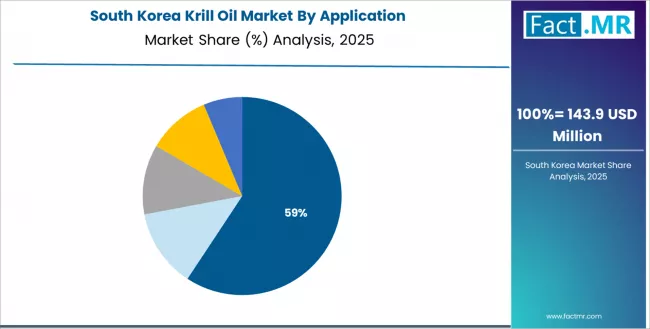
Revenue from krill oil products in South Korea is projected to grow at a CAGR of 7.4% through 2035, supported by the country’s expanding health industry standards, established government regulations, and leadership in wellness technology implementation. South Korea’s advanced health development standards and strong support for innovative omega-3 systems are creating steady demand for both traditional and advanced krill oil varieties. Leading supplement manufacturers and specialty distributors are establishing comprehensive operational strategies to serve both domestic markets and growing regional opportunities.
Revenue from krill oil products in Brazil is projected to grow at a CAGR of 7.1% through 2035, driven by the country’s emphasis on health industry modernization, wellness infrastructure development growth, and growing supplement distributor capabilities. Brazilian consumers and health establishments consistently seek efficacy-focused omega-3 systems that enhance wellness performance and support modernization excellence for both traditional and modern health applications. The country’s position as a Latin American wellness leader continues to drive innovation in specialized krill oil applications and therapeutic performance standards.
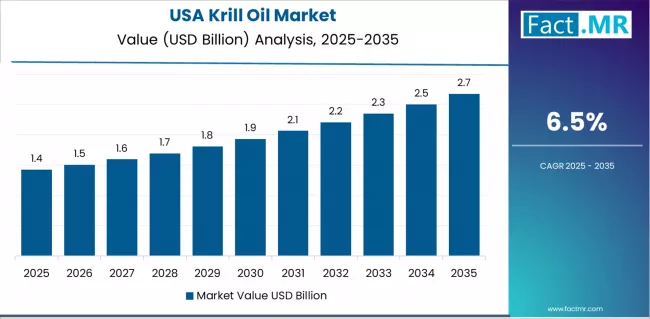
Revenue from krill oil products in the USA is projected to grow at a CAGR of 6.5% through 2035, supported by the country’s emphasis on health technology advancement, wellness optimization, and advanced supplement system integration requiring efficient omega-3 solutions. American consumers and health-focused establishments prioritize performance reliability and therapeutic precision, making specialized krill oil systems essential components for both traditional and modern wellness applications. The country’s comprehensive health technology leadership and advancing wellness patterns support continued market expansion.
Revenue from krill oil products in Germany is projected to grow at a CAGR of 6.2% through 2035, supported by established health standards, expanding wellness markets, and emphasis on therapeutic efficiency across supplement and pharmaceutical sectors. German consumers and health professionals prioritize quality performance and therapeutic consistency, creating steady demand for premium omega-3 solutions. The country’s comprehensive market development and established health performance practices support continued advancement in specialized applications.
Revenue from krill oil products in the UK is projected to grow at a CAGR of 5.8% through 2035, supported by the country’s emphasis on therapeutic precision, health excellence, and advanced technology integration requiring efficient omega-3 solutions. British consumers and health-focused establishments prioritize technical performance and wellness precision, making specialized krill oil systems essential components for both traditional and modern health applications. The country’s comprehensive health leadership and advancing precision patterns support continued market expansion.
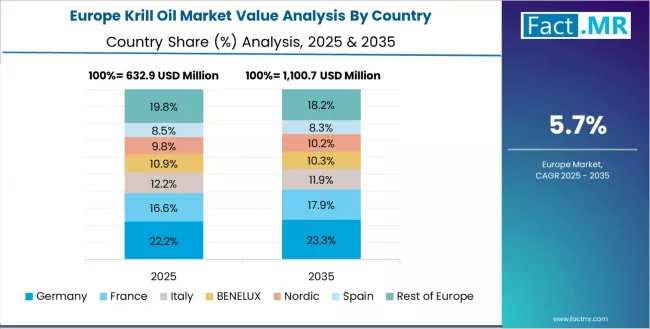
The Europe krill oil market is projected to grow from USD 0.6 billion in 2025 to USD 1.1 billion by 2035, recording a CAGR of 6.1% over the forecast period. Germany leads the region with a 41.2% share in 2025, moderating slightly to 40.8% by 2035, supported by its strong health industry traditions and demand for premium, research-backed omega-3 solutions. The UK follows with 24.7% in 2025, easing to 24.3% by 2035, driven by a mature wellness market and emphasis on therapeutic efficiency and quality performance. France accounts for 16.8% in 2025, rising to 17.1% by 2035, reflecting steady adoption of advanced supplement technologies and wellness optimization. Italy holds 7.9% in 2025, expanding to 8.2% by 2035 as health modernization and specialty wellness applications grow. Spain contributes 4.1% in 2025, growing to 4.3% by 2035, supported by expanding wellness development and health performance awareness modernization. The Nordic countries rise from 3.4% in 2025 to 3.5% by 2035 on the back of strong health consciousness and advanced therapeutic methodologies. BENELUX remains at 1.9% share across both 2025 and 2035, reflecting mature, efficiency-focused wellness markets.
The krill oil market is characterized by competition among established marine biotechnology companies, specialized omega-3 manufacturers, and integrated nutritional solution providers. Companies are investing in advanced extraction technologies, specialized processing platforms, product innovation capabilities, and comprehensive distribution networks to deliver consistent, high-quality, and bioavailable krill oil systems. Innovation in cold extraction processing, phospholipid preservation, and health-focused product development is central to strengthening market position and consumer satisfaction.
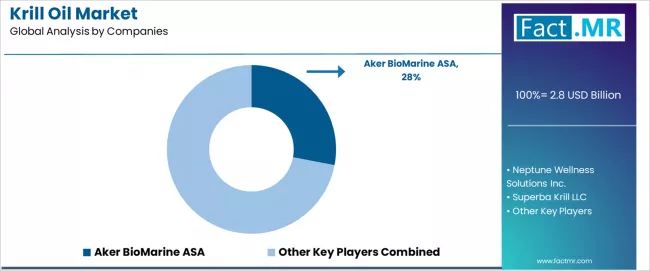
Aker BioMarine ASA leads the market with 28% share with a strong focus on vertical integration and comprehensive marine solutions, offering commercial and consumer systems with emphasis on quality excellence and Antarctic heritage. Neptune Wellness Solutions Inc. provides integrated supplement manufacturing with a focus on health market applications and precision extraction networks. Superba Krill LLC delivers comprehensive omega-3 technology solutions with a focus on commercial positioning and bioavailability efficiency. Rimfrost AS specializes in comprehensive extraction technologies with an emphasis on pharmaceutical applications. Antarctic Krill Technologies LLC focuses on comprehensive marine harvesting with advanced processing and premium positioning capabilities.
| Items | Values |
|---|---|
| Quantitative Units (2025) | USD 2.8 Billion |
| Product Type | Soft Gel Capsules, Liquid Formulations, Powder Extracts, Chewable Tablets, Other Product Configurations |
| Application Sector | Dietary Supplements, Functional Foods, Pharmaceuticals, Cosmeceuticals, Others |
| Extraction Method | Supercritical CO2 Extraction, Solvent Extraction, Enzymatic Extraction, Cold Pressing, Other Extraction Platforms |
| Distribution Channel | Online Retail, Specialty Stores, Pharmacies, Supermarkets, Other Distribution Services |
| Regions Covered | North America, Europe, Asia Pacific, Latin America, Middle East & Africa, Other Regions |
| Countries Covered | China, India, Germany, Brazil, USA, UK, South Korea, and 40+ countries |
| Key Companies Profiled | Aker BioMarine ASA, Neptune Wellness Solutions Inc., Superba Krill LLC, Rimfrost AS, Antarctic Krill Technologies LLC, and other leading krill oil companies |
| Additional Attributes | Dollar sales by product type, application sector, extraction method, distribution channel, and region; regional demand trends, competitive landscape, technological advancements in extraction engineering, bioavailability optimization initiatives, phospholipid enhancement programs, and premium product development strategies |
North America
Europe
Asia Pacific
Latin America
Middle East & Africa
Other Regions
Ripple (XRP) remains in the crypto spotlight as its ongoing legal skirmish with the U.S. Securities and Exchange Commission (SEC) continues to stir market sentiment. This legal battle focuses on whether XRP is a security, which could significantly alter regulatory approaches for cryptocurrencies. As of today, XRPUSD is trading at $2.04, demonstrating its recent volatility amidst legal uncertainties.
The XRP SEC legal case has been a major topic in crypto market news, as it challenges existing regulatory frameworks. This case began when the SEC charged Ripple with conducting an unregistered securities offering worth $1.3 billion. Ripple disputes these claims, arguing XRP should be classified as a currency, not a security.
While the legal proceedings drag on, XRPUSD’s price shows noticeable volatility. The current price is $2.04 with a daily change of -0.08%. Such fluctuations are common, as seen in its 1-year change of 295%. This volatility reflects investor uncertainty fueled by the case’s potential outcomes. For crypto enthusiasts and investors, monitoring this case is crucial, as it could reshape regulatory standards not just for XRP but for the broader market.
Ripple price prediction is challenging given the ongoing legal issues, yet some experts remain optimistic. According to forecasts, XRP could reach $4.41 quarterly, with a five-year projection nearing $10.28. Despite a 3-month decline of over 21%, XRP’s yearly change stands at an impressive 295%.
Market sentiment remains mixed. The Relative Strength Index (RSI) at 45.50 indicates a neutral position, while technical indicators like the ADX suggest a strong trend. Investors should keep a close watch on these indicators to gauge market momentum and potential price movements.
For more insights, visit The Crypto Basic.
Beyond legal challenges, Ripple’s technology holds promise for revolutionizing cross-border transactions. With partnerships including financial giants, Ripple aims to streamline payments and reduce transaction costs globally. This vision supports XRP’s utility beyond speculation.
While legal issues cloud Ripple’s immediate potential, its focus on cross-border solutions positions it for long-term relevance. Investors interested in the fundamental value of XRP may view these developments as a bullish signal despite ongoing volatility.
The XRP SEC legal case adds layers of complexity to the crypto market. With XRP’s current price at $2.04 and a turbulent market backdrop, investors must stay informed. While legal developments will heavily influence XRP’s trajectory, its role in cross-border transactions presents potential upside. Monitoring technical indicators and keeping abreast of crypto market news will be key to navigating this landscape. For real-time insights, platforms like Meyka offer valuable tools for investors, helping them make informed decisions in this volatile environment.
The XRP SEC legal case is ongoing, centered around whether XRP is a security. Both parties have presented arguments, but a resolution is yet to be reached. This case could set precedents for crypto regulations.
The case introduces significant uncertainty, impacting short-term price predictions. However, long-term forecasts remain optimistic, with projections showing potential growth depending on the outcome.
XRP is designed to facilitate fast and affordable cross-border transactions. Ripple’s technology aims to streamline payments globally, enhancing XRP’s utility and relevance beyond legal challenges.
Disclaimer:
The content shared by Meyka AI PTY LTD is solely for research and informational purposes.
Meyka is not a financial advisory service, and the information provided should not be considered investment or trading advice.
The blockchain gaming sector is shifting to more sustainable economics and has improved sentiment and market maturity as it recalibrates its outlook, reported the Blockchain Game Alliance (BGA).
The Web3 gaming advocacy group said in its annual state of the industry report released on Wednesday that the sector is “moving beyond its speculative origins toward a more operationally disciplined, product-led future.”
In a survey of over 500 global blockchain gaming professionals, the level of optimism rebounded to 65.8% from its 2024 lows, with the focus shifting from token economics to sustainable revenue models.
“The clearest indicator of the industry’s broader transition lies in its reorientation toward sustainable economics.”
Growth is now anchored in delivering high-quality games, resilient revenue models, and payment infrastructure to support real-world commerce at scale, the report noted.
A tough period for Web3 gaming
Blockchain and Web3 gaming have shifted from peak euphoria in 2021, driven by a play-to-earn explosion and speculative capital, to a low point in 2024, following the collapse of P2E models, a decline in confidence, and a drying up of funding, with studios closing and reputations being damaged.
Related: Investors target ‘fun-first’ crypto games as funding jumps 94% in July
Annual funding dropped dramatically to $293 million in 2025, down from $4 billion in 2021, forcing teams toward leaner, bootstrap-focused operations. Top-tier venture firms paused all new Web3 gaming investments, and project token prices collapsed more than 90% from cycle peaks.
Between 80% and 93% of Web3 games failed, with average lifespans of only months and studios that raised millions couldn’t sustain operations without continuous capital injections.
On the path to recovery
Several developments were cited as contributing factors to the recovery of the beleaguered sector, including regulatory shifts and the growing popularity of stablecoins.
Animoca Brands co-founder Yat Siu said recent crypto-friendly shifts in US regulations mean that companies no longer need to rely on setting up nonprofit foundations when planning token launches.
The BGA said that stablecoins were transformative for Web3 games, they gave gamers “fast, low-cost, borderless transactions without the volatility associated with other crypto assets.”
Additionally, nearly 30% of survey respondents cited high-quality game launches as the most important factor for industry growth.
Immutable’s vice president of global sales, Andrew Sorokovsky, said that “despite the negative headlines, blockchain gaming is now one of crypto’s most proven sectors — where quality projects are thriving and real adoption is taking hold.”
Magazine: XRP’s ‘now or never’ moment, Kalshi taps Solana: Hodler’s Digest
Last week’s low at $4.09 stands as a higher monthly low; a decisive break there would trigger a monthly reversal signal. Meanwhile, Thursday produced a five-week low hovering just above the rising 10-week average near $4.14, perfectly aligning with the current $4.24–$4.15 zone and dramatically increasing its technical importance as dynamic support.
This week marks the first weekly decline in eight weeks, ending the unbroken pattern of higher weekly highs and lows. That alone represents a major sentiment shift, with the weekly reversal now confirmed and opening risk of a deeper correction toward the 61.8% Fibonacci retracement at $3.89 and the 200-day average near $3.79—though a meaningful bounce appears probable first.
As natural gas has sold off from last week’s multi-year high of $5.50 (since December 2022), each successive dynamic support line has flipped to resistance: first the 10-day average, then the 20-day average—both confirmed by subsequent daily highs. This textbook progression reinforces the short-term downtrend and keeps bears in the driver’s seat.
The strongest and most likely bounce area remains the rising 50-day average at $4.05. Because it continues climbing, it may meet price closer to the lower end of the current $4.15 range, improving the odds of a successful defense and potential sustained bullish reaction into overhead resistance.
Natural gas has shifted decisively bearish on the weekly timeframe with the eight-week higher low structure broken and classic support-to-resistance flips in place. Expect the $4.24–$4.15 zone to slow the decline, but the 50-day/channel confluence near $4.05 stands as the highest-probability bounce point; failure there opens a fast move toward $3.89–$3.79, while any rebound faces immediate resistance at the flipped 20-day and 10-day averages.
For a look at all of today’s economic events, check out our economic calendar.